【 The Concept 】
A house that makes sound. Cast in iron, finished in lacquer-black, and designed to hang from a hook in any room where wind can reach it. The form is a miniature farmhouse with a steeply pitched thatched roof, suspended from a vine-shaped hook above and connected to a pine-cone-shaped bell below. When the wind moves the bell, the bell strikes the house, and the house answers with a high, clear tone that lingers in the air far longer than the gust that caused it.
Three separate castings make up the assembly: the hook, carved to resemble a section of ivy vine complete with two veined leaves curling away from the stem; the house, whose roof is covered in hundreds of fine vertical grooves simulating bundled thatch, with ivy climbing its slopes in low relief and small windows cut through its walls; and the bell, shaped like a pine cone with diamond-scale patterning, hanging beneath on a cord. Together they form a vertical landscape — vine, cottage, and forest floor, stacked in the order gravity would arrange them.
【 The Function 】
1.111 kilograms of cast iron, suspended. This is not a decorative bell that chimes lightly. It is over a kilogram of metal hanging from a cord, and the sound it produces is proportional to its mass: a resonant, high-frequency tone with an exceptionally long decay. The iron does not absorb the vibration. It transmits it. A single contact between bell and house produces a note that sustains for several seconds, thinning gradually until it disappears into the ambient noise of the room. The paper catching-strip that once hung below the pine cone to catch the wind has been lost — only the cord remains. A replacement strip of any stiff paper, cut to approximately 4 by 15 centimeters, will restore the original function.
【 The Texture 】
Matte black throughout. The surface is not painted. It is chemically formed: raw iron heated to extreme temperature, then coated with natural lacquer while still hot enough to bond the resin permanently to the metal. The result is a deep, light-absorbing black with no gloss, no reflection, no shine — a surface that photographs darker than it appears in person because it returns almost nothing to the lens. Beneath the lacquer, the sand-cast texture of the iron shows through as a fine, granular roughness that is visible before it is felt. The roof carries the densest detail: vertical striations so closely spaced they merge at a distance into a single dark mass, broken only by the ivy leaves that crawl across them in shallow relief. The pine cone bell below carries a different geometry — repeating diamond facets arranged in concentric rows, each edge catching just enough light to separate it from its neighbor.
【 Presence 】
It is the only object in MINGEI 1926's archive that occupies vertical space without standing on anything. It hangs. And in hanging, it introduces a dimension that no shelf object can: movement. Every other piece in the collection is fixed. This one sways. It rotates slowly when a door opens. It responds to the air conditioning, to the fan, to the window left ajar. And when it responds, it speaks — a single high note that enters the room and then slowly leaves it, like a guest who arrives unannounced and departs without explanation. The matte black surface disappears into shadow. The sound does not.
Sourced from a private collection in the Kansai region, Japan.
【 The Concept 】
A house that makes sound. Cast in iron, finished in lacquer-black, and designed to hang from a hook in any room where wind can reach it. The form is a miniature farmhouse with a steeply pitched thatched roof, suspended from a vine-shaped hook above and connected to a pine-cone-shaped bell below. When the wind moves the bell, the bell strikes the house, and the house answers with a high, clear tone that lingers in the air far longer than the gust that caused it.
Three separate castings make up the assembly: the hook, carved to resemble a section of ivy vine complete with two veined leaves curling away from the stem; the house, whose roof is covered in hundreds of fine vertical grooves simulating bundled thatch, with ivy climbing its slopes in low relief and small windows cut through its walls; and the bell, shaped like a pine cone with diamond-scale patterning, hanging beneath on a cord. Together they form a vertical landscape — vine, cottage, and forest floor, stacked in the order gravity would arrange them.
【 The Function 】
1.111 kilograms of cast iron, suspended. This is not a decorative bell that chimes lightly. It is over a kilogram of metal hanging from a cord, and the sound it produces is proportional to its mass: a resonant, high-frequency tone with an exceptionally long decay. The iron does not absorb the vibration. It transmits it. A single contact between bell and house produces a note that sustains for several seconds, thinning gradually until it disappears into the ambient noise of the room. The paper catching-strip that once hung below the pine cone to catch the wind has been lost — only the cord remains. A replacement strip of any stiff paper, cut to approximately 4 by 15 centimeters, will restore the original function.
【 The Texture 】
Matte black throughout. The surface is not painted. It is chemically formed: raw iron heated to extreme temperature, then coated with natural lacquer while still hot enough to bond the resin permanently to the metal. The result is a deep, light-absorbing black with no gloss, no reflection, no shine — a surface that photographs darker than it appears in person because it returns almost nothing to the lens. Beneath the lacquer, the sand-cast texture of the iron shows through as a fine, granular roughness that is visible before it is felt. The roof carries the densest detail: vertical striations so closely spaced they merge at a distance into a single dark mass, broken only by the ivy leaves that crawl across them in shallow relief. The pine cone bell below carries a different geometry — repeating diamond facets arranged in concentric rows, each edge catching just enough light to separate it from its neighbor.
【 Presence 】
It is the only object in MINGEI 1926's archive that occupies vertical space without standing on anything. It hangs. And in hanging, it introduces a dimension that no shelf object can: movement. Every other piece in the collection is fixed. This one sways. It rotates slowly when a door opens. It responds to the air conditioning, to the fan, to the window left ajar. And when it responds, it speaks — a single high note that enters the room and then slowly leaves it, like a guest who arrives unannounced and departs without explanation. The matte black surface disappears into shadow. The sound does not.
Sourced from a private collection in the Kansai region, Japan.


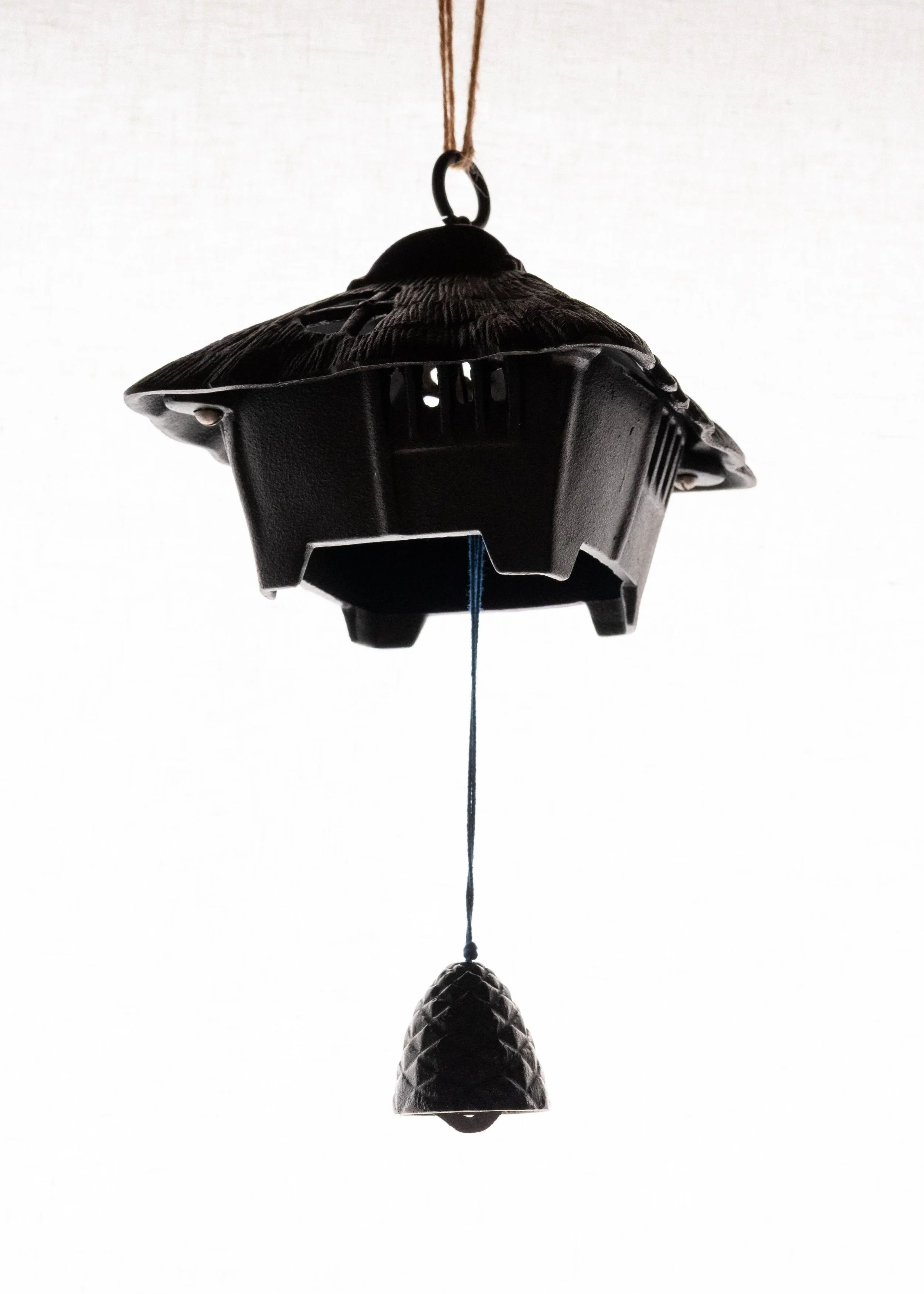 Image 1 of 11
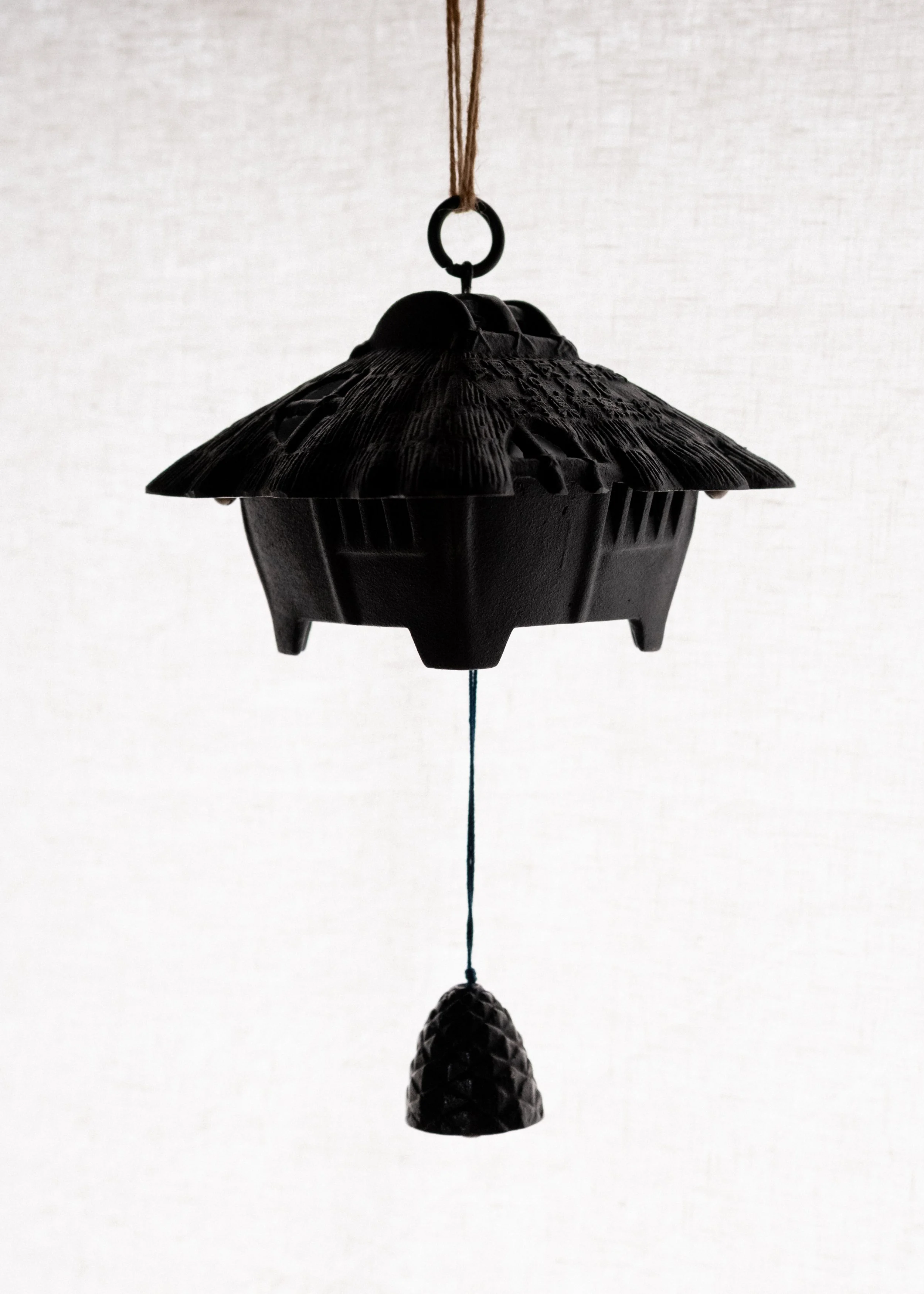 Image 2 of 11
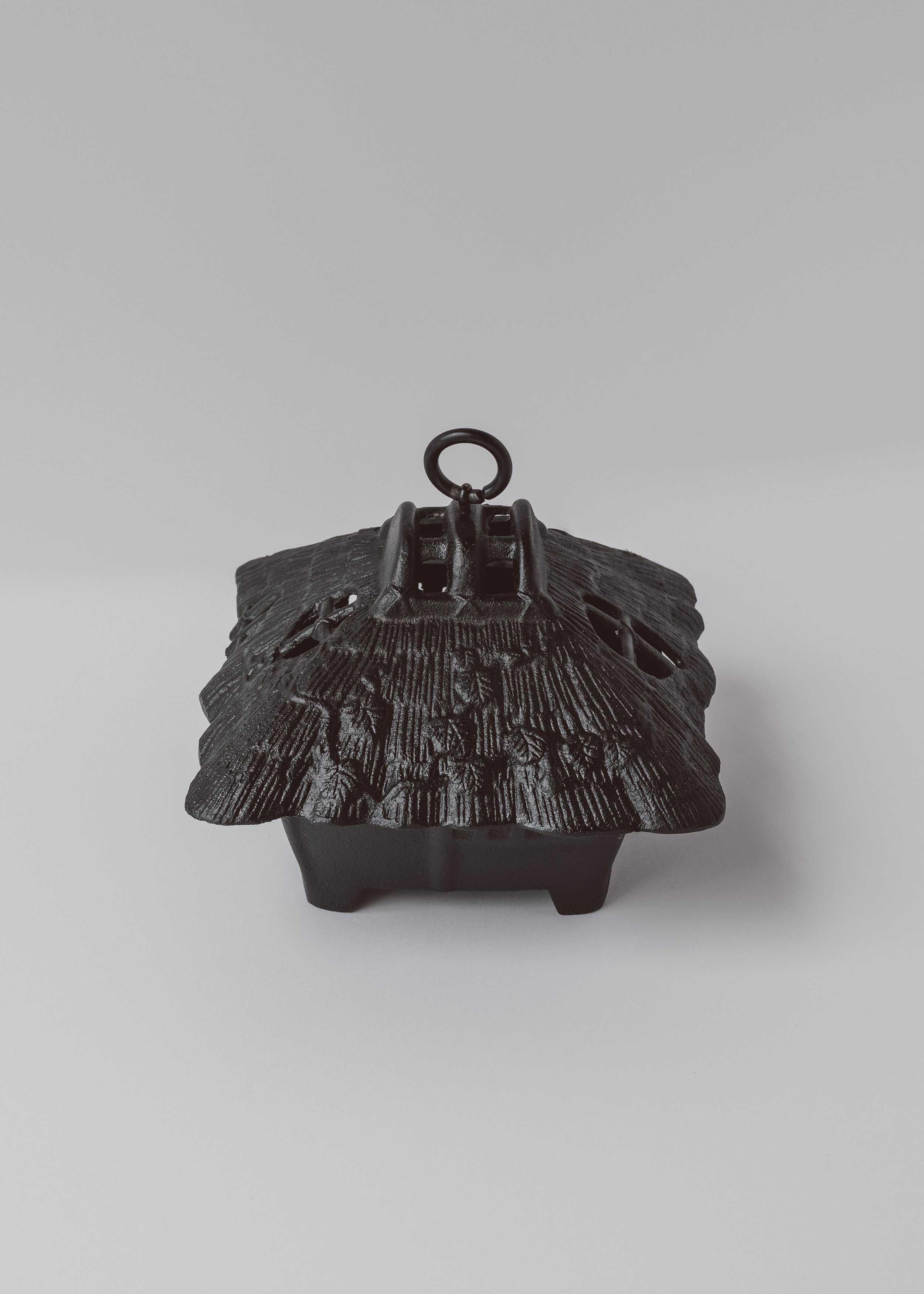 Image 3 of 11
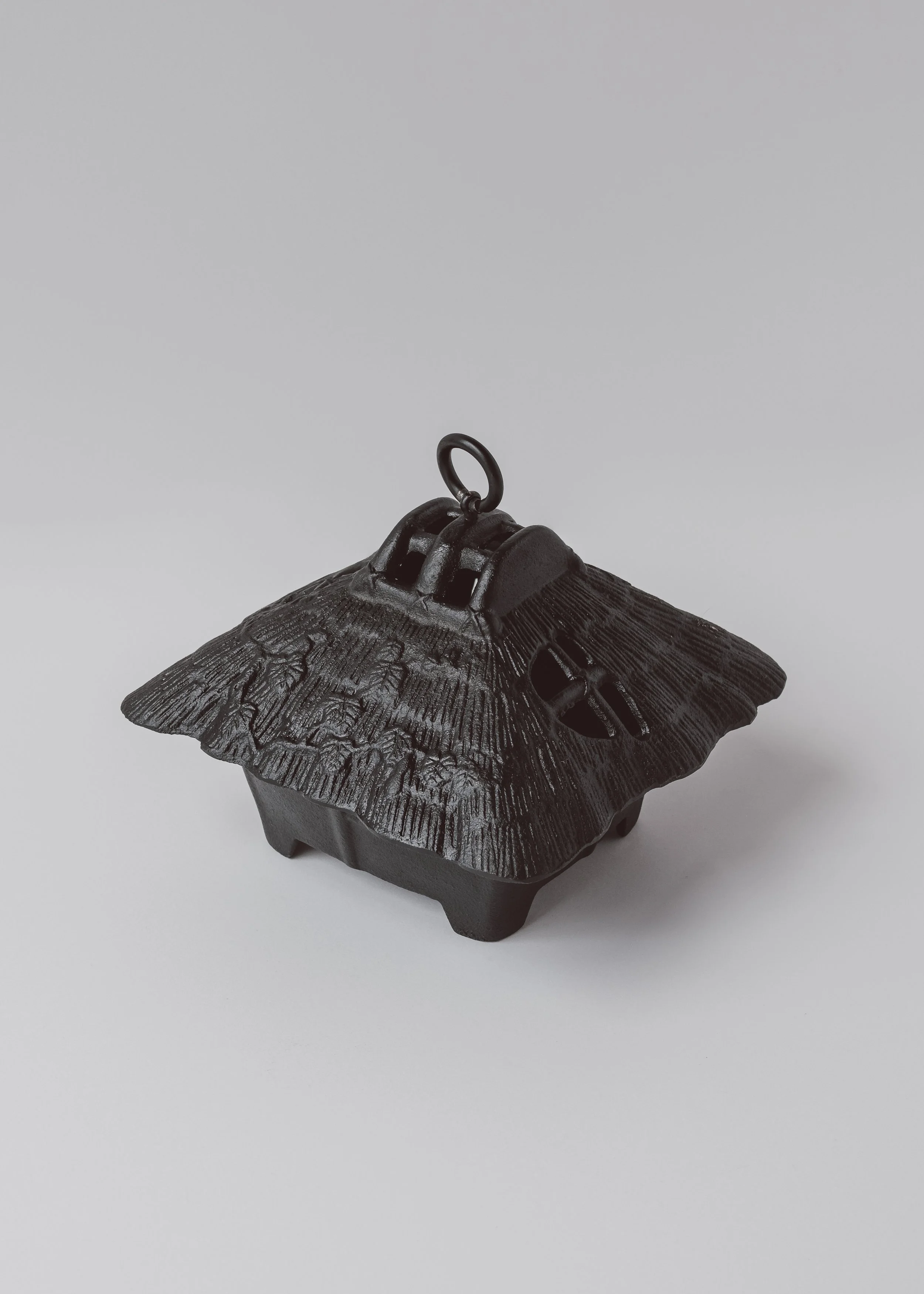 Image 4 of 11
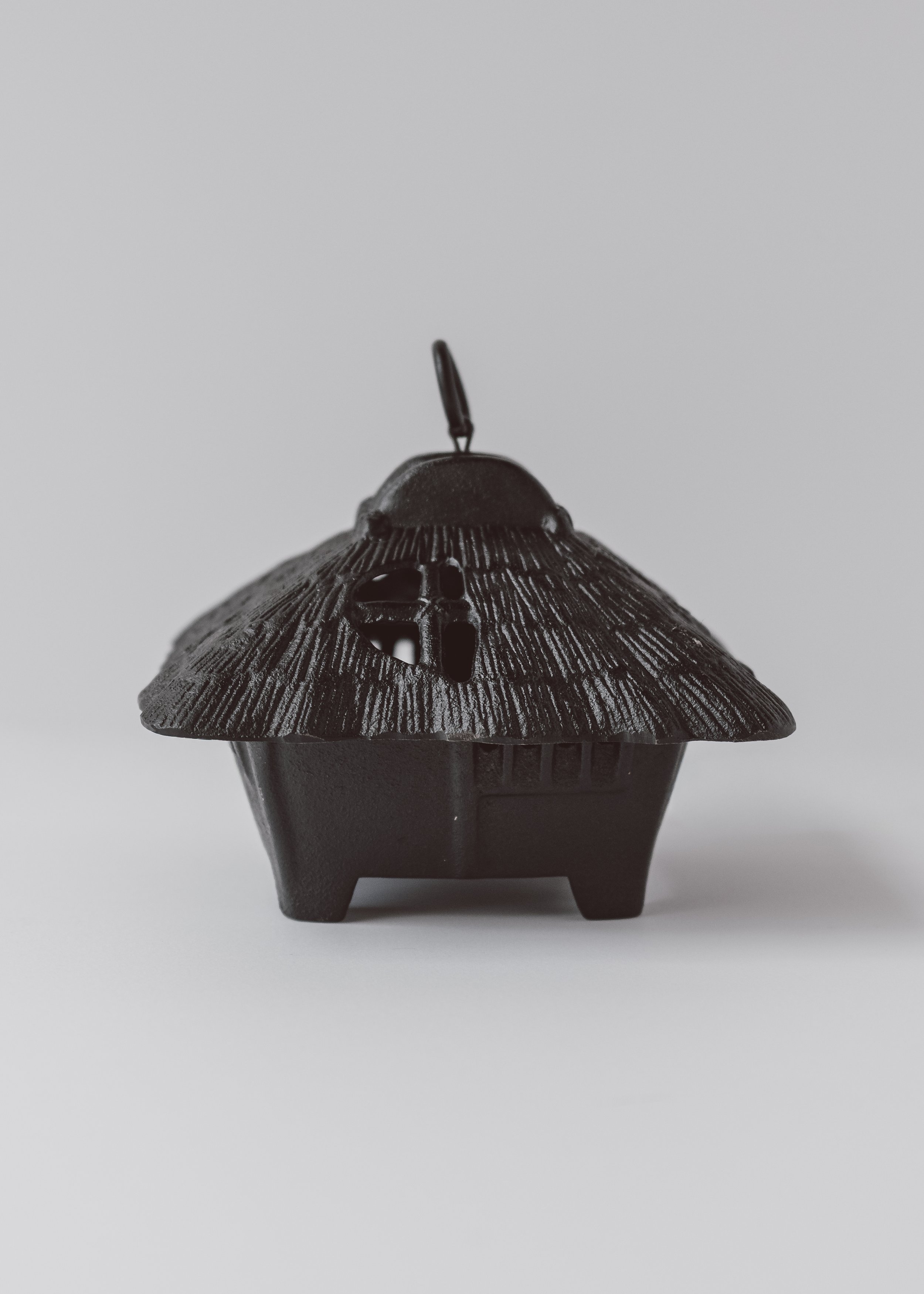 Image 5 of 11
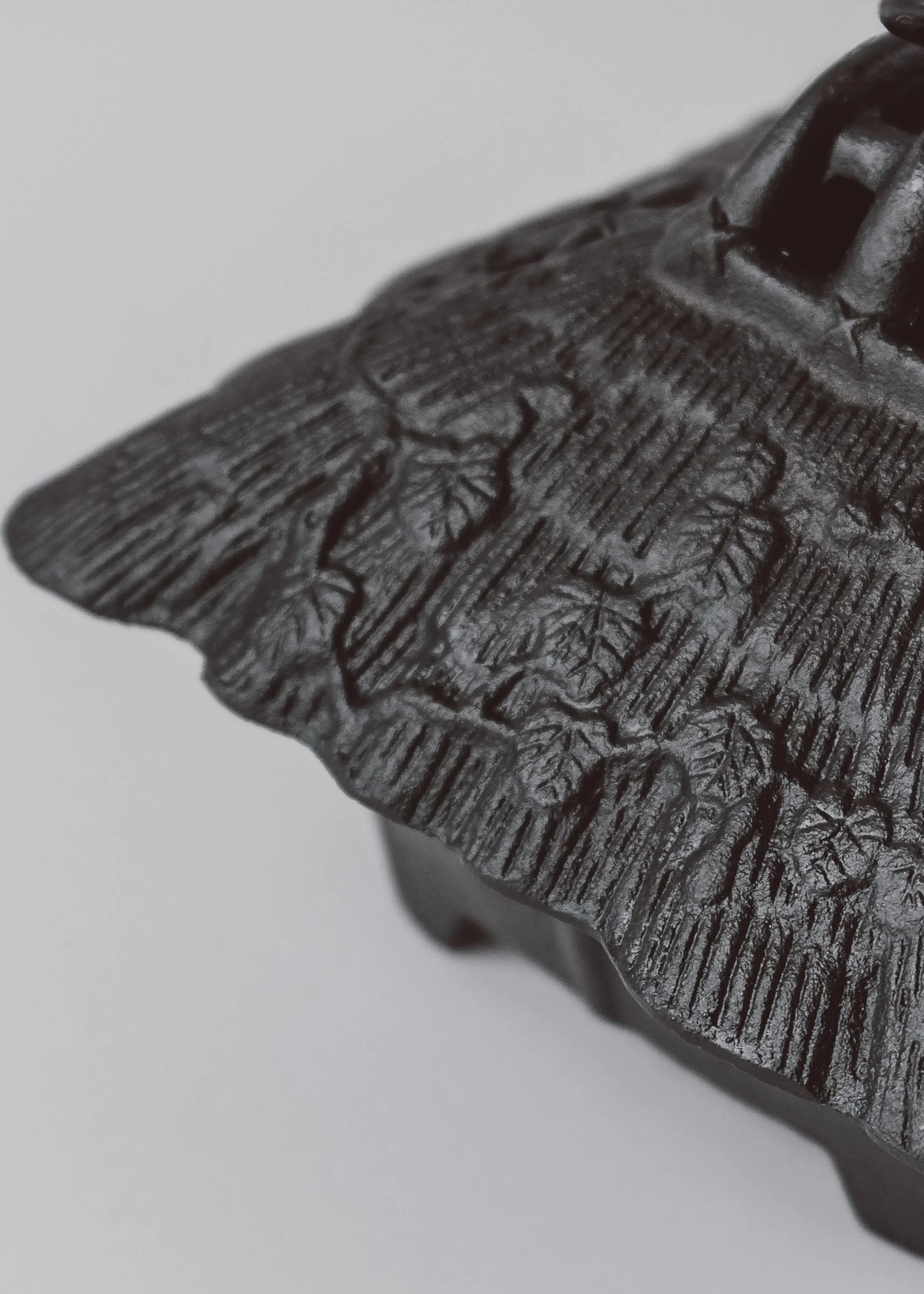 Image 6 of 11
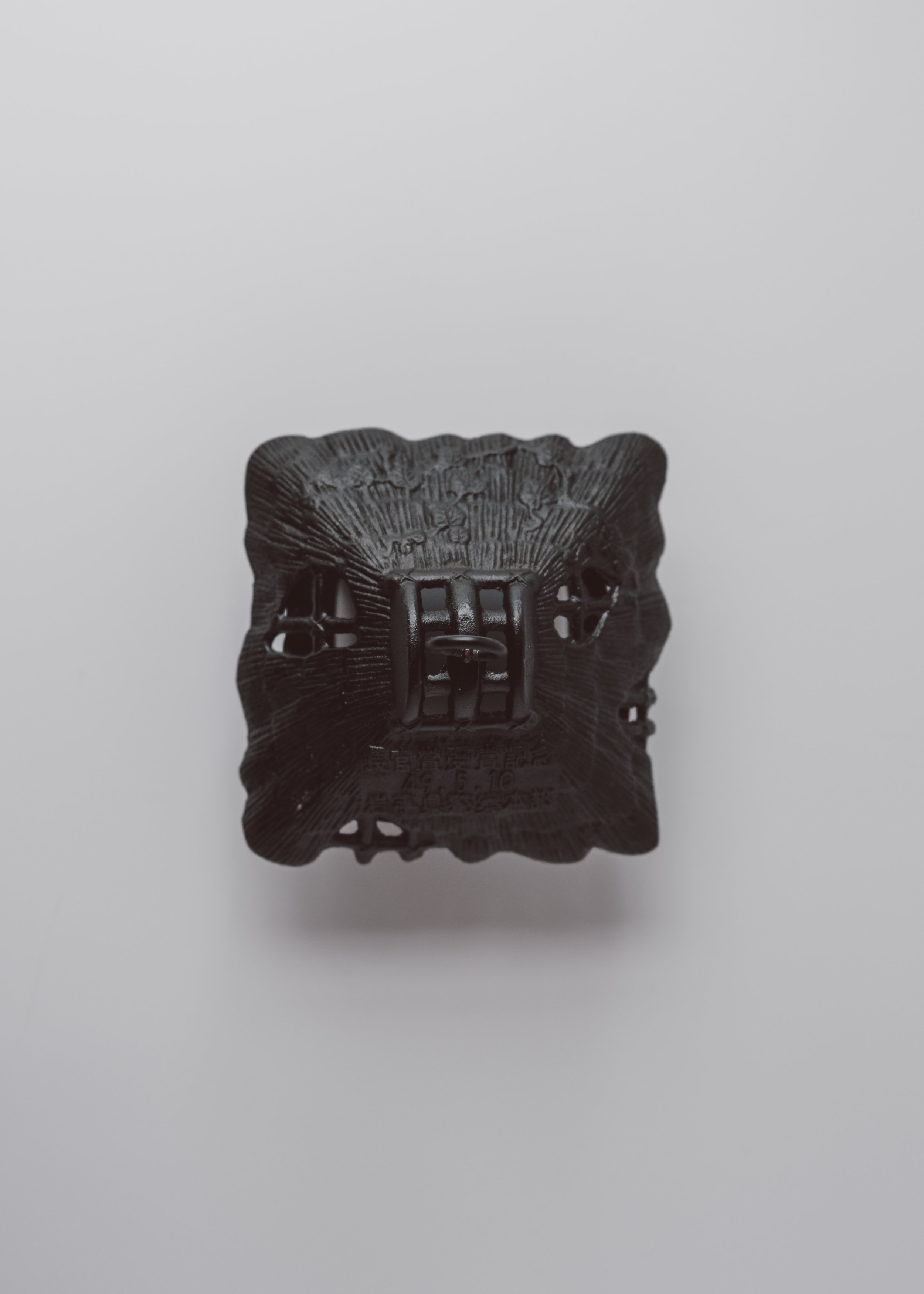 Image 7 of 11
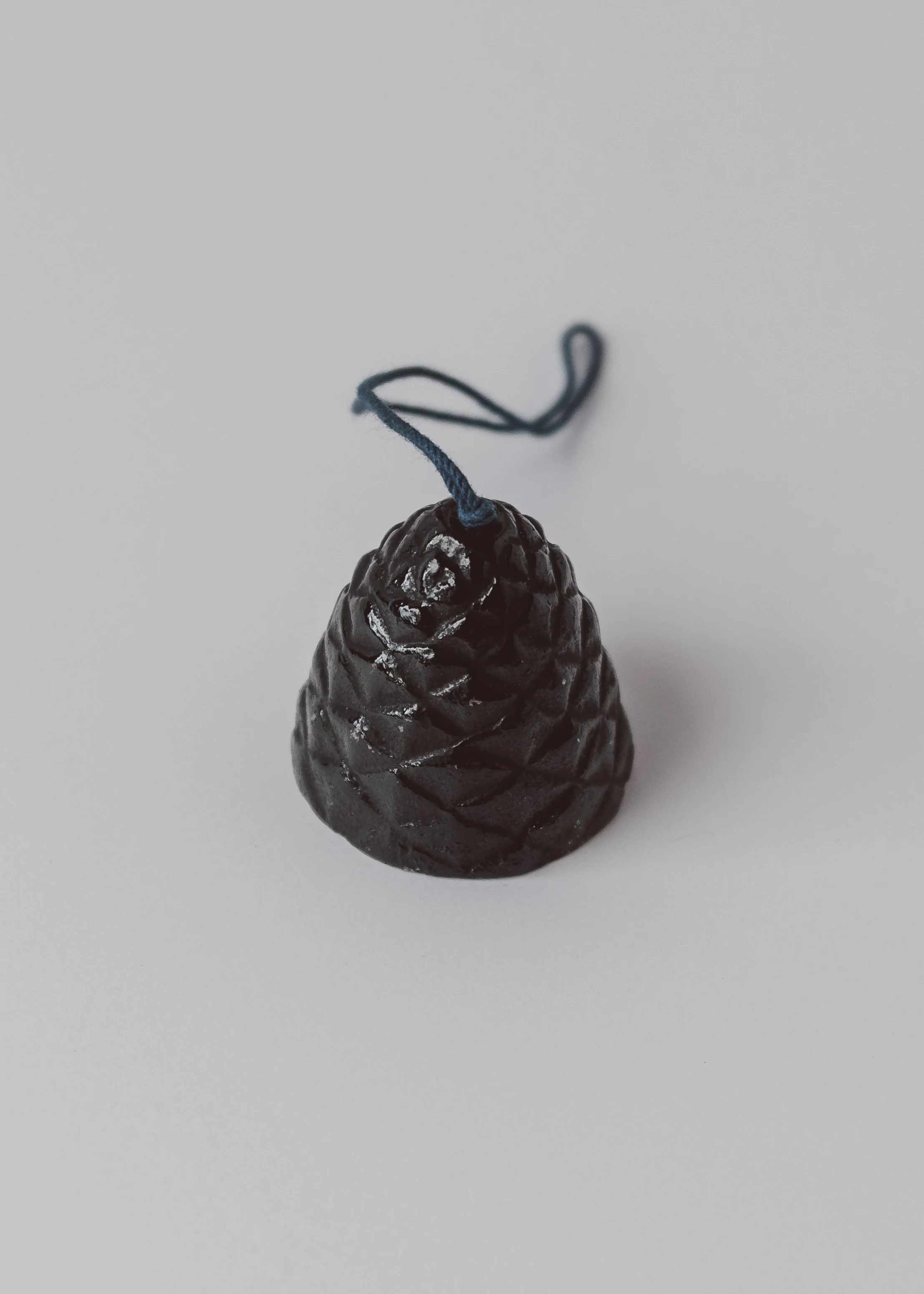 Image 8 of 11
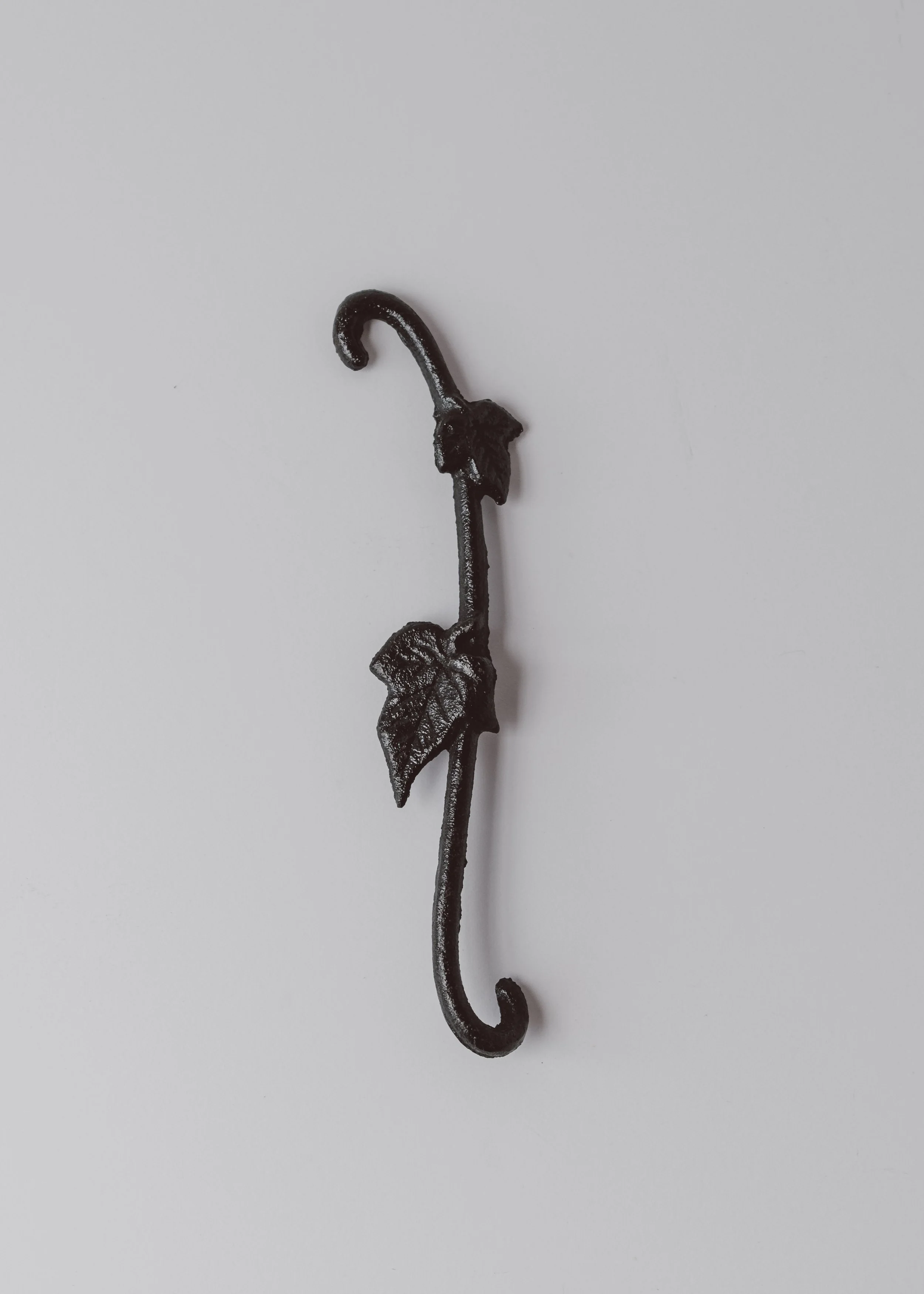 Image 9 of 11
 Image 10 of 11
 Image 11 of 11