【 The Concept 】
The smaller horse. Where BRIDLED BEARER stands with a hollow in its back and waits to be loaded, this figure carries a sound. It is 6.5 centimeters of cast iron dressed for a festival it will never attend — bridle lines across the face, tassels cast in relief across the chest, and the faint outline of a saddle blanket on its back, all rendered in the same matte black iron without a single point of added color. The decoration is not painted on. It is cast into the metal, as permanent as the body it covers.
The figure belongs to the same regional tradition as BRIDLED BEARER — a province where horses lived indoors beside their families and were dressed once a year in bright cloth and hundreds of tiny bells before being walked to a shrine. The bells made a distinctive layered sound as the procession moved through the town, and that sound — metal on metal, rhythmic, unhurried — is what the tassels and bell motifs cast into this figure's surface are meant to recall. The bells are silent. The procession is over. But the costume remains.
This is the younger sibling of BRIDLED BEARER. Same tradition, same iron, same silence. But where the older horse works — holding pens, anchoring papers — the younger one simply stands, wearing its festival dress, doing nothing except being dressed.
【 The Function 】
169 grams, 6.5 centimeters tall, 4 centimeters wide. Small enough to fit between two books on a shelf, light enough to hold in a closed fist, heavy enough to surprise when first picked up. It rings. Shake it or tilt it and a clapper inside the hollow body strikes the iron wall, producing a bright, clear note that belongs to the same family of sounds as THATCHED CHIME and PERCHED TOLL — high-frequency iron resonance with a long, clean decay. In its original context, figures like this were kept as year-round talismans on household shelves, carrying the memory of the annual festival into the months between ceremonies. The bell inside meant the memory could be summoned at any time — not just seen, but heard.
【 The Texture 】
Matte black iron with the granular surface of sand-cast metal. The same finish that covers every piece of ironware in this archive from the same northern tradition — lacquer bonded to iron at extreme heat, producing a black that absorbs light without reflecting it. The decorative elements are not raised far from the surface. The bridle lines, the tassel fringe, the bell shapes on the chest — all sit in shallow relief, visible at close range but merging into the overall silhouette from across a room. The effect is of a figure that reveals its detail only to those who come close enough to look. From a distance, it is a small black horse. From a hand's length, it is a small black horse wearing everything it owns.
【 Presence 】
THATCHED CHIME rings in the wind. BRIDLED BEARER holds pens in silence. PERCHED TOLL rings when tilted. This horse rings too — the third voice in the iron choir, the smallest and the highest. It stands, dressed and silent, like a child in a festival costume after the parade has ended and the crowds have gone home. The decoration is still on. The bells are still cast into the chest. But there is no procession left to join, and the horse does not seem to mind. Pick it up, though, and shake it once, and the real bell hidden inside answers — a single bright note that says the procession is not over. It is waiting.
Sourced from a private collection in the Kansai region, Japan.
【 The Concept 】
The smaller horse. Where BRIDLED BEARER stands with a hollow in its back and waits to be loaded, this figure carries a sound. It is 6.5 centimeters of cast iron dressed for a festival it will never attend — bridle lines across the face, tassels cast in relief across the chest, and the faint outline of a saddle blanket on its back, all rendered in the same matte black iron without a single point of added color. The decoration is not painted on. It is cast into the metal, as permanent as the body it covers.
The figure belongs to the same regional tradition as BRIDLED BEARER — a province where horses lived indoors beside their families and were dressed once a year in bright cloth and hundreds of tiny bells before being walked to a shrine. The bells made a distinctive layered sound as the procession moved through the town, and that sound — metal on metal, rhythmic, unhurried — is what the tassels and bell motifs cast into this figure's surface are meant to recall. The bells are silent. The procession is over. But the costume remains.
This is the younger sibling of BRIDLED BEARER. Same tradition, same iron, same silence. But where the older horse works — holding pens, anchoring papers — the younger one simply stands, wearing its festival dress, doing nothing except being dressed.
【 The Function 】
169 grams, 6.5 centimeters tall, 4 centimeters wide. Small enough to fit between two books on a shelf, light enough to hold in a closed fist, heavy enough to surprise when first picked up. It rings. Shake it or tilt it and a clapper inside the hollow body strikes the iron wall, producing a bright, clear note that belongs to the same family of sounds as THATCHED CHIME and PERCHED TOLL — high-frequency iron resonance with a long, clean decay. In its original context, figures like this were kept as year-round talismans on household shelves, carrying the memory of the annual festival into the months between ceremonies. The bell inside meant the memory could be summoned at any time — not just seen, but heard.
【 The Texture 】
Matte black iron with the granular surface of sand-cast metal. The same finish that covers every piece of ironware in this archive from the same northern tradition — lacquer bonded to iron at extreme heat, producing a black that absorbs light without reflecting it. The decorative elements are not raised far from the surface. The bridle lines, the tassel fringe, the bell shapes on the chest — all sit in shallow relief, visible at close range but merging into the overall silhouette from across a room. The effect is of a figure that reveals its detail only to those who come close enough to look. From a distance, it is a small black horse. From a hand's length, it is a small black horse wearing everything it owns.
【 Presence 】
THATCHED CHIME rings in the wind. BRIDLED BEARER holds pens in silence. PERCHED TOLL rings when tilted. This horse rings too — the third voice in the iron choir, the smallest and the highest. It stands, dressed and silent, like a child in a festival costume after the parade has ended and the crowds have gone home. The decoration is still on. The bells are still cast into the chest. But there is no procession left to join, and the horse does not seem to mind. Pick it up, though, and shake it once, and the real bell hidden inside answers — a single bright note that says the procession is not over. It is waiting.
Sourced from a private collection in the Kansai region, Japan.


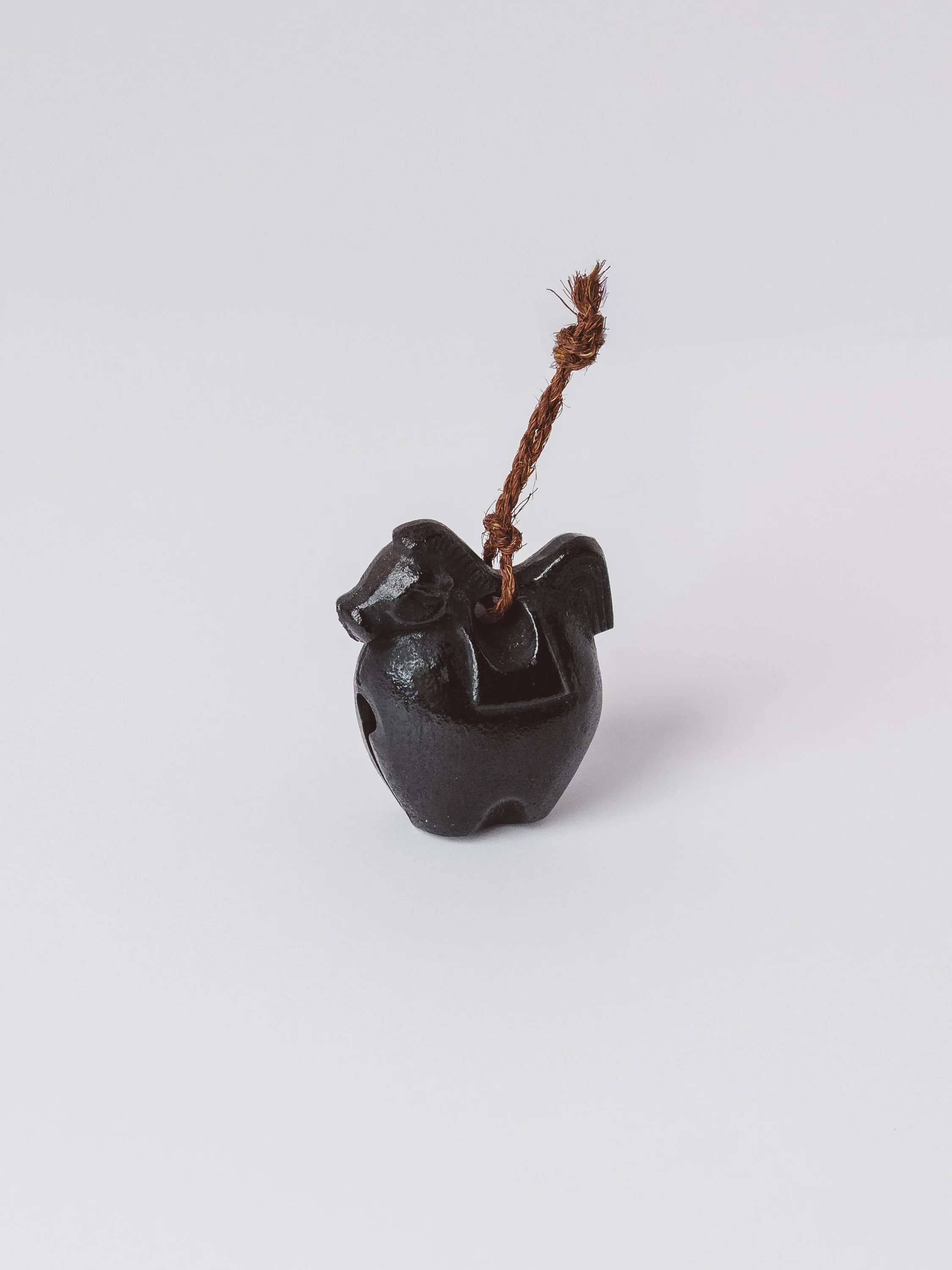 Image 1 of 6
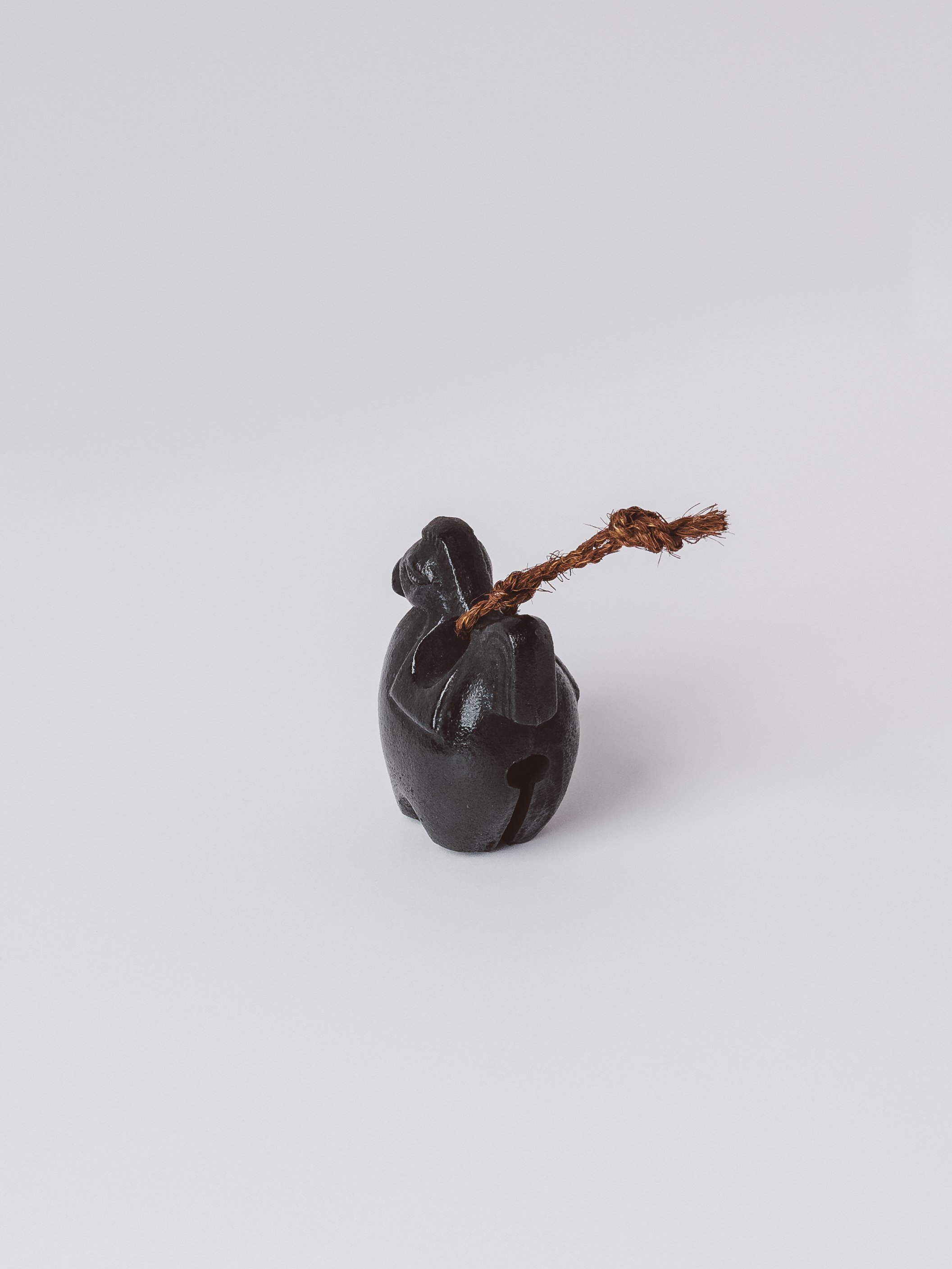 Image 2 of 6
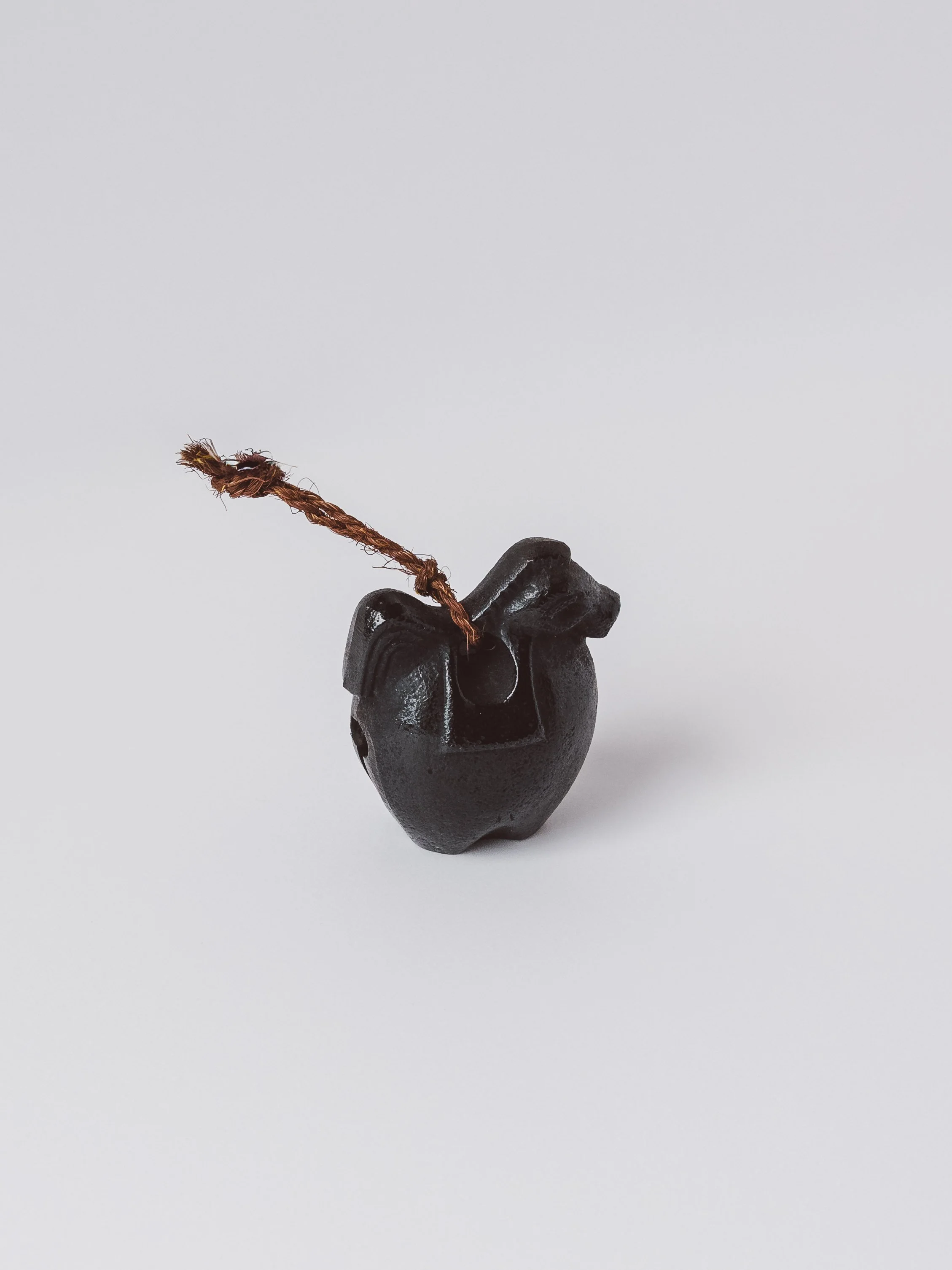 Image 3 of 6
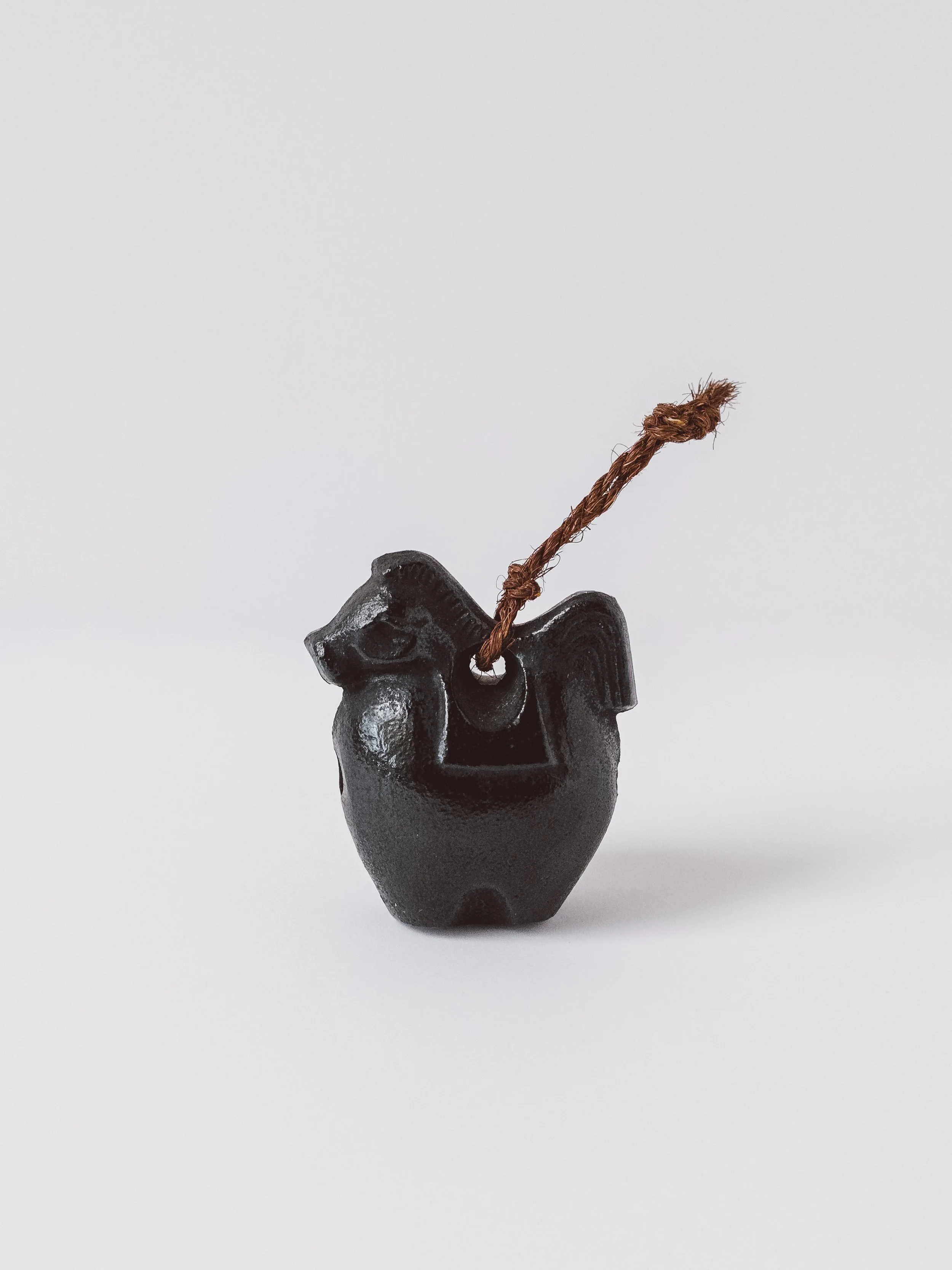 Image 4 of 6
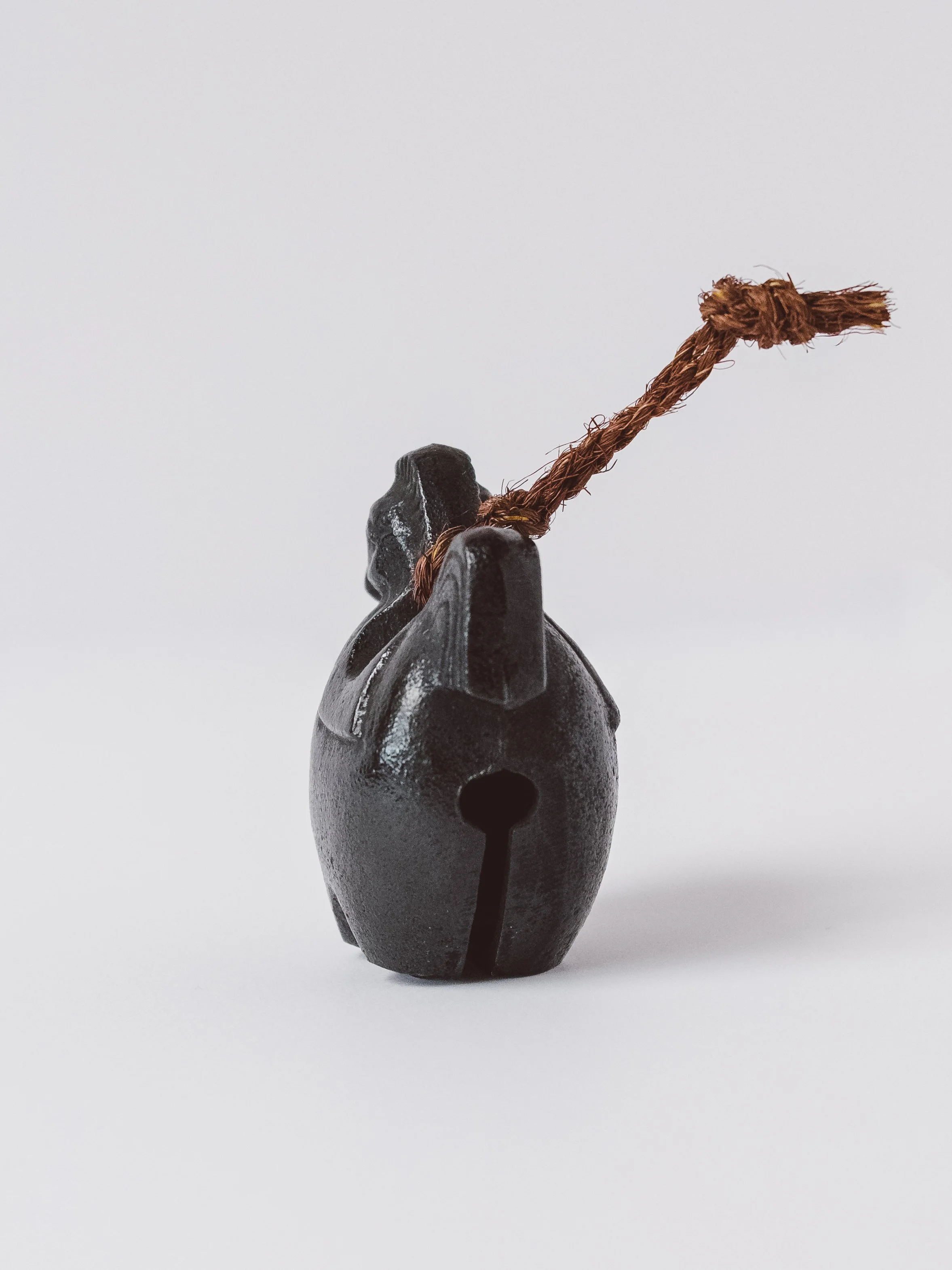 Image 5 of 6
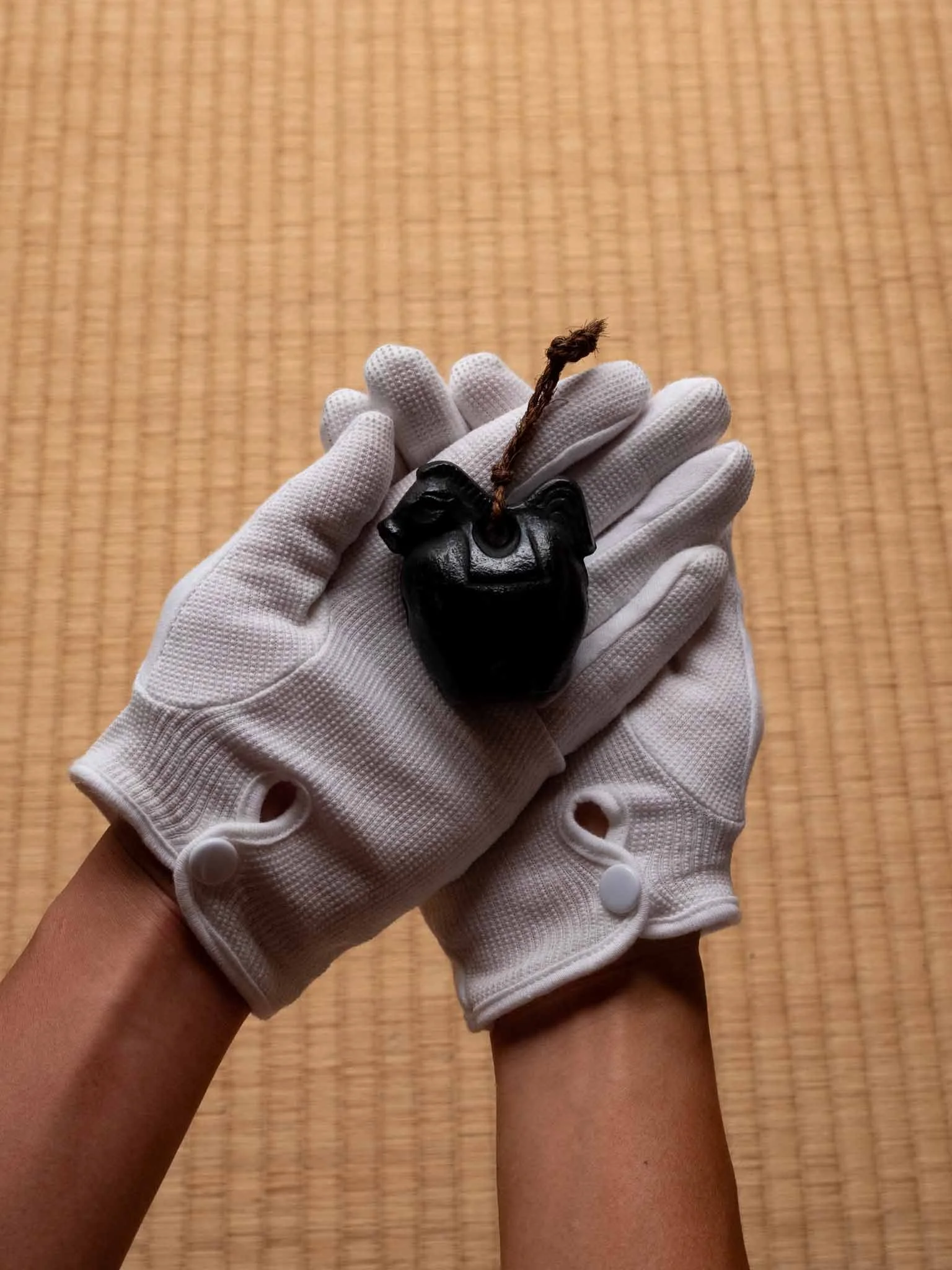 Image 6 of 6