【 The Concept 】
A wooden duck, carved to float but never meant to touch water. The form belongs to a tradition that began as deception — hunters once set figures like this on lakes and marshes to lure living birds within range. Over time, the tool became the art. The gun was put away. The duck stayed on the shelf.
This one is modeled after a male mallard: dark green head, white ring at the throat, chestnut breast fading into a pale flank covered in fine speckles. The bottom is flat and legless — the silhouette of a bird resting on still water, seen from shore. An anonymous carver shaped it from a single block of wood and painted it not to be beautiful, but to be believed. That the two turned out to be the same thing is the quiet accident at the center of this entire tradition.
【 The Function 】
200 grams, 24 centimeters long. Low, horizontal, and self-stabilizing on any flat surface. It sits the way a duck sits on water — wide, still, and lower than everything around it. Among the vertical objects on a shelf (books, bottles, frames), it introduces the only horizontal line, pulling the eye sideways and slowing it down. It requires no stand, no mount, no wall hook. Set it down and it is already in position.
【 The Texture 】
Paint over wood, applied in layers. The head is a flat, matte dark green — almost black in low light — with no gloss or metallic effect. Below the white neck ring, the breast deepens into a warm chestnut that darkens toward the waterline. The most distinctive surface is the flank: a base of reddish-brown overlaid with irregular white and black speckles, applied by sponge or stiff brush in a technique that mimics the visual noise of real feathers seen at a distance. No two marks are the same size or spacing. Near the tail, a patch of vivid blue bordered by white stripes represents the wing speculum — the single flash of color that identifies this species in flight. The beak is mustard yellow tipped in black. The eyes are shallow carved sockets fitted with small plastic globes — the only non-organic material on the entire object, and the only point where the surface catches light sharply rather than absorbing it. In several places — the crown, the back, the edges of the tail — the paint has worn through to bare wood beneath, a pale warm beige that was never meant to be seen.
【 Presence 】
It does not rise. It does not gesture. It does not glow. It sits, and in sitting, it introduces a quality that most interior objects lack: horizontal calm. Everything else on a shelf competes for vertical attention. This figure opts out. Its posture is rest — the exact posture of a bird that has landed, folded its wings, and decided to stay. The earth tones absorb light rather than reflecting it, and the speckled flank breaks up the surface just enough to hold the eye without holding it hostage. It is the quietest object in any room it enters. That is its entire strategy.
Sourced from a private collection in the Kansai region, Japan.
【 The Concept 】
A wooden duck, carved to float but never meant to touch water. The form belongs to a tradition that began as deception — hunters once set figures like this on lakes and marshes to lure living birds within range. Over time, the tool became the art. The gun was put away. The duck stayed on the shelf.
This one is modeled after a male mallard: dark green head, white ring at the throat, chestnut breast fading into a pale flank covered in fine speckles. The bottom is flat and legless — the silhouette of a bird resting on still water, seen from shore. An anonymous carver shaped it from a single block of wood and painted it not to be beautiful, but to be believed. That the two turned out to be the same thing is the quiet accident at the center of this entire tradition.
【 The Function 】
200 grams, 24 centimeters long. Low, horizontal, and self-stabilizing on any flat surface. It sits the way a duck sits on water — wide, still, and lower than everything around it. Among the vertical objects on a shelf (books, bottles, frames), it introduces the only horizontal line, pulling the eye sideways and slowing it down. It requires no stand, no mount, no wall hook. Set it down and it is already in position.
【 The Texture 】
Paint over wood, applied in layers. The head is a flat, matte dark green — almost black in low light — with no gloss or metallic effect. Below the white neck ring, the breast deepens into a warm chestnut that darkens toward the waterline. The most distinctive surface is the flank: a base of reddish-brown overlaid with irregular white and black speckles, applied by sponge or stiff brush in a technique that mimics the visual noise of real feathers seen at a distance. No two marks are the same size or spacing. Near the tail, a patch of vivid blue bordered by white stripes represents the wing speculum — the single flash of color that identifies this species in flight. The beak is mustard yellow tipped in black. The eyes are shallow carved sockets fitted with small plastic globes — the only non-organic material on the entire object, and the only point where the surface catches light sharply rather than absorbing it. In several places — the crown, the back, the edges of the tail — the paint has worn through to bare wood beneath, a pale warm beige that was never meant to be seen.
【 Presence 】
It does not rise. It does not gesture. It does not glow. It sits, and in sitting, it introduces a quality that most interior objects lack: horizontal calm. Everything else on a shelf competes for vertical attention. This figure opts out. Its posture is rest — the exact posture of a bird that has landed, folded its wings, and decided to stay. The earth tones absorb light rather than reflecting it, and the speckled flank breaks up the surface just enough to hold the eye without holding it hostage. It is the quietest object in any room it enters. That is its entire strategy.
Sourced from a private collection in the Kansai region, Japan.


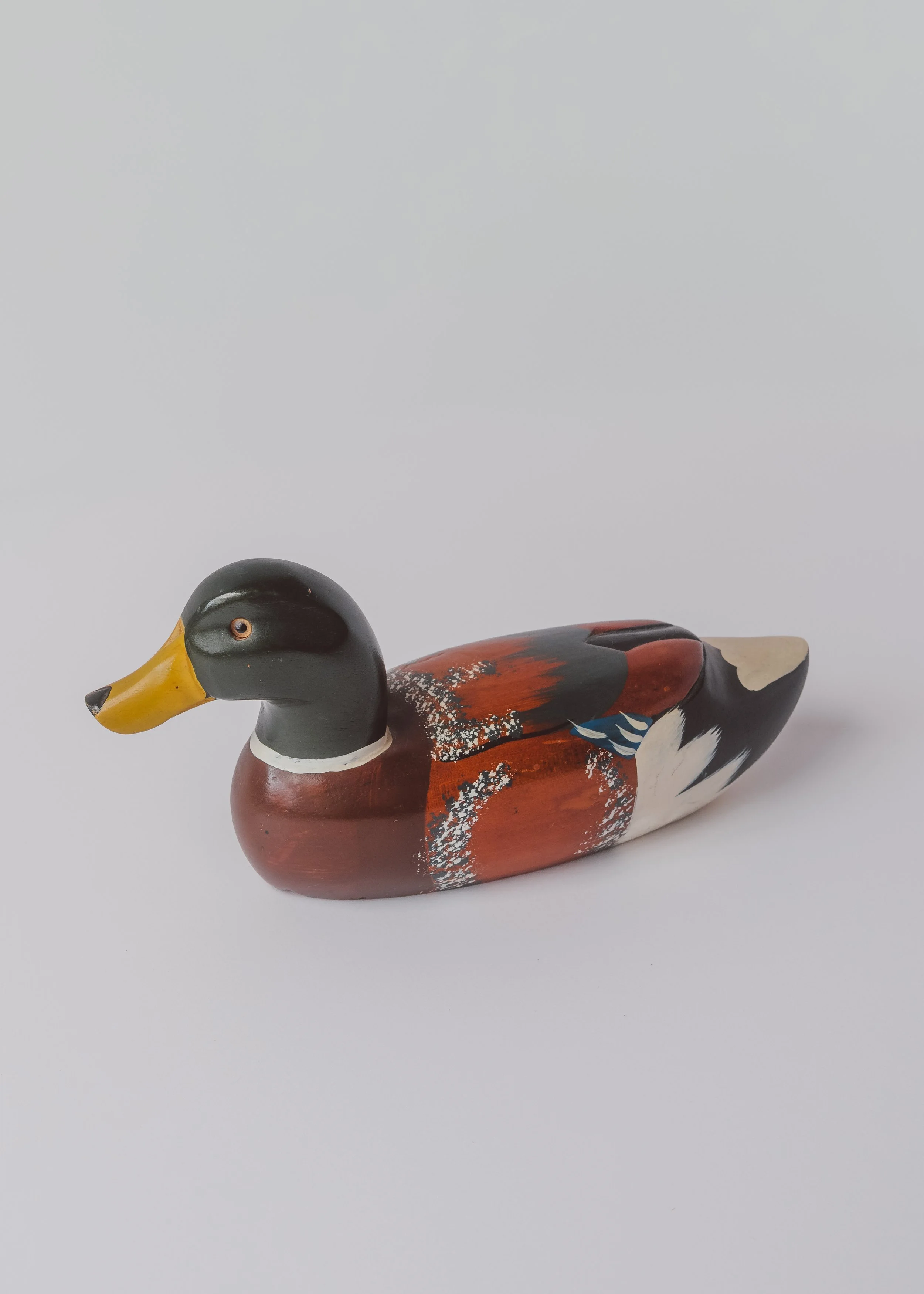 Image 1 of 10
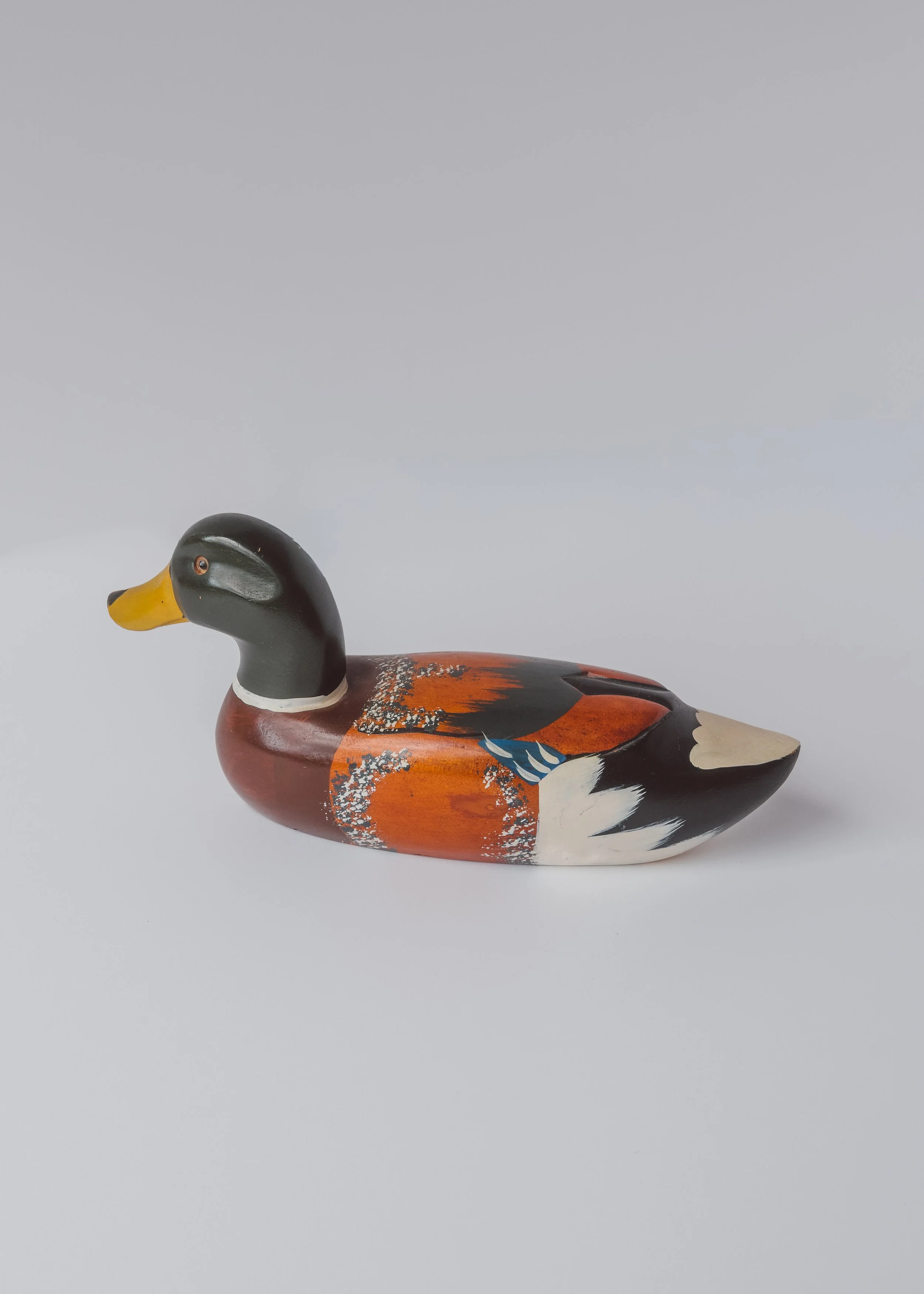 Image 2 of 10
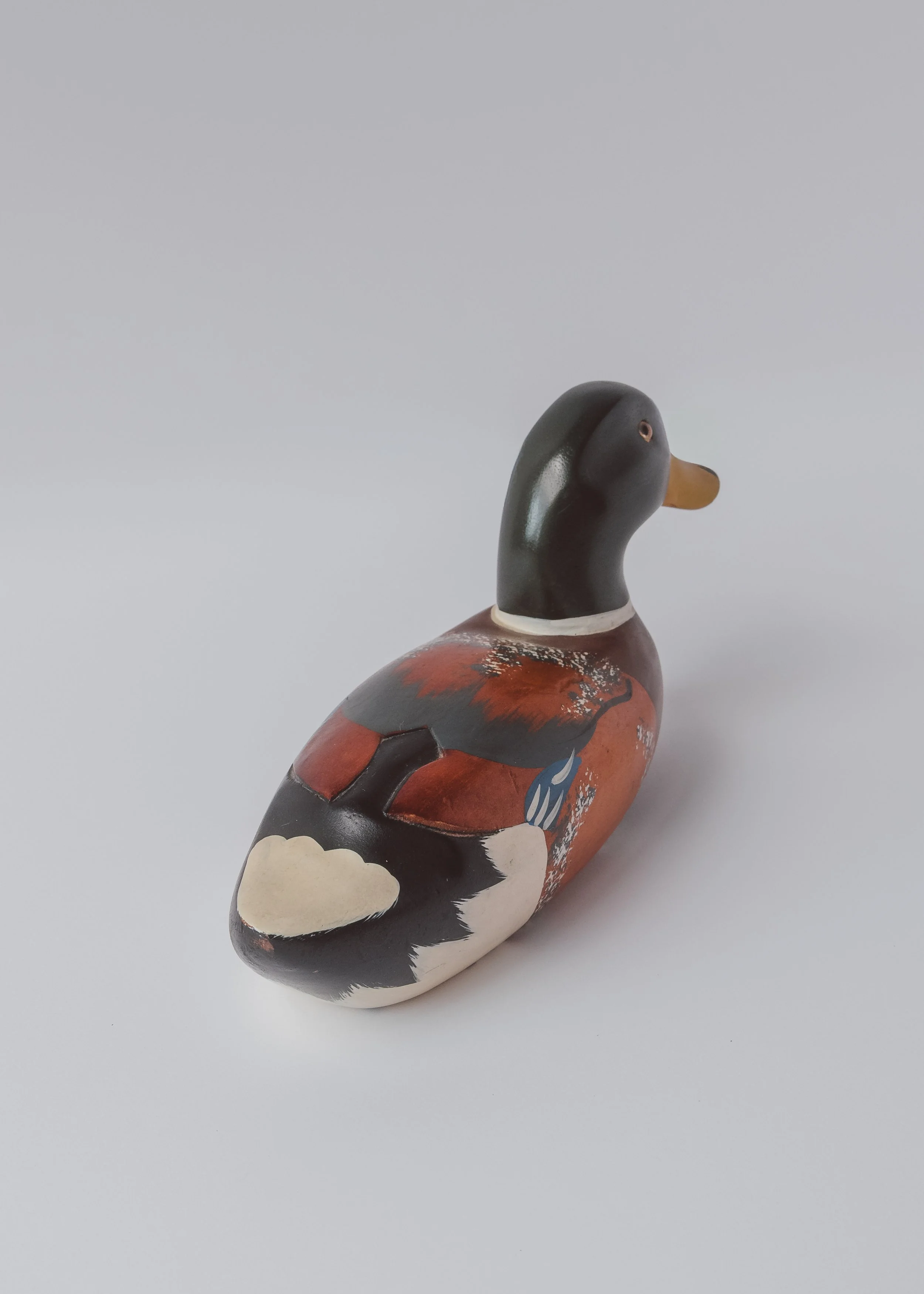 Image 3 of 10
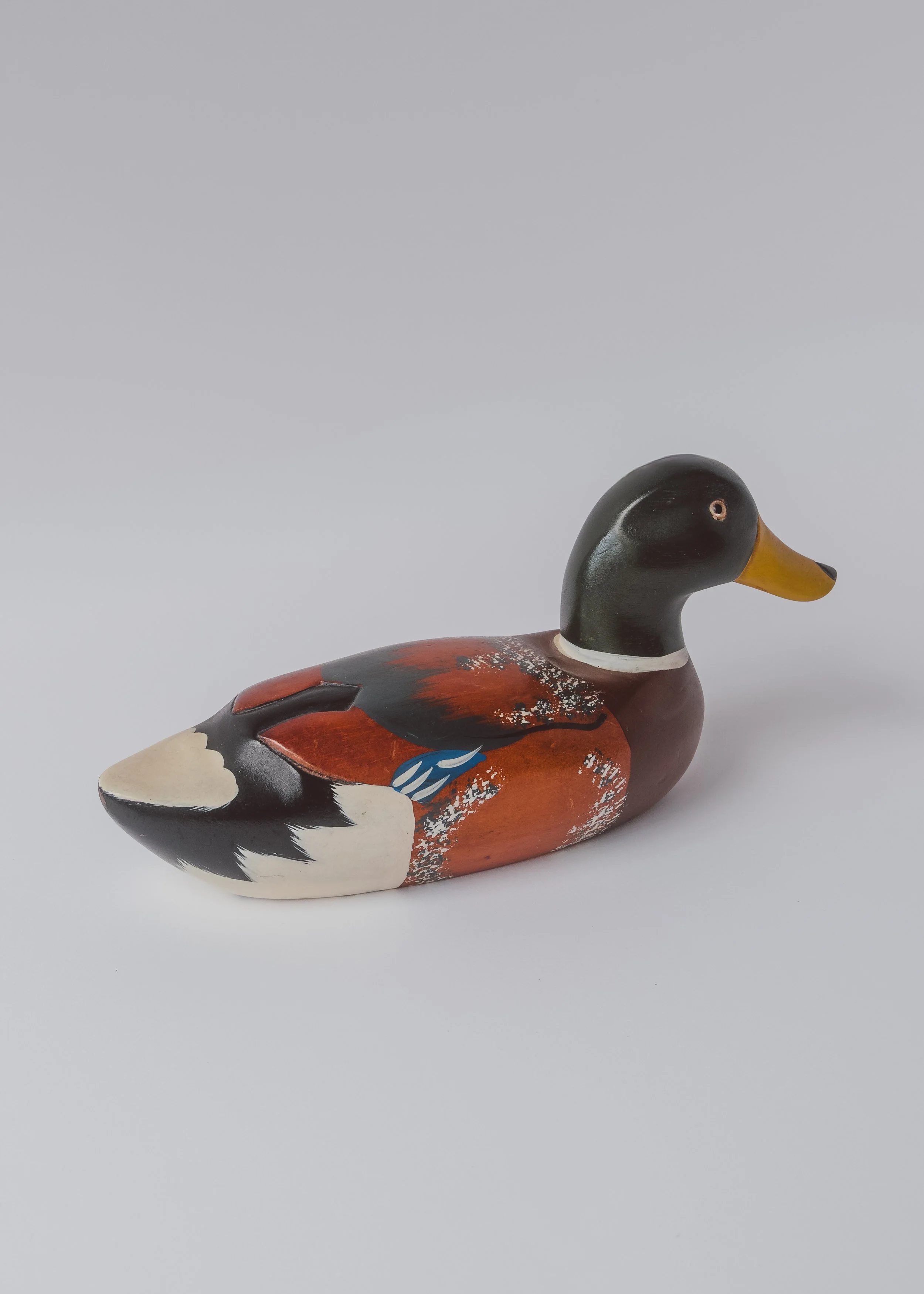 Image 4 of 10
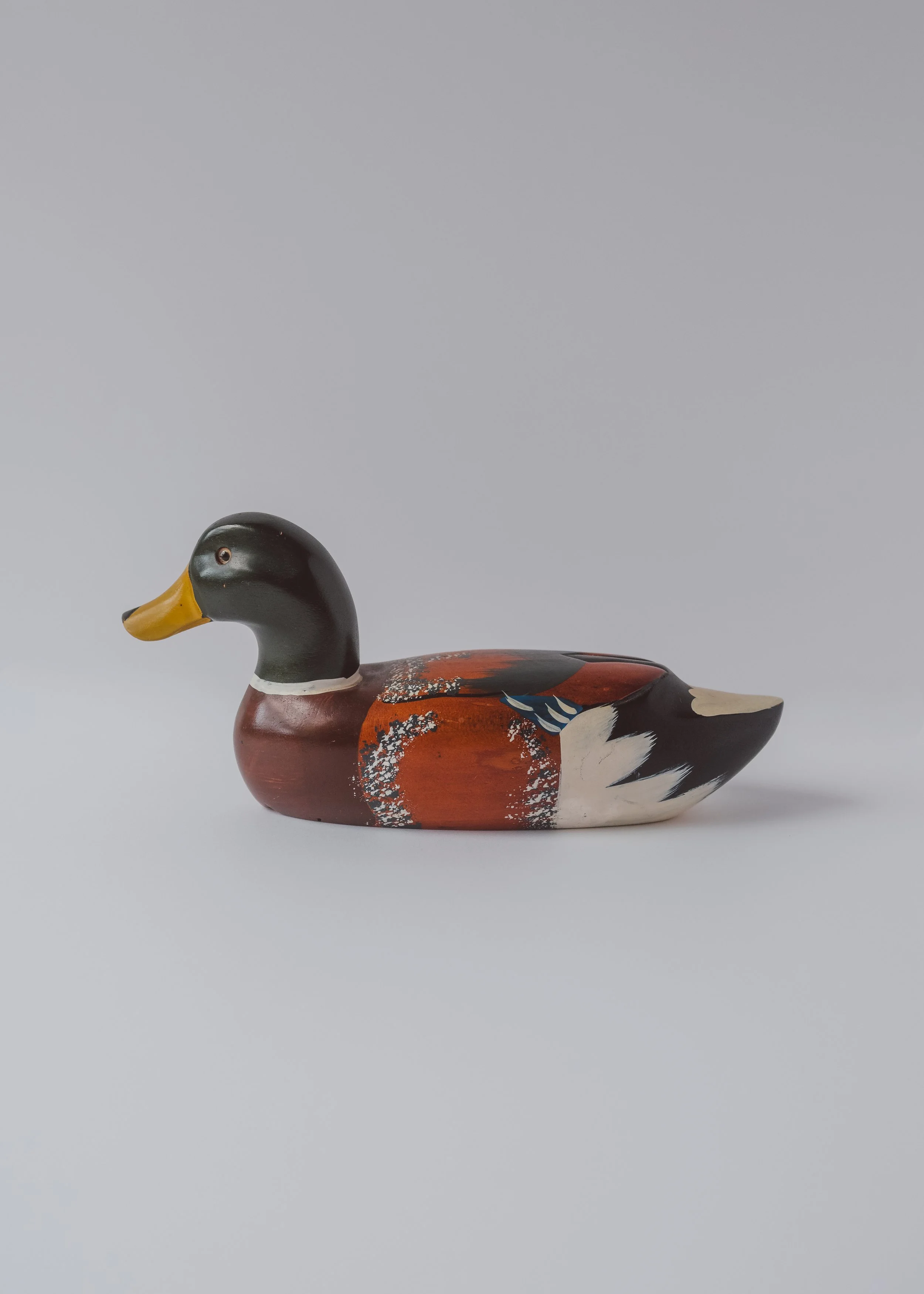 Image 5 of 10
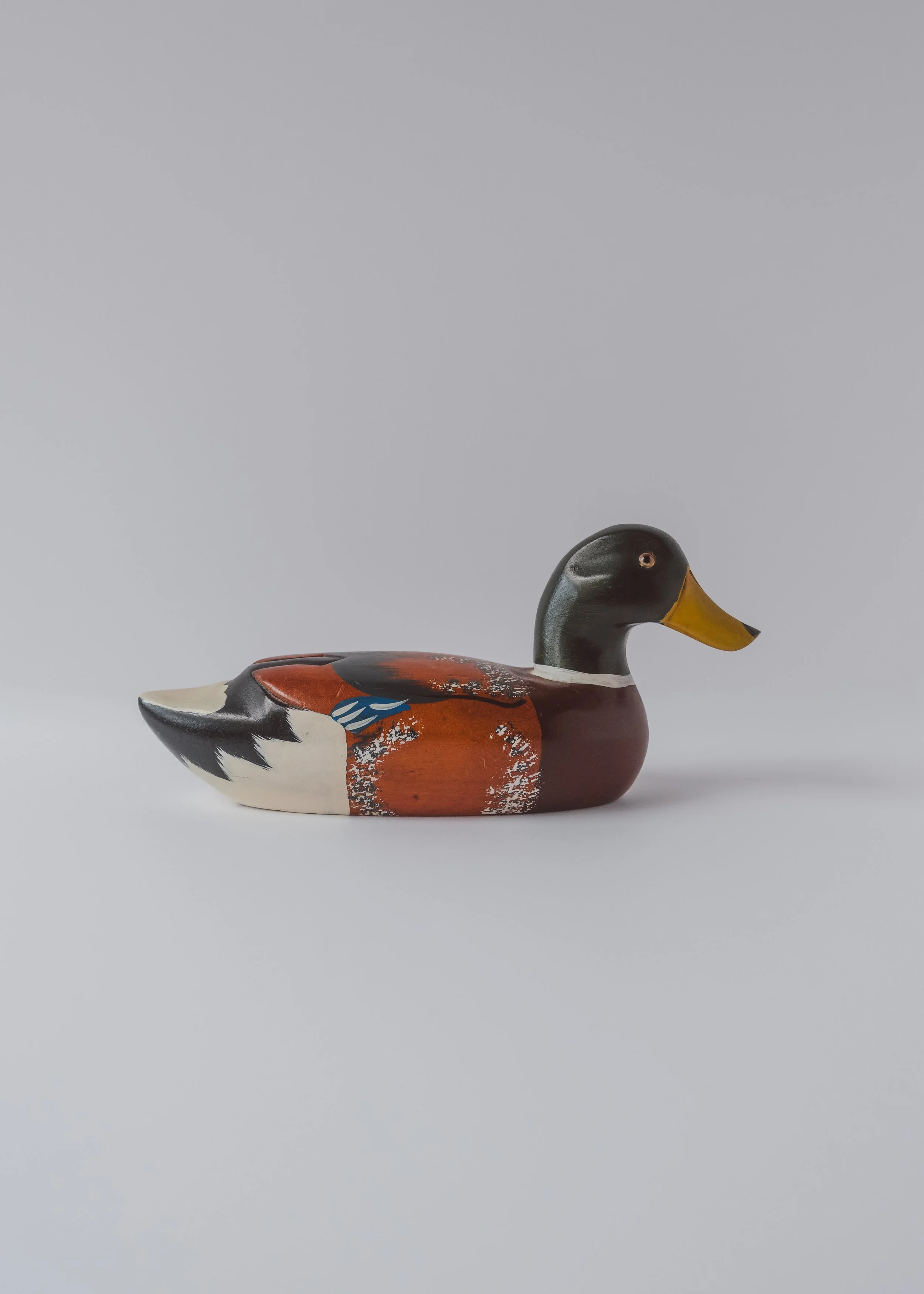 Image 6 of 10
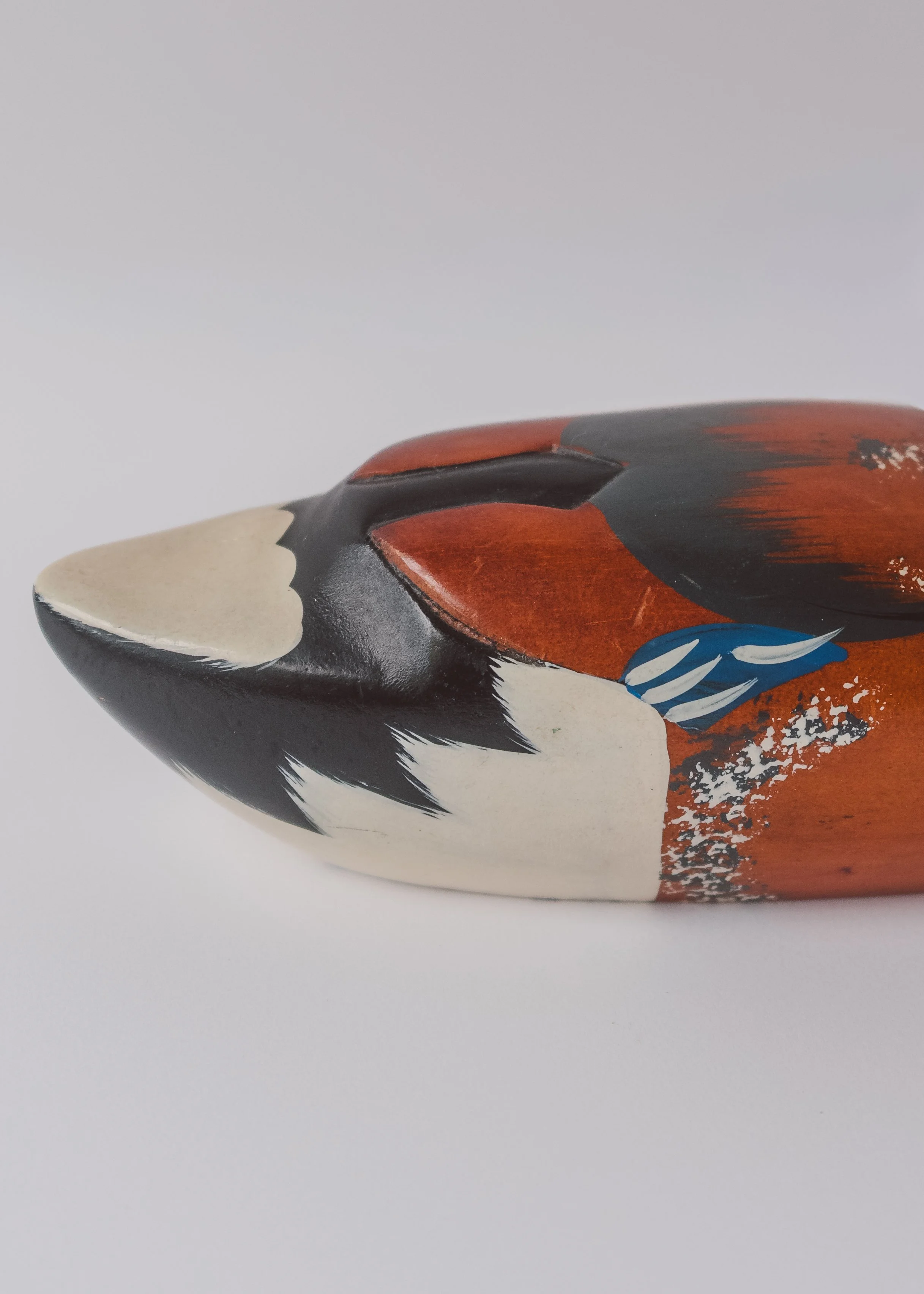 Image 7 of 10
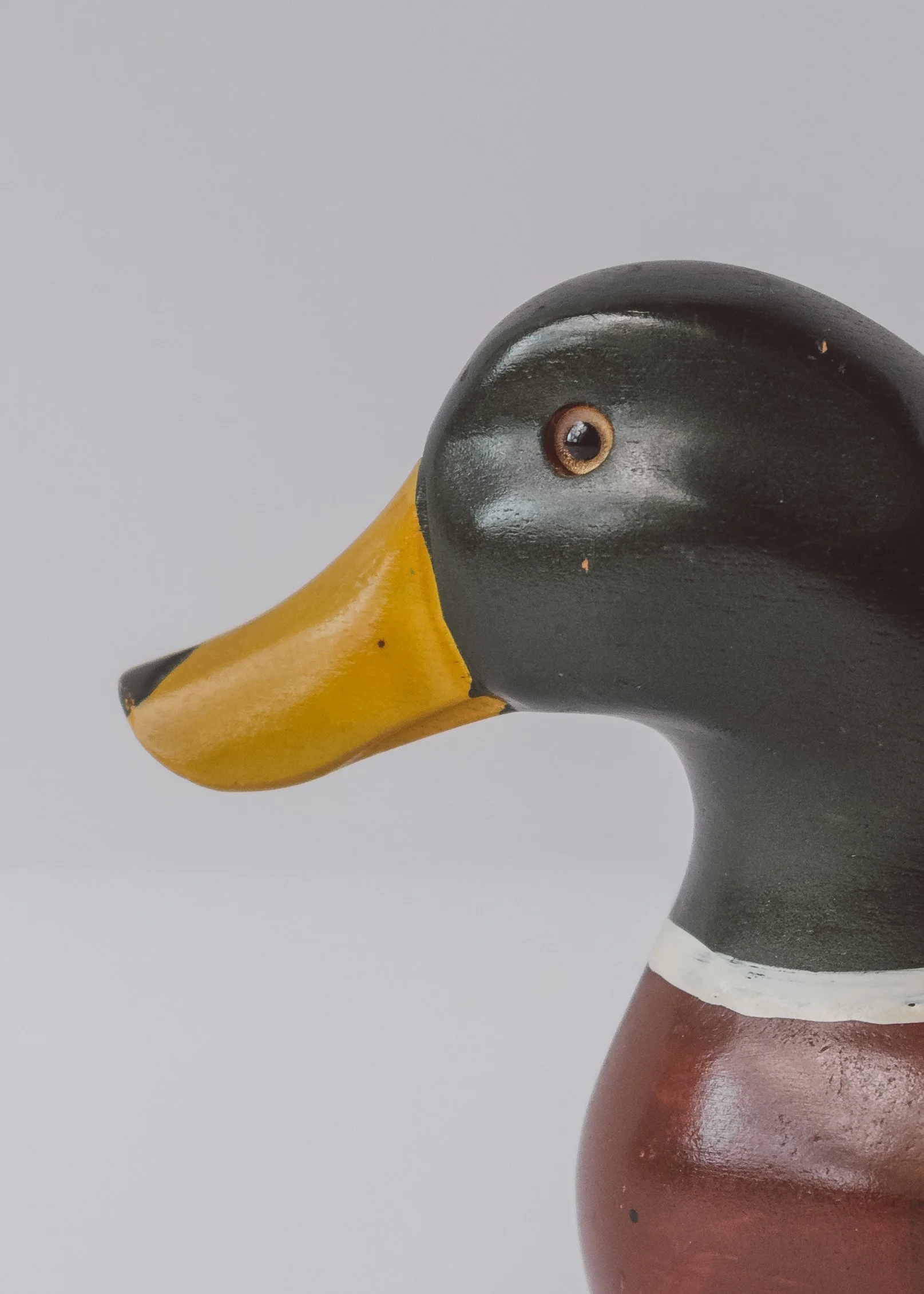 Image 8 of 10
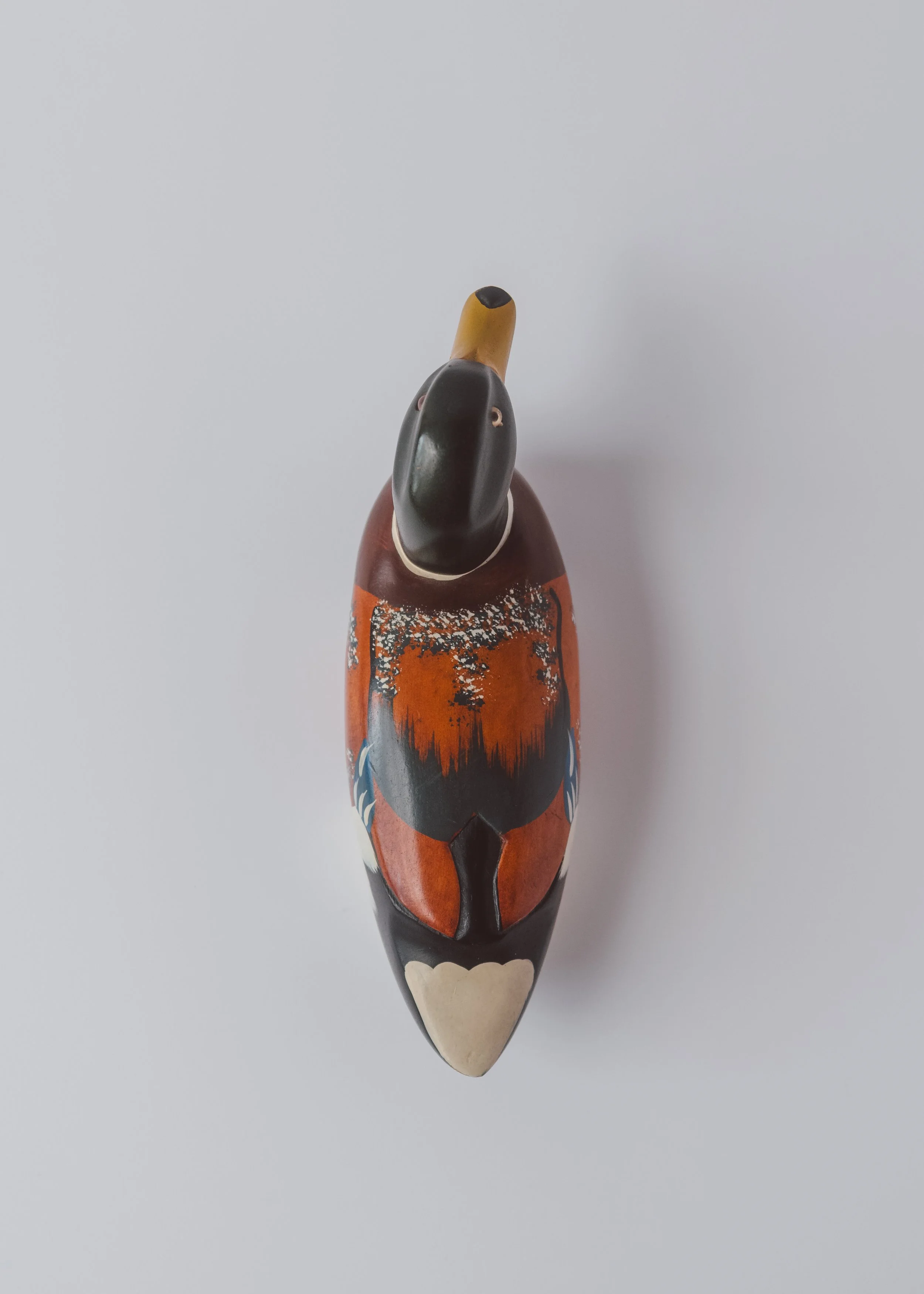 Image 9 of 10
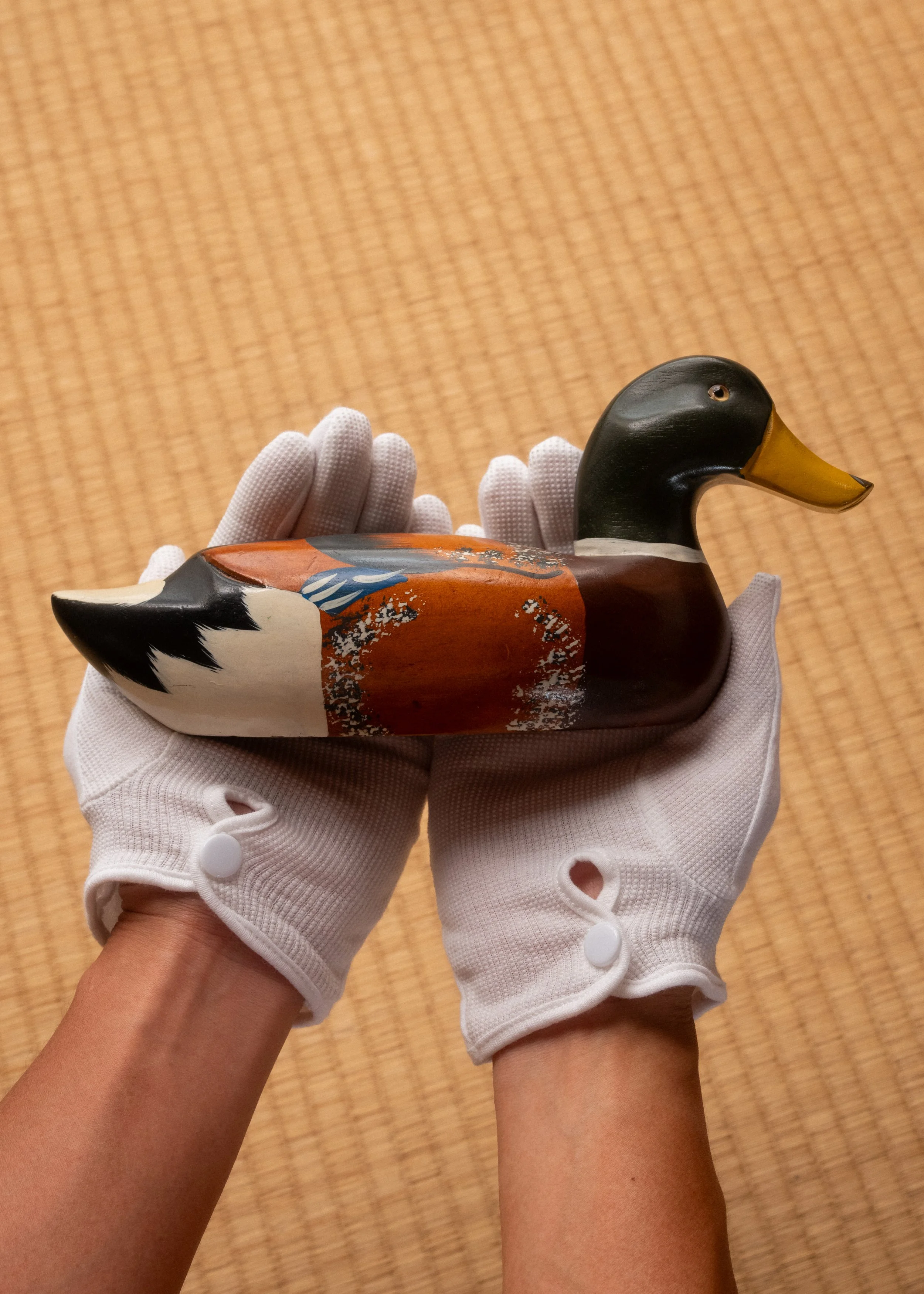 Image 10 of 10