【 The Concept 】
A shore-bird held at rest, raised on a single painted post. Across coastal folk traditions the standing gull was never only ornament. Set among a scatter of working decoys, a calm, upright seabird served as a confidence figure — a silent signal to passing flocks that the water below was safe, unwatched, without threat. This form carries that inheritance: not the lure itself, but the sentry that tells the rest of the world it may come down.
It is the first seabird to enter the archive, and it arrives from a different horizon. Where RINGED DRAKE and SPECKLED DRAKE keep to inland water, and POOLED PLUME and FLECKED HERALD keep to the farmyard, this one belongs to open coast and tideline. And where NOTCHED THUNDER stands on a rough clot of bark as though still on its mountain, SLATE LOOKOUT stands on a plain turned post — declared, from the first glance, as a mounted figure rather than a bird pretending at wildness.
That honesty is the point. No attempt was made to carve two thread-thin legs from a heavy body. Instead the bird is lifted on one bright dowel, in the manner of a specimen on a display stand, and the object wears its own construction openly rather than hiding it.
【 The Function 】
At 14.5 centimetres tall and 128 grams, it asks for almost nothing — a windowsill, a shelf edge, the corner of a desk on the sea-facing side of a room. The single post seats firmly into a bevelled wooden base, giving the piece a low, settled centre of gravity that shrugs off a passing hand. Historically the standing seabird worked outdoors as a marker of calm; kept indoors it holds the same quiet office, a small fixed point that reads, without saying so, as all clear.
【 The Texture 】
The finish is fully matte, and the light stays soft on it. The head, throat and underside are chalk white; the mantle and folded wing are a muted slate blue-grey that turns along the shoulder in one clean curve. At the tail, black primaries carry rows of white crescents, each stroke laid by hand, the brush hesitating just enough that no two scallops close the same way.
Two smaller notes hold the face. The bill is a soft mustard yellow, worked to a down-turned tip with a fine seam between the mandibles. The eye is a single red ring around a black bead — the one point of heat in an otherwise cool body, and the thing the whole figure seems to be steering by.
Beneath the white, in raking light, the faint grain and open pore of a light softwood surface through the paint. The brown base keeps its own bevelled edge and visible grain, a plain wooden plinth left frankly as what it is.
【 Presence 】
Much of the archive is earth, iron, glaze and inland weather. SLATE LOOKOUT brings the other horizon into the room — the pale, salt-lit palette of a working coast — and it does so at rest, one bird standing where a whole flock's worth of trust once gathered.
Set it slightly above eye level and it does what it was shaped to do: it watches the water for you, and reports nothing wrong.
Sourced from a private collection in the Shikoku region, Japan.
【 The Concept 】
A shore-bird held at rest, raised on a single painted post. Across coastal folk traditions the standing gull was never only ornament. Set among a scatter of working decoys, a calm, upright seabird served as a confidence figure — a silent signal to passing flocks that the water below was safe, unwatched, without threat. This form carries that inheritance: not the lure itself, but the sentry that tells the rest of the world it may come down.
It is the first seabird to enter the archive, and it arrives from a different horizon. Where RINGED DRAKE and SPECKLED DRAKE keep to inland water, and POOLED PLUME and FLECKED HERALD keep to the farmyard, this one belongs to open coast and tideline. And where NOTCHED THUNDER stands on a rough clot of bark as though still on its mountain, SLATE LOOKOUT stands on a plain turned post — declared, from the first glance, as a mounted figure rather than a bird pretending at wildness.
That honesty is the point. No attempt was made to carve two thread-thin legs from a heavy body. Instead the bird is lifted on one bright dowel, in the manner of a specimen on a display stand, and the object wears its own construction openly rather than hiding it.
【 The Function 】
At 14.5 centimetres tall and 128 grams, it asks for almost nothing — a windowsill, a shelf edge, the corner of a desk on the sea-facing side of a room. The single post seats firmly into a bevelled wooden base, giving the piece a low, settled centre of gravity that shrugs off a passing hand. Historically the standing seabird worked outdoors as a marker of calm; kept indoors it holds the same quiet office, a small fixed point that reads, without saying so, as all clear.
【 The Texture 】
The finish is fully matte, and the light stays soft on it. The head, throat and underside are chalk white; the mantle and folded wing are a muted slate blue-grey that turns along the shoulder in one clean curve. At the tail, black primaries carry rows of white crescents, each stroke laid by hand, the brush hesitating just enough that no two scallops close the same way.
Two smaller notes hold the face. The bill is a soft mustard yellow, worked to a down-turned tip with a fine seam between the mandibles. The eye is a single red ring around a black bead — the one point of heat in an otherwise cool body, and the thing the whole figure seems to be steering by.
Beneath the white, in raking light, the faint grain and open pore of a light softwood surface through the paint. The brown base keeps its own bevelled edge and visible grain, a plain wooden plinth left frankly as what it is.
【 Presence 】
Much of the archive is earth, iron, glaze and inland weather. SLATE LOOKOUT brings the other horizon into the room — the pale, salt-lit palette of a working coast — and it does so at rest, one bird standing where a whole flock's worth of trust once gathered.
Set it slightly above eye level and it does what it was shaped to do: it watches the water for you, and reports nothing wrong.
Sourced from a private collection in the Shikoku region, Japan.


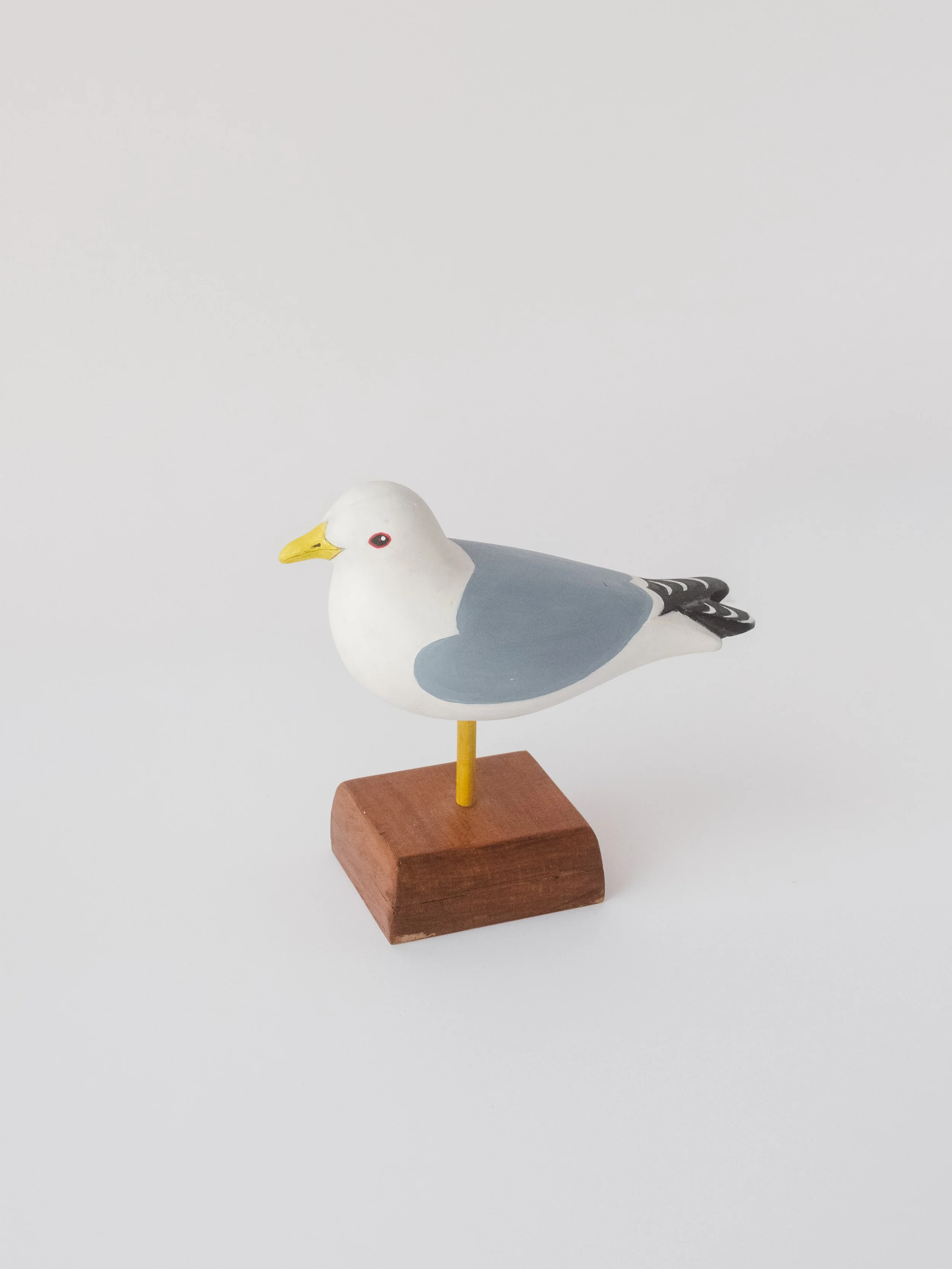 Image 1 of 12
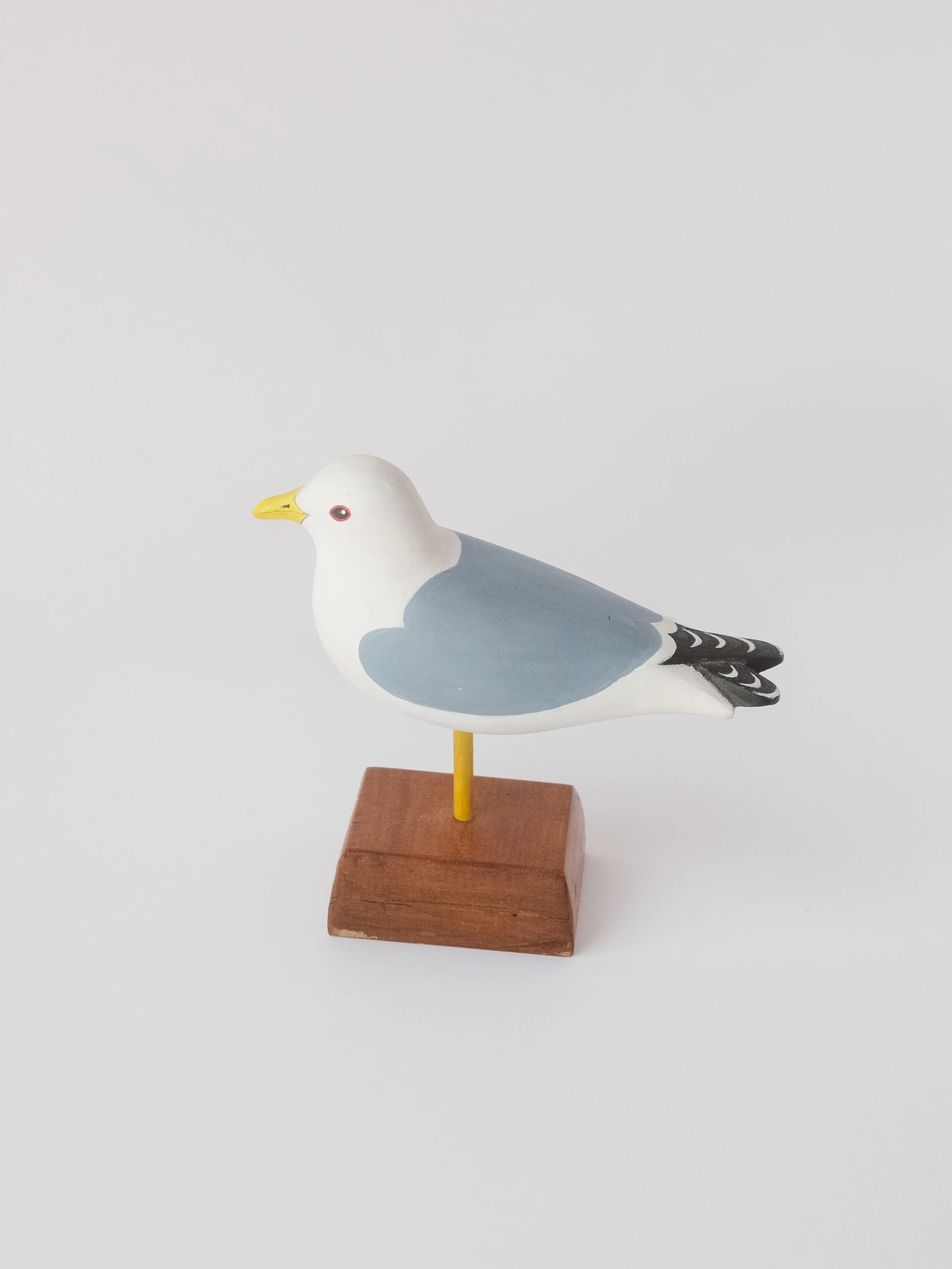 Image 2 of 12
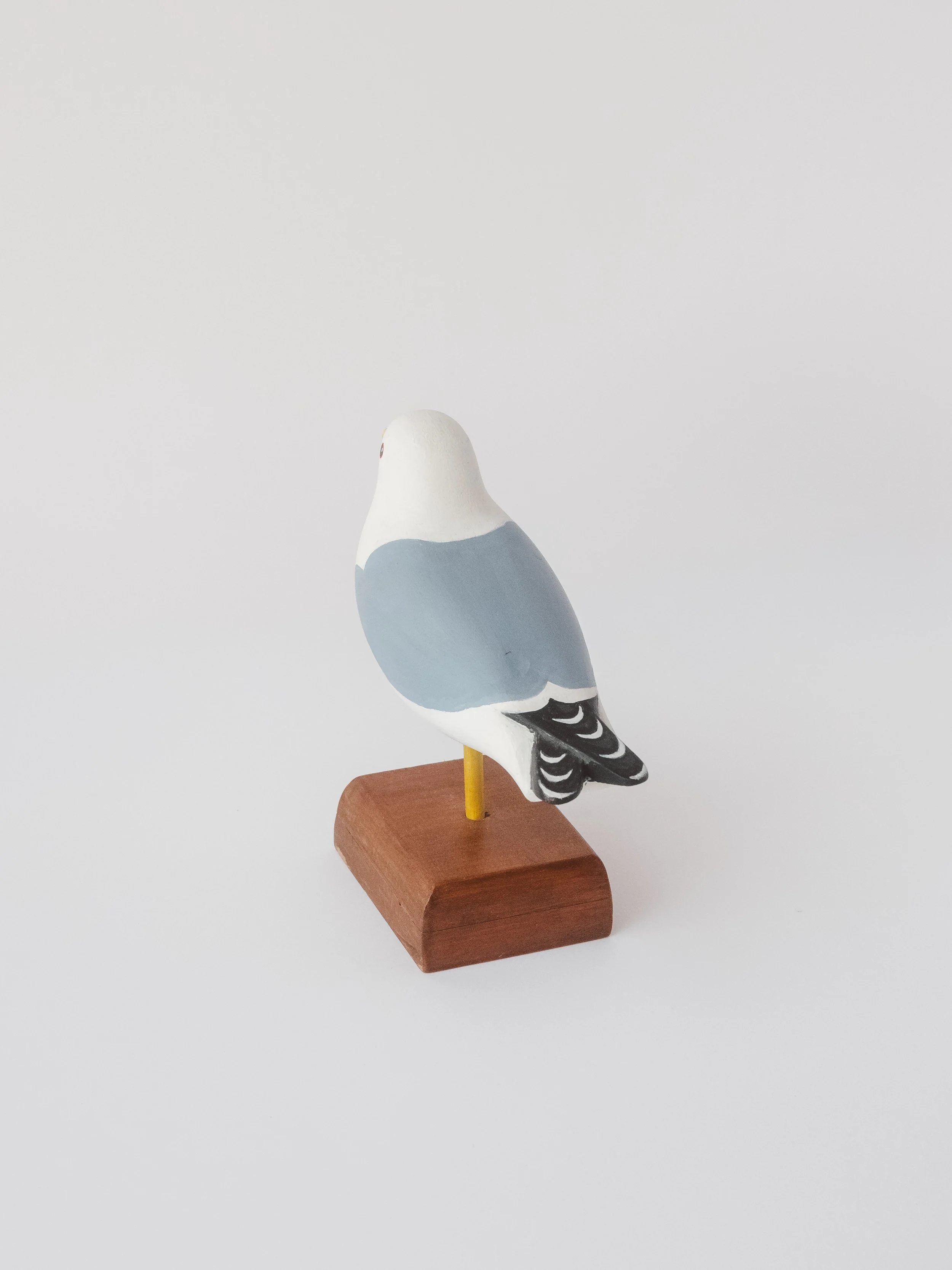 Image 3 of 12
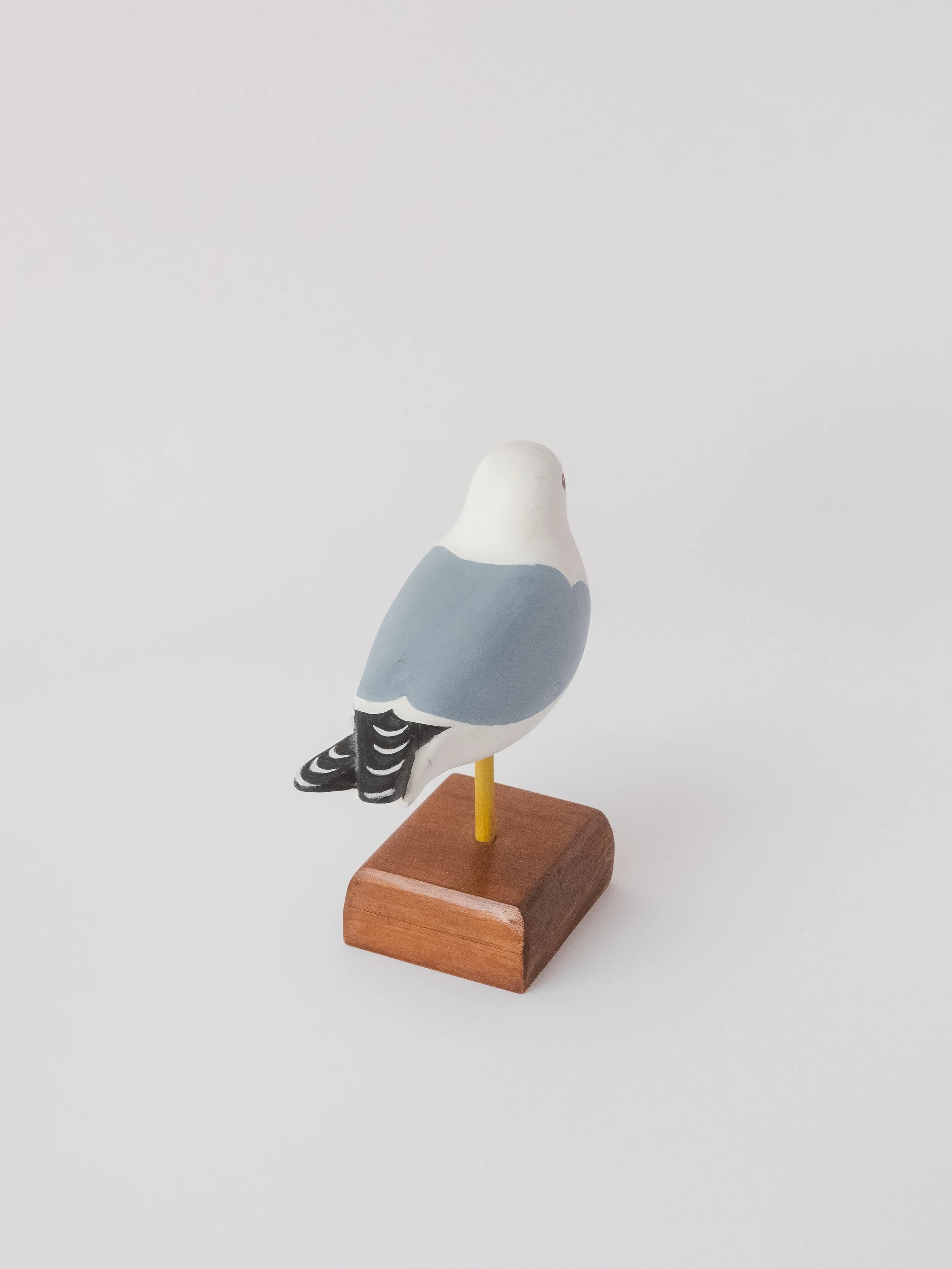 Image 4 of 12
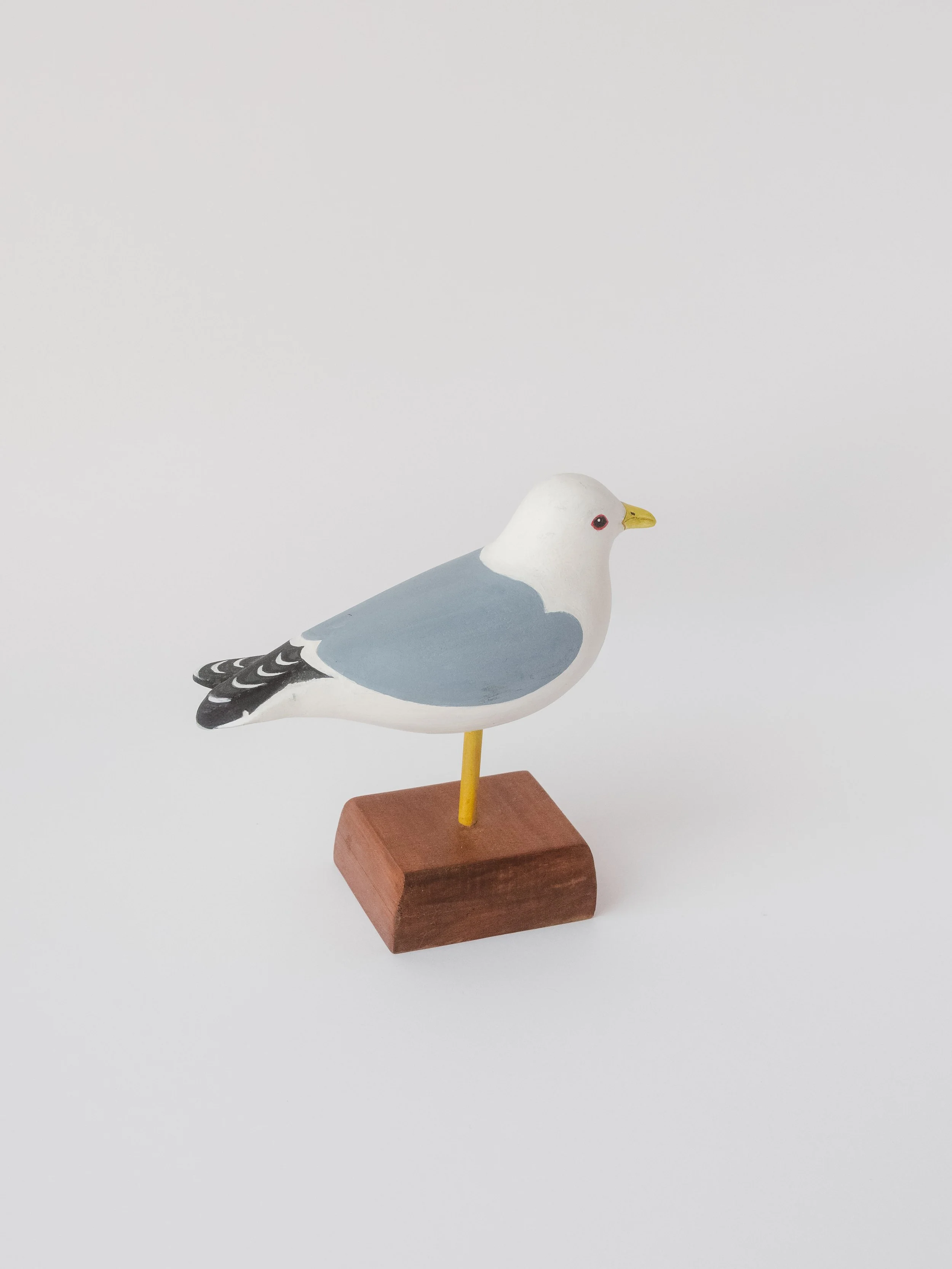 Image 5 of 12
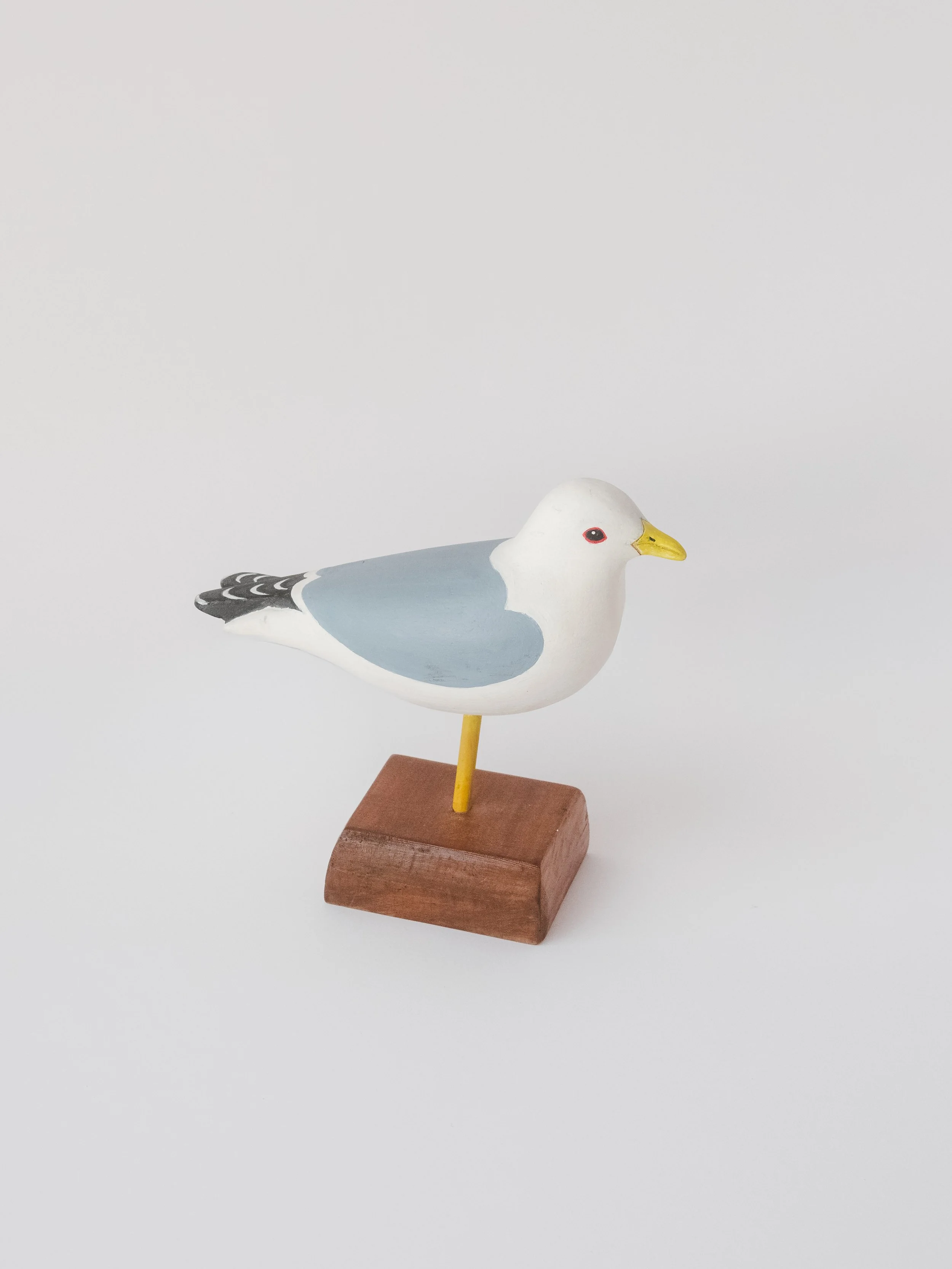 Image 6 of 12
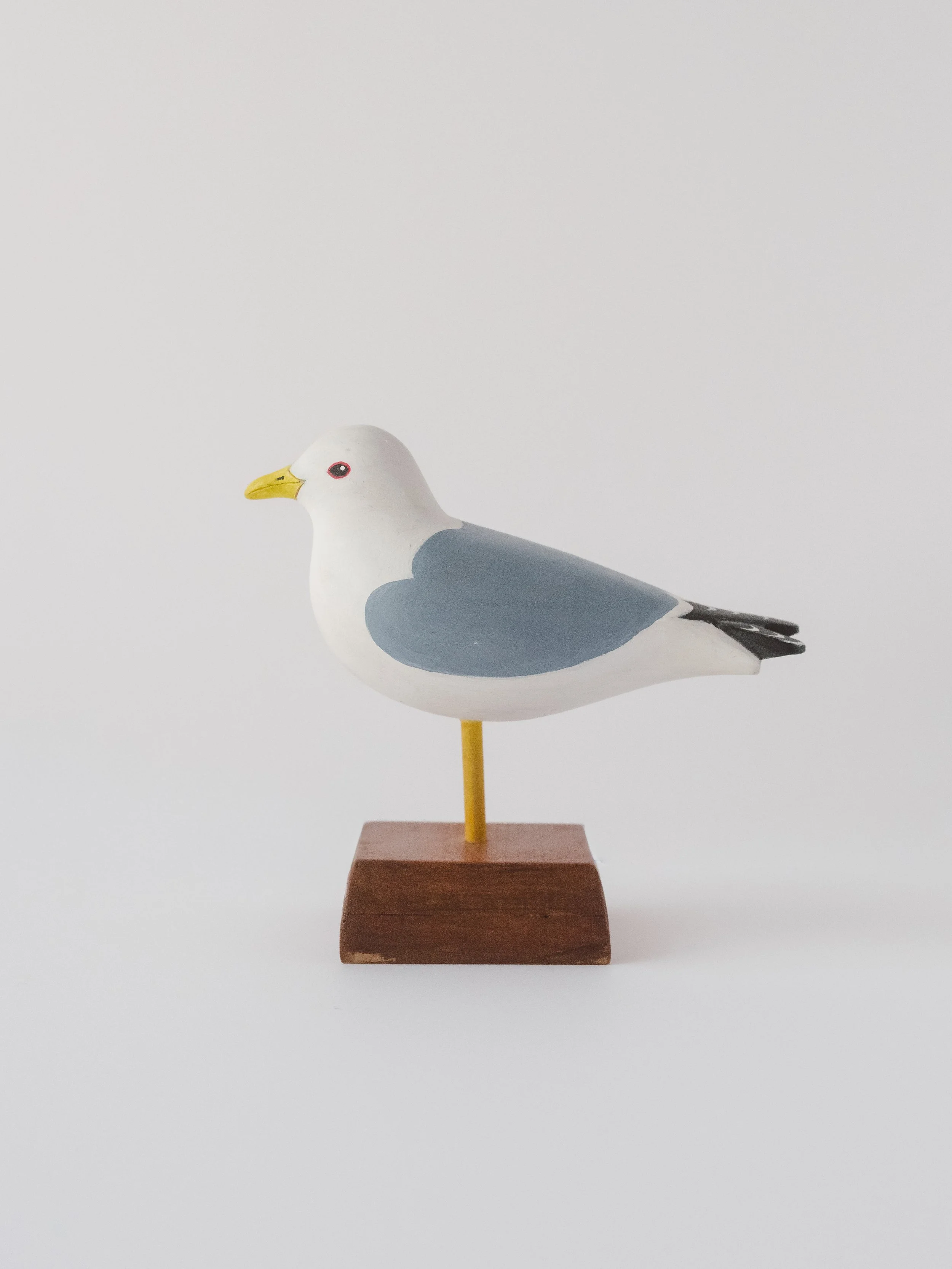 Image 7 of 12
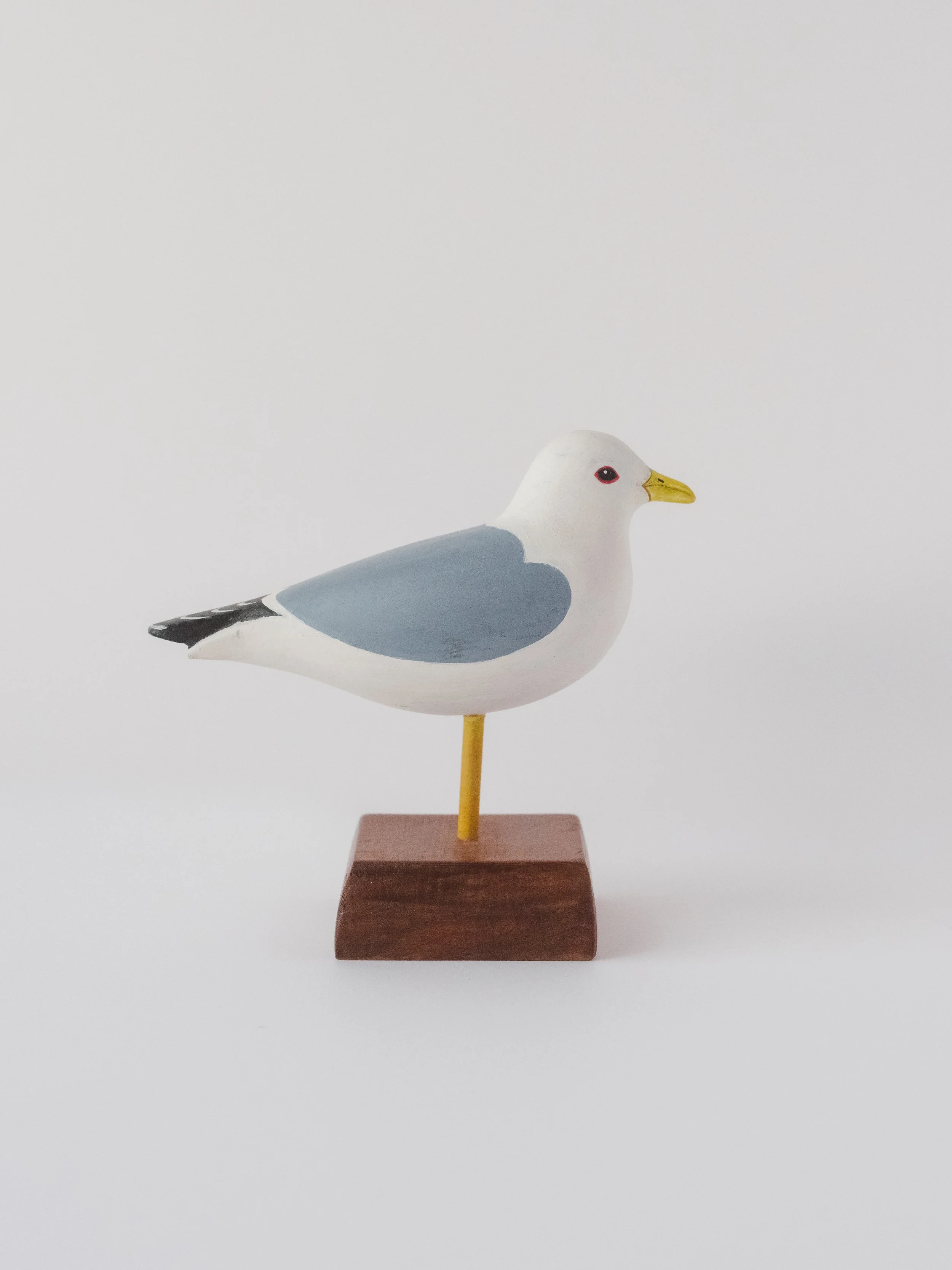 Image 8 of 12
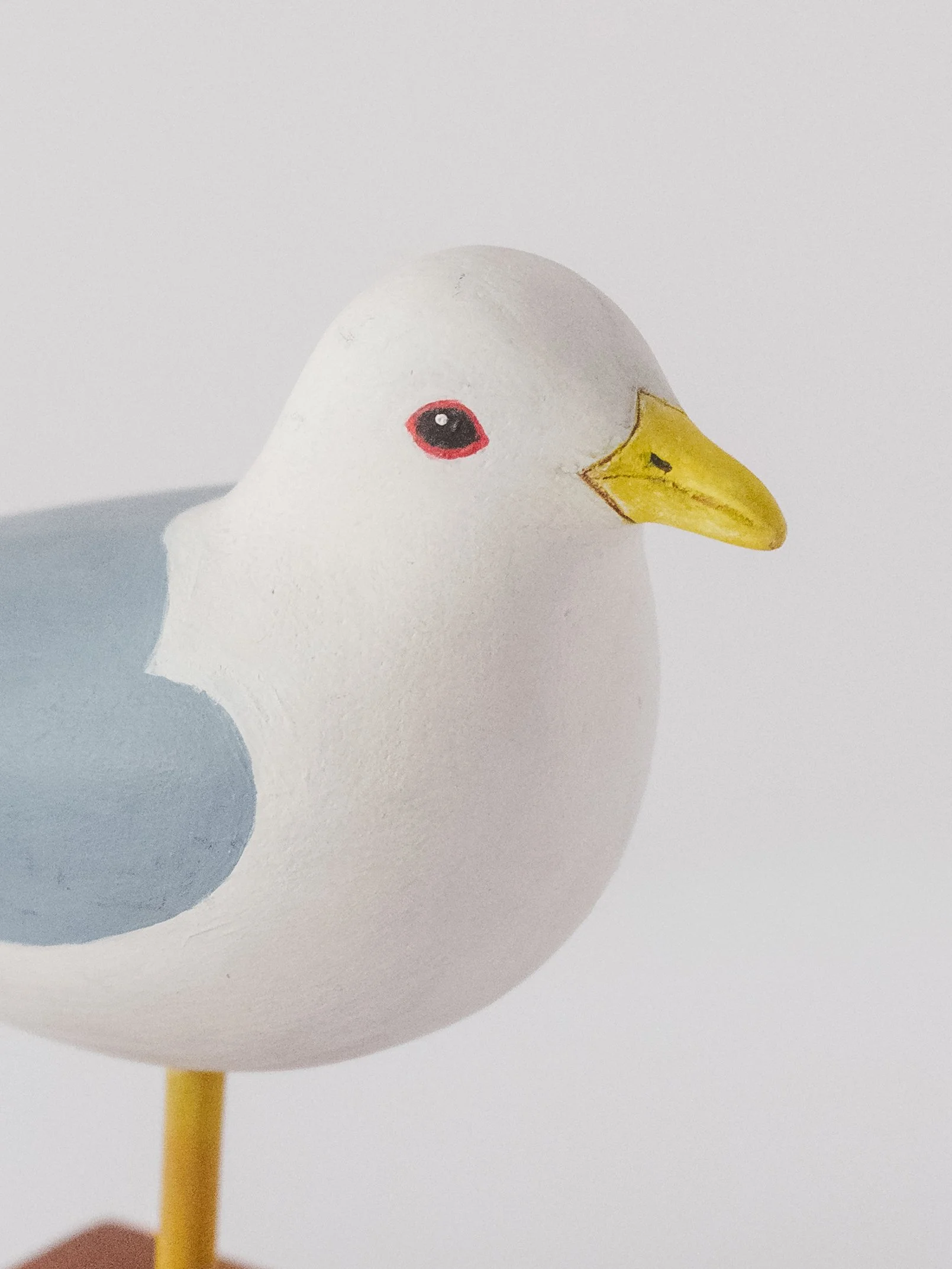 Image 9 of 12
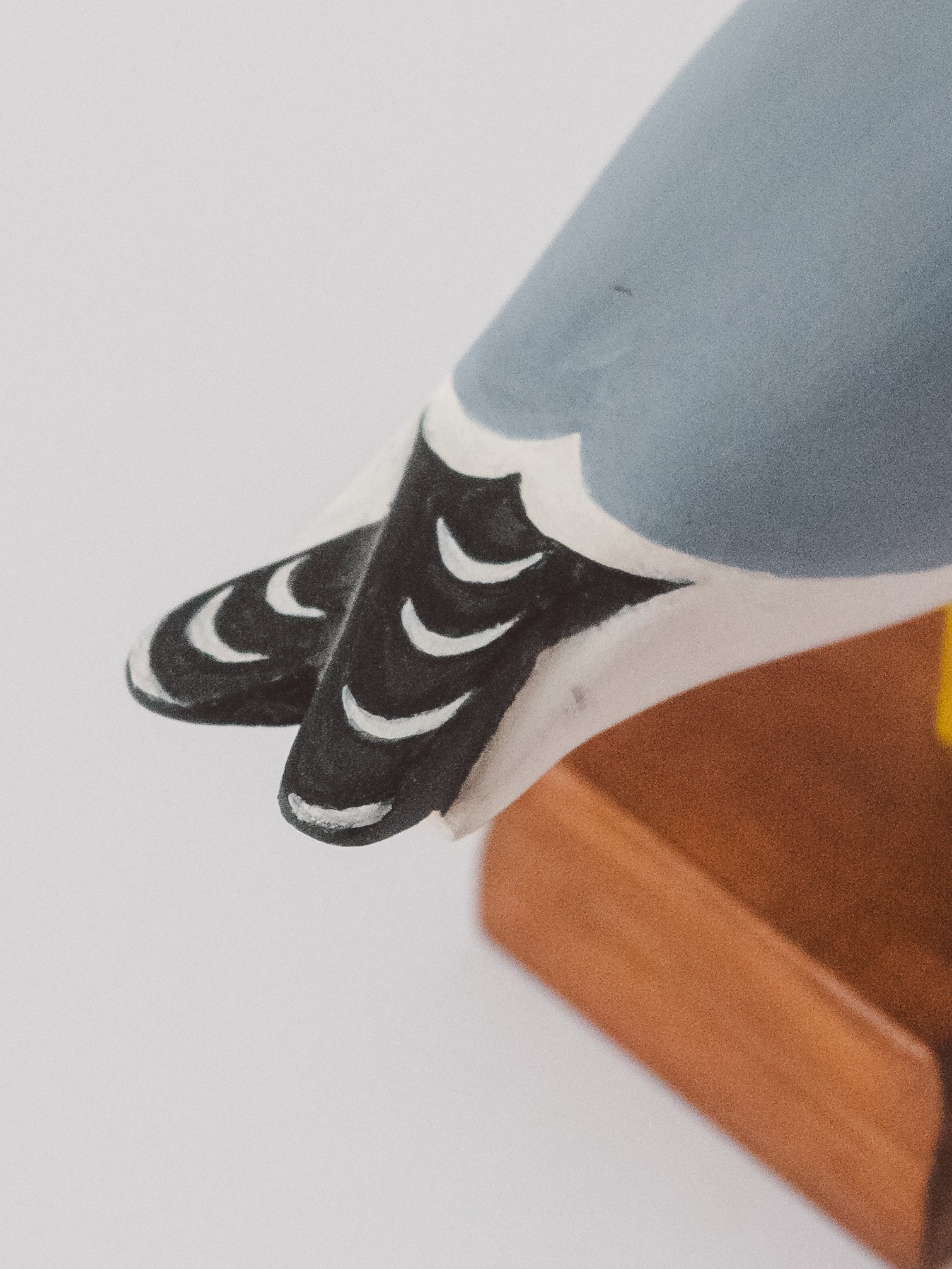 Image 10 of 12
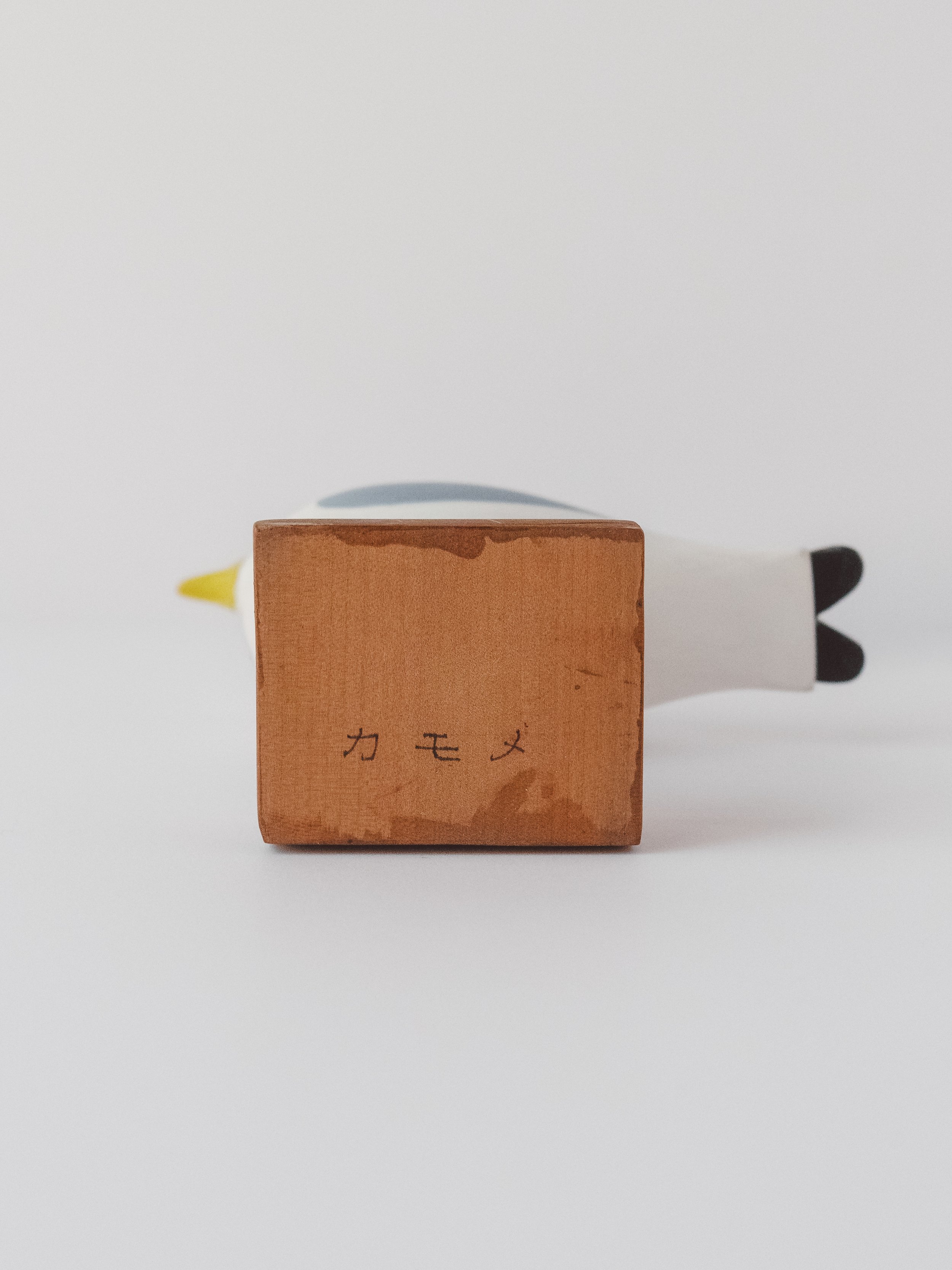 Image 11 of 12
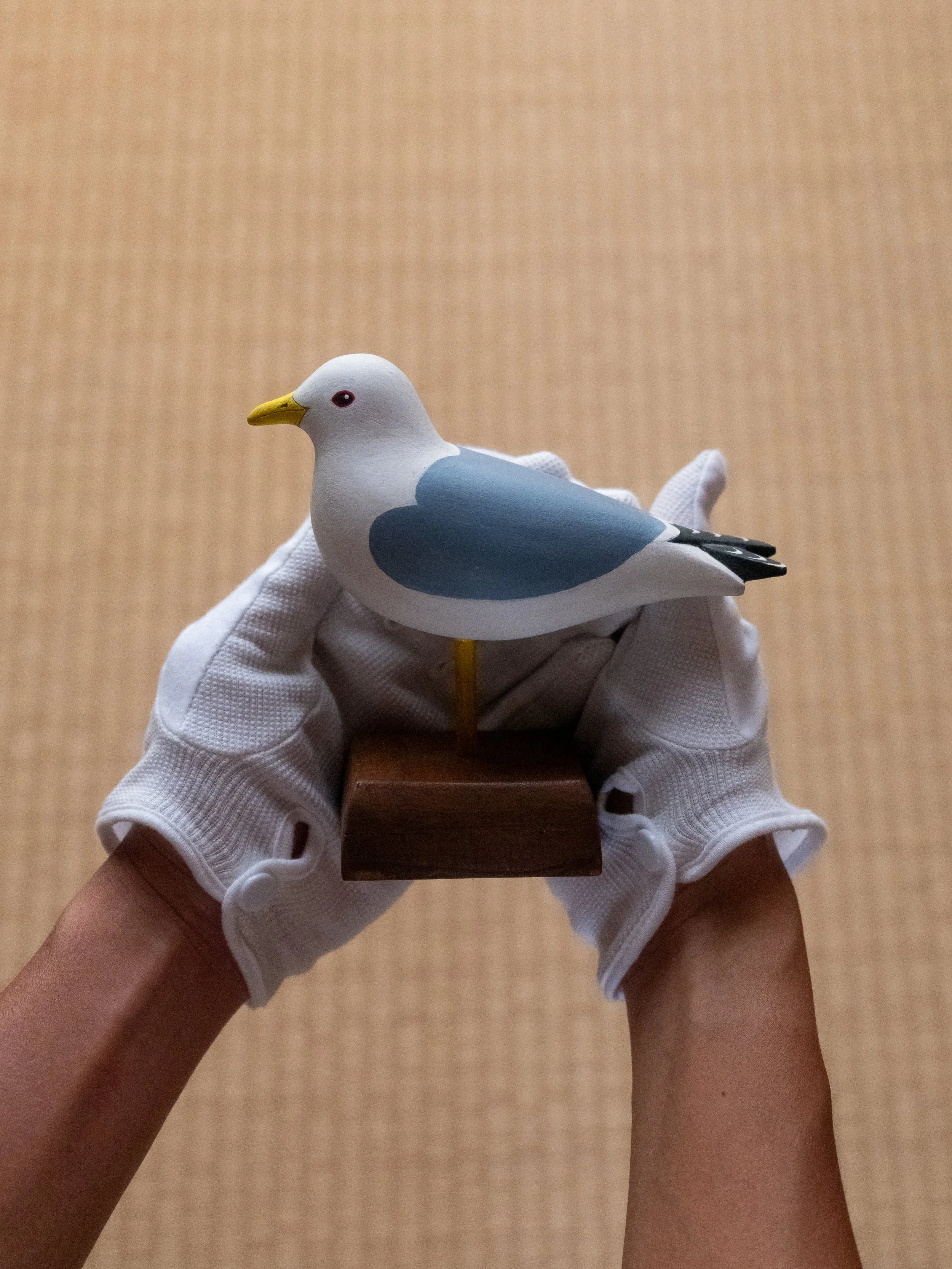 Image 12 of 12