【 The Concept 】
The second drake in MINGEI 1926's archive, and the one that sat for its portrait. Where SPECKLED DRAKE is folk art — loose, warm, painted in broad gestures — this figure is closer to illustration. The head is lacquered in glossy near-black with a faint green depth beneath the surface, smooth enough to reflect the room. The eyes are not painted dots. They are amber glass, set into the wood with black pupils at their centers, and they catch light the way a living eye does — wet, alert, tracking. Across the front of the neck, a thin white arc curves from one side to the other without meeting at the back, marking the boundary between the dark head and the warm chestnut breast below. This half-ring is the signature of a mature male of the species, and the reason for the name.
The back is the most elaborately worked surface of any wooden object in the archive. A grey ground coat covers the upper body like a saddle, and over it, layer upon layer of hand-painted feather patterns are built up in brown, black, and cream: V-shaped strokes for the shoulder feathers, fine parallel lines for the wing bars, and a dark panel near the tail edged in white. None of this is stenciled or stamped. Every mark is a single pass of a loaded brush, and the slight variations between strokes — thicker here, thinner there, one tilted slightly off-axis — are the proof.
【 The Function 】
275 grams of carved wood, 21 centimeters from bill to tail, 10 centimeters tall. Heavy enough to hold papers down in a draft. The form is a teardrop seen from above — wide at the breast, tapering to a pointed tail that lifts slightly at the tip. The bottom is flat, unweighted, with no anchor ring or ballast. This was never meant for water. It was made to sit on a desk, a mantel, or the top of a bookshelf, carrying the proportions of a resting waterfowl into a room that has never seen a pond. The workshop that produced it originally made precision tools for carpenters — instruments used to mark straight lines on timber. When the construction industry shifted to laser-guided systems and the demand for hand tools collapsed, the workshop redirected its woodworking skill toward decorative objects. This drake is what a measuring instrument becomes when it no longer needs to measure.
【 The Texture 】
Two surfaces occupy the same object. The breast and the underside are stained wood — the grain visible through a warm amber-brown finish that has deepened over decades of oxidation into something close to toffee. The surface is sanded smooth and sealed with a thin coat that gives it a low, satin sheen. Run a finger along the belly and the wood grain registers as a faint topography beneath the polish.
The back is paint. Opaque grey laid down first as a base, then worked over with increasingly fine brushstrokes that simulate the layered plumage of a bird at rest. The feather patterns are stylized but structurally accurate: the V-shaped marks on the shoulders follow the direction real feathers overlap, and the dark wing panel is positioned exactly where the speculum would sit on a living bird. Near the tail, the brown stain of the wood returns, and the two finishes — paint and grain — meet along a border so clean it looks deliberate, as though the carver wanted to show both what the wood looks like and what it can become.
【 Presence 】
SPECKLED DRAKE is the folk song. RINGED DRAKE is the studio recording. Both are ducks. Both are wood. Both sit on the same flat plane with the same teardrop profile. But where SPECKLED DRAKE charms through its roughness — the speckled paint, the plastic eyes, the slightly uneven stance — RINGED DRAKE earns its place through precision. The glass eyes follow you. The white arc on the throat catches light at angles the rest of the body absorbs. The painted feathers on the back reward close inspection the way a page of handwriting rewards close reading: every stroke is a decision, and no two strokes are the same. Together, the pair represents the full range of what a single workshop tradition can produce — from rough charm to quiet authority — using the same wood, the same tools, and the same hands.
Sourced from a private collection in the Kansai region, Japan.
【 The Concept 】
The second drake in MINGEI 1926's archive, and the one that sat for its portrait. Where SPECKLED DRAKE is folk art — loose, warm, painted in broad gestures — this figure is closer to illustration. The head is lacquered in glossy near-black with a faint green depth beneath the surface, smooth enough to reflect the room. The eyes are not painted dots. They are amber glass, set into the wood with black pupils at their centers, and they catch light the way a living eye does — wet, alert, tracking. Across the front of the neck, a thin white arc curves from one side to the other without meeting at the back, marking the boundary between the dark head and the warm chestnut breast below. This half-ring is the signature of a mature male of the species, and the reason for the name.
The back is the most elaborately worked surface of any wooden object in the archive. A grey ground coat covers the upper body like a saddle, and over it, layer upon layer of hand-painted feather patterns are built up in brown, black, and cream: V-shaped strokes for the shoulder feathers, fine parallel lines for the wing bars, and a dark panel near the tail edged in white. None of this is stenciled or stamped. Every mark is a single pass of a loaded brush, and the slight variations between strokes — thicker here, thinner there, one tilted slightly off-axis — are the proof.
【 The Function 】
275 grams of carved wood, 21 centimeters from bill to tail, 10 centimeters tall. Heavy enough to hold papers down in a draft. The form is a teardrop seen from above — wide at the breast, tapering to a pointed tail that lifts slightly at the tip. The bottom is flat, unweighted, with no anchor ring or ballast. This was never meant for water. It was made to sit on a desk, a mantel, or the top of a bookshelf, carrying the proportions of a resting waterfowl into a room that has never seen a pond. The workshop that produced it originally made precision tools for carpenters — instruments used to mark straight lines on timber. When the construction industry shifted to laser-guided systems and the demand for hand tools collapsed, the workshop redirected its woodworking skill toward decorative objects. This drake is what a measuring instrument becomes when it no longer needs to measure.
【 The Texture 】
Two surfaces occupy the same object. The breast and the underside are stained wood — the grain visible through a warm amber-brown finish that has deepened over decades of oxidation into something close to toffee. The surface is sanded smooth and sealed with a thin coat that gives it a low, satin sheen. Run a finger along the belly and the wood grain registers as a faint topography beneath the polish.
The back is paint. Opaque grey laid down first as a base, then worked over with increasingly fine brushstrokes that simulate the layered plumage of a bird at rest. The feather patterns are stylized but structurally accurate: the V-shaped marks on the shoulders follow the direction real feathers overlap, and the dark wing panel is positioned exactly where the speculum would sit on a living bird. Near the tail, the brown stain of the wood returns, and the two finishes — paint and grain — meet along a border so clean it looks deliberate, as though the carver wanted to show both what the wood looks like and what it can become.
【 Presence 】
SPECKLED DRAKE is the folk song. RINGED DRAKE is the studio recording. Both are ducks. Both are wood. Both sit on the same flat plane with the same teardrop profile. But where SPECKLED DRAKE charms through its roughness — the speckled paint, the plastic eyes, the slightly uneven stance — RINGED DRAKE earns its place through precision. The glass eyes follow you. The white arc on the throat catches light at angles the rest of the body absorbs. The painted feathers on the back reward close inspection the way a page of handwriting rewards close reading: every stroke is a decision, and no two strokes are the same. Together, the pair represents the full range of what a single workshop tradition can produce — from rough charm to quiet authority — using the same wood, the same tools, and the same hands.
Sourced from a private collection in the Kansai region, Japan.


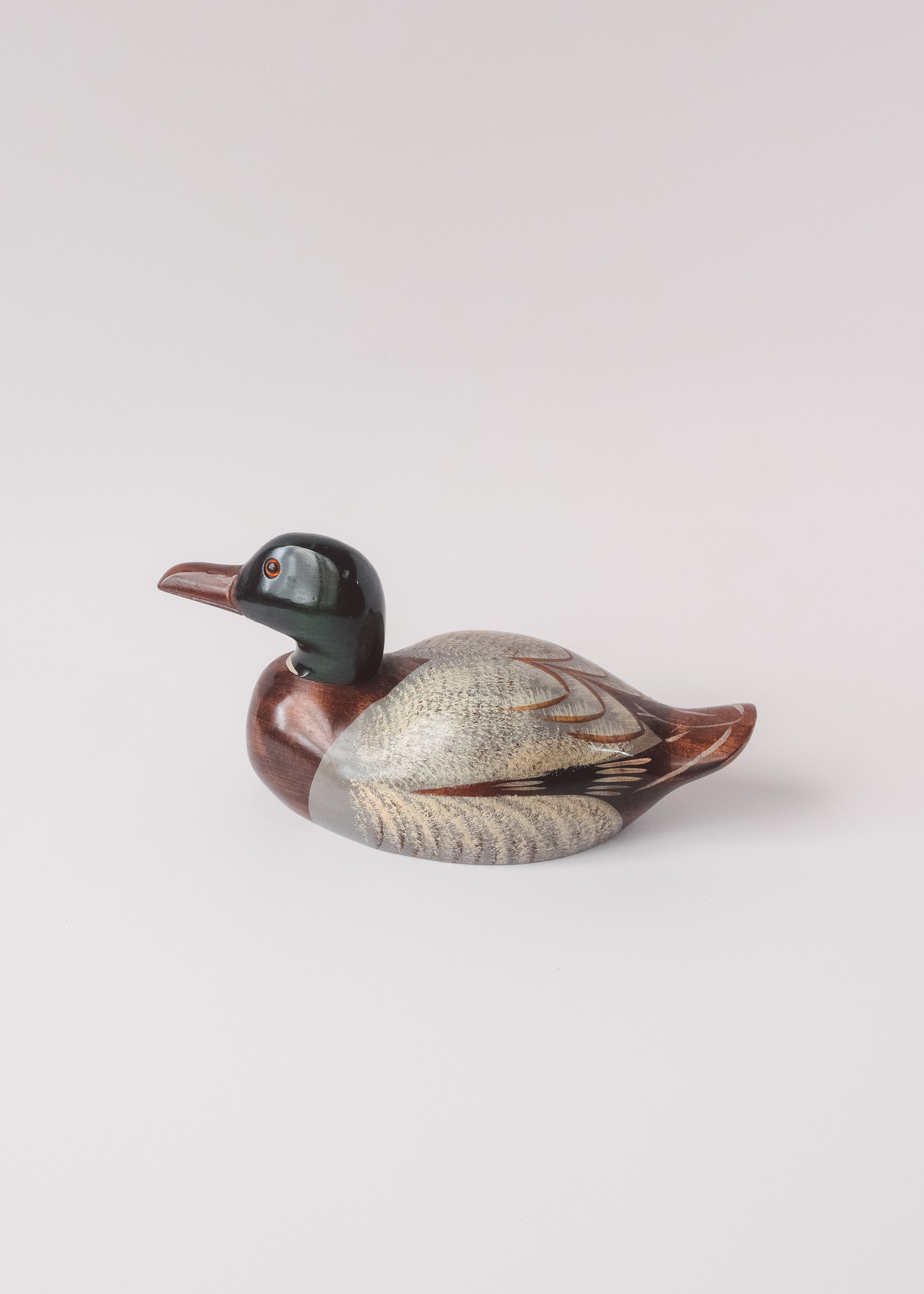 Image 1 of 9
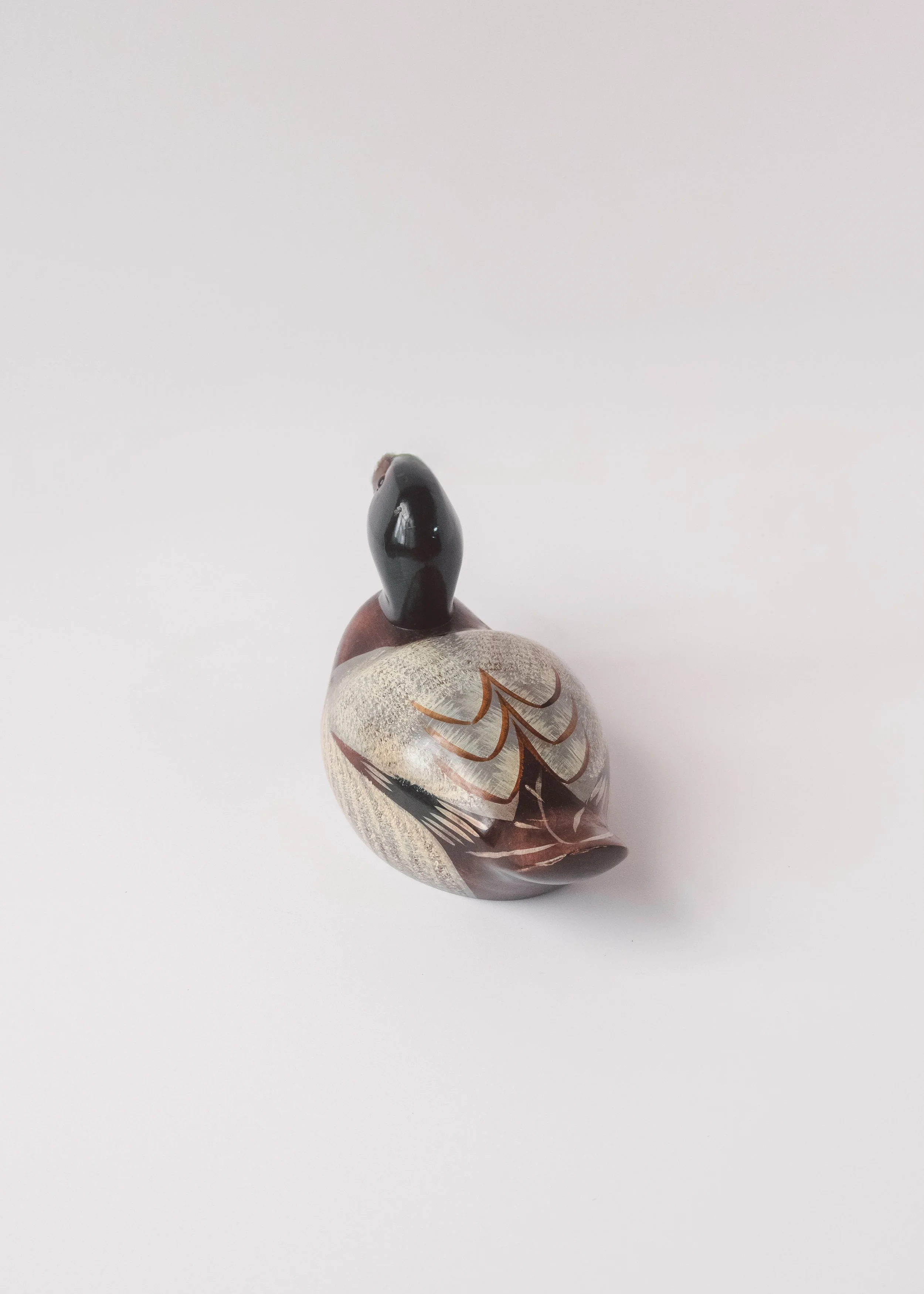 Image 2 of 9
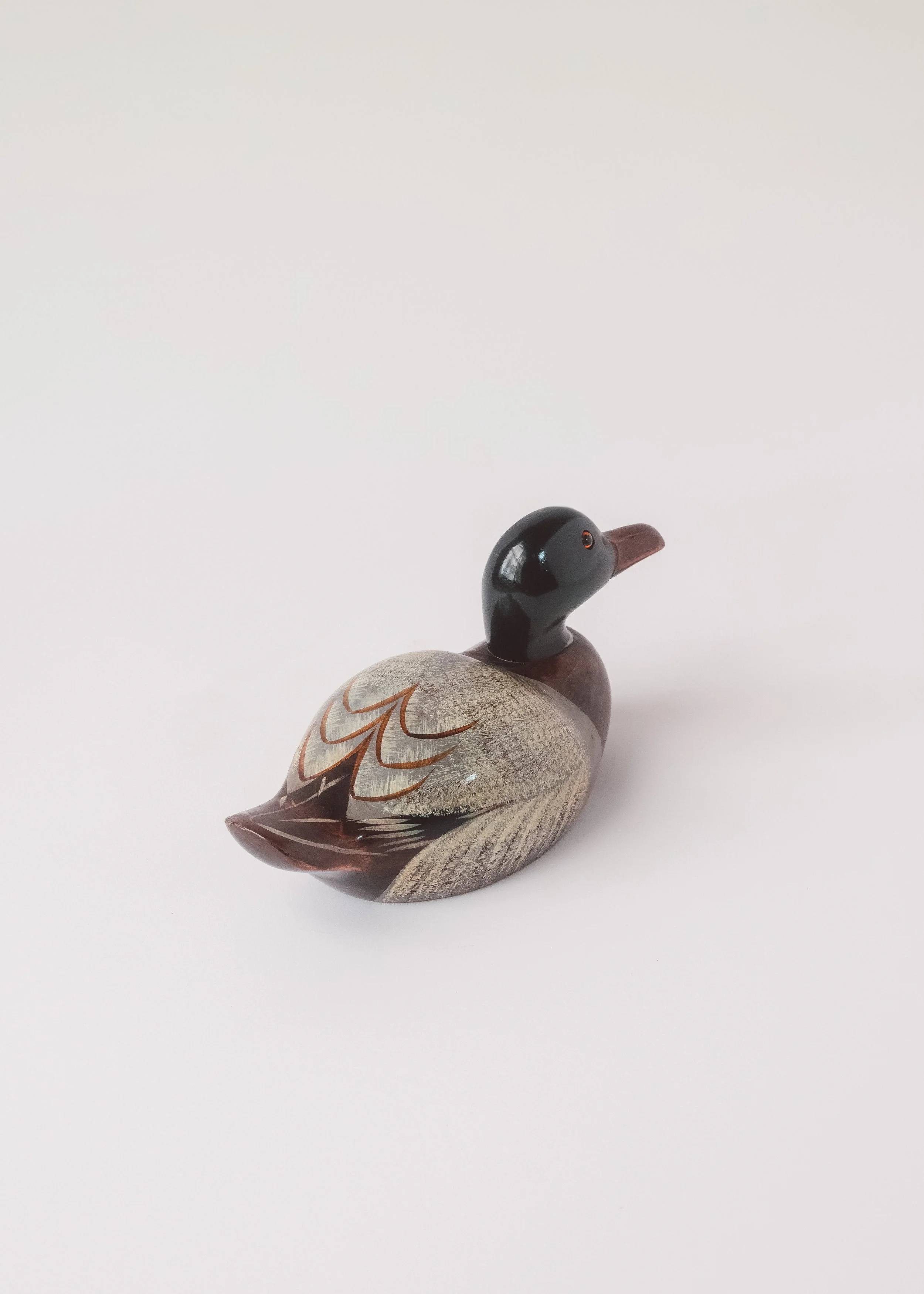 Image 3 of 9
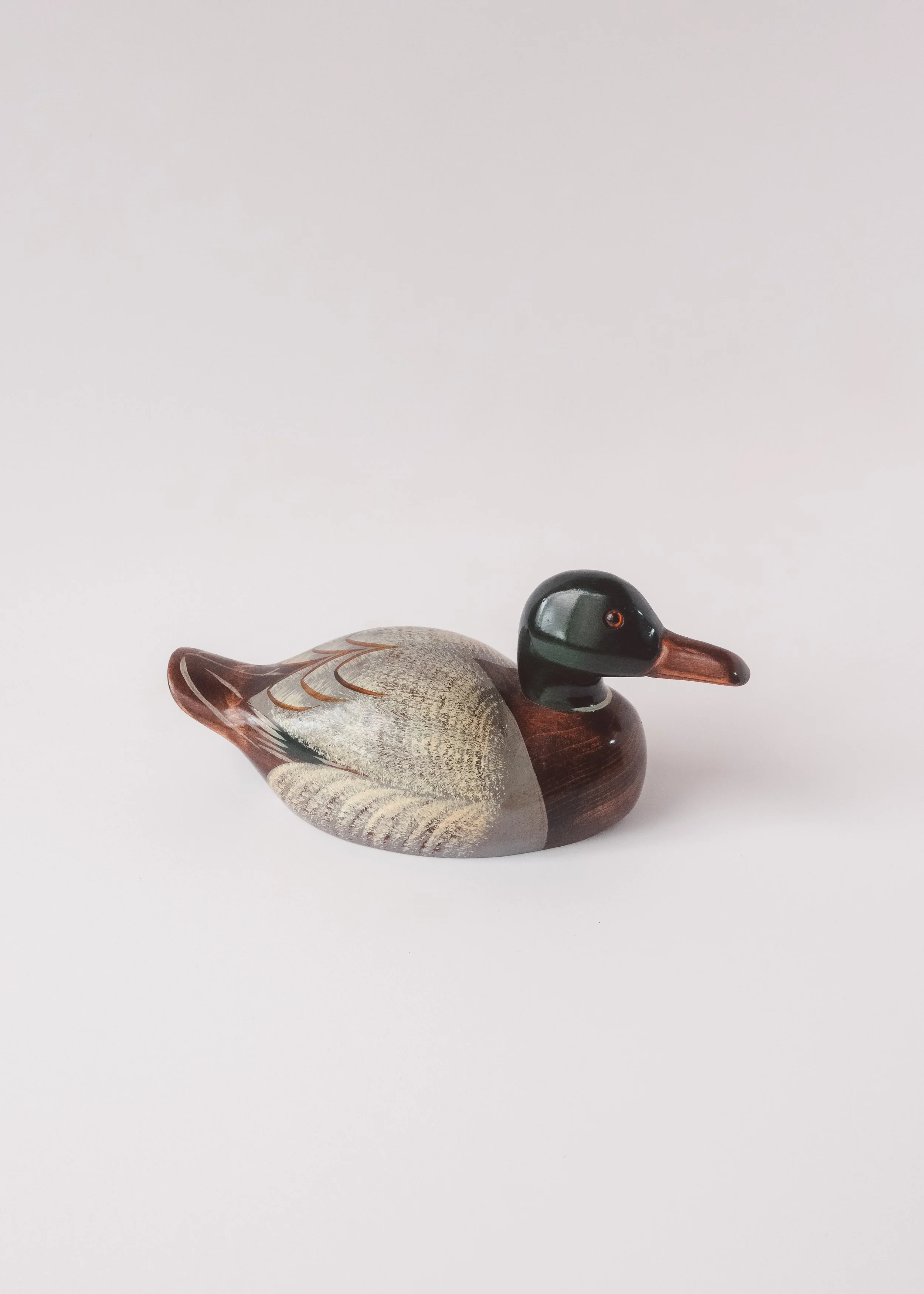 Image 4 of 9
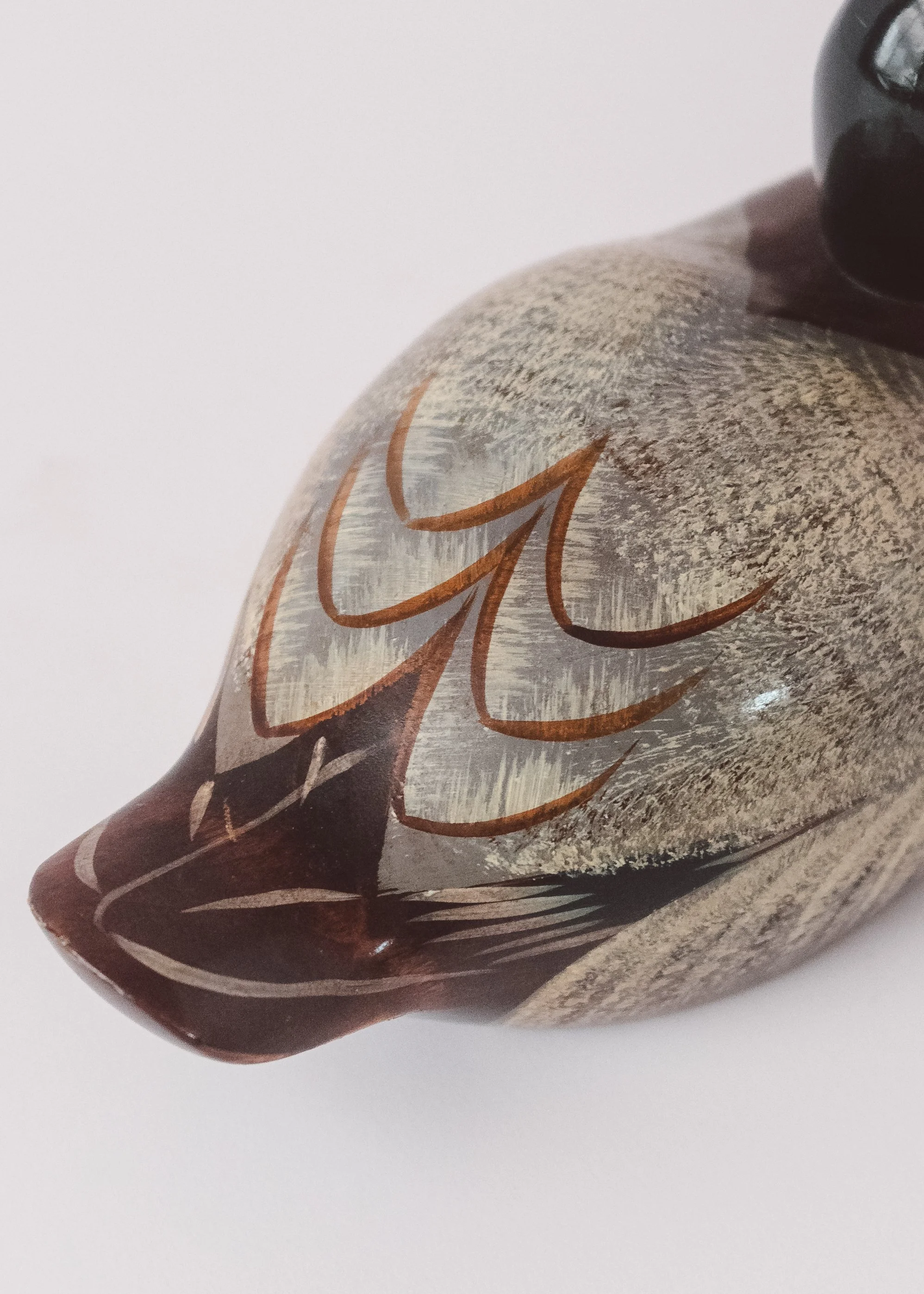 Image 5 of 9
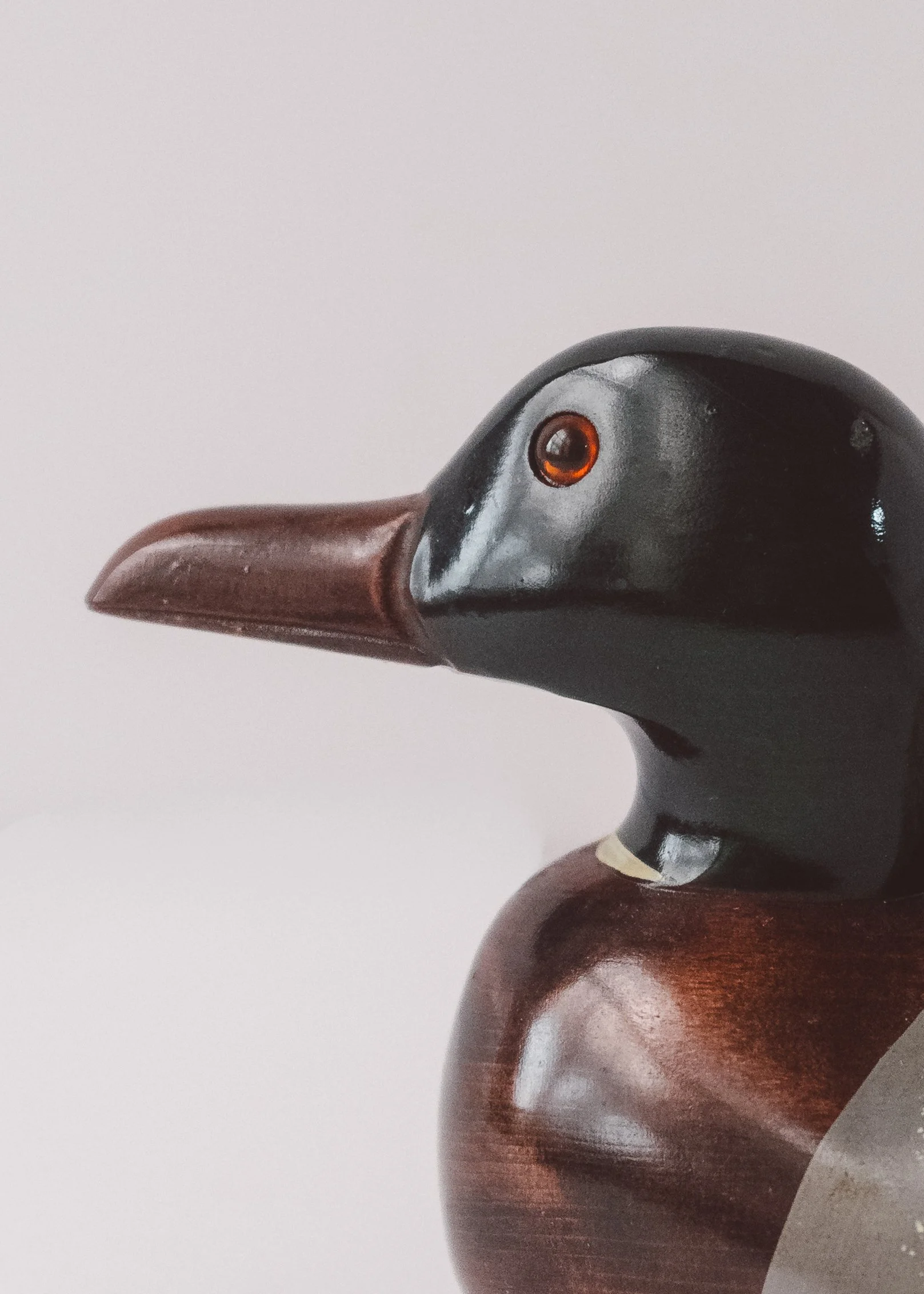 Image 6 of 9
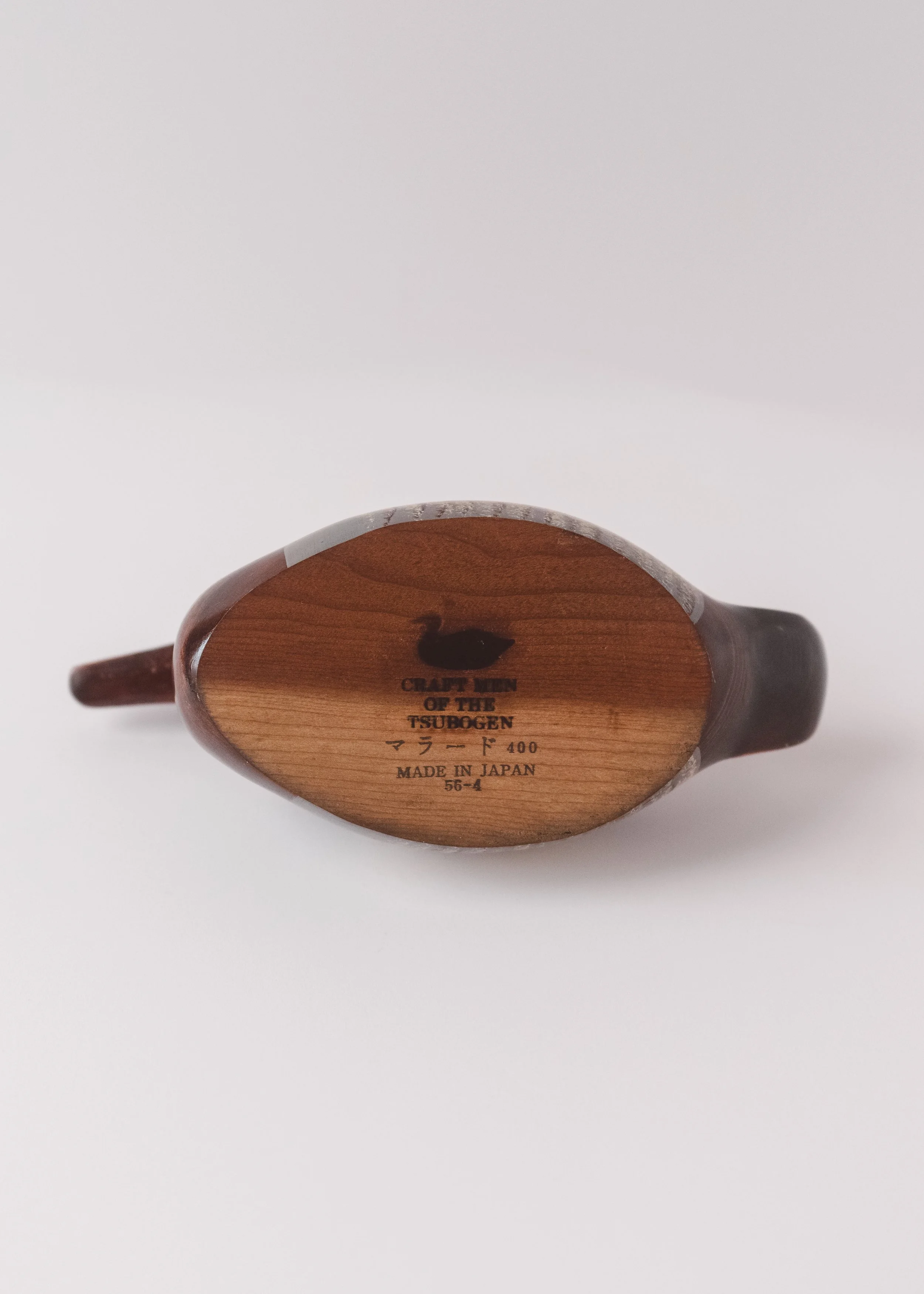 Image 7 of 9
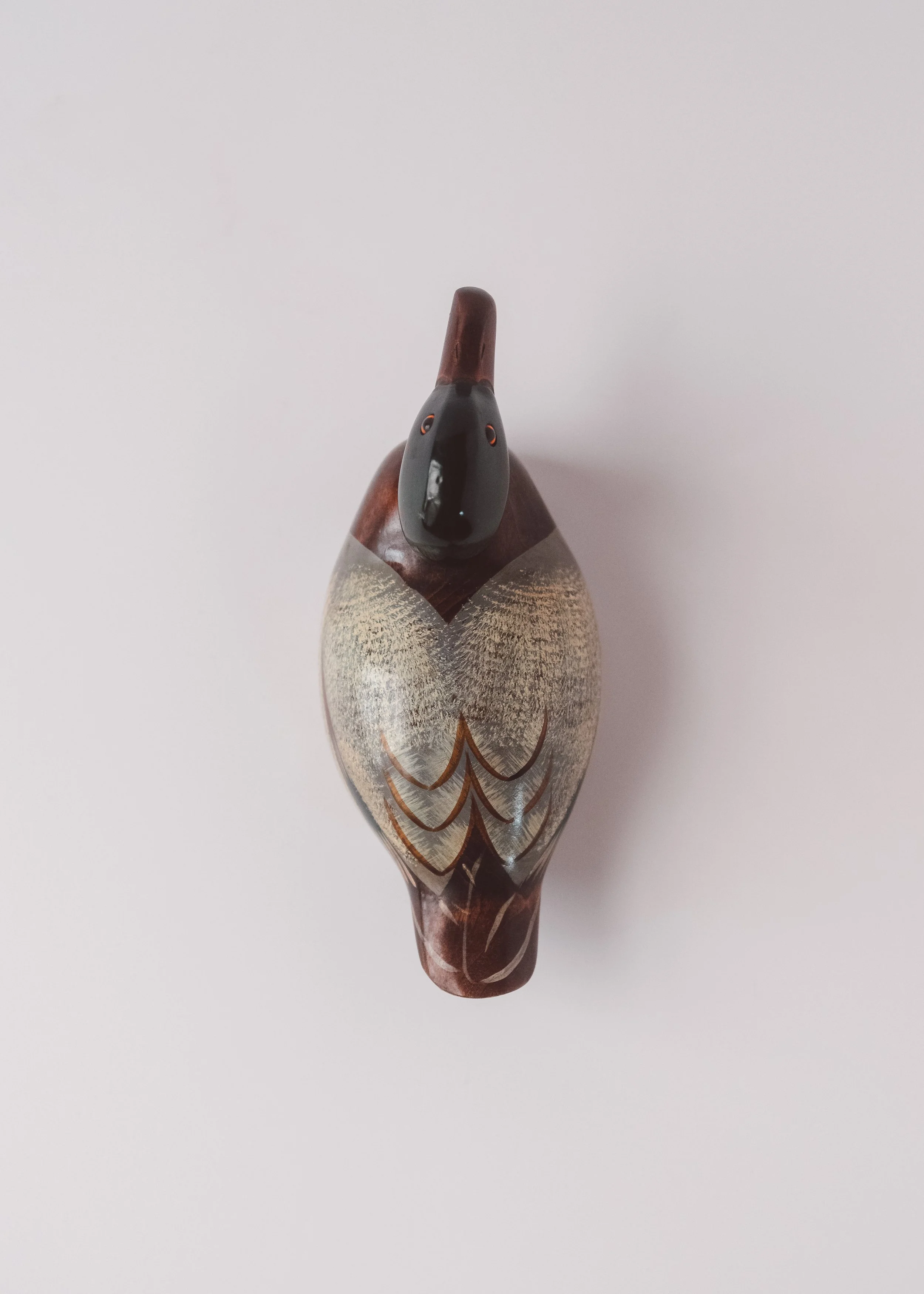 Image 8 of 9
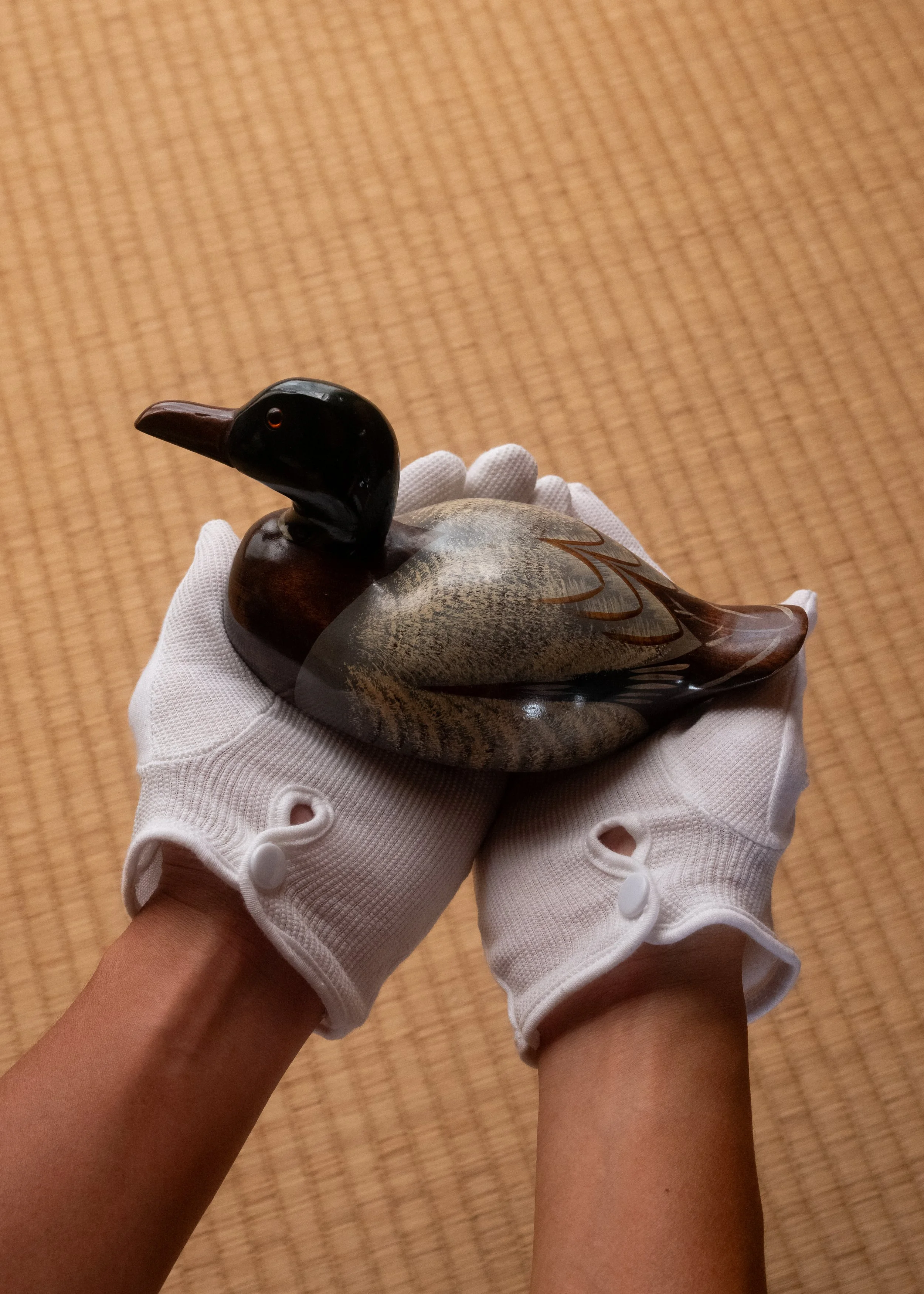 Image 9 of 9