【 The Concept 】
A boar built for forward motion that has never moved. The body is a single angular wedge of fired clay, pitched forward at an angle that suggests the next step has already been decided but not yet taken. The spine rises to a sharp ridge that runs from the crown of the head to the base of the tail — a line so defined it casts its own shadow on the flanks below. The legs are not anatomical. They are four flat slabs, squared off at the bottom, braced wide, functioning less as limbs than as foundations. The snout tilts upward, nostrils forward, reading the air. Everything about this figure leans in one direction.
Along both flanks, parallel grooves are scored into the clay in tight, even rows — the bristles of an adult boar translated into the language of a comb dragged across wet earth. These are not decorative. They are directional. Every line points the same way the body is moving: forward, downhill, into whatever is ahead. On the back, flanking the central ridge, a geometric pattern of incised triangles sits like a brand or a seal, too precise to be accidental, too abstract to be legible.
This is the adult counterpart to EARTHEN SNOUT. Where the piglet crouches and waits, this boar advances. Where the piglet is round, this one is angular. Where the piglet fits in a palm, this one occupies twenty centimeters of shelf and weighs nearly half a kilogram. The stripes of infancy are gone. What replaced them is a spine sharp enough to cut shadow.
【 The Function 】
469 grams, 20 centimeters long, 10 centimeters tall. Dense, low, and stable on four flat feet. It does not need to be anchored or propped. It sits where it is placed and stays, too heavy to be nudged, too wide to be tipped. In its original context, boar figures were placed in households as guardians against illness — the boar's association with physical endurance and immunity made it a talisman for the body's refusal to weaken. In a modern context, it functions as a visual anchor: a long, dark, horizontal form that grounds a shelf the way a stone grounds a garden.
【 The Texture 】
Unglazed stoneware in matte iron-brown. The surface is not coated, not sealed, not polished. It is bare clay, fired at high temperature until the iron content in the body turned the color of dried earth. The texture is rough in the way a riverbank is rough — granular, mineral, warm to the touch but visually hard. Light falls into the scored grooves on the flanks and stays there, producing deep parallel shadows that shift width as the viewing angle changes. The ridge along the spine catches whatever light the grooves absorb, running bright against the dark body like a lit fuse on a dark surface. The faceted planes of the head — flat cheeks, squared jaw, triangular ears reduced to notches — break the light into geometric fragments, giving the face the appearance of something carved from stone rather than shaped from clay.
【 Presence 】
It is long, low, and angular in an archive dominated by round forms. Most of the animals in this collection are soft: the piglet crouches, the ducks nestle, the cats curl, the horse prances. This boar does none of those things. It advances. The forward pitch of the body creates a visual momentum that pulls the eye from tail to snout in a single sweep, and the sharp dorsal ridge holds that line taut the entire way. Place it on a shelf and the objects around it appear to be standing still by comparison. It does not decorate. It directs.
Sourced from a private collection in the Kansai region, Japan.
【 The Concept 】
A boar built for forward motion that has never moved. The body is a single angular wedge of fired clay, pitched forward at an angle that suggests the next step has already been decided but not yet taken. The spine rises to a sharp ridge that runs from the crown of the head to the base of the tail — a line so defined it casts its own shadow on the flanks below. The legs are not anatomical. They are four flat slabs, squared off at the bottom, braced wide, functioning less as limbs than as foundations. The snout tilts upward, nostrils forward, reading the air. Everything about this figure leans in one direction.
Along both flanks, parallel grooves are scored into the clay in tight, even rows — the bristles of an adult boar translated into the language of a comb dragged across wet earth. These are not decorative. They are directional. Every line points the same way the body is moving: forward, downhill, into whatever is ahead. On the back, flanking the central ridge, a geometric pattern of incised triangles sits like a brand or a seal, too precise to be accidental, too abstract to be legible.
This is the adult counterpart to EARTHEN SNOUT. Where the piglet crouches and waits, this boar advances. Where the piglet is round, this one is angular. Where the piglet fits in a palm, this one occupies twenty centimeters of shelf and weighs nearly half a kilogram. The stripes of infancy are gone. What replaced them is a spine sharp enough to cut shadow.
【 The Function 】
469 grams, 20 centimeters long, 10 centimeters tall. Dense, low, and stable on four flat feet. It does not need to be anchored or propped. It sits where it is placed and stays, too heavy to be nudged, too wide to be tipped. In its original context, boar figures were placed in households as guardians against illness — the boar's association with physical endurance and immunity made it a talisman for the body's refusal to weaken. In a modern context, it functions as a visual anchor: a long, dark, horizontal form that grounds a shelf the way a stone grounds a garden.
【 The Texture 】
Unglazed stoneware in matte iron-brown. The surface is not coated, not sealed, not polished. It is bare clay, fired at high temperature until the iron content in the body turned the color of dried earth. The texture is rough in the way a riverbank is rough — granular, mineral, warm to the touch but visually hard. Light falls into the scored grooves on the flanks and stays there, producing deep parallel shadows that shift width as the viewing angle changes. The ridge along the spine catches whatever light the grooves absorb, running bright against the dark body like a lit fuse on a dark surface. The faceted planes of the head — flat cheeks, squared jaw, triangular ears reduced to notches — break the light into geometric fragments, giving the face the appearance of something carved from stone rather than shaped from clay.
【 Presence 】
It is long, low, and angular in an archive dominated by round forms. Most of the animals in this collection are soft: the piglet crouches, the ducks nestle, the cats curl, the horse prances. This boar does none of those things. It advances. The forward pitch of the body creates a visual momentum that pulls the eye from tail to snout in a single sweep, and the sharp dorsal ridge holds that line taut the entire way. Place it on a shelf and the objects around it appear to be standing still by comparison. It does not decorate. It directs.
Sourced from a private collection in the Kansai region, Japan.


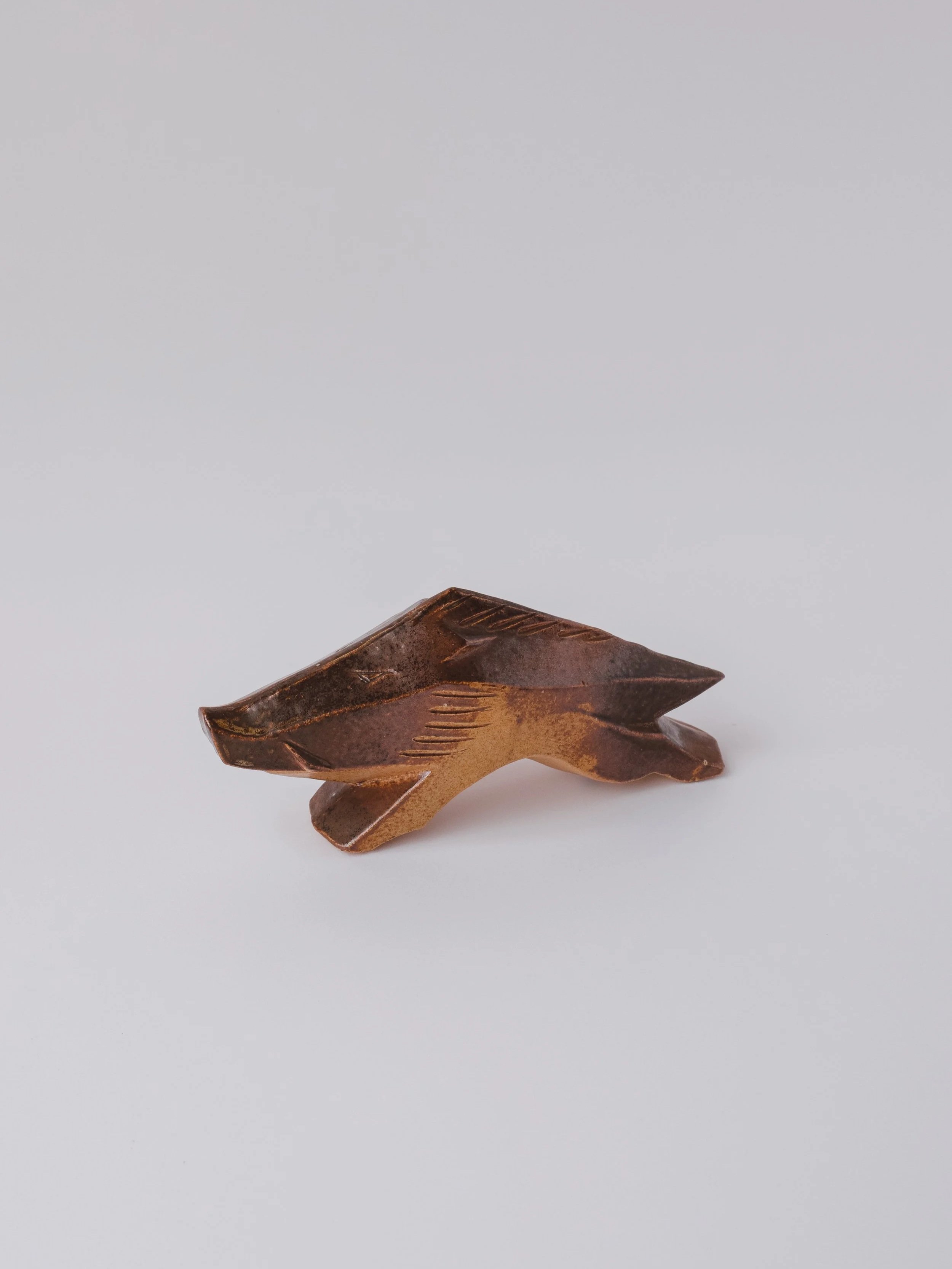 Image 1 of 9
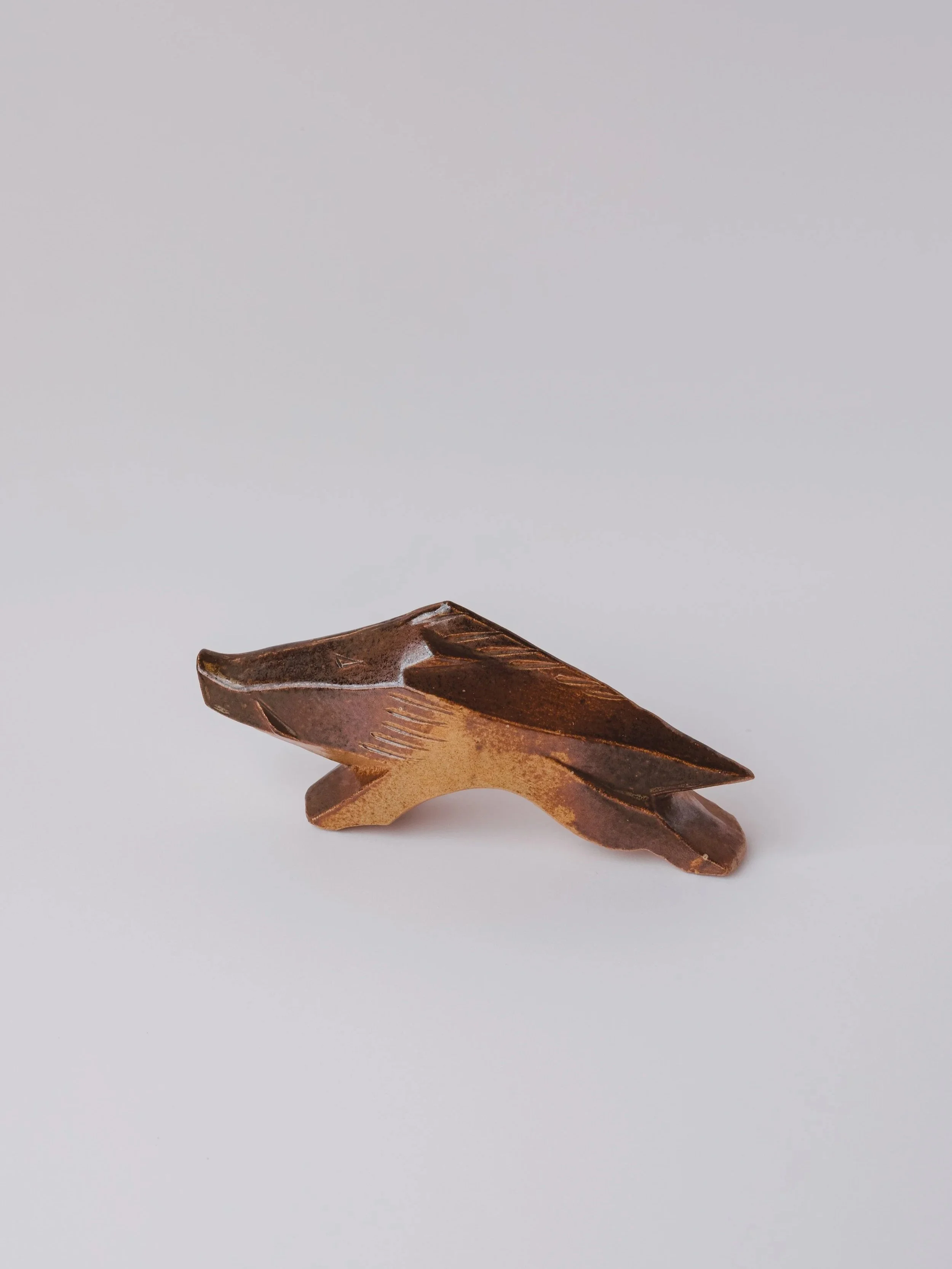 Image 2 of 9
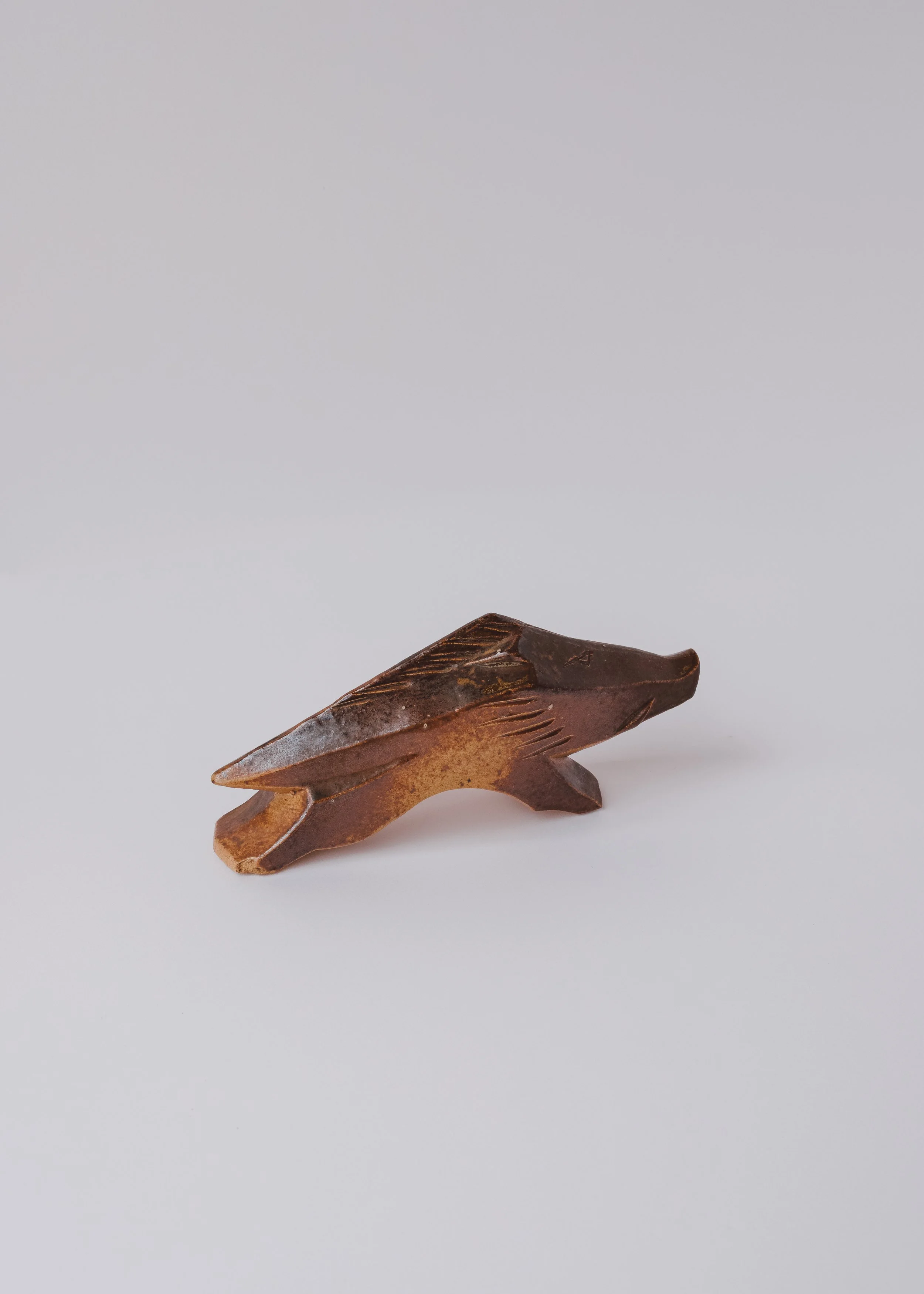 Image 3 of 9
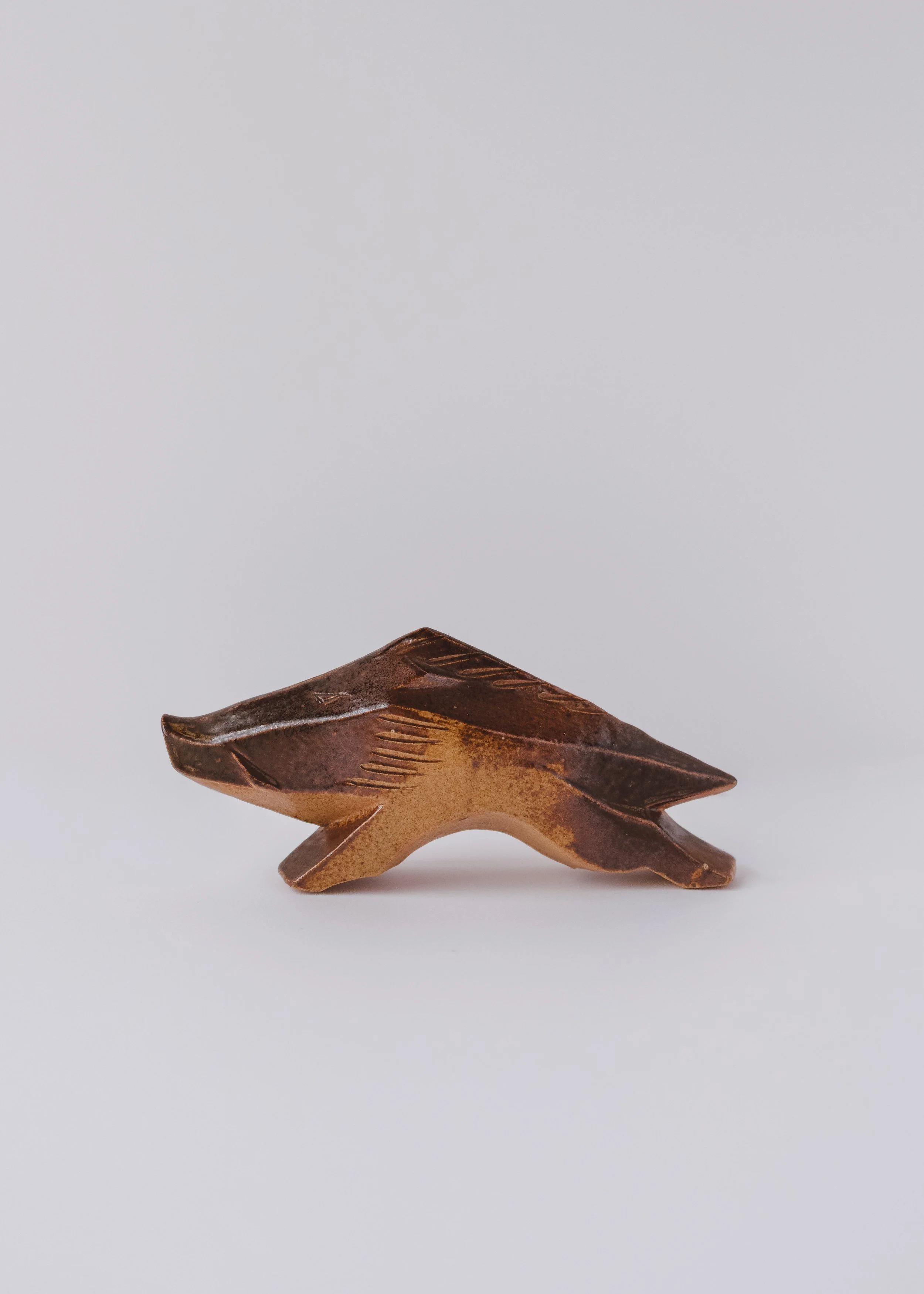 Image 4 of 9
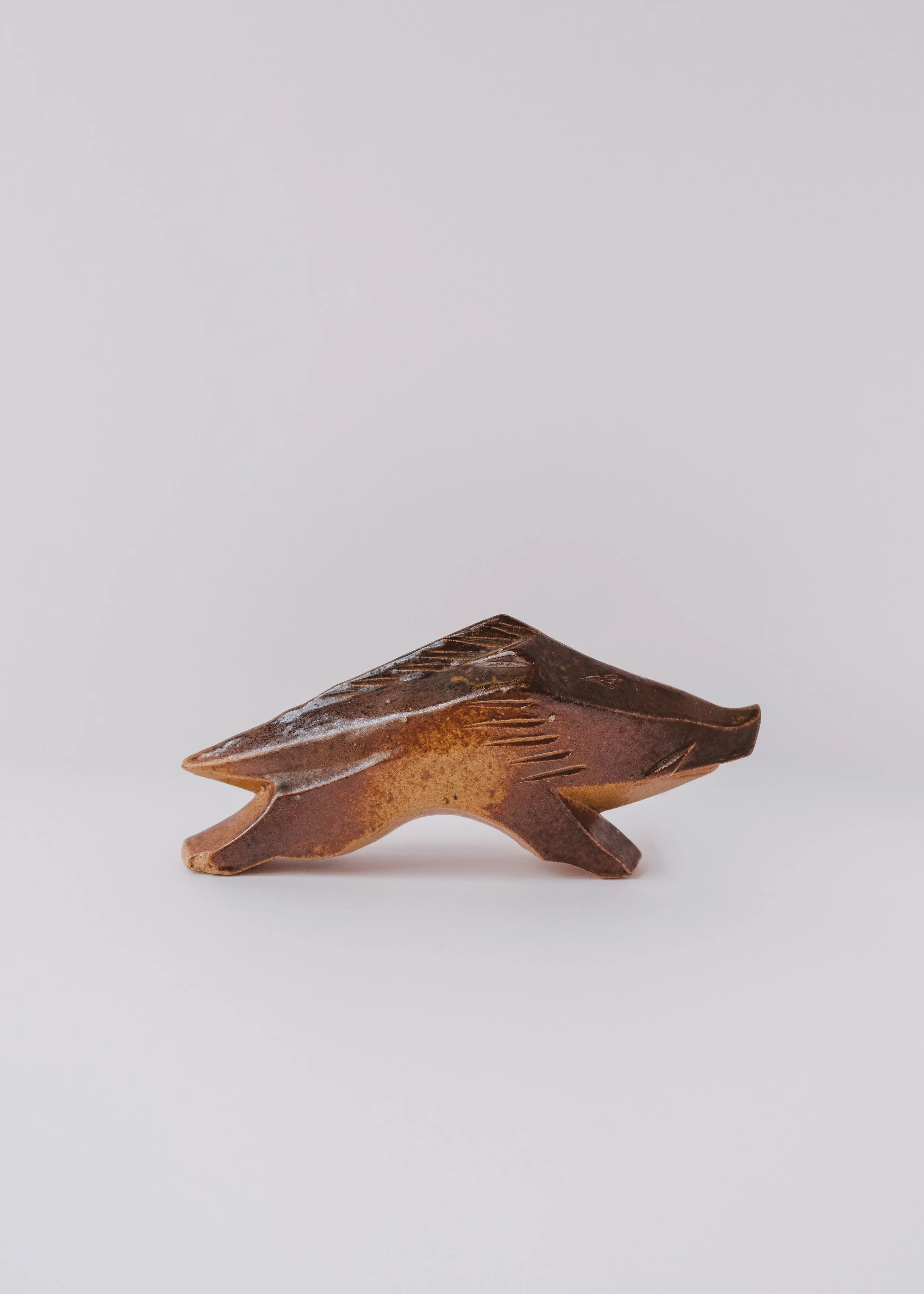 Image 5 of 9
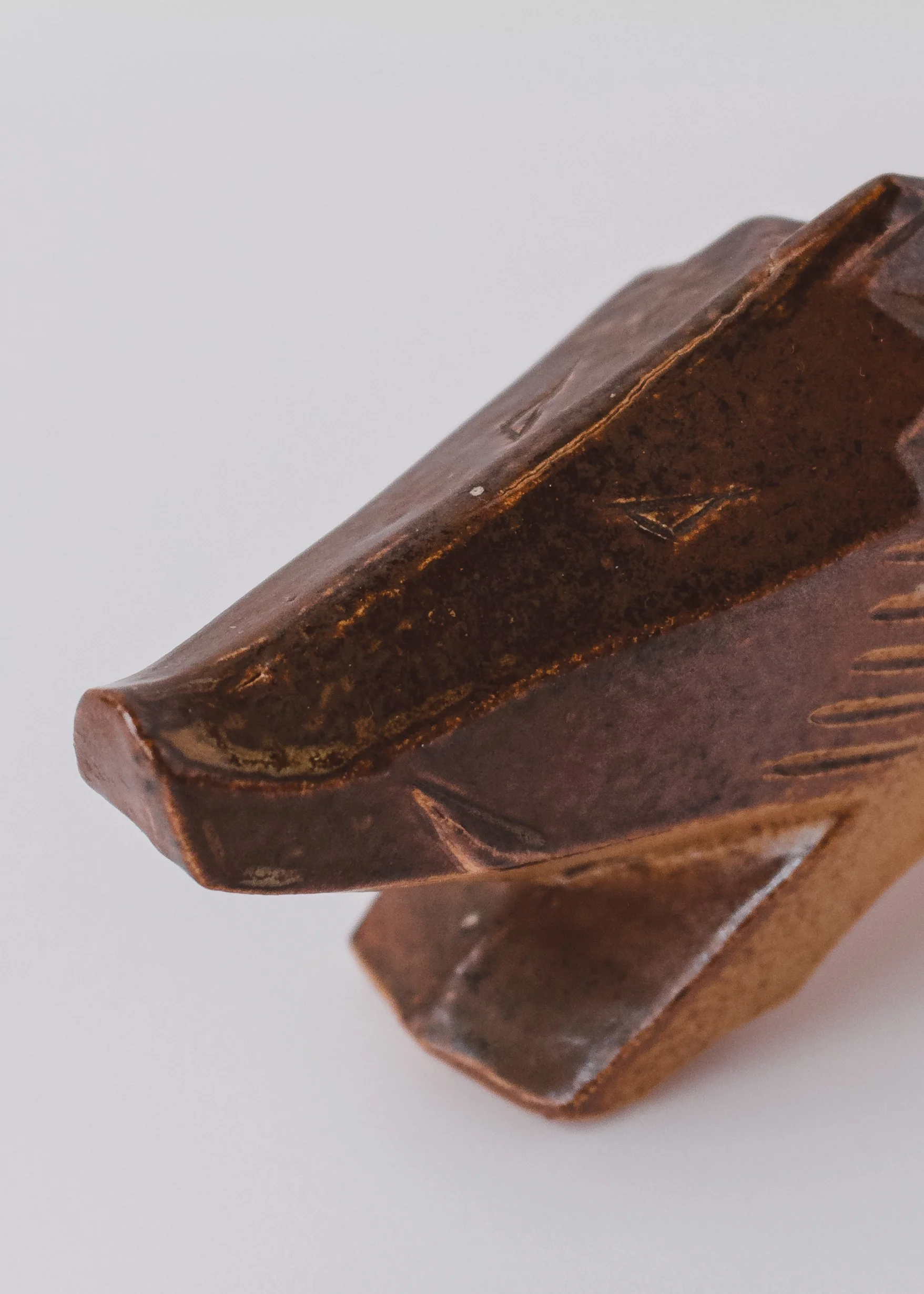 Image 6 of 9
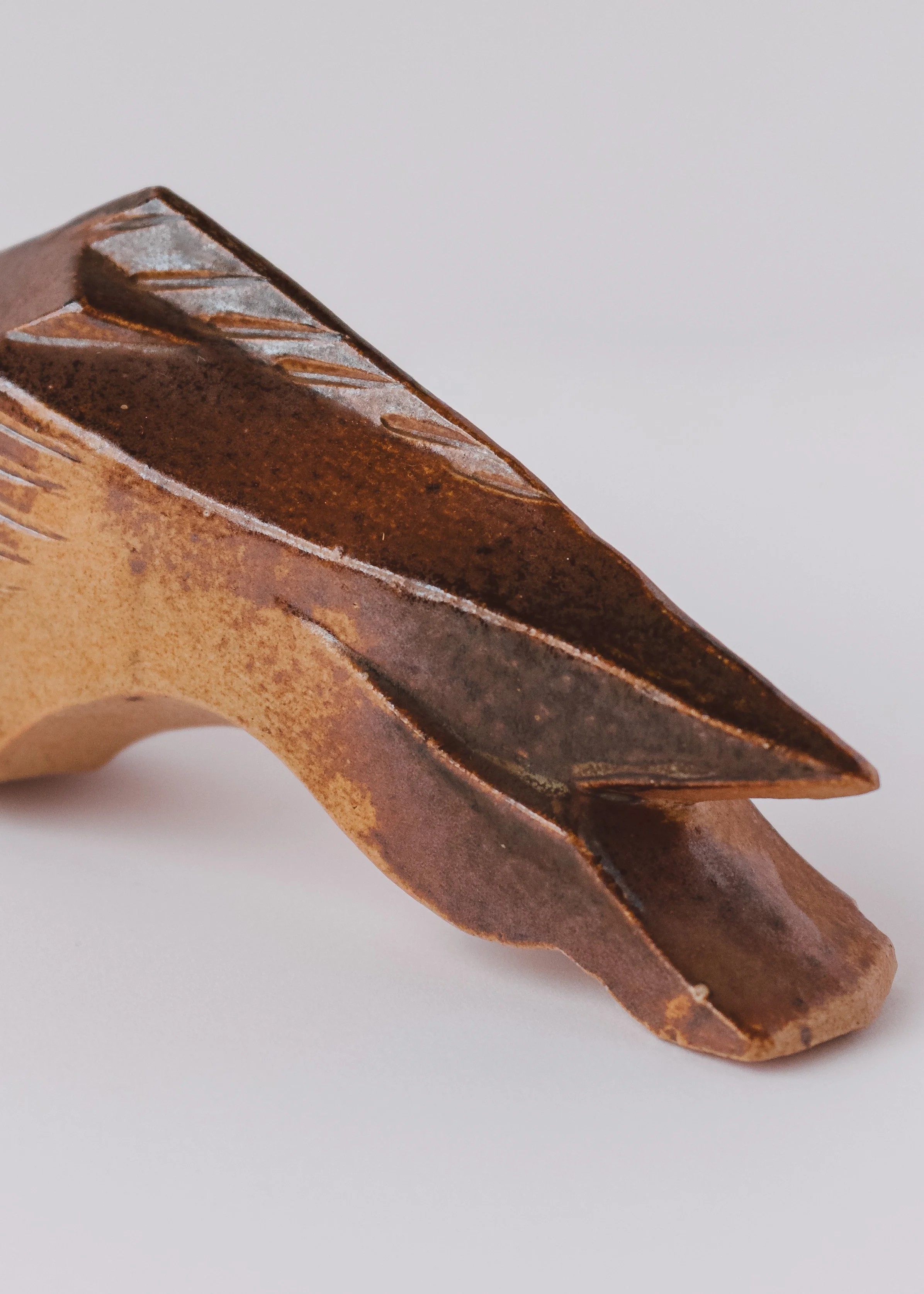 Image 7 of 9
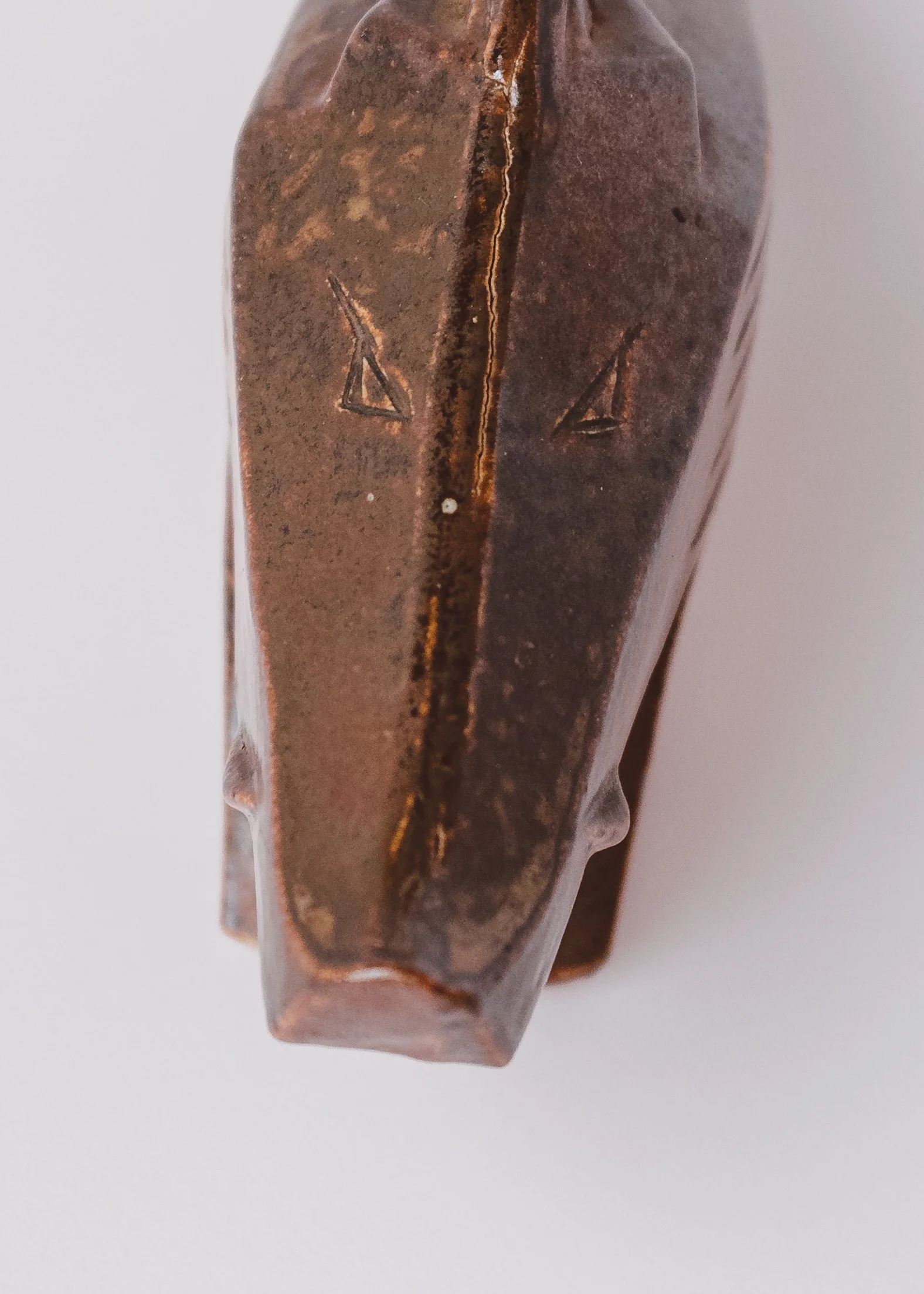 Image 8 of 9
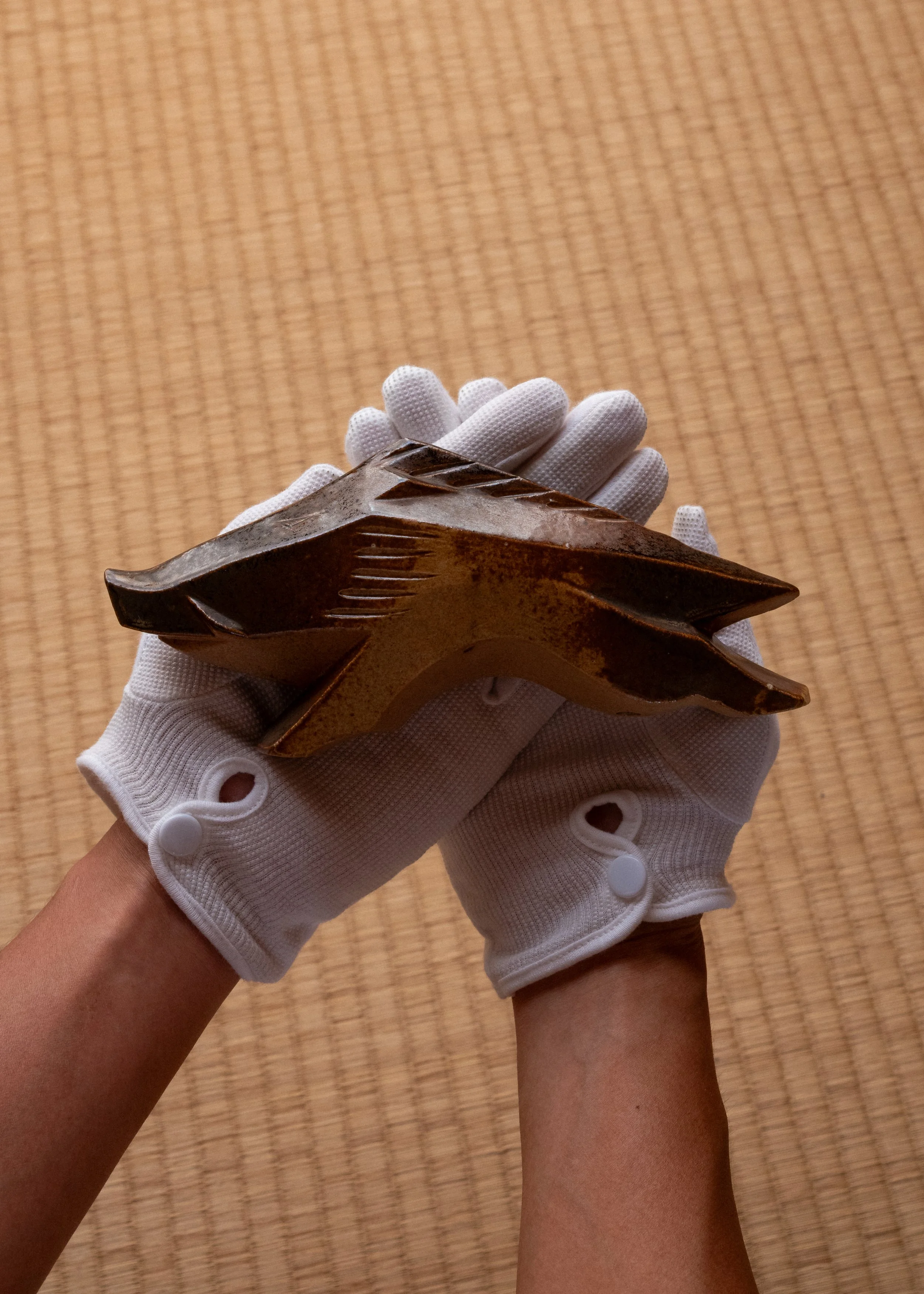 Image 9 of 9