【 The Concept 】
A figure standing inside its own light. The body is a standing bodhisattva cast in gold-plated metal, upright on a lotus pedestal, enclosed within a boat-shaped mandorla whose edges are covered in scrollwork so dense it reads as flame. The mandorla is not a frame. It is the light the figure is said to emit — made solid, made permanent, made gold.
This is a temple's official emissary. Inscribed on the reverse are characters identifying the figure as a division of a wooden original that stands over nine meters tall in a coastal temple south of the capital. The original was carved, according to tradition, from the upper half of a single sacred camphor tree. The lower half became a separate statue in a mountain temple hundreds of kilometers away. Two figures from one tree, split and sent in different directions. This small metal version continues that logic of division: a nine-meter body compressed into nine centimeters and dispatched into the world inside a wooden box with a glass window.
What distinguishes this figure from standard representations of the same deity is the right hand. Instead of an open palm offering blessings, it grips a ringed staff — the instrument of a walking monk, not a seated one. The left hand holds a vessel containing sacred water. The message is structural: this figure does not wait to be visited. It walks.
【 The Function 】
136 grams of gold-plated metal, 9 centimeters tall, 4 centimeters wide. It arrives in a fitted wooden box with a transparent front panel, designed to be displayed without removal. Open the box and the figure stands on its own, anchored by a dense lotus pedestal that keeps the vertical mandorla upright. In its original context, figures like this were carried home from temple visits as personal guardians — portable extensions of a statue too large to leave its hall. In a modern context, it is a self-contained altar: figure, halo, and enclosure in one object. Place the box on a shelf and the glass panel turns into a window. The guardian is already inside, already watching, already arrived.
【 The Texture 】
Gold throughout, but not uniform. The mandorla catches light along the raised ridges of its scrollwork and throws it back in fragmented lines, while the concave interior where the figure stands holds a softer, more diffuse glow. The figure itself carries sharp-edged detail — the beaded necklace across the chest, the layered folds of the robe cascading from shoulders to pedestal, the stacked faces on the crown, each no larger than a grain of rice yet individually formed. The staff in the right hand is thin enough to feel fragile, but solid metal. The surface shows no significant oxidation or wear — the gold plating has held, maintaining the luminous finish that temple metalwork is designed to keep for decades. The wooden box is plain, unvarnished, with the quiet grain of paulownia or cedar — a deliberate contrast to the gold it protects.
【 Presence 】
It is the smallest object in MINGEI 1926's archive and the only one that comes with its own architecture. The wooden box is not packaging. It is the room the figure lives in — a portable shrine scaled to fit a bookshelf, a bedside table, or a desk drawer. Behind the glass, the gold surface gathers whatever ambient light the room offers and concentrates it into the narrow vertical space of the mandorla. The effect is disproportionate: 9 centimeters of metal producing the visual weight of something far larger. GILT MERCY reflects. BRONZE DEVOTION absorbs. This figure radiates — not outward like a lamp, but inward like a window into a lit room that exists on the other side of the glass.
Sourced from a private collection in the Kansai region, Japan.
【 The Concept 】
A figure standing inside its own light. The body is a standing bodhisattva cast in gold-plated metal, upright on a lotus pedestal, enclosed within a boat-shaped mandorla whose edges are covered in scrollwork so dense it reads as flame. The mandorla is not a frame. It is the light the figure is said to emit — made solid, made permanent, made gold.
This is a temple's official emissary. Inscribed on the reverse are characters identifying the figure as a division of a wooden original that stands over nine meters tall in a coastal temple south of the capital. The original was carved, according to tradition, from the upper half of a single sacred camphor tree. The lower half became a separate statue in a mountain temple hundreds of kilometers away. Two figures from one tree, split and sent in different directions. This small metal version continues that logic of division: a nine-meter body compressed into nine centimeters and dispatched into the world inside a wooden box with a glass window.
What distinguishes this figure from standard representations of the same deity is the right hand. Instead of an open palm offering blessings, it grips a ringed staff — the instrument of a walking monk, not a seated one. The left hand holds a vessel containing sacred water. The message is structural: this figure does not wait to be visited. It walks.
【 The Function 】
136 grams of gold-plated metal, 9 centimeters tall, 4 centimeters wide. It arrives in a fitted wooden box with a transparent front panel, designed to be displayed without removal. Open the box and the figure stands on its own, anchored by a dense lotus pedestal that keeps the vertical mandorla upright. In its original context, figures like this were carried home from temple visits as personal guardians — portable extensions of a statue too large to leave its hall. In a modern context, it is a self-contained altar: figure, halo, and enclosure in one object. Place the box on a shelf and the glass panel turns into a window. The guardian is already inside, already watching, already arrived.
【 The Texture 】
Gold throughout, but not uniform. The mandorla catches light along the raised ridges of its scrollwork and throws it back in fragmented lines, while the concave interior where the figure stands holds a softer, more diffuse glow. The figure itself carries sharp-edged detail — the beaded necklace across the chest, the layered folds of the robe cascading from shoulders to pedestal, the stacked faces on the crown, each no larger than a grain of rice yet individually formed. The staff in the right hand is thin enough to feel fragile, but solid metal. The surface shows no significant oxidation or wear — the gold plating has held, maintaining the luminous finish that temple metalwork is designed to keep for decades. The wooden box is plain, unvarnished, with the quiet grain of paulownia or cedar — a deliberate contrast to the gold it protects.
【 Presence 】
It is the smallest object in MINGEI 1926's archive and the only one that comes with its own architecture. The wooden box is not packaging. It is the room the figure lives in — a portable shrine scaled to fit a bookshelf, a bedside table, or a desk drawer. Behind the glass, the gold surface gathers whatever ambient light the room offers and concentrates it into the narrow vertical space of the mandorla. The effect is disproportionate: 9 centimeters of metal producing the visual weight of something far larger. GILT MERCY reflects. BRONZE DEVOTION absorbs. This figure radiates — not outward like a lamp, but inward like a window into a lit room that exists on the other side of the glass.
Sourced from a private collection in the Kansai region, Japan.


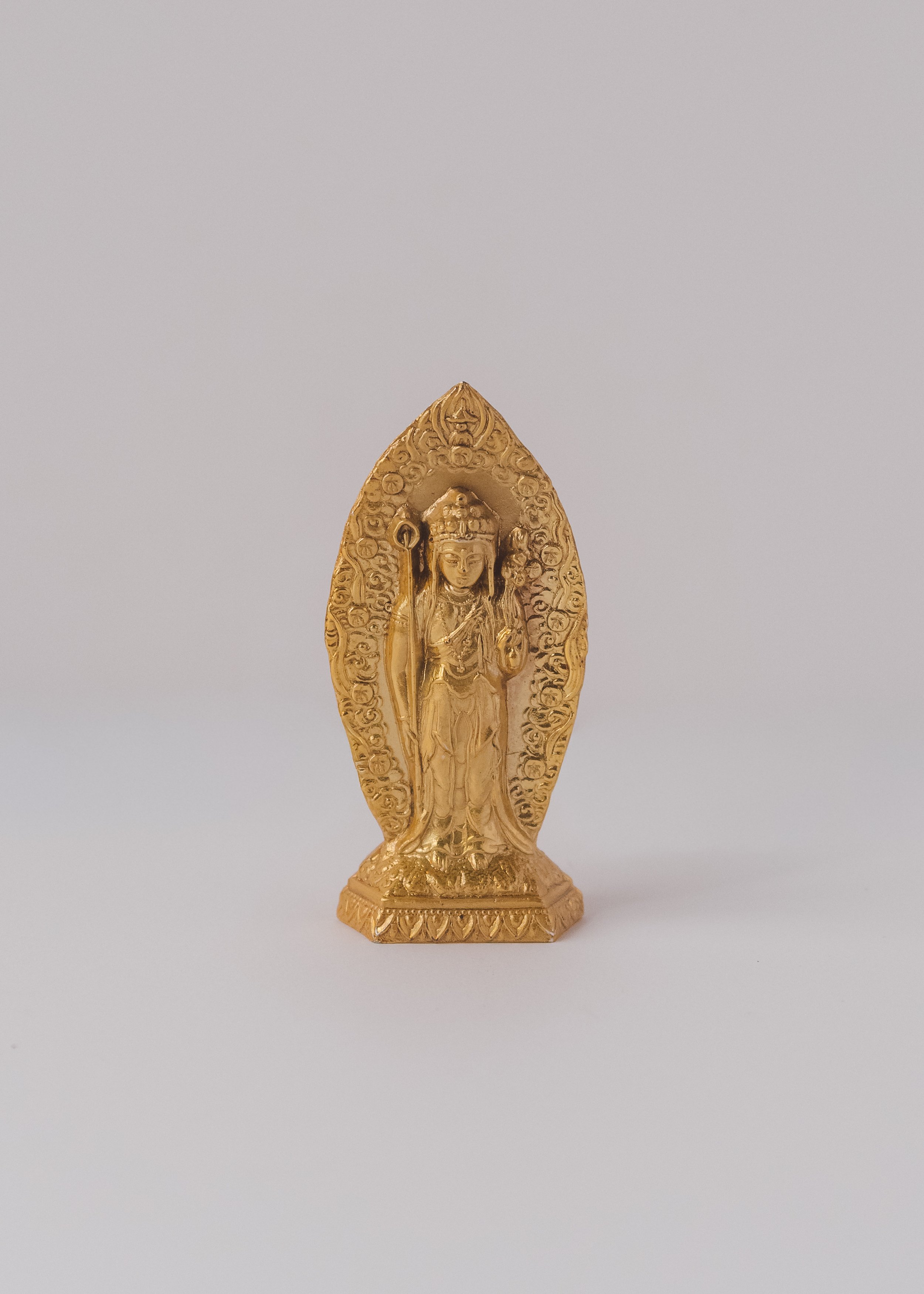 Image 1 of 8
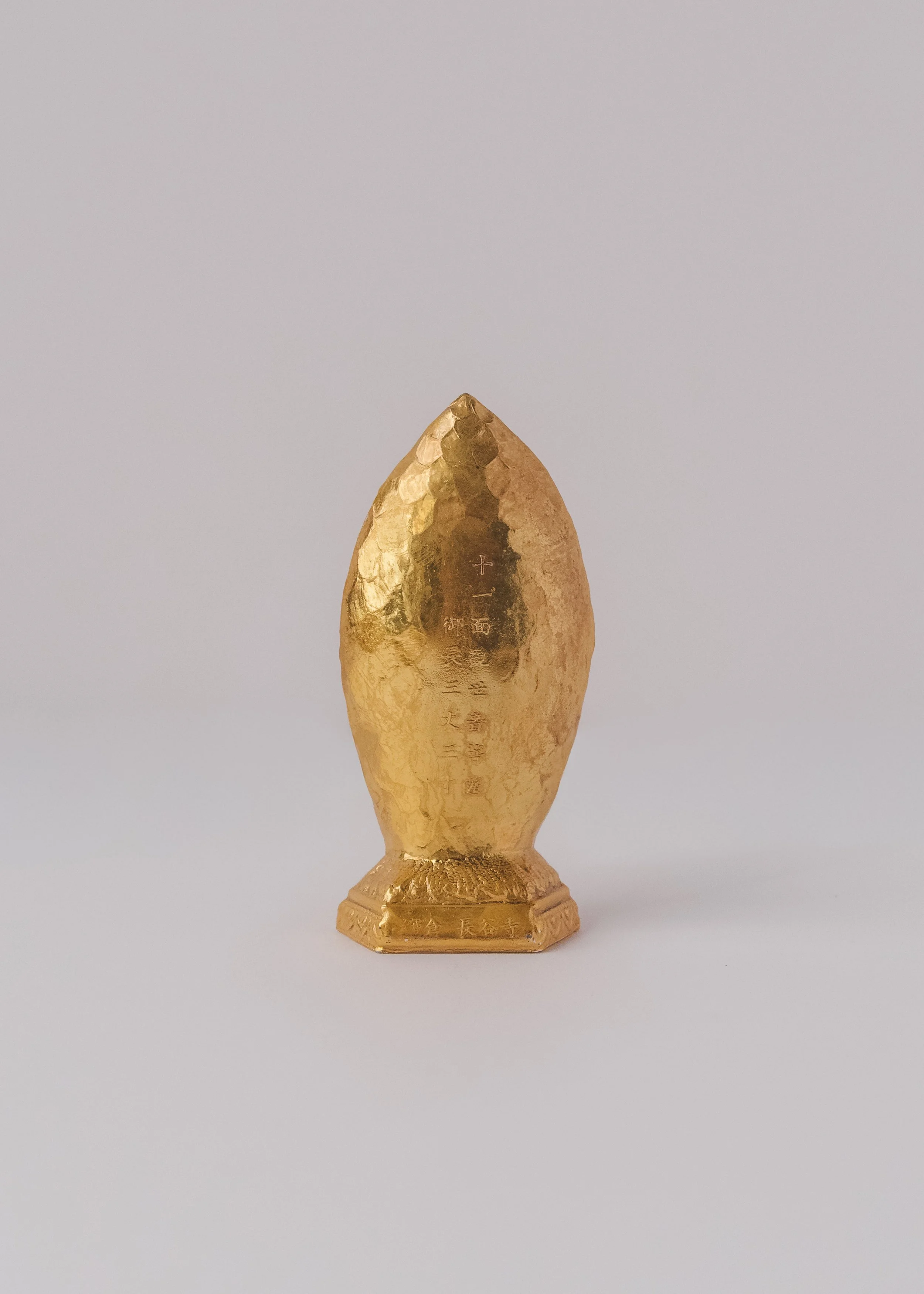 Image 2 of 8
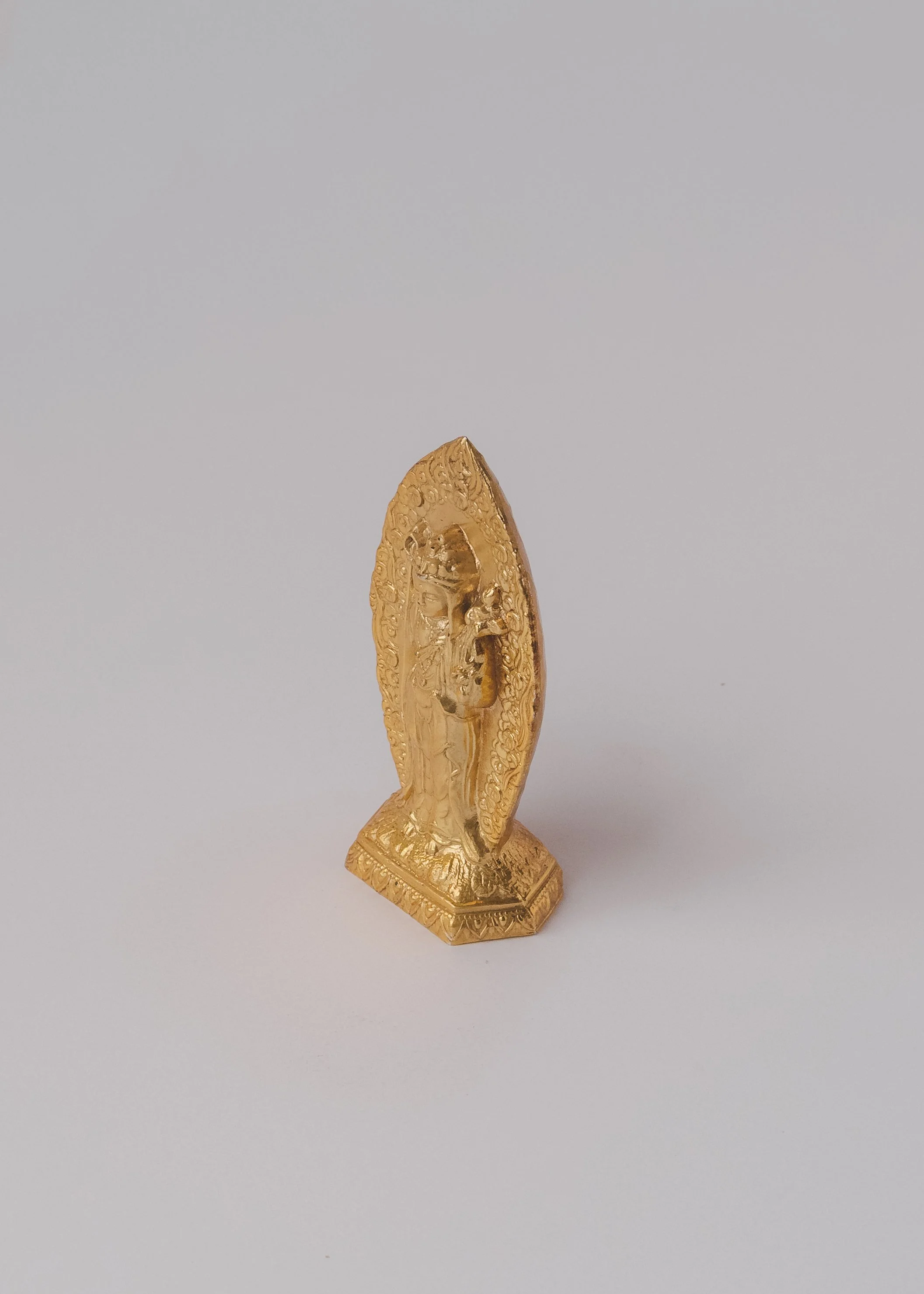 Image 3 of 8
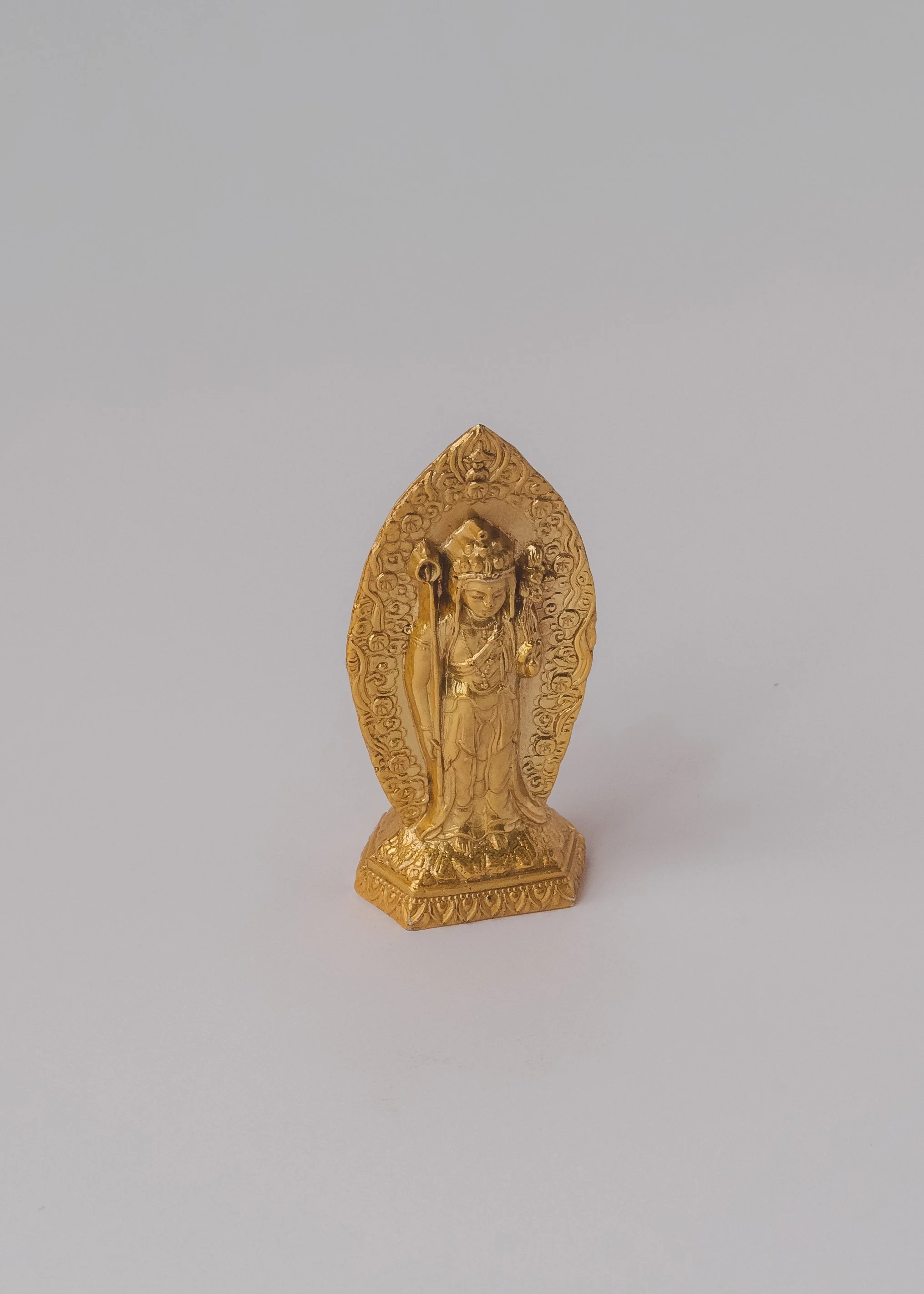 Image 4 of 8
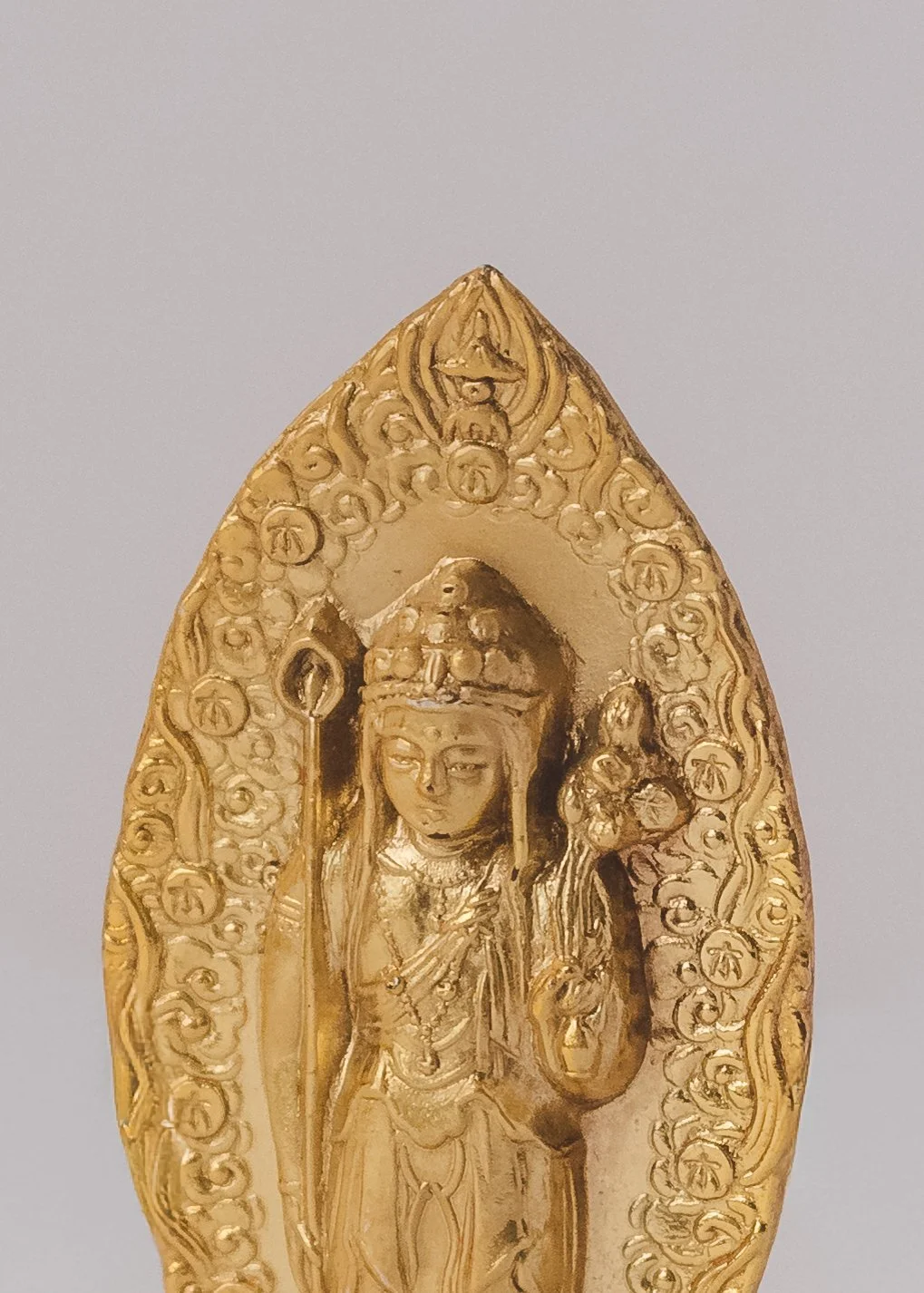 Image 5 of 8
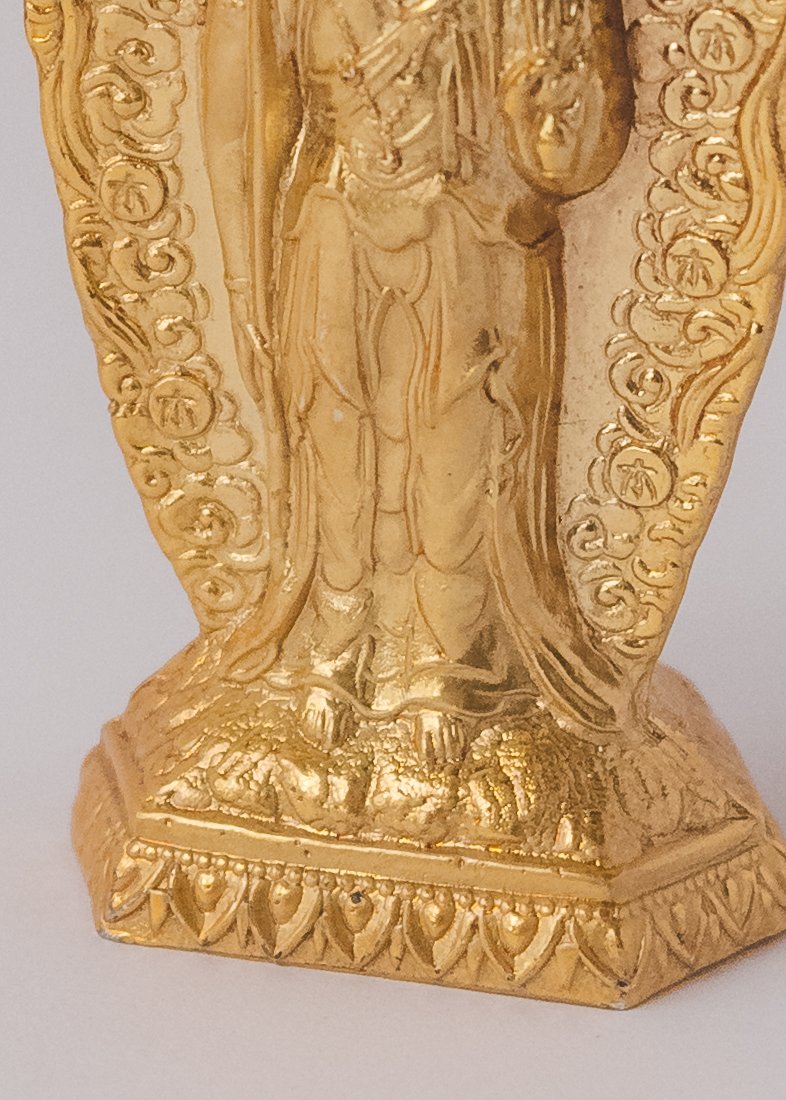 Image 6 of 8
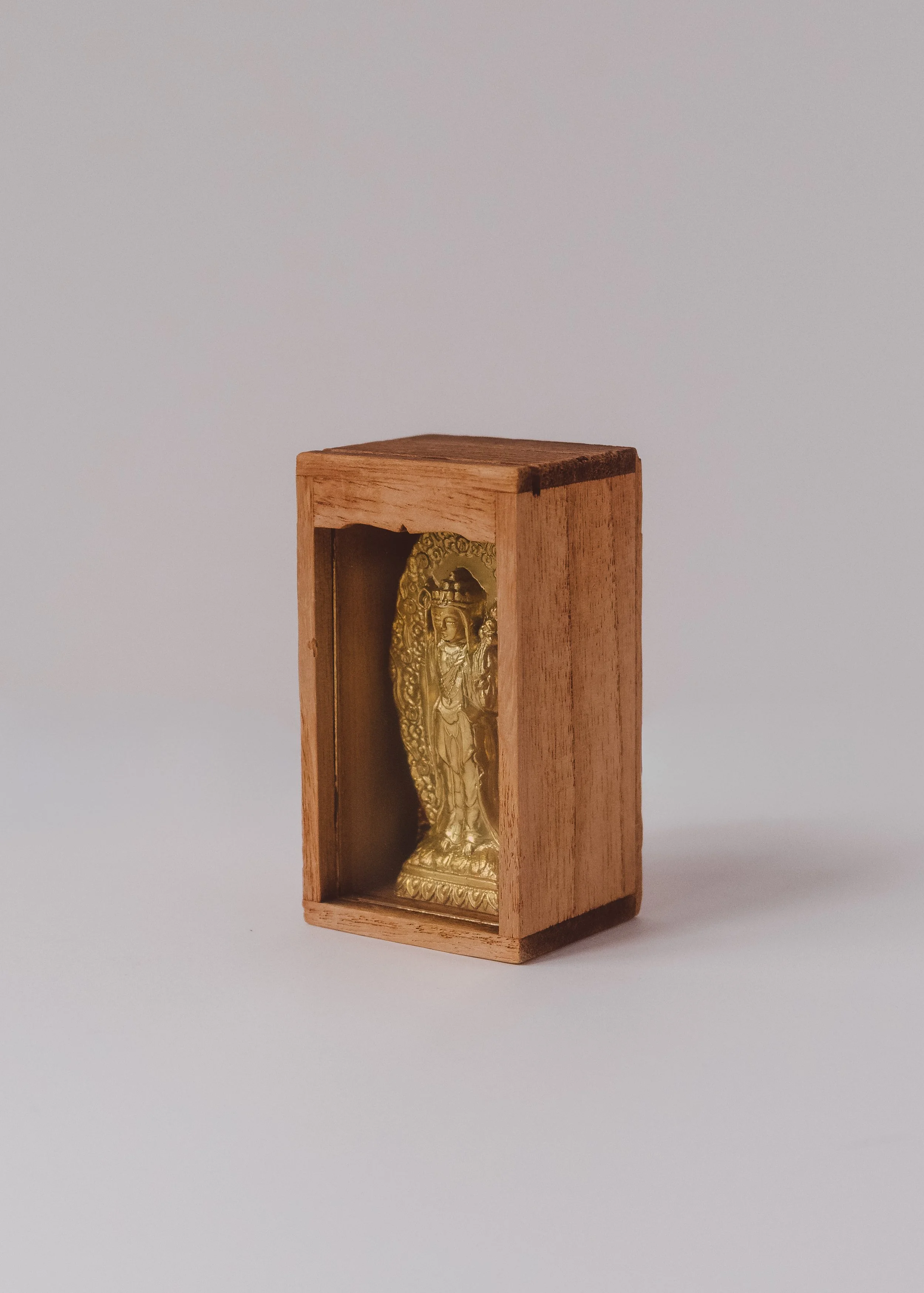 Image 7 of 8
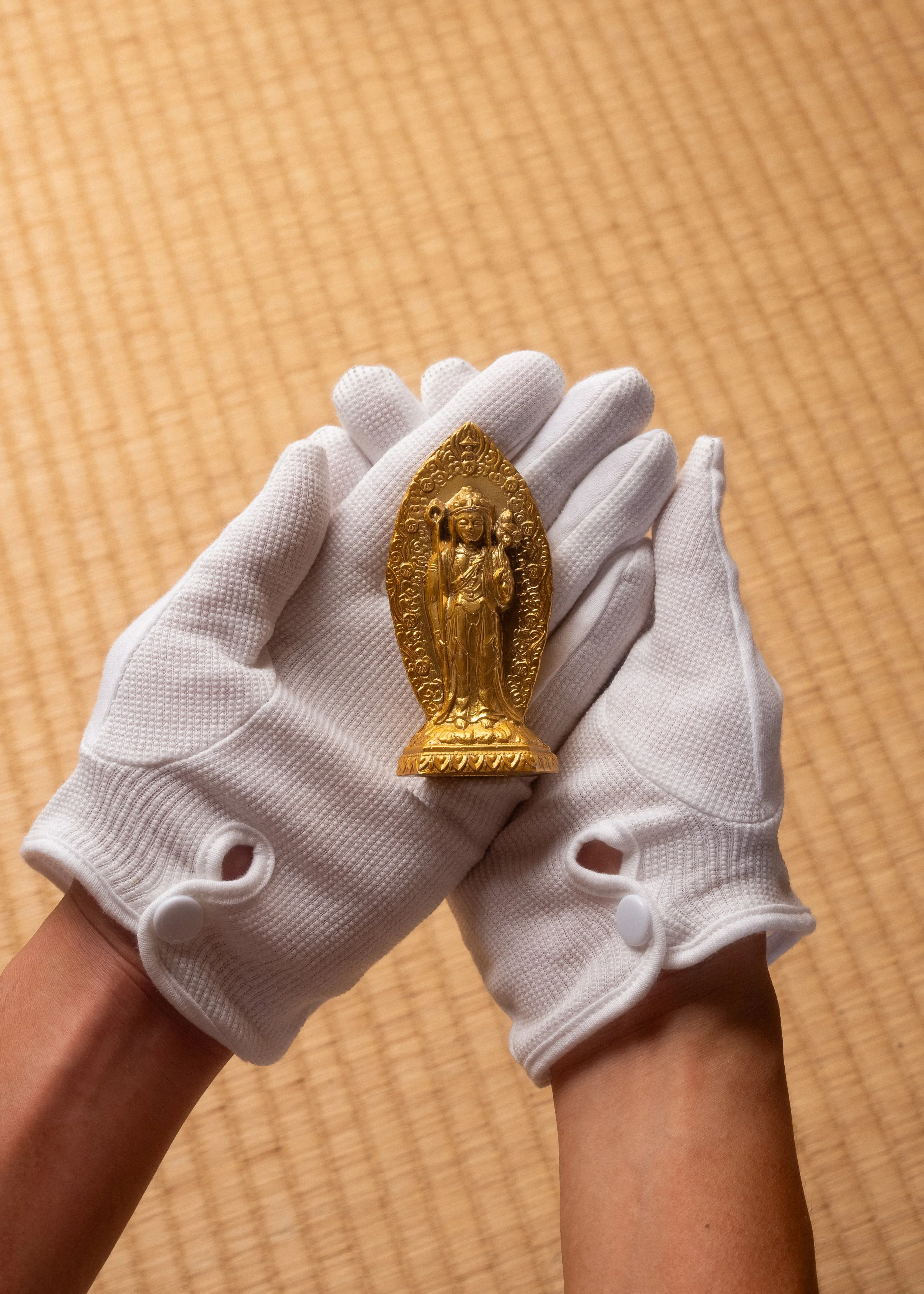 Image 8 of 8