【 The Concept 】
Two figures, sold together, made of the same silence. One sits upright. The other arches. The sitting one looks down. The arching one looks ahead. Between them, a conversation is taking place that neither voice nor text can enter.
The parent is 20.5 centimeters of pale glazed ceramic, sitting with its front legs together and its back straight, in the posture of a dog that has decided to stay exactly where it is for as long as necessary. The head tilts almost imperceptibly downward, and the eyes — two small blue dots, the only color on the entire body — are aimed just below the horizon, not at the floor but at the space slightly ahead and beneath, where the smaller figure might be. The ears hang flat against the skull. The muzzle is rounded, closed, expressionless except for the angle of the gaze, which says everything the face does not.
The puppy is 5 centimeters of the same ceramic, arched into a V-shape — head up at one end, haunches up at the other, the belly dipping between them like a bridge that has given way in the middle. The face points straight ahead, not up at the parent, not down at the floor, but forward into the room with the uncomplicated directness of something that has not yet learned to be cautious. The head-to-body ratio is exaggerated in the way all infant mammals are exaggerated: too much skull, not enough limb.
Place them side by side and the contrast does the work. The parent is vertical, still, watching. The puppy is horizontal, arched, ready. The parent's gaze, barely angled downward, finds the smaller figure at its feet, and the puppy's forward gaze ignores the parent entirely — already looking at whatever comes next. Separate them and each becomes abstract — a smooth white shape with blue dots. Together, they become a family.
【 The Function 】
605 grams combined. Both figures are hollow — slip-cast shells of ceramic, not solid masses — yet the parent still weighs 539 grams, heavy enough to feel substantial in the hand and stable on any surface. The puppy weighs 66 grams, light enough to be moved with a fingertip. In their original context, dog figures were placed in households as guardians of safe childbirth and healthy growth — the dog's reputation for easy delivery and strong offspring made it a talisman for families expecting children. A parent-child pair doubled the message: not just safe birth, but safe raising. In a modern context, the size difference between the two figures creates a natural hierarchy on any shelf. The parent anchors. The puppy orbits.
【 The Texture 】
Pale celadon over the entire surface of both figures — a glaze so close to white it reveals its blue-green tint only in the shadows, where the curves dip inward and the light has to travel farther before escaping. The finish is high-gloss, wet-looking, and perfectly uniform. Every light source in the room appears on the surface as a soft highlight that follows the contour of the body like water running over a stone. There is no texture beneath the glaze — no grain, no roughness, no evidence of the clay body underneath. The smoothness is total. The only interruption is the pair of blue dots on each figure's face, placed with a brush fine enough to leave no visible stroke. These four dots — two on the parent, two on the puppy — are the entire emotional vocabulary of the set.
【 Presence 】
They are quiet. No pattern. No color except blue dots on white. No decoration, no texture, no narrative carved into the surface. The parent sits and the puppy arches and the room around them gets a little stiller for it. HEWN HOSTS smile and overflow with abundance. QUIET KIN say nothing and need nothing. They are already complete — not because they possess anything, but because they possess each other.
The pale celadon surface picks up the color temperature of whatever room they are in — warmer under lamplight, cooler near a window, almost grey at dusk. They do not impose a mood. They adopt one. And because the only specific detail on either figure is the direction of its gaze, the viewer's eye is pulled not to the objects themselves but to the space between them — the six or eight centimeters of empty shelf where the looking happens. That gap is the real subject of the piece.
Sourced from a private collection in the Kansai region, Japan.
【 The Concept 】
Two figures, sold together, made of the same silence. One sits upright. The other arches. The sitting one looks down. The arching one looks ahead. Between them, a conversation is taking place that neither voice nor text can enter.
The parent is 20.5 centimeters of pale glazed ceramic, sitting with its front legs together and its back straight, in the posture of a dog that has decided to stay exactly where it is for as long as necessary. The head tilts almost imperceptibly downward, and the eyes — two small blue dots, the only color on the entire body — are aimed just below the horizon, not at the floor but at the space slightly ahead and beneath, where the smaller figure might be. The ears hang flat against the skull. The muzzle is rounded, closed, expressionless except for the angle of the gaze, which says everything the face does not.
The puppy is 5 centimeters of the same ceramic, arched into a V-shape — head up at one end, haunches up at the other, the belly dipping between them like a bridge that has given way in the middle. The face points straight ahead, not up at the parent, not down at the floor, but forward into the room with the uncomplicated directness of something that has not yet learned to be cautious. The head-to-body ratio is exaggerated in the way all infant mammals are exaggerated: too much skull, not enough limb.
Place them side by side and the contrast does the work. The parent is vertical, still, watching. The puppy is horizontal, arched, ready. The parent's gaze, barely angled downward, finds the smaller figure at its feet, and the puppy's forward gaze ignores the parent entirely — already looking at whatever comes next. Separate them and each becomes abstract — a smooth white shape with blue dots. Together, they become a family.
【 The Function 】
605 grams combined. Both figures are hollow — slip-cast shells of ceramic, not solid masses — yet the parent still weighs 539 grams, heavy enough to feel substantial in the hand and stable on any surface. The puppy weighs 66 grams, light enough to be moved with a fingertip. In their original context, dog figures were placed in households as guardians of safe childbirth and healthy growth — the dog's reputation for easy delivery and strong offspring made it a talisman for families expecting children. A parent-child pair doubled the message: not just safe birth, but safe raising. In a modern context, the size difference between the two figures creates a natural hierarchy on any shelf. The parent anchors. The puppy orbits.
【 The Texture 】
Pale celadon over the entire surface of both figures — a glaze so close to white it reveals its blue-green tint only in the shadows, where the curves dip inward and the light has to travel farther before escaping. The finish is high-gloss, wet-looking, and perfectly uniform. Every light source in the room appears on the surface as a soft highlight that follows the contour of the body like water running over a stone. There is no texture beneath the glaze — no grain, no roughness, no evidence of the clay body underneath. The smoothness is total. The only interruption is the pair of blue dots on each figure's face, placed with a brush fine enough to leave no visible stroke. These four dots — two on the parent, two on the puppy — are the entire emotional vocabulary of the set.
【 Presence 】
They are quiet. No pattern. No color except blue dots on white. No decoration, no texture, no narrative carved into the surface. The parent sits and the puppy arches and the room around them gets a little stiller for it. HEWN HOSTS smile and overflow with abundance. QUIET KIN say nothing and need nothing. They are already complete — not because they possess anything, but because they possess each other.
The pale celadon surface picks up the color temperature of whatever room they are in — warmer under lamplight, cooler near a window, almost grey at dusk. They do not impose a mood. They adopt one. And because the only specific detail on either figure is the direction of its gaze, the viewer's eye is pulled not to the objects themselves but to the space between them — the six or eight centimeters of empty shelf where the looking happens. That gap is the real subject of the piece.
Sourced from a private collection in the Kansai region, Japan.


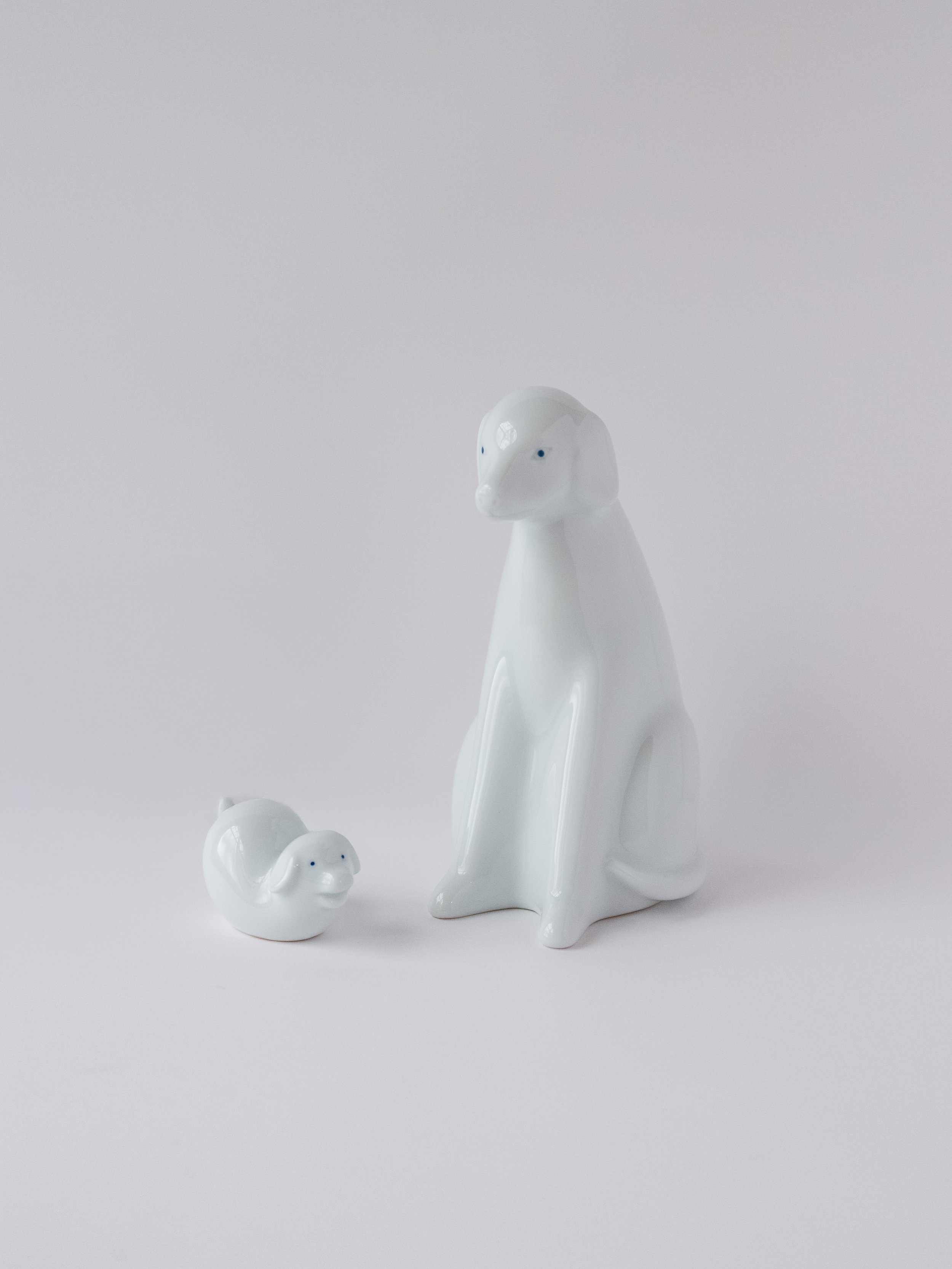 Image 1 of 15
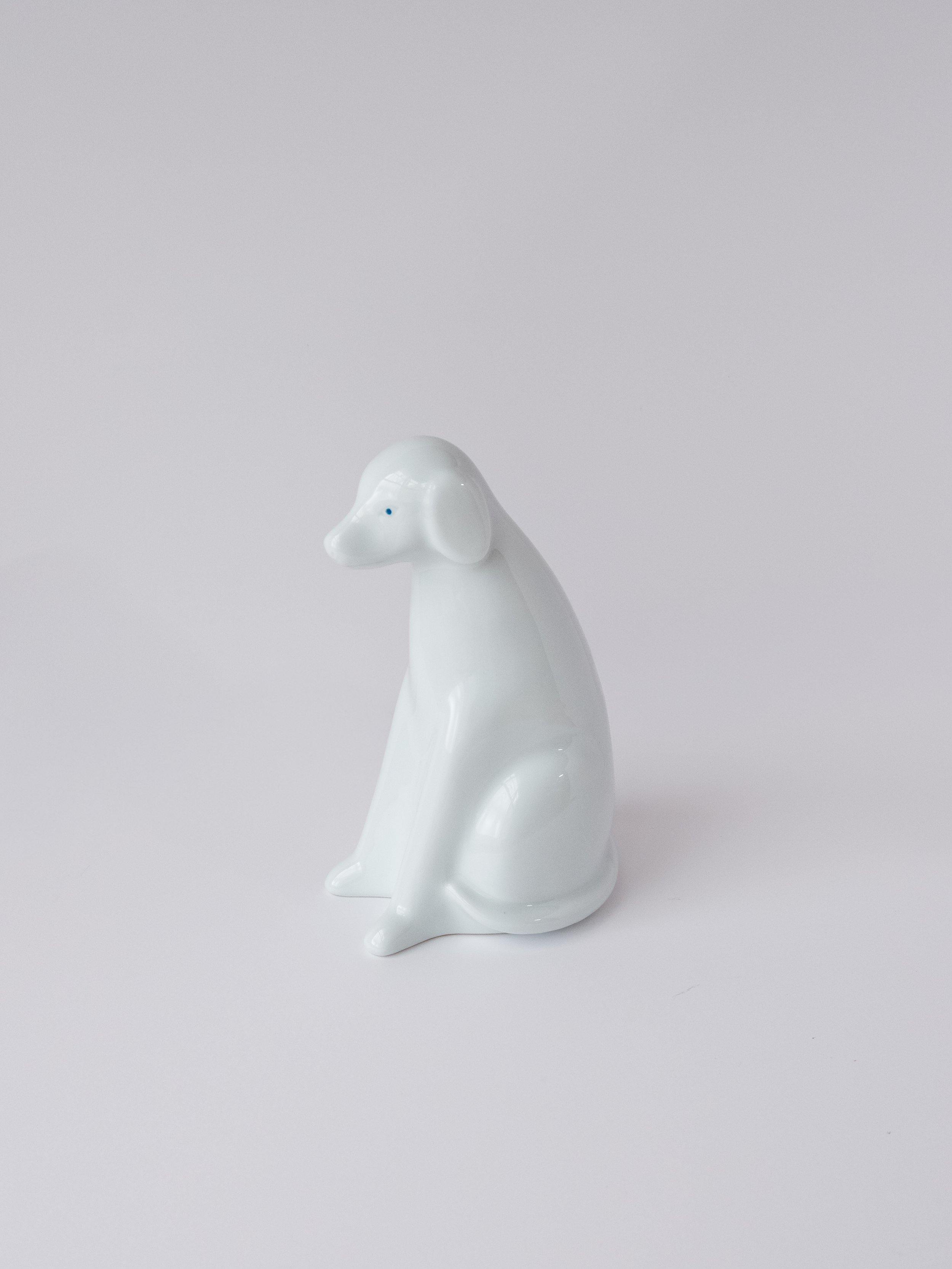 Image 2 of 15
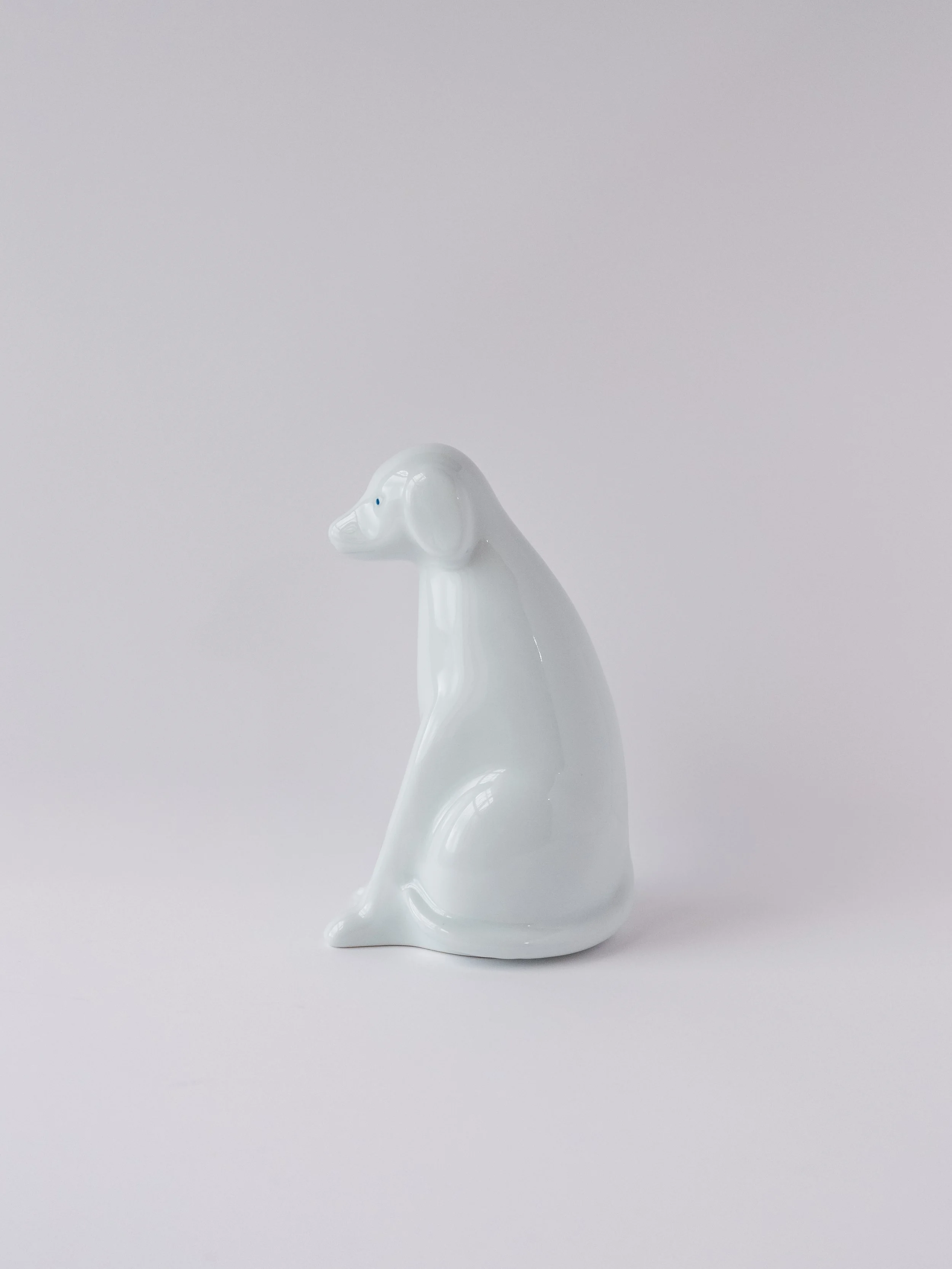 Image 3 of 15
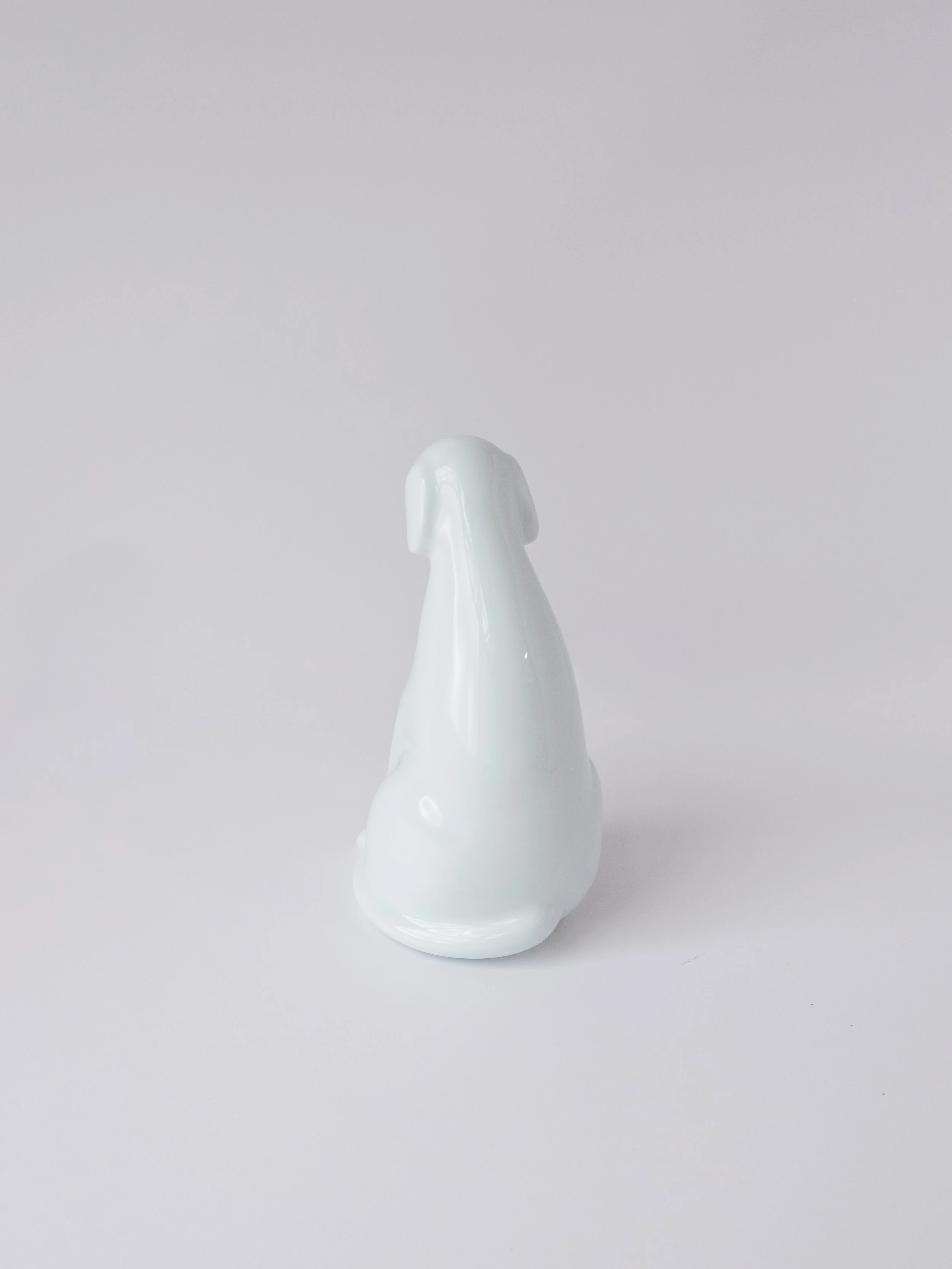 Image 4 of 15
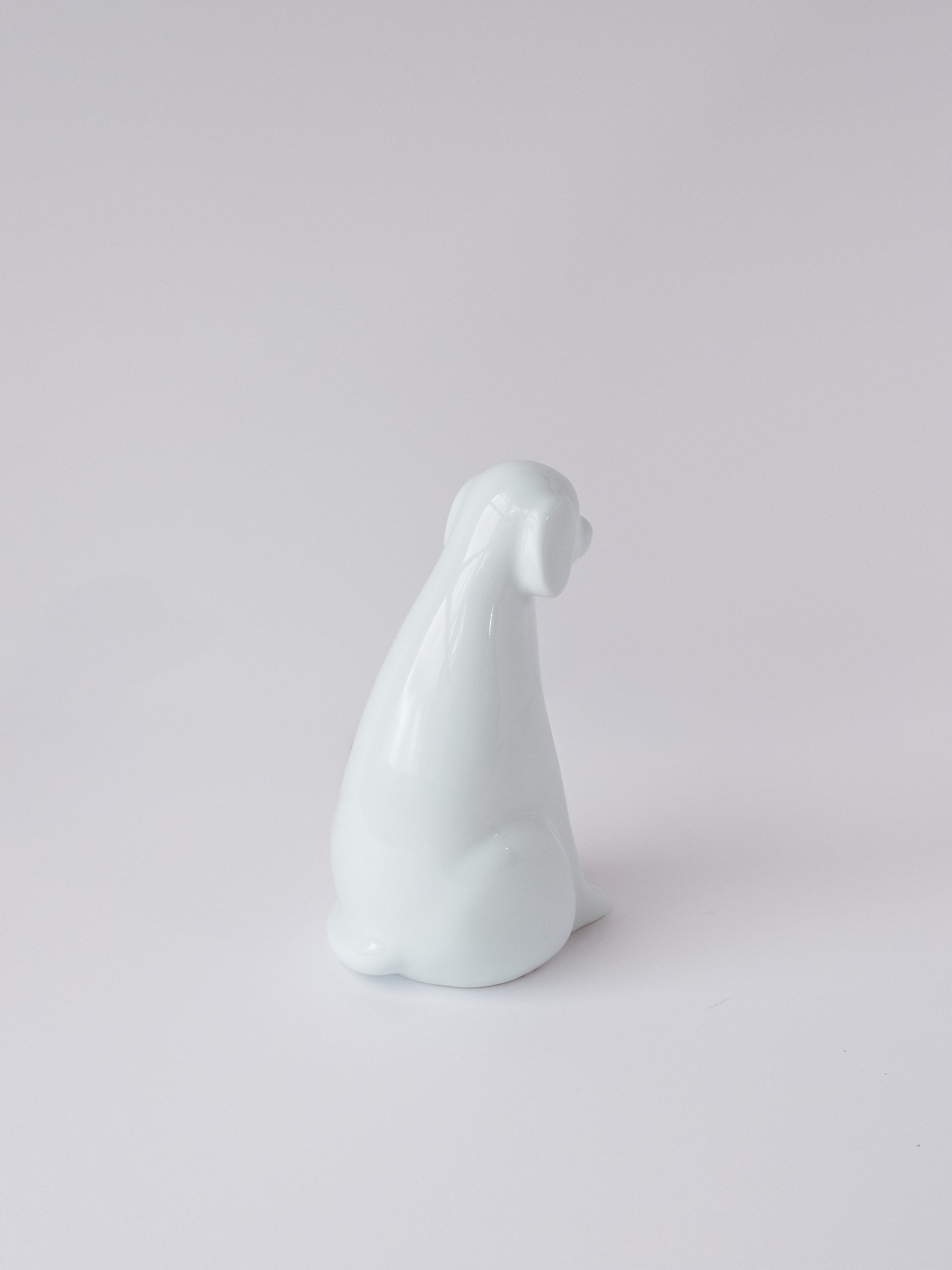 Image 5 of 15
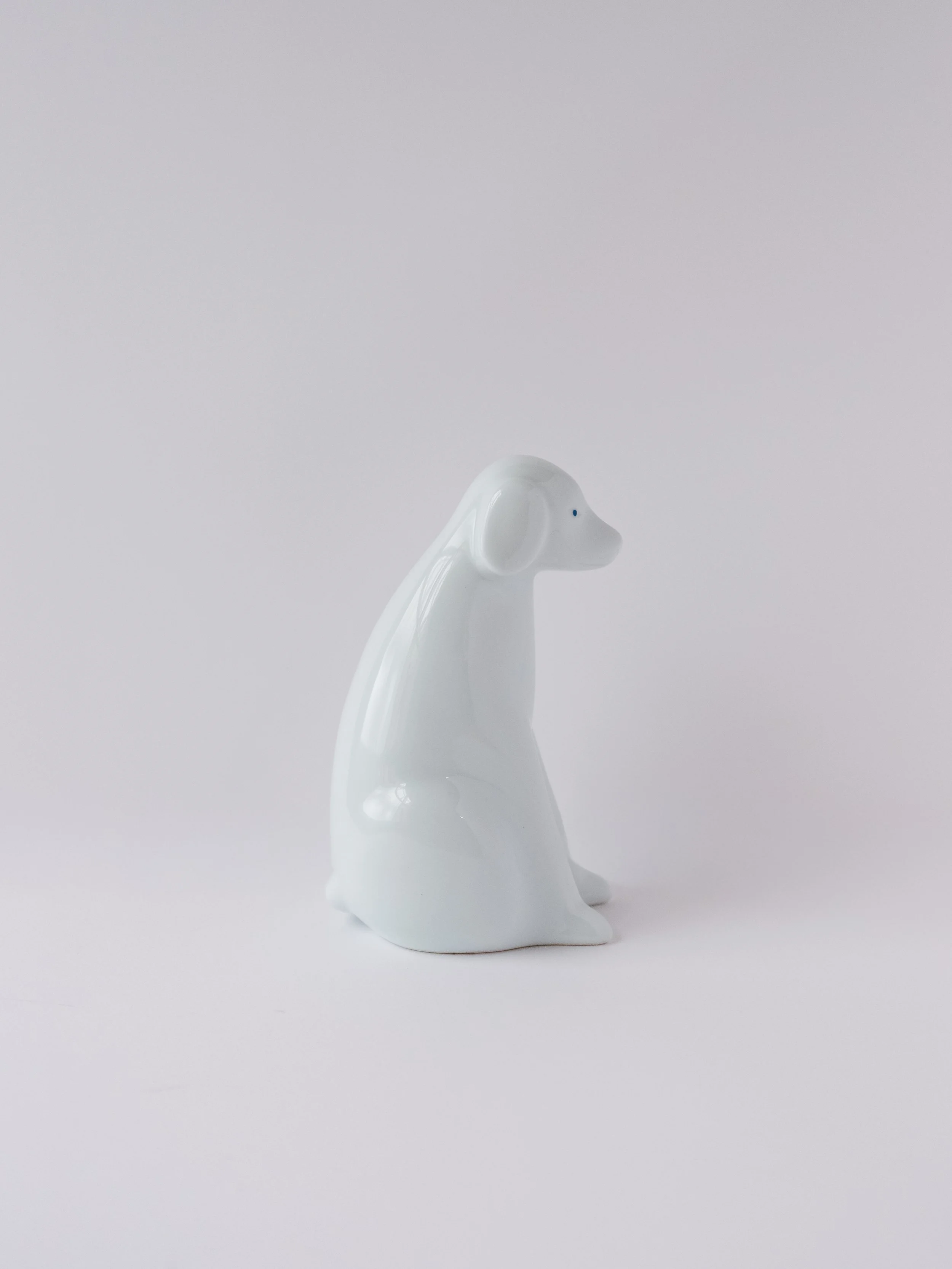 Image 6 of 15
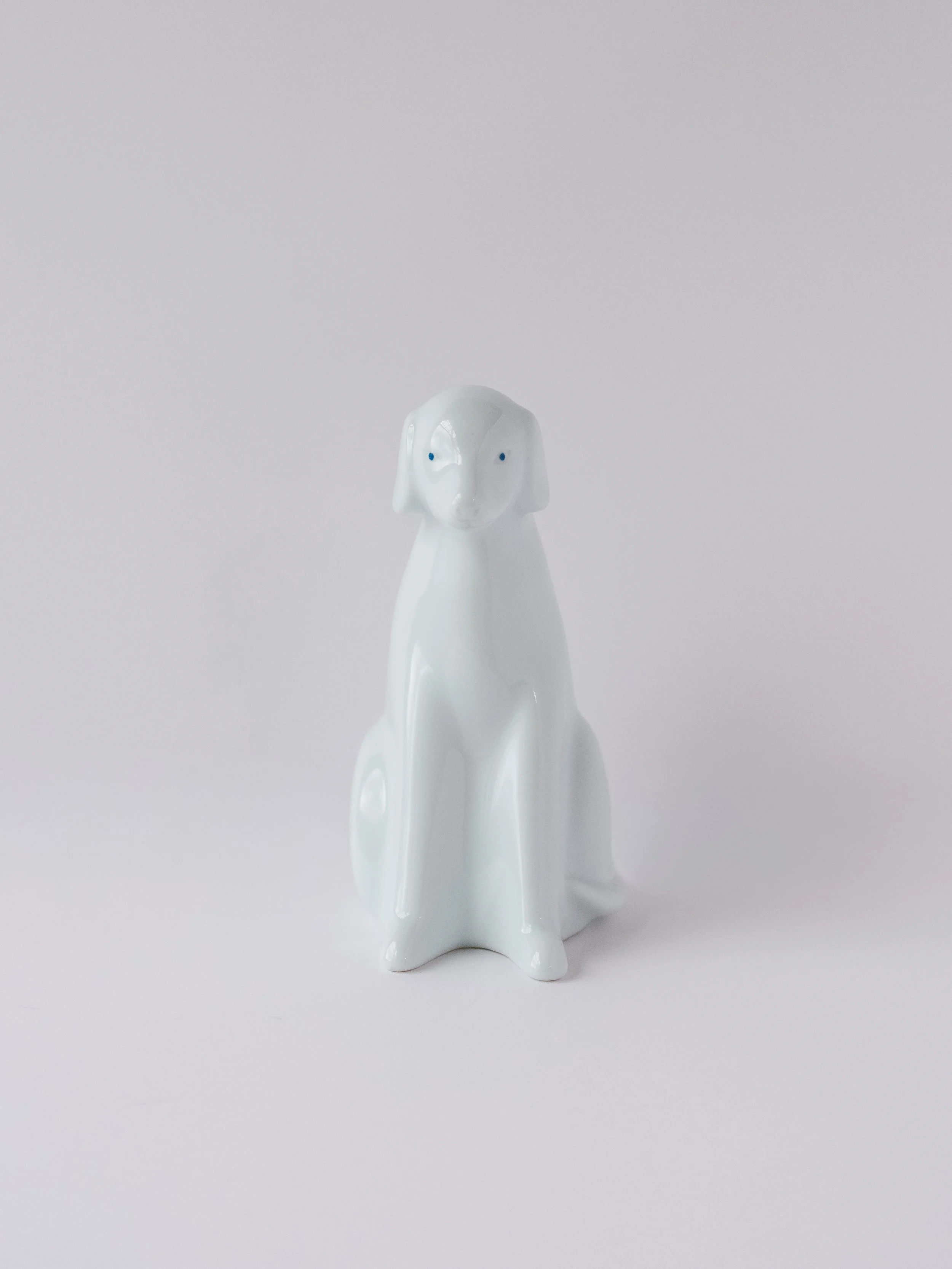 Image 7 of 15
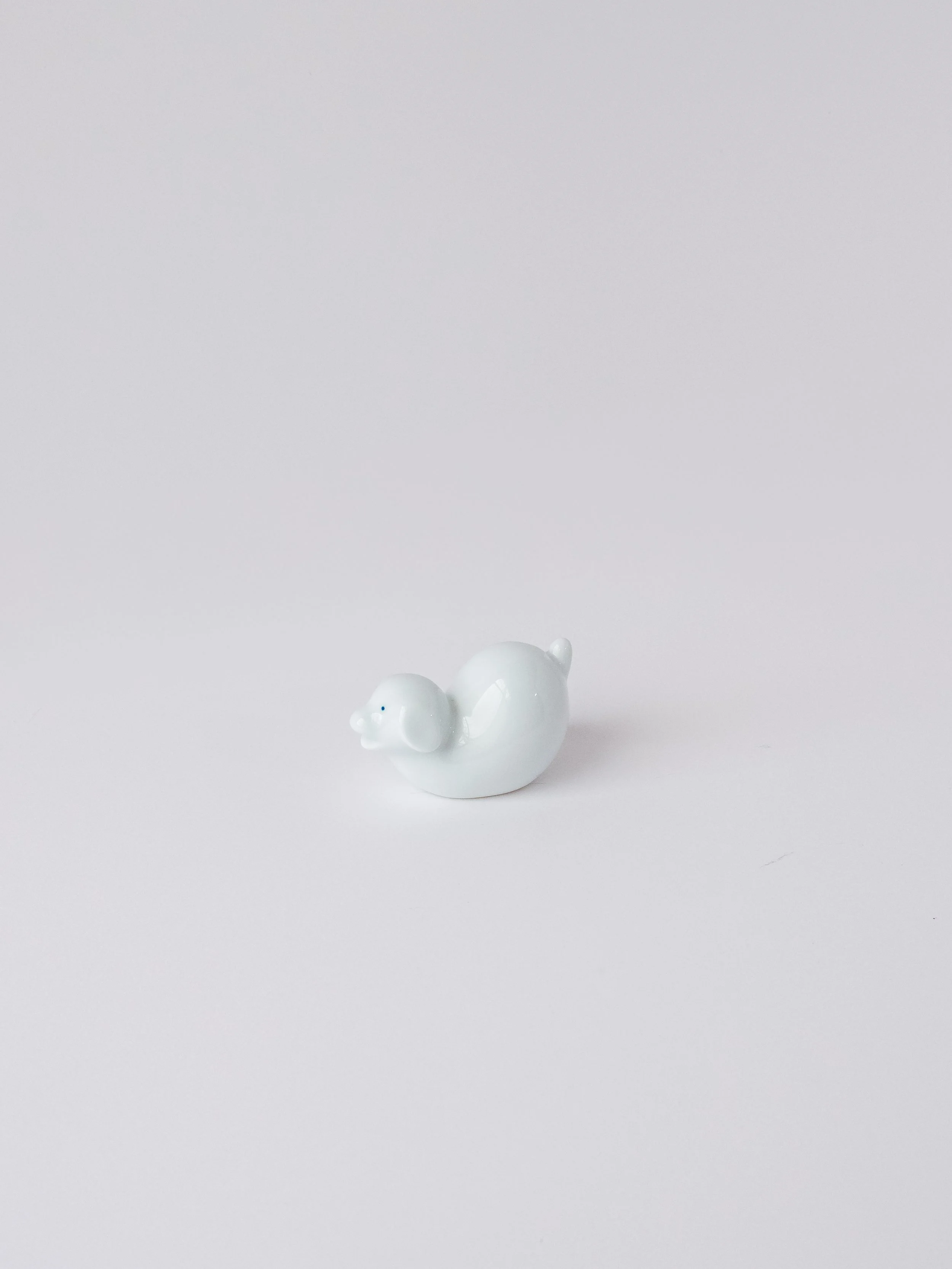 Image 8 of 15
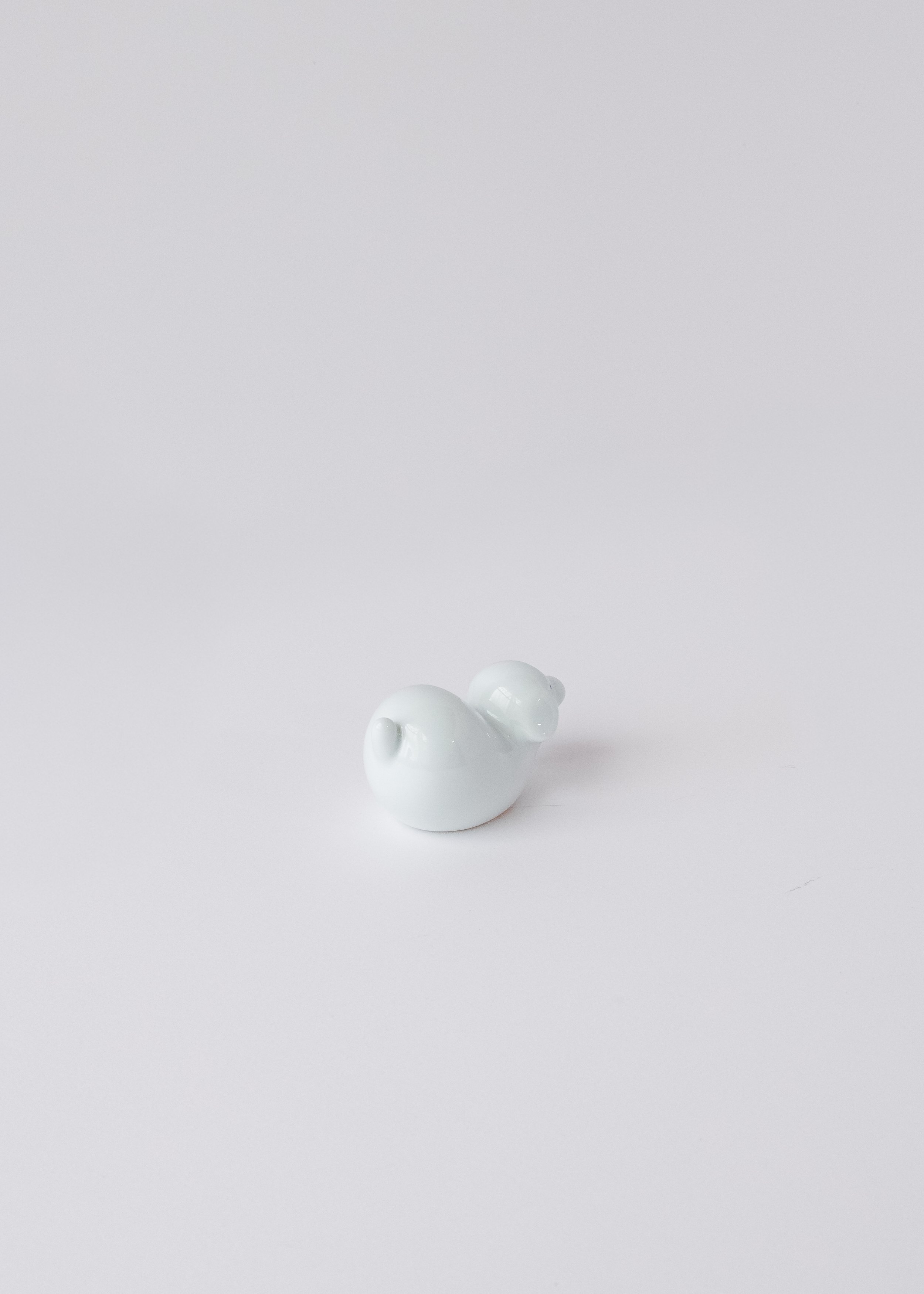 Image 9 of 15
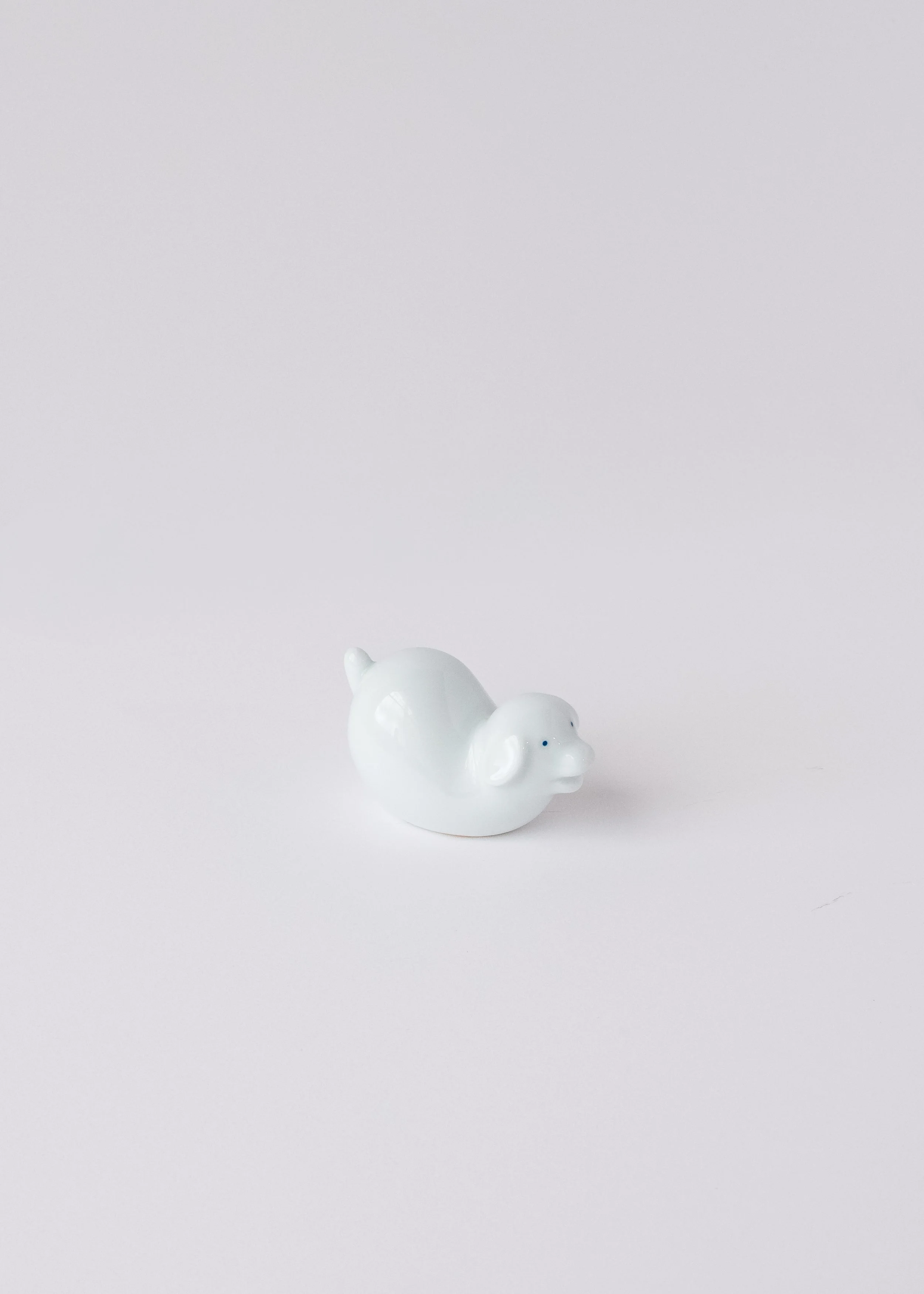 Image 10 of 15
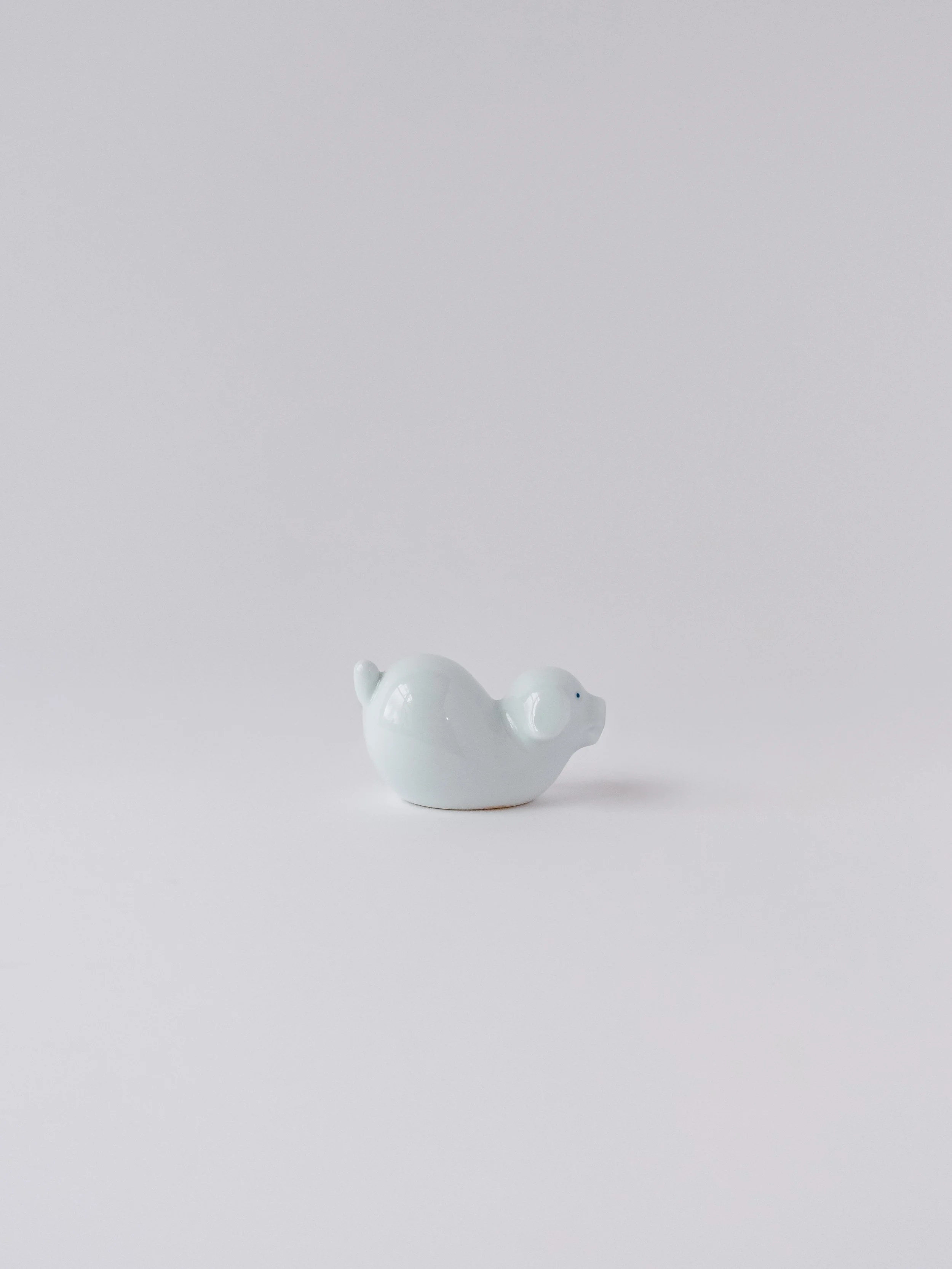 Image 11 of 15
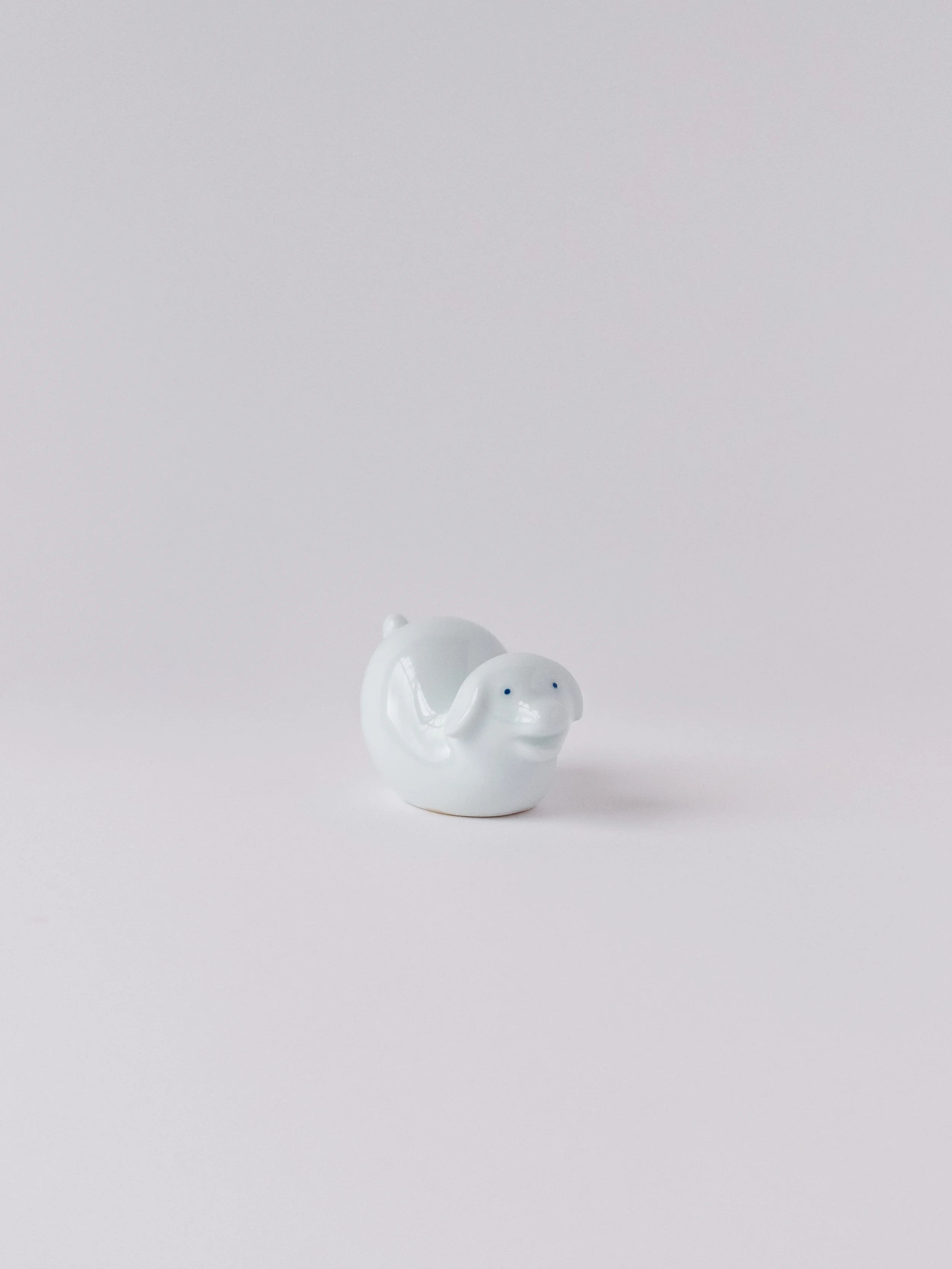 Image 12 of 15
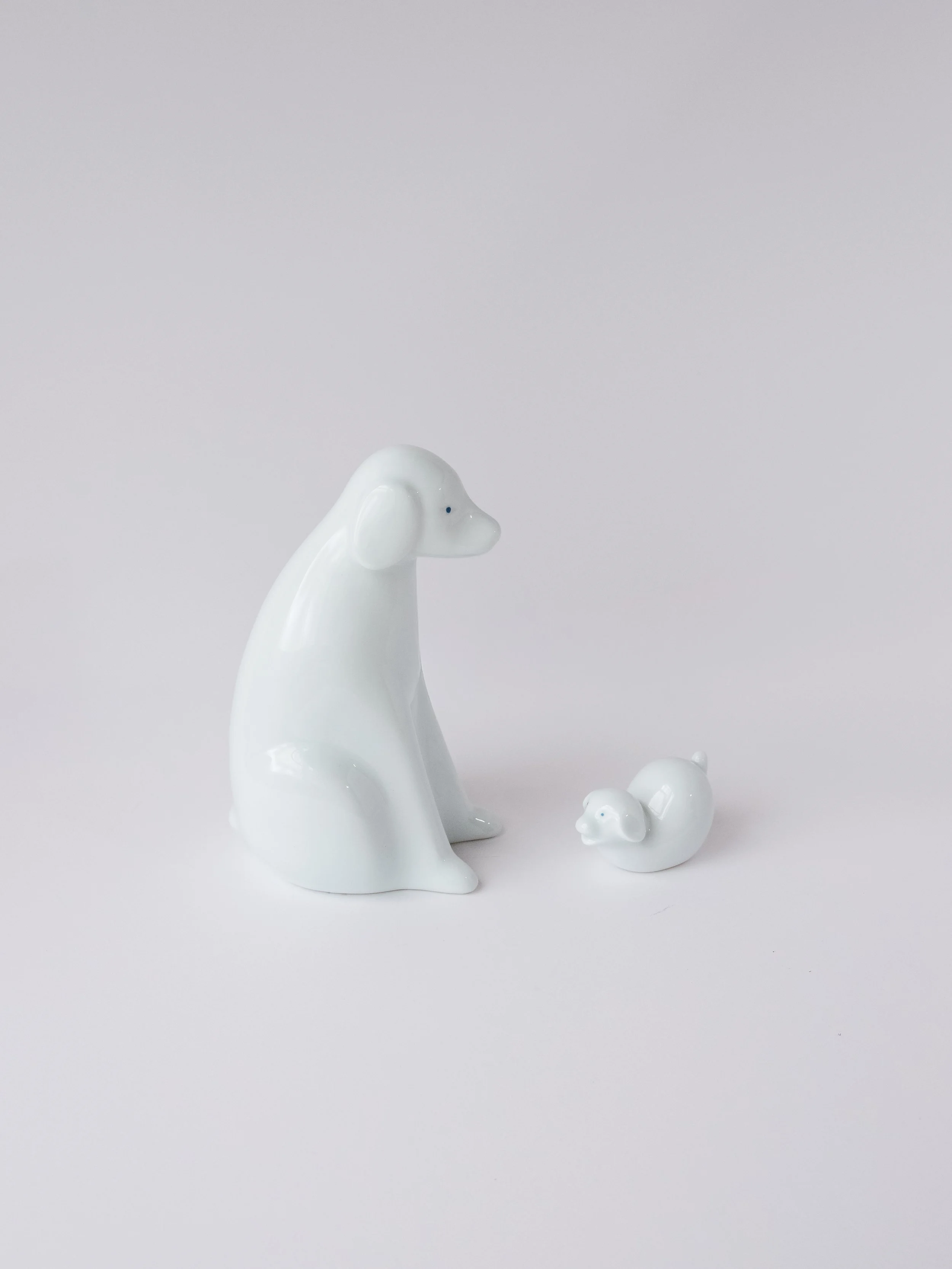 Image 13 of 15
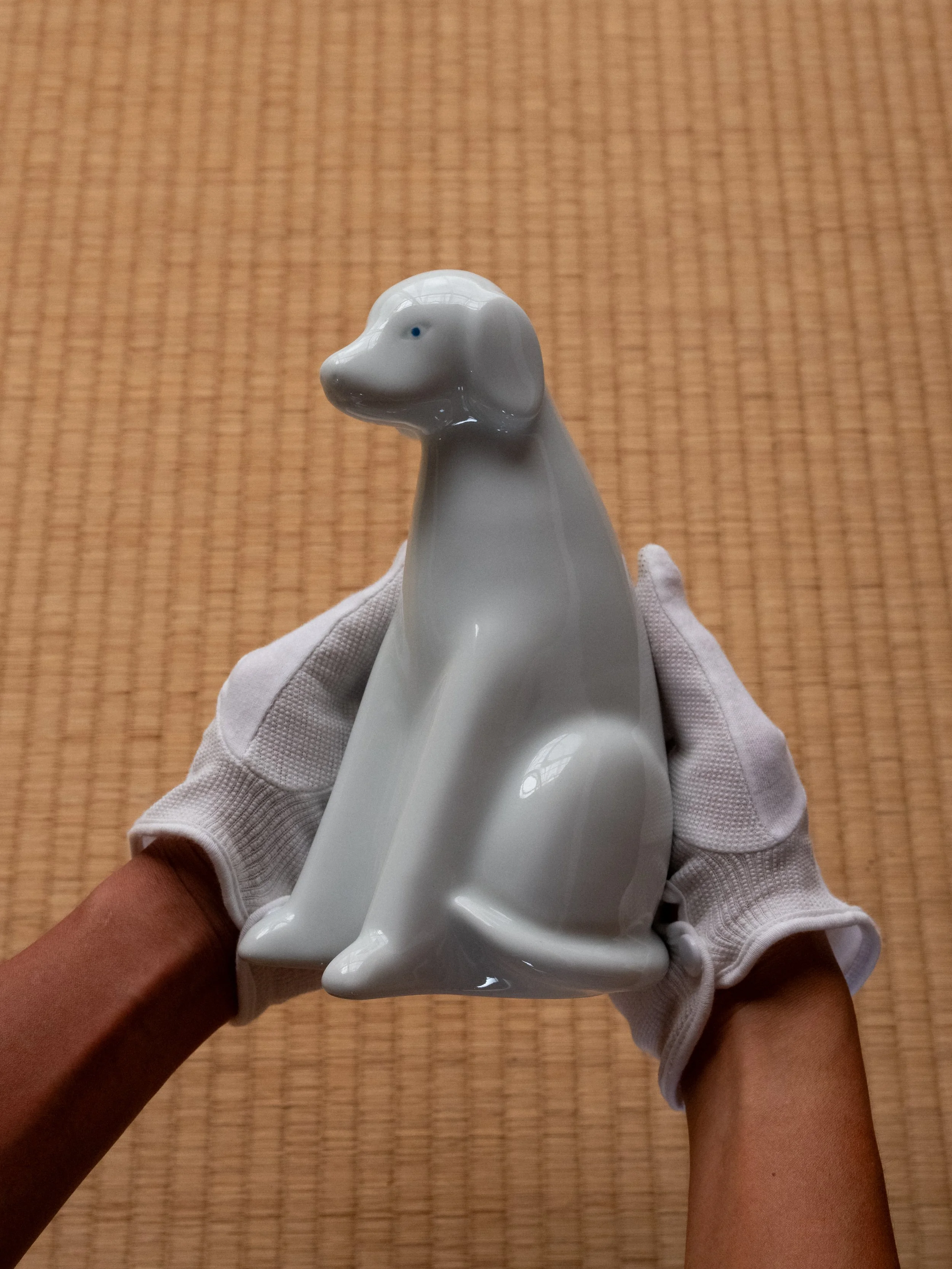 Image 14 of 15
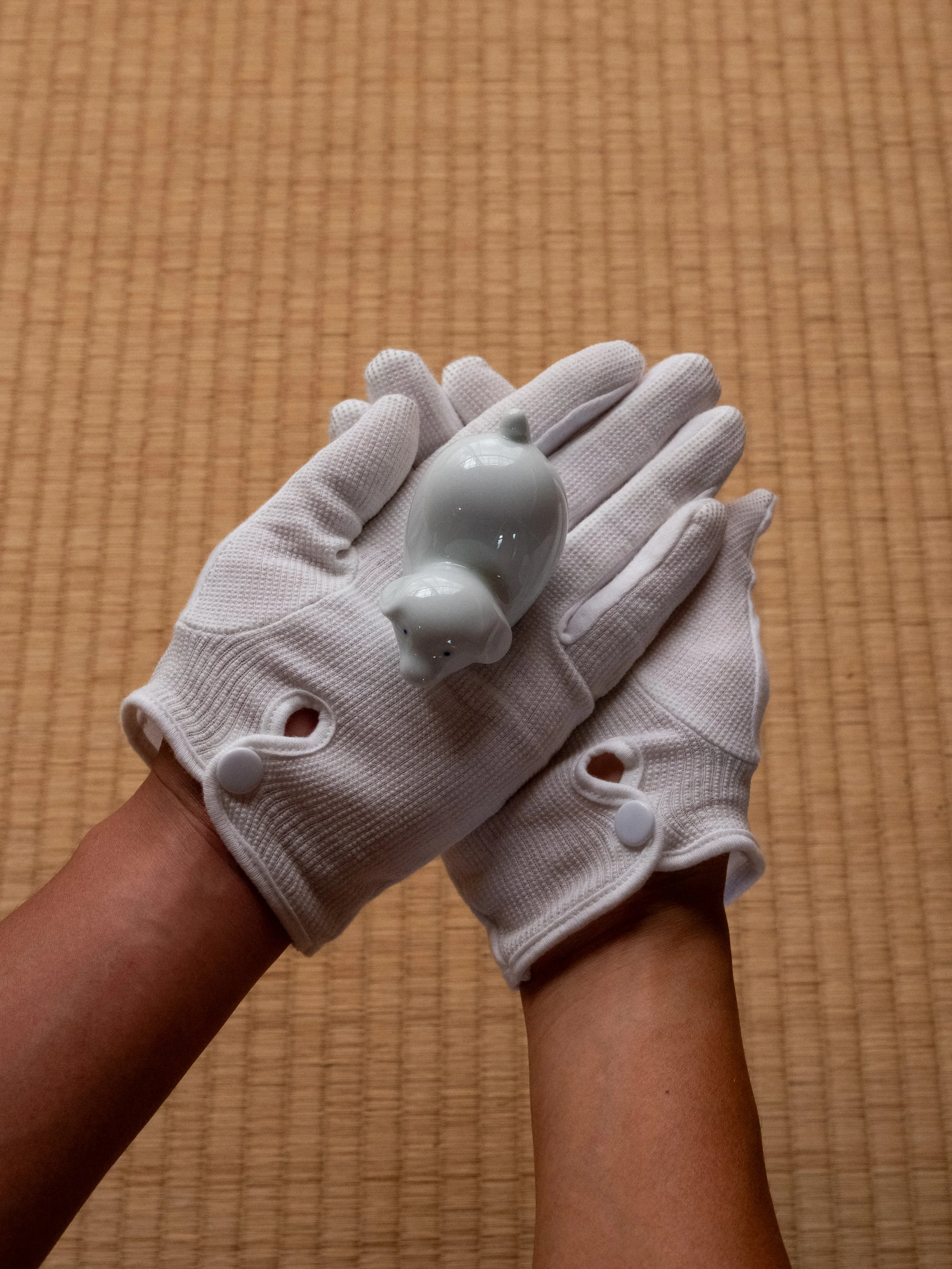 Image 15 of 15