【 The Concept 】
A ram standing on the edge of something, looking down. The body is cast iron — matte black, sand-textured, dense as a fist-sized stone. The head drops sharply from the neck at a steep angle, aimed at the ground as though the animal has found the edge of a cliff and is deciding whether the drop is worth it. Two massive horns curl backward from the temples in thick spirals, wider than the head itself, heavy enough to shift the center of gravity forward. The face is blank — no eyes, no nostrils, no mouth drawn into the surface. The species is identified entirely by the horns and the posture: a wild mountain ram, not a pasture sheep.
Beneath the animal, the base is not a flat platform. It is a vertical column of rough-cast iron shaped to resemble a rocky outcrop — jagged, irregular, with deep vertical grooves that suggest fractured stone. The ram stands on top of this column the way a climber stands on a summit: four legs braced, weight pitched forward, the entire body leaning into the void below. The composition is vertical where most objects in this archive are horizontal, and precarious where most are stable.
Inside the rocky base, hidden from view, a metal clapper hangs from a wire. Tilt the object and the clapper swings into the iron wall, producing a single clear tone that sustains far longer than the motion that caused it. This is a bell disguised as a sculpture. The ram does not announce that it rings. It simply does, when moved.
【 The Function 】
201 grams, 8.5 centimeters tall, 4 centimeters in diameter at the base. Compact enough to sit beside a pen or a teacup without competing for space. It serves two purposes simultaneously: a bell (tilt it and it rings) and a paperweight (the iron mass holds what is beneath it). In its original context, bells like this were placed on desks in inns, shop counters, and home offices as call bells — a way to summon attention with a sound that was clear enough to carry but too beautiful to be annoying.
【 The Texture 】
Two textures share one object. The ram's body is smooth in the way cast iron can be smooth — not polished, but sanded by the mold into a fine granular surface that catches light softly and holds it. The back carries a subtle swell that suggests the thickness of a fleece without depicting individual fibers. The horns are the most defined element: each spiral ridge is crisp enough to follow with a fingernail.
The base is the opposite. The rock column is deliberately rough, with vertical ridges and deep crevices that break the surface into irregular planes. Light enters these crevices and does not return. The contrast between the animal above — rounded, warm, alive — and the geology below — fractured, cold, inert — is the entire visual argument of the piece. The black is uniform across both, but the way each surface handles light makes the ram appear to float above the stone it stands on.
【 Presence 】
It is vertical, narrow, and dramatic. Where THATCHED CHIME hangs and waits for the wind, this bell sits on a desk and waits for a hand. The sound is the same family — high, clear, sustained — produced by the same regional tradition of iron casting and lacquer finishing. But the activation is different. THATCHED CHIME is passive: the wind decides when it speaks. PERCHED TOLL is active: someone picks it up, tilts it, and puts it down. The ring is a decision, not an accident.
The downward gaze of the ram creates an unusual effect on a desktop. Most objects look outward or upward. This one looks at whatever is directly below it — the paper, the book, the bare surface of the desk. Place a document beneath it and the ram appears to be reading it. Place nothing and the ram stares into the void. Either way, it is paying attention to something you are not, which is exactly what a good desk object should do.
Sourced from a private collection in the Kansai region, Japan.
【 The Concept 】
A ram standing on the edge of something, looking down. The body is cast iron — matte black, sand-textured, dense as a fist-sized stone. The head drops sharply from the neck at a steep angle, aimed at the ground as though the animal has found the edge of a cliff and is deciding whether the drop is worth it. Two massive horns curl backward from the temples in thick spirals, wider than the head itself, heavy enough to shift the center of gravity forward. The face is blank — no eyes, no nostrils, no mouth drawn into the surface. The species is identified entirely by the horns and the posture: a wild mountain ram, not a pasture sheep.
Beneath the animal, the base is not a flat platform. It is a vertical column of rough-cast iron shaped to resemble a rocky outcrop — jagged, irregular, with deep vertical grooves that suggest fractured stone. The ram stands on top of this column the way a climber stands on a summit: four legs braced, weight pitched forward, the entire body leaning into the void below. The composition is vertical where most objects in this archive are horizontal, and precarious where most are stable.
Inside the rocky base, hidden from view, a metal clapper hangs from a wire. Tilt the object and the clapper swings into the iron wall, producing a single clear tone that sustains far longer than the motion that caused it. This is a bell disguised as a sculpture. The ram does not announce that it rings. It simply does, when moved.
【 The Function 】
201 grams, 8.5 centimeters tall, 4 centimeters in diameter at the base. Compact enough to sit beside a pen or a teacup without competing for space. It serves two purposes simultaneously: a bell (tilt it and it rings) and a paperweight (the iron mass holds what is beneath it). In its original context, bells like this were placed on desks in inns, shop counters, and home offices as call bells — a way to summon attention with a sound that was clear enough to carry but too beautiful to be annoying.
【 The Texture 】
Two textures share one object. The ram's body is smooth in the way cast iron can be smooth — not polished, but sanded by the mold into a fine granular surface that catches light softly and holds it. The back carries a subtle swell that suggests the thickness of a fleece without depicting individual fibers. The horns are the most defined element: each spiral ridge is crisp enough to follow with a fingernail.
The base is the opposite. The rock column is deliberately rough, with vertical ridges and deep crevices that break the surface into irregular planes. Light enters these crevices and does not return. The contrast between the animal above — rounded, warm, alive — and the geology below — fractured, cold, inert — is the entire visual argument of the piece. The black is uniform across both, but the way each surface handles light makes the ram appear to float above the stone it stands on.
【 Presence 】
It is vertical, narrow, and dramatic. Where THATCHED CHIME hangs and waits for the wind, this bell sits on a desk and waits for a hand. The sound is the same family — high, clear, sustained — produced by the same regional tradition of iron casting and lacquer finishing. But the activation is different. THATCHED CHIME is passive: the wind decides when it speaks. PERCHED TOLL is active: someone picks it up, tilts it, and puts it down. The ring is a decision, not an accident.
The downward gaze of the ram creates an unusual effect on a desktop. Most objects look outward or upward. This one looks at whatever is directly below it — the paper, the book, the bare surface of the desk. Place a document beneath it and the ram appears to be reading it. Place nothing and the ram stares into the void. Either way, it is paying attention to something you are not, which is exactly what a good desk object should do.
Sourced from a private collection in the Kansai region, Japan.


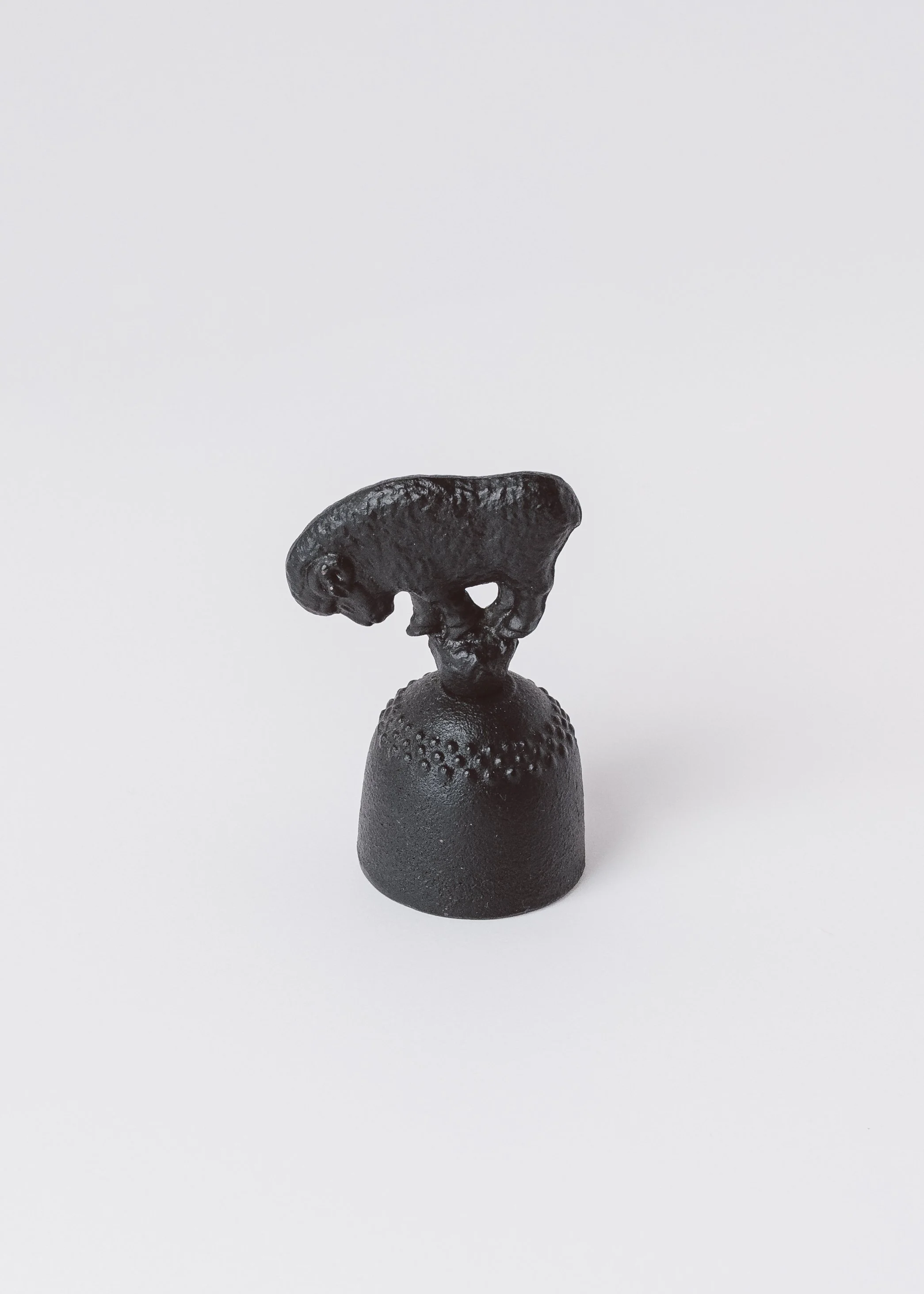 Image 1 of 9
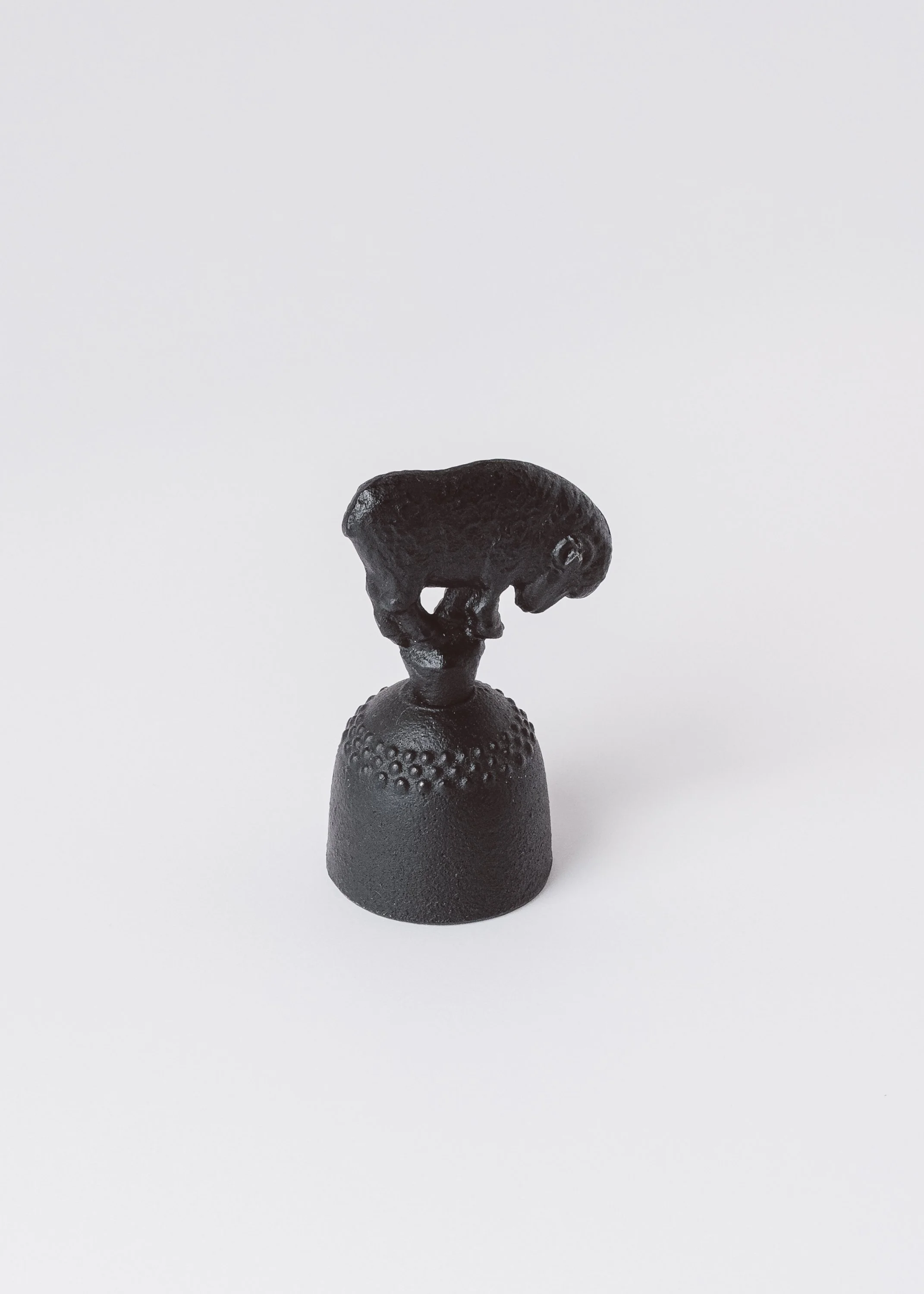 Image 2 of 9
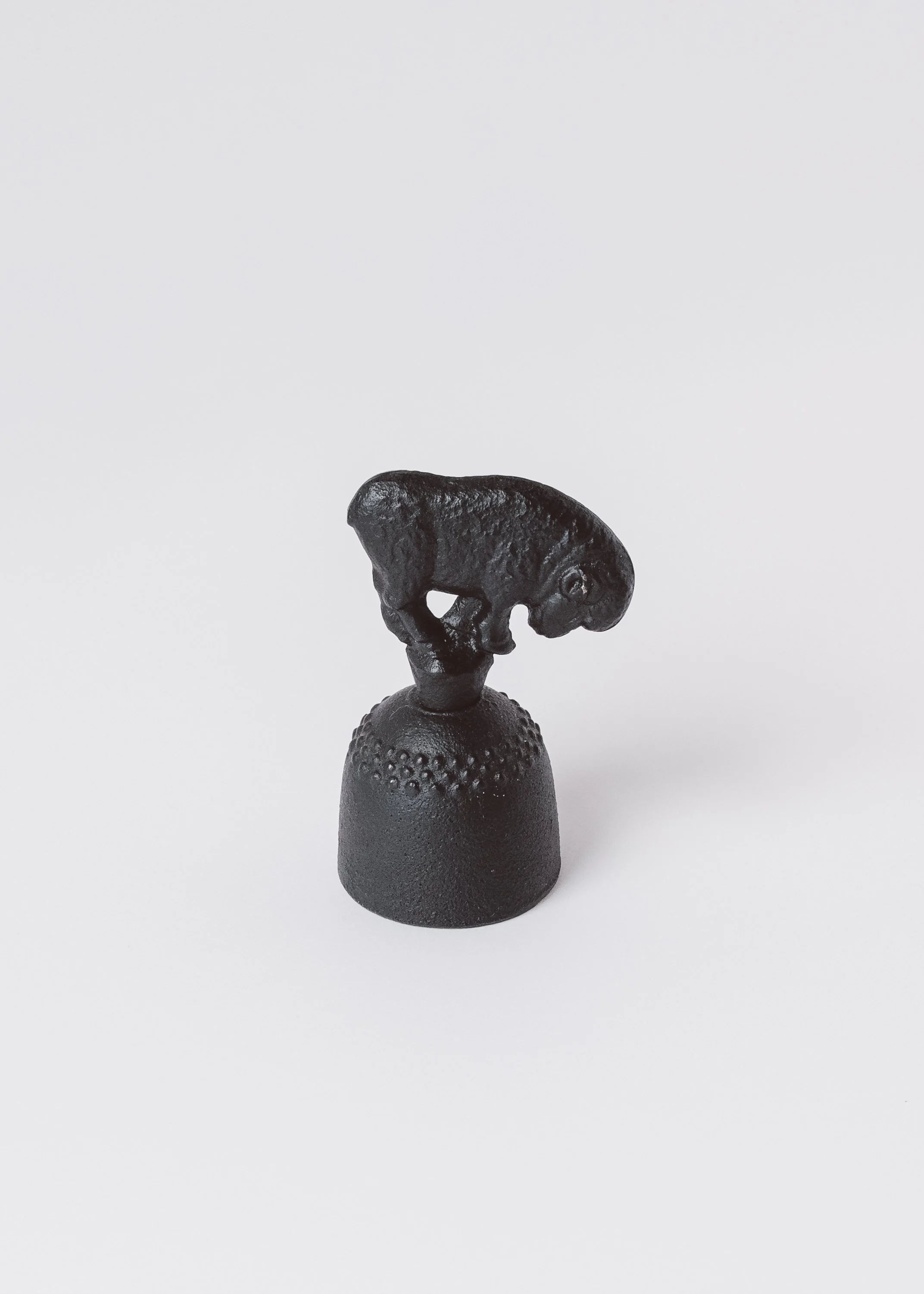 Image 3 of 9
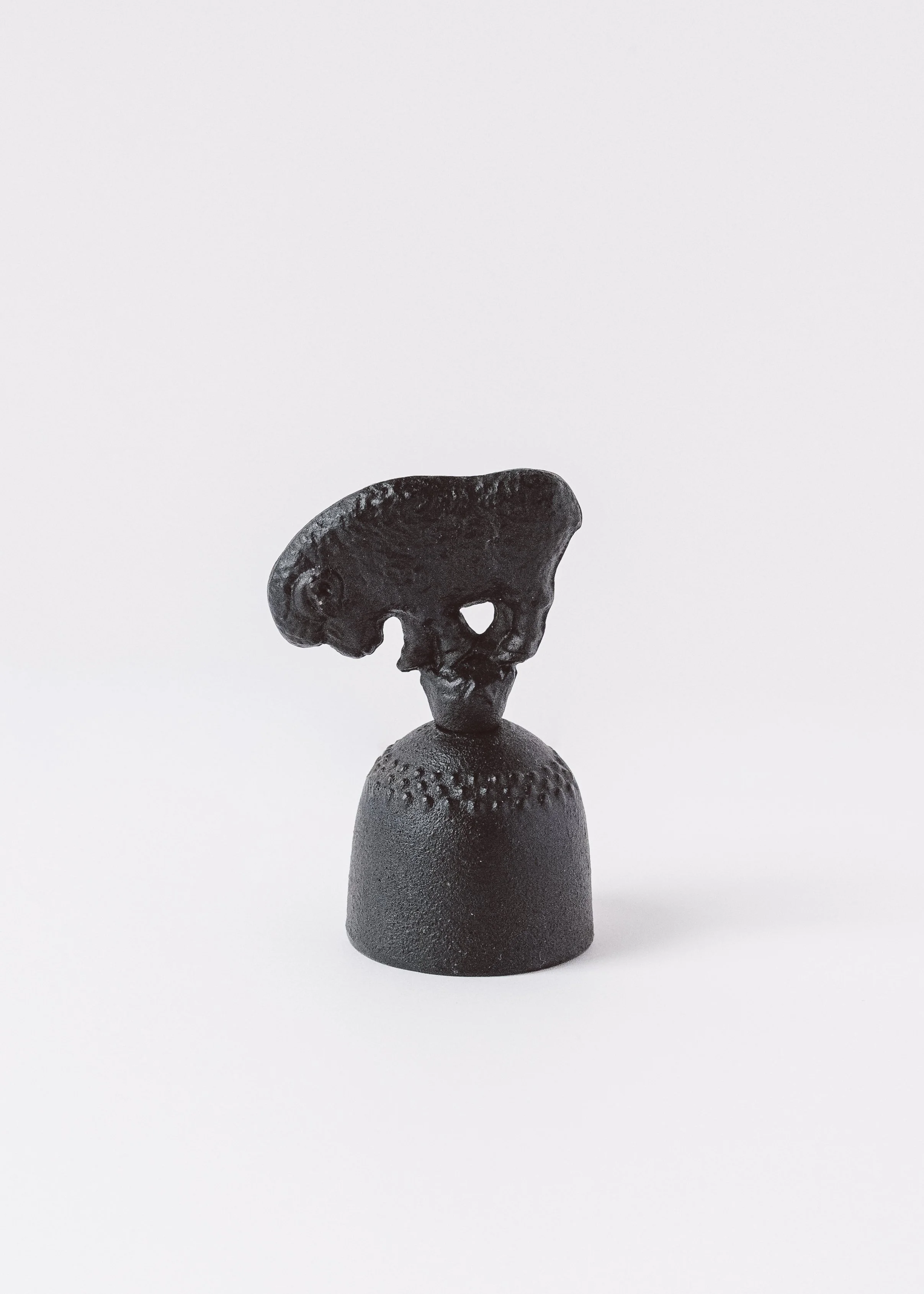 Image 4 of 9
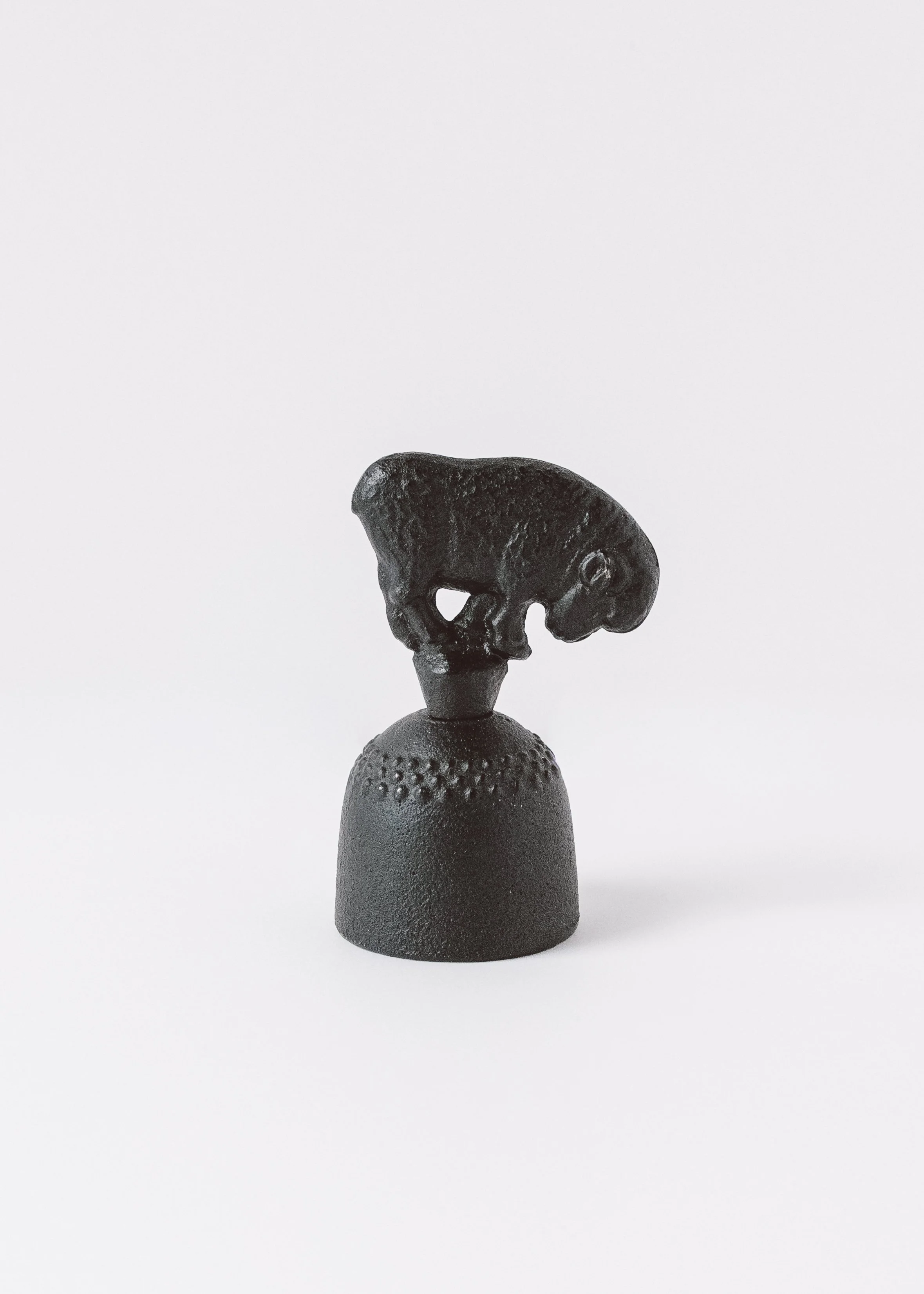 Image 5 of 9
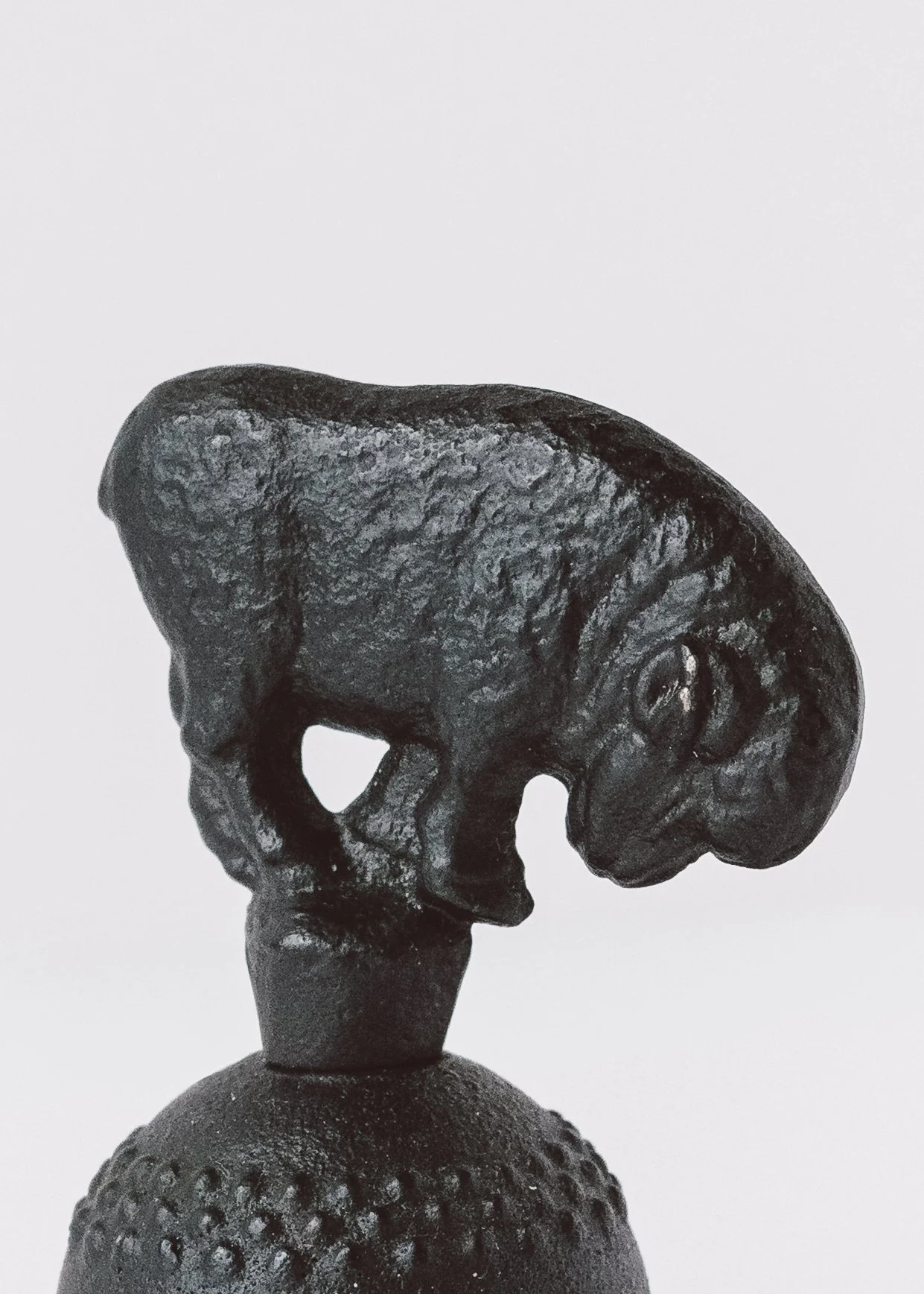 Image 6 of 9
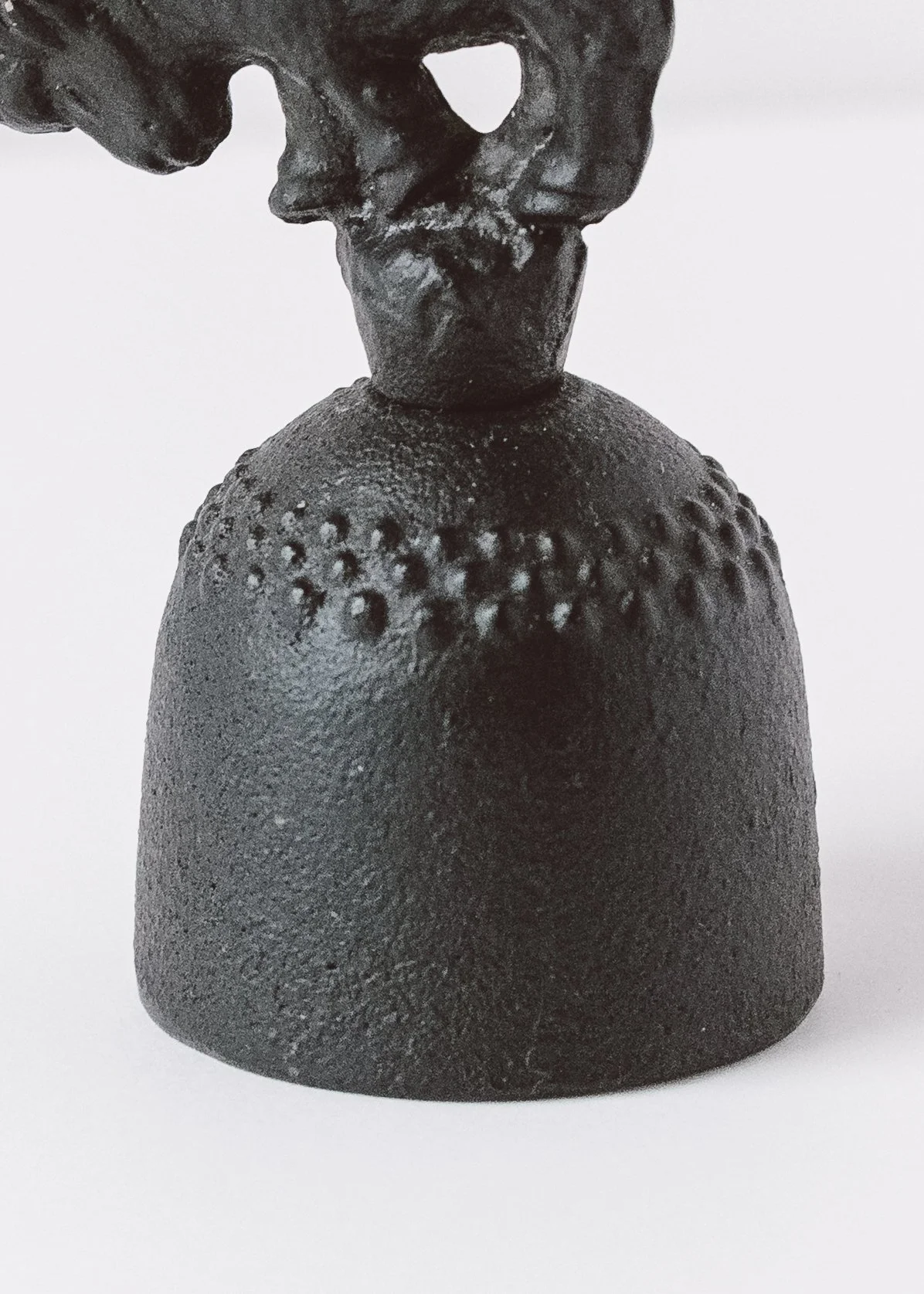 Image 7 of 9
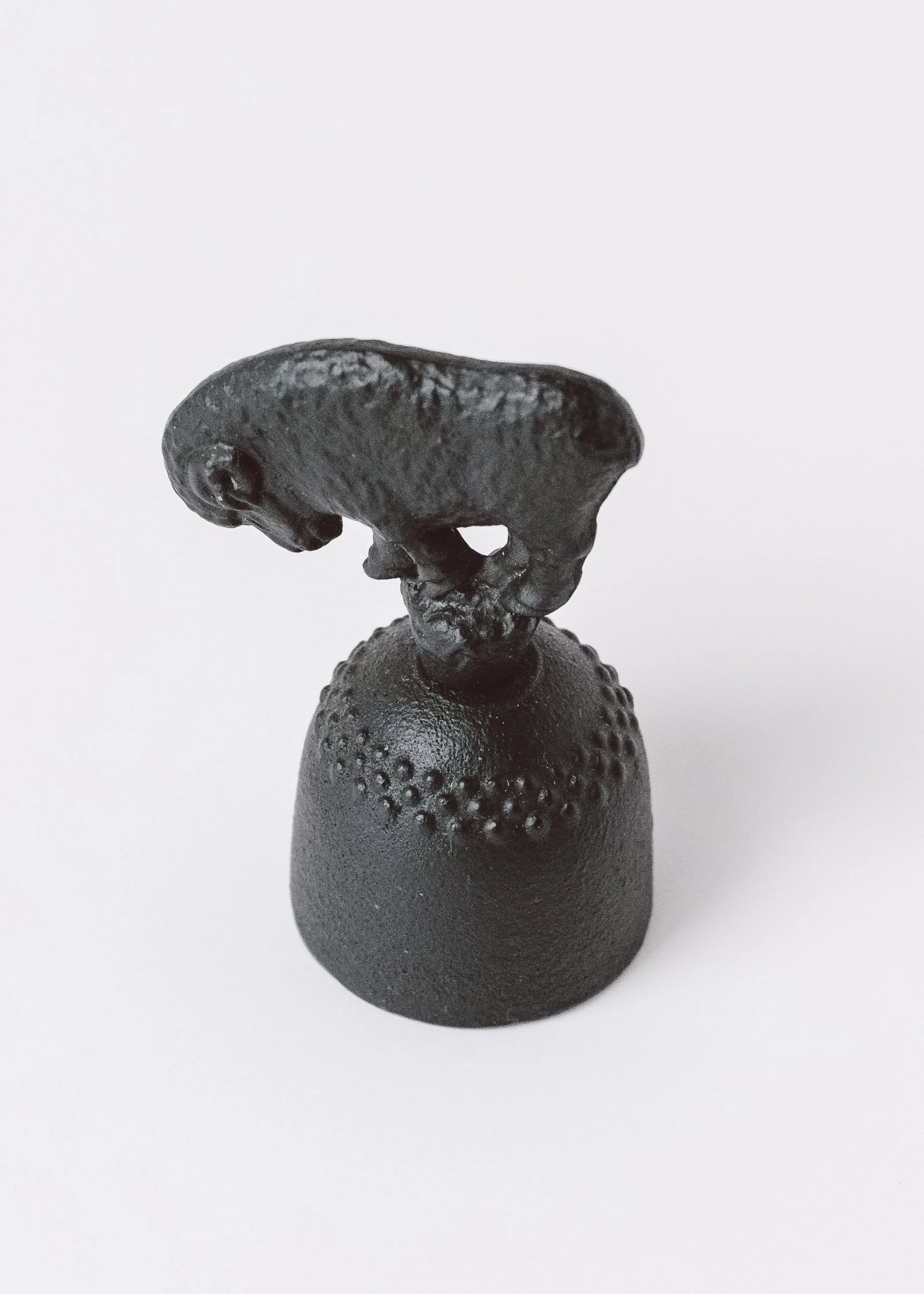 Image 8 of 9
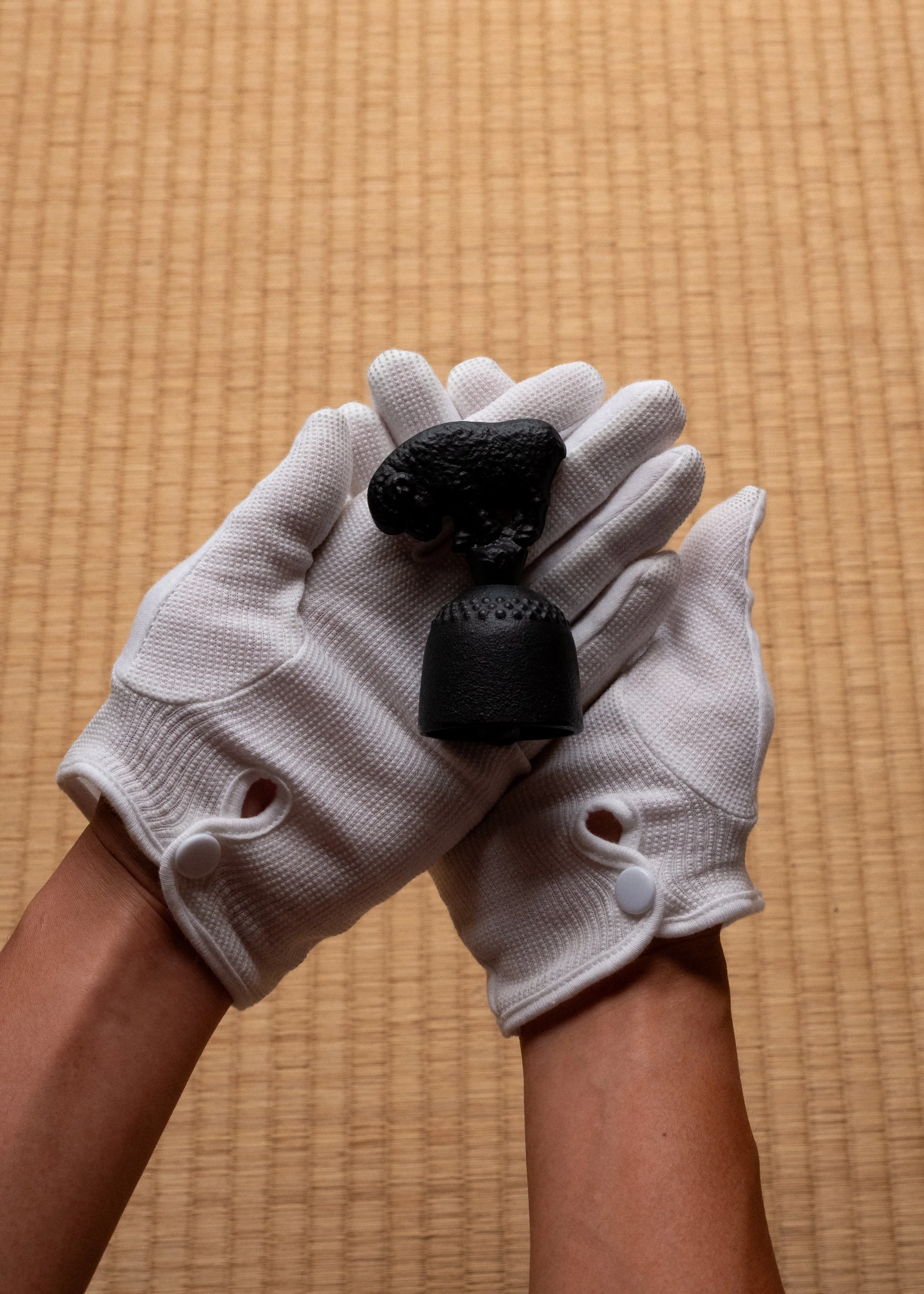 Image 9 of 9