【 The Concept 】
A bronze ram finished in green. It was cast in copper alloy and then given a patinated surface — a pale mineral green worked over the whole body, the color of temple bronze that has stood for a century, applied deliberately at the foundry rather than left to time. The green is not uniform. It sits palest and coolest across the broad surfaces and deepens in the recesses, and where the metal stands highest — the ridge of each horn, the tip of the nose, the crest of the back — a soft gold-brown shows through, the underlying bronze allowed to surface as a highlight. The effect is a single object that reads as two metals at once: green in its valleys, gold on its peaks.
The animal stands on four short, thick legs, planted flat, head lifted and turned slightly, looking out and up. The horns are the dominant feature: heavy, ridged with deep horizontal growth-rings, sweeping back from the skull and curling outward at the tips in a wide spiral. They are powerful and they are also blunt — the points are rounded, turned away, incapable of harm. From throat to chest to flank, the fleece is carved in flowing, swirling relief, thick locks rendered as curling waves rather than individual hairs, a stylization closer to running water than to wool.
In the zodiac tradition this animal belongs to, the ram carries a specific reputation. It is the sign of harmony, of the group, of things that move together without conflict. A ram in the house is a wish for good relations — partnerships that hold, tables that stay peaceful, a household where the people in it are on the same side.
【 The Function 】
853 grams, 15 centimeters tall, 14 centimeters long, 5 centimeters wide. Cast bronze with a hollow core — heavy and low and difficult to move by accident, the weight sitting deep in the body and the four planted legs giving it a wide, stable footprint. In its original context, a bronze animal of this weight sat on a desk, a mantel, or a shelf as a permanent fixture — not a decoration to be rearranged but an anchor, placed once and left. The ram in particular was associated with harmonious relationships and was kept in offices and reception rooms to encourage good partnerships and steady company.
【 The Texture 】
The whole surface is matte, mineral, and cool — pale sage-green over darker bronze, with the green worked thickest into the low places: the deep grooves of the fleece, the channels between the horn-ridges, the hollows behind the legs. This is a patina finish, a traditional coloring in which the bare bronze is treated at the foundry until the surface takes on the green of aged metal. It gives a newly cast object the gravity and quiet of something a hundred years older.
Against the green, the high points glint. The outer curve of each horn, the nose, and the crest of the back are raised enough that the green thins and the underlying metal shows through in a soft gold-brown. The contrast maps the form: the eye reads the shape of the ram through the difference between the green in the recesses and the gold on the ridges. The fleece, carved as swirling locks, catches this contrast most richly, each curl dark green in its trough and faintly bright along its crest.
【 Presence 】
BRONZE DEVOTION wears the same kind of finish — an aged patina applied at the foundry to give a devotional figure weight and stillness. This ram shares that treatment and turns it toward a different subject. On the bodhisattva the green reads as reverence, as age in the service of the sacred. On the ram it reads as pasture and weather — the green of something that belongs outdoors, standing in a field, older than the person looking at it.
The pose reinforces it. The ram is not doing anything. It stands, weight settled, horns back, head slightly raised, with the patient, immovable stillness of an animal that has decided this is a good place to be and intends to stay. The blunt horns hold power without threat. The green holds age without decay. And the whole object sits with the particular authority of a thing that has already lasted a long time and is clearly going to last a great deal longer.
Sourced from a private collection in the Kansai region, Japan.
【 The Concept 】
A bronze ram finished in green. It was cast in copper alloy and then given a patinated surface — a pale mineral green worked over the whole body, the color of temple bronze that has stood for a century, applied deliberately at the foundry rather than left to time. The green is not uniform. It sits palest and coolest across the broad surfaces and deepens in the recesses, and where the metal stands highest — the ridge of each horn, the tip of the nose, the crest of the back — a soft gold-brown shows through, the underlying bronze allowed to surface as a highlight. The effect is a single object that reads as two metals at once: green in its valleys, gold on its peaks.
The animal stands on four short, thick legs, planted flat, head lifted and turned slightly, looking out and up. The horns are the dominant feature: heavy, ridged with deep horizontal growth-rings, sweeping back from the skull and curling outward at the tips in a wide spiral. They are powerful and they are also blunt — the points are rounded, turned away, incapable of harm. From throat to chest to flank, the fleece is carved in flowing, swirling relief, thick locks rendered as curling waves rather than individual hairs, a stylization closer to running water than to wool.
In the zodiac tradition this animal belongs to, the ram carries a specific reputation. It is the sign of harmony, of the group, of things that move together without conflict. A ram in the house is a wish for good relations — partnerships that hold, tables that stay peaceful, a household where the people in it are on the same side.
【 The Function 】
853 grams, 15 centimeters tall, 14 centimeters long, 5 centimeters wide. Cast bronze with a hollow core — heavy and low and difficult to move by accident, the weight sitting deep in the body and the four planted legs giving it a wide, stable footprint. In its original context, a bronze animal of this weight sat on a desk, a mantel, or a shelf as a permanent fixture — not a decoration to be rearranged but an anchor, placed once and left. The ram in particular was associated with harmonious relationships and was kept in offices and reception rooms to encourage good partnerships and steady company.
【 The Texture 】
The whole surface is matte, mineral, and cool — pale sage-green over darker bronze, with the green worked thickest into the low places: the deep grooves of the fleece, the channels between the horn-ridges, the hollows behind the legs. This is a patina finish, a traditional coloring in which the bare bronze is treated at the foundry until the surface takes on the green of aged metal. It gives a newly cast object the gravity and quiet of something a hundred years older.
Against the green, the high points glint. The outer curve of each horn, the nose, and the crest of the back are raised enough that the green thins and the underlying metal shows through in a soft gold-brown. The contrast maps the form: the eye reads the shape of the ram through the difference between the green in the recesses and the gold on the ridges. The fleece, carved as swirling locks, catches this contrast most richly, each curl dark green in its trough and faintly bright along its crest.
【 Presence 】
BRONZE DEVOTION wears the same kind of finish — an aged patina applied at the foundry to give a devotional figure weight and stillness. This ram shares that treatment and turns it toward a different subject. On the bodhisattva the green reads as reverence, as age in the service of the sacred. On the ram it reads as pasture and weather — the green of something that belongs outdoors, standing in a field, older than the person looking at it.
The pose reinforces it. The ram is not doing anything. It stands, weight settled, horns back, head slightly raised, with the patient, immovable stillness of an animal that has decided this is a good place to be and intends to stay. The blunt horns hold power without threat. The green holds age without decay. And the whole object sits with the particular authority of a thing that has already lasted a long time and is clearly going to last a great deal longer.
Sourced from a private collection in the Kansai region, Japan.


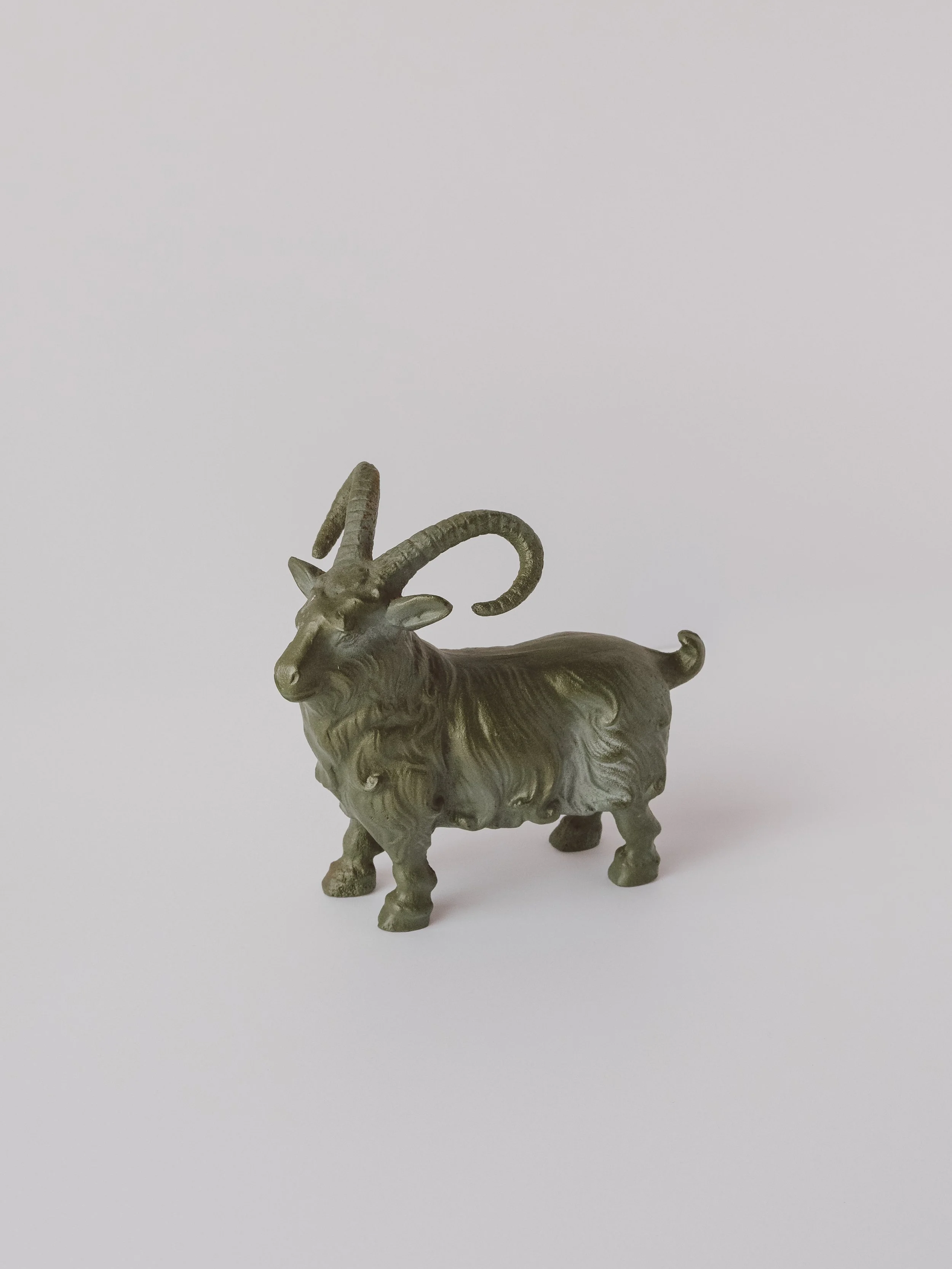 Image 1 of 10
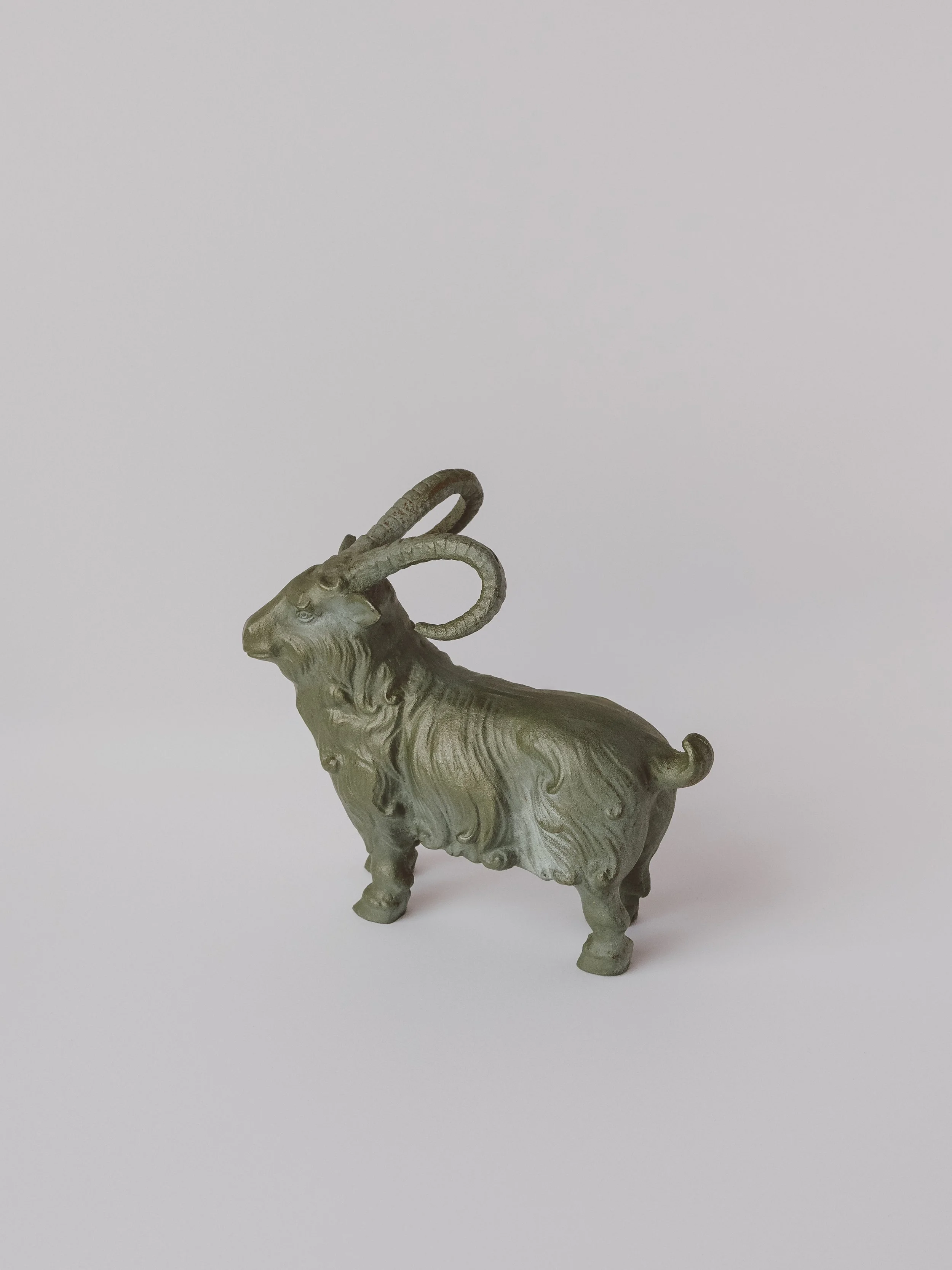 Image 2 of 10
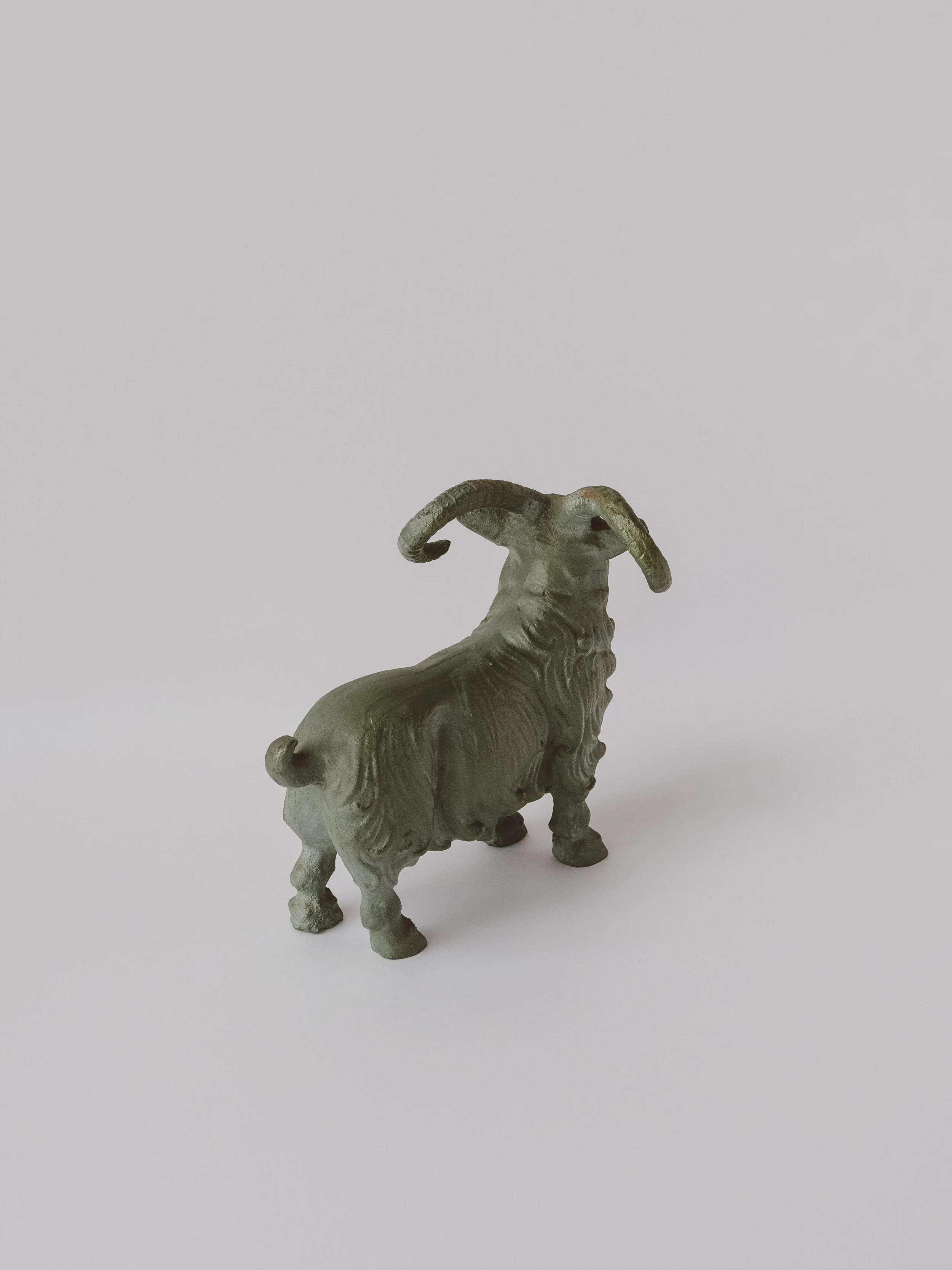 Image 3 of 10
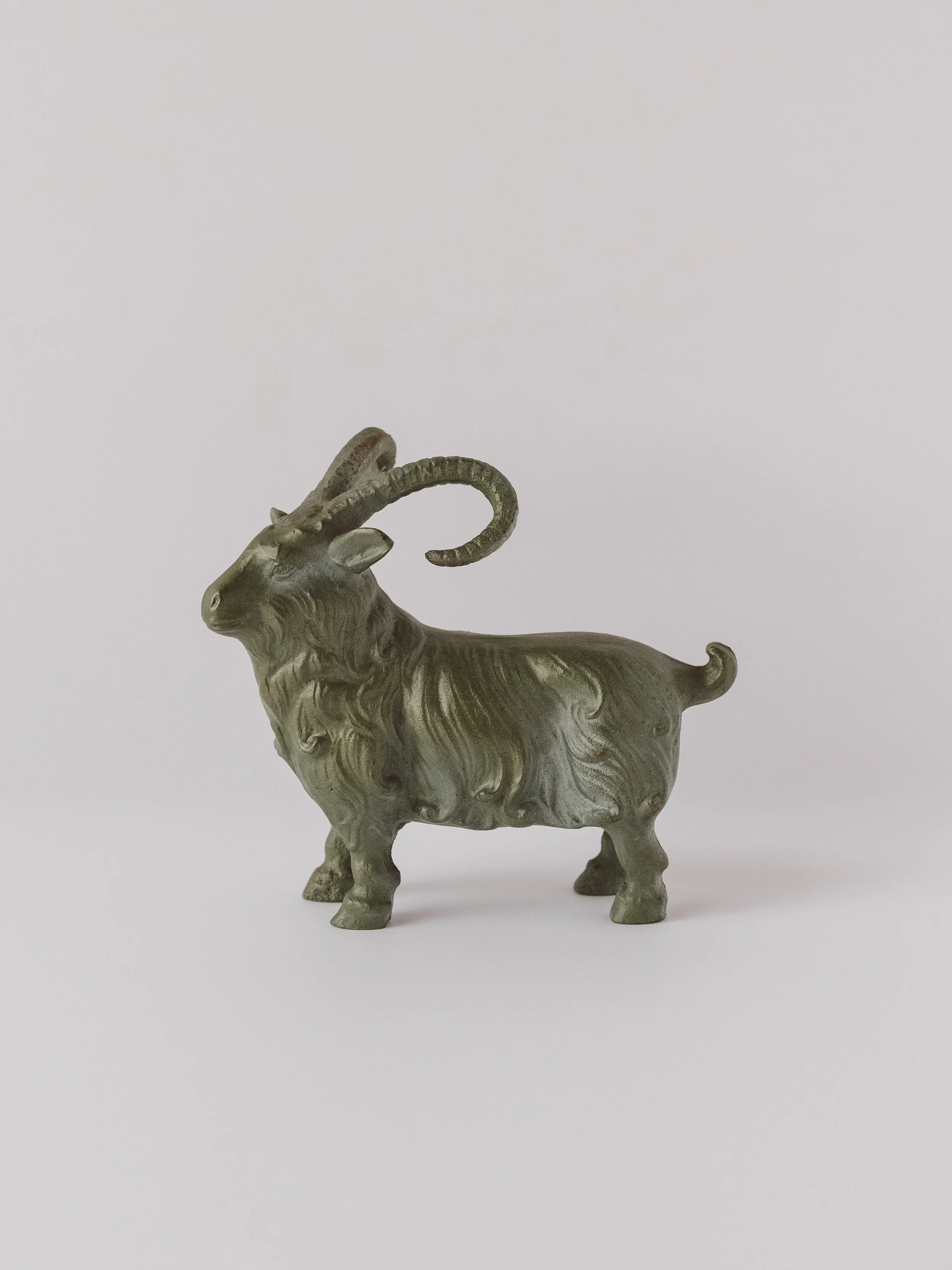 Image 4 of 10
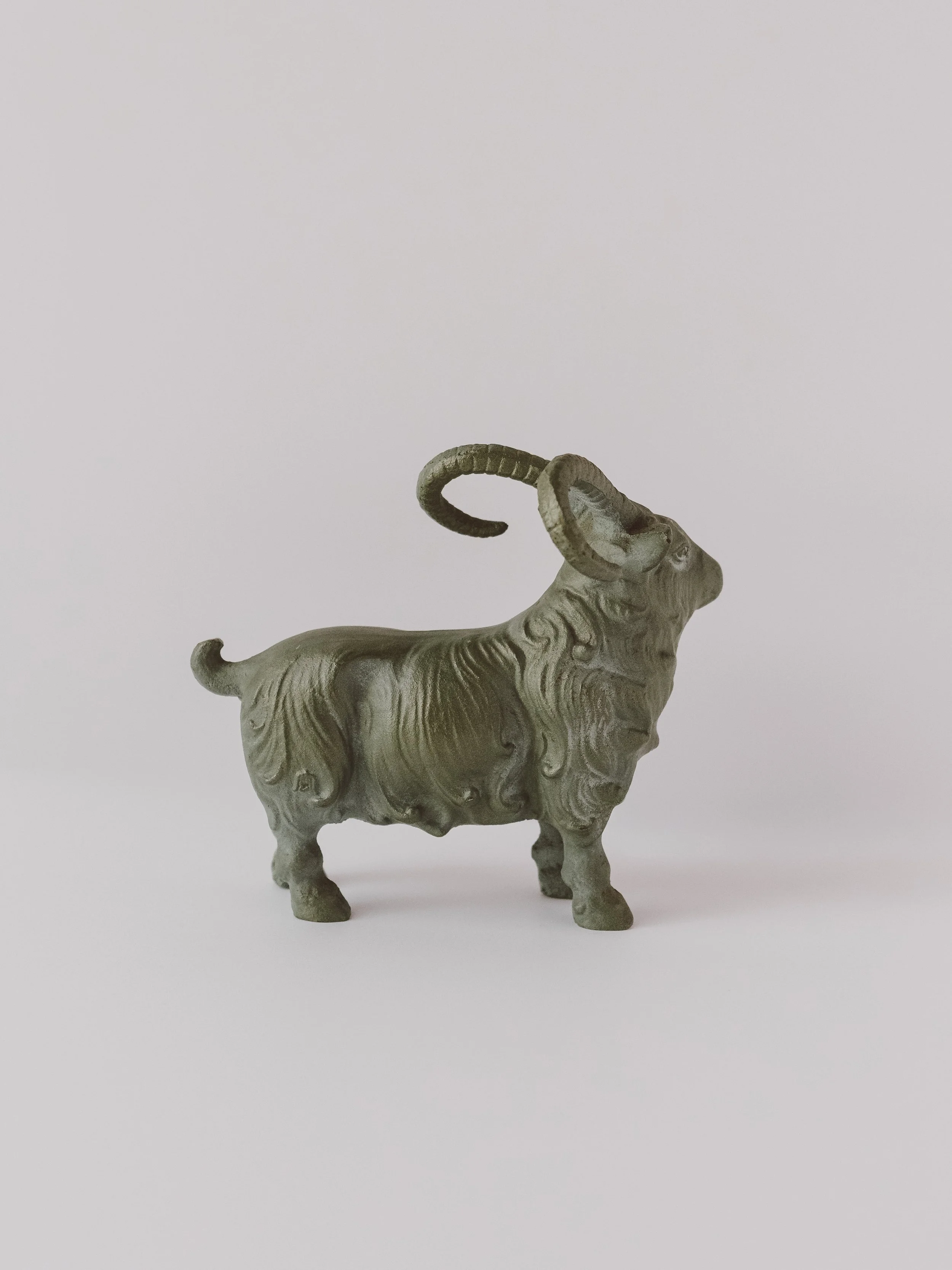 Image 5 of 10
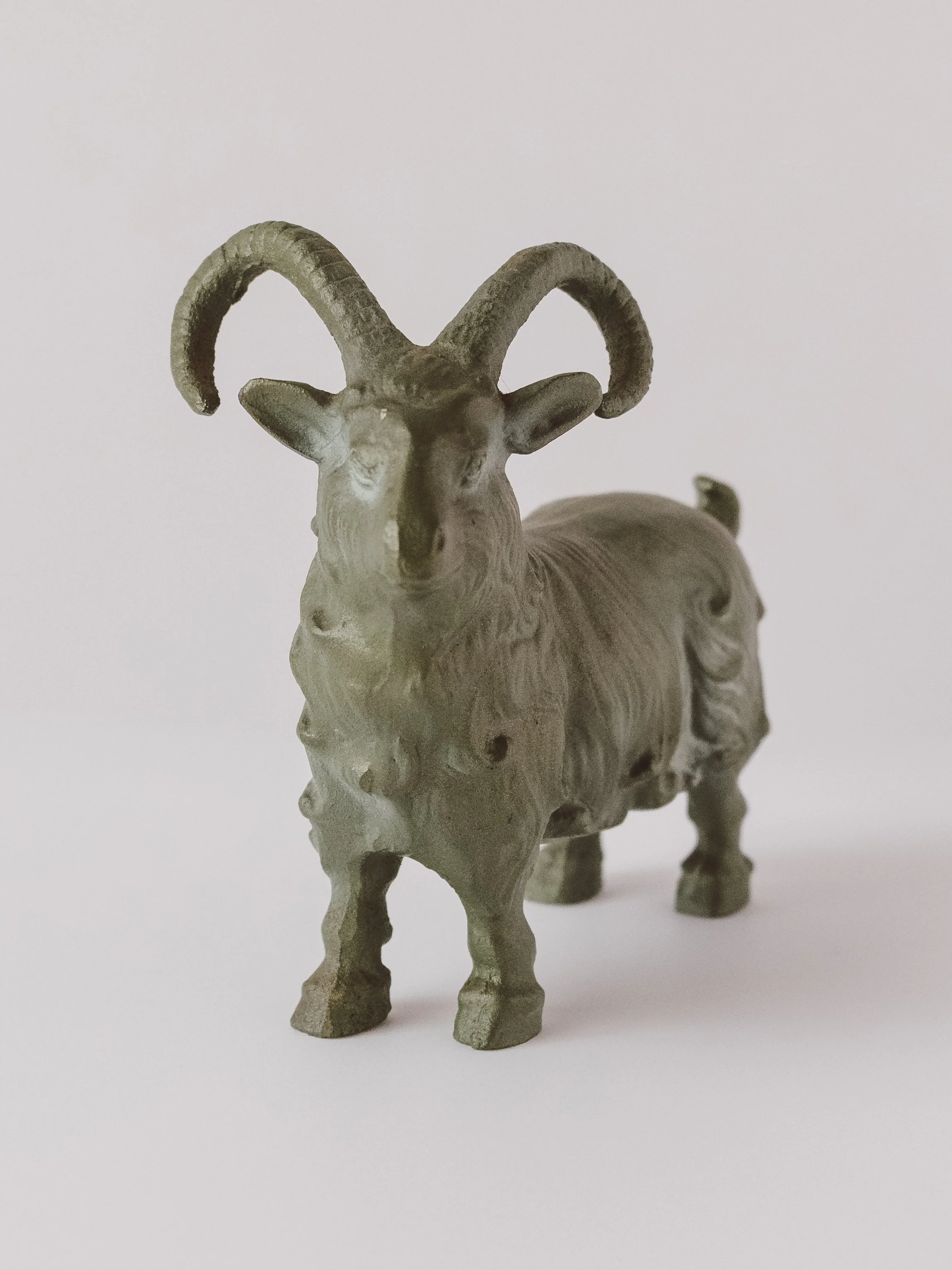 Image 6 of 10
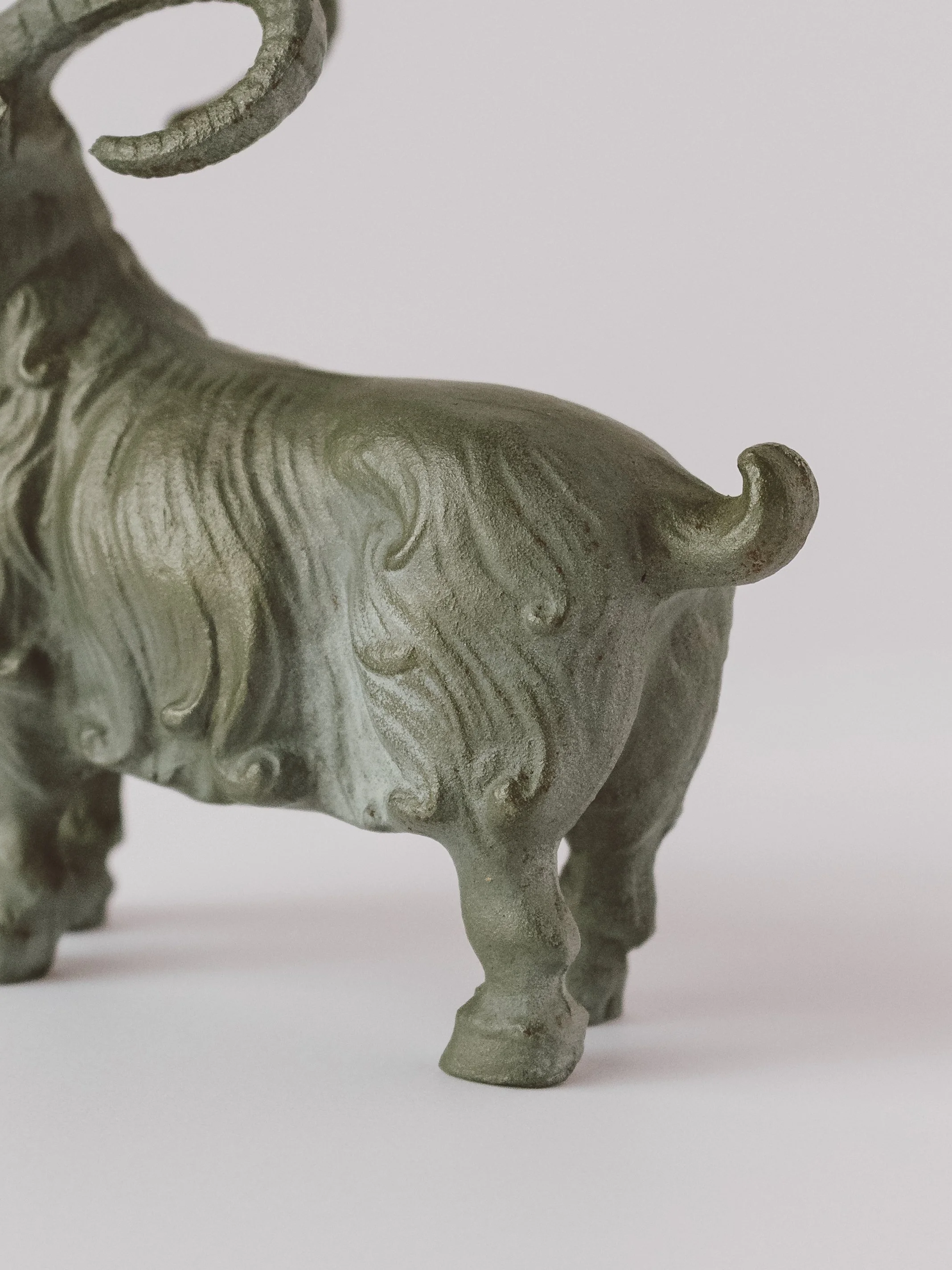 Image 7 of 10
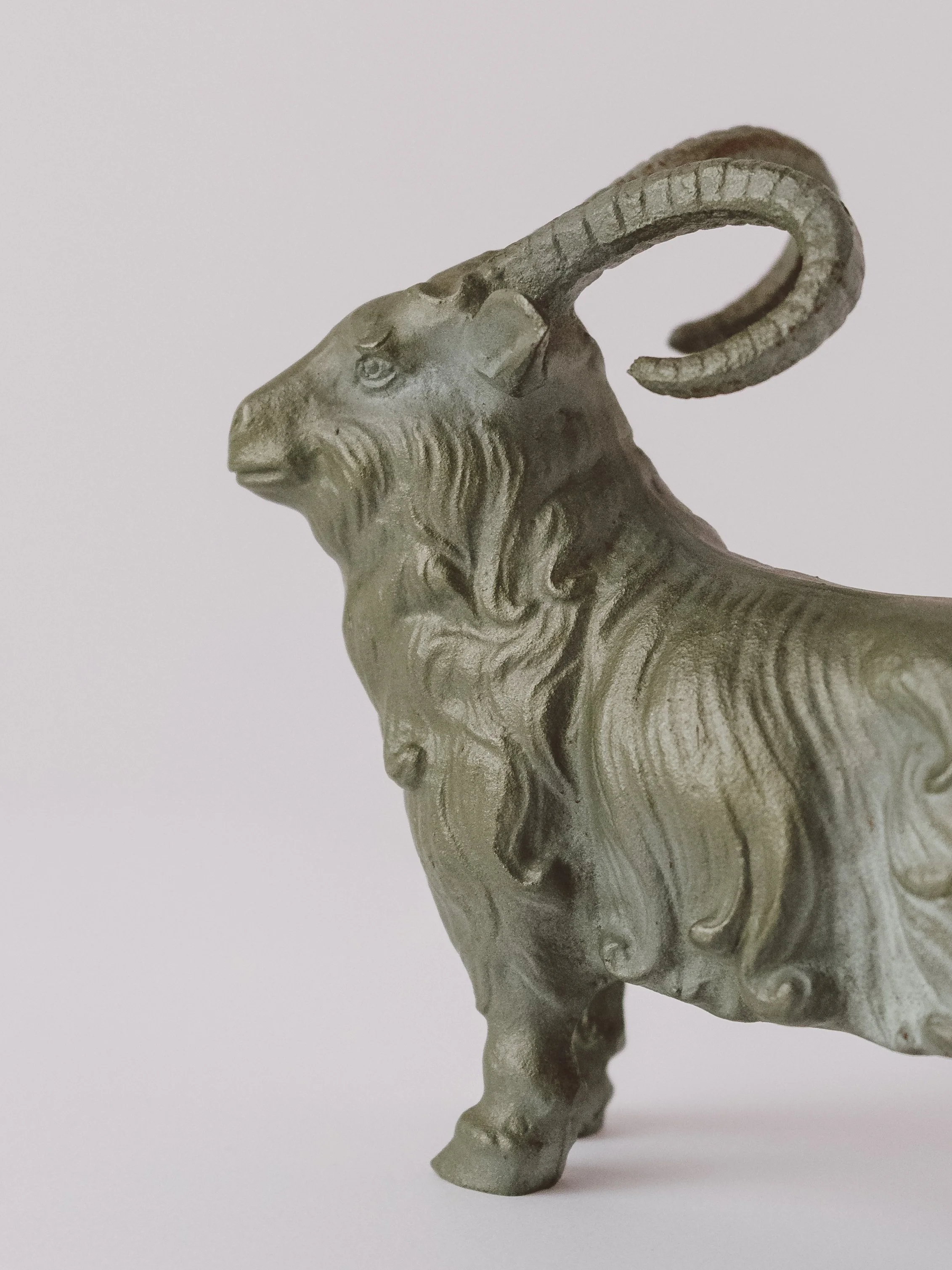 Image 8 of 10
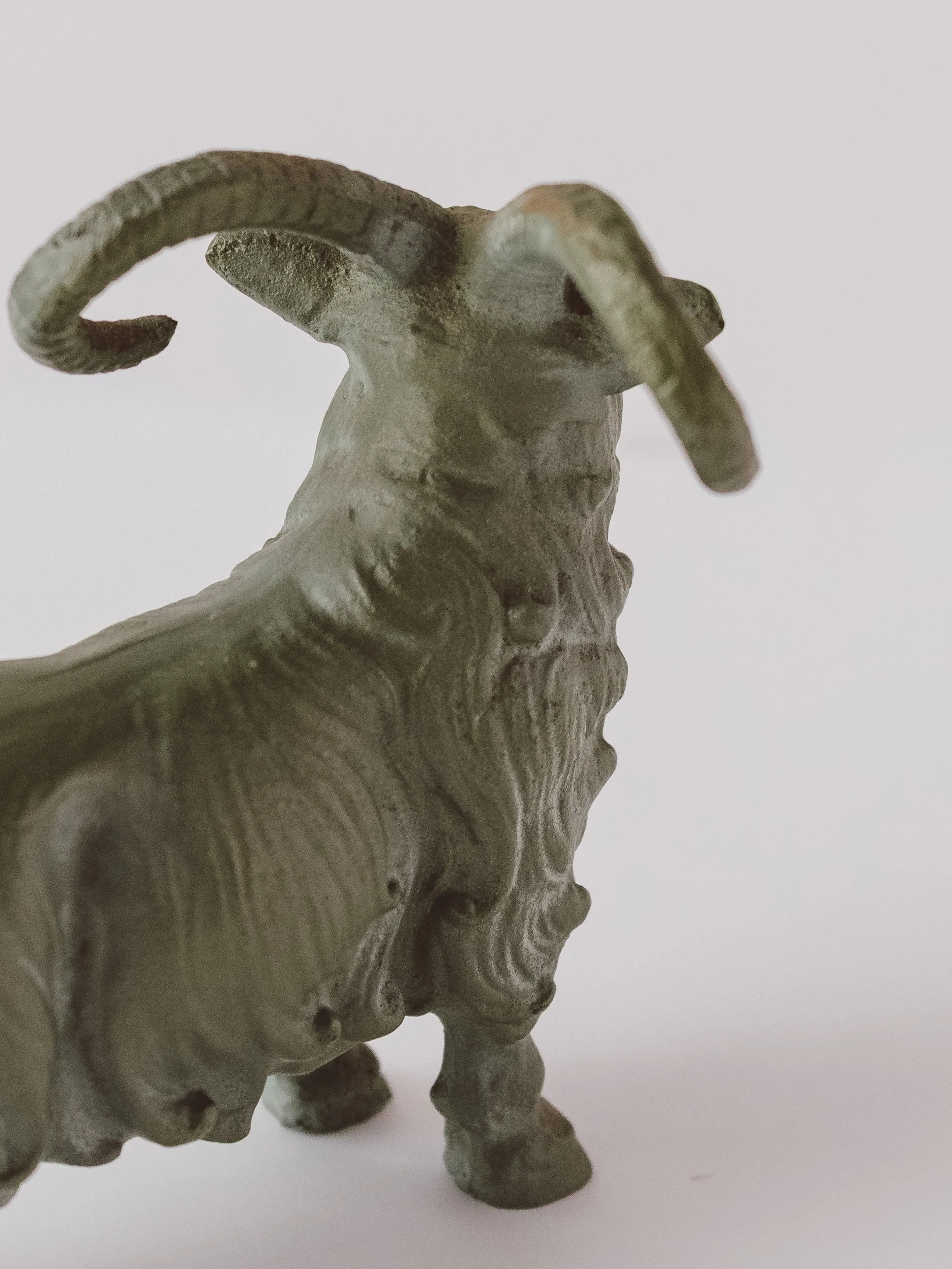 Image 9 of 10
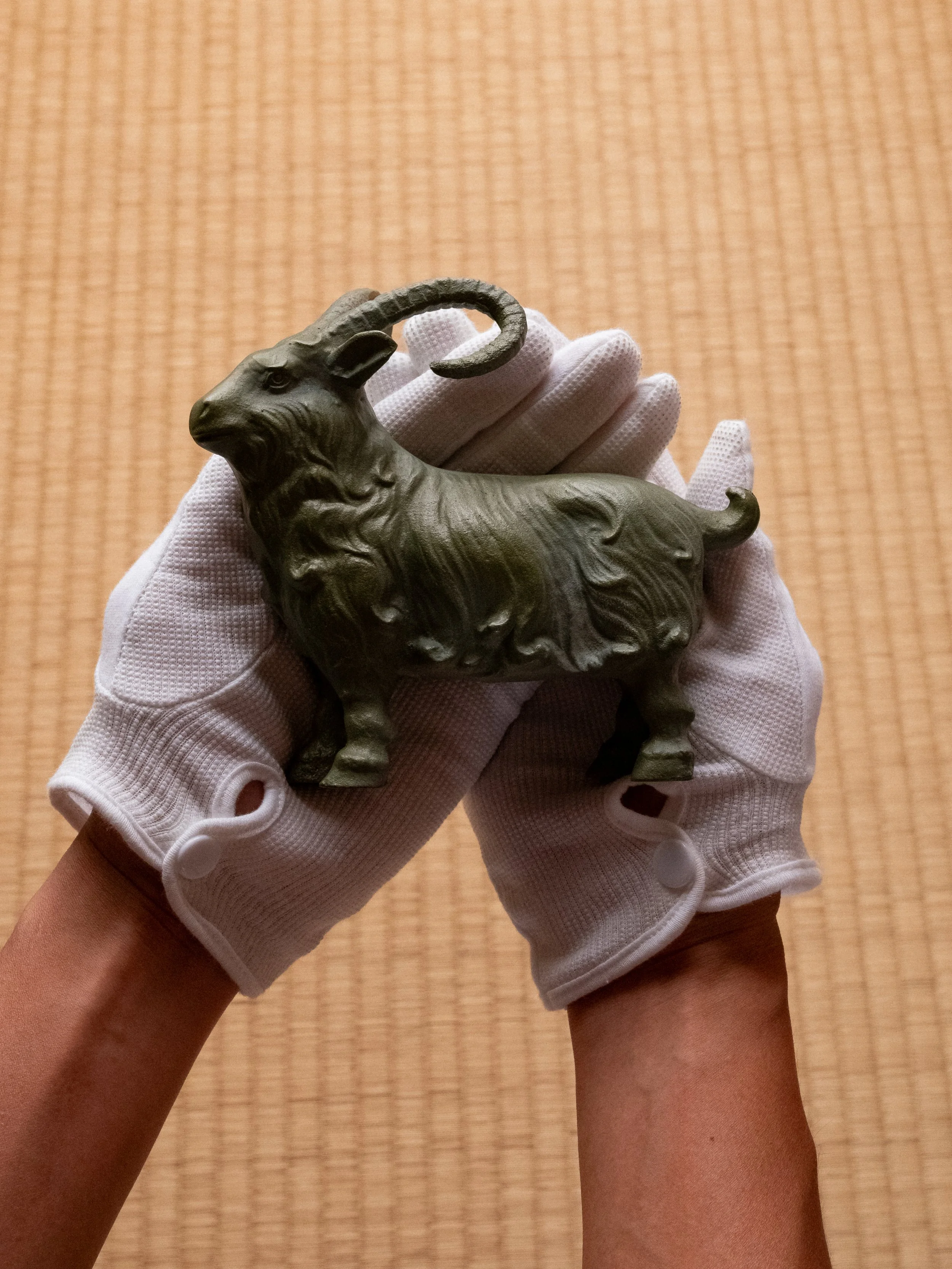 Image 10 of 10