【 The Concept 】
Two cats, tall and narrow, carved from a single species of tropical softwood so light it feels almost hollow in the hand. They are not realistic. They are not trying to be. Every anatomical detail has been reduced to curve and silhouette — the body tapers upward like a water drop inverted, the ears rise to sharp triangular points, and the face has been flattened into a plane just wide enough to hold a pair of painted almond eyes and a faint, knowing smile.
What makes these figures distinct is what covers them. Across the torso and limbs, flowing strokes of deep green and terracotta trace organic patterns that suggest vine, flame, or current — never quite resolving into any single motif. These are not stamped or transferred. Each line was drawn by hand, freehand, with visible variation in pressure and pigment load. The green darkens where the brush paused; the terracotta thins where it was dragged. Between the painted areas, the warm brown of the bare wood shows through, forming a third color that no one applied. The pair were carved on a tropical island by an anonymous craftsman whose name was never attached to the work.
【 The Function 】
Two figures, sold as one. Together they weigh 742 grams and stand 30 centimeters tall — nearly a foot of vertical presence from a footprint barely six centimeters wide. They are designed to stand side by side or at a deliberate distance, creating a corridor of negative space between them that the eye naturally passes through. Place them on a shelf, a console, or a mantelpiece, and they frame whatever sits between them without competing with it. Alone, each is a column. Together, they are a gate.
【 The Texture 】
Matte throughout. No lacquer, no varnish, no gloss. The surface absorbs light rather than bouncing it, giving the figures a soft, almost chalky warmth that photographs darker than it appears in person. Run a finger along the back and the grain of the wood is faintly raised beneath the paint — proof of a lightweight timber that grows fast in volcanic soil, with a texture too open to hide under finish. The painted strokes sit on top of this grain rather than sinking into it, creating a layered feel: wood first, then color, then the small nicks and scuffs of handling that mark the edges and ear tips. The eyes are the only point of precision — black pupils ringed in red, set inside terracotta sockets, staring forward with an expression that is calm, alert, and entirely unbothered.
【 Presence 】
Thirty centimeters of height from six centimeters of width. The ratio is what makes them work. These are not squat, stable objects that sink into a shelf. They rise from it — two vertical lines in a world of horizontal surfaces, pulling the eye upward along the taper of the body to the sharp points of the ears. The green and terracotta palette reads as earth and forest, warm enough to sit in any room without clashing and unusual enough to stop a glance from sliding past. They do not demand a pedestal or a spotlight. They ask only for a surface and each other.
Sourced from a private collection in the Kansai region, Japan.
【 The Concept 】
Two cats, tall and narrow, carved from a single species of tropical softwood so light it feels almost hollow in the hand. They are not realistic. They are not trying to be. Every anatomical detail has been reduced to curve and silhouette — the body tapers upward like a water drop inverted, the ears rise to sharp triangular points, and the face has been flattened into a plane just wide enough to hold a pair of painted almond eyes and a faint, knowing smile.
What makes these figures distinct is what covers them. Across the torso and limbs, flowing strokes of deep green and terracotta trace organic patterns that suggest vine, flame, or current — never quite resolving into any single motif. These are not stamped or transferred. Each line was drawn by hand, freehand, with visible variation in pressure and pigment load. The green darkens where the brush paused; the terracotta thins where it was dragged. Between the painted areas, the warm brown of the bare wood shows through, forming a third color that no one applied. The pair were carved on a tropical island by an anonymous craftsman whose name was never attached to the work.
【 The Function 】
Two figures, sold as one. Together they weigh 742 grams and stand 30 centimeters tall — nearly a foot of vertical presence from a footprint barely six centimeters wide. They are designed to stand side by side or at a deliberate distance, creating a corridor of negative space between them that the eye naturally passes through. Place them on a shelf, a console, or a mantelpiece, and they frame whatever sits between them without competing with it. Alone, each is a column. Together, they are a gate.
【 The Texture 】
Matte throughout. No lacquer, no varnish, no gloss. The surface absorbs light rather than bouncing it, giving the figures a soft, almost chalky warmth that photographs darker than it appears in person. Run a finger along the back and the grain of the wood is faintly raised beneath the paint — proof of a lightweight timber that grows fast in volcanic soil, with a texture too open to hide under finish. The painted strokes sit on top of this grain rather than sinking into it, creating a layered feel: wood first, then color, then the small nicks and scuffs of handling that mark the edges and ear tips. The eyes are the only point of precision — black pupils ringed in red, set inside terracotta sockets, staring forward with an expression that is calm, alert, and entirely unbothered.
【 Presence 】
Thirty centimeters of height from six centimeters of width. The ratio is what makes them work. These are not squat, stable objects that sink into a shelf. They rise from it — two vertical lines in a world of horizontal surfaces, pulling the eye upward along the taper of the body to the sharp points of the ears. The green and terracotta palette reads as earth and forest, warm enough to sit in any room without clashing and unusual enough to stop a glance from sliding past. They do not demand a pedestal or a spotlight. They ask only for a surface and each other.
Sourced from a private collection in the Kansai region, Japan.


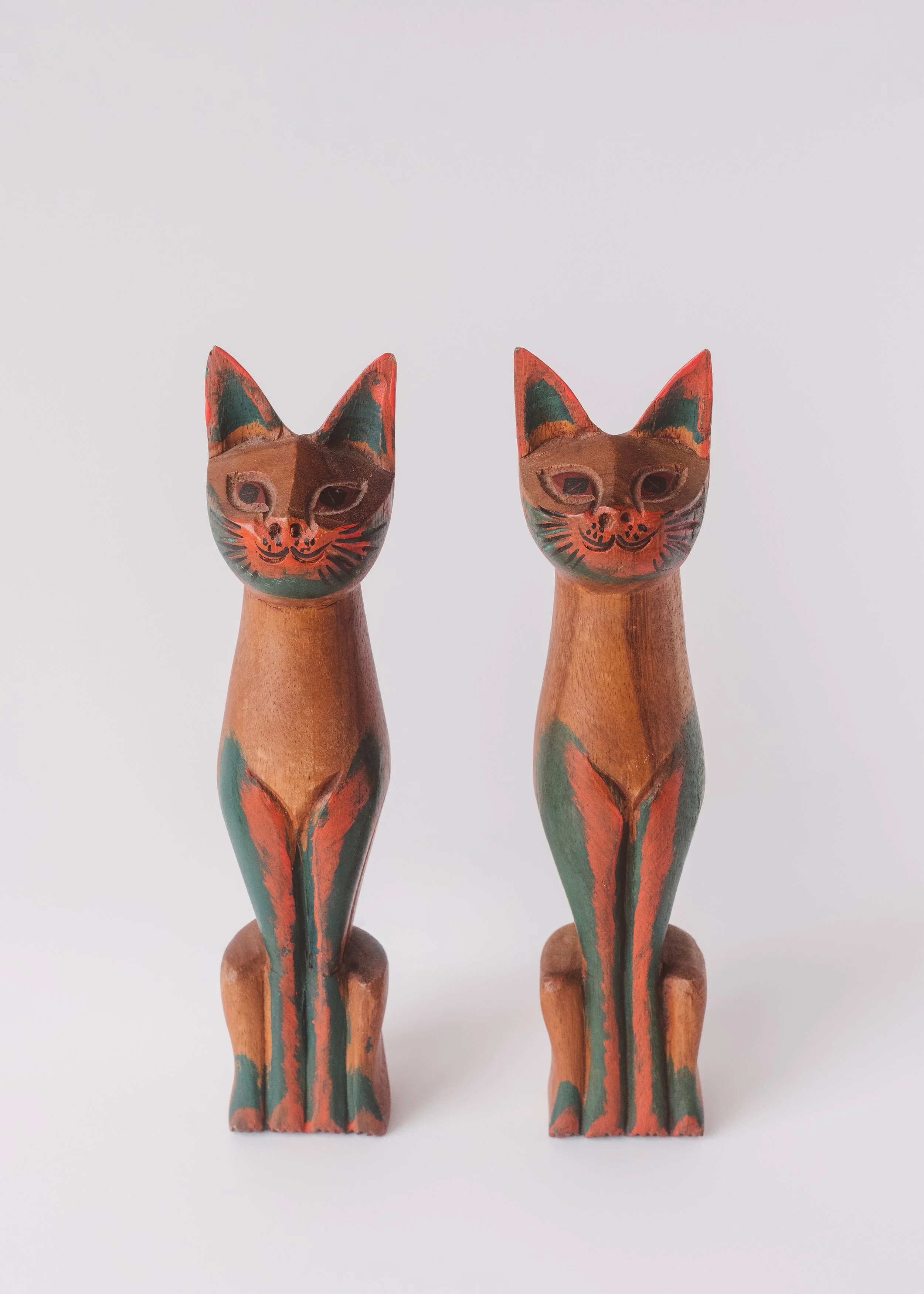 Image 1 of 11
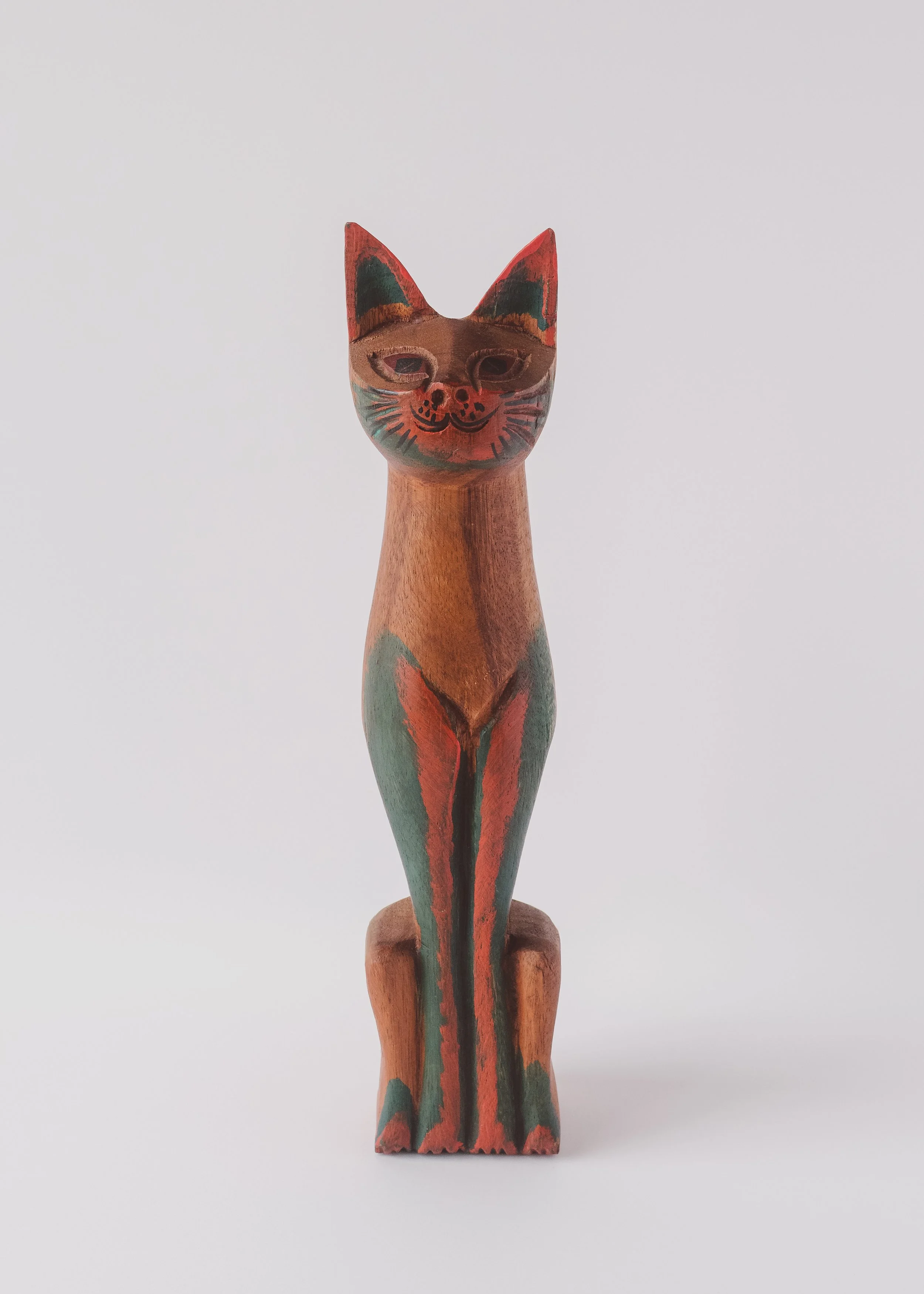 Image 2 of 11
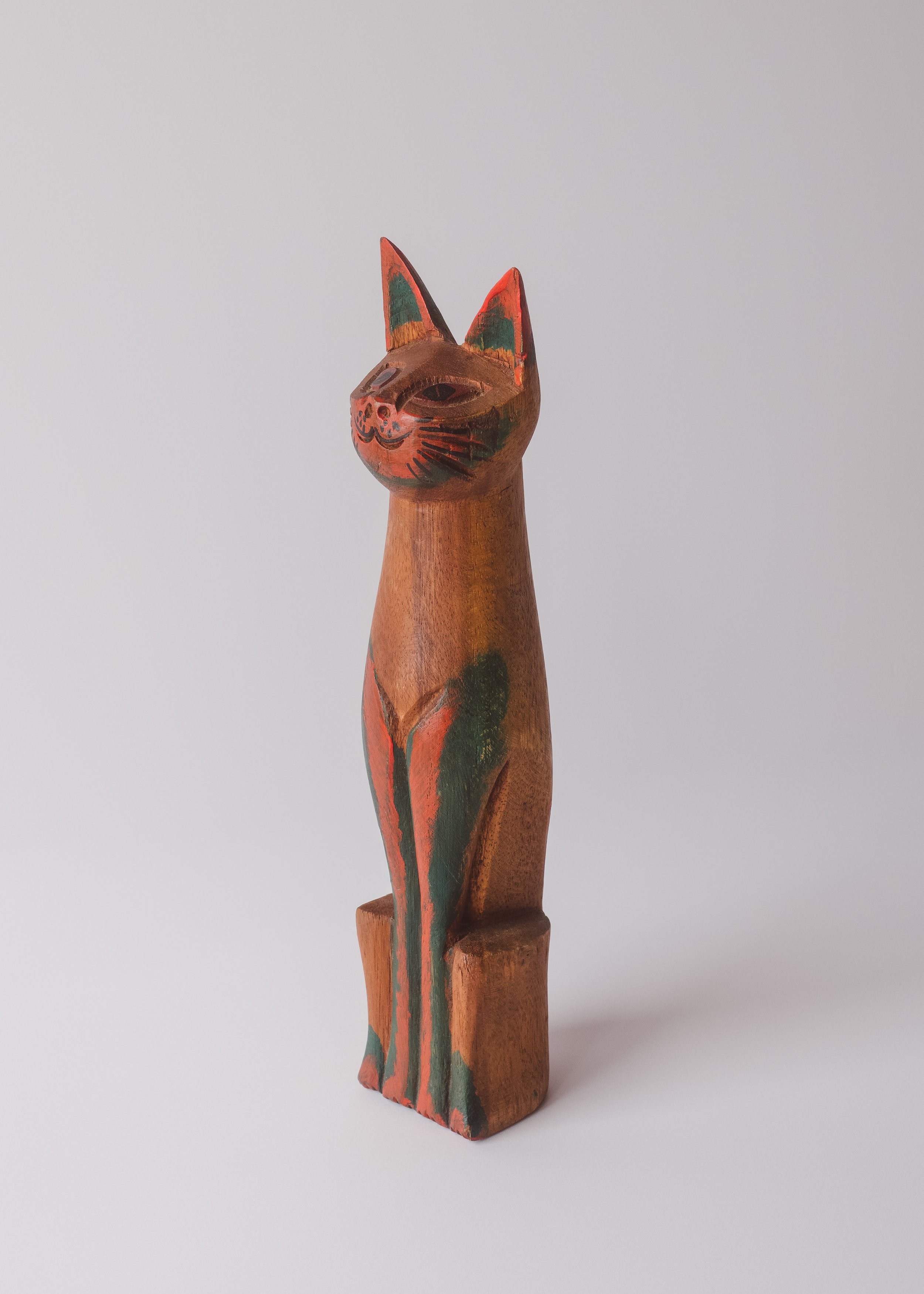 Image 3 of 11
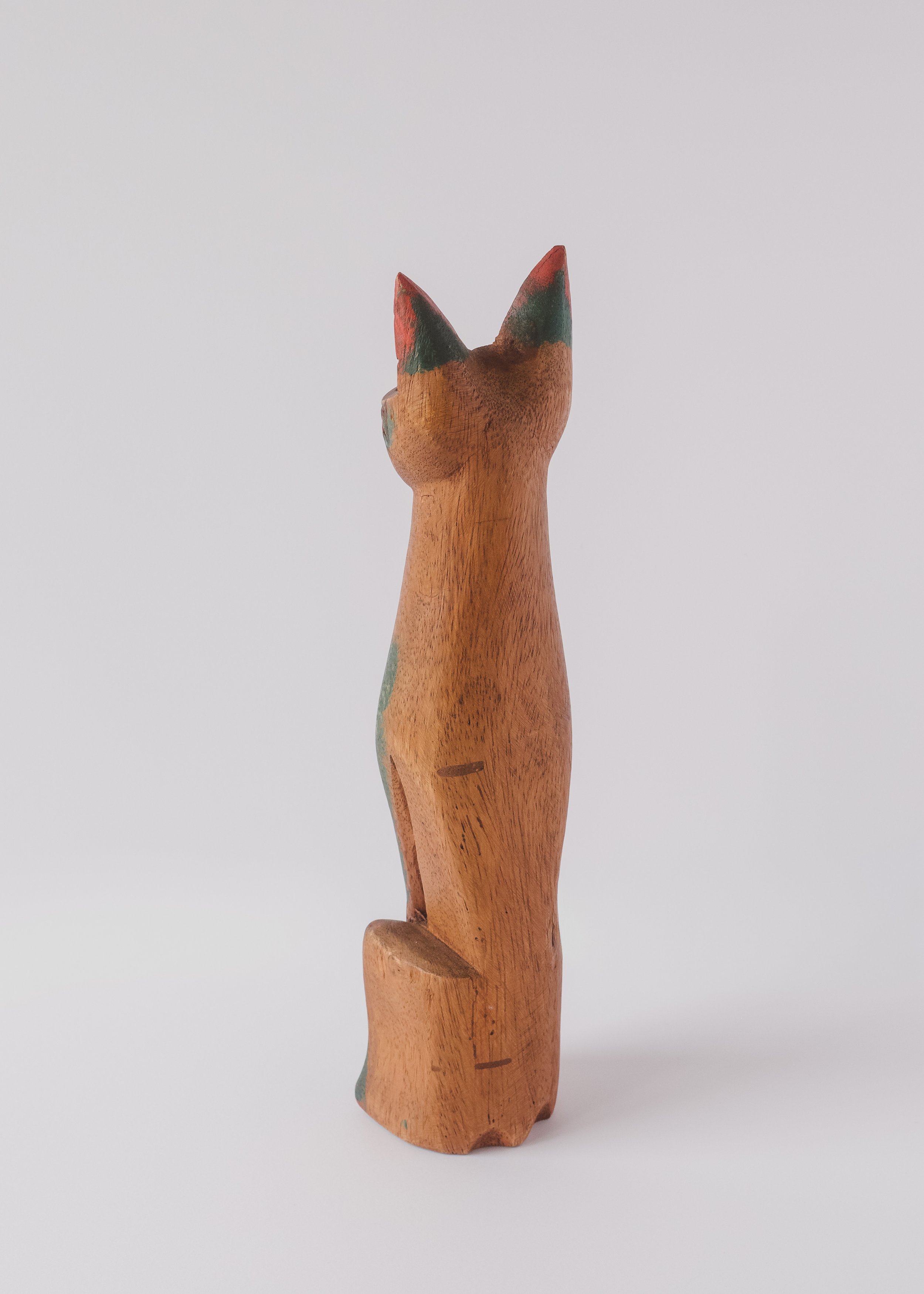 Image 4 of 11
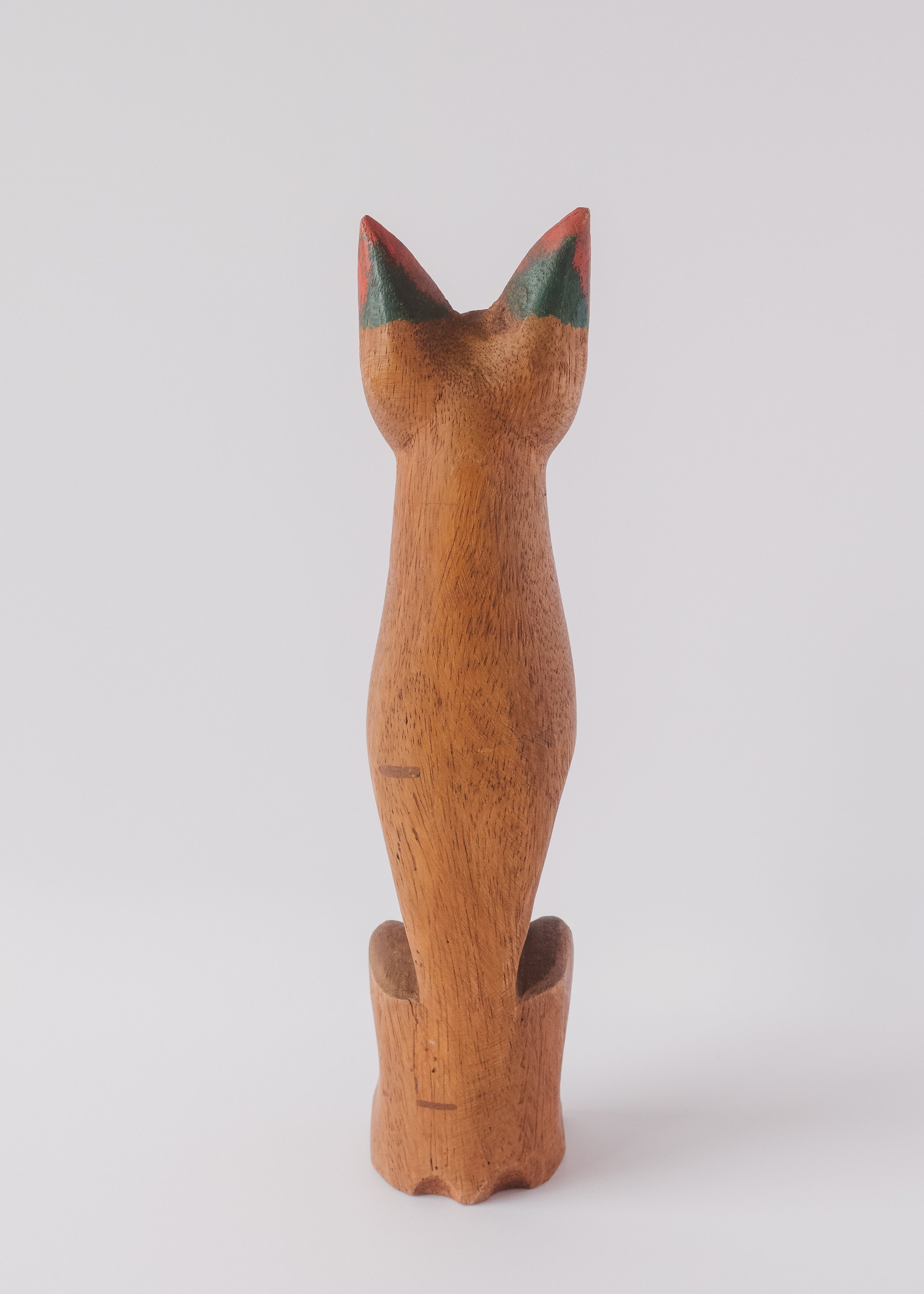 Image 5 of 11
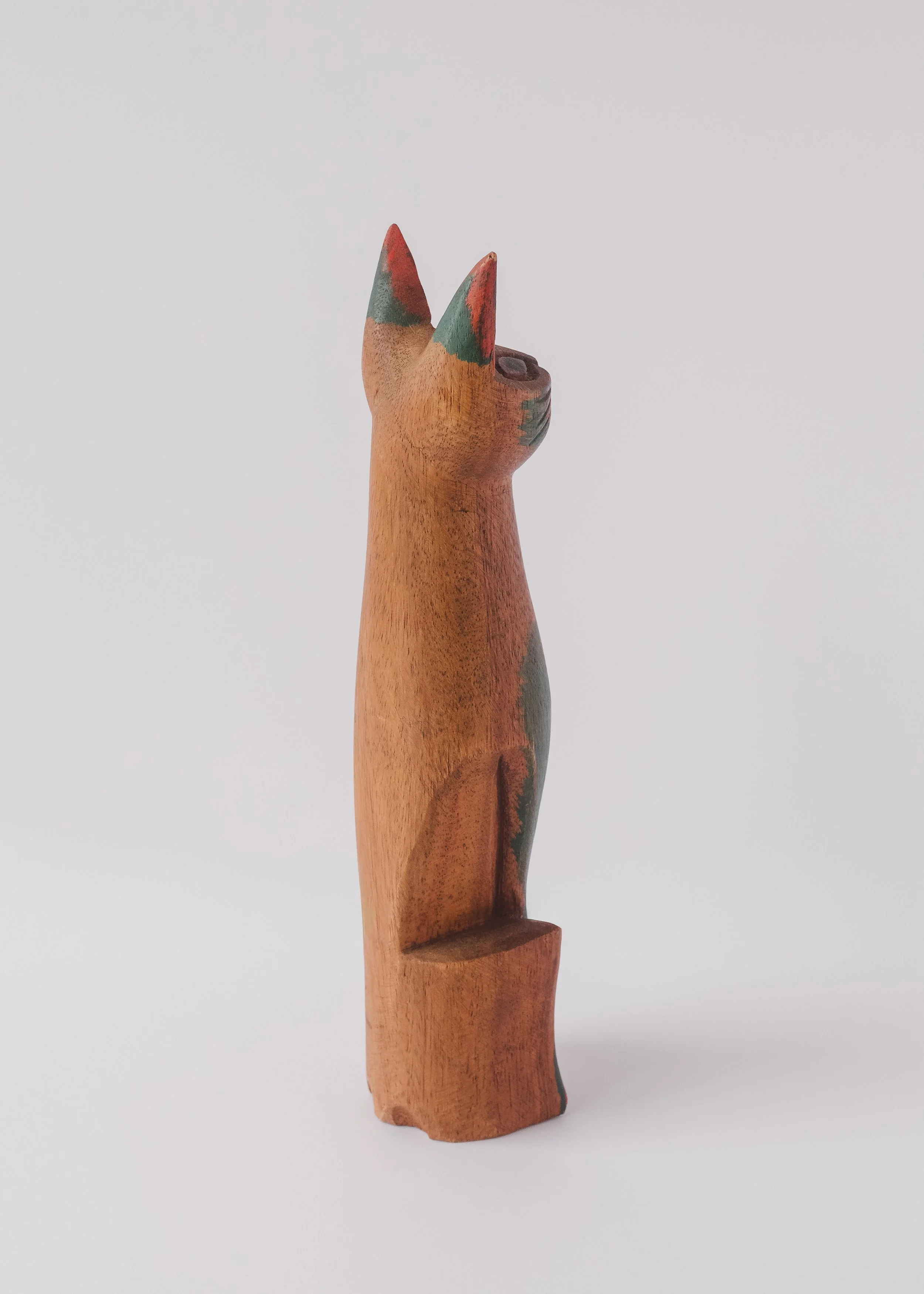 Image 6 of 11
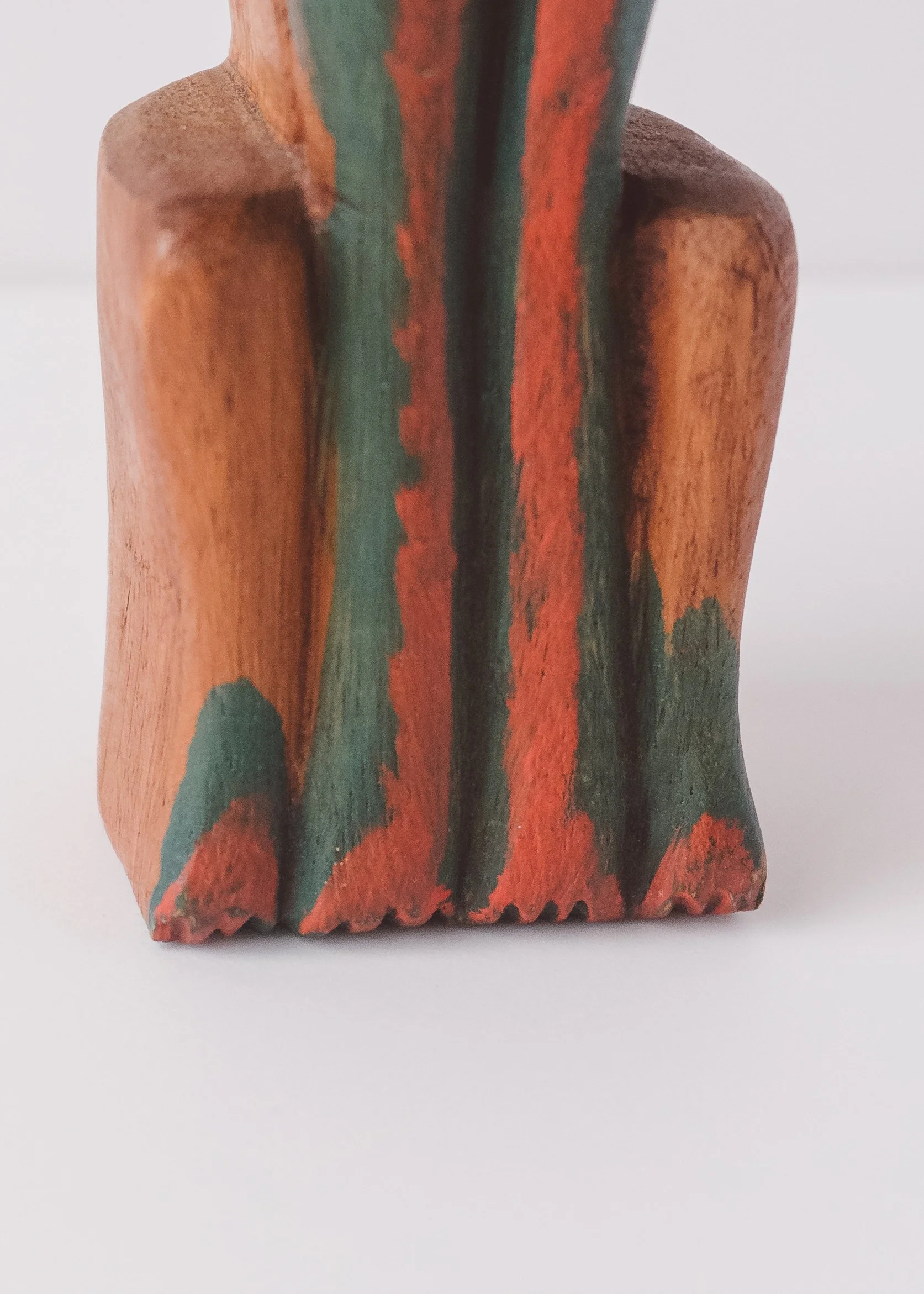 Image 7 of 11
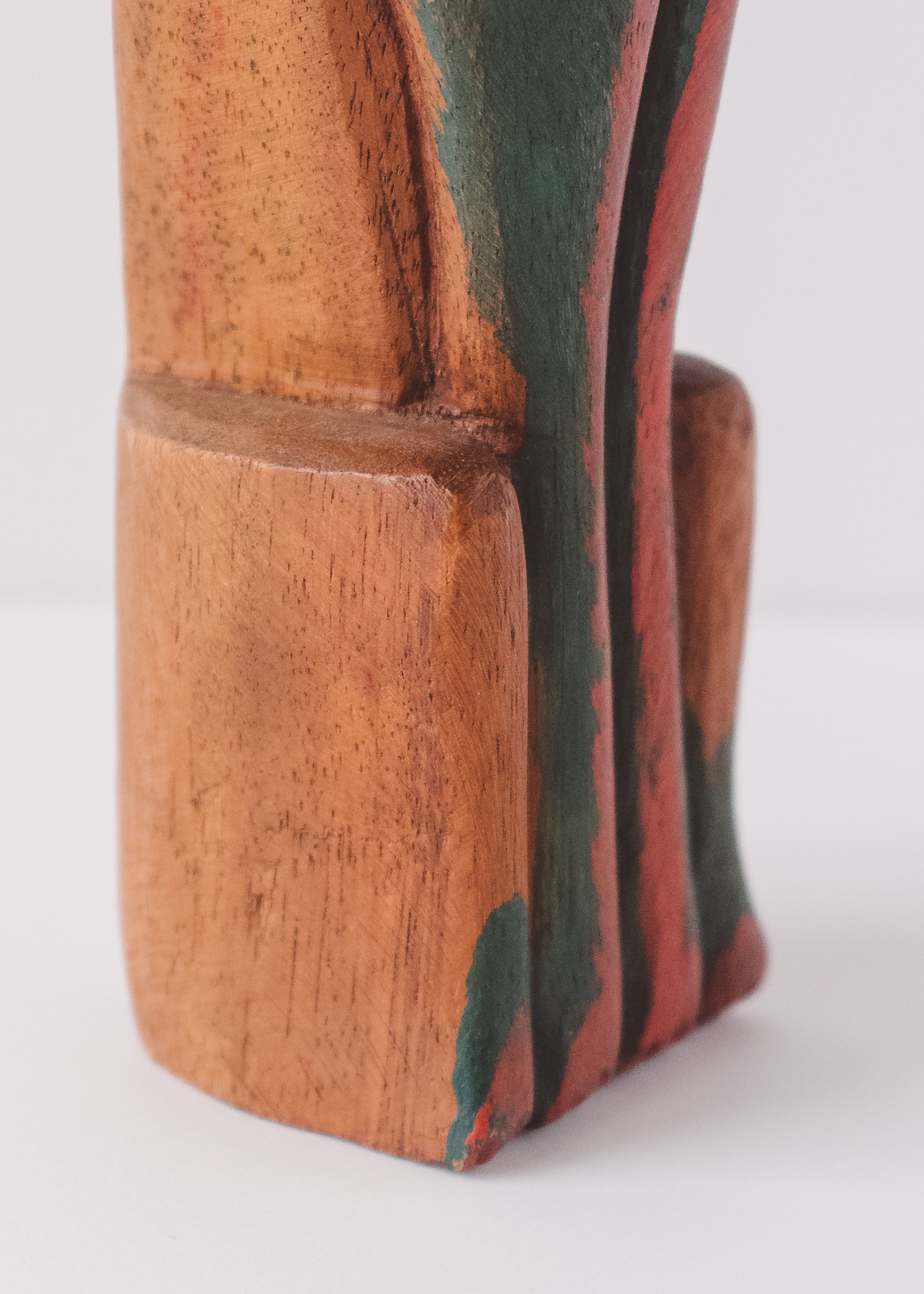 Image 8 of 11
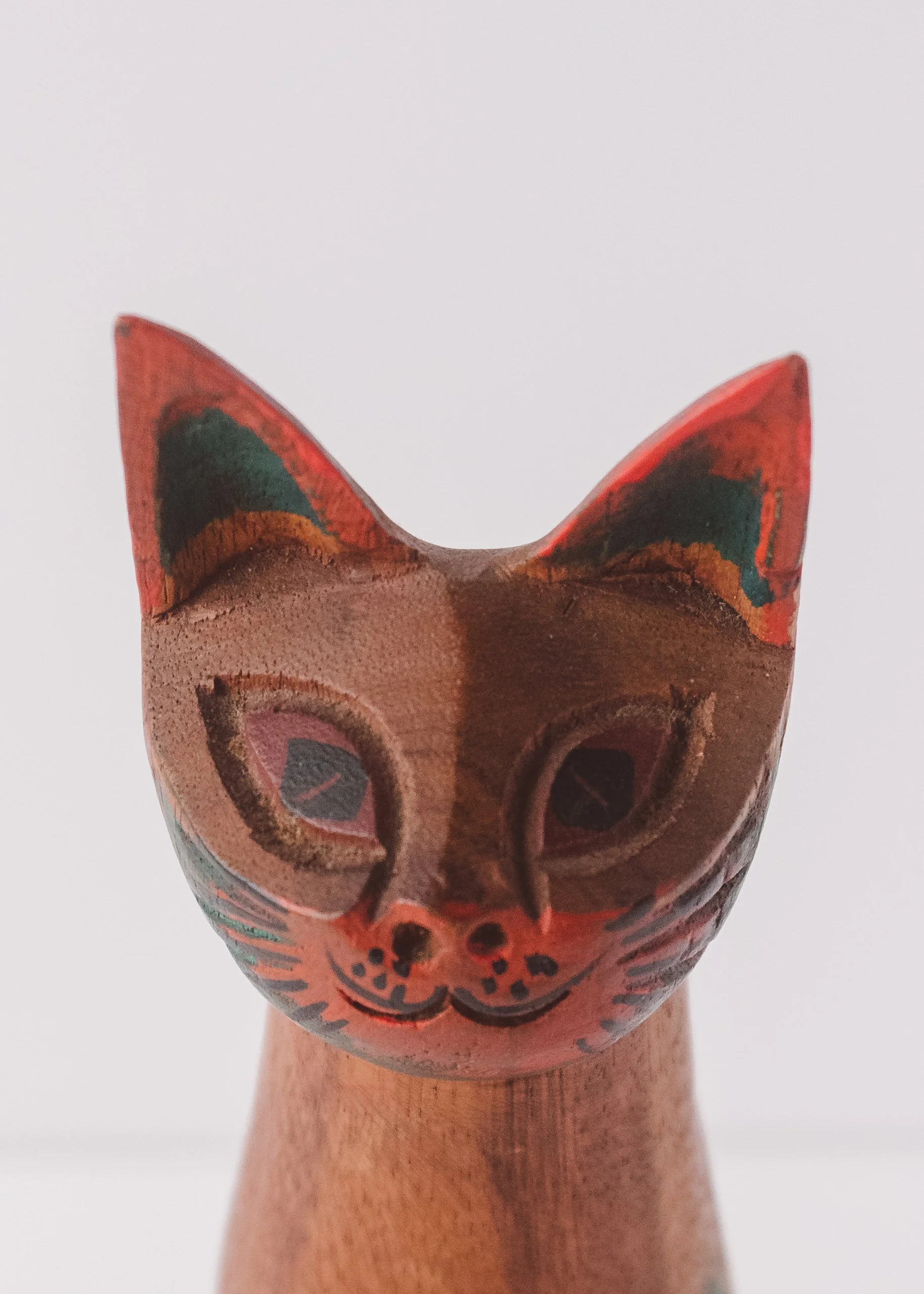 Image 9 of 11
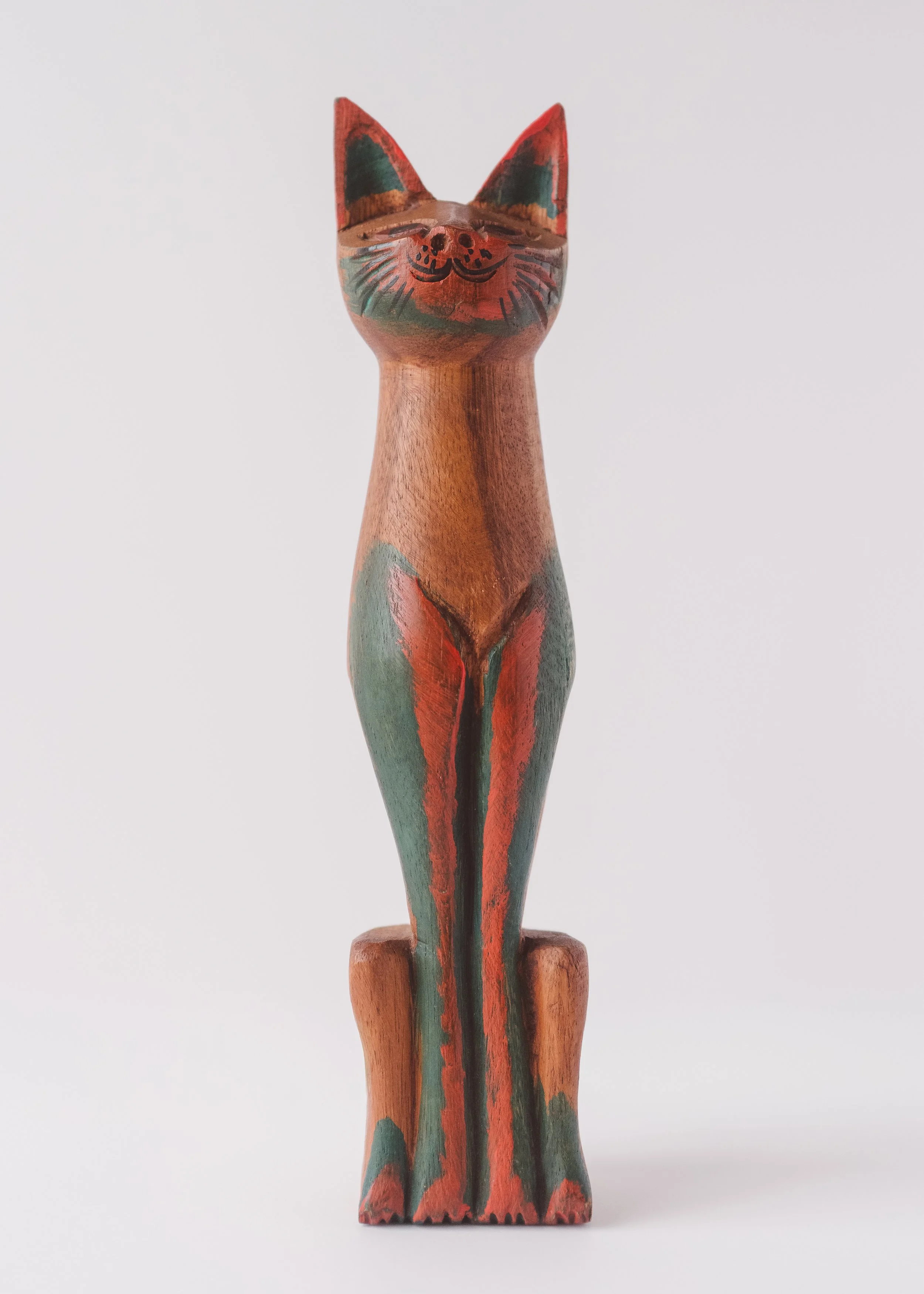 Image 10 of 11
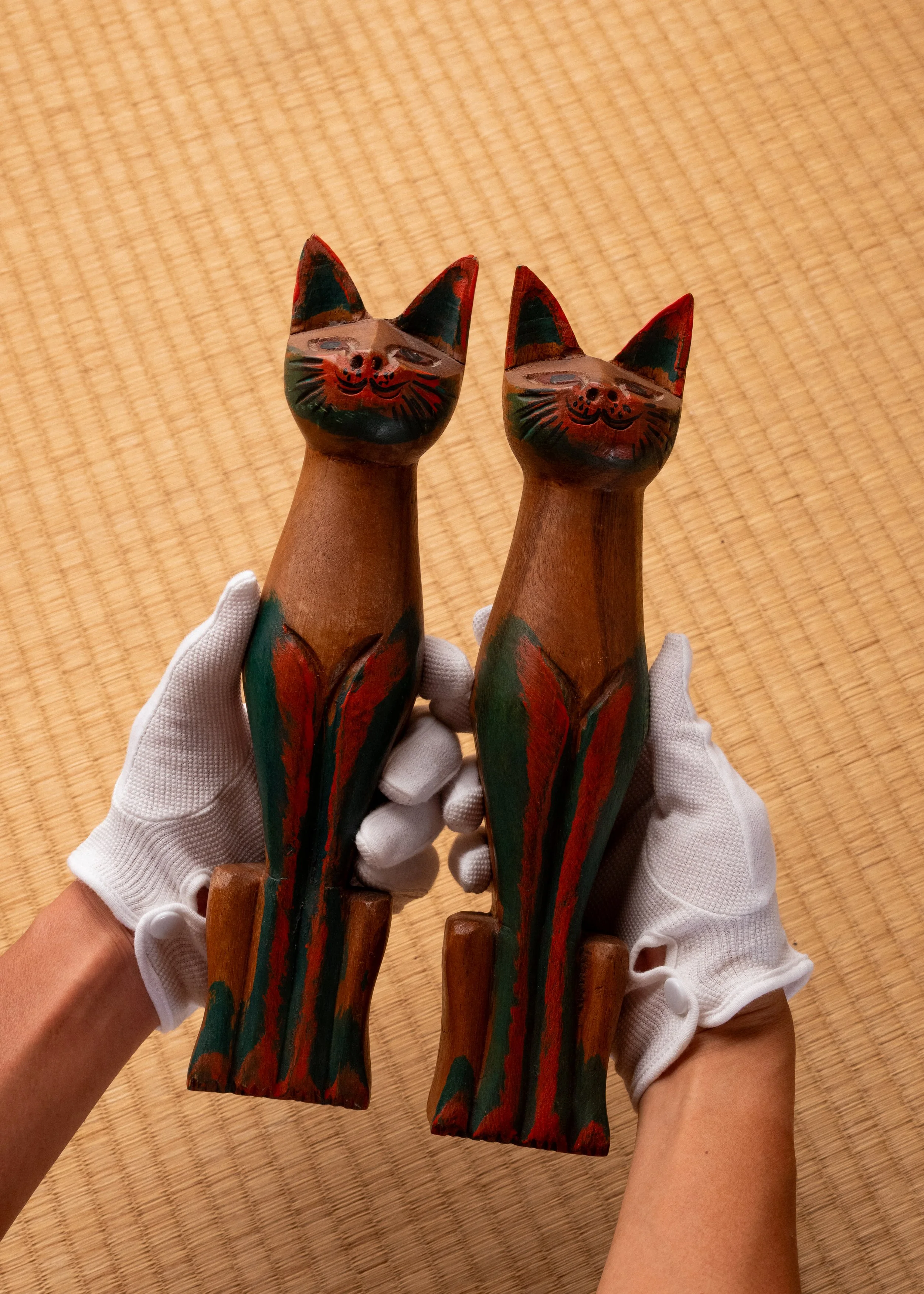 Image 11 of 11