【 The Concept 】
A mountain bird, carved in birch, standing on a slice of the same tree with its white bark left on. It comes from a different world than the metal roosters and glazed drakes — not a foundry or a kiln, but a workshop in the northern highlands where the wood itself is the subject.
The bird is a raicho, the rock ptarmigan, and its name in Japanese means, literally, thunder bird. It lives only at the very top of the Japanese Alps, above the tree line, in a band of alpine scrub where almost nothing else survives — a survivor of the last ice age, stranded on the high peaks when the glaciers withdrew. Because it appears in the violent weather of those altitudes, it was long believed to summon the thunderclouds, or to ward off lightning and fire; mountain-worship communities printed its image as a charm against both. It is, in the older sense, a sacred bird — a messenger of the peaks, watched with the particular awe reserved for animals that live where people cannot.
Carving it in birch doubles the meaning. Birch is the tree of the same cold highlands — the pale-barked pioneer of the alpine slopes. To render the bird of the high mountains in the wood of the high mountains is to pack the whole landscape into one object: the animal that symbolizes the peak, made from the plant that symbolizes it.
【 The Function 】
1.142 kilograms, 27 centimeters tall, 13 centimeters wide — the tallest wooden piece in the archive. Two parts: the bird, carved from a solid block, and the base, a cross-section of birch trunk with its bark intact, the two joined at the feet where the carved claws grip a flattened seat cut into the top of the log.
The base is not a pedestal. It is landscape. The white, papery, horizontally streaked bark has been left exactly as it grew, unpeeled and unsanded, so the log reads as a snow-covered rock or a patch of late alpine snow — the ground the ptarmigan actually stands on. The contrast is the entire design: a carved, colored, highly worked bird on a raw, untouched, natural stump. Made object against found object. It is a way of borrowing the mountain and setting it on a shelf.
Birch is dense and genuinely hard to carve — the fine feather-work on a bird like this is slow, resistant, exacting work — which is part of why the untouched bark below reads so strongly against it. One surface fought for; one surface simply kept.
【 The Texture 】
Three distinct surfaces on one object. The head and face are worked in fine cross-hatching — tiny intersecting knife-strokes, colored dark brown, that read as the soft dense feathers of the head and give the face its alert, close-worked look. The back, wings, and tail are the opposite: deep V-shaped notches, cut in long overlapping rows, each feather a distinct carved shape, the grooves darkened to near-black. This is the ptarmigan's mottled summer plumage — the camouflage that lets it disappear against alpine rock — translated into wood and shadow. And the breast and belly are barely worked at all: shallow, smooth, pale birch left almost bare, round and soft, the pale of the bird's winter white kept in the raw color of the wood.
Dark carved back against pale plain breast, sharp notches against smooth curve — the bird carries its two seasons at once, summer on its back and winter on its front, told entirely in how deep the knife went.
The one non-wood element is the eye: a red glass bead set into the socket, black-centered, ringed in red. On a figure made entirely of a single pale material, that one spot of glass is where the bird comes alive — the wet, fixed, watchful stare of a wild animal that has heard something.
On the cut face of the base, in faded red brush-ink, is a handwritten mark — the kind of inscription these birds carried to record where a traveler bought them, high in the mountains. The characters have softened with age. It is the residue of a journey, left on the wood.
【 Presence 】
Most of the other birds in the archive are cast or fired — metal roosters, a glazed drake, gleaming and smooth. Even the carved duck RINGED DRAKE is worked to a finished, rounded surface. This one is different: it is cut, and it keeps the marks of cutting. You can see where the knife went in, hundreds of times, and you can see the two surfaces it left: the worked bird and the unworked bark, the thing a person made and the thing a tree grew, joined at the feet.
And the bird watches. Chest out, head up, the red glass eye fixed on the middle distance, it holds the exact posture of an animal on high ground scanning for a threat — still, alert, braced against weather it can feel coming. It is a thunder bird, after all, and it has spent fifty years on its patch of white bark expecting the sky to change. The pale breast, the notched back, the one red eye, the snow-colored stump: the whole high cold mountain, standing 27 centimeters tall, still watching the horizon.
Sourced from a private collection in the Shikoku region, Japan.
【 The Concept 】
A mountain bird, carved in birch, standing on a slice of the same tree with its white bark left on. It comes from a different world than the metal roosters and glazed drakes — not a foundry or a kiln, but a workshop in the northern highlands where the wood itself is the subject.
The bird is a raicho, the rock ptarmigan, and its name in Japanese means, literally, thunder bird. It lives only at the very top of the Japanese Alps, above the tree line, in a band of alpine scrub where almost nothing else survives — a survivor of the last ice age, stranded on the high peaks when the glaciers withdrew. Because it appears in the violent weather of those altitudes, it was long believed to summon the thunderclouds, or to ward off lightning and fire; mountain-worship communities printed its image as a charm against both. It is, in the older sense, a sacred bird — a messenger of the peaks, watched with the particular awe reserved for animals that live where people cannot.
Carving it in birch doubles the meaning. Birch is the tree of the same cold highlands — the pale-barked pioneer of the alpine slopes. To render the bird of the high mountains in the wood of the high mountains is to pack the whole landscape into one object: the animal that symbolizes the peak, made from the plant that symbolizes it.
【 The Function 】
1.142 kilograms, 27 centimeters tall, 13 centimeters wide — the tallest wooden piece in the archive. Two parts: the bird, carved from a solid block, and the base, a cross-section of birch trunk with its bark intact, the two joined at the feet where the carved claws grip a flattened seat cut into the top of the log.
The base is not a pedestal. It is landscape. The white, papery, horizontally streaked bark has been left exactly as it grew, unpeeled and unsanded, so the log reads as a snow-covered rock or a patch of late alpine snow — the ground the ptarmigan actually stands on. The contrast is the entire design: a carved, colored, highly worked bird on a raw, untouched, natural stump. Made object against found object. It is a way of borrowing the mountain and setting it on a shelf.
Birch is dense and genuinely hard to carve — the fine feather-work on a bird like this is slow, resistant, exacting work — which is part of why the untouched bark below reads so strongly against it. One surface fought for; one surface simply kept.
【 The Texture 】
Three distinct surfaces on one object. The head and face are worked in fine cross-hatching — tiny intersecting knife-strokes, colored dark brown, that read as the soft dense feathers of the head and give the face its alert, close-worked look. The back, wings, and tail are the opposite: deep V-shaped notches, cut in long overlapping rows, each feather a distinct carved shape, the grooves darkened to near-black. This is the ptarmigan's mottled summer plumage — the camouflage that lets it disappear against alpine rock — translated into wood and shadow. And the breast and belly are barely worked at all: shallow, smooth, pale birch left almost bare, round and soft, the pale of the bird's winter white kept in the raw color of the wood.
Dark carved back against pale plain breast, sharp notches against smooth curve — the bird carries its two seasons at once, summer on its back and winter on its front, told entirely in how deep the knife went.
The one non-wood element is the eye: a red glass bead set into the socket, black-centered, ringed in red. On a figure made entirely of a single pale material, that one spot of glass is where the bird comes alive — the wet, fixed, watchful stare of a wild animal that has heard something.
On the cut face of the base, in faded red brush-ink, is a handwritten mark — the kind of inscription these birds carried to record where a traveler bought them, high in the mountains. The characters have softened with age. It is the residue of a journey, left on the wood.
【 Presence 】
Most of the other birds in the archive are cast or fired — metal roosters, a glazed drake, gleaming and smooth. Even the carved duck RINGED DRAKE is worked to a finished, rounded surface. This one is different: it is cut, and it keeps the marks of cutting. You can see where the knife went in, hundreds of times, and you can see the two surfaces it left: the worked bird and the unworked bark, the thing a person made and the thing a tree grew, joined at the feet.
And the bird watches. Chest out, head up, the red glass eye fixed on the middle distance, it holds the exact posture of an animal on high ground scanning for a threat — still, alert, braced against weather it can feel coming. It is a thunder bird, after all, and it has spent fifty years on its patch of white bark expecting the sky to change. The pale breast, the notched back, the one red eye, the snow-colored stump: the whole high cold mountain, standing 27 centimeters tall, still watching the horizon.
Sourced from a private collection in the Shikoku region, Japan.


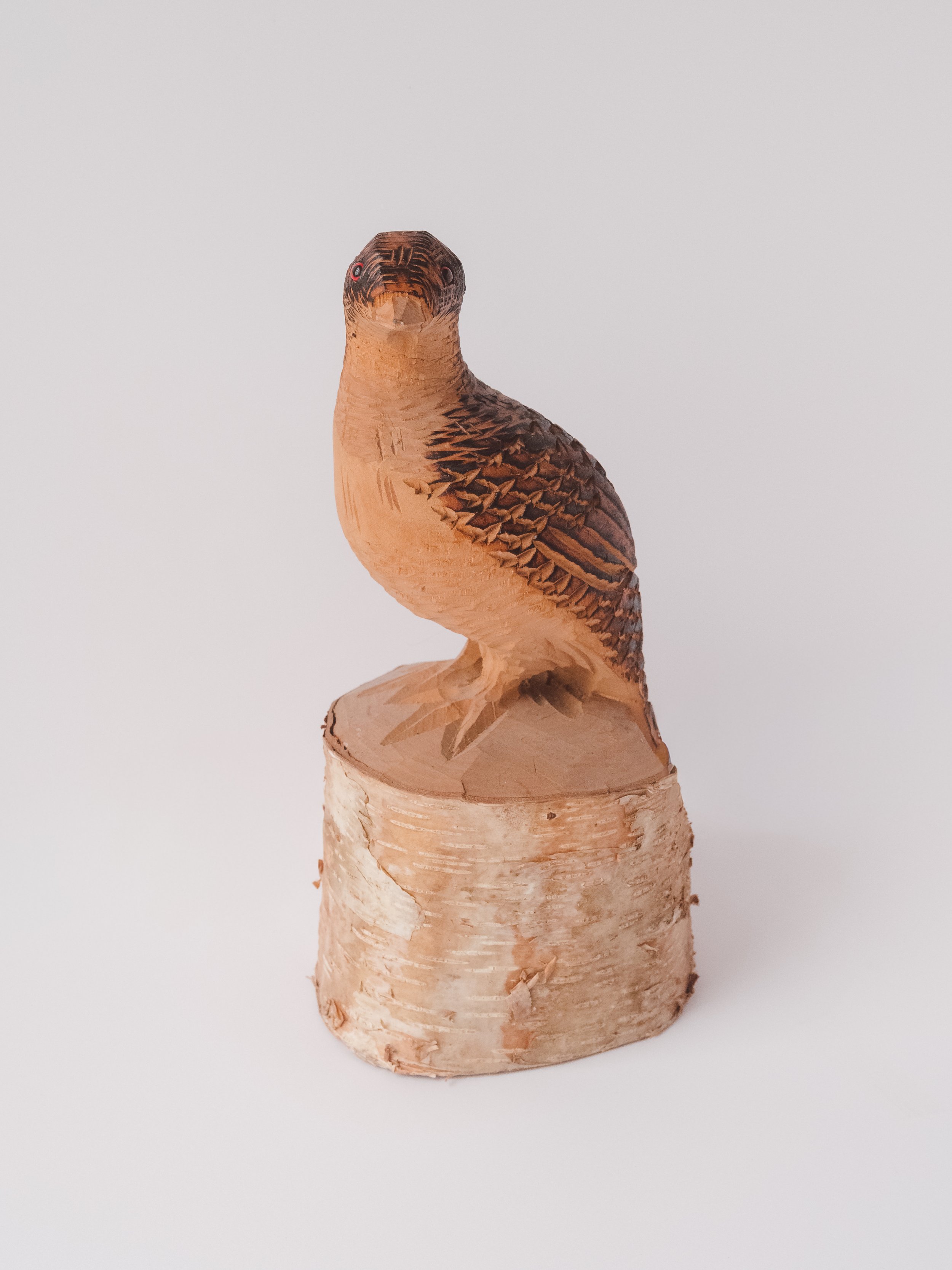 Image 1 of 15
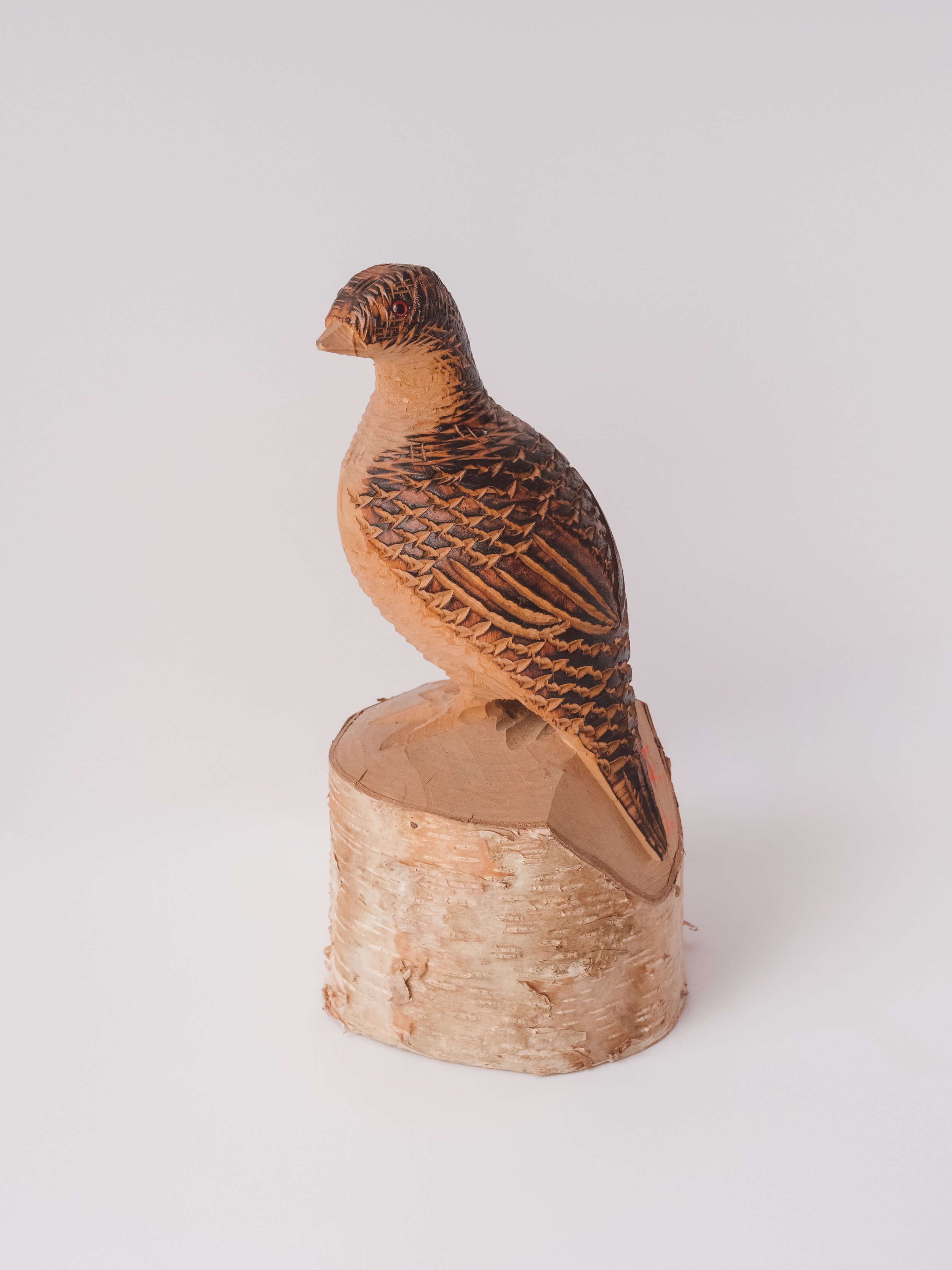 Image 2 of 15
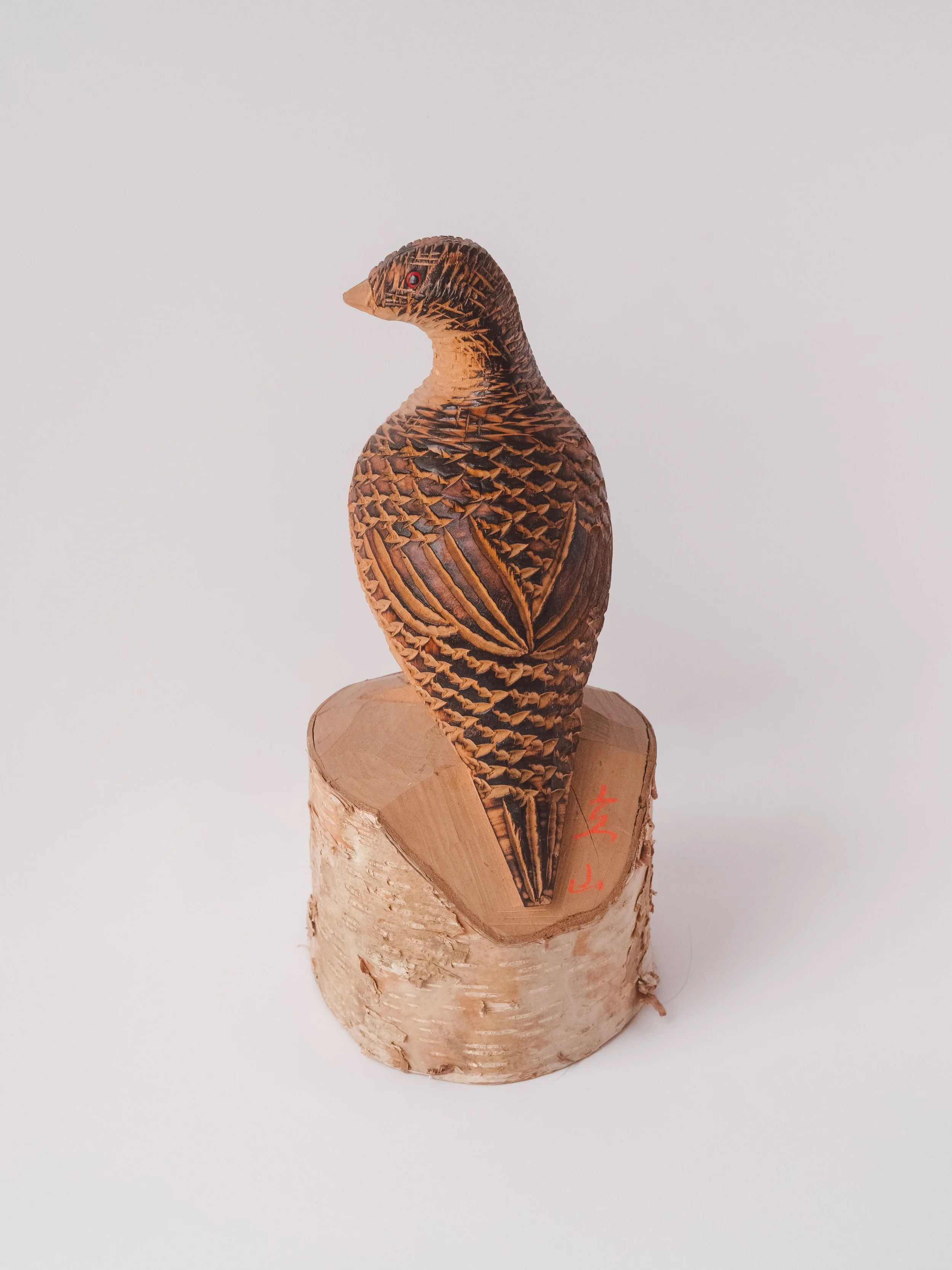 Image 3 of 15
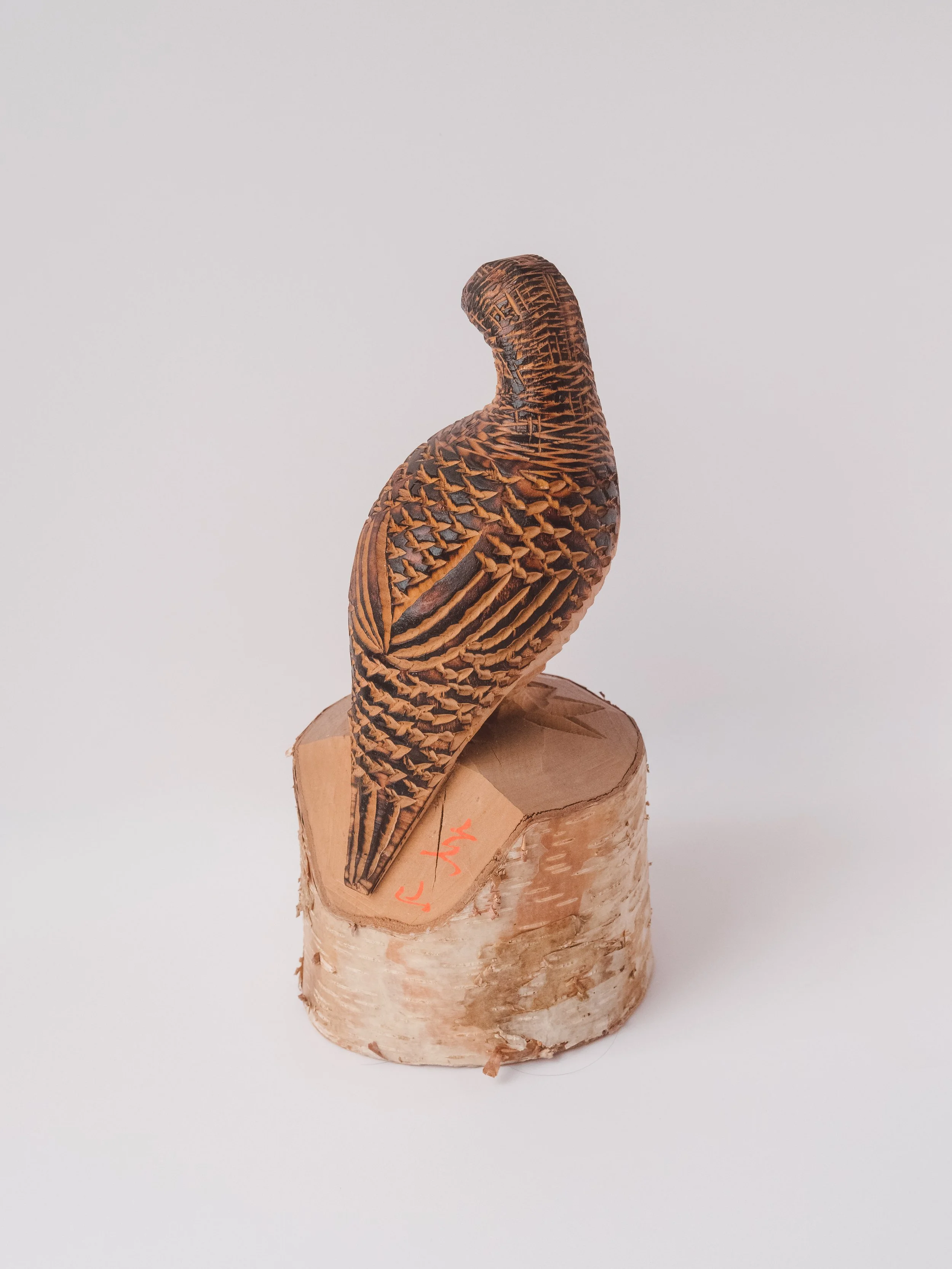 Image 4 of 15
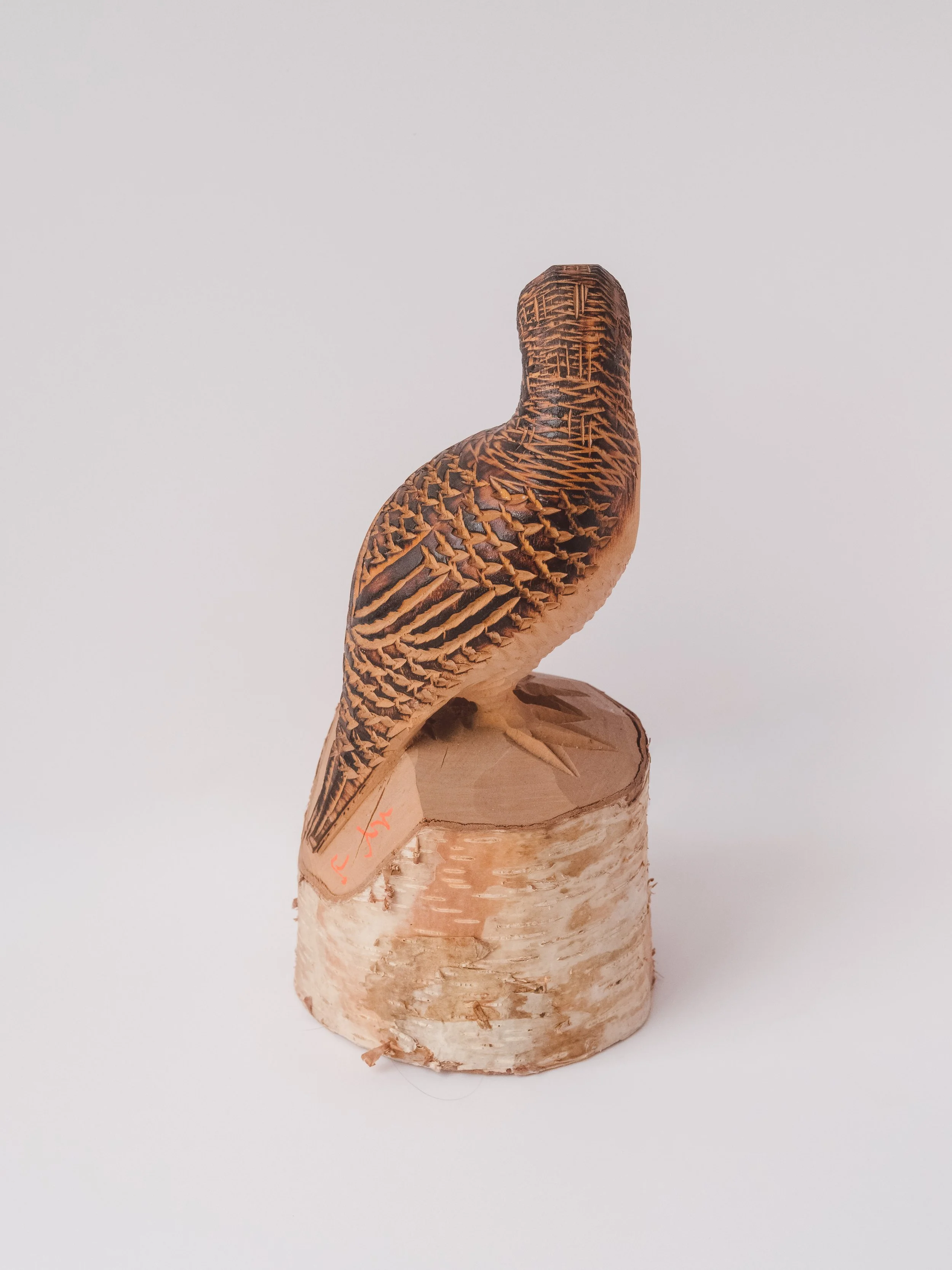 Image 5 of 15
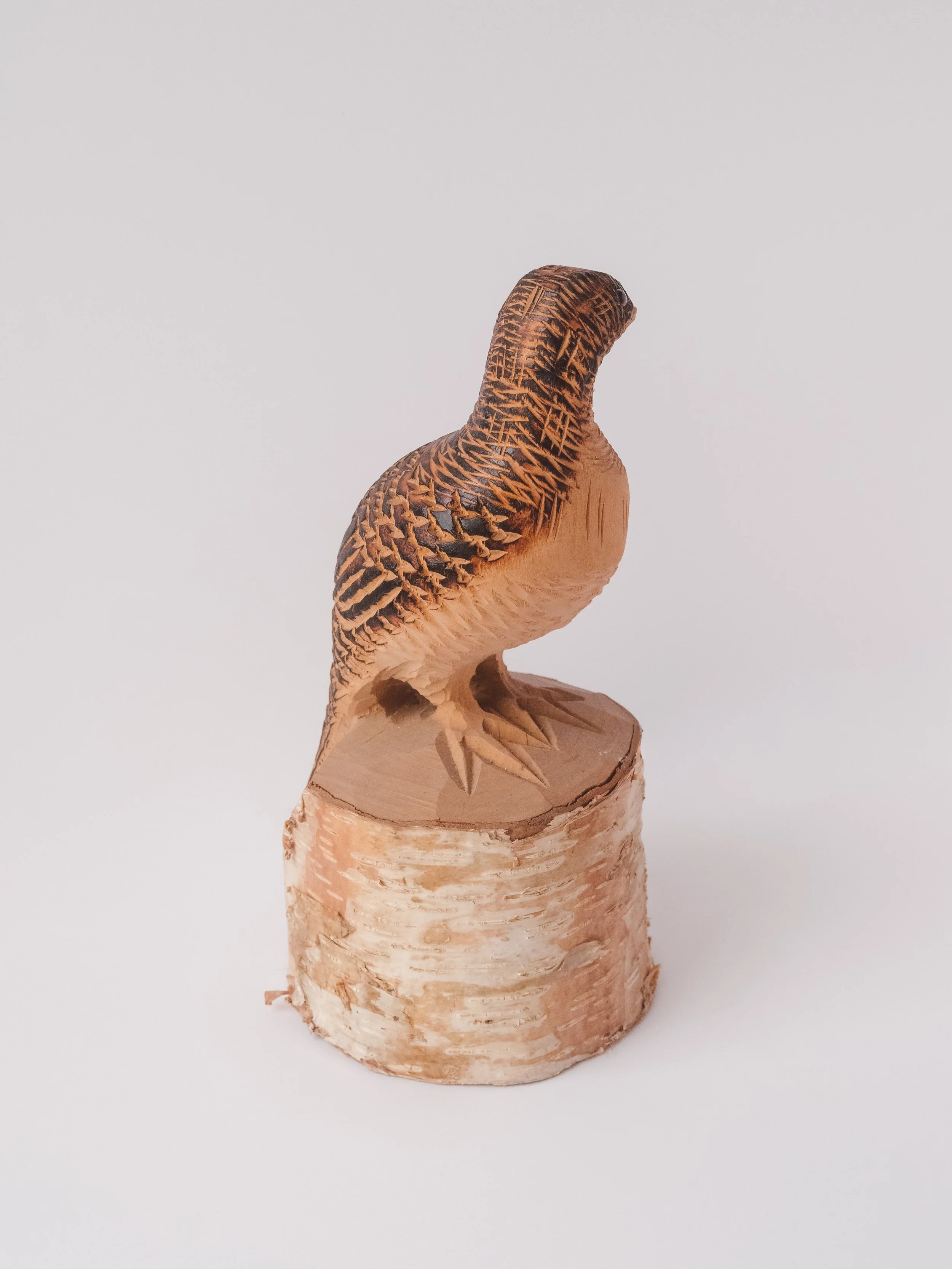 Image 6 of 15
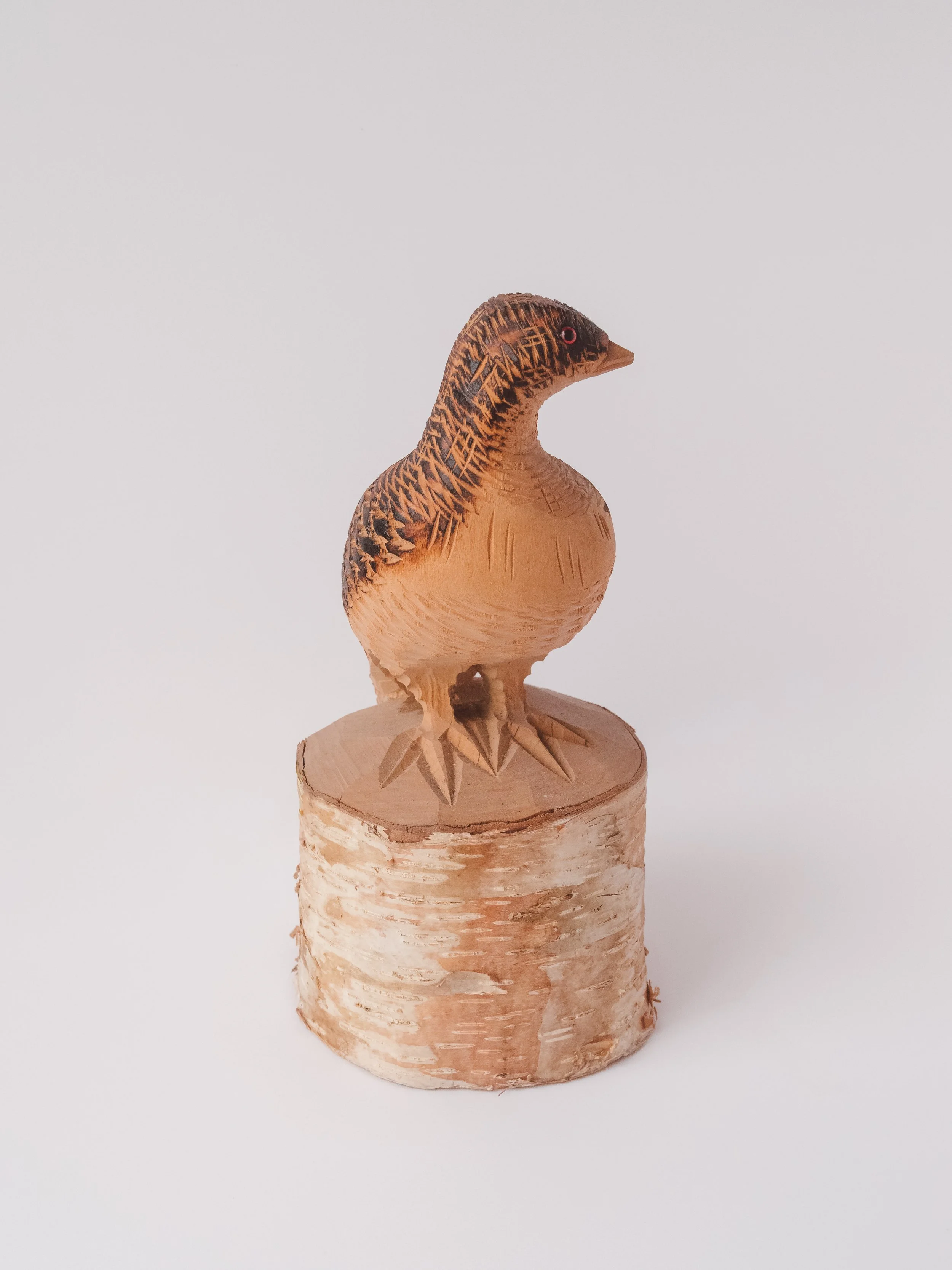 Image 7 of 15
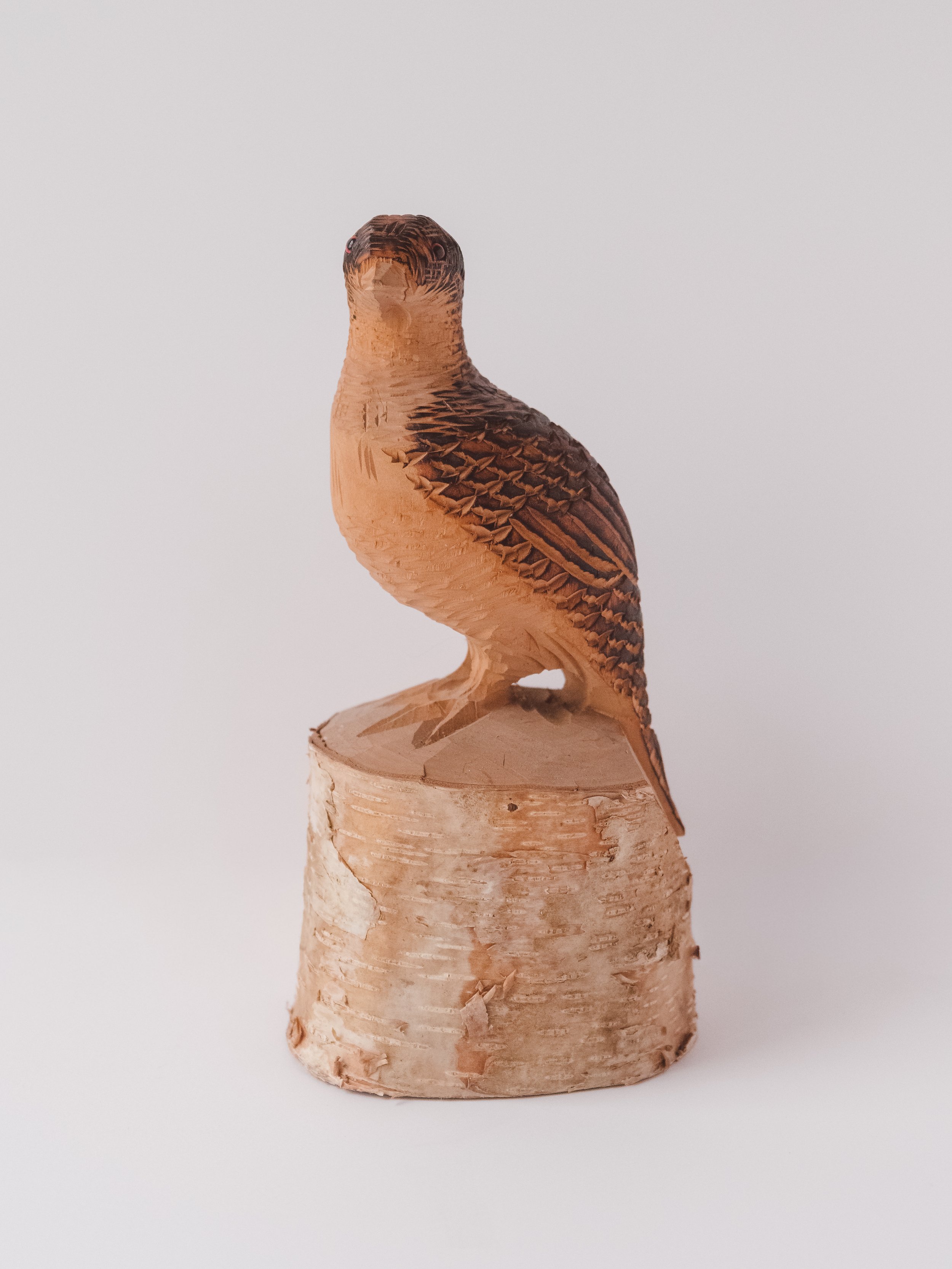 Image 8 of 15
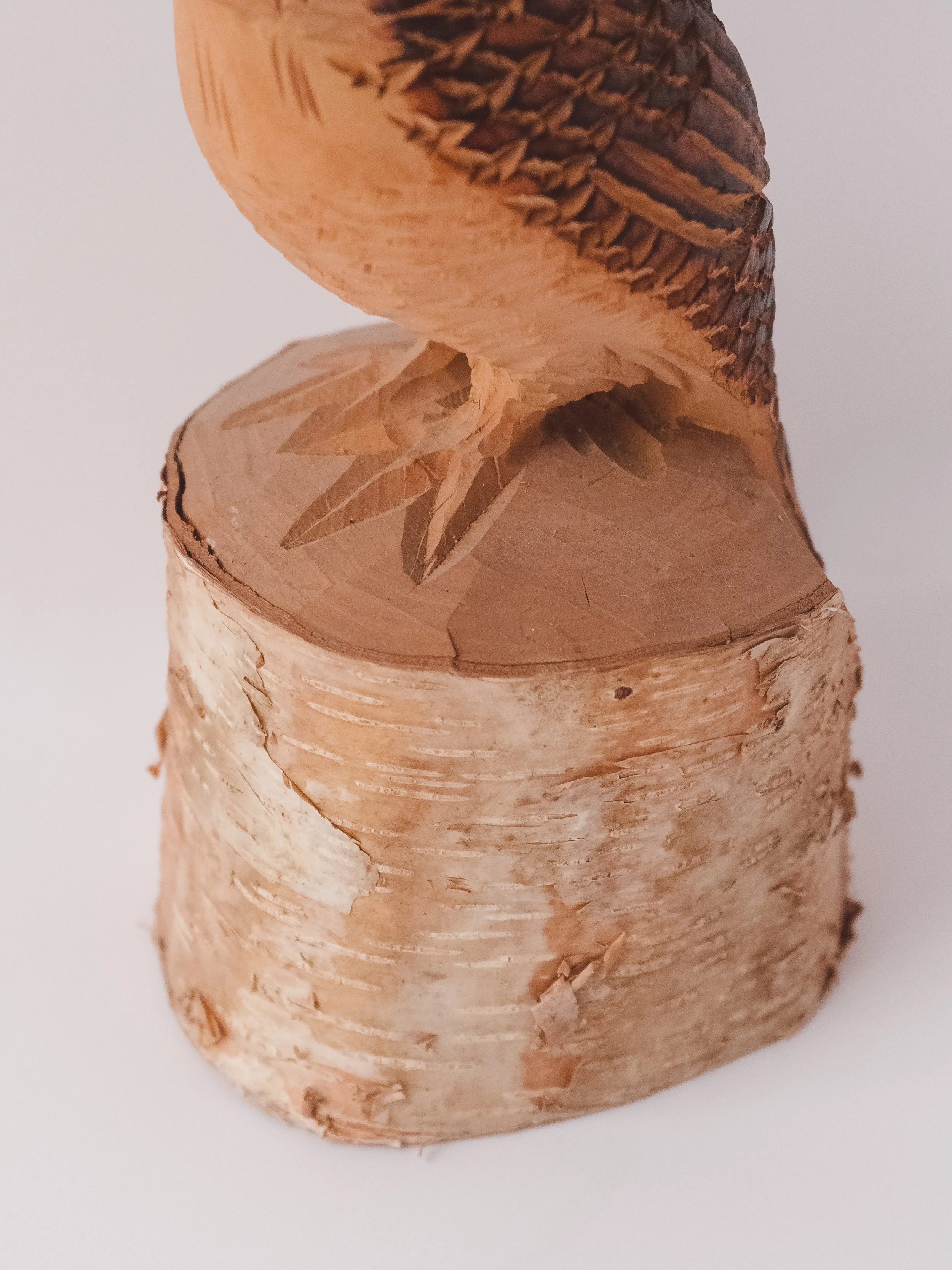 Image 9 of 15
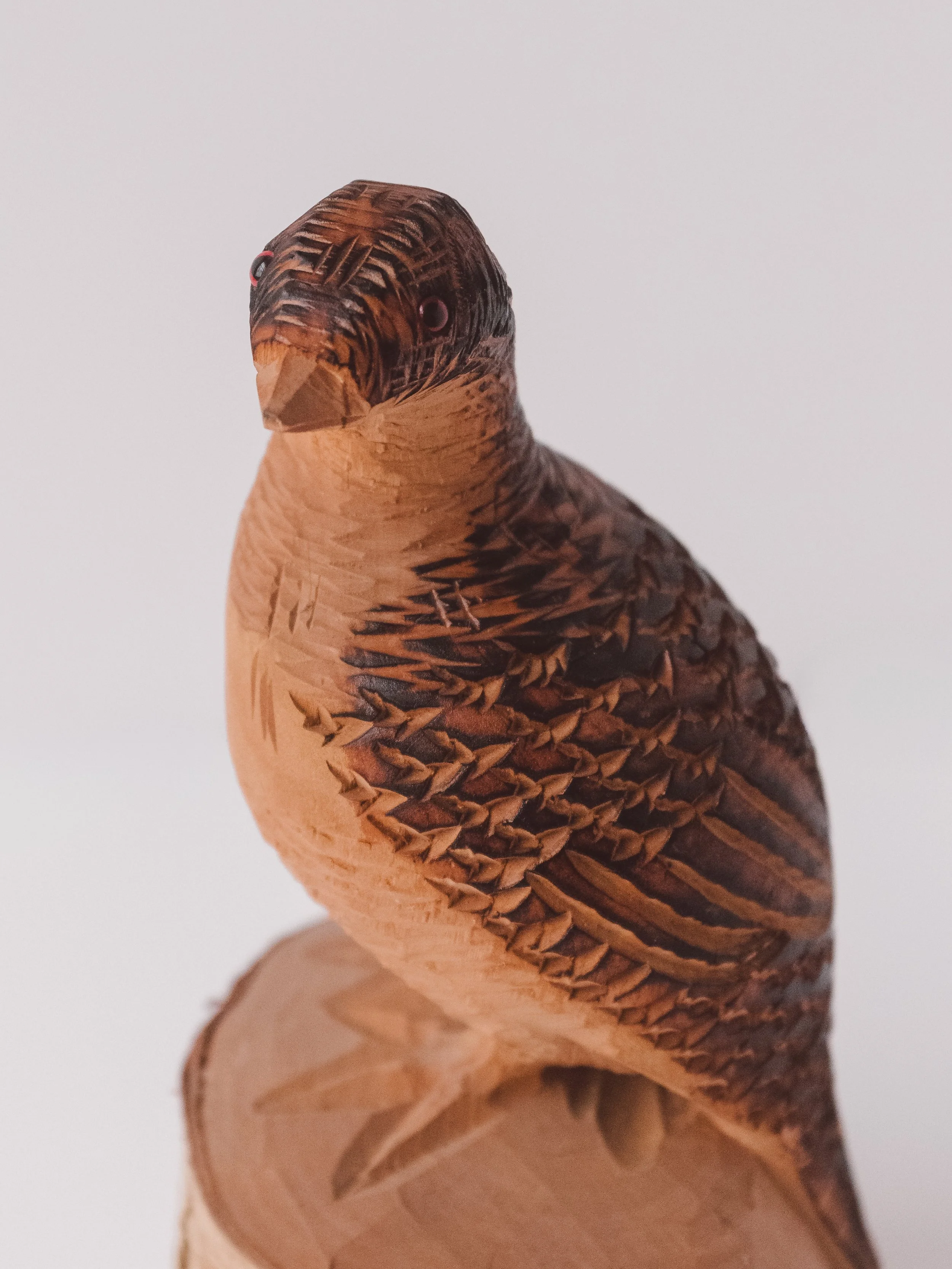 Image 10 of 15
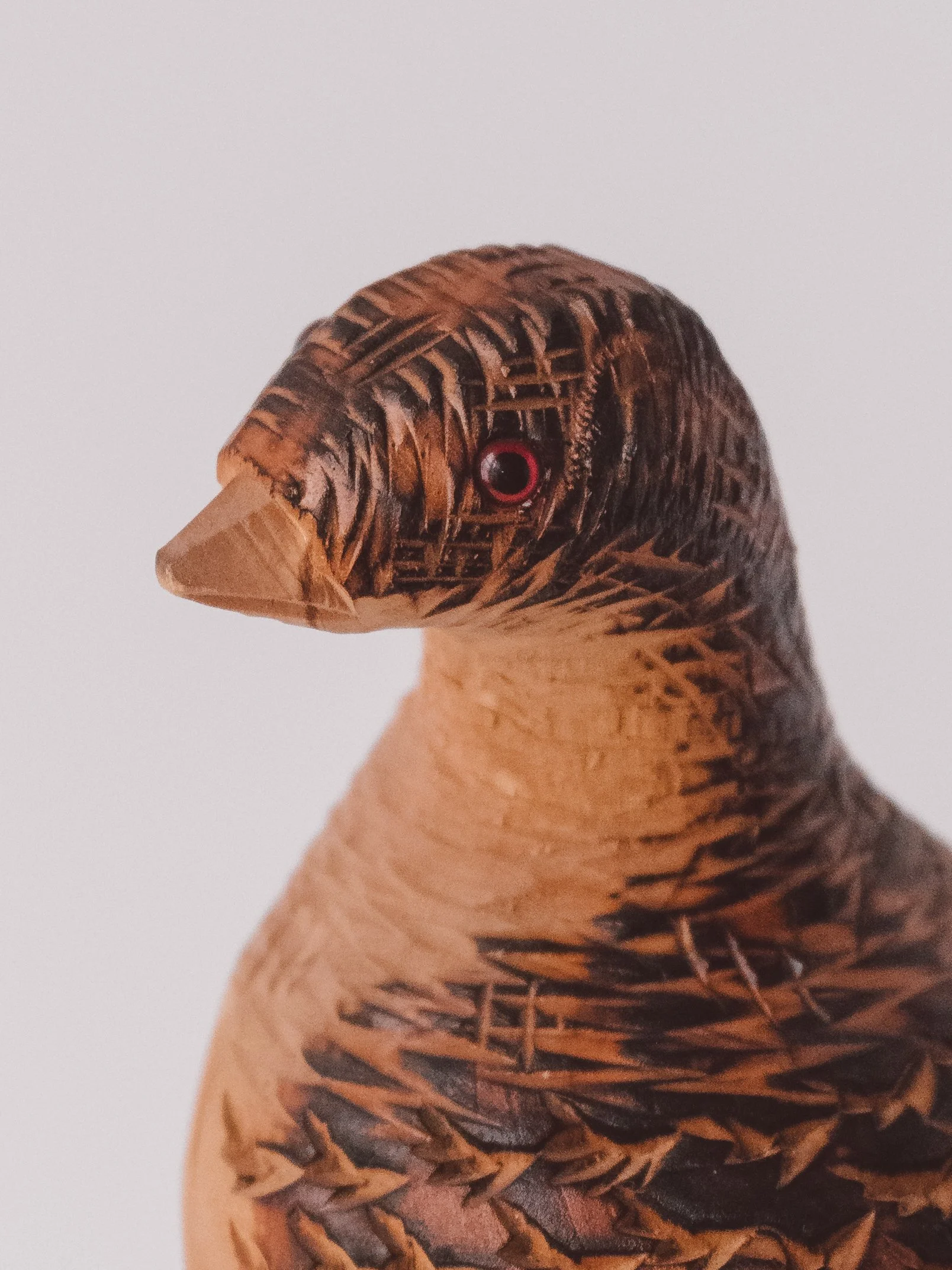 Image 11 of 15
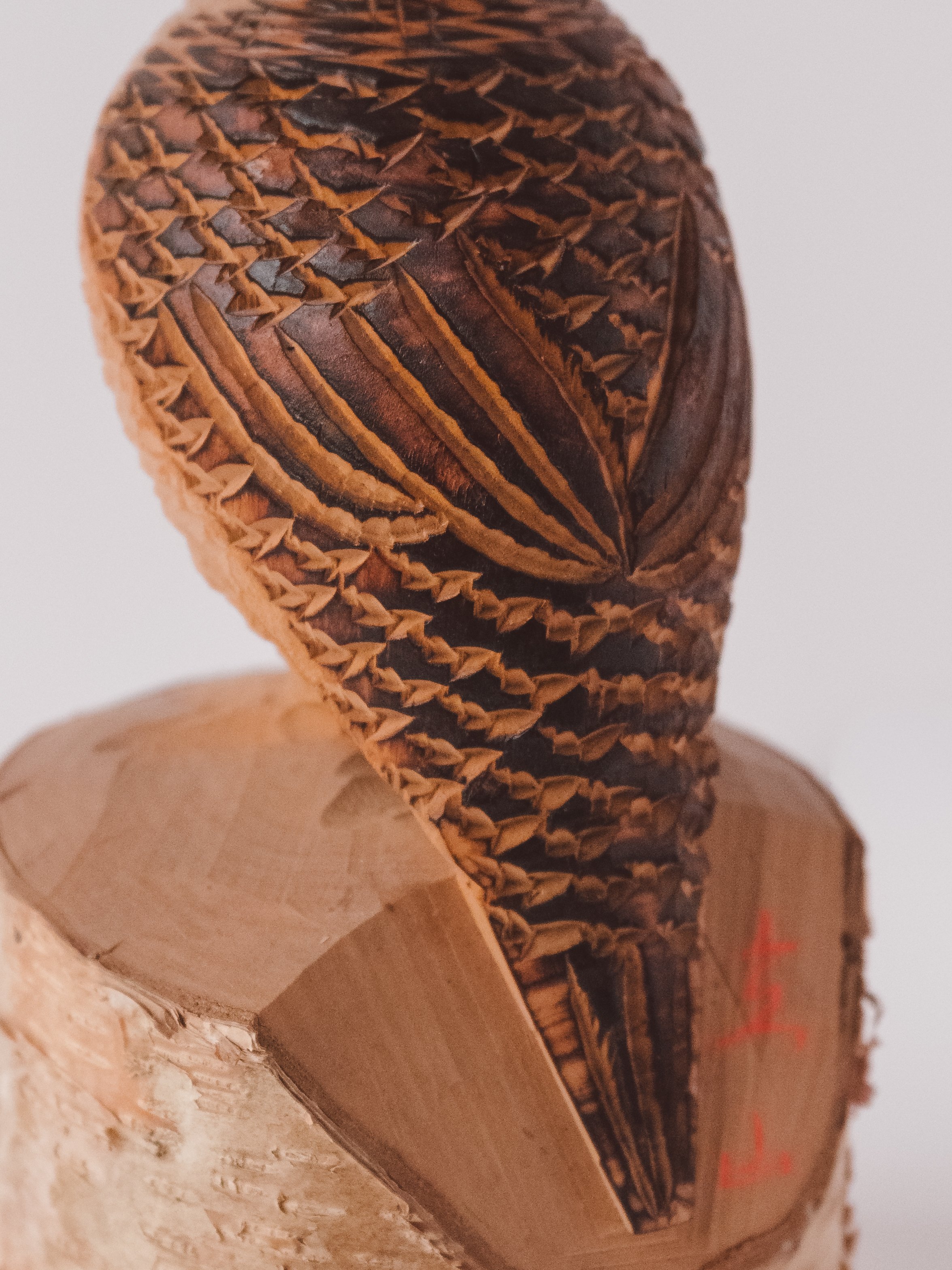 Image 12 of 15
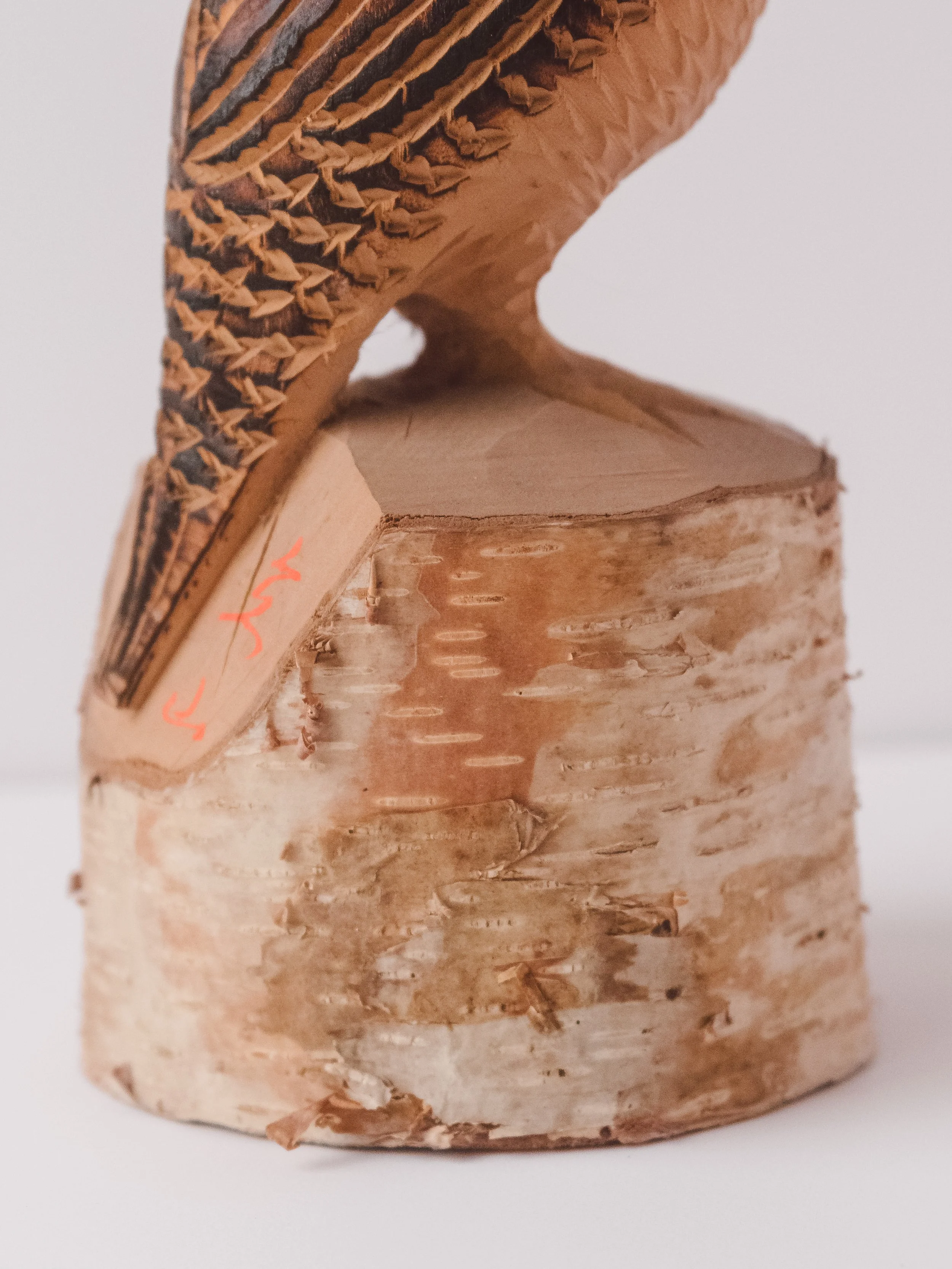 Image 13 of 15
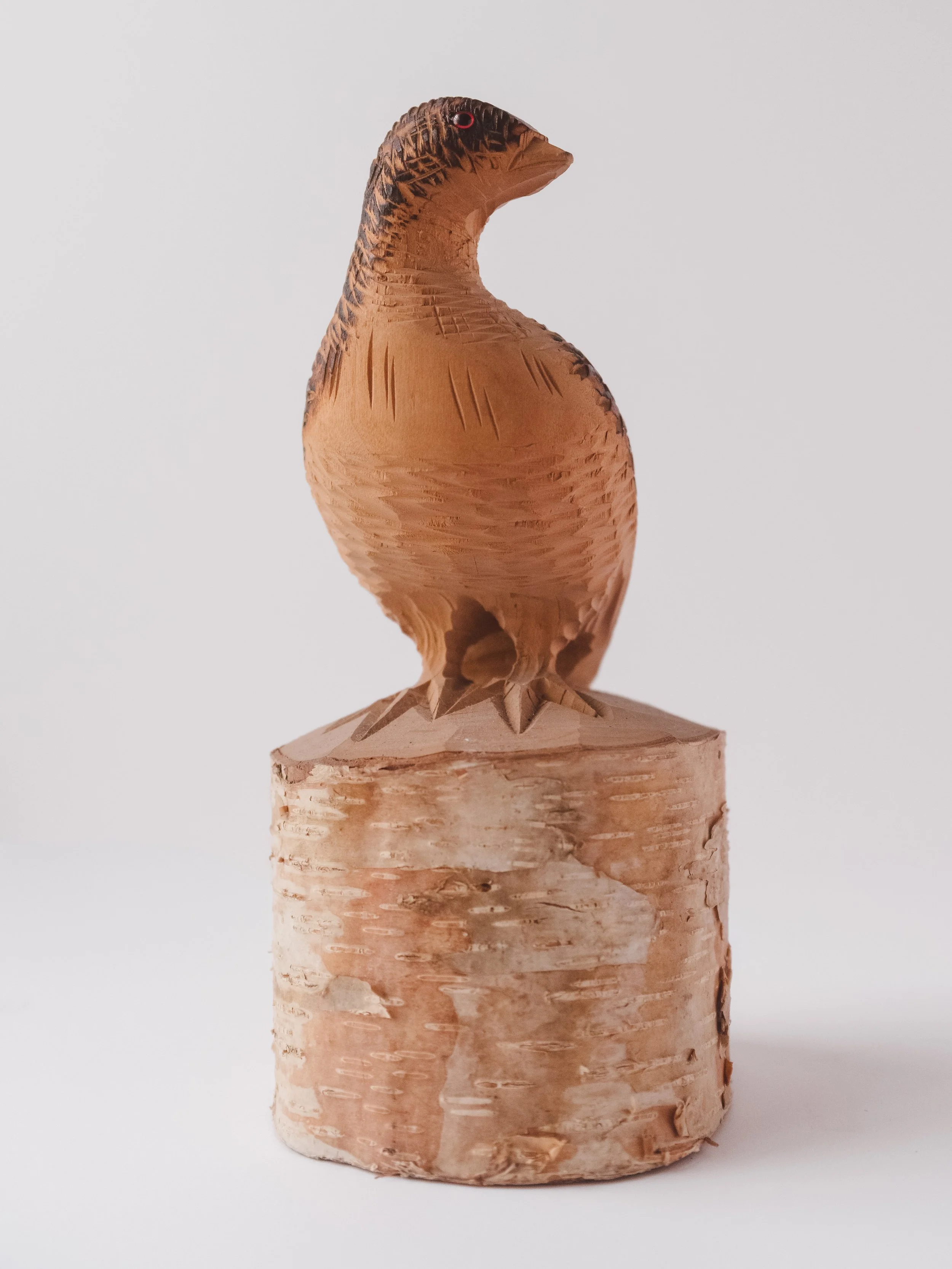 Image 14 of 15
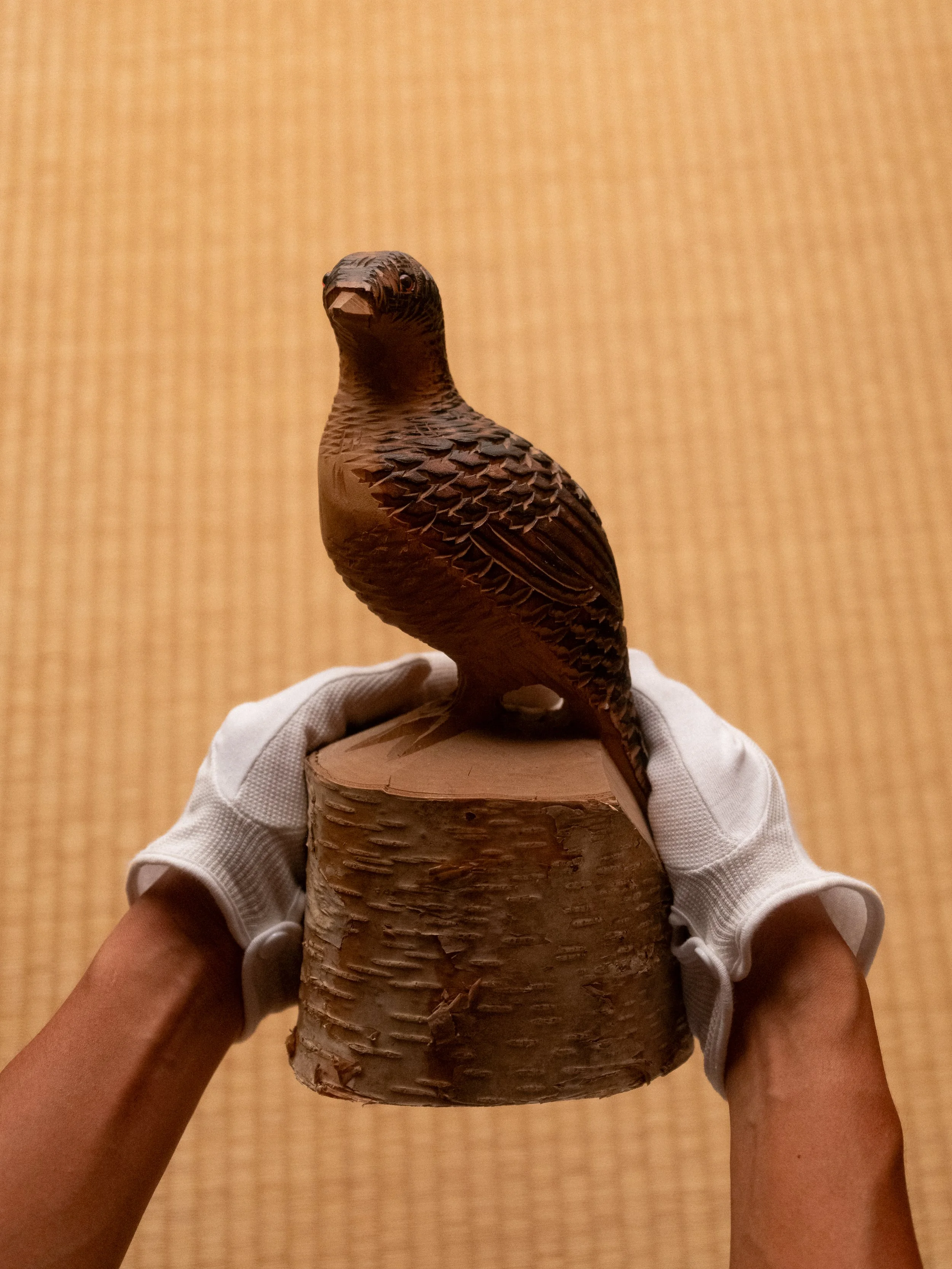 Image 15 of 15