【 The Concept 】
The only figure in this archive with more than two arms. Six bodhisattvas have come before it — all of them with a single pair of hands, offering, praying, carrying a staff. This one has many. Two palms press together at the center of the chest in the ordinary gesture of prayer, and from behind them a fan of further arms opens outward on both sides, each hand holding a different implement, spreading around the body like the spokes of a wheel.
This is the thousand-armed form of the bodhisattva of compassion. The name is literal in intent and figurative in execution: a being who vowed to reach every suffering thing in every world, and who therefore needed a hand for each of them. Sculpture cannot show a thousand arms, so the tradition settled on a countable number that stands in for the uncountable one — the many reading as the infinite. Each hand holds a specific tool of rescue: a wheel, a lotus, a small ringed staff, a rope, a jewel. The figure is not one act of mercy but a whole apparatus of it, every arm assigned a different way of reaching a different kind of need.
Above the face, the crown rises into a stack of small heads — more faces, tiered upward, so the figure watches in more directions than one face could. Many arms to reach, many faces to see. The two central hands, folded in prayer, hold still at the center of all that reaching, and that stillness is the point: the figure teaches by praying while it saves, showing that mercy given and mercy asked for are the same gesture.
【 The Function 】
722 grams, 15 centimeters tall, 7 centimeters wide. Cast alloy, hollow, seated in a full cross-legged posture on a tiered lotus pedestal that lifts it well clear of the surface. Behind it stands a tall pointed halo, and the whole assembly — figure, pedestal, halo — stacks into a single vertical drop shape, wide at the lotus and tapering to the halo's point.
A figure of this kind was made as a personal devotional object — a household altar piece, kept at eye level in a quiet corner and faced daily. In one tradition it is also the guardian assigned to a particular birth-year, a protector chosen to accompany one person through a life. At 15 centimeters and comfortably under a kilogram, it is sized for exactly that: not a temple fixture but a private one, small enough to live on a shelf and be looked at every day.
【 The Texture 】
Dark antique gold rather than bright plating — the deep, dimmed, brown-gold of BRONZE DEVOTION and FOURFOLD REFUGE, not the clean shine of GILT MERCY or BUDDING STEM. The recesses have gone nearly to bronze-black, and gold survives on the raised edges: the ridges of the crown, the rim of the halo, the crest of each folded robe, the outermost knuckles of the many hands. The effect is depth. On a figure this crowded with detail — dozens of arms, a stack of faces, a pierced halo, a layered pedestal — the darkened recesses are what let the eye separate one element from the next. Bright uniform gold would collapse it into glare; the aged tone pulls every arm forward out of its own shadow.
The halo is openwork, pierced through with a ring of scrollwork around a central disc, so light passes behind the head. The pedestal is a stack: an octagonal base, a downturned tier of lotus petals, an upturned tier above it, and the seated figure resting on the topmost bloom. The many arms carry the finest detail — each small hand distinctly formed, each tiny implement legible, cast cleanly enough that a wheel reads as a wheel and a lotus as a lotus at this scale.
【 Presence 】
The other devotional figures in the archive are studies in singleness — one gesture, held. GILT MERCY offers. BRONZE DEVOTION prays. RADIANT EMISSARY carries. BUDDING STEM holds a bud. Each says one thing clearly. This figure says everything at once. It is the crowded one, the maximal one, the one whose entire argument is abundance — more arms than you can count on a first look, more faces than one head should hold, more tools of help than any single situation could need.
And yet the center of it is completely still. Under the fan of arms and the tower of faces, the two main hands are simply folded in prayer, and the face beneath the stacked crown is calm, eyes lowered, entirely composed. That is the whole design in one contrast: infinite reach organized around a still center. The figure promises to meet every need in every direction and does so from a posture of complete quiet — the most active mercy in the archive, sitting perfectly still to give it.
Sourced from a private collection in the Shikoku region, Japan.
【 The Concept 】
The only figure in this archive with more than two arms. Six bodhisattvas have come before it — all of them with a single pair of hands, offering, praying, carrying a staff. This one has many. Two palms press together at the center of the chest in the ordinary gesture of prayer, and from behind them a fan of further arms opens outward on both sides, each hand holding a different implement, spreading around the body like the spokes of a wheel.
This is the thousand-armed form of the bodhisattva of compassion. The name is literal in intent and figurative in execution: a being who vowed to reach every suffering thing in every world, and who therefore needed a hand for each of them. Sculpture cannot show a thousand arms, so the tradition settled on a countable number that stands in for the uncountable one — the many reading as the infinite. Each hand holds a specific tool of rescue: a wheel, a lotus, a small ringed staff, a rope, a jewel. The figure is not one act of mercy but a whole apparatus of it, every arm assigned a different way of reaching a different kind of need.
Above the face, the crown rises into a stack of small heads — more faces, tiered upward, so the figure watches in more directions than one face could. Many arms to reach, many faces to see. The two central hands, folded in prayer, hold still at the center of all that reaching, and that stillness is the point: the figure teaches by praying while it saves, showing that mercy given and mercy asked for are the same gesture.
【 The Function 】
722 grams, 15 centimeters tall, 7 centimeters wide. Cast alloy, hollow, seated in a full cross-legged posture on a tiered lotus pedestal that lifts it well clear of the surface. Behind it stands a tall pointed halo, and the whole assembly — figure, pedestal, halo — stacks into a single vertical drop shape, wide at the lotus and tapering to the halo's point.
A figure of this kind was made as a personal devotional object — a household altar piece, kept at eye level in a quiet corner and faced daily. In one tradition it is also the guardian assigned to a particular birth-year, a protector chosen to accompany one person through a life. At 15 centimeters and comfortably under a kilogram, it is sized for exactly that: not a temple fixture but a private one, small enough to live on a shelf and be looked at every day.
【 The Texture 】
Dark antique gold rather than bright plating — the deep, dimmed, brown-gold of BRONZE DEVOTION and FOURFOLD REFUGE, not the clean shine of GILT MERCY or BUDDING STEM. The recesses have gone nearly to bronze-black, and gold survives on the raised edges: the ridges of the crown, the rim of the halo, the crest of each folded robe, the outermost knuckles of the many hands. The effect is depth. On a figure this crowded with detail — dozens of arms, a stack of faces, a pierced halo, a layered pedestal — the darkened recesses are what let the eye separate one element from the next. Bright uniform gold would collapse it into glare; the aged tone pulls every arm forward out of its own shadow.
The halo is openwork, pierced through with a ring of scrollwork around a central disc, so light passes behind the head. The pedestal is a stack: an octagonal base, a downturned tier of lotus petals, an upturned tier above it, and the seated figure resting on the topmost bloom. The many arms carry the finest detail — each small hand distinctly formed, each tiny implement legible, cast cleanly enough that a wheel reads as a wheel and a lotus as a lotus at this scale.
【 Presence 】
The other devotional figures in the archive are studies in singleness — one gesture, held. GILT MERCY offers. BRONZE DEVOTION prays. RADIANT EMISSARY carries. BUDDING STEM holds a bud. Each says one thing clearly. This figure says everything at once. It is the crowded one, the maximal one, the one whose entire argument is abundance — more arms than you can count on a first look, more faces than one head should hold, more tools of help than any single situation could need.
And yet the center of it is completely still. Under the fan of arms and the tower of faces, the two main hands are simply folded in prayer, and the face beneath the stacked crown is calm, eyes lowered, entirely composed. That is the whole design in one contrast: infinite reach organized around a still center. The figure promises to meet every need in every direction and does so from a posture of complete quiet — the most active mercy in the archive, sitting perfectly still to give it.
Sourced from a private collection in the Shikoku region, Japan.


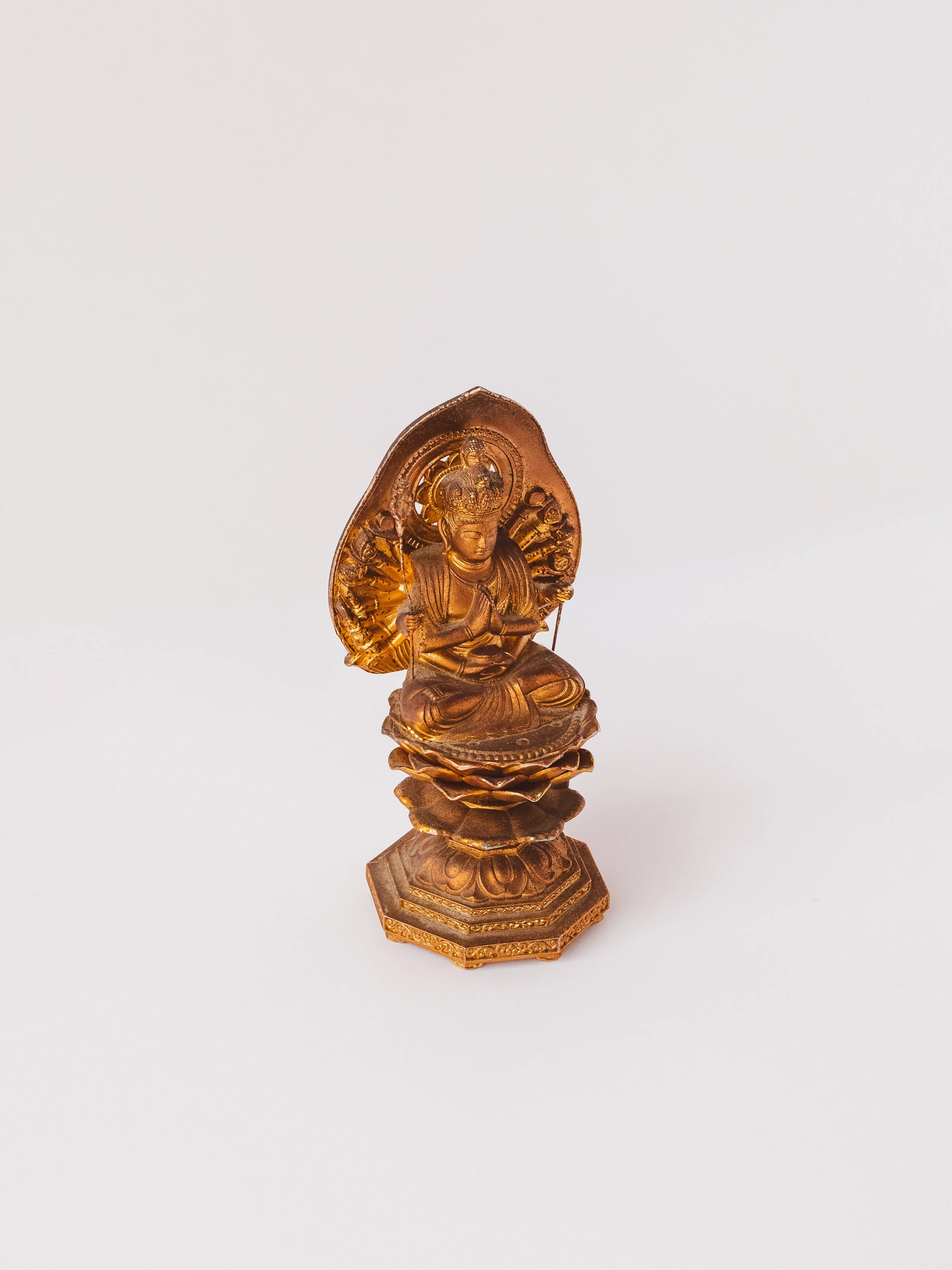 Image 1 of 9
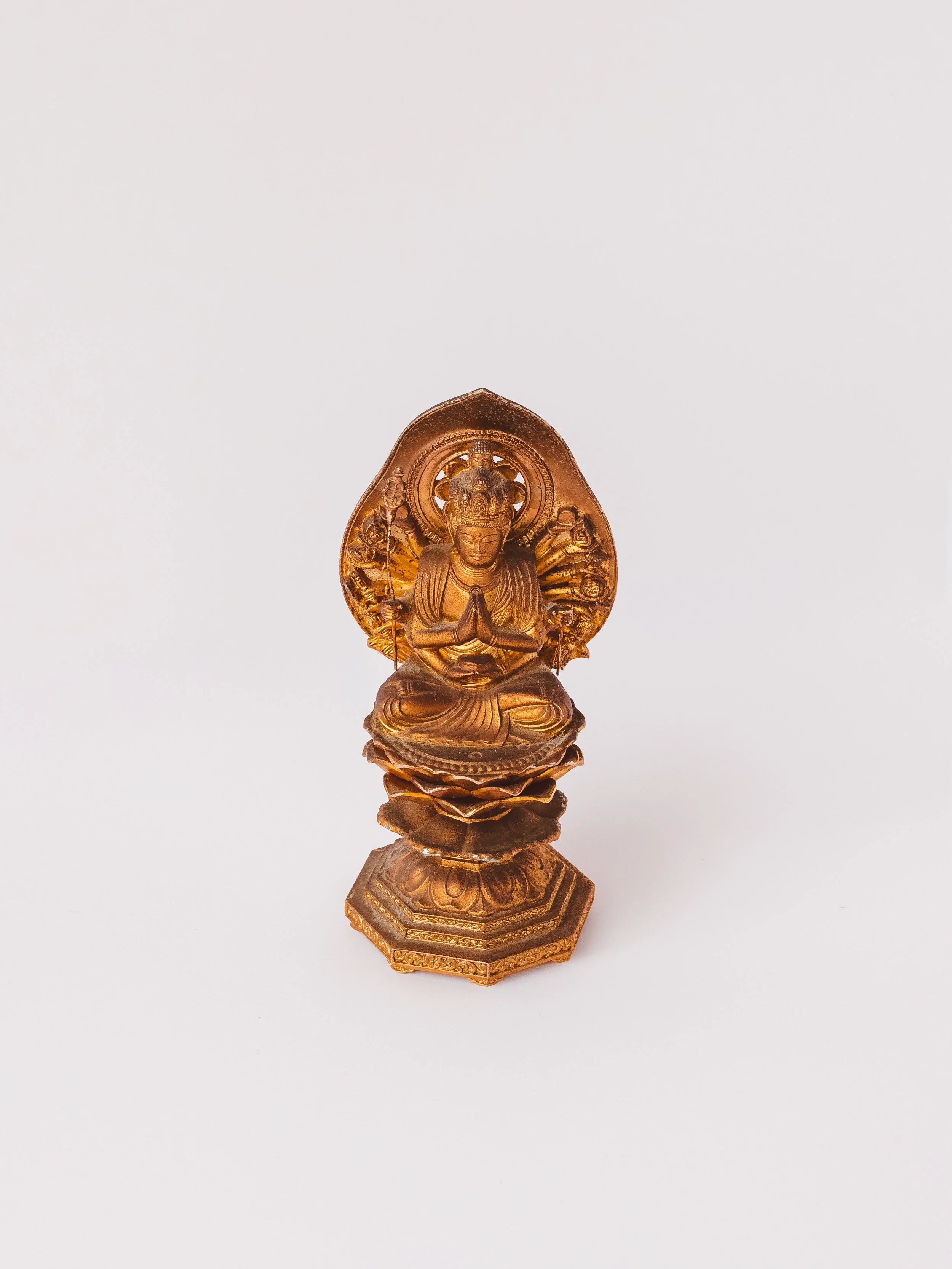 Image 2 of 9
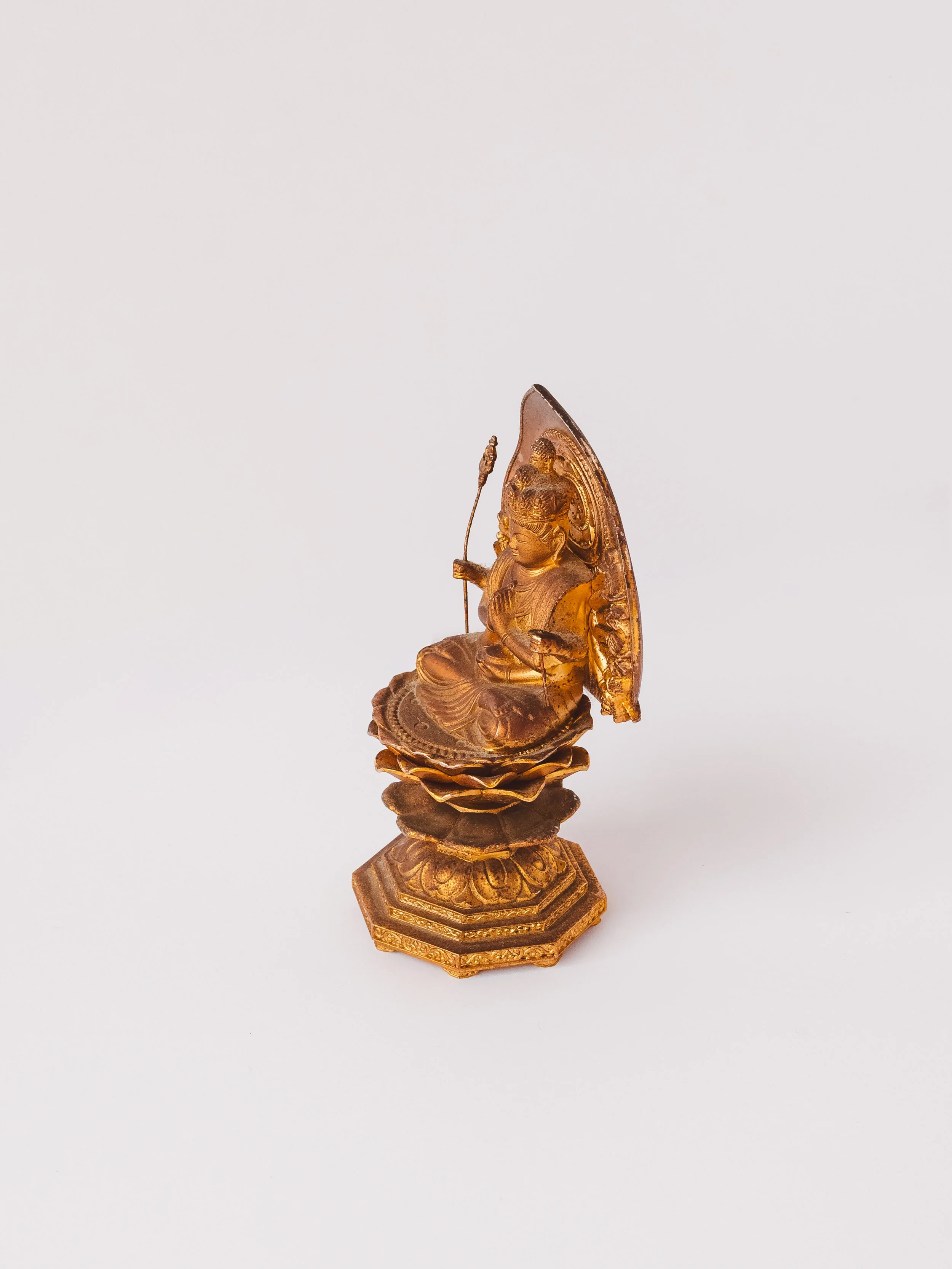 Image 3 of 9
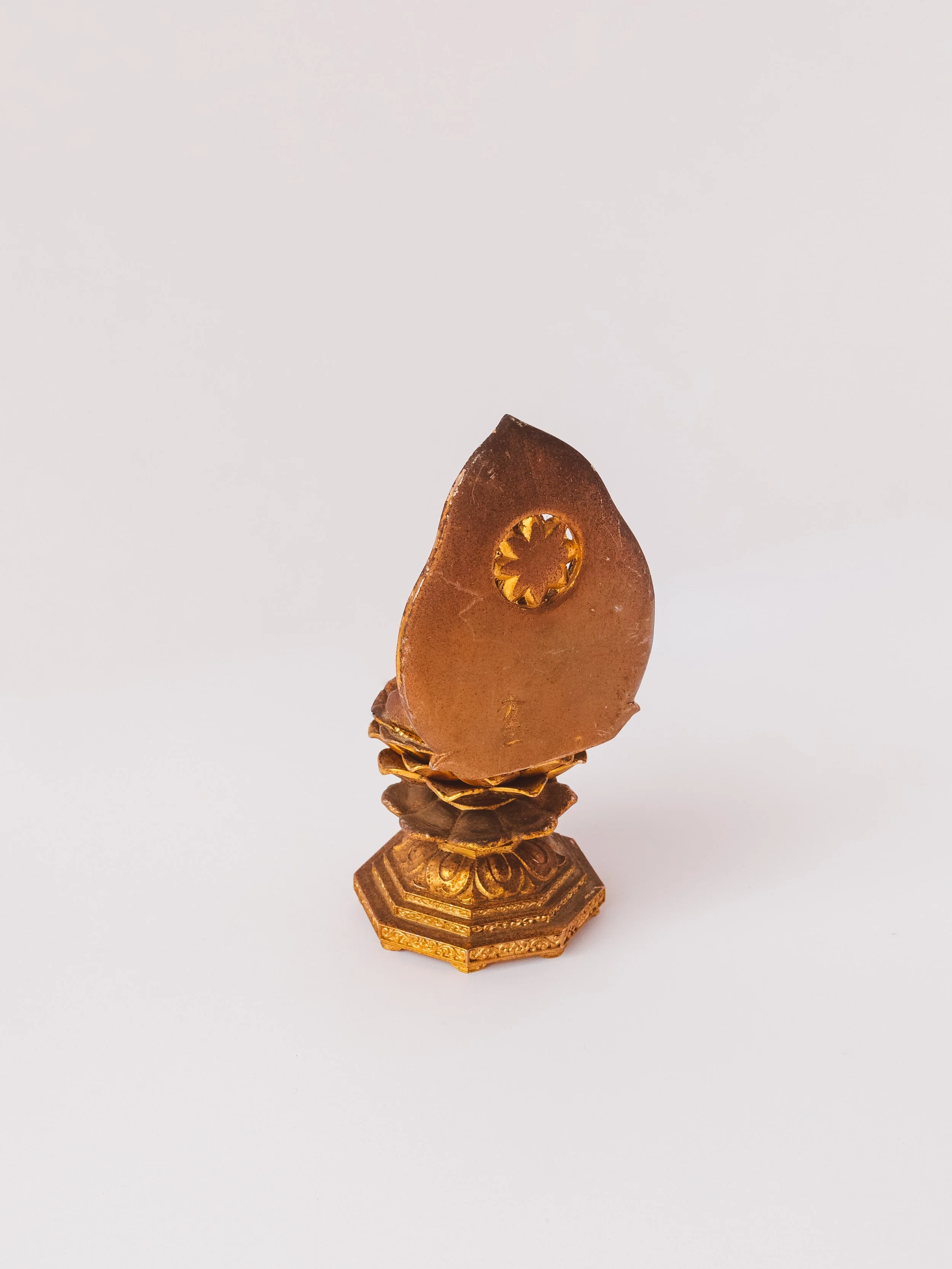 Image 4 of 9
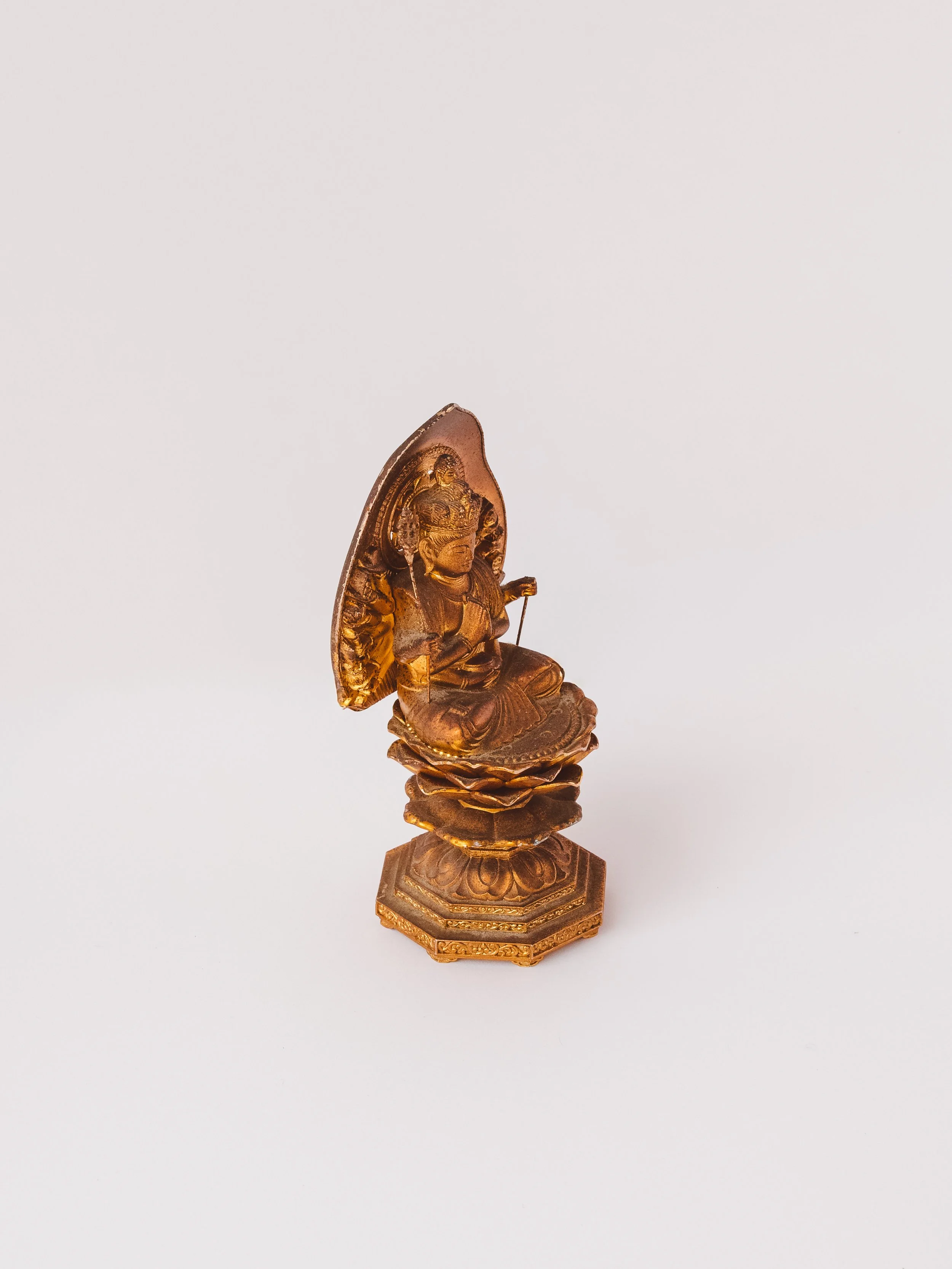 Image 5 of 9
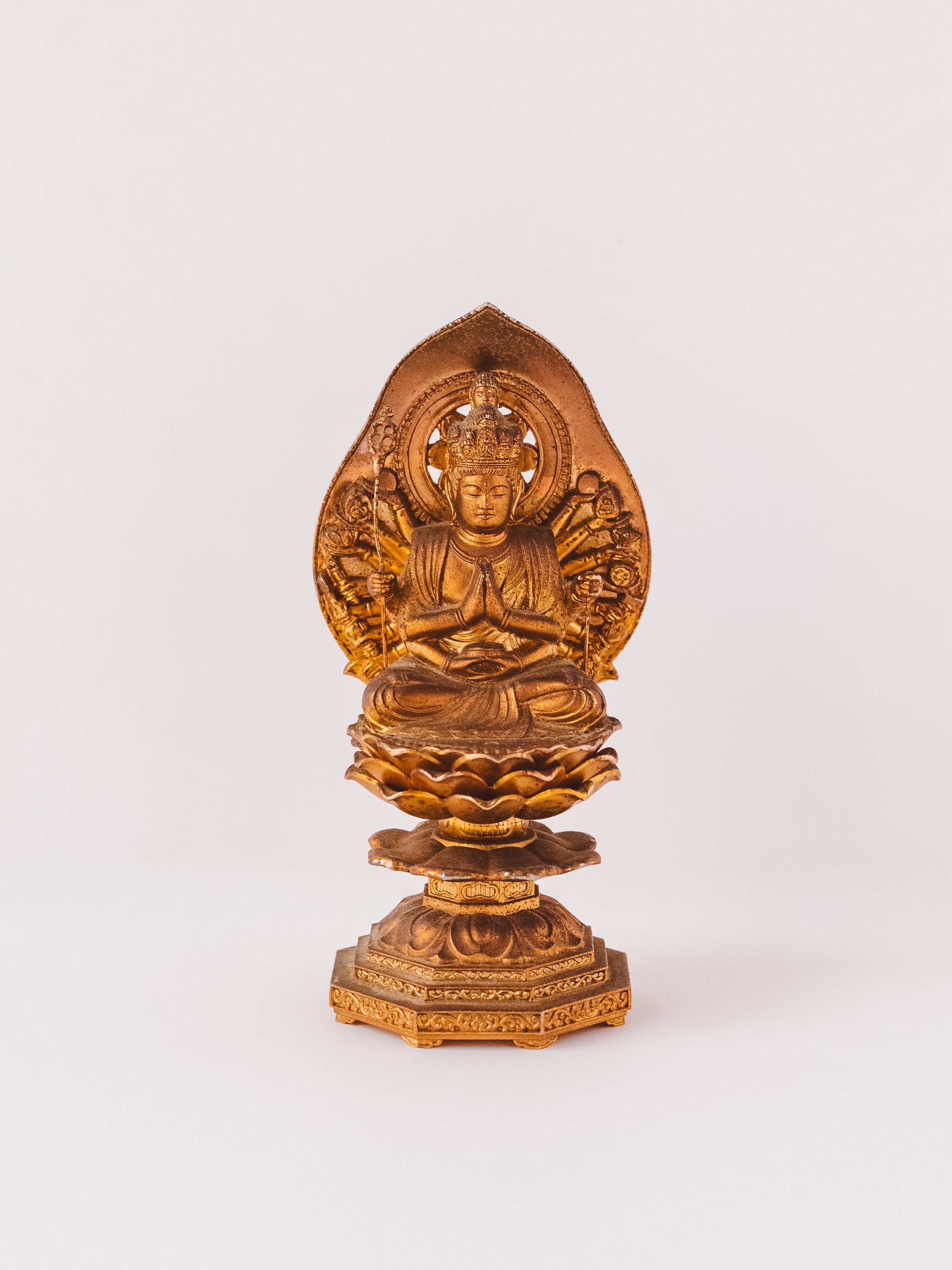 Image 6 of 9
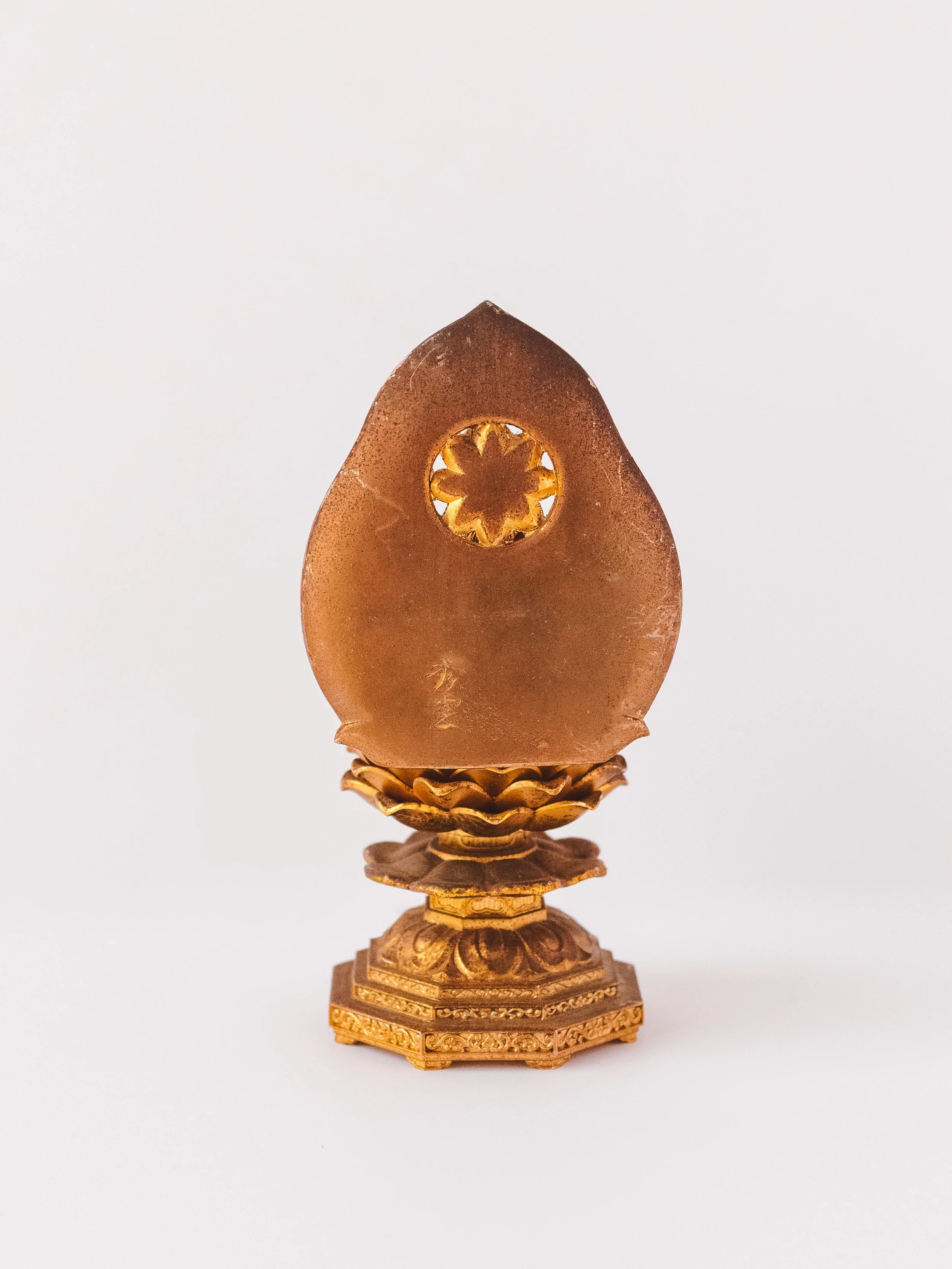 Image 7 of 9
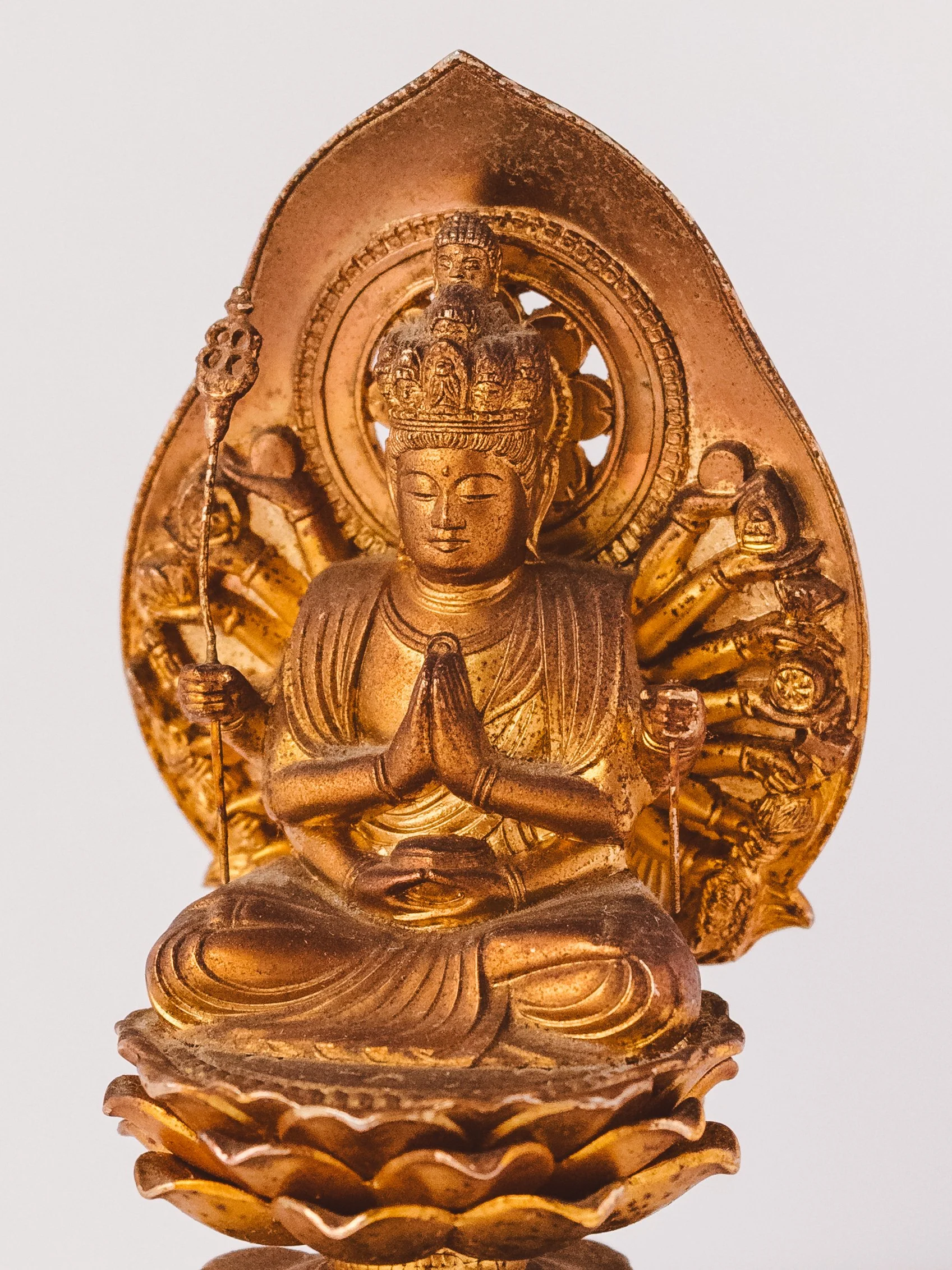 Image 8 of 9
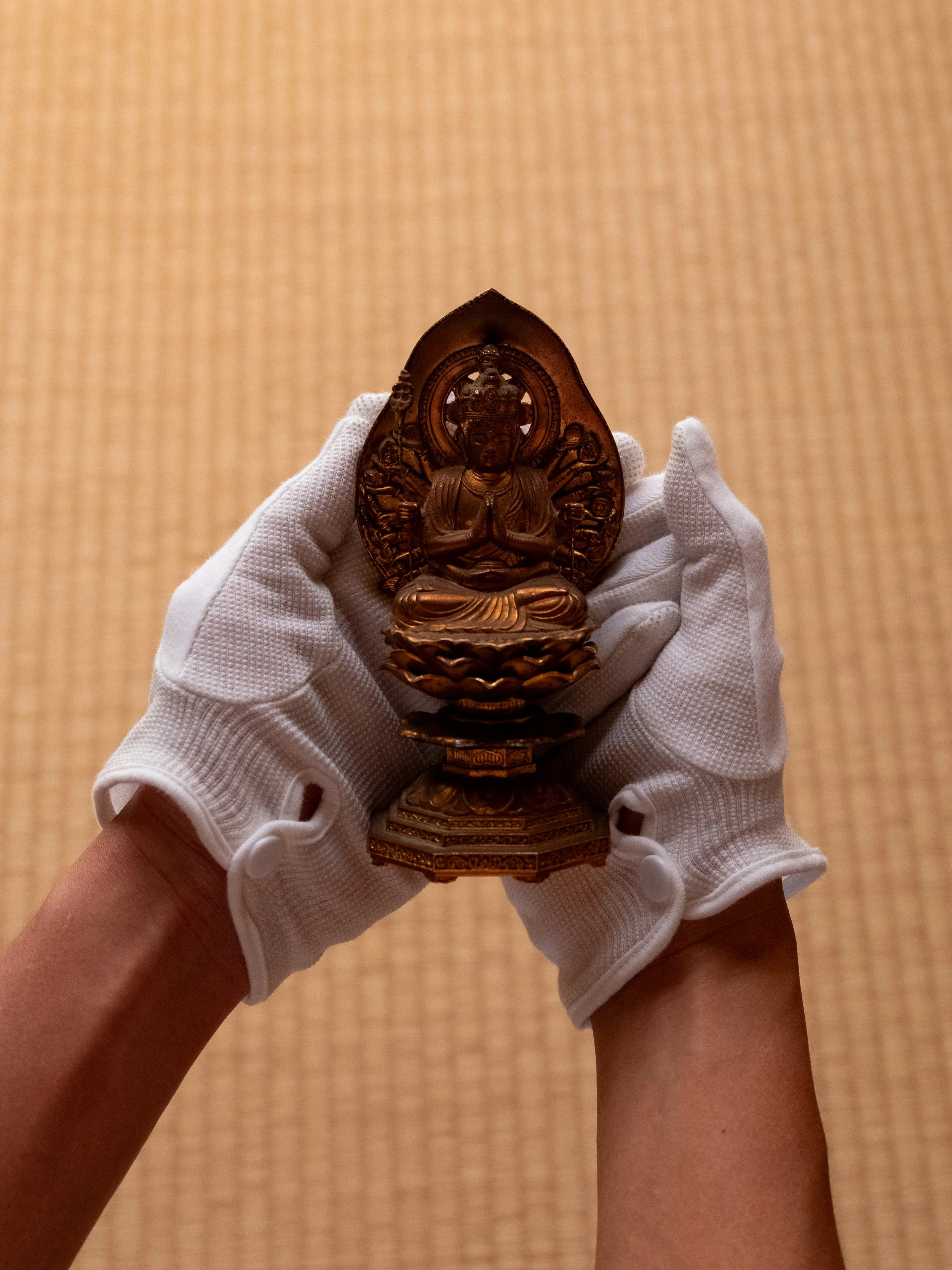 Image 9 of 9