【 The Concept 】
A cat with both hands raised, palms forward, fingers curled inward in the ancient gesture of summoning. In most traditions, one hand calls money and the other calls people. This figure raises both at once — an act considered by some to be greed, by others to be ambition, and by its maker simply good design. The eyes are open and level, looking straight ahead with a calm, unblinking directness that does not beg or plead. It knows what it is asking for.
The entire body is sealed in a mirror-finish gold coating that reflects the room back at itself. This is not paint. It is not lacquer. It is a metallic surface that functions like a lens — bending light, doubling the space it sits in, and refusing to absorb anything. Against the right side of its body, the figure cradles a large oval coin inscribed with characters that translate loosely to "ten million" — not a real denomination, but a wish rendered in text. A slot in the back of the head accepts real coins. The bottom once held a removable cap for retrieval — now missing, leaving a circular opening in the base. What was once a sealed vessel of accumulation is now open at both ends: wealth enters from above and, if unchecked, passes straight through.
【 The Function 】
236 grams of ceramic, hollow, with a coin slot at the crown and an open base where a cap once sat. It is a piggy bank that has outlived its closure — still capable of receiving, no longer capable of holding. In its original context, figures like this were placed near cash registers, on shop counters, and inside entryways, always facing the door, always beckoning inward. The broad, flat base and low center of gravity keep it upright without effort. Even without its bottom cap, the gesture remains: both hands raised, still summoning, still open for business.
【 The Texture 】
Gold from every angle. The surface is a continuous metallic shell — smooth, cold, and reflective enough to catch your own distorted outline if you lean close. It photographs brighter than it appears in person, because the coating throws back whatever light source hits it. The only breaks in the gold are deliberate: red inside the ears, a red collar at the throat, a green bib below it edged in yellow, and a painted bell at the center of the chest with a white highlight to simulate reflected light on metal. The coin pressed against the body carries its inscription in bold black strokes on gold ground, bordered by a thin red line. Every accent color is placed at a sensory threshold — ears, throat, chest — as though marking the points where the figure listens, speaks, and feels.
【 Presence 】
Gold is difficult to ignore, and a mirror surface even more so. Place this figure on a shelf and it becomes the brightest point in the room, not because it generates light but because it gathers it. The raised hands, the steady forward gaze, and the oversized coin create a composition that is simultaneously earnest and absurd — a prayer for infinite wealth delivered with complete composure by a ceramic cat. That tension between the sacred and the ridiculous is precisely what has kept this form in production for over a century. It does not pretend to be subtle. It asks for everything, openly, with both hands up.
Sourced from a private collection in the Kansai region, Japan.
【 The Concept 】
A cat with both hands raised, palms forward, fingers curled inward in the ancient gesture of summoning. In most traditions, one hand calls money and the other calls people. This figure raises both at once — an act considered by some to be greed, by others to be ambition, and by its maker simply good design. The eyes are open and level, looking straight ahead with a calm, unblinking directness that does not beg or plead. It knows what it is asking for.
The entire body is sealed in a mirror-finish gold coating that reflects the room back at itself. This is not paint. It is not lacquer. It is a metallic surface that functions like a lens — bending light, doubling the space it sits in, and refusing to absorb anything. Against the right side of its body, the figure cradles a large oval coin inscribed with characters that translate loosely to "ten million" — not a real denomination, but a wish rendered in text. A slot in the back of the head accepts real coins. The bottom once held a removable cap for retrieval — now missing, leaving a circular opening in the base. What was once a sealed vessel of accumulation is now open at both ends: wealth enters from above and, if unchecked, passes straight through.
【 The Function 】
236 grams of ceramic, hollow, with a coin slot at the crown and an open base where a cap once sat. It is a piggy bank that has outlived its closure — still capable of receiving, no longer capable of holding. In its original context, figures like this were placed near cash registers, on shop counters, and inside entryways, always facing the door, always beckoning inward. The broad, flat base and low center of gravity keep it upright without effort. Even without its bottom cap, the gesture remains: both hands raised, still summoning, still open for business.
【 The Texture 】
Gold from every angle. The surface is a continuous metallic shell — smooth, cold, and reflective enough to catch your own distorted outline if you lean close. It photographs brighter than it appears in person, because the coating throws back whatever light source hits it. The only breaks in the gold are deliberate: red inside the ears, a red collar at the throat, a green bib below it edged in yellow, and a painted bell at the center of the chest with a white highlight to simulate reflected light on metal. The coin pressed against the body carries its inscription in bold black strokes on gold ground, bordered by a thin red line. Every accent color is placed at a sensory threshold — ears, throat, chest — as though marking the points where the figure listens, speaks, and feels.
【 Presence 】
Gold is difficult to ignore, and a mirror surface even more so. Place this figure on a shelf and it becomes the brightest point in the room, not because it generates light but because it gathers it. The raised hands, the steady forward gaze, and the oversized coin create a composition that is simultaneously earnest and absurd — a prayer for infinite wealth delivered with complete composure by a ceramic cat. That tension between the sacred and the ridiculous is precisely what has kept this form in production for over a century. It does not pretend to be subtle. It asks for everything, openly, with both hands up.
Sourced from a private collection in the Kansai region, Japan.


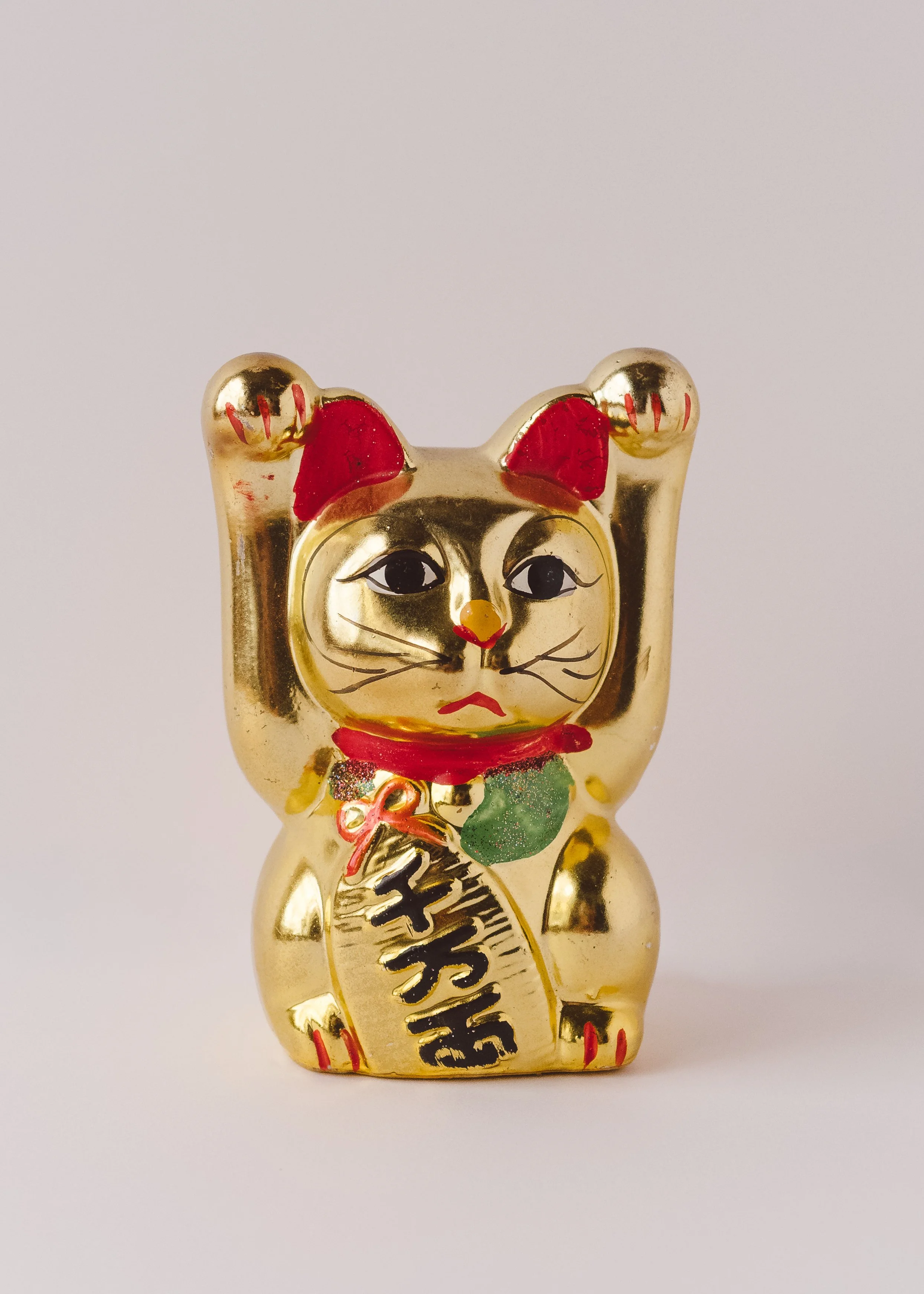 Image 1 of 9
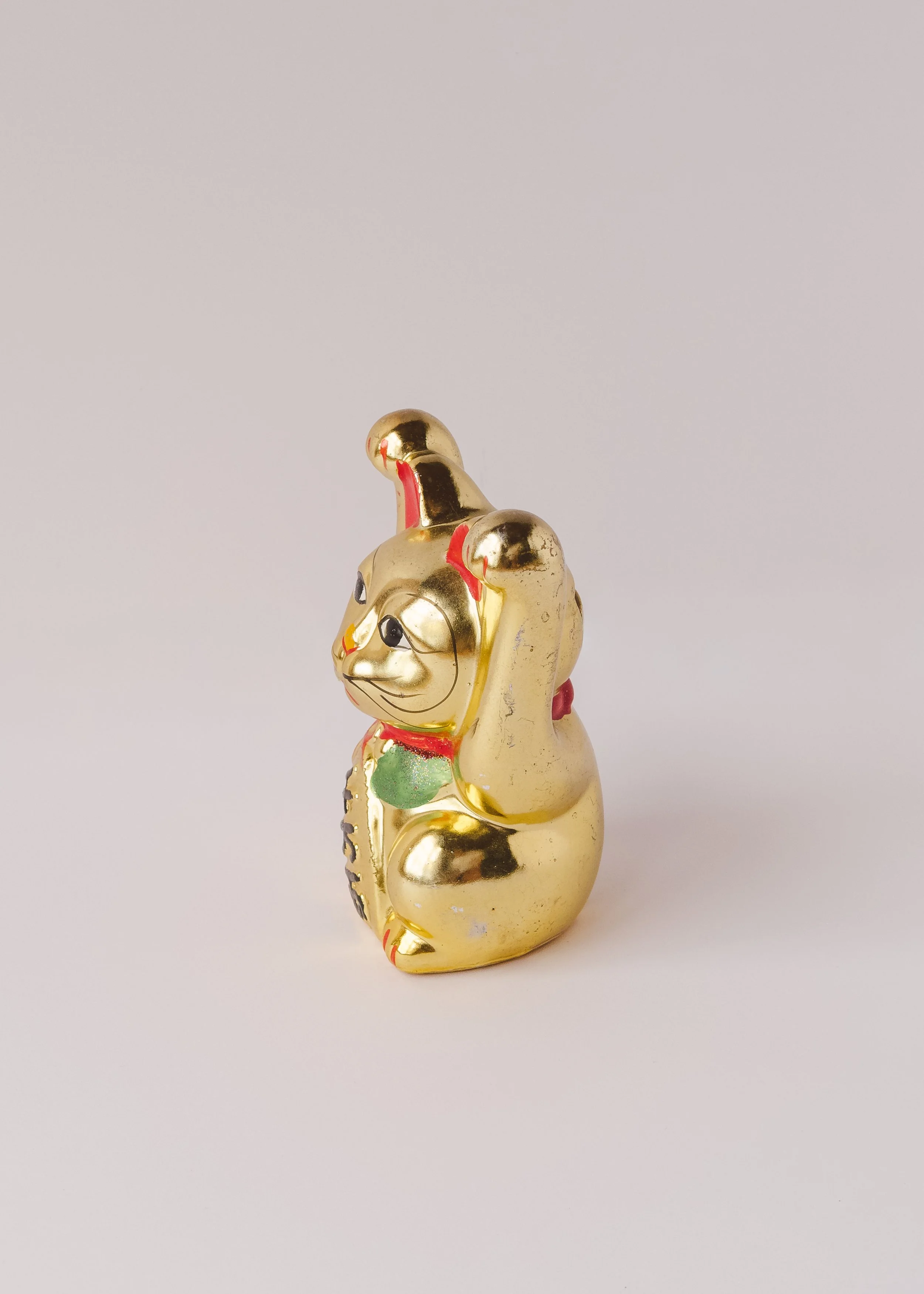 Image 2 of 9
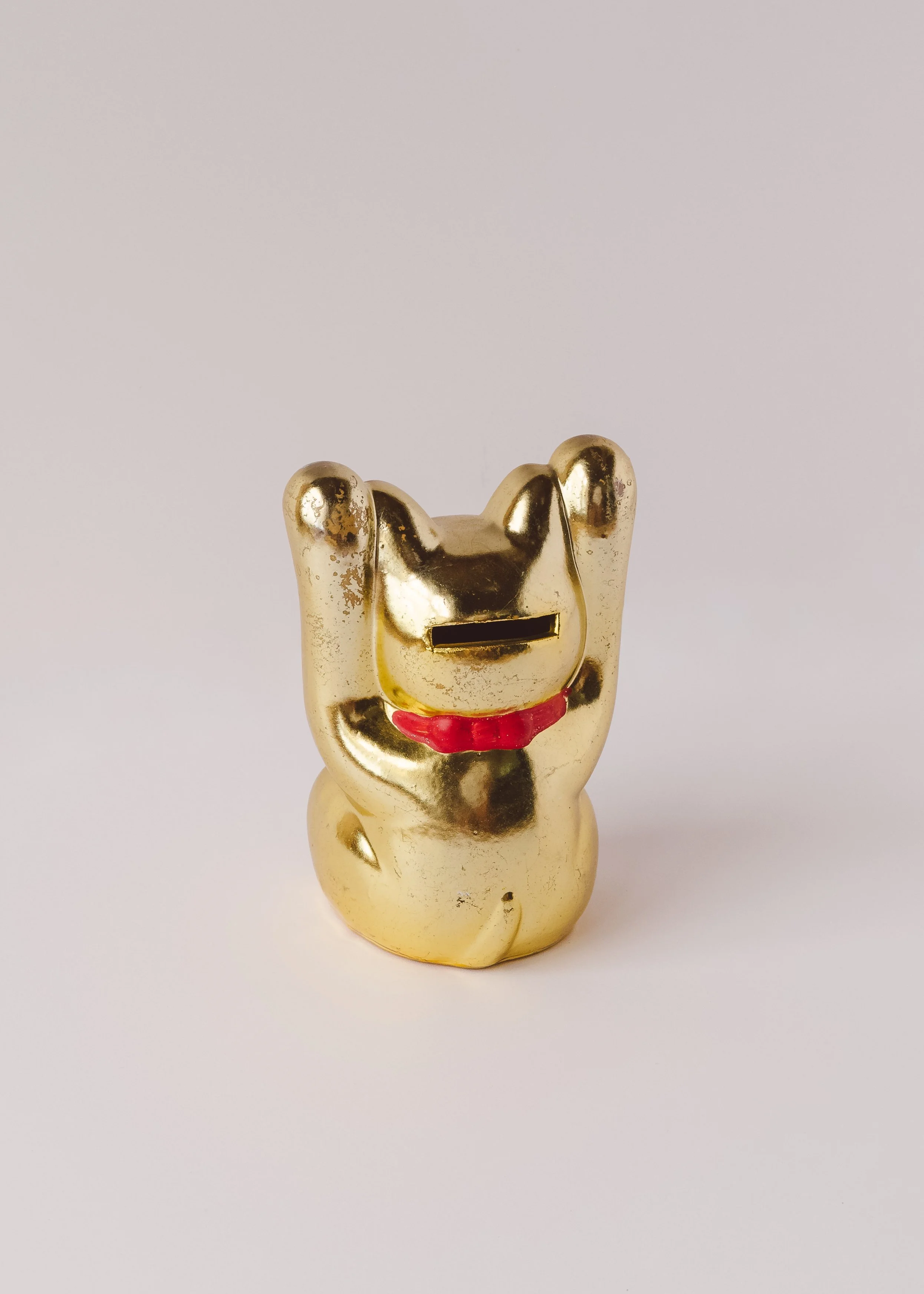 Image 3 of 9
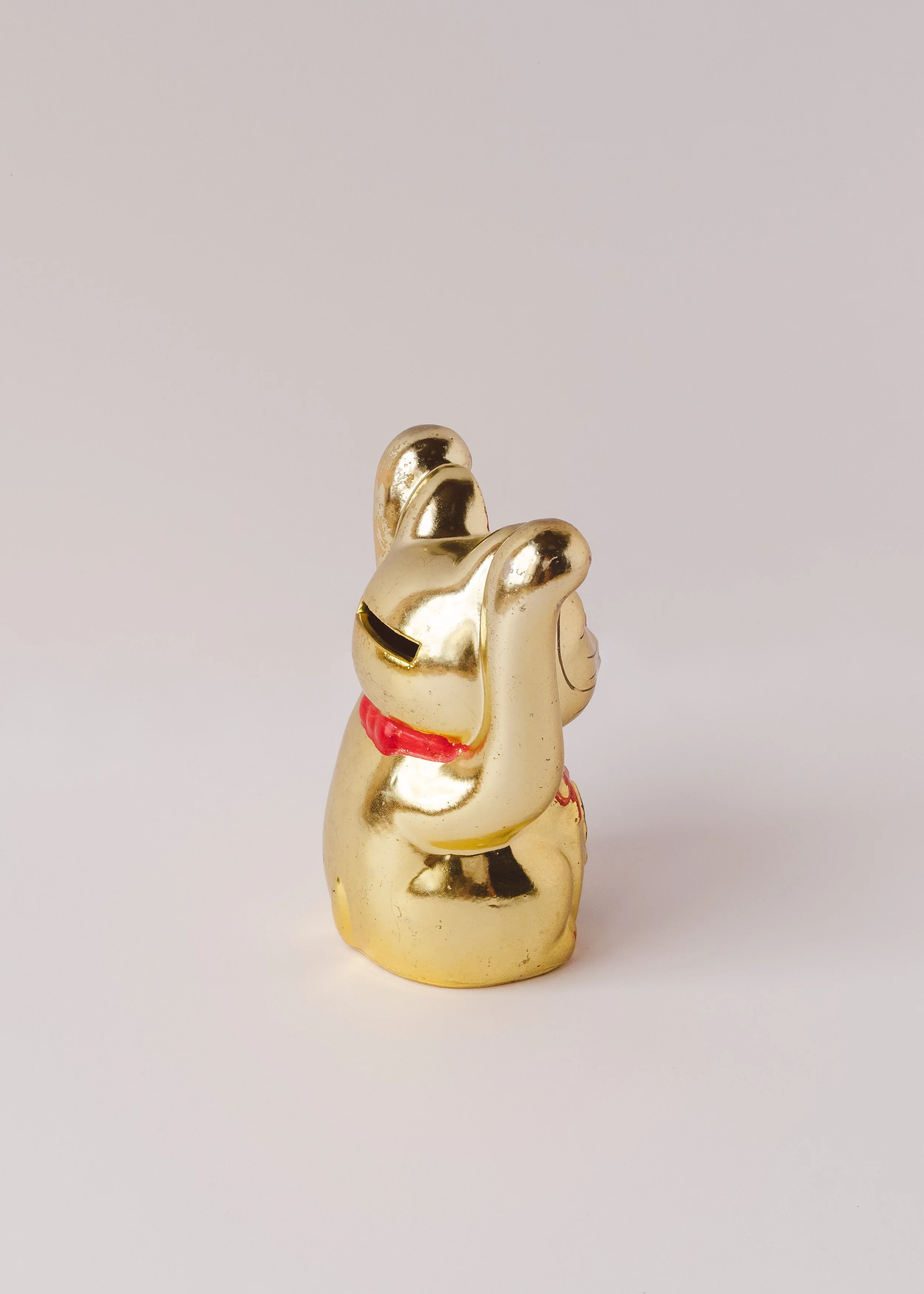 Image 4 of 9
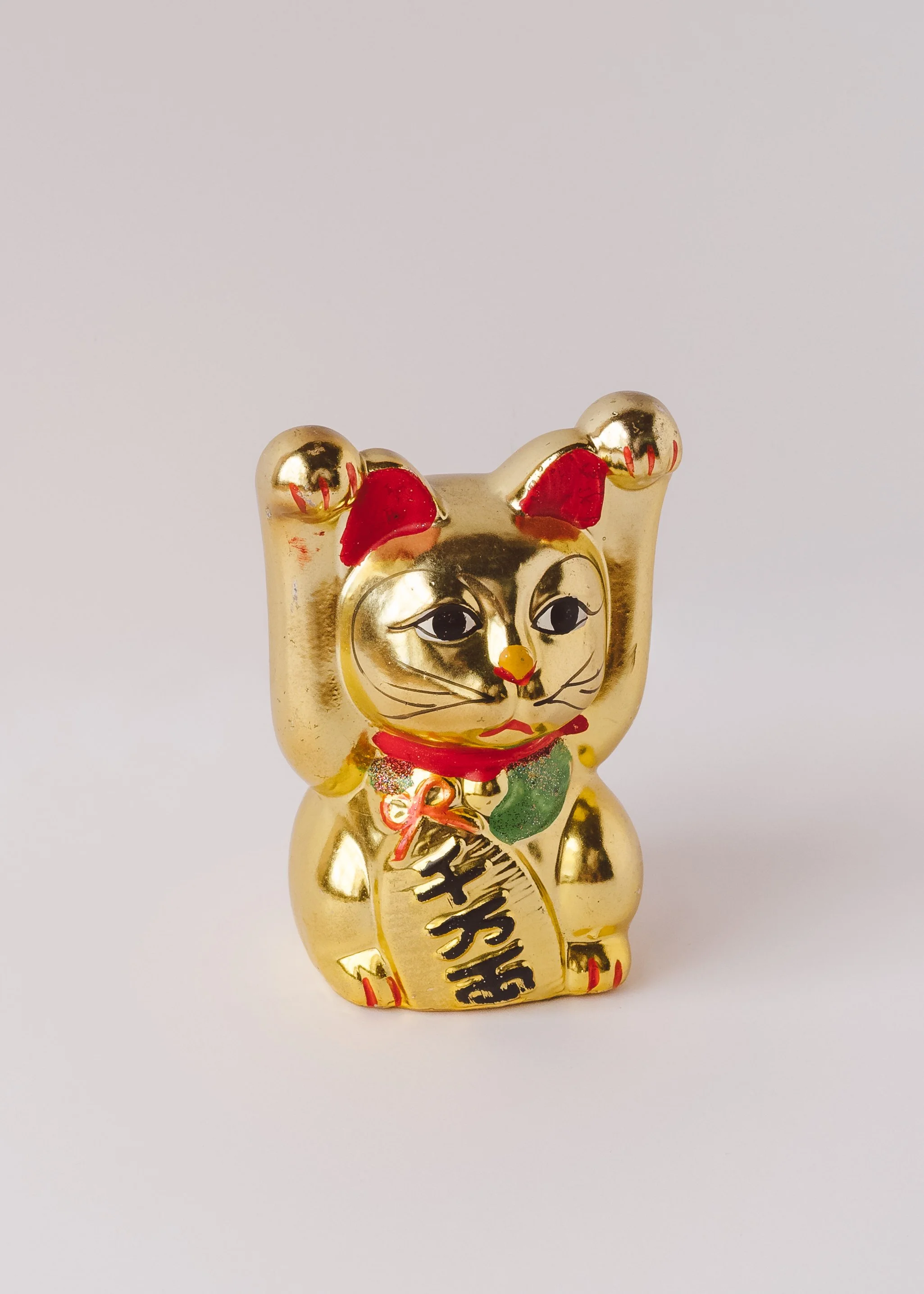 Image 5 of 9
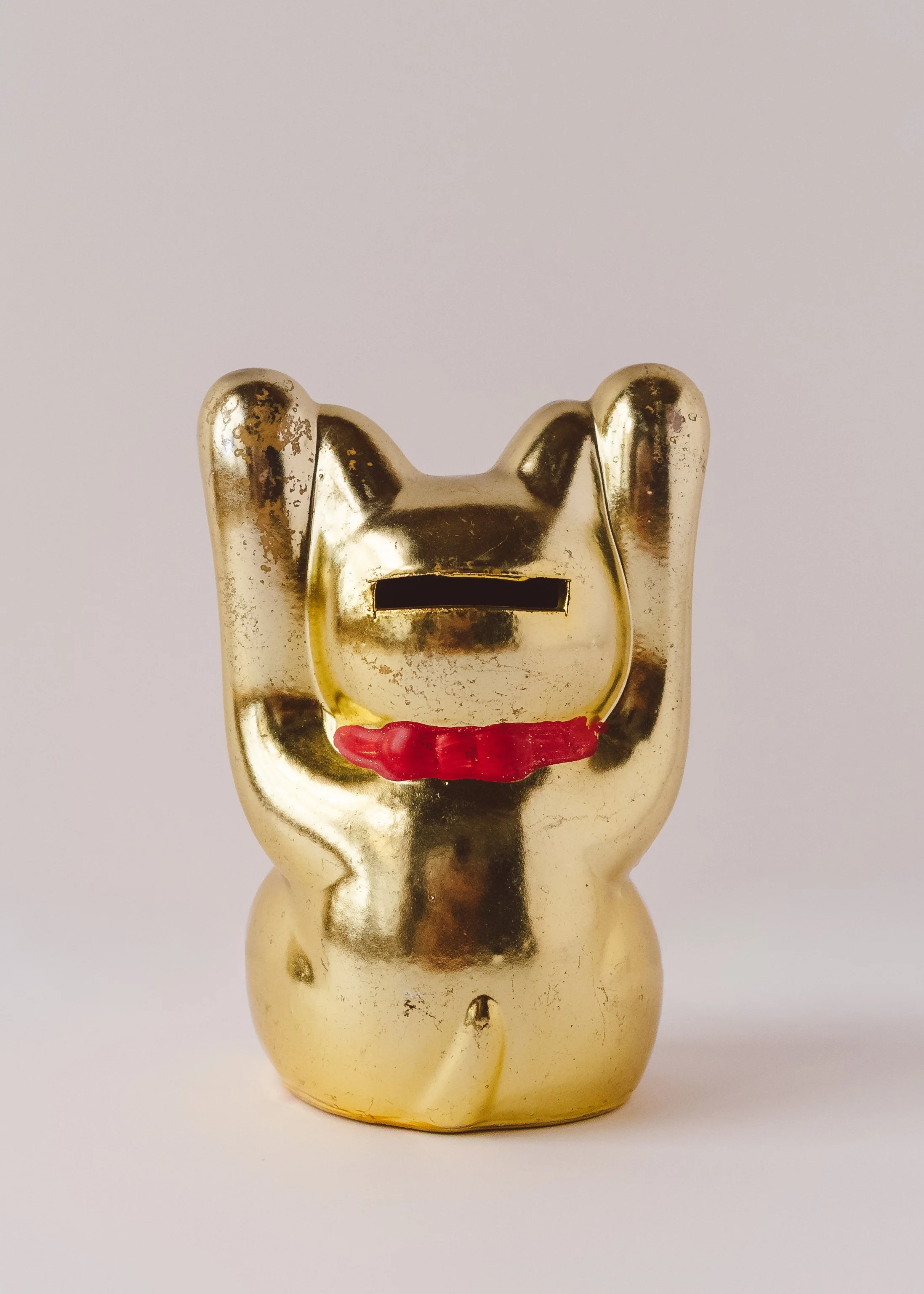 Image 6 of 9
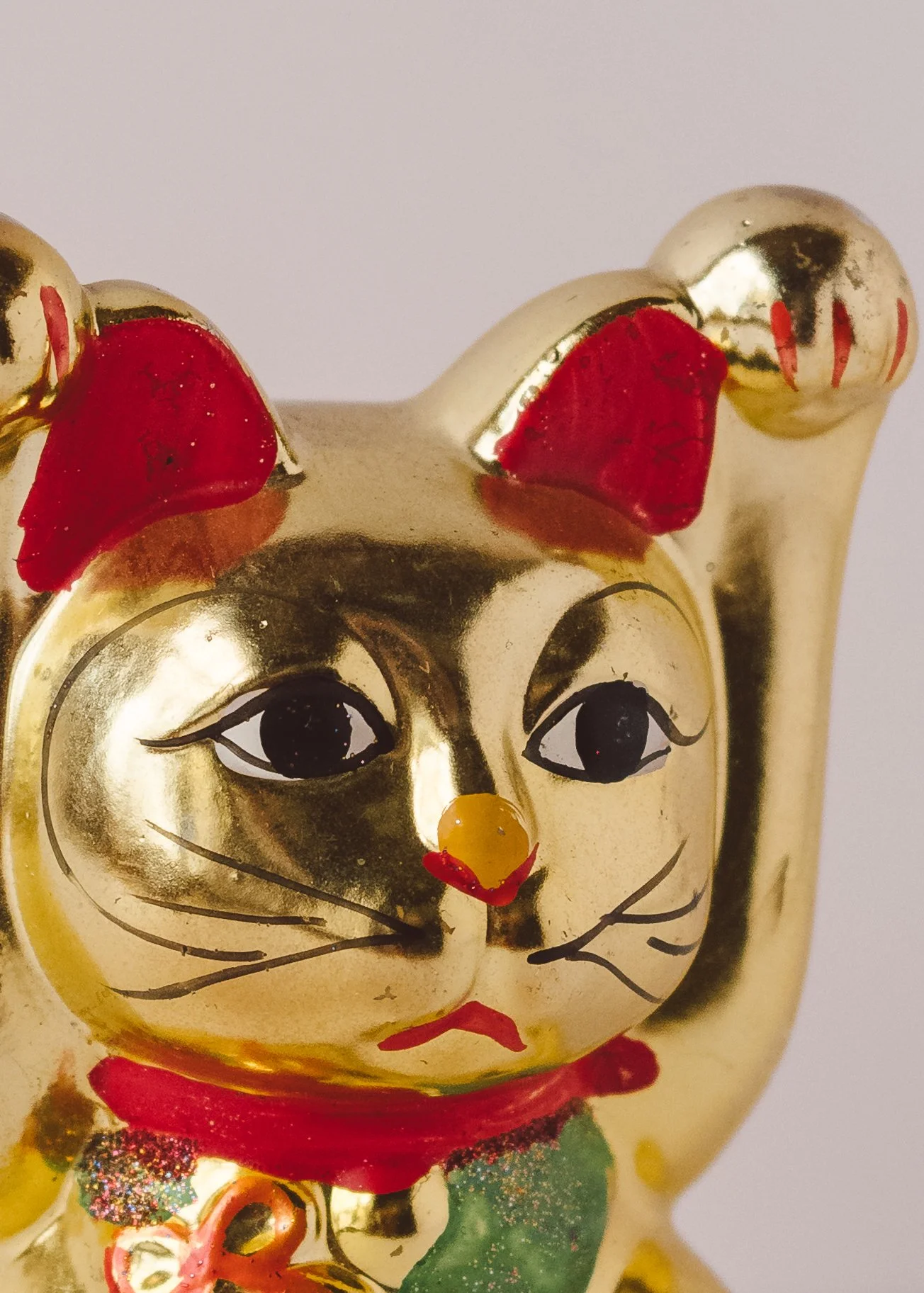 Image 7 of 9
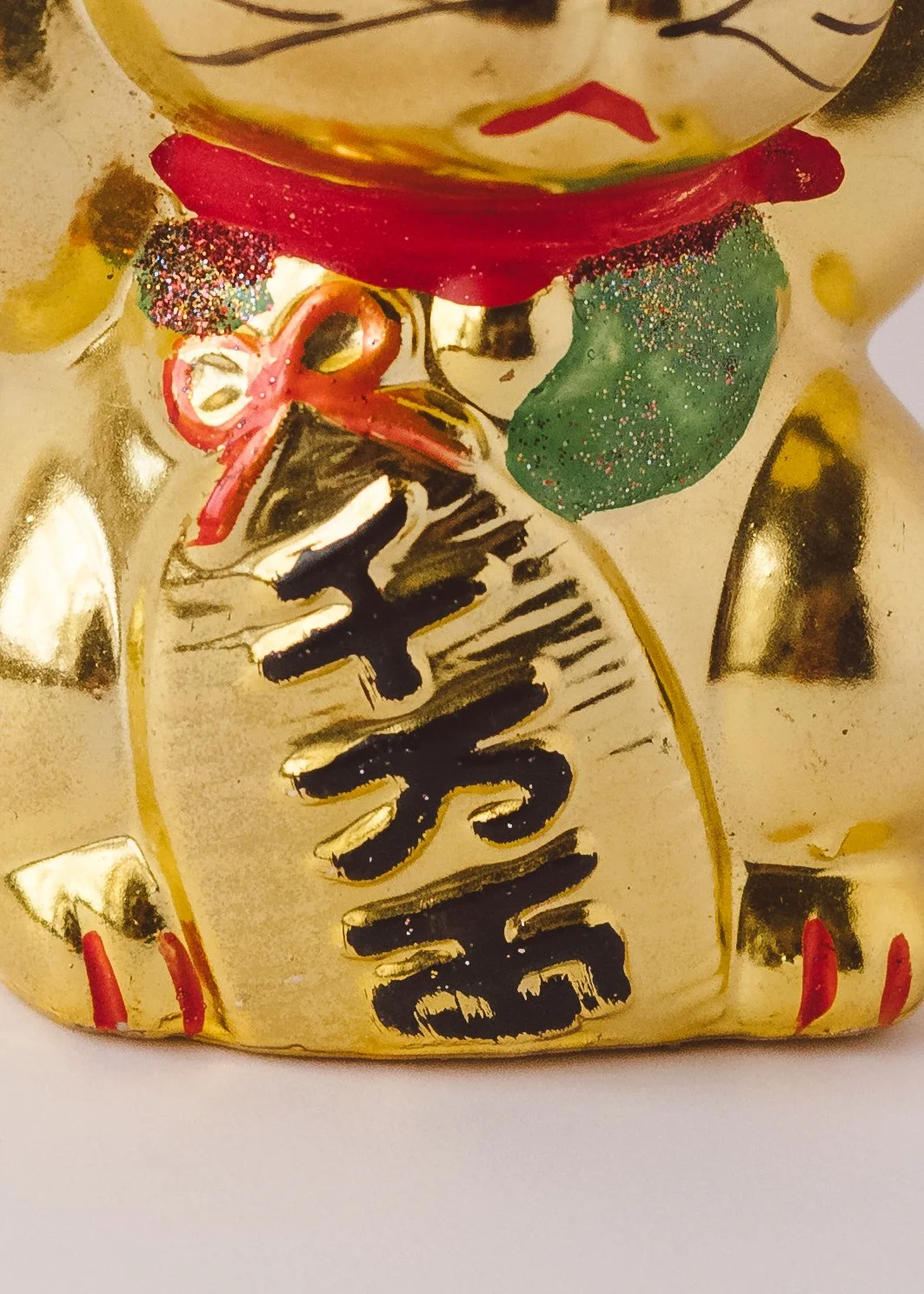 Image 8 of 9
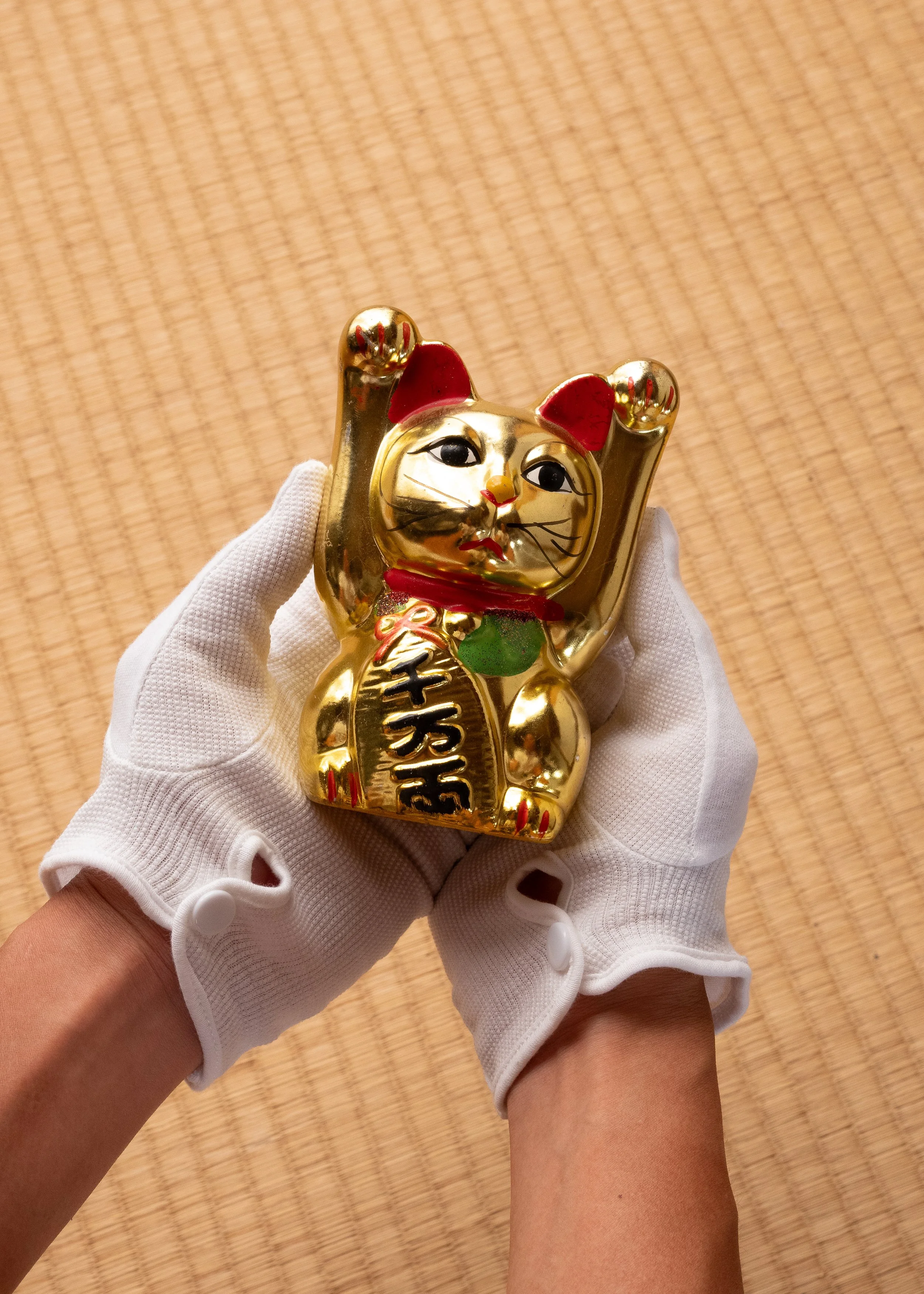 Image 9 of 9