【 The Concept 】
A dog standing the way no other animal in this archive stands: upright, squared, on all four legs, looking forward as though waiting to be judged. The breed is identified by the black mask painted across the muzzle and around the eyes — a dark frame on a warm face, applied by hand with a brush fine enough to follow the contour of the jaw. The ears are cropped to sharp points. The tail is docked to a stub, angled upward. The chest is deep and thrust forward. The belly tucks up behind the ribs in a clean diagonal. Every proportion says the same thing: this is a working dog that has been asked to hold still, and is doing so, but only because it has decided to.
The surface is not matte, not earthy, not iron. It is glazed ceramic — high-gloss, reflective, and painted in two colors: a warm fawn brown that covers the back, flanks, and head in a hand-brushed gradient, and a clean white that appears on the chest, the feet, and the underside of the jaw. The brown is not flat. It deepens along the spine and lightens toward the belly, following the logic of real fur catching real light. The white is not blank. It has the faintest warmth to it, a cream that keeps it from looking clinical.
This is the first hand-painted, multi-colored figure in the archive. Every other object uses a single material finish — iron black, celadon, gold, bronze effect. This dog wears its color the way it wears its mask: applied, specific, individual.
【 The Function 】
145 grams, 17 centimeters long, 13.5 centimeters tall, 6 centimeters wide. Hollow ceramic, light in the hand, stable on four separate feet. The standing pose distributes weight evenly across the base, and the wide spacing of the legs prevents tipping from any direction. In its original context, figures like this were produced for export to households where a specific breed of dog was part of the family identity — placed on mantelpieces, glass-front cabinets, and side tables as permanent portraits of a living companion, or as memorials to one that had passed. In a modern context, it functions as a color accent: the warm brown and white introduce tones that no other object in this archive carries.
【 The Texture 】
High-gloss transparent glaze over the entire body. The surface reflects light sources as sharp, elongated highlights that run along the curve of the ribs, the ridge of the spine, and the plane of the forehead. Beneath the glaze, the hand-painted color sits permanently fused to the ceramic body — fired at high temperature after application, locked in place, unfading. The black of the mask transitions into the brown of the skull in a soft gradient that no machine could produce: each brushstroke visible only at close range, disappearing into smooth color from a step away. The eyes carry the most precise detail on the entire figure — a dark pupil ringed by a thin line of iris color, and a single white dot placed off-center to simulate reflected light. That dot is what makes the dog appear to be looking at something specific rather than staring into space.
【 Presence 】
It stands. That is the distinction. IRON GAZE sits and watches. COLLARED LISTENER sits and tilts its head. QUIET KIN sits and looks down. This dog stands on four straight legs with its chest out and its head up, occupying more horizontal space than any of them and projecting more physical confidence than anything else on the shelf. The standing pose is rare in this archive because most of these objects are designed to rest — to settle into a surface and stay low. This figure does not settle. It posts. It holds a position the way a sentry holds a position: alert, balanced, ready to move but choosing not to.
The warm brown and white coloring sets it apart from the monochrome palette that dominates the rest of the collection. Place it among the black iron, the pale celadon, the matte gold, and it is the only object that looks like it belongs in a living room rather than a museum. It is domestic in the best sense — a portrait of loyalty, painted by hand, fired into permanence, and standing guard over whatever shelf it is given.
Sourced from a private collection in the Kansai region, Japan.
【 The Concept 】
A dog standing the way no other animal in this archive stands: upright, squared, on all four legs, looking forward as though waiting to be judged. The breed is identified by the black mask painted across the muzzle and around the eyes — a dark frame on a warm face, applied by hand with a brush fine enough to follow the contour of the jaw. The ears are cropped to sharp points. The tail is docked to a stub, angled upward. The chest is deep and thrust forward. The belly tucks up behind the ribs in a clean diagonal. Every proportion says the same thing: this is a working dog that has been asked to hold still, and is doing so, but only because it has decided to.
The surface is not matte, not earthy, not iron. It is glazed ceramic — high-gloss, reflective, and painted in two colors: a warm fawn brown that covers the back, flanks, and head in a hand-brushed gradient, and a clean white that appears on the chest, the feet, and the underside of the jaw. The brown is not flat. It deepens along the spine and lightens toward the belly, following the logic of real fur catching real light. The white is not blank. It has the faintest warmth to it, a cream that keeps it from looking clinical.
This is the first hand-painted, multi-colored figure in the archive. Every other object uses a single material finish — iron black, celadon, gold, bronze effect. This dog wears its color the way it wears its mask: applied, specific, individual.
【 The Function 】
145 grams, 17 centimeters long, 13.5 centimeters tall, 6 centimeters wide. Hollow ceramic, light in the hand, stable on four separate feet. The standing pose distributes weight evenly across the base, and the wide spacing of the legs prevents tipping from any direction. In its original context, figures like this were produced for export to households where a specific breed of dog was part of the family identity — placed on mantelpieces, glass-front cabinets, and side tables as permanent portraits of a living companion, or as memorials to one that had passed. In a modern context, it functions as a color accent: the warm brown and white introduce tones that no other object in this archive carries.
【 The Texture 】
High-gloss transparent glaze over the entire body. The surface reflects light sources as sharp, elongated highlights that run along the curve of the ribs, the ridge of the spine, and the plane of the forehead. Beneath the glaze, the hand-painted color sits permanently fused to the ceramic body — fired at high temperature after application, locked in place, unfading. The black of the mask transitions into the brown of the skull in a soft gradient that no machine could produce: each brushstroke visible only at close range, disappearing into smooth color from a step away. The eyes carry the most precise detail on the entire figure — a dark pupil ringed by a thin line of iris color, and a single white dot placed off-center to simulate reflected light. That dot is what makes the dog appear to be looking at something specific rather than staring into space.
【 Presence 】
It stands. That is the distinction. IRON GAZE sits and watches. COLLARED LISTENER sits and tilts its head. QUIET KIN sits and looks down. This dog stands on four straight legs with its chest out and its head up, occupying more horizontal space than any of them and projecting more physical confidence than anything else on the shelf. The standing pose is rare in this archive because most of these objects are designed to rest — to settle into a surface and stay low. This figure does not settle. It posts. It holds a position the way a sentry holds a position: alert, balanced, ready to move but choosing not to.
The warm brown and white coloring sets it apart from the monochrome palette that dominates the rest of the collection. Place it among the black iron, the pale celadon, the matte gold, and it is the only object that looks like it belongs in a living room rather than a museum. It is domestic in the best sense — a portrait of loyalty, painted by hand, fired into permanence, and standing guard over whatever shelf it is given.
Sourced from a private collection in the Kansai region, Japan.


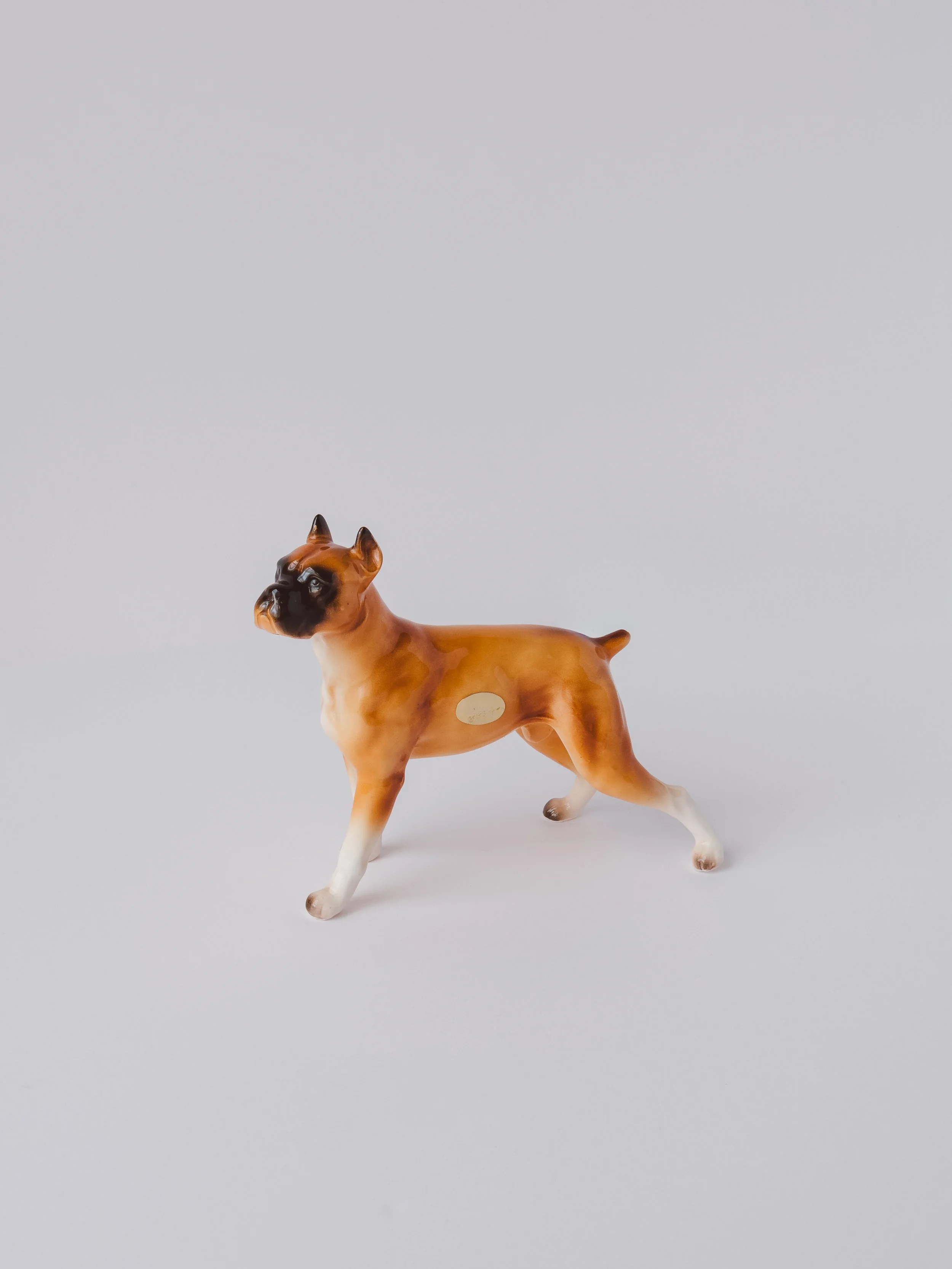 Image 1 of 11
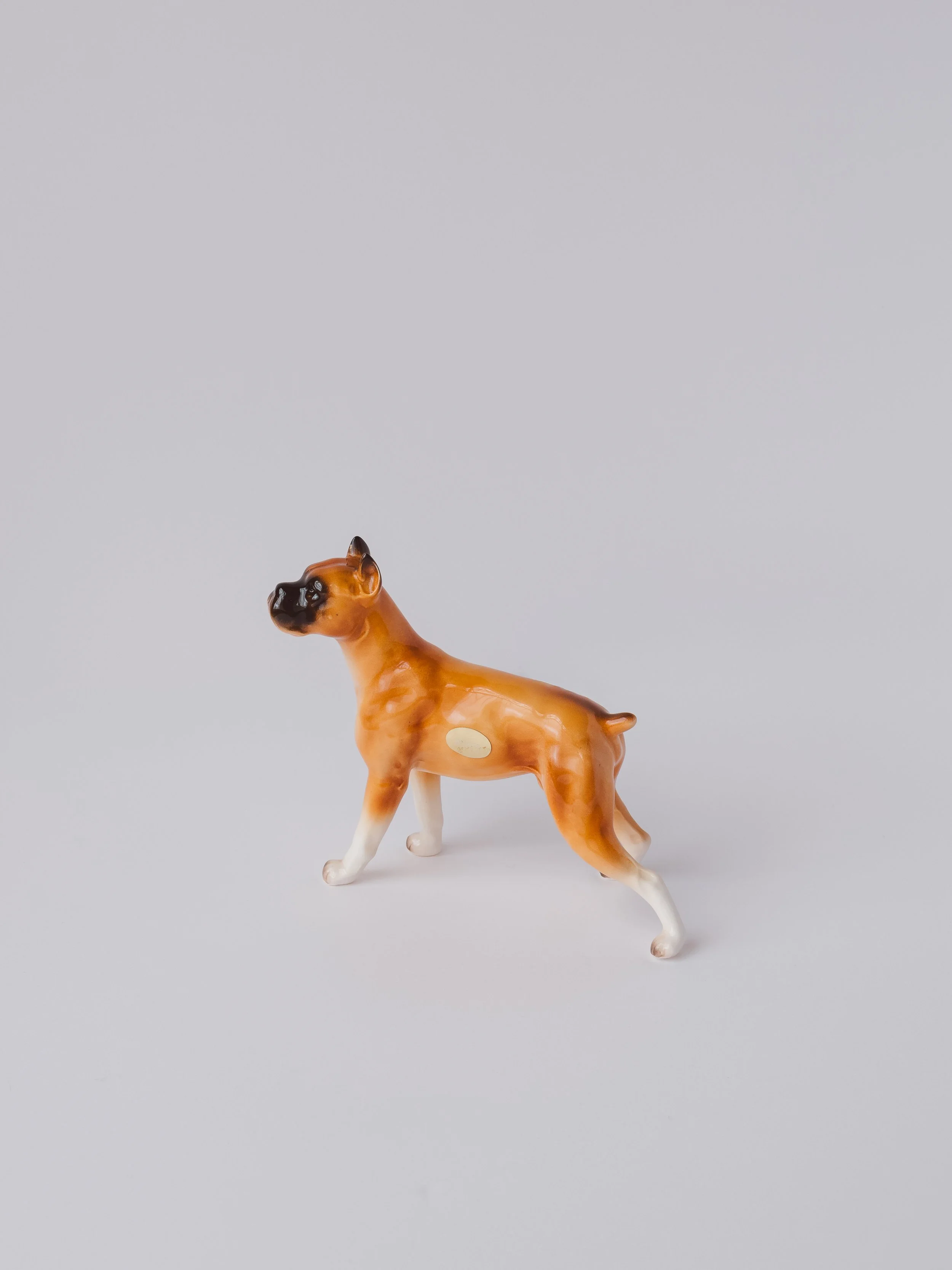 Image 2 of 11
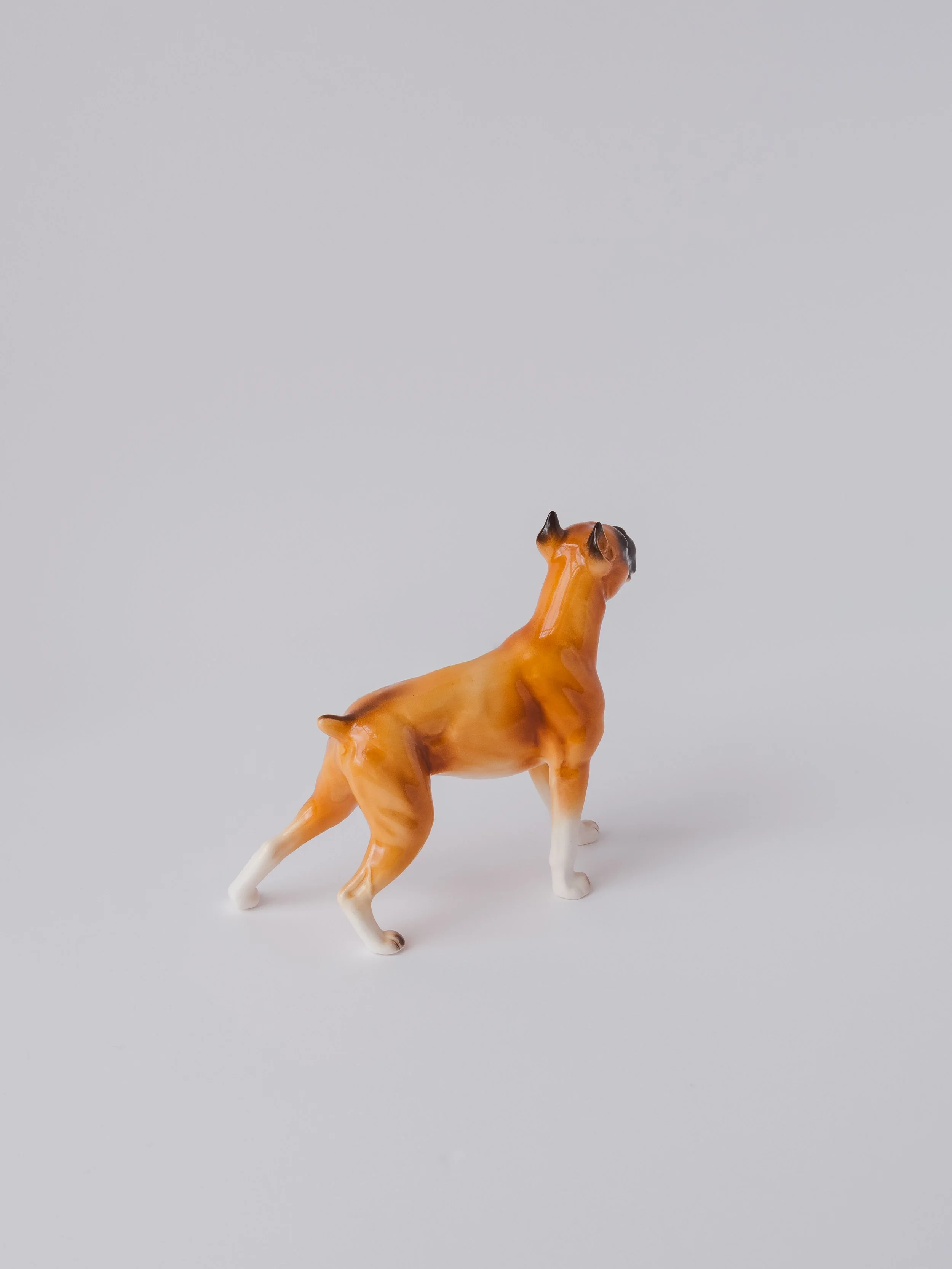 Image 3 of 11
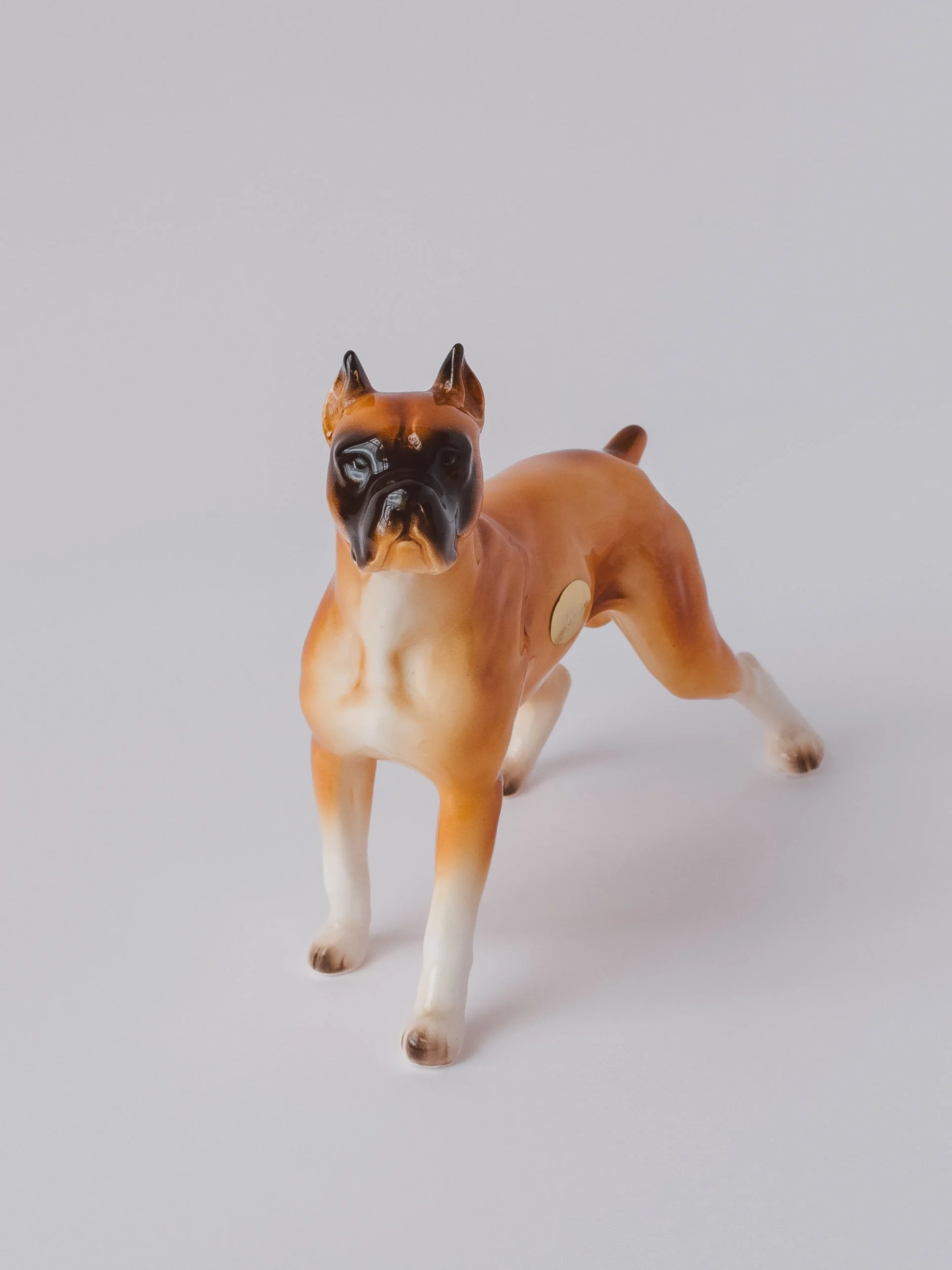 Image 4 of 11
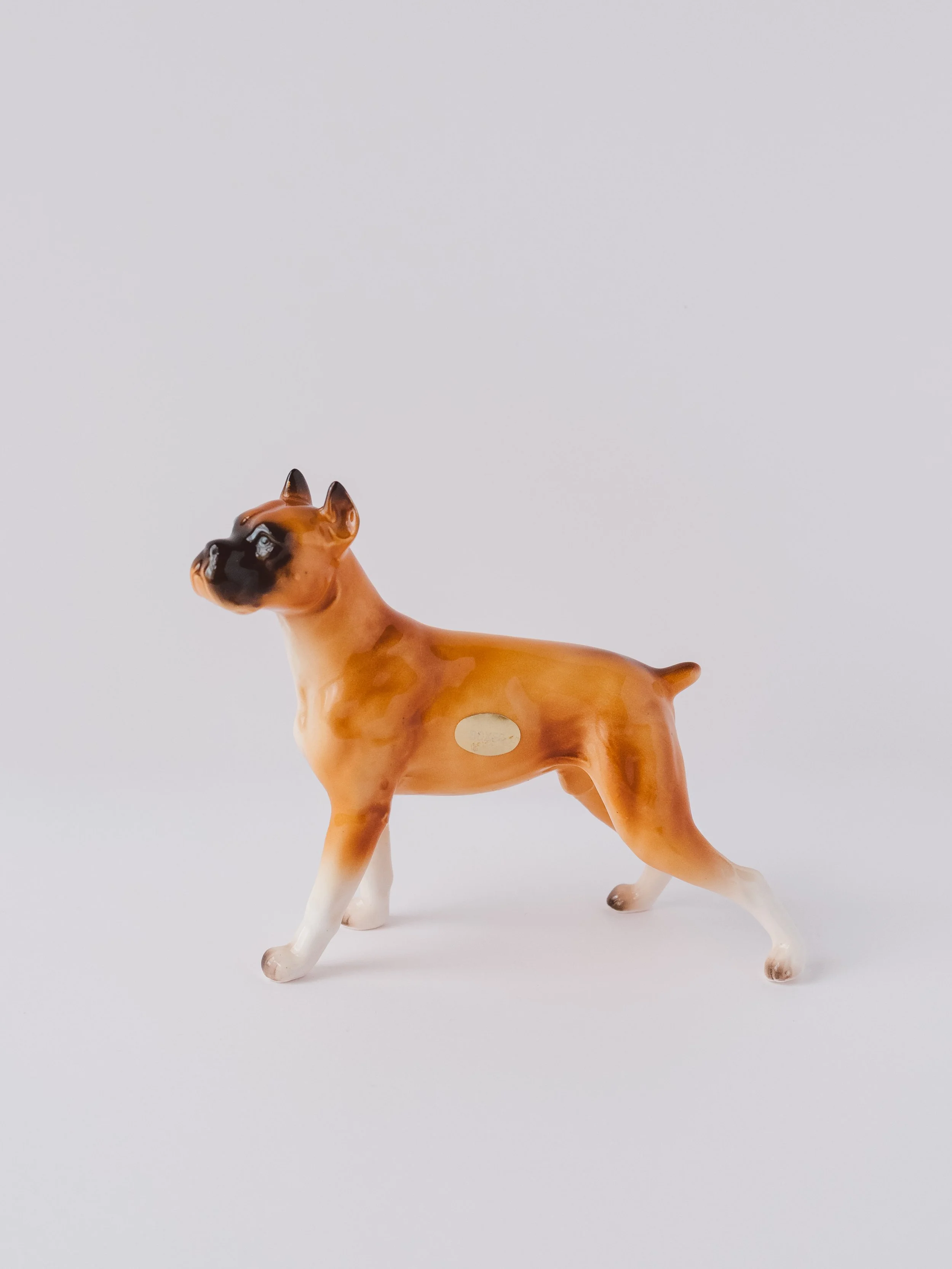 Image 5 of 11
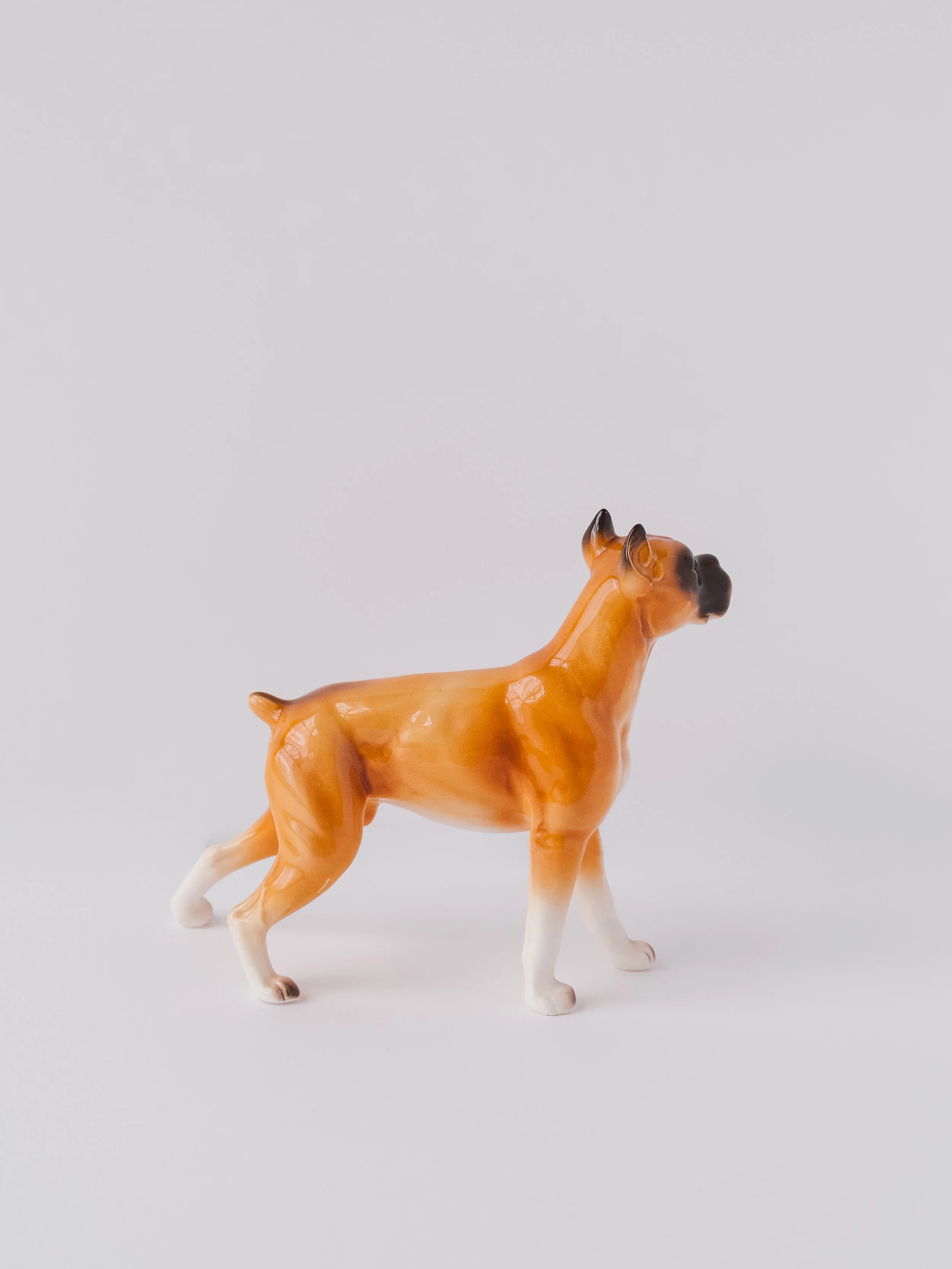 Image 6 of 11
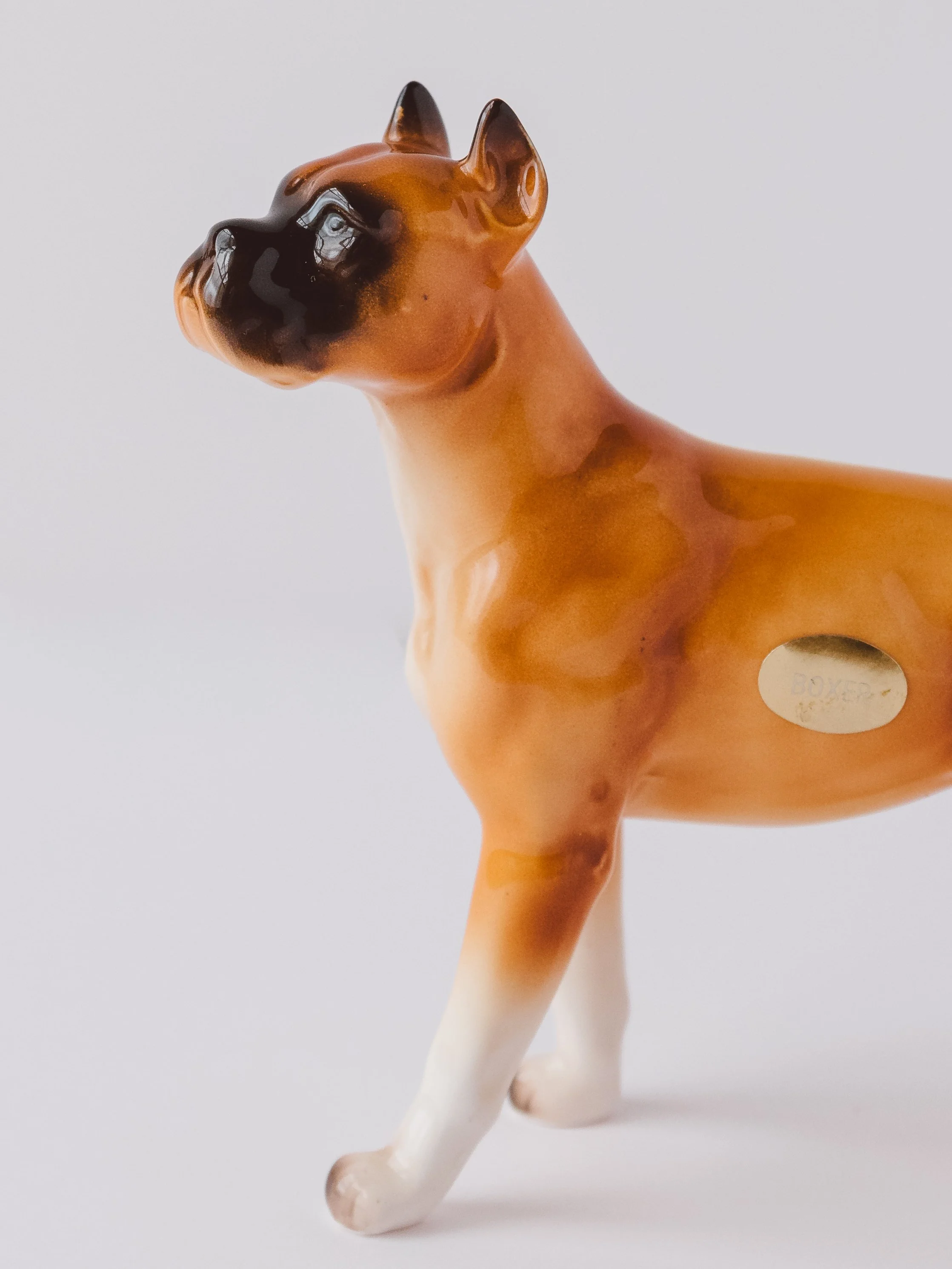 Image 7 of 11
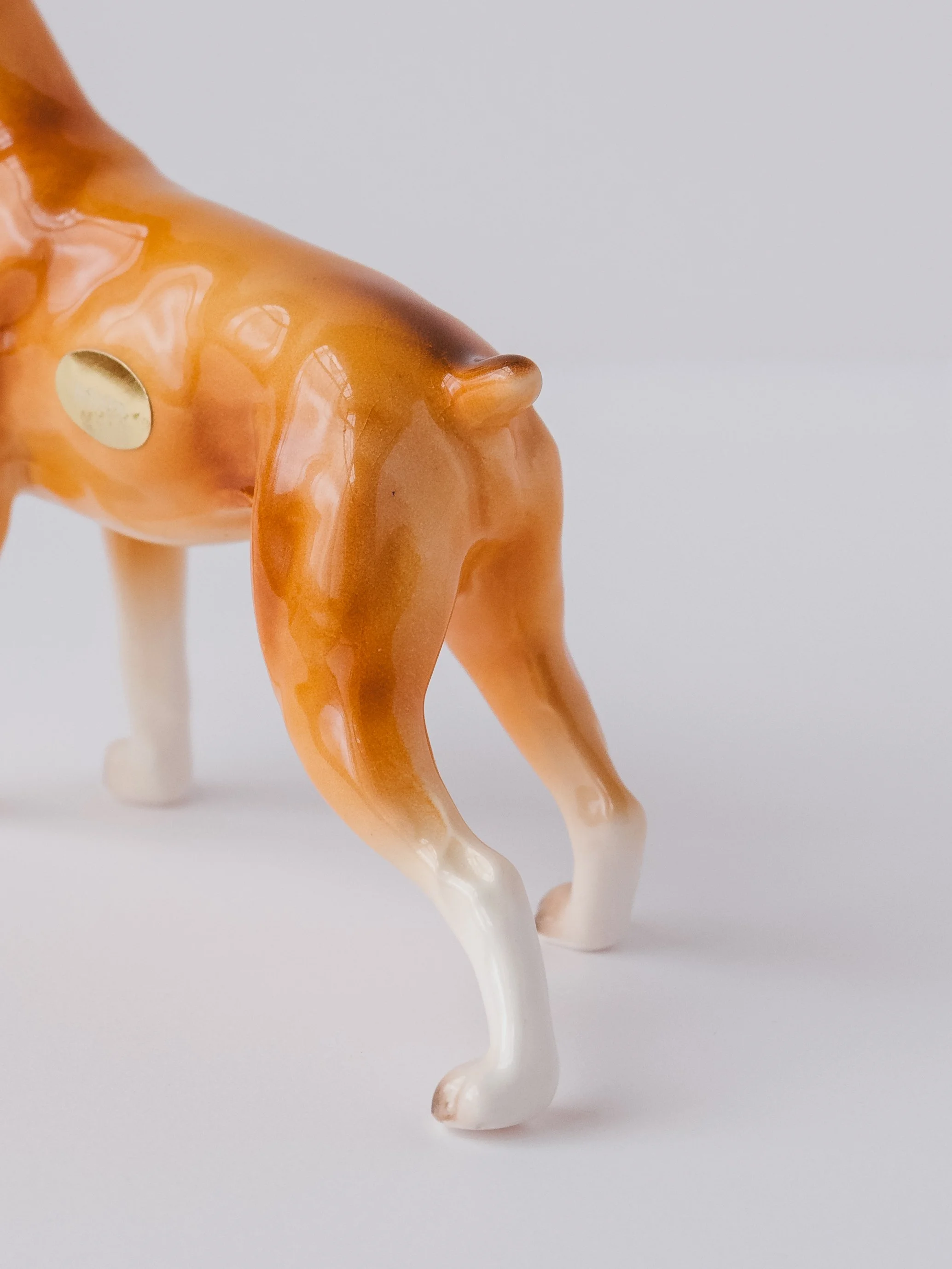 Image 8 of 11
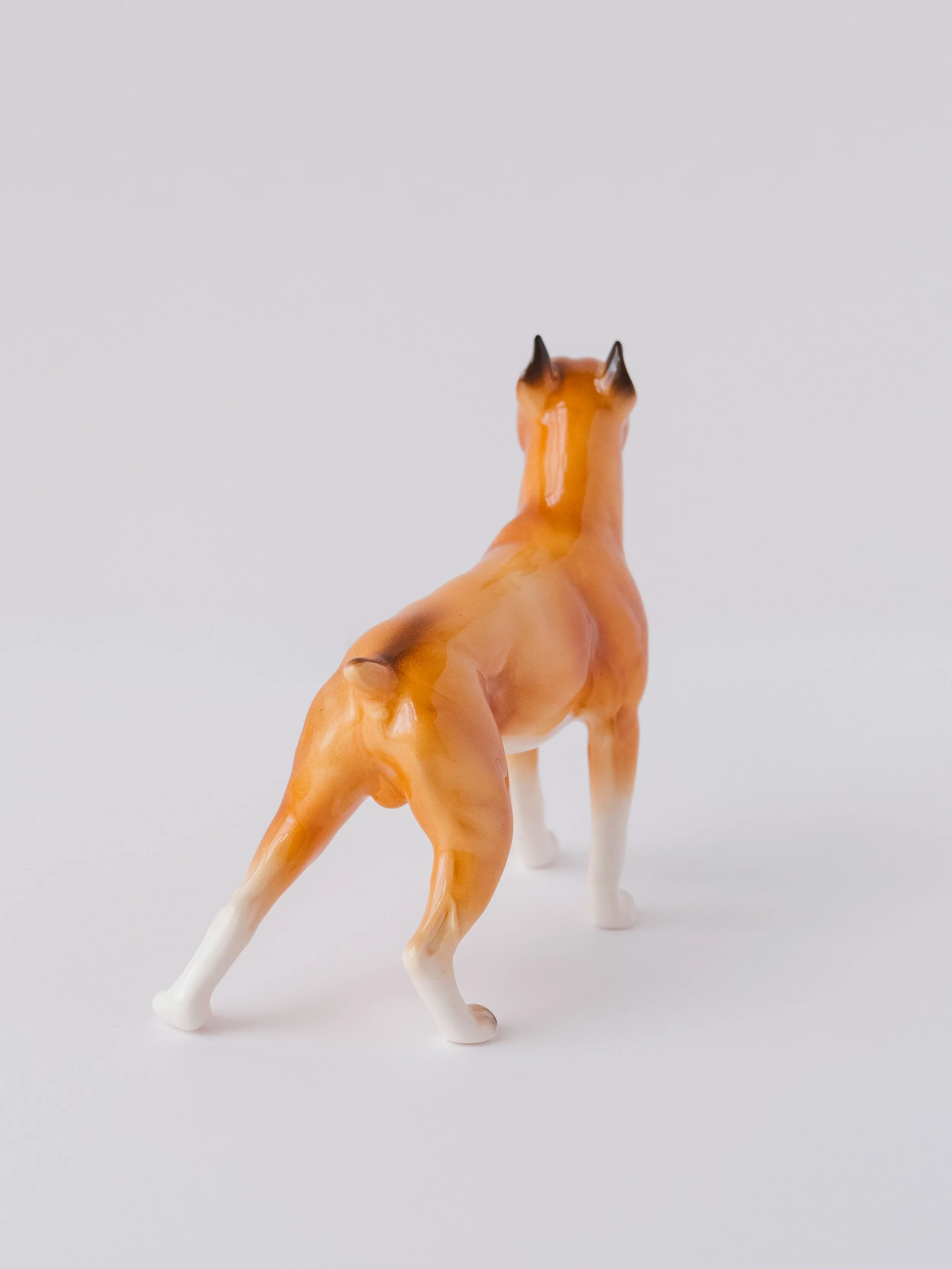 Image 9 of 11
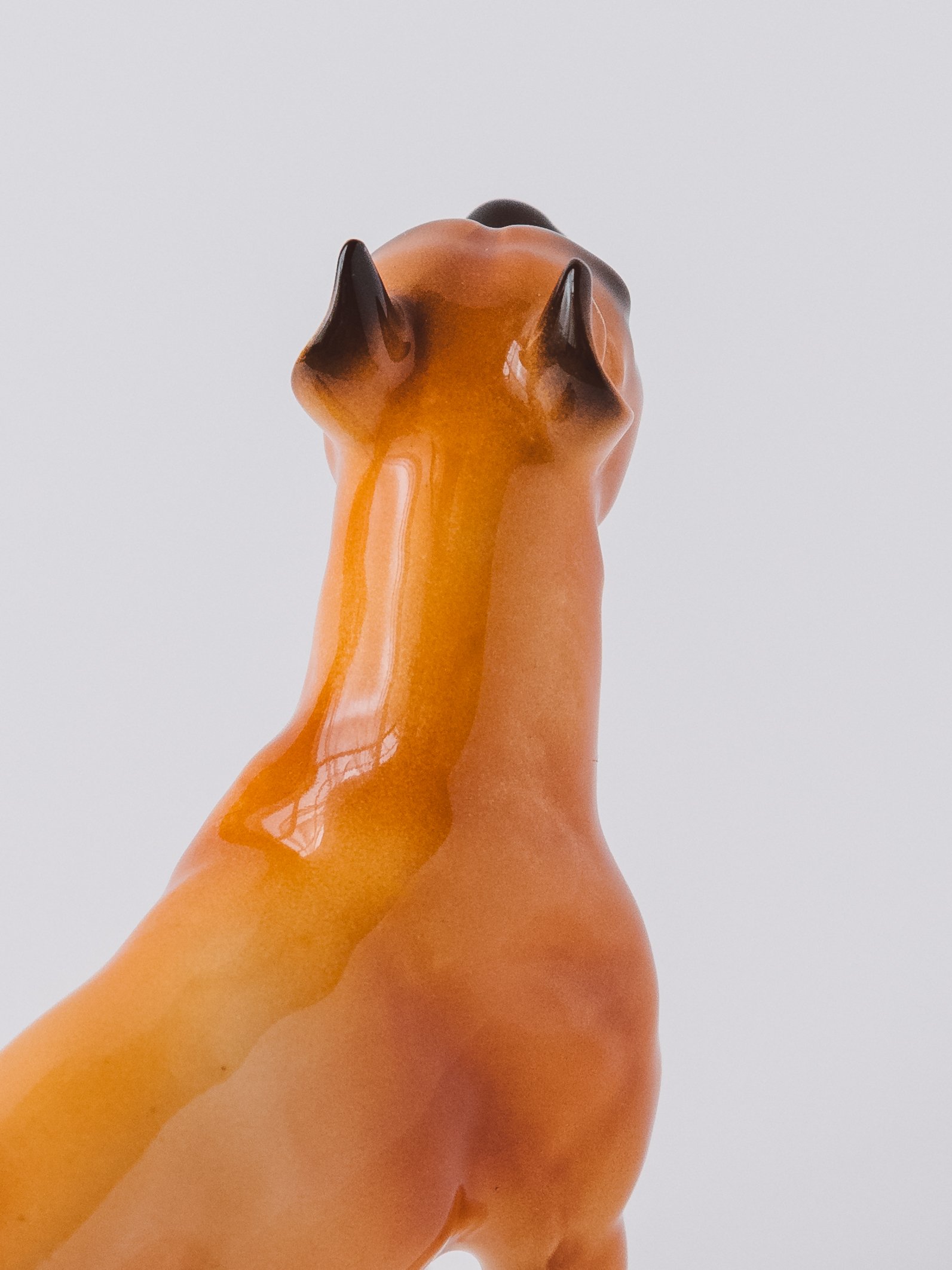 Image 10 of 11
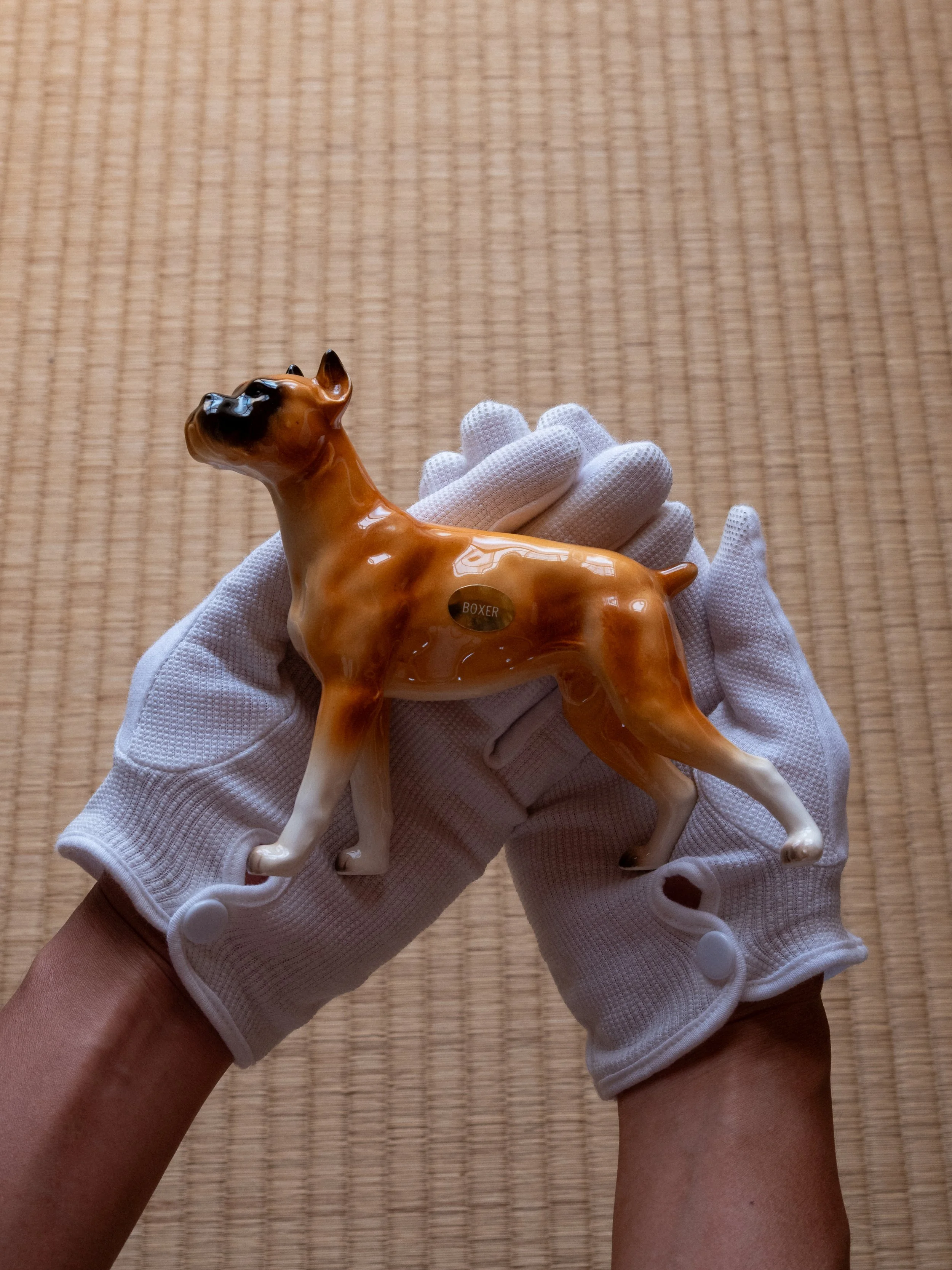 Image 11 of 11