【 The Concept 】
The most recognized ceramic figure in Japan, and one almost nobody in Japan still reads. It sits outside restaurants and doorways all over the country — a round-bellied raccoon dog in a straw hat, a bottle of sake in one hand — so familiar that it has become invisible, the way a word repeated too many times stops meaning anything. This one is worth reading again, because everything it wears is an argument.
The animal is a tanuki, the Japanese raccoon dog, a real creature that folklore turned into a shapeshifter — a trickster that could take any form it liked. As a ceramic figure it was standardized in the twentieth century into a set of eight lucky attributes, one carried by each part of the body, and together they read less like a charm than like a code of conduct for someone in business. The hat, worn low over the back, is readiness — protection against trouble you did not see coming. The huge round eyes are perception, the habit of watching in every direction before deciding. The wide smiling face is good faith, the warmth that keeps customers returning. The sake bottle in the right hand is virtue built up privately, out of sight. And the ledger in the left hand — the flat book, marked with the character for account — is credit, trust, the promise that the figure will settle what it owes. This is not a god of luck. It is a portrait of the qualities that make luck possible, distributed across an animal's body.
The figure sits cross-legged, low and broad, 20 centimeters tall and nearly as wide. It leans very slightly back, belly forward, hat pushed off the head and hanging behind, looking up at whoever stands over it with an expression of complete, faintly comic sincerity.
【 The Function 】
1.120 kilograms, 20 centimeters tall, 17 centimeters wide. Glazed stoneware, thick-walled and low-slung, with the broad seated base that gives figures of this kind their reputation for stability — they are made to sit somewhere and stay, at an entrance, on a counter, beside a doorway, greeting whoever comes in. This is a large example. The standard figure sold as a souvenir is a few centimeters tall; at 20 centimeters and over a kilogram, this one has the presence of the versions kept at the thresholds of shops rather than the miniatures kept on desks.
The object was never only decorative. It was placed where a business greeted the public, as a standing wish for the trade conducted there — for customers, for good faith, for accounts that balanced. It did its work simply by being visible at the door.
【 The Texture 】
Two entirely different surfaces meet on one figure. The belly and chest are glazed in glossy cream white, thick and wet-looking, catching light in a broad soft highlight — the smooth, swollen, faintly absurd curve that gives the tanuki its warmth. The limbs, the back, and the great hanging tail are dark matte brown, close to black, worked with coarse incised strokes that read as shaggy fur and drink the light rather than reflecting it. Gloss against matte, pale against dark, smooth against rough — the whole figure is built on that contrast.
The hat is ochre, its woven texture carved in fine radiating lines with a ring of dark dots around the brim, colored to look like an old and used piece of straw-work. The sake bottle is the same cream white as the belly, painted with a bold black brushstroke. The ledger is pale, marked with a single dark character. And in the center of all this near-monochrome — brown, cream, black, ochre — sits one saturated note of green: the cord knotted across the chest that holds the hat, the one deliberate spot of color on the entire object. The eyes carry the last detail: black pupils on white, each with a tiny painted highlight at the upper right, the single touch that makes the gaze look wet, alert, and alive.
【 Presence 】
The rest of the archive is quiet and largely unknown — objects that ask to be discovered. This one is the opposite: an object so famous it has stopped being looked at. Setting it among the others is deliberate. It is the piece that proves the archive's principle in reverse — that a thing does not have to be obscure to be unread, and that the cure for over-familiarity is simply attention.
And it rewards attention. The comedy is real — the belly, the wide eyes, the sincere upward look are genuinely funny — but underneath the comedy is a complete and rather serious little philosophy: watch carefully, prepare for trouble, keep faith with people, build virtue quietly, honor your debts. The figure carries all of that on its body and asks nothing except that someone stop long enough to read it. Fifty years old, a kilogram of glazed stoneware, sitting cross-legged with a bottle in one hand and its accounts in the other, still keeping faith, still smiling, still waiting to be looked at properly.
Sourced from a private collection in the Shikoku region, Japan.
【 The Concept 】
The most recognized ceramic figure in Japan, and one almost nobody in Japan still reads. It sits outside restaurants and doorways all over the country — a round-bellied raccoon dog in a straw hat, a bottle of sake in one hand — so familiar that it has become invisible, the way a word repeated too many times stops meaning anything. This one is worth reading again, because everything it wears is an argument.
The animal is a tanuki, the Japanese raccoon dog, a real creature that folklore turned into a shapeshifter — a trickster that could take any form it liked. As a ceramic figure it was standardized in the twentieth century into a set of eight lucky attributes, one carried by each part of the body, and together they read less like a charm than like a code of conduct for someone in business. The hat, worn low over the back, is readiness — protection against trouble you did not see coming. The huge round eyes are perception, the habit of watching in every direction before deciding. The wide smiling face is good faith, the warmth that keeps customers returning. The sake bottle in the right hand is virtue built up privately, out of sight. And the ledger in the left hand — the flat book, marked with the character for account — is credit, trust, the promise that the figure will settle what it owes. This is not a god of luck. It is a portrait of the qualities that make luck possible, distributed across an animal's body.
The figure sits cross-legged, low and broad, 20 centimeters tall and nearly as wide. It leans very slightly back, belly forward, hat pushed off the head and hanging behind, looking up at whoever stands over it with an expression of complete, faintly comic sincerity.
【 The Function 】
1.120 kilograms, 20 centimeters tall, 17 centimeters wide. Glazed stoneware, thick-walled and low-slung, with the broad seated base that gives figures of this kind their reputation for stability — they are made to sit somewhere and stay, at an entrance, on a counter, beside a doorway, greeting whoever comes in. This is a large example. The standard figure sold as a souvenir is a few centimeters tall; at 20 centimeters and over a kilogram, this one has the presence of the versions kept at the thresholds of shops rather than the miniatures kept on desks.
The object was never only decorative. It was placed where a business greeted the public, as a standing wish for the trade conducted there — for customers, for good faith, for accounts that balanced. It did its work simply by being visible at the door.
【 The Texture 】
Two entirely different surfaces meet on one figure. The belly and chest are glazed in glossy cream white, thick and wet-looking, catching light in a broad soft highlight — the smooth, swollen, faintly absurd curve that gives the tanuki its warmth. The limbs, the back, and the great hanging tail are dark matte brown, close to black, worked with coarse incised strokes that read as shaggy fur and drink the light rather than reflecting it. Gloss against matte, pale against dark, smooth against rough — the whole figure is built on that contrast.
The hat is ochre, its woven texture carved in fine radiating lines with a ring of dark dots around the brim, colored to look like an old and used piece of straw-work. The sake bottle is the same cream white as the belly, painted with a bold black brushstroke. The ledger is pale, marked with a single dark character. And in the center of all this near-monochrome — brown, cream, black, ochre — sits one saturated note of green: the cord knotted across the chest that holds the hat, the one deliberate spot of color on the entire object. The eyes carry the last detail: black pupils on white, each with a tiny painted highlight at the upper right, the single touch that makes the gaze look wet, alert, and alive.
【 Presence 】
The rest of the archive is quiet and largely unknown — objects that ask to be discovered. This one is the opposite: an object so famous it has stopped being looked at. Setting it among the others is deliberate. It is the piece that proves the archive's principle in reverse — that a thing does not have to be obscure to be unread, and that the cure for over-familiarity is simply attention.
And it rewards attention. The comedy is real — the belly, the wide eyes, the sincere upward look are genuinely funny — but underneath the comedy is a complete and rather serious little philosophy: watch carefully, prepare for trouble, keep faith with people, build virtue quietly, honor your debts. The figure carries all of that on its body and asks nothing except that someone stop long enough to read it. Fifty years old, a kilogram of glazed stoneware, sitting cross-legged with a bottle in one hand and its accounts in the other, still keeping faith, still smiling, still waiting to be looked at properly.
Sourced from a private collection in the Shikoku region, Japan.


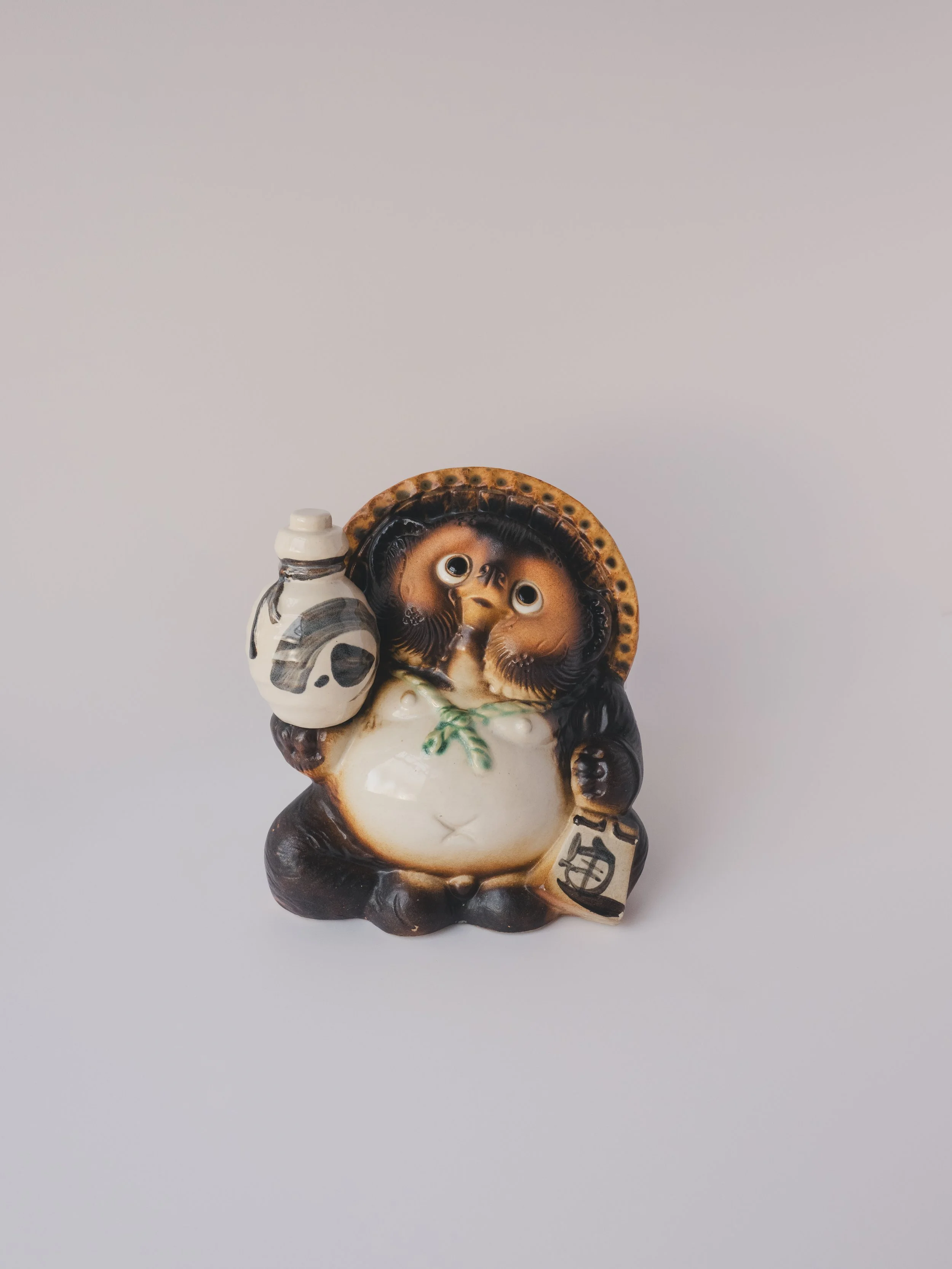 Image 1 of 9
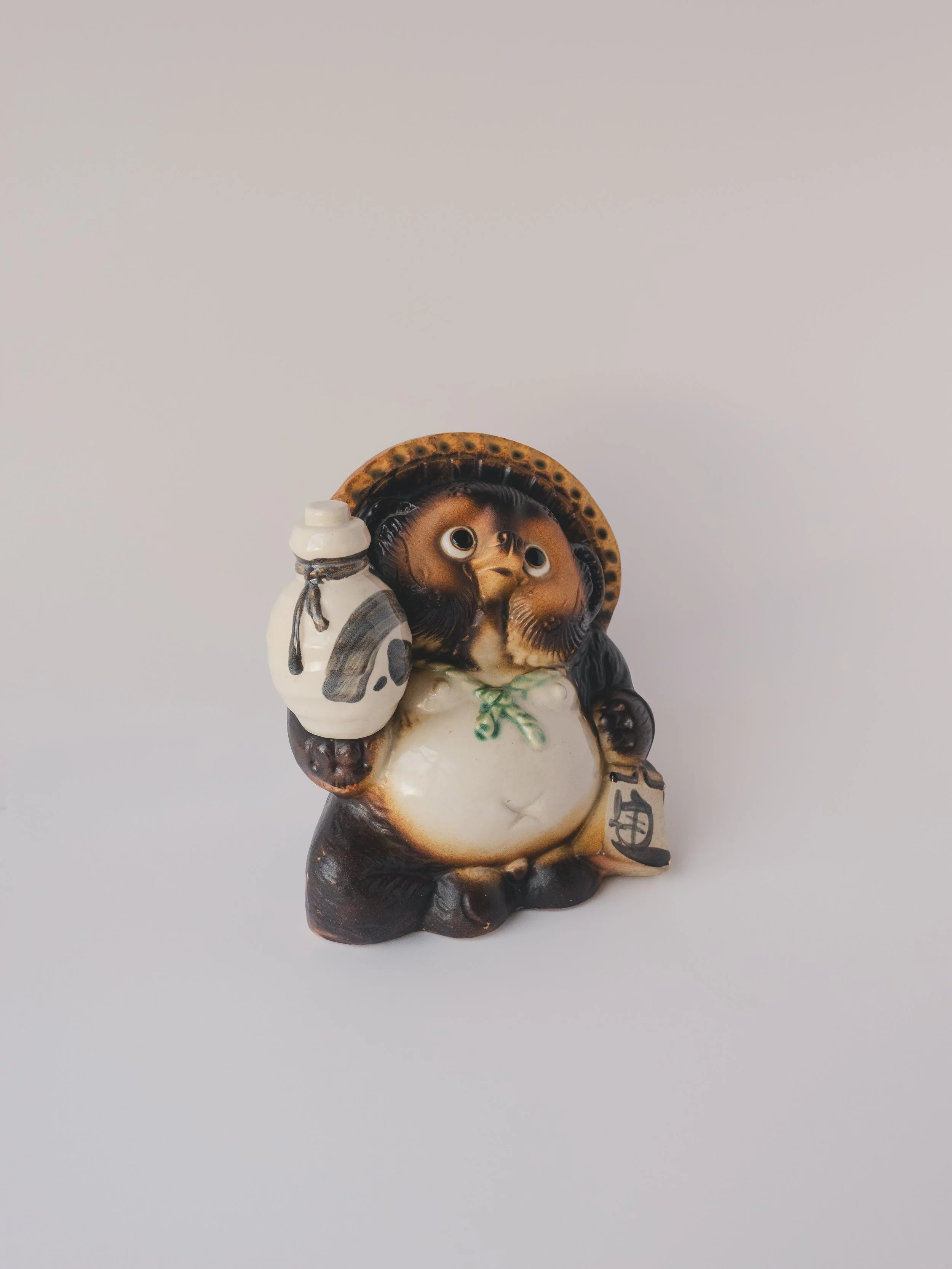 Image 2 of 9
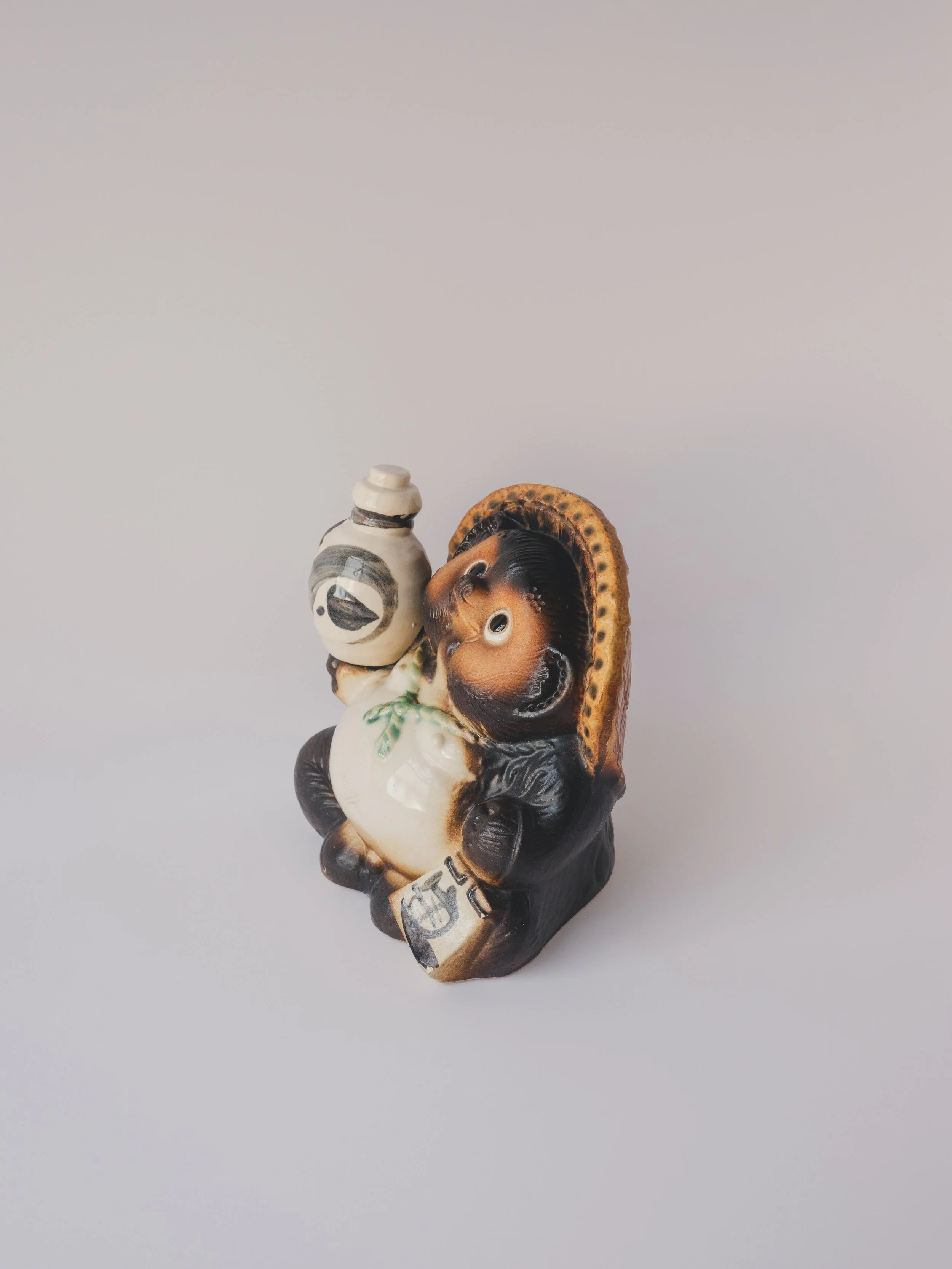 Image 3 of 9
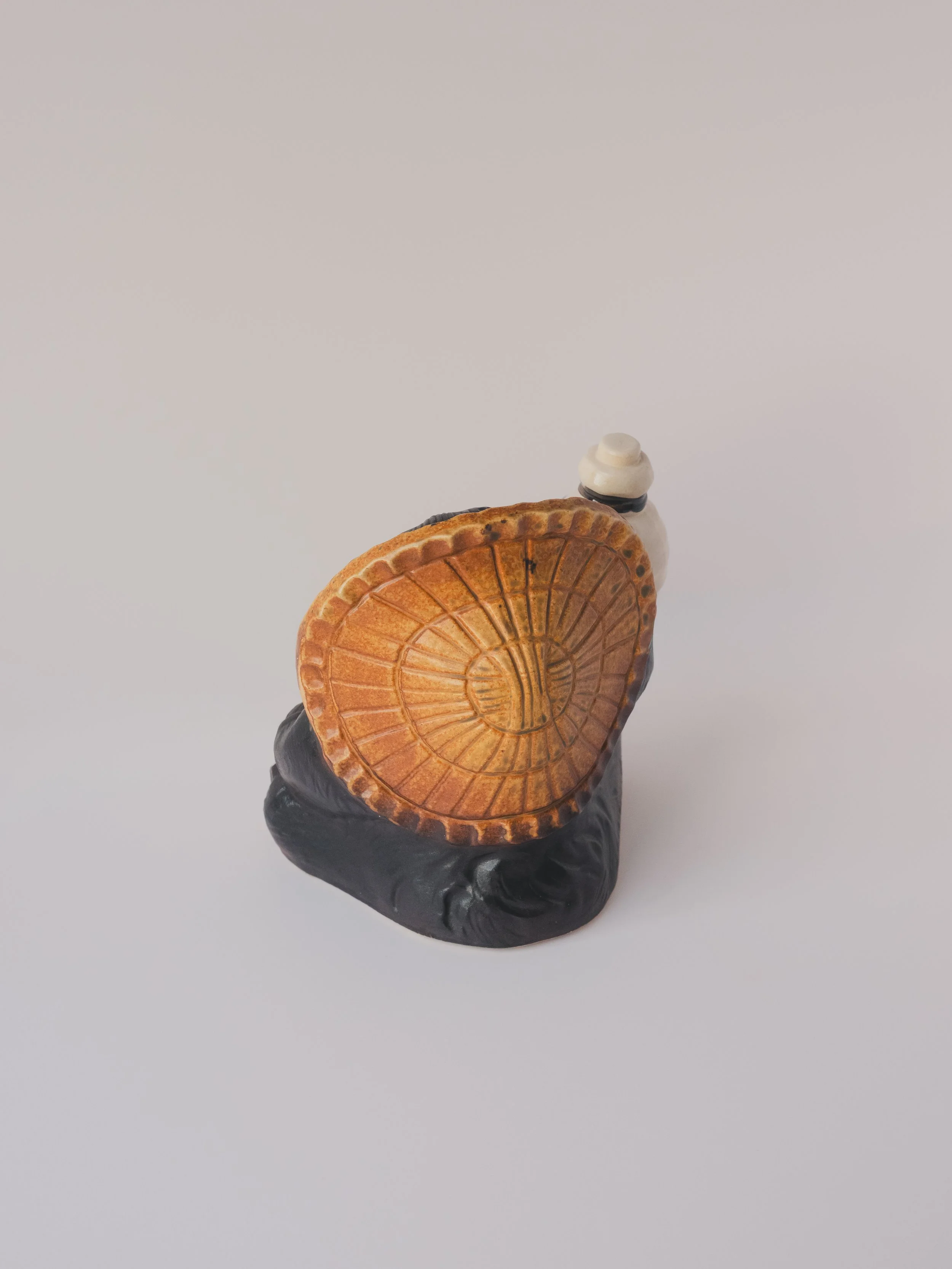 Image 4 of 9
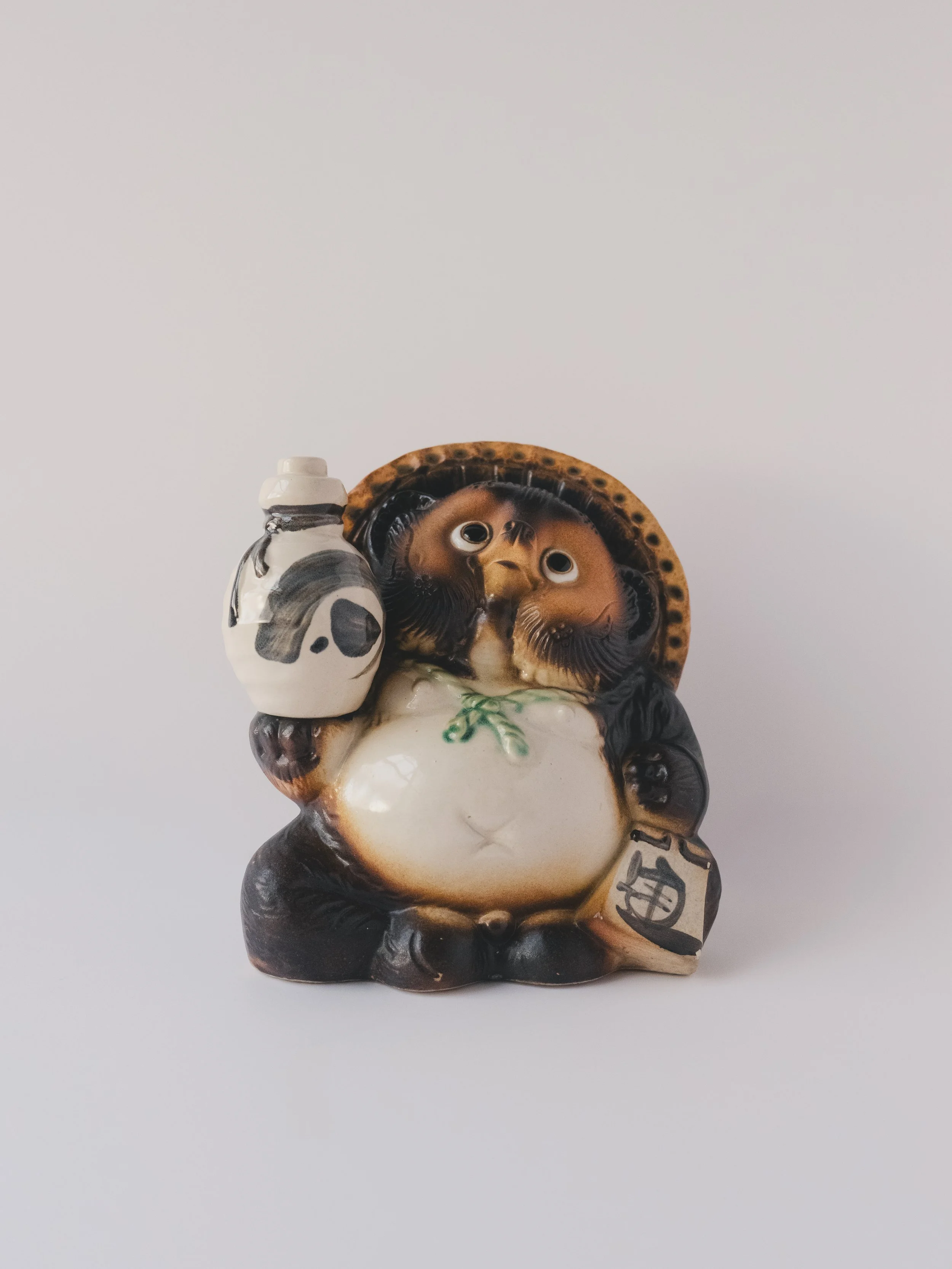 Image 5 of 9
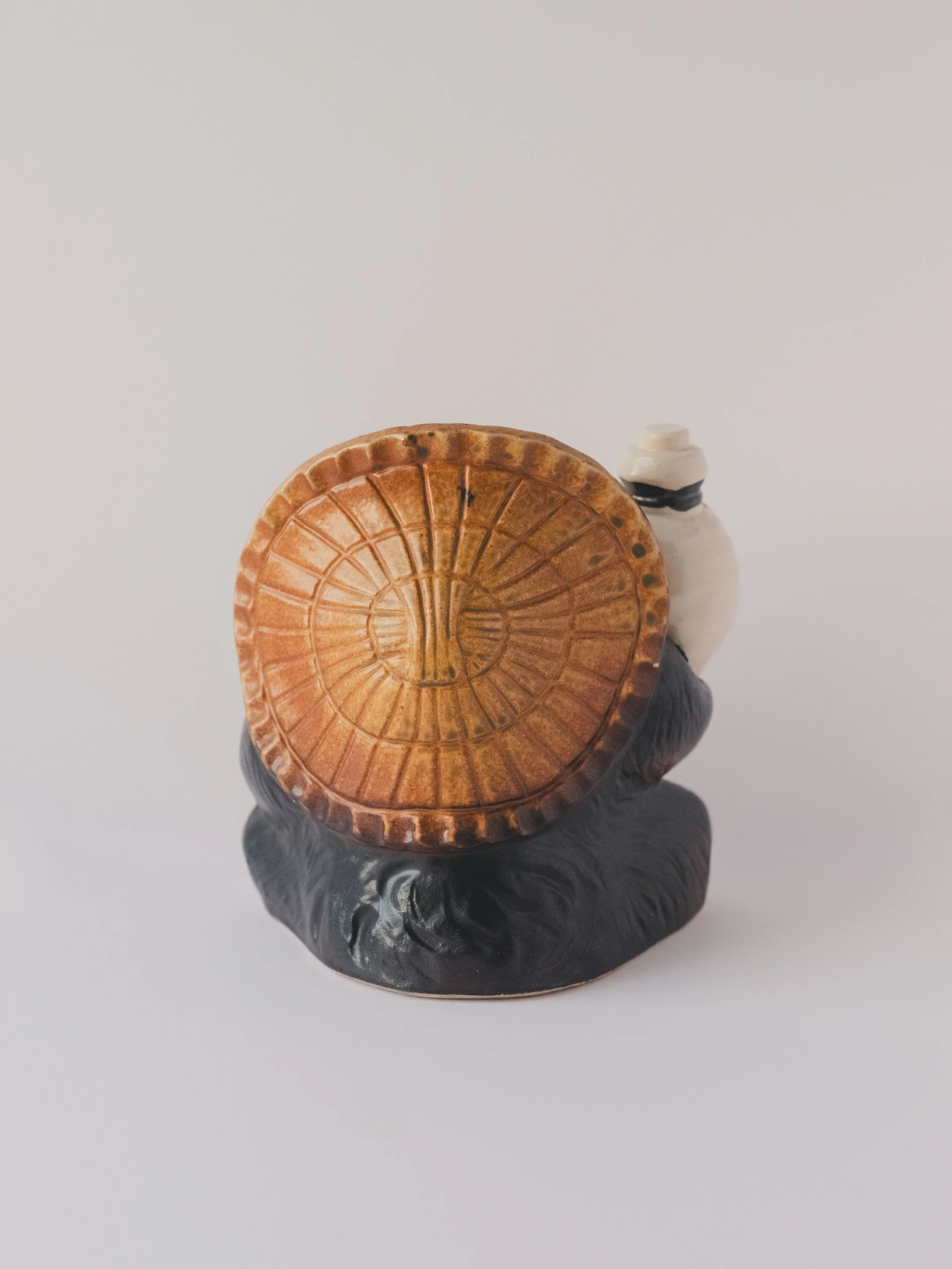 Image 6 of 9
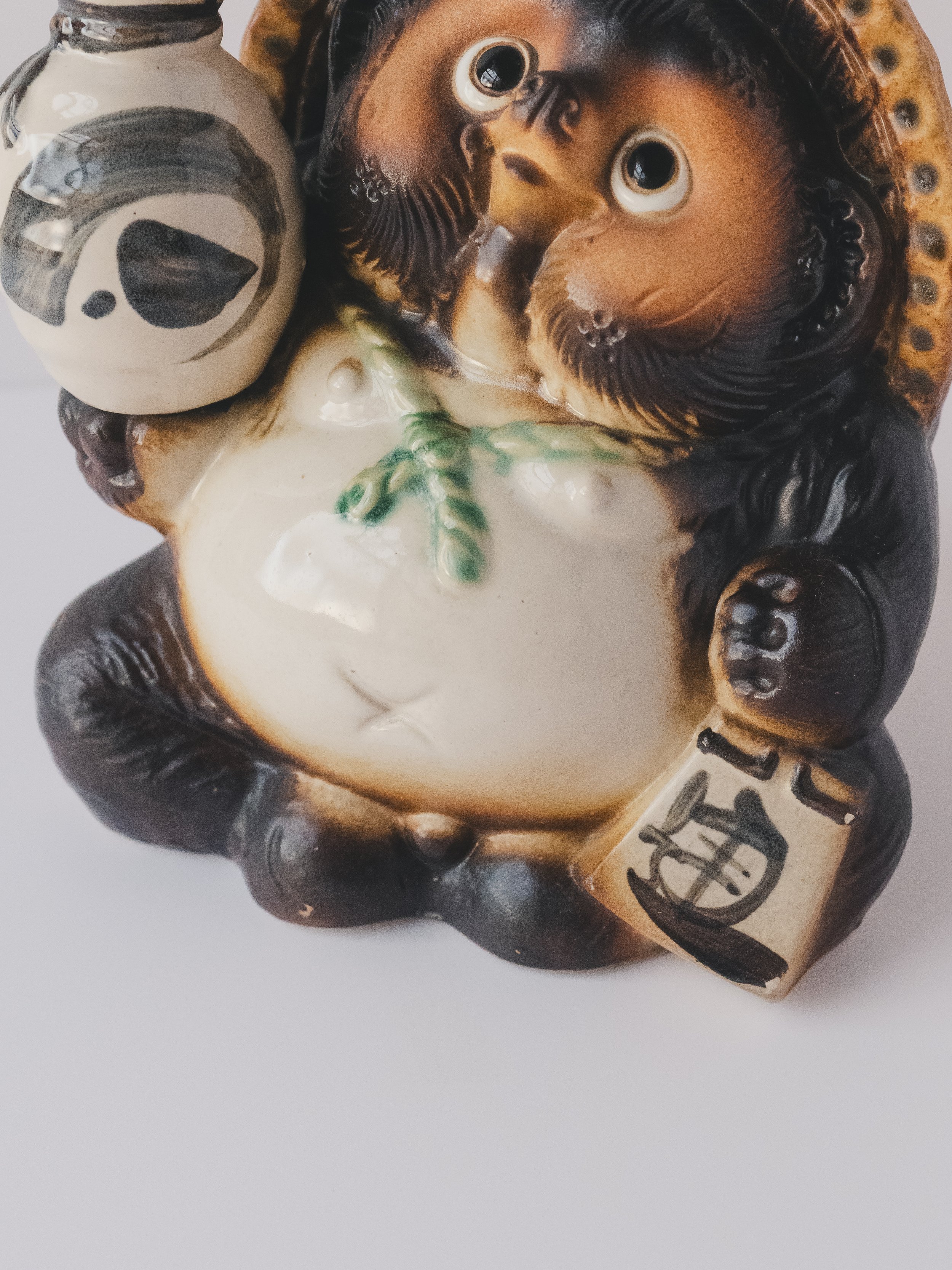 Image 7 of 9
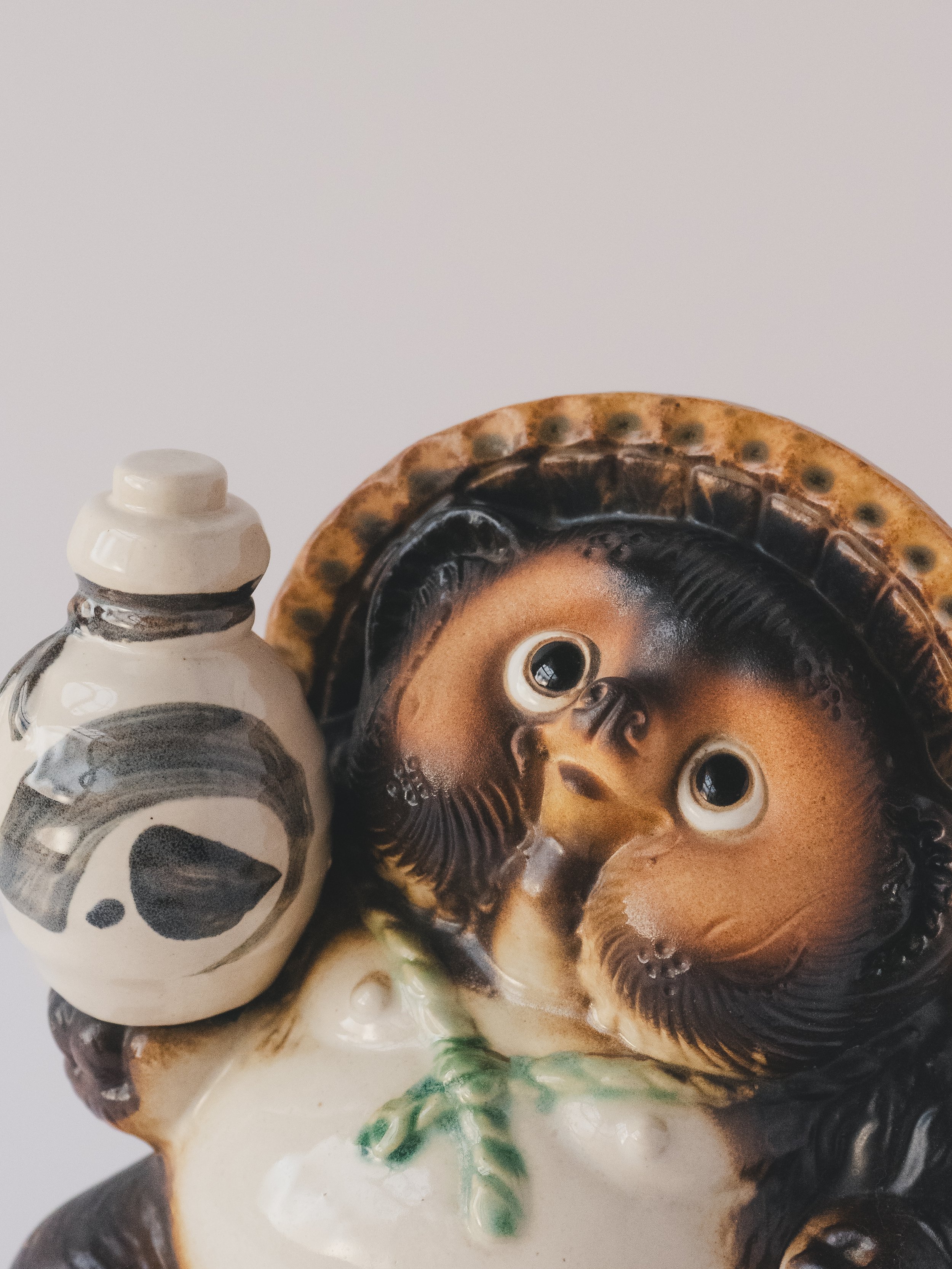 Image 8 of 9
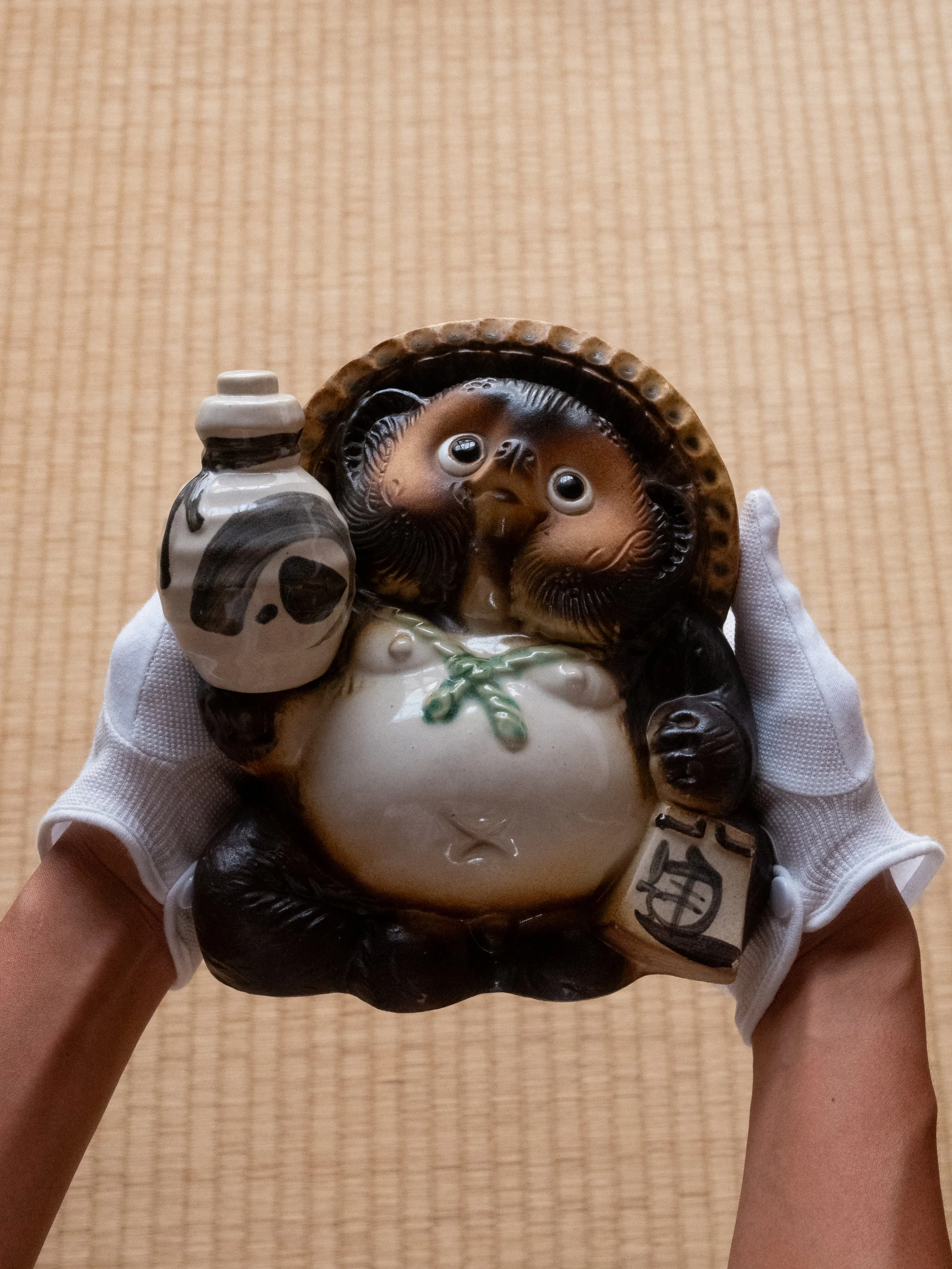 Image 9 of 9