【 The Concept 】
The bear has a fish in its mouth. It caught it sideways and has not put it down. The fish is still twisting — you can see it in the bend of the tail. In the northern island where this was carved, the bear is not an animal. It is a god dressed as an animal, sent down from another world carrying meat and fur as gifts for the people who live below. The fish in its mouth is another god — the one that feeds the rivers every autumn. This carving is the moment two gods meet. One holds. One struggles. Neither lets go.
【 The Function 】
A carved wooden bear. Twelve centimeters from nose to tail, eight and a half centimeters tall, six centimeters wide. Carved from a single block of pale northern hardwood, stained dark brown, finished matte. The bear walks on all fours with its right front paw extended forward and its left pulled back — mid-stride. The fish hangs crosswise from the jaw, tail curving upward. The shoulder hump rises above the head. At 156 grams it is denser than it looks. The base is the belly — flat, stable, and low to the ground.
【 The Texture 】
The entire surface is faceted — carved with broad, flat chisel strokes that were never sanded away. Each cut is a plane. Each plane catches light at a different angle. This is deliberate. The technique is called face-carving: instead of cutting individual hairs into the wood, the carver leaves the blade marks as the finish. The result is a surface that shifts between light and shadow as you move around it. The stain is dark — somewhere between chestnut and charcoal — applied over the raw wood and left matte. Where years of handling have worn the edges of the chisel marks, the lighter wood beneath shows through in thin lines, like veins on the back of a hand.
【 Presence 】
It walks forward and does not stop. The head is low. The shoulders are high. The fish does not fit neatly in the mouth — it sticks out on both sides, bending, resisting. The bear does not care. It has what it came for. Set it on a desk or a shelf and it becomes the thing in the room that is going somewhere. Everything else is sitting still. The bear is not.
Sourced from a private collection in northern Japan.
【 The Concept 】
The bear has a fish in its mouth. It caught it sideways and has not put it down. The fish is still twisting — you can see it in the bend of the tail. In the northern island where this was carved, the bear is not an animal. It is a god dressed as an animal, sent down from another world carrying meat and fur as gifts for the people who live below. The fish in its mouth is another god — the one that feeds the rivers every autumn. This carving is the moment two gods meet. One holds. One struggles. Neither lets go.
【 The Function 】
A carved wooden bear. Twelve centimeters from nose to tail, eight and a half centimeters tall, six centimeters wide. Carved from a single block of pale northern hardwood, stained dark brown, finished matte. The bear walks on all fours with its right front paw extended forward and its left pulled back — mid-stride. The fish hangs crosswise from the jaw, tail curving upward. The shoulder hump rises above the head. At 156 grams it is denser than it looks. The base is the belly — flat, stable, and low to the ground.
【 The Texture 】
The entire surface is faceted — carved with broad, flat chisel strokes that were never sanded away. Each cut is a plane. Each plane catches light at a different angle. This is deliberate. The technique is called face-carving: instead of cutting individual hairs into the wood, the carver leaves the blade marks as the finish. The result is a surface that shifts between light and shadow as you move around it. The stain is dark — somewhere between chestnut and charcoal — applied over the raw wood and left matte. Where years of handling have worn the edges of the chisel marks, the lighter wood beneath shows through in thin lines, like veins on the back of a hand.
【 Presence 】
It walks forward and does not stop. The head is low. The shoulders are high. The fish does not fit neatly in the mouth — it sticks out on both sides, bending, resisting. The bear does not care. It has what it came for. Set it on a desk or a shelf and it becomes the thing in the room that is going somewhere. Everything else is sitting still. The bear is not.
Sourced from a private collection in northern Japan.


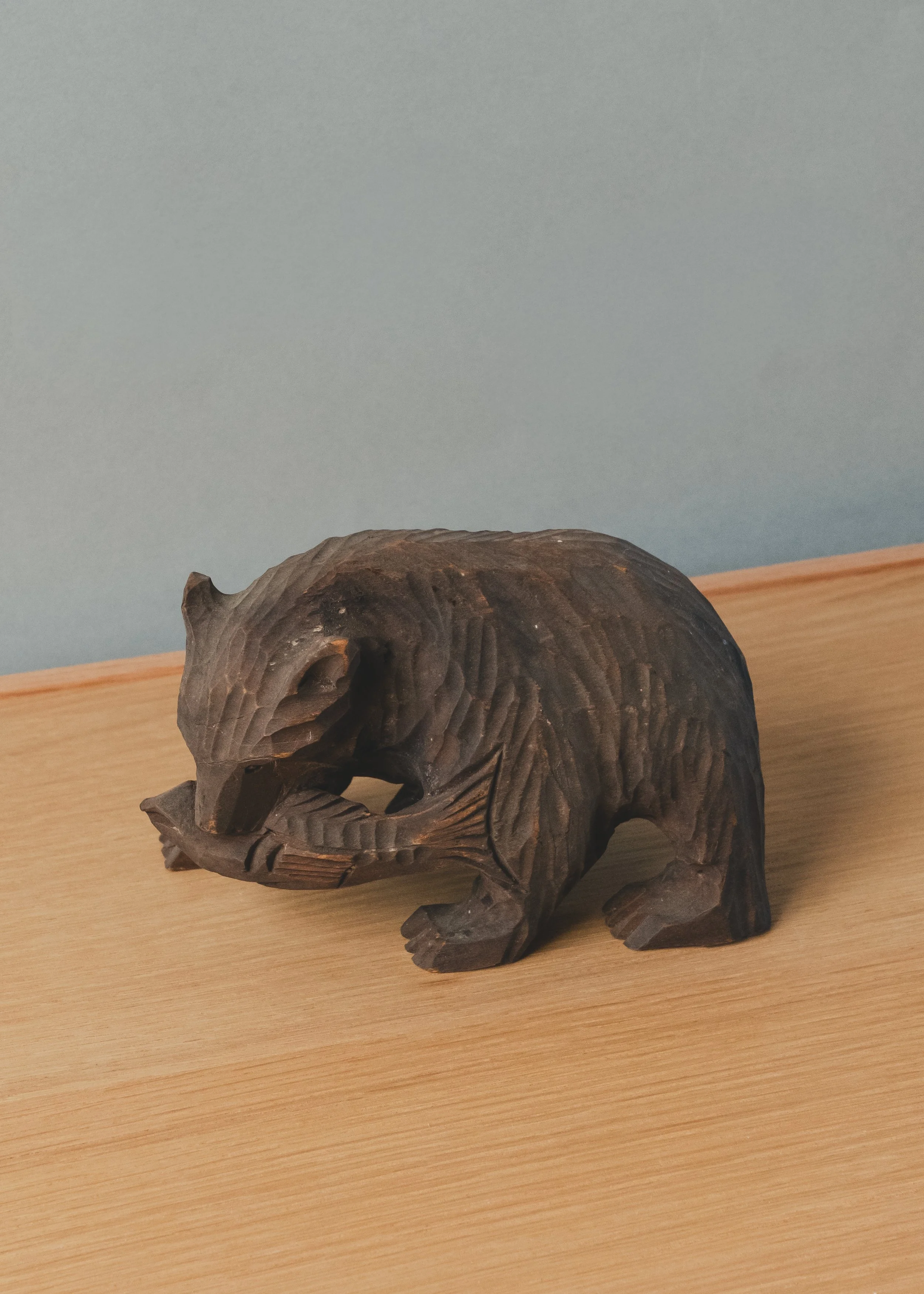 Image 1 of 10
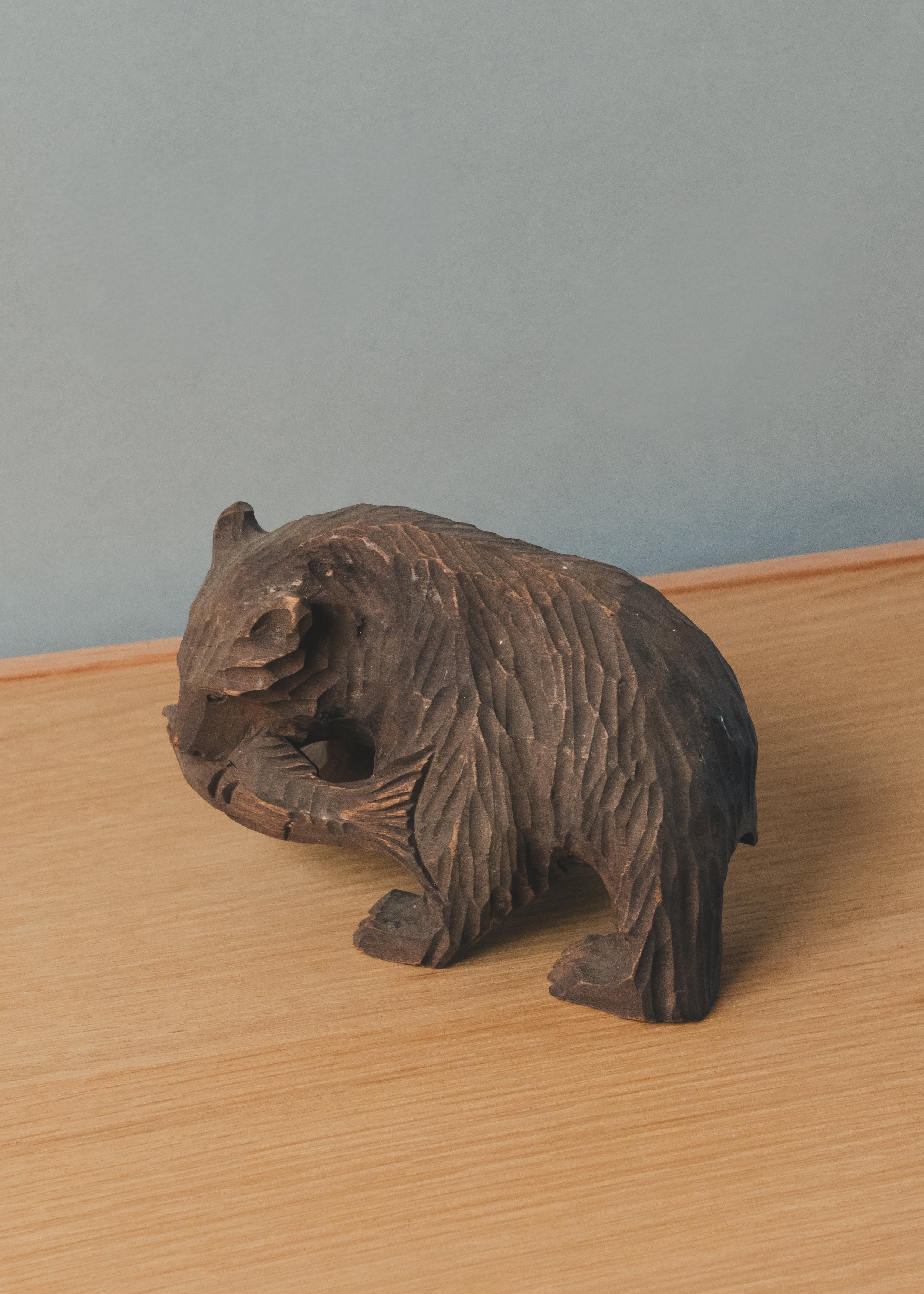 Image 2 of 10
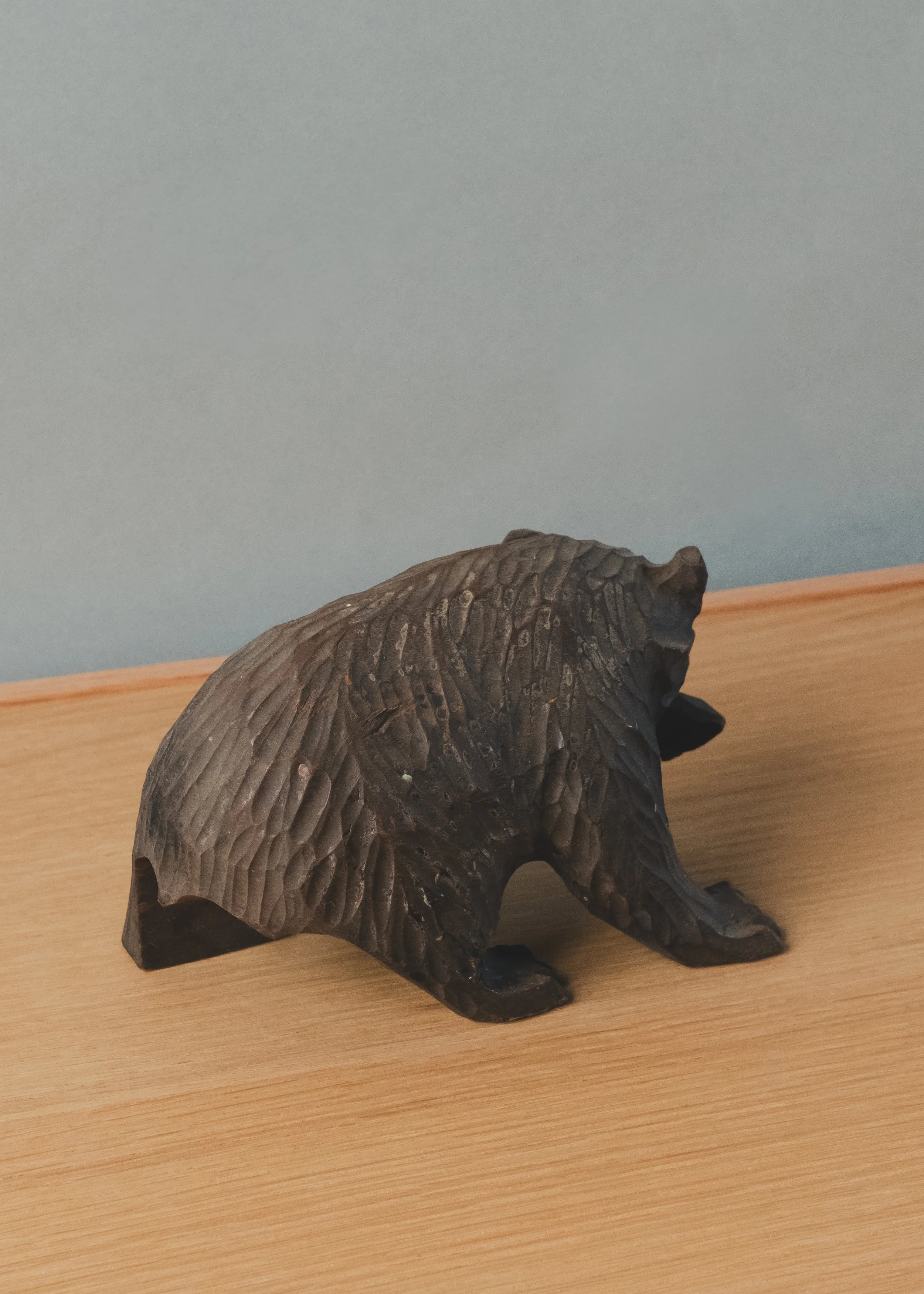 Image 3 of 10
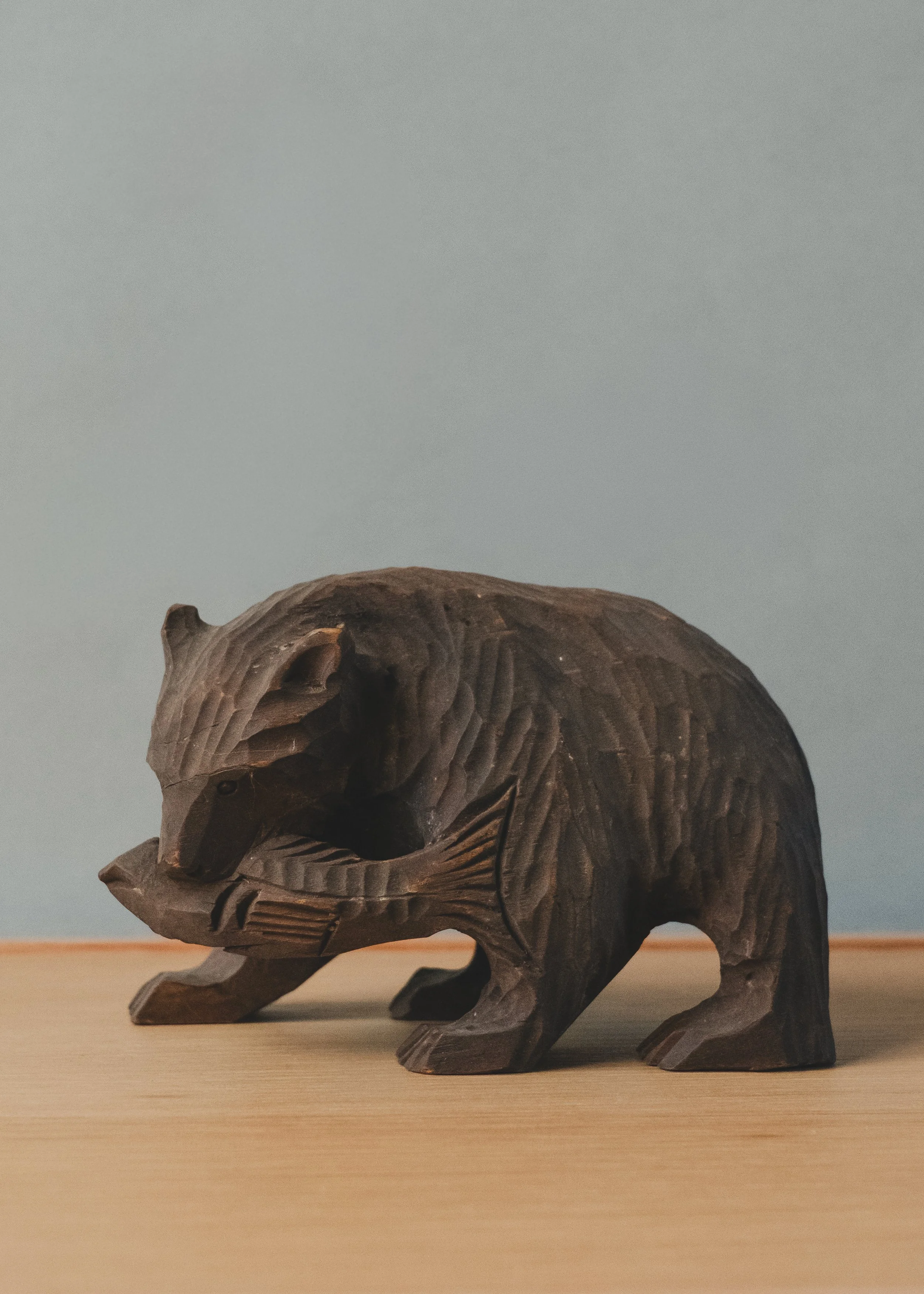 Image 4 of 10
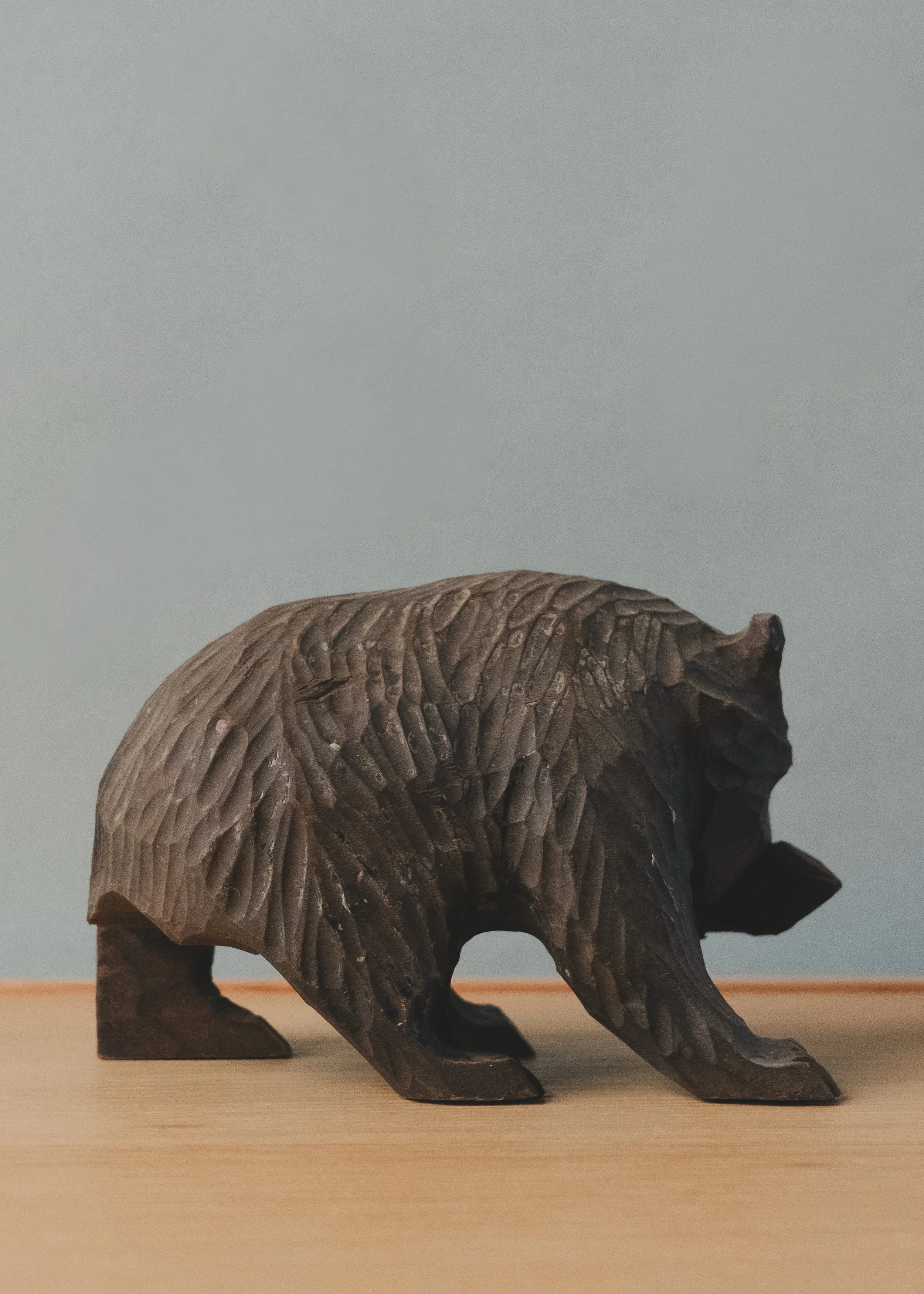 Image 5 of 10
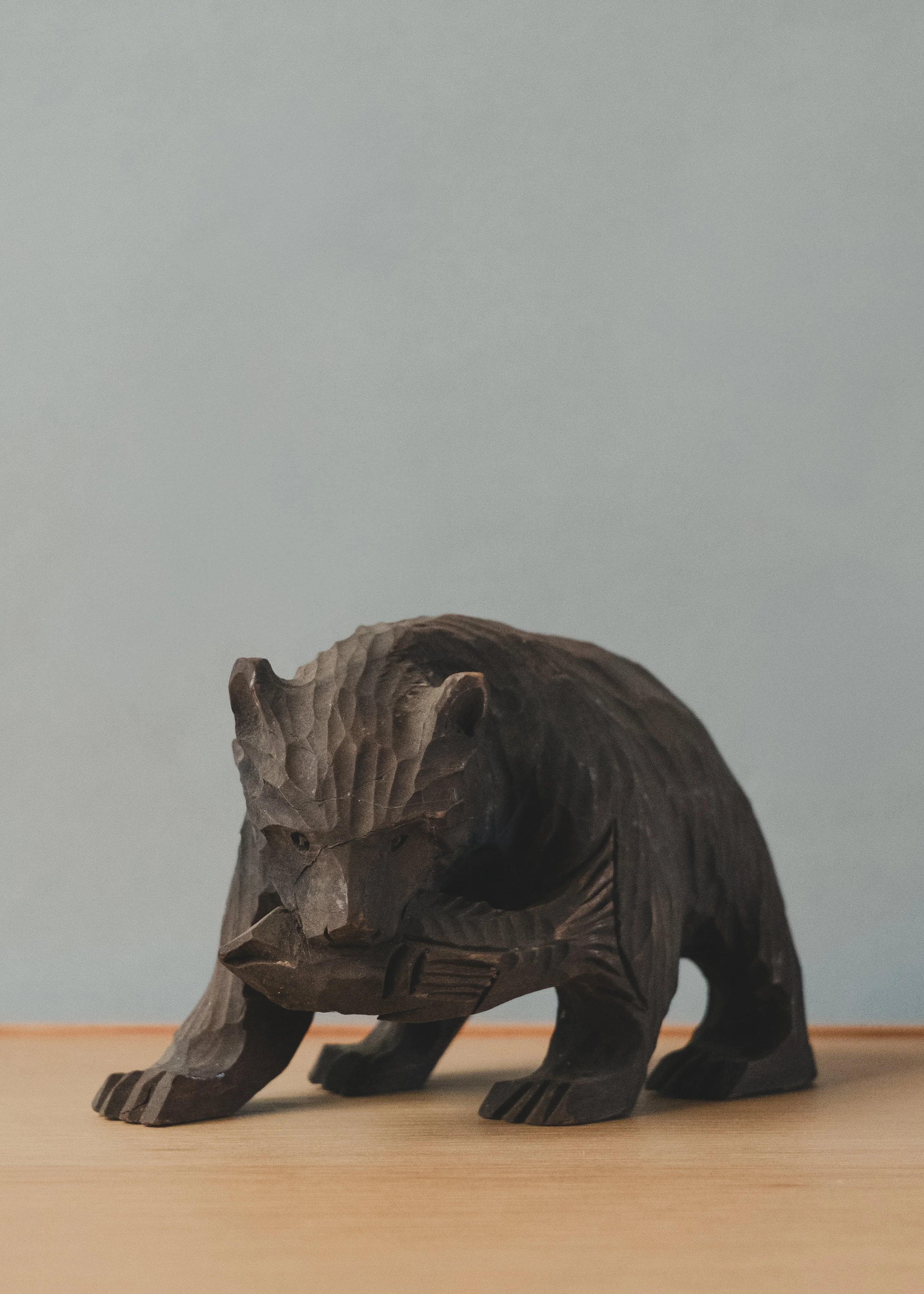 Image 6 of 10
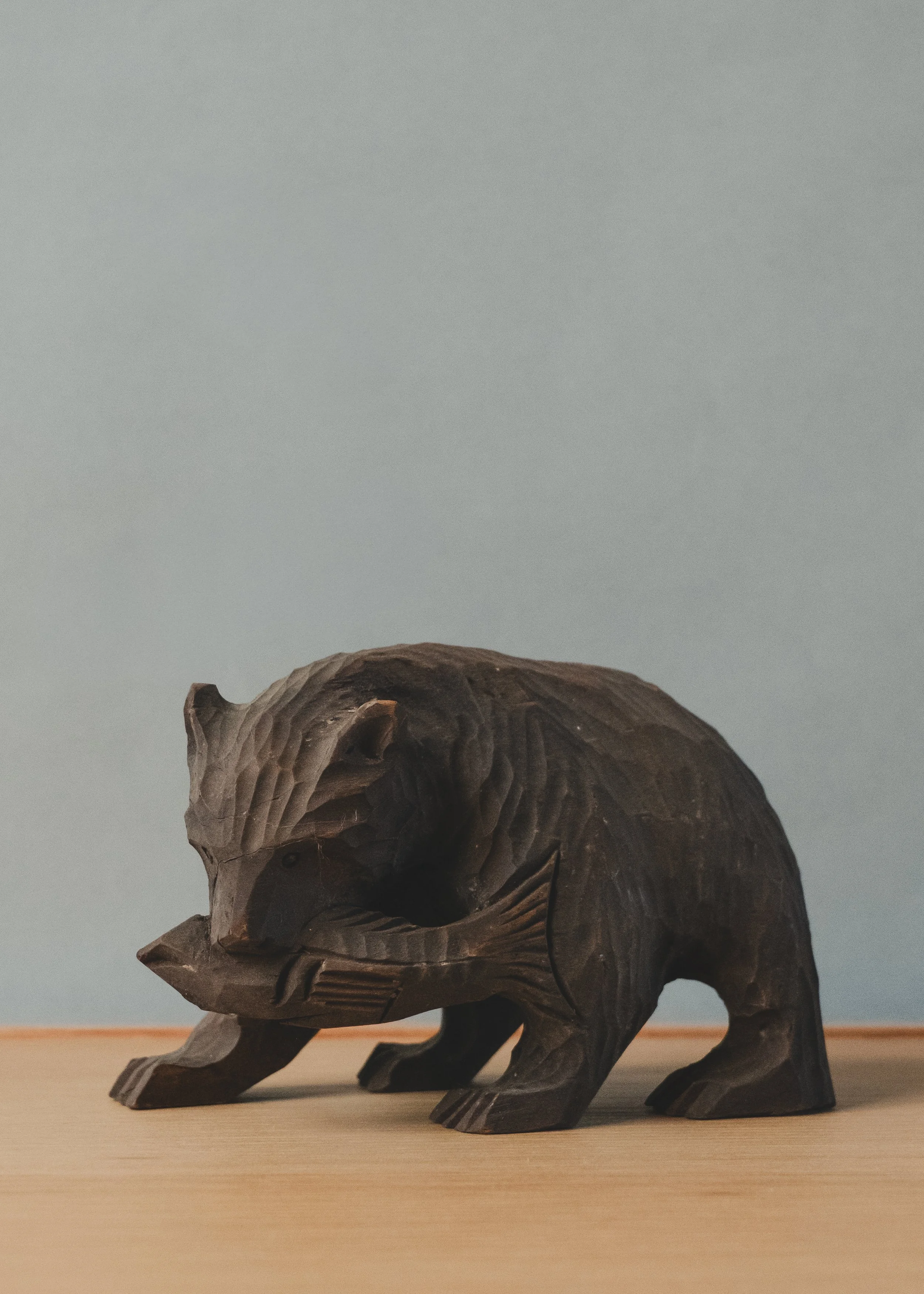 Image 7 of 10
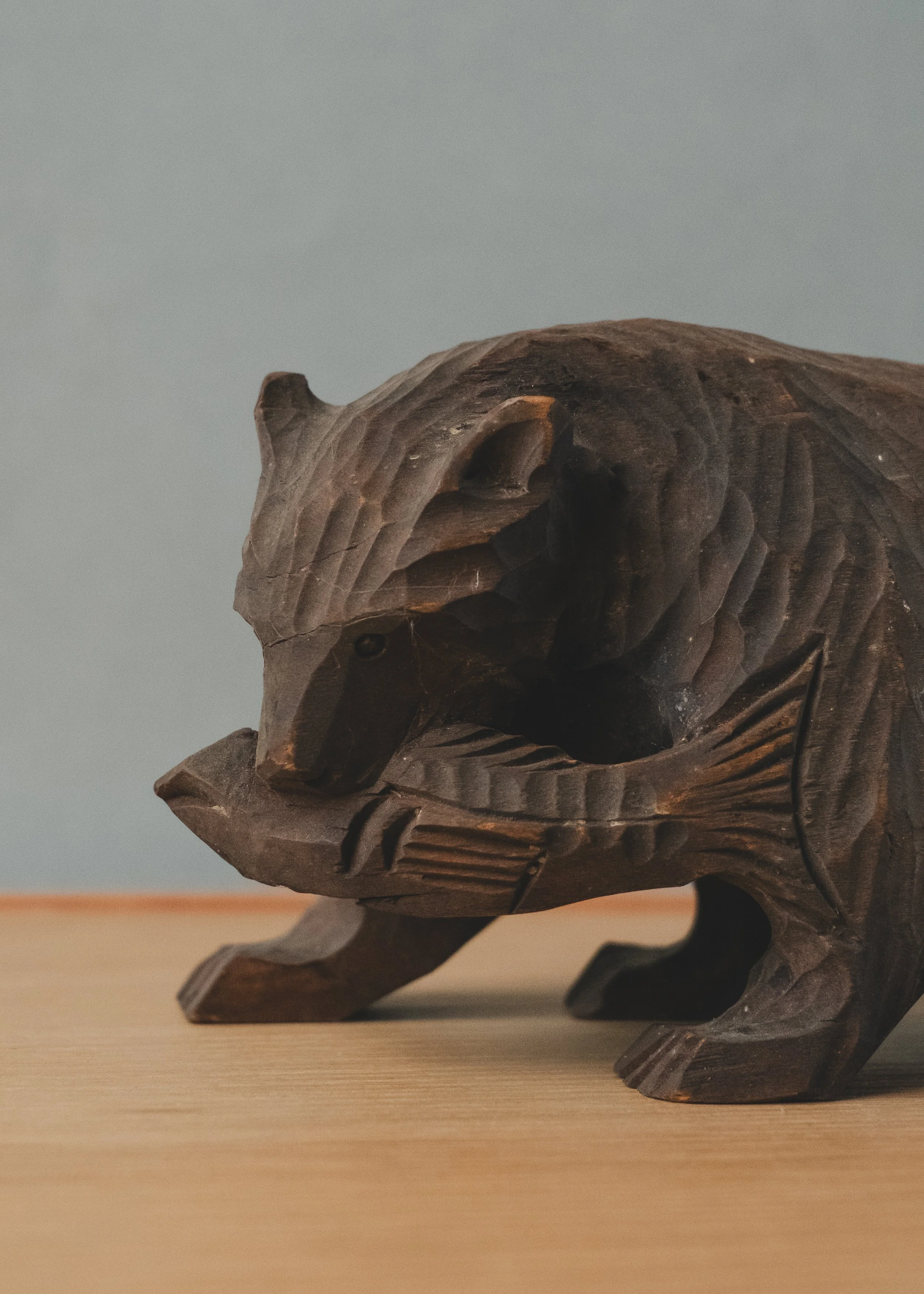 Image 8 of 10
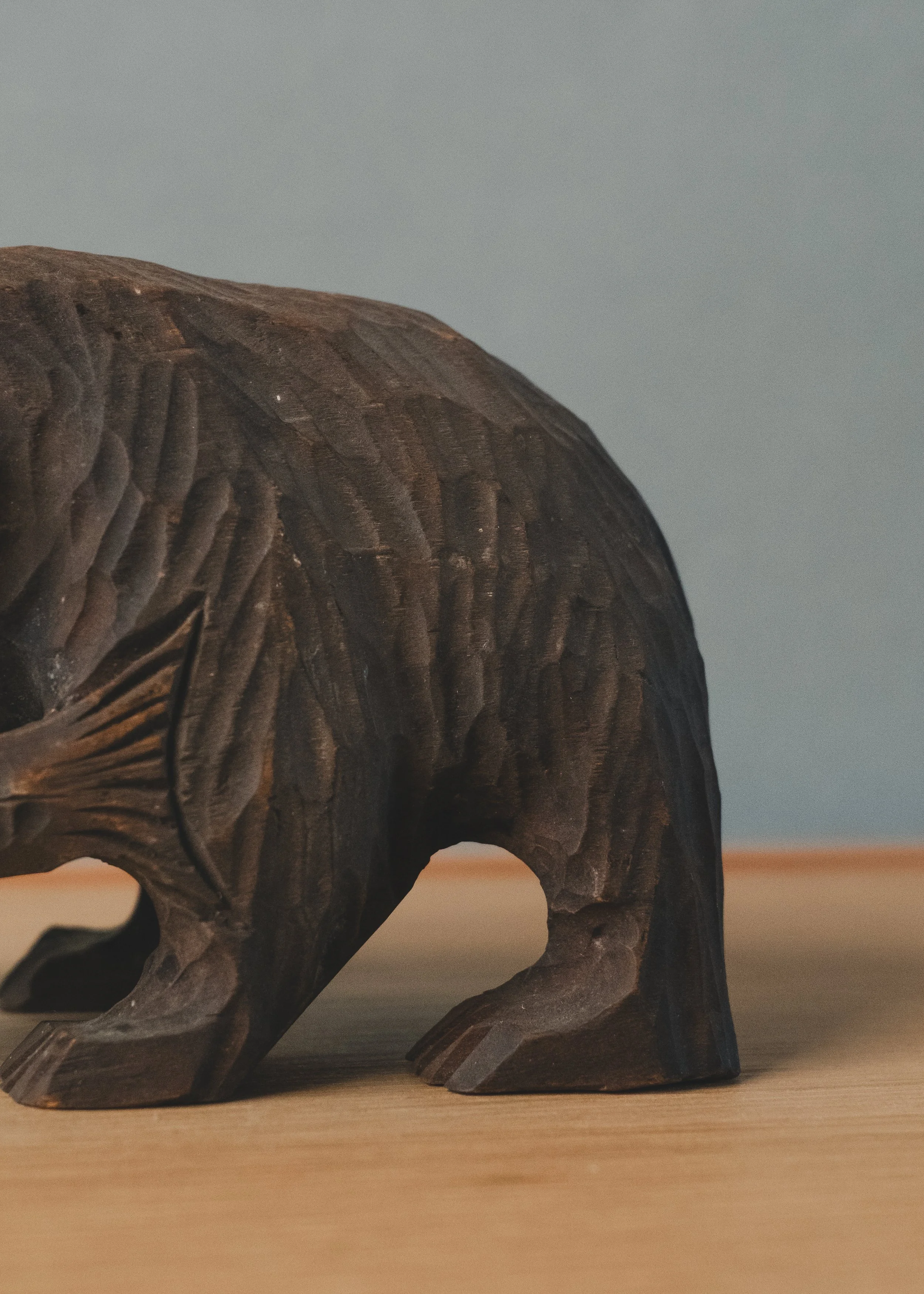 Image 9 of 10
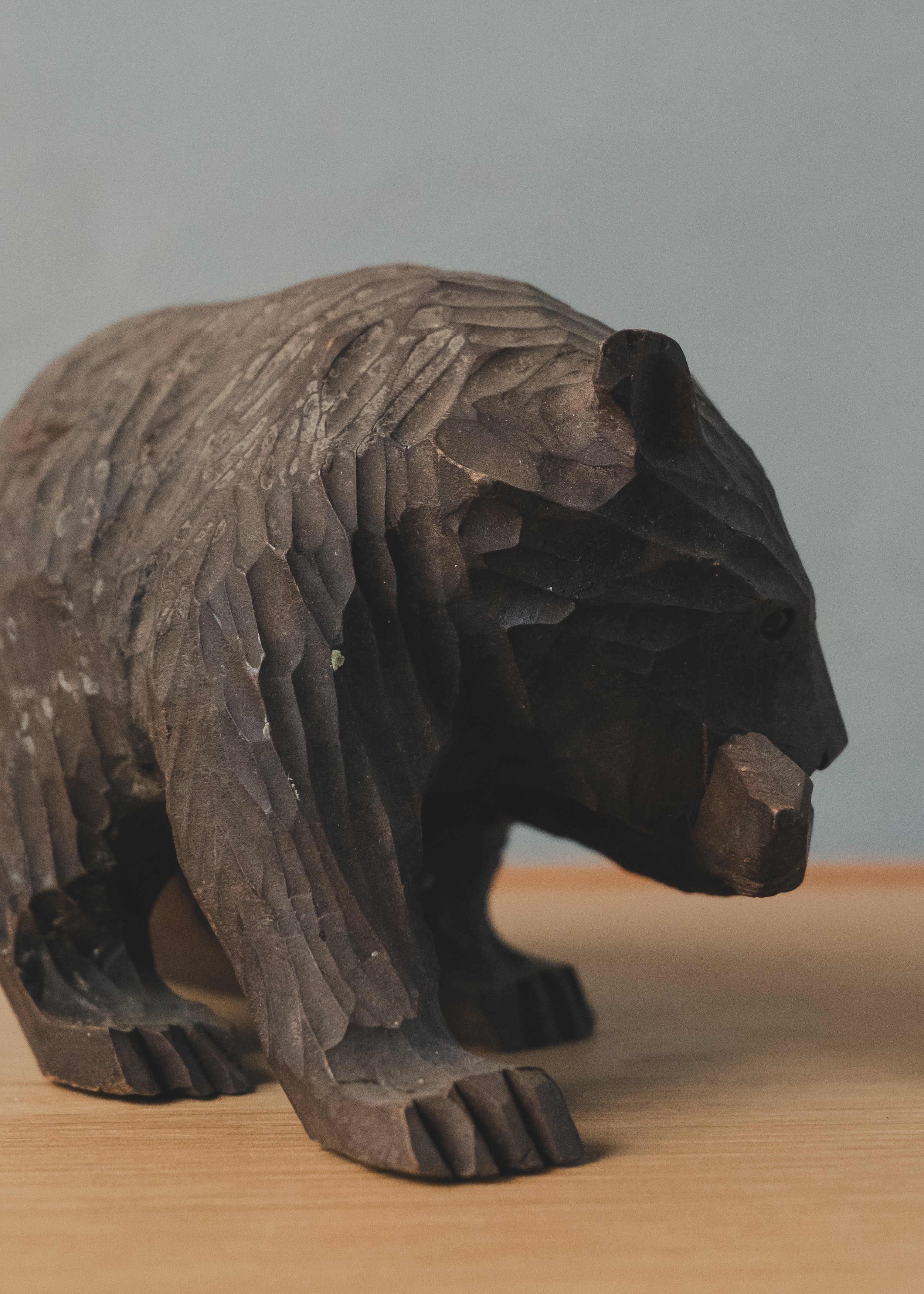 Image 10 of 10