【 The Concept 】
Someone sat down during the war and copied out an old dialogue between a monk and a samurai. Not on a typewriter. Not on printed paper. By hand, with a brush, in ink, onto sheets of handmade paper, then folded and stitched together into a booklet. The dialogue they copied was already centuries old — a famous exchange of comic verses between a Zen priest who mocked all authority and a government official who tried to keep up. Why someone chose to copy this particular text during wartime is not recorded. What survives is the booklet, the brushwork, and a few loose pages of unrelated writing that were stored alongside it.
【 The Function 】
A handwritten manuscript booklet and several loose pages. The booklet contains a personal transcription of a classical verse dialogue. The loose pages contain unrelated writing in the same hand. All pages are brushed in ink on Japanese paper. The binding is hand-stitched. The paper has darkened with age. Some pages show insect damage. The edges are soft from handling.
【 The Texture 】
Handmade paper that has turned from white to the color of weak tea. The ink has not faded — it sits on top of the paper in strokes that are still sharp where the brush pressed down and thin where it lifted away. The characters are written in a cursive script that connects one to the next in a single unbroken line, the way Japanese was written before typewriters made every letter the same size. The paper is not smooth. It has the texture of cloth — fibers visible, surface uneven, edges frayed where they were folded too many times. Some pages have small holes where insects ate through. These are not defects. They are the marks of a document that has been alive for eighty years.
【 Presence 】
It is the only object in the archive that was made by its owner. Everything else was made by a craftsman for someone else. This was made by one person, for themselves, in a time when the world outside was on fire. They chose to sit down and copy out a dialogue about a monk who laughed at power. The handwriting is steady. The ink is even. The pages are neat. Whatever was happening outside the room where this was written, inside that room, someone was calm enough to hold a brush.
Sourced from a private collection in Japan.
【 The Concept 】
Someone sat down during the war and copied out an old dialogue between a monk and a samurai. Not on a typewriter. Not on printed paper. By hand, with a brush, in ink, onto sheets of handmade paper, then folded and stitched together into a booklet. The dialogue they copied was already centuries old — a famous exchange of comic verses between a Zen priest who mocked all authority and a government official who tried to keep up. Why someone chose to copy this particular text during wartime is not recorded. What survives is the booklet, the brushwork, and a few loose pages of unrelated writing that were stored alongside it.
【 The Function 】
A handwritten manuscript booklet and several loose pages. The booklet contains a personal transcription of a classical verse dialogue. The loose pages contain unrelated writing in the same hand. All pages are brushed in ink on Japanese paper. The binding is hand-stitched. The paper has darkened with age. Some pages show insect damage. The edges are soft from handling.
【 The Texture 】
Handmade paper that has turned from white to the color of weak tea. The ink has not faded — it sits on top of the paper in strokes that are still sharp where the brush pressed down and thin where it lifted away. The characters are written in a cursive script that connects one to the next in a single unbroken line, the way Japanese was written before typewriters made every letter the same size. The paper is not smooth. It has the texture of cloth — fibers visible, surface uneven, edges frayed where they were folded too many times. Some pages have small holes where insects ate through. These are not defects. They are the marks of a document that has been alive for eighty years.
【 Presence 】
It is the only object in the archive that was made by its owner. Everything else was made by a craftsman for someone else. This was made by one person, for themselves, in a time when the world outside was on fire. They chose to sit down and copy out a dialogue about a monk who laughed at power. The handwriting is steady. The ink is even. The pages are neat. Whatever was happening outside the room where this was written, inside that room, someone was calm enough to hold a brush.
Sourced from a private collection in Japan.


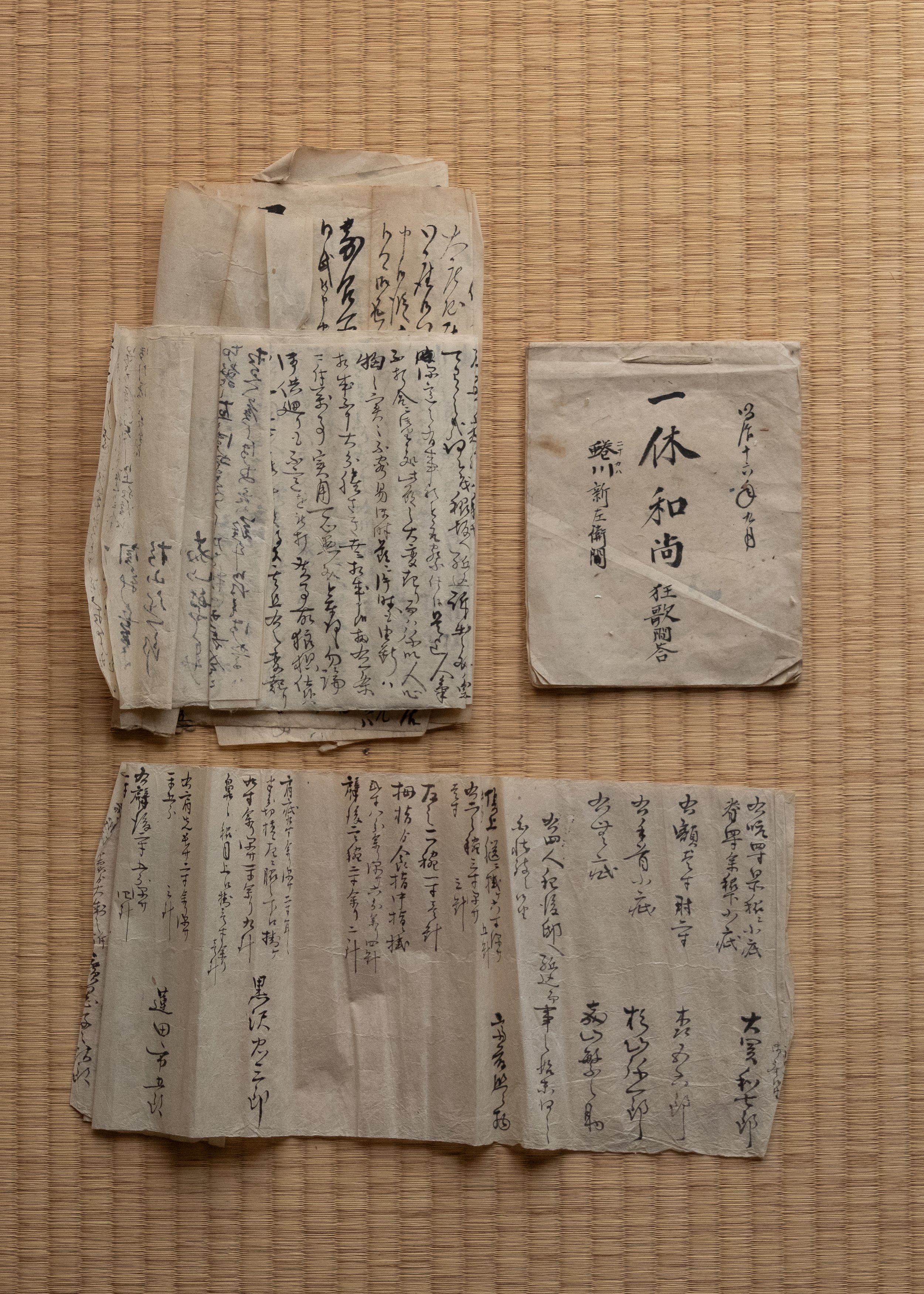 Image 1 of 7
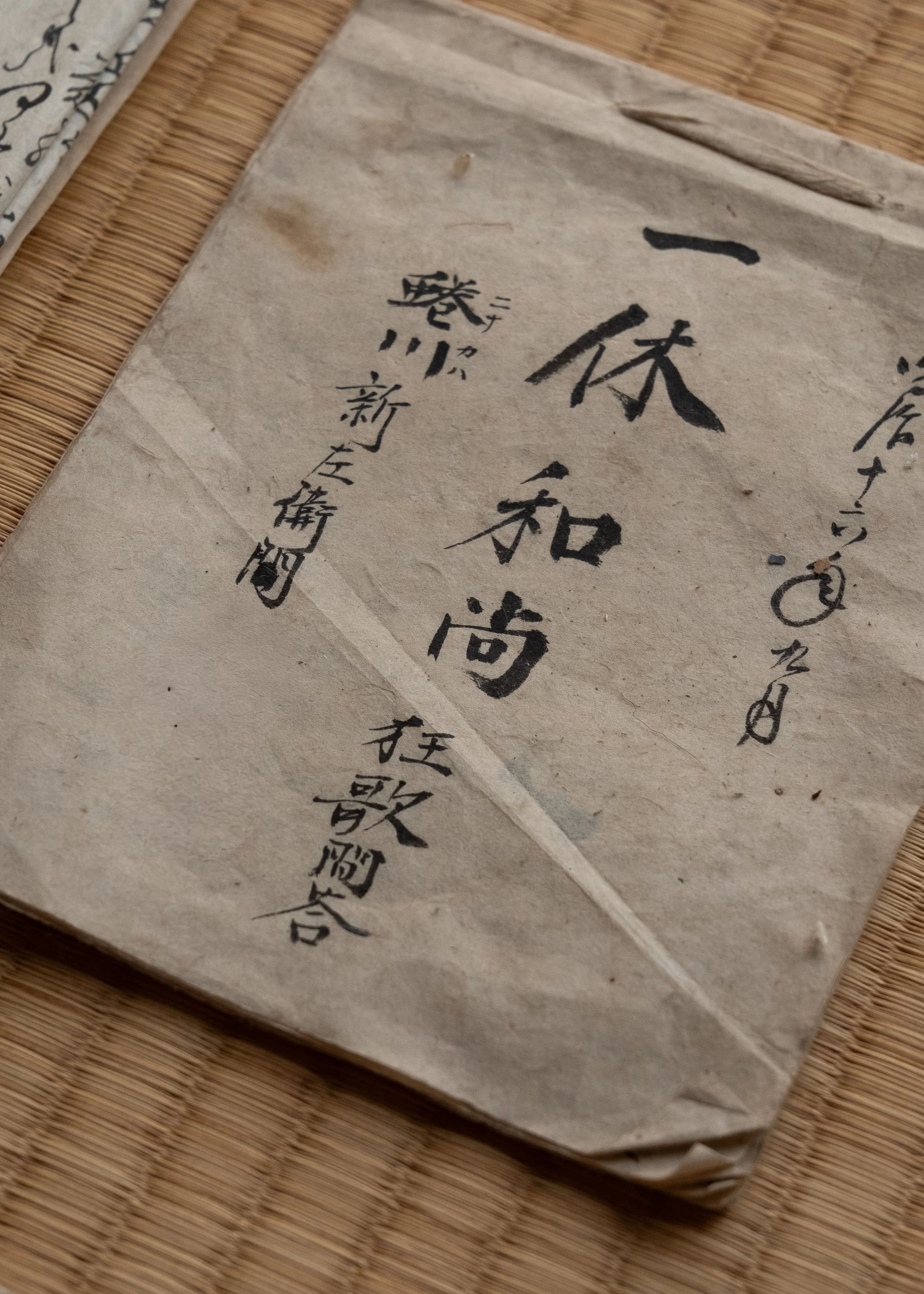 Image 2 of 7
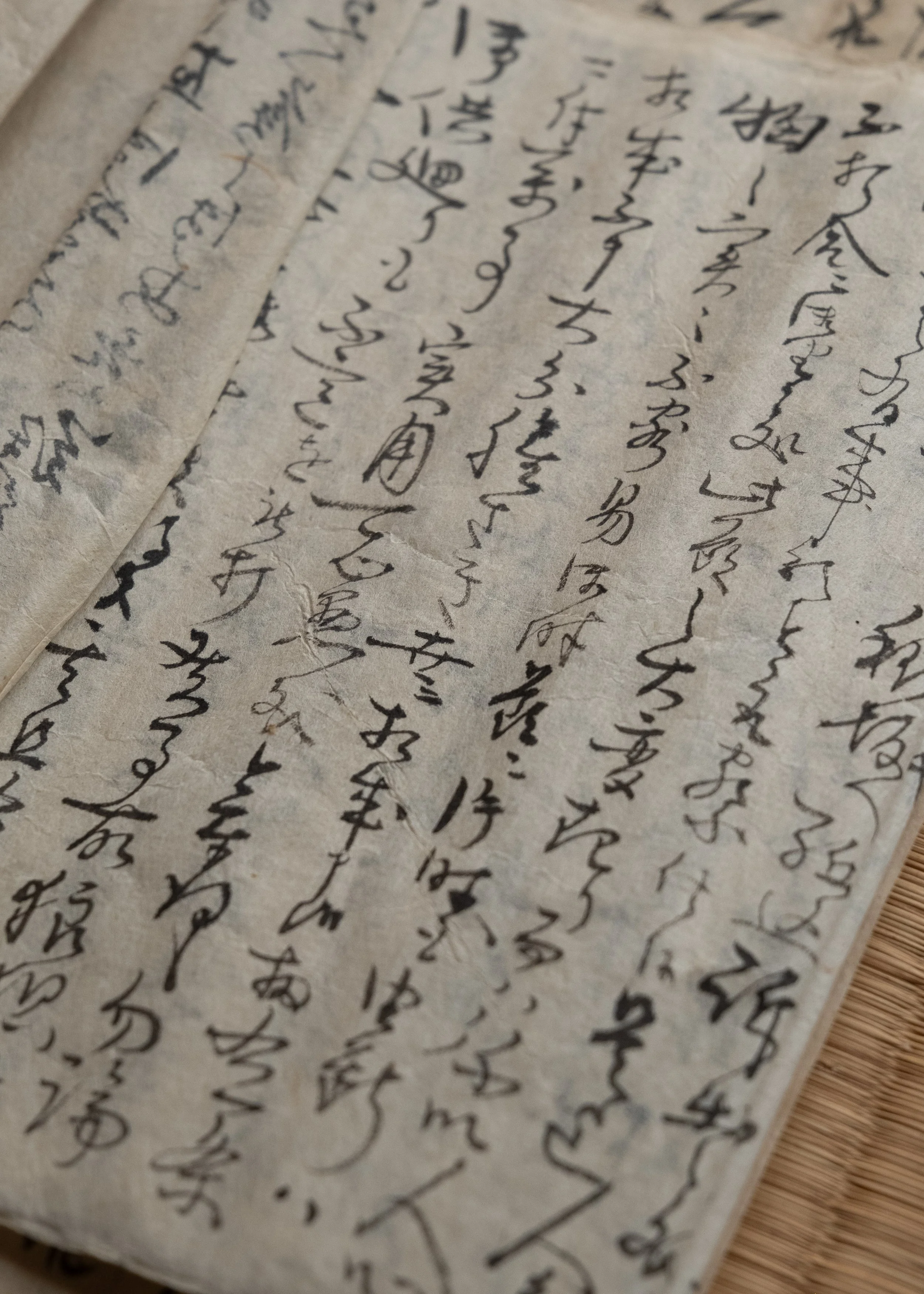 Image 3 of 7
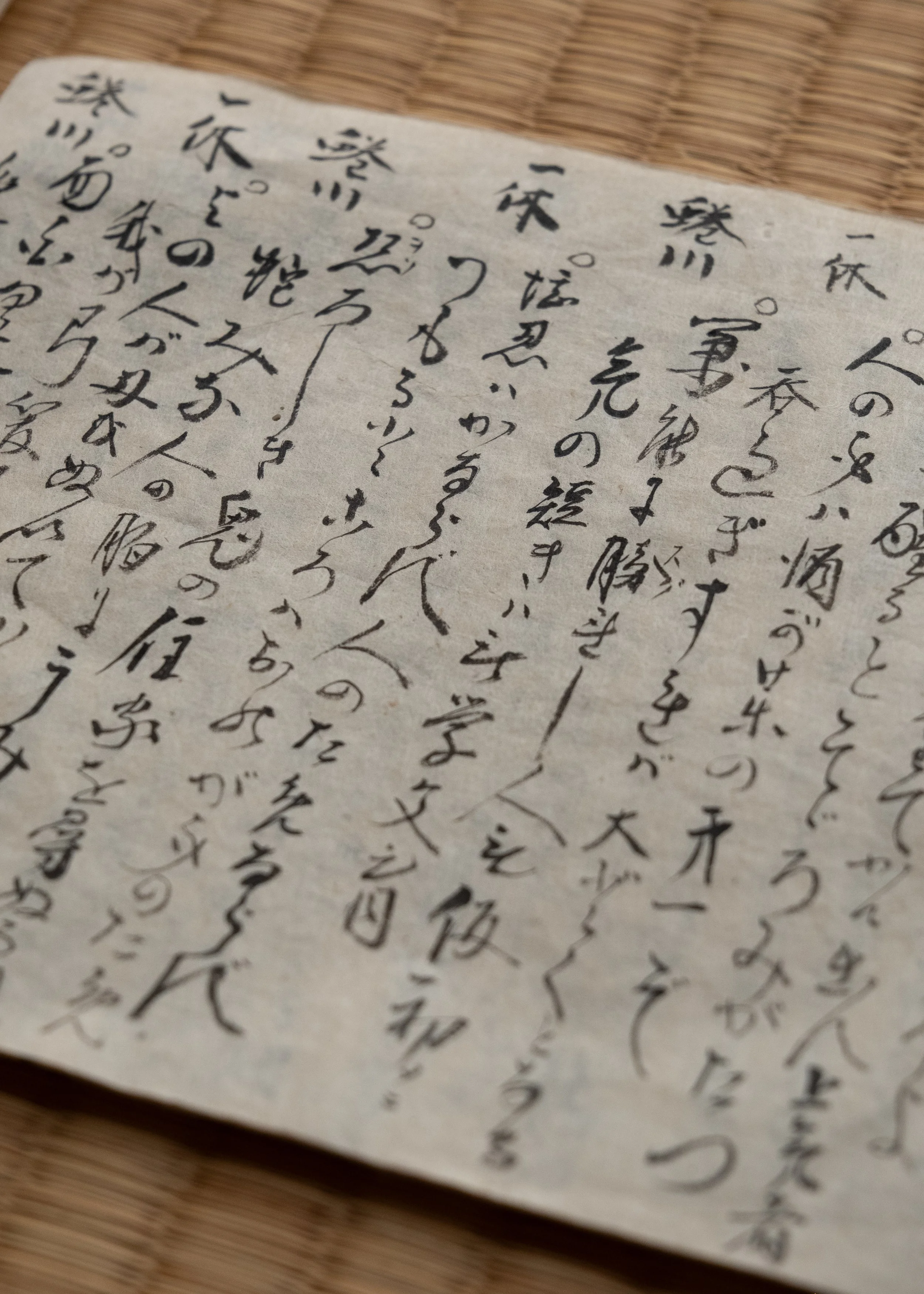 Image 4 of 7
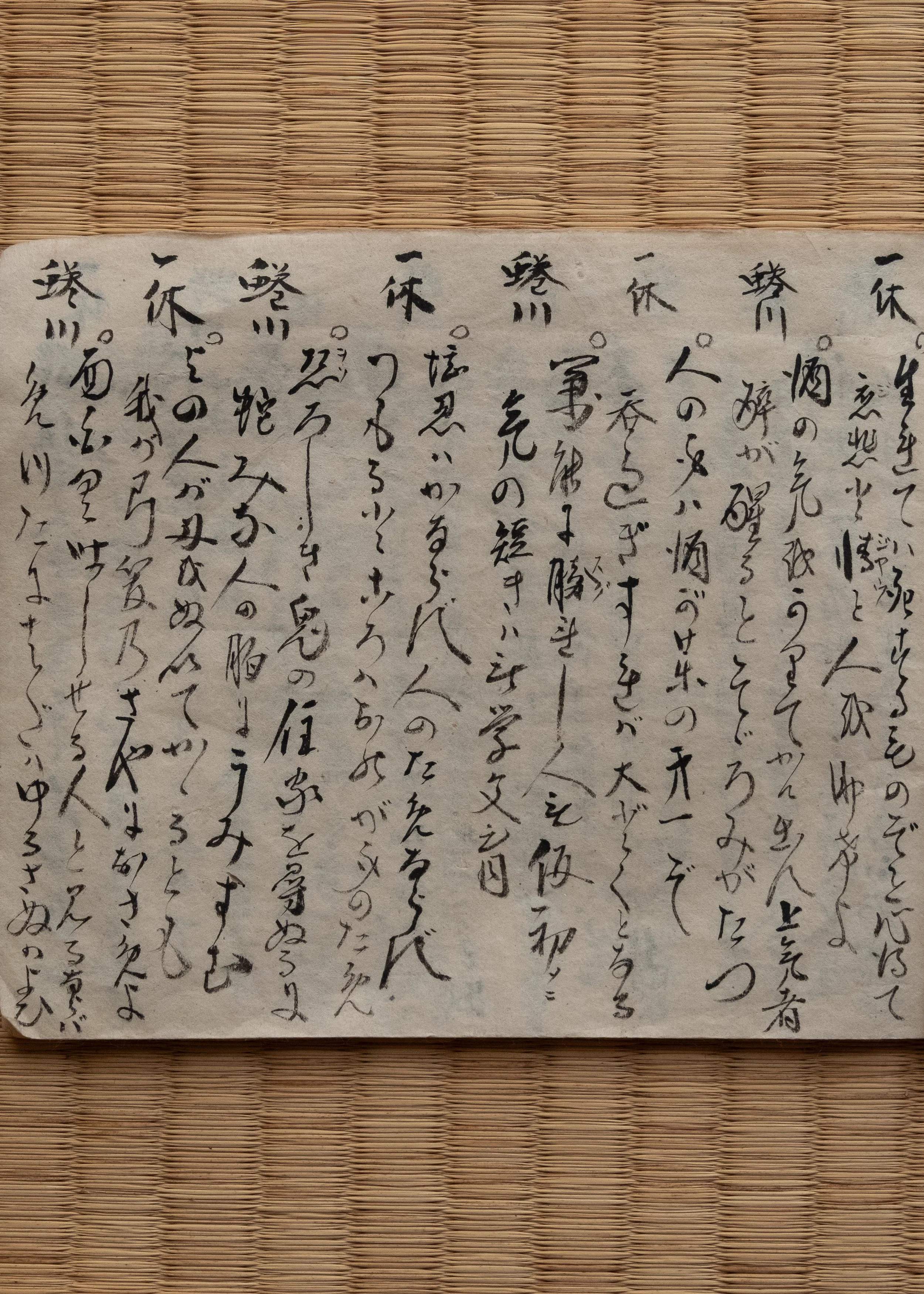 Image 5 of 7
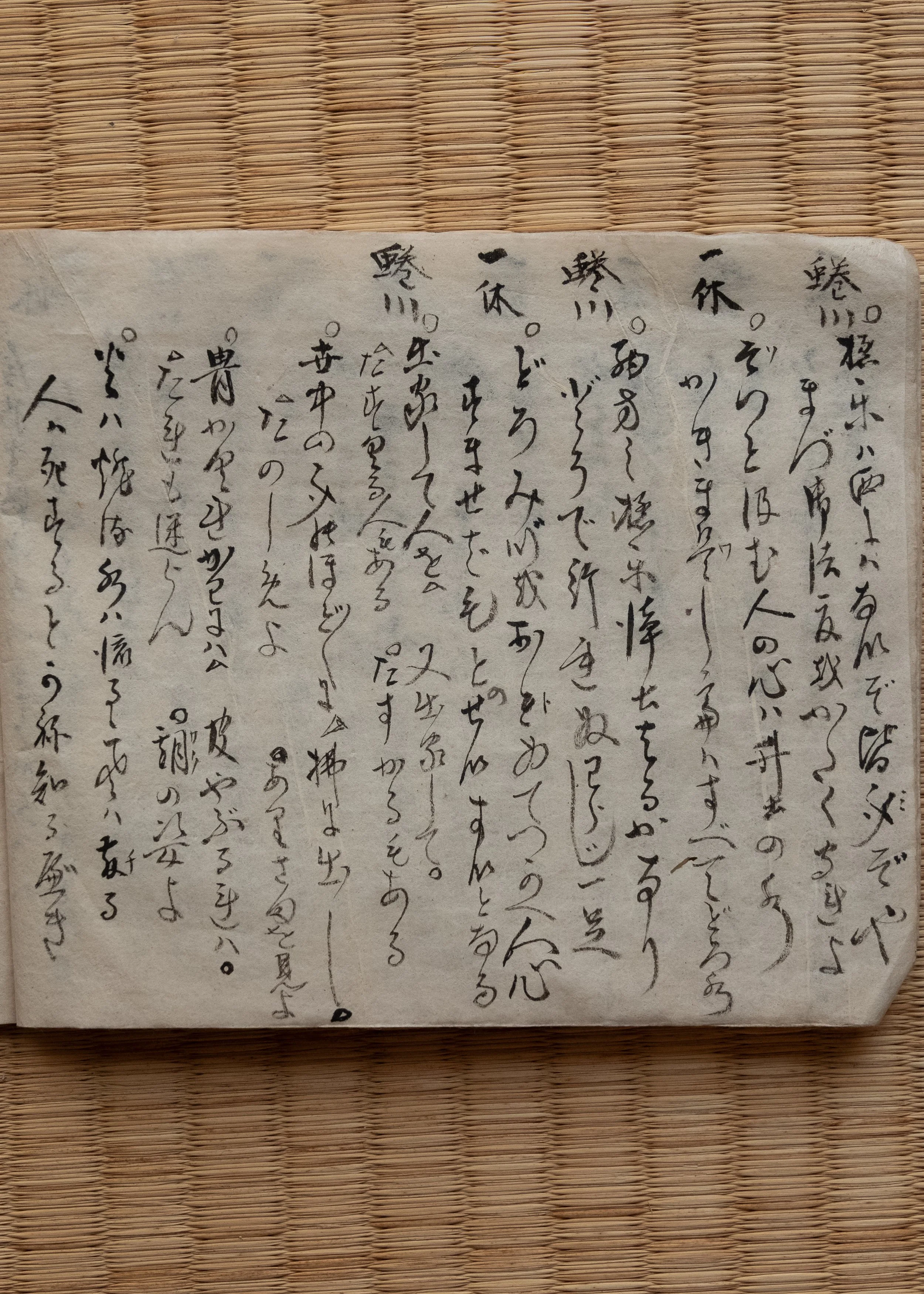 Image 6 of 7
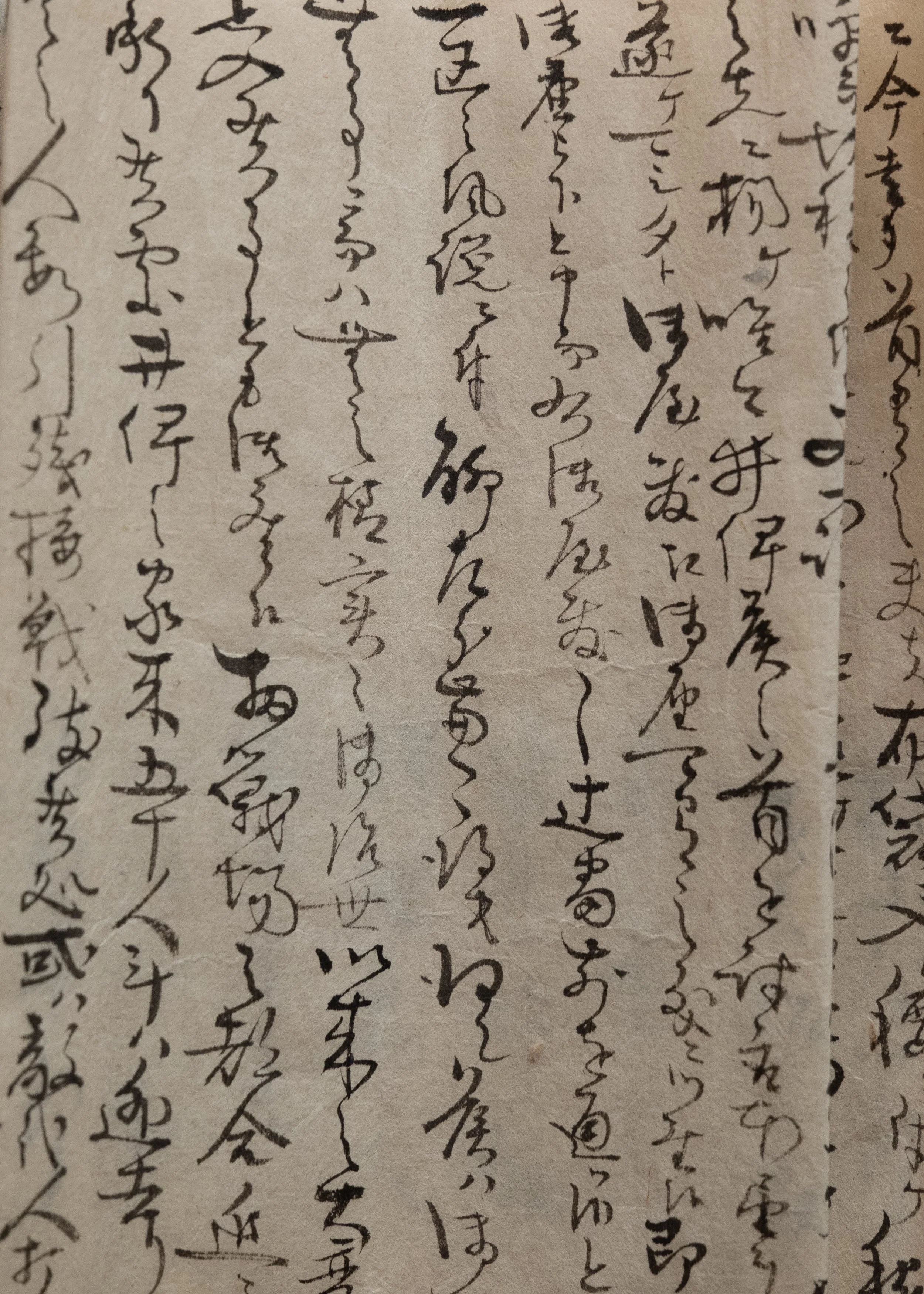 Image 7 of 7