【 The Concept 】
A thousand years ago, a scholar was exiled from the capital. On his way out, he stopped to say goodbye to his aunt. Assassins followed him. A white bull appeared from nowhere and drove them back. The scholar died in exile, but the bull never left the shrine. Every temple built in his name placed a seated bull at the gate — not standing, not charging, but kneeling. Because the bull that carried his body to its final resting place sat down and refused to move, and the people who buried him took that as a sign. This is one of those bulls. Black clay, hollow body, a small stone sealed inside that rattles when shaken. It is not a toy. It is a prayer that someone decided to make portable.
【 The Function 】
A clay bell and a guardian figure. In the tradition it comes from, the faithful touch the bull's body in the place that corresponds to their own affliction — the head for clarity, the back for burden, the legs for safe passage — and the illness or trouble is believed to transfer into the clay. This version is small enough to hold in one hand, which means the ritual does not require a temple visit. Shake it and it rings. Set it down and it kneels. It has been kneeling since it was made.
【 The Texture 】
Fired clay coated in matte black. The surface absorbs light the way dark fabric does — no reflection, no shine, just depth. The nose and the saddle are painted in brown. The saddle carries traces of gold. A paper tag is pasted to the side, bearing the name of the shrine in brushed red ink. The eyes are open — steady, focused, the way someone looks when they are listening carefully to something no one else can hear. A purple cord with a tasseled end hangs from the back, marking this as a shrine object rather than a household ornament.
【 Presence 】
It kneels. That is the first thing. Not standing, not walking, not looking up — kneeling, the way it has knelt at every shrine gate for a thousand years. The second thing is the weight. It is light enough to carry in a pocket, but the black pulls attention toward it in any room. Place it on a desk, on a shelf, beside a door. The bull does not move. That is the entire point. It chose its spot a long time ago.
Sourced from a private collection in western Japan.
【 The Concept 】
A thousand years ago, a scholar was exiled from the capital. On his way out, he stopped to say goodbye to his aunt. Assassins followed him. A white bull appeared from nowhere and drove them back. The scholar died in exile, but the bull never left the shrine. Every temple built in his name placed a seated bull at the gate — not standing, not charging, but kneeling. Because the bull that carried his body to its final resting place sat down and refused to move, and the people who buried him took that as a sign. This is one of those bulls. Black clay, hollow body, a small stone sealed inside that rattles when shaken. It is not a toy. It is a prayer that someone decided to make portable.
【 The Function 】
A clay bell and a guardian figure. In the tradition it comes from, the faithful touch the bull's body in the place that corresponds to their own affliction — the head for clarity, the back for burden, the legs for safe passage — and the illness or trouble is believed to transfer into the clay. This version is small enough to hold in one hand, which means the ritual does not require a temple visit. Shake it and it rings. Set it down and it kneels. It has been kneeling since it was made.
【 The Texture 】
Fired clay coated in matte black. The surface absorbs light the way dark fabric does — no reflection, no shine, just depth. The nose and the saddle are painted in brown. The saddle carries traces of gold. A paper tag is pasted to the side, bearing the name of the shrine in brushed red ink. The eyes are open — steady, focused, the way someone looks when they are listening carefully to something no one else can hear. A purple cord with a tasseled end hangs from the back, marking this as a shrine object rather than a household ornament.
【 Presence 】
It kneels. That is the first thing. Not standing, not walking, not looking up — kneeling, the way it has knelt at every shrine gate for a thousand years. The second thing is the weight. It is light enough to carry in a pocket, but the black pulls attention toward it in any room. Place it on a desk, on a shelf, beside a door. The bull does not move. That is the entire point. It chose its spot a long time ago.
Sourced from a private collection in western Japan.


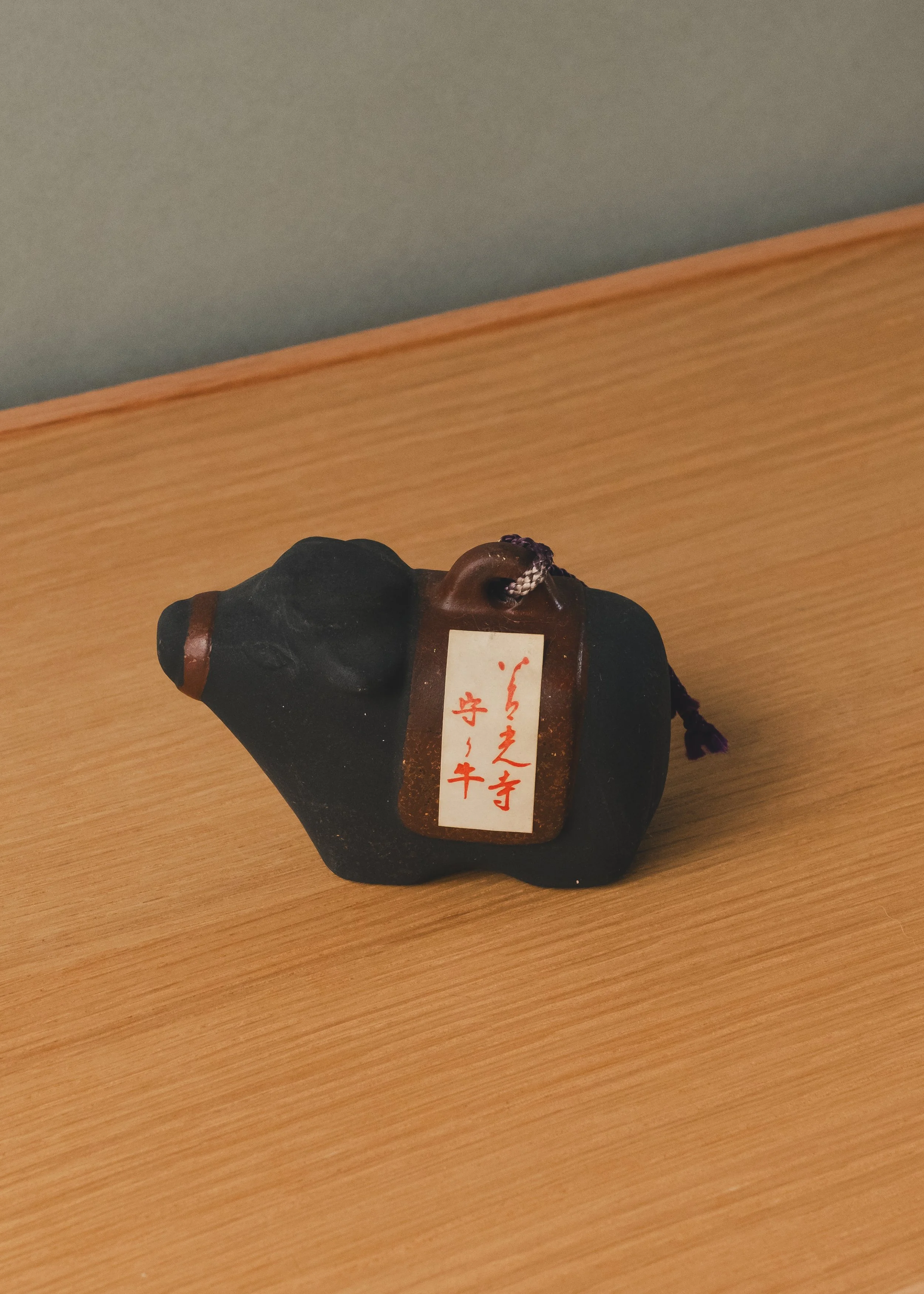 Image 1 of 8
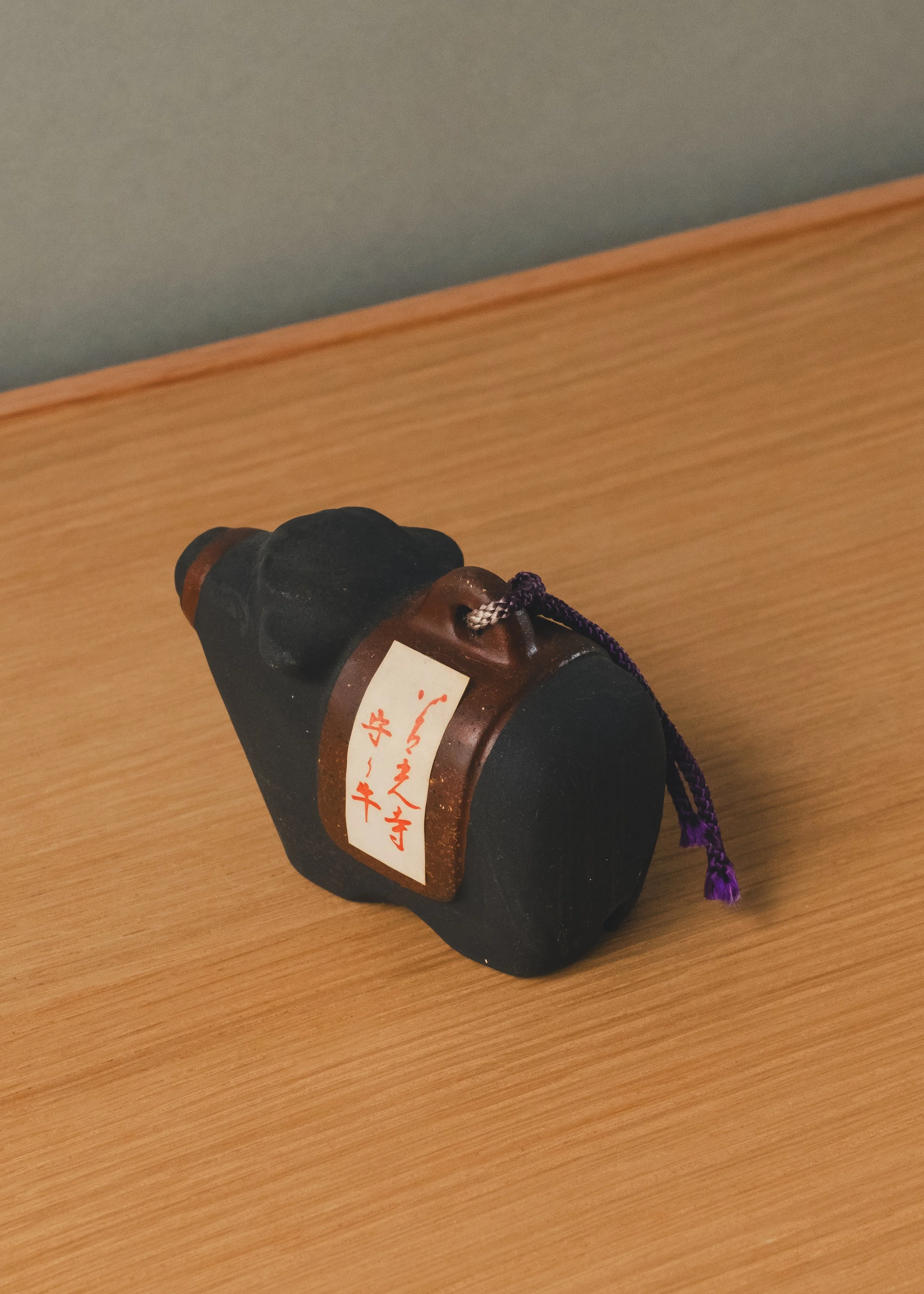 Image 2 of 8
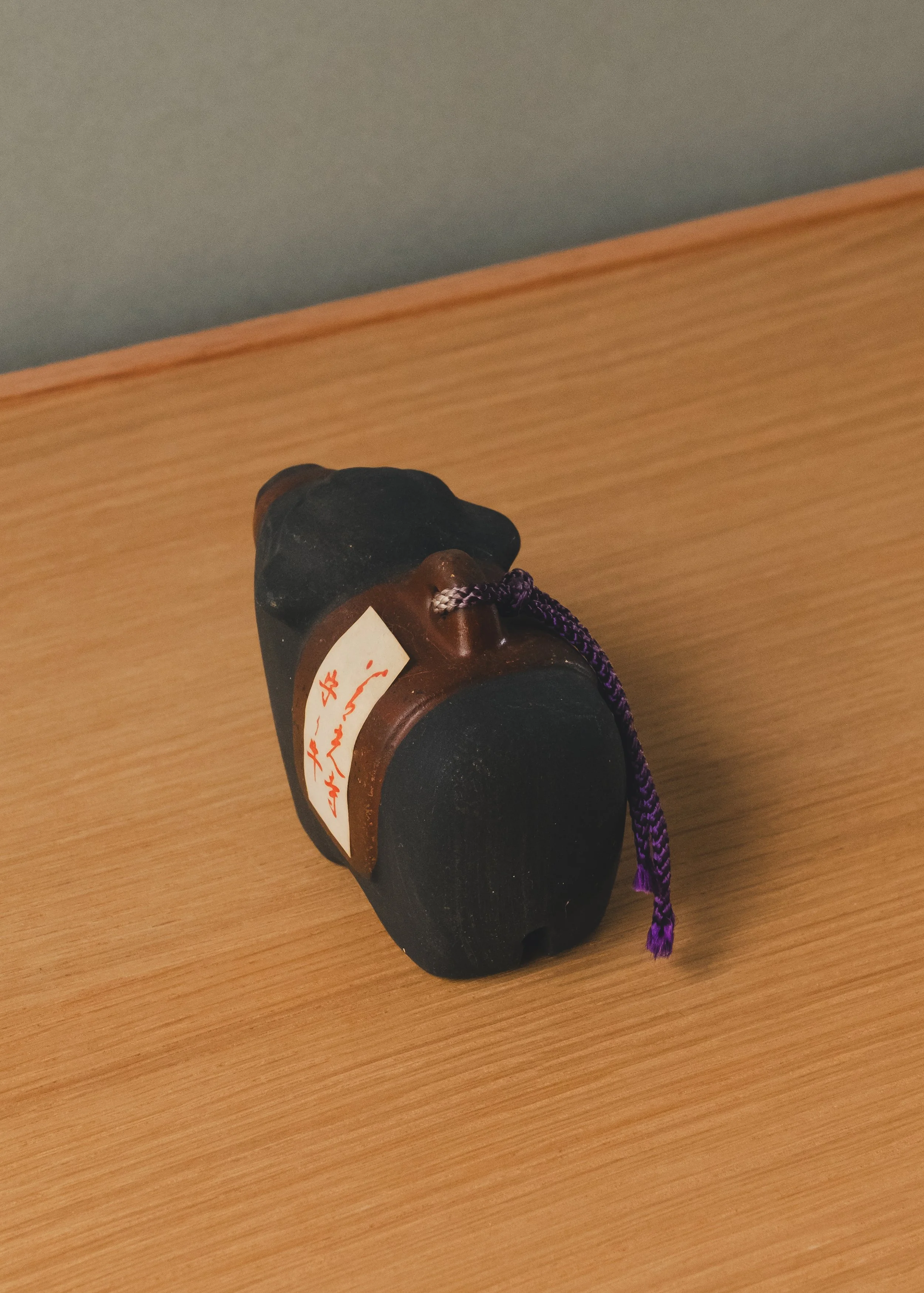 Image 3 of 8
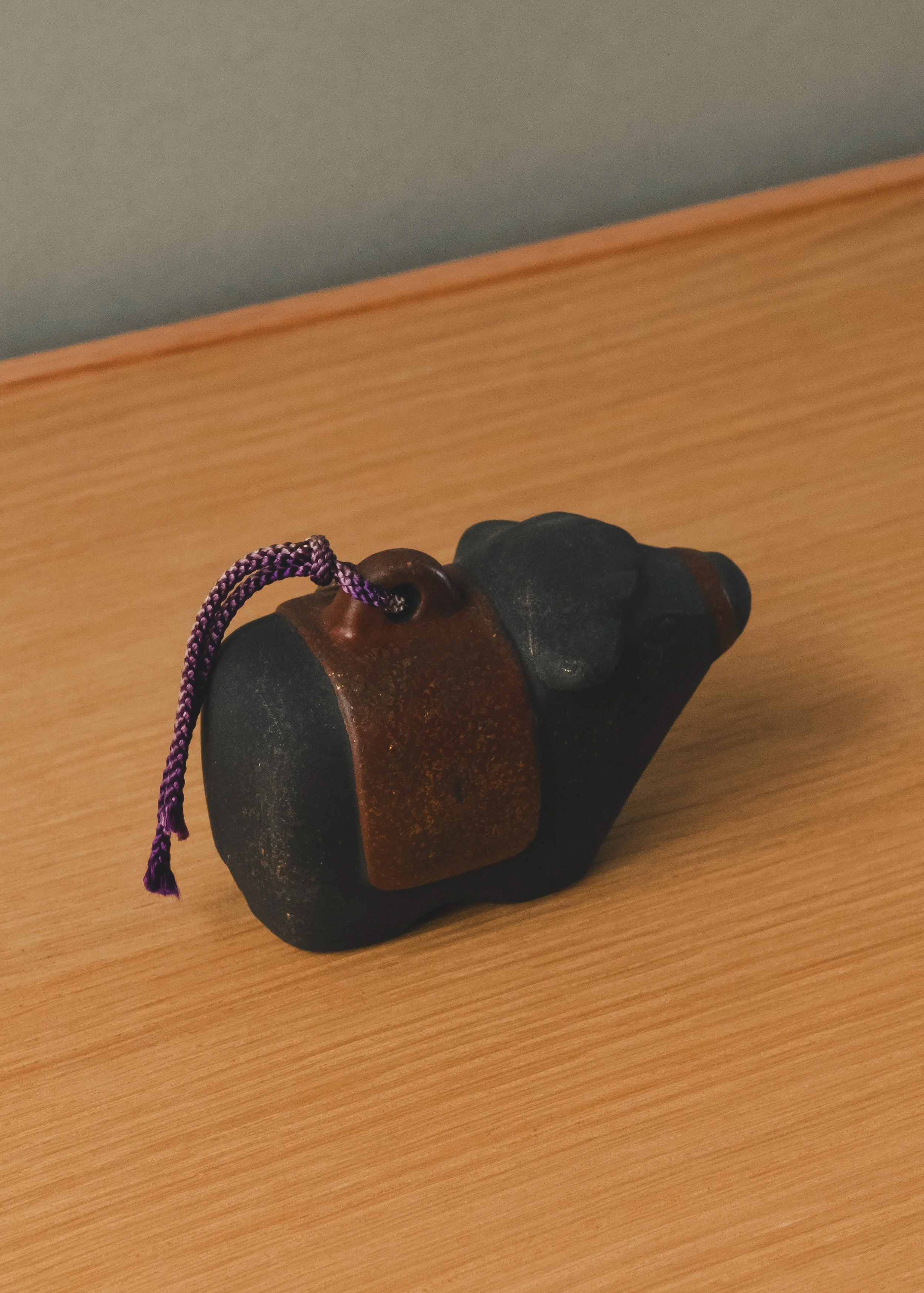 Image 4 of 8
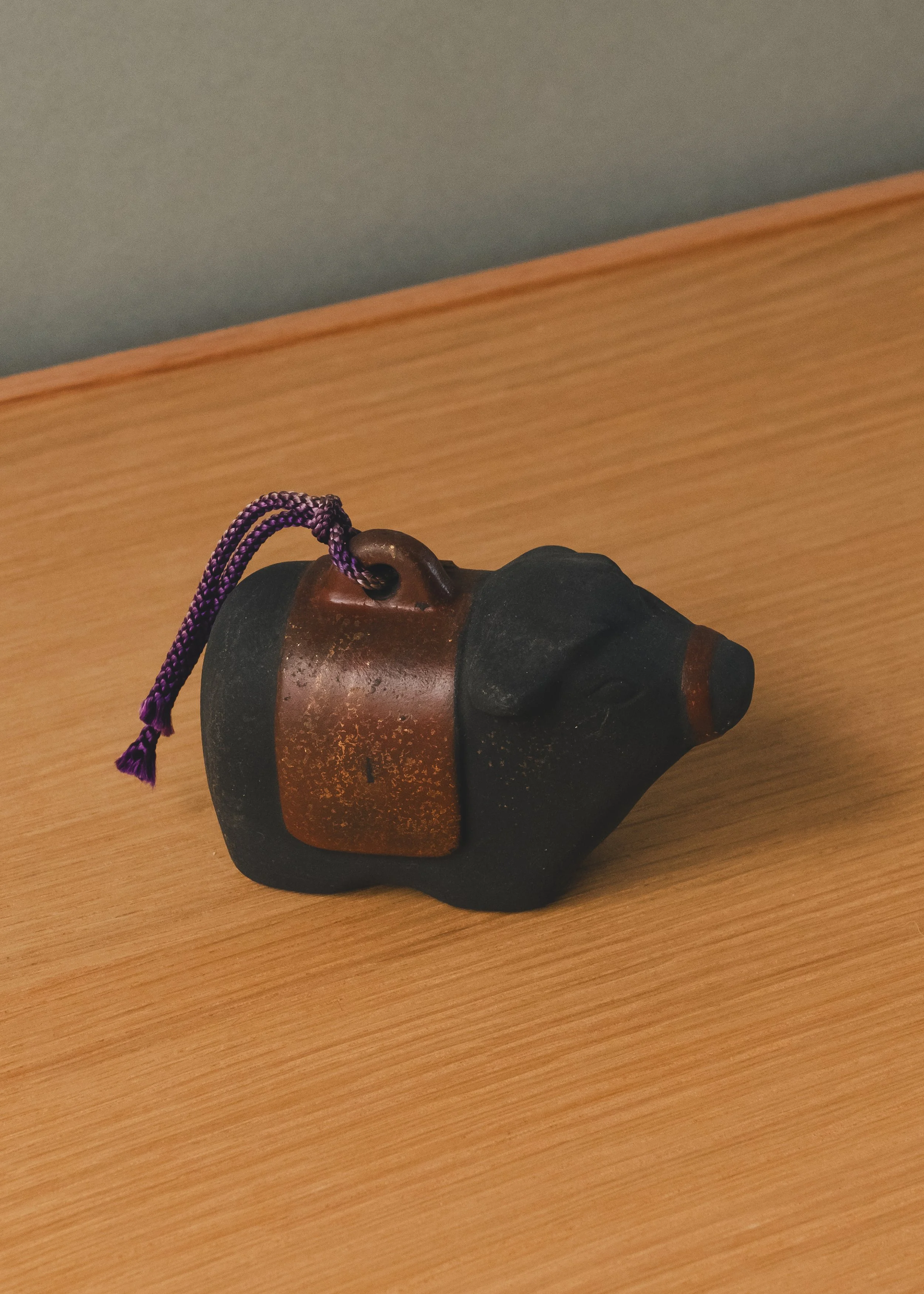 Image 5 of 8
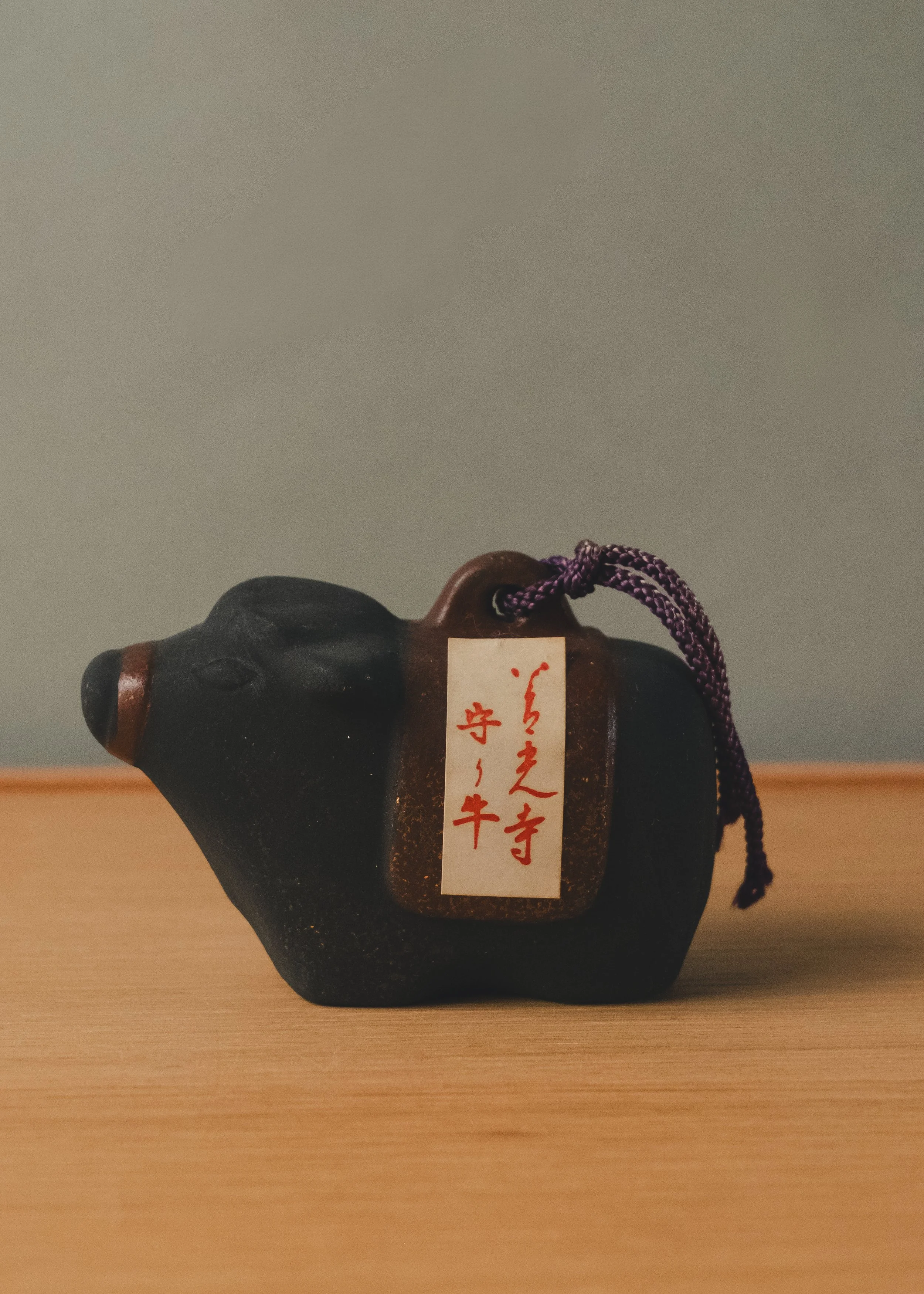 Image 6 of 8
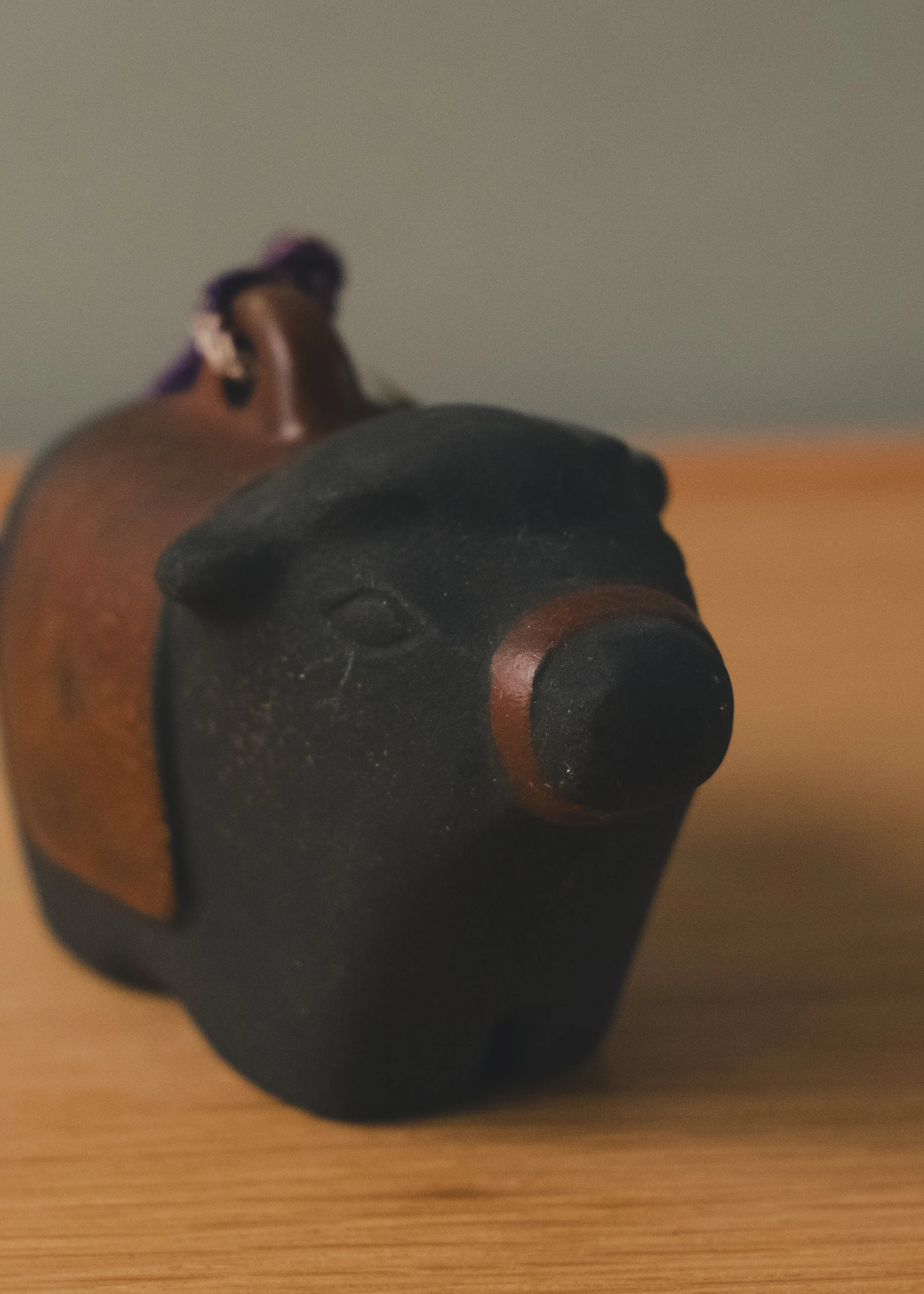 Image 7 of 8
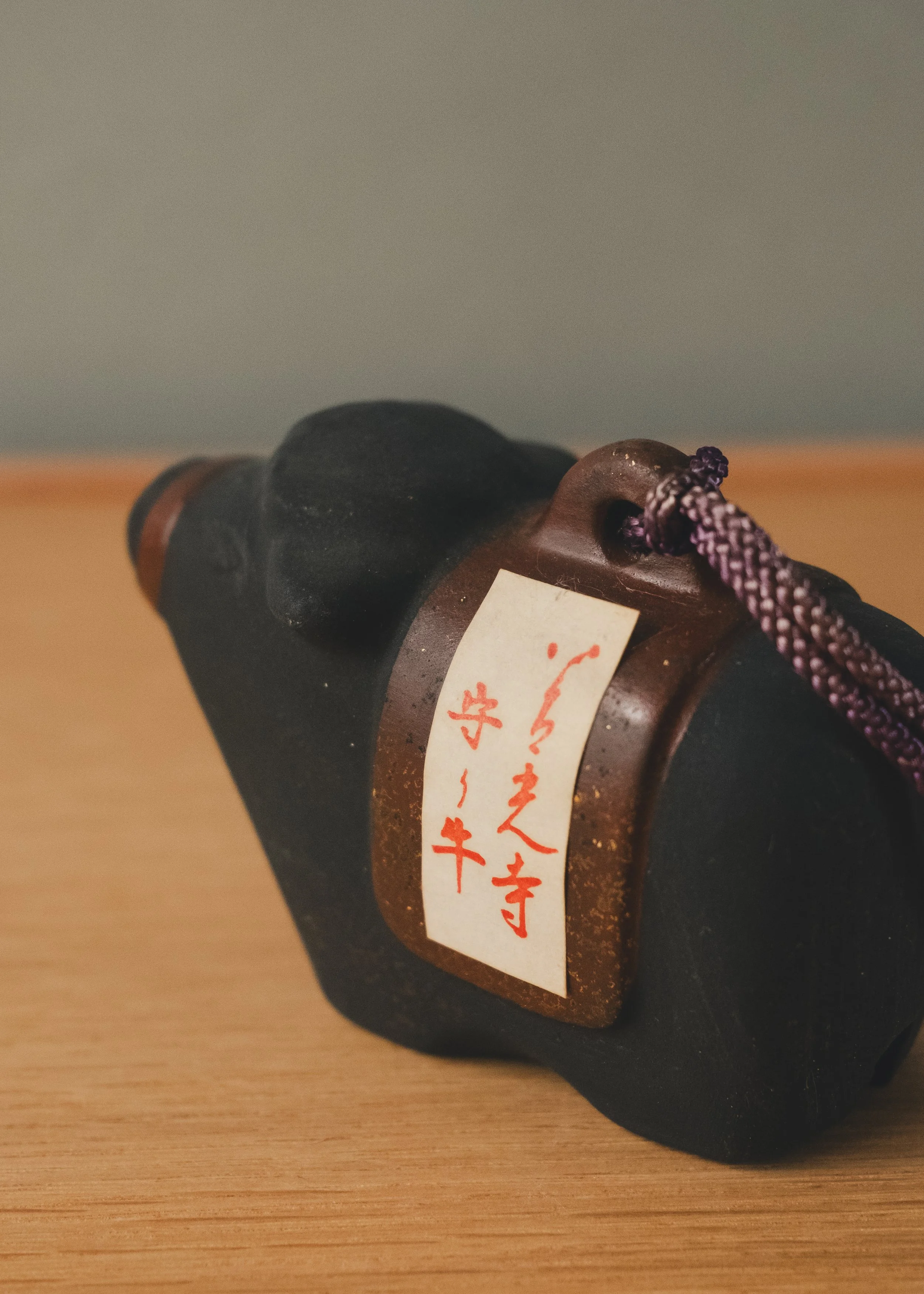 Image 8 of 8