【 The Concept 】
The orchid was carved into the bowl, not painted onto it. A blade cut the outline, then scooped the wood away until the leaves and petals sat below the surface like veins under skin. The lacquer came later — thirteen coats or more, rubbed in and wiped off, rubbed in and wiped off, until the wood stopped being wood and became something closer to amber. The orchid inside is a wild species that grows alone in mountain shade, blooms once in early spring, and does not announce itself. In the tradition it comes from, this flower represents the person who cultivates virtue without needing anyone to see it.
【 The Function 】
A carved wooden bowl. Twenty-three centimeters across, four and a half centimeters tall, turned from a single plank of dense hardwood. The interior carries a hand-carved orchid — long arching leaves rising from the lower left, crossing and curving toward the upper right, with a single five-petaled flower hanging below them. The rim curves gently outward with a rounded lip. The base has a raised foot ring for stability. At 267 grams it is light enough to lift with one hand and heavy enough to stay where it is placed.
【 The Texture 】
Lacquered hardwood, amber-dark, with the grain visible through the finish like current through deep water. The lacquer is not a coating. It is the wood — absorbed, hardened, and polished until the surface reflects light in long wet curves. The carved orchid sits in shallow relief below the lacquered plane: the leaves are filled with muted green, the petals with pale yellow, and the center of the flower carries small dark spots that mirror the markings of the living plant. The background around the carving is the same amber surface — uninterrupted, seamless, warm to the touch.
【 Presence 】
It is the most refined object in the archive. Nothing about it is loud. The orchid does not face the viewer — it faces sideways and slightly downward, as if it would rather not be noticed. The empty space around it is deliberate. In the tradition this bowl comes from, the empty part of the composition is as important as the carved part. Set it on a table and it does what the orchid does: sit quietly, add something to the room that was not there before, and wait for someone to look closely enough to find it.
Sourced from a private collection in western Japan. Signed with a carved seal by the maker.
【 The Concept 】
The orchid was carved into the bowl, not painted onto it. A blade cut the outline, then scooped the wood away until the leaves and petals sat below the surface like veins under skin. The lacquer came later — thirteen coats or more, rubbed in and wiped off, rubbed in and wiped off, until the wood stopped being wood and became something closer to amber. The orchid inside is a wild species that grows alone in mountain shade, blooms once in early spring, and does not announce itself. In the tradition it comes from, this flower represents the person who cultivates virtue without needing anyone to see it.
【 The Function 】
A carved wooden bowl. Twenty-three centimeters across, four and a half centimeters tall, turned from a single plank of dense hardwood. The interior carries a hand-carved orchid — long arching leaves rising from the lower left, crossing and curving toward the upper right, with a single five-petaled flower hanging below them. The rim curves gently outward with a rounded lip. The base has a raised foot ring for stability. At 267 grams it is light enough to lift with one hand and heavy enough to stay where it is placed.
【 The Texture 】
Lacquered hardwood, amber-dark, with the grain visible through the finish like current through deep water. The lacquer is not a coating. It is the wood — absorbed, hardened, and polished until the surface reflects light in long wet curves. The carved orchid sits in shallow relief below the lacquered plane: the leaves are filled with muted green, the petals with pale yellow, and the center of the flower carries small dark spots that mirror the markings of the living plant. The background around the carving is the same amber surface — uninterrupted, seamless, warm to the touch.
【 Presence 】
It is the most refined object in the archive. Nothing about it is loud. The orchid does not face the viewer — it faces sideways and slightly downward, as if it would rather not be noticed. The empty space around it is deliberate. In the tradition this bowl comes from, the empty part of the composition is as important as the carved part. Set it on a table and it does what the orchid does: sit quietly, add something to the room that was not there before, and wait for someone to look closely enough to find it.
Sourced from a private collection in western Japan. Signed with a carved seal by the maker.


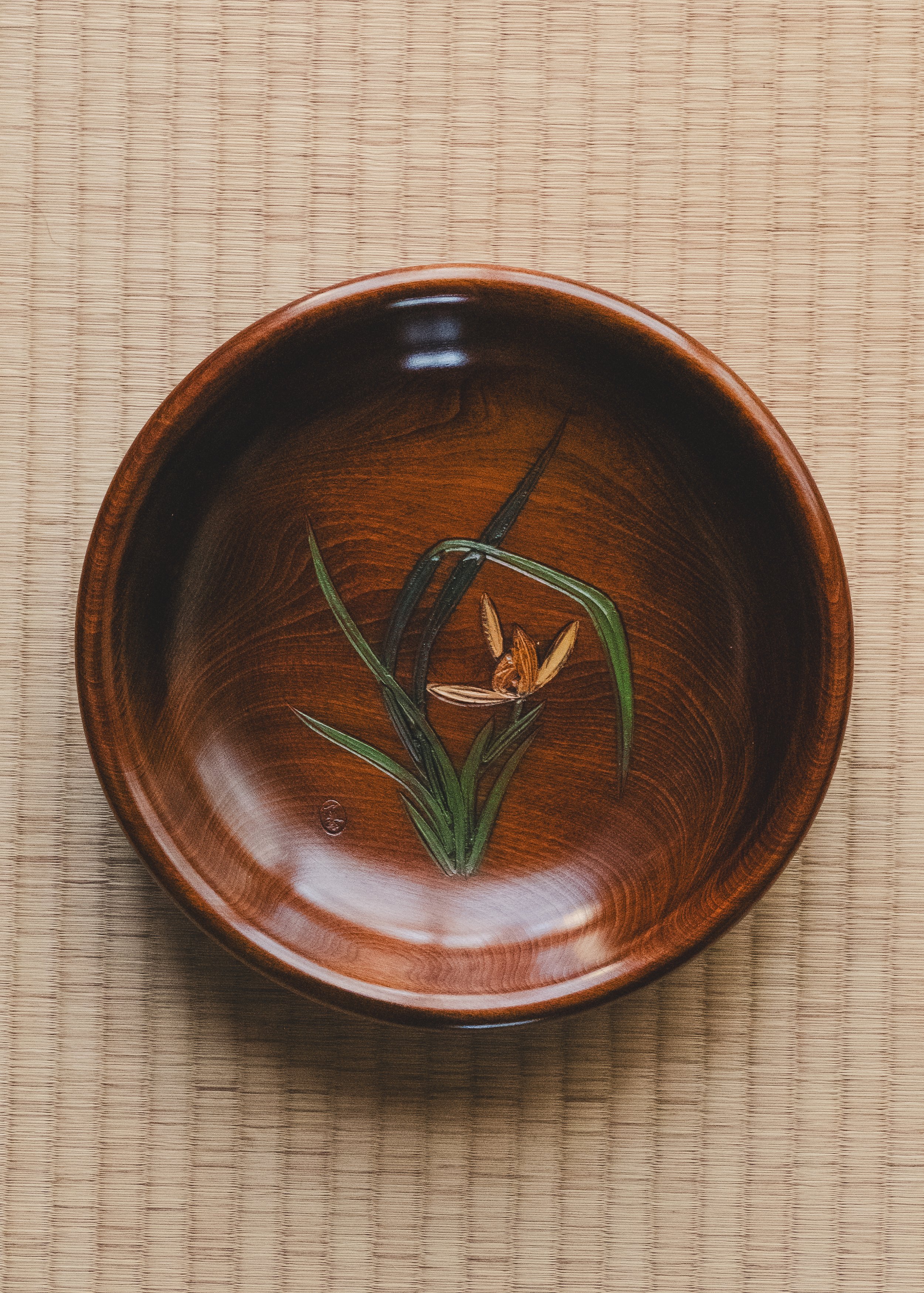 Image 1 of 5
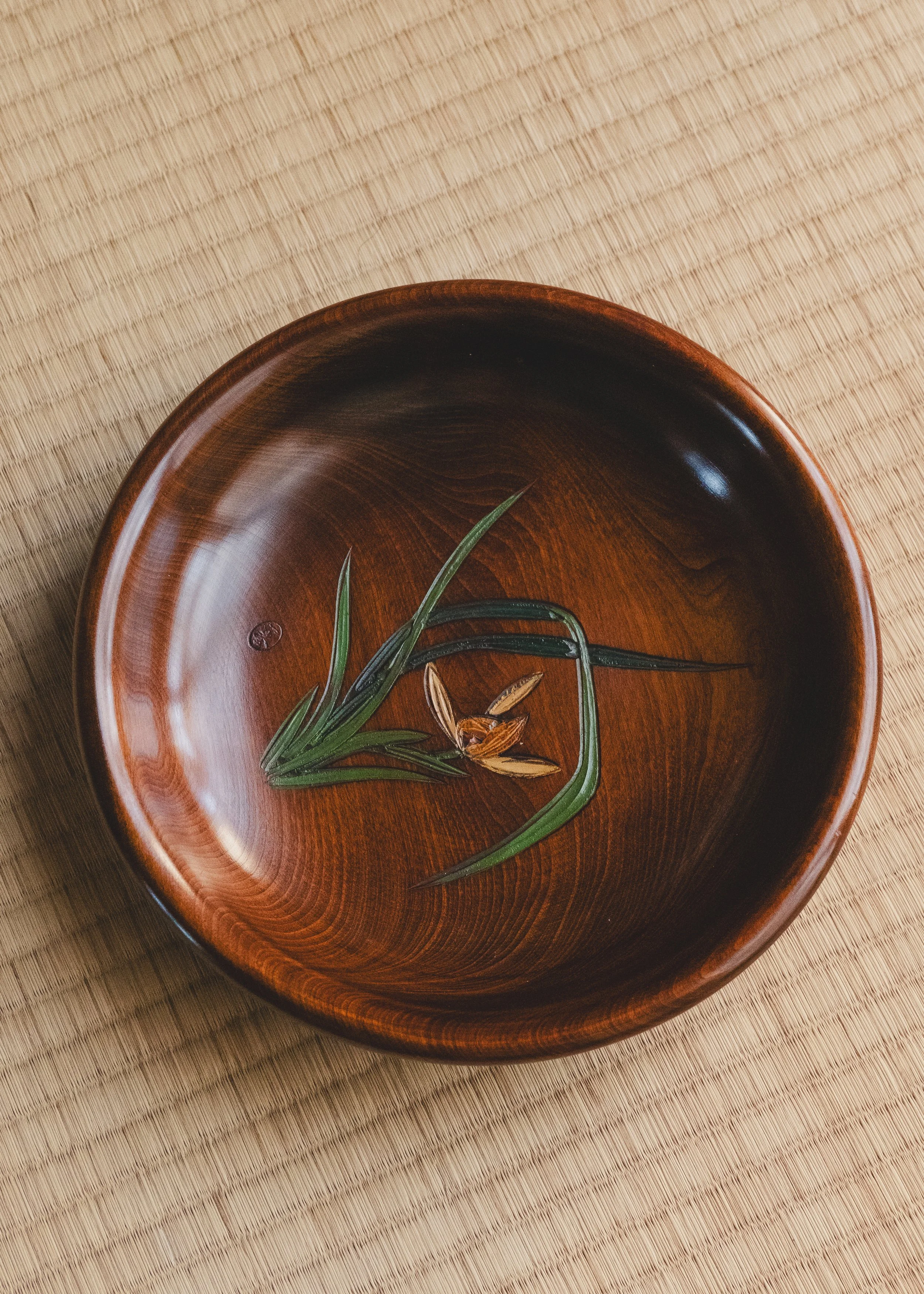 Image 2 of 5
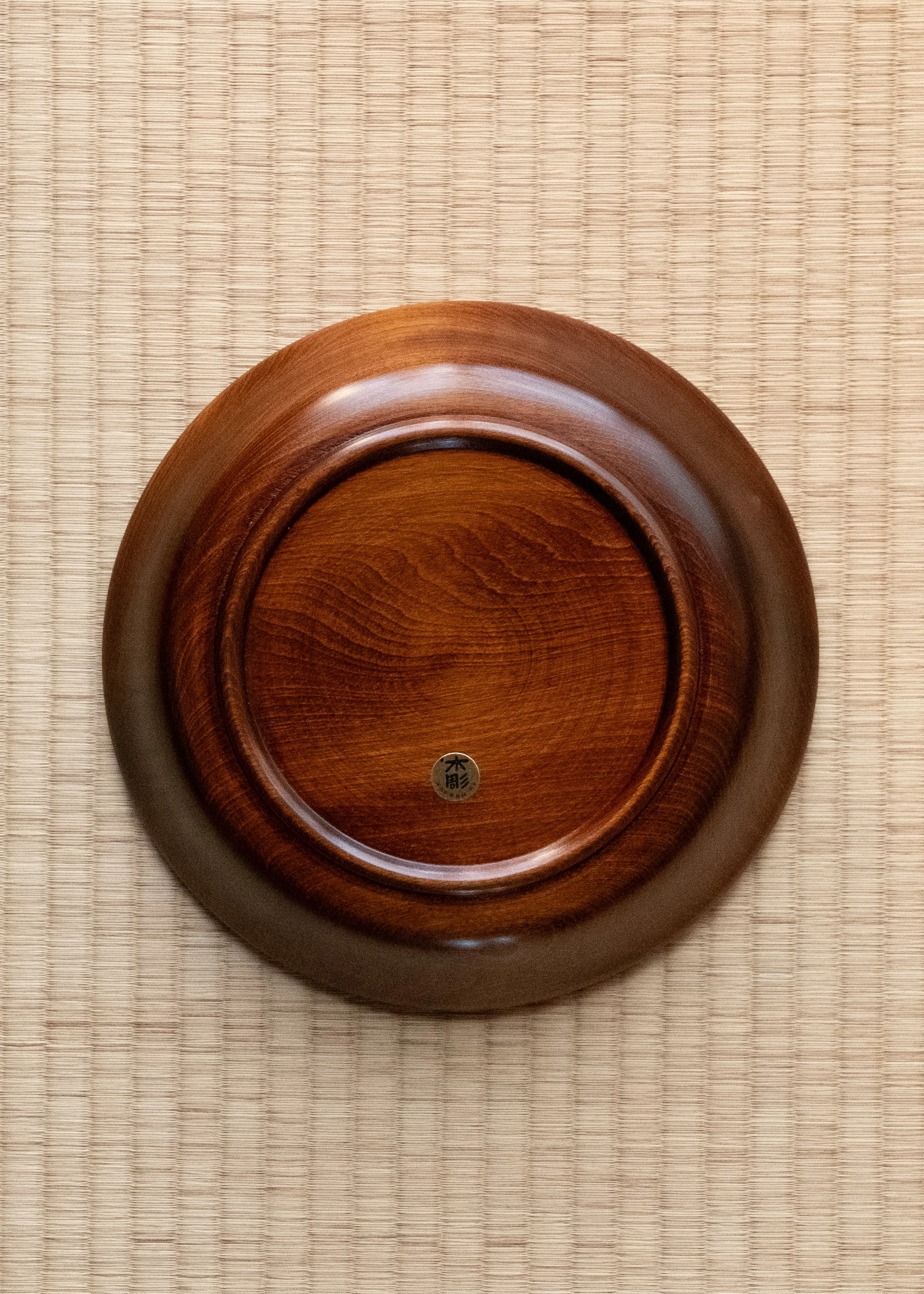 Image 3 of 5
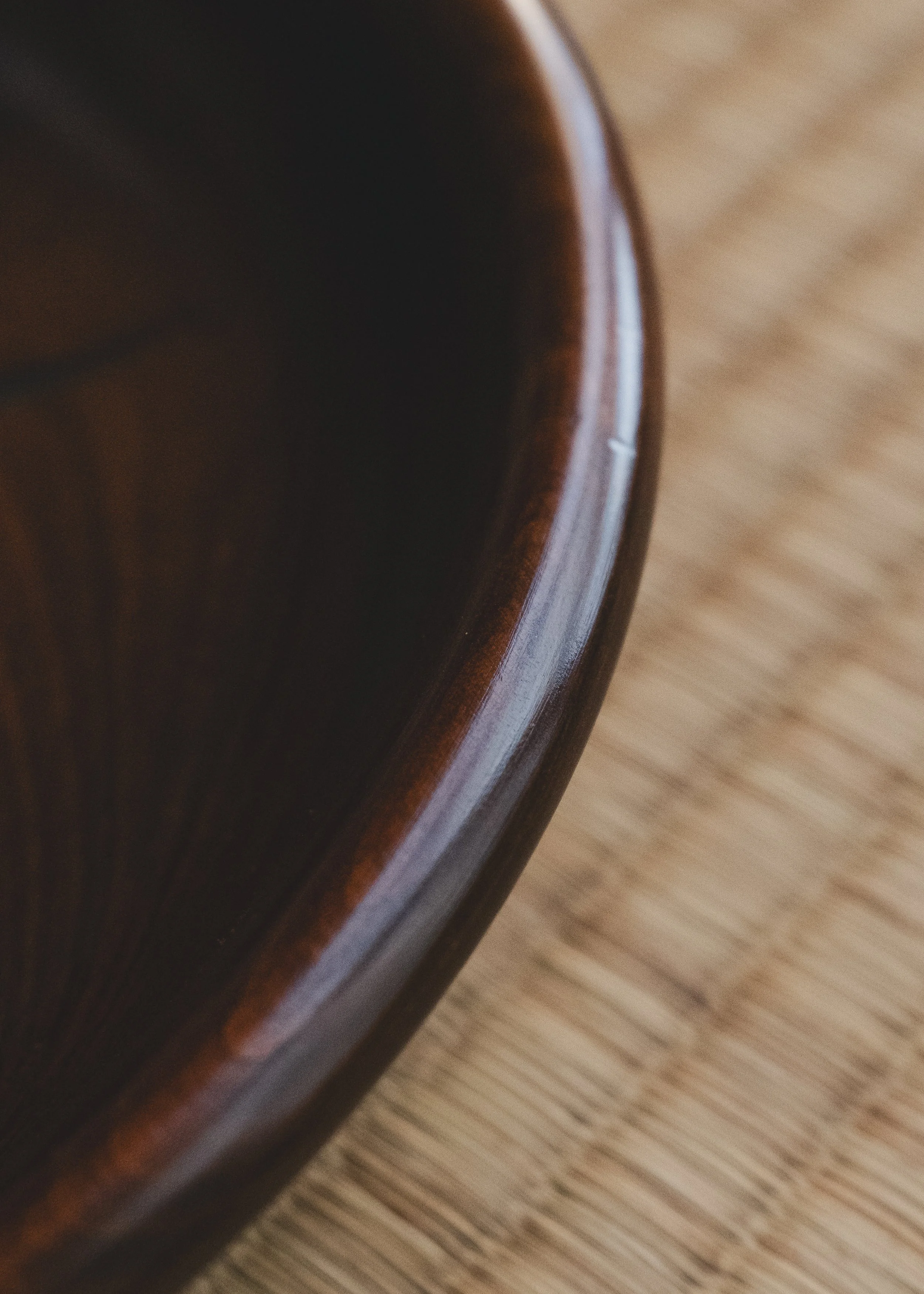 Image 4 of 5
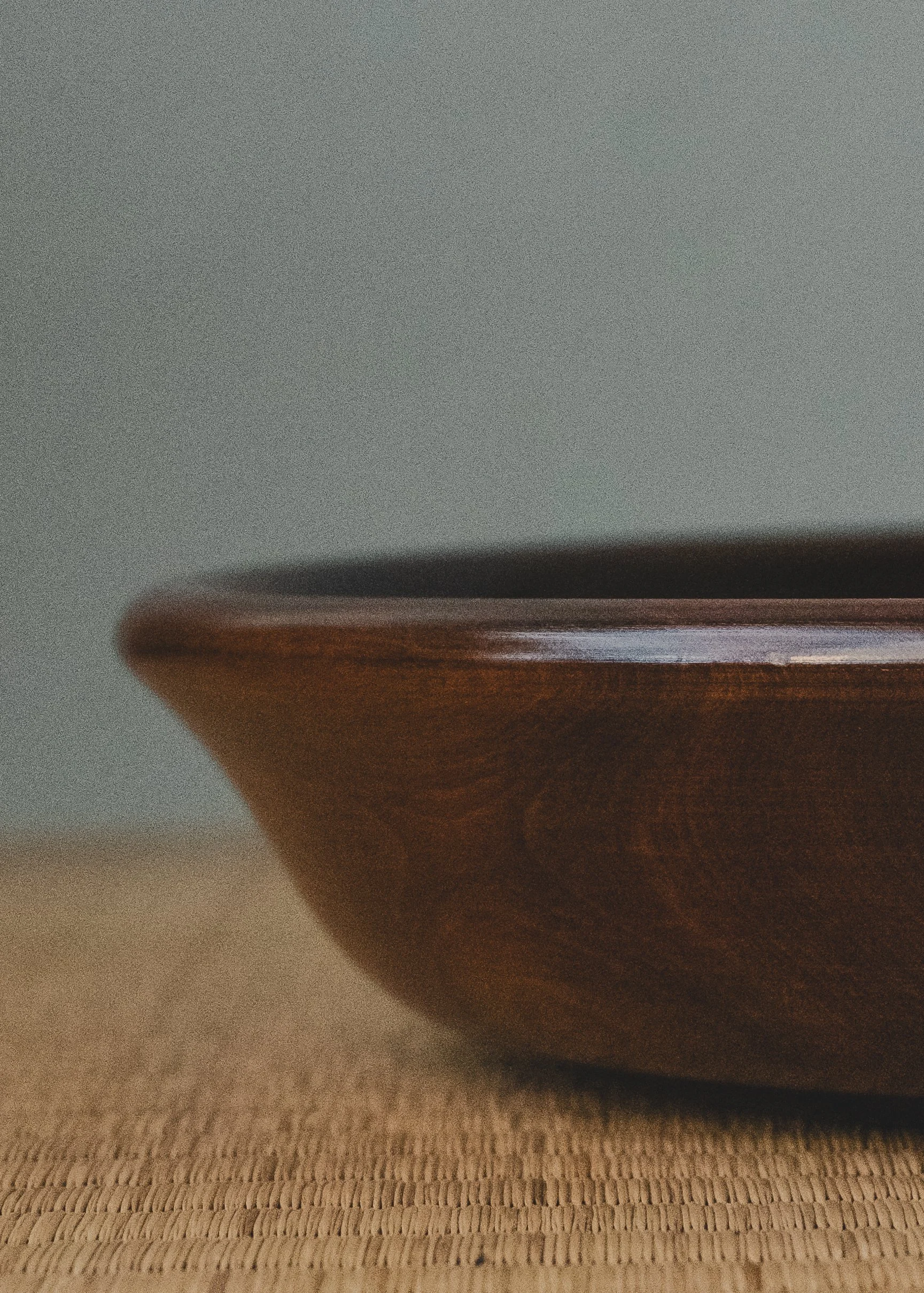 Image 5 of 5