【 The Concept 】
The tray was carved from a single block of hardwood. Not assembled. Not bent. Not glued. One piece of timber, thick enough to hold a bowl of water without flexing, hollowed out from the center until only the walls and the floor remained. Then the surface was coated in tree sap — layer after layer, rubbed in and wiped back — until the wood turned the color of dark amber and the grain rose to the surface like veins under skin. Then someone carved an orchid into it. Not painted. Carved — with a gouge, into the wood, through the lacquer, and filled with color by hand. The orchid is not centered. It reaches in from one edge, leaving the rest of the tray open. That open space is not empty. It is where the tea goes.
【 The Function 】
A lacquered wooden tray carved from a single block. Thirty-nine centimeters across. The serving surface is twenty-eight centimeters wide. Two centimeters deep. Three centimeters tall at the rim. The rim curves upward in a continuous wall with no seam, no joint, no break — because there is no second piece of wood. The bottom is flat. The lacquer is natural tree resin, baked into the grain over multiple coats. The tray carries a maker's mark carved into the surface and a certification seal from the province where it was made.
【 The Texture 】
Two textures on one surface. The flat areas are smooth — not glassy, but warm, the way lacquer feels when it has been rubbed by hand until the wood underneath starts to show through. The grain is visible: long, sweeping arcs of dark and light that move across the tray like water. The carved areas are the opposite — rough, gouged, deliberate. The orchid petals are cut deep into the wood and filled with color: faded pink shading into white, a stroke of yellow at the center, dark green in the leaves. The gouge marks are not sanded away. They are the texture. Smooth where you set the cup. Rough where the flower grows.
【 Presence 】
It is the widest object in the archive. Set it on a table and it becomes the table. Everything placed on it — a teapot, a cup, a sweet — becomes part of a composition that was designed three hundred years before the tea was poured. The orchid watches from the corner. The grain moves underneath. The rim holds everything in. It was made to carry things for other people, and it has been doing that longer than most of the objects it carries have existed.
Sourced from a private collection in western Japan. Maker's mark and provincial certification seal intact.
【 The Concept 】
The tray was carved from a single block of hardwood. Not assembled. Not bent. Not glued. One piece of timber, thick enough to hold a bowl of water without flexing, hollowed out from the center until only the walls and the floor remained. Then the surface was coated in tree sap — layer after layer, rubbed in and wiped back — until the wood turned the color of dark amber and the grain rose to the surface like veins under skin. Then someone carved an orchid into it. Not painted. Carved — with a gouge, into the wood, through the lacquer, and filled with color by hand. The orchid is not centered. It reaches in from one edge, leaving the rest of the tray open. That open space is not empty. It is where the tea goes.
【 The Function 】
A lacquered wooden tray carved from a single block. Thirty-nine centimeters across. The serving surface is twenty-eight centimeters wide. Two centimeters deep. Three centimeters tall at the rim. The rim curves upward in a continuous wall with no seam, no joint, no break — because there is no second piece of wood. The bottom is flat. The lacquer is natural tree resin, baked into the grain over multiple coats. The tray carries a maker's mark carved into the surface and a certification seal from the province where it was made.
【 The Texture 】
Two textures on one surface. The flat areas are smooth — not glassy, but warm, the way lacquer feels when it has been rubbed by hand until the wood underneath starts to show through. The grain is visible: long, sweeping arcs of dark and light that move across the tray like water. The carved areas are the opposite — rough, gouged, deliberate. The orchid petals are cut deep into the wood and filled with color: faded pink shading into white, a stroke of yellow at the center, dark green in the leaves. The gouge marks are not sanded away. They are the texture. Smooth where you set the cup. Rough where the flower grows.
【 Presence 】
It is the widest object in the archive. Set it on a table and it becomes the table. Everything placed on it — a teapot, a cup, a sweet — becomes part of a composition that was designed three hundred years before the tea was poured. The orchid watches from the corner. The grain moves underneath. The rim holds everything in. It was made to carry things for other people, and it has been doing that longer than most of the objects it carries have existed.
Sourced from a private collection in western Japan. Maker's mark and provincial certification seal intact.


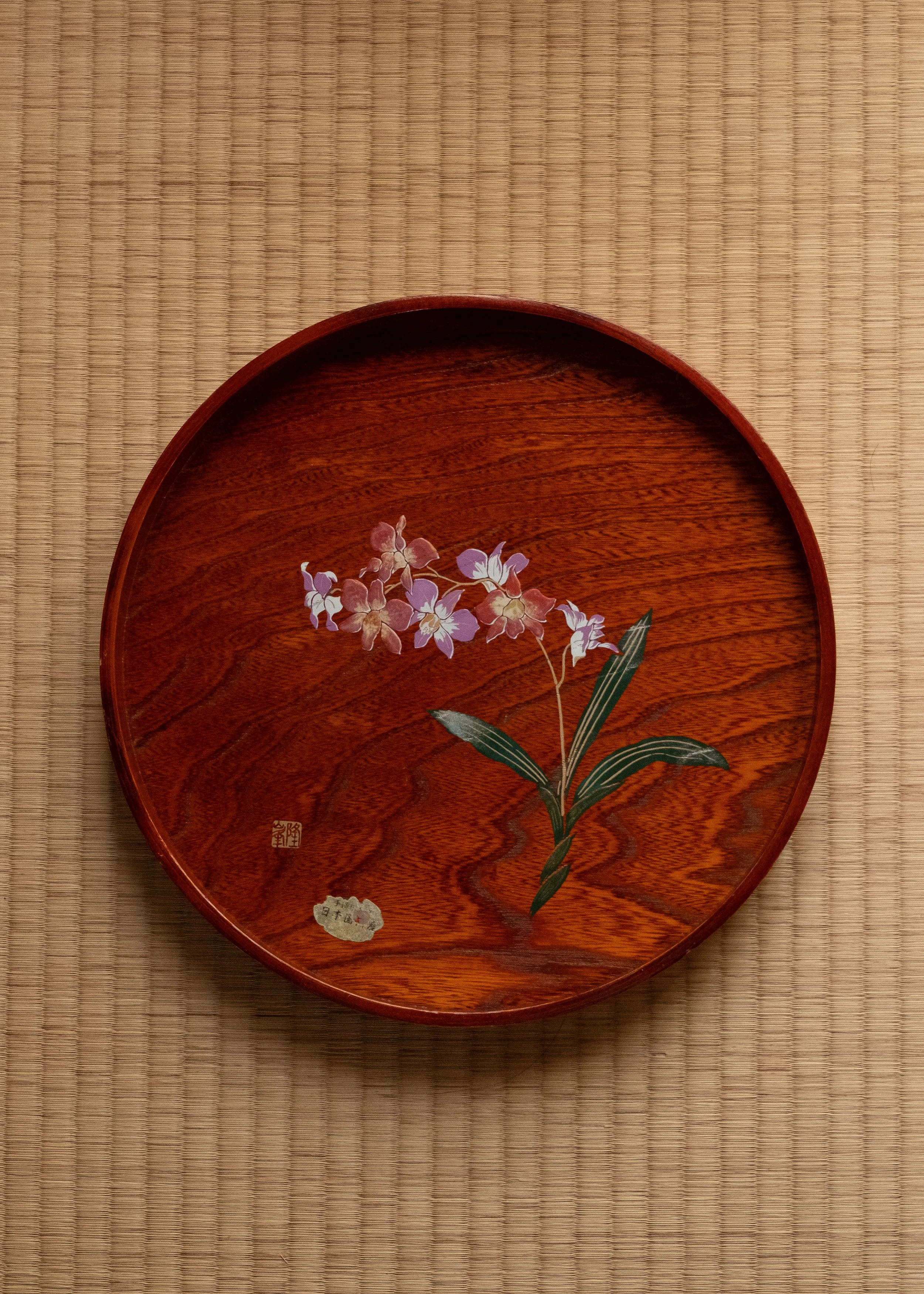 Image 1 of 5
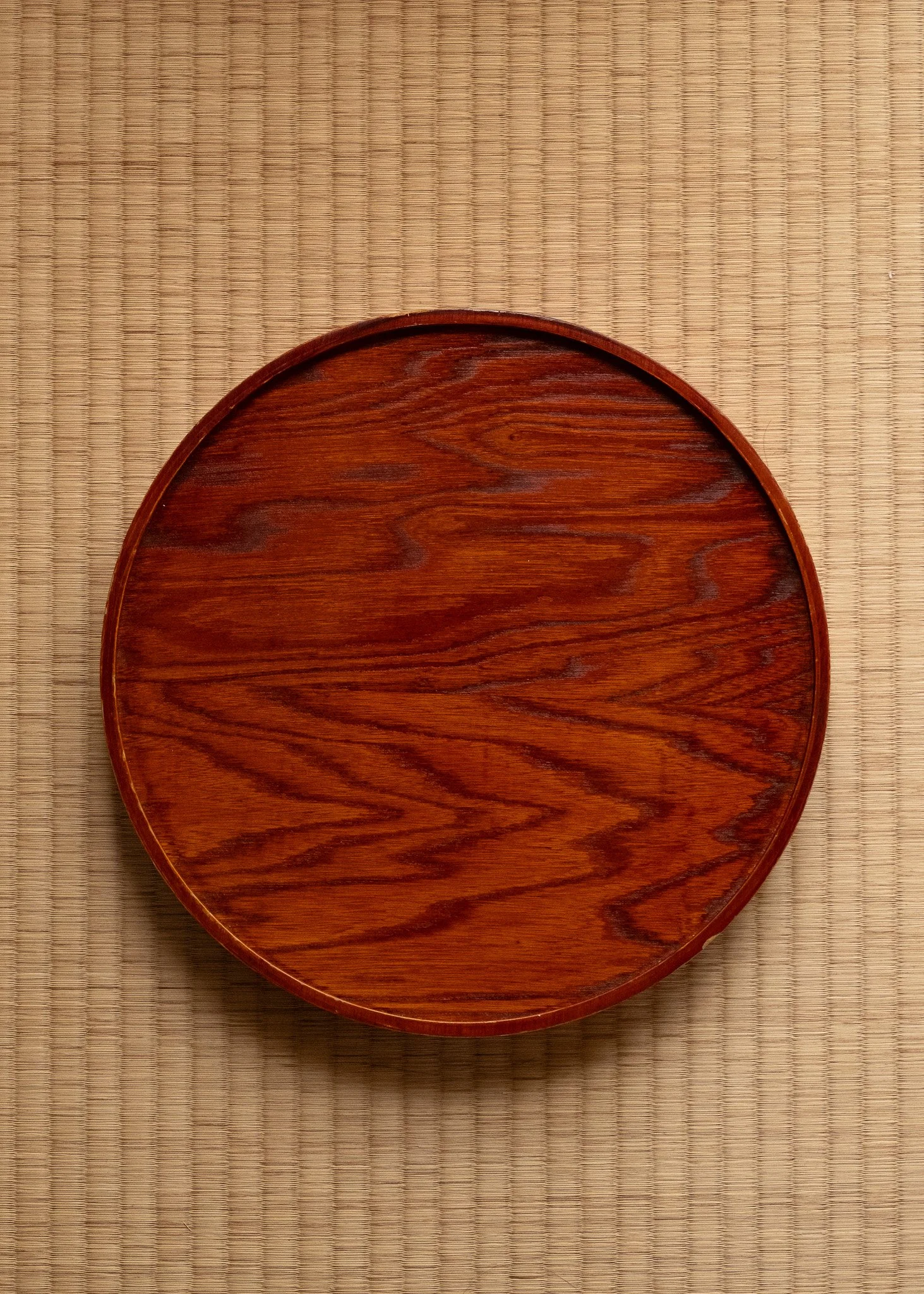 Image 2 of 5
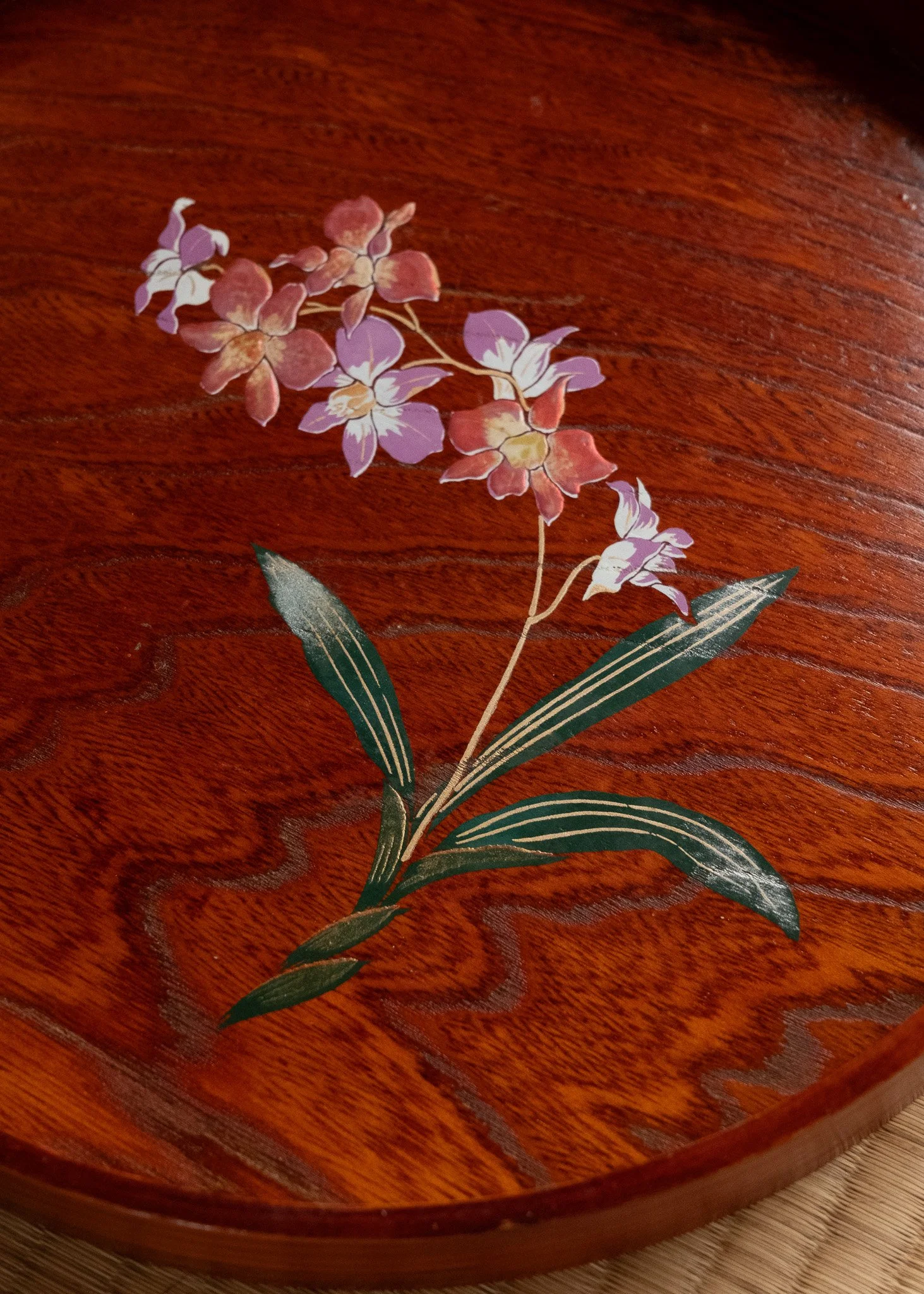 Image 3 of 5
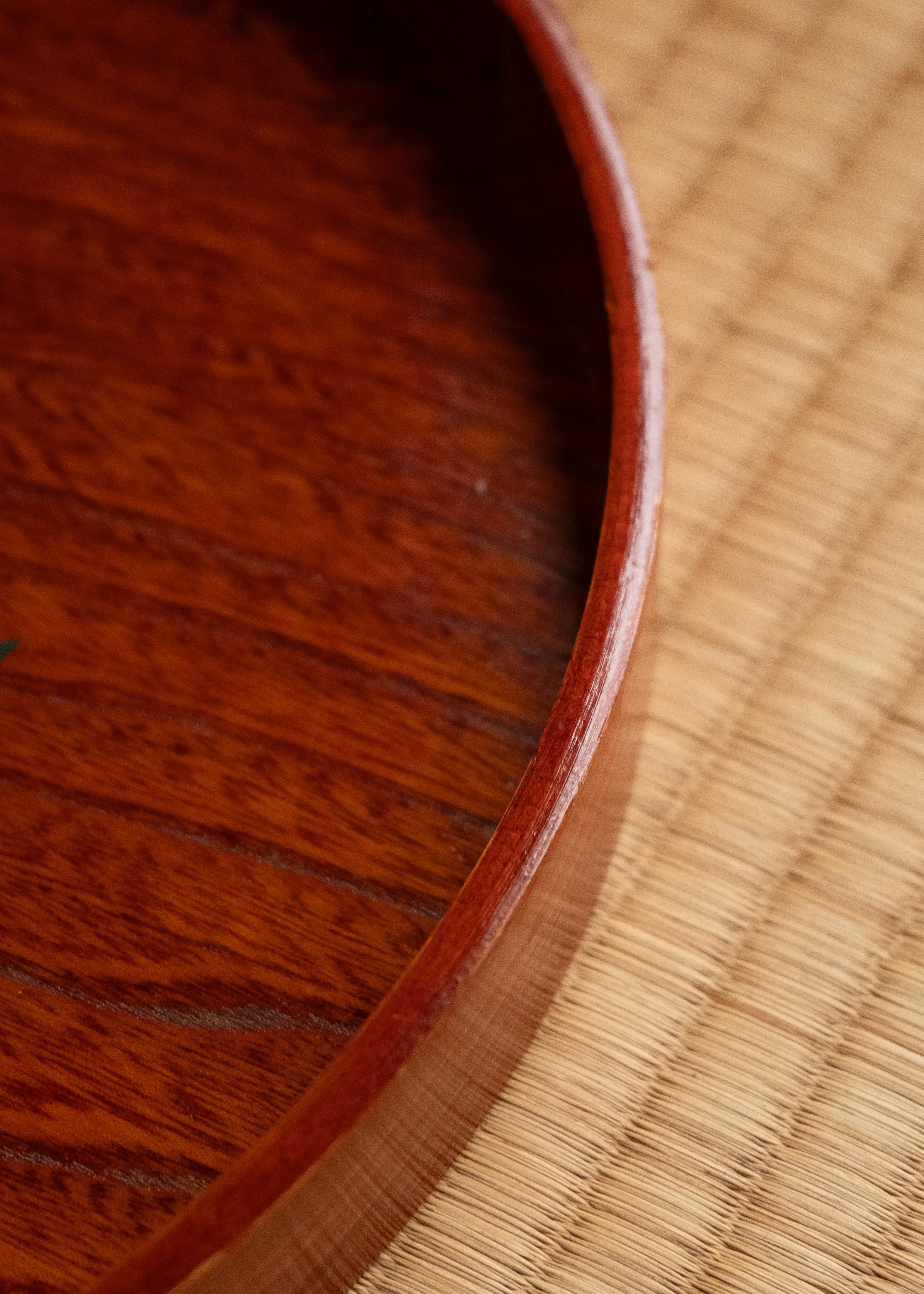 Image 4 of 5
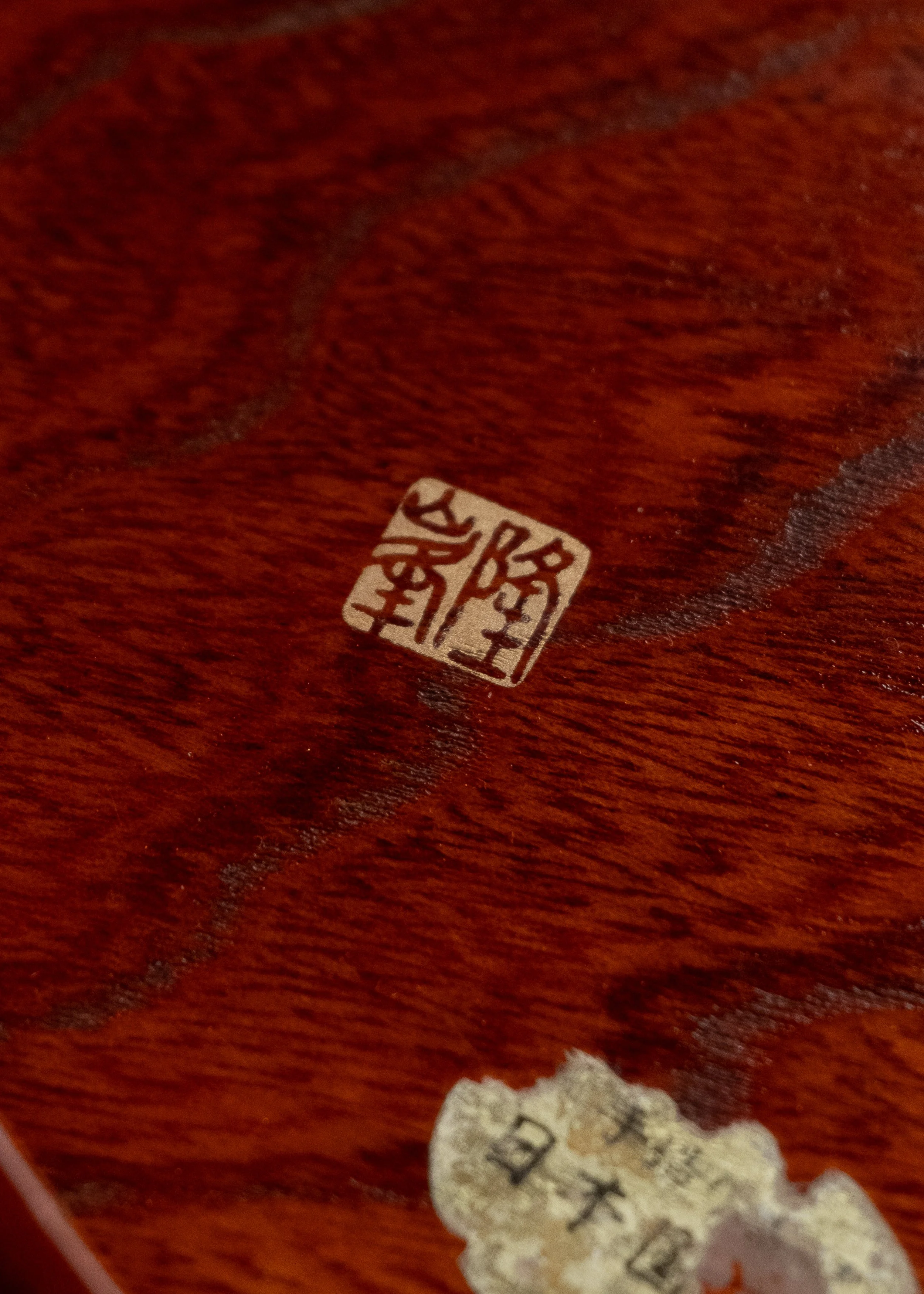 Image 5 of 5