【 The Concept 】
The vessel was built to hold fire. A small charcoal ember was placed inside, buried in ash, and left to burn slowly while the smoke rose. The pine and plum branches painted on the outside are not decorative — they are the oldest symbols of survival in the tradition this vessel comes from. Pine does not drop its needles in winter. Plum blooms before the snow has melted. Both endure what kills everything else. An anonymous potter threw this cylinder on a wheel, carved four feet into the base, painted the branches in iron pigment over white slip, and fired it until the surface cracked into a web of fine lines. Those cracks have been filling with darkness ever since.
【 The Function 】
A four-footed ceramic cylinder. Ten centimeters across, seven and a half centimeters tall. Wheel-thrown from coarse stoneware clay, coated in white slip, painted in iron pigment, and glazed in a pale ash glaze that fires to a faint green. Four feet are carved from the base ring — not attached, but cut from the same clay. The interior is fully glazed. At 300 grams it is heavy enough to stay put and small enough to hold in one hand.
【 The Texture 】
The surface is covered in cracks. Hundreds of them, running in every direction, forming a web that covers the entire body. This is not damage. It is the natural result of the glaze shrinking faster than the clay beneath it as the vessel cooled in the kiln. Over decades, tea stain, ash, and dust have seeped into these cracks and turned them dark — brown, grey, black — until the web became visible, permanent, and impossible to replicate. The glaze itself is pale — ivory shading into green where it pools — and the iron brushwork sits on top in dark brown strokes: pine branches reaching upward, plum branches standing behind them, and clusters of dots that could be buds or seeds. The bottom is unglazed, showing the raw clay and the circular marks of the wheel.
【 Presence 】
It is the oldest-looking object in the archive. Not because of its age, but because of its cracks. The web of dark lines makes it look as if it has been absorbing its surroundings for centuries — and it has. Every surface it has sat on, every hand that has held it, every room it has occupied has left something behind in those lines. The pine and plum painted on the outside are still there, still surviving, exactly as they were designed to. The vessel was made to hold fire. Now it holds time.
Sourced from a private collection in central Japan.
【 The Concept 】
The vessel was built to hold fire. A small charcoal ember was placed inside, buried in ash, and left to burn slowly while the smoke rose. The pine and plum branches painted on the outside are not decorative — they are the oldest symbols of survival in the tradition this vessel comes from. Pine does not drop its needles in winter. Plum blooms before the snow has melted. Both endure what kills everything else. An anonymous potter threw this cylinder on a wheel, carved four feet into the base, painted the branches in iron pigment over white slip, and fired it until the surface cracked into a web of fine lines. Those cracks have been filling with darkness ever since.
【 The Function 】
A four-footed ceramic cylinder. Ten centimeters across, seven and a half centimeters tall. Wheel-thrown from coarse stoneware clay, coated in white slip, painted in iron pigment, and glazed in a pale ash glaze that fires to a faint green. Four feet are carved from the base ring — not attached, but cut from the same clay. The interior is fully glazed. At 300 grams it is heavy enough to stay put and small enough to hold in one hand.
【 The Texture 】
The surface is covered in cracks. Hundreds of them, running in every direction, forming a web that covers the entire body. This is not damage. It is the natural result of the glaze shrinking faster than the clay beneath it as the vessel cooled in the kiln. Over decades, tea stain, ash, and dust have seeped into these cracks and turned them dark — brown, grey, black — until the web became visible, permanent, and impossible to replicate. The glaze itself is pale — ivory shading into green where it pools — and the iron brushwork sits on top in dark brown strokes: pine branches reaching upward, plum branches standing behind them, and clusters of dots that could be buds or seeds. The bottom is unglazed, showing the raw clay and the circular marks of the wheel.
【 Presence 】
It is the oldest-looking object in the archive. Not because of its age, but because of its cracks. The web of dark lines makes it look as if it has been absorbing its surroundings for centuries — and it has. Every surface it has sat on, every hand that has held it, every room it has occupied has left something behind in those lines. The pine and plum painted on the outside are still there, still surviving, exactly as they were designed to. The vessel was made to hold fire. Now it holds time.
Sourced from a private collection in central Japan.


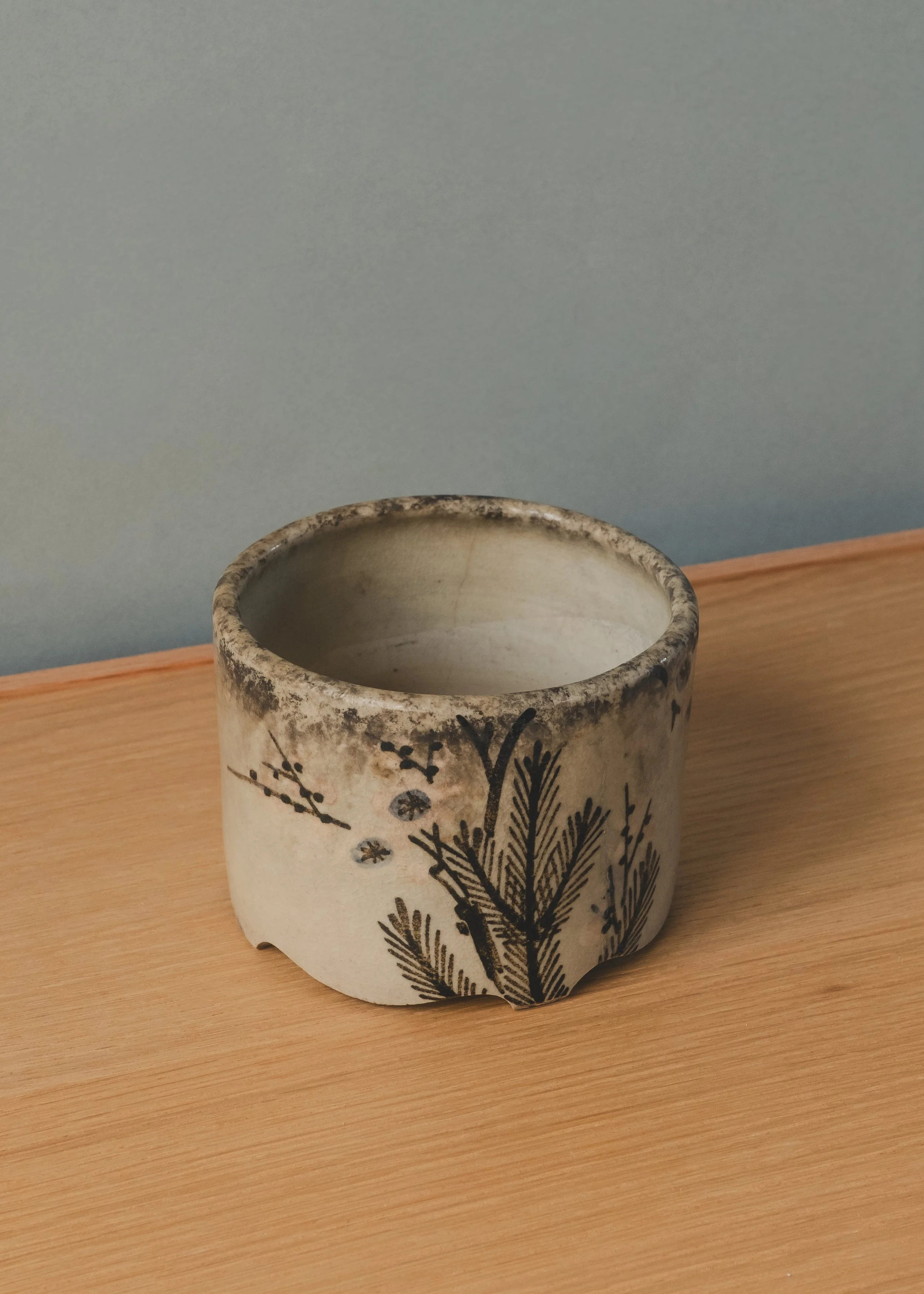 Image 1 of 13
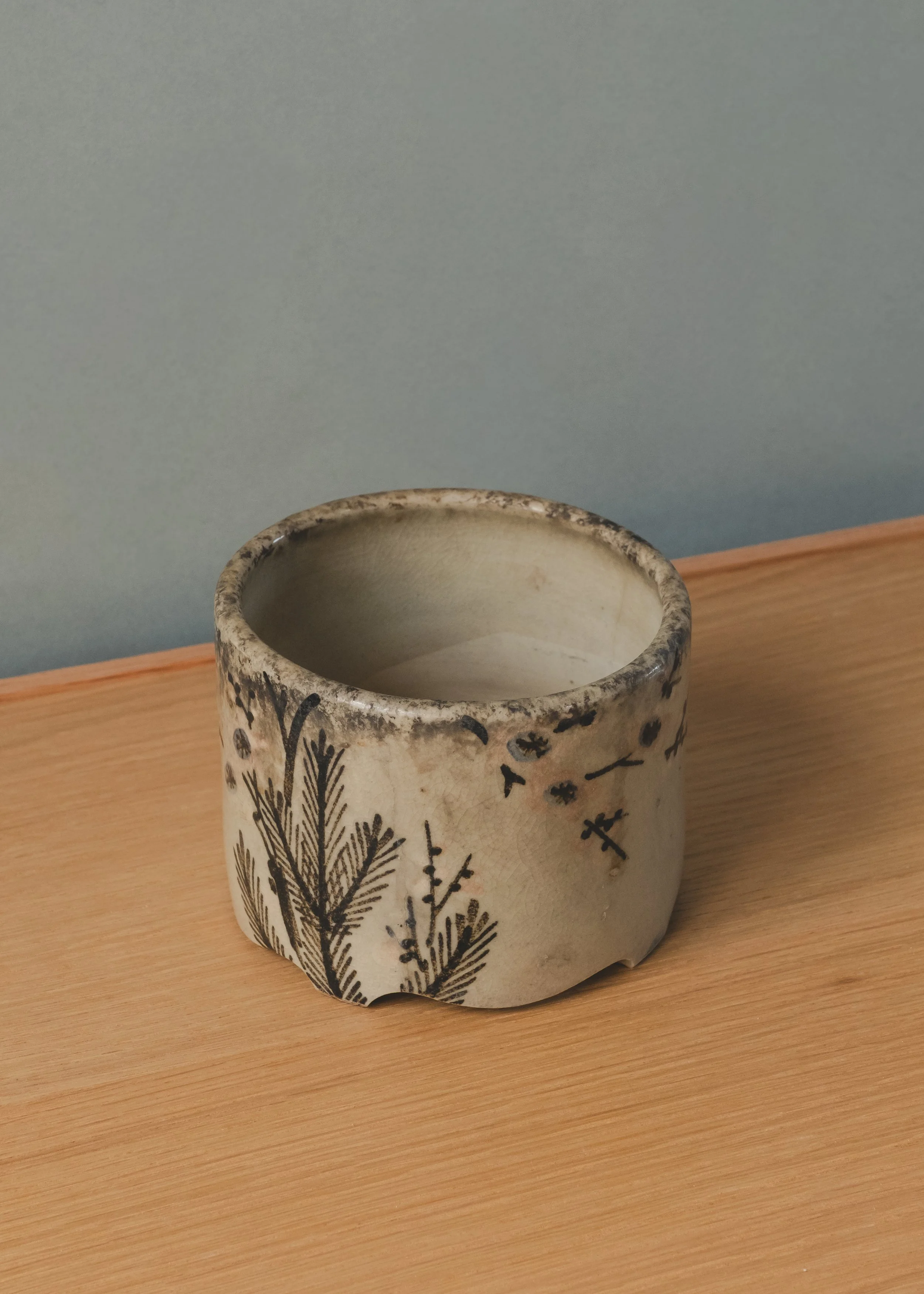 Image 2 of 13
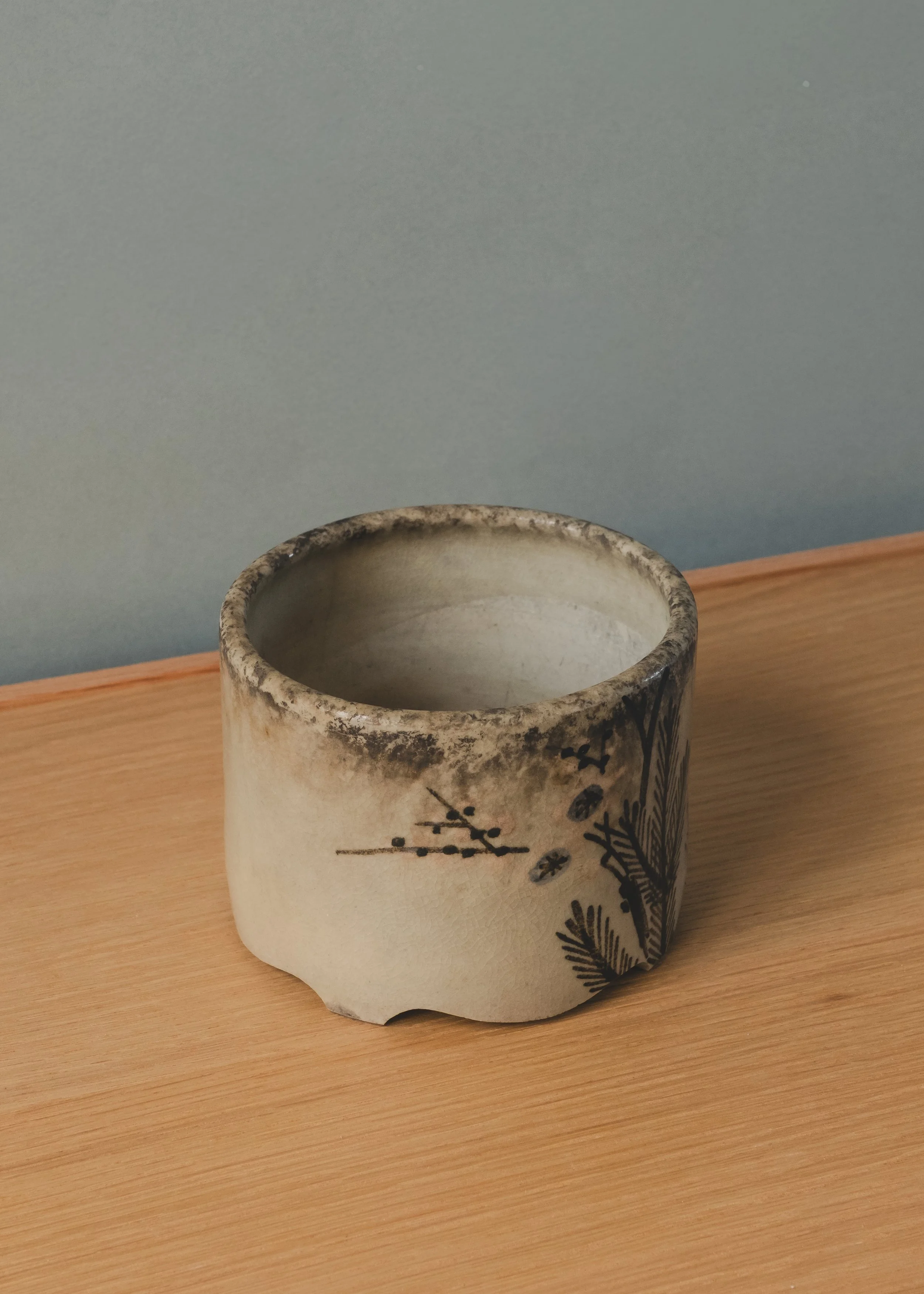 Image 3 of 13
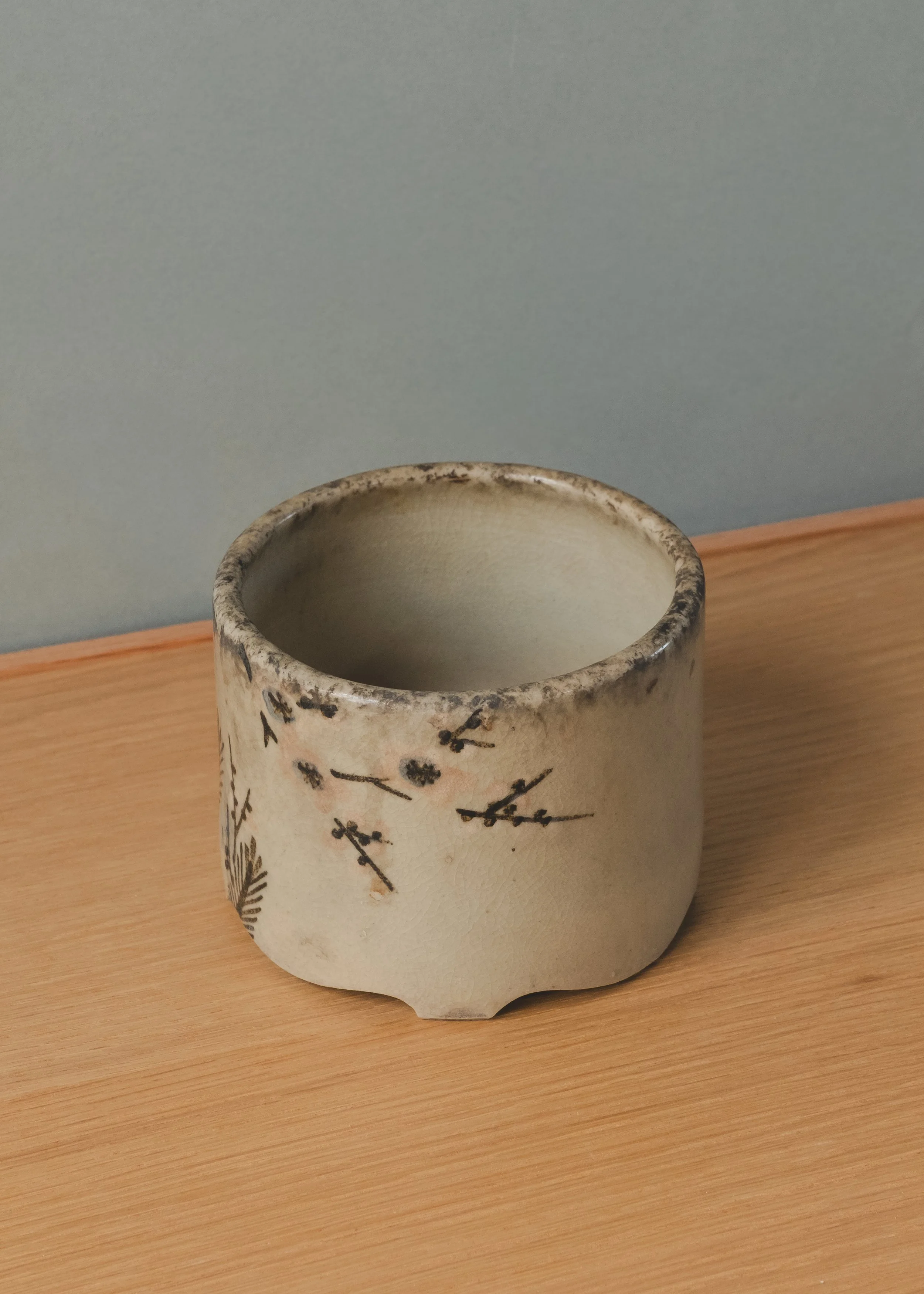 Image 4 of 13
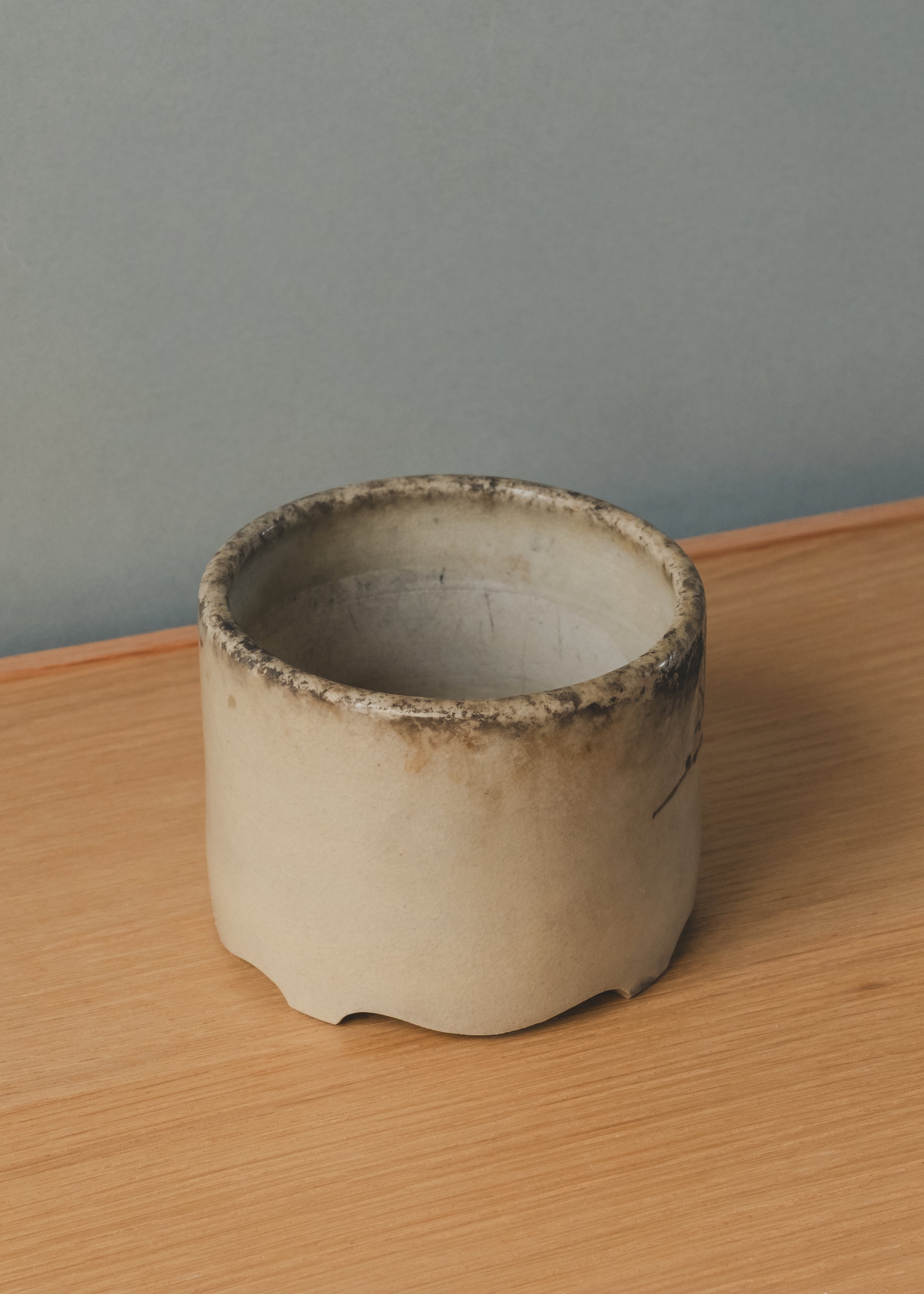 Image 5 of 13
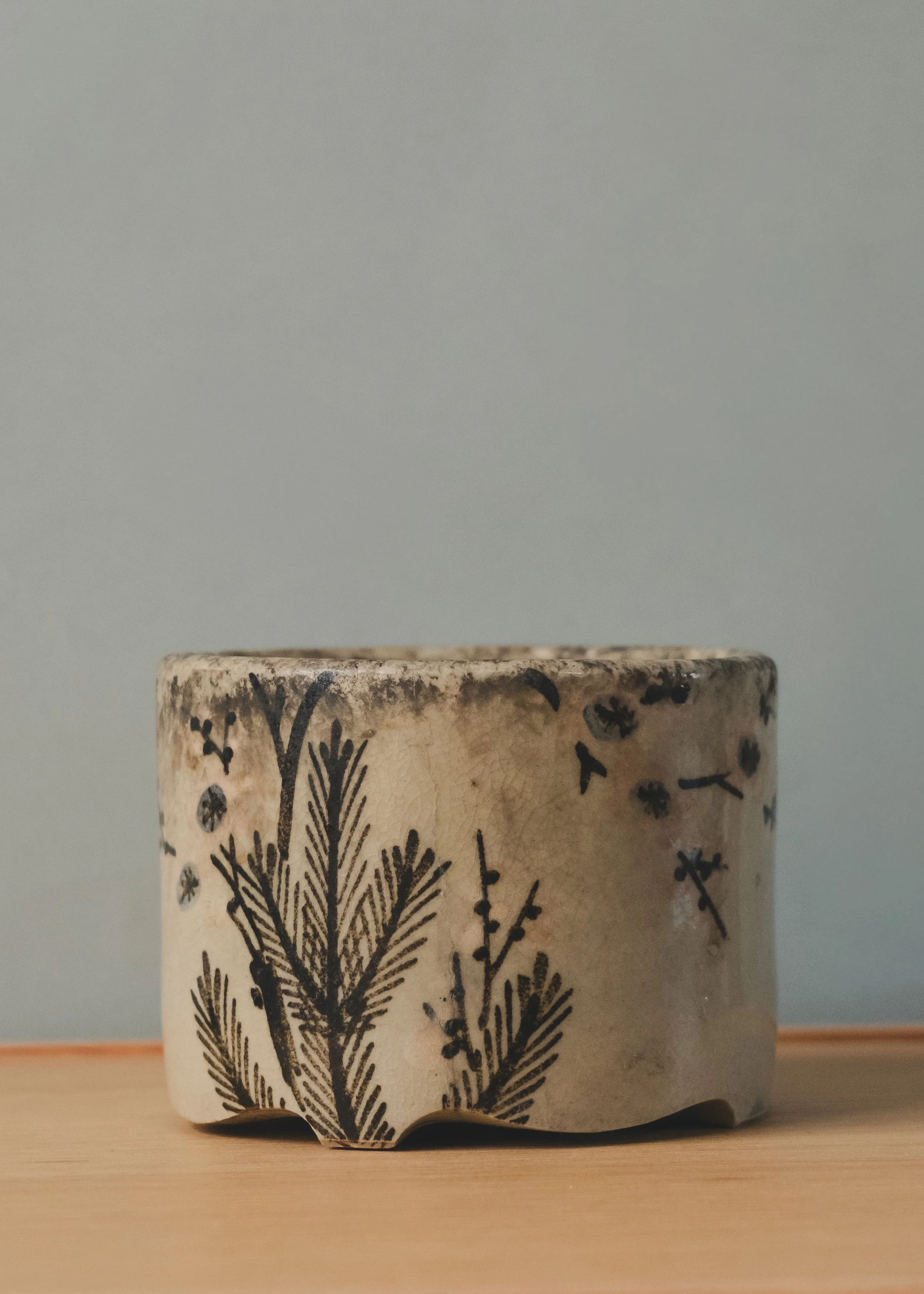 Image 6 of 13
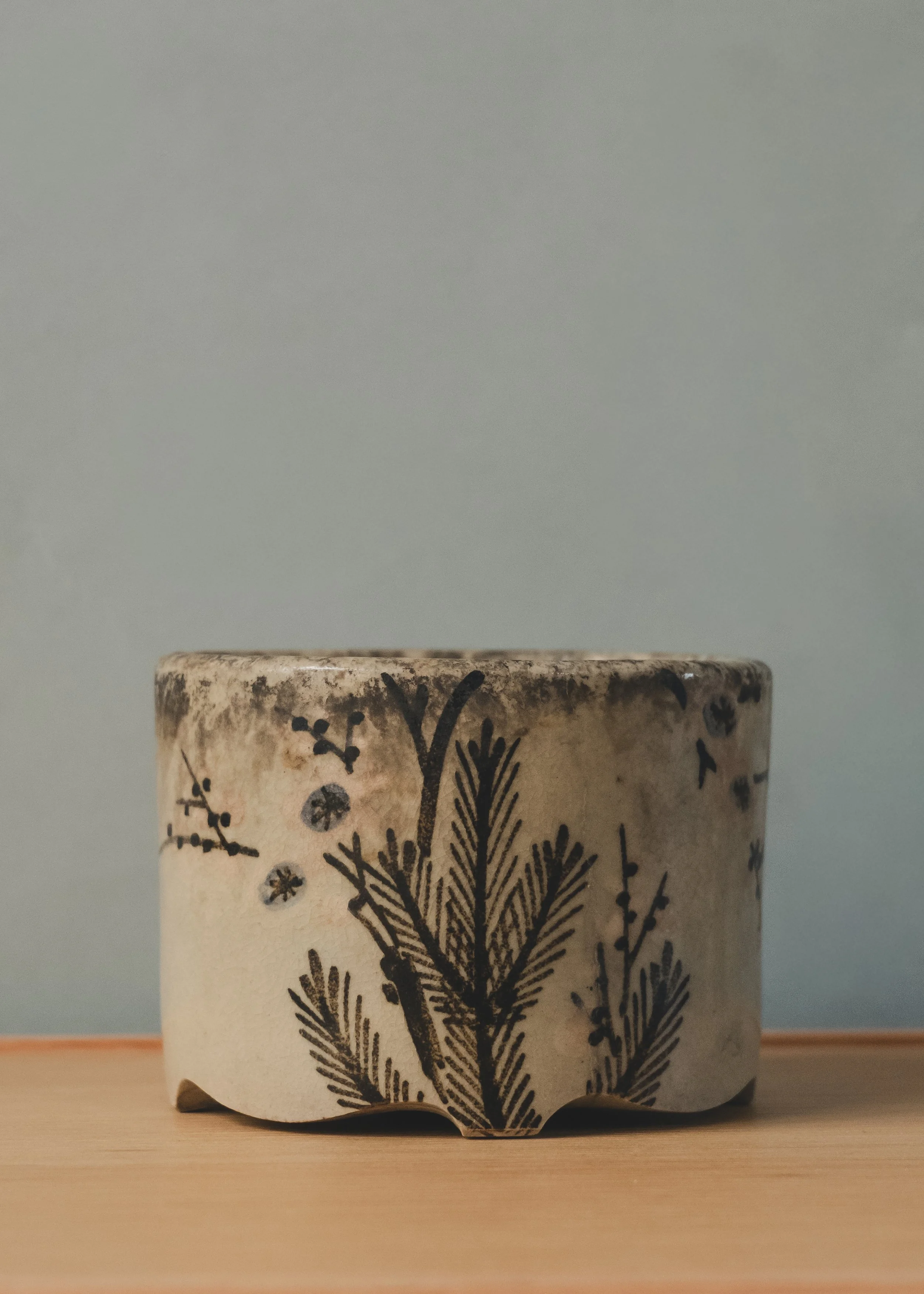 Image 7 of 13
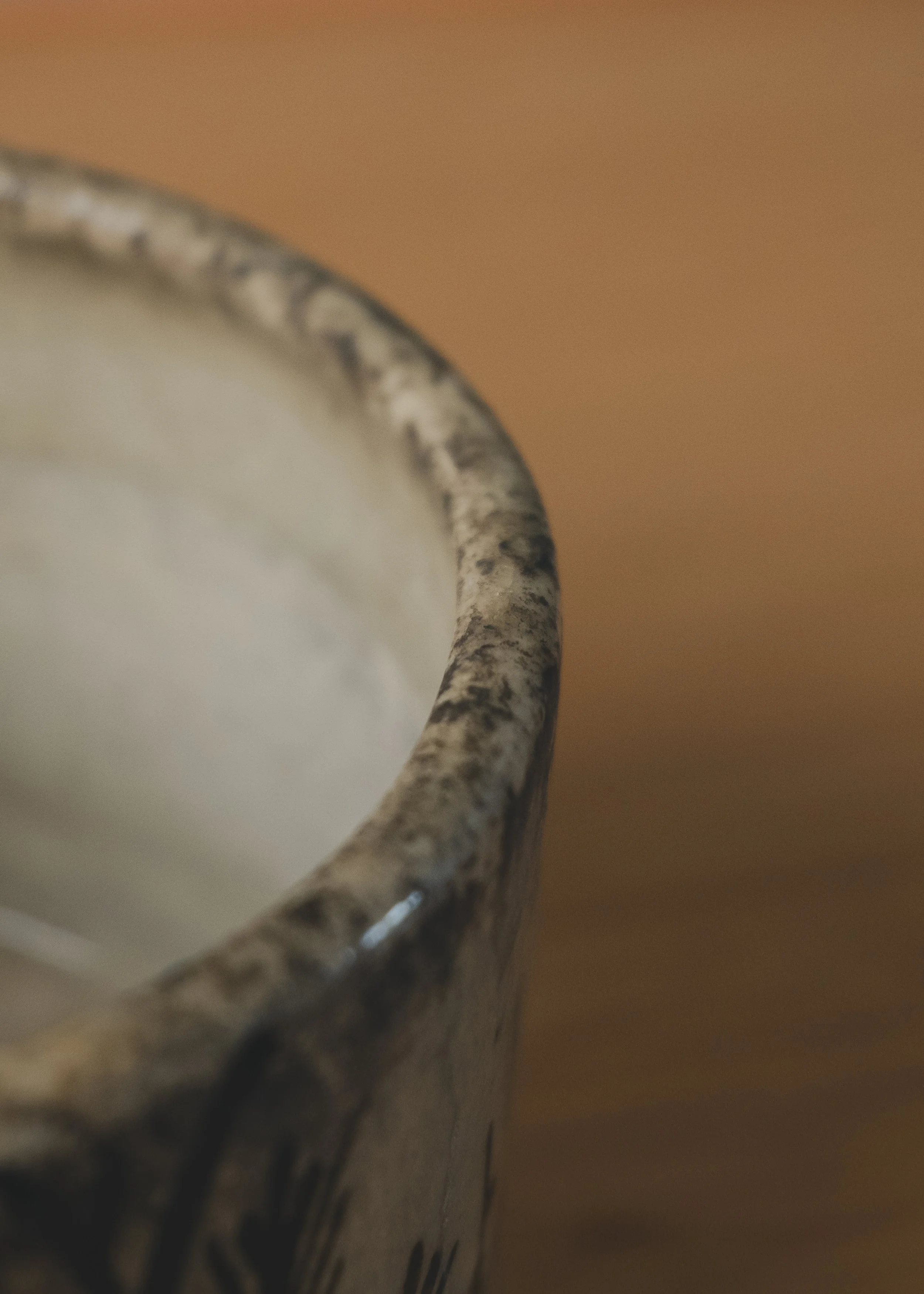 Image 8 of 13
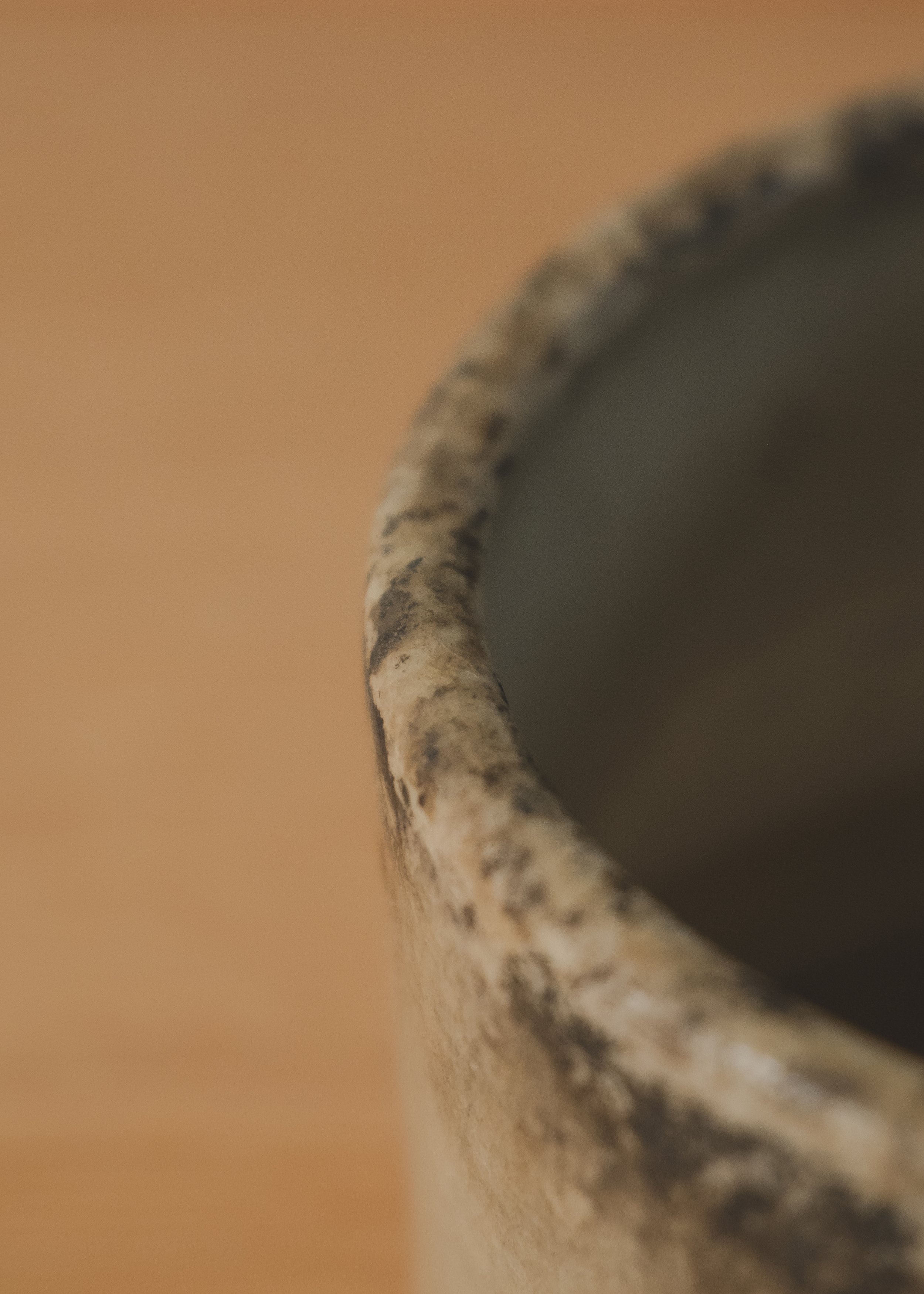 Image 9 of 13
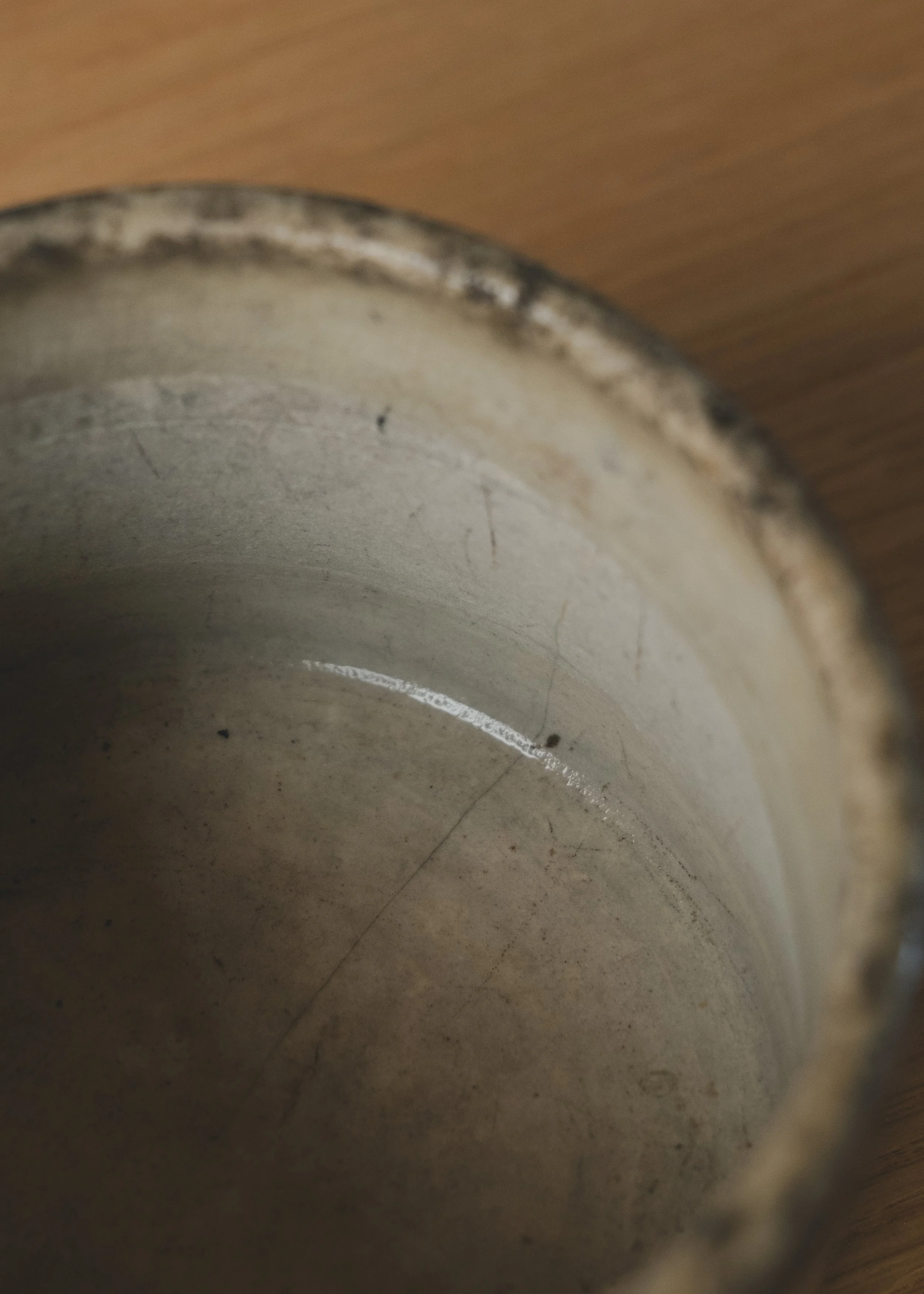 Image 10 of 13
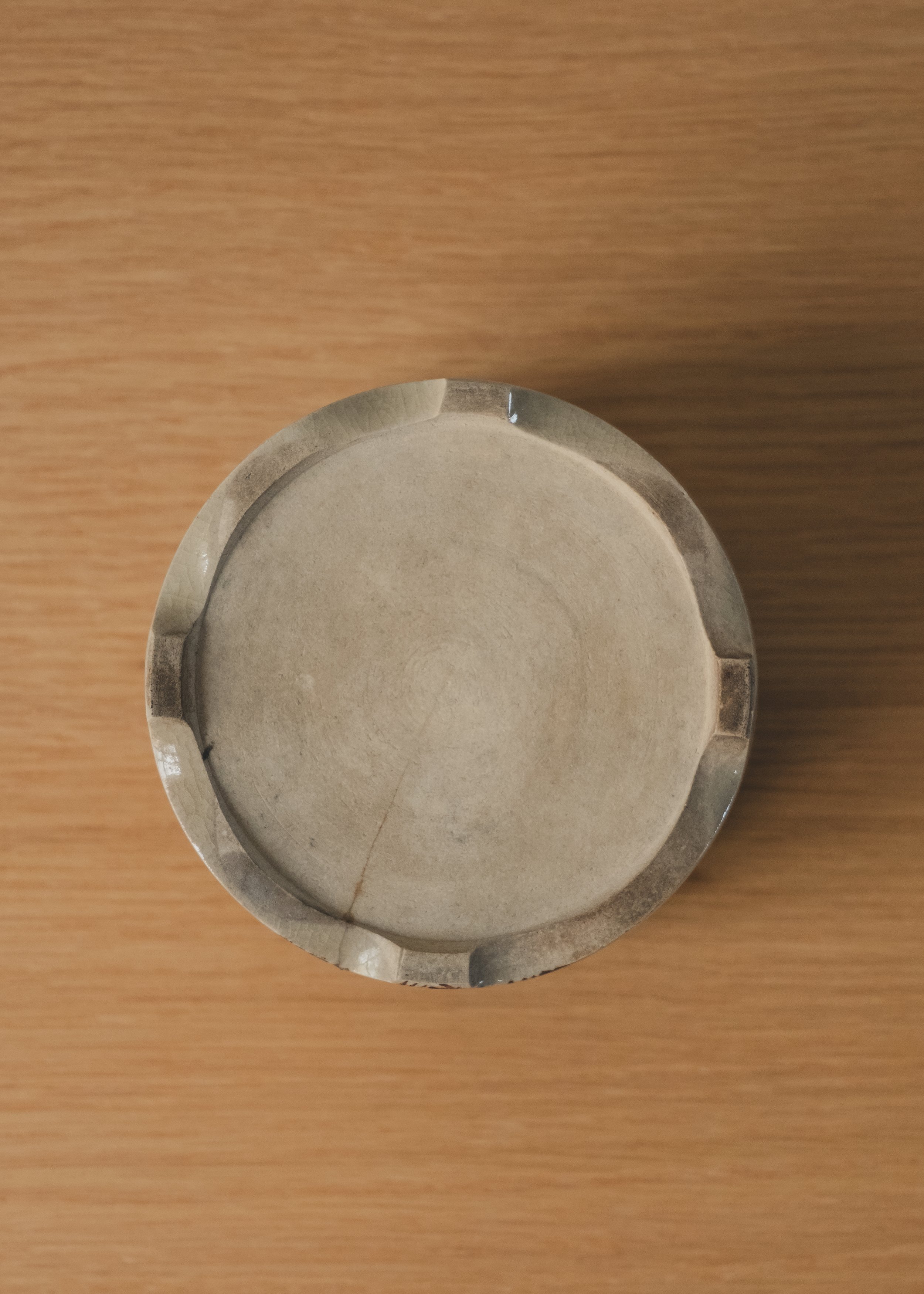 Image 11 of 13
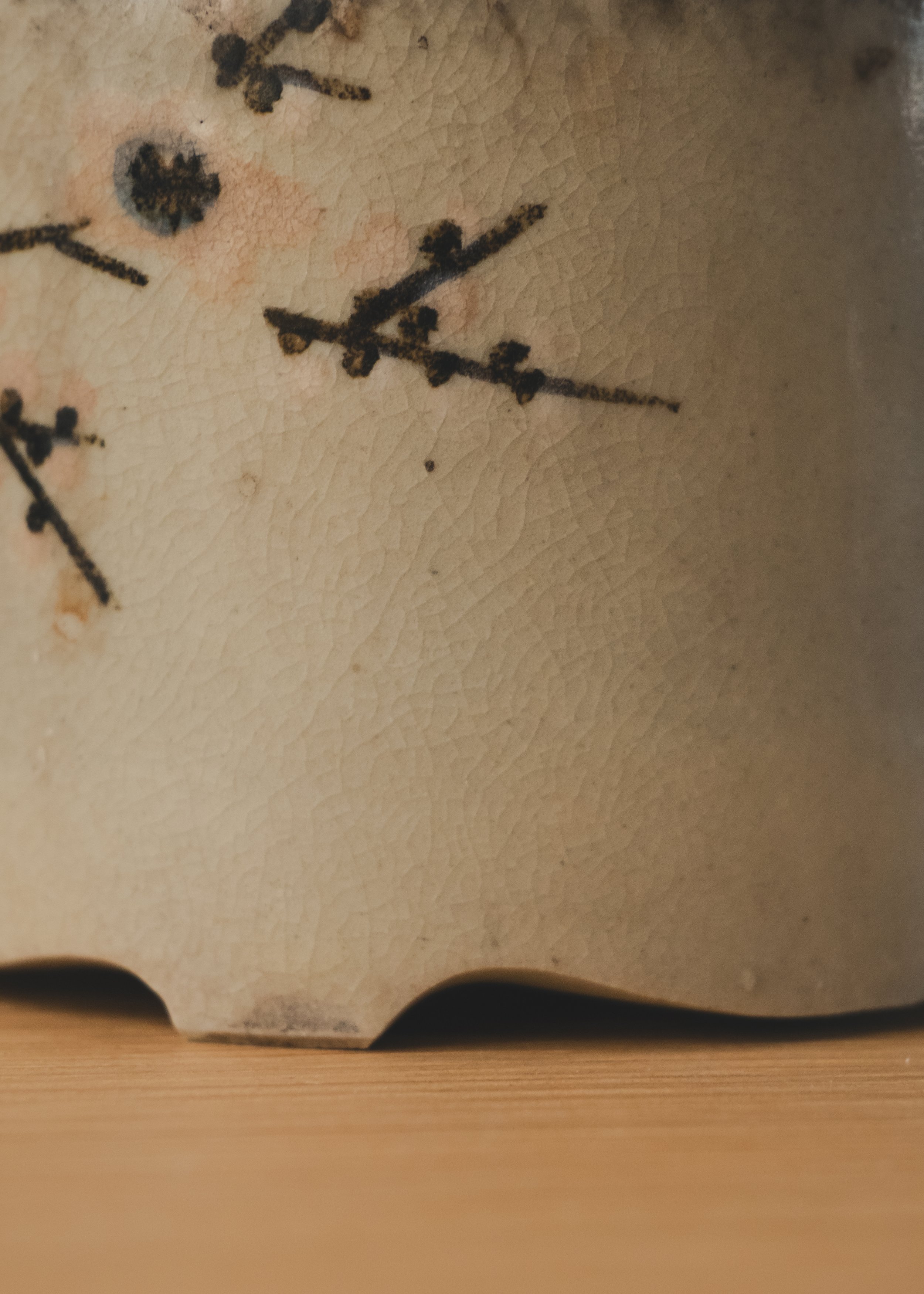 Image 12 of 13
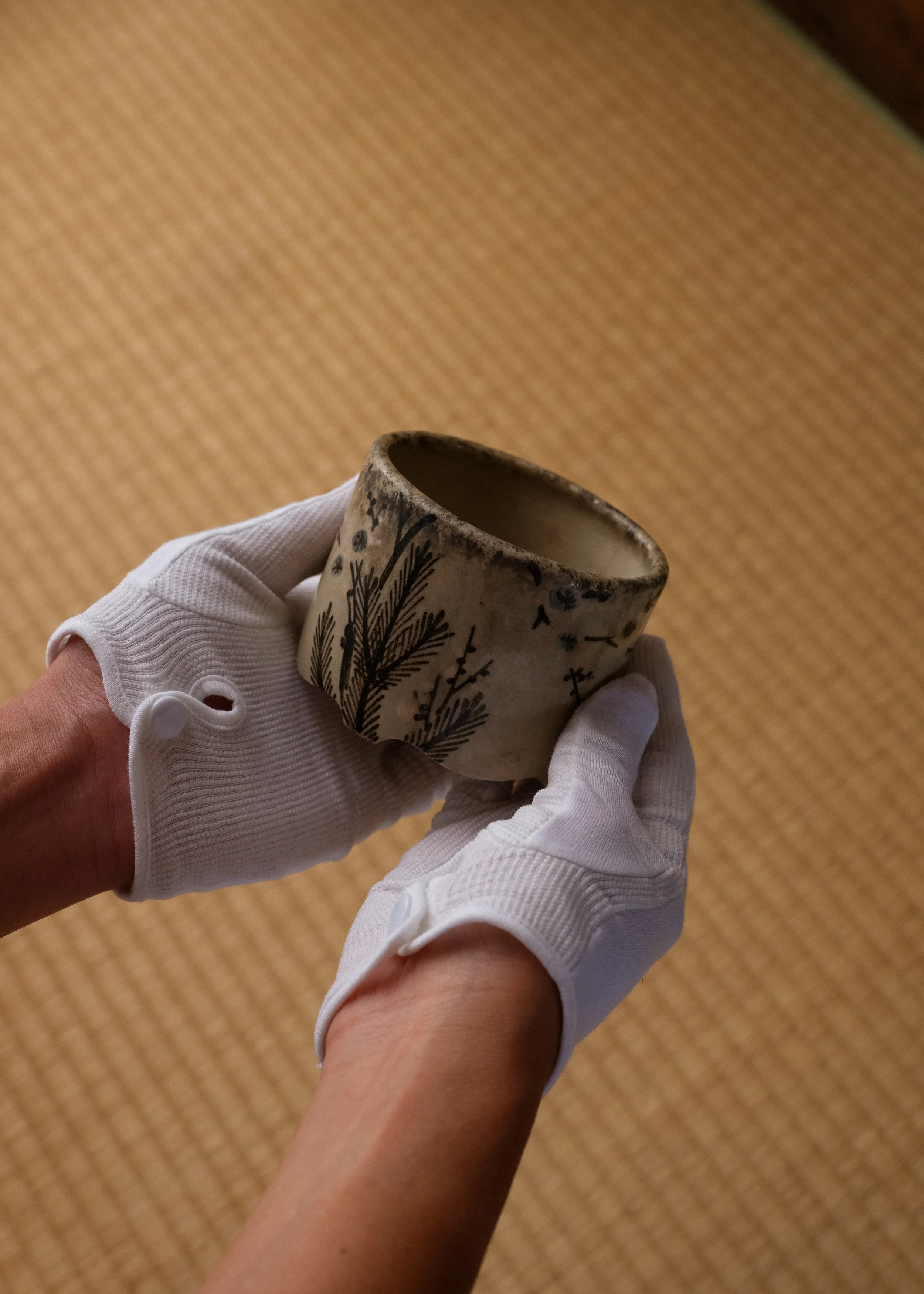 Image 13 of 13