【 The Concept 】
The tiger is lying down but it is not resting. The front legs are split — one forward, one pulled back — and the head is turned to one side, watching something that has not arrived yet. In the tradition it comes from, the tiger travels a thousand miles in a day and returns the same night. It guards the western quarter of the sky and drives out everything that should not be there. An anonymous metalsmith cast this guardian into a desk object: a paperweight heavy enough to hold down whatever is beneath it, and a brush rest shaped like the spine of an animal that never stops watching.
【 The Function 】
A paperweight and brush rest. Ten and a half centimeters long, three and a half centimeters tall, three centimeters wide. Sand-cast iron, finished in a dark patina that shifts between black and deep green. The tiger lies flat with its legs folded under and its tail curled along the flank. The back curves in a shallow S — just enough to cradle a brush without it rolling off. The base is ground flat. At 240 grams it holds paper, holds a brush, and holds its position.
【 The Texture 】
Sand-cast iron with the granular surface of metal poured into earth. The finish is called black-gold — a layered process where dark pigment is applied and then partially wiped away, leaving the high points with a dull, aged sheen and the low points filled with shadow. The stripes are not painted. They are cast into the iron as grooves — channels that run from spine to belly in thick parallel arcs. The ears are small and round. The nose is blunt. The eyes are set deep. The whole figure has the look of something that was buried and dug up — not damaged, just old in a way that makes it more convincing.
【 Presence 】
It lies on the desk the way a cat lies on a windowsill — low, flat, and entirely aware. The head is turned. The body is still. The stripes catch shadow in the grooves and release it on the ridges. It does not decorate the desk. It occupies it. Put a brush on its back and the brush stays. Put paper under its belly and the paper stays. The tiger does not move. That is the point. Everything it guards stays exactly where it is.
Sourced from a private collection in western Japan.
【 The Concept 】
The tiger is lying down but it is not resting. The front legs are split — one forward, one pulled back — and the head is turned to one side, watching something that has not arrived yet. In the tradition it comes from, the tiger travels a thousand miles in a day and returns the same night. It guards the western quarter of the sky and drives out everything that should not be there. An anonymous metalsmith cast this guardian into a desk object: a paperweight heavy enough to hold down whatever is beneath it, and a brush rest shaped like the spine of an animal that never stops watching.
【 The Function 】
A paperweight and brush rest. Ten and a half centimeters long, three and a half centimeters tall, three centimeters wide. Sand-cast iron, finished in a dark patina that shifts between black and deep green. The tiger lies flat with its legs folded under and its tail curled along the flank. The back curves in a shallow S — just enough to cradle a brush without it rolling off. The base is ground flat. At 240 grams it holds paper, holds a brush, and holds its position.
【 The Texture 】
Sand-cast iron with the granular surface of metal poured into earth. The finish is called black-gold — a layered process where dark pigment is applied and then partially wiped away, leaving the high points with a dull, aged sheen and the low points filled with shadow. The stripes are not painted. They are cast into the iron as grooves — channels that run from spine to belly in thick parallel arcs. The ears are small and round. The nose is blunt. The eyes are set deep. The whole figure has the look of something that was buried and dug up — not damaged, just old in a way that makes it more convincing.
【 Presence 】
It lies on the desk the way a cat lies on a windowsill — low, flat, and entirely aware. The head is turned. The body is still. The stripes catch shadow in the grooves and release it on the ridges. It does not decorate the desk. It occupies it. Put a brush on its back and the brush stays. Put paper under its belly and the paper stays. The tiger does not move. That is the point. Everything it guards stays exactly where it is.
Sourced from a private collection in western Japan.


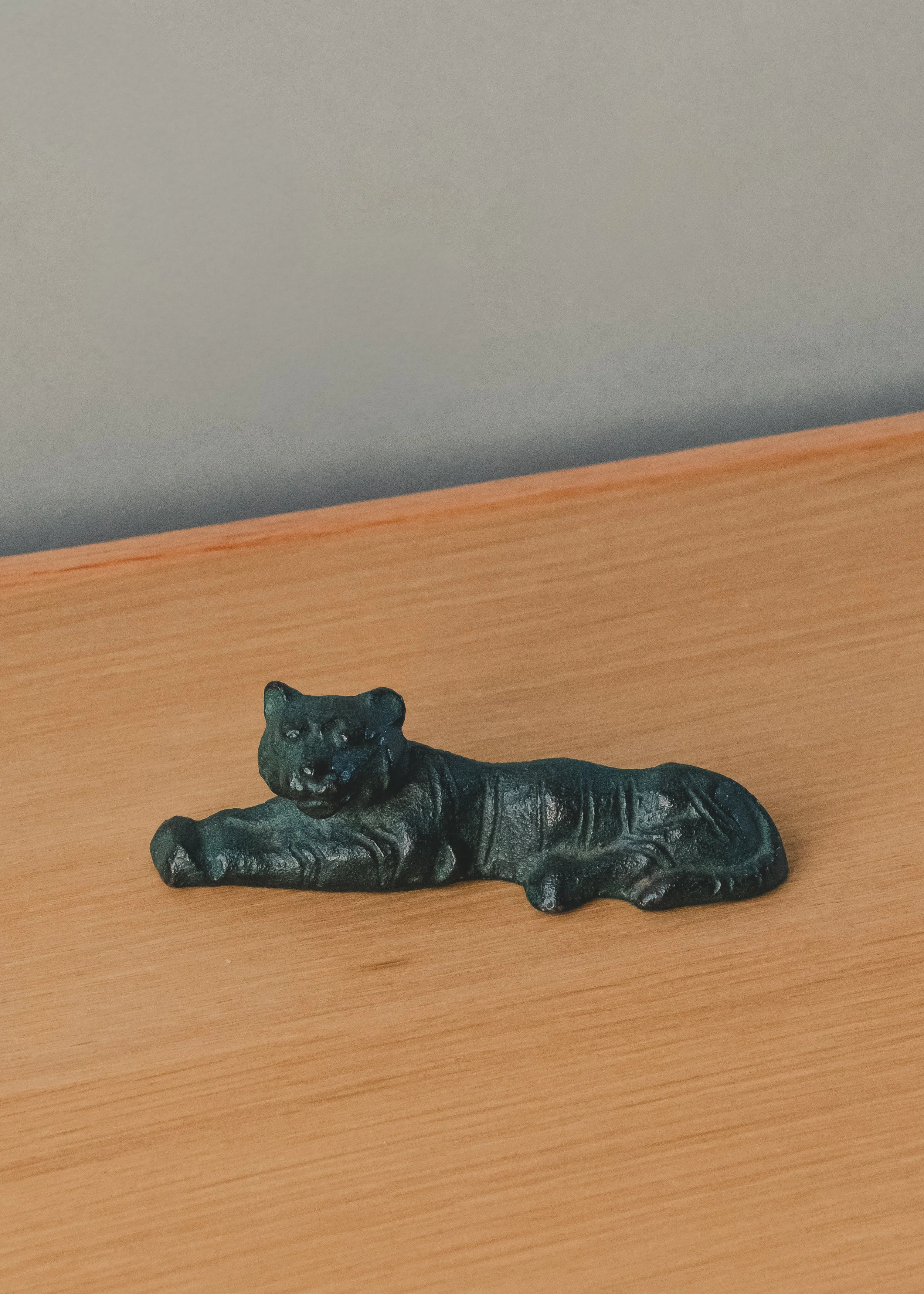 Image 1 of 10
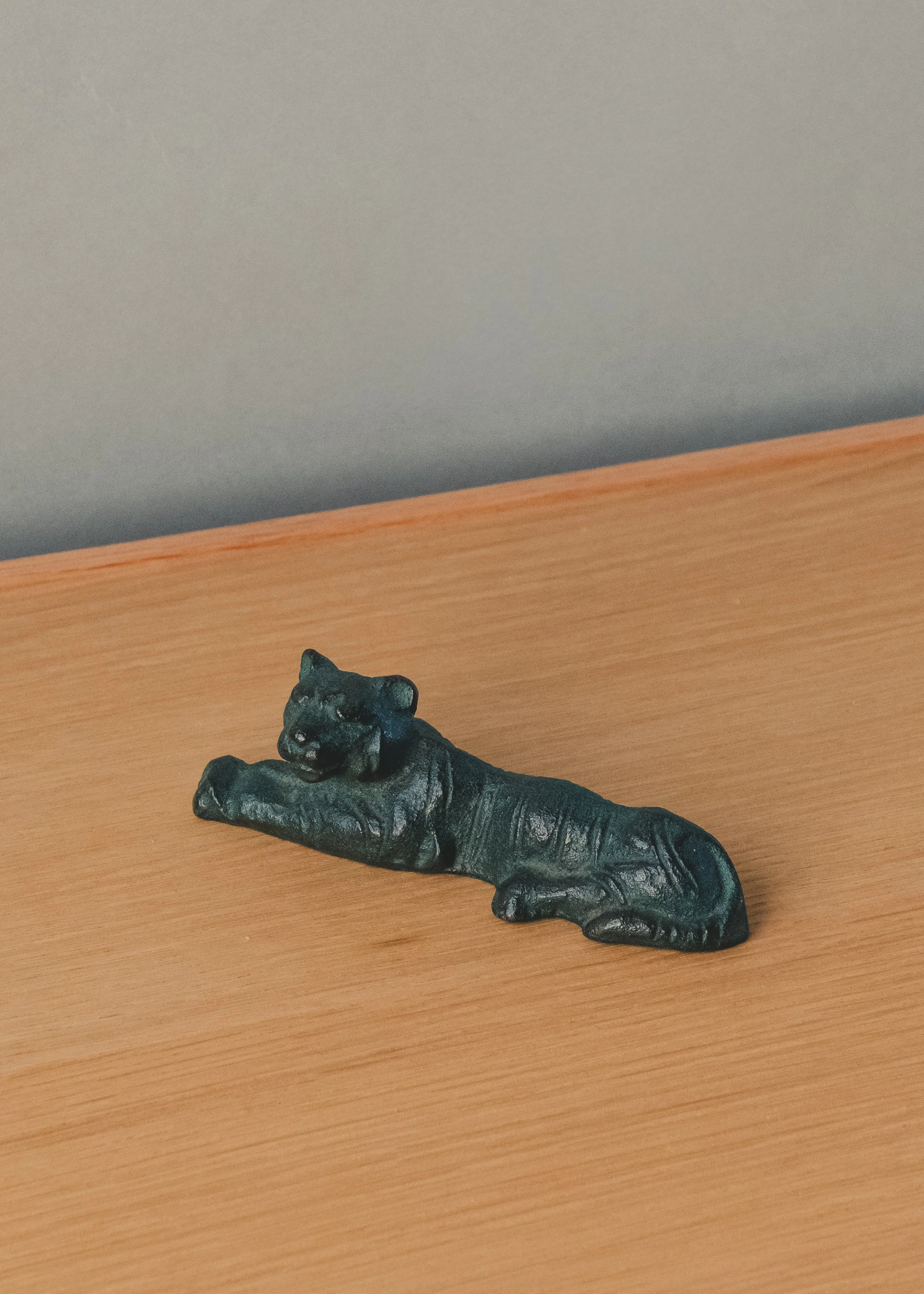 Image 2 of 10
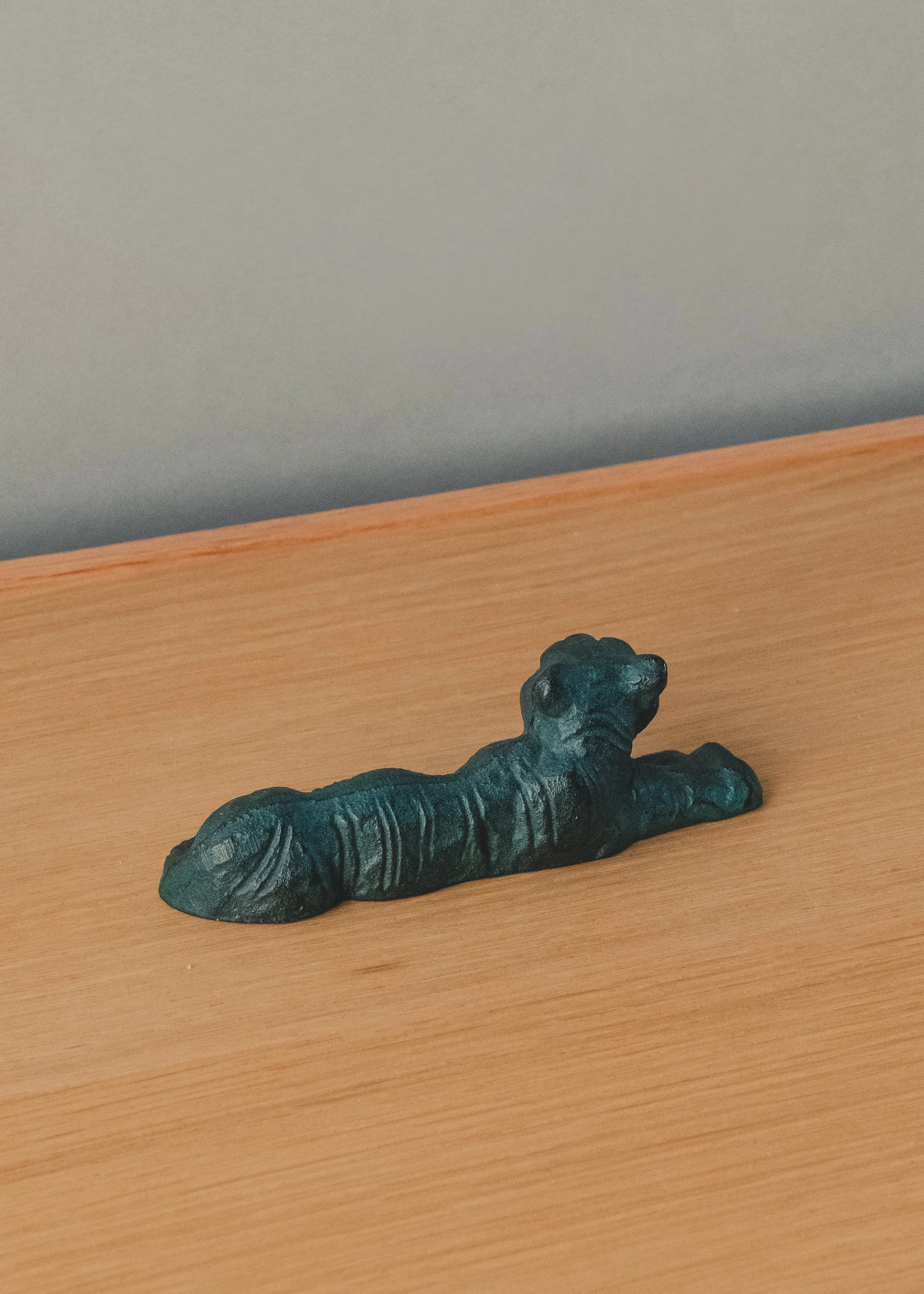 Image 3 of 10
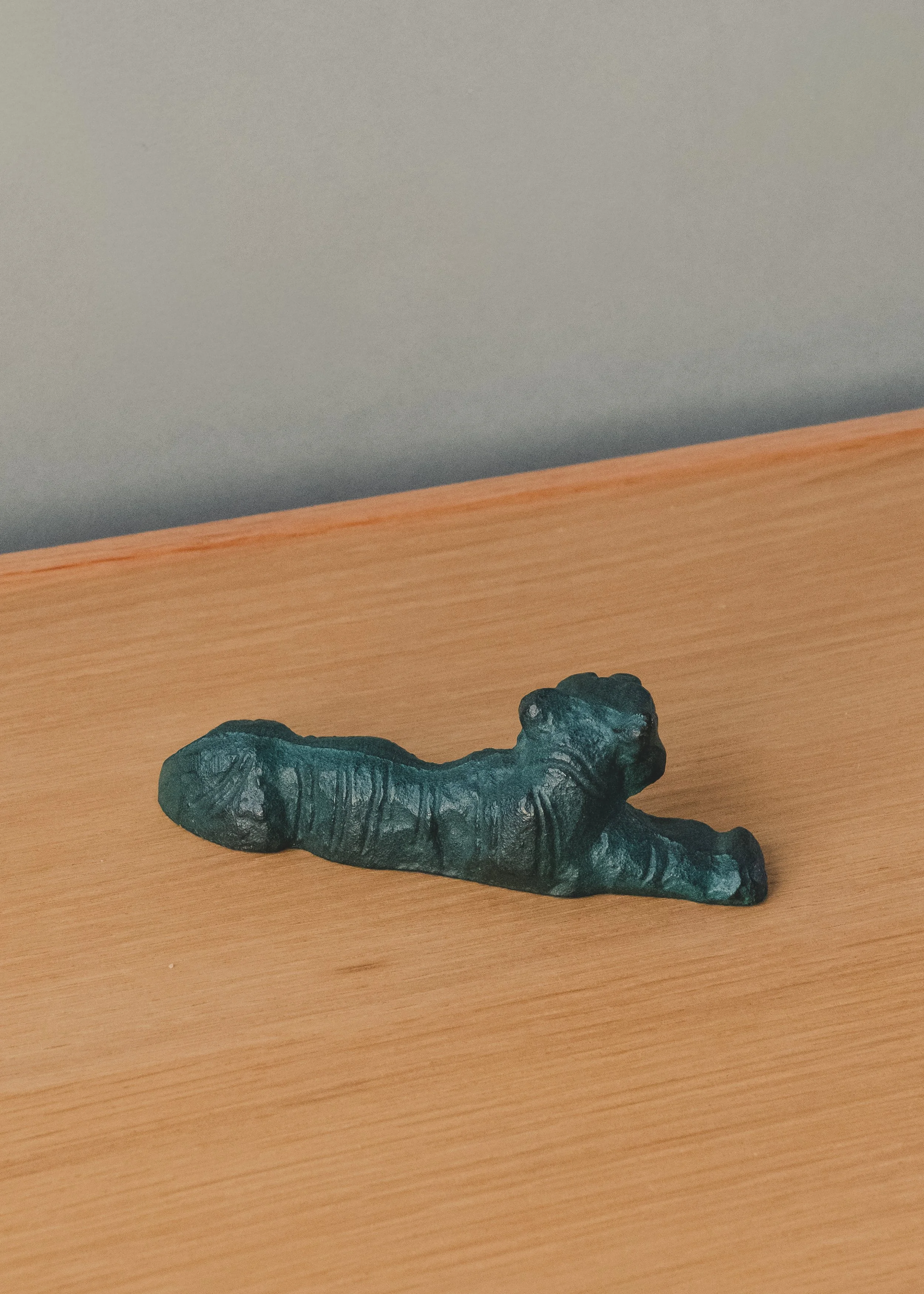 Image 4 of 10
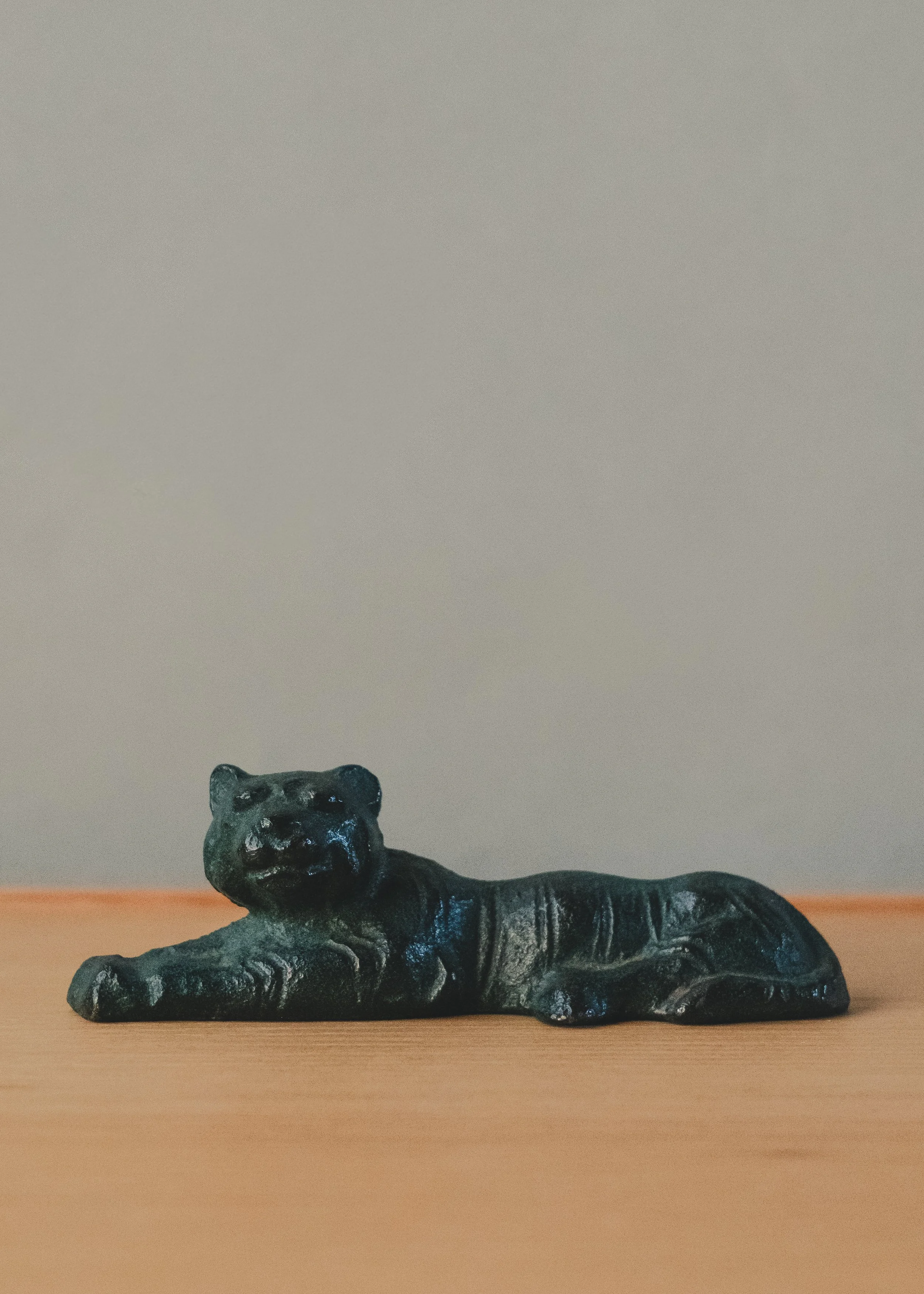 Image 5 of 10
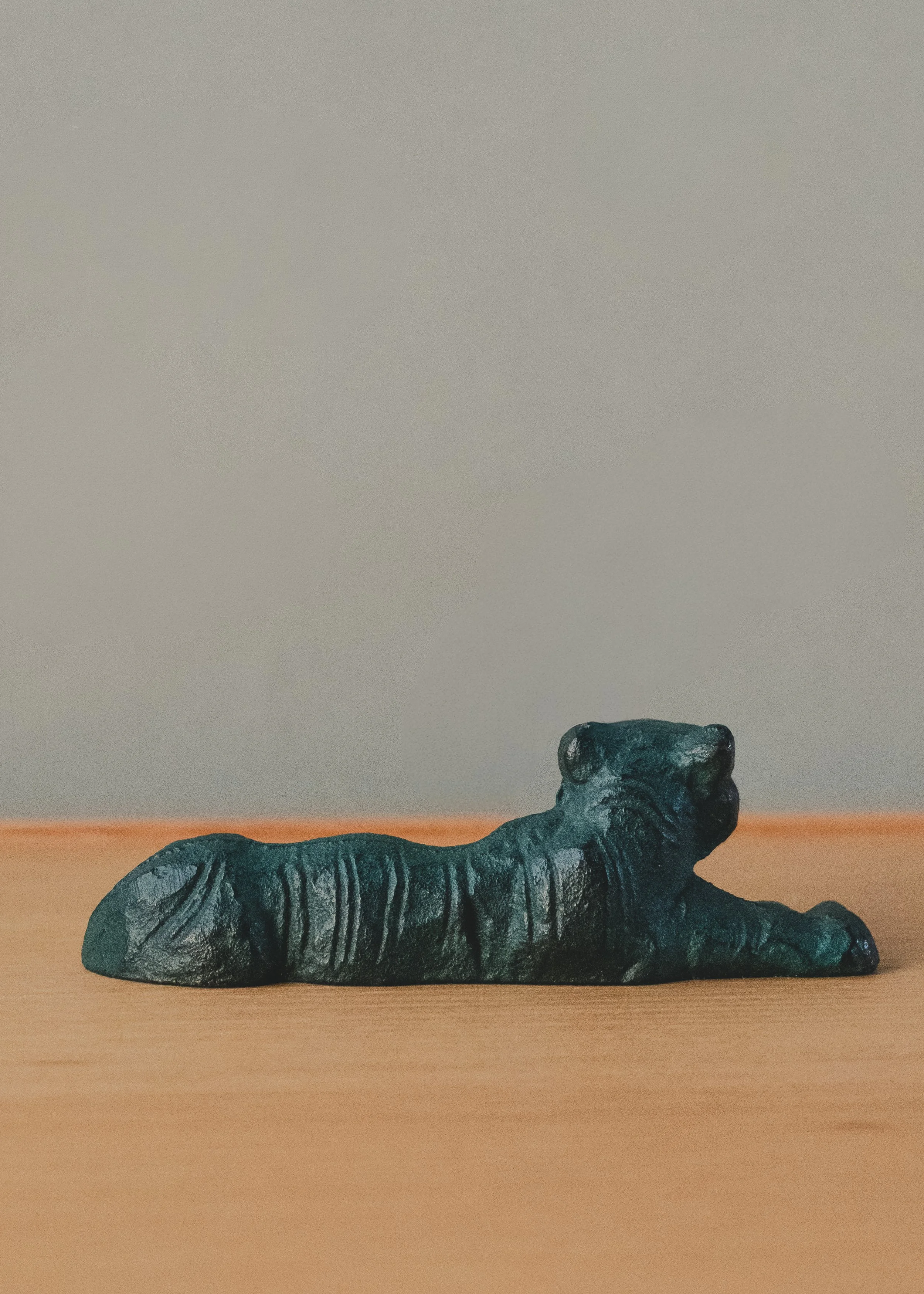 Image 6 of 10
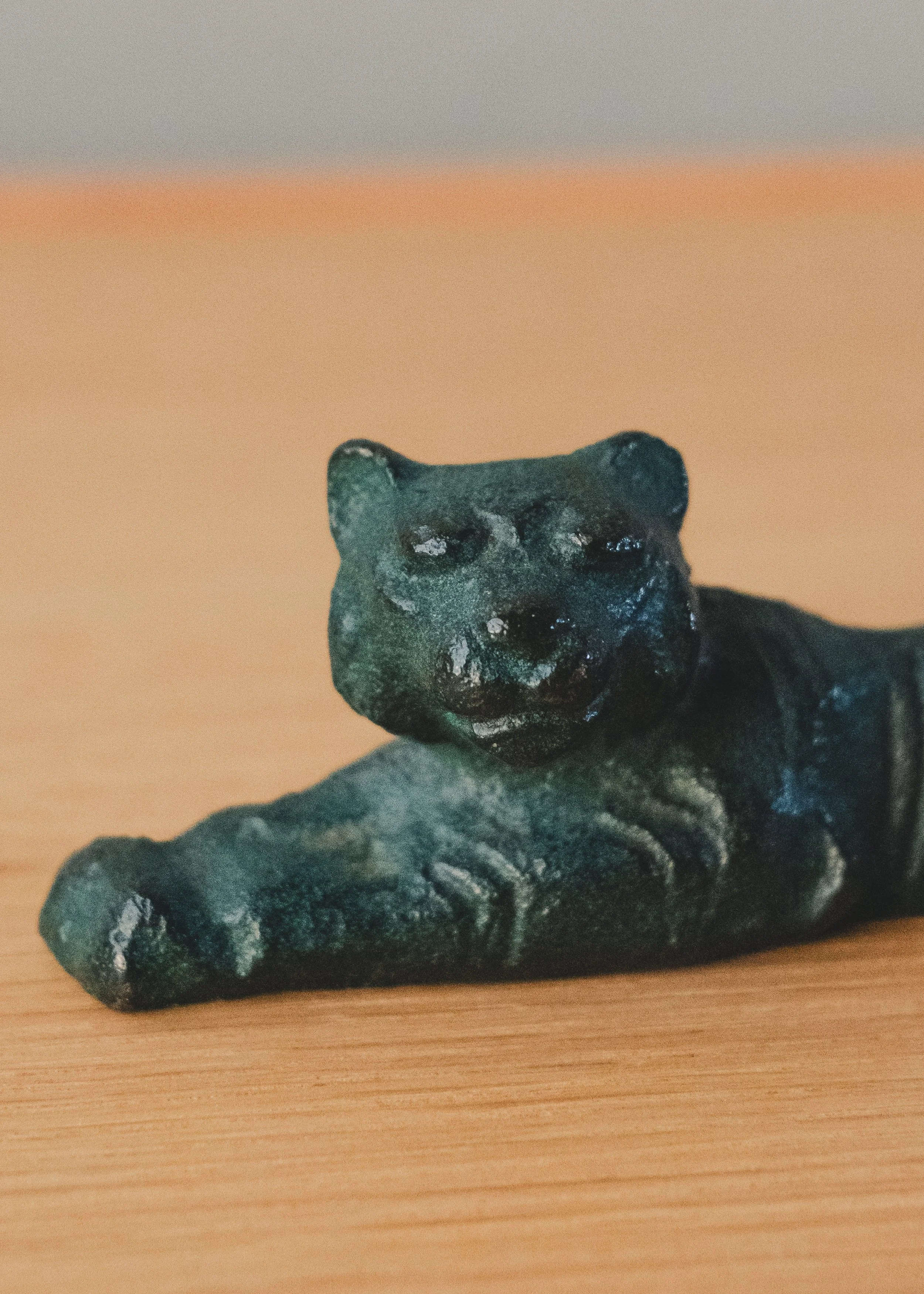 Image 7 of 10
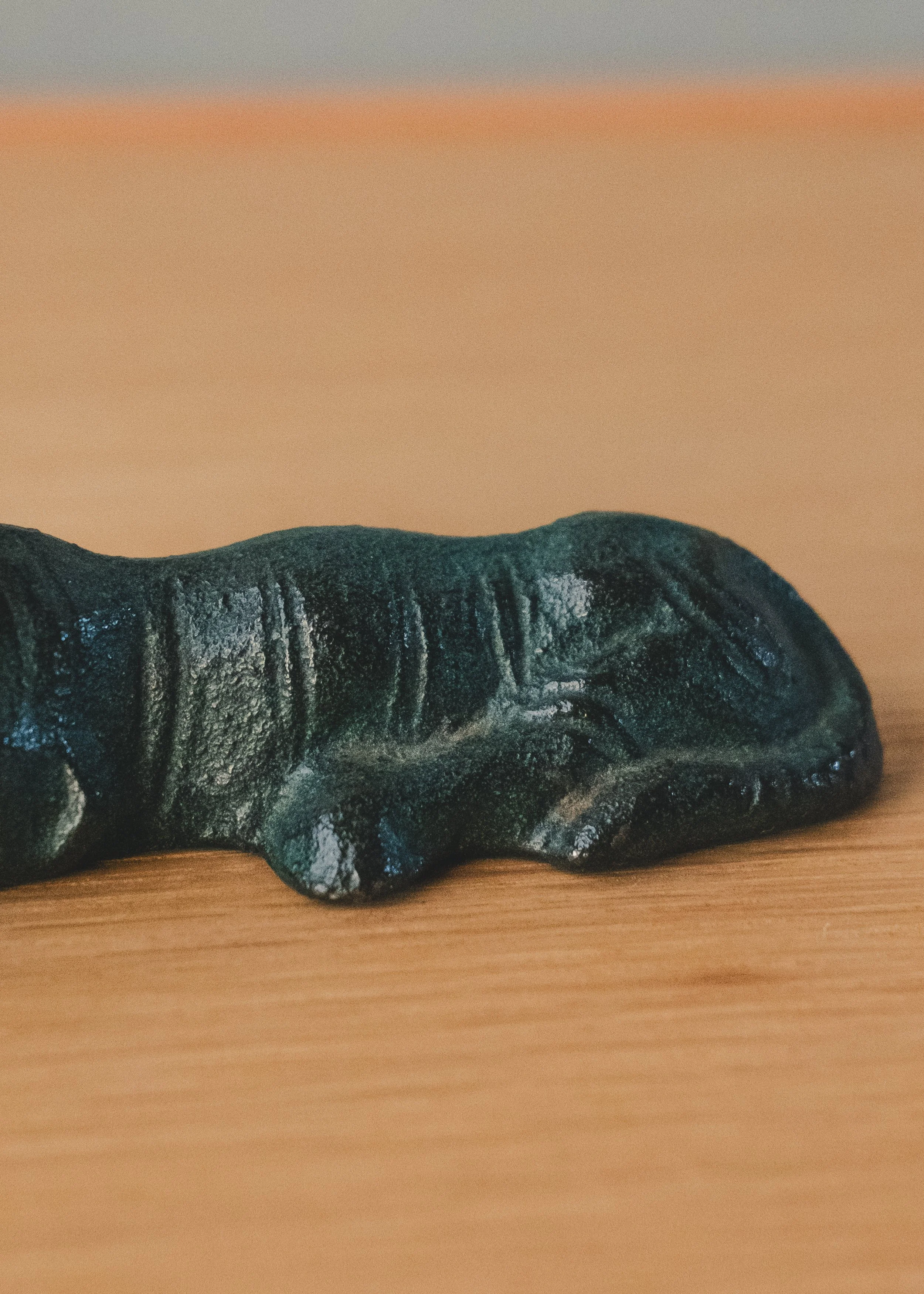 Image 8 of 10
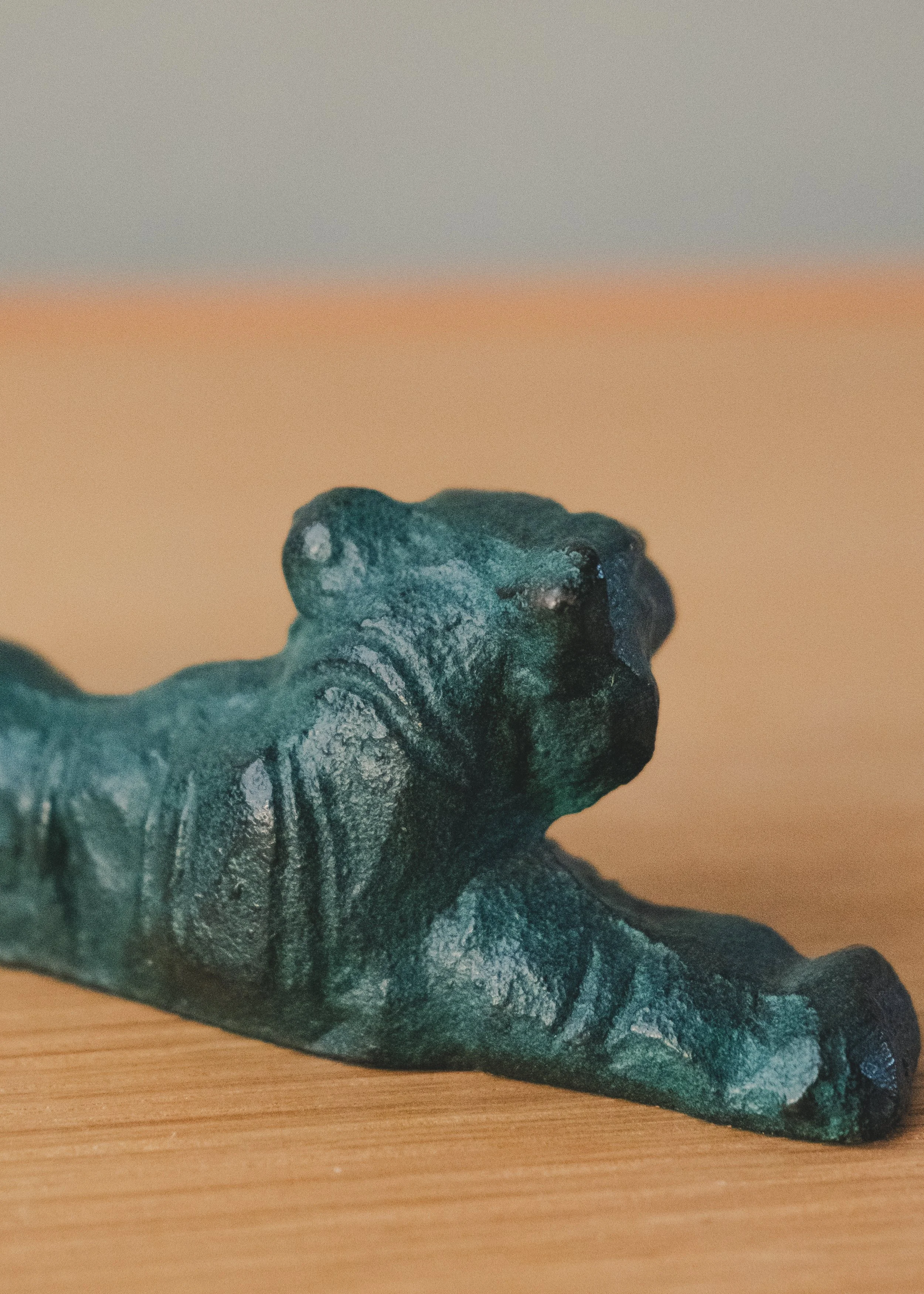 Image 9 of 10
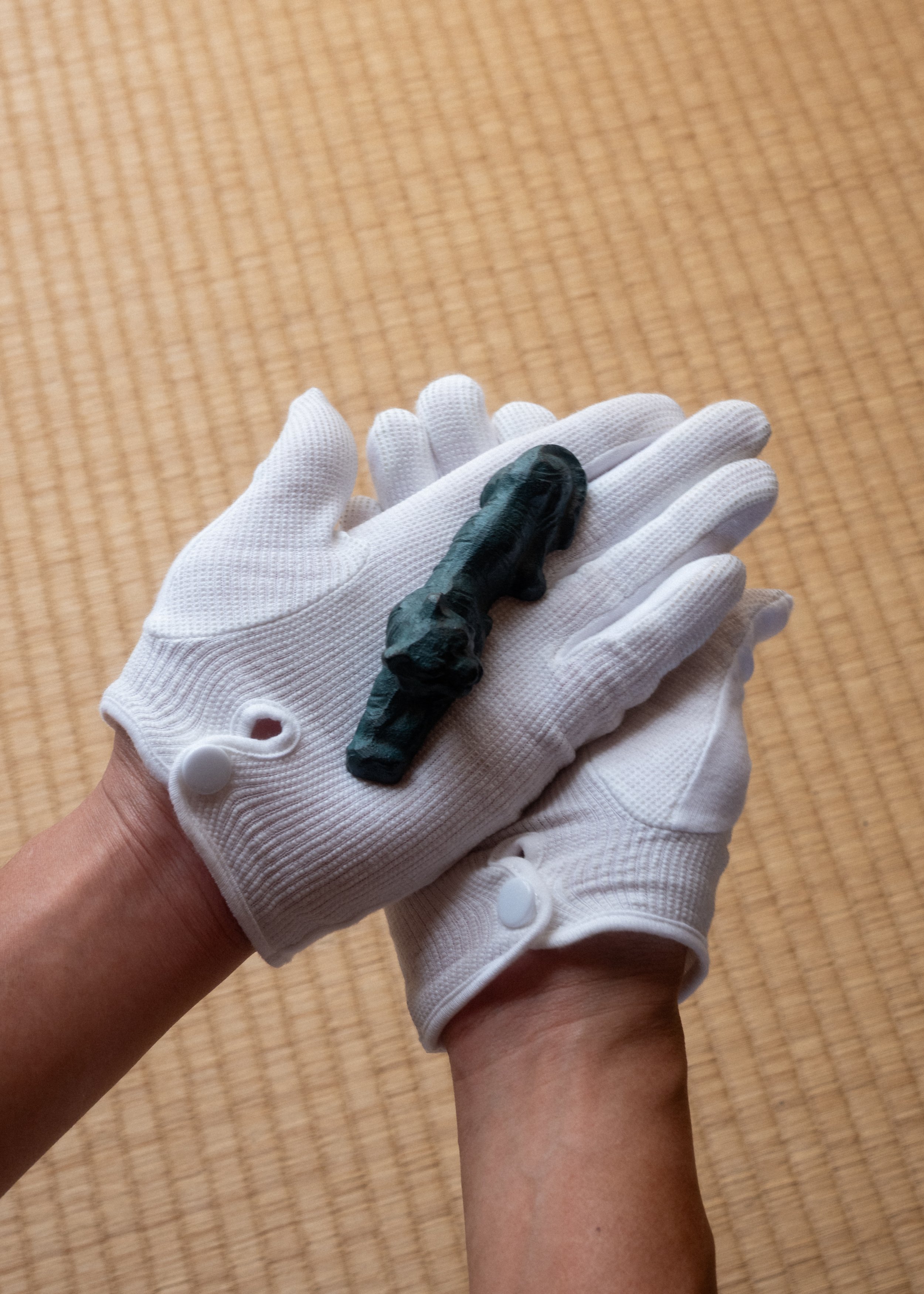 Image 10 of 10