【 The Concept 】
The horse has no saddle, no bridle, no rider. It stands on four thick legs with its head raised and its mouth closed, carrying nothing and answering to no one. In the tradition it comes from, a white horse without equipment is not a working animal. It is a vehicle for gods — the form they ride when they cross from their world into this one. An anonymous potter shaped this horse from clay, covered it in a thick ivory glaze, and fired it until the surface cracked into a web of fine lines. Then it was placed in a wooden box with the potter's name brushed in ink on the lid, and the box was closed.
【 The Function 】
A glazed ceramic horse. Seventeen centimeters tall, fifteen centimeters long, seven centimeters wide. Shaped from stoneware clay, coated in a thick glaze that fires to a warm ivory, and cooled until the glaze cracked. The legs are solid cylinders that widen toward the ground. The tail hangs flat against the body. The mane runs along the neck in a row of scalloped ridges. At 299 grams it stands without assistance. Original maker's box included — paulownia wood, brush-signed on the lid.
【 The Texture 】
The entire surface is covered in a net of fine cracks called crazing. The glaze is thick, glassy, and warm — not white, not cream, but the color of old ivory. Inside the cracks, faint grey and brown pigment has settled over the years, making the web visible against the pale ground. The effect is deliberate. The potter mixed the clay and the glaze so that one would shrink faster than the other as the kiln cooled, forcing the glass layer to fracture in a pattern no hand could draw. The cracks are finest on the legs and deepest on the belly, where the glaze pooled thickest. Light moves across the surface in long wet curves.
【 Presence 】
It stands in the room the way a horse stands in a field — legs apart, head up, not going anywhere, not needing to. There is no color except ivory. No detail except the mane and the cracks. The eyes are shallow hollows. The nostrils are not drawn. Everything that could be removed has been removed, and what remains is the shape of a horse reduced to its simplest possible form — four legs, a body, a neck, a head — wrapped in a skin of cracked glass that has been aging quietly inside a wooden box.
Sourced from a private collection in western Japan. Original maker's box included.
【 The Concept 】
The horse has no saddle, no bridle, no rider. It stands on four thick legs with its head raised and its mouth closed, carrying nothing and answering to no one. In the tradition it comes from, a white horse without equipment is not a working animal. It is a vehicle for gods — the form they ride when they cross from their world into this one. An anonymous potter shaped this horse from clay, covered it in a thick ivory glaze, and fired it until the surface cracked into a web of fine lines. Then it was placed in a wooden box with the potter's name brushed in ink on the lid, and the box was closed.
【 The Function 】
A glazed ceramic horse. Seventeen centimeters tall, fifteen centimeters long, seven centimeters wide. Shaped from stoneware clay, coated in a thick glaze that fires to a warm ivory, and cooled until the glaze cracked. The legs are solid cylinders that widen toward the ground. The tail hangs flat against the body. The mane runs along the neck in a row of scalloped ridges. At 299 grams it stands without assistance. Original maker's box included — paulownia wood, brush-signed on the lid.
【 The Texture 】
The entire surface is covered in a net of fine cracks called crazing. The glaze is thick, glassy, and warm — not white, not cream, but the color of old ivory. Inside the cracks, faint grey and brown pigment has settled over the years, making the web visible against the pale ground. The effect is deliberate. The potter mixed the clay and the glaze so that one would shrink faster than the other as the kiln cooled, forcing the glass layer to fracture in a pattern no hand could draw. The cracks are finest on the legs and deepest on the belly, where the glaze pooled thickest. Light moves across the surface in long wet curves.
【 Presence 】
It stands in the room the way a horse stands in a field — legs apart, head up, not going anywhere, not needing to. There is no color except ivory. No detail except the mane and the cracks. The eyes are shallow hollows. The nostrils are not drawn. Everything that could be removed has been removed, and what remains is the shape of a horse reduced to its simplest possible form — four legs, a body, a neck, a head — wrapped in a skin of cracked glass that has been aging quietly inside a wooden box.
Sourced from a private collection in western Japan. Original maker's box included.


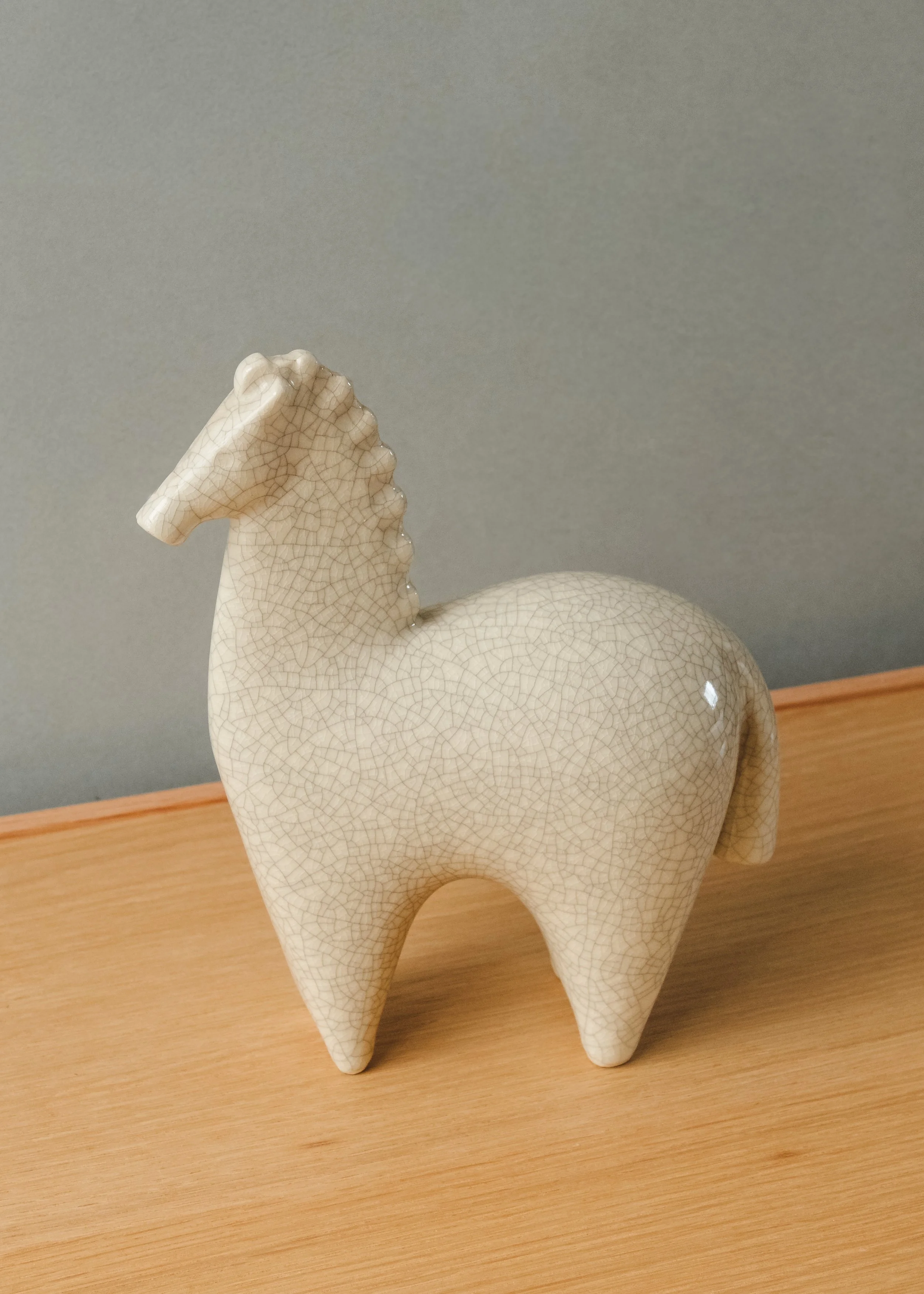 Image 1 of 13
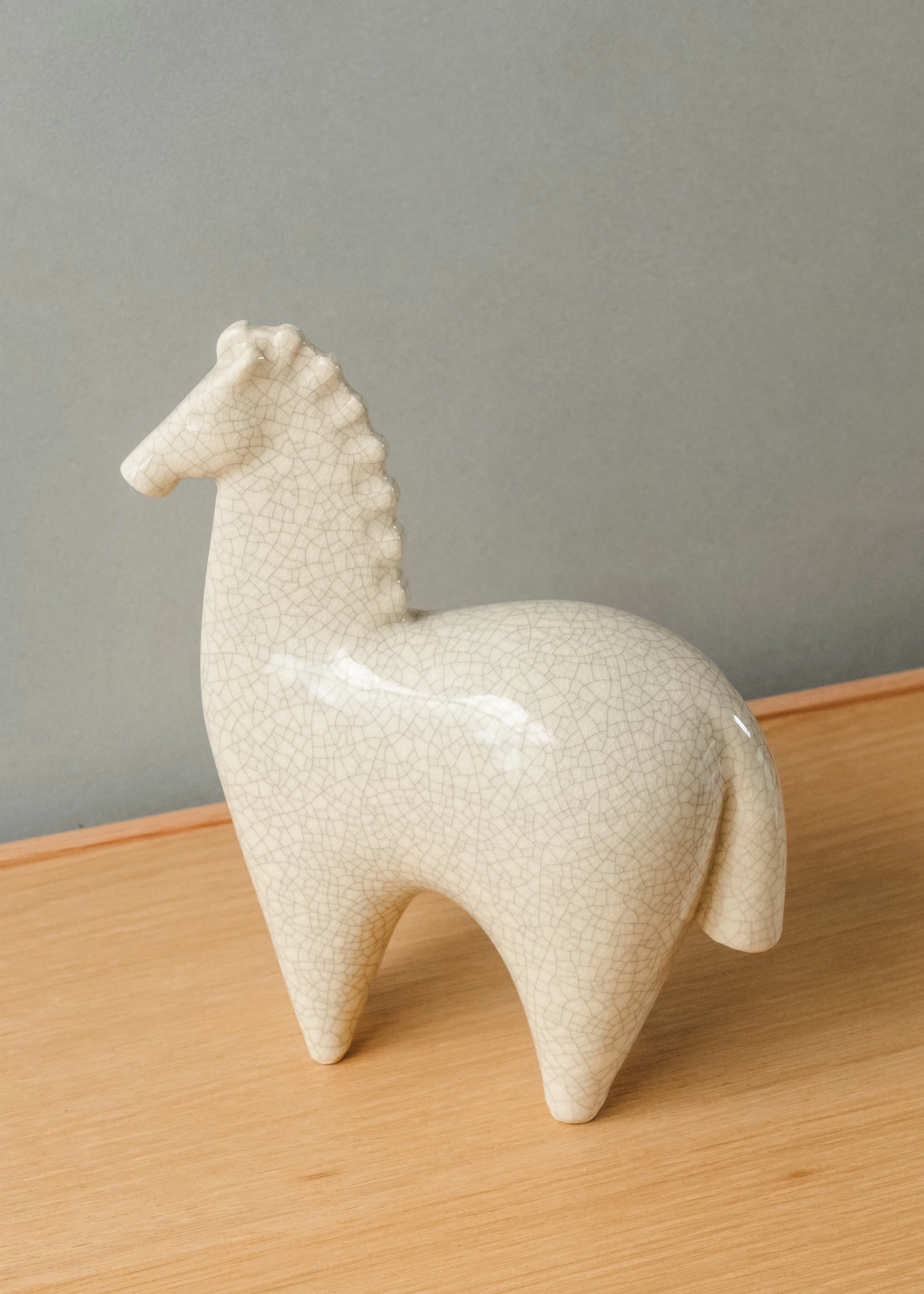 Image 2 of 13
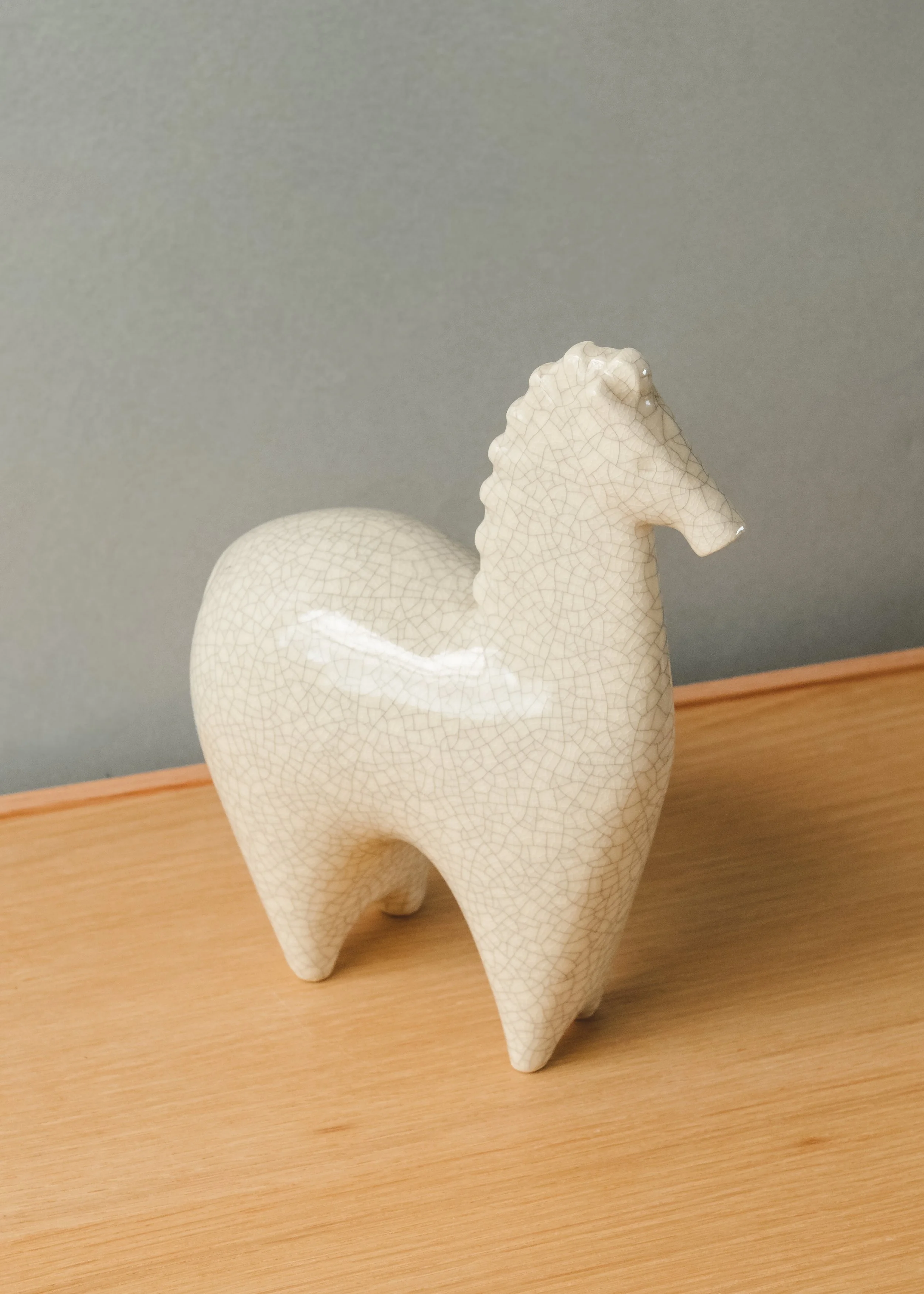 Image 3 of 13
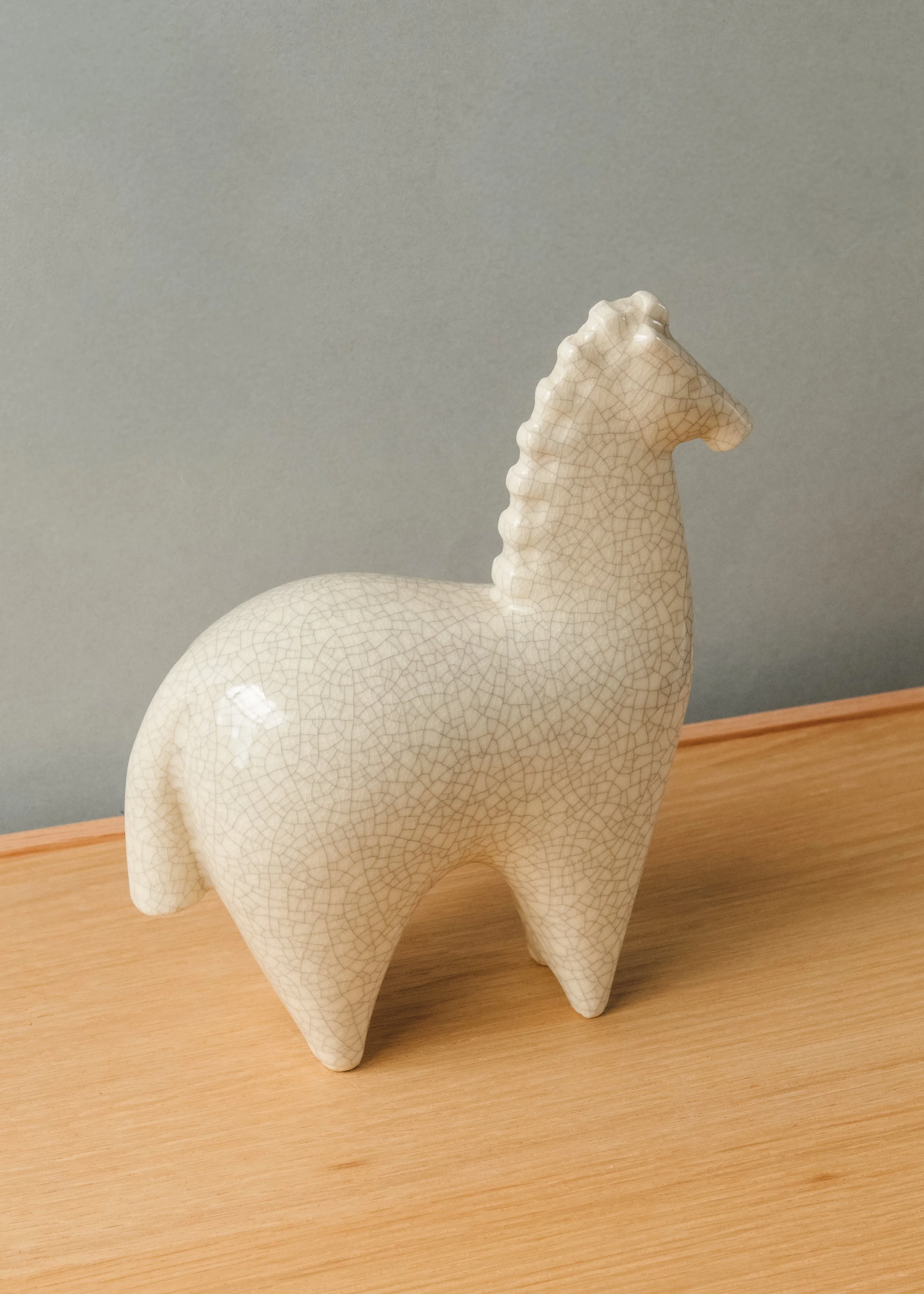 Image 4 of 13
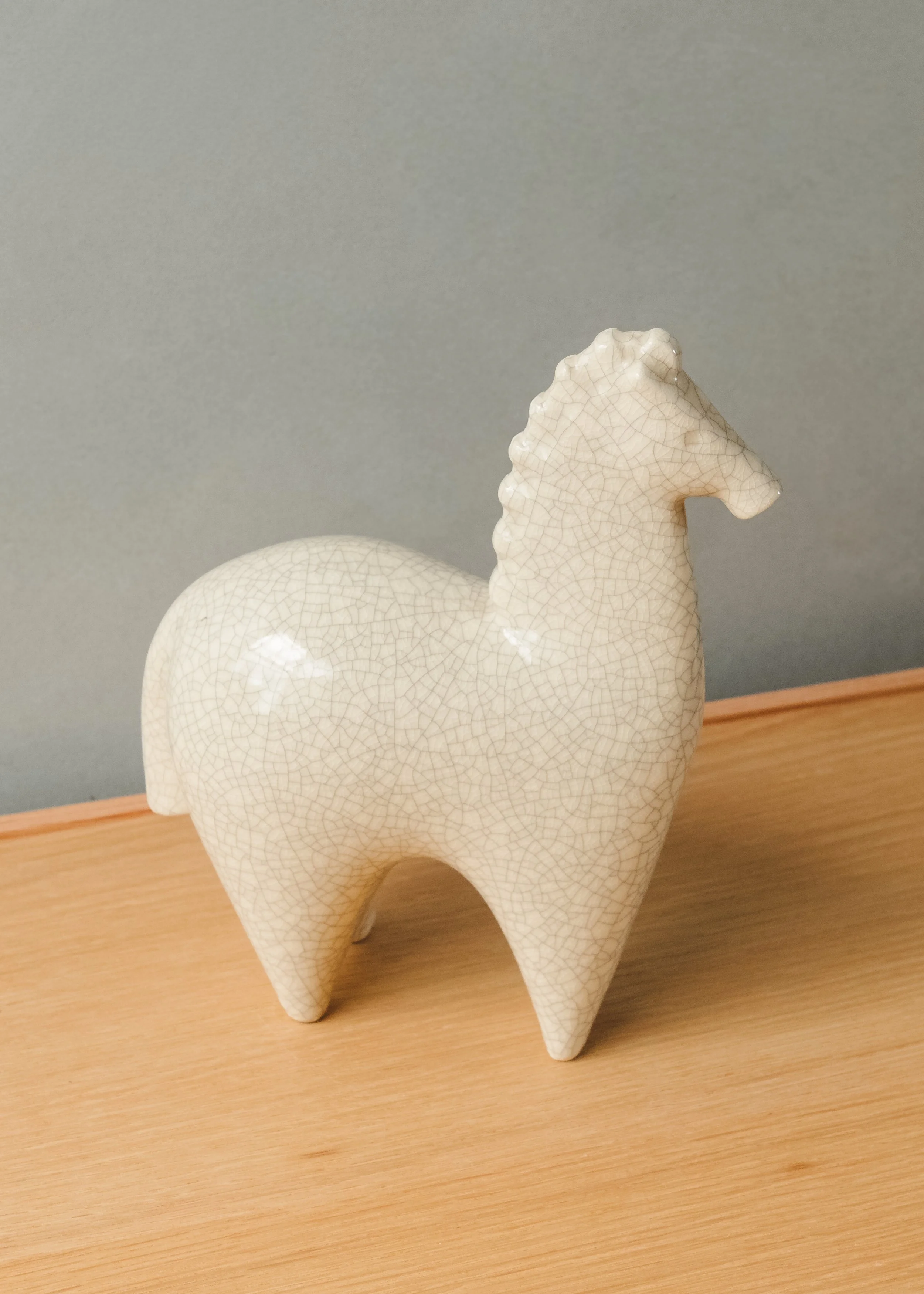 Image 5 of 13
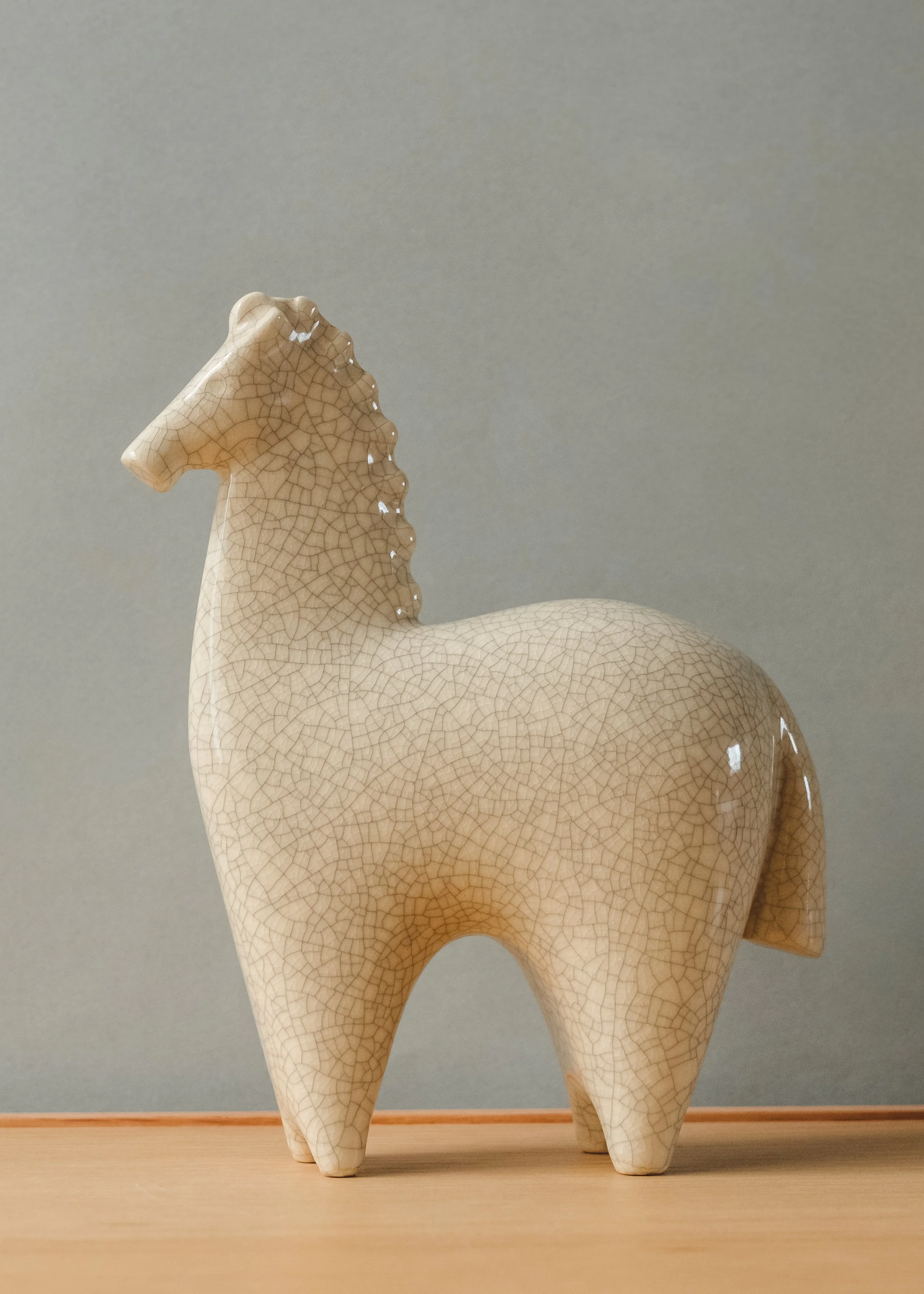 Image 6 of 13
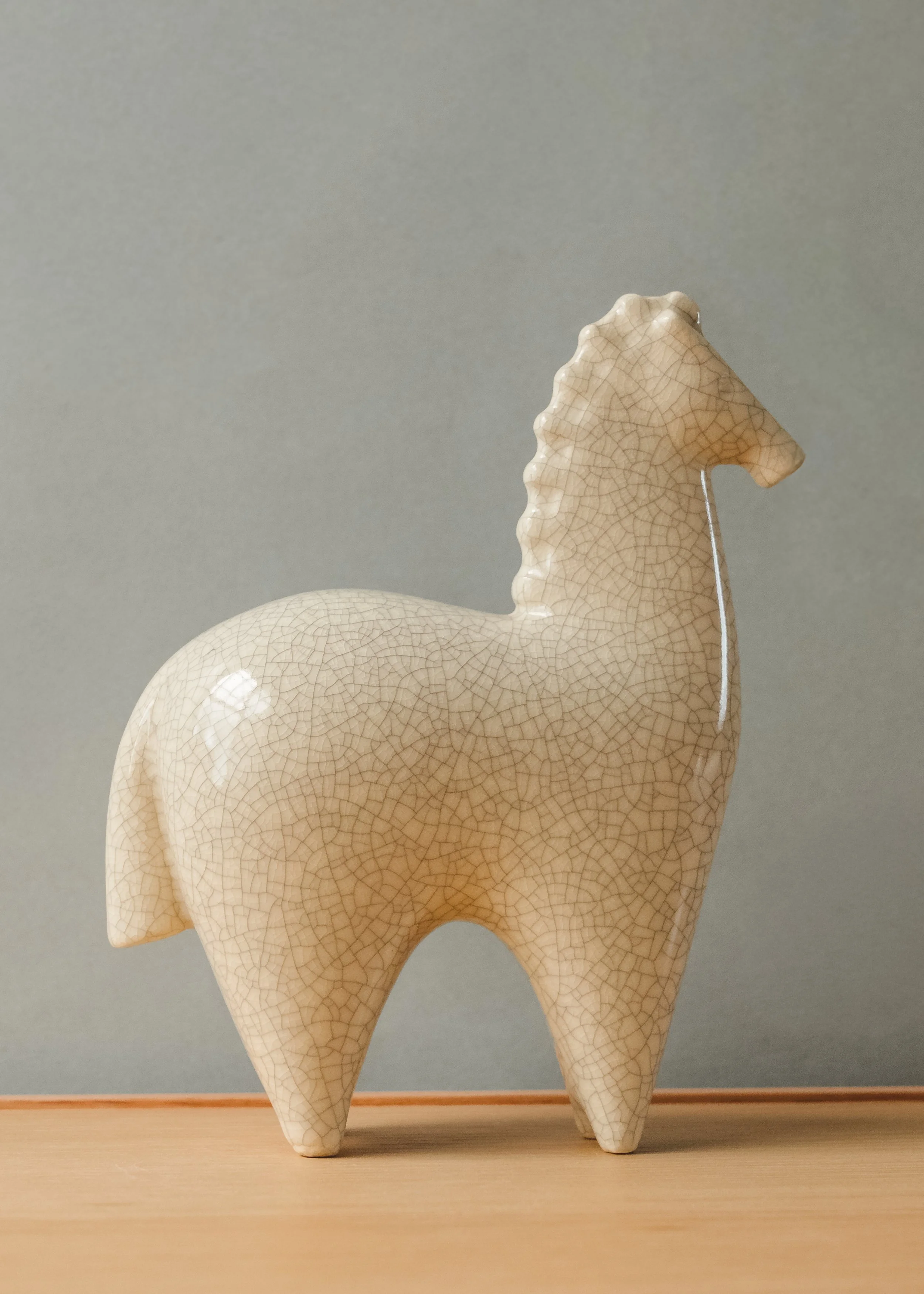 Image 7 of 13
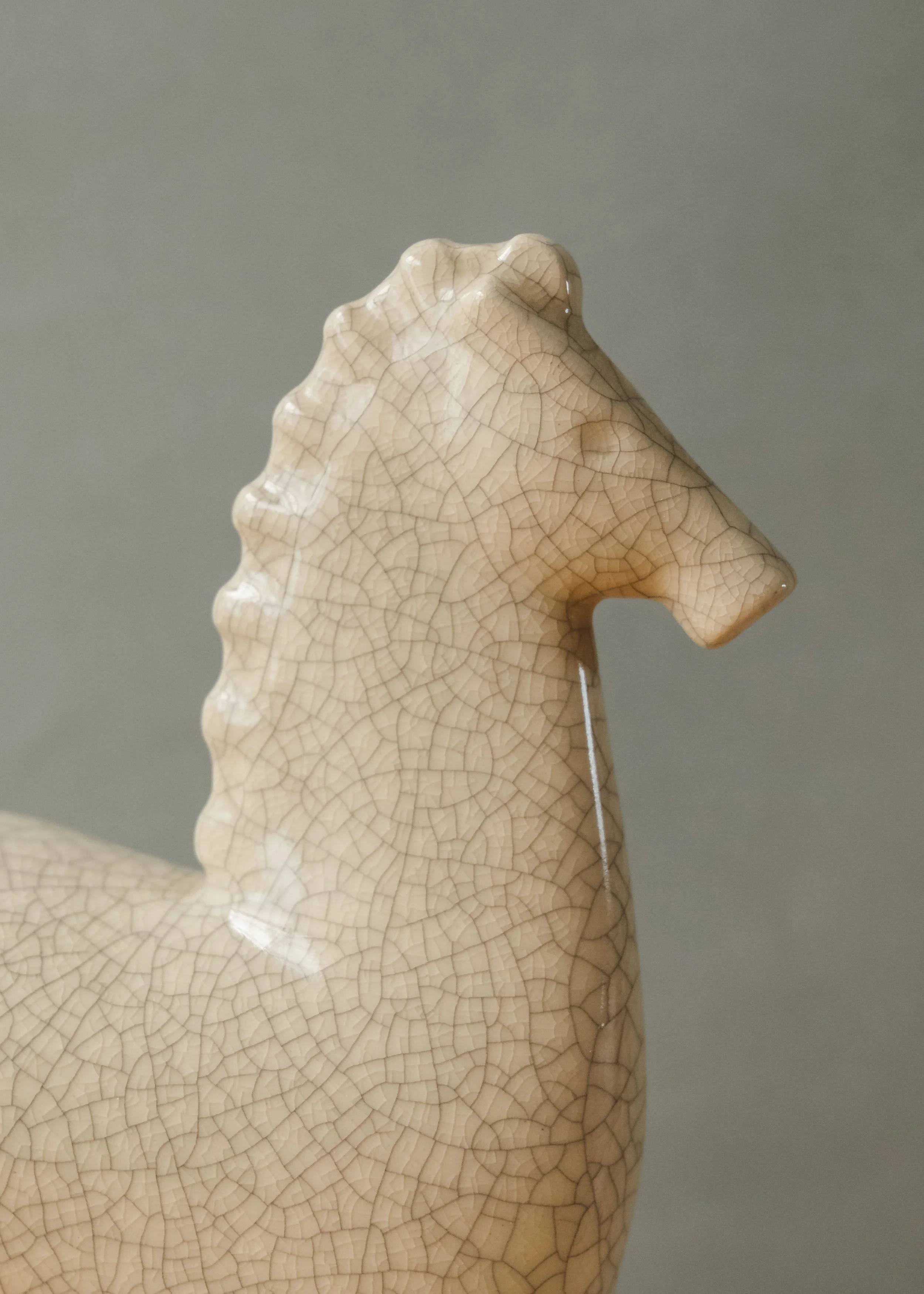 Image 8 of 13
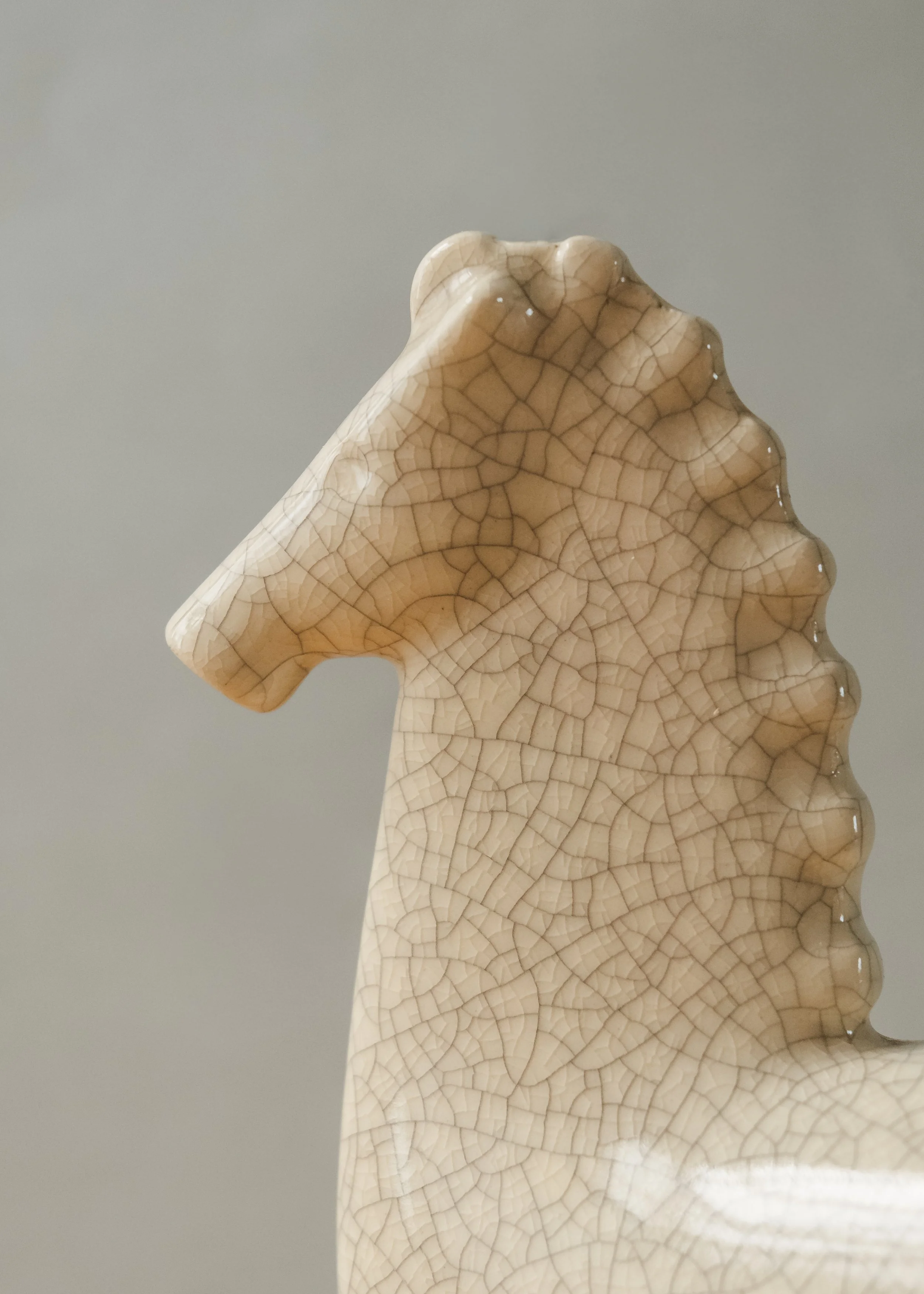 Image 9 of 13
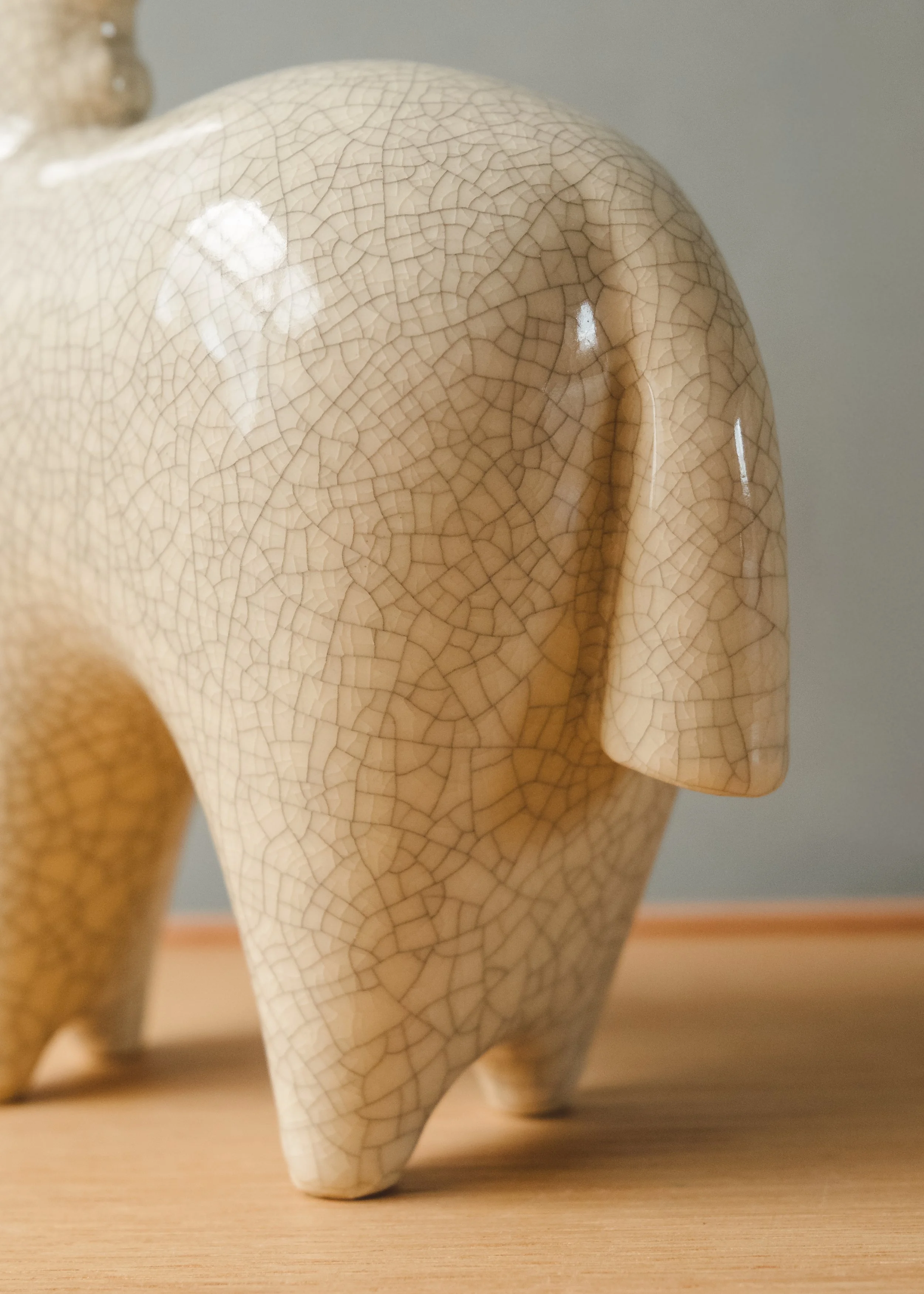 Image 10 of 13
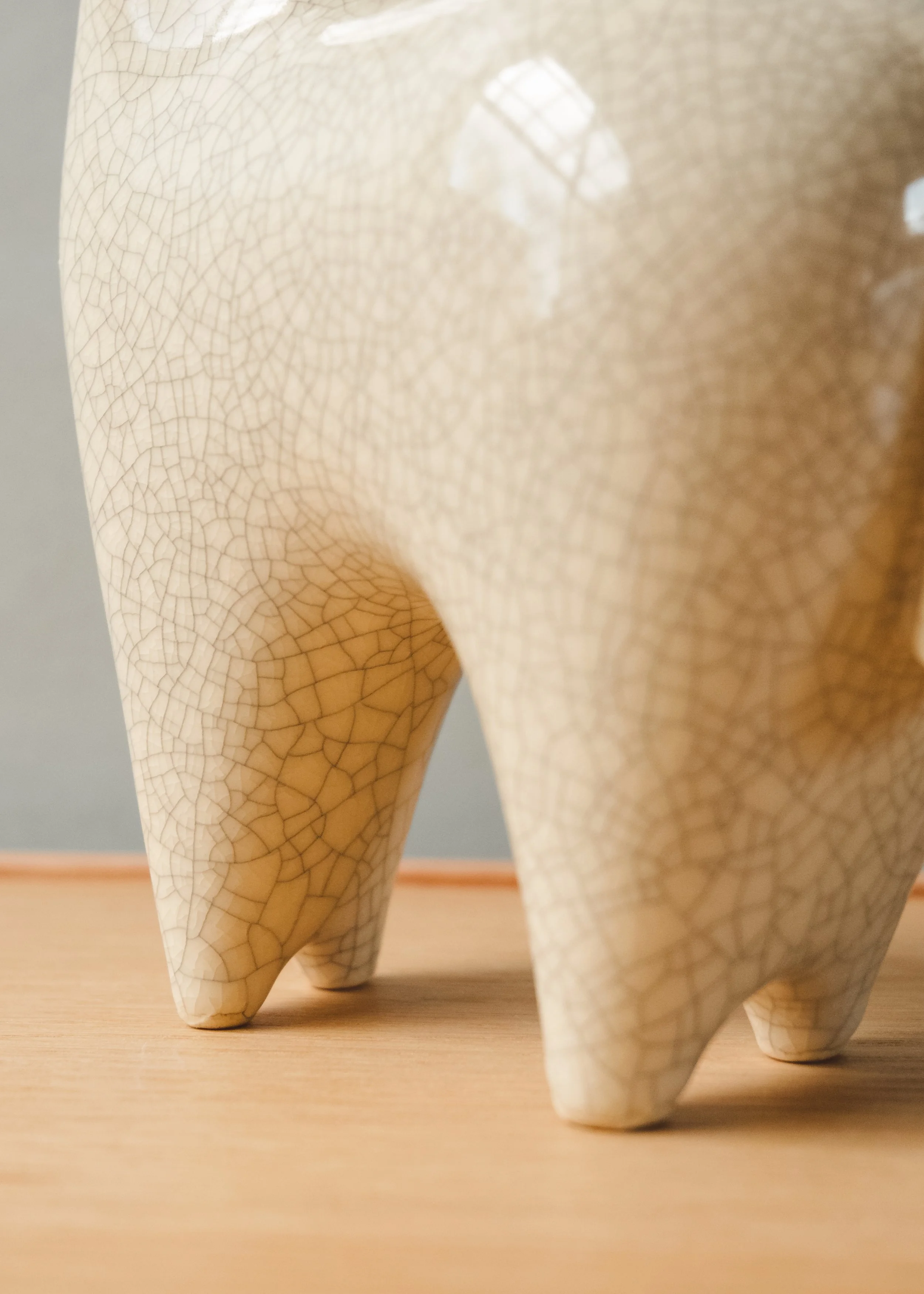 Image 11 of 13
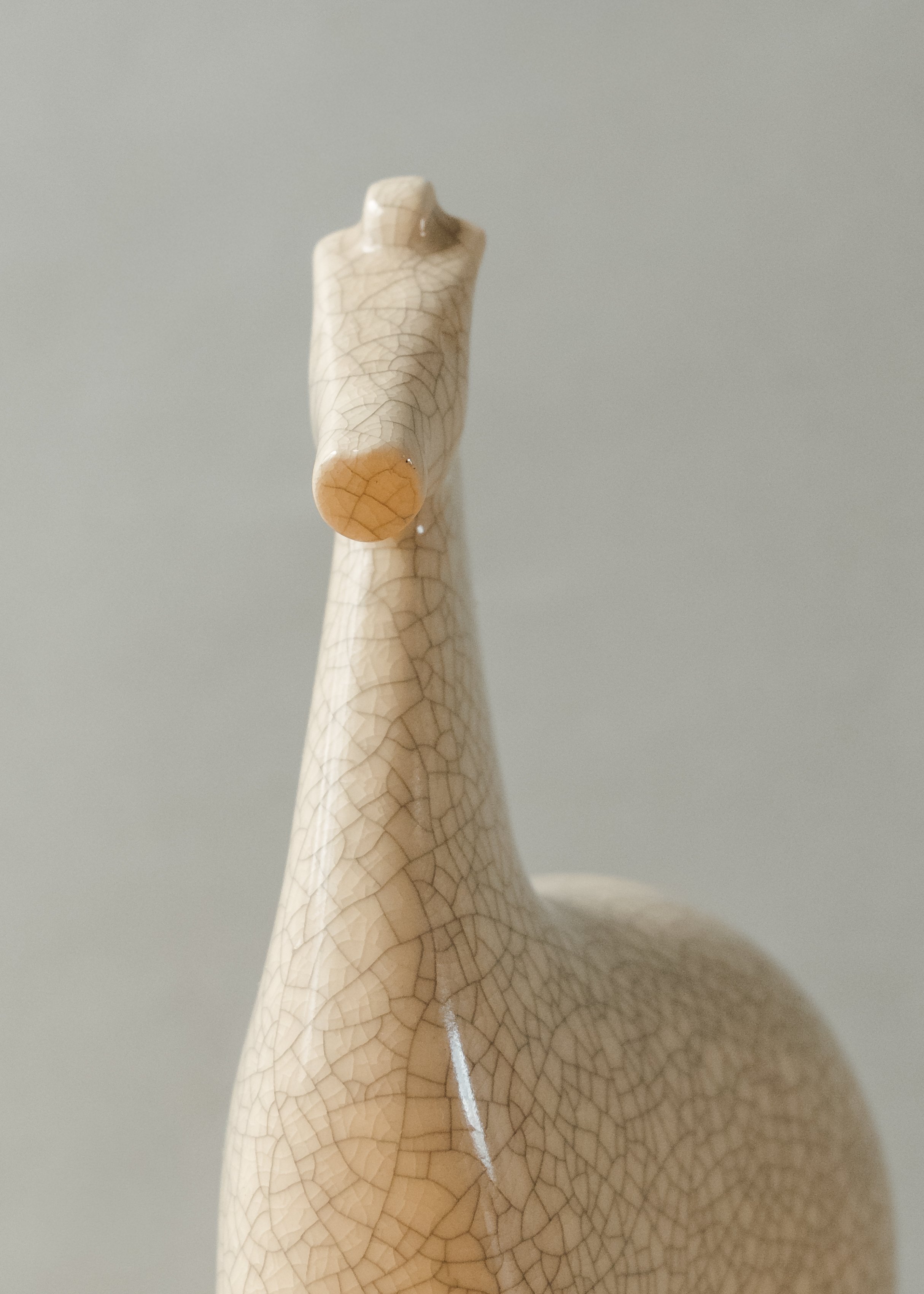 Image 12 of 13
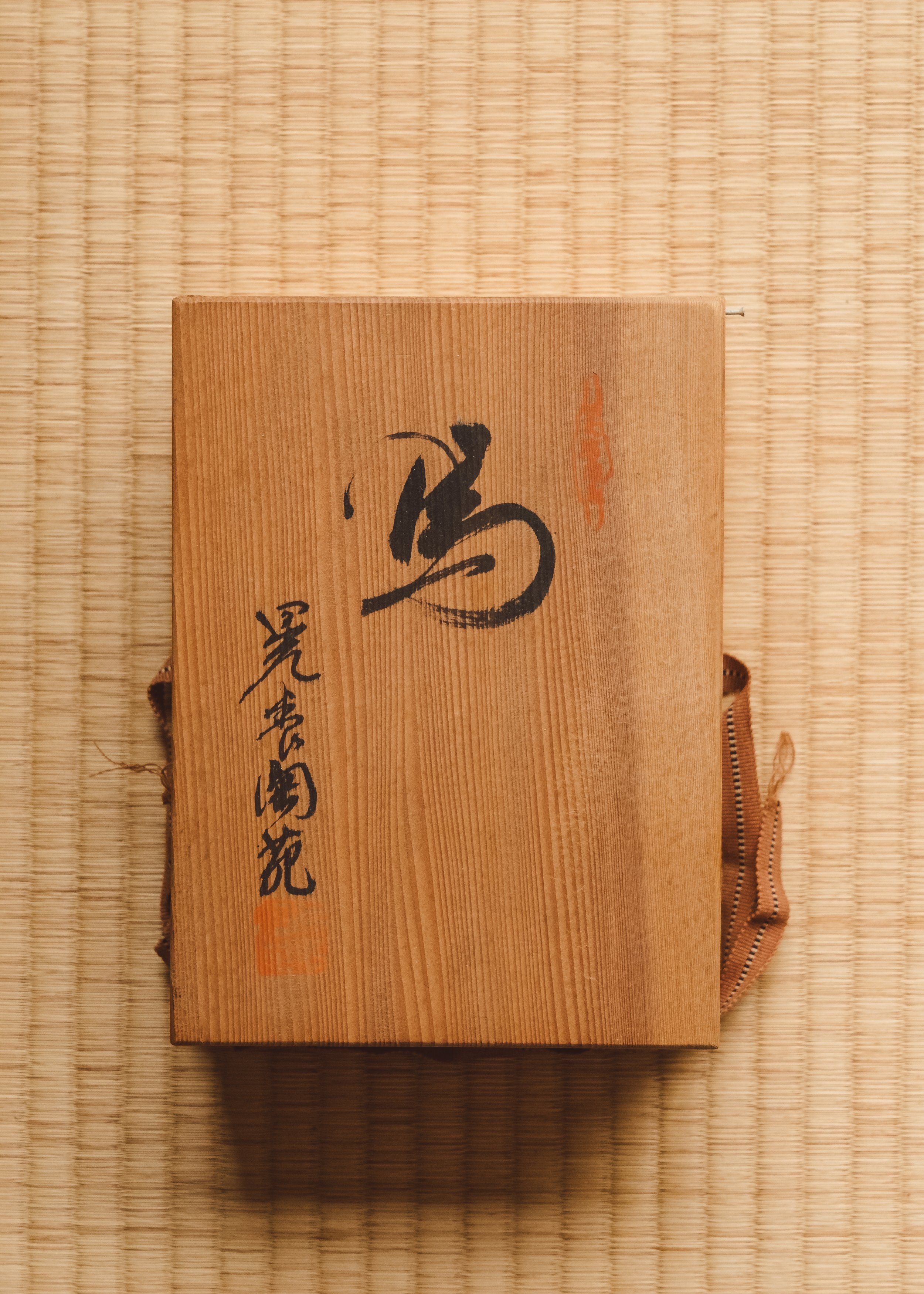 Image 13 of 13