【 The Concept 】
The pattern on the lid is not painted, stained, or printed. It is wood. Dozens of different species — each with its own natural color — were cut into strips, glued together, sliced thin as paper, and pressed onto the surface. No dye was added. The white is one tree. The red is another. The black is a third. The geometry comes from the arrangement, not the decoration. This technique was developed two hundred years ago in a mountain pass where the forest offered more colors of wood than most regions offer colors of paint. The case beneath the pattern is walnut — dark, dense, and built to last longer than whatever you put inside it.
【 The Function 】
A pen case and small object holder. Twenty-one centimeters long, five and a half centimeters wide, two and a half centimeters thick. The body is solid walnut with softened edges and a hinged lid. The lid opens on two small brass cylinders set into half-moon cutouts at the back. A magnet embedded in the front clicks the lid shut. Inside: a cork sheet lines the bottom to protect the contents, and a shallow compartment at one end holds clips or small items. At 122 grams it opens with one hand and closes with a sound.
【 The Texture 】
Two textures in one object. The body is walnut — smooth, dark, and warm, with long open grain lines running the length of the case. The lid carries a mosaic of geometric patterns arranged in five diagonal bands: layered diamonds, hexagonal lattice, interlocking zigzags, woven rectangles, and a small inlaid leaf tucked into one corner as the only organic shape in the entire composition. Every color is the natural color of a different tree. The brass hinges at the back add two points of dull gold. The cork inside is soft and pale against the dark walls.
【 Presence 】
It lies on the desk the way a book lies on a nightstand — flat, quiet, and always within reach. The geometric pattern faces up. The walnut frame faces out. It does not look like a pen case. It looks like a small wooden panel with a secret inside. Open it and the secret is ordinary — pens, clips, an eraser. Close it and the ordinary disappears. What remains is a surface covered in patterns that were old before the case was made, arranged in colors that no factory can produce, because the colors are trees.
Sourced from a specialty workshop in eastern Japan.
【 The Concept 】
The pattern on the lid is not painted, stained, or printed. It is wood. Dozens of different species — each with its own natural color — were cut into strips, glued together, sliced thin as paper, and pressed onto the surface. No dye was added. The white is one tree. The red is another. The black is a third. The geometry comes from the arrangement, not the decoration. This technique was developed two hundred years ago in a mountain pass where the forest offered more colors of wood than most regions offer colors of paint. The case beneath the pattern is walnut — dark, dense, and built to last longer than whatever you put inside it.
【 The Function 】
A pen case and small object holder. Twenty-one centimeters long, five and a half centimeters wide, two and a half centimeters thick. The body is solid walnut with softened edges and a hinged lid. The lid opens on two small brass cylinders set into half-moon cutouts at the back. A magnet embedded in the front clicks the lid shut. Inside: a cork sheet lines the bottom to protect the contents, and a shallow compartment at one end holds clips or small items. At 122 grams it opens with one hand and closes with a sound.
【 The Texture 】
Two textures in one object. The body is walnut — smooth, dark, and warm, with long open grain lines running the length of the case. The lid carries a mosaic of geometric patterns arranged in five diagonal bands: layered diamonds, hexagonal lattice, interlocking zigzags, woven rectangles, and a small inlaid leaf tucked into one corner as the only organic shape in the entire composition. Every color is the natural color of a different tree. The brass hinges at the back add two points of dull gold. The cork inside is soft and pale against the dark walls.
【 Presence 】
It lies on the desk the way a book lies on a nightstand — flat, quiet, and always within reach. The geometric pattern faces up. The walnut frame faces out. It does not look like a pen case. It looks like a small wooden panel with a secret inside. Open it and the secret is ordinary — pens, clips, an eraser. Close it and the ordinary disappears. What remains is a surface covered in patterns that were old before the case was made, arranged in colors that no factory can produce, because the colors are trees.
Sourced from a specialty workshop in eastern Japan.


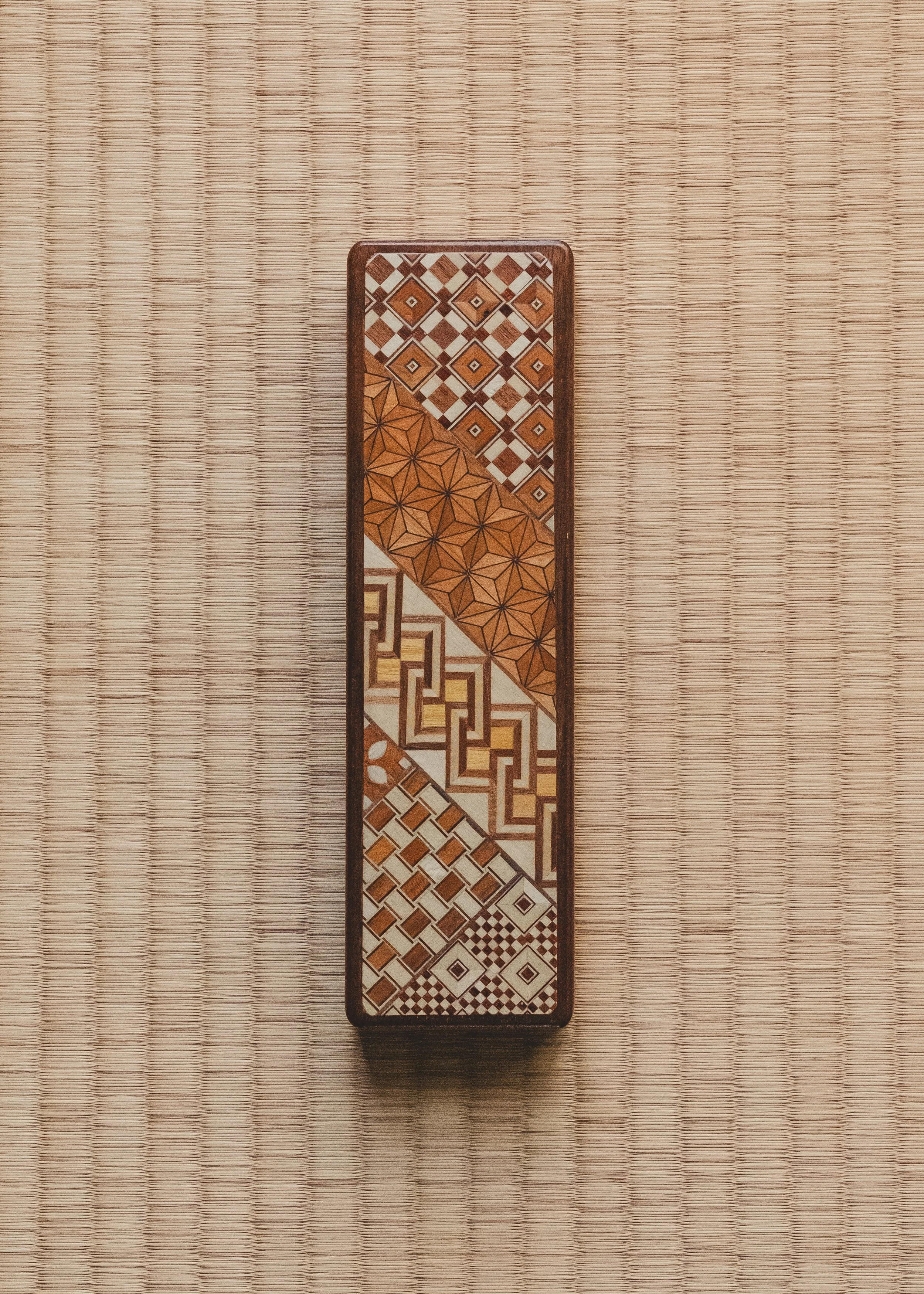 Image 1 of 7
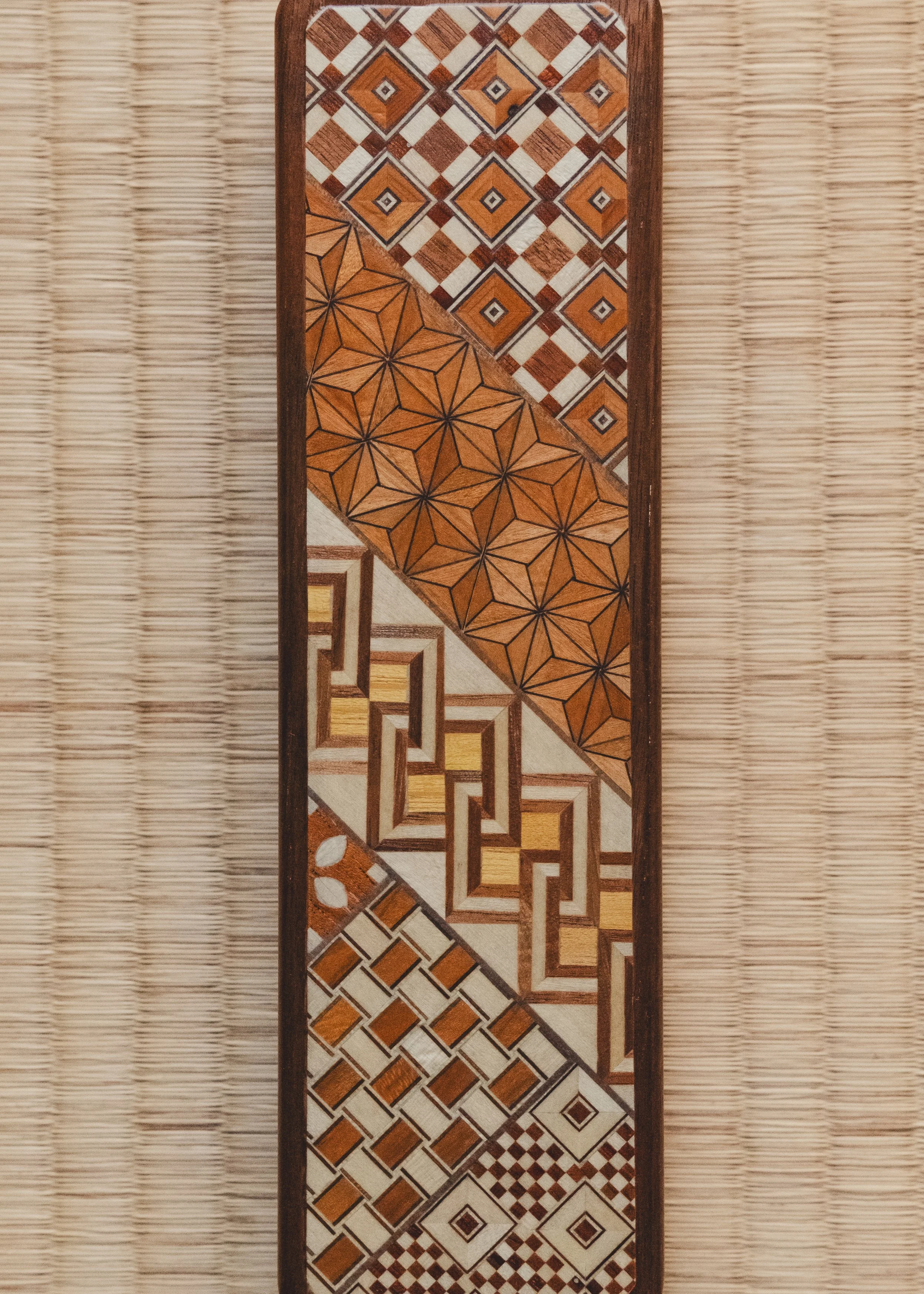 Image 2 of 7
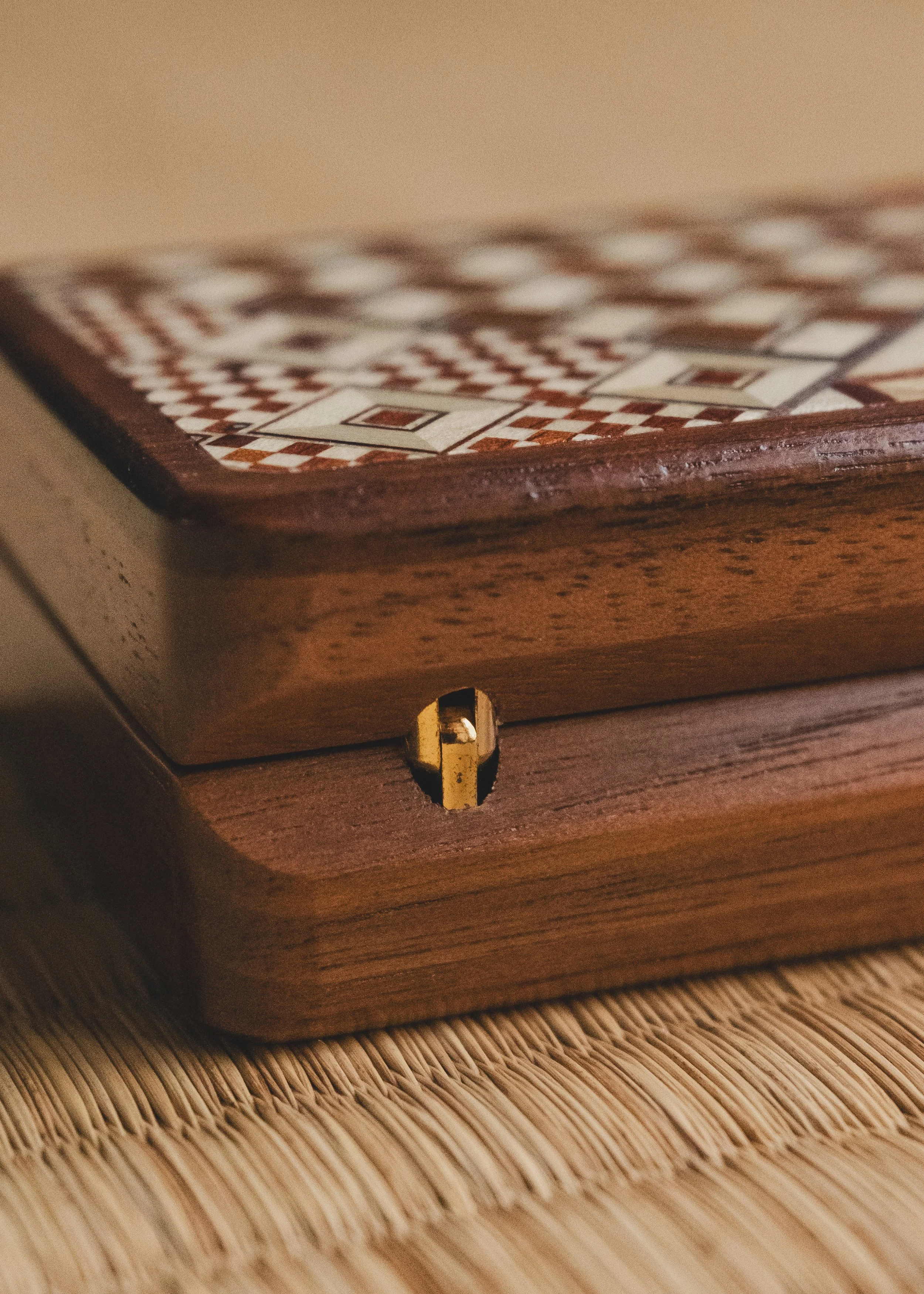 Image 3 of 7
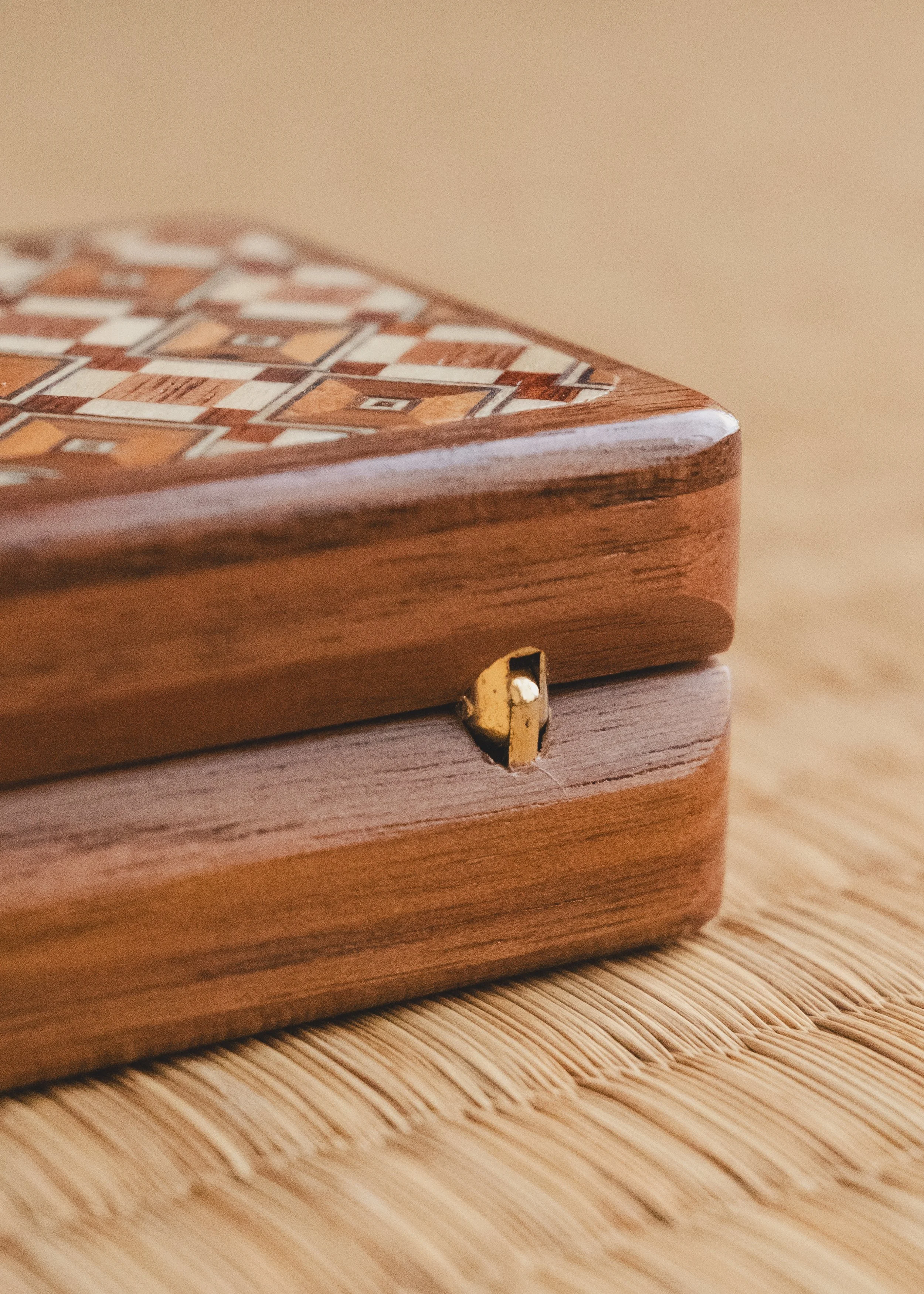 Image 4 of 7
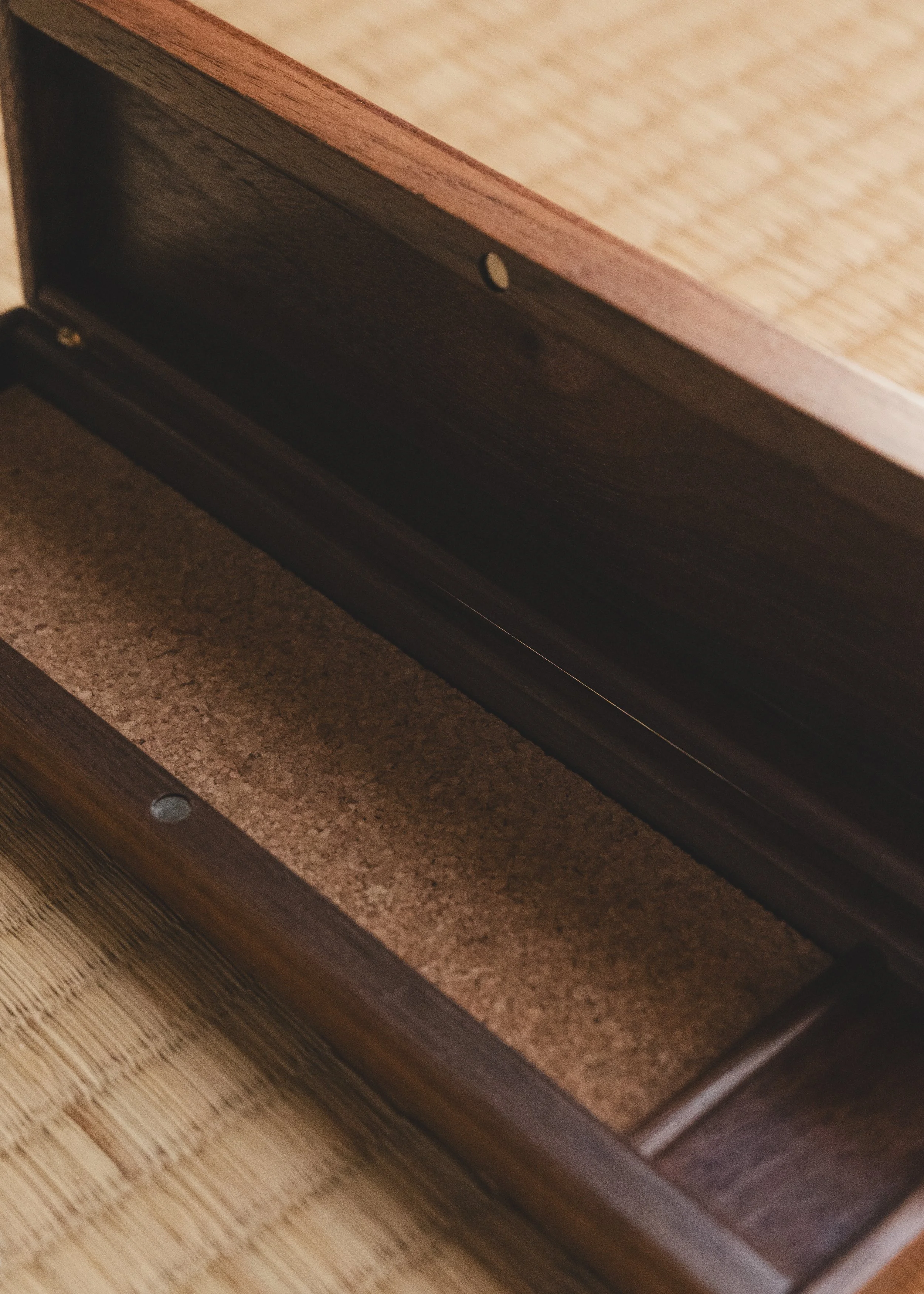 Image 5 of 7
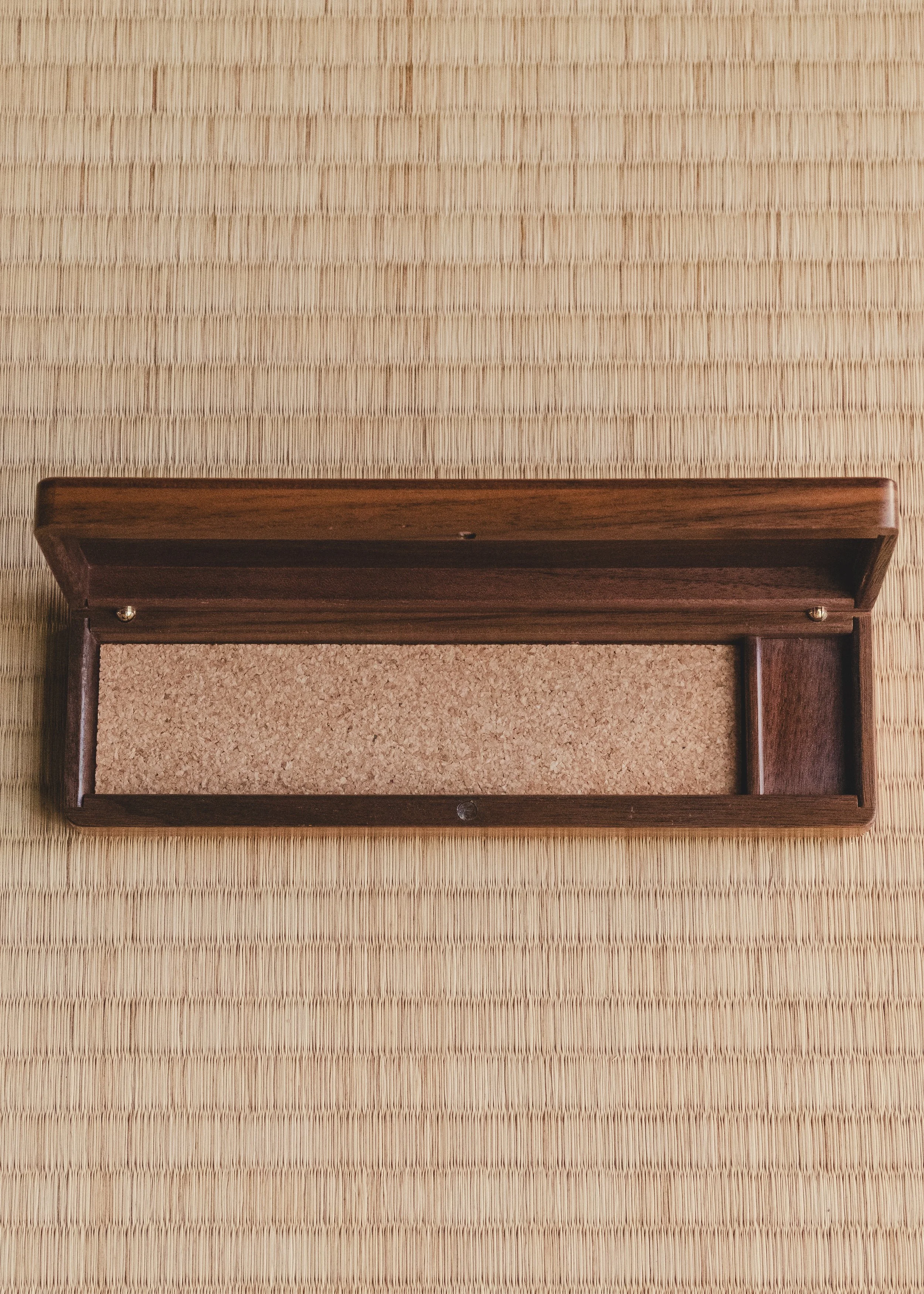 Image 6 of 7
 Image 7 of 7