【 The Concept 】
Every color on the lid is a different tree. The white is one species. The gold is another. The brown is a third. No dye was used. No paint was applied. The pattern was built by cutting dozens of woods into strips, gluing them into a block, shaving the block into a sheet thinner than paper, and pressing that sheet onto the surface of a wooden box. The geometry is not decoration. It is structure — each angle calculated so that the pattern repeats without error across the entire lid. This technique was developed in a mountain pass two hundred years ago, where the forest provided more natural colors of wood than most painters have on a palette.
【 The Function 】
A lidded wooden box. Twenty-seven centimeters long, eighteen centimeters wide, three and a half centimeters thick. The lid fits over the base in a precise drop-fit closure — no hinge, no latch, just friction and gravity. The interior is lined in dark velvet. At 366 grams it is the heaviest box in the archive and the largest flat object. The base is solid hardwood. The exterior is covered in a geometric mosaic veneer so thin it bends around the corners without breaking.
【 The Texture 】
The surface is glass-smooth and sealed under a clear coat that gives it a quiet sheen. Beneath the finish, the mosaic is divided diagonally into zones: one side bright — pale wood arranged in star and lattice patterns — and the other side dark — deep browns and reds interlocking in layered hexagons. A bold band of interlocking zigzags runs between them like a spine. The sides carry their own patterns — fine checks and diagonal lines that frame the lid without competing with it. Open the box and everything changes: dark velvet, no pattern, no color, just a soft black space that holds whatever you put inside it.
【 Presence 】
It lies flat on the desk or dresser like a book that does not open from the side. The lid lifts straight up and the geometry rises with it. Underneath is darkness and velvet. The box does two things at once: it shows everything on the outside and hides everything on the inside. The patterns on the surface are older than the box — they were carried forward from a tradition that has been calculating these angles for two centuries. Every diamond, every hexagon, every interlocking star was solved once and has been repeated exactly ever since. The colors will shift over the years as each species of wood ages at its own pace — the whites will warm, the reds will deepen, and the whole composition will slowly drift toward something no one planned. That is what happens when the palette is alive.
【 The Concept 】
Every color on the lid is a different tree. The white is one species. The gold is another. The brown is a third. No dye was used. No paint was applied. The pattern was built by cutting dozens of woods into strips, gluing them into a block, shaving the block into a sheet thinner than paper, and pressing that sheet onto the surface of a wooden box. The geometry is not decoration. It is structure — each angle calculated so that the pattern repeats without error across the entire lid. This technique was developed in a mountain pass two hundred years ago, where the forest provided more natural colors of wood than most painters have on a palette.
【 The Function 】
A lidded wooden box. Twenty-seven centimeters long, eighteen centimeters wide, three and a half centimeters thick. The lid fits over the base in a precise drop-fit closure — no hinge, no latch, just friction and gravity. The interior is lined in dark velvet. At 366 grams it is the heaviest box in the archive and the largest flat object. The base is solid hardwood. The exterior is covered in a geometric mosaic veneer so thin it bends around the corners without breaking.
【 The Texture 】
The surface is glass-smooth and sealed under a clear coat that gives it a quiet sheen. Beneath the finish, the mosaic is divided diagonally into zones: one side bright — pale wood arranged in star and lattice patterns — and the other side dark — deep browns and reds interlocking in layered hexagons. A bold band of interlocking zigzags runs between them like a spine. The sides carry their own patterns — fine checks and diagonal lines that frame the lid without competing with it. Open the box and everything changes: dark velvet, no pattern, no color, just a soft black space that holds whatever you put inside it.
【 Presence 】
It lies flat on the desk or dresser like a book that does not open from the side. The lid lifts straight up and the geometry rises with it. Underneath is darkness and velvet. The box does two things at once: it shows everything on the outside and hides everything on the inside. The patterns on the surface are older than the box — they were carried forward from a tradition that has been calculating these angles for two centuries. Every diamond, every hexagon, every interlocking star was solved once and has been repeated exactly ever since. The colors will shift over the years as each species of wood ages at its own pace — the whites will warm, the reds will deepen, and the whole composition will slowly drift toward something no one planned. That is what happens when the palette is alive.


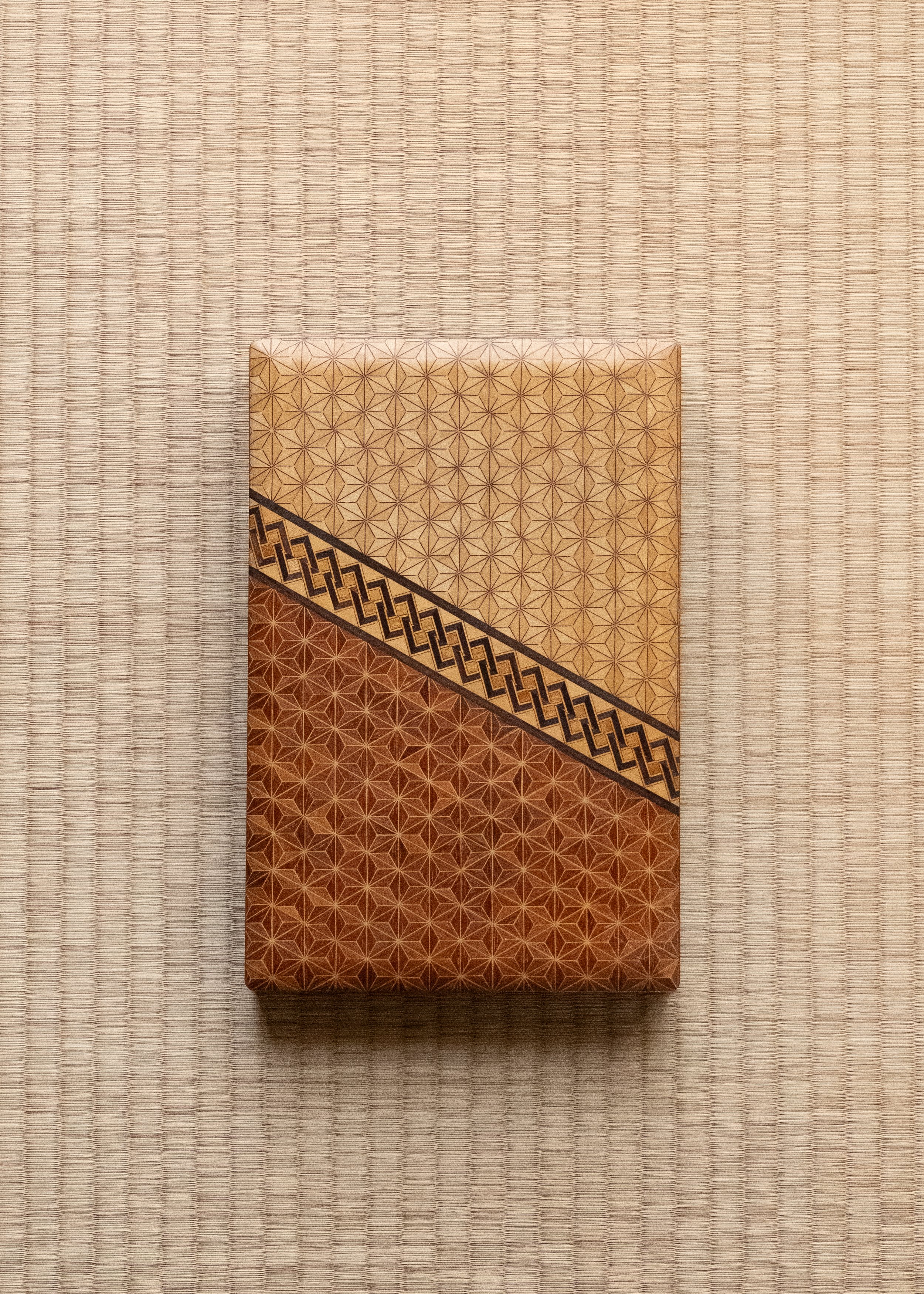 Image 1 of 5
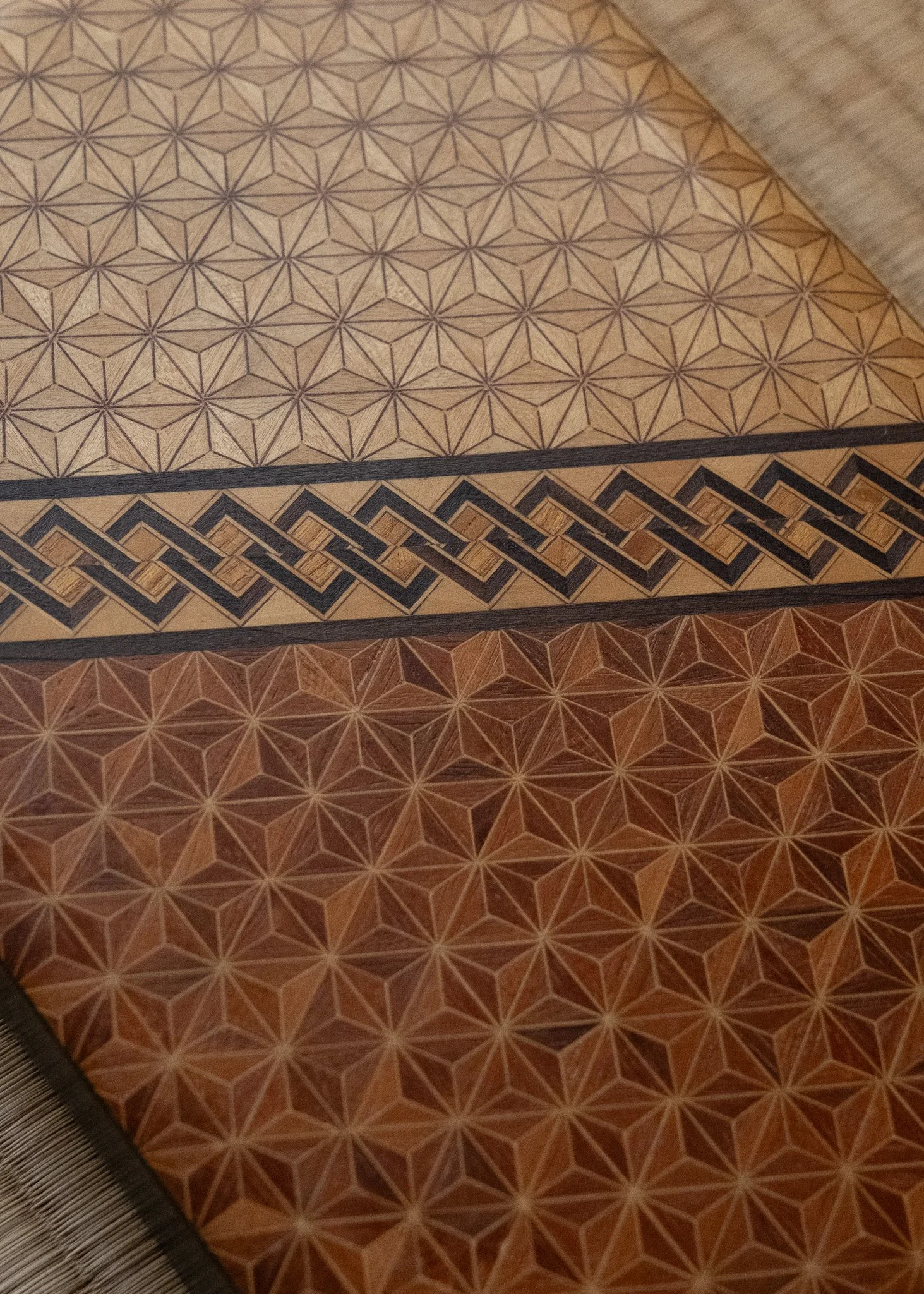 Image 2 of 5
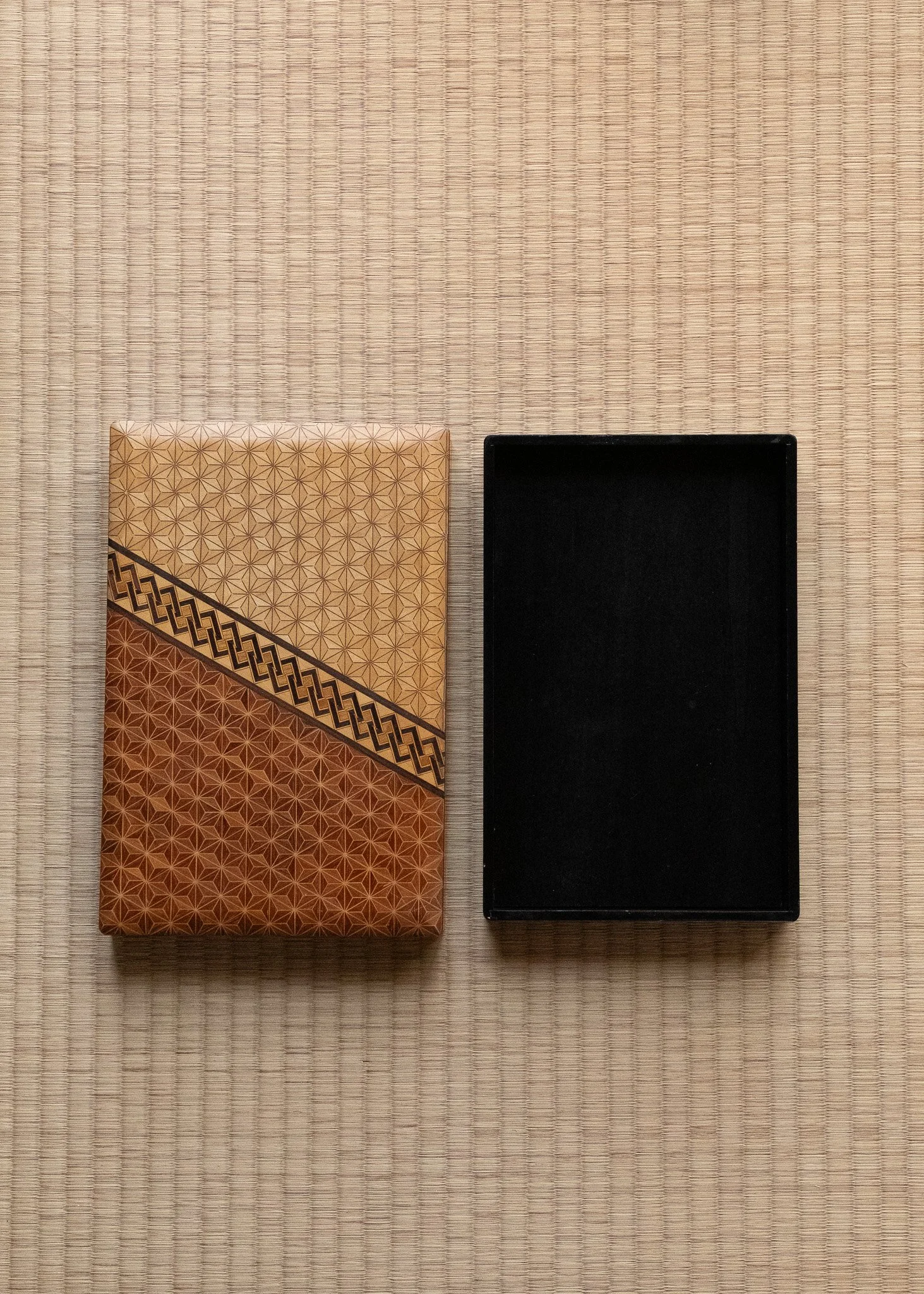 Image 3 of 5
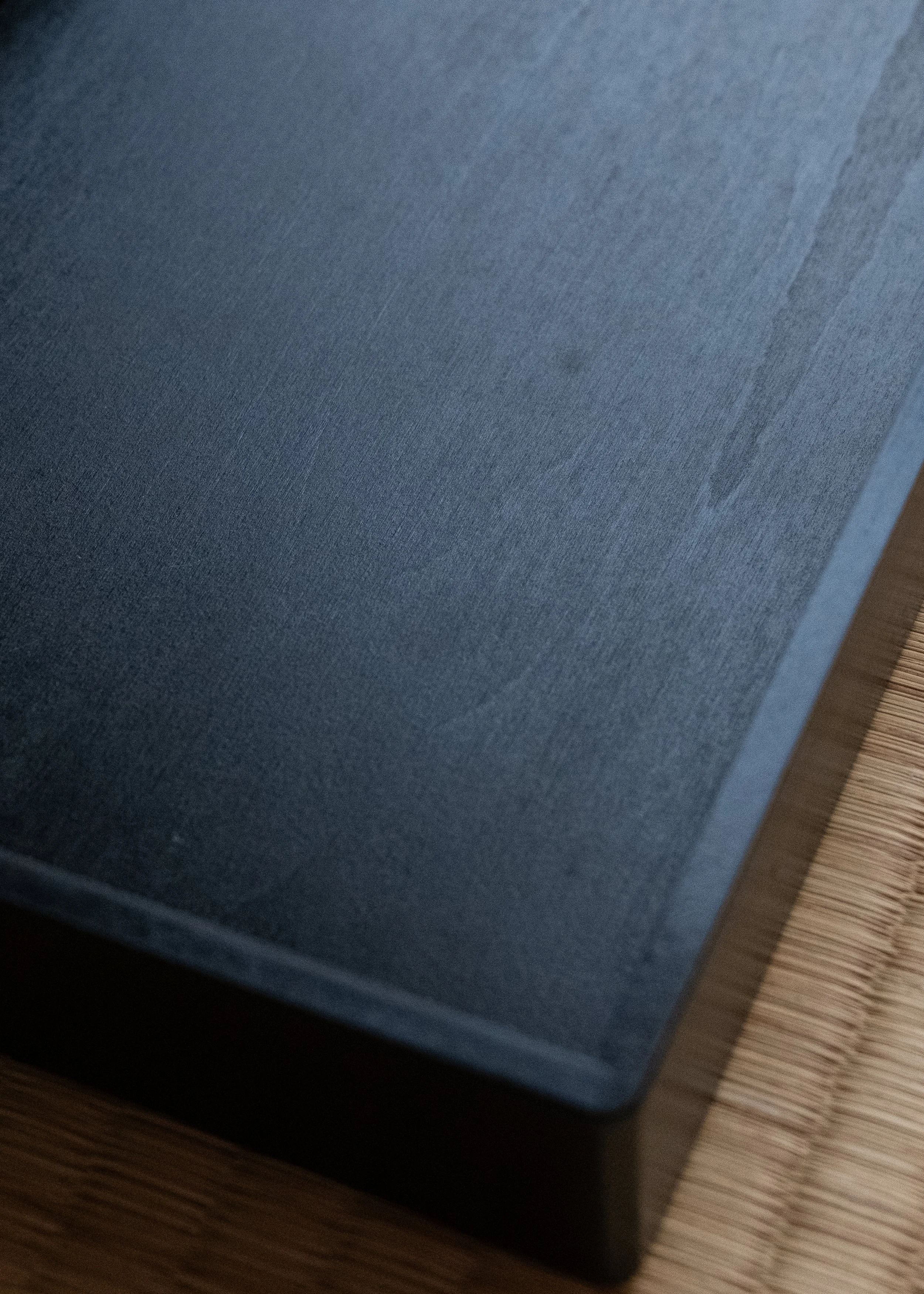 Image 4 of 5
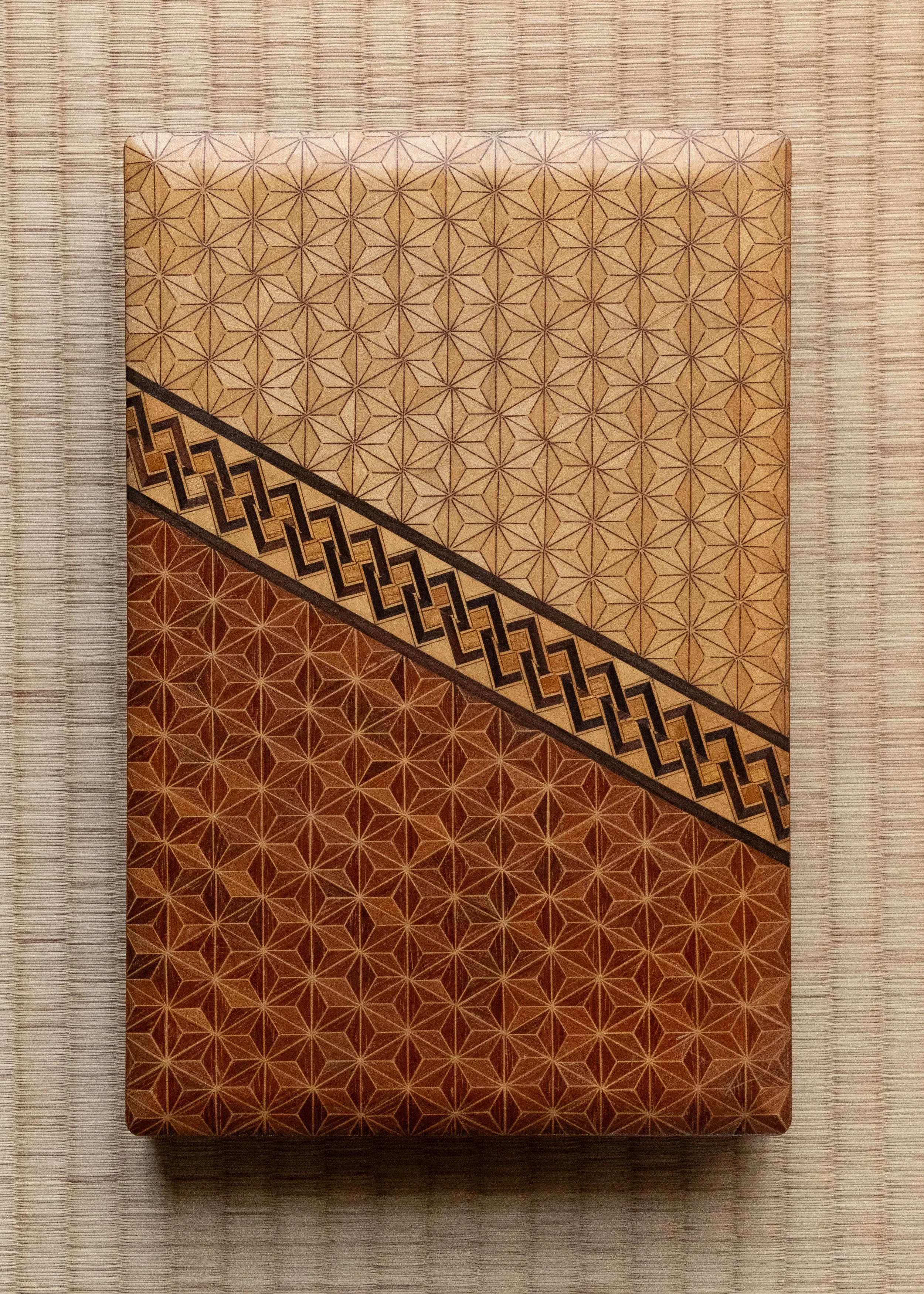 Image 5 of 5