

 Image 1 of 14
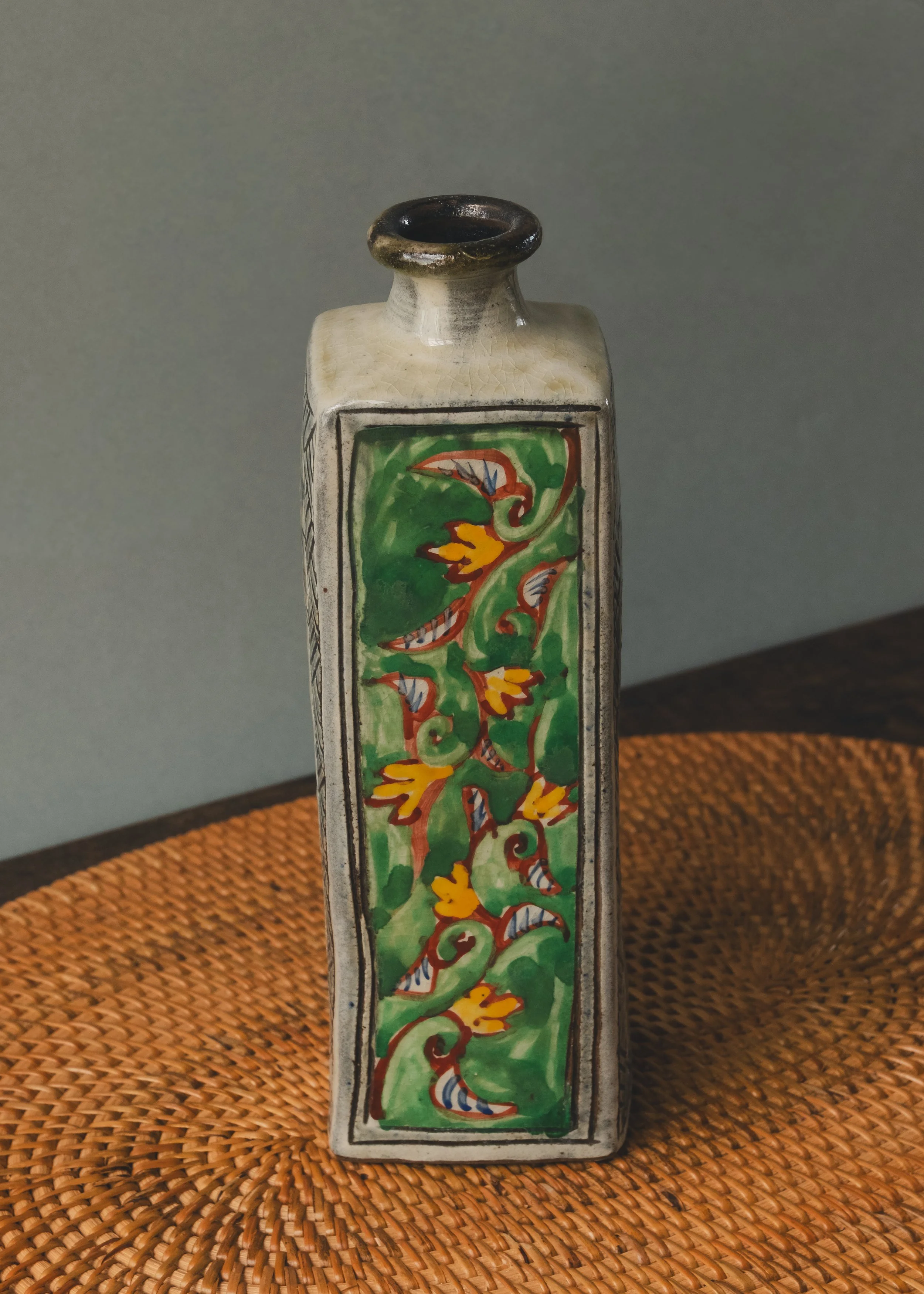 Image 2 of 14
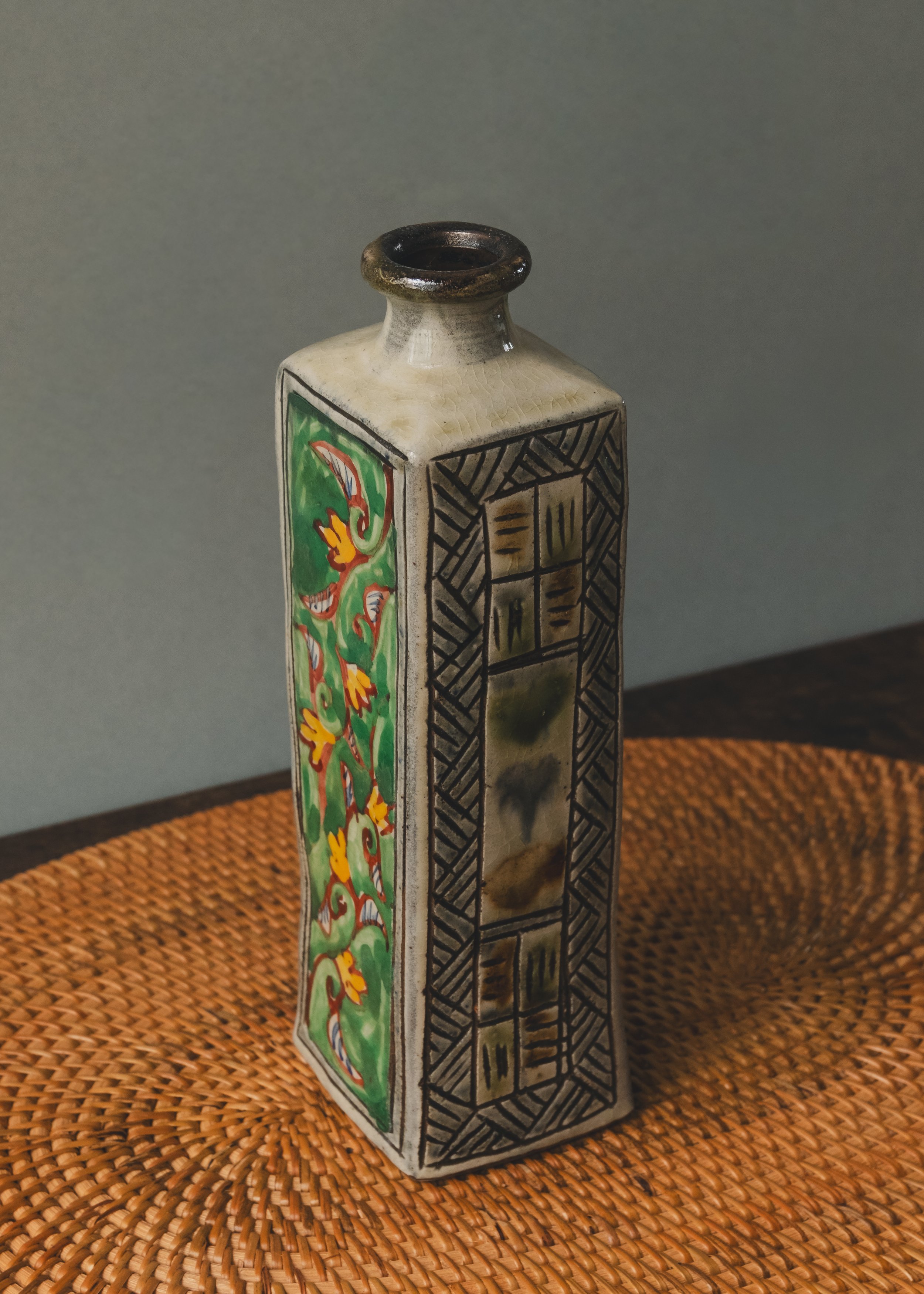 Image 3 of 14
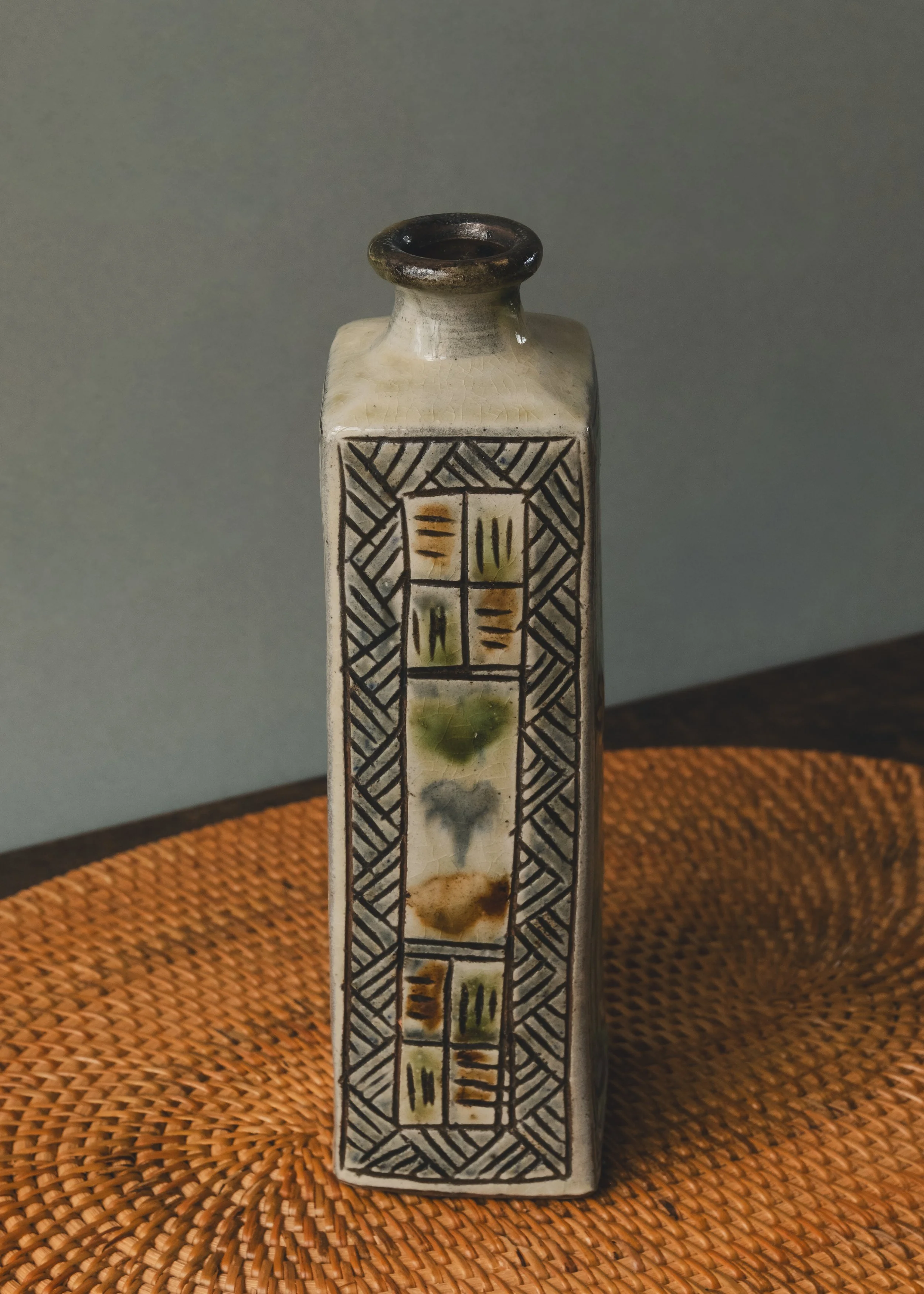 Image 4 of 14
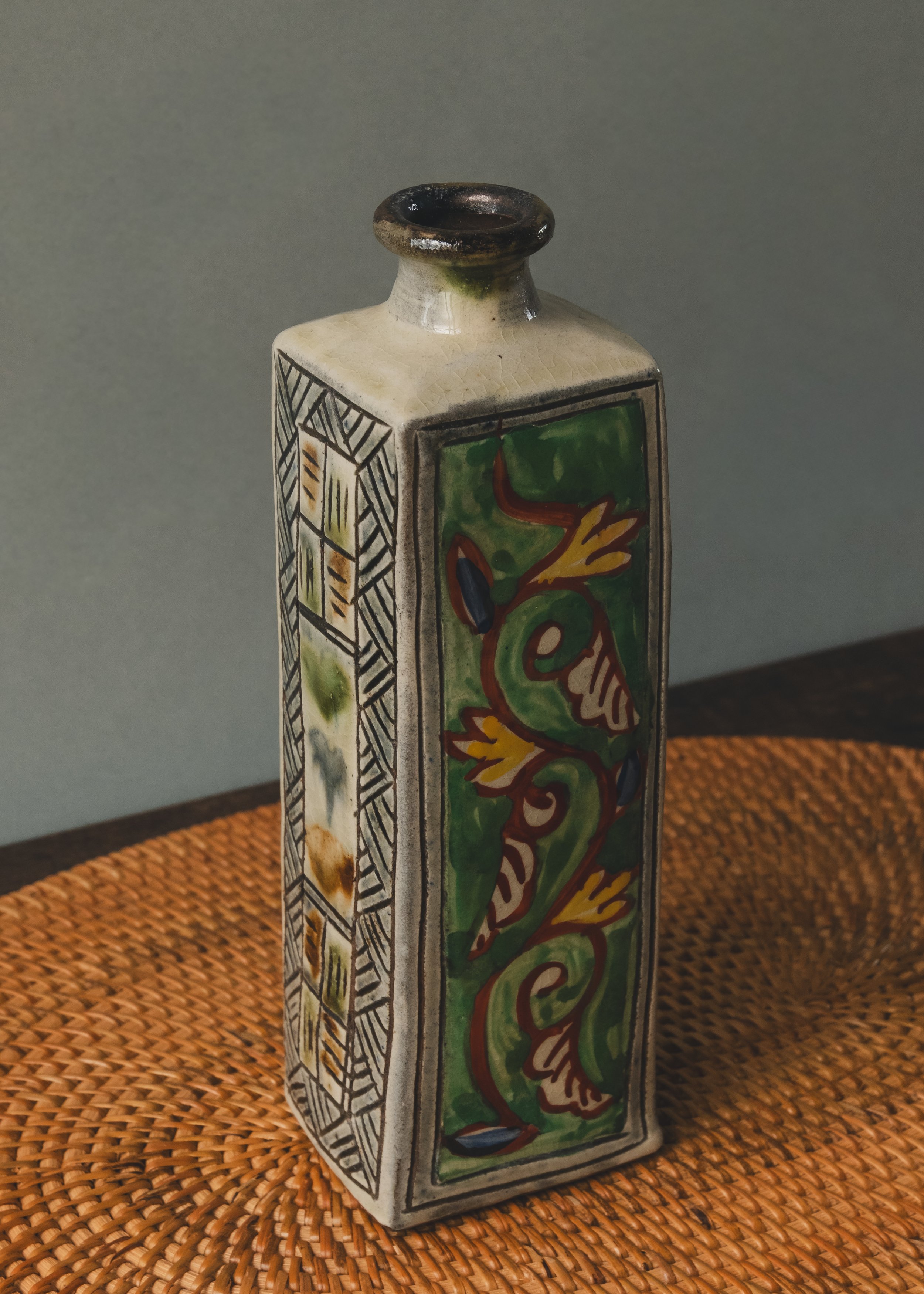 Image 5 of 14
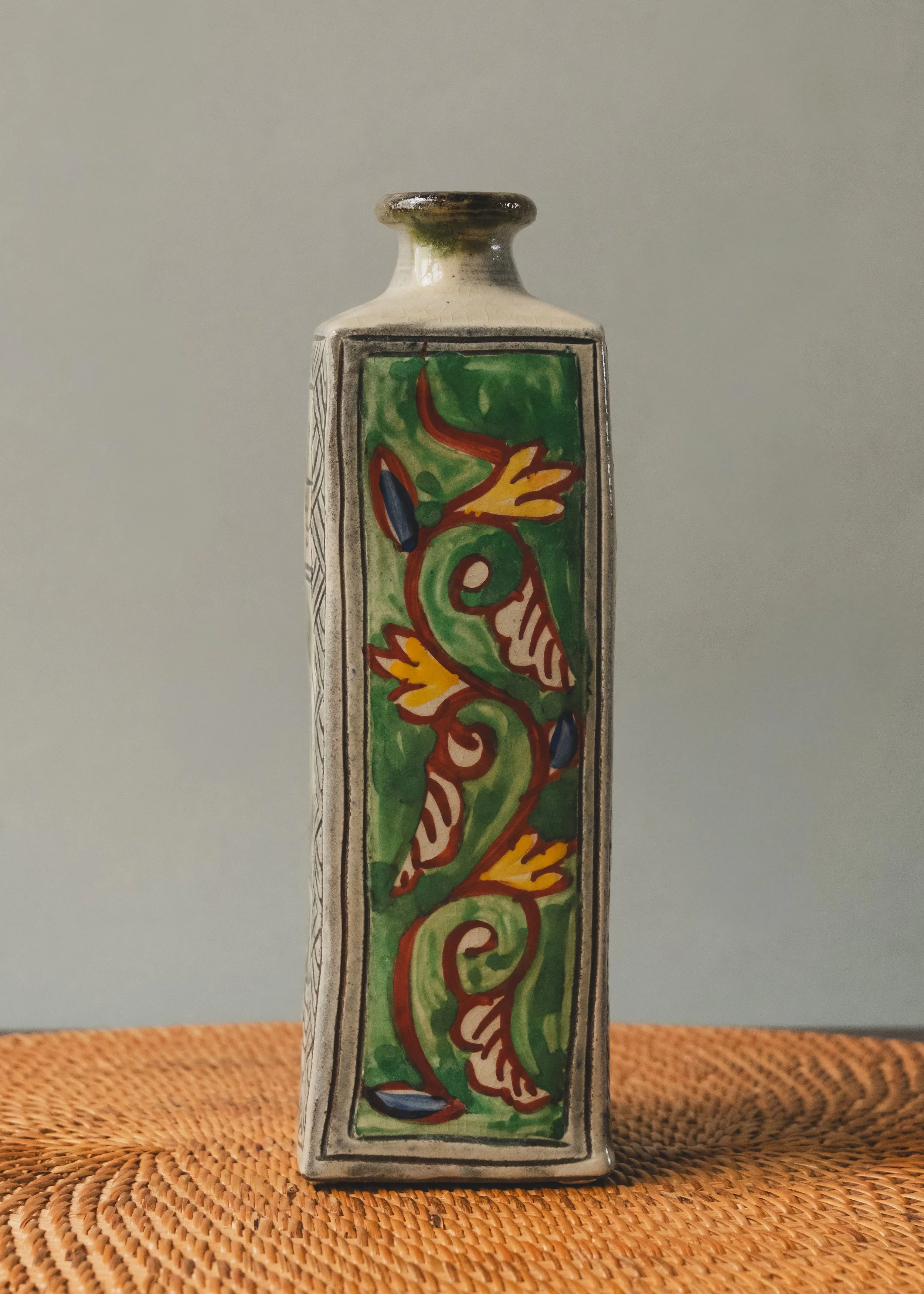 Image 6 of 14
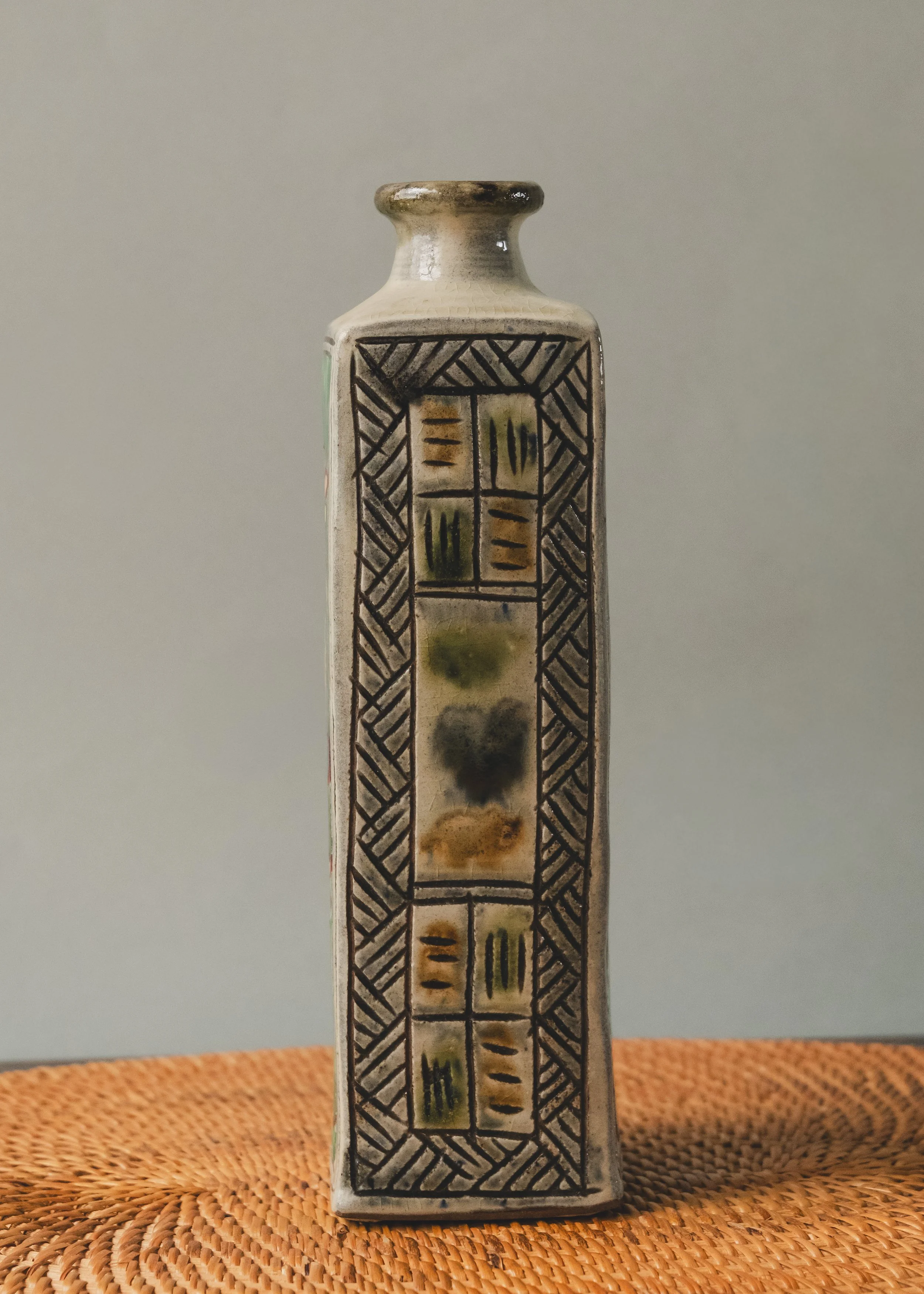 Image 7 of 14
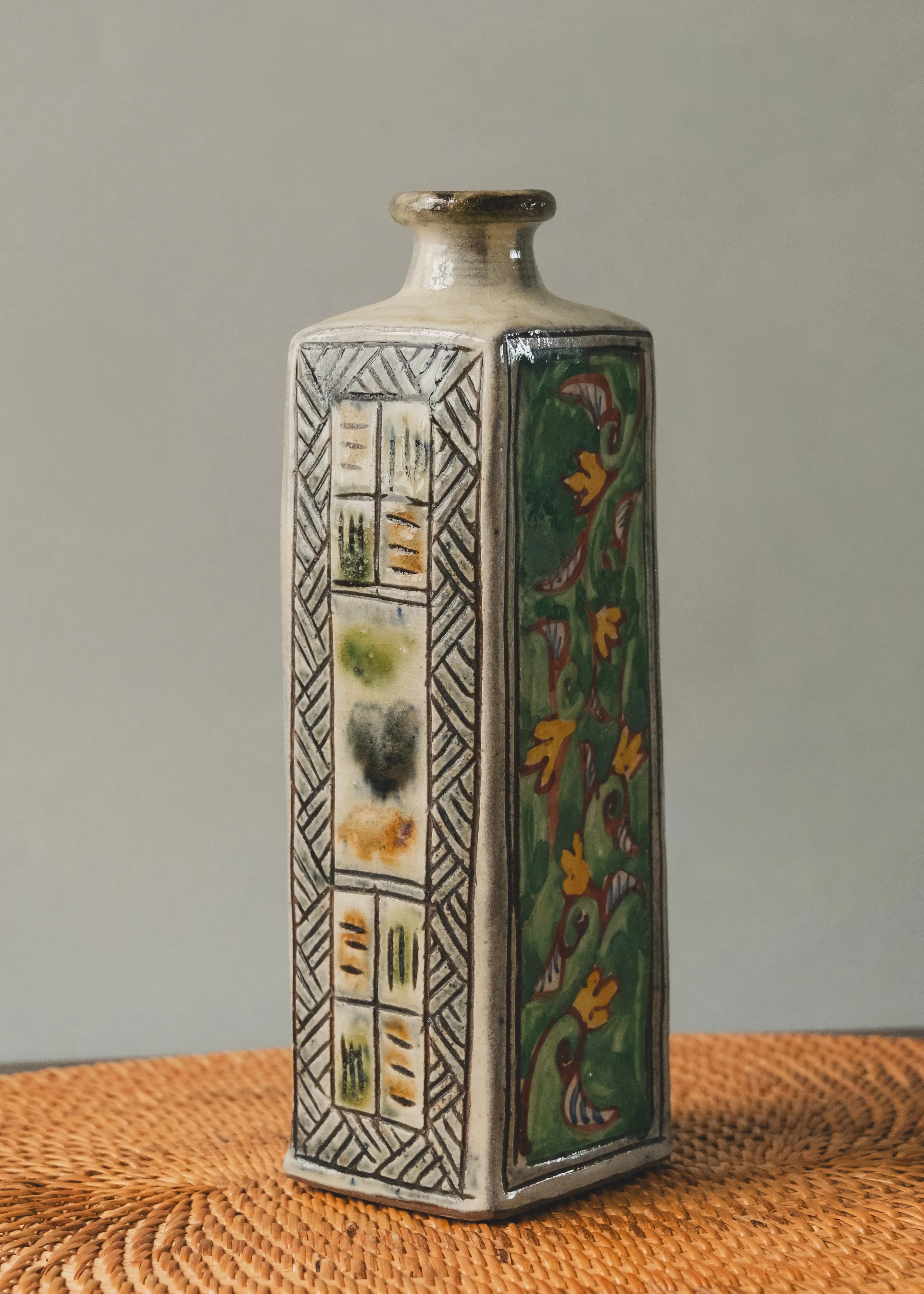 Image 8 of 14
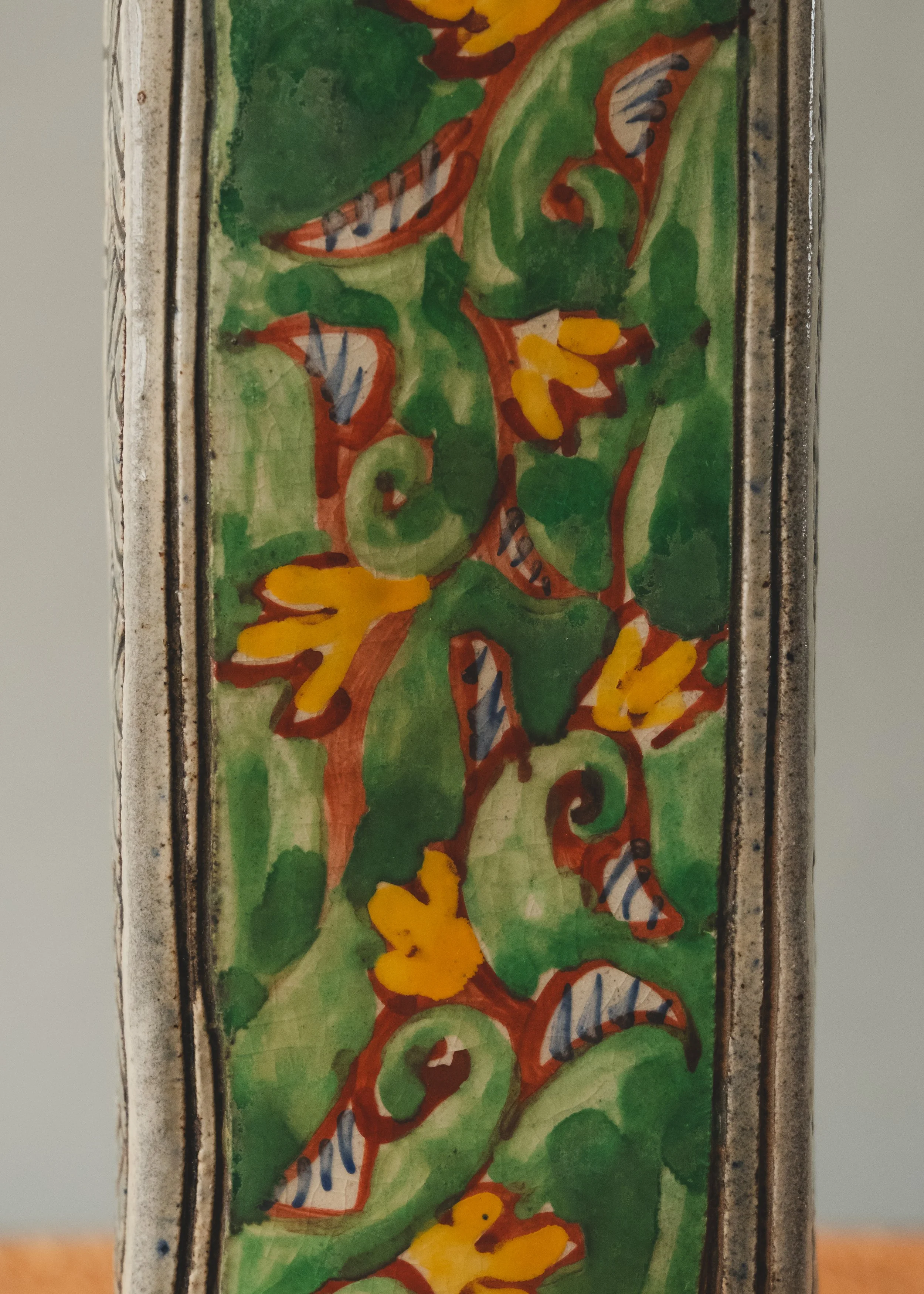 Image 9 of 14
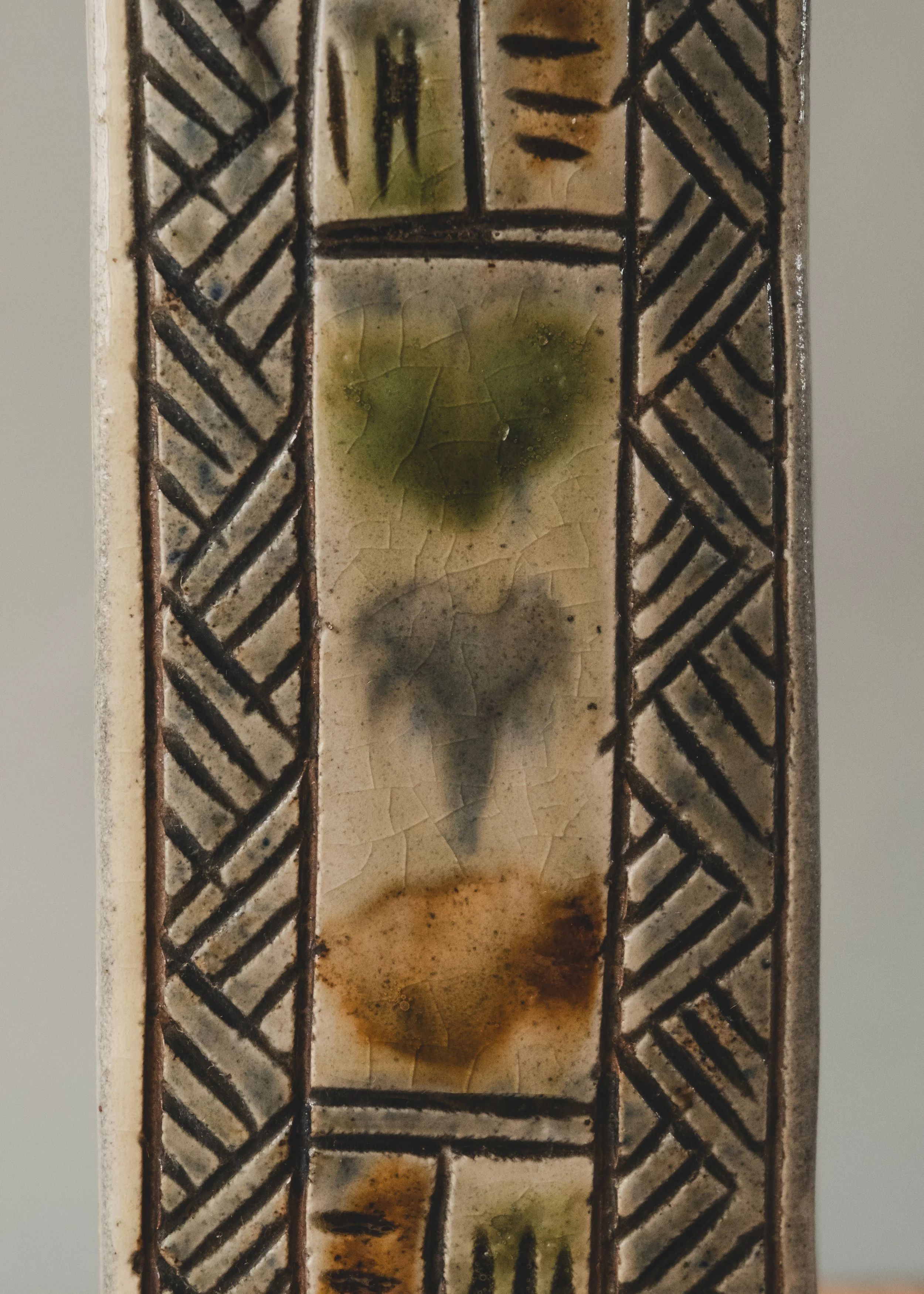 Image 10 of 14
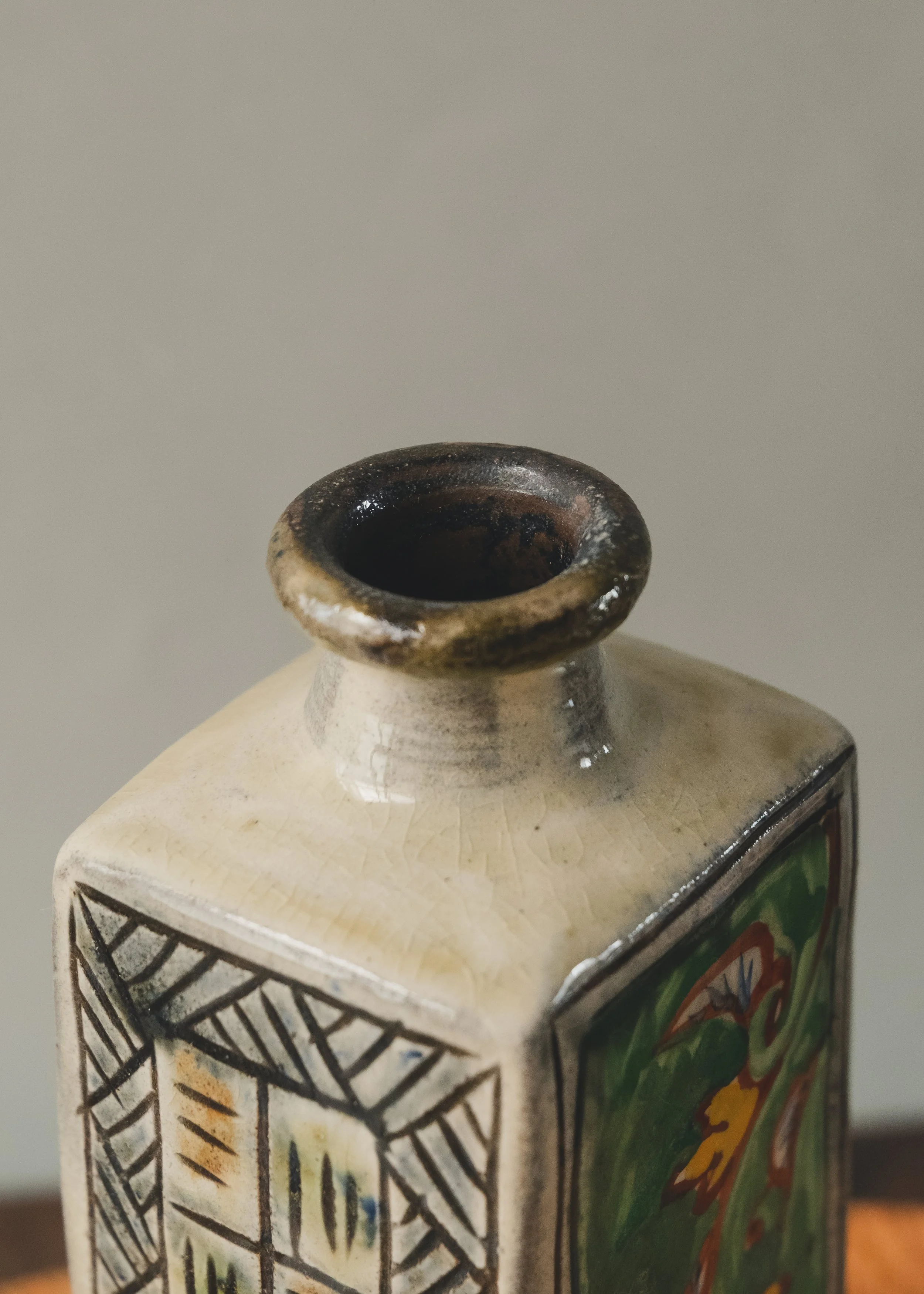 Image 11 of 14
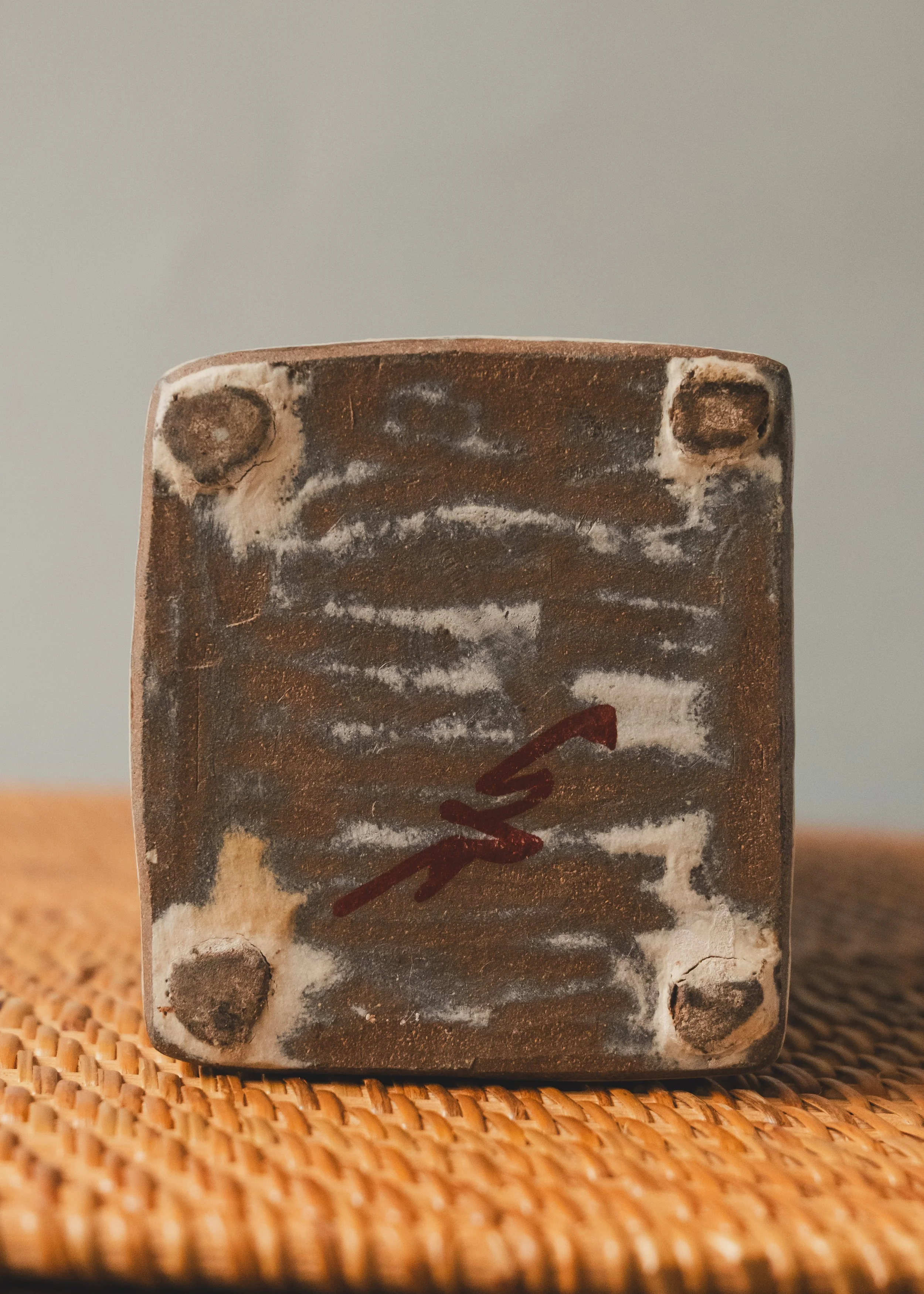 Image 12 of 14
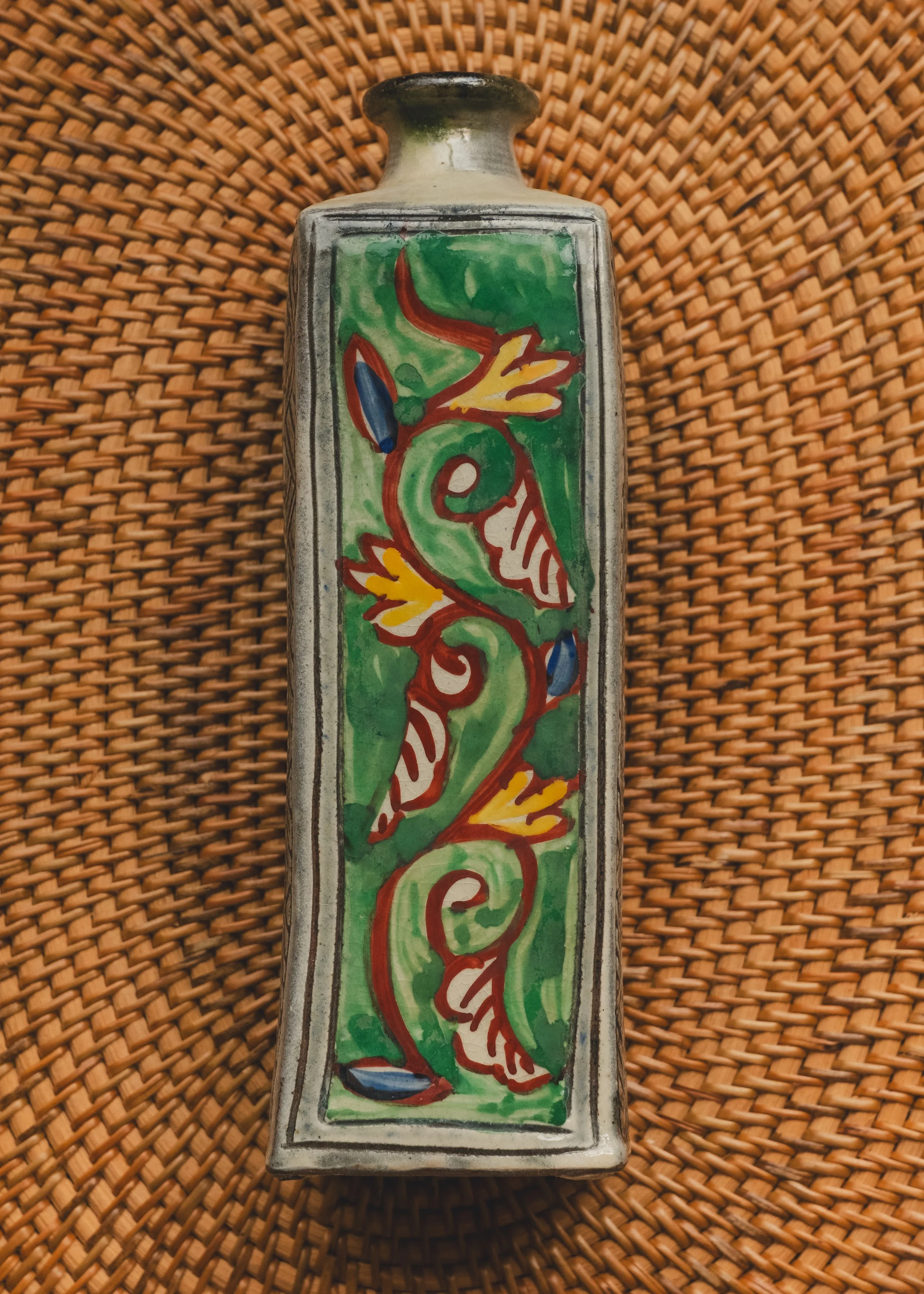 Image 13 of 14
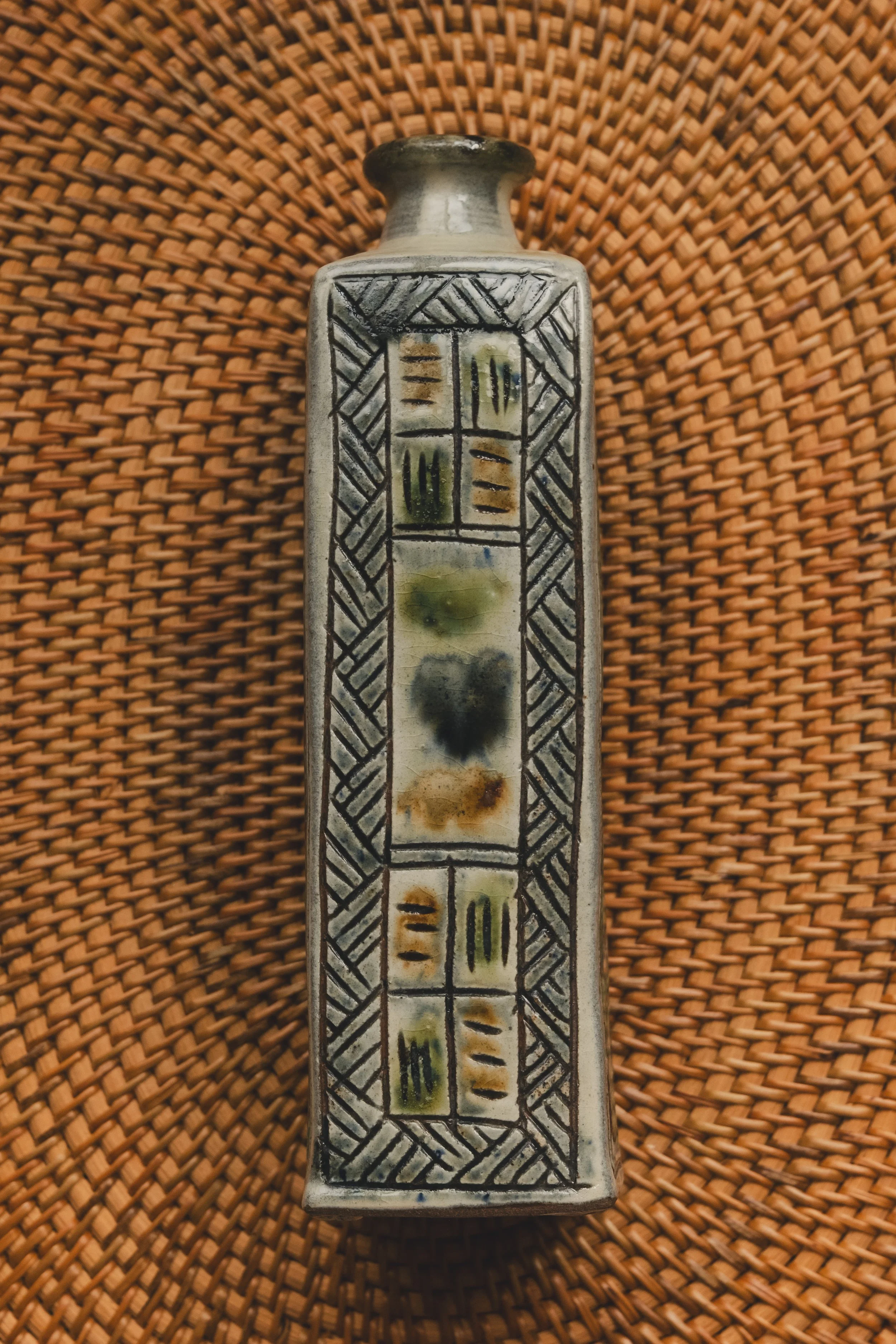 Image 14 of 14
【Context】
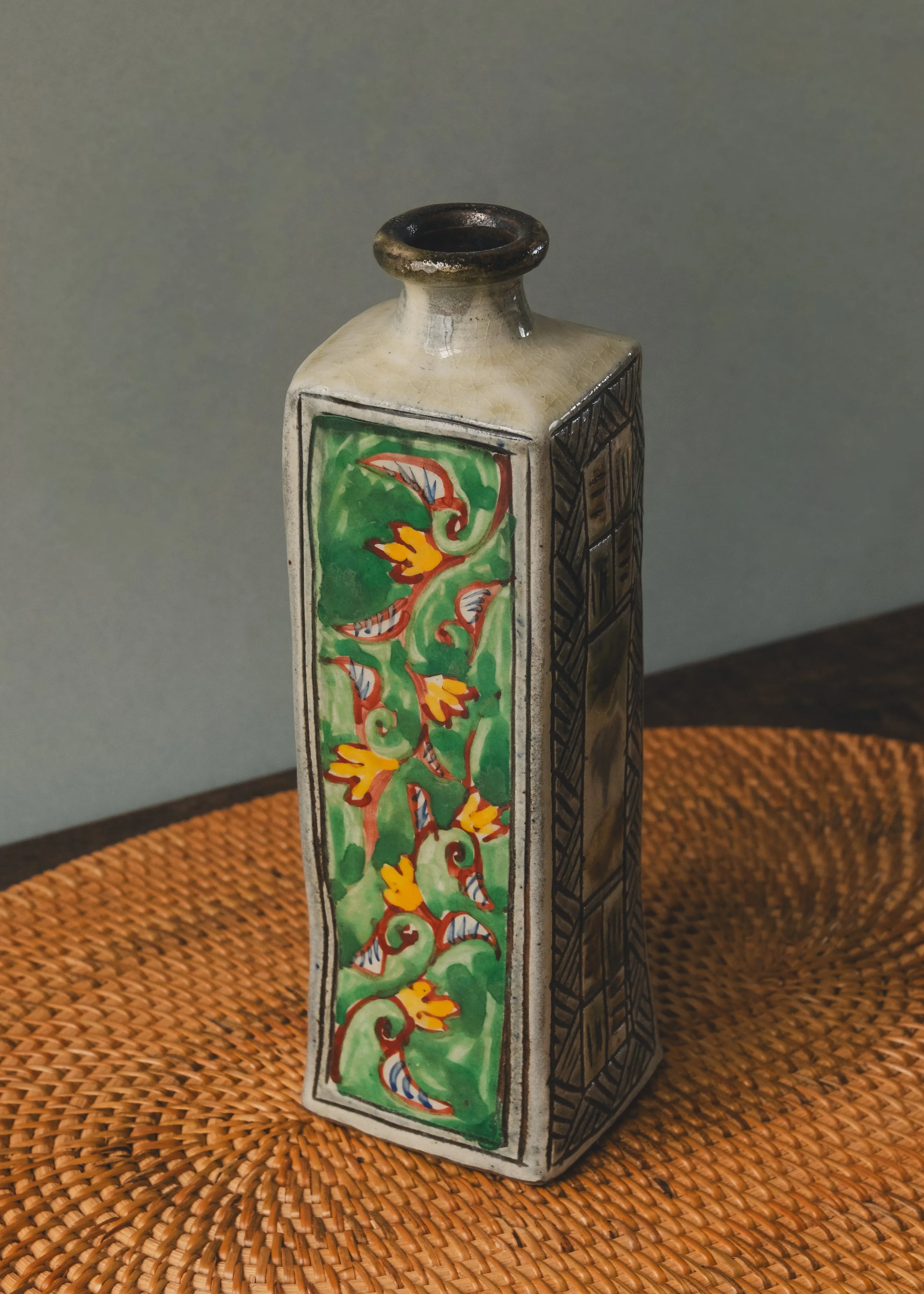
Identity: Anonymous Island Ceramic / Architectural Flower Vessel.Origin: Southern Island Province (Historic Glazed Ware District), Japan.Technique: Slab-Built Clay with Carved Slip and Overglaze Enamel.Function: Single-Stem Vase / Sculptural Object / Desk Anchor.
【 Dimensions (Approx.) 】
H: 21 cm (8.3 in)W: 6.5 cm (2.6 in)Weight: 0.570 kg (1.26 lbs)
RELATED ARCHIVAL SPECIMENS
【 The Concept 】
Earthen spirits born from 1,300 years of silence.
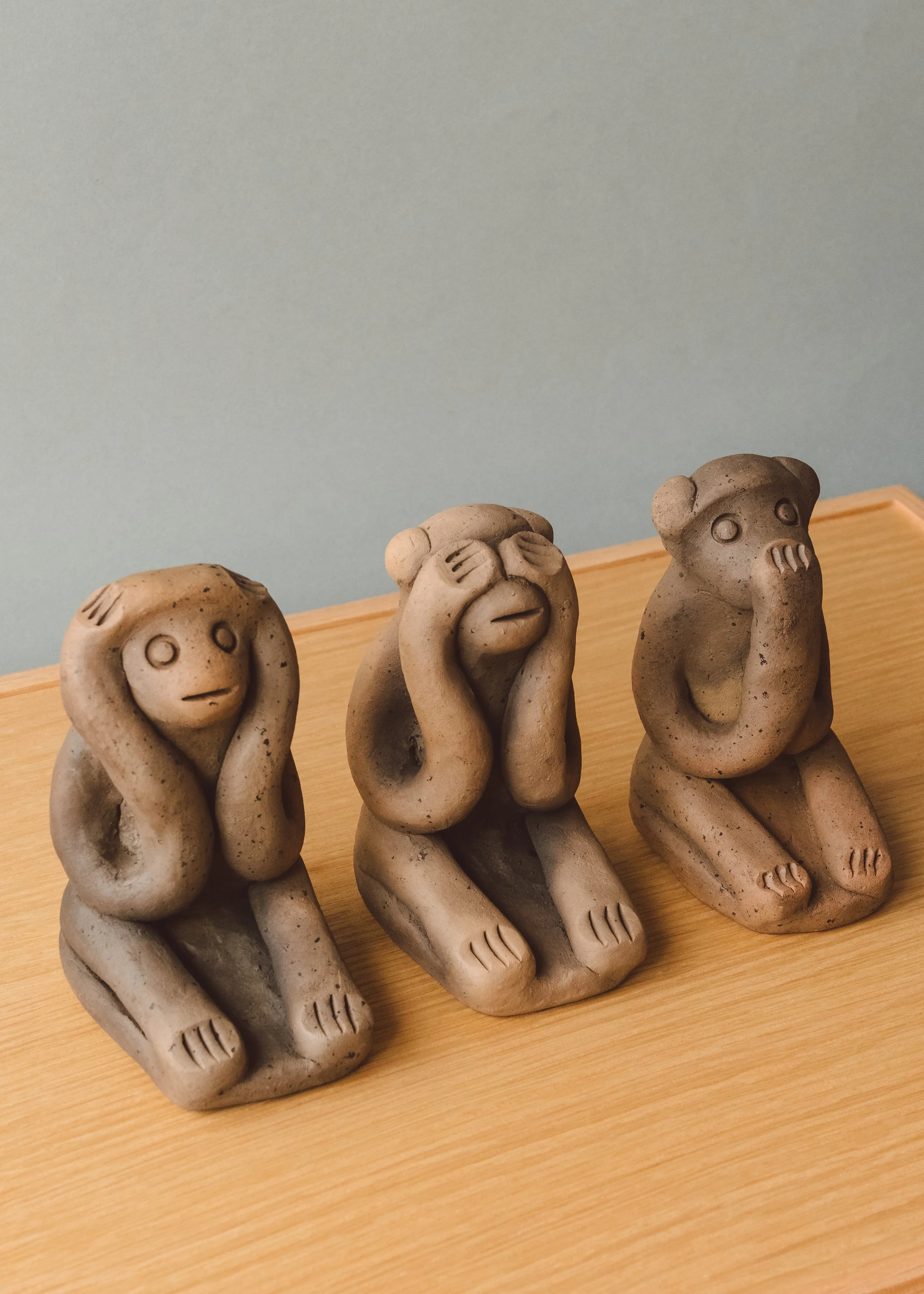
Tracing its mystical origin to the 8th century (723 AD), this rare archival set is considered one of Japan’s oldest surviving lineages of provincial craft. The legend tells of a noble migrant who, following a divine vision, used local red clay to forge sacred vessels. When he discarded the remaining fragments, they miraculously transformed into living spirits.
Unlike refined urban ceramics, these 1-of-1 archival specimens capture a brutal, primal beauty known as "Anonymous Elegance." Praised by the mid-century philosopher Muneyoshi Yanagi as the pinnacle of the "Beauty of Utility," these figures are a fierce counter-argument to the ego of the individual artist. They represent the "Unconscious Beauty" born of necessity, intended to protect the family sanctum through pure material honesty.
【 The Function 】
Grounding the senses in an era of digital noise.
This trio represents the profound Three Spirits: "Hear no Evil, See no Evil, Speak no Evil." Far from mere educational adages, these time-traveled survivors were engineered as a psychological anchor—spiritual utility designed to cleanse the mental workspace. In traditional Japanese houses, these amulets served as substitutes to absorb misfortune on behalf of their keepers.
Positioned together, they serve as a meditative reset mechanism. In our hyper-accelerated digital culture, their presence reminds the guardian to consciously curate what they hear, see, and say—offering a protective refuge of stillness against the surrounding chaos.
【 Material & Craft 】
Fingerprints of history on unglazed integrity.
Hand-forged without the use of a single mold, every curve of these specimens is formed through the master’s physical touch. Utilizing "Kibushi" clay—a primeval red soil from a vanishing volcanic terrain—the artisans utilized a 1,300-year-old "pinch-clay" (Te-bineri) technique where fingers speak directly to earth.
Each figure was high-fired and then traditionally smoldered with smoldering pine needles, creating an unpredictable, smoke-stained patina. There is no artificial gloss. The surface features microscopic fissures and mineral stains, known as "Patina of Survival." Each unit carries the tangible heat and pressure of a human palm from nearly seven decades ago.
【 Presence 】
Brutalist Stillness.
Place this trinity at the center of a minimal bookshelf or directly on your workstation desk. Their vertical gravity and uneven, hand-squeezed textures create a striking focal point against cold metal or smooth wooden surfaces. Their uneven silhouettes, lacking mechanical symmetry, evoke a "Zen" quality that immediately transforms the surrounding atmosphere.
They are meant to be curated as one unified defensive line. Secure these IRREPLACEABLE 1-of-1 archival discoveries and experience the ritual of archiving the silent narrative of vanishing Japan.
【 The Concept 】
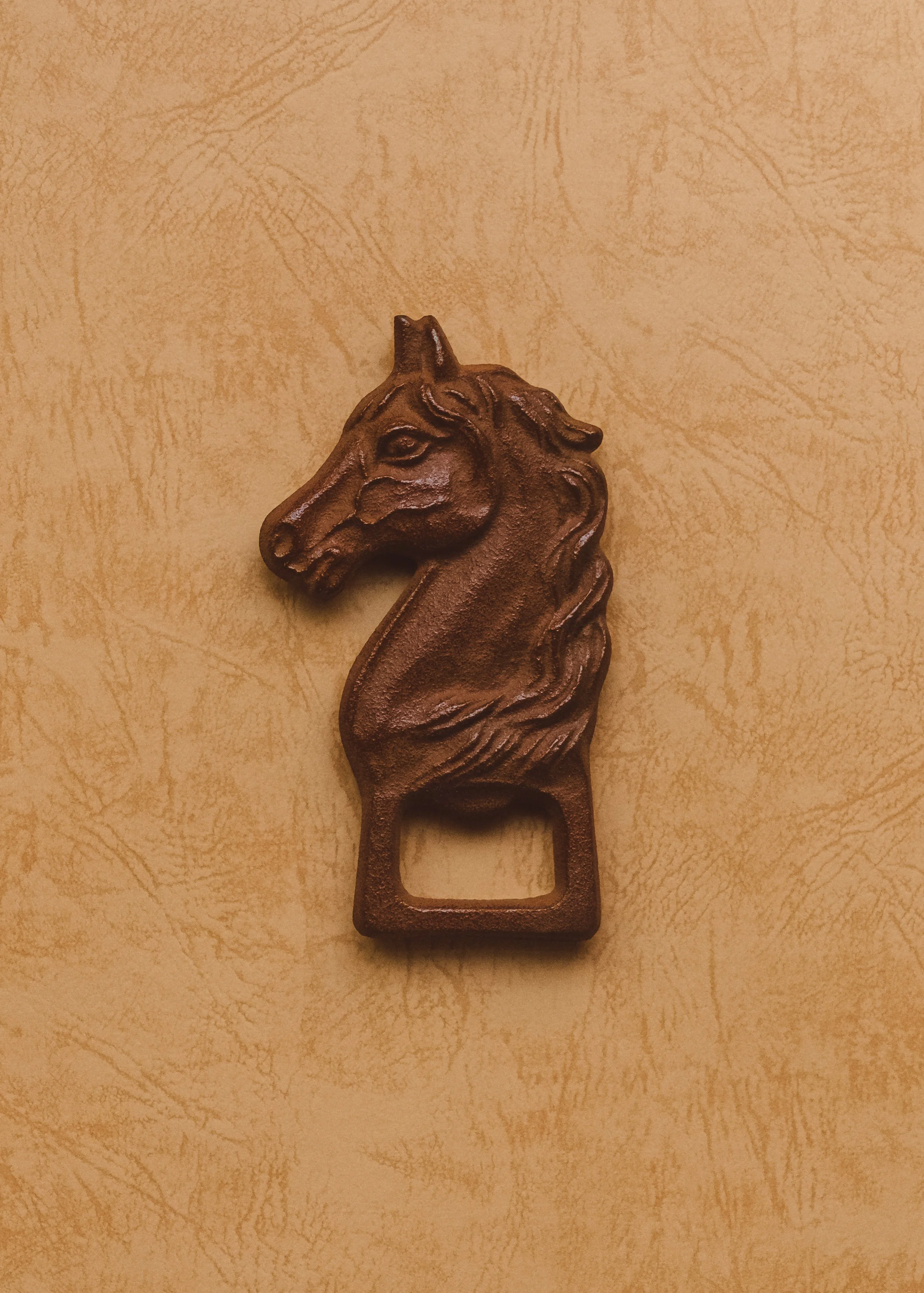
A Horse Forged from the Memory of a Province. In the northern highlands of Japan, the horse was never merely an animal. It was a military asset, a spiritual offering, and the economic backbone of a region that sent its finest cavalry to shape the course of feudal history. This anonymous craftsman understood that inheritance. They distilled nine hundred years of that culture into the palm of the hand — not in clay or wood, but in the uncompromising permanence of cast iron.
The horse stands in profile. Still. Alert. It does not perform. It holds its ground with the quiet authority of something that has outlasted the civilization that created it.
【 The Function 】
Form and Force, Unified. This object was engineered as a bottle opener — but that description fails to account for its true nature. The horse's silhouette is not decoration applied over a tool; it is the tool. The precise geometry of the lower body forms a lever calibrated to engage crown caps with a single, decisive downward motion. The weight of the iron — dense, volcanic, uncompromising — provides the counter-balance. The result is not convenience. It is ceremony.
When not in use, it sits as a paperweight on a desk, a sentinel at the edge of a shelf. The function does not disappear. It simply waits.
【 The Texture 】
The Skin of the Earth, Fired Twice. The surface carries a deep, dark lacquer — applied by hand to heated iron in a process that bonds pigment directly to the metal's grain. The finish is not smooth in the way of manufactured goods; it possesses a subtle texture, a warmth that shifts between charcoal and deep umber depending on the light. Run a thumb across the surface. It resists. It does not flex. It does not yield. This is what iron feels like when it has been made properly.
【 Presence 】
A Counterweight to Everything Disposable. This object has survived decades in a culture that rarely preserves things without function. That it is here, intact, with its original box — is itself a statement. Place it on a raw oak surface or against a concrete wall. It does not decorate the space; it anchors it. It speaks to the person who has grown tired of owning things that weigh nothing and mean less.
Sourced from a private collection in Iwate Prefecture, Northern Japan.