【 The Concept 】
The horse is mid-stride. The left front leg is lifted off the ground — bent at the knee, held forward — while the other three legs stay planted. In the foundry tradition where it was cast, this posture is not accidental. A horse standing on all four legs means endurance. A horse running means speed. A horse lifting one leg means it has already decided to move but has not yet committed. It is the moment before everything changes. An anonymous metalsmith poured molten iron into a sand mold shaped like that moment, let it cool, broke the mold, and finished the surface with lacquer until the metal turned the color of dark wine.
【 The Function 】
A cast-metal horse with one leg raised. Nine centimeters tall, eight centimeters long, four centimeters wide. The body is supported by three legs and a rough base that extends behind the tail like a piece of broken ground. The left front leg is lifted and bent forward. The mane is carved in deep parallel grooves that run from the crown to the shoulders. At 522 grams it is the third heaviest object in the archive. Original maker's box included — wood, with a label reading "Traditional Craft" and a red seal.
【 The Texture 】
Cast metal with the grit of sand still pressed into the valleys. The surface is layered — dark brown in the hollows, shifting to a deep reddish black on the ridges where light catches the lacquer. This is not paint. It is iron treated with lacquer and heat, built up in coats and partially wiped back until the color sits somewhere between midnight and copper. The muscle lines on the haunches and neck are exaggerated just enough to catch shadow. The base is left rough and unfinished — raw rock to the horse's polished body. Nothing is uniform. Everything was done by hand.
【 Presence 】
It stands on three legs with the fourth held forward, as if testing the air before the next step. The weight is real — more than half a kilogram in a space smaller than a fist. Pick it up and you understand immediately that this is not decorative. It is a piece of metal that was poured at fourteen hundred degrees and cooled into the shape of an animal that has already decided where it is going. Set it on a shelf and it becomes the only object in the room that is going somewhere.
Sourced from a private collection in eastern Japan. Original maker's box included.
【 The Concept 】
The horse is mid-stride. The left front leg is lifted off the ground — bent at the knee, held forward — while the other three legs stay planted. In the foundry tradition where it was cast, this posture is not accidental. A horse standing on all four legs means endurance. A horse running means speed. A horse lifting one leg means it has already decided to move but has not yet committed. It is the moment before everything changes. An anonymous metalsmith poured molten iron into a sand mold shaped like that moment, let it cool, broke the mold, and finished the surface with lacquer until the metal turned the color of dark wine.
【 The Function 】
A cast-metal horse with one leg raised. Nine centimeters tall, eight centimeters long, four centimeters wide. The body is supported by three legs and a rough base that extends behind the tail like a piece of broken ground. The left front leg is lifted and bent forward. The mane is carved in deep parallel grooves that run from the crown to the shoulders. At 522 grams it is the third heaviest object in the archive. Original maker's box included — wood, with a label reading "Traditional Craft" and a red seal.
【 The Texture 】
Cast metal with the grit of sand still pressed into the valleys. The surface is layered — dark brown in the hollows, shifting to a deep reddish black on the ridges where light catches the lacquer. This is not paint. It is iron treated with lacquer and heat, built up in coats and partially wiped back until the color sits somewhere between midnight and copper. The muscle lines on the haunches and neck are exaggerated just enough to catch shadow. The base is left rough and unfinished — raw rock to the horse's polished body. Nothing is uniform. Everything was done by hand.
【 Presence 】
It stands on three legs with the fourth held forward, as if testing the air before the next step. The weight is real — more than half a kilogram in a space smaller than a fist. Pick it up and you understand immediately that this is not decorative. It is a piece of metal that was poured at fourteen hundred degrees and cooled into the shape of an animal that has already decided where it is going. Set it on a shelf and it becomes the only object in the room that is going somewhere.
Sourced from a private collection in eastern Japan. Original maker's box included.


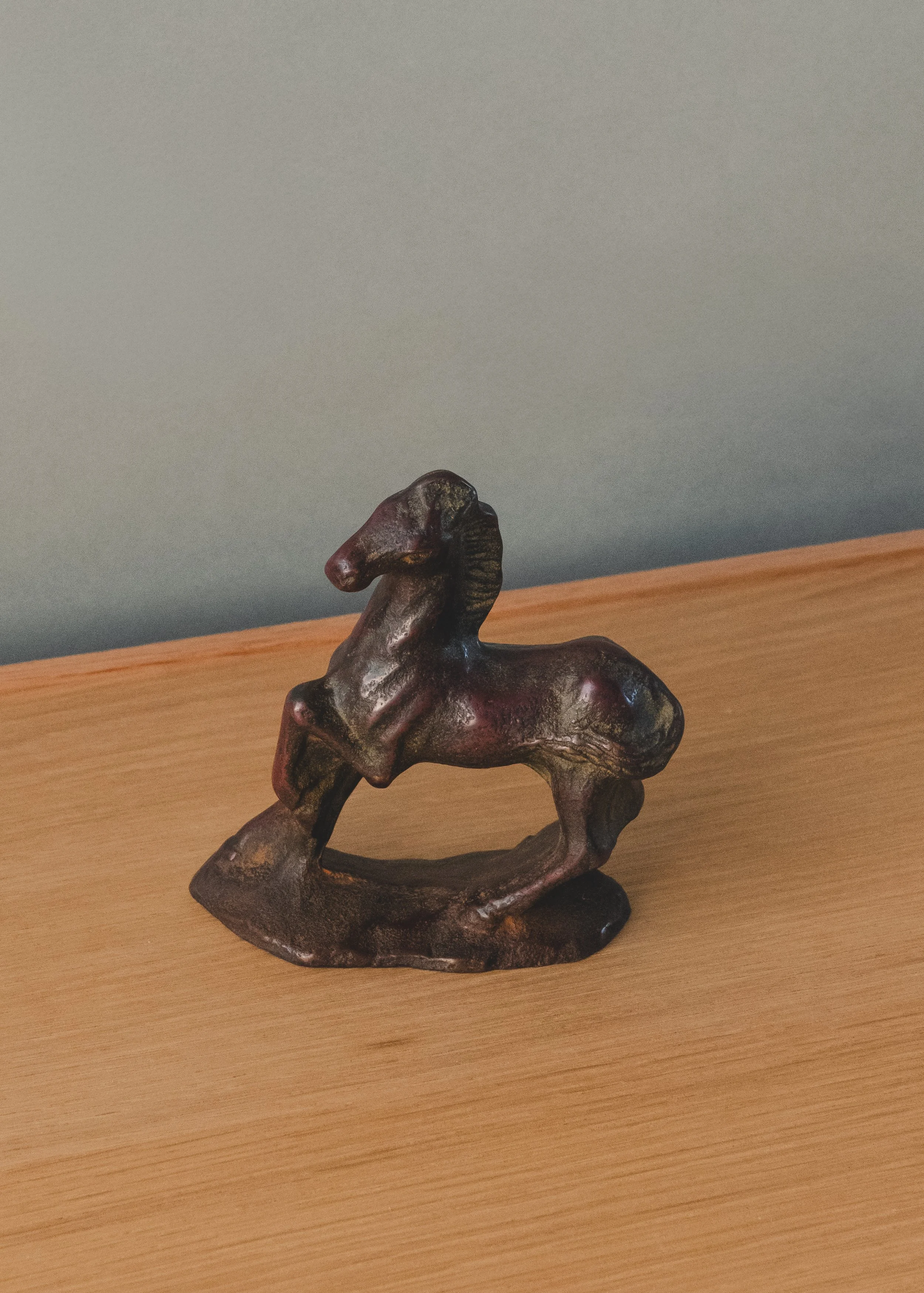 Image 1 of 10
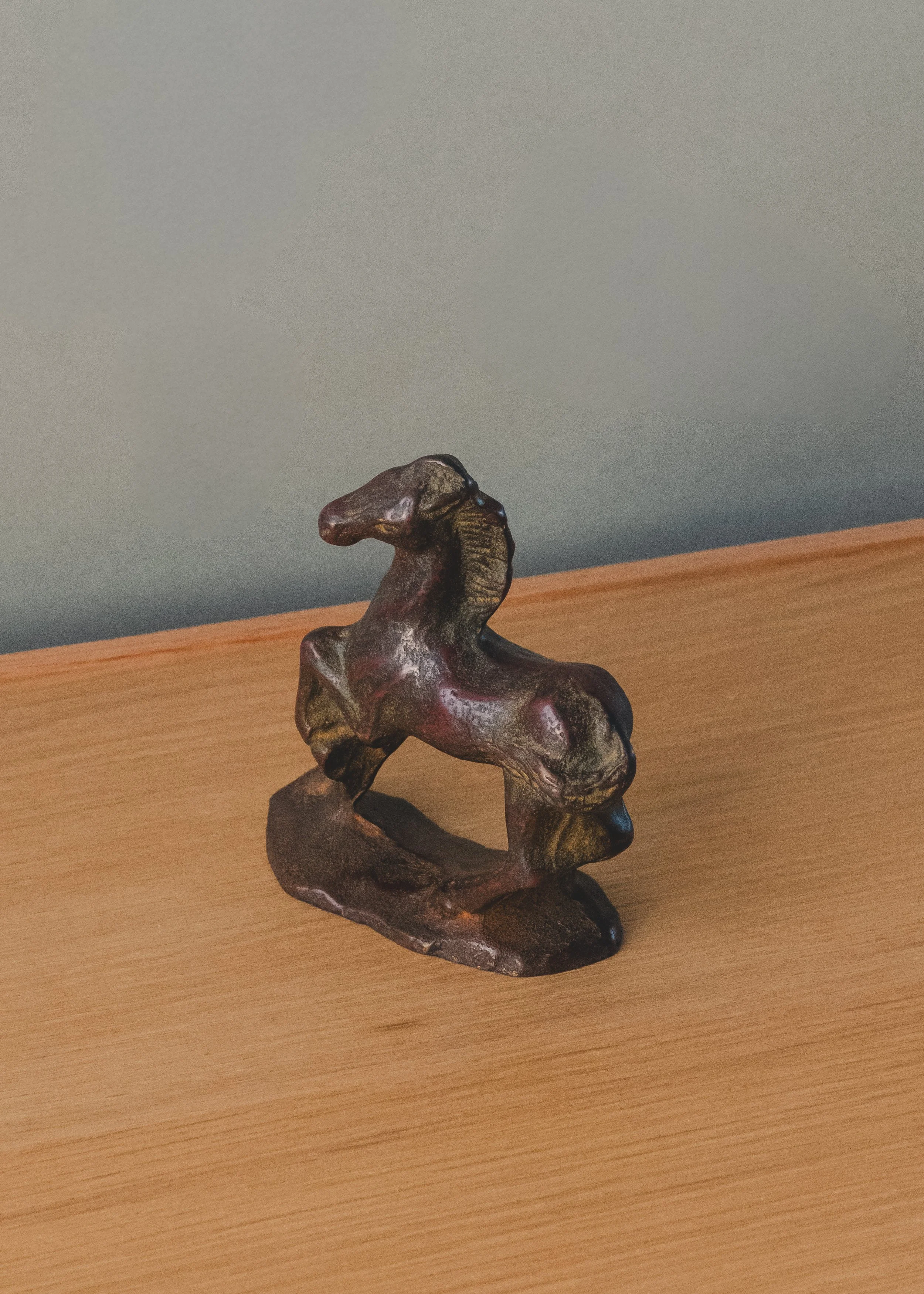 Image 2 of 10
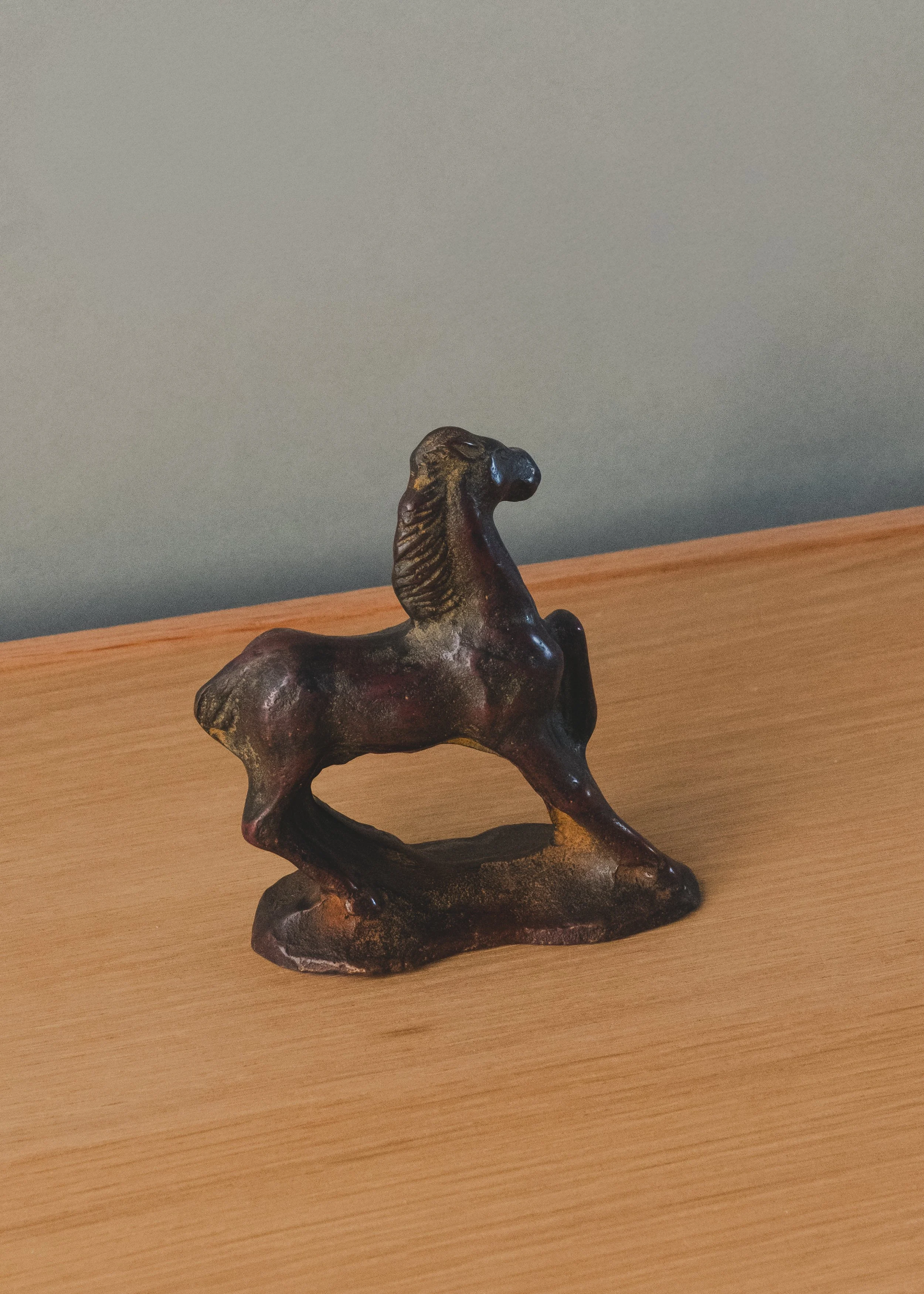 Image 3 of 10
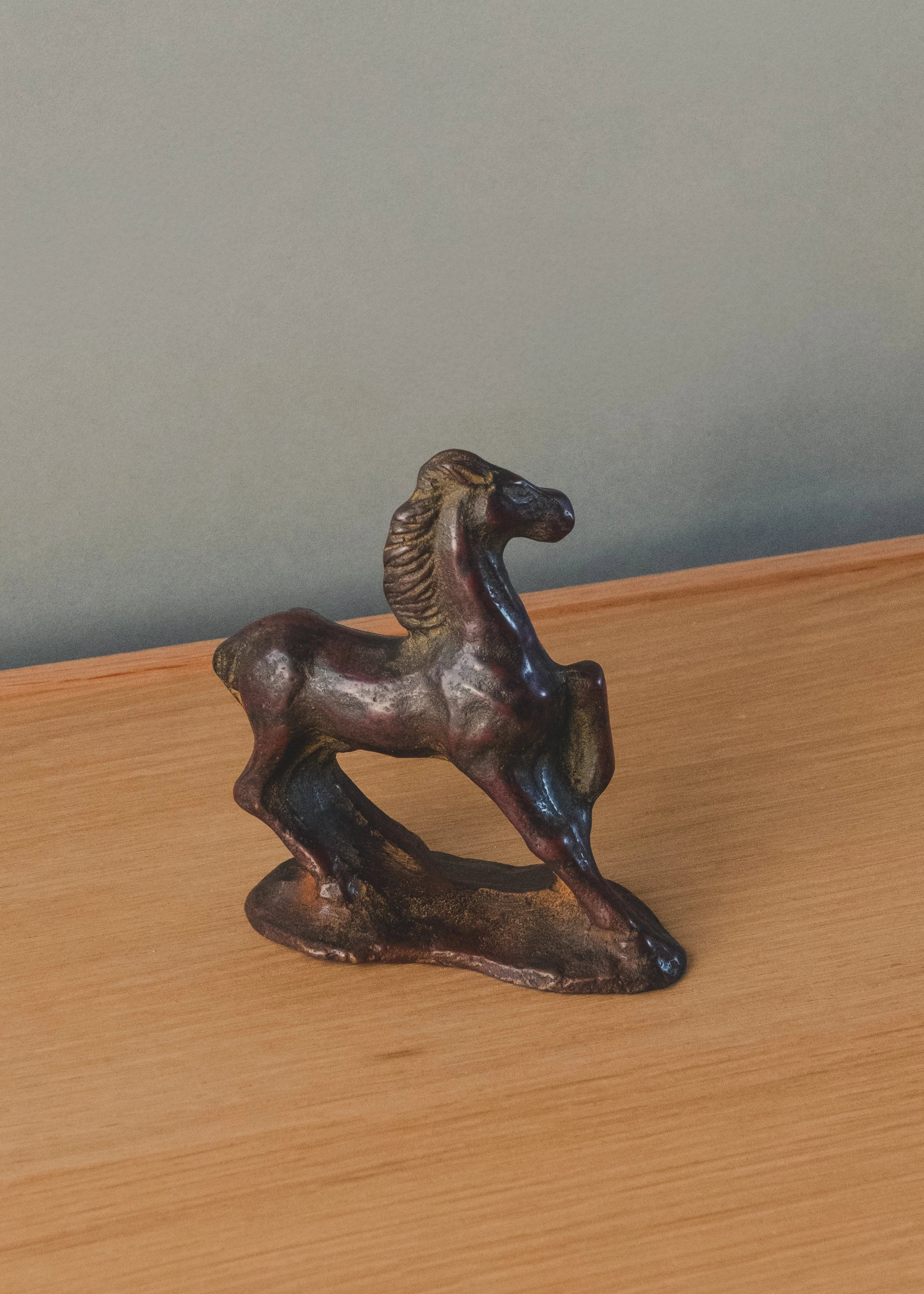 Image 4 of 10
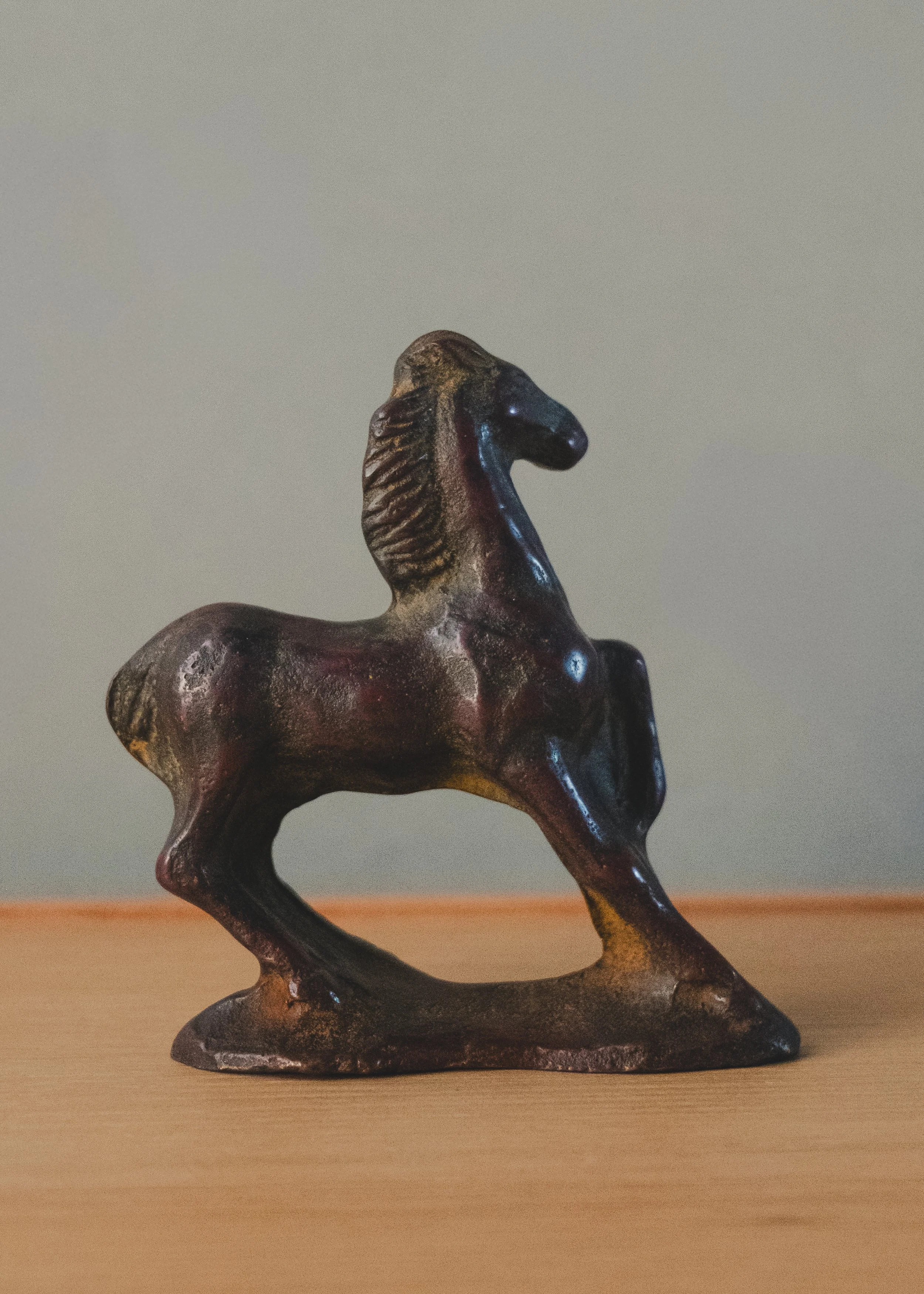 Image 5 of 10
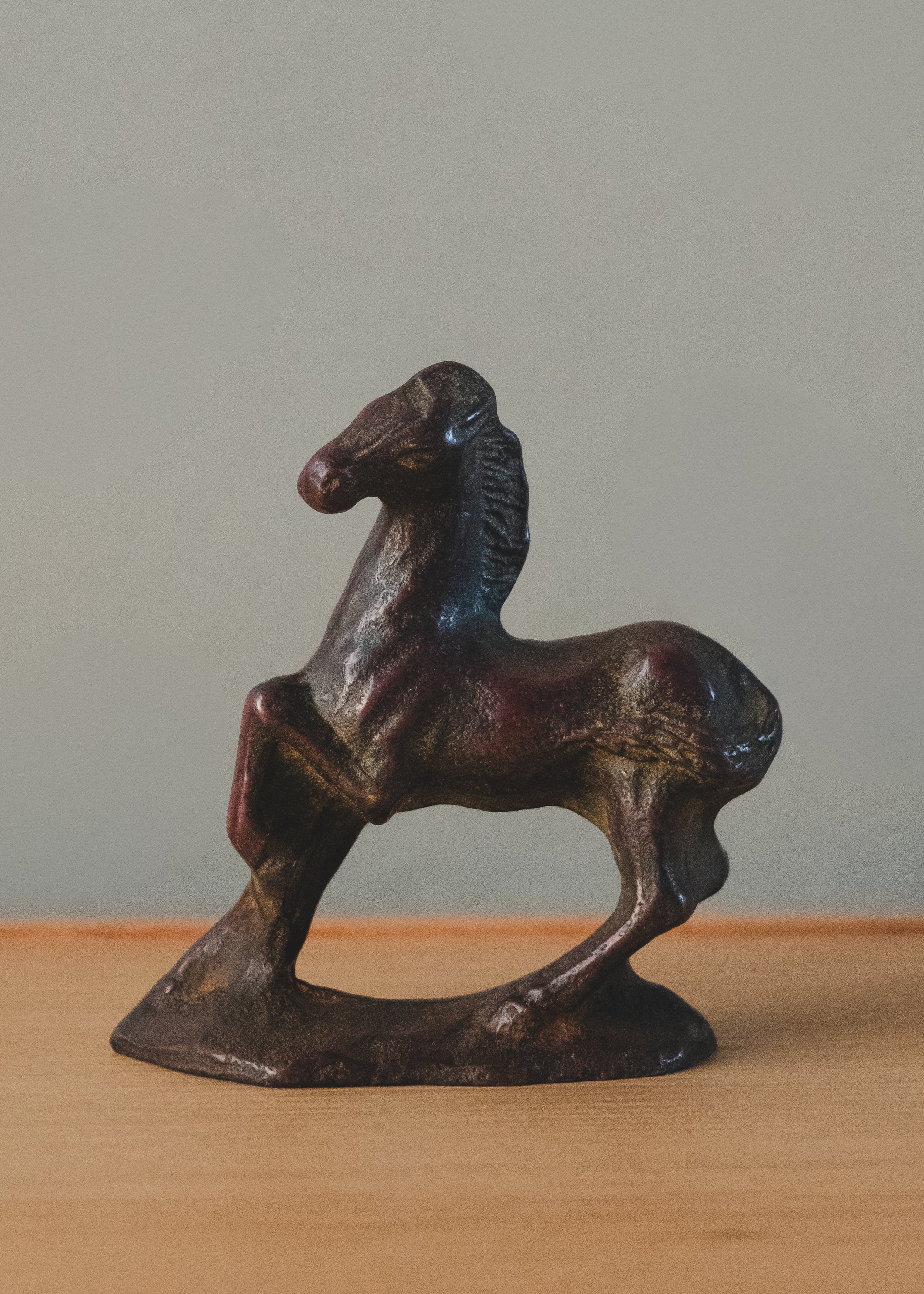 Image 6 of 10
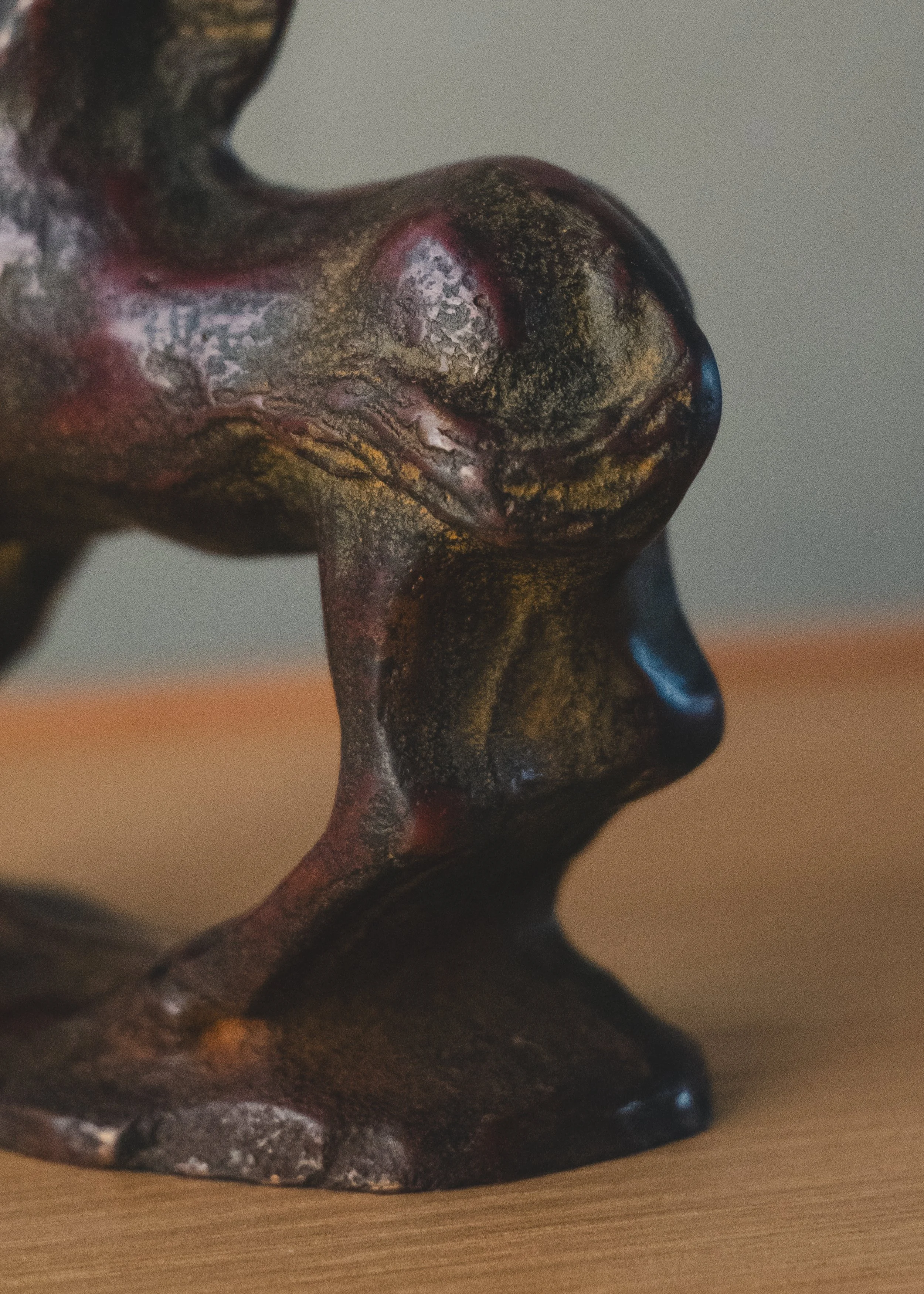 Image 7 of 10
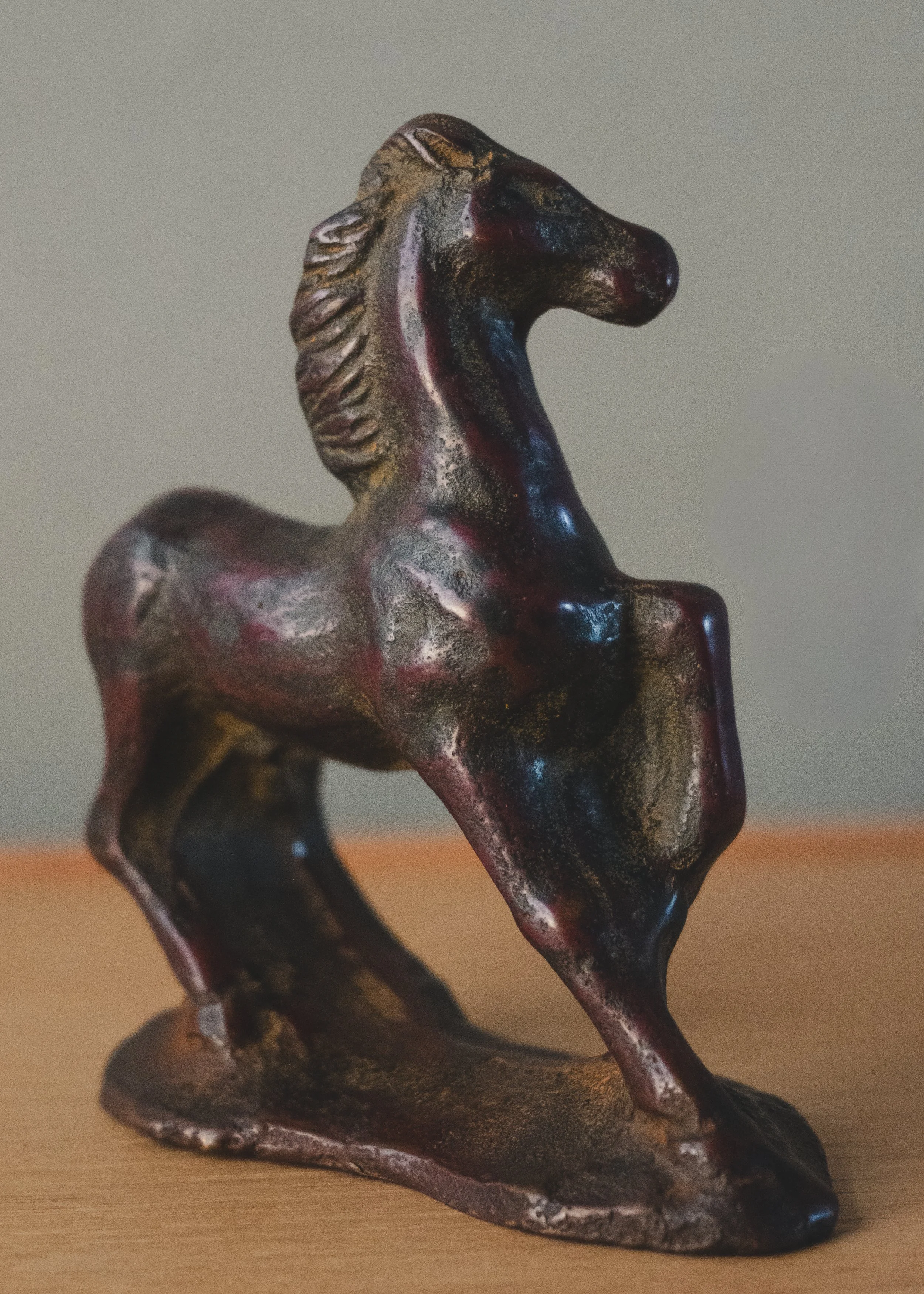 Image 8 of 10
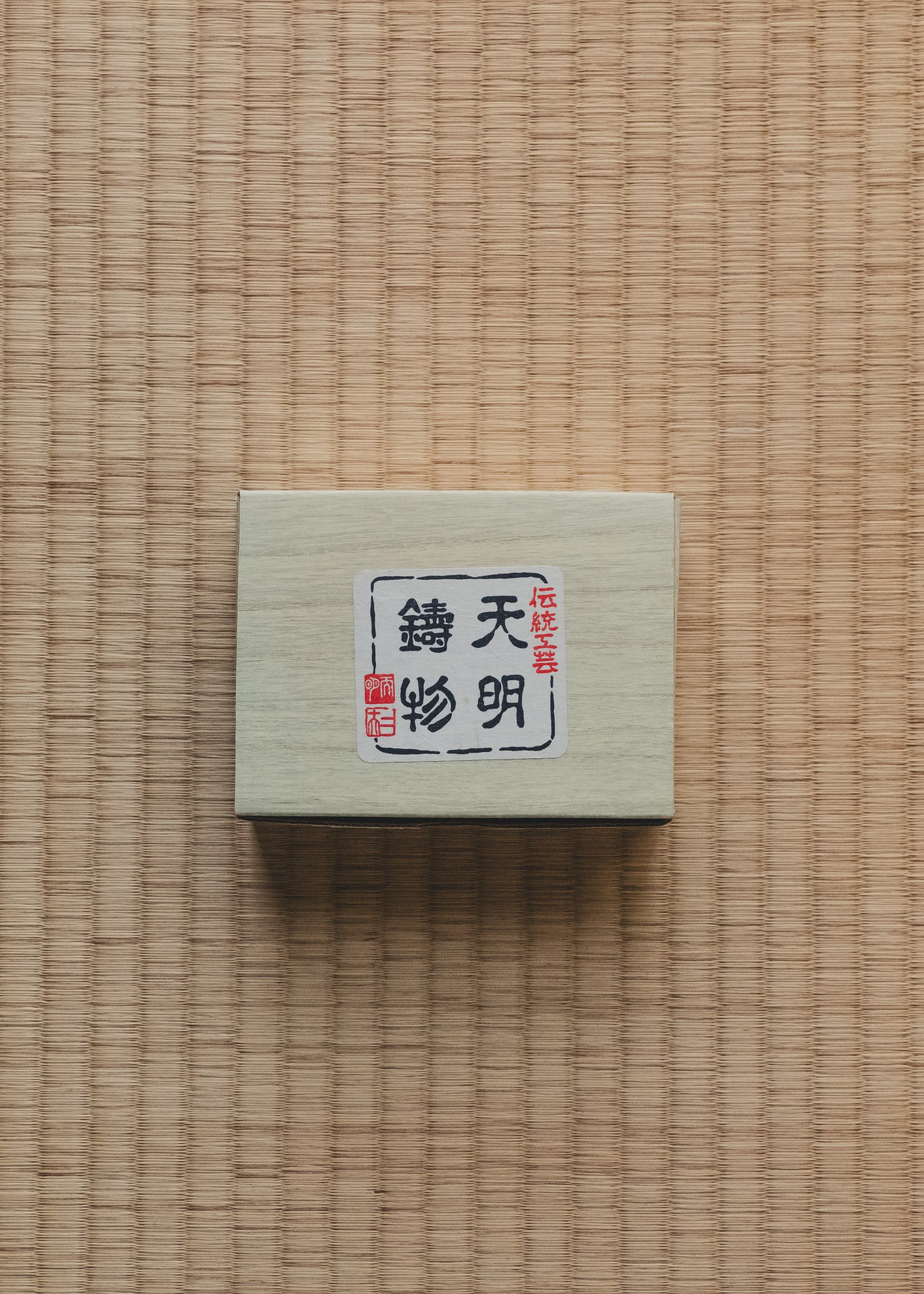 Image 9 of 10
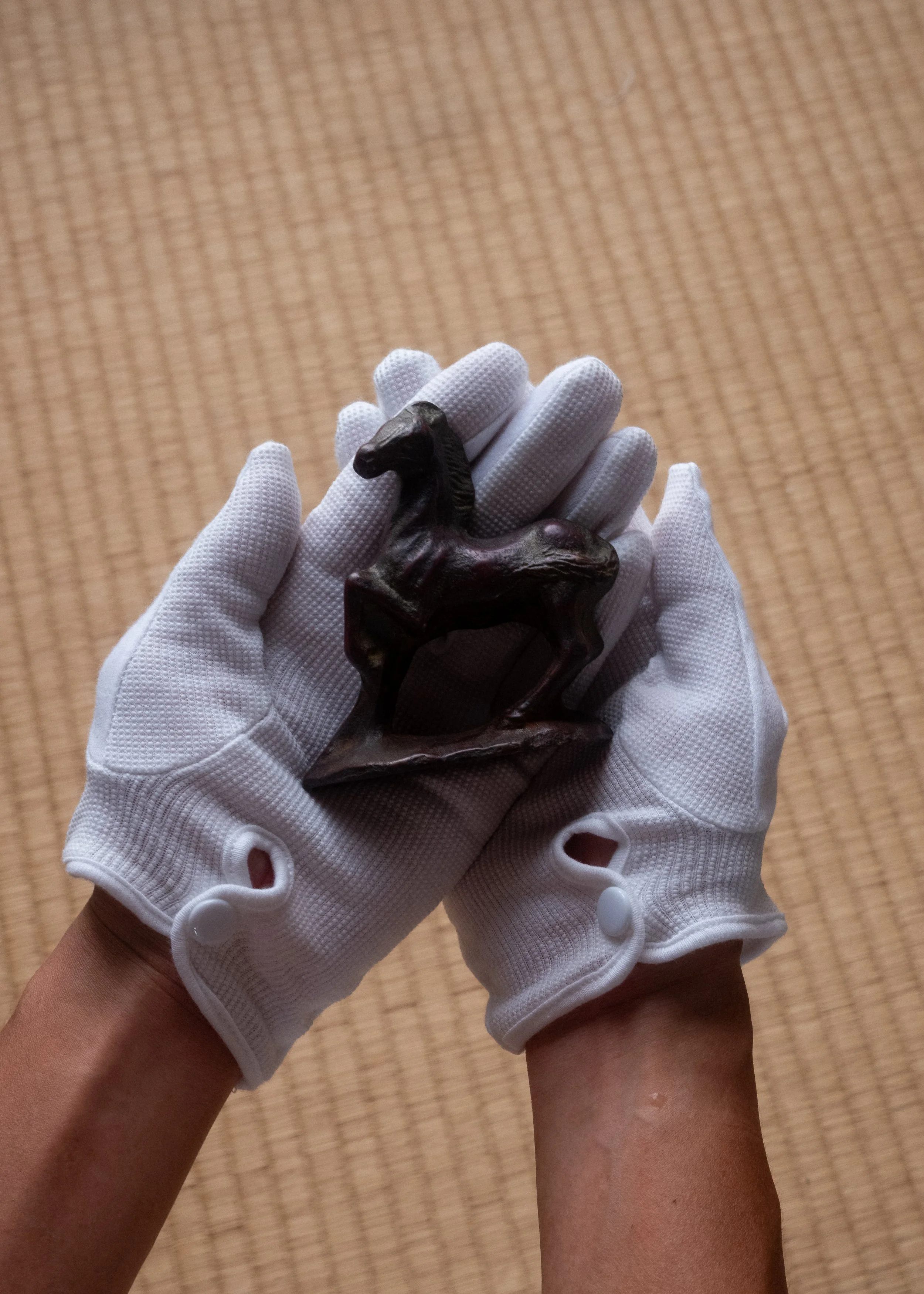 Image 10 of 10