【 The Concept 】
The figure was carved the way a sentence is spoken — start to finish, no corrections. A blade entered the wood at the top and worked its way down, cutting a hood, a face, two hands pressed together, and a long notched staff that runs from the chest to the base. The back was never touched. It is flat — the raw surface of the split wood, exactly as it looked before the carving began. Only the front was given a form. The idea is simple: the prayer faces forward. What is behind it does not matter.
【 The Function 】
A standing carved figure. Nineteen centimeters tall, five centimeters wide. Cut from a single piece of pale hardwood, left unfinished — no stain, no lacquer, no wax. The figure stands upright with its hands pressed together at the chest. A vertical staff runs down the center, scored with deep horizontal notches at even intervals. The base is part of the same block. At 154 grams it stands on any flat surface without support.
【 The Texture 】
Bare wood with every blade mark left in place. The surface is not smooth. It is faceted — dozens of flat planes where the chisel cut once and moved on. The grain runs vertically through the figure like a pulse. The color is pale — somewhere between cream and warm sand — with faint lines of darker heartwood showing through at the edges. No finish has been applied. The wood will darken over the years, moving from pale to amber to something deeper, depending on the light it receives and the hands that touch it. This is a figure that is still becoming what it will be.
【 Presence 】
It stands the way a person stands when they have decided to stop talking. The eyes are two thin slits. The mouth is a single curved line, turned slightly upward. The hood covers everything above the brow. The hands are pressed together and do not separate. The back is flat and blank — a wall. The front is the only side that matters, and what it shows is the least amount of carving needed to make you believe someone is standing there, praying, and not planning to stop.
Sourced from a private collection in central Japan.
【 The Concept 】
The figure was carved the way a sentence is spoken — start to finish, no corrections. A blade entered the wood at the top and worked its way down, cutting a hood, a face, two hands pressed together, and a long notched staff that runs from the chest to the base. The back was never touched. It is flat — the raw surface of the split wood, exactly as it looked before the carving began. Only the front was given a form. The idea is simple: the prayer faces forward. What is behind it does not matter.
【 The Function 】
A standing carved figure. Nineteen centimeters tall, five centimeters wide. Cut from a single piece of pale hardwood, left unfinished — no stain, no lacquer, no wax. The figure stands upright with its hands pressed together at the chest. A vertical staff runs down the center, scored with deep horizontal notches at even intervals. The base is part of the same block. At 154 grams it stands on any flat surface without support.
【 The Texture 】
Bare wood with every blade mark left in place. The surface is not smooth. It is faceted — dozens of flat planes where the chisel cut once and moved on. The grain runs vertically through the figure like a pulse. The color is pale — somewhere between cream and warm sand — with faint lines of darker heartwood showing through at the edges. No finish has been applied. The wood will darken over the years, moving from pale to amber to something deeper, depending on the light it receives and the hands that touch it. This is a figure that is still becoming what it will be.
【 Presence 】
It stands the way a person stands when they have decided to stop talking. The eyes are two thin slits. The mouth is a single curved line, turned slightly upward. The hood covers everything above the brow. The hands are pressed together and do not separate. The back is flat and blank — a wall. The front is the only side that matters, and what it shows is the least amount of carving needed to make you believe someone is standing there, praying, and not planning to stop.
Sourced from a private collection in central Japan.


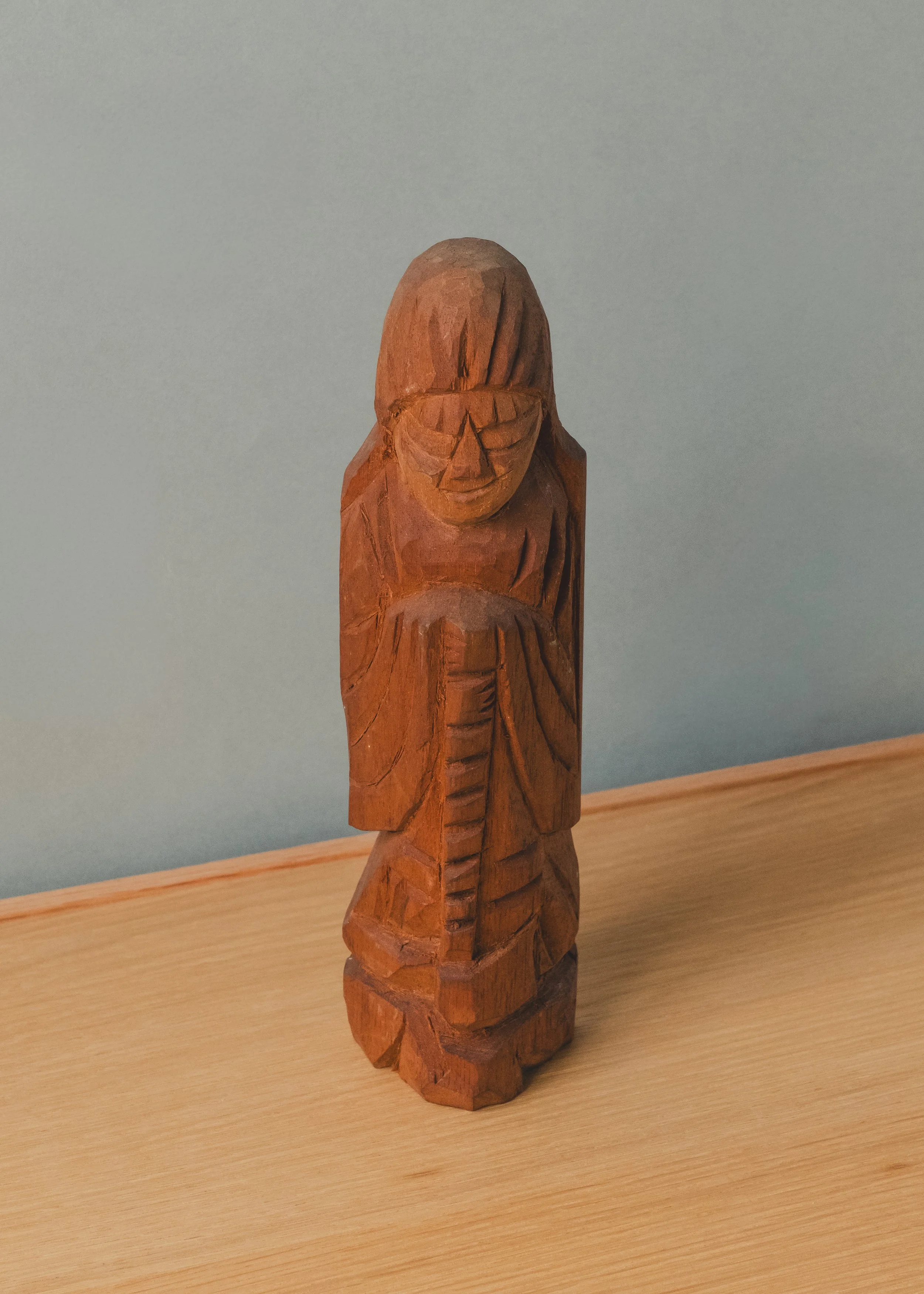 Image 1 of 10
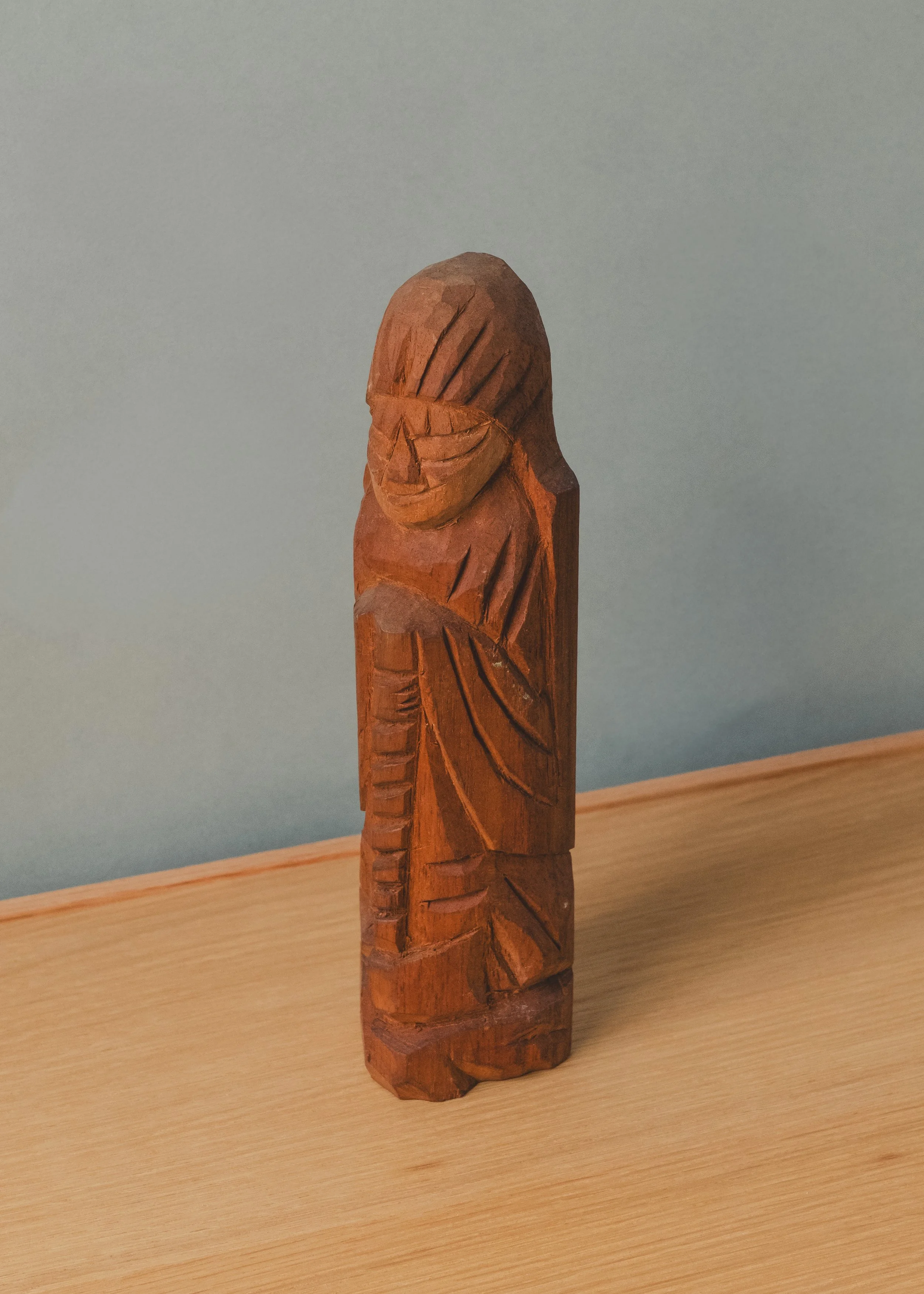 Image 2 of 10
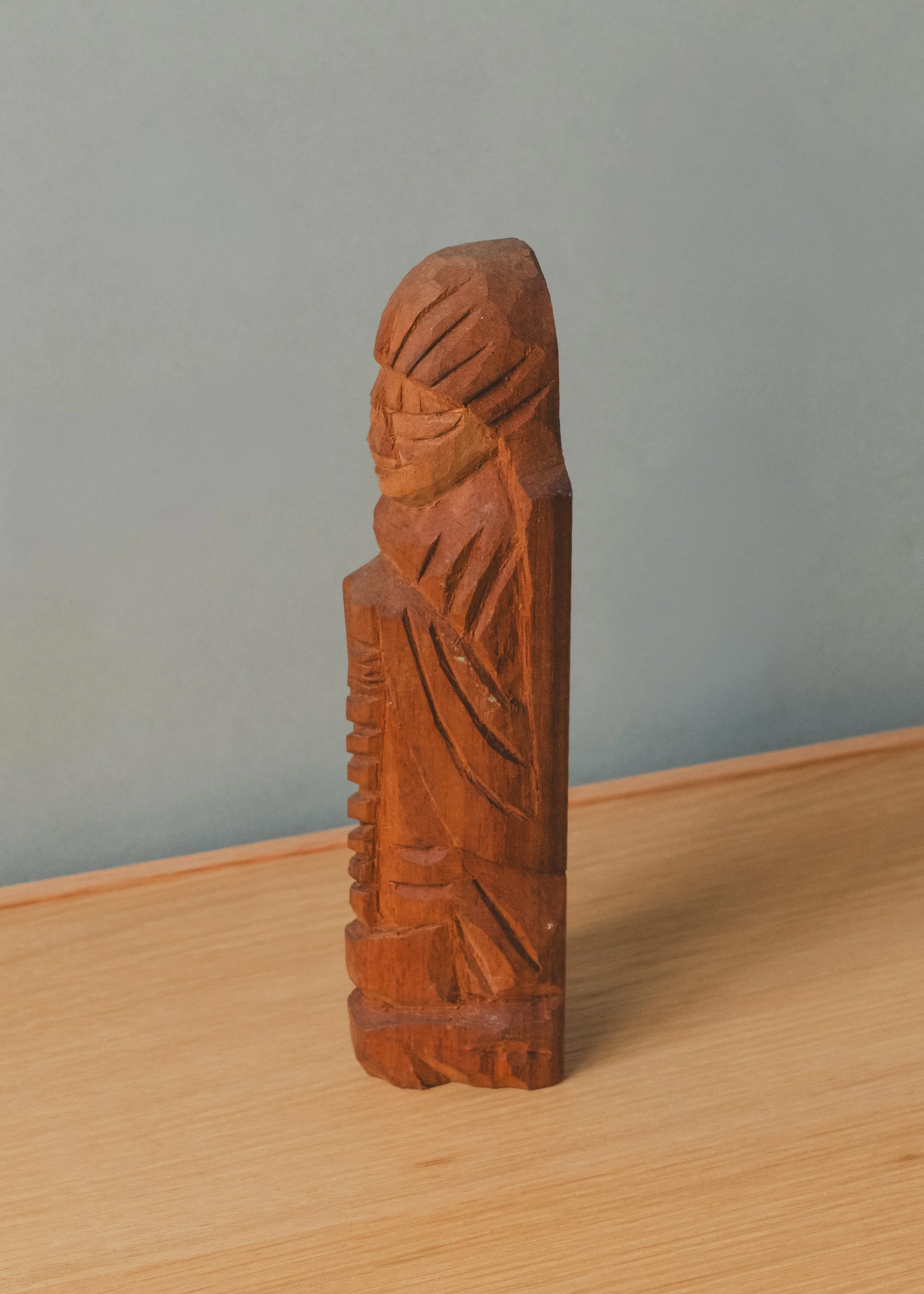 Image 3 of 10
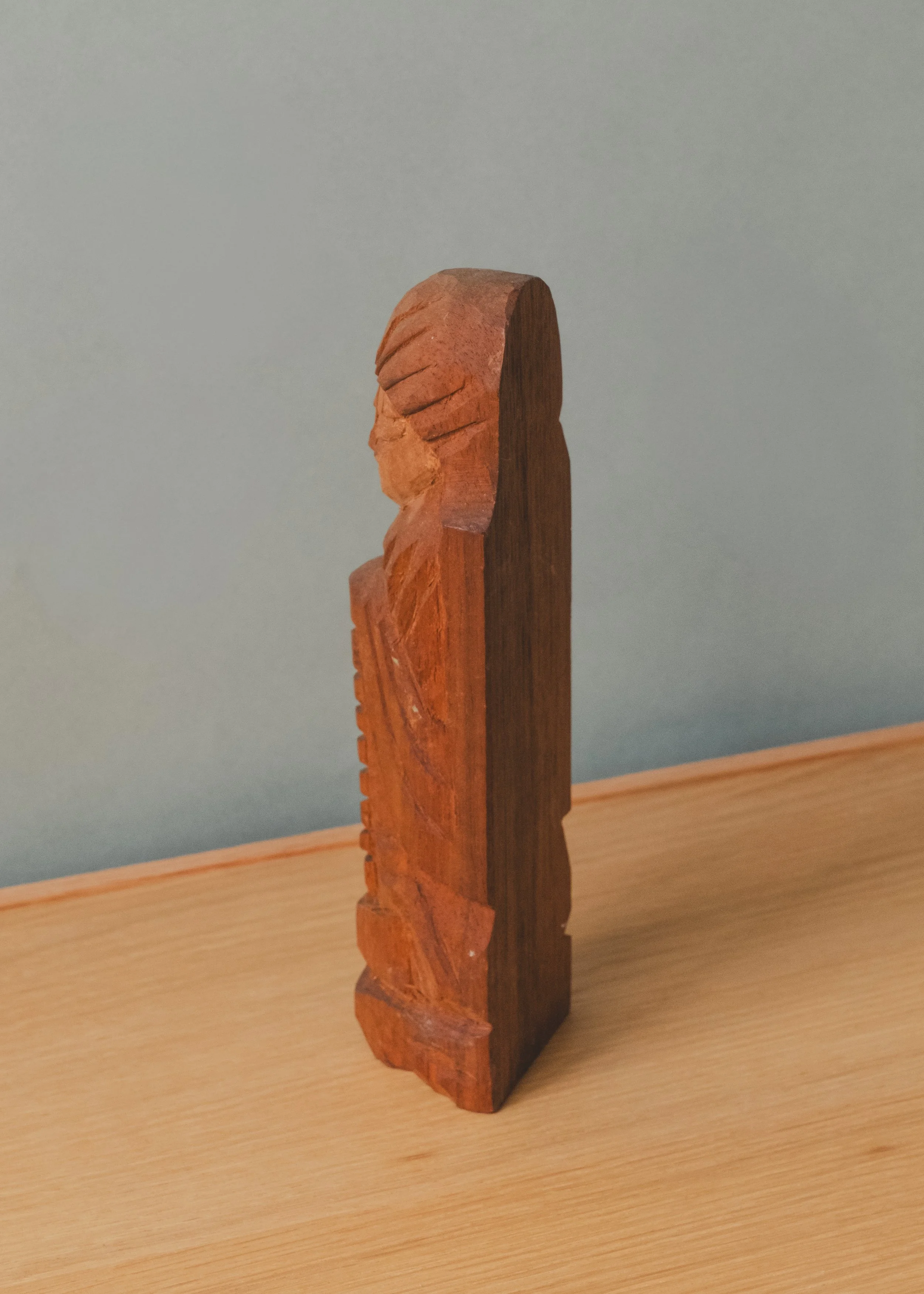 Image 4 of 10
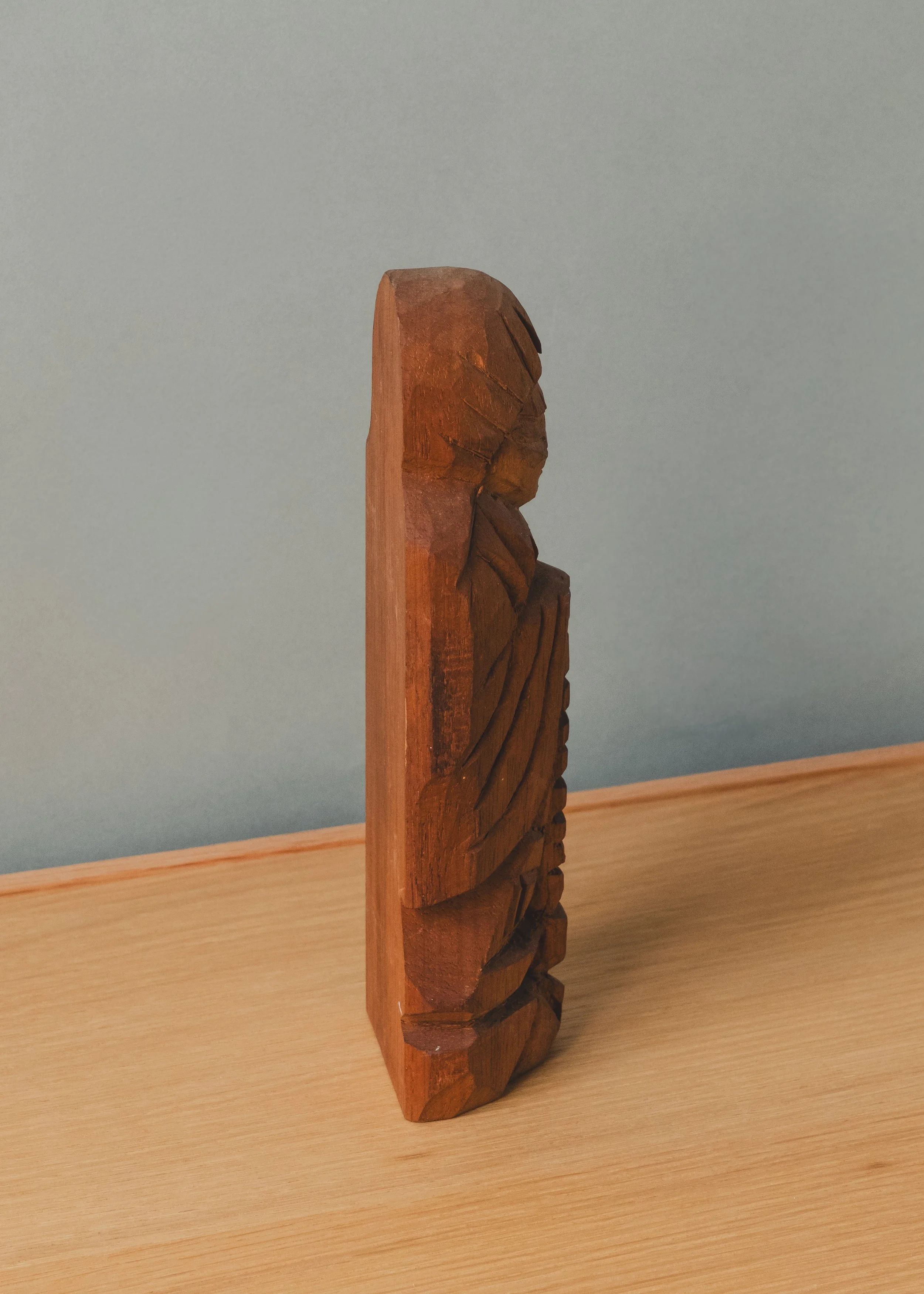 Image 5 of 10
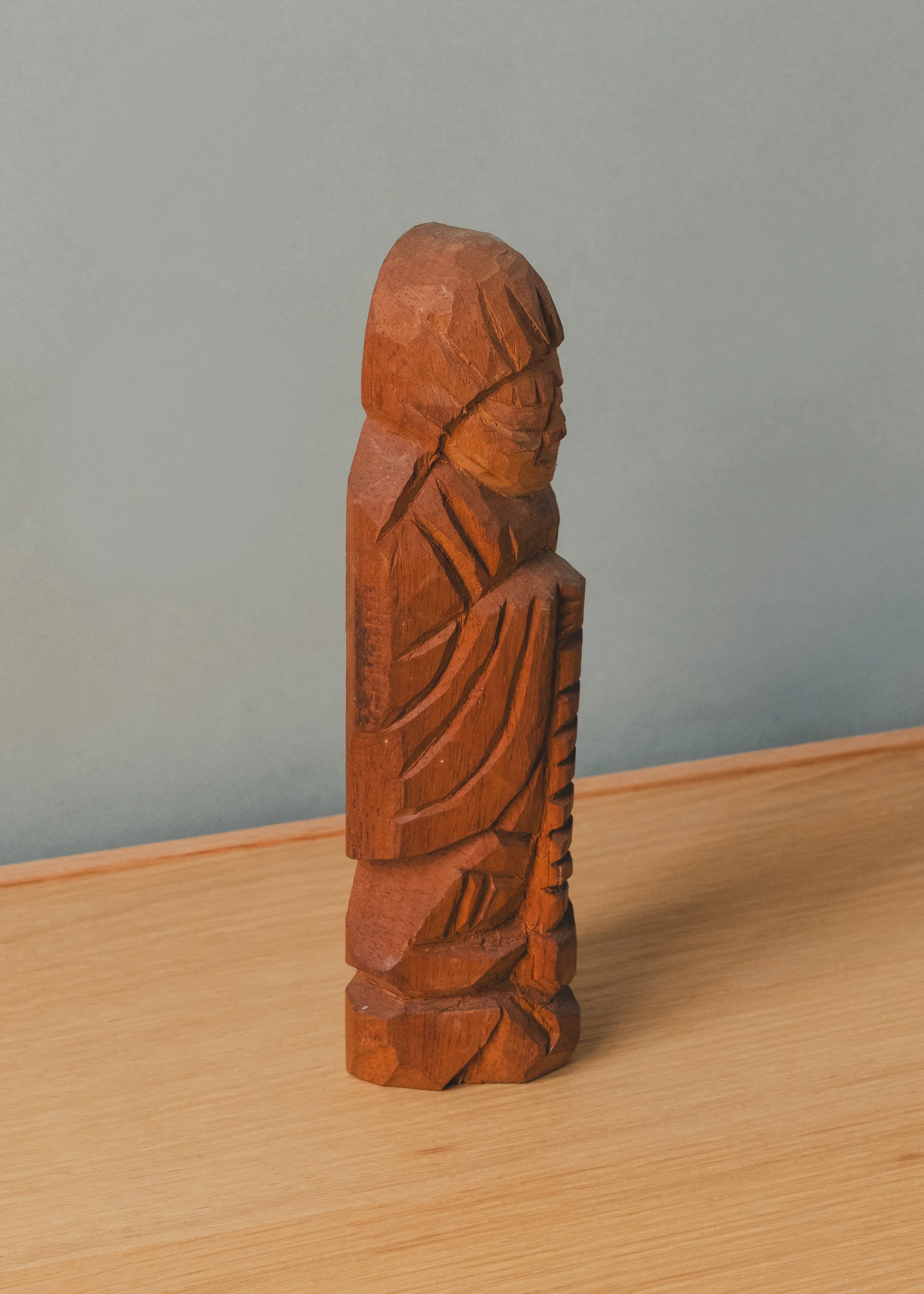 Image 6 of 10
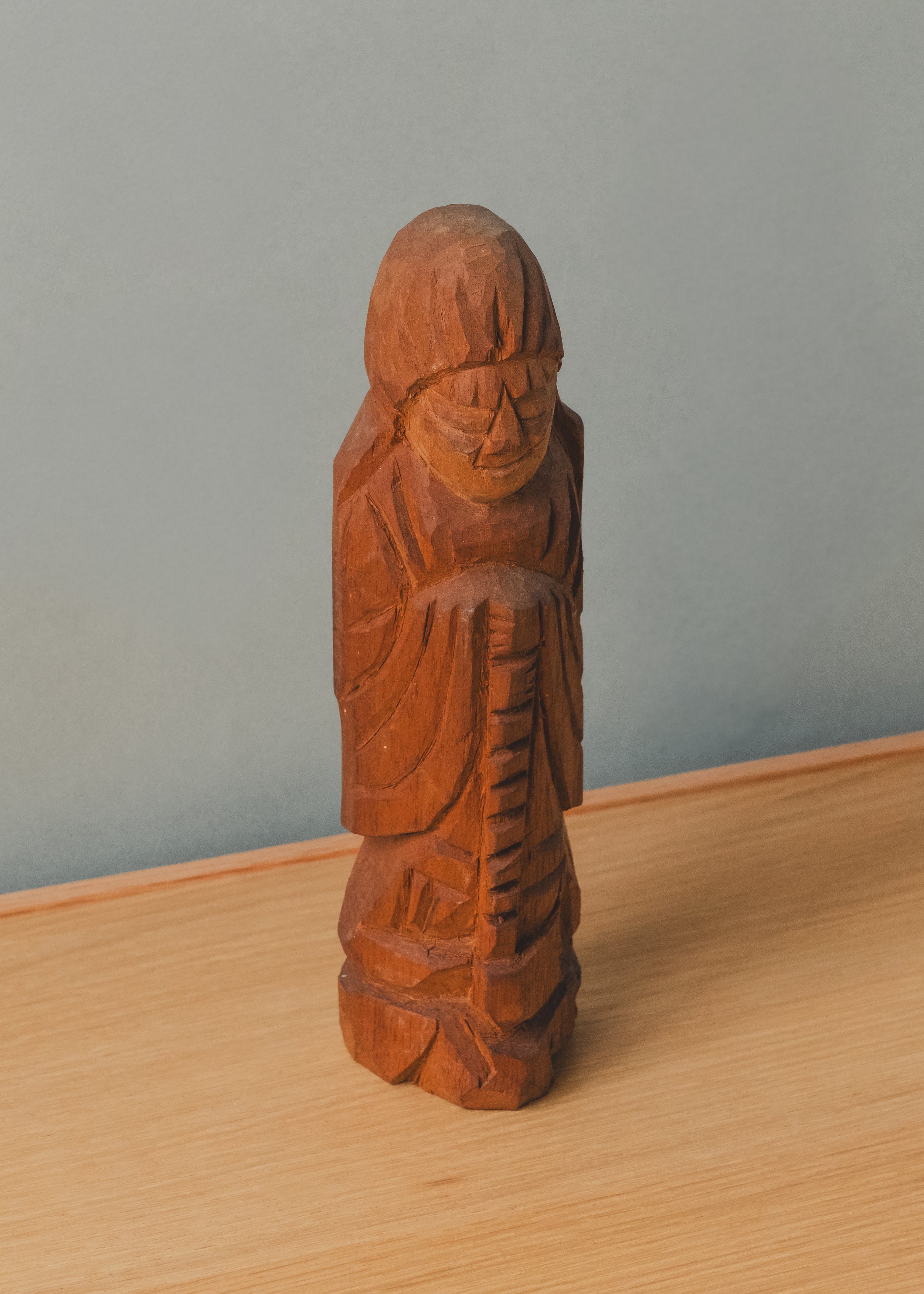 Image 7 of 10
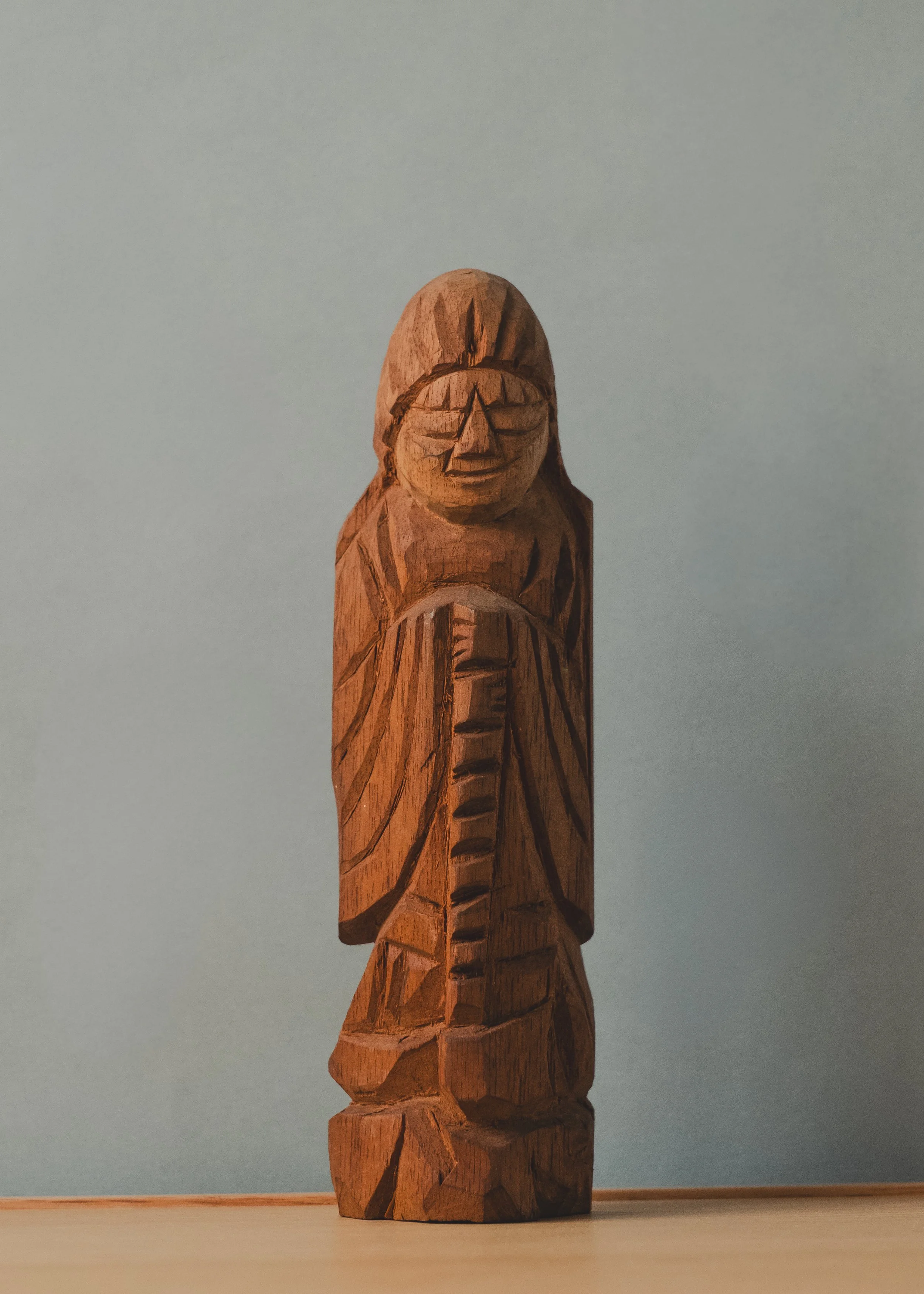 Image 8 of 10
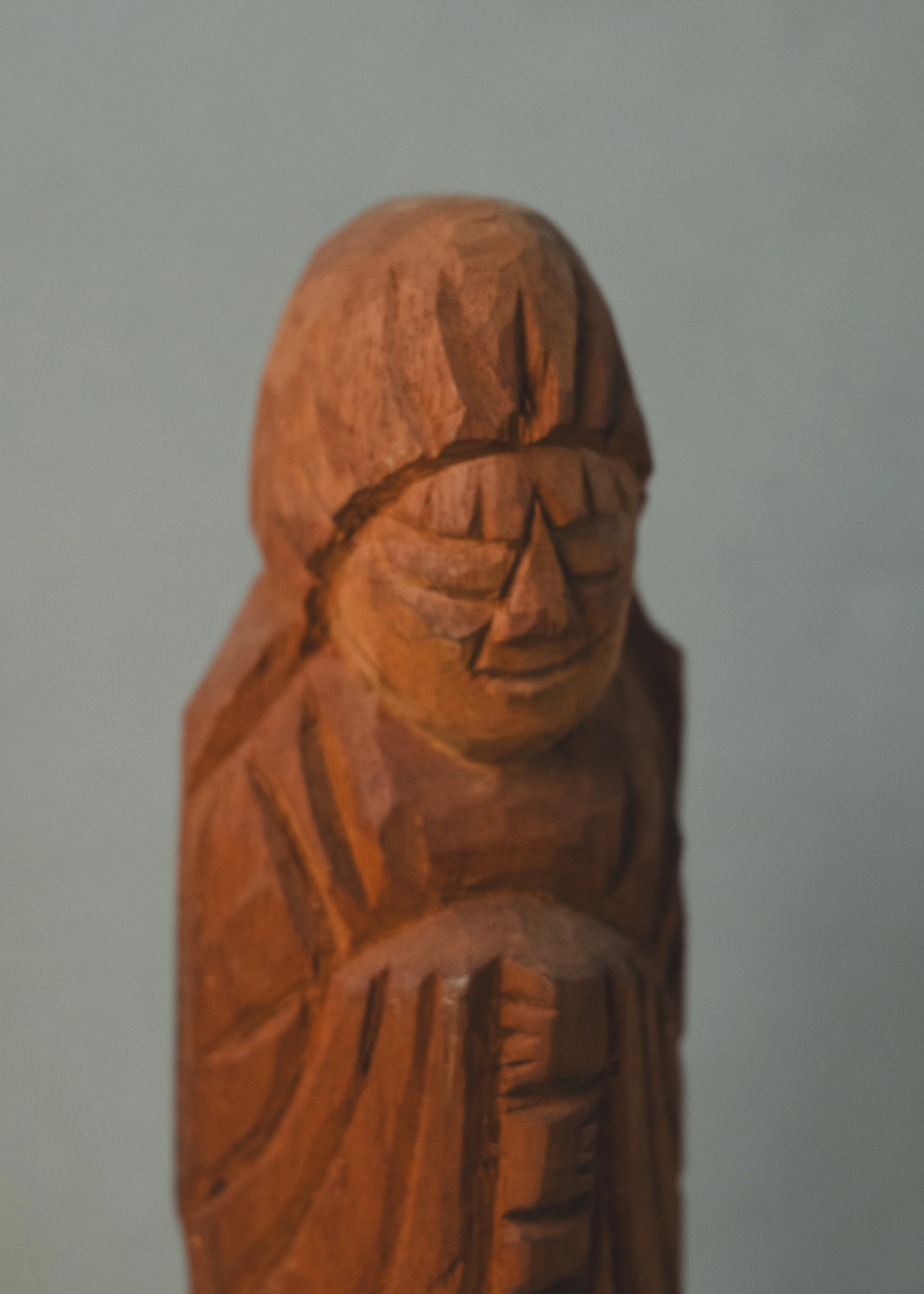 Image 9 of 10
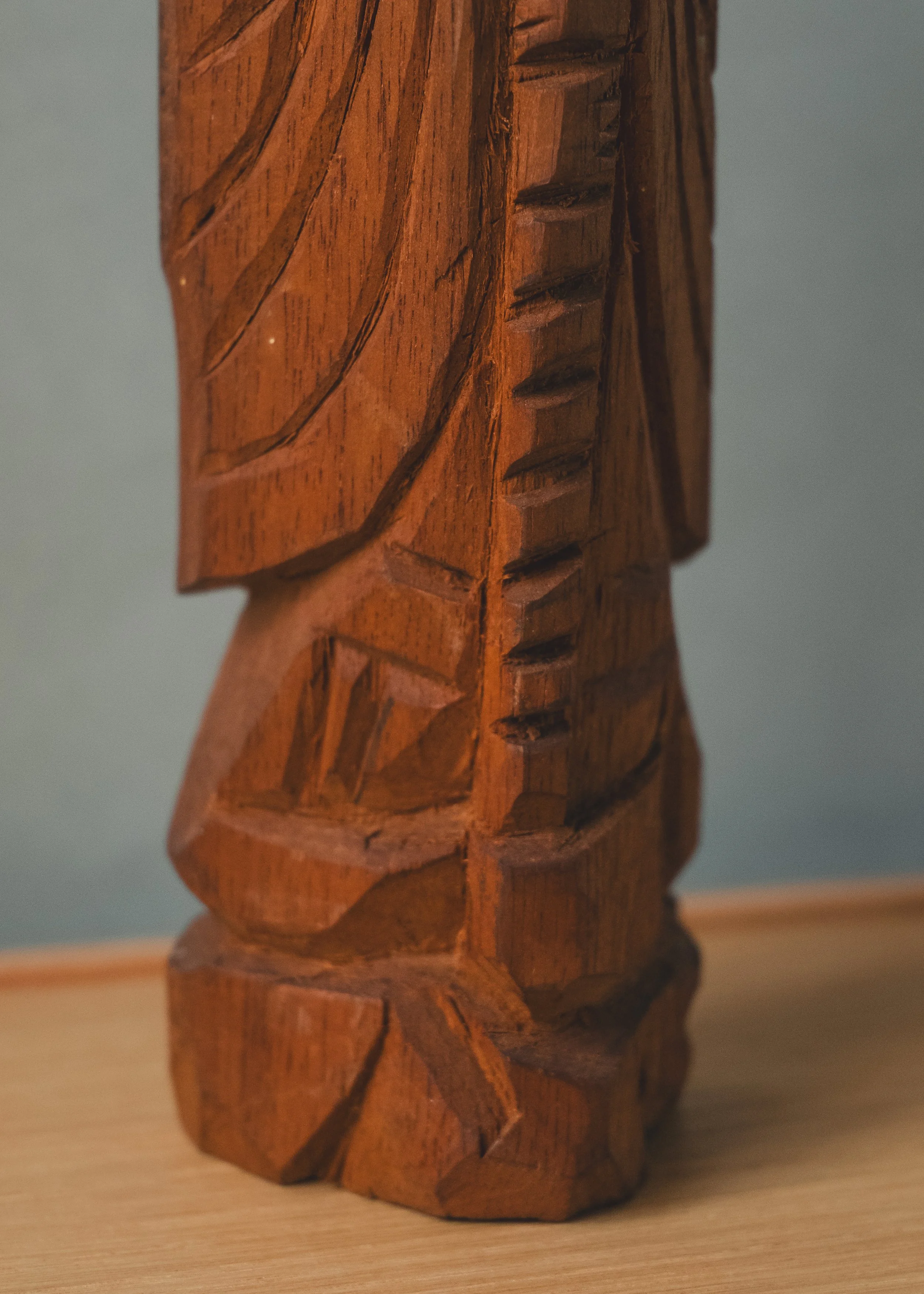 Image 10 of 10