【 The Concept 】
The lion is not a lion. It is a man inside a lion's head, dancing on one leg with a fan in one hand and the other hand raised to the sky. Four hundred years ago, a warlord in the central highlands built a castle and called for this dance to be performed at the foundation. The dancers stamped the ground to drive out whatever was living beneath it. The castle was built. The dance survived. An anonymous woodcarver cut the image of that dancer into a thick slab of mountain timber — one leg raised, fan forward, fingers pointing up — and hung it on a wall where it has been stamping the ground in silence ever since.
【 The Function 】
A wall-mounted carved wooden panel. Thirty-four centimeters tall, thirty-four centimeters wide, two centimeters thick. The figure is carved in high relief — raised above the background, casting its own shadow. The background is scored with hundreds of small gouge marks that give the surface the texture of broken stone. A braided cord and metal fitting on the back allow it to hang from a single nail. At 1.1 kilograms it is the heaviest specimen in the archive by a wide margin. The wood is dense, pale, and close-grained. The panel is not a picture. It is a slab.
【 The Texture 】
Mountain hardwood, carved with gouges and chisels, finished in muted pigment that lets the wood show through. The background is rough — deliberately so. Every gouge mark is placed by hand in an irregular pattern called stone-texture, designed to make the flat surface feel like rock. The figure rises out of this rough ground in smooth, painted curves: red on the lion's head and fan, black on the mane and outlines, natural wood on the skin and clothing. The clothing is patterned in fine vertical stripes and dots, painted directly onto the carved surface. The contrast between rough background and smooth figure gives the panel its depth. From across the room it reads as a painting. Up close it reads as sculpture.
【 Presence 】
It is the largest and heaviest object in the archive. It does not sit on a shelf. It hangs on a wall and fills it. The dancer is frozen mid-step — one leg in the air, fan extended, fingers raised. The lion's mouth is open. The mane is wild. The eyes are wide. Everything about the figure is in motion except the figure itself. Hang it by a door and it does what it was carved to do four centuries ago: stamp the ground, drive out what does not belong, and guard whatever is inside.
Sourced from a private collection in central Japan.
【 The Concept 】
The lion is not a lion. It is a man inside a lion's head, dancing on one leg with a fan in one hand and the other hand raised to the sky. Four hundred years ago, a warlord in the central highlands built a castle and called for this dance to be performed at the foundation. The dancers stamped the ground to drive out whatever was living beneath it. The castle was built. The dance survived. An anonymous woodcarver cut the image of that dancer into a thick slab of mountain timber — one leg raised, fan forward, fingers pointing up — and hung it on a wall where it has been stamping the ground in silence ever since.
【 The Function 】
A wall-mounted carved wooden panel. Thirty-four centimeters tall, thirty-four centimeters wide, two centimeters thick. The figure is carved in high relief — raised above the background, casting its own shadow. The background is scored with hundreds of small gouge marks that give the surface the texture of broken stone. A braided cord and metal fitting on the back allow it to hang from a single nail. At 1.1 kilograms it is the heaviest specimen in the archive by a wide margin. The wood is dense, pale, and close-grained. The panel is not a picture. It is a slab.
【 The Texture 】
Mountain hardwood, carved with gouges and chisels, finished in muted pigment that lets the wood show through. The background is rough — deliberately so. Every gouge mark is placed by hand in an irregular pattern called stone-texture, designed to make the flat surface feel like rock. The figure rises out of this rough ground in smooth, painted curves: red on the lion's head and fan, black on the mane and outlines, natural wood on the skin and clothing. The clothing is patterned in fine vertical stripes and dots, painted directly onto the carved surface. The contrast between rough background and smooth figure gives the panel its depth. From across the room it reads as a painting. Up close it reads as sculpture.
【 Presence 】
It is the largest and heaviest object in the archive. It does not sit on a shelf. It hangs on a wall and fills it. The dancer is frozen mid-step — one leg in the air, fan extended, fingers raised. The lion's mouth is open. The mane is wild. The eyes are wide. Everything about the figure is in motion except the figure itself. Hang it by a door and it does what it was carved to do four centuries ago: stamp the ground, drive out what does not belong, and guard whatever is inside.
Sourced from a private collection in central Japan.


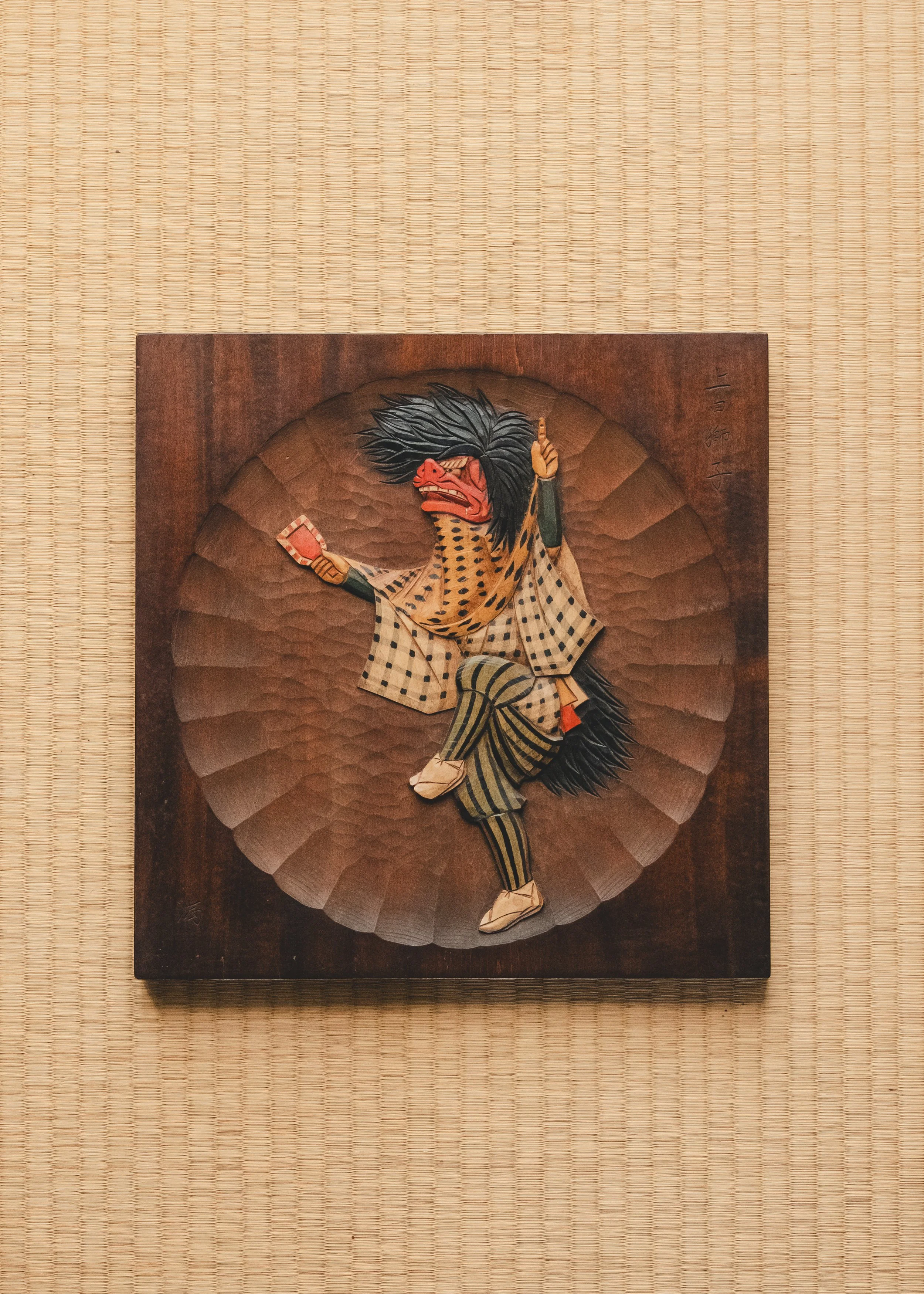 Image 1 of 5
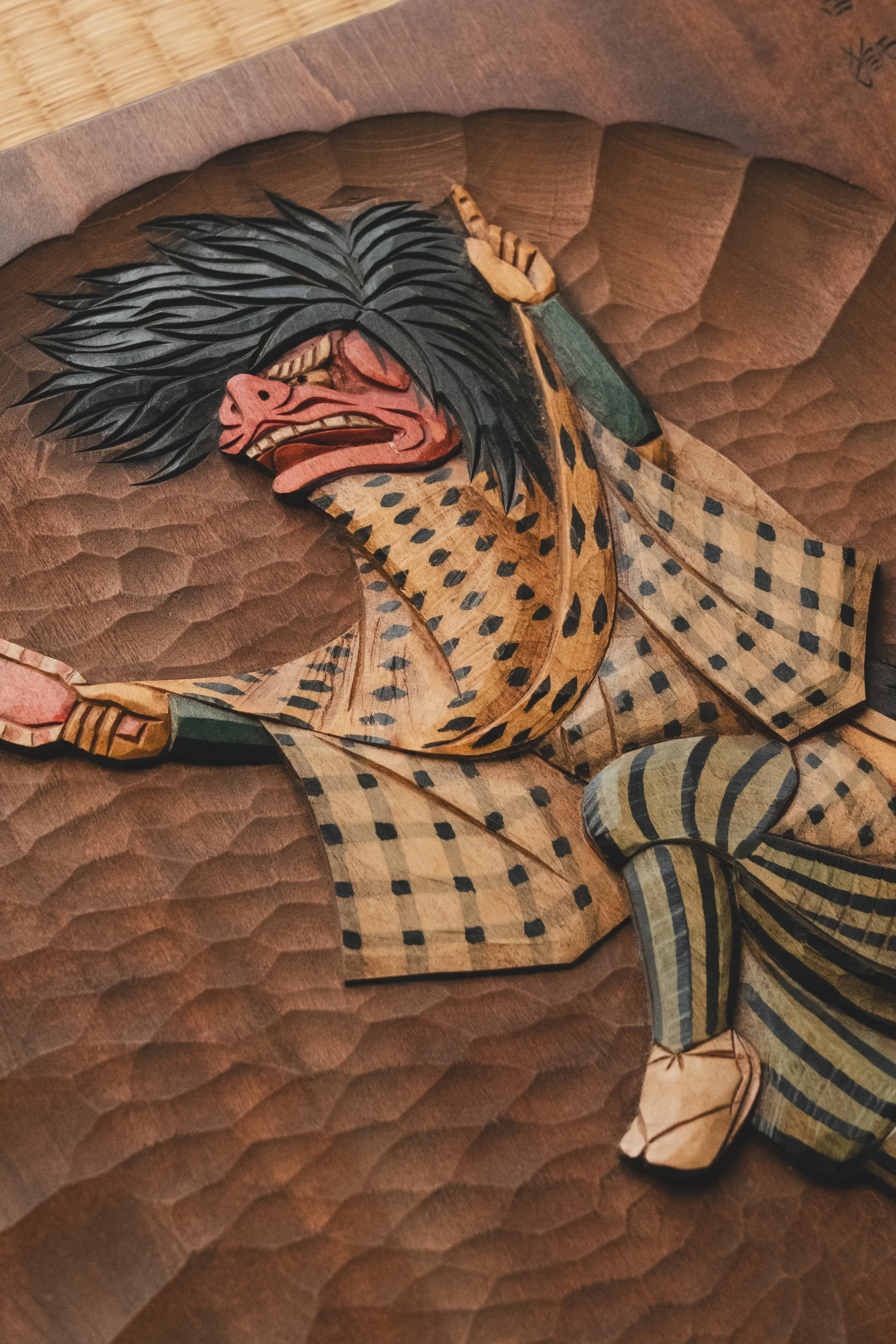 Image 2 of 5
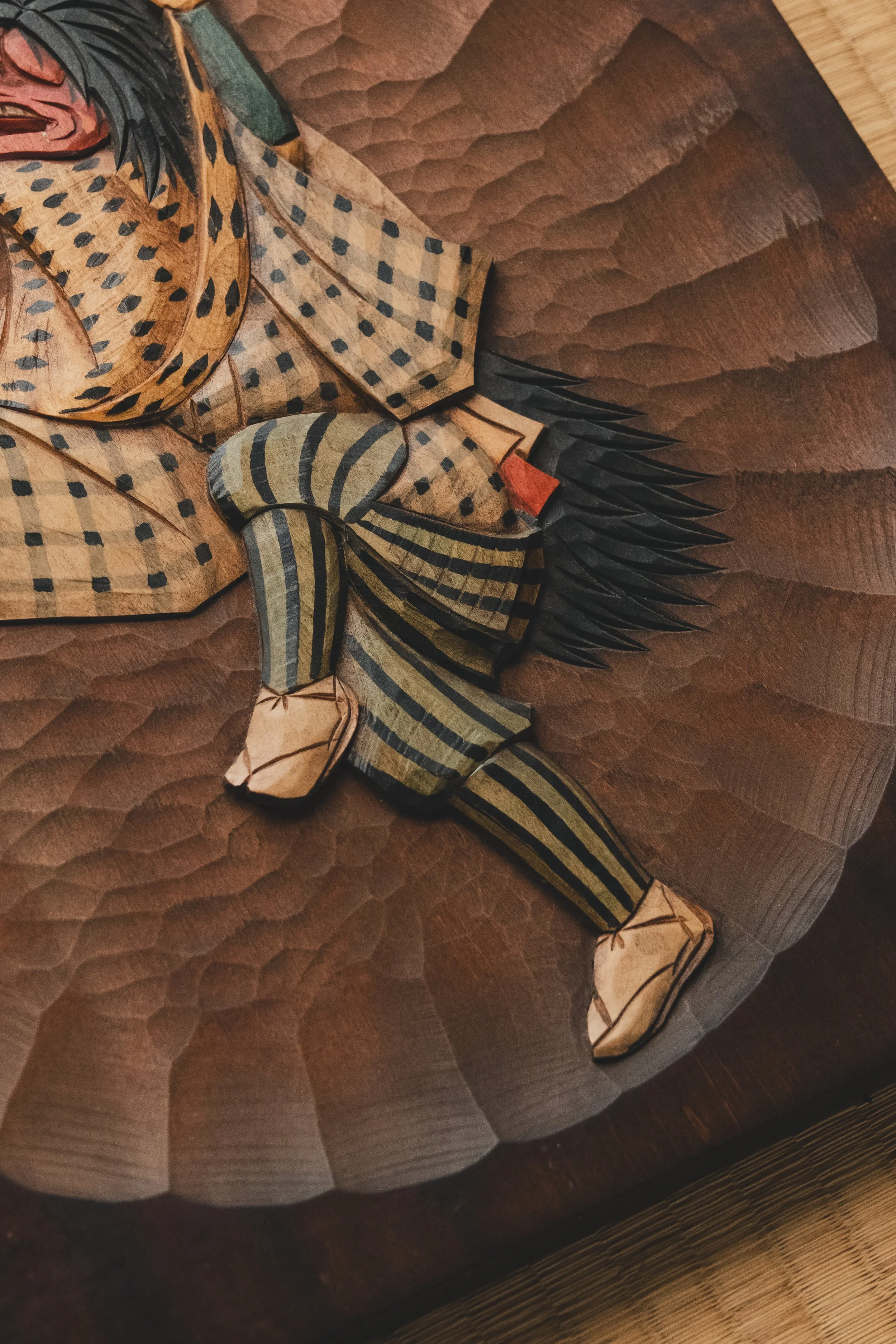 Image 3 of 5
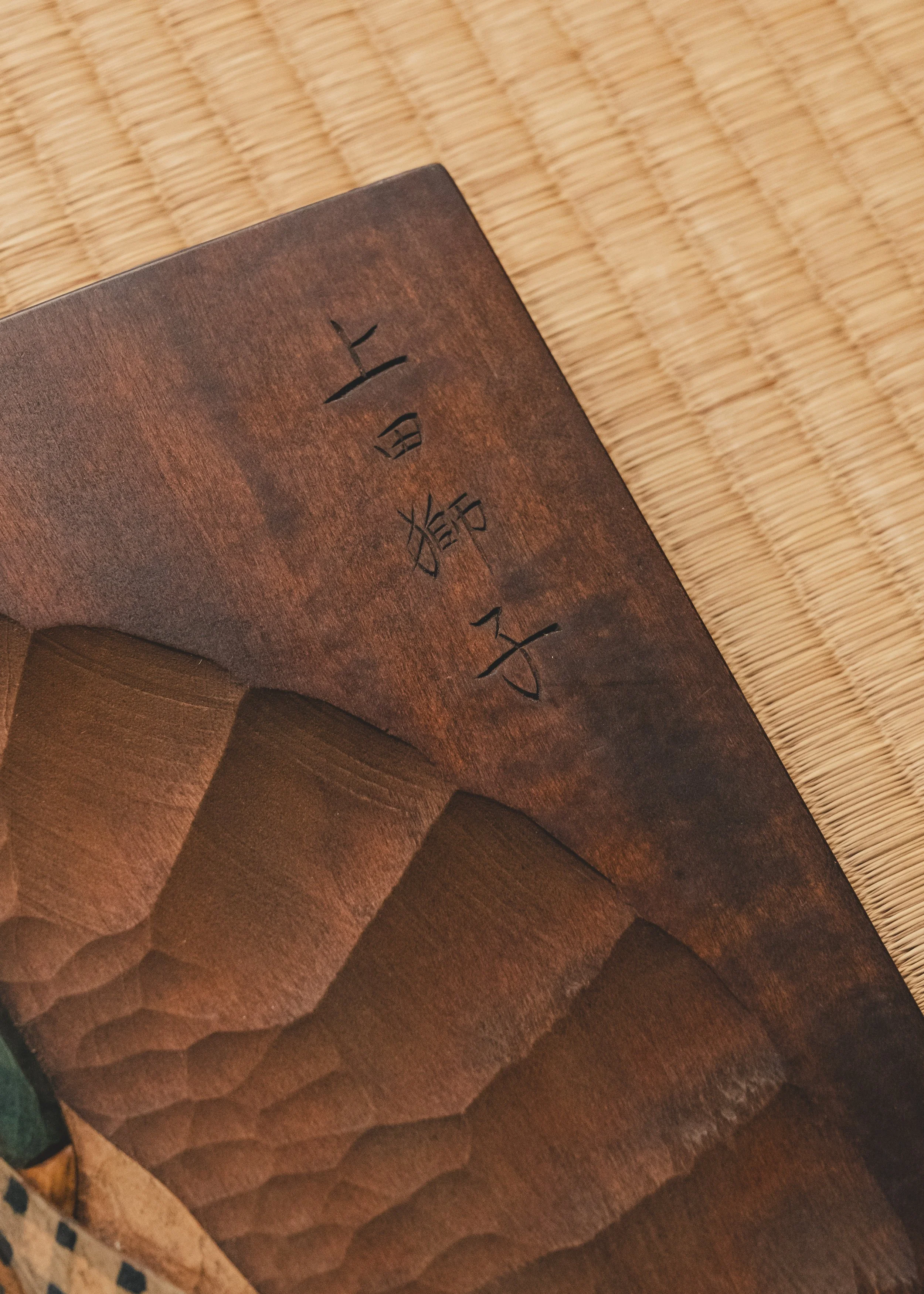 Image 4 of 5
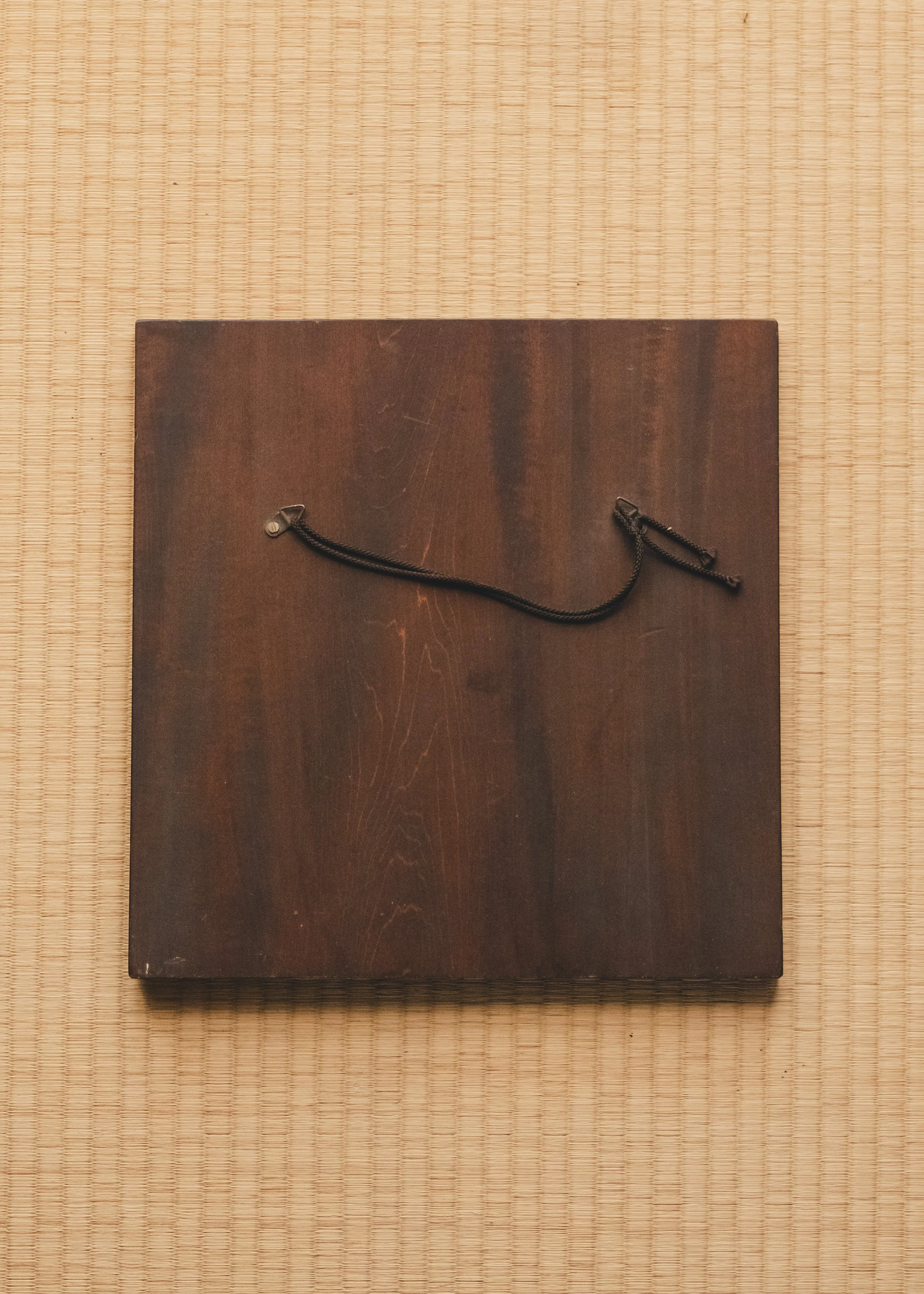 Image 5 of 5