【 The Concept 】
The bird lives above the clouds. It is one of the last species from the ice age still surviving on the peaks of the central mountain range, where the air is thin and the ground is covered in dwarf pine. In the old mountain religion, it was not a bird. It was a messenger sent by the gods who lived at the summit. Killing it was forbidden. An anonymous woodcarver took that bird and carved it — round, still, and heavy — from a single block of mountain timber, base and all. The body rises from a rough pedestal of pale bark-covered wood. The bird is the animal. The base is where it lives. Together they bring the alpine zone into the room.
【 The Function 】
A carved wooden bird on an integral bark-covered base. Seventeen and a half centimeters tall, ten and a half centimeters wide, five centimeters deep. The entire piece — bird and base — is carved from one block. The body is stained warm brown and finished in a low sheen. The base is left rough with pale bark intact. At 276 grams it holds steady on any surface. The eyes are two small circles carved into the wood and painted black.
【 The Texture 】
Two textures in one piece of wood. The bird is smooth where the blade passed and ridged where it stopped — dozens of shallow U-shaped cuts across the breast and flanks that suggest feathers without drawing them. The stain is warm brown, close to chestnut, sealed under a thin coat that gives the surface a quiet glow. The base is the opposite: rough wood with pale horizontal bark lines peeling at the edges, the top carved to suggest rock. Pale bark against dark bird. Rough ground against shaped form. The contrast is the design.
【 Presence 】
It does not fly or call or turn its head. It sits the way the real bird sits on a ridge above the tree line — low, round, still, watching the weather change and not moving until it has to. The dark eyes are two small carved circles that disappear into the face until the light catches them. Everything else is brown and white and quiet. Put it on a shelf and it becomes the highest point in the room. Not in height. In altitude.
Sourced from a private collection in central Japan.
【 The Concept 】
The bird lives above the clouds. It is one of the last species from the ice age still surviving on the peaks of the central mountain range, where the air is thin and the ground is covered in dwarf pine. In the old mountain religion, it was not a bird. It was a messenger sent by the gods who lived at the summit. Killing it was forbidden. An anonymous woodcarver took that bird and carved it — round, still, and heavy — from a single block of mountain timber, base and all. The body rises from a rough pedestal of pale bark-covered wood. The bird is the animal. The base is where it lives. Together they bring the alpine zone into the room.
【 The Function 】
A carved wooden bird on an integral bark-covered base. Seventeen and a half centimeters tall, ten and a half centimeters wide, five centimeters deep. The entire piece — bird and base — is carved from one block. The body is stained warm brown and finished in a low sheen. The base is left rough with pale bark intact. At 276 grams it holds steady on any surface. The eyes are two small circles carved into the wood and painted black.
【 The Texture 】
Two textures in one piece of wood. The bird is smooth where the blade passed and ridged where it stopped — dozens of shallow U-shaped cuts across the breast and flanks that suggest feathers without drawing them. The stain is warm brown, close to chestnut, sealed under a thin coat that gives the surface a quiet glow. The base is the opposite: rough wood with pale horizontal bark lines peeling at the edges, the top carved to suggest rock. Pale bark against dark bird. Rough ground against shaped form. The contrast is the design.
【 Presence 】
It does not fly or call or turn its head. It sits the way the real bird sits on a ridge above the tree line — low, round, still, watching the weather change and not moving until it has to. The dark eyes are two small carved circles that disappear into the face until the light catches them. Everything else is brown and white and quiet. Put it on a shelf and it becomes the highest point in the room. Not in height. In altitude.
Sourced from a private collection in central Japan.


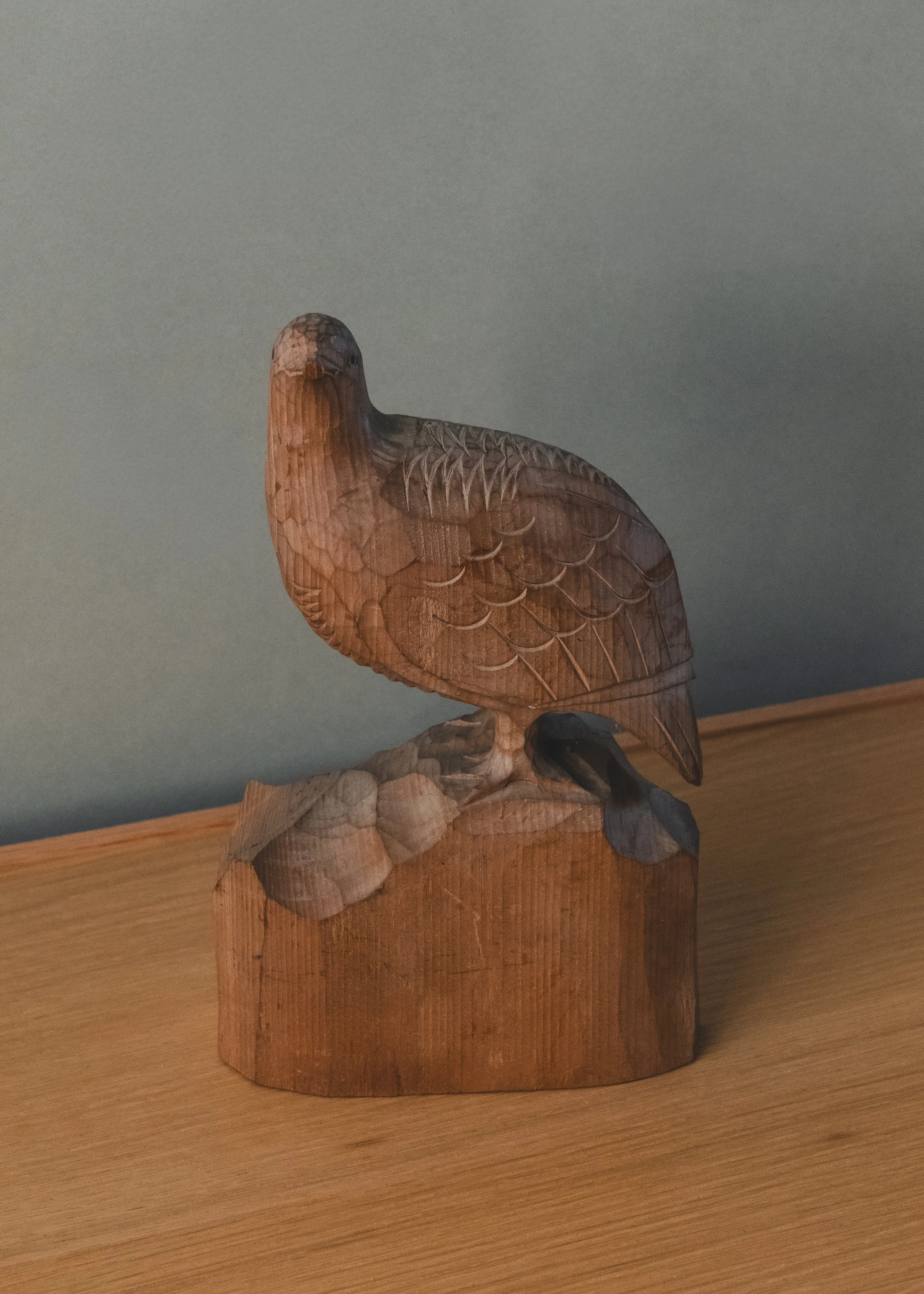 Image 1 of 13
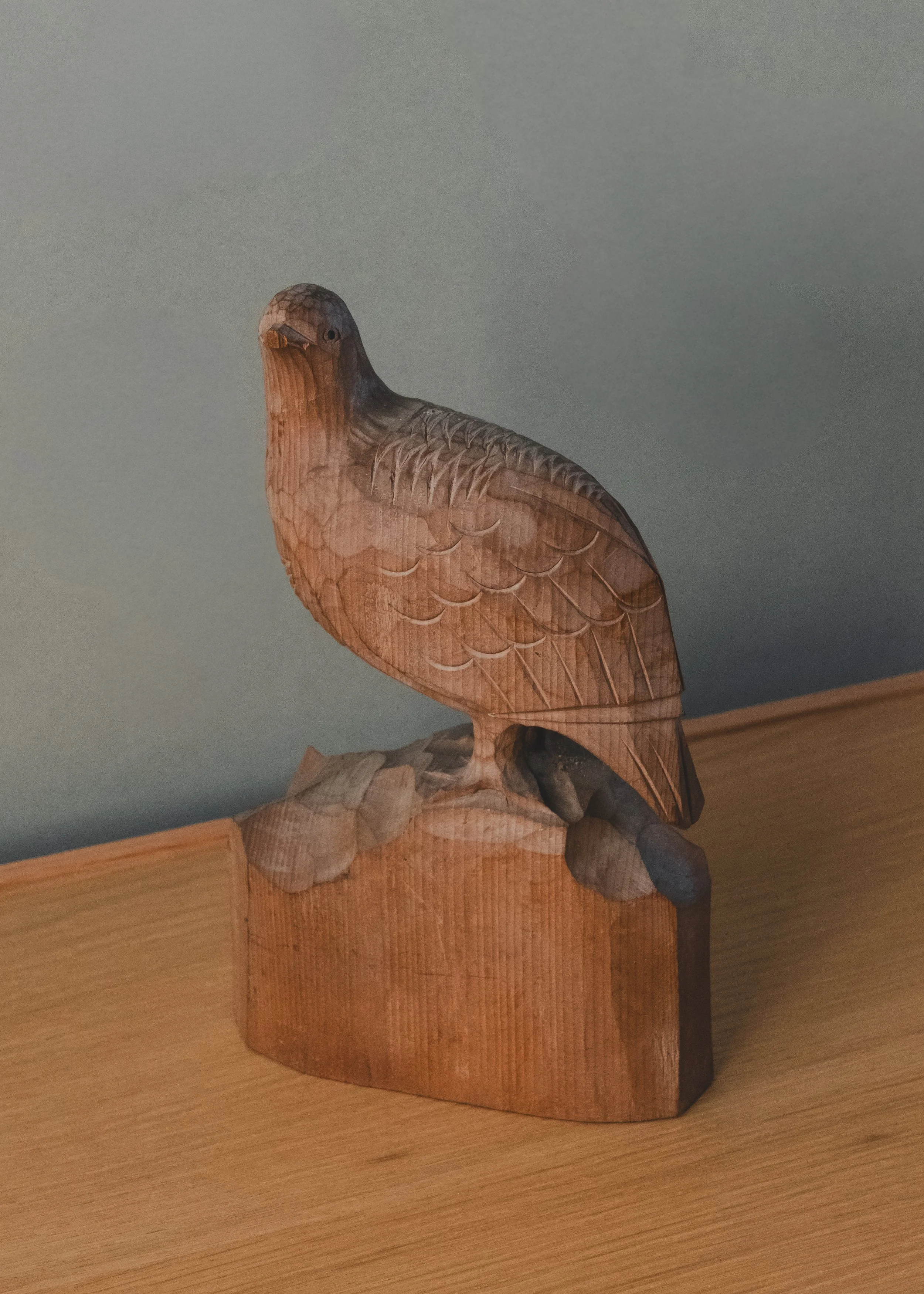 Image 2 of 13
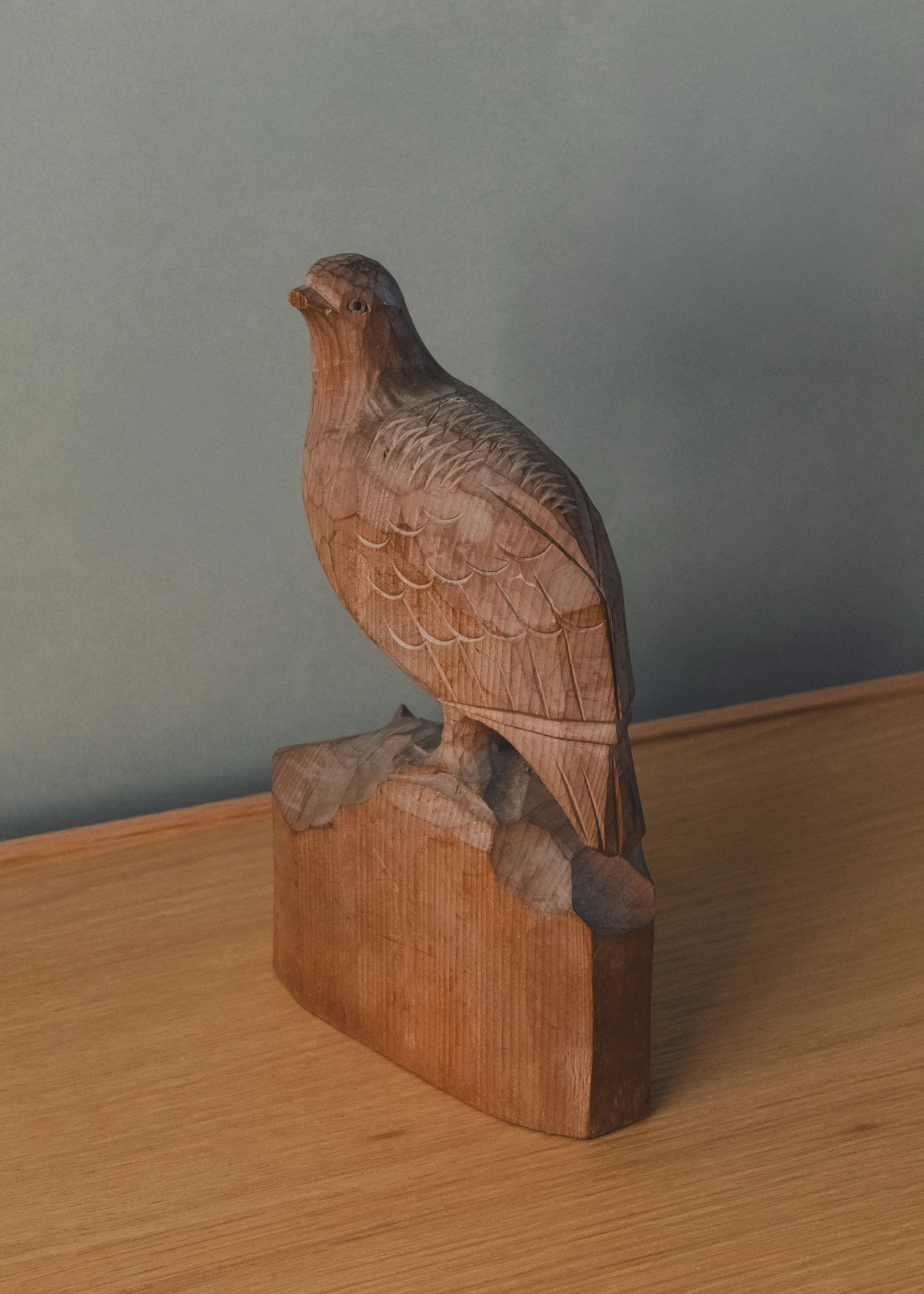 Image 3 of 13
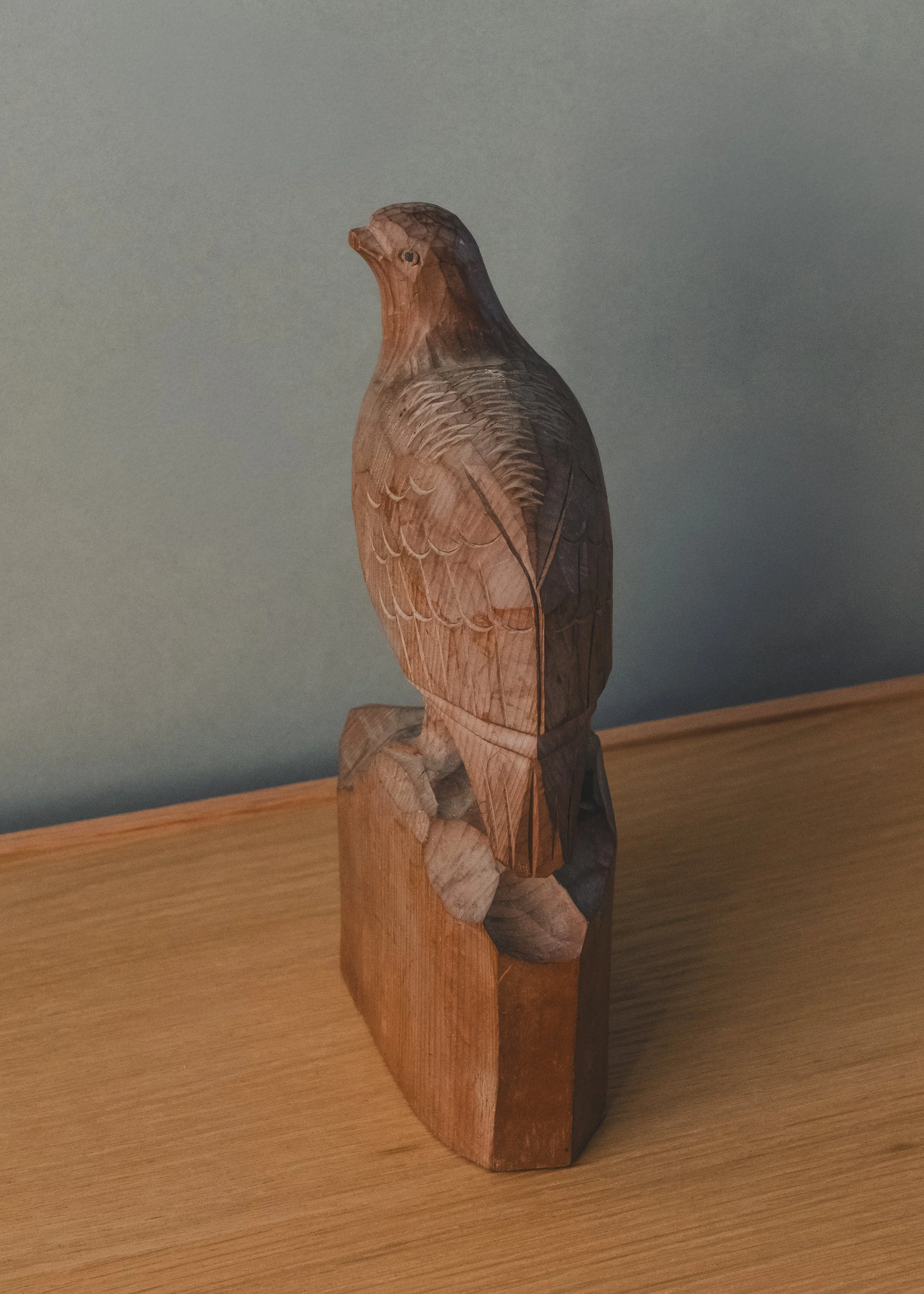 Image 4 of 13
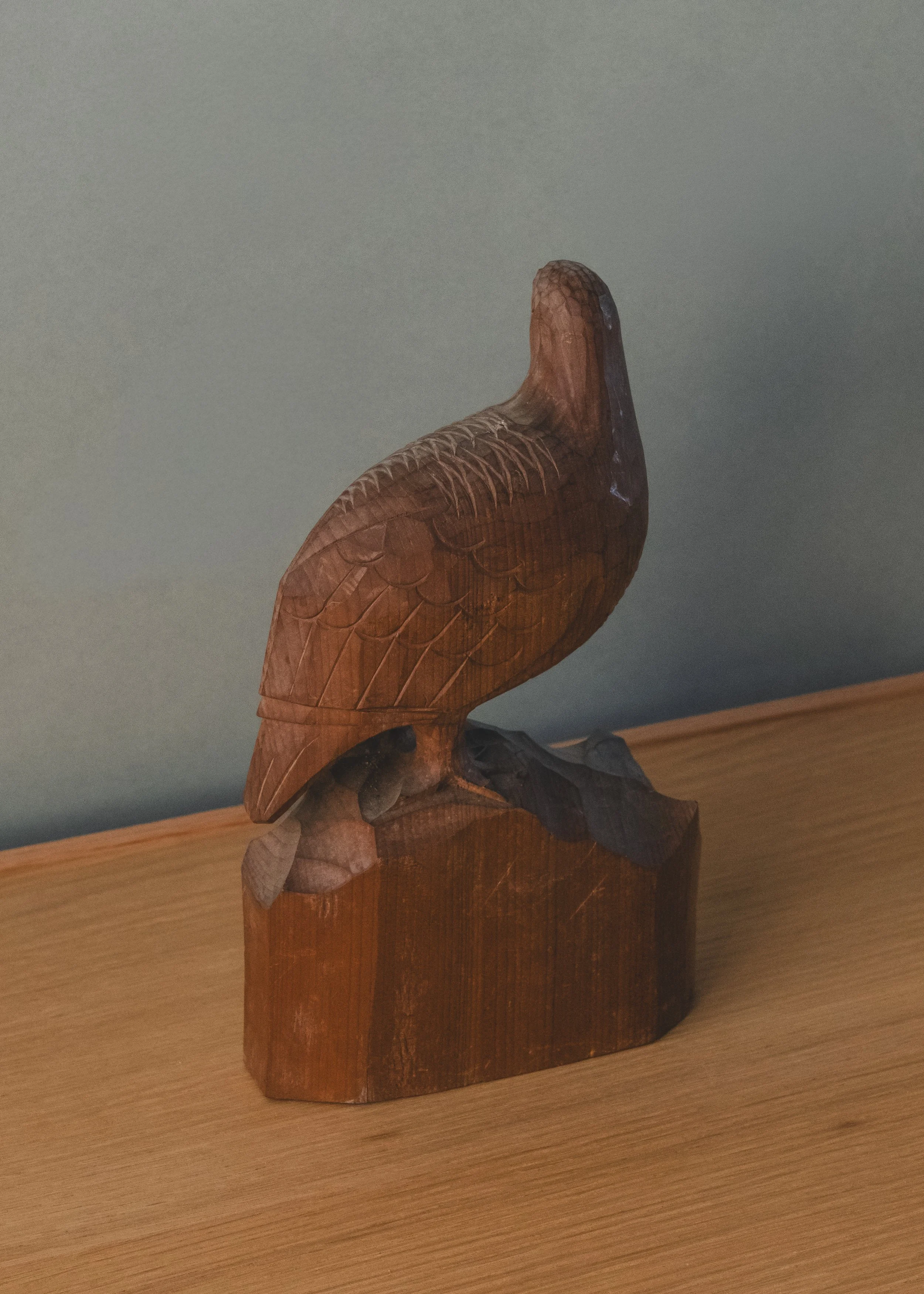 Image 5 of 13
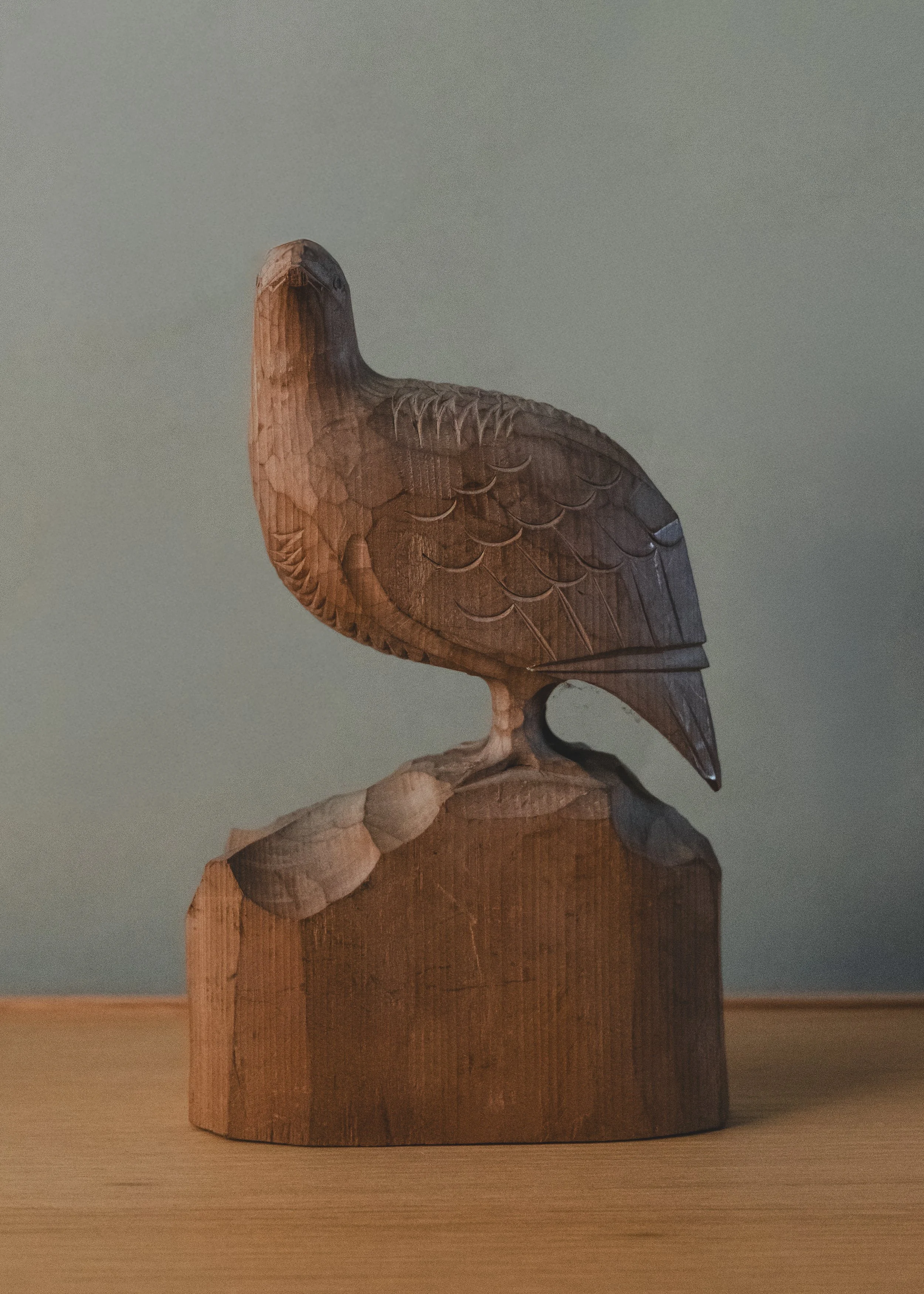 Image 6 of 13
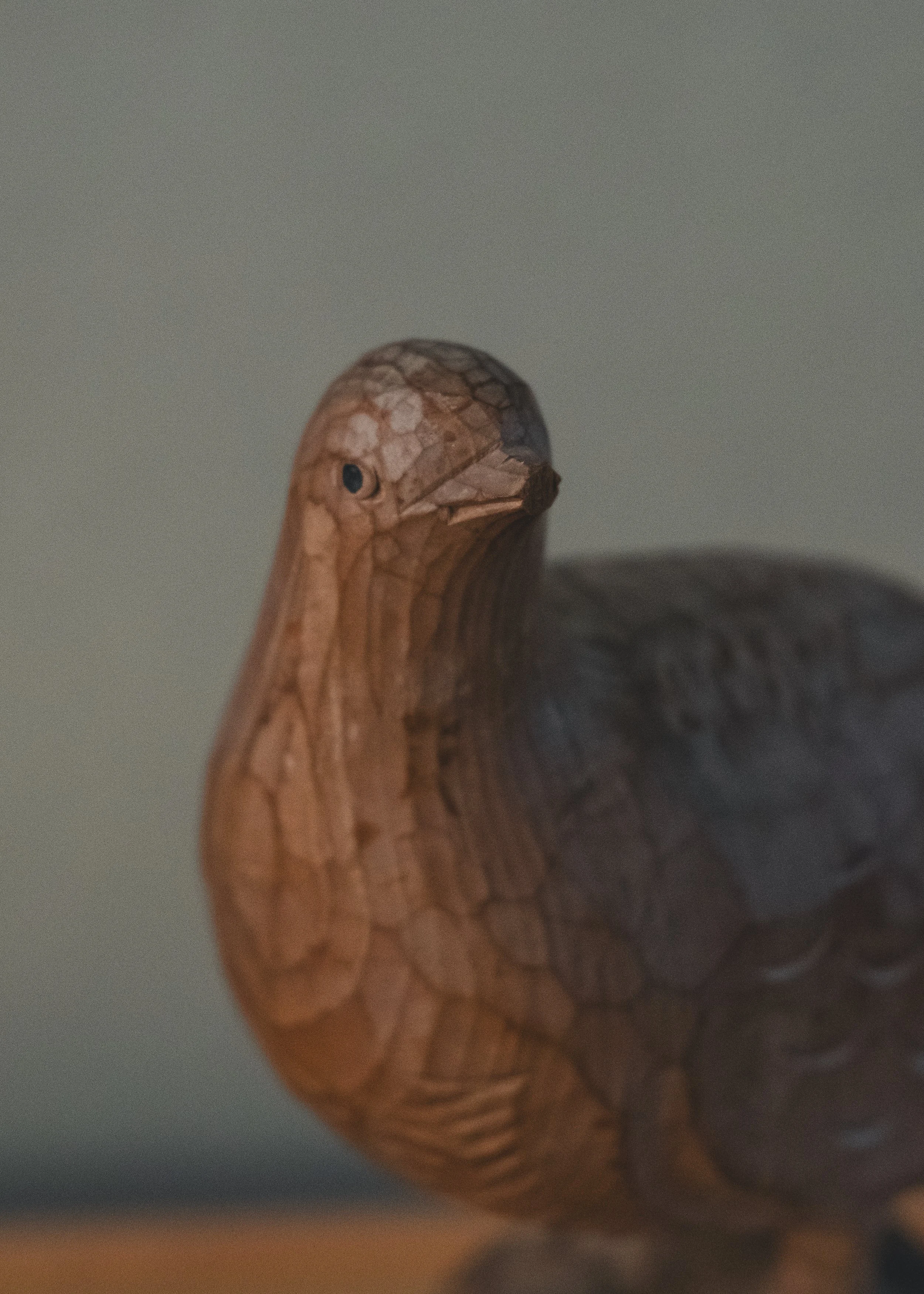 Image 7 of 13
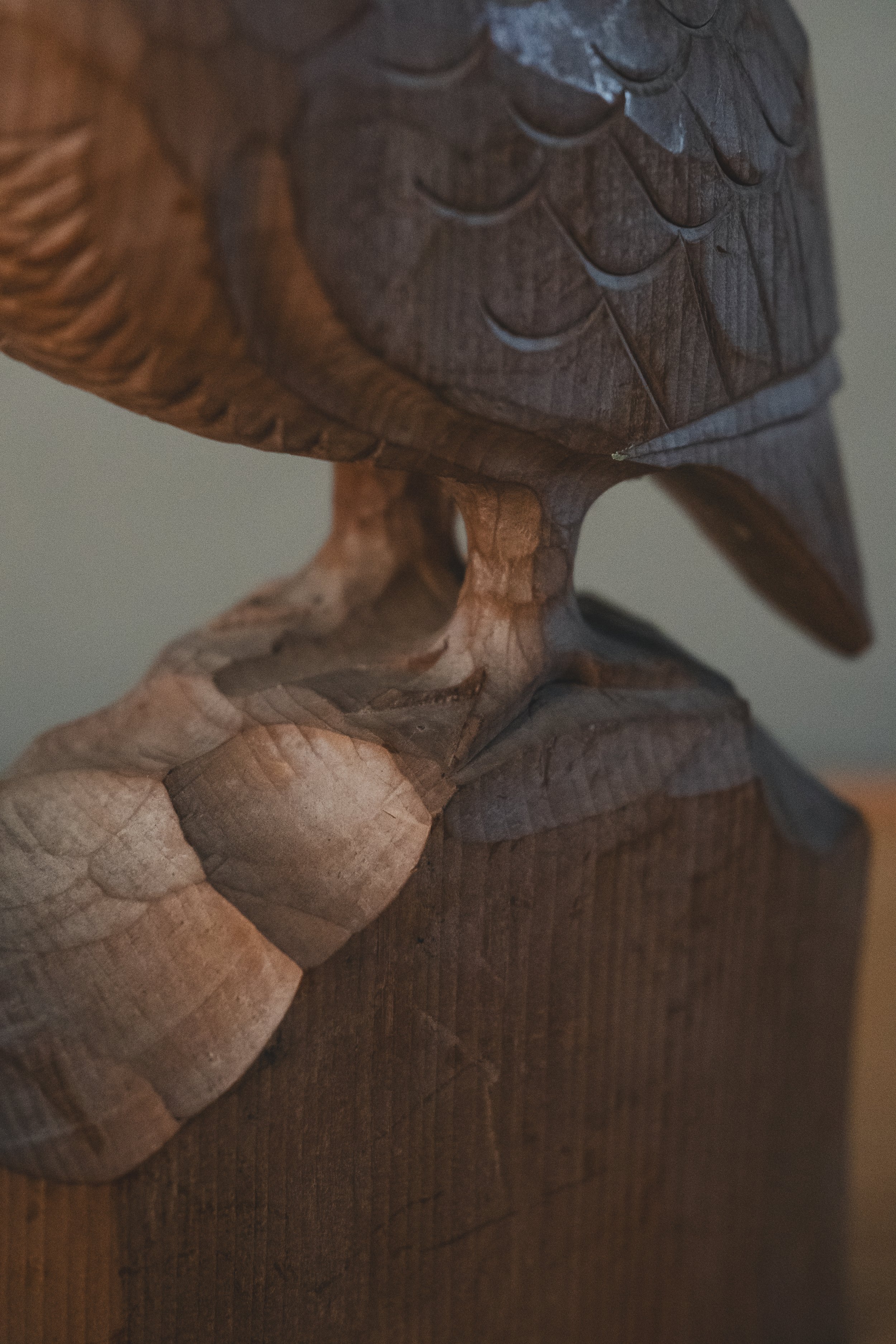 Image 8 of 13
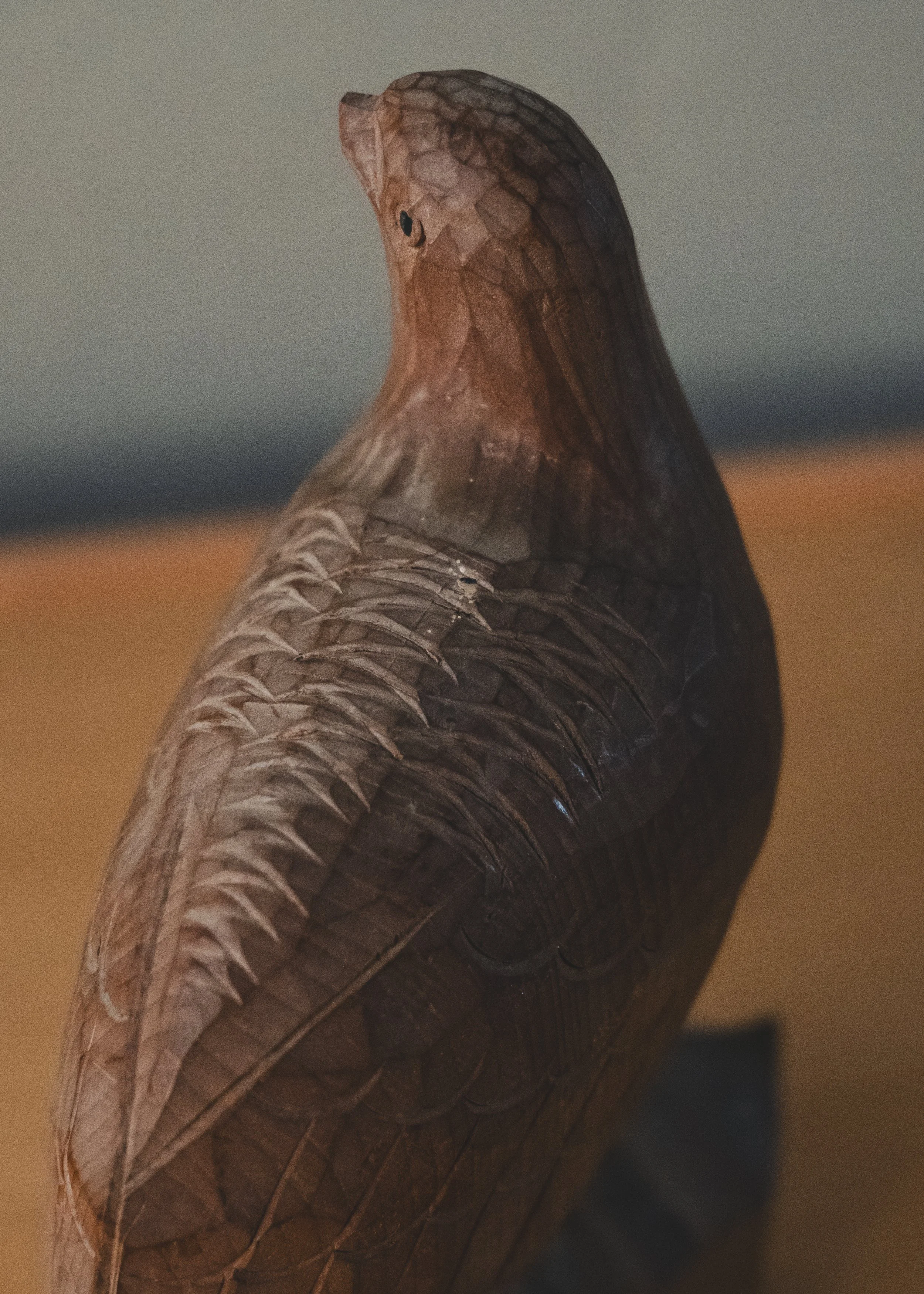 Image 9 of 13
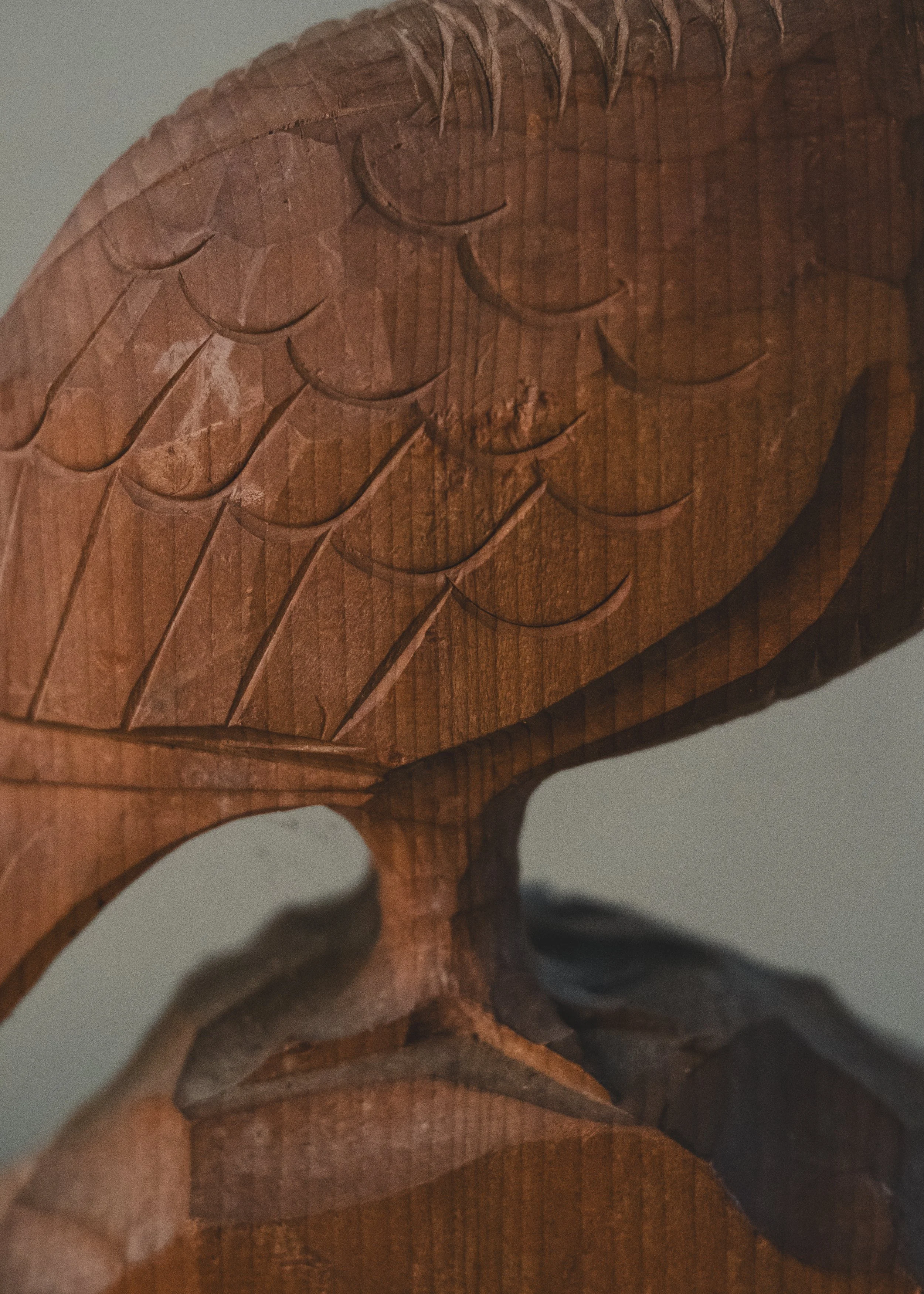 Image 10 of 13
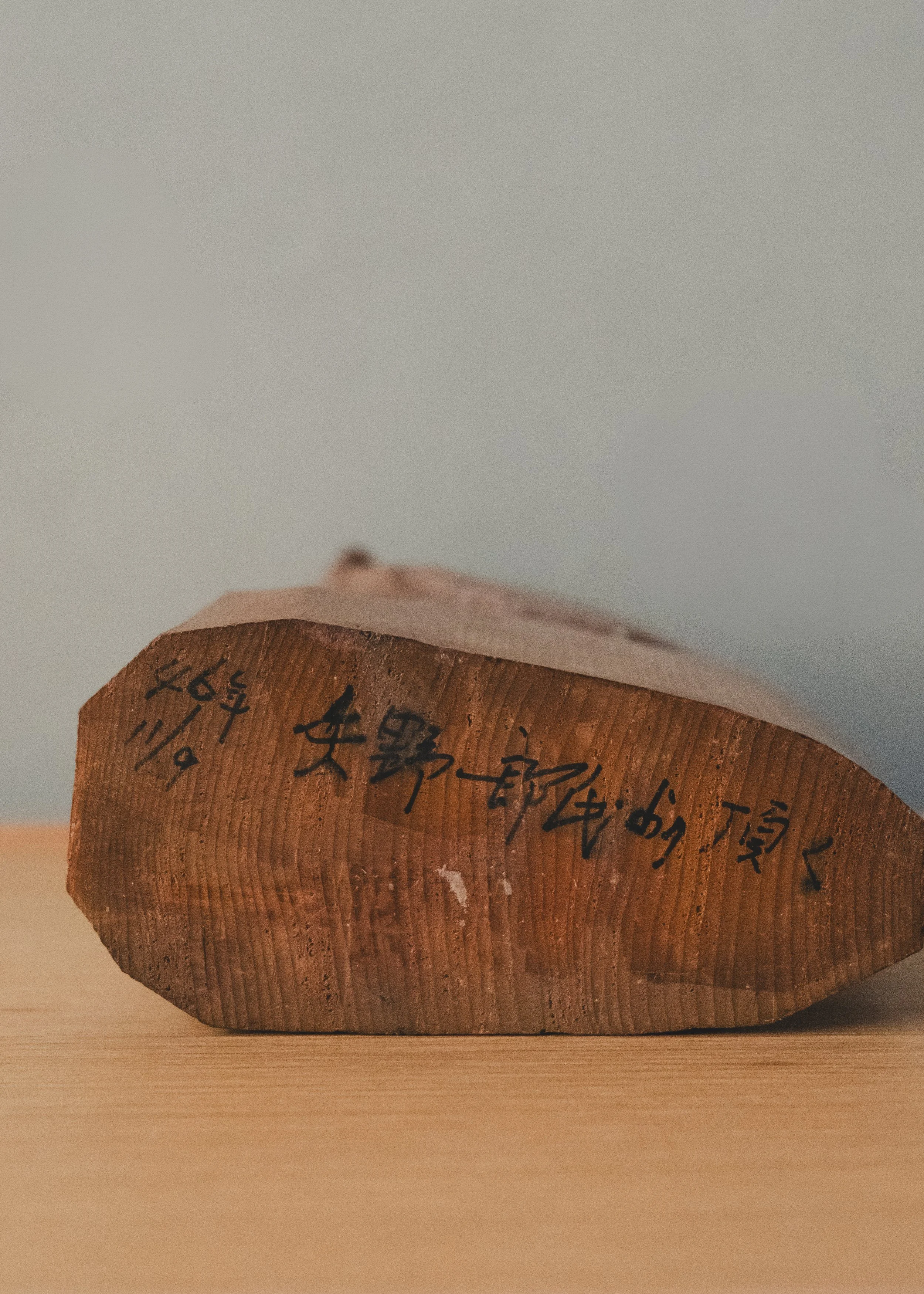 Image 11 of 13
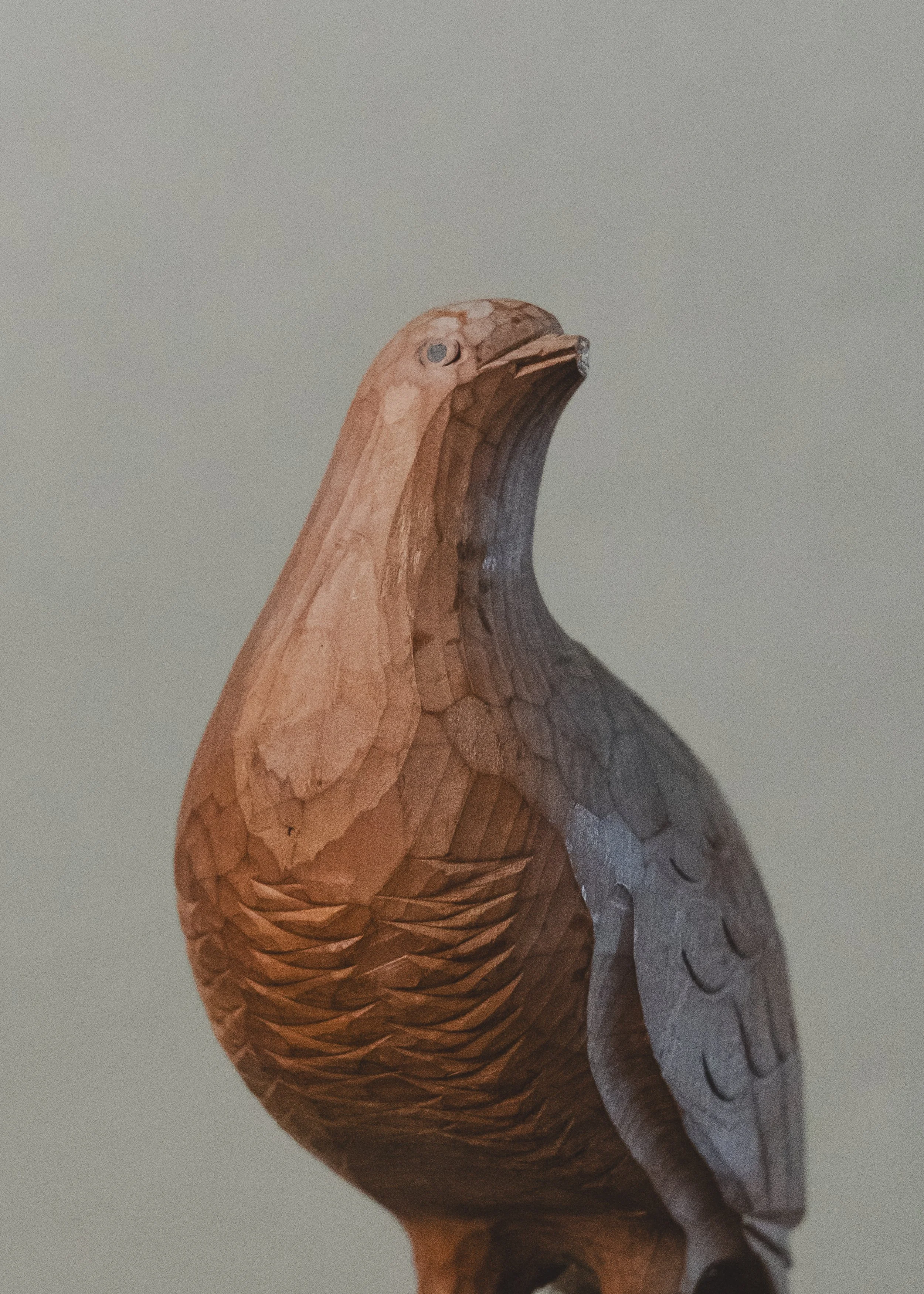 Image 12 of 13
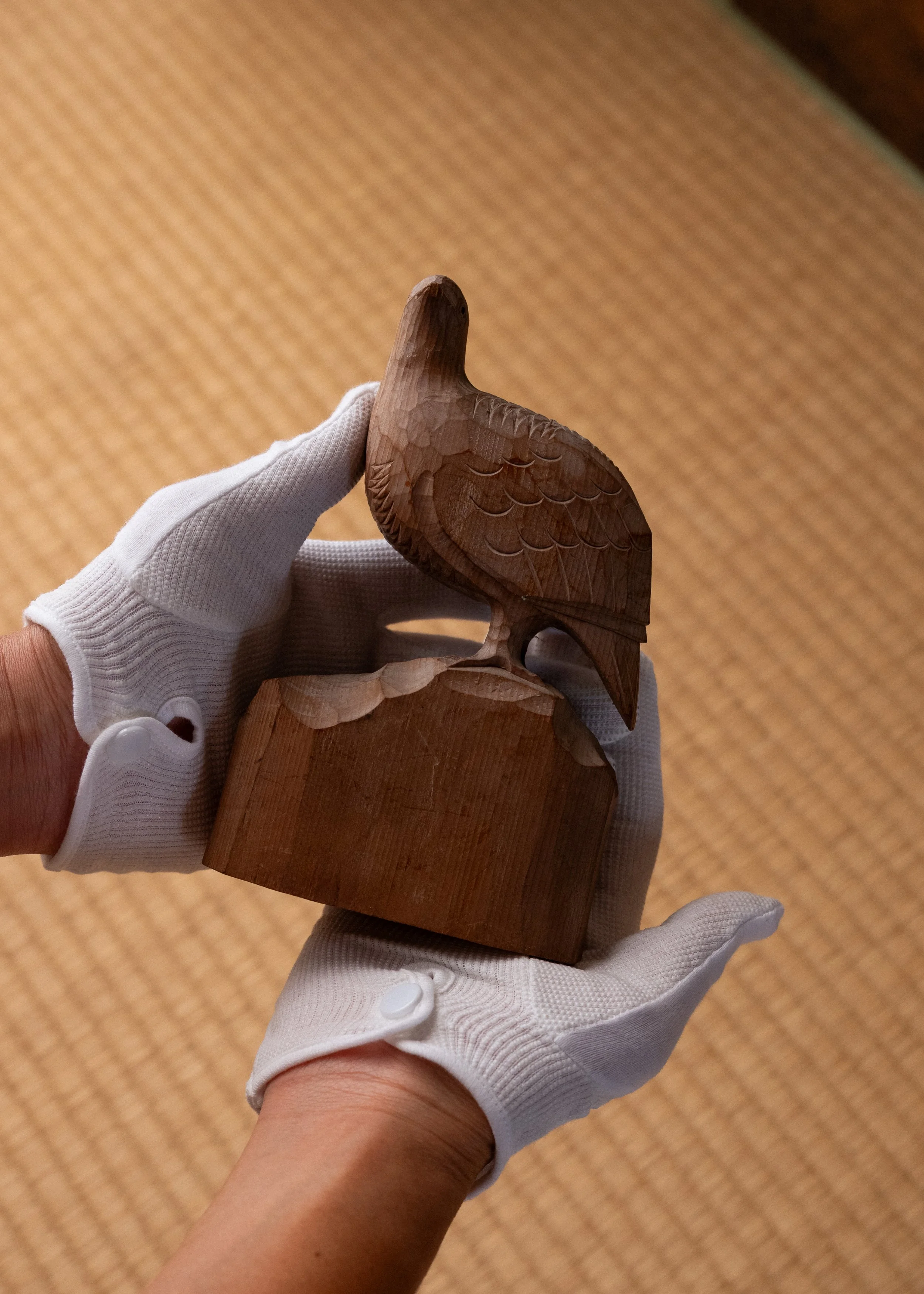 Image 13 of 13