【 The Concept 】
In the towns along Japan's western coast, the lion does not perform. It hunts. It moves through the crowd with its mouth shut, then snaps it open over a child's head — not to harm, but to swallow whatever bad luck has attached itself since the last festival. The bite is the blessing. An anonymous craftsman shaped this ritual into a palm-sized ceramic lion head: squeeze the cloth body and the jaw drops open with a quiet click. The ears twitch forward. Release it and the mouth closes again, waiting for the next thing worth biting.
【 The Function 】
A mechanical lion head. Hold the cloth body in one hand and squeeze — the lower jaw drops open and the ears pivot forward in the same motion. Release and everything resets. The click is soft — not the crack of metal, but the gentle tap of ceramic meeting ceramic. In the tradition this object comes from, even a quiet snap from a lion's jaw is enough to clear what should not be there. This one fits in a pocket.
【 The Texture 】
Ceramic, lacquered in a red so saturated it looks wet. The surface is smooth and glossy — polished to a finish that catches light and holds it. The eyebrows are gold. The eyes are gold-rimmed with black pupils set deep into the skull. The nose is red with fine yellow lines traced along its ridges. The teeth are gold — small, blunt, and aligned. A tuft of white fiber rises from the crown. The cloth body trailing behind the head is patterned in blue, red, brown, and white — a compressed version of the full ceremonial curtain that covers the real lion's body during the procession.
【 Presence 】
It is the smallest and most vivid object in any room. The red is impossible to miss. Pick it up and the lightness surprises — 55 grams of ceramic packed into something the size of a fist. Squeeze it once and the mouth falls open with a soft click. Guests will reach for it. Children will not put it down. It was designed for exactly that.
Sourced from a private collection in western Japan.
【 The Concept 】
In the towns along Japan's western coast, the lion does not perform. It hunts. It moves through the crowd with its mouth shut, then snaps it open over a child's head — not to harm, but to swallow whatever bad luck has attached itself since the last festival. The bite is the blessing. An anonymous craftsman shaped this ritual into a palm-sized ceramic lion head: squeeze the cloth body and the jaw drops open with a quiet click. The ears twitch forward. Release it and the mouth closes again, waiting for the next thing worth biting.
【 The Function 】
A mechanical lion head. Hold the cloth body in one hand and squeeze — the lower jaw drops open and the ears pivot forward in the same motion. Release and everything resets. The click is soft — not the crack of metal, but the gentle tap of ceramic meeting ceramic. In the tradition this object comes from, even a quiet snap from a lion's jaw is enough to clear what should not be there. This one fits in a pocket.
【 The Texture 】
Ceramic, lacquered in a red so saturated it looks wet. The surface is smooth and glossy — polished to a finish that catches light and holds it. The eyebrows are gold. The eyes are gold-rimmed with black pupils set deep into the skull. The nose is red with fine yellow lines traced along its ridges. The teeth are gold — small, blunt, and aligned. A tuft of white fiber rises from the crown. The cloth body trailing behind the head is patterned in blue, red, brown, and white — a compressed version of the full ceremonial curtain that covers the real lion's body during the procession.
【 Presence 】
It is the smallest and most vivid object in any room. The red is impossible to miss. Pick it up and the lightness surprises — 55 grams of ceramic packed into something the size of a fist. Squeeze it once and the mouth falls open with a soft click. Guests will reach for it. Children will not put it down. It was designed for exactly that.
Sourced from a private collection in western Japan.


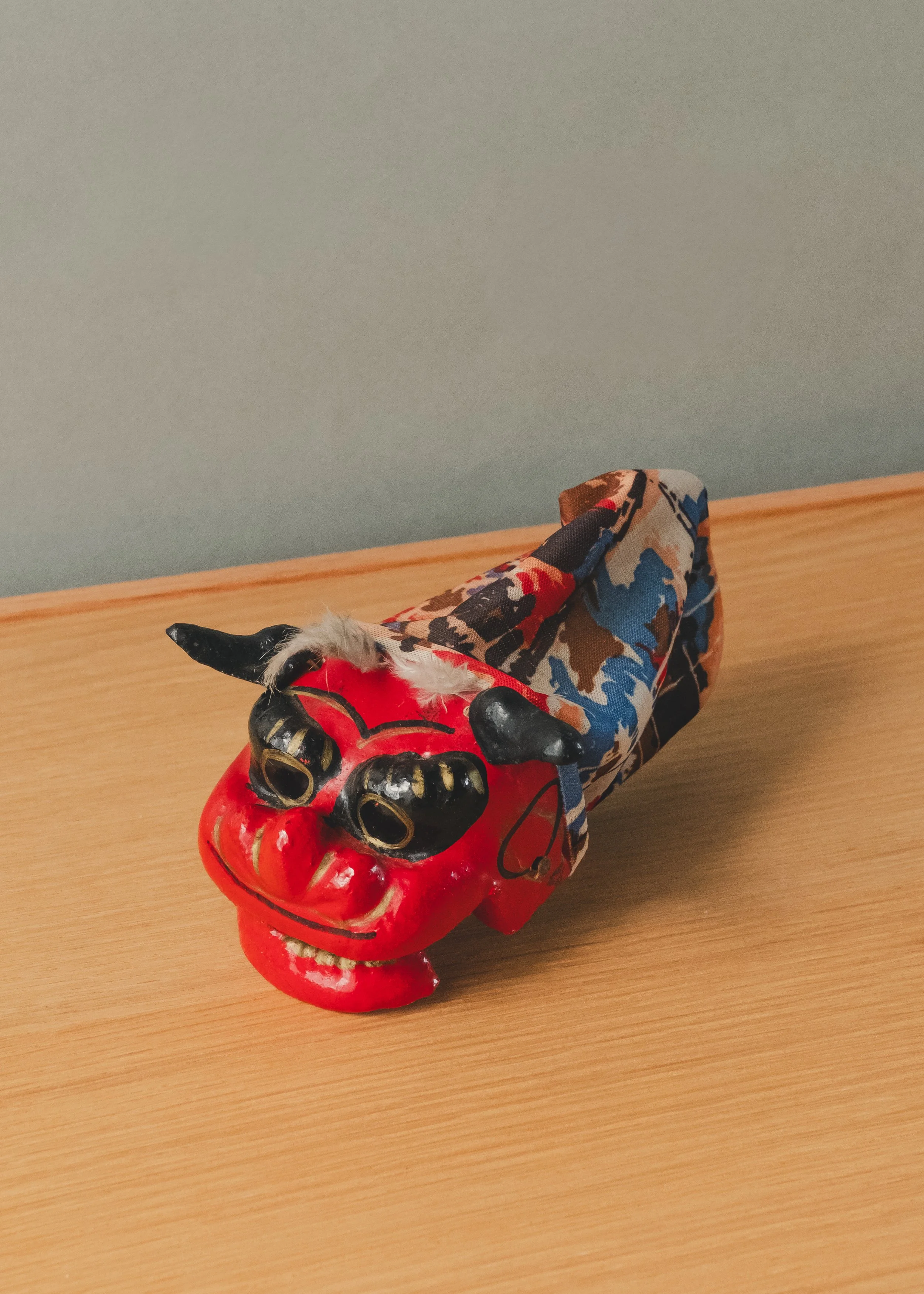 Image 1 of 6
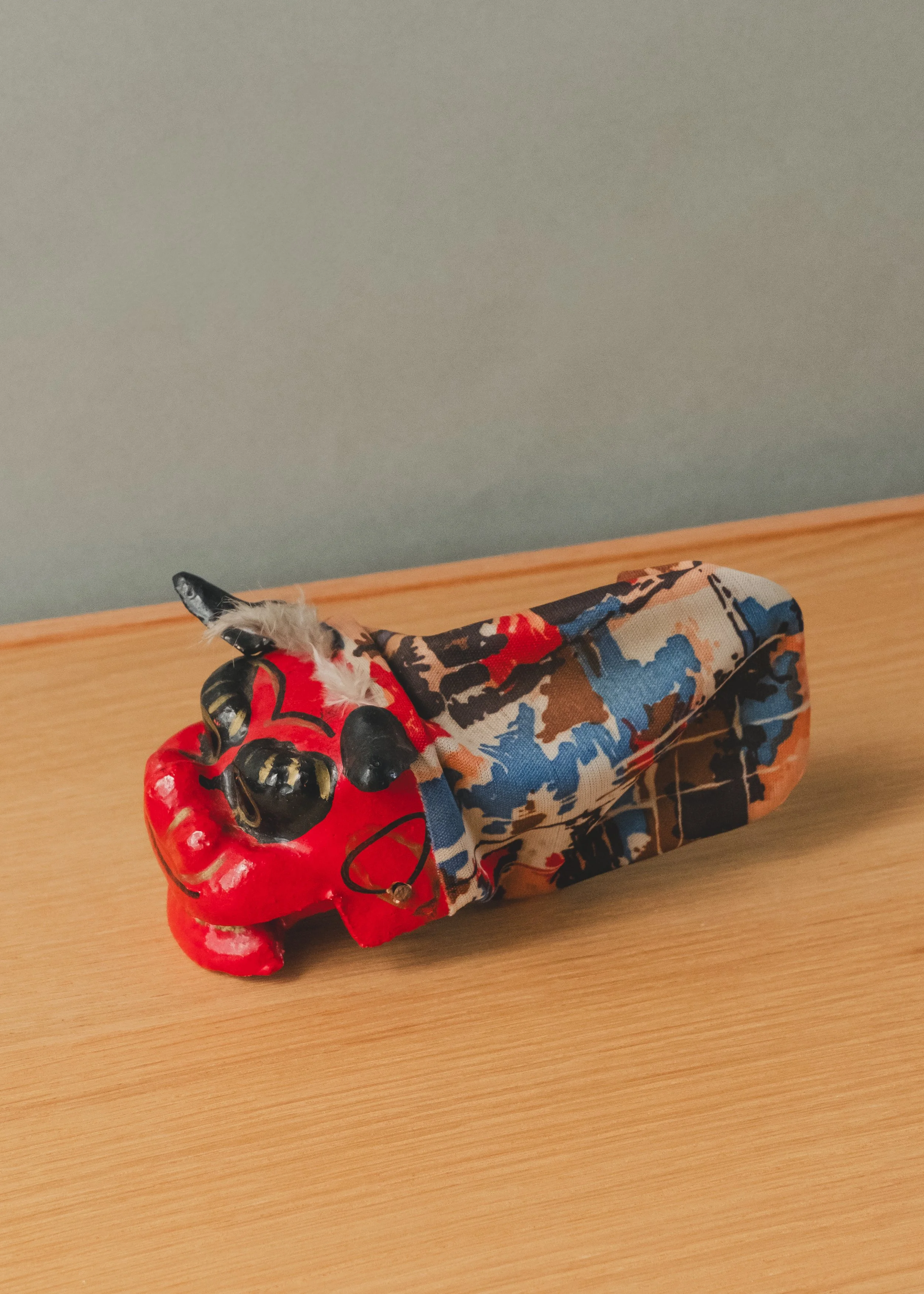 Image 2 of 6
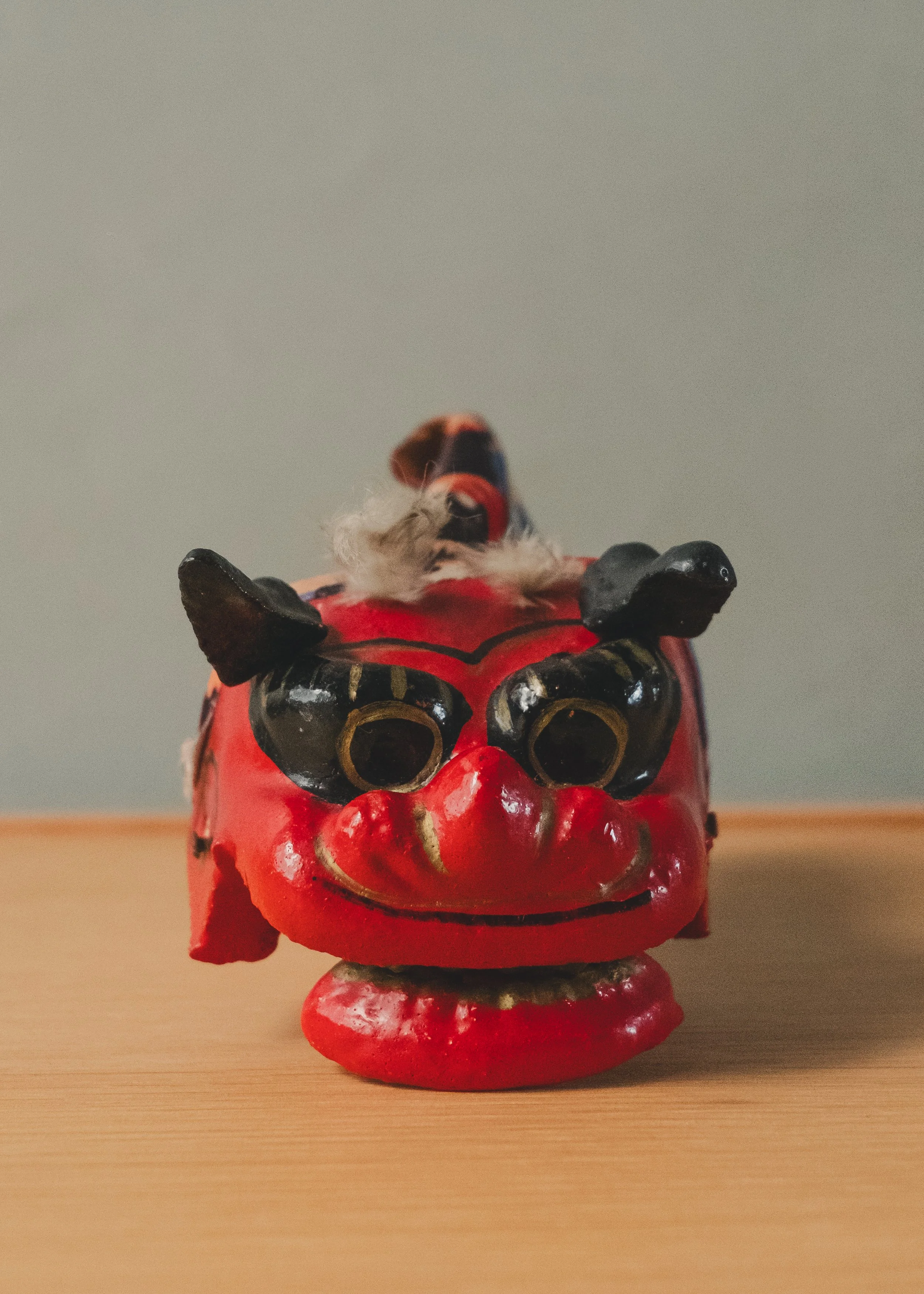 Image 3 of 6
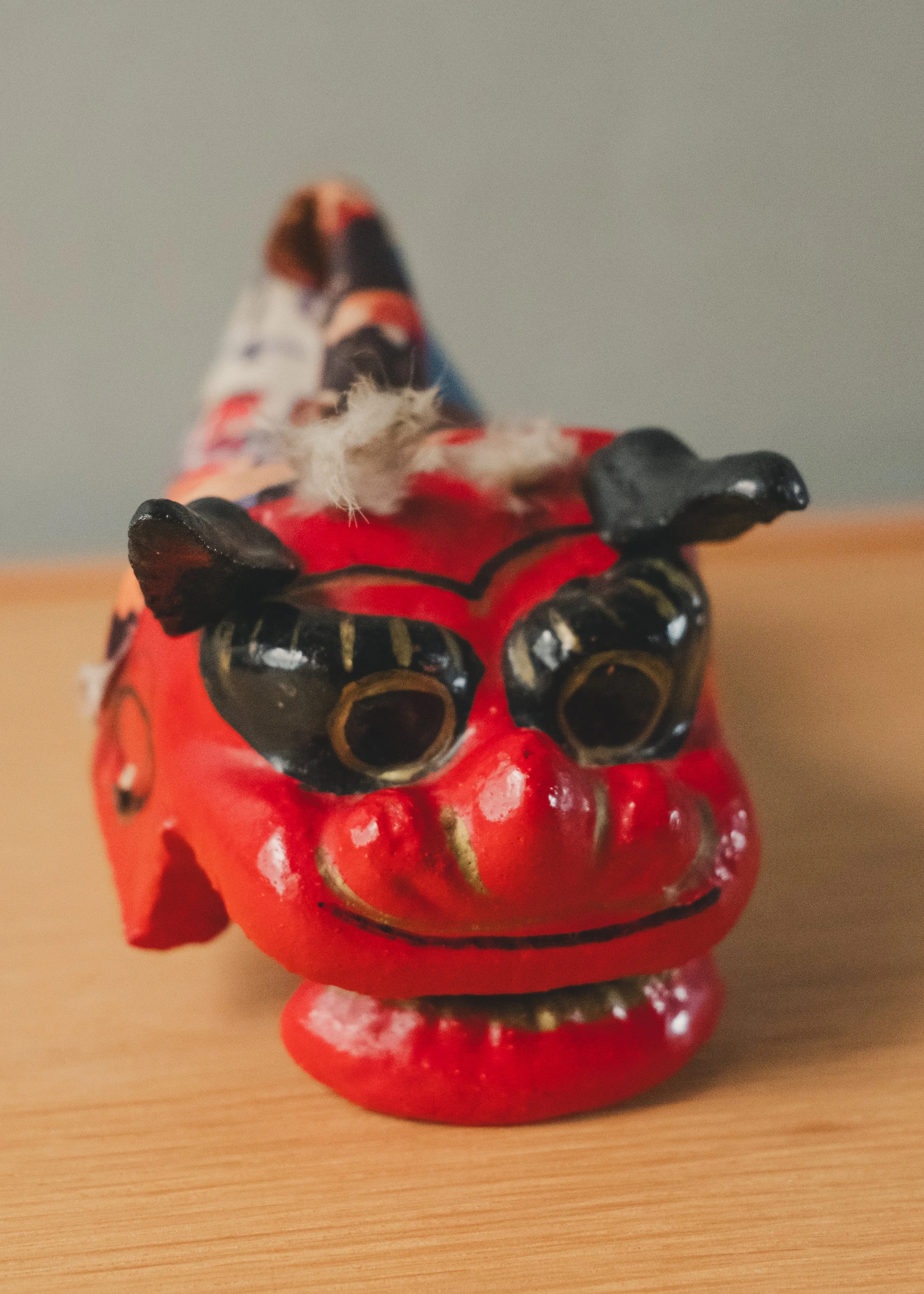 Image 4 of 6
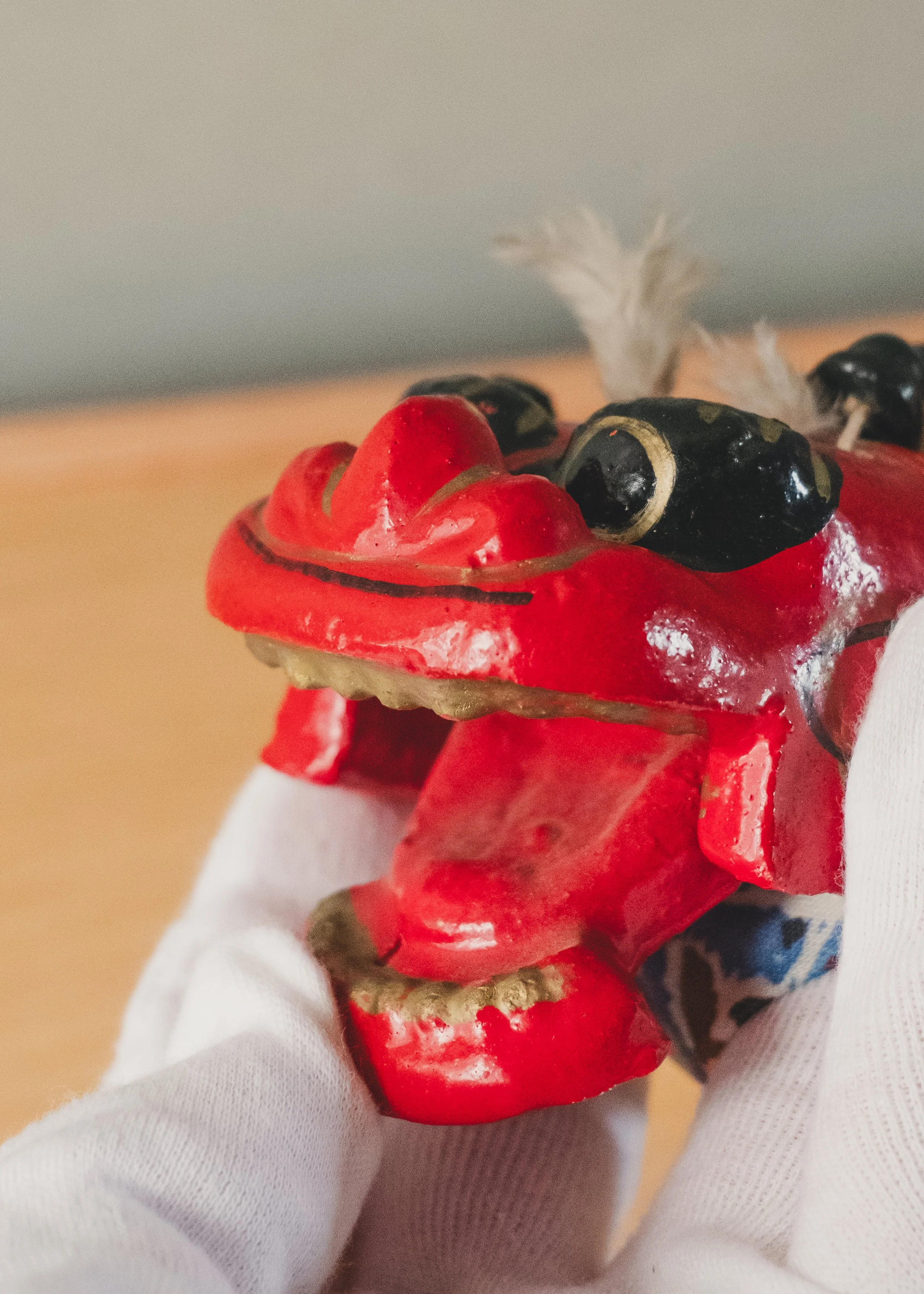 Image 5 of 6
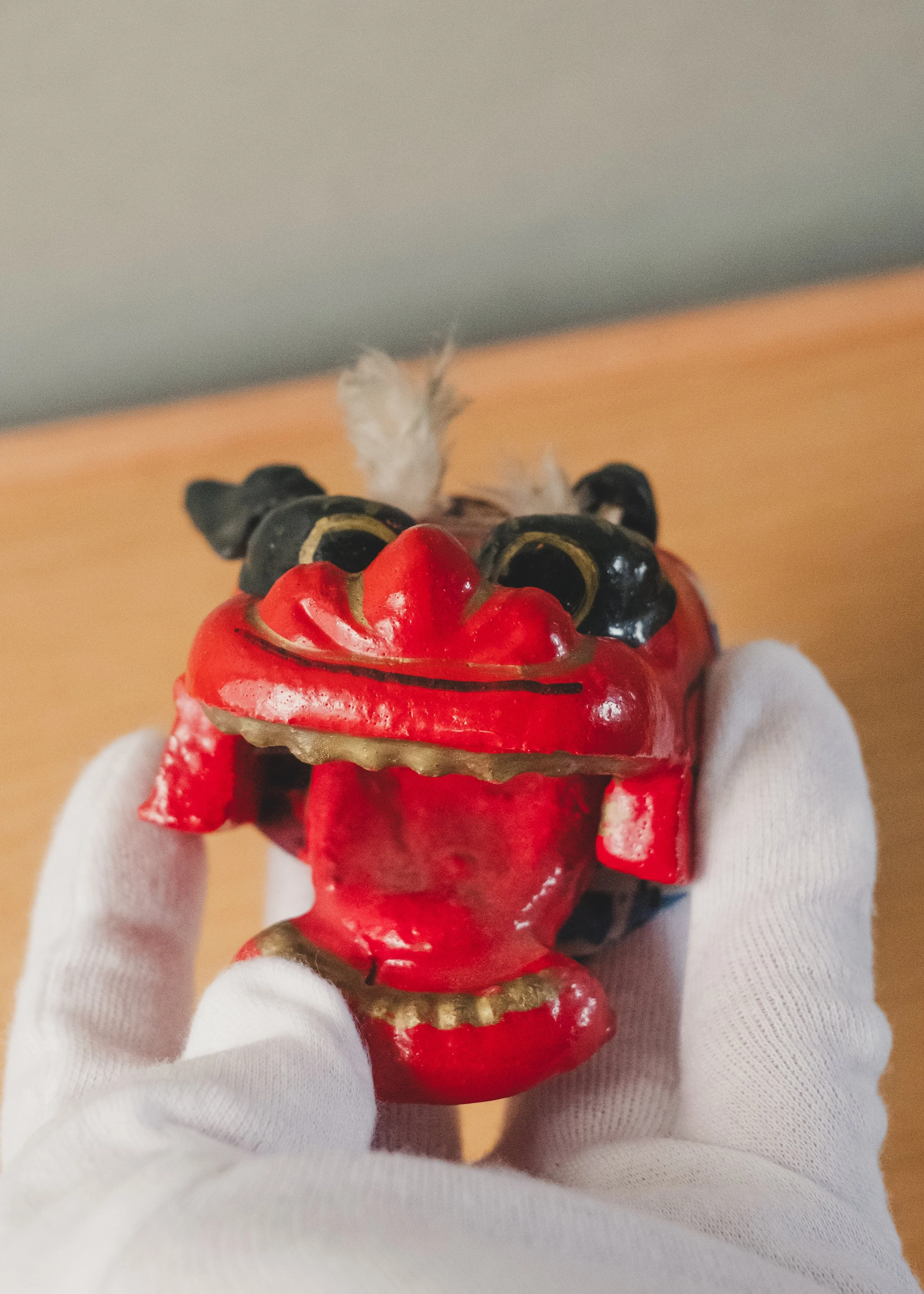 Image 6 of 6