【 The Concept 】
A horse made of water. Or what looks like water — a pale blue-green glaze so transparent it appears liquid even after firing, pooling in the hollows of the body like rain in a cupped leaf. The form beneath is barely a horse at all. Every anatomical landmark has been dissolved into curve: the legs are columns without joints, the body a swollen teardrop, the neck a smooth arc rising to a head no larger than a thumb. One front leg lifts off the ground in a gesture that could be a step, a wave, or a bow — the single asymmetry in an otherwise perfectly balanced form.
In the zodiac tradition this figure belongs to, the horse represents the moment when the sun is directly overhead — noon, midsummer, the peak of energy in the cycle. A horse figurine placed in a home at the turn of its year is not decoration. It is a request: for momentum, for forward motion, for the courage to clear whatever obstacle is next. The raised leg is the request made physical. It has not yet landed. The leap is still in progress.
【 The Function 】
84 grams, 9 centimeters tall, 9 centimeters long. A square footprint that fits inside the palm of one hand. It stands on three points — two back legs and one front — with the fourth leg suspended in the air, and yet it does not wobble. The weight distribution is engineered into the base of the body, low and wide enough to counterbalance the raised limb. In its original context, figures like this were placed on entryway shelves and office desks as zodiac talismans for the year of the horse, symbolizing career advancement, safe travel, and the return of invested energy. In a modern context, it is the lightest and most vertical of the celadon pair in this archive — where CELADON PROWL crouches and patrols, JADE PRANCE lifts and leaps.
【 The Texture 】
The palest celadon in the collection. Where CELADON PROWL holds a saturated blue-green that reads as color from across the room, this figure is almost white — a celadon so diluted it reveals itself only in the places where the glaze runs thick. Along the grooves that represent the mane, in the crease where the neck meets the chest, and in the fold where the raised leg joins the body, the glaze pools and deepens to a soft aqua. Everywhere else, it thins to near-transparency, allowing the white clay body beneath to glow through like light through frosted glass. The surface is uniformly glossy — wet-looking, reflective, and cool to the touch. The eyes are two black dots, placed without elaboration, giving the face an expression that is open and unreadable. The mane is a series of shallow parallel grooves running down the back of the neck. The tail presses flat against the haunch. Nothing protrudes. Nothing could snap. The entire figure is a single sealed volume of glazed ceramic, as smooth and self-contained as a river stone.
【 Presence 】
CELADON PROWL absorbs into its surroundings. This figure does the opposite — it floats above them. The pale, near-white surface reflects so much ambient light that it appears to glow from within, especially against dark wood or colored walls. The raised leg lifts the eye upward, and the elongated neck continues the motion toward the ceiling, making the figure feel taller than its 9 centimeters. Together with CELADON PROWL, it forms a celadon pair that was never designed as a pair but reads as one: the tiger walks the perimeter, the horse leaps over it. One guards. One escapes. Both are the same color, the same material, and the same silence — but aimed in opposite directions.
Sourced from a private collection in the Kansai region, Japan.
【 The Concept 】
A horse made of water. Or what looks like water — a pale blue-green glaze so transparent it appears liquid even after firing, pooling in the hollows of the body like rain in a cupped leaf. The form beneath is barely a horse at all. Every anatomical landmark has been dissolved into curve: the legs are columns without joints, the body a swollen teardrop, the neck a smooth arc rising to a head no larger than a thumb. One front leg lifts off the ground in a gesture that could be a step, a wave, or a bow — the single asymmetry in an otherwise perfectly balanced form.
In the zodiac tradition this figure belongs to, the horse represents the moment when the sun is directly overhead — noon, midsummer, the peak of energy in the cycle. A horse figurine placed in a home at the turn of its year is not decoration. It is a request: for momentum, for forward motion, for the courage to clear whatever obstacle is next. The raised leg is the request made physical. It has not yet landed. The leap is still in progress.
【 The Function 】
84 grams, 9 centimeters tall, 9 centimeters long. A square footprint that fits inside the palm of one hand. It stands on three points — two back legs and one front — with the fourth leg suspended in the air, and yet it does not wobble. The weight distribution is engineered into the base of the body, low and wide enough to counterbalance the raised limb. In its original context, figures like this were placed on entryway shelves and office desks as zodiac talismans for the year of the horse, symbolizing career advancement, safe travel, and the return of invested energy. In a modern context, it is the lightest and most vertical of the celadon pair in this archive — where CELADON PROWL crouches and patrols, JADE PRANCE lifts and leaps.
【 The Texture 】
The palest celadon in the collection. Where CELADON PROWL holds a saturated blue-green that reads as color from across the room, this figure is almost white — a celadon so diluted it reveals itself only in the places where the glaze runs thick. Along the grooves that represent the mane, in the crease where the neck meets the chest, and in the fold where the raised leg joins the body, the glaze pools and deepens to a soft aqua. Everywhere else, it thins to near-transparency, allowing the white clay body beneath to glow through like light through frosted glass. The surface is uniformly glossy — wet-looking, reflective, and cool to the touch. The eyes are two black dots, placed without elaboration, giving the face an expression that is open and unreadable. The mane is a series of shallow parallel grooves running down the back of the neck. The tail presses flat against the haunch. Nothing protrudes. Nothing could snap. The entire figure is a single sealed volume of glazed ceramic, as smooth and self-contained as a river stone.
【 Presence 】
CELADON PROWL absorbs into its surroundings. This figure does the opposite — it floats above them. The pale, near-white surface reflects so much ambient light that it appears to glow from within, especially against dark wood or colored walls. The raised leg lifts the eye upward, and the elongated neck continues the motion toward the ceiling, making the figure feel taller than its 9 centimeters. Together with CELADON PROWL, it forms a celadon pair that was never designed as a pair but reads as one: the tiger walks the perimeter, the horse leaps over it. One guards. One escapes. Both are the same color, the same material, and the same silence — but aimed in opposite directions.
Sourced from a private collection in the Kansai region, Japan.


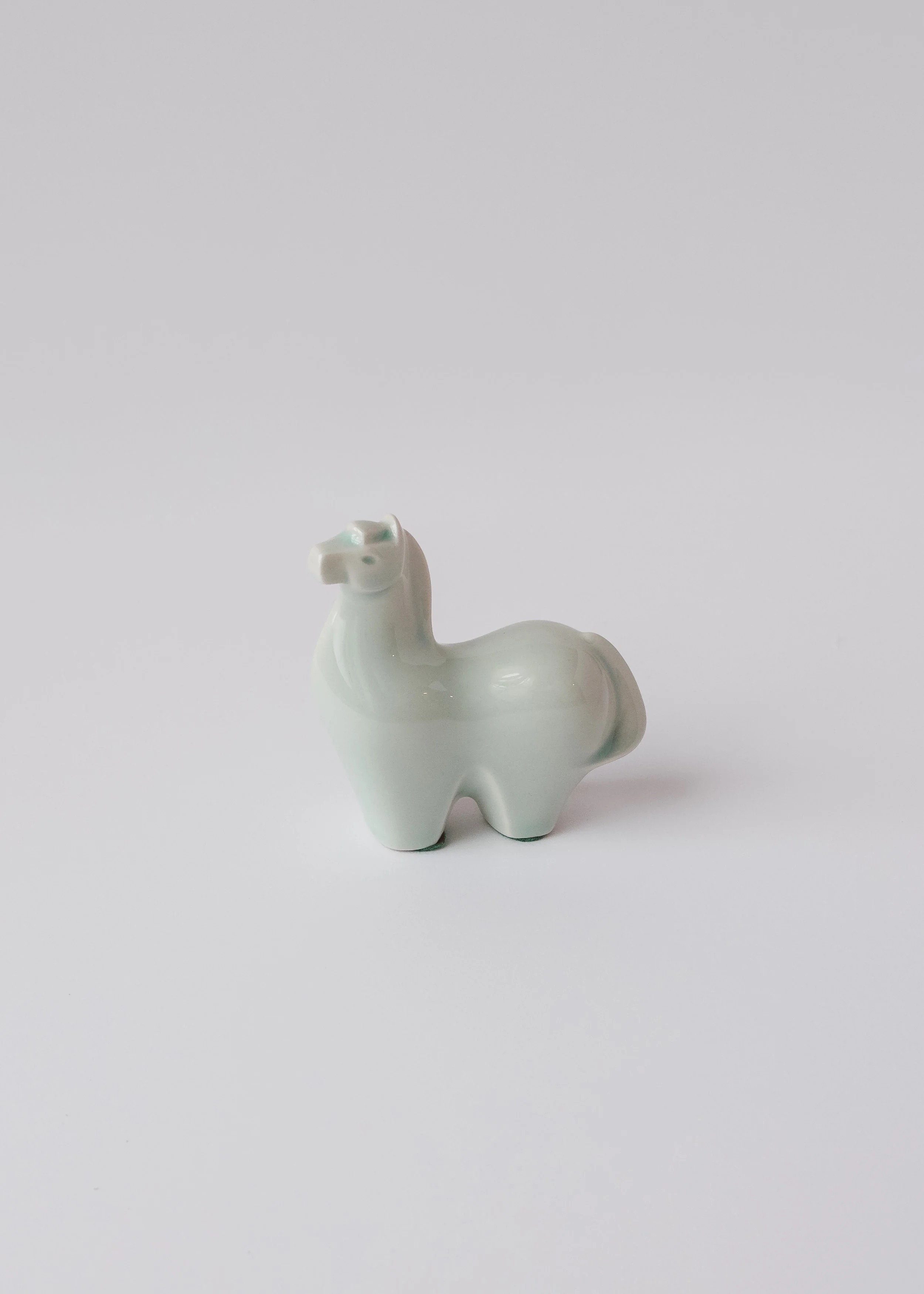 Image 1 of 7
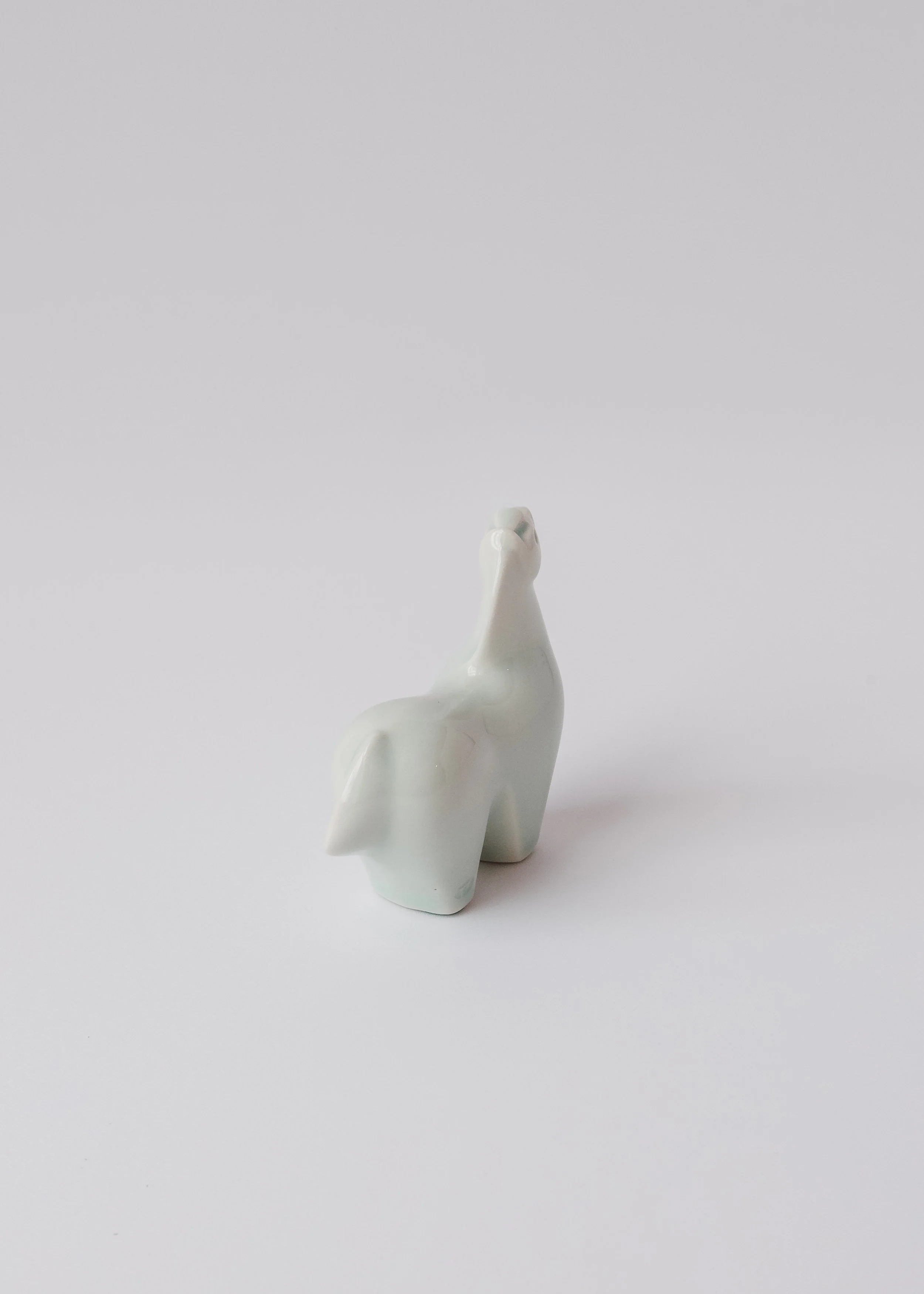 Image 2 of 7
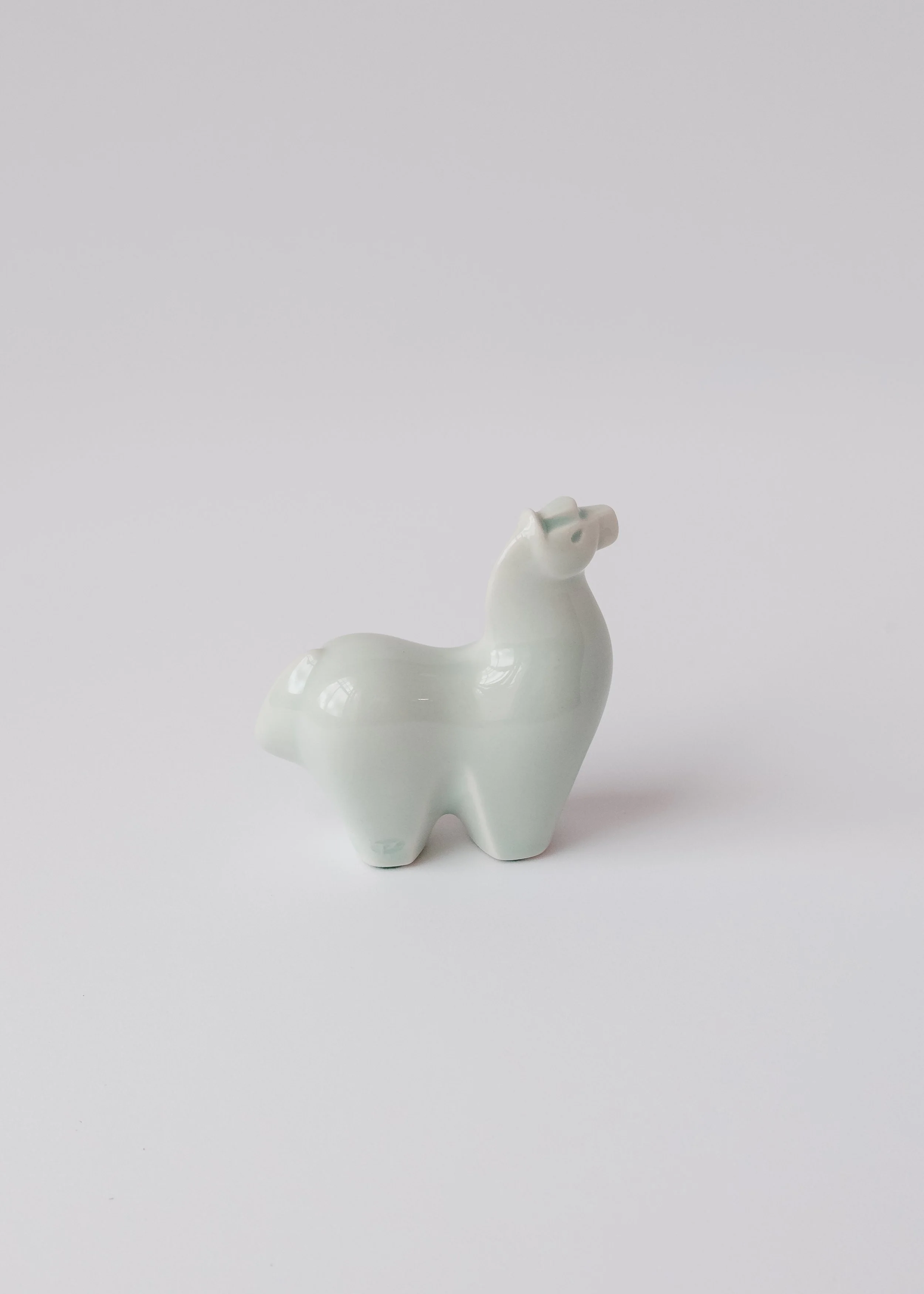 Image 3 of 7
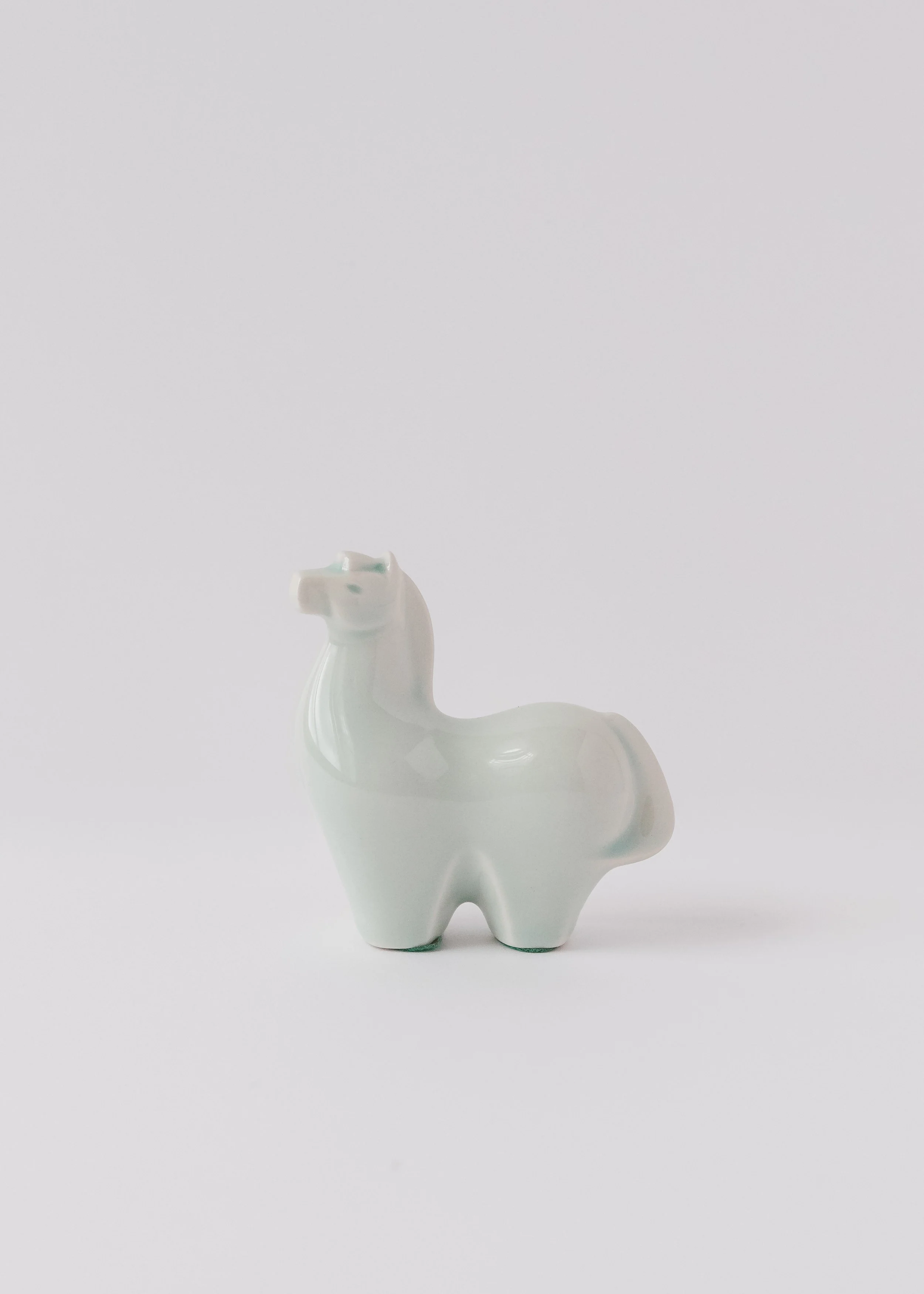 Image 4 of 7
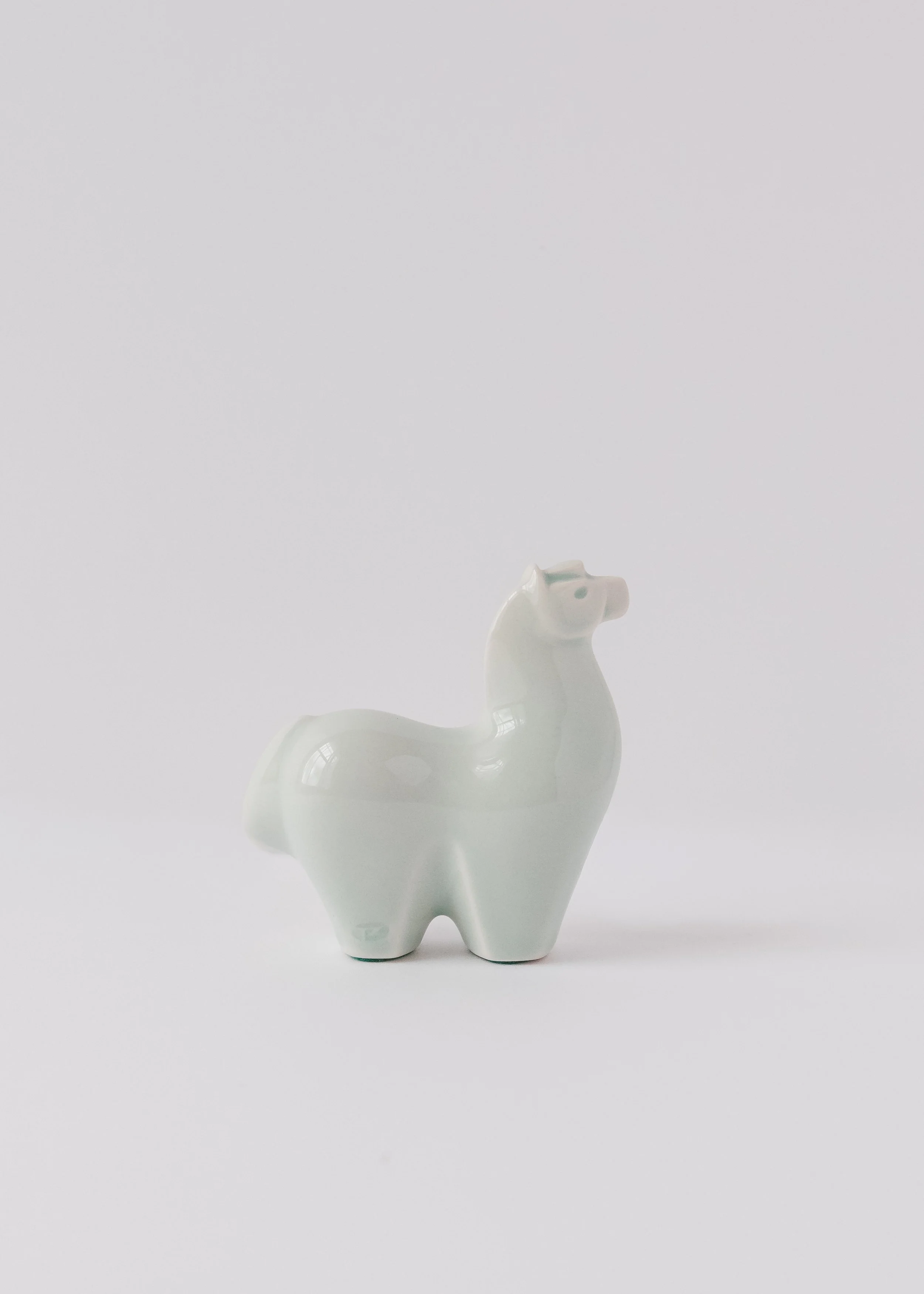 Image 5 of 7
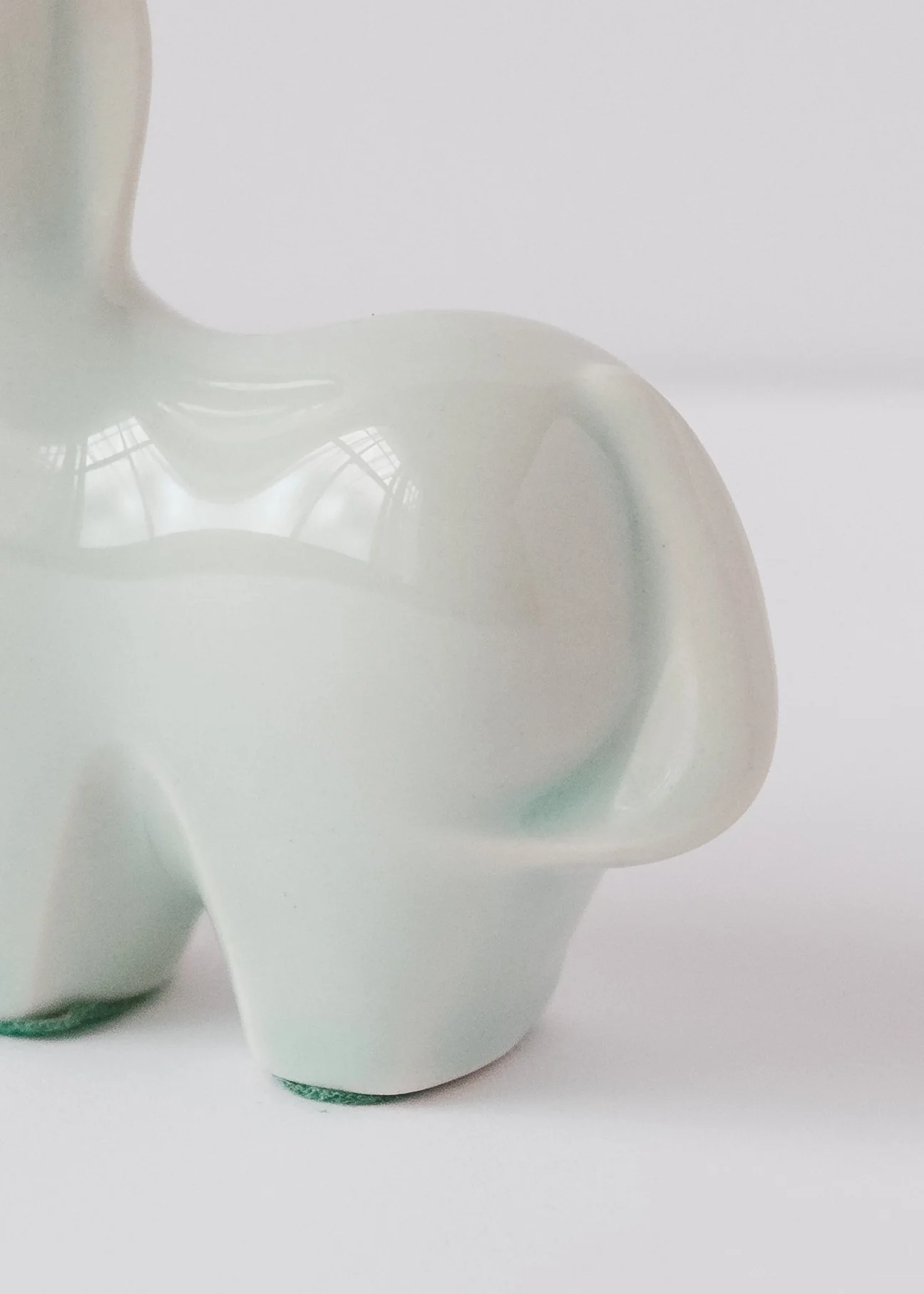 Image 6 of 7
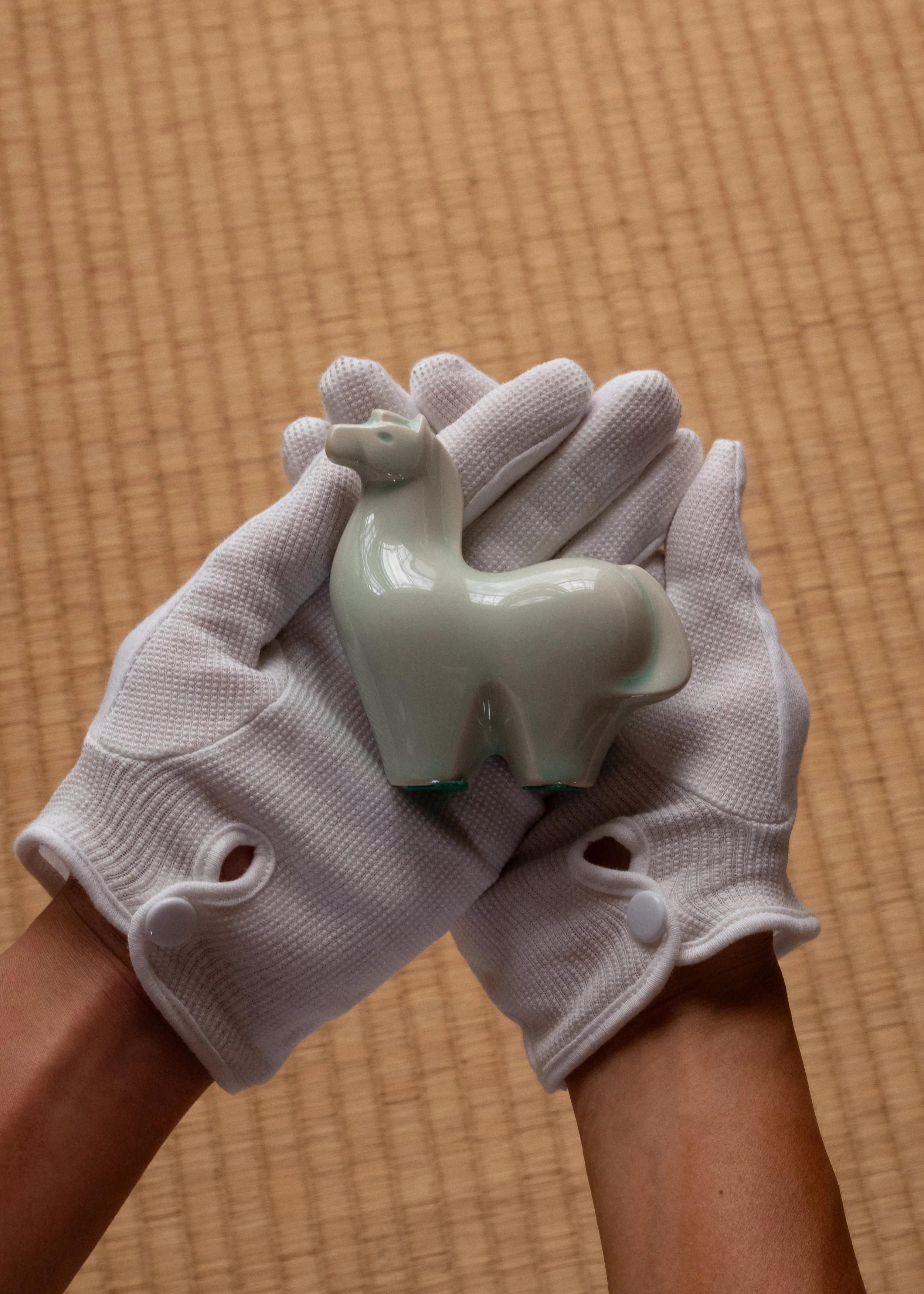 Image 7 of 7