【 The Concept 】
A dog reduced to the memory of a dog. No eyes. No mouth. No claws, no pads, no visible joints. What remains is an arch of solid cast iron — a body that bridges the space between four tapered legs like a small dark viaduct, with two triangular ears standing at attention and a perfectly spherical curled tail resting on the back like a planet in orbit. The muzzle tilts upward, as though tracking something above the skyline that no one else in the room can see.
An anonymous sculptor working in the Japanese modernist tradition stripped this animal of every biological detail and rebuilt it as geometry: cone, sphere, arch, triangle. What is left is not a portrait of a dog. It is the posture of loyalty itself, cast in iron and set on a desk to keep watch over nothing and everything.
【 The Function 】
900 grams of solid cast iron in a form that fits in the palm. The weight is immediate and disproportionate — nearly a kilogram from an object barely 11 centimeters long. This is not hollow, not ceramic, not resin. It is metal filled to the center. Set it on a desk and it pins down whatever is beneath it by sheer mass. Set it on a shelf and it becomes the gravitational center of the arrangement. In its original context, figures like this served as zodiac talismans and paperweights in Japanese households and offices. In any context, it anchors.
【 The Texture 】
Sandcast iron, unpolished, unsealed, and unafraid of its own roughness. The surface carries the fine granular texture of the sand mold that formed it — thousands of microscopic pits and ridges that scatter light rather than reflecting it, producing a matte finish that feels closer to stone than to metal. The color is not uniform. A base of dark iron-grey shifts across the body into tones of dull bronze, grey-green, and patches of reddish-brown where oxidation has begun its slow, irreversible work. These are not painted. They are chemical — the result of decades of interaction between iron, air, moisture, and the oils of every hand that has held it. The patina is the object's autobiography, written in rust and oxide.
【 Presence 】
It has no face, and yet it watches. The upward tilt of the muzzle and the alert geometry of the ears create a directional tension that fills the room with the sensation of vigilance, even though the figure itself is perfectly still. The arch of the body and the taper of the legs give it an unlikely lightness — it appears to float above the surface it sits on, despite being one of the heaviest objects on any shelf it occupies. The ball of the tail, smooth and spherical, is the only curve that breaks the angular silhouette, and it sits on the back like a punctuation mark: the period at the end of a sentence that says nothing and means everything.
Sourced from a private collection in the Kansai region, Japan.
【 The Concept 】
A dog reduced to the memory of a dog. No eyes. No mouth. No claws, no pads, no visible joints. What remains is an arch of solid cast iron — a body that bridges the space between four tapered legs like a small dark viaduct, with two triangular ears standing at attention and a perfectly spherical curled tail resting on the back like a planet in orbit. The muzzle tilts upward, as though tracking something above the skyline that no one else in the room can see.
An anonymous sculptor working in the Japanese modernist tradition stripped this animal of every biological detail and rebuilt it as geometry: cone, sphere, arch, triangle. What is left is not a portrait of a dog. It is the posture of loyalty itself, cast in iron and set on a desk to keep watch over nothing and everything.
【 The Function 】
900 grams of solid cast iron in a form that fits in the palm. The weight is immediate and disproportionate — nearly a kilogram from an object barely 11 centimeters long. This is not hollow, not ceramic, not resin. It is metal filled to the center. Set it on a desk and it pins down whatever is beneath it by sheer mass. Set it on a shelf and it becomes the gravitational center of the arrangement. In its original context, figures like this served as zodiac talismans and paperweights in Japanese households and offices. In any context, it anchors.
【 The Texture 】
Sandcast iron, unpolished, unsealed, and unafraid of its own roughness. The surface carries the fine granular texture of the sand mold that formed it — thousands of microscopic pits and ridges that scatter light rather than reflecting it, producing a matte finish that feels closer to stone than to metal. The color is not uniform. A base of dark iron-grey shifts across the body into tones of dull bronze, grey-green, and patches of reddish-brown where oxidation has begun its slow, irreversible work. These are not painted. They are chemical — the result of decades of interaction between iron, air, moisture, and the oils of every hand that has held it. The patina is the object's autobiography, written in rust and oxide.
【 Presence 】
It has no face, and yet it watches. The upward tilt of the muzzle and the alert geometry of the ears create a directional tension that fills the room with the sensation of vigilance, even though the figure itself is perfectly still. The arch of the body and the taper of the legs give it an unlikely lightness — it appears to float above the surface it sits on, despite being one of the heaviest objects on any shelf it occupies. The ball of the tail, smooth and spherical, is the only curve that breaks the angular silhouette, and it sits on the back like a punctuation mark: the period at the end of a sentence that says nothing and means everything.
Sourced from a private collection in the Kansai region, Japan.


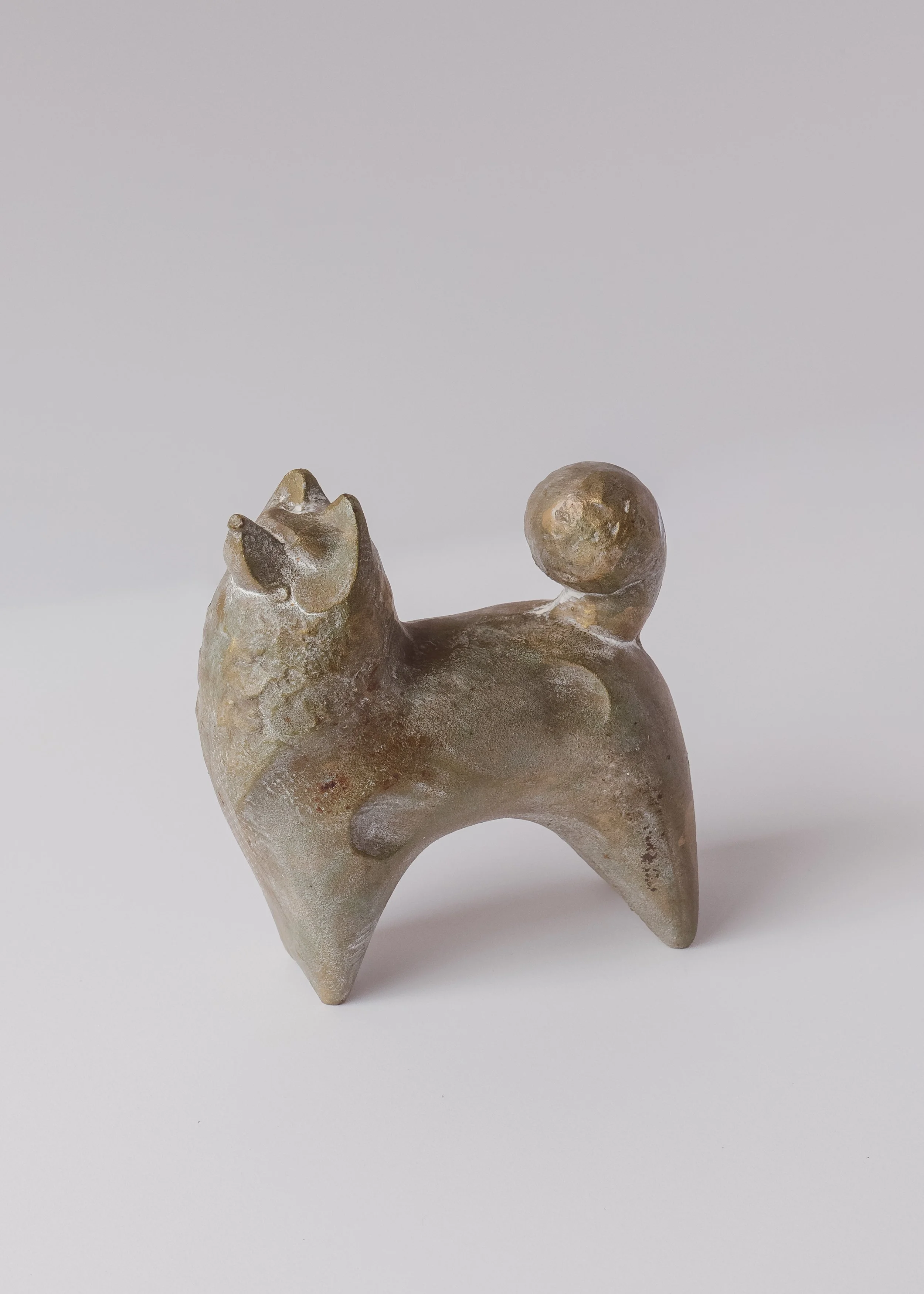 Image 1 of 9
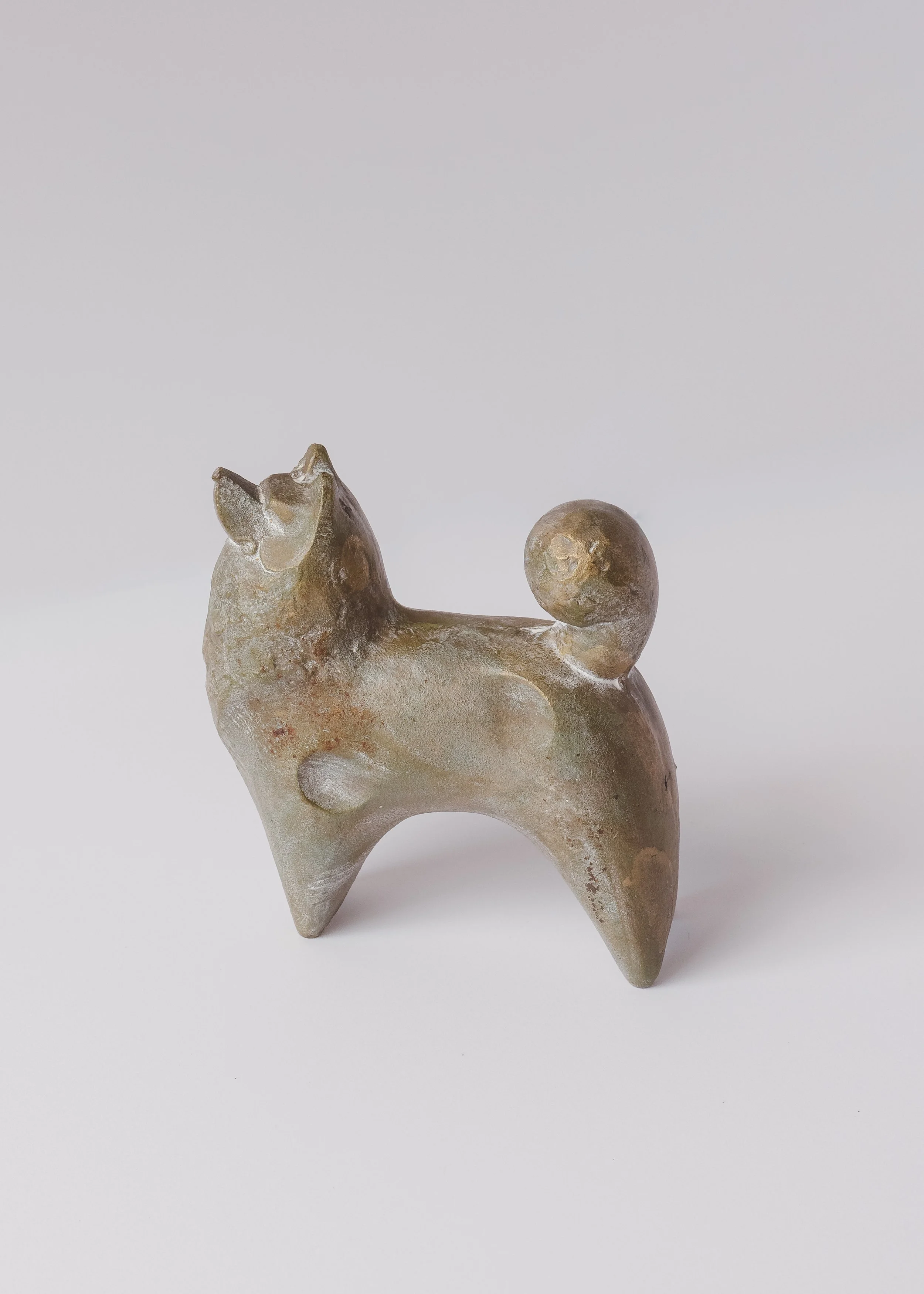 Image 2 of 9
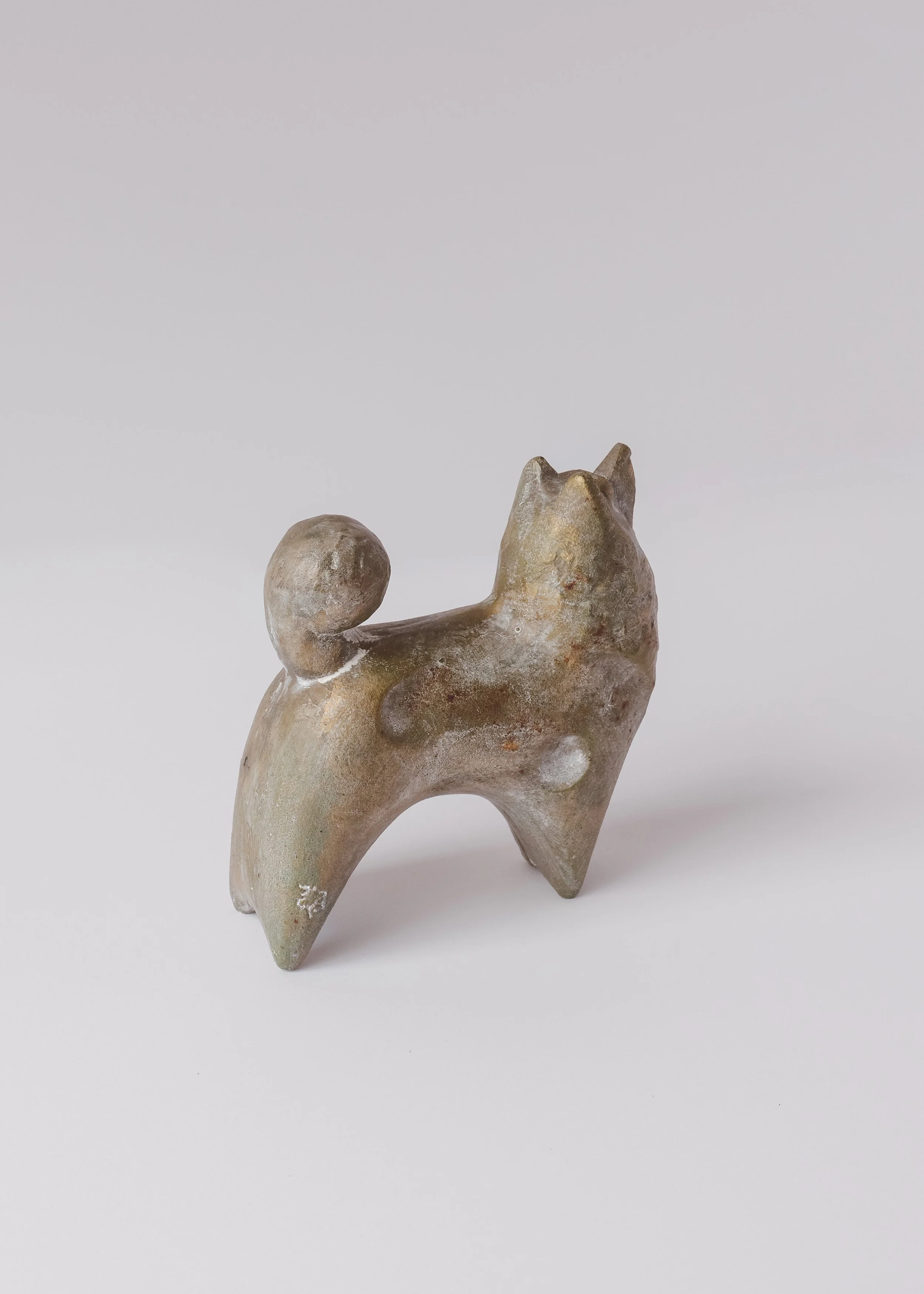 Image 3 of 9
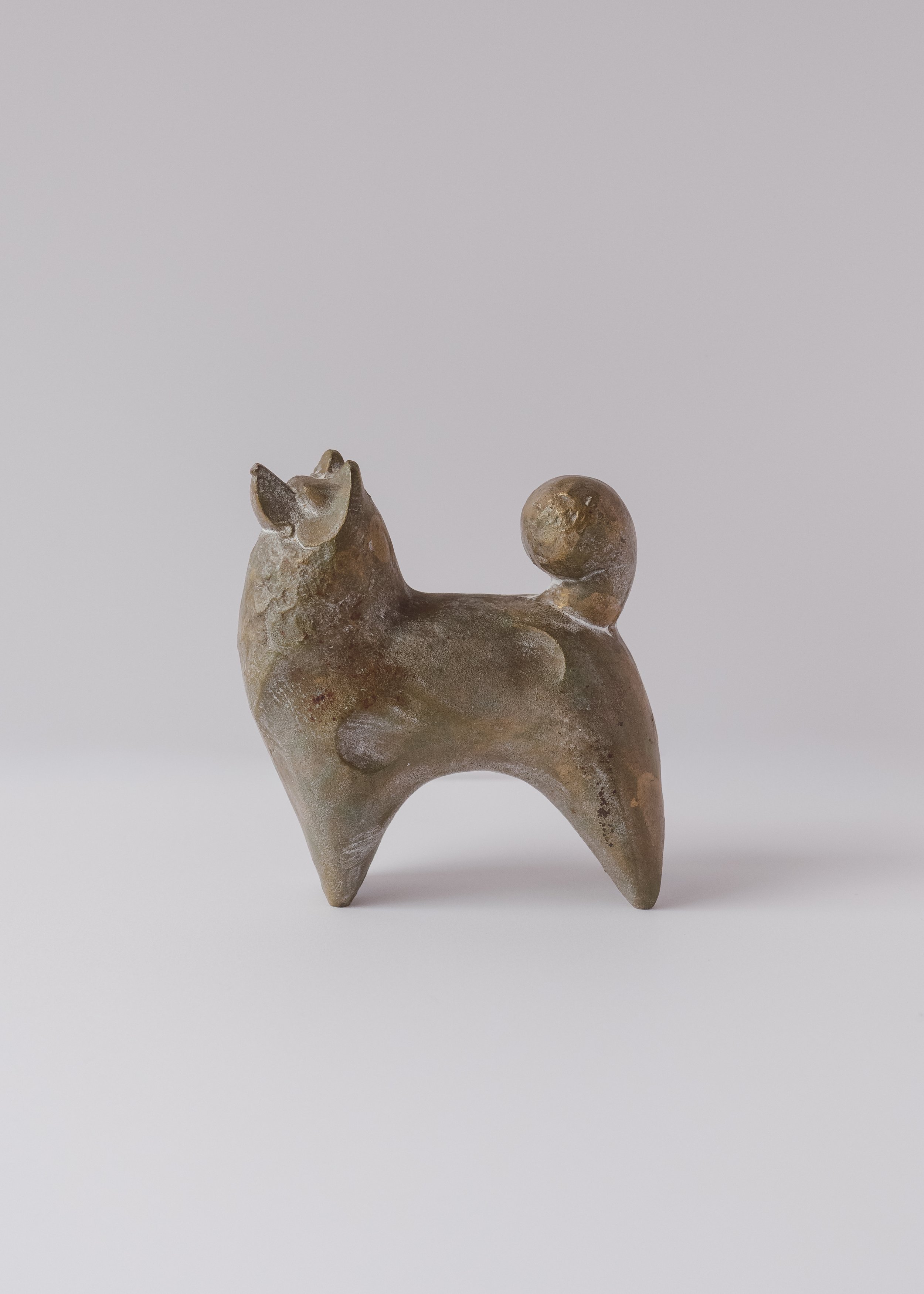 Image 4 of 9
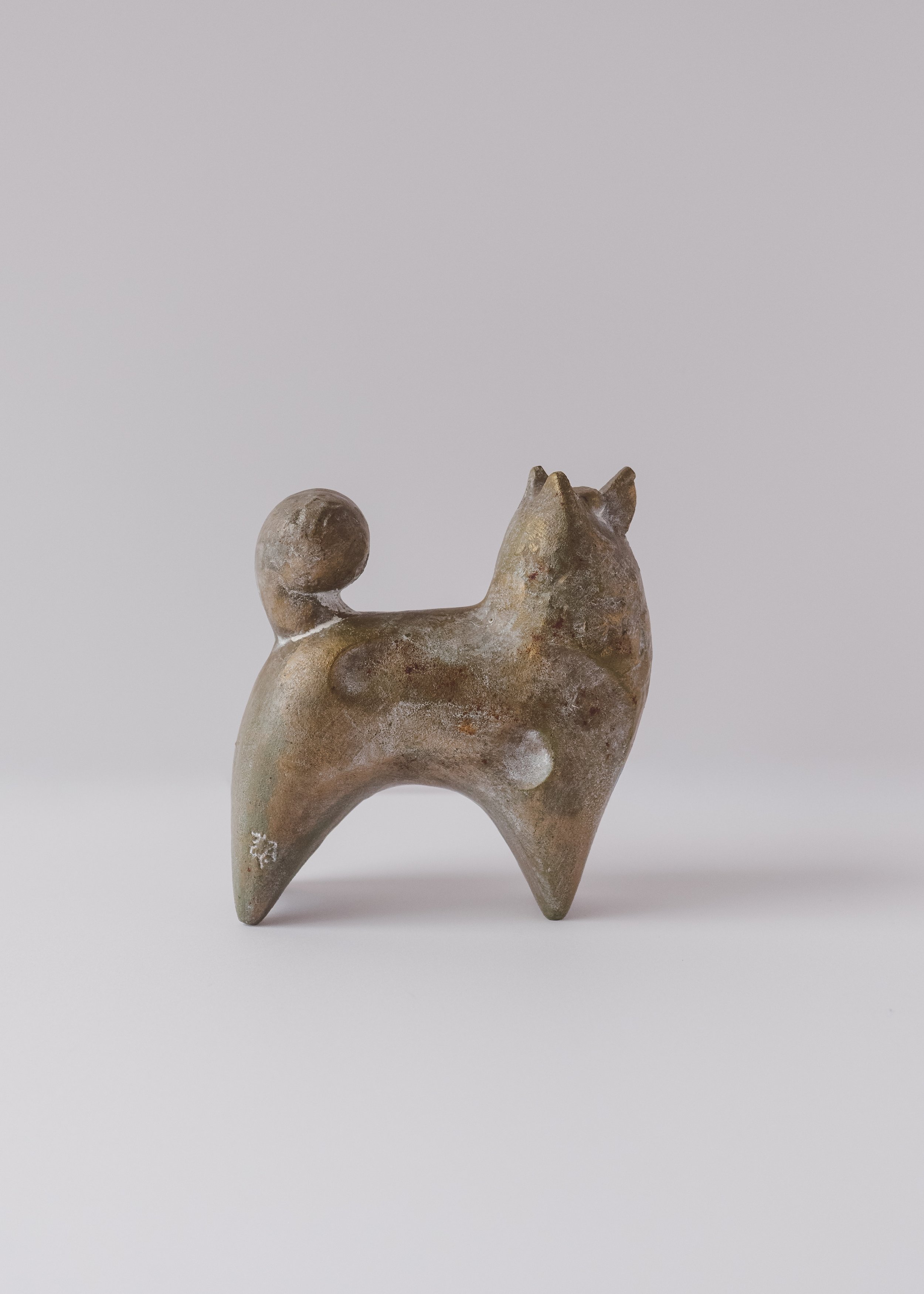 Image 5 of 9
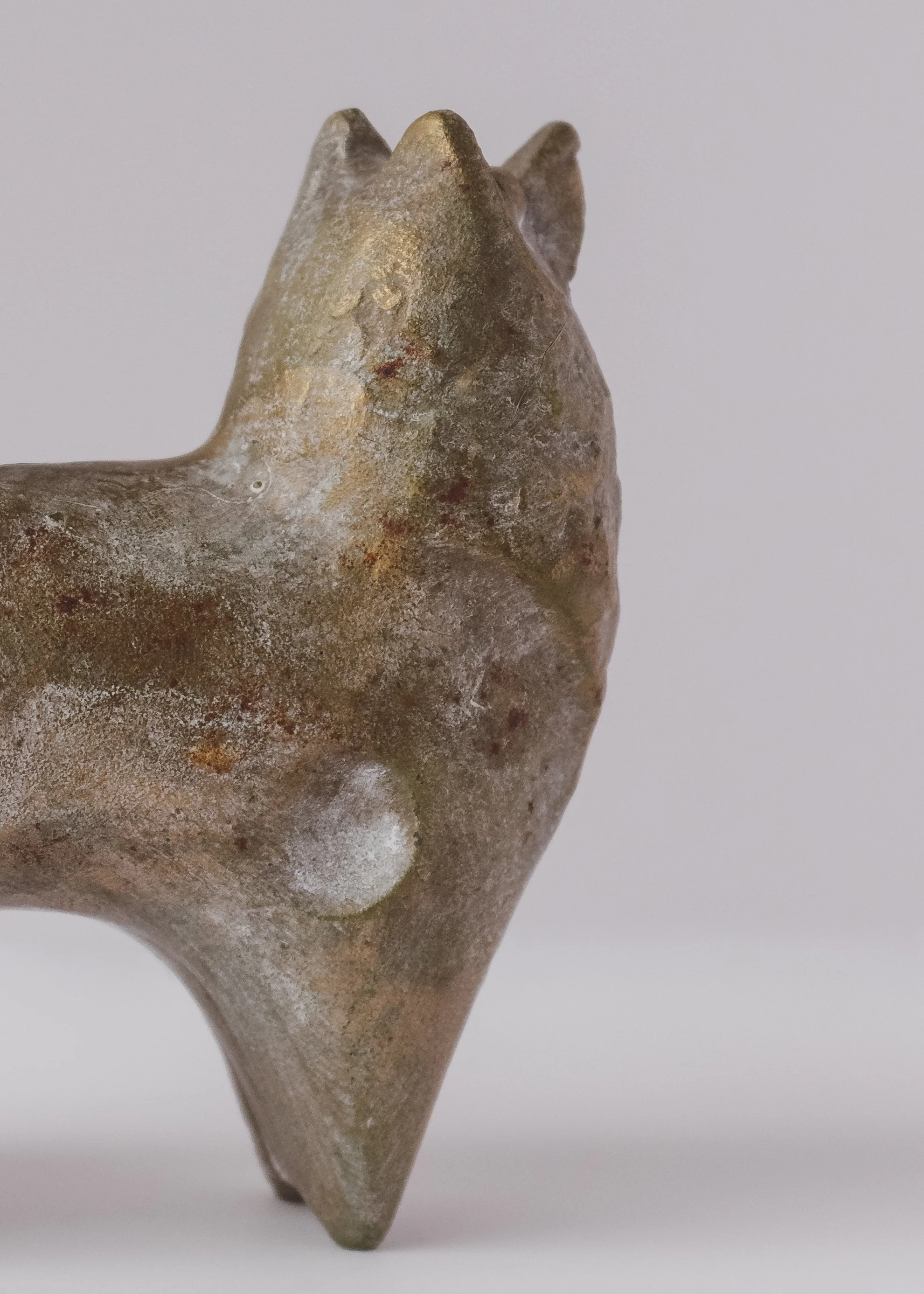 Image 6 of 9
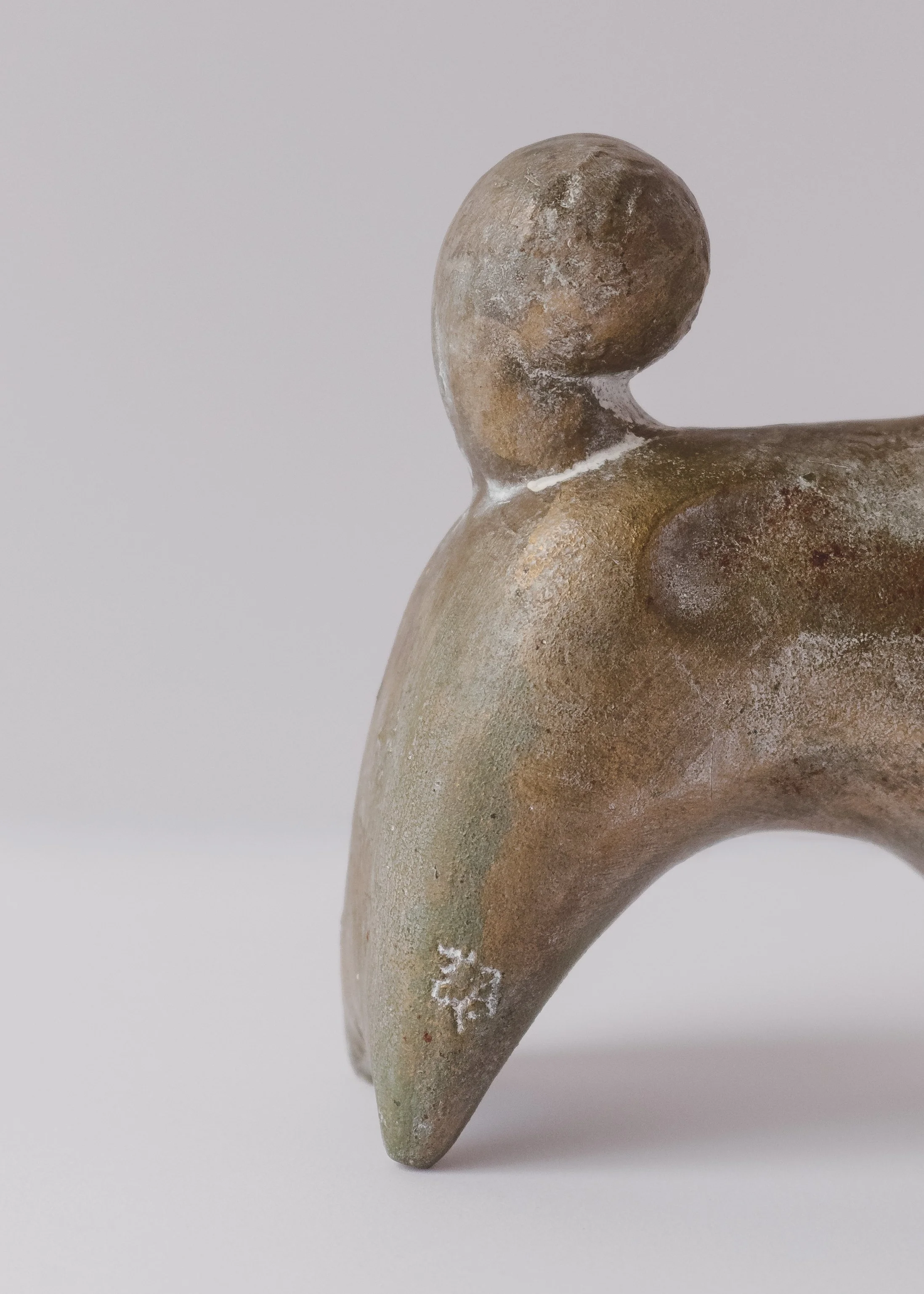 Image 7 of 9
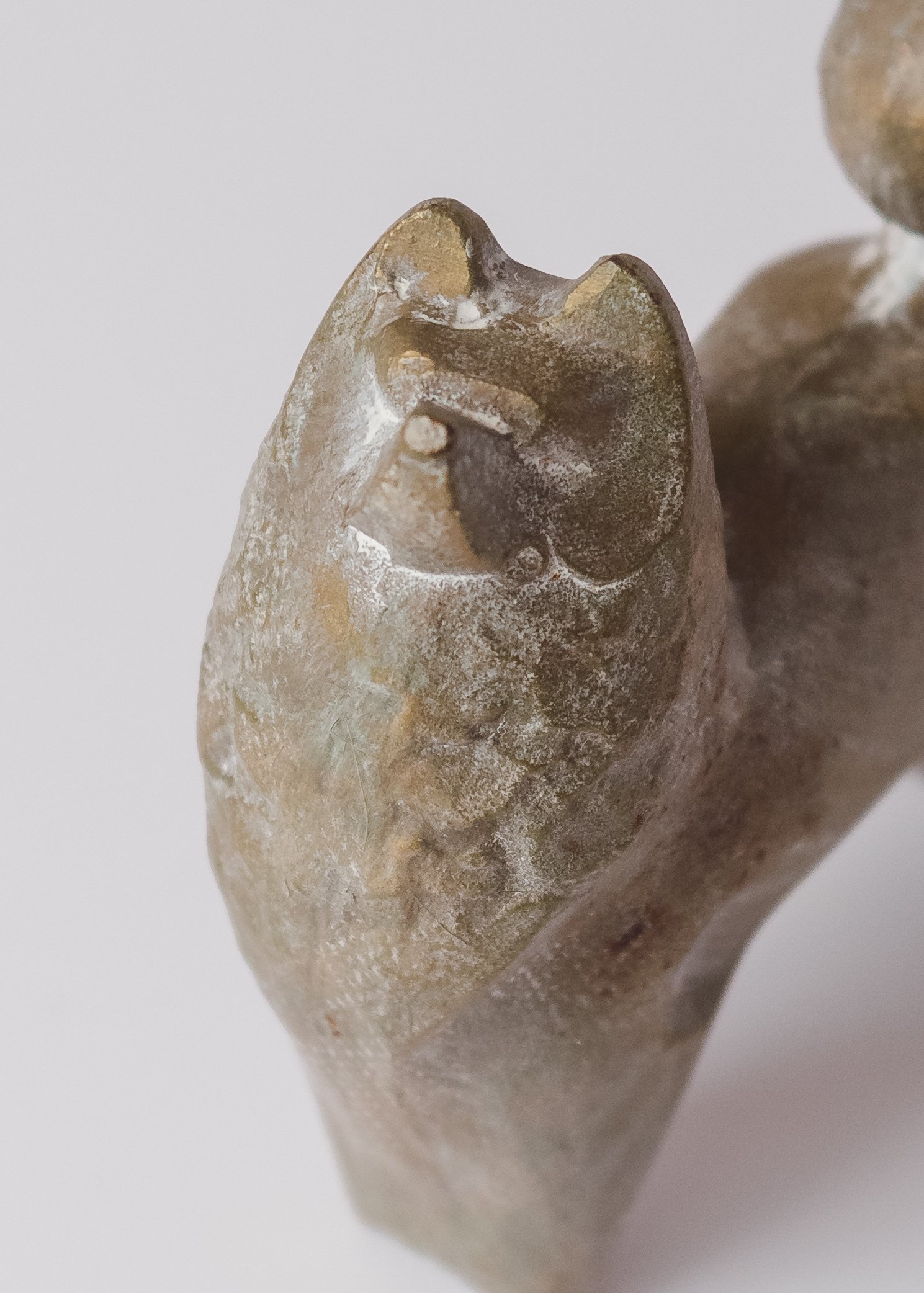 Image 8 of 9
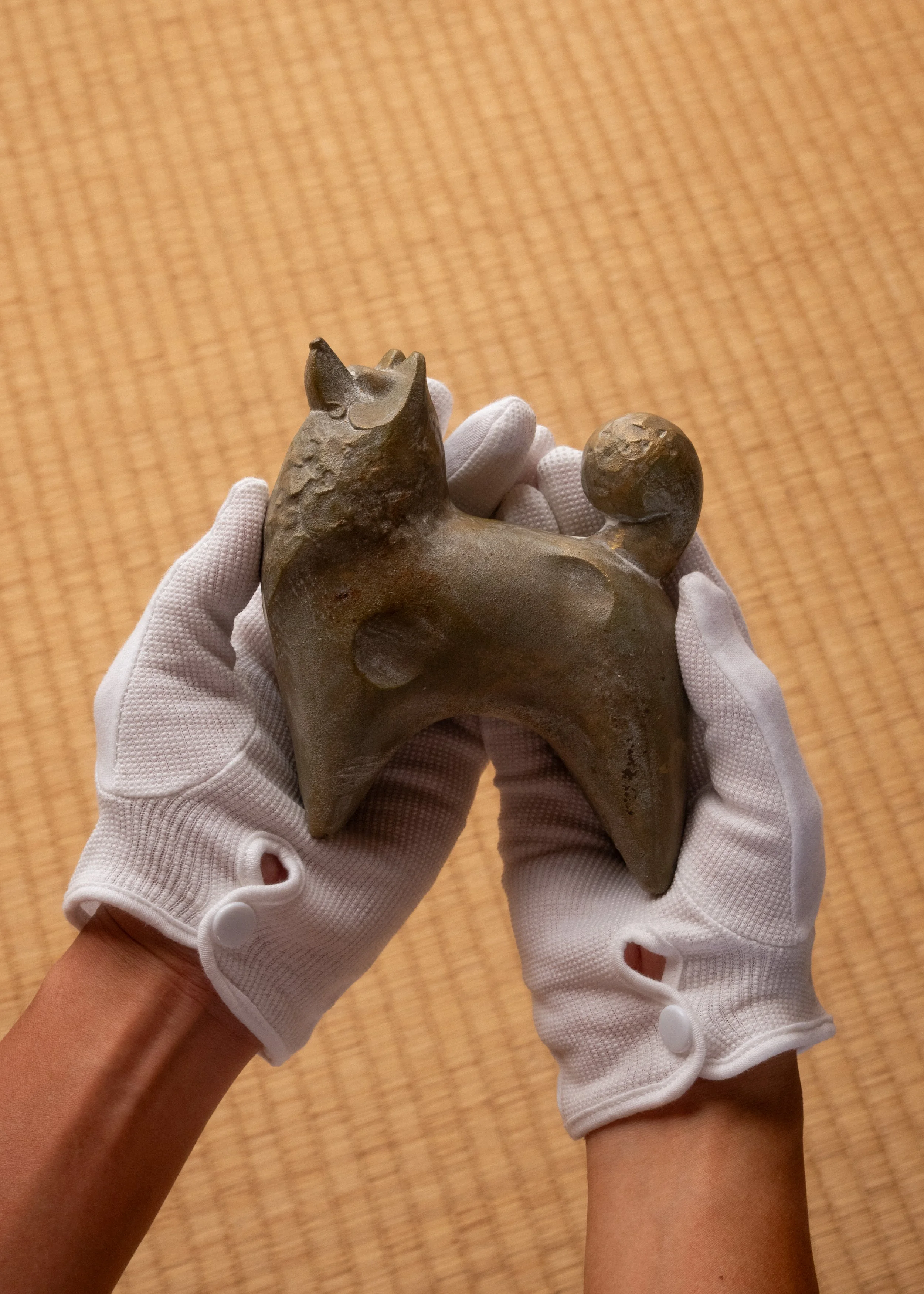 Image 9 of 9