【 The Concept 】
A seated figure with no arms and no legs, wrapped in a robe it cannot remove. The form is based on a monk who, according to legend, sat facing a wall for nine years without moving — so long that his limbs withered and fell away. What remained was resolve in its purest physical form: a shape that cannot be knocked down because it has nothing left to lose.
What makes this particular rendering unusual is that two incompatible surfaces occupy the same object. The robe is glazed porcelain — white, luminous, sealed beneath a glass-smooth skin of transparent glaze, and painted in flowing cobalt-blue arabesques by a single brush. The face is raw clay — unglazed, rough, reddish-brown, carved with deep furrows and a fixed scowl that has not softened since the kiln. These two materials should not coexist in one firing. They shrink at different rates, respond to heat differently, and risk cracking at the boundary. That they hold together here is not an accident. It is a technical decision made by a ceramicist who understood both materials well enough to force them into the same object.
【 The Function 】
74 grams. Small enough to close a hand around. The rounded base keeps it upright without effort, and the hollow interior makes it lighter than its density suggests. In its original context, figures like this were placed on desks, shop counters, and household shelves as talismans of persistence — objects that symbolize the refusal to stay down. Both eyes are already painted open, which means this is not a wishing figure. It does not wait for a goal to be set. It watches, continuously, in all directions. A permanent sentinel, not a temporary contract.
【 The Texture 】
Two surfaces, one object. The robe is porcelain under transparent glaze: white, cool, and slick to the touch, with a shine that catches and holds any light source in the room. Across its surface, cobalt-blue brushstrokes trace vine-like arabesques — each line painted freehand, with visible variations in pressure and pigment density. Where the brush was loaded heavily, the blue deepens almost to black. Where it was dragged lightly, it thins to pale sky. The face is the opposite of everything the robe promises. Unglazed, warm, granular. The clay is a deep reddish-brown, and the carved wrinkles, brows, and stubble absorb light instead of reflecting it. Run a thumb across the boundary where glaze meets bare clay, and the transition is abrupt — smooth to rough in a single millimeter.
【 Presence 】
It fits in the palm. It weighs almost nothing. And yet it is difficult to place this object on a shelf without noticing it every time you pass. The cobalt blue against white porcelain pulls the eye from across the room, and the scowling, unglazed face holds it there. The contrast between the refined robe and the raw face is not decorative. It is philosophical: elegance wrapped around something that refuses to be elegant. Place it on a desk, a bookshelf, or a windowsill. It does not need height or space. It needs only to be seen.
Sourced from a private collection in the Kansai region, Japan.
【 The Concept 】
A seated figure with no arms and no legs, wrapped in a robe it cannot remove. The form is based on a monk who, according to legend, sat facing a wall for nine years without moving — so long that his limbs withered and fell away. What remained was resolve in its purest physical form: a shape that cannot be knocked down because it has nothing left to lose.
What makes this particular rendering unusual is that two incompatible surfaces occupy the same object. The robe is glazed porcelain — white, luminous, sealed beneath a glass-smooth skin of transparent glaze, and painted in flowing cobalt-blue arabesques by a single brush. The face is raw clay — unglazed, rough, reddish-brown, carved with deep furrows and a fixed scowl that has not softened since the kiln. These two materials should not coexist in one firing. They shrink at different rates, respond to heat differently, and risk cracking at the boundary. That they hold together here is not an accident. It is a technical decision made by a ceramicist who understood both materials well enough to force them into the same object.
【 The Function 】
74 grams. Small enough to close a hand around. The rounded base keeps it upright without effort, and the hollow interior makes it lighter than its density suggests. In its original context, figures like this were placed on desks, shop counters, and household shelves as talismans of persistence — objects that symbolize the refusal to stay down. Both eyes are already painted open, which means this is not a wishing figure. It does not wait for a goal to be set. It watches, continuously, in all directions. A permanent sentinel, not a temporary contract.
【 The Texture 】
Two surfaces, one object. The robe is porcelain under transparent glaze: white, cool, and slick to the touch, with a shine that catches and holds any light source in the room. Across its surface, cobalt-blue brushstrokes trace vine-like arabesques — each line painted freehand, with visible variations in pressure and pigment density. Where the brush was loaded heavily, the blue deepens almost to black. Where it was dragged lightly, it thins to pale sky. The face is the opposite of everything the robe promises. Unglazed, warm, granular. The clay is a deep reddish-brown, and the carved wrinkles, brows, and stubble absorb light instead of reflecting it. Run a thumb across the boundary where glaze meets bare clay, and the transition is abrupt — smooth to rough in a single millimeter.
【 Presence 】
It fits in the palm. It weighs almost nothing. And yet it is difficult to place this object on a shelf without noticing it every time you pass. The cobalt blue against white porcelain pulls the eye from across the room, and the scowling, unglazed face holds it there. The contrast between the refined robe and the raw face is not decorative. It is philosophical: elegance wrapped around something that refuses to be elegant. Place it on a desk, a bookshelf, or a windowsill. It does not need height or space. It needs only to be seen.
Sourced from a private collection in the Kansai region, Japan.


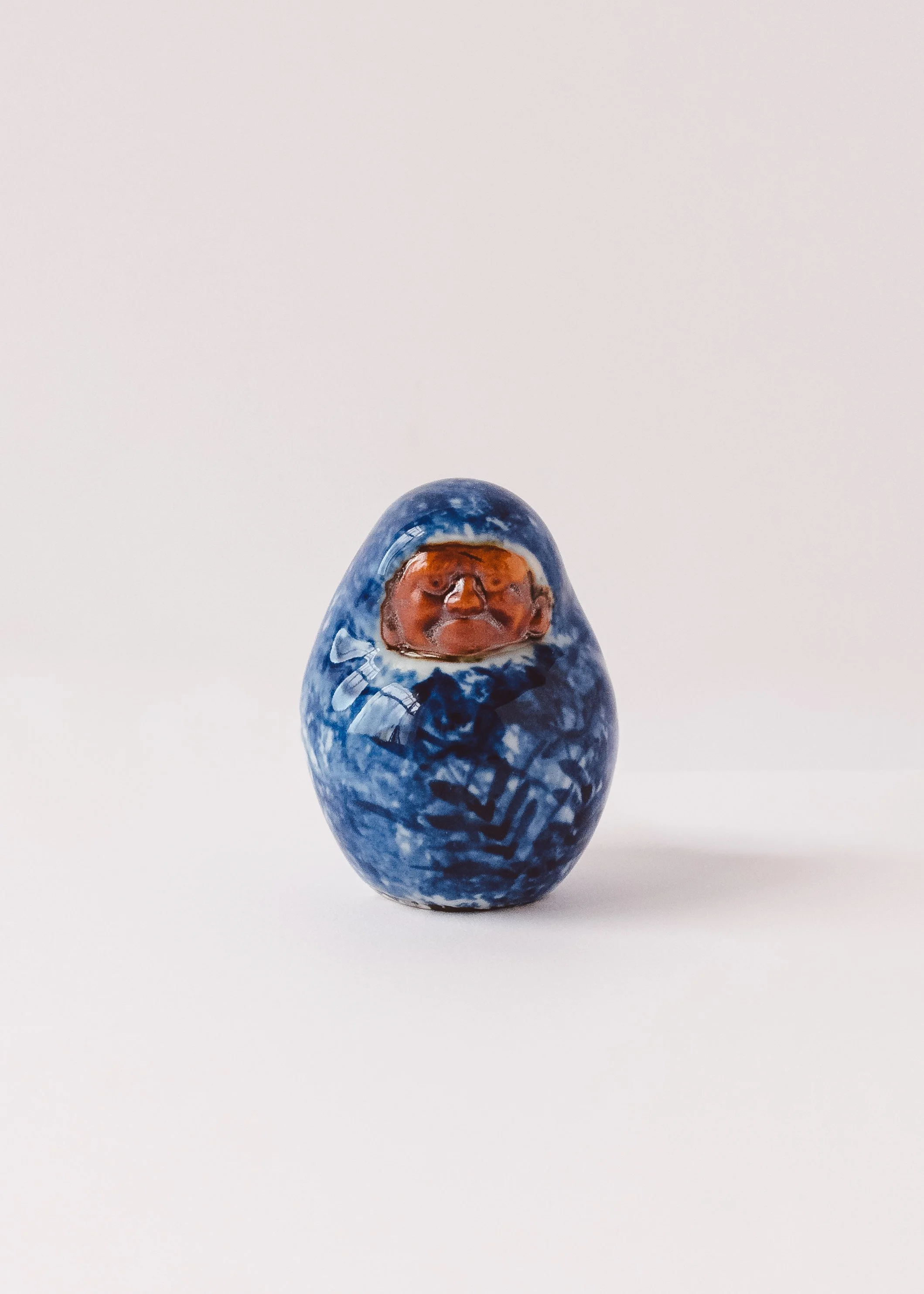 Image 1 of 9
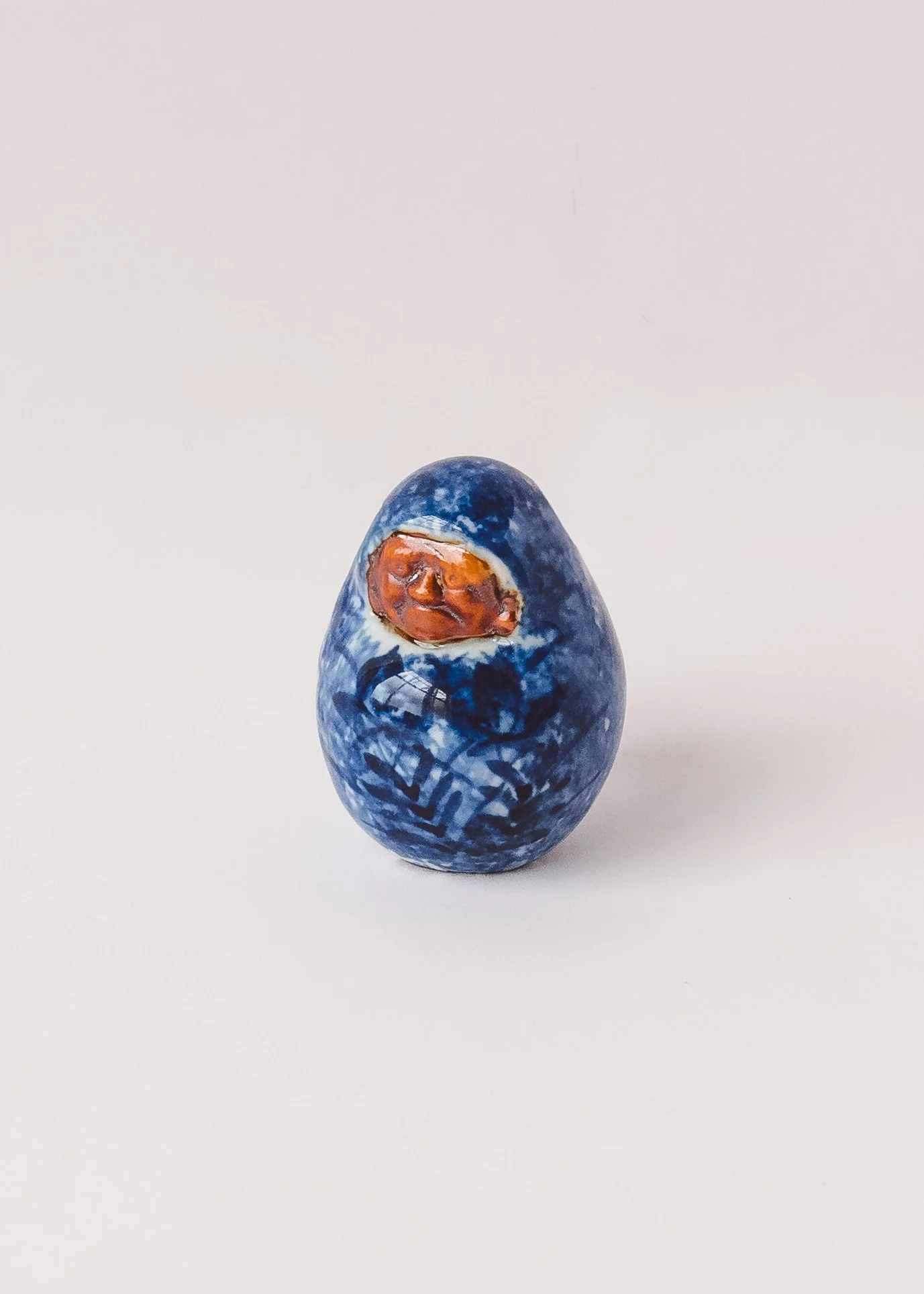 Image 2 of 9
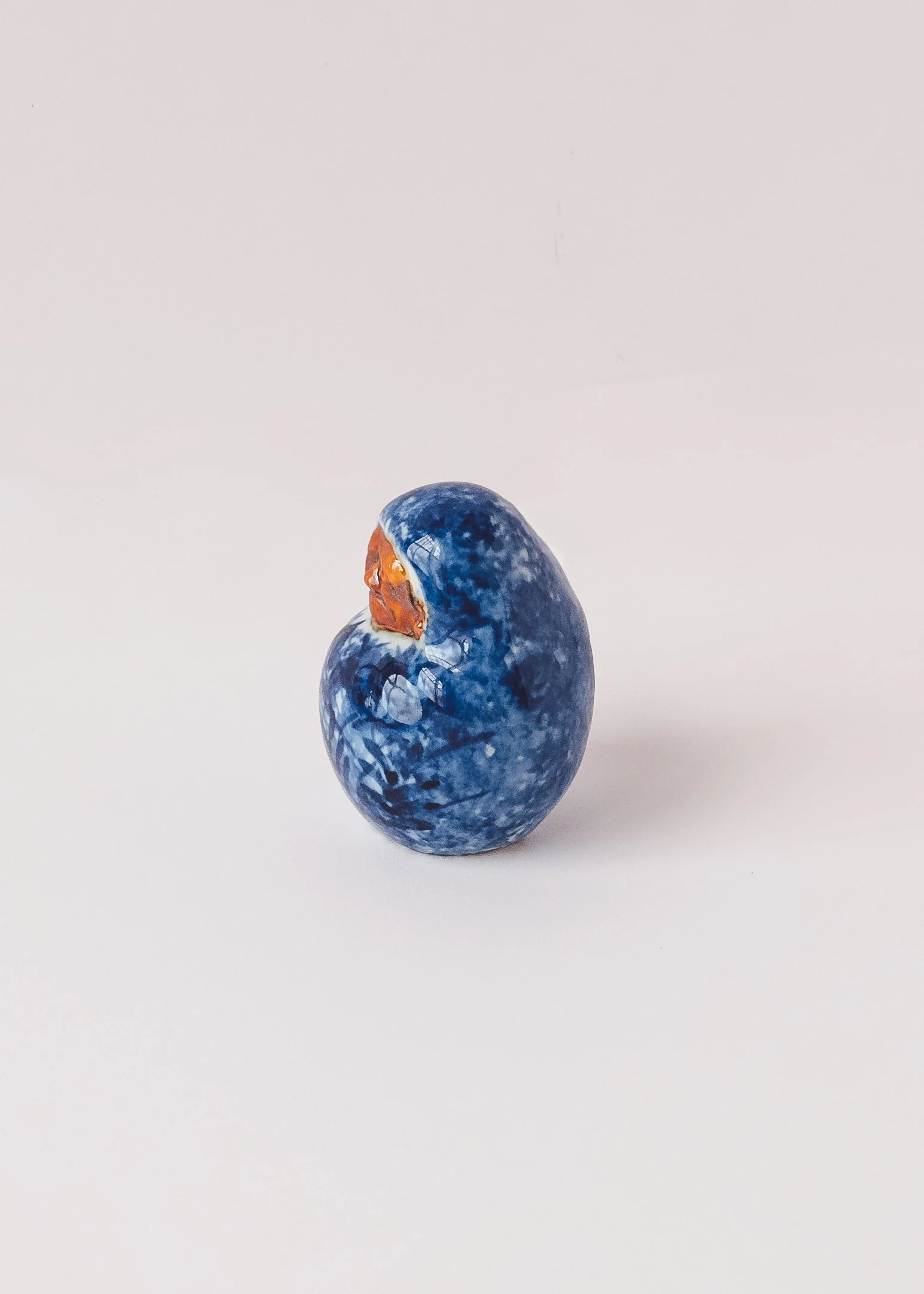 Image 3 of 9
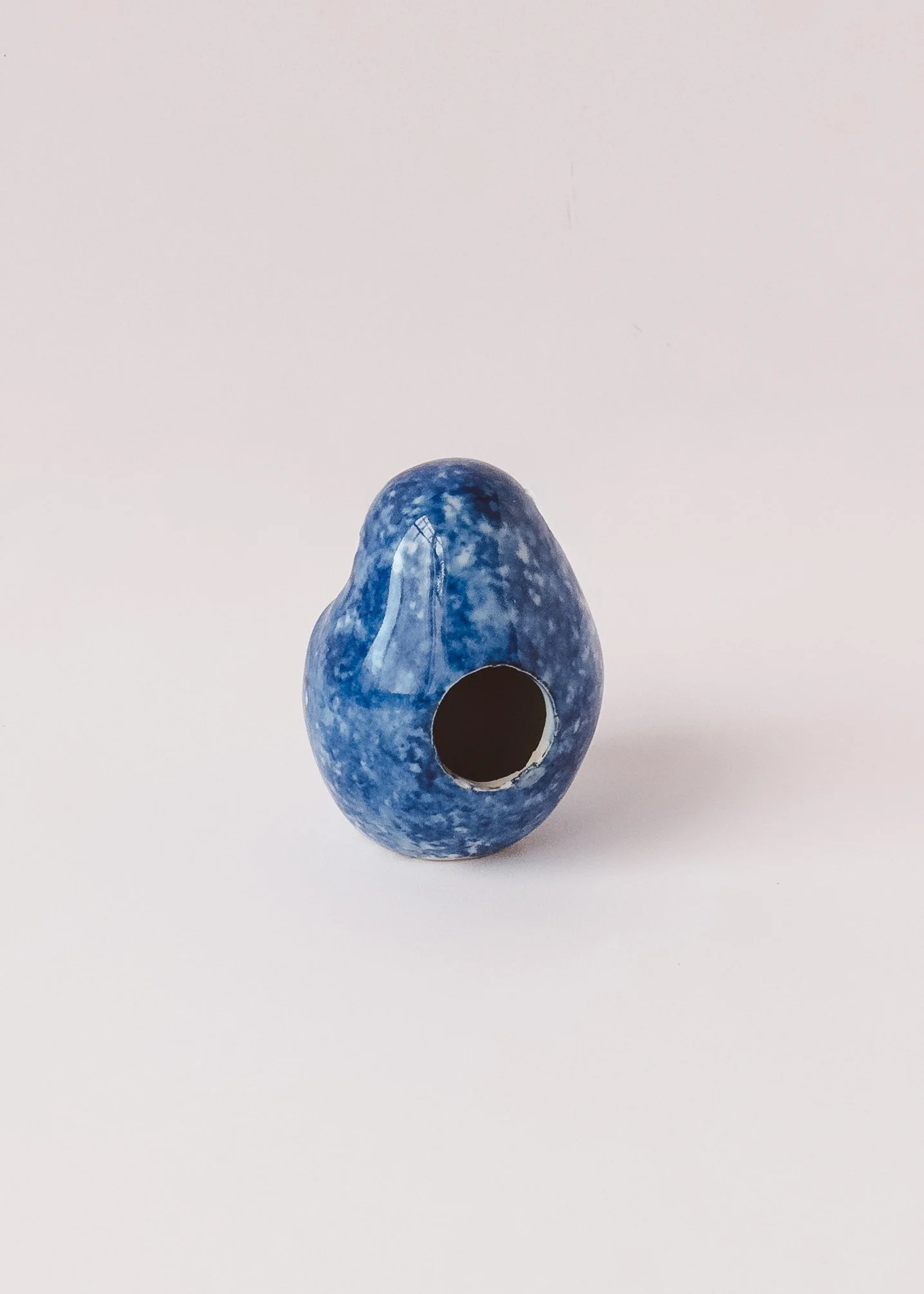 Image 4 of 9
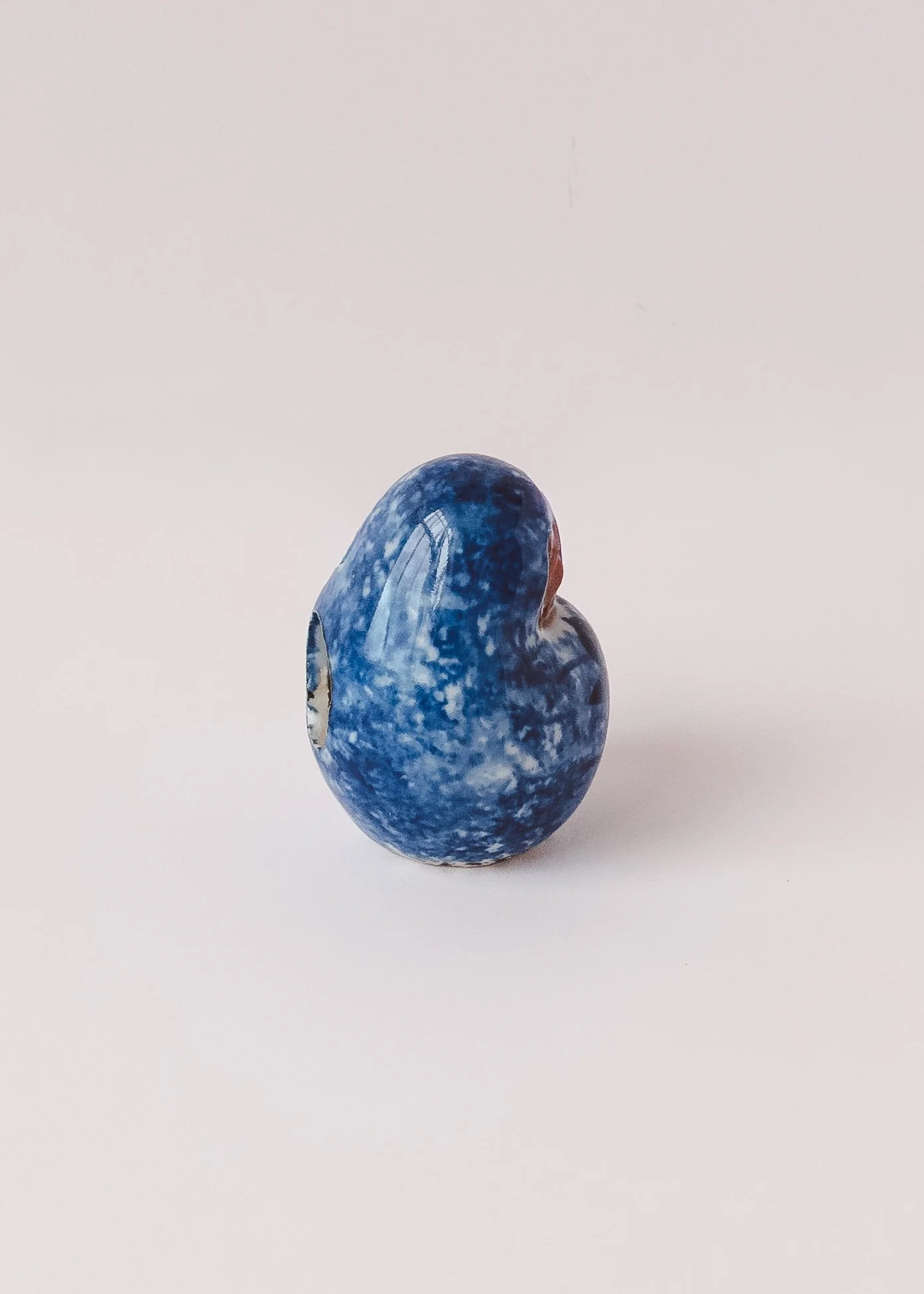 Image 5 of 9
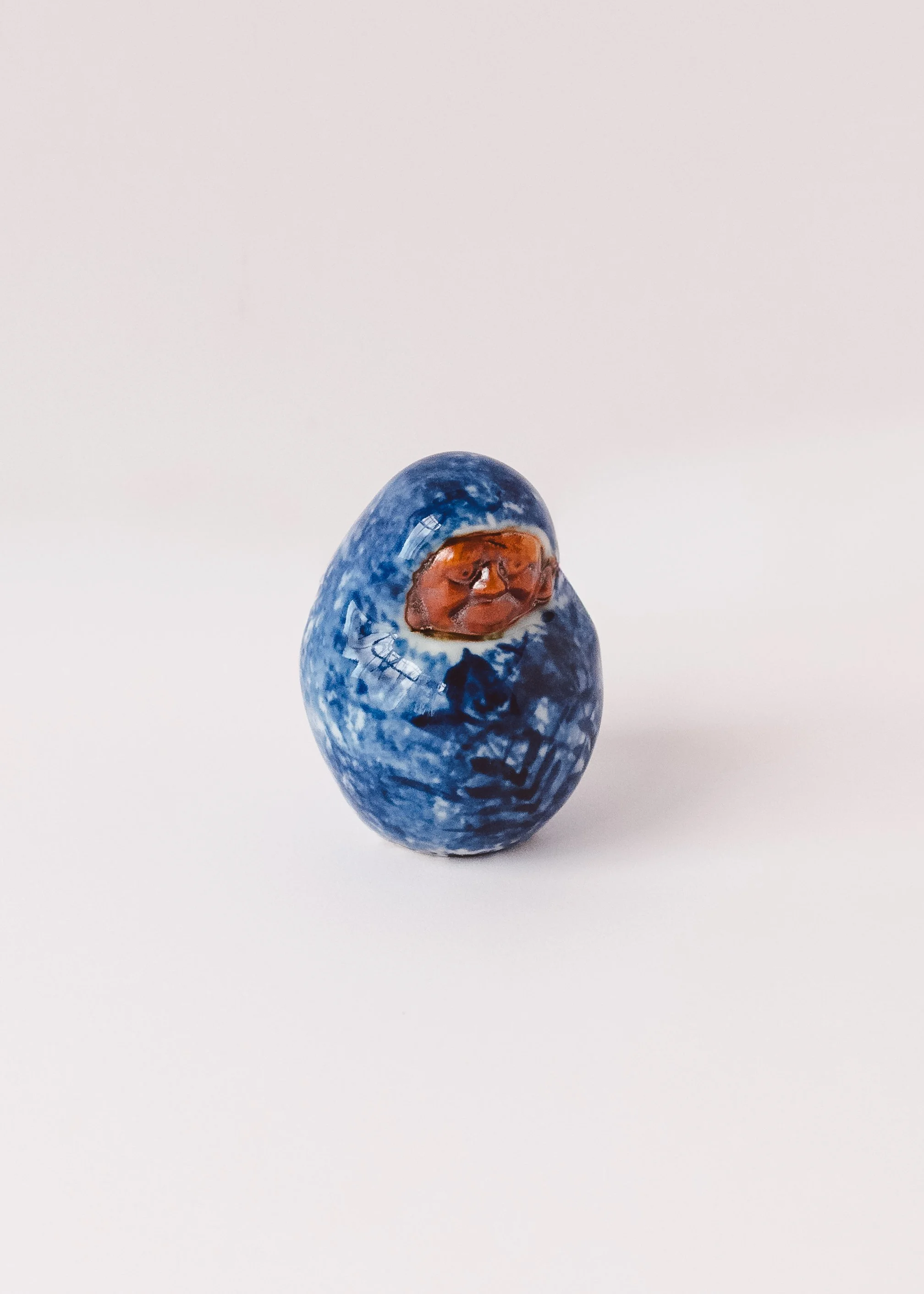 Image 6 of 9
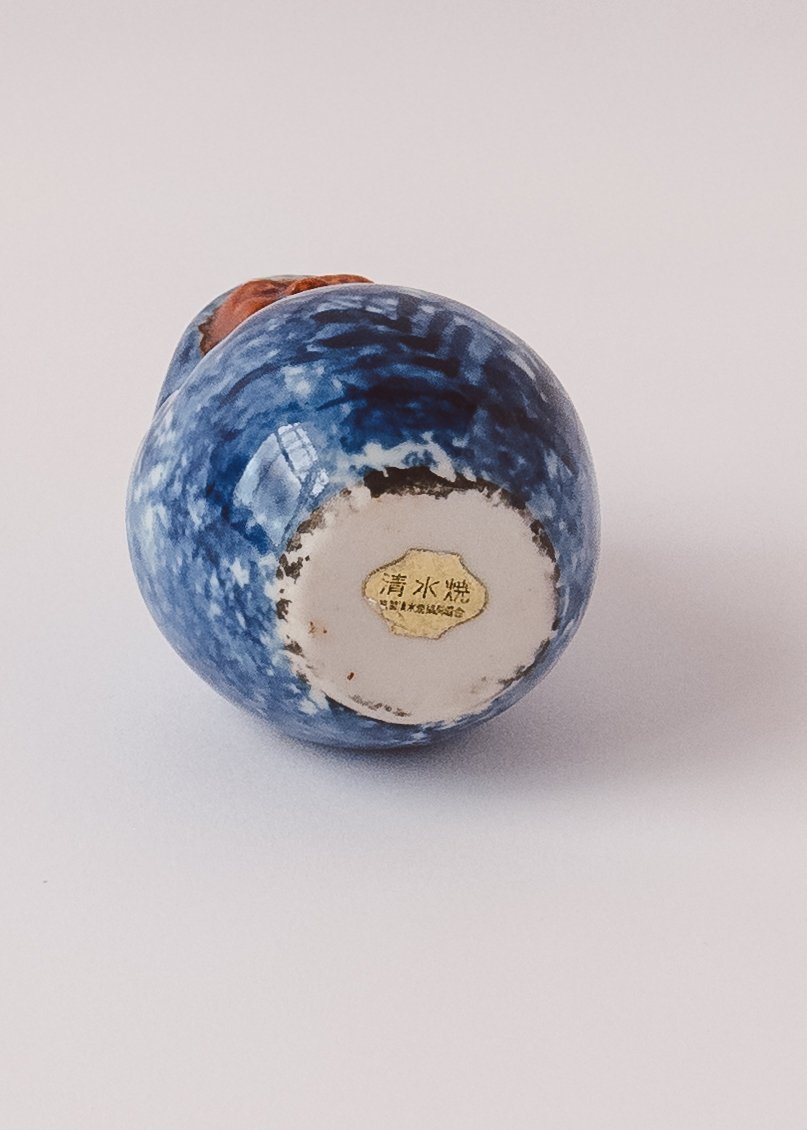 Image 7 of 9
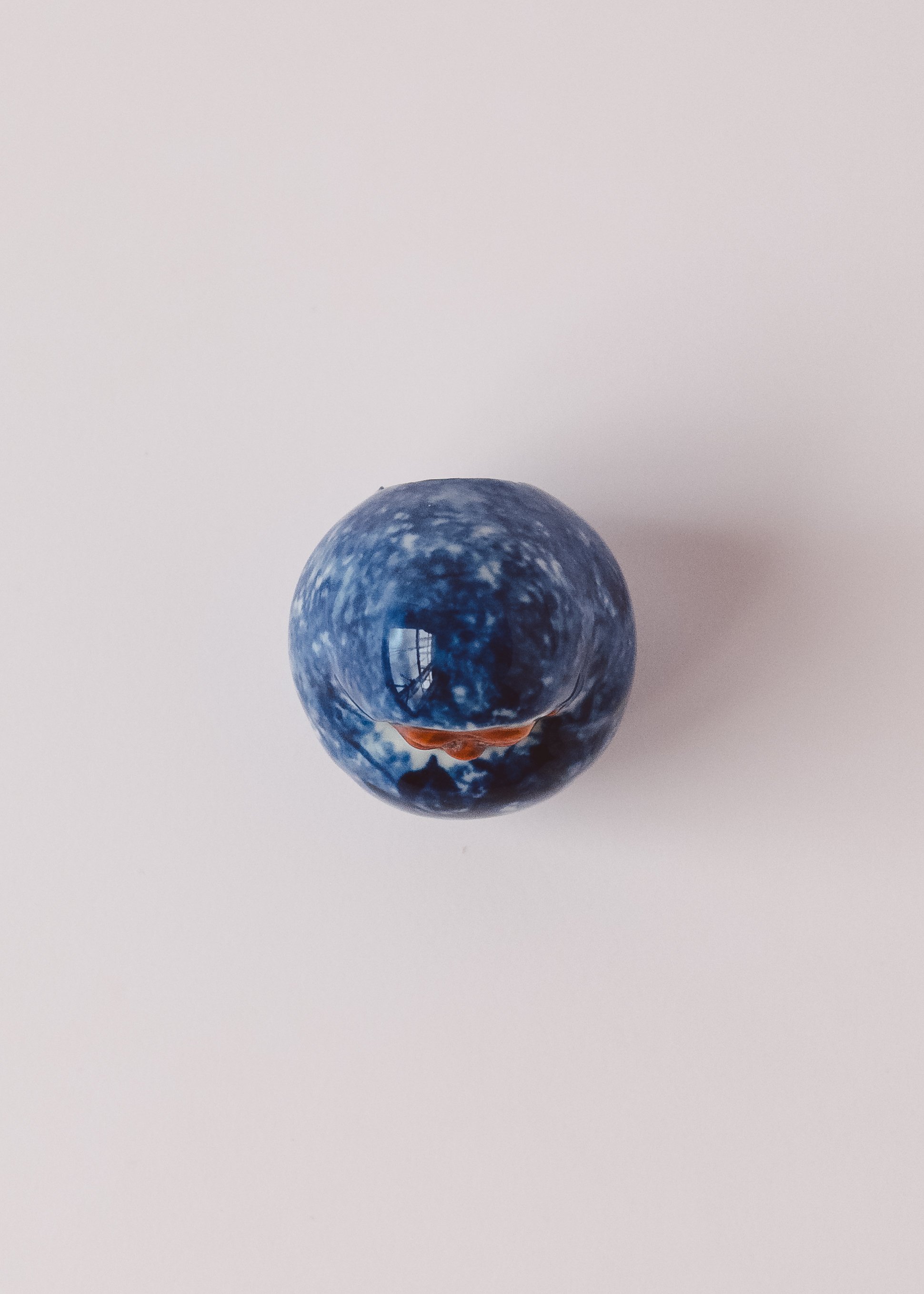 Image 8 of 9
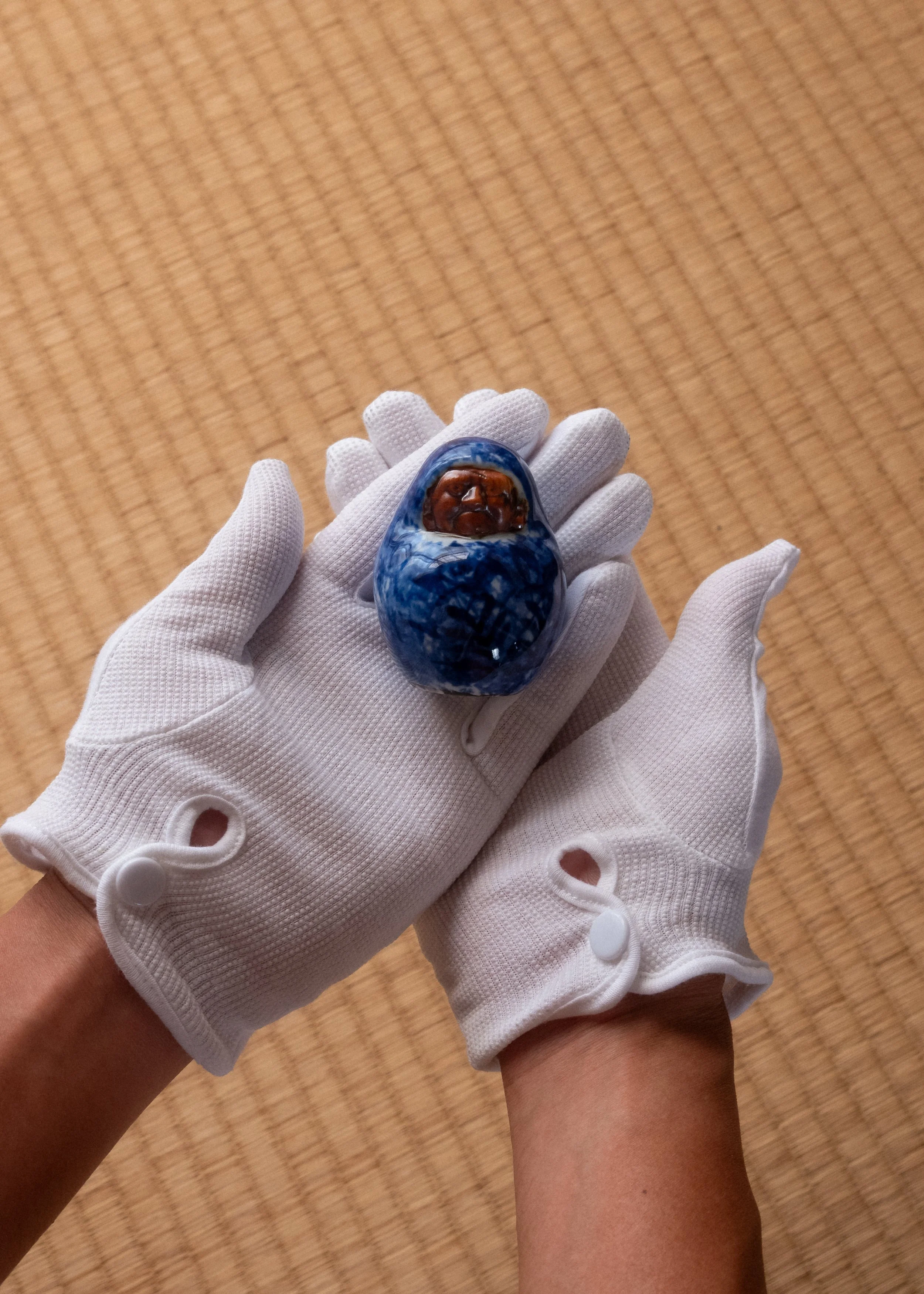 Image 9 of 9