【 The Concept 】
Five monkeys, sold as one lot, made of two materials that disagree with each other.
The parent is bronze. It walks on all fours, head lowered and pushed forward, shoulders rolling, the whole body committed to the ground. Its four feet are flat on the surface and its weight — or what should be its weight — is distributed evenly across them. It belongs to the floor. It is going somewhere, slowly, and it is not going up.
The four children are clay, and they do not touch the ground at all. Their arms and tails are cast as deep hooks, curved almost into closed circles, and the hooks are the entire point. Hang one over the edge of a shelf and it stays there, suspended, its body dangling into the air below the surface. Hang a second one from the first one's leg and it stays too. They chain. Four of them will run down the side of a bookcase in a line, each one holding the one above it, none of them touching anything solid except the first hook at the top.
So the lot contains an argument. Bronze surrenders to gravity and clay refuses it. And there is a second inversion inside the first: the bronze parent is hollow. It weighs 78 grams — less than a chicken egg, less than the phone in your pocket. The heavy material is the light object. The light material is the one hanging in the air. Nothing here is doing what its substance says it should.
In Japan the monkey is a household protector, and the reason is a pun. The word for monkey is saru, which is also the verb to leave, to depart. A monkey in the house means ma ga saru — the evil departs. The same syllables also produce masaru, meaning to surpass, to prevail. A single word, three meanings, and out of that coincidence an entire folk tradition of monkey figures kept on shelves and doorframes, quietly and permanently sending misfortune out the door.
【 The Function 】
95 grams for all five. The parent is 78 grams, 11 centimeters long, 7 centimeters tall, 4 centimeters wide — cast bronze with a hollow interior, which is why a metal object this size can be lifted with two fingers. The four children are 17 grams combined, 4 centimeters tall and 2 centimeters wide each.
The parent sits on any flat surface. The children do not sit anywhere. They hang: from a shelf lip, a picture frame, a cup rim, the spine of an open book, the edge of a drawer, each other. They were made as folk toys of a specific kind, built around the hook rather than around the pose, and the hook means they are never finished being placed. Every surface in a room with an edge is a place one of them could be.
【 The Texture 】
The parent is copper-red — warm, dark, metallic — with green verdigris settled into the low places: the throat, the flanks, the hollows where the legs meet the body, the crease behind each ear. This is oxidation. Copper reacts with the air over decades and the reaction leaves a green mineral deposit in whatever recesses hold moisture longest. It cannot be applied and it cannot be rushed.
Over the entire back and body run hundreds of fine chiselled lines — individual hair strokes, cut one at a time into the metal, dense enough that from a distance the surface reads as fur rather than as engraving. The face, the ears, the hands, and the feet are exempt. Those are polished smooth, and the contrast is the whole trick: the smooth parts look like skin because the rough parts look like hair.
The children are the opposite in every respect. Unglazed clay, pale buff, matte, faintly gritty to the touch. No metal, no shine, no patina, no fur. The only color on any of them is a single stroke of red across the face — the bare red skin of a Japanese macaque — and two black dots for eyes. That is the entire palette. Four marks per monkey, sixteen marks in total, and out of sixteen marks four distinct faces.
【 Presence 】
Everything else in this archive is placed. It is set on a surface and it stays where it was set. These four are hung, and the difference is not small.
A placed object occupies its shelf. A hung object interrupts the shelf — it breaks the horizontal line, drops below it, changes what the edge of the furniture means. Put one on a bookcase and the bookcase acquires a rule it did not have: things can now go over the side. Put four on and they descend in a chain, and the eye follows them down, and the room reorganizes itself slightly around the fall.
The bronze parent, meanwhile, ignores all of this. It walks. It is not looking at the children, does not appear to know they exist, and has the flat, unhurried, faintly bored expression of an animal that has been walking for a long time and expects to walk further. It is the only serious object in the lot. The other four are pure mischief — hanging off the furniture, hanging off each other, hanging off nothing at all.
Which is exactly correct. That is what monkeys are for.
Sourced from a private collection in the Kansai region, Japan.
【 The Concept 】
Five monkeys, sold as one lot, made of two materials that disagree with each other.
The parent is bronze. It walks on all fours, head lowered and pushed forward, shoulders rolling, the whole body committed to the ground. Its four feet are flat on the surface and its weight — or what should be its weight — is distributed evenly across them. It belongs to the floor. It is going somewhere, slowly, and it is not going up.
The four children are clay, and they do not touch the ground at all. Their arms and tails are cast as deep hooks, curved almost into closed circles, and the hooks are the entire point. Hang one over the edge of a shelf and it stays there, suspended, its body dangling into the air below the surface. Hang a second one from the first one's leg and it stays too. They chain. Four of them will run down the side of a bookcase in a line, each one holding the one above it, none of them touching anything solid except the first hook at the top.
So the lot contains an argument. Bronze surrenders to gravity and clay refuses it. And there is a second inversion inside the first: the bronze parent is hollow. It weighs 78 grams — less than a chicken egg, less than the phone in your pocket. The heavy material is the light object. The light material is the one hanging in the air. Nothing here is doing what its substance says it should.
In Japan the monkey is a household protector, and the reason is a pun. The word for monkey is saru, which is also the verb to leave, to depart. A monkey in the house means ma ga saru — the evil departs. The same syllables also produce masaru, meaning to surpass, to prevail. A single word, three meanings, and out of that coincidence an entire folk tradition of monkey figures kept on shelves and doorframes, quietly and permanently sending misfortune out the door.
【 The Function 】
95 grams for all five. The parent is 78 grams, 11 centimeters long, 7 centimeters tall, 4 centimeters wide — cast bronze with a hollow interior, which is why a metal object this size can be lifted with two fingers. The four children are 17 grams combined, 4 centimeters tall and 2 centimeters wide each.
The parent sits on any flat surface. The children do not sit anywhere. They hang: from a shelf lip, a picture frame, a cup rim, the spine of an open book, the edge of a drawer, each other. They were made as folk toys of a specific kind, built around the hook rather than around the pose, and the hook means they are never finished being placed. Every surface in a room with an edge is a place one of them could be.
【 The Texture 】
The parent is copper-red — warm, dark, metallic — with green verdigris settled into the low places: the throat, the flanks, the hollows where the legs meet the body, the crease behind each ear. This is oxidation. Copper reacts with the air over decades and the reaction leaves a green mineral deposit in whatever recesses hold moisture longest. It cannot be applied and it cannot be rushed.
Over the entire back and body run hundreds of fine chiselled lines — individual hair strokes, cut one at a time into the metal, dense enough that from a distance the surface reads as fur rather than as engraving. The face, the ears, the hands, and the feet are exempt. Those are polished smooth, and the contrast is the whole trick: the smooth parts look like skin because the rough parts look like hair.
The children are the opposite in every respect. Unglazed clay, pale buff, matte, faintly gritty to the touch. No metal, no shine, no patina, no fur. The only color on any of them is a single stroke of red across the face — the bare red skin of a Japanese macaque — and two black dots for eyes. That is the entire palette. Four marks per monkey, sixteen marks in total, and out of sixteen marks four distinct faces.
【 Presence 】
Everything else in this archive is placed. It is set on a surface and it stays where it was set. These four are hung, and the difference is not small.
A placed object occupies its shelf. A hung object interrupts the shelf — it breaks the horizontal line, drops below it, changes what the edge of the furniture means. Put one on a bookcase and the bookcase acquires a rule it did not have: things can now go over the side. Put four on and they descend in a chain, and the eye follows them down, and the room reorganizes itself slightly around the fall.
The bronze parent, meanwhile, ignores all of this. It walks. It is not looking at the children, does not appear to know they exist, and has the flat, unhurried, faintly bored expression of an animal that has been walking for a long time and expects to walk further. It is the only serious object in the lot. The other four are pure mischief — hanging off the furniture, hanging off each other, hanging off nothing at all.
Which is exactly correct. That is what monkeys are for.
Sourced from a private collection in the Kansai region, Japan.


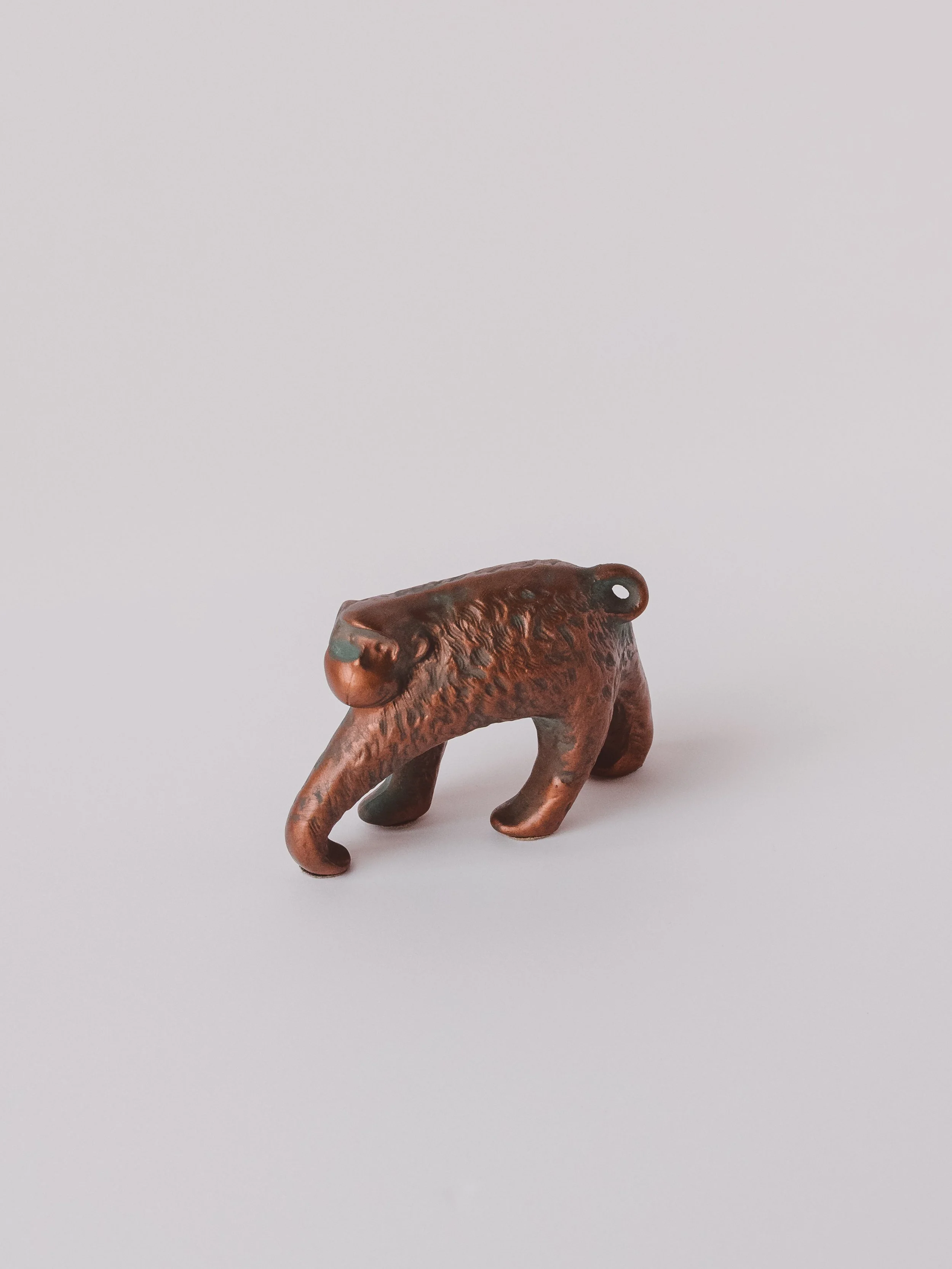 Image 1 of 12
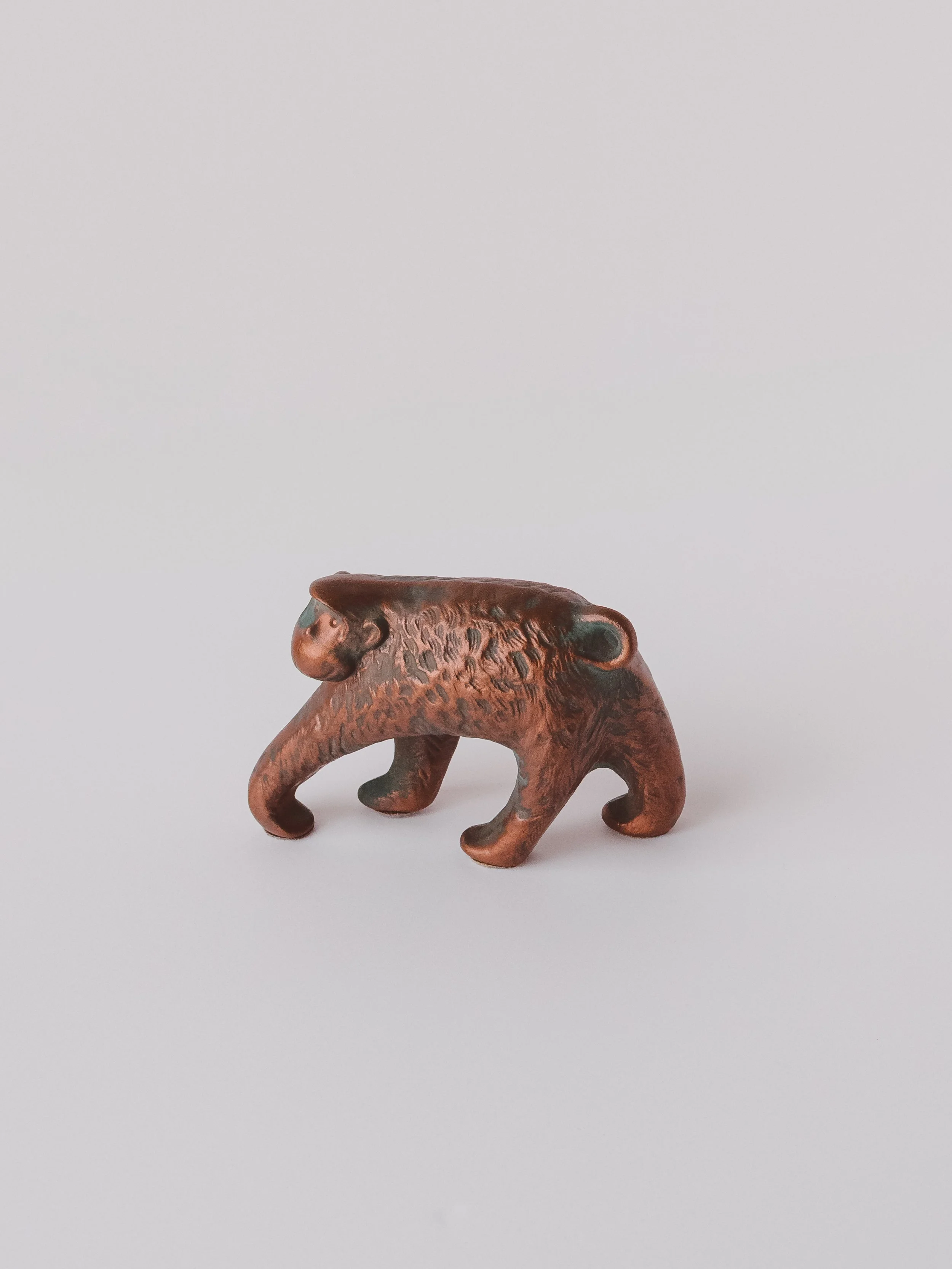 Image 2 of 12
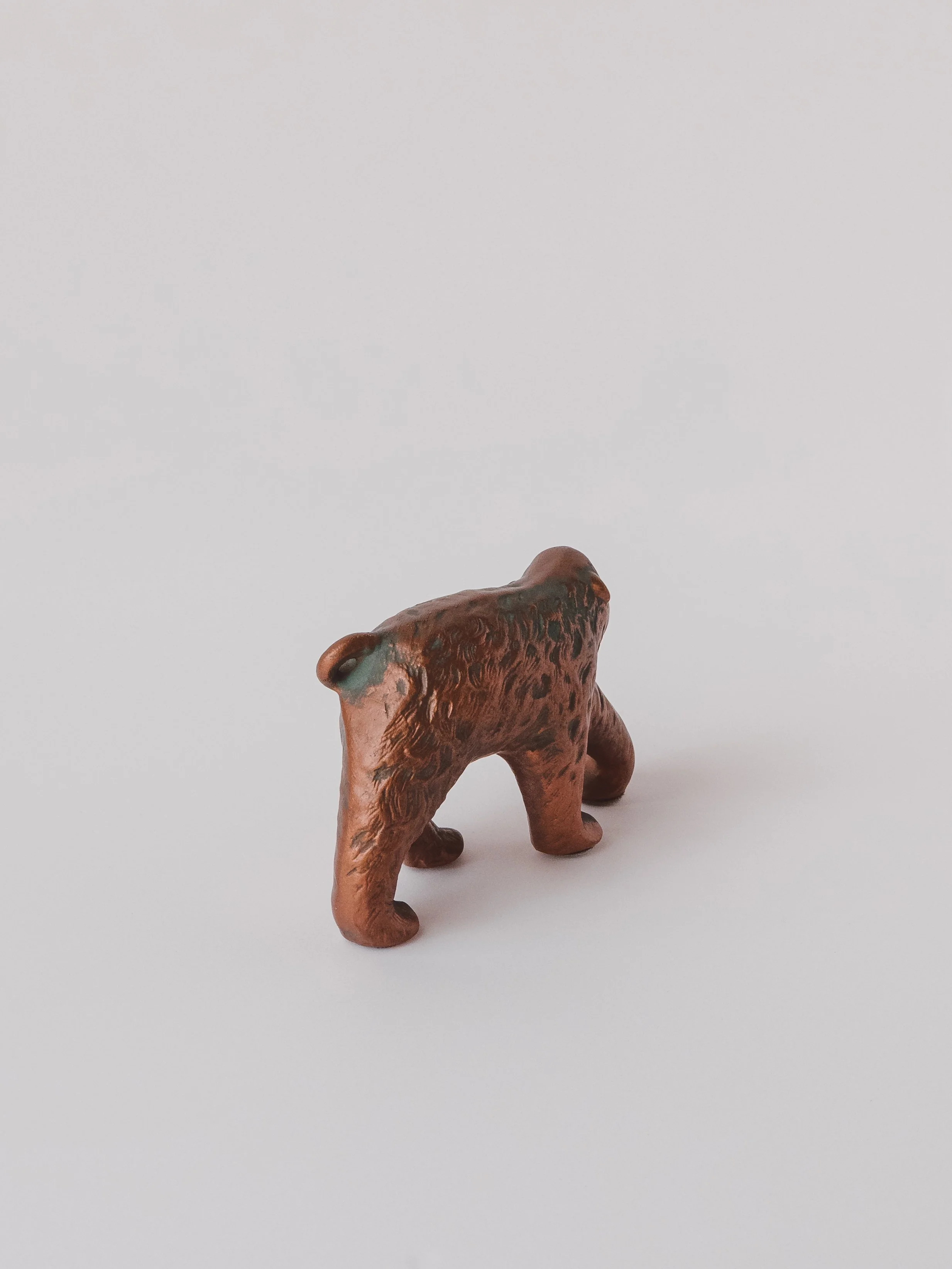 Image 3 of 12
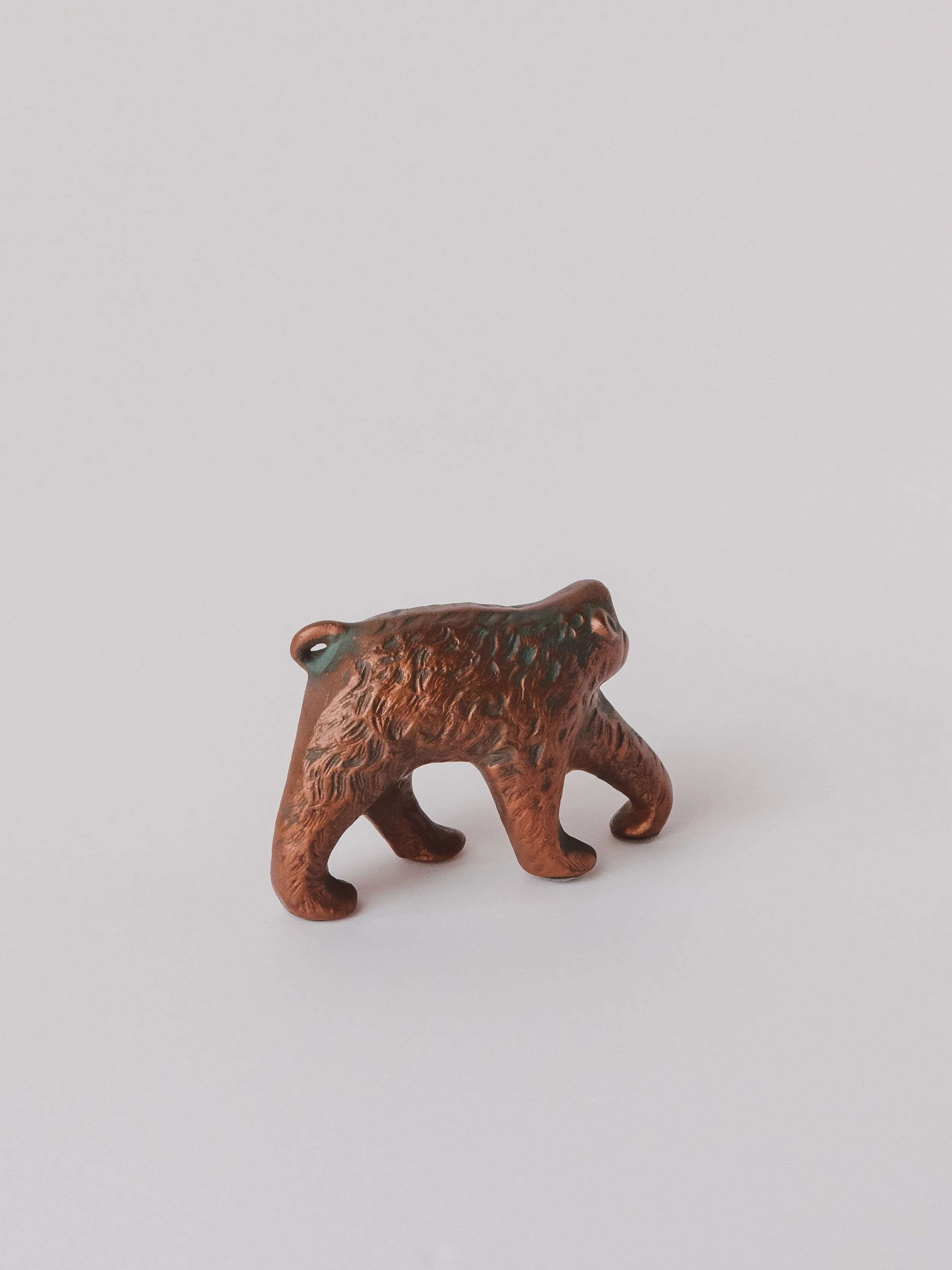 Image 4 of 12
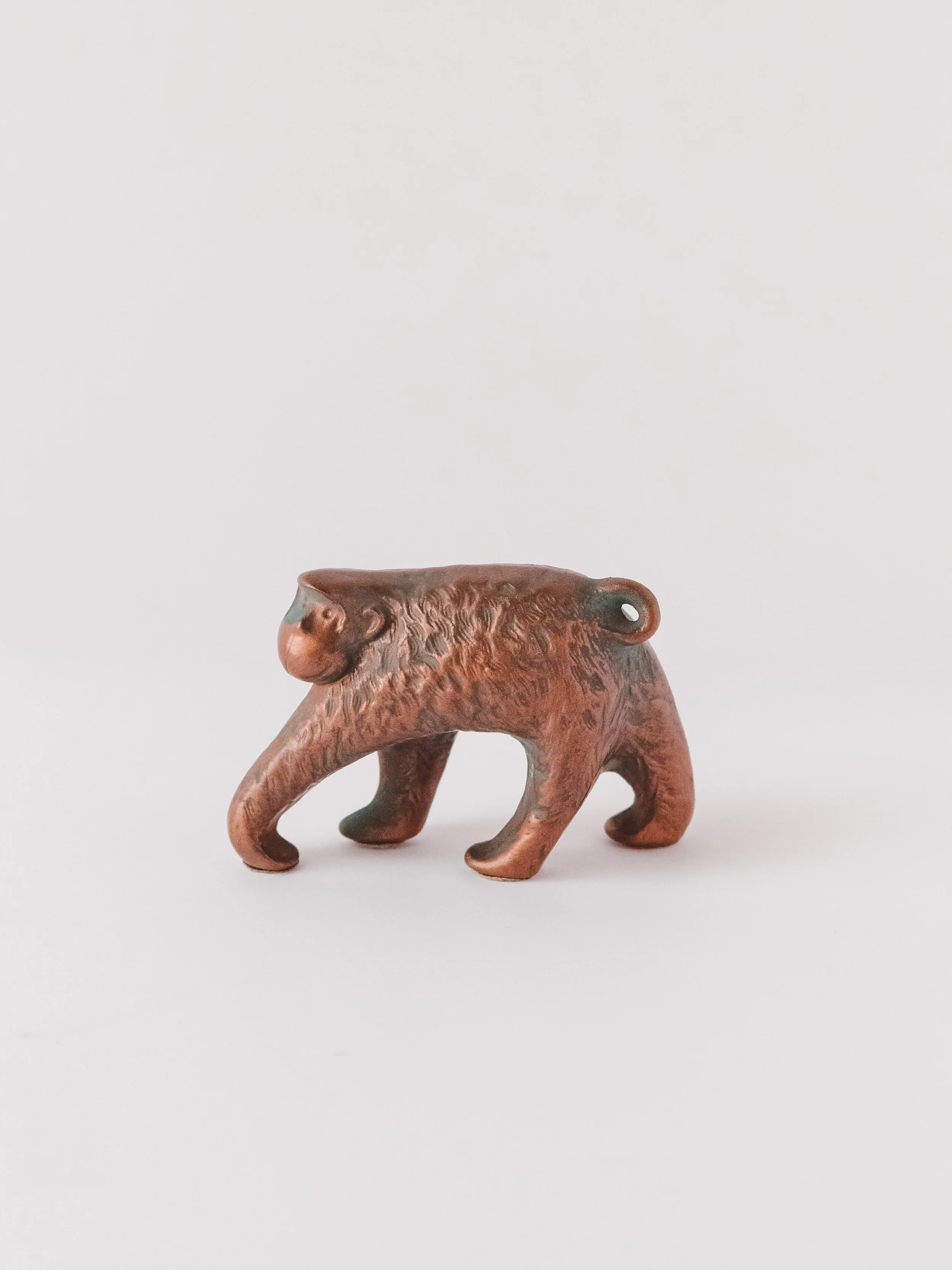 Image 5 of 12
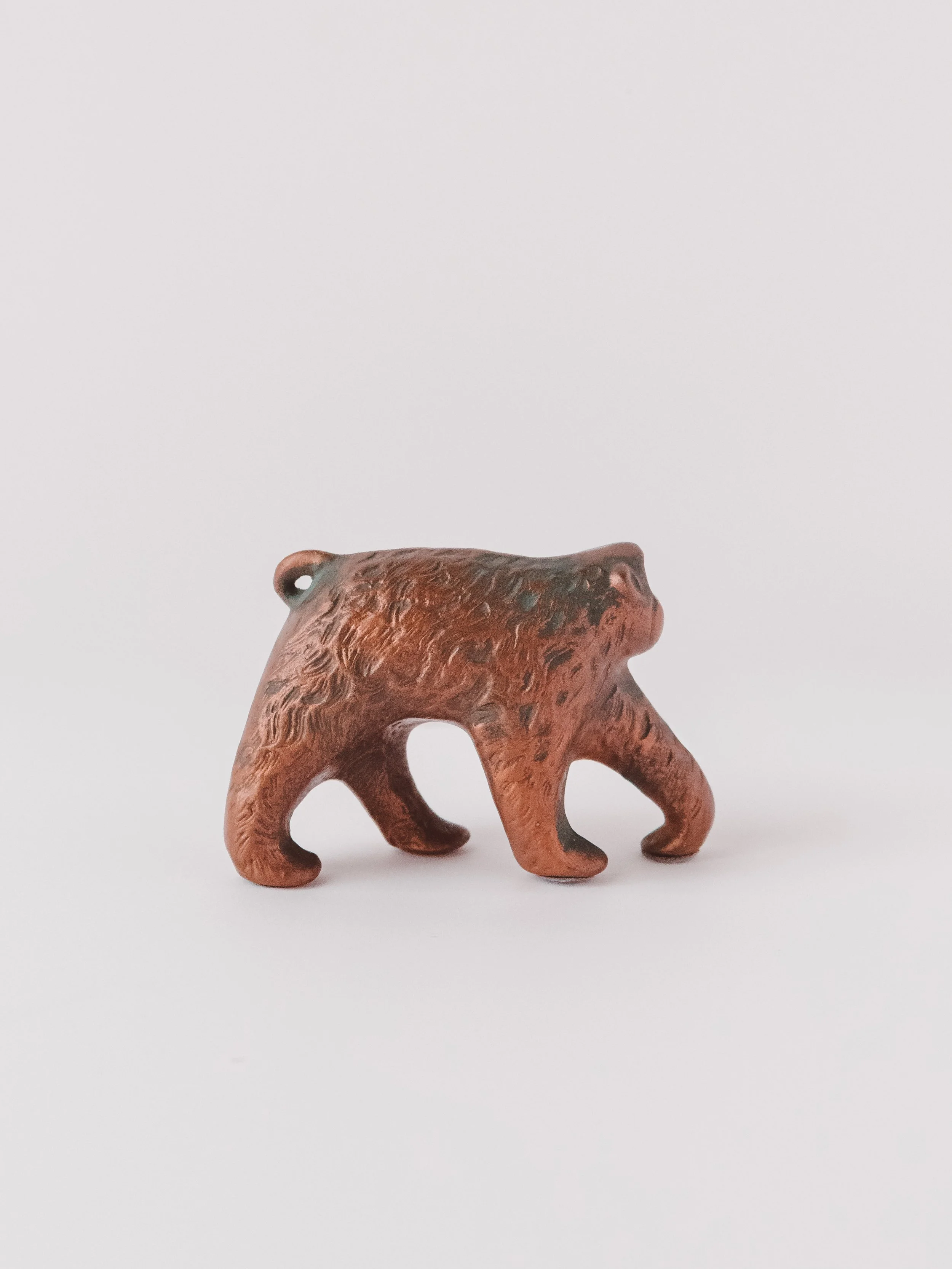 Image 6 of 12
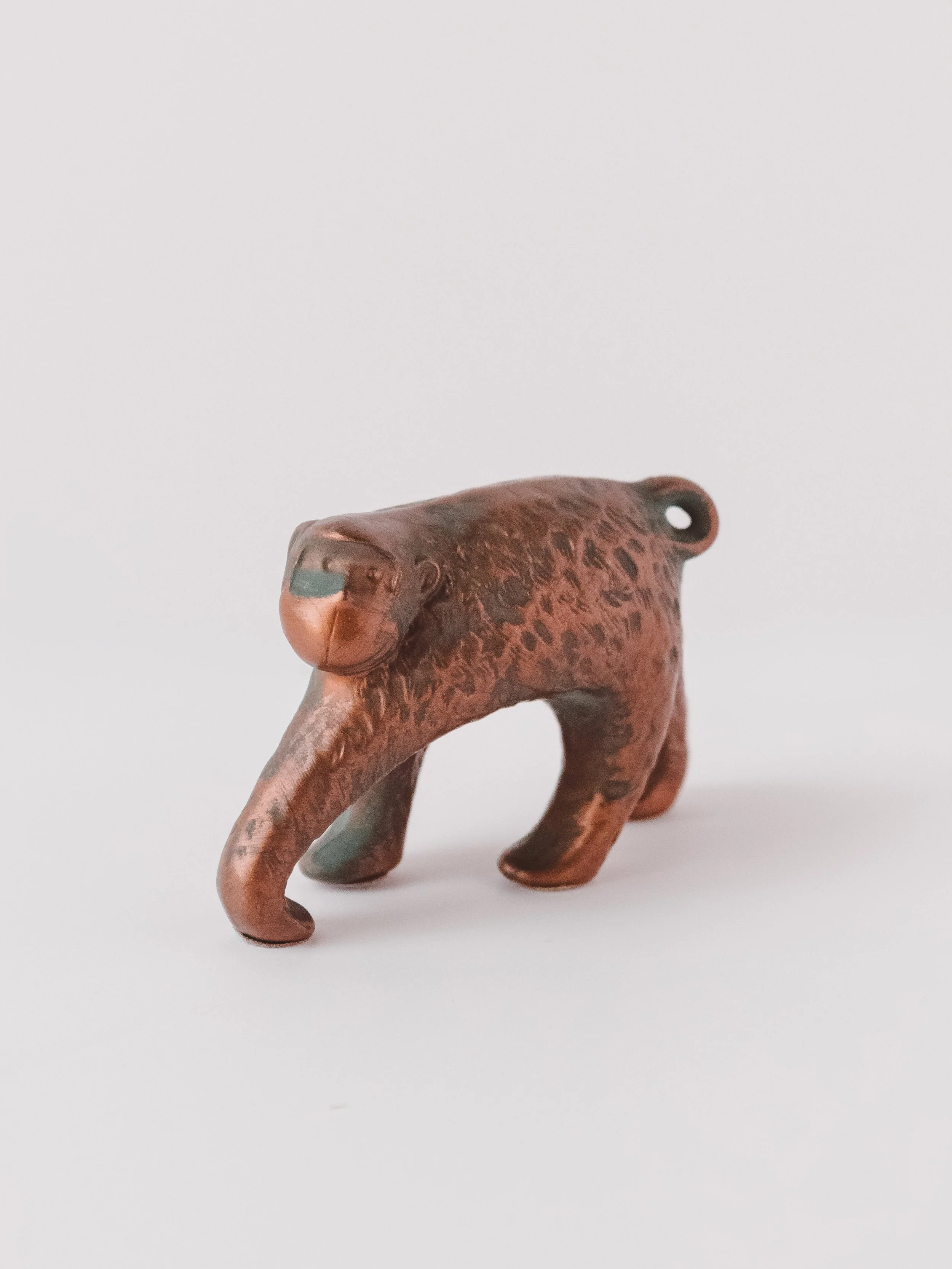 Image 7 of 12
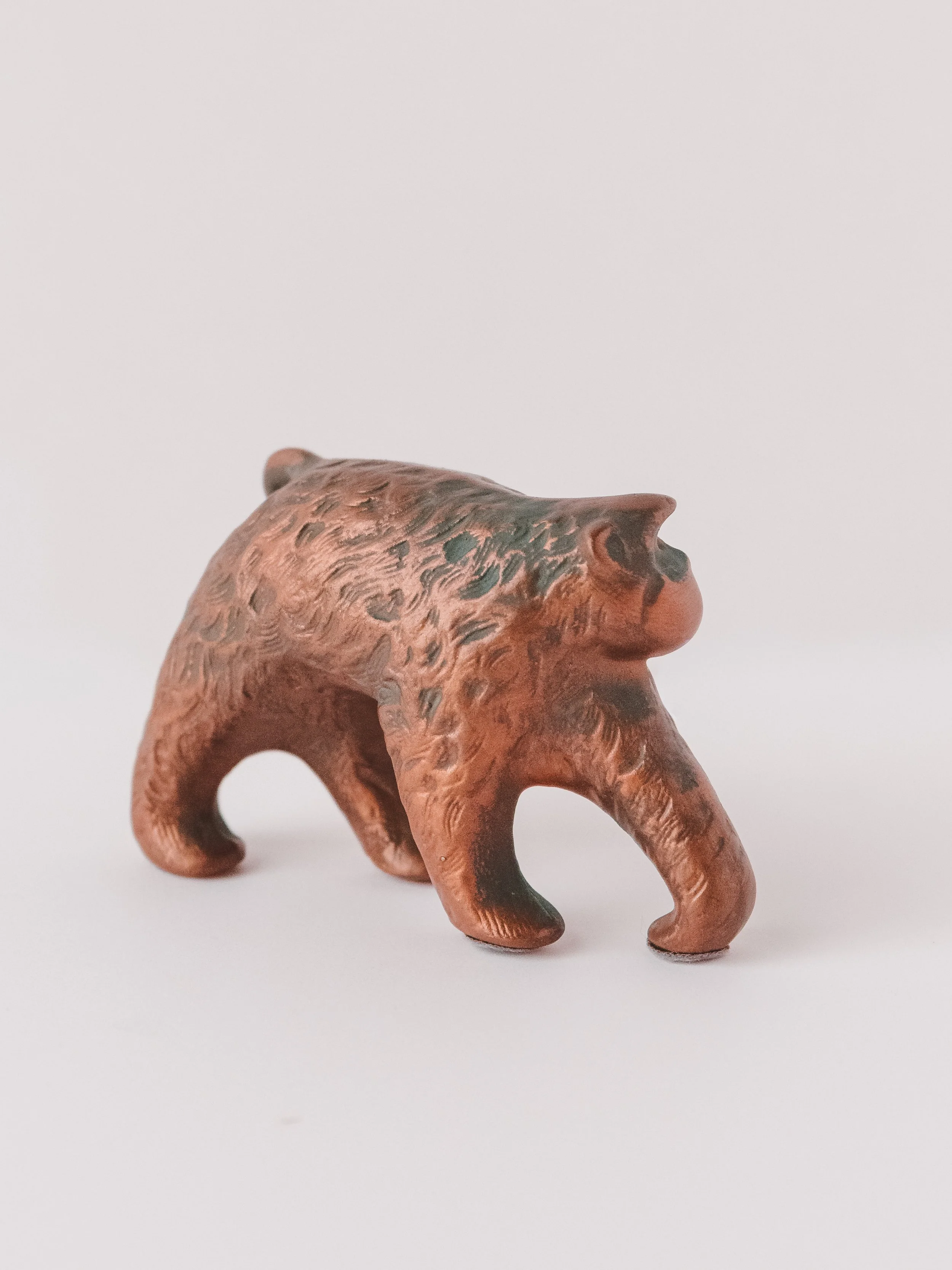 Image 8 of 12
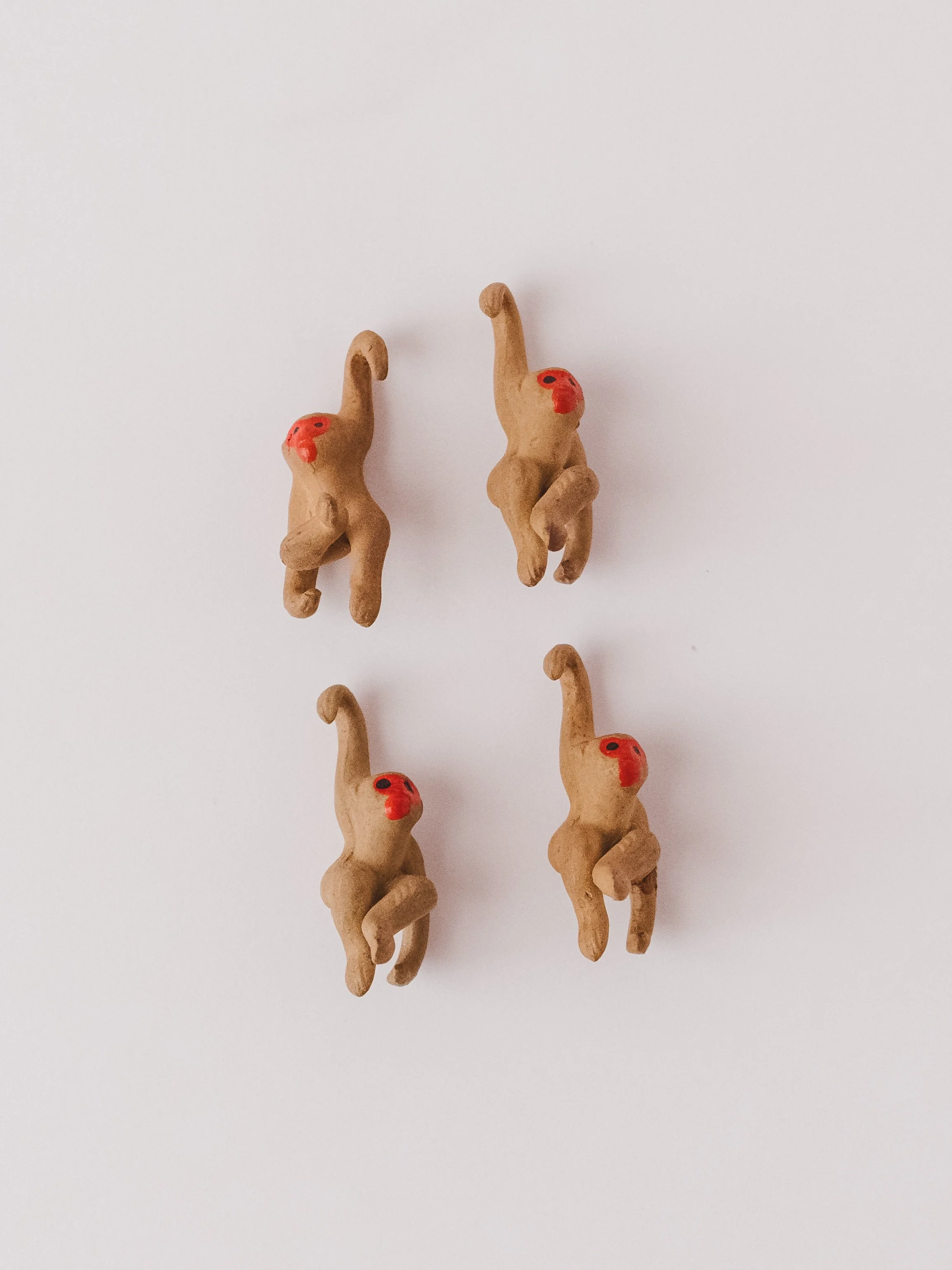 Image 9 of 12
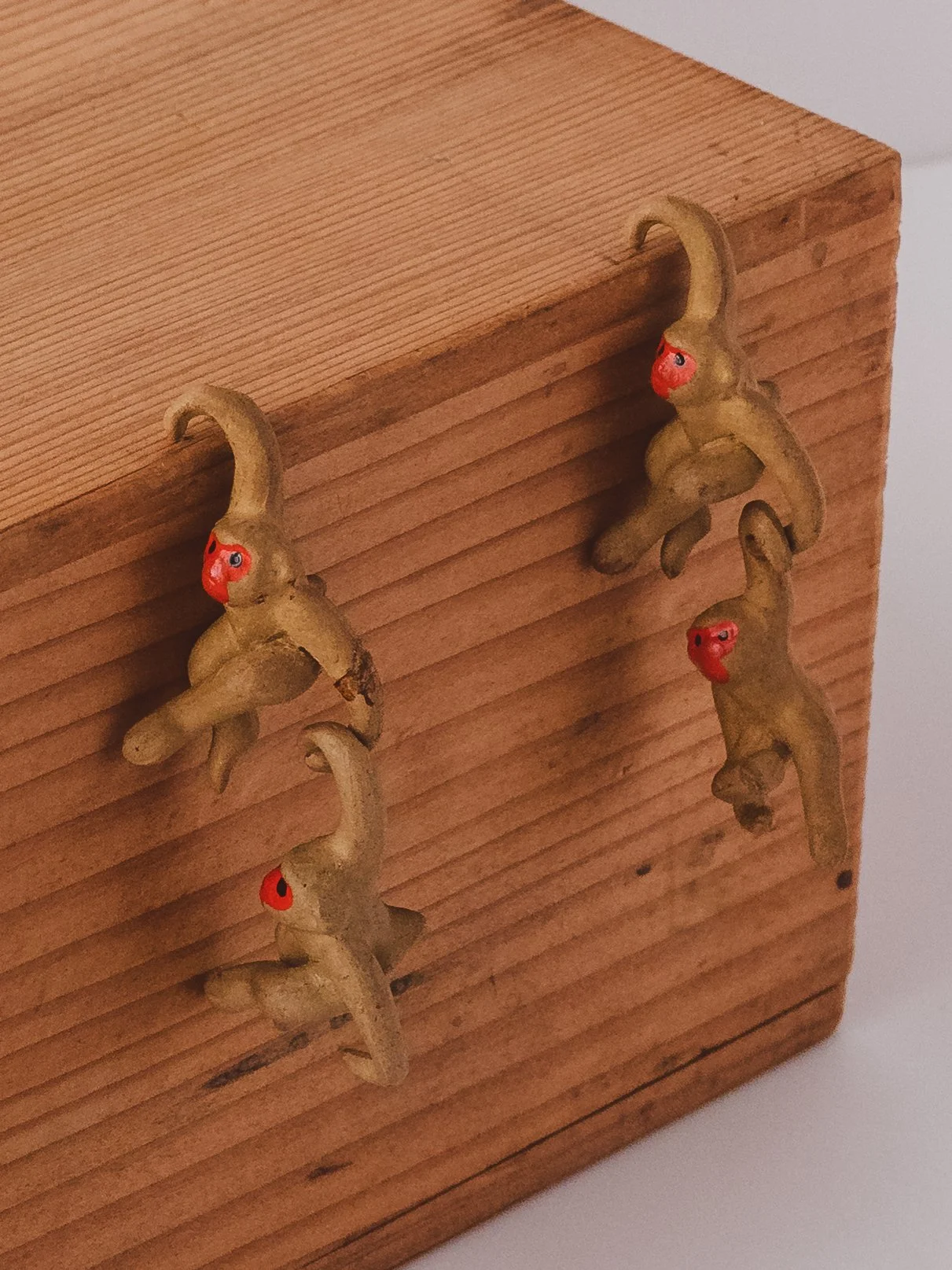 Image 10 of 12
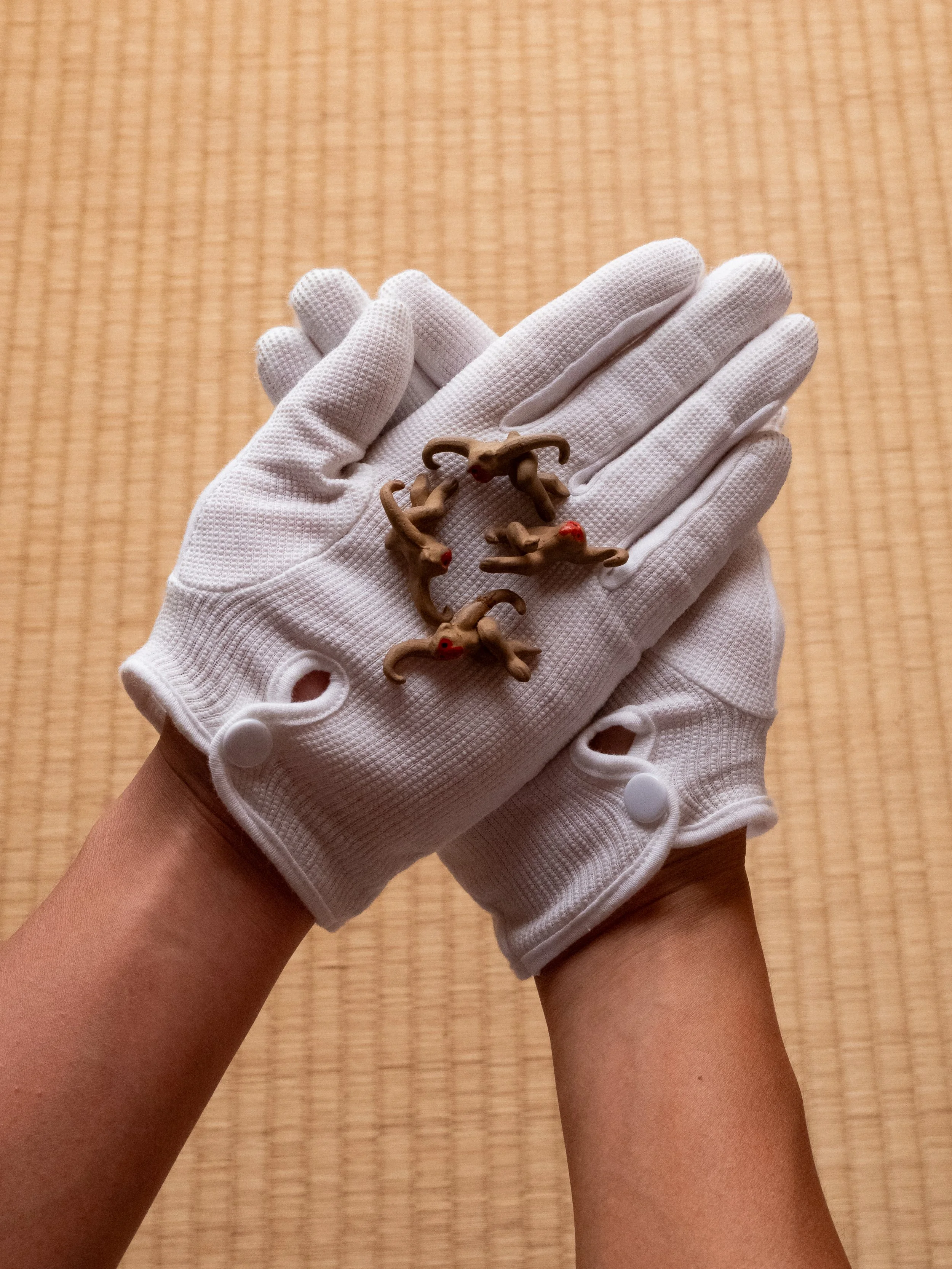 Image 11 of 12
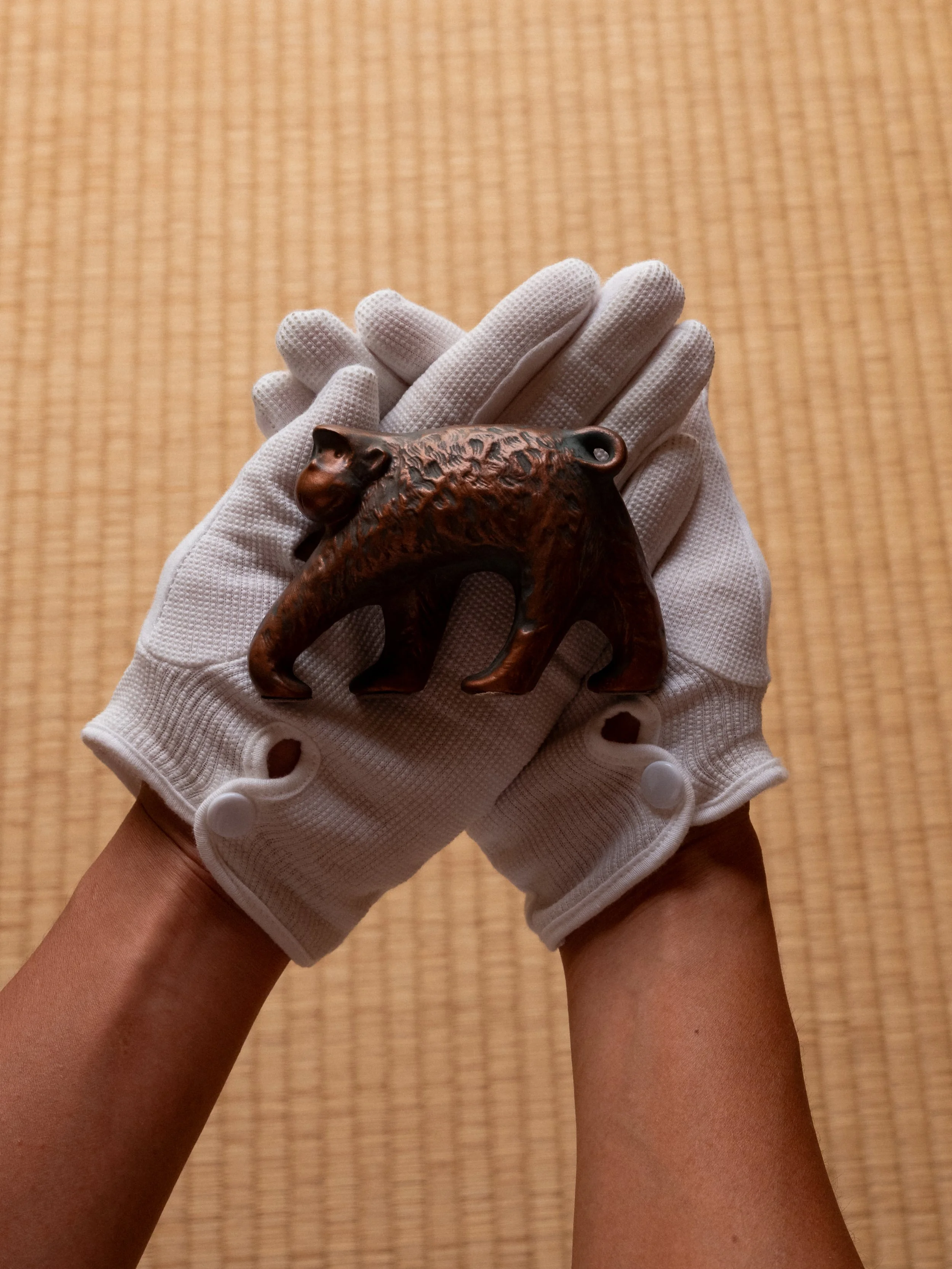 Image 12 of 12