【 The Concept 】
Two figures, sold together, carved from the same silence. They are the first human forms in MINGEI 1926's archive, and they arrive as a pair because neither functions alone. One sits. One stands. One holds a fish so large it bends his arm. The other stands on two bales of rice, gripping a mallet in one hand and the neck of a heavy sack in the other. They are smiling — not politely, but completely, with their eyes shut and their cheeks pushed up into their foreheads. These are not portraits of individuals. They are portraits of satisfaction.
Both figures are solid wood. Every surface carries the evidence of the blade that made it — flat, angular planes where a different material would curve, sharp edges where a softer process would round them off. The back of each figure shows the growth rings of the original timber, concentric and unhidden, as though the carver wanted the tree's biography to remain legible even after the tree became something else. This is not a rough or unfinished surface. Every plane has been sanded smooth, and the wood feels warm and continuous under the hand.
In the tradition they belong to, one represents the wealth that comes from the sea — fishing, trade, the catch that arrives from beyond the horizon. The other represents the wealth that comes from the earth — harvest, storage, the grain that accumulates underfoot. Together, they complete an economy: what is produced and what is exchanged. Placed side by side on a shelf, they do not guard the household. They host it.
【 The Function 】
189 grams combined. Two figures, each 7.5 centimeters tall, 7 centimeters wide, 5 centimeters deep. Small enough to share a shelf with books or sit inside a kitchen cabinet without displacing anything. In their original context, pairs like these were placed on household altars, kitchen counters, and entryway shelves as permanent residents — not seasonal decorations but year-round presences whose role was to ensure that the home never ran out of food or money. One faced the door. The other faced the pantry. Between them, every direction was covered.
【 The Texture 】
Wood from edge to edge. The color is a warm toffee-brown that has deepened through decades of oxidation into something close to caramel — the specific amber that only natural timber produces when left to age in still air. The grain is visible everywhere: along the folds of the robes, across the curve of the fish's belly, through the flat planes of the tall hats. It runs in one continuous direction on each figure, confirming that each body was carved from a single block, not assembled from parts. The surface is sanded to a fine smoothness that invites touch — warm, continuous, without a single splinter or rough patch. The angular planes where the blade defined each facet remain visually sharp, but the wood between them is polished by hand into a finish so even it feels like skin. The growth rings on the back are not decoration. They are the exposed cross-section of the tree itself, left visible as proof of origin.
【 Presence 】
They are the only figures in MINGEI 1926's archive that smile. Every other face in the collection is neutral, absent, or abstracted beyond recognition. These two are grinning. Their eyes are crescents. Their mouths are wide arcs. They radiate the specific, unmistakable satisfaction of people who have more than they need and are delighted by the excess. The fish is too big. The sack is too full. The rice bales are stacked. The mallet is raised and ready to strike again. Nothing about these figures suggests restraint. They are the opposite of minimalism — two small wooden men overflowing with abundance, asking only to be placed somewhere visible so they can continue doing what they have always done: welcoming more.
Sourced from a private collection in the Kansai region, Japan.
【 The Concept 】
Two figures, sold together, carved from the same silence. They are the first human forms in MINGEI 1926's archive, and they arrive as a pair because neither functions alone. One sits. One stands. One holds a fish so large it bends his arm. The other stands on two bales of rice, gripping a mallet in one hand and the neck of a heavy sack in the other. They are smiling — not politely, but completely, with their eyes shut and their cheeks pushed up into their foreheads. These are not portraits of individuals. They are portraits of satisfaction.
Both figures are solid wood. Every surface carries the evidence of the blade that made it — flat, angular planes where a different material would curve, sharp edges where a softer process would round them off. The back of each figure shows the growth rings of the original timber, concentric and unhidden, as though the carver wanted the tree's biography to remain legible even after the tree became something else. This is not a rough or unfinished surface. Every plane has been sanded smooth, and the wood feels warm and continuous under the hand.
In the tradition they belong to, one represents the wealth that comes from the sea — fishing, trade, the catch that arrives from beyond the horizon. The other represents the wealth that comes from the earth — harvest, storage, the grain that accumulates underfoot. Together, they complete an economy: what is produced and what is exchanged. Placed side by side on a shelf, they do not guard the household. They host it.
【 The Function 】
189 grams combined. Two figures, each 7.5 centimeters tall, 7 centimeters wide, 5 centimeters deep. Small enough to share a shelf with books or sit inside a kitchen cabinet without displacing anything. In their original context, pairs like these were placed on household altars, kitchen counters, and entryway shelves as permanent residents — not seasonal decorations but year-round presences whose role was to ensure that the home never ran out of food or money. One faced the door. The other faced the pantry. Between them, every direction was covered.
【 The Texture 】
Wood from edge to edge. The color is a warm toffee-brown that has deepened through decades of oxidation into something close to caramel — the specific amber that only natural timber produces when left to age in still air. The grain is visible everywhere: along the folds of the robes, across the curve of the fish's belly, through the flat planes of the tall hats. It runs in one continuous direction on each figure, confirming that each body was carved from a single block, not assembled from parts. The surface is sanded to a fine smoothness that invites touch — warm, continuous, without a single splinter or rough patch. The angular planes where the blade defined each facet remain visually sharp, but the wood between them is polished by hand into a finish so even it feels like skin. The growth rings on the back are not decoration. They are the exposed cross-section of the tree itself, left visible as proof of origin.
【 Presence 】
They are the only figures in MINGEI 1926's archive that smile. Every other face in the collection is neutral, absent, or abstracted beyond recognition. These two are grinning. Their eyes are crescents. Their mouths are wide arcs. They radiate the specific, unmistakable satisfaction of people who have more than they need and are delighted by the excess. The fish is too big. The sack is too full. The rice bales are stacked. The mallet is raised and ready to strike again. Nothing about these figures suggests restraint. They are the opposite of minimalism — two small wooden men overflowing with abundance, asking only to be placed somewhere visible so they can continue doing what they have always done: welcoming more.
Sourced from a private collection in the Kansai region, Japan.


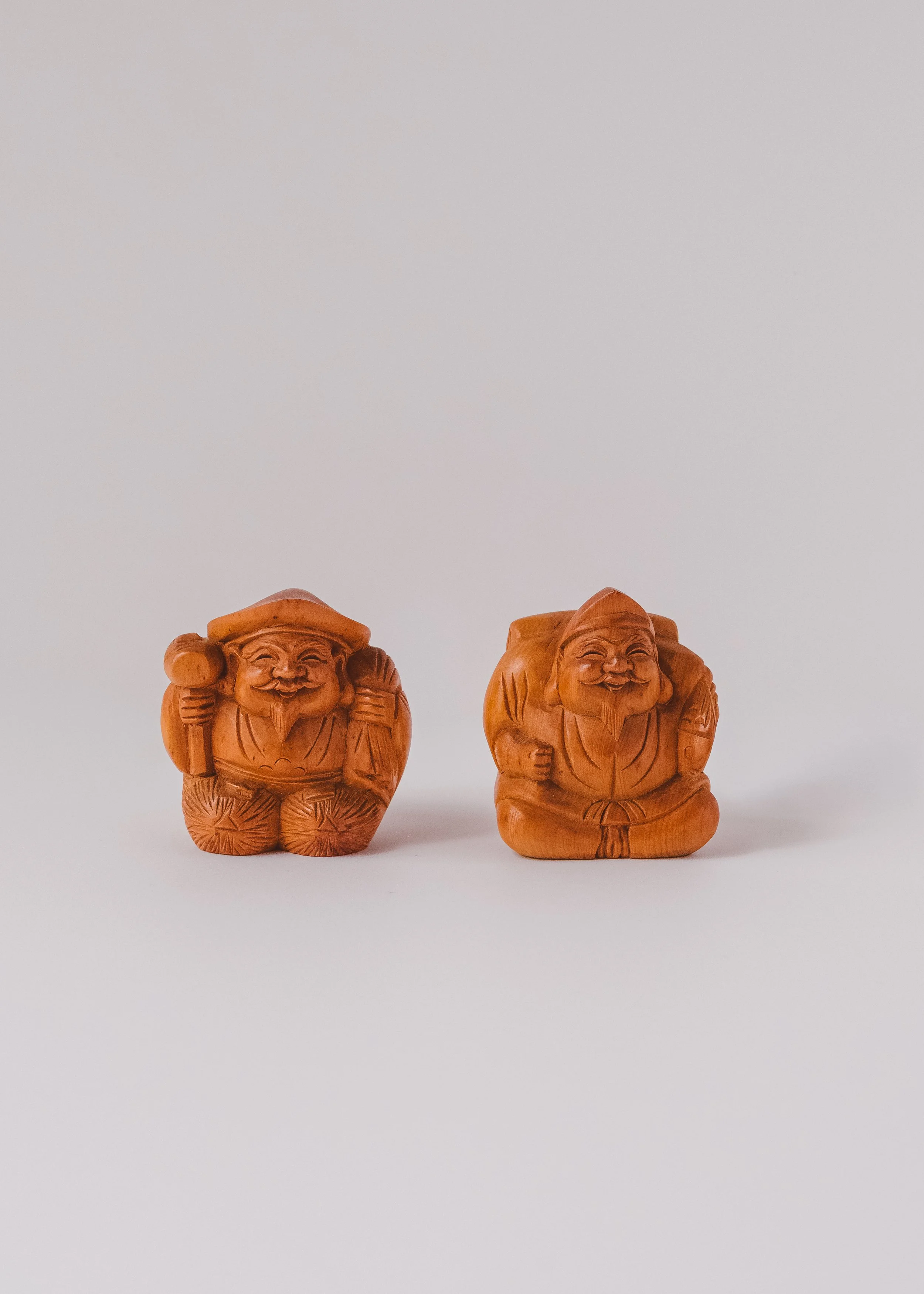 Image 1 of 12
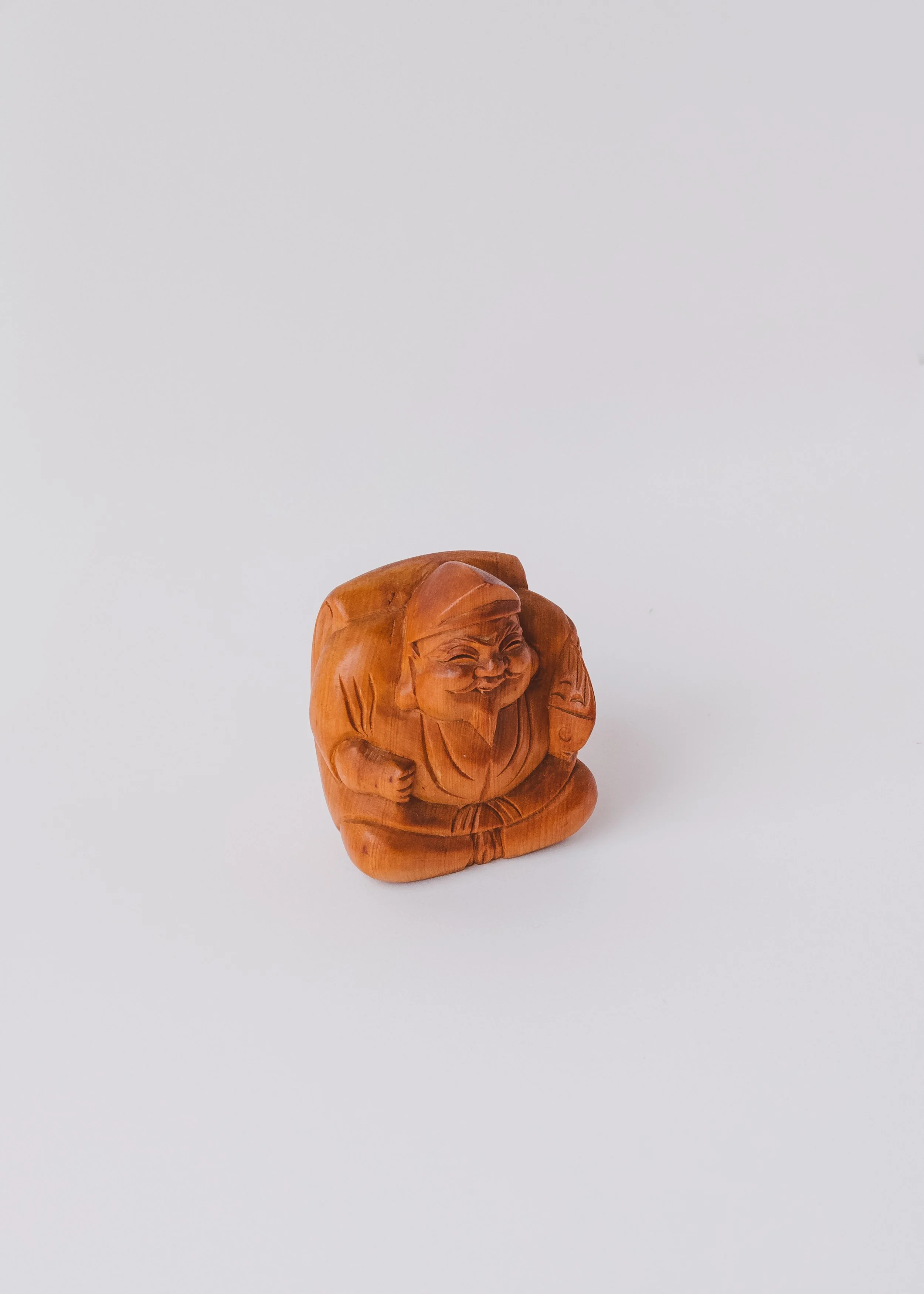 Image 2 of 12
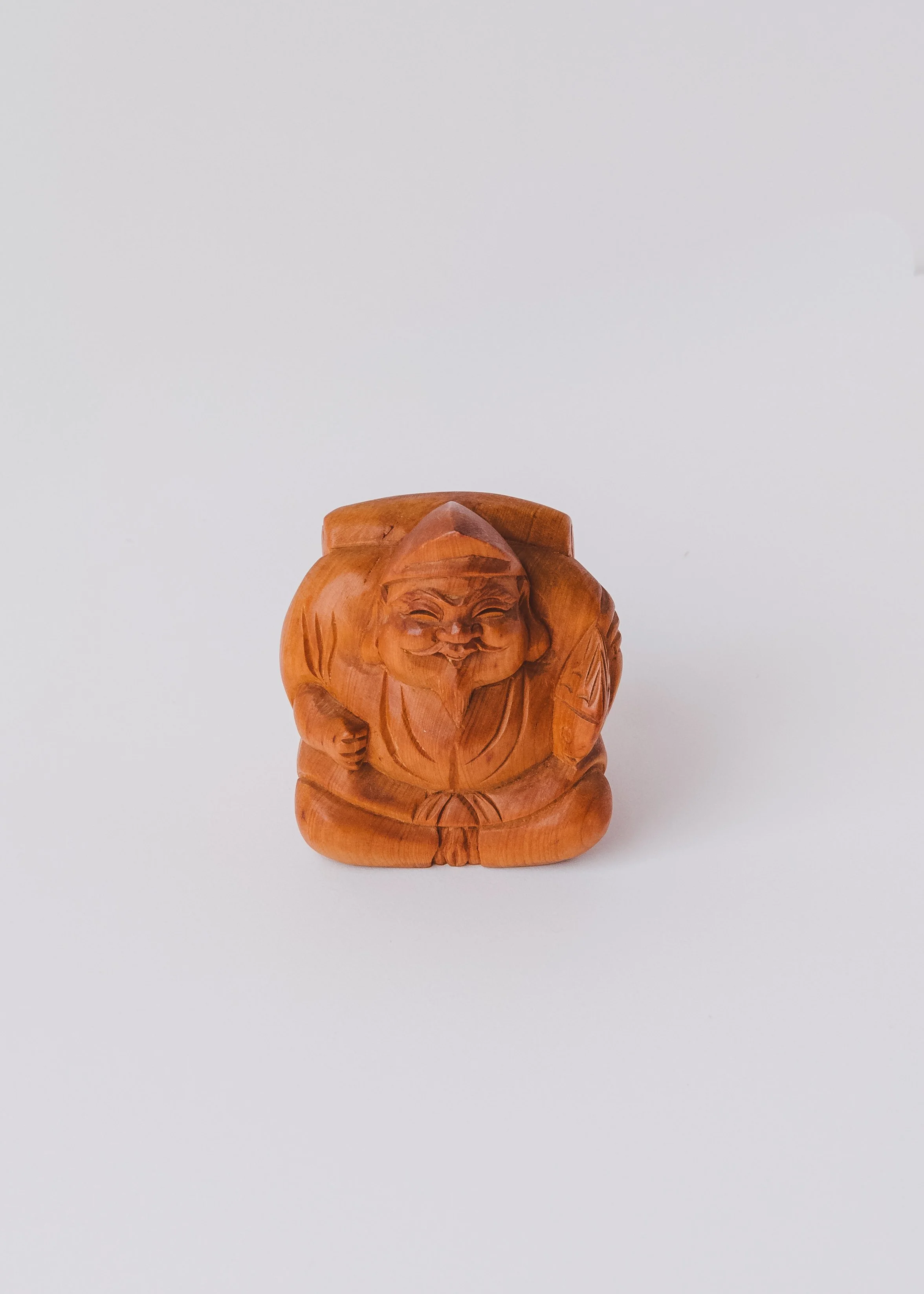 Image 3 of 12
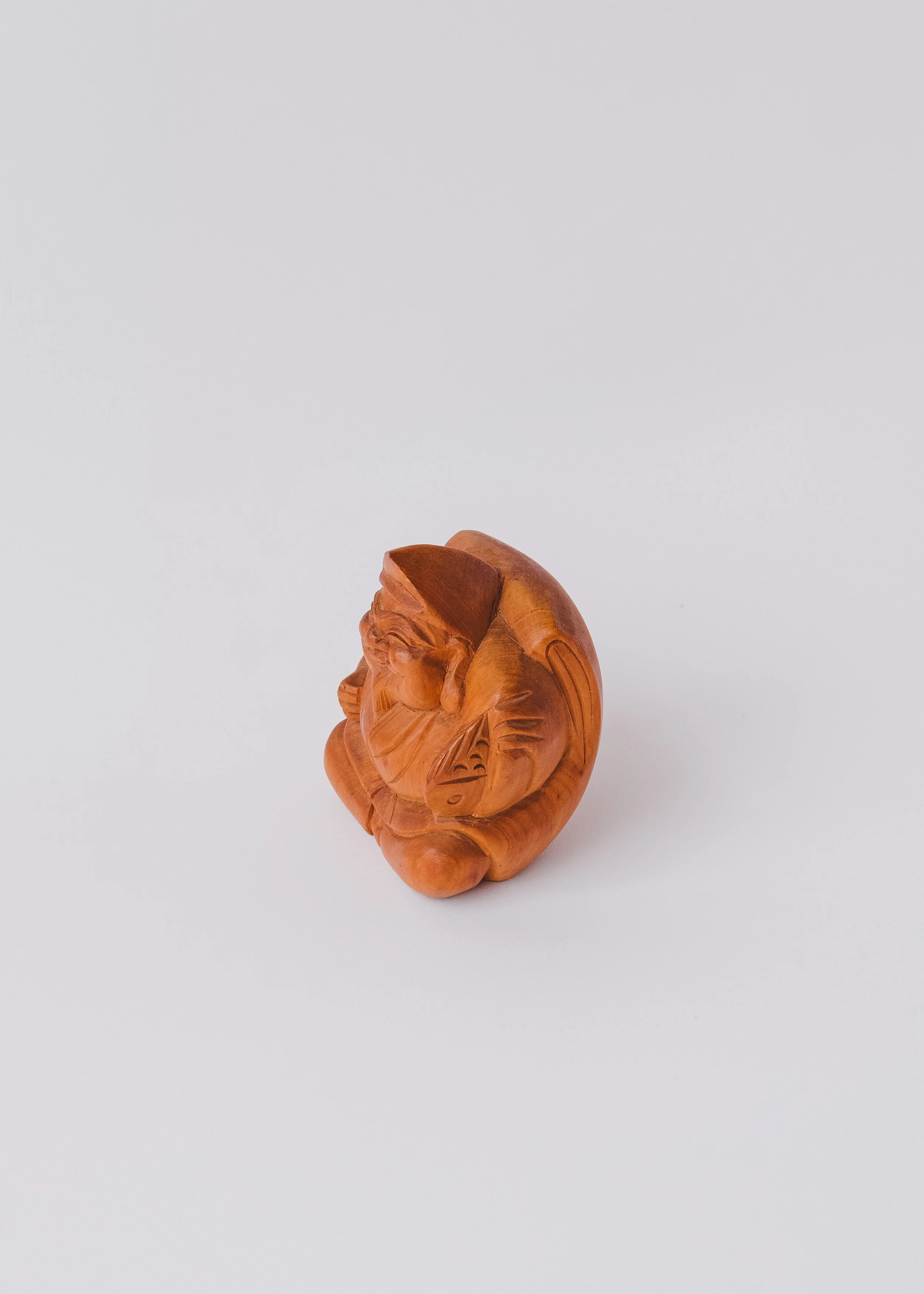 Image 4 of 12
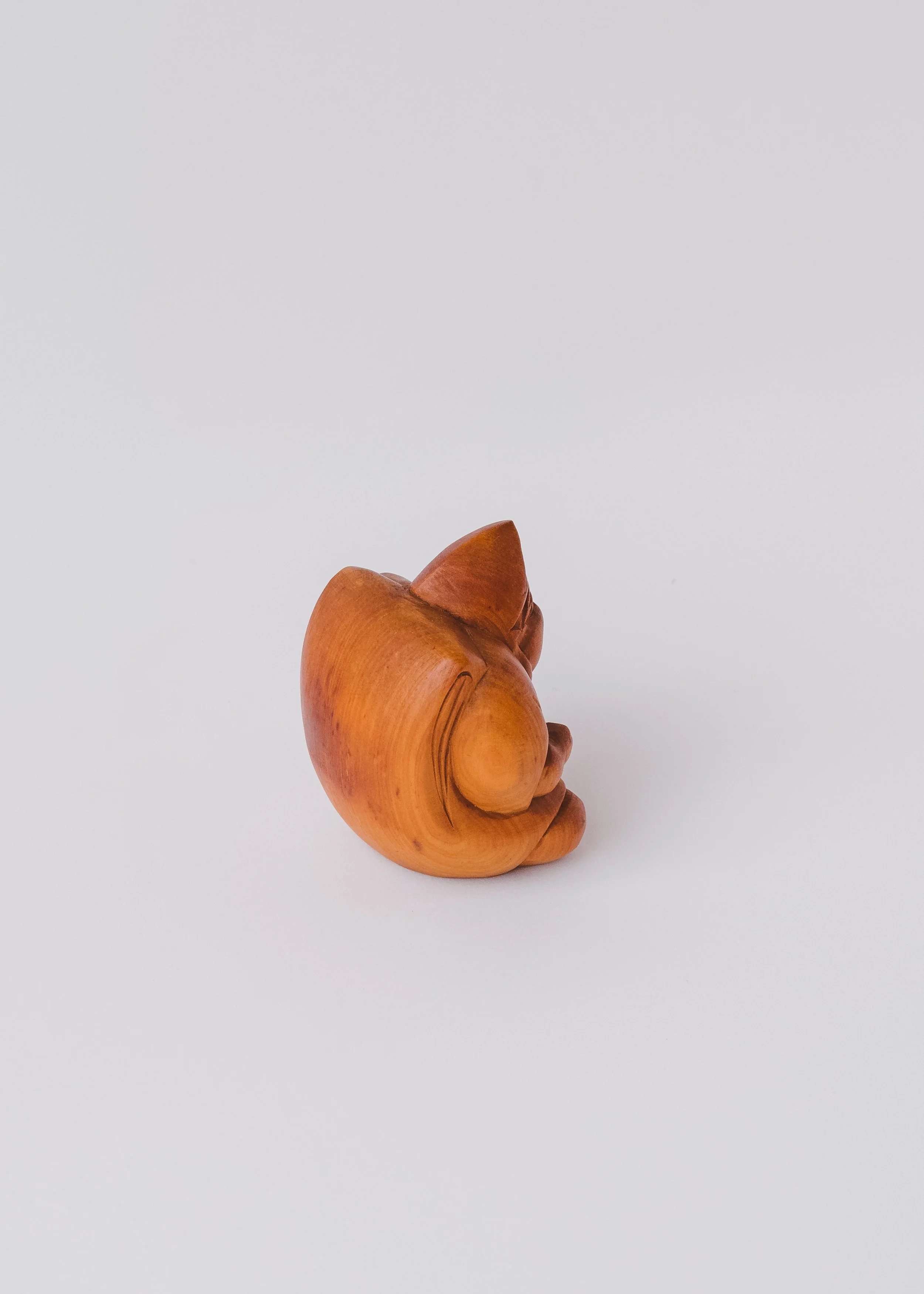 Image 5 of 12
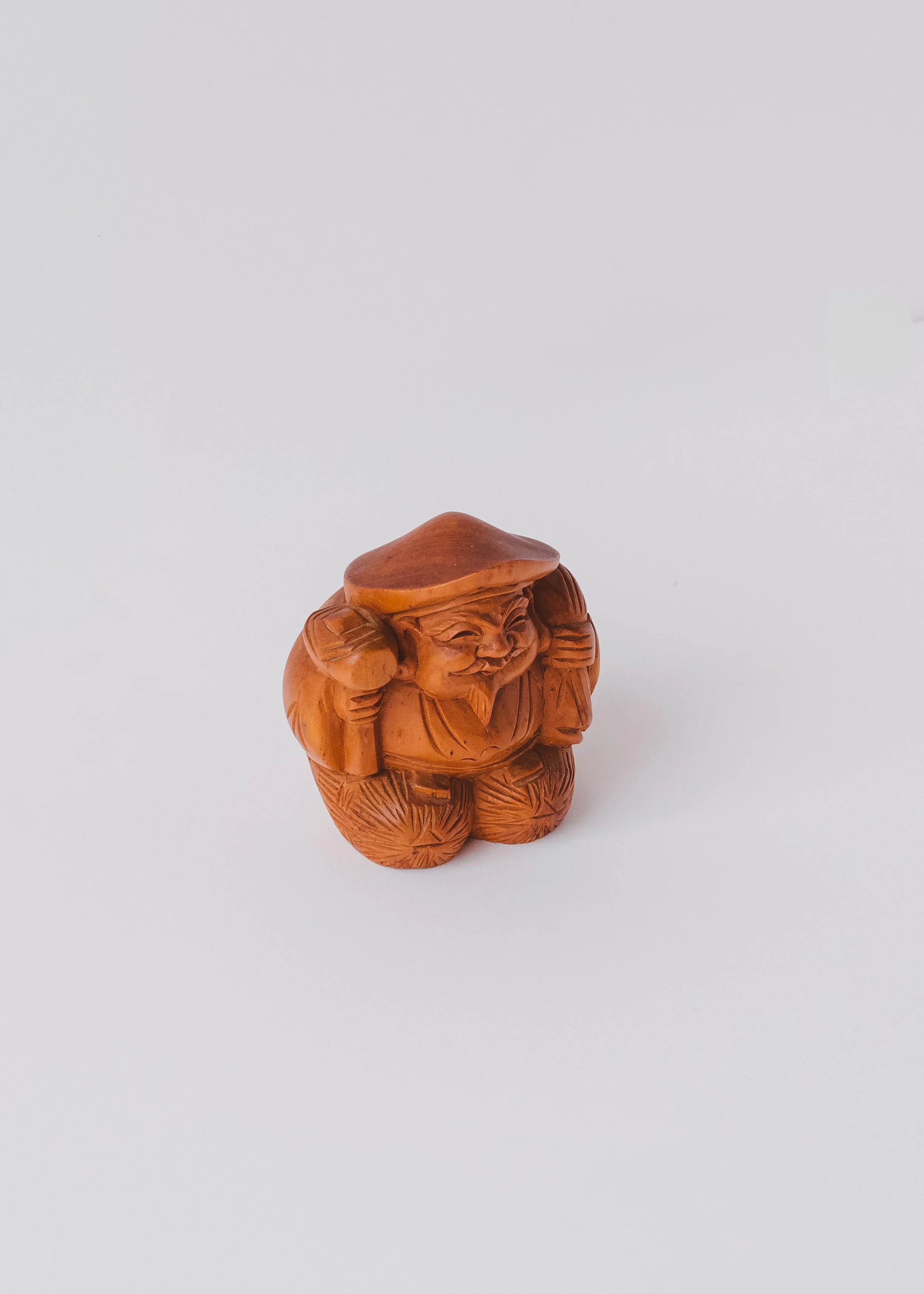 Image 6 of 12
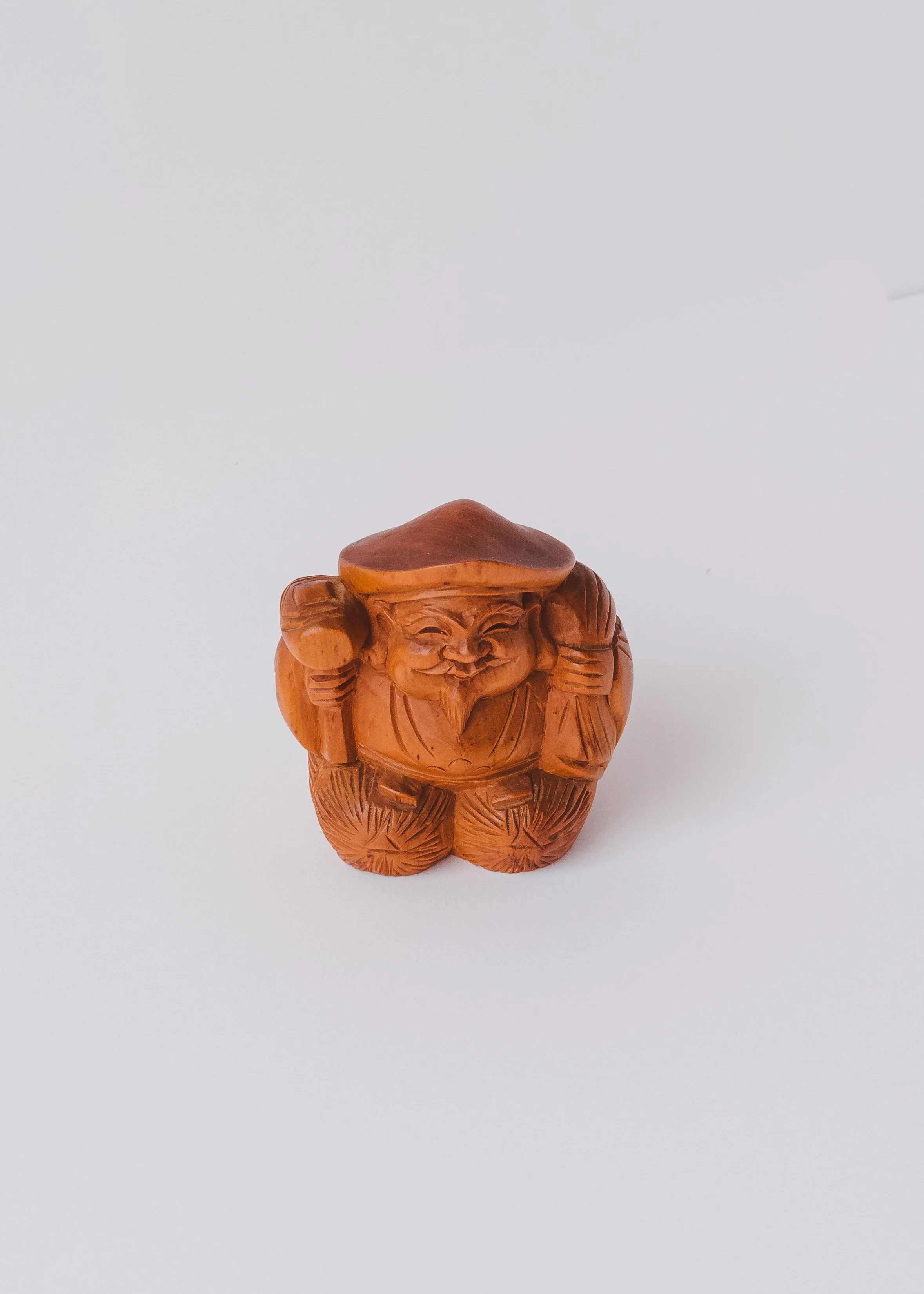 Image 7 of 12
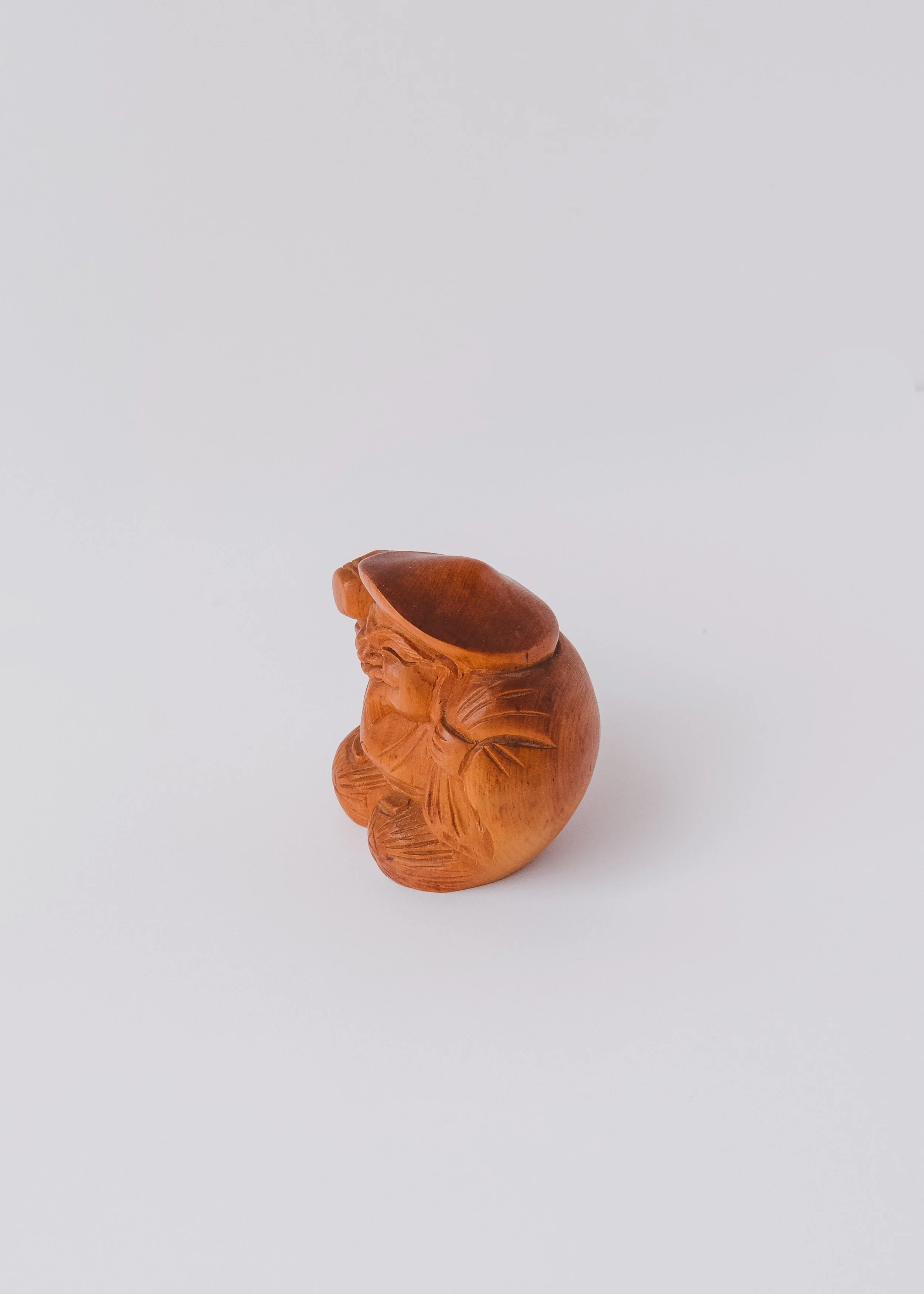 Image 8 of 12
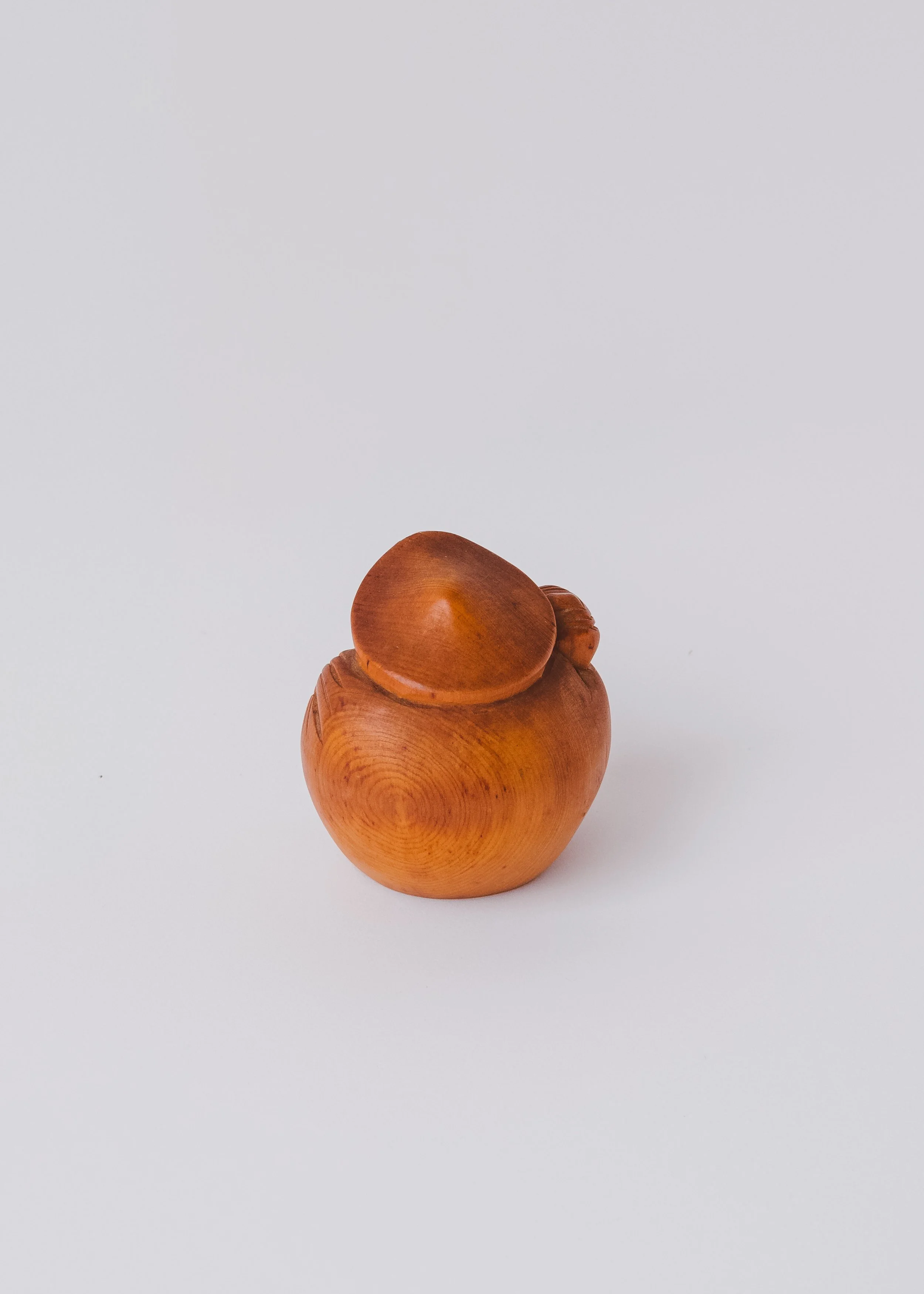 Image 9 of 12
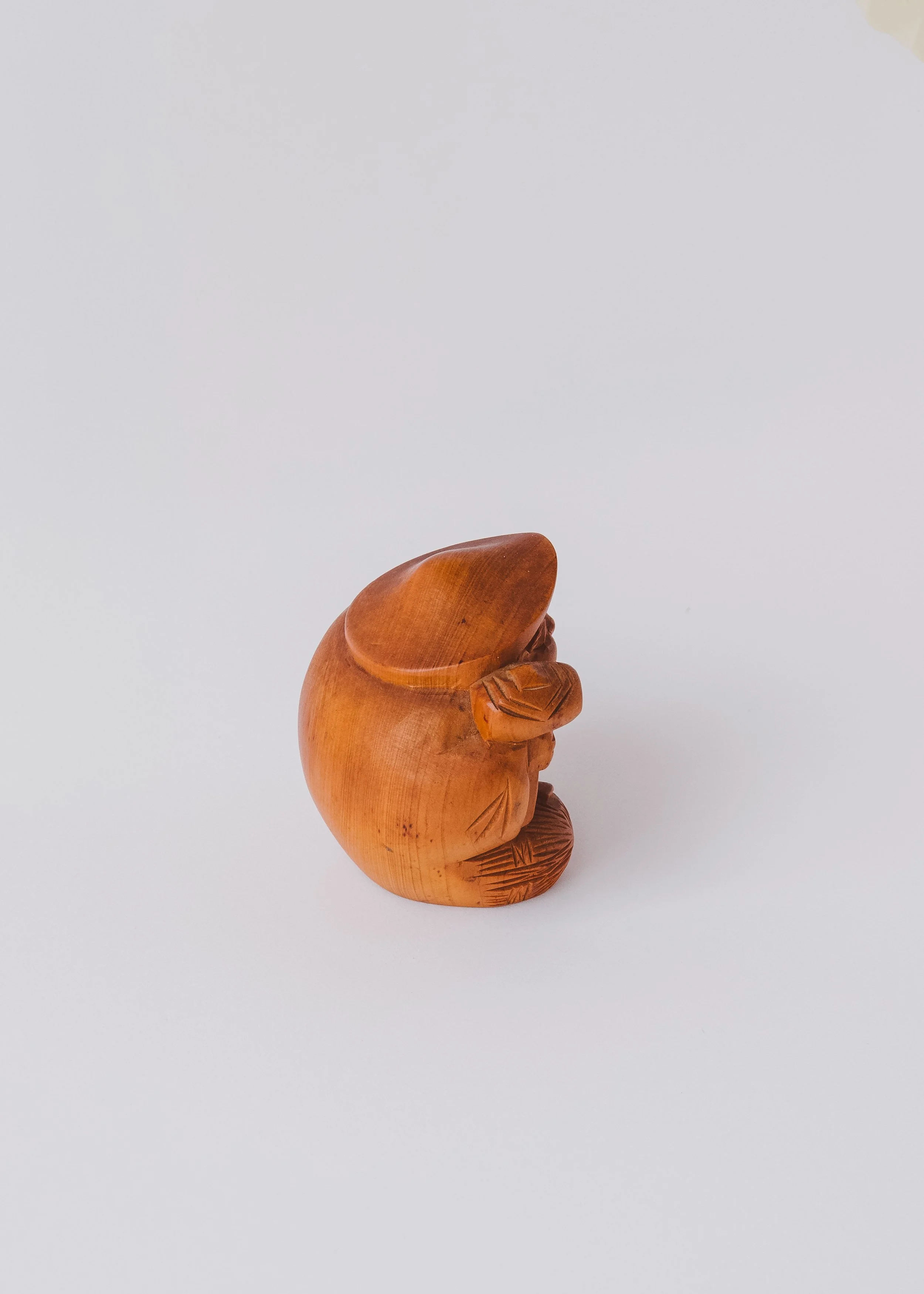 Image 10 of 12
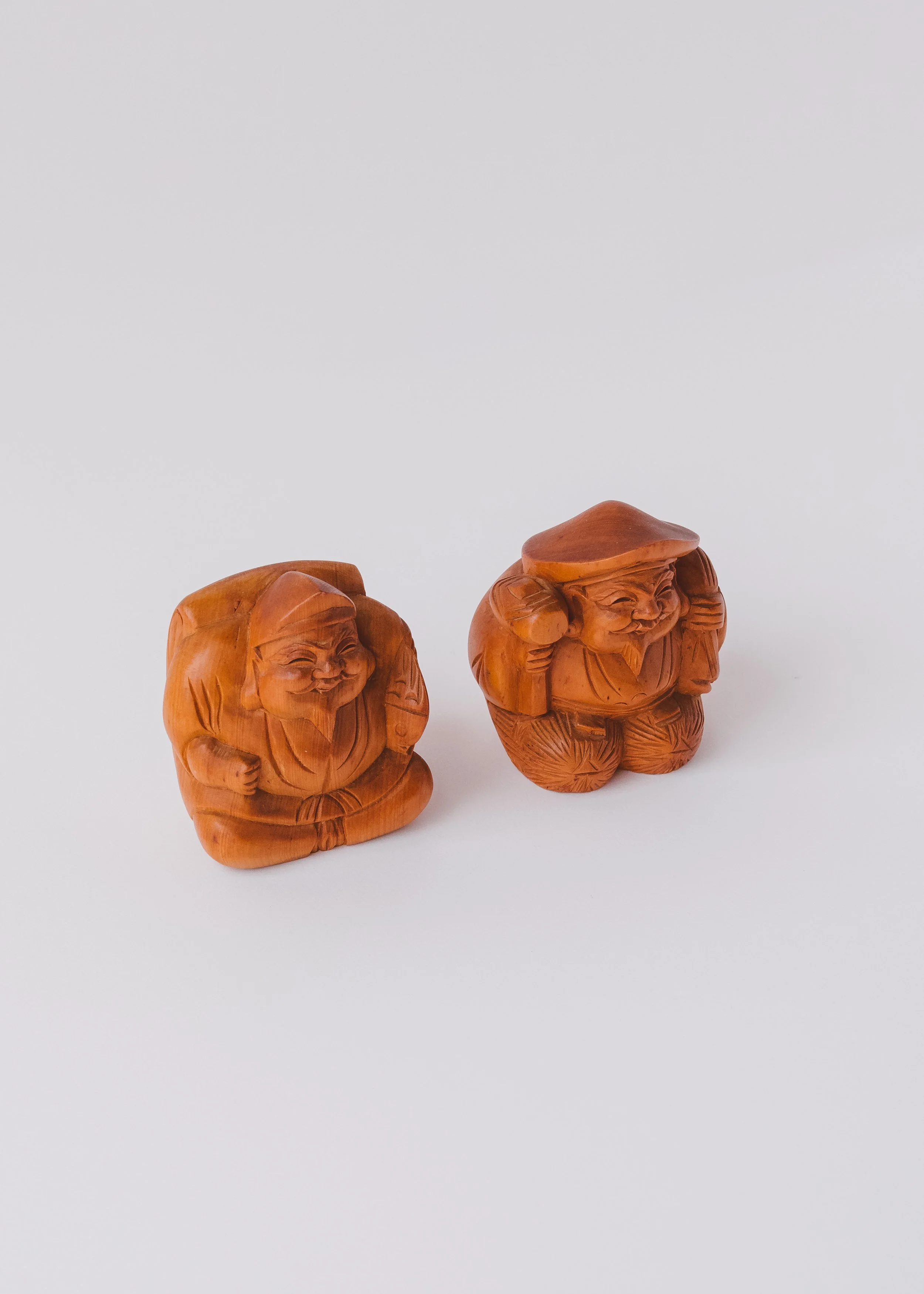 Image 11 of 12
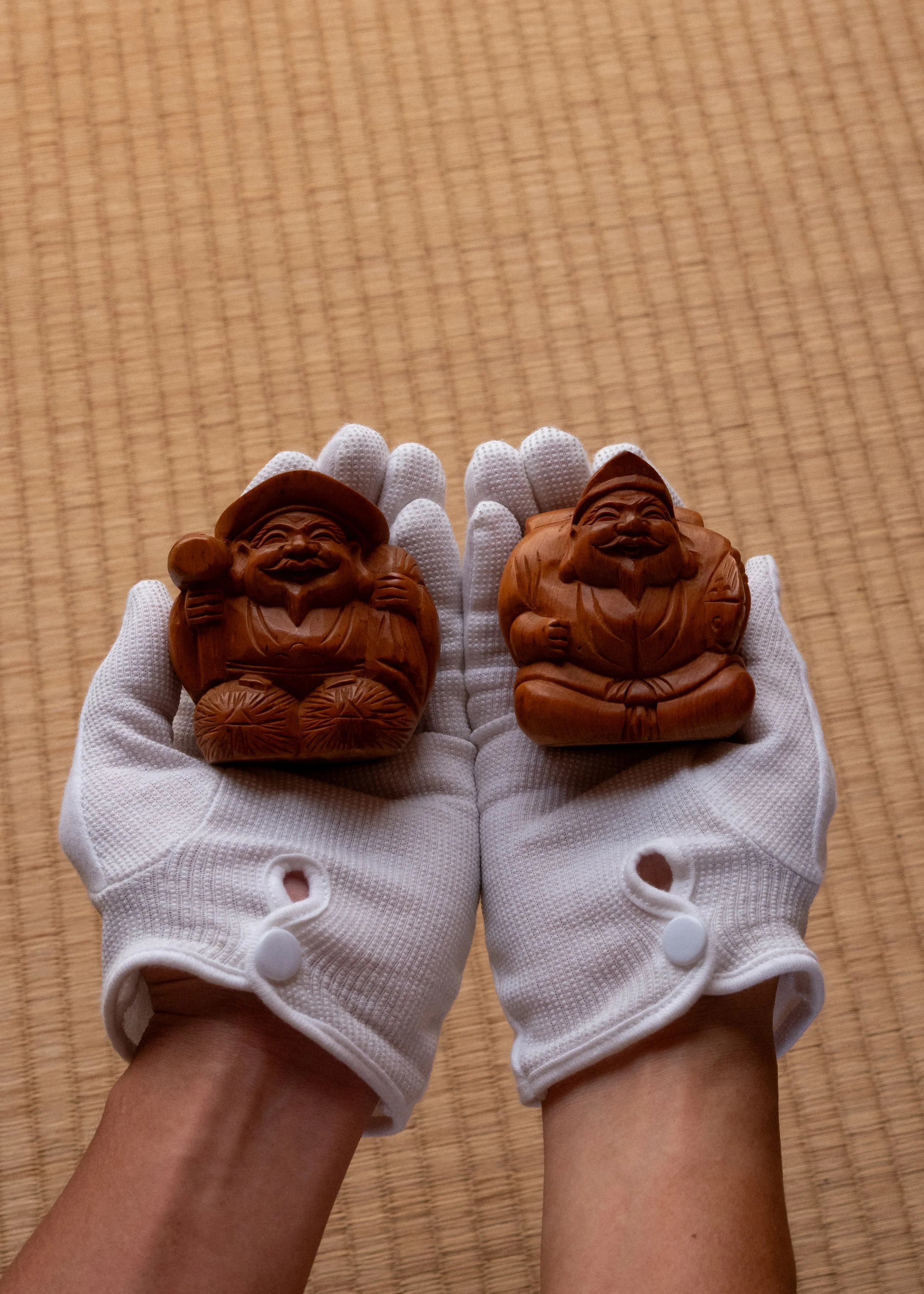 Image 12 of 12