【 The Concept 】
A carp, swimming through a river of old currency. In Japanese folklore, the carp is the one creature with the will to swim upstream — against the full weight of the current, against reason, against gravity itself. The oldest versions of the legend hold that a single carp, having fought its way to the top of a great waterfall, transforms into a dragon. It is not born powerful. It earns its transformation.
Here, an anonymous metalsmith has cast that quiet persistence in brass. The fish glides forward over a bed of antique Japanese coins — round, with square voids at their centers, a form rooted in the ancient belief that heaven is circular and the earth is square. Its body carries a gentle undulation, the spine curving in a fluid S-shape as though still navigating an invisible current. There is no violence in this motion. Only grace under pressure — a creature so certain of its direction that it moves without urgency.
【 The Function 】
A 300-gram brass paperweight built to hold more than paper in place. Set it on a desk, and its weight quietly anchors contracts, open manuscripts, or loose sketches with the kind of authority that requires no announcement. But its deeper role is psychological — a cold, dense object within arm's reach that grounds the hand and returns focus every time it is lifted. In the East Asian scholarly tradition, totemic brass objects on the writing desk have long served as instruments of concentration. This one continues that lineage.
【 The Texture 】
Antique brass, darkened to a deep amber-brown in every recess and worn to a warm gold on every raised edge. The carp's scales are individually defined, each one a shallow arc rising just enough to catch the light and reward the fingertip. Run a thumb along the spine and the undulation of the body becomes tactile — a wave frozen in metal. The coins beneath are smoother, their stamped characters softened by decades of contact, their edges rounded by handling. One surface still resists; the other has long since yielded to time.
【 Presence 】
Low, horizontal, and unhurried. Where most desk objects sit passively, this one moves — or appears to. The gentle curve of the carp's body and the lateral spread of the coins beneath it create a composition that carries the eye across the desk rather than stopping it. The aged brass absorbs light rather than reflecting it, settling into the workspace with a muted warmth that tempers the coldness of screens and white surfaces. Small enough to hold in one hand. Heavy enough to change the atmosphere of a desk. It does not demand attention. It earns it.
Sourced from a private collection in the Kansai region, Japan.
【 The Concept 】
A carp, swimming through a river of old currency. In Japanese folklore, the carp is the one creature with the will to swim upstream — against the full weight of the current, against reason, against gravity itself. The oldest versions of the legend hold that a single carp, having fought its way to the top of a great waterfall, transforms into a dragon. It is not born powerful. It earns its transformation.
Here, an anonymous metalsmith has cast that quiet persistence in brass. The fish glides forward over a bed of antique Japanese coins — round, with square voids at their centers, a form rooted in the ancient belief that heaven is circular and the earth is square. Its body carries a gentle undulation, the spine curving in a fluid S-shape as though still navigating an invisible current. There is no violence in this motion. Only grace under pressure — a creature so certain of its direction that it moves without urgency.
【 The Function 】
A 300-gram brass paperweight built to hold more than paper in place. Set it on a desk, and its weight quietly anchors contracts, open manuscripts, or loose sketches with the kind of authority that requires no announcement. But its deeper role is psychological — a cold, dense object within arm's reach that grounds the hand and returns focus every time it is lifted. In the East Asian scholarly tradition, totemic brass objects on the writing desk have long served as instruments of concentration. This one continues that lineage.
【 The Texture 】
Antique brass, darkened to a deep amber-brown in every recess and worn to a warm gold on every raised edge. The carp's scales are individually defined, each one a shallow arc rising just enough to catch the light and reward the fingertip. Run a thumb along the spine and the undulation of the body becomes tactile — a wave frozen in metal. The coins beneath are smoother, their stamped characters softened by decades of contact, their edges rounded by handling. One surface still resists; the other has long since yielded to time.
【 Presence 】
Low, horizontal, and unhurried. Where most desk objects sit passively, this one moves — or appears to. The gentle curve of the carp's body and the lateral spread of the coins beneath it create a composition that carries the eye across the desk rather than stopping it. The aged brass absorbs light rather than reflecting it, settling into the workspace with a muted warmth that tempers the coldness of screens and white surfaces. Small enough to hold in one hand. Heavy enough to change the atmosphere of a desk. It does not demand attention. It earns it.
Sourced from a private collection in the Kansai region, Japan.


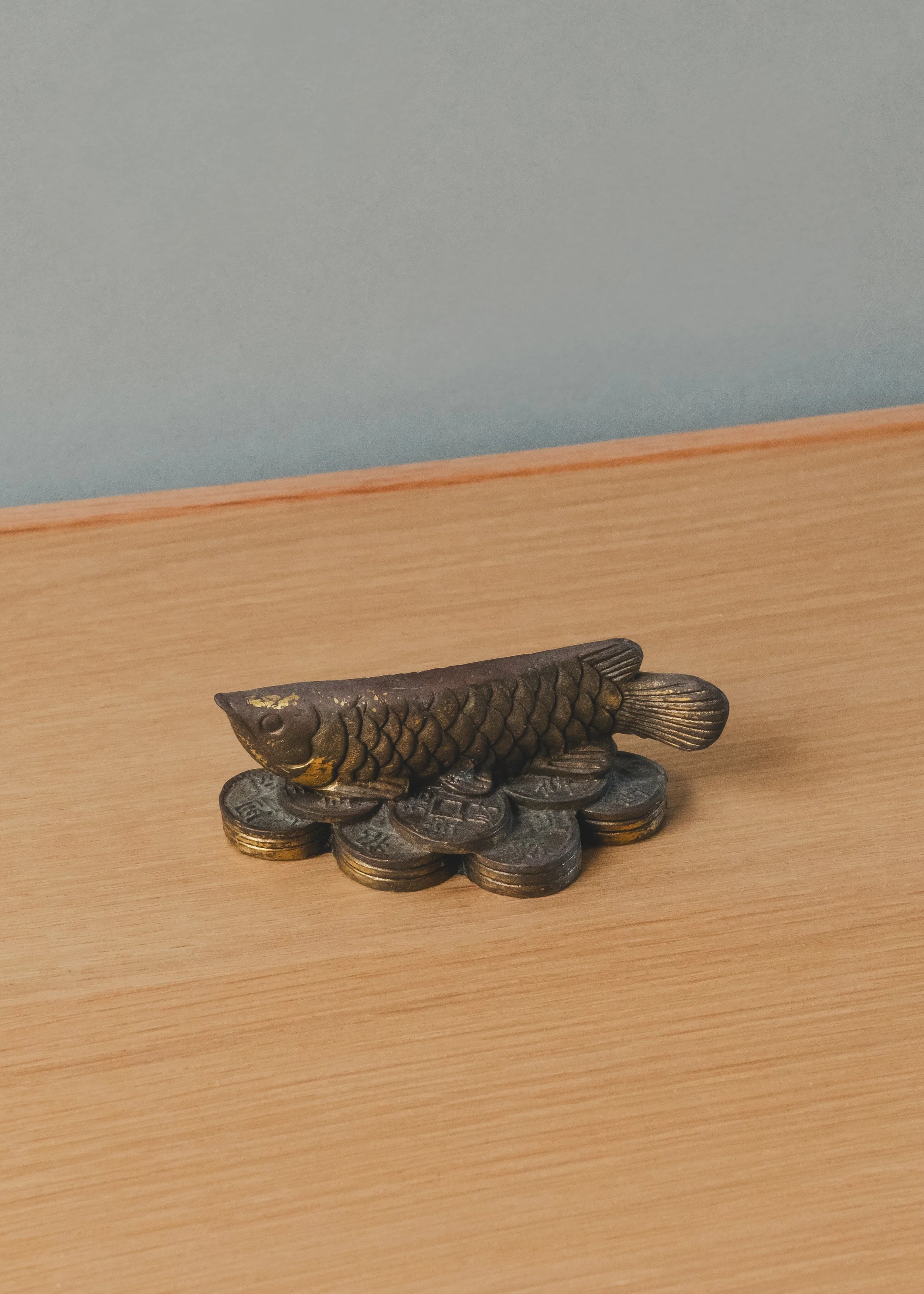 Image 1 of 8
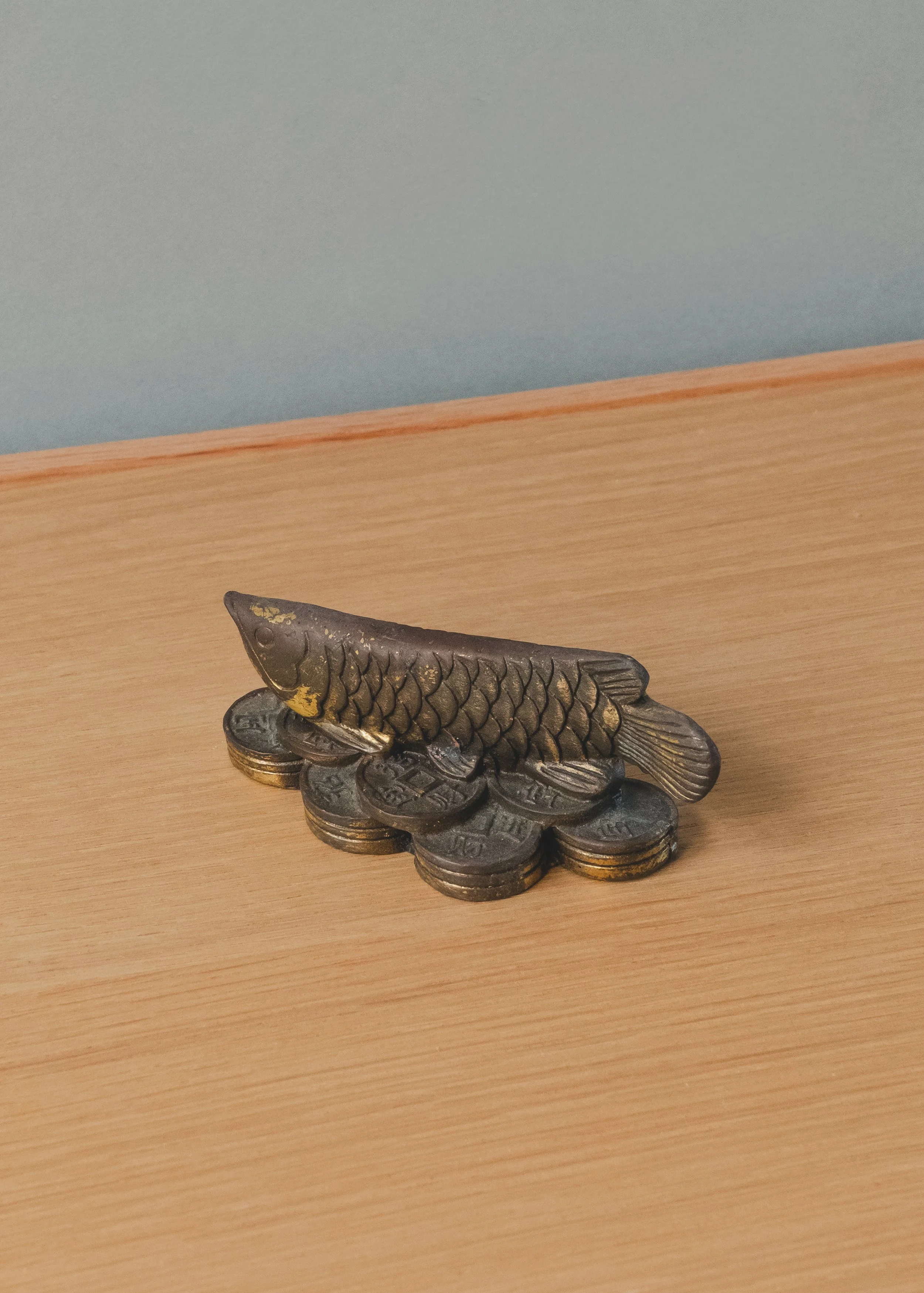 Image 2 of 8
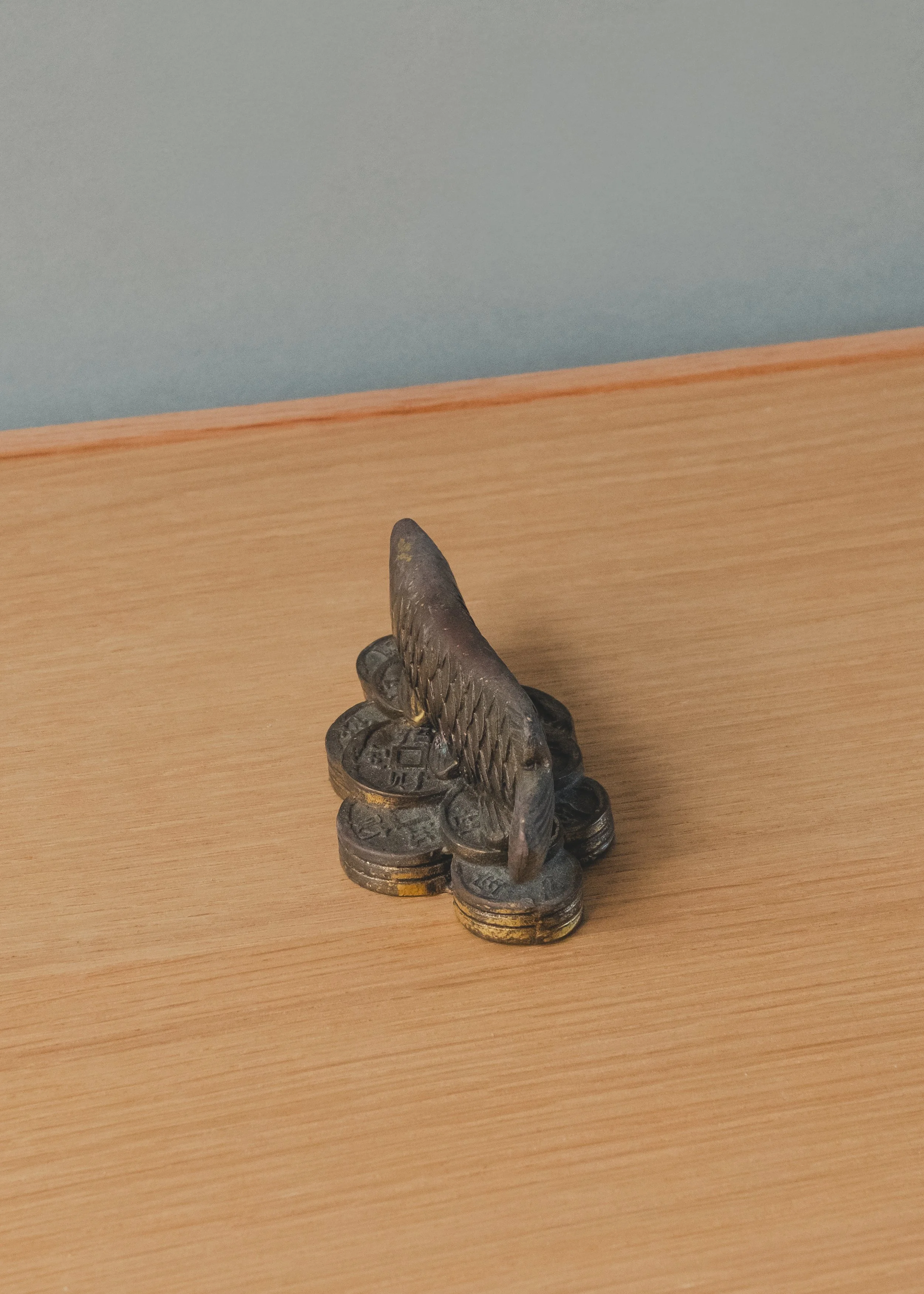 Image 3 of 8
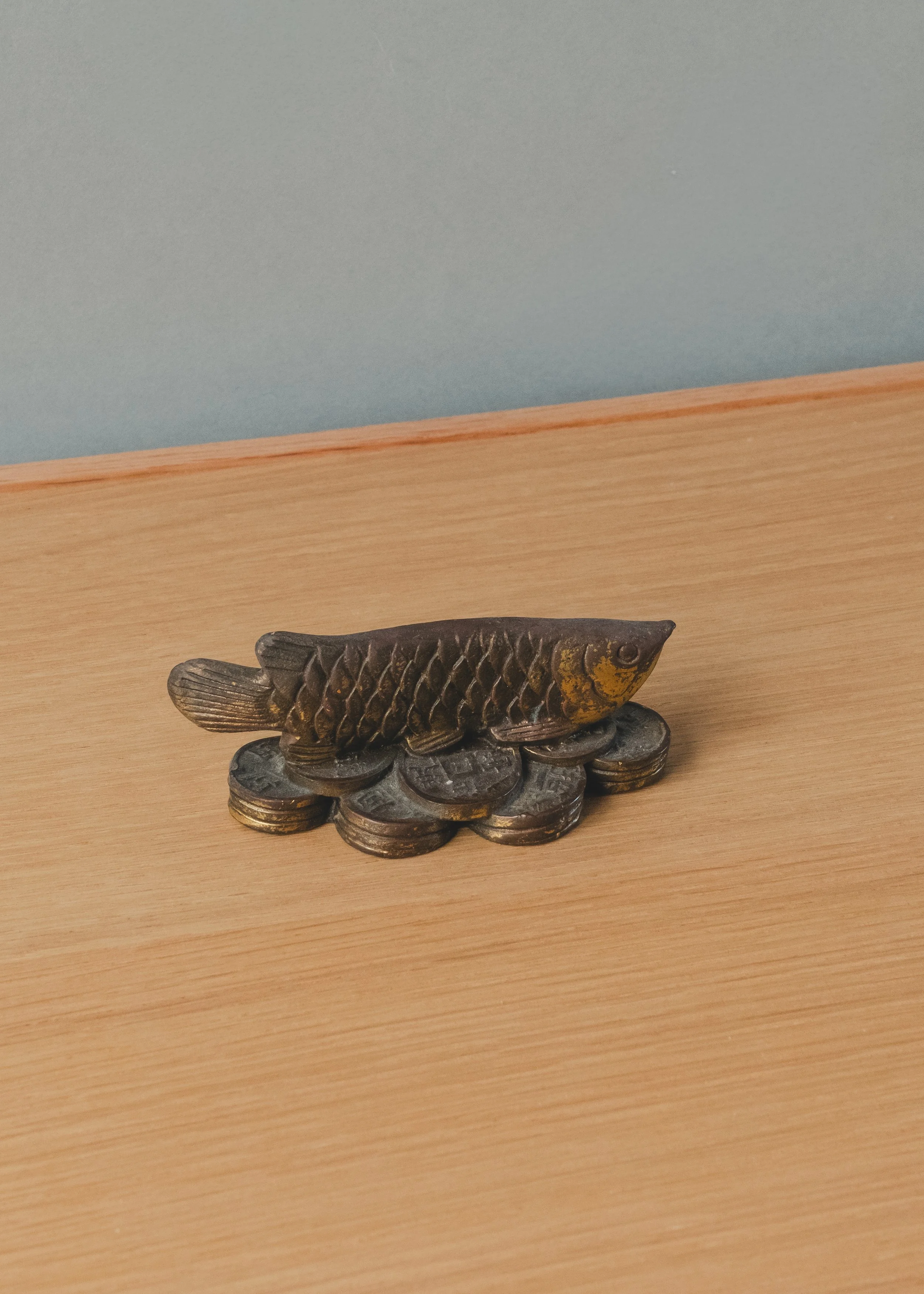 Image 4 of 8
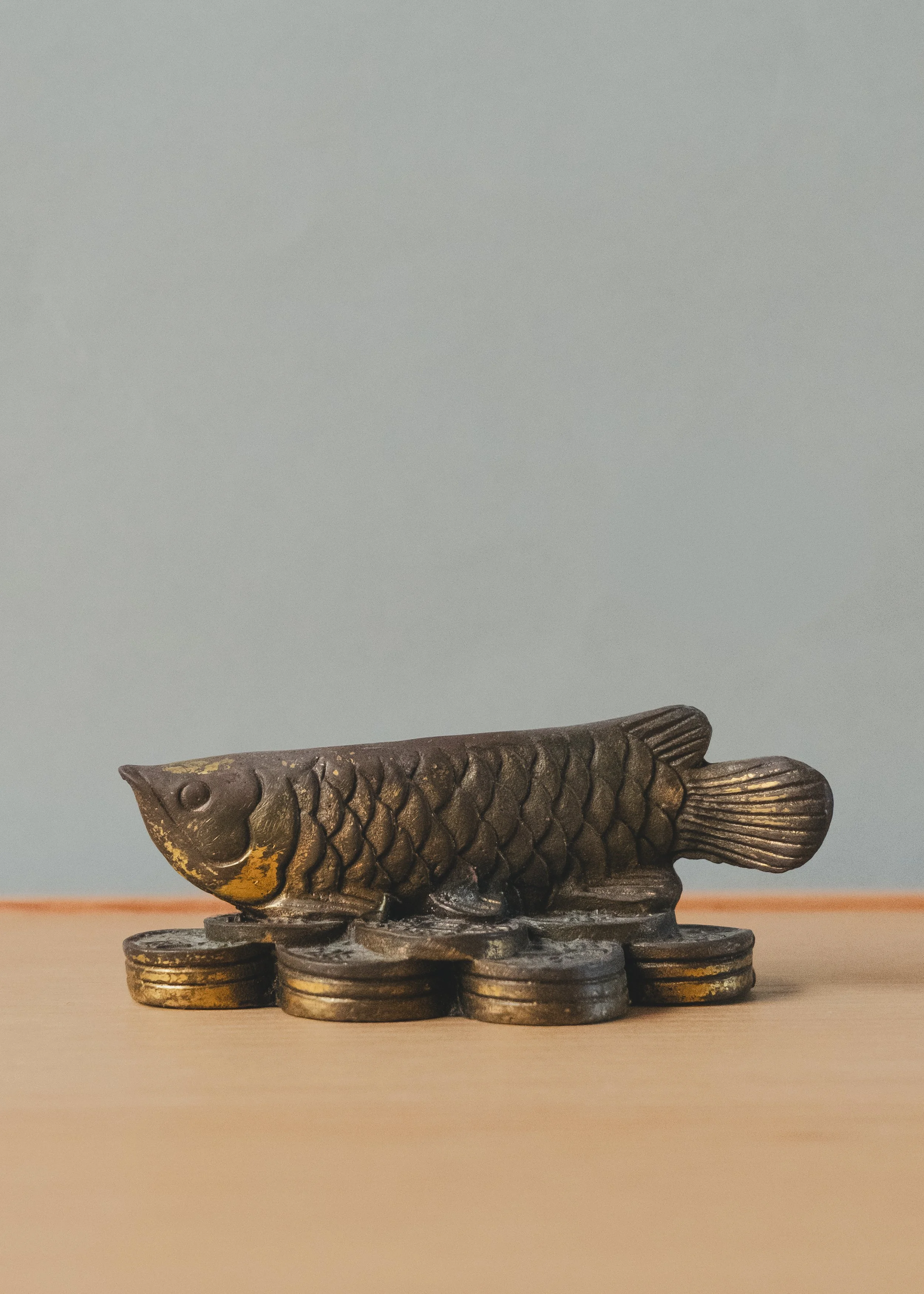 Image 5 of 8
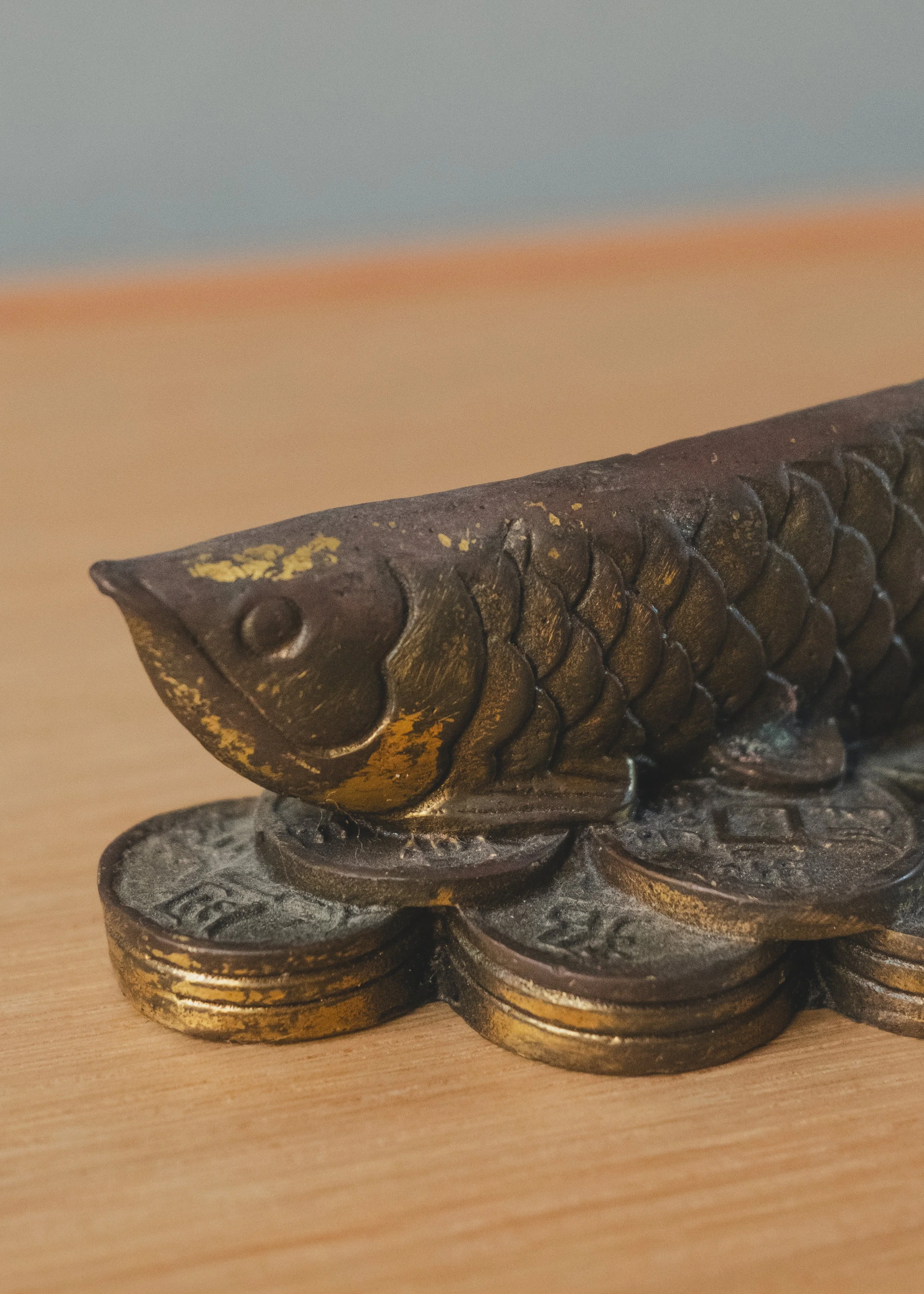 Image 6 of 8
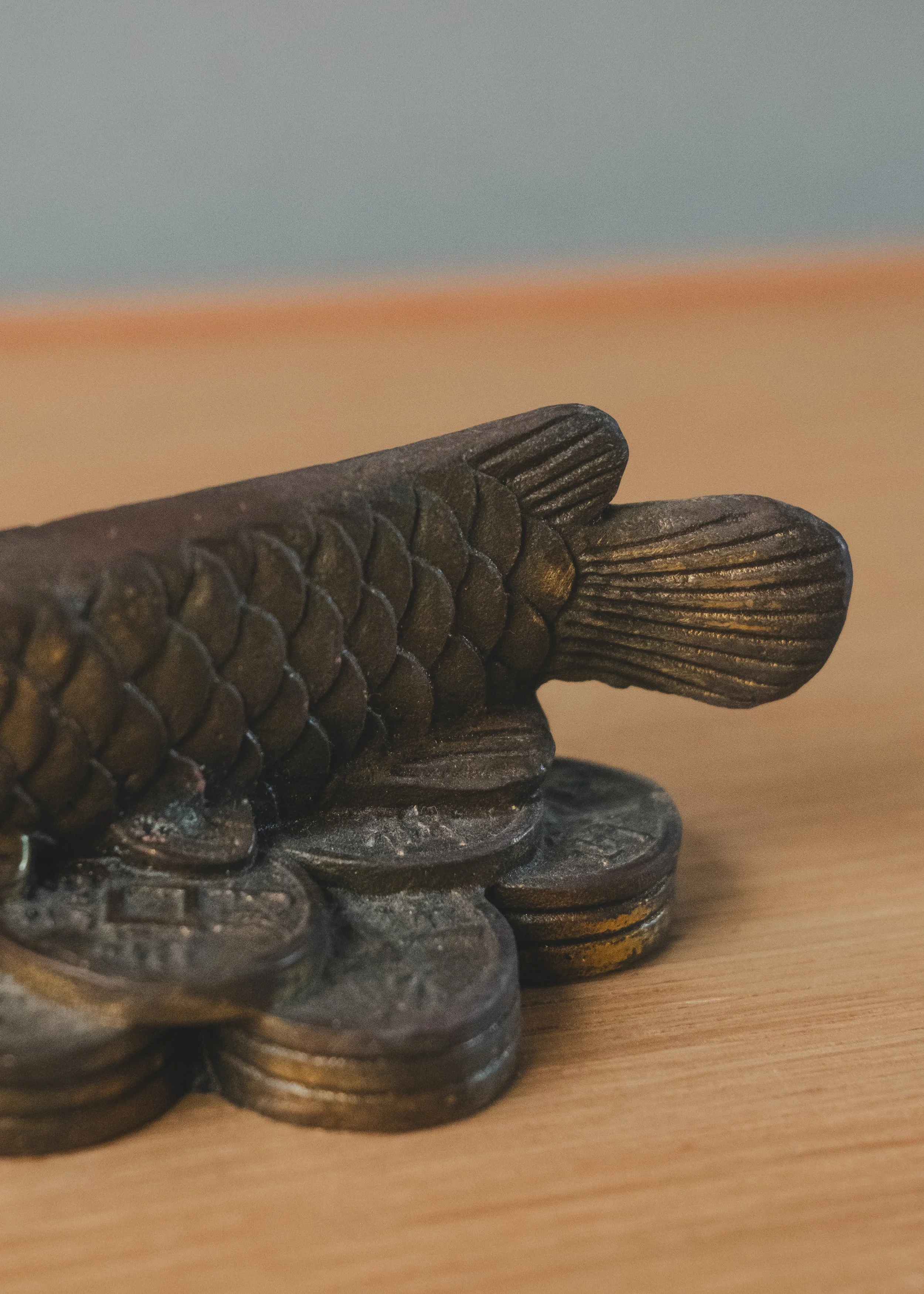 Image 7 of 8
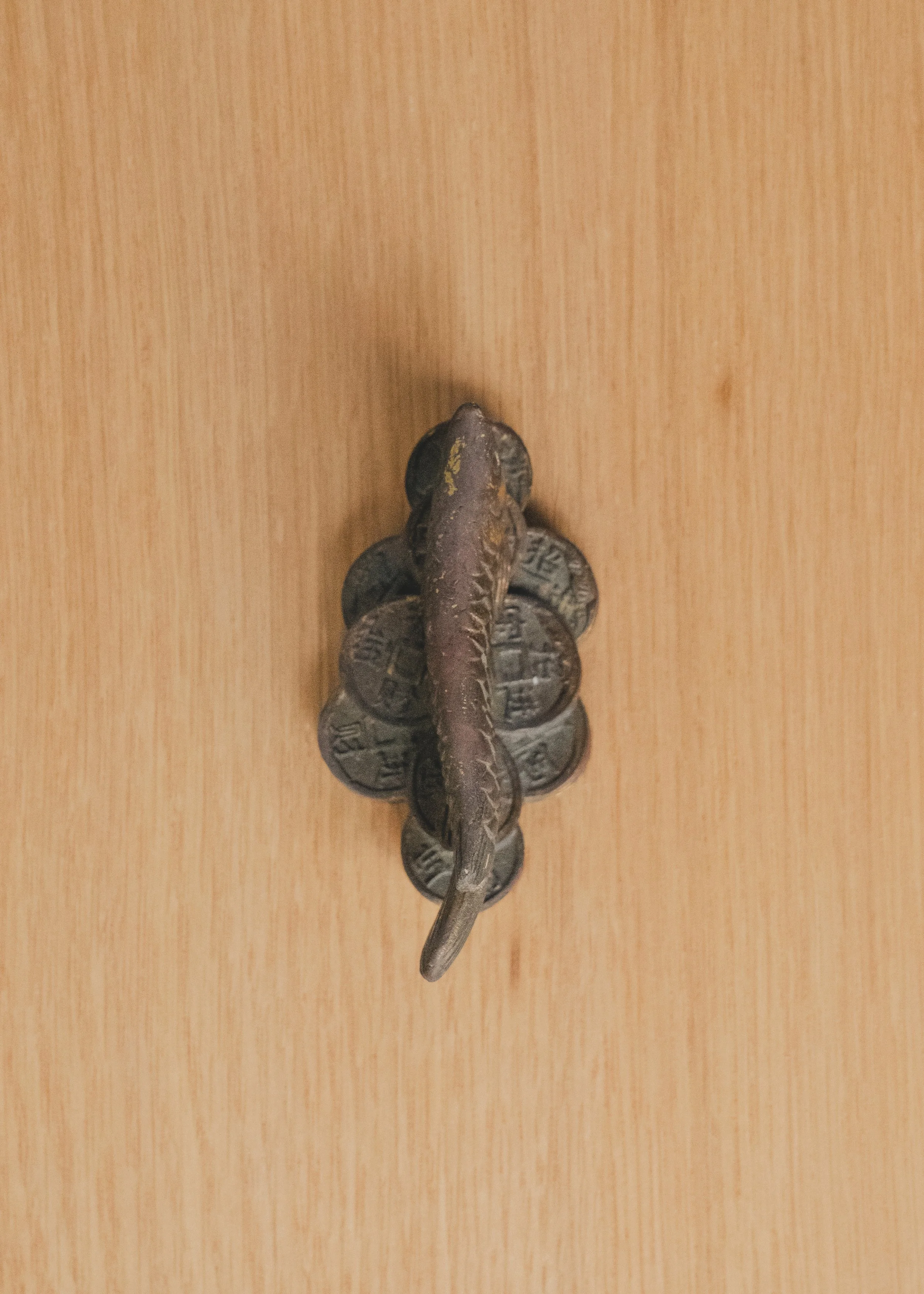 Image 8 of 8