【 The Concept 】
A single gilded Buddha stands at the centre of a crowd. Behind the figure rises a flame-shaped mandorla, and worked into its gold — among curling clouds and vine — are many small seated buddhas, a throng of them, ringing the central form on every side. The archive has held bodhisattvas before; this is the first nyorai, a fully awakened Buddha, and the difference is written into the body itself.
Where the bodhisattvas of this collection keep the marks of the world they still move through — GILT MERCY and RADIANT EMISSARY crowned and jewelled, BUDDING STEM cradling an unopened lotus as a promise not yet kept — this figure has set all of that down. Bare-headed, its hair in tight snail-curls over a low cranial mound, wrapped in a single unornamented robe, it wears nothing but its own completion. Where BUDDING STEM holds the bud, GILDED THRONG is what the bud opens into.
The small buddhas in the halo carry the rest of the meaning. In this tradition, one awakening is understood to multiply — to send countless likenesses of itself outward, appearing wherever it is needed. The mandorla makes that visible: the one at the centre, and the many it becomes, cast in the same gold, facing the same way.
【 The Function 】
At 16 centimetres tall and 407 grams, it is a cast metal figure sized for a private altar, a shelf niche, or a quiet table where a single object is meant to hold the room. Its weight sits low, in the hexagonal lotus base, so the tall halo stands without lean. The mandorla itself lifts free: it seats into a slot at the back of the pedestal on a single tenon, in the same assembled construction as BUDDING STEM, so the figure stores and travels as separate parts and comes together into one silhouette.
The two hands state the figure's office without a single attribute to hold. The right rises to the chest, palm outward — the gesture that means do not be afraid. The left lowers at the side, palm open and turned forward — the gesture of giving, of a wish granted. Together they are the oldest thing a Buddha is shown doing: taking away fear with one hand, offering with the other.
【 The Texture 】
The surface is warm gilt gold, and it does not read as new. Across the robe and the broad face of the mandorla a fine dark speckle has come up through the gold, the way an old gilded metal surface freckles with time; on the raised right hand and along one fold of the skirt the gold has worn thinner and gone quietly darker, where a surface is touched or dusted most. None of it is concealed. It is the honest record of a gilded metal object that has been kept, and handled, and kept again.
Against that softly worn ground the relief stays crisp. The robe falls in close, even ridges from shoulder to hem. The head-halo behind the face is a beaded ring; the flame-mandorla behind it is dense with incised cloud and the small buddhas' own tiny nimbi. The lotus base gathers the light differently — a drier, more matte gold in the deep petals — so the eye reads pedestal, figure and flame as three distinct depths.
【 Presence 】
Much of the archive asks to be met one to one — a single animal, a single seated saint. GILDED THRONG does the opposite: it brings a crowd. Standing on its lotus, hands open, it is at once the centre of the gold and outnumbered by it — one calm figure attended by a hundred smaller versions of the same calm.
Set where it can be looked at closely, it rewards the long look: the further in the eye goes, the more small buddhas it finds still waiting to be counted.
Sourced from a private collection in the Shikoku region, Japan.
【 The Concept 】
A single gilded Buddha stands at the centre of a crowd. Behind the figure rises a flame-shaped mandorla, and worked into its gold — among curling clouds and vine — are many small seated buddhas, a throng of them, ringing the central form on every side. The archive has held bodhisattvas before; this is the first nyorai, a fully awakened Buddha, and the difference is written into the body itself.
Where the bodhisattvas of this collection keep the marks of the world they still move through — GILT MERCY and RADIANT EMISSARY crowned and jewelled, BUDDING STEM cradling an unopened lotus as a promise not yet kept — this figure has set all of that down. Bare-headed, its hair in tight snail-curls over a low cranial mound, wrapped in a single unornamented robe, it wears nothing but its own completion. Where BUDDING STEM holds the bud, GILDED THRONG is what the bud opens into.
The small buddhas in the halo carry the rest of the meaning. In this tradition, one awakening is understood to multiply — to send countless likenesses of itself outward, appearing wherever it is needed. The mandorla makes that visible: the one at the centre, and the many it becomes, cast in the same gold, facing the same way.
【 The Function 】
At 16 centimetres tall and 407 grams, it is a cast metal figure sized for a private altar, a shelf niche, or a quiet table where a single object is meant to hold the room. Its weight sits low, in the hexagonal lotus base, so the tall halo stands without lean. The mandorla itself lifts free: it seats into a slot at the back of the pedestal on a single tenon, in the same assembled construction as BUDDING STEM, so the figure stores and travels as separate parts and comes together into one silhouette.
The two hands state the figure's office without a single attribute to hold. The right rises to the chest, palm outward — the gesture that means do not be afraid. The left lowers at the side, palm open and turned forward — the gesture of giving, of a wish granted. Together they are the oldest thing a Buddha is shown doing: taking away fear with one hand, offering with the other.
【 The Texture 】
The surface is warm gilt gold, and it does not read as new. Across the robe and the broad face of the mandorla a fine dark speckle has come up through the gold, the way an old gilded metal surface freckles with time; on the raised right hand and along one fold of the skirt the gold has worn thinner and gone quietly darker, where a surface is touched or dusted most. None of it is concealed. It is the honest record of a gilded metal object that has been kept, and handled, and kept again.
Against that softly worn ground the relief stays crisp. The robe falls in close, even ridges from shoulder to hem. The head-halo behind the face is a beaded ring; the flame-mandorla behind it is dense with incised cloud and the small buddhas' own tiny nimbi. The lotus base gathers the light differently — a drier, more matte gold in the deep petals — so the eye reads pedestal, figure and flame as three distinct depths.
【 Presence 】
Much of the archive asks to be met one to one — a single animal, a single seated saint. GILDED THRONG does the opposite: it brings a crowd. Standing on its lotus, hands open, it is at once the centre of the gold and outnumbered by it — one calm figure attended by a hundred smaller versions of the same calm.
Set where it can be looked at closely, it rewards the long look: the further in the eye goes, the more small buddhas it finds still waiting to be counted.
Sourced from a private collection in the Shikoku region, Japan.


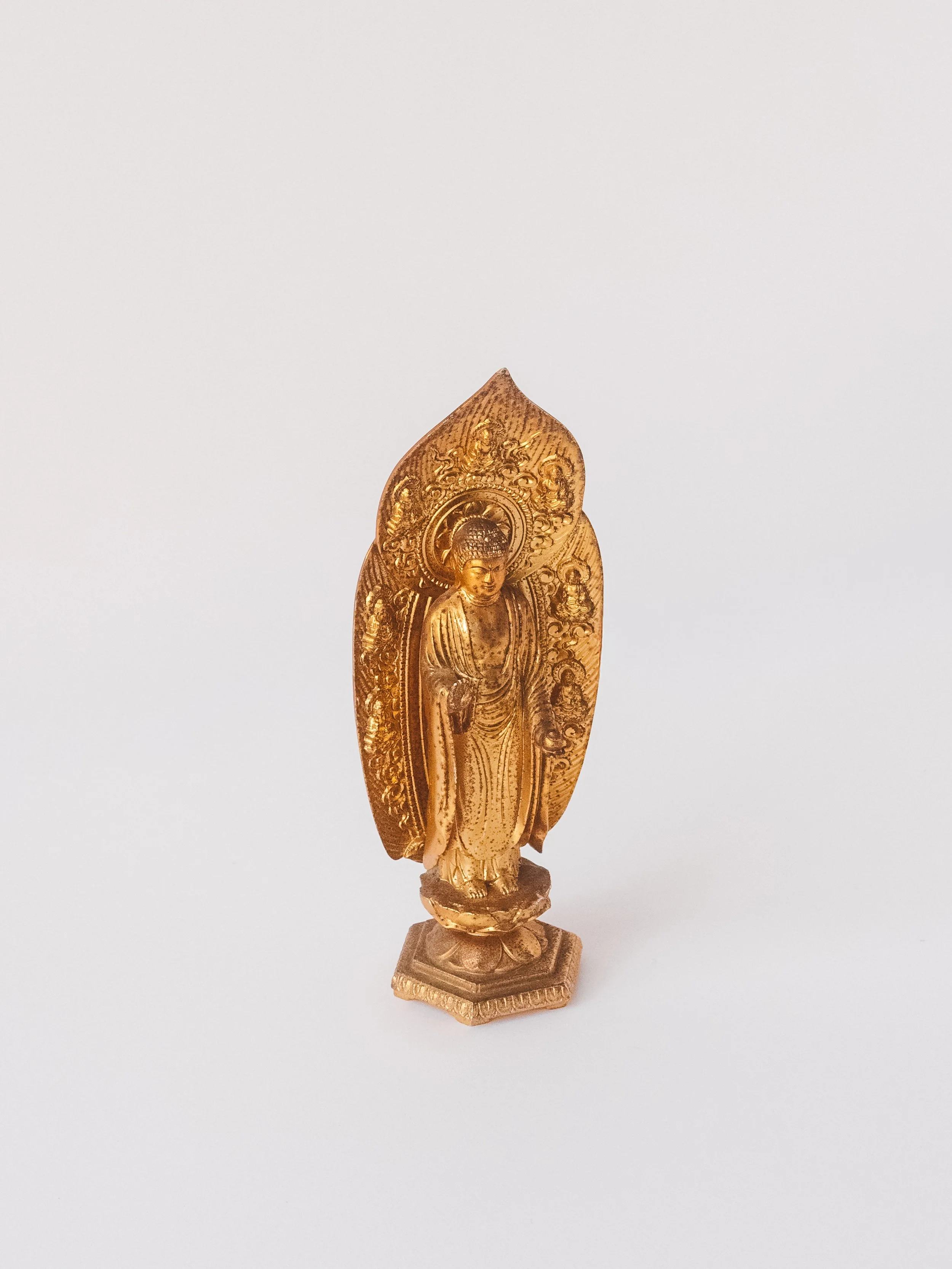 Image 1 of 11
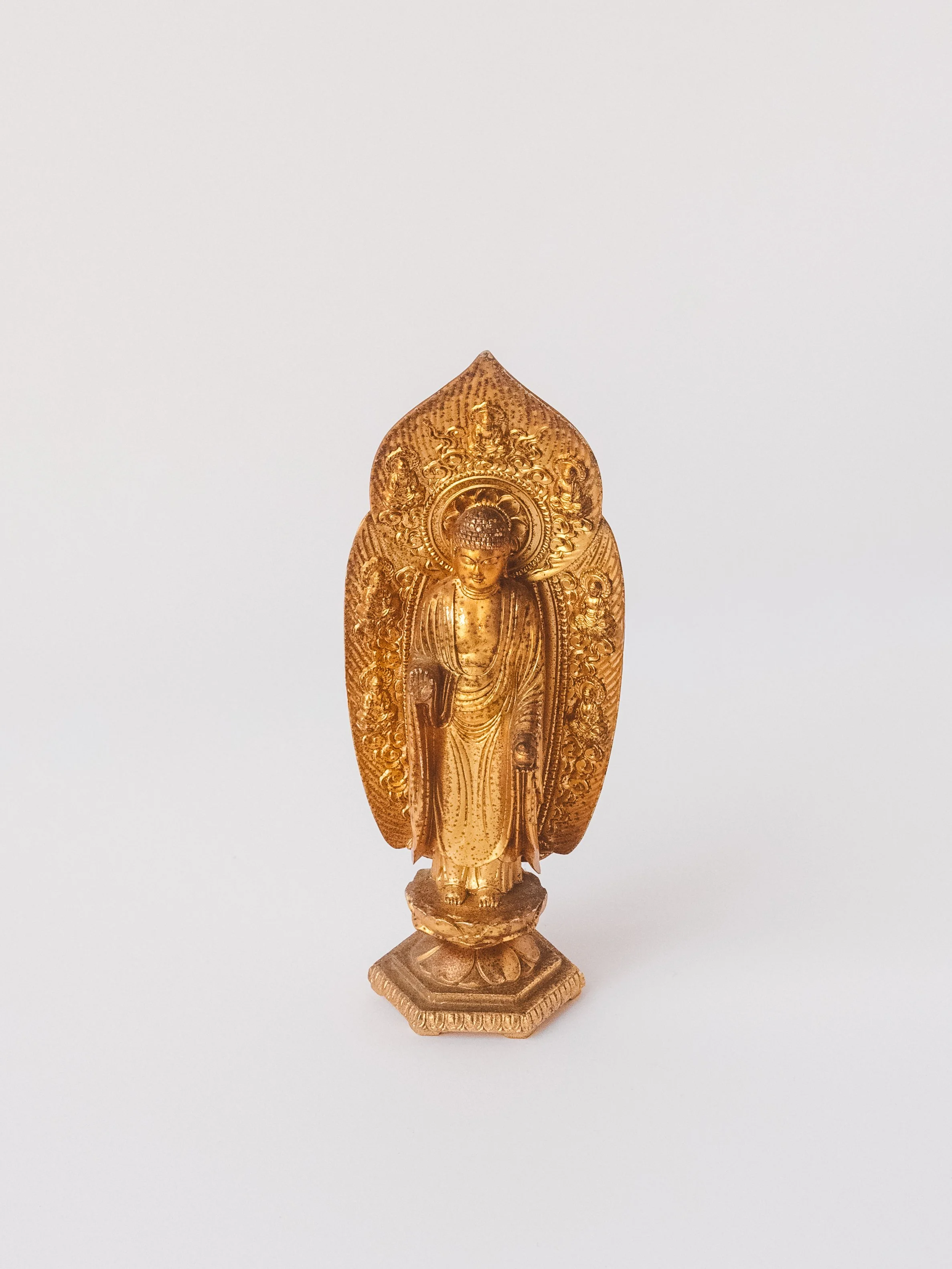 Image 2 of 11
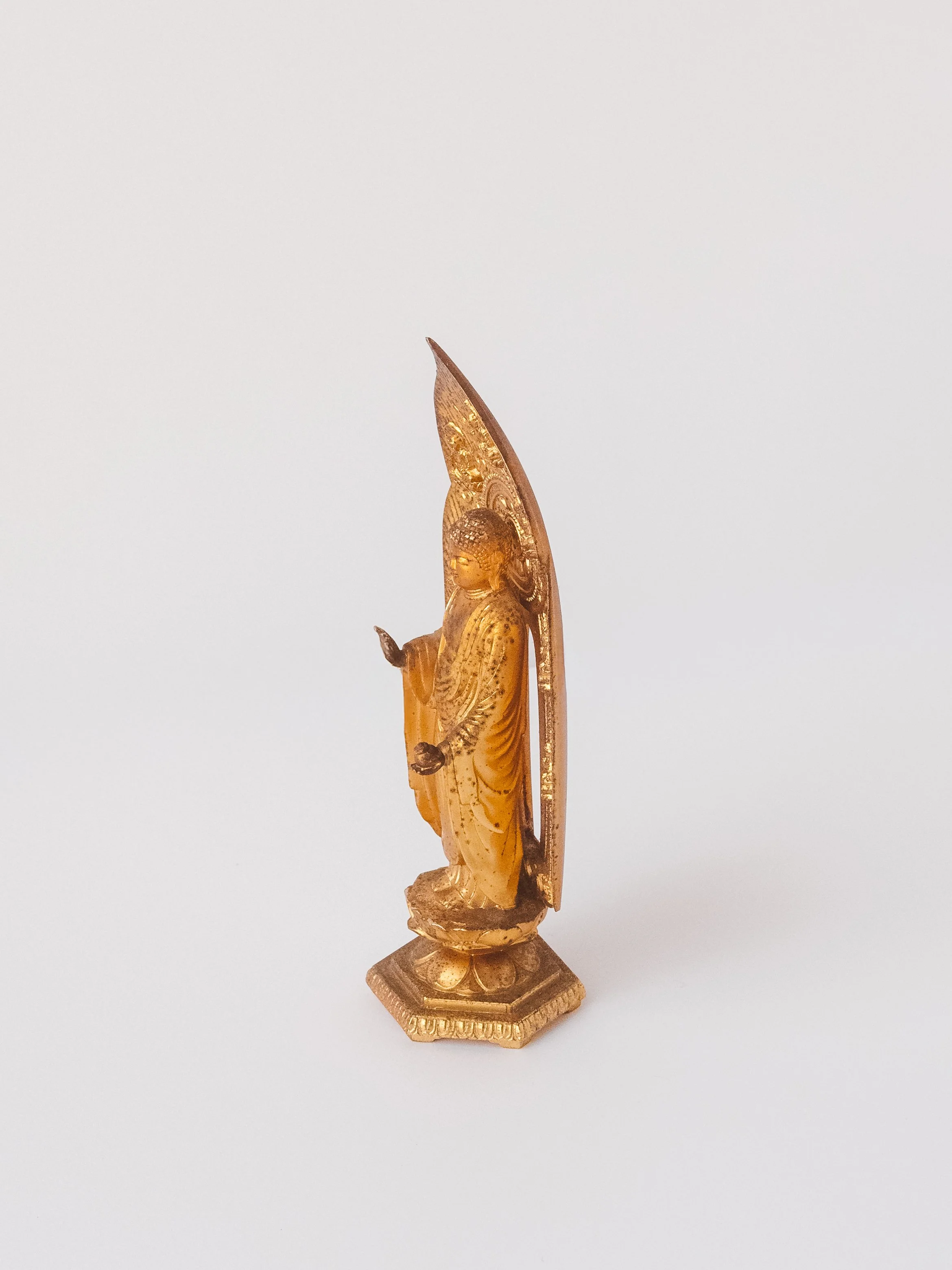 Image 3 of 11
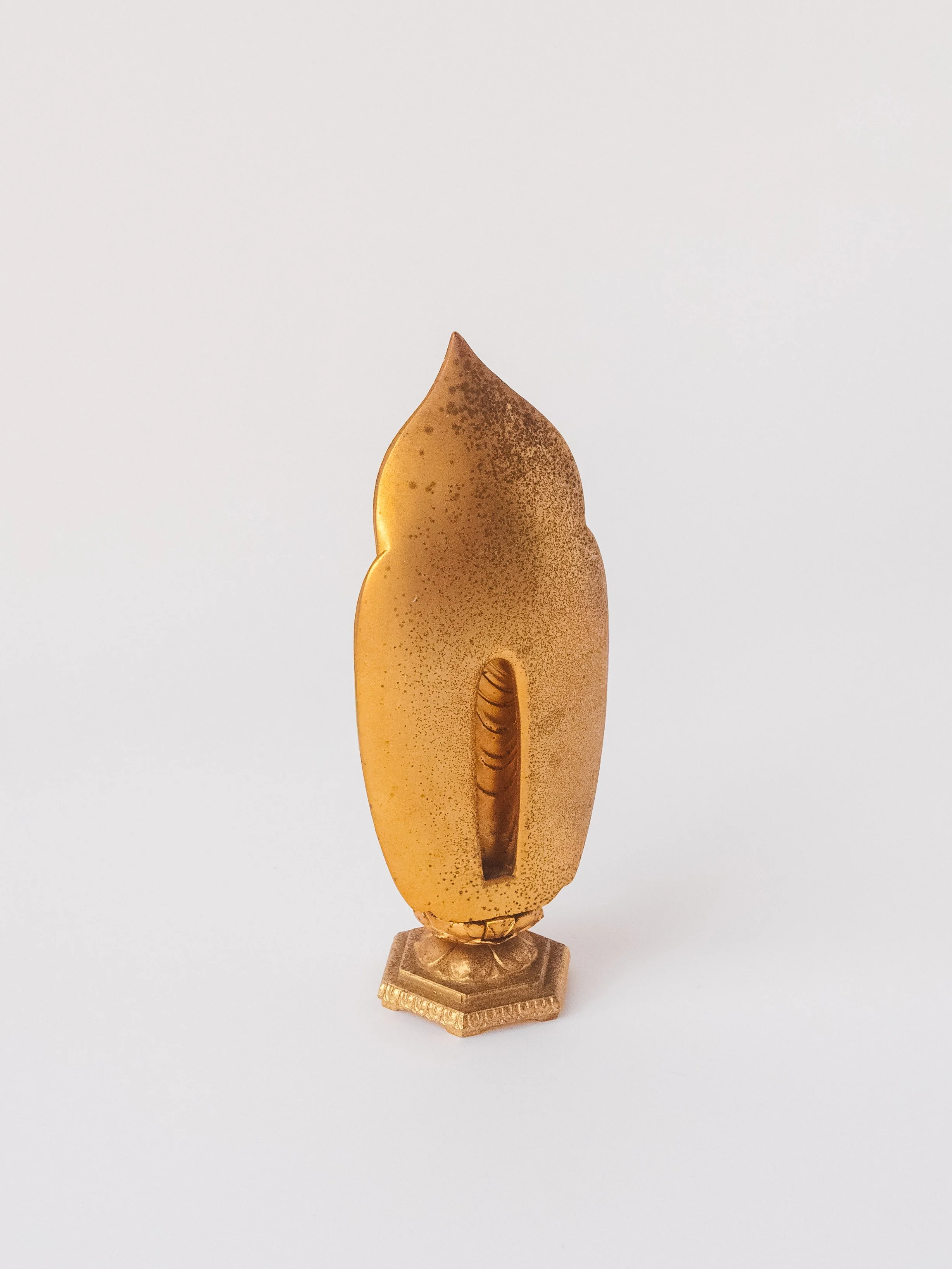 Image 4 of 11
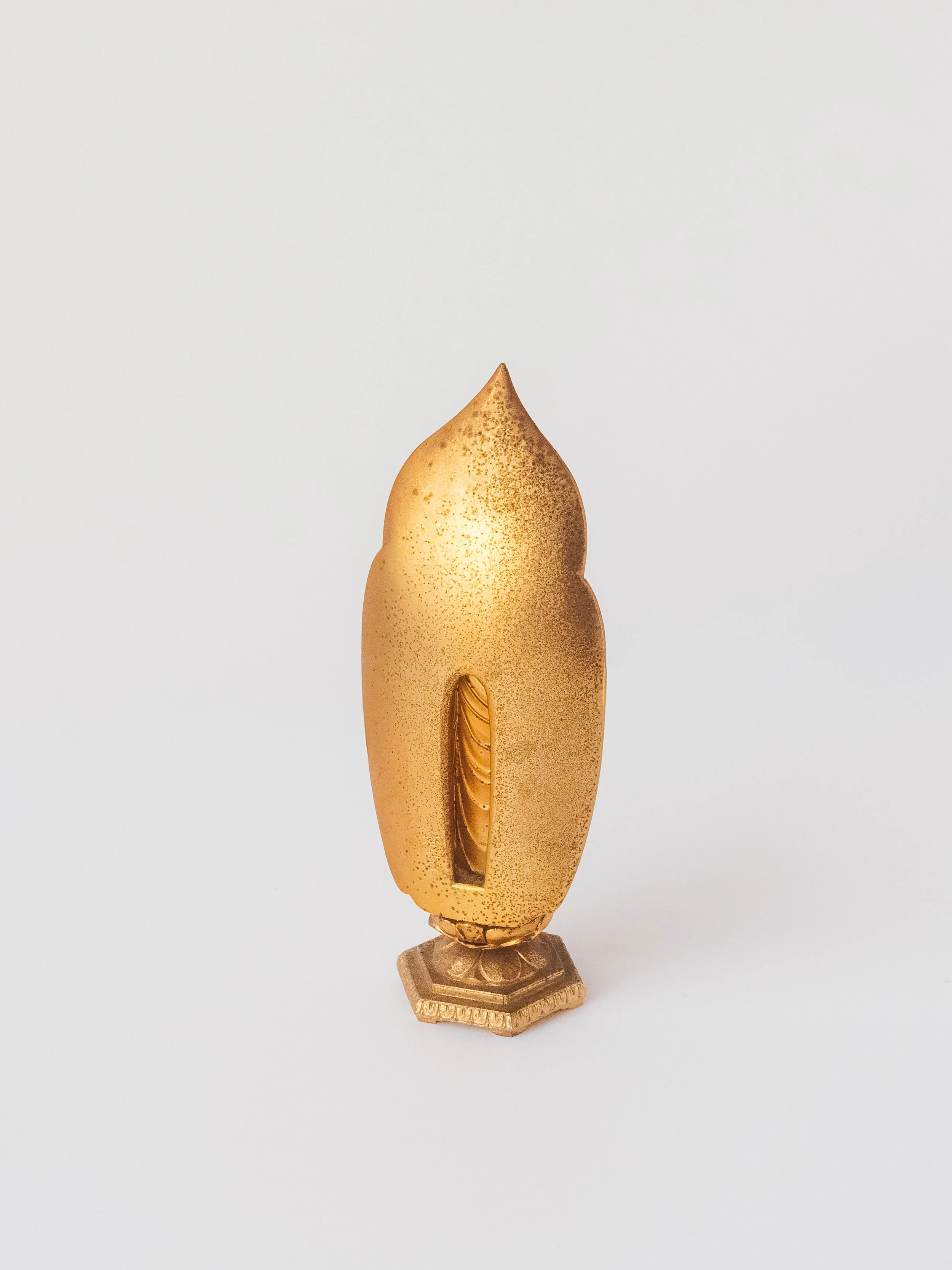 Image 5 of 11
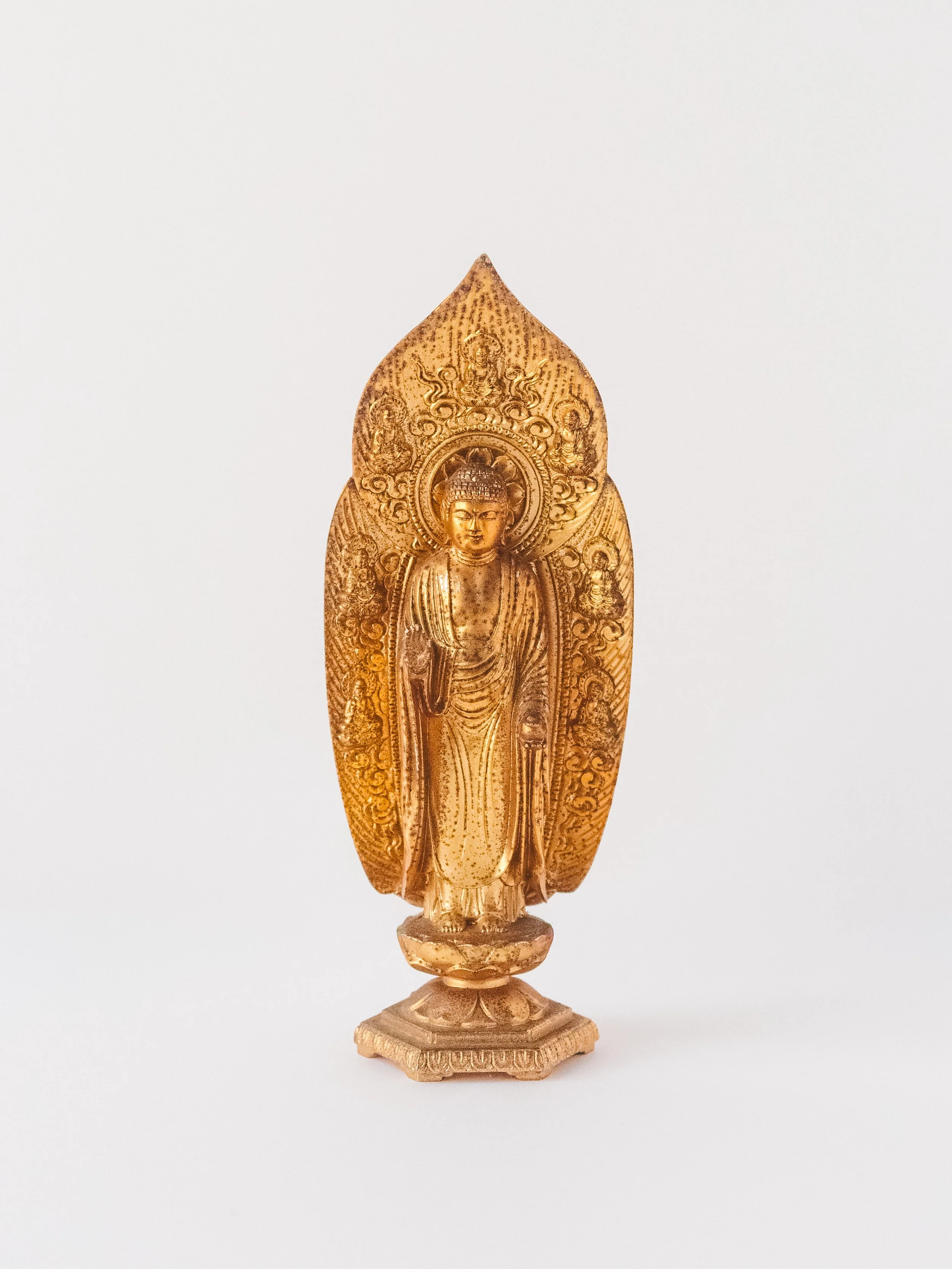 Image 6 of 11
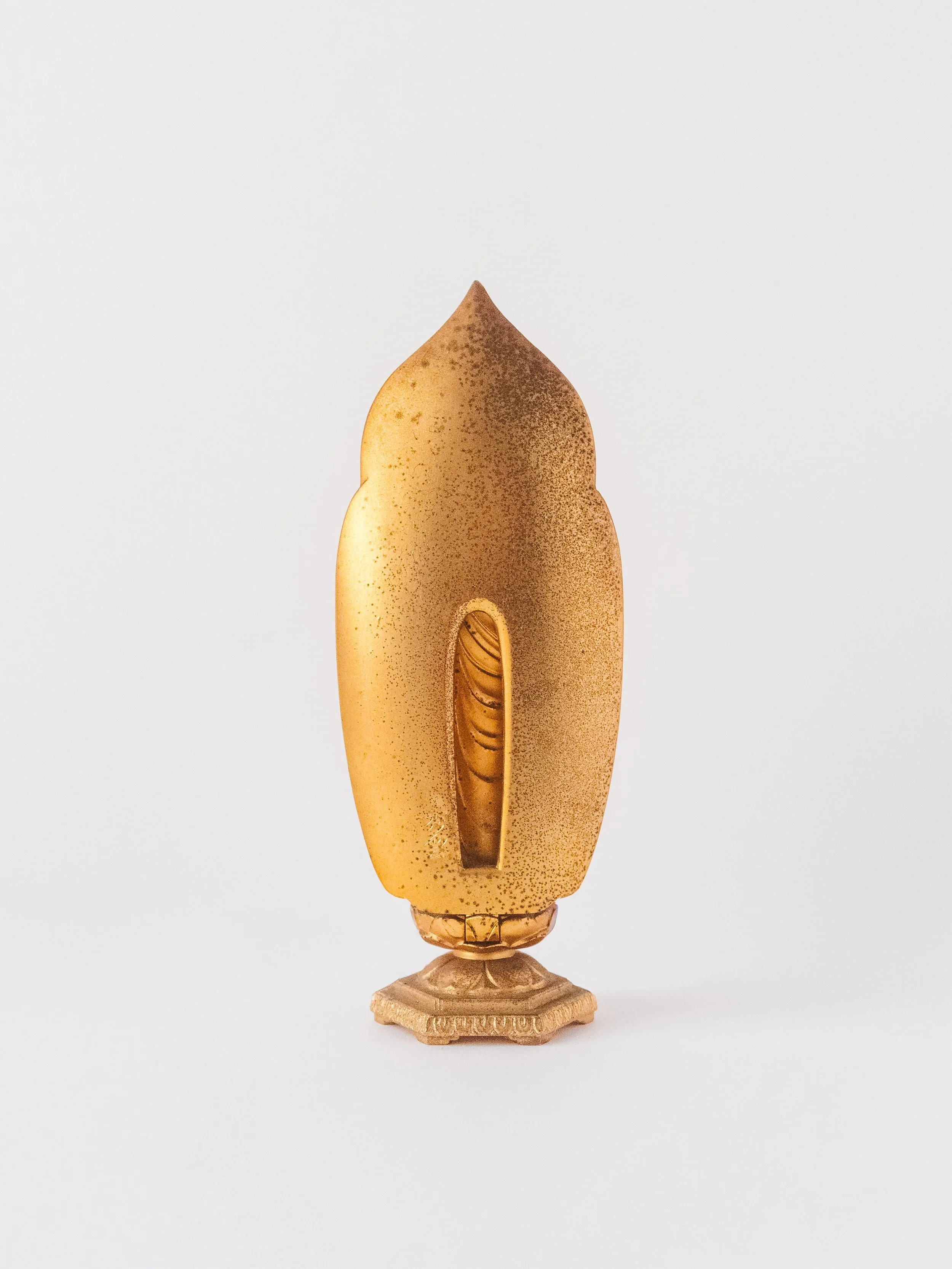 Image 7 of 11
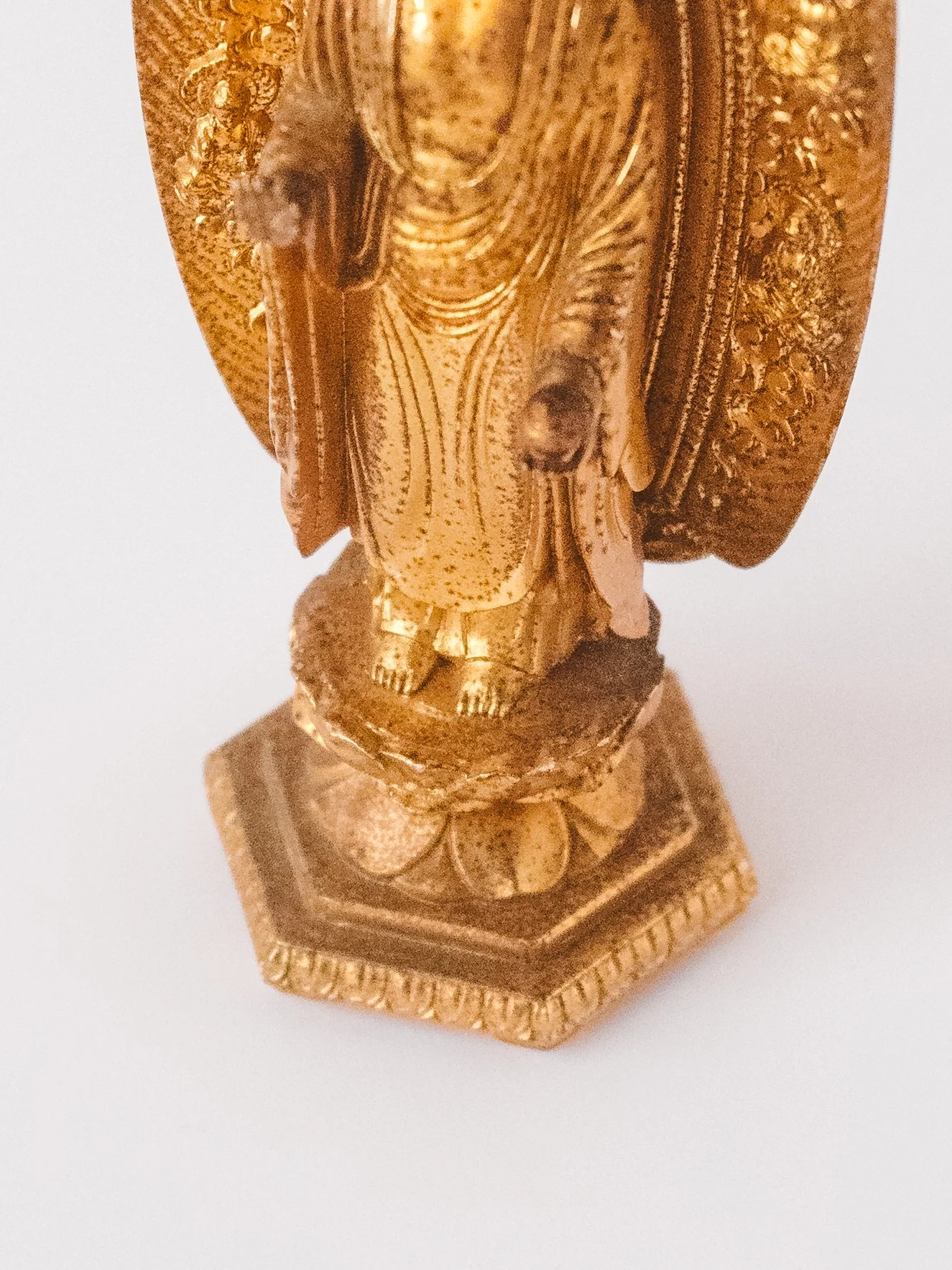 Image 8 of 11
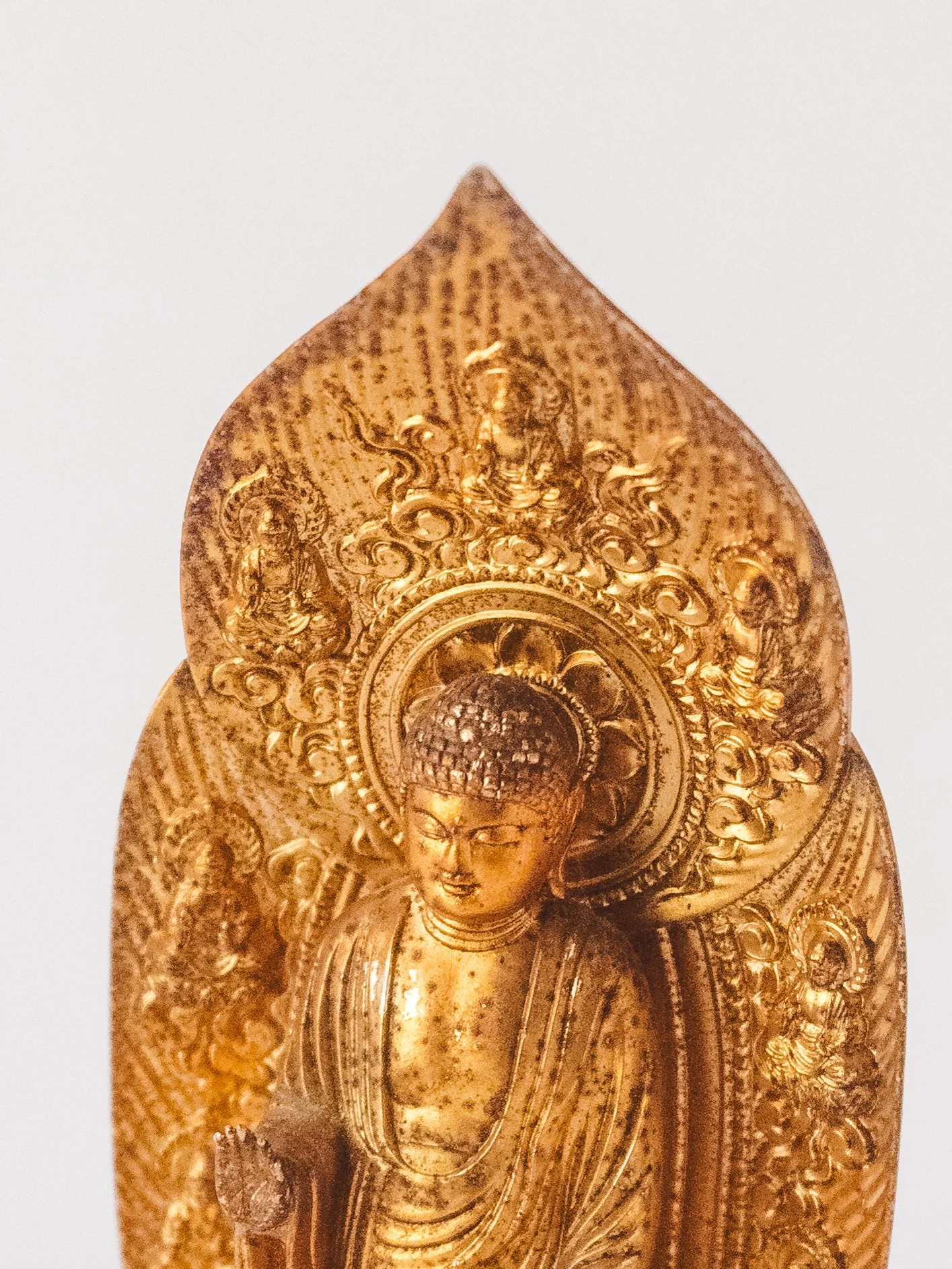 Image 9 of 11
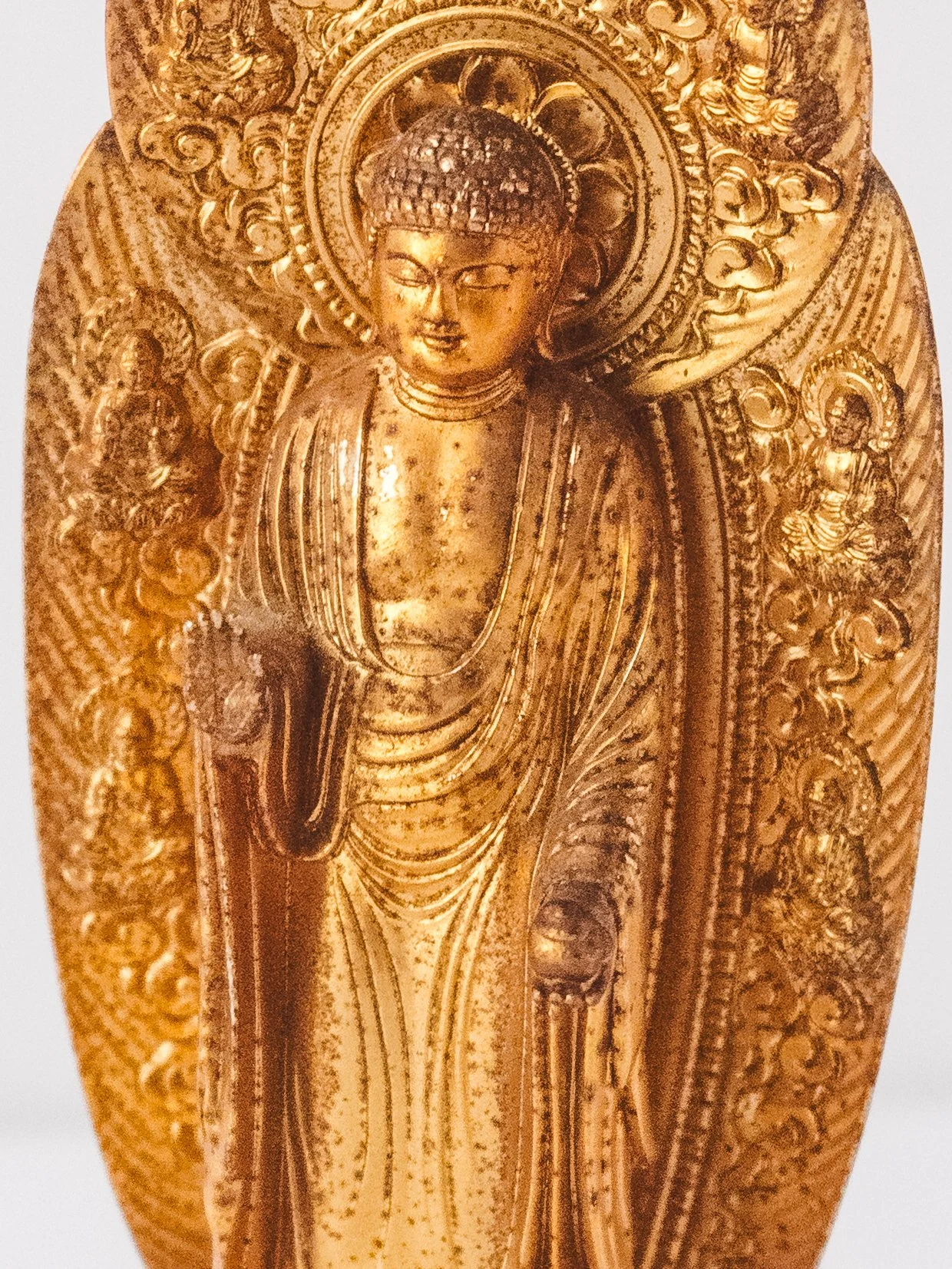 Image 10 of 11
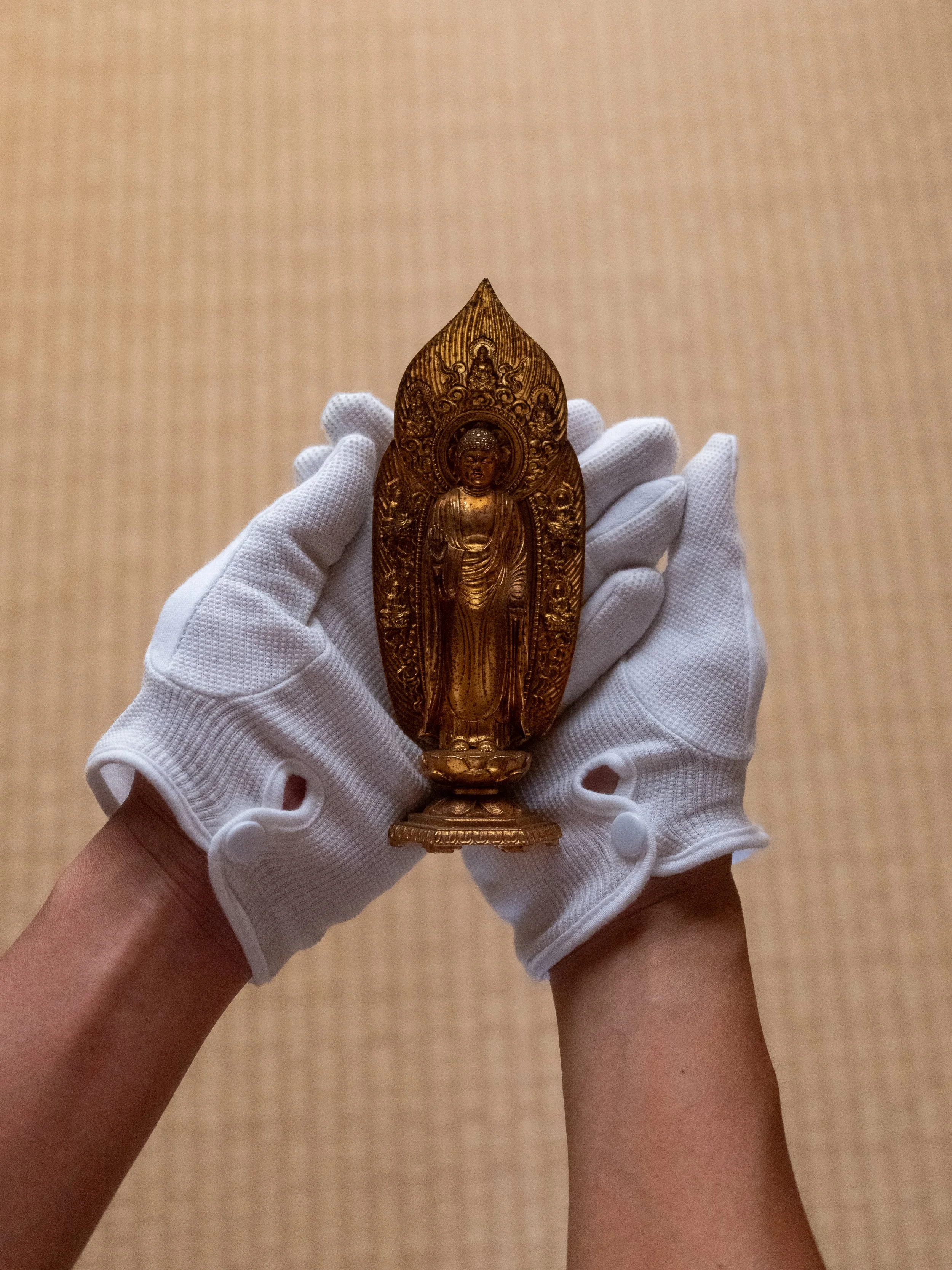 Image 11 of 11