【 The Concept 】
The last animal of the twelve-year round, cast in gold. For more than a thousand years the Japanese calendar has turned on a wheel of twelve creatures, and the boar closes it — arriving last, and arriving at a charge. This is the animal of chototsu-mōshin, the headlong forward rush that picks a direction and does not retreat; the same word is still spoken today of a person who commits, fully, without looking back. The wheel last came to rest on the boar in 2019 — the year this piece takes its name from — and will not turn to it again until 2031.
But the boar was never only speed. In old belief it ran with the warrior-guardian of the unseen, a protector of those who could not afford to be struck down; a folk legend tells of a wounded official ringed and healed by a company of wild boar, and from it the animal became a ward against misfortune and a guardian of the legs — of the body's own power to keep moving forward. Fold in its famous fertility, litter after litter, and the boar arrives carrying almost everything a household might wish for: momentum, health, protection, increase.
Here an anonymous hand has stripped the wild animal of its bristle and its menace. No tusks to speak of, no eye picked out, no coat described — only essential mass, a rounded body sunk low and rooted to the ground it stands on. Where a besom renders nothing but its own use and a carved horse renders wood, this renders a wish in gold: not a portrait of a boar, but the idea of one, pressed into pure fortune.
【 The Function 】
Unlike stationary decor, this piece works as a small engine of intent — the object you set down where a year, or a resolve, begins. It belongs on an entryway console, a shelf by the door, the edge of a desk: anywhere the first glance of the morning lands. Placed for the New Year and kept out long after, it holds a single standing wish — forward, and don't look back.
【 The Texture 】
The gold refuses the cold mirror of polished metal. The whole form is covered instead in a fine, sand-grained shimmer — a field of countless tiny facets that break the light and scatter it into a soft, warm glow rather than a hard reflection, so the piece seems to hold light rather than throw it back. Against that even surface, three quiet incidents: the blunt push of the snout, two slit eyes barely cut, and a single ridge running the length of the spine — the one taut line through an otherwise smooth, palm-filling volume.
【 Presence 】
A small, deliberate weight of gold in a room that is otherwise plain. It gathers whatever light is near — a lamp, a window, the screen you work by — and gives it back diffuse, warming the corner it keeps. Set it alone on bare wood or a low shelf and it reads less as an ornament than as an intention left standing in the room: compact, unbothered, facing forward.
Sourced from a private collection in Japan.
【 The Concept 】
The last animal of the twelve-year round, cast in gold. For more than a thousand years the Japanese calendar has turned on a wheel of twelve creatures, and the boar closes it — arriving last, and arriving at a charge. This is the animal of chototsu-mōshin, the headlong forward rush that picks a direction and does not retreat; the same word is still spoken today of a person who commits, fully, without looking back. The wheel last came to rest on the boar in 2019 — the year this piece takes its name from — and will not turn to it again until 2031.
But the boar was never only speed. In old belief it ran with the warrior-guardian of the unseen, a protector of those who could not afford to be struck down; a folk legend tells of a wounded official ringed and healed by a company of wild boar, and from it the animal became a ward against misfortune and a guardian of the legs — of the body's own power to keep moving forward. Fold in its famous fertility, litter after litter, and the boar arrives carrying almost everything a household might wish for: momentum, health, protection, increase.
Here an anonymous hand has stripped the wild animal of its bristle and its menace. No tusks to speak of, no eye picked out, no coat described — only essential mass, a rounded body sunk low and rooted to the ground it stands on. Where a besom renders nothing but its own use and a carved horse renders wood, this renders a wish in gold: not a portrait of a boar, but the idea of one, pressed into pure fortune.
【 The Function 】
Unlike stationary decor, this piece works as a small engine of intent — the object you set down where a year, or a resolve, begins. It belongs on an entryway console, a shelf by the door, the edge of a desk: anywhere the first glance of the morning lands. Placed for the New Year and kept out long after, it holds a single standing wish — forward, and don't look back.
【 The Texture 】
The gold refuses the cold mirror of polished metal. The whole form is covered instead in a fine, sand-grained shimmer — a field of countless tiny facets that break the light and scatter it into a soft, warm glow rather than a hard reflection, so the piece seems to hold light rather than throw it back. Against that even surface, three quiet incidents: the blunt push of the snout, two slit eyes barely cut, and a single ridge running the length of the spine — the one taut line through an otherwise smooth, palm-filling volume.
【 Presence 】
A small, deliberate weight of gold in a room that is otherwise plain. It gathers whatever light is near — a lamp, a window, the screen you work by — and gives it back diffuse, warming the corner it keeps. Set it alone on bare wood or a low shelf and it reads less as an ornament than as an intention left standing in the room: compact, unbothered, facing forward.
Sourced from a private collection in Japan.


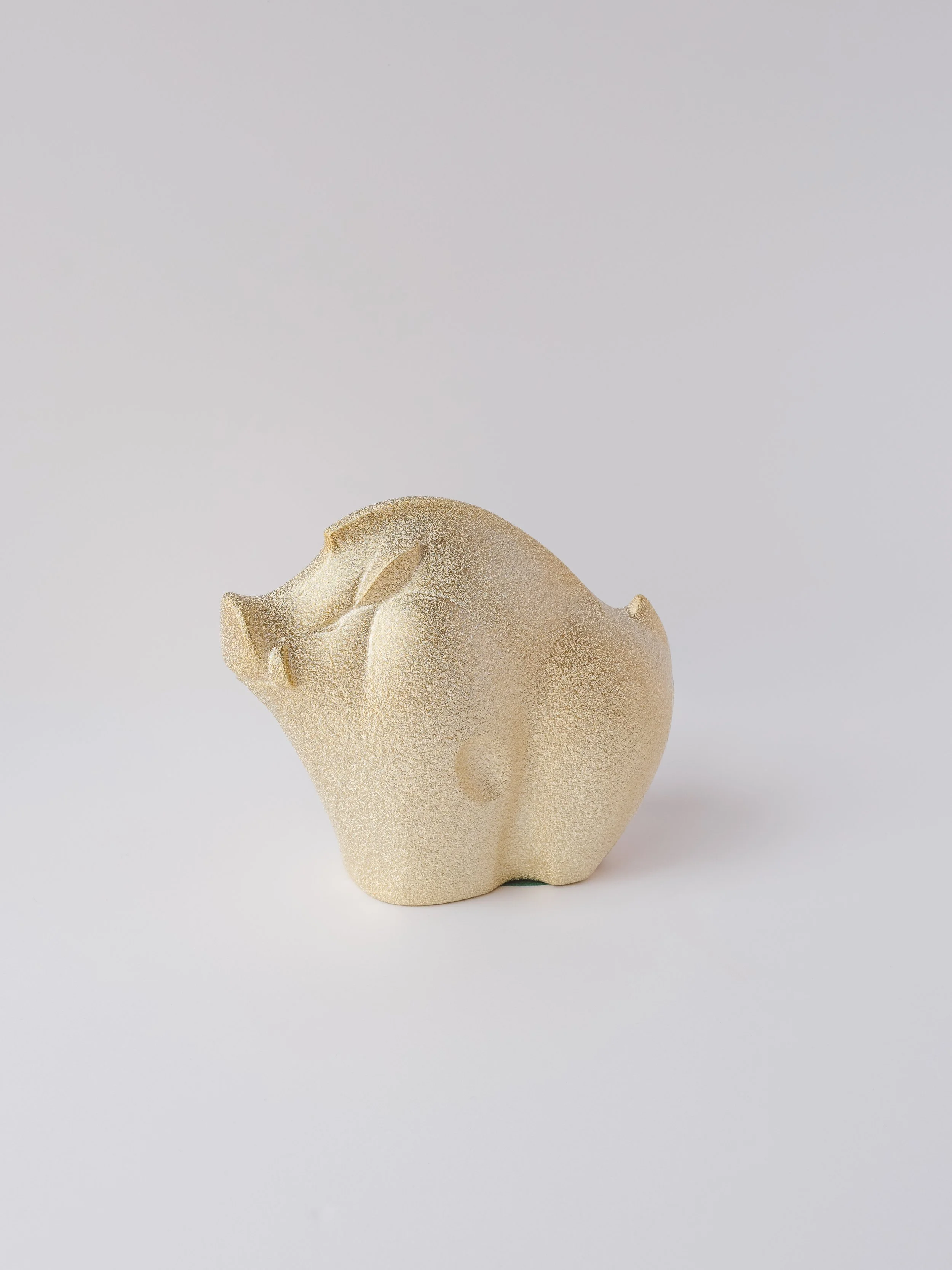 Image 1 of 11
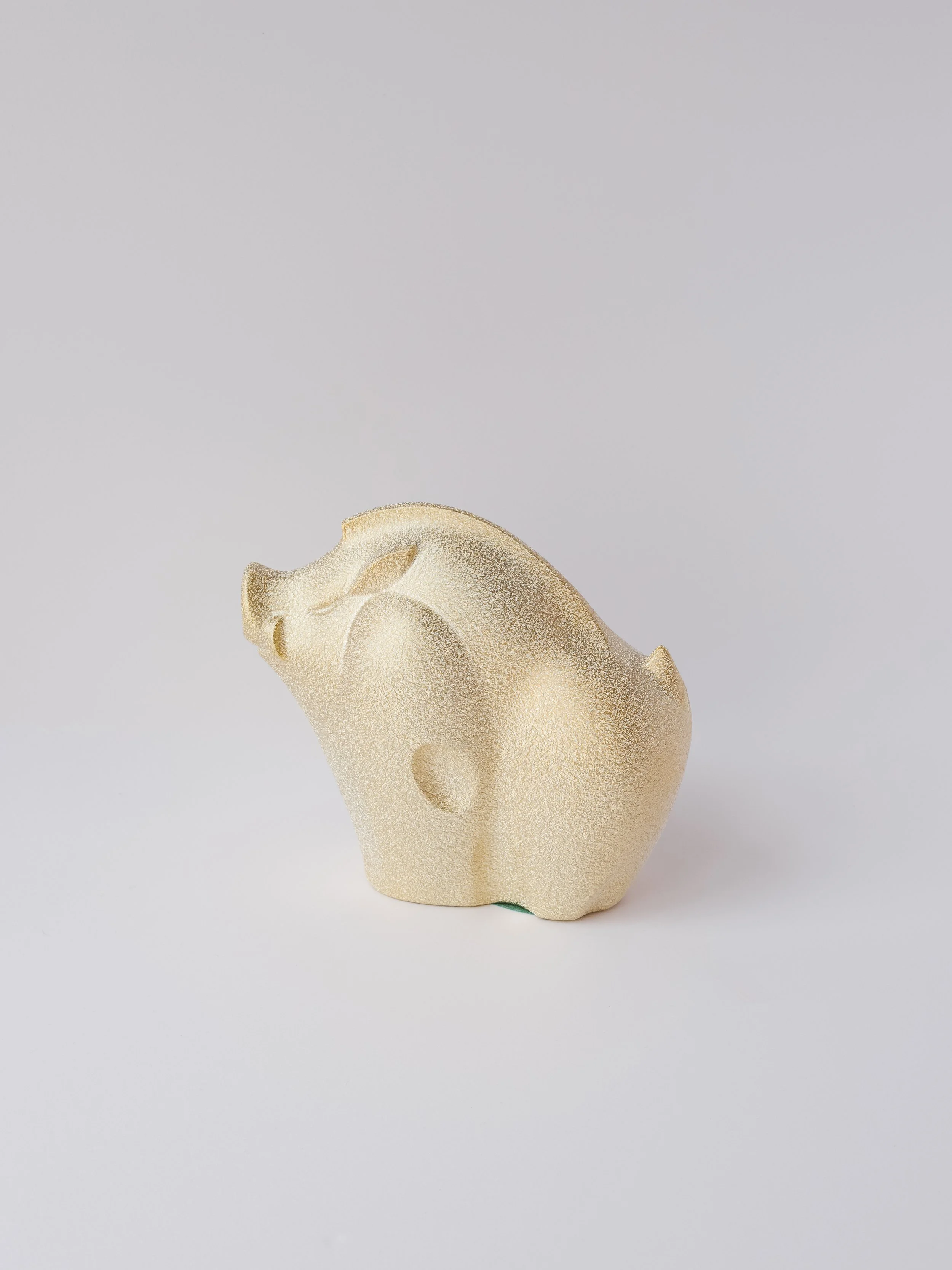 Image 2 of 11
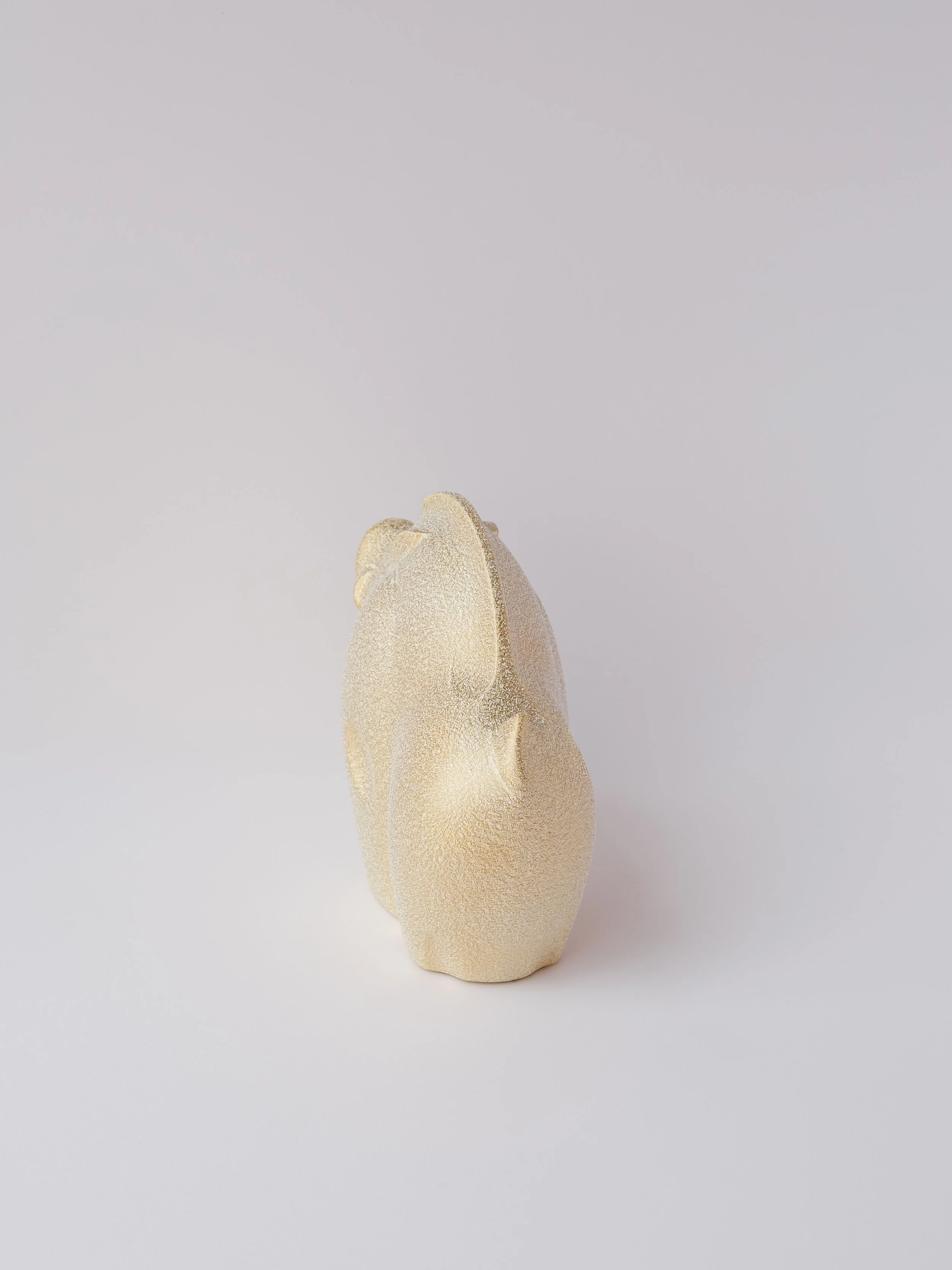 Image 3 of 11
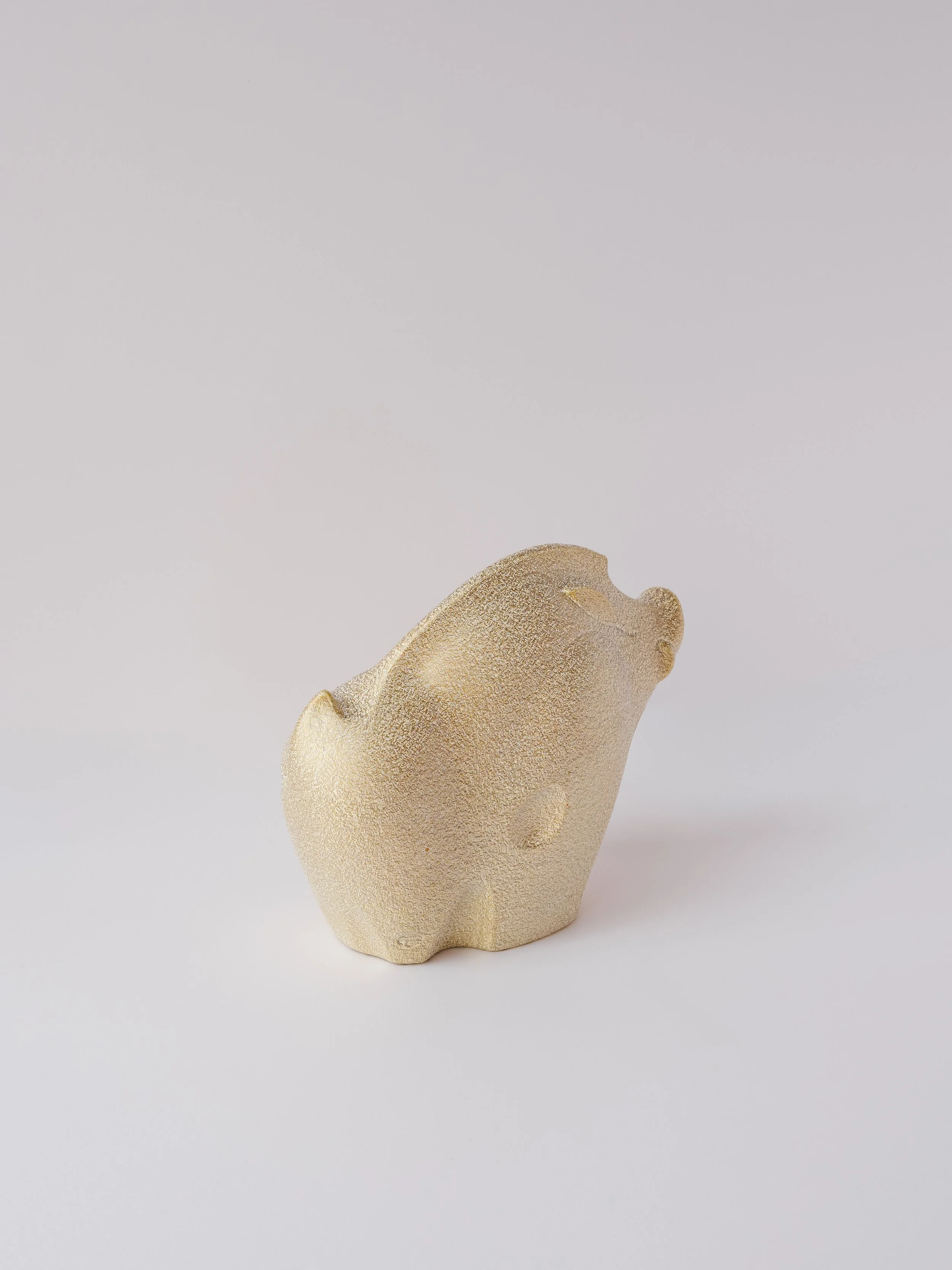 Image 4 of 11
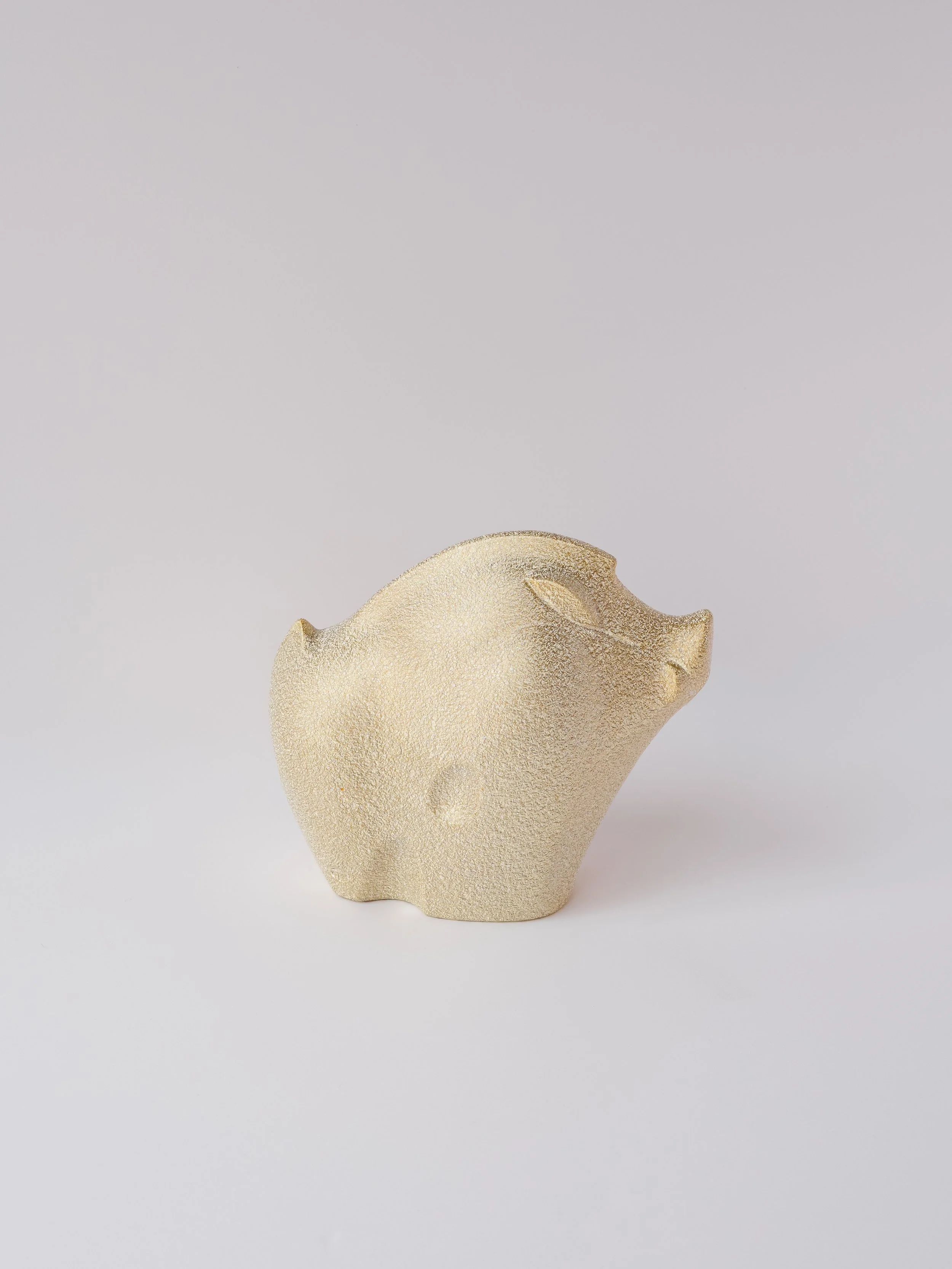 Image 5 of 11
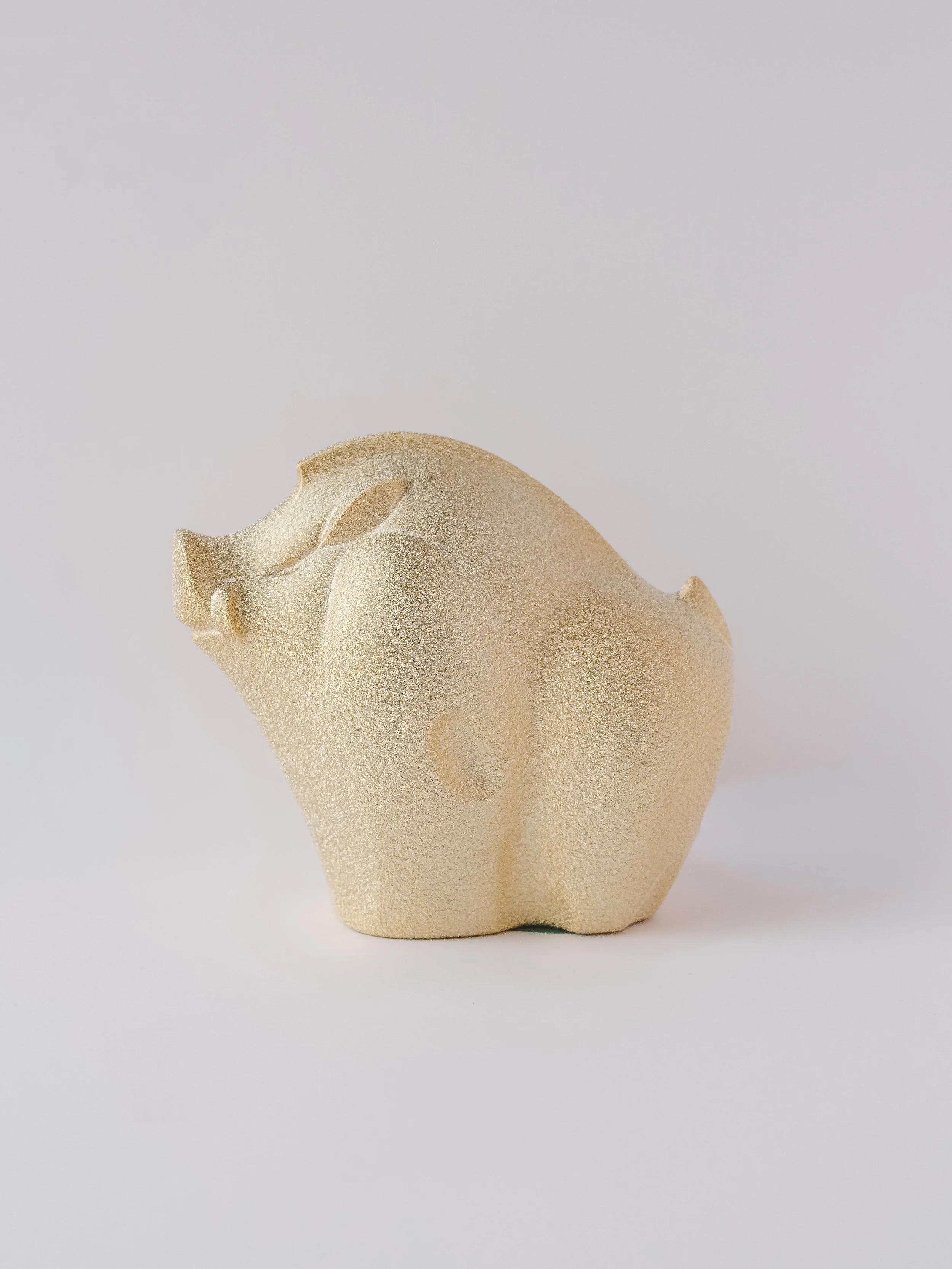 Image 6 of 11
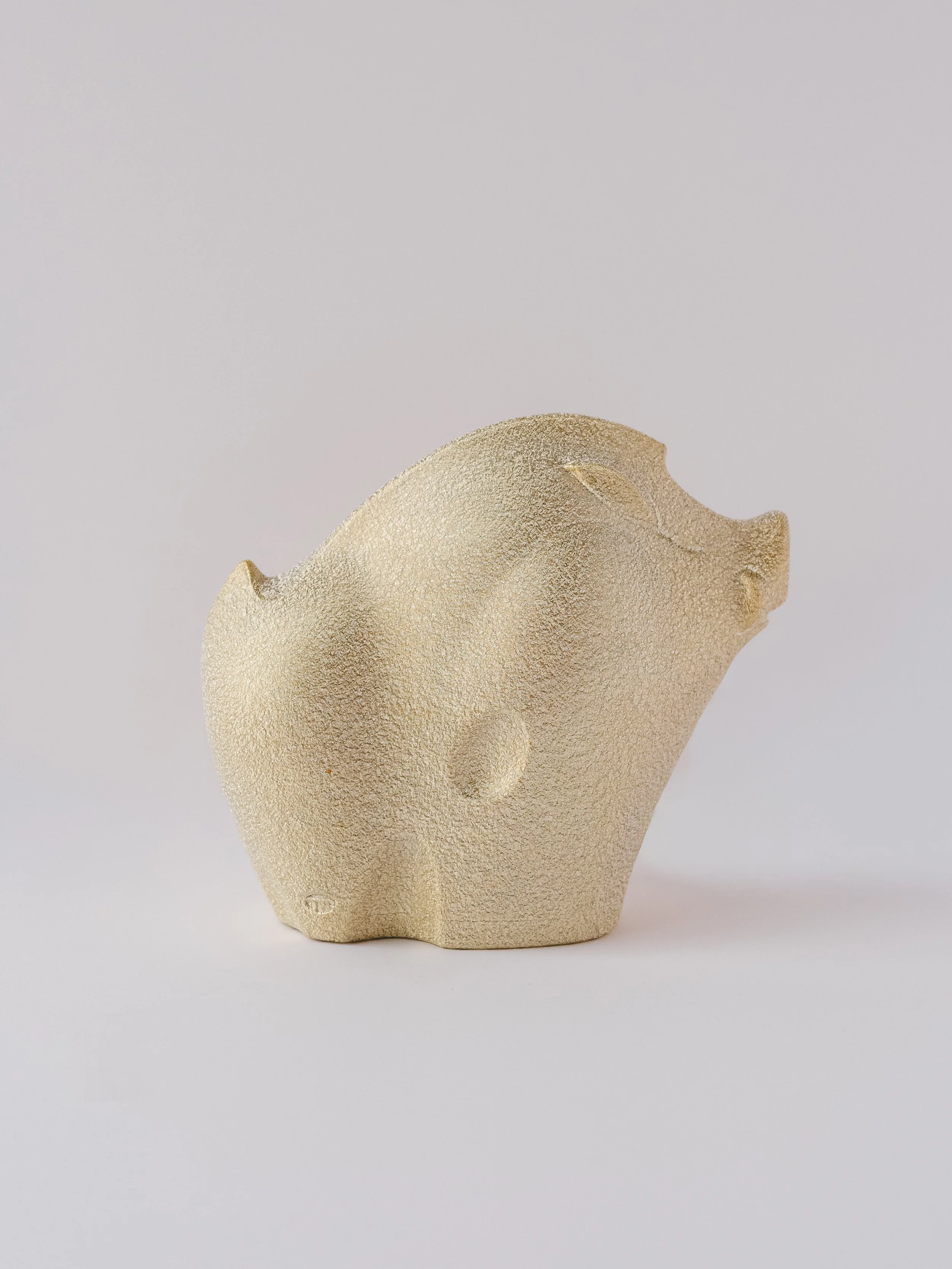 Image 7 of 11
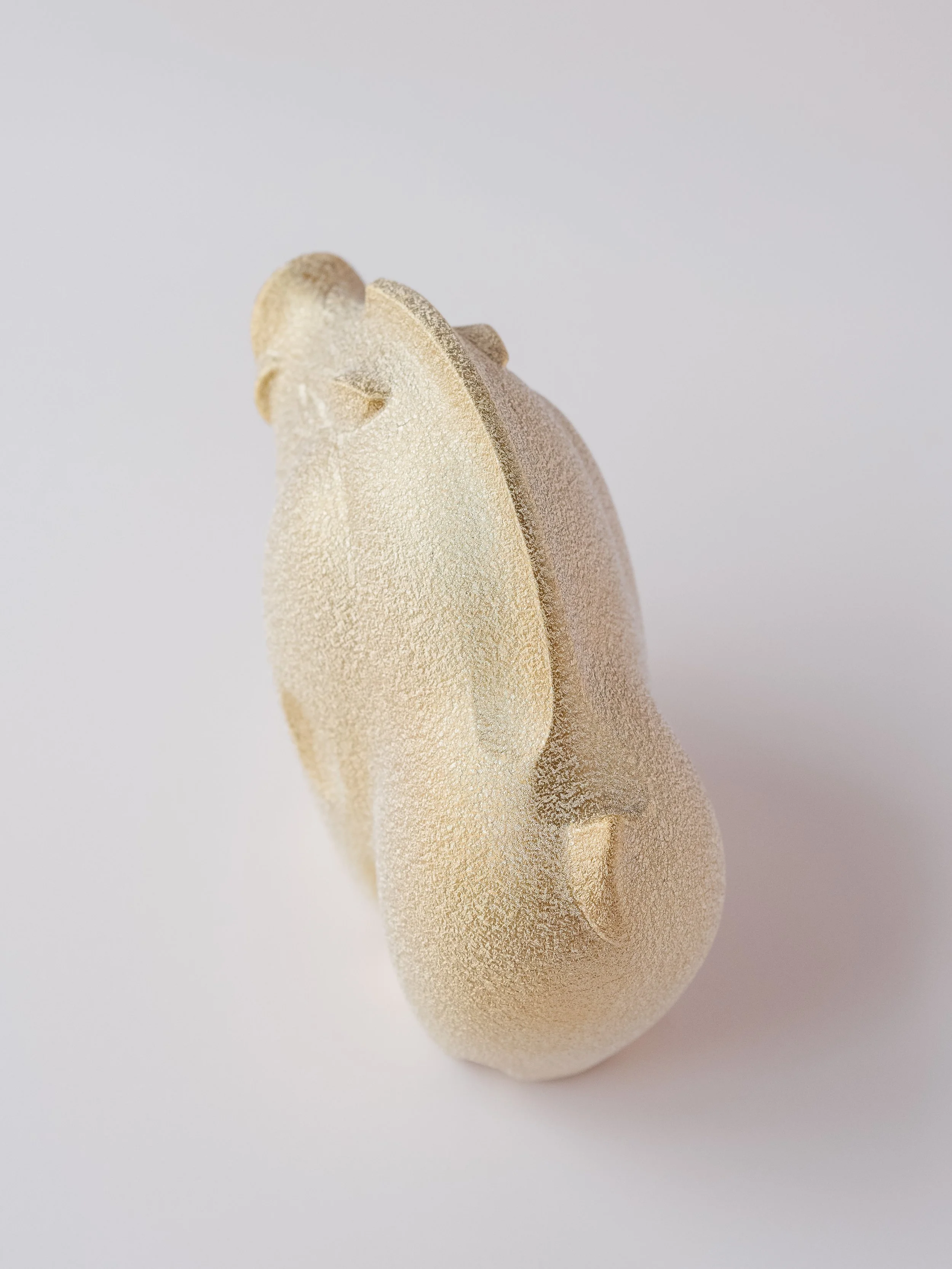 Image 8 of 11
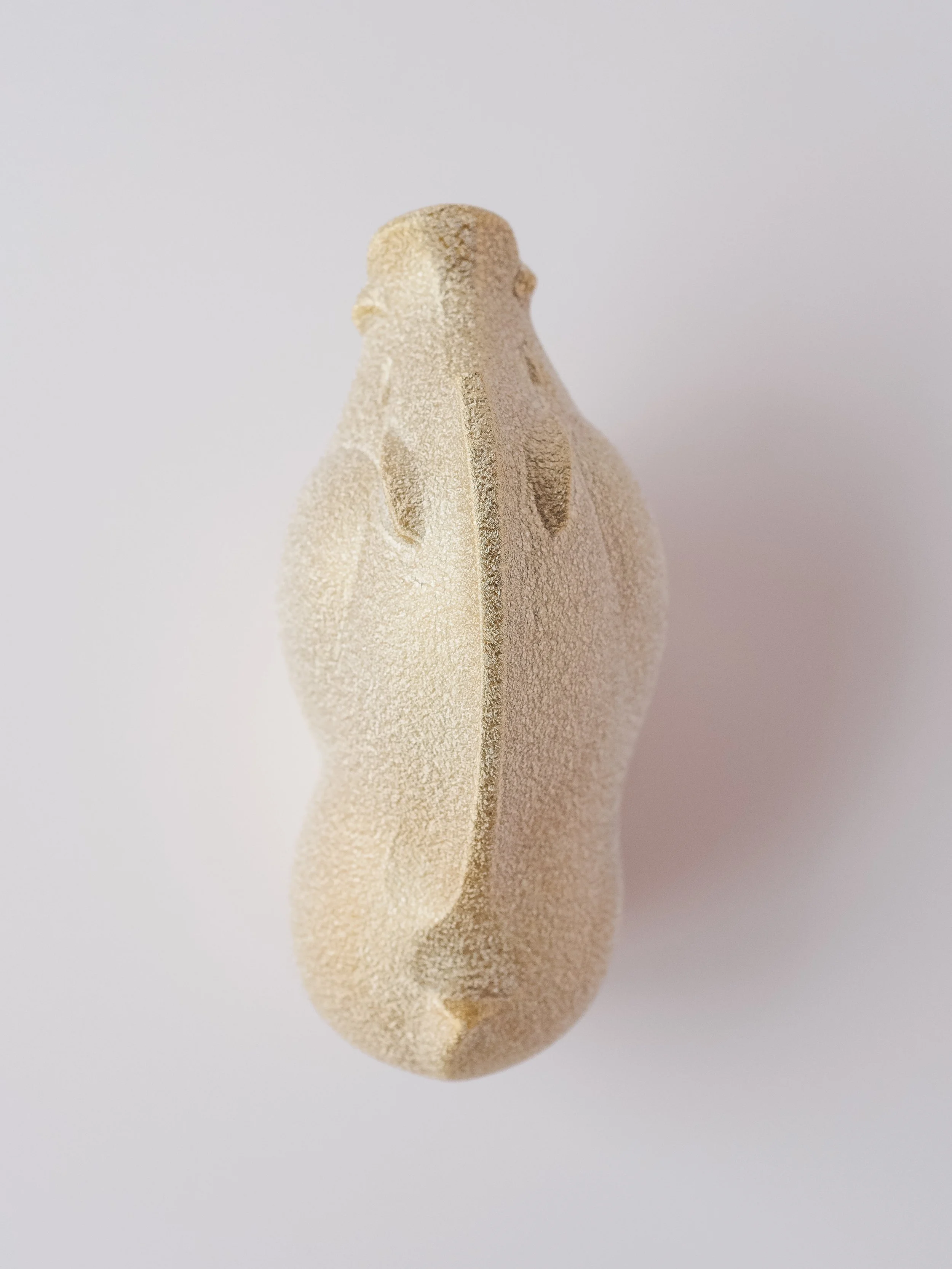 Image 9 of 11
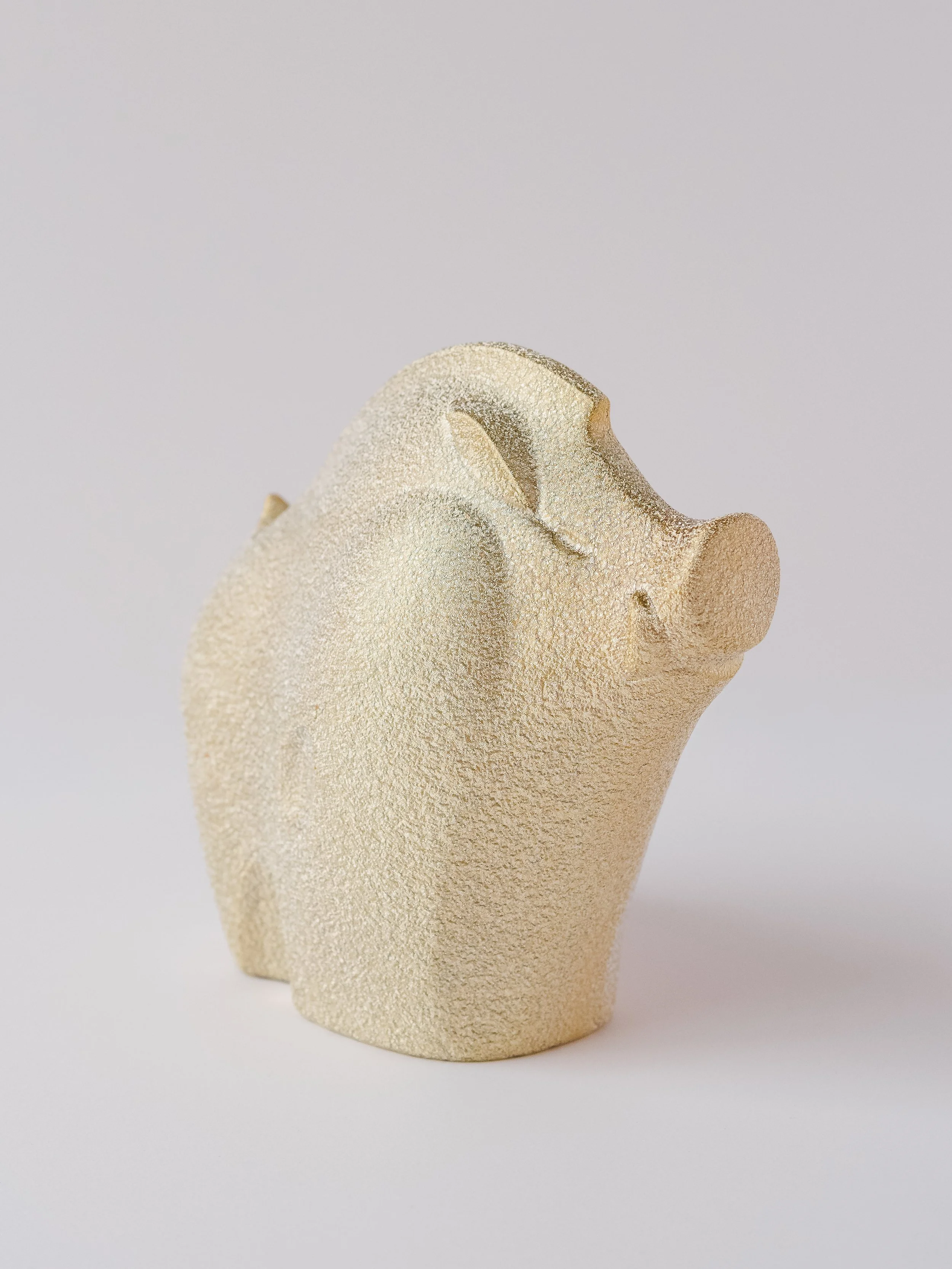 Image 10 of 11
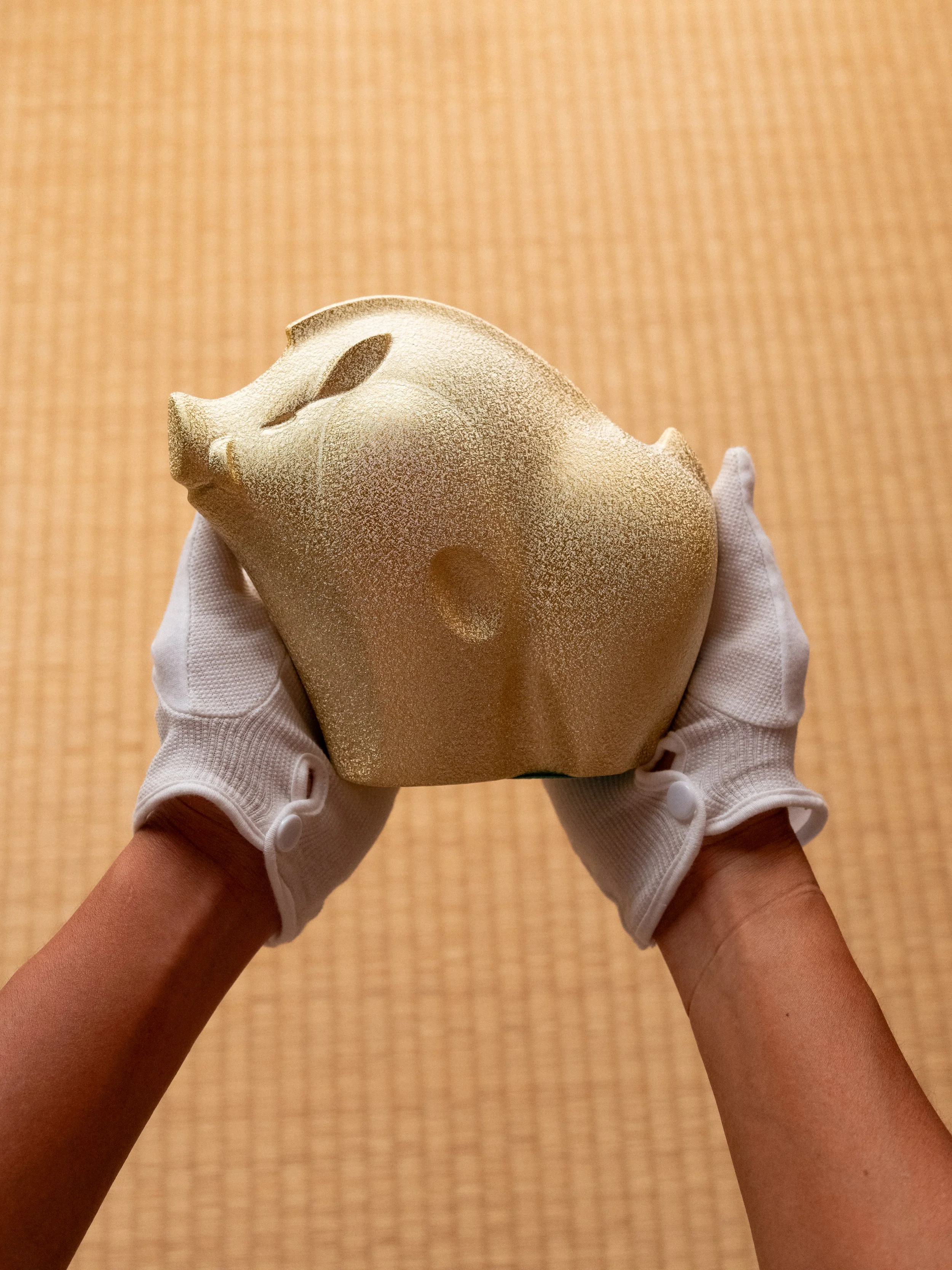 Image 11 of 11