【 The Concept 】
A bird reduced to a single breath. Head, breast, and tail have been compressed into one continuous curve with no legs and no feathers — just a swollen teardrop of cast iron sitting directly on its belly, with two folded wings pressed flat against each flank. The crest on top of the head has been flattened into a perfect disc. The beak is a small wedge extending from the curve of the skull, flanked on each cheek by a rounded bulge — the wattles, reduced to two smooth discs that mirror the crest above. The eye is a single circular indent, more punctuation mark than anatomy. Three shallow grooves near the tail suggest folded plumage without depicting it. Everything that makes a bird complicated has been removed. What remains is the weight, the warmth, and the silhouette.
The entire surface is coated in gold. Not the reflective gold of plating or leaf, but a matte, granular gold produced by metallic particles suspended in the finish. These particles scatter light in every direction, producing a soft shimmer that shifts as the object is turned — brighter where the curve catches the window, darker where the belly meets the desk. The effect is closer to sand than to metal: warm, dry, and luminous without being shiny.
In the zodiac tradition this figure belongs to, the bird represents dawn — the creature whose voice breaks the boundary between night and day. In older mythologies, it was the bird whose cry called the sun out of hiding when the world had gone dark. This figure is not crowing. Its beak is closed. But the gold surface carries the light the voice was meant to summon, as though the bird swallowed the dawn instead of announcing it.
【 The Function 】
272 grams in a frame 8 centimeters tall and 7 centimeters long. Solid cast iron with no hollow interior — the weight is real, distributed evenly through the entire mass. The flat base sits without wobble on any surface. Pick it up and the density is immediate: this is not painted resin or coated ceramic. It is iron pretending to be gold, and the pretense stops the moment it touches your hand. In its original context, figures like this were designed to serve double duty — zodiac talisman and paperweight, beauty and ballast in one object. Place it on a stack of papers and the papers stay. Place it on a shelf and the shelf gains a focal point. The form does not change. The function follows the surface it sits on.
【 The Texture 】
The gold is not smooth. Beneath the metallic particles, the surface retains the fine-grained texture of sand-cast iron — a subtle roughness that is felt before it is seen. The particles themselves are unevenly distributed, denser in the concave areas of the breast and thinner along the sharp edge of the tail, creating a natural variation in brightness that no brush could replicate. In certain light, individual flecks catch and release tiny points of reflected color — not the uniform blaze of polished metal, but the scattered, intermittent sparkle of gold dust dropped on a rough surface. The grooves near the tail hold slightly more pigment than the surrounding planes, deepening to a warm amber. The disc of the crest, being the highest point, catches the most direct light and reads as the brightest element on the figure, drawing the eye upward toward the head.
【 Presence 】
It is gold, and it is heavy, and it is silent. The combination is difficult to ignore. Gold pulls attention. Weight holds position. Silence invites interpretation. Place it beside dark objects and it glows. Place it beside bright objects and it absorbs them into its warmth. The abstraction of the form means it registers as a bird only after a second look — the first impression is shape and color, a gold stone or a polished seed. The crest and the beak arrive late, and when they do, the object shifts from mineral to animal without changing at all. It is a paperweight that turns out to be alive. A zodiac figure that turns out to be useful. A piece of iron that turns out to be gold — or at least, to have decided to dress as gold for as long as anyone is looking.
Sourced from a private collection in the Kansai region, Japan.
【 The Concept 】
A bird reduced to a single breath. Head, breast, and tail have been compressed into one continuous curve with no legs and no feathers — just a swollen teardrop of cast iron sitting directly on its belly, with two folded wings pressed flat against each flank. The crest on top of the head has been flattened into a perfect disc. The beak is a small wedge extending from the curve of the skull, flanked on each cheek by a rounded bulge — the wattles, reduced to two smooth discs that mirror the crest above. The eye is a single circular indent, more punctuation mark than anatomy. Three shallow grooves near the tail suggest folded plumage without depicting it. Everything that makes a bird complicated has been removed. What remains is the weight, the warmth, and the silhouette.
The entire surface is coated in gold. Not the reflective gold of plating or leaf, but a matte, granular gold produced by metallic particles suspended in the finish. These particles scatter light in every direction, producing a soft shimmer that shifts as the object is turned — brighter where the curve catches the window, darker where the belly meets the desk. The effect is closer to sand than to metal: warm, dry, and luminous without being shiny.
In the zodiac tradition this figure belongs to, the bird represents dawn — the creature whose voice breaks the boundary between night and day. In older mythologies, it was the bird whose cry called the sun out of hiding when the world had gone dark. This figure is not crowing. Its beak is closed. But the gold surface carries the light the voice was meant to summon, as though the bird swallowed the dawn instead of announcing it.
【 The Function 】
272 grams in a frame 8 centimeters tall and 7 centimeters long. Solid cast iron with no hollow interior — the weight is real, distributed evenly through the entire mass. The flat base sits without wobble on any surface. Pick it up and the density is immediate: this is not painted resin or coated ceramic. It is iron pretending to be gold, and the pretense stops the moment it touches your hand. In its original context, figures like this were designed to serve double duty — zodiac talisman and paperweight, beauty and ballast in one object. Place it on a stack of papers and the papers stay. Place it on a shelf and the shelf gains a focal point. The form does not change. The function follows the surface it sits on.
【 The Texture 】
The gold is not smooth. Beneath the metallic particles, the surface retains the fine-grained texture of sand-cast iron — a subtle roughness that is felt before it is seen. The particles themselves are unevenly distributed, denser in the concave areas of the breast and thinner along the sharp edge of the tail, creating a natural variation in brightness that no brush could replicate. In certain light, individual flecks catch and release tiny points of reflected color — not the uniform blaze of polished metal, but the scattered, intermittent sparkle of gold dust dropped on a rough surface. The grooves near the tail hold slightly more pigment than the surrounding planes, deepening to a warm amber. The disc of the crest, being the highest point, catches the most direct light and reads as the brightest element on the figure, drawing the eye upward toward the head.
【 Presence 】
It is gold, and it is heavy, and it is silent. The combination is difficult to ignore. Gold pulls attention. Weight holds position. Silence invites interpretation. Place it beside dark objects and it glows. Place it beside bright objects and it absorbs them into its warmth. The abstraction of the form means it registers as a bird only after a second look — the first impression is shape and color, a gold stone or a polished seed. The crest and the beak arrive late, and when they do, the object shifts from mineral to animal without changing at all. It is a paperweight that turns out to be alive. A zodiac figure that turns out to be useful. A piece of iron that turns out to be gold — or at least, to have decided to dress as gold for as long as anyone is looking.
Sourced from a private collection in the Kansai region, Japan.


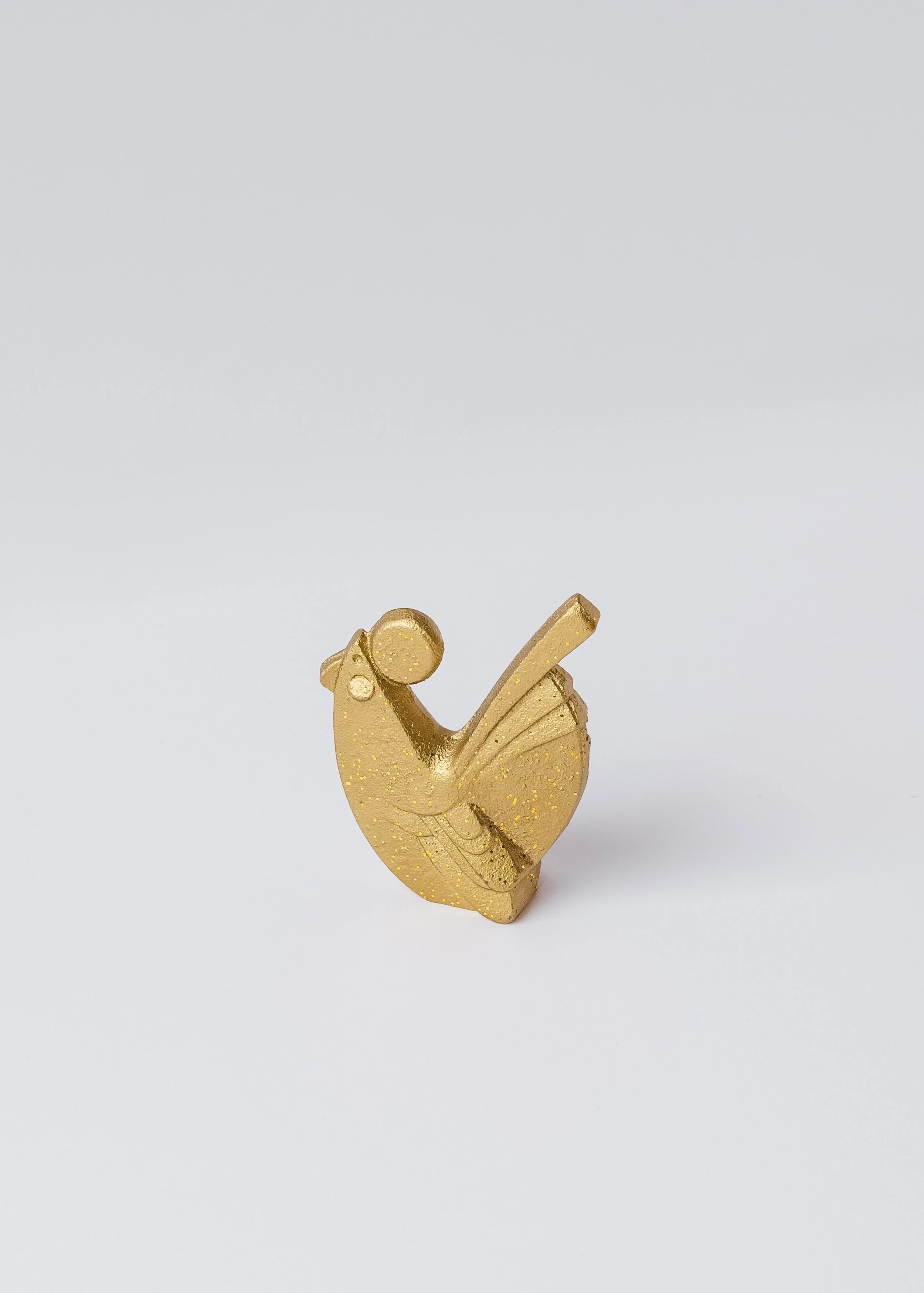 Image 1 of 8
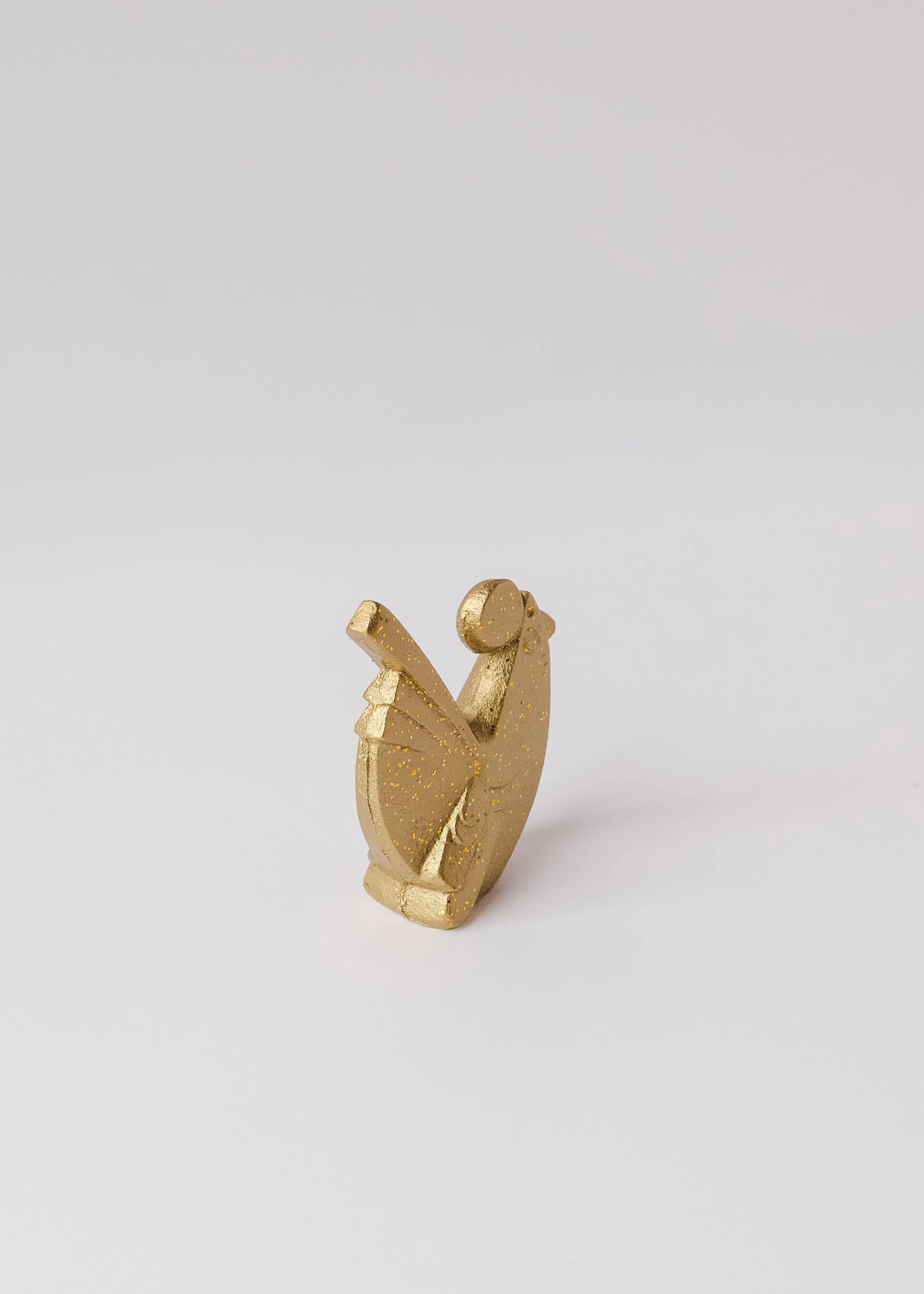 Image 2 of 8
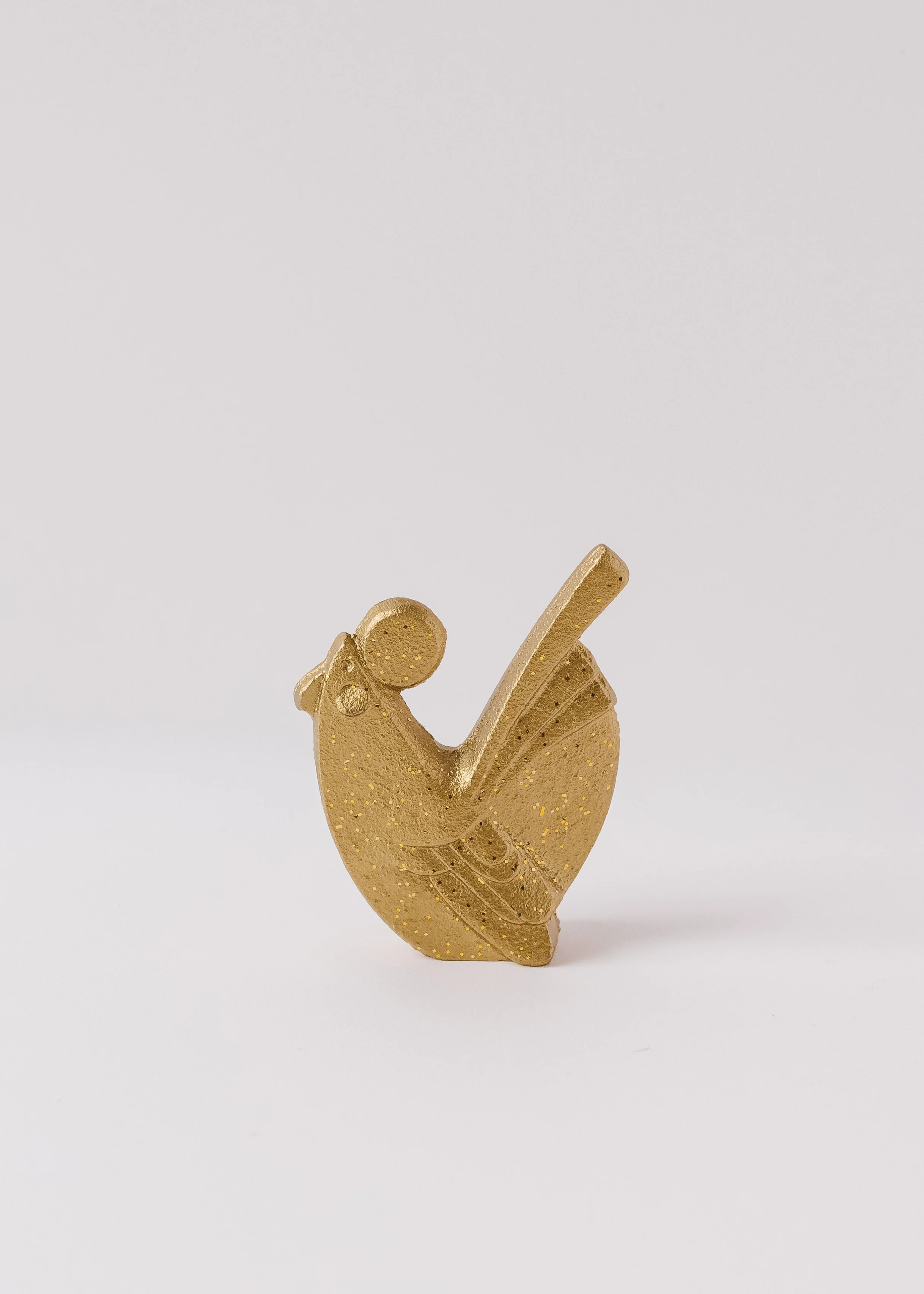 Image 3 of 8
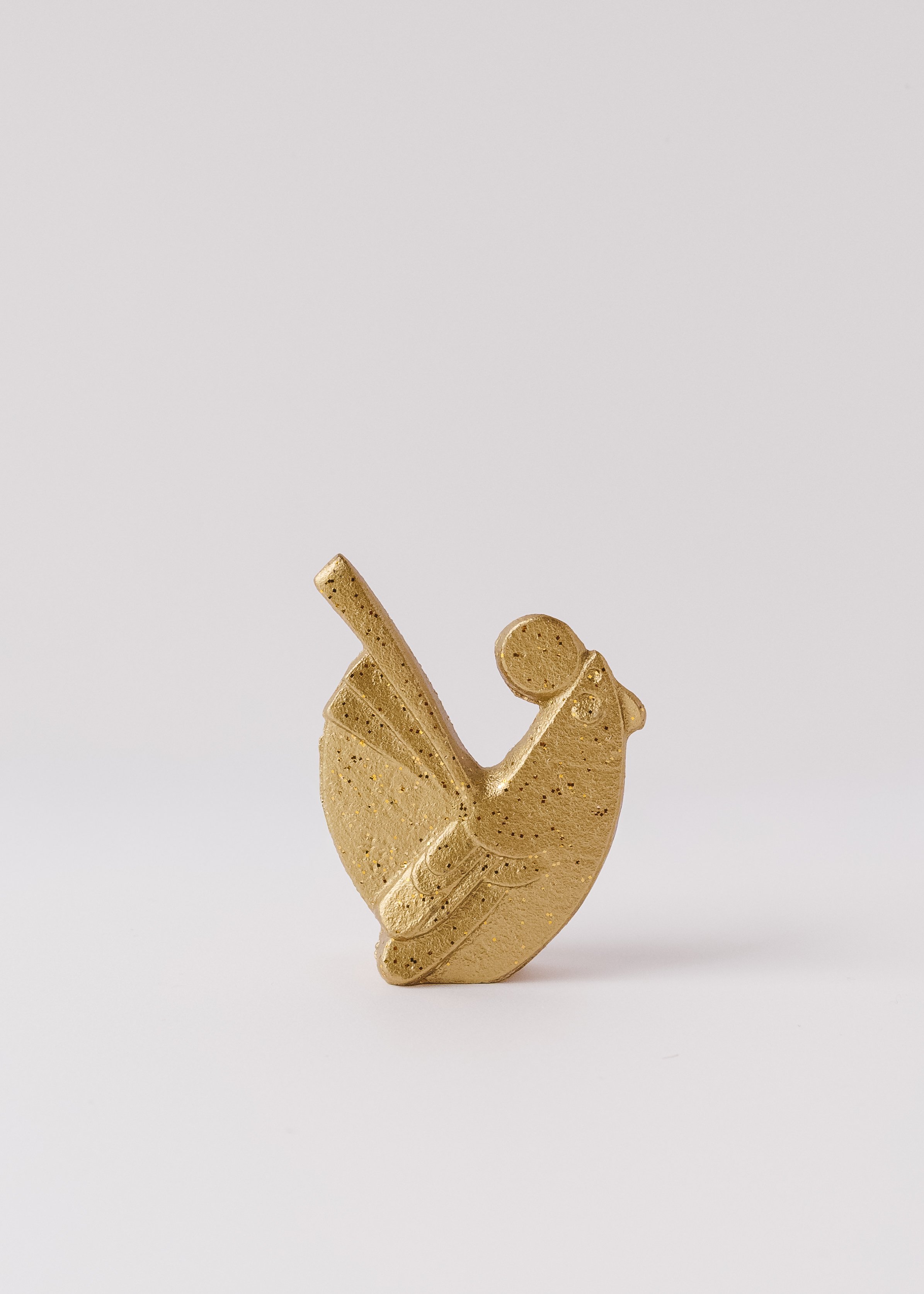 Image 4 of 8
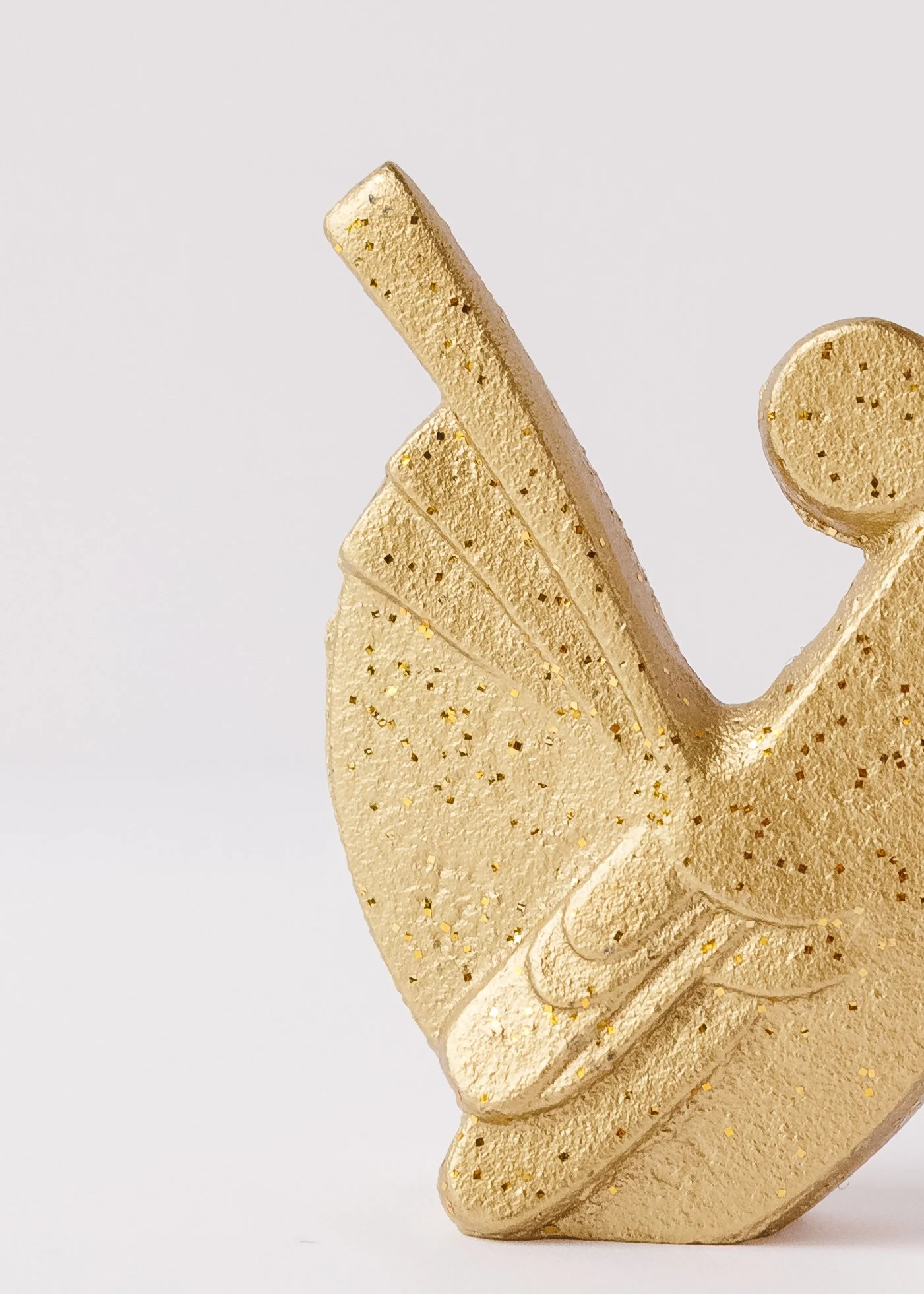 Image 5 of 8
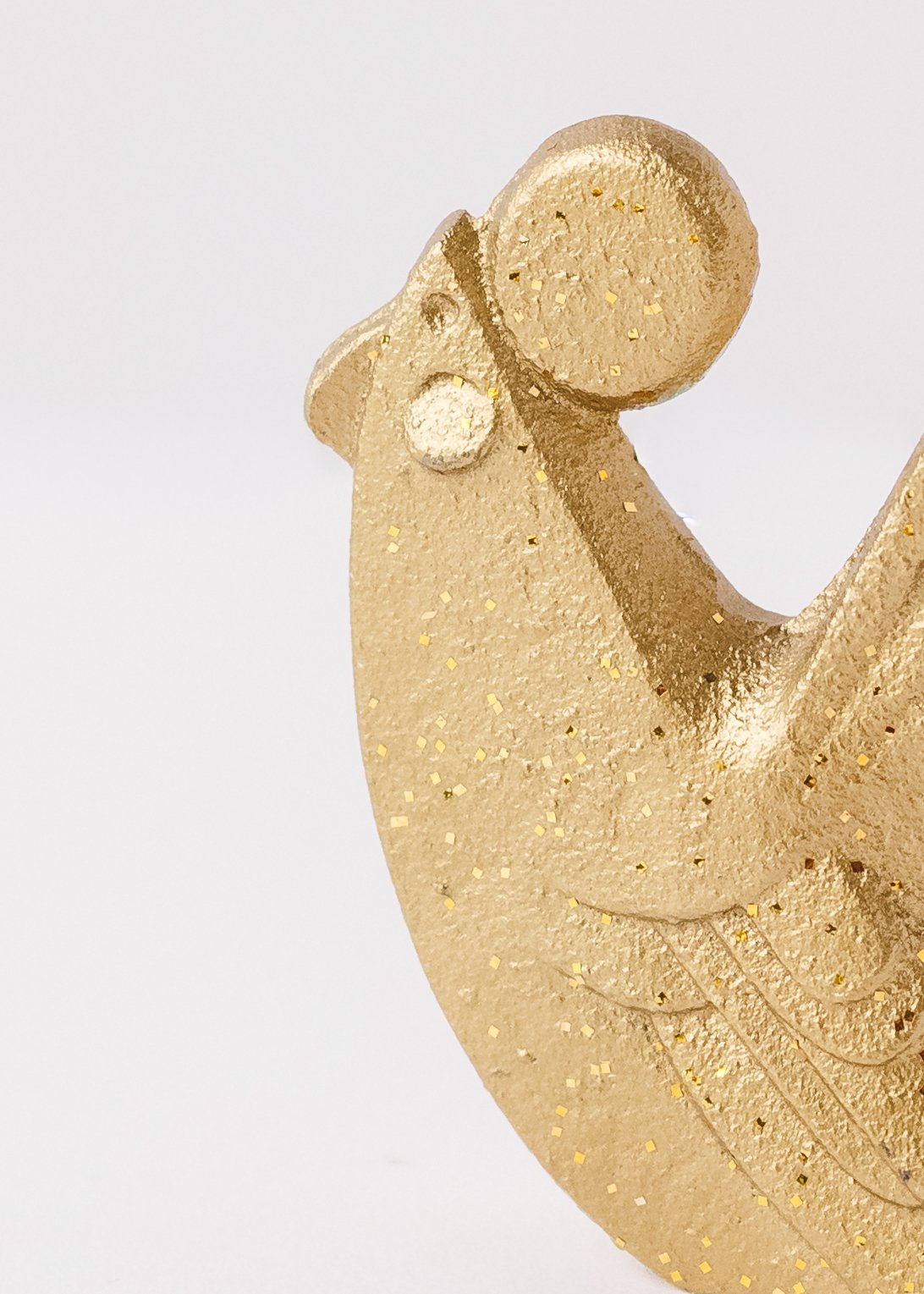 Image 6 of 8
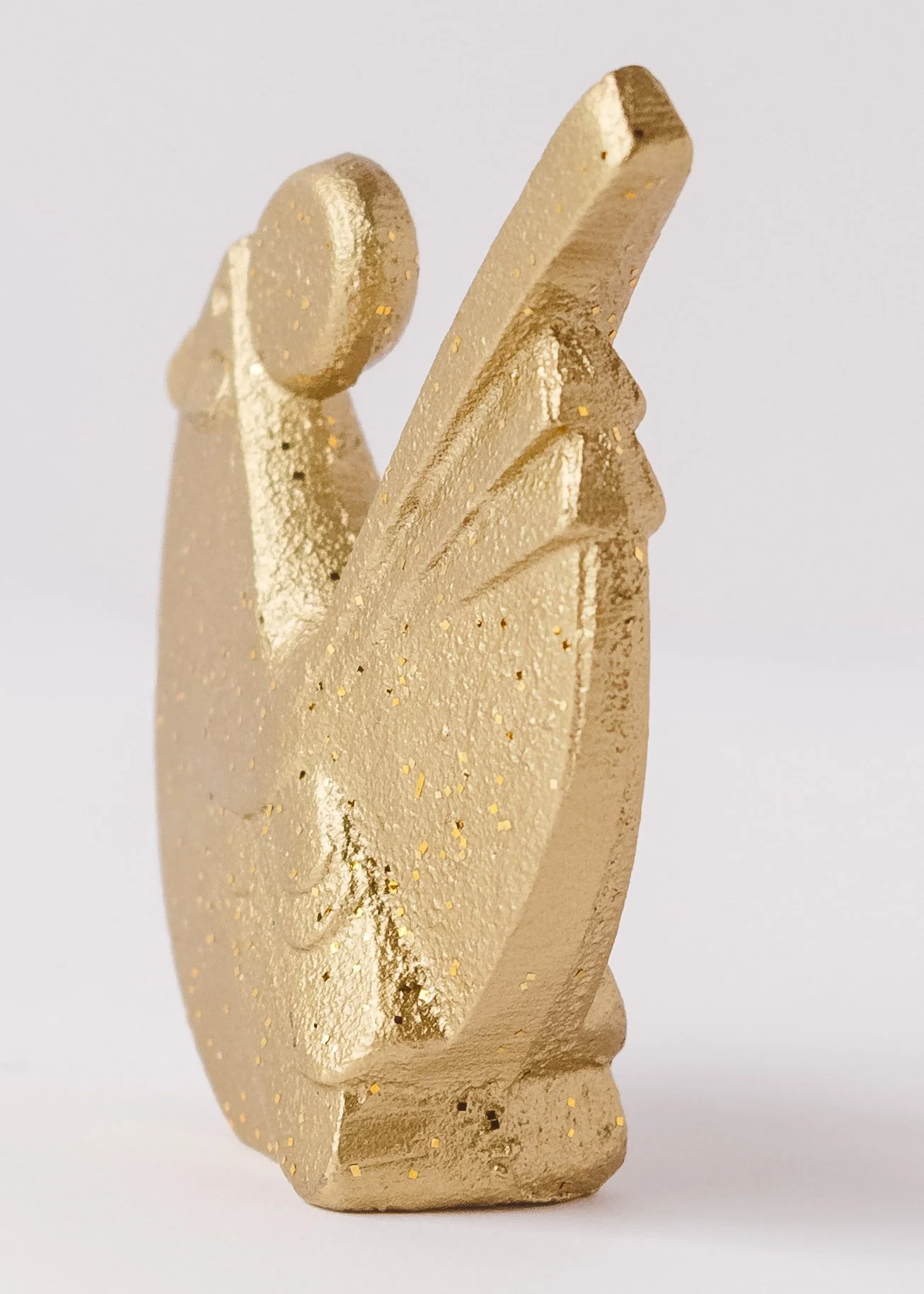 Image 7 of 8
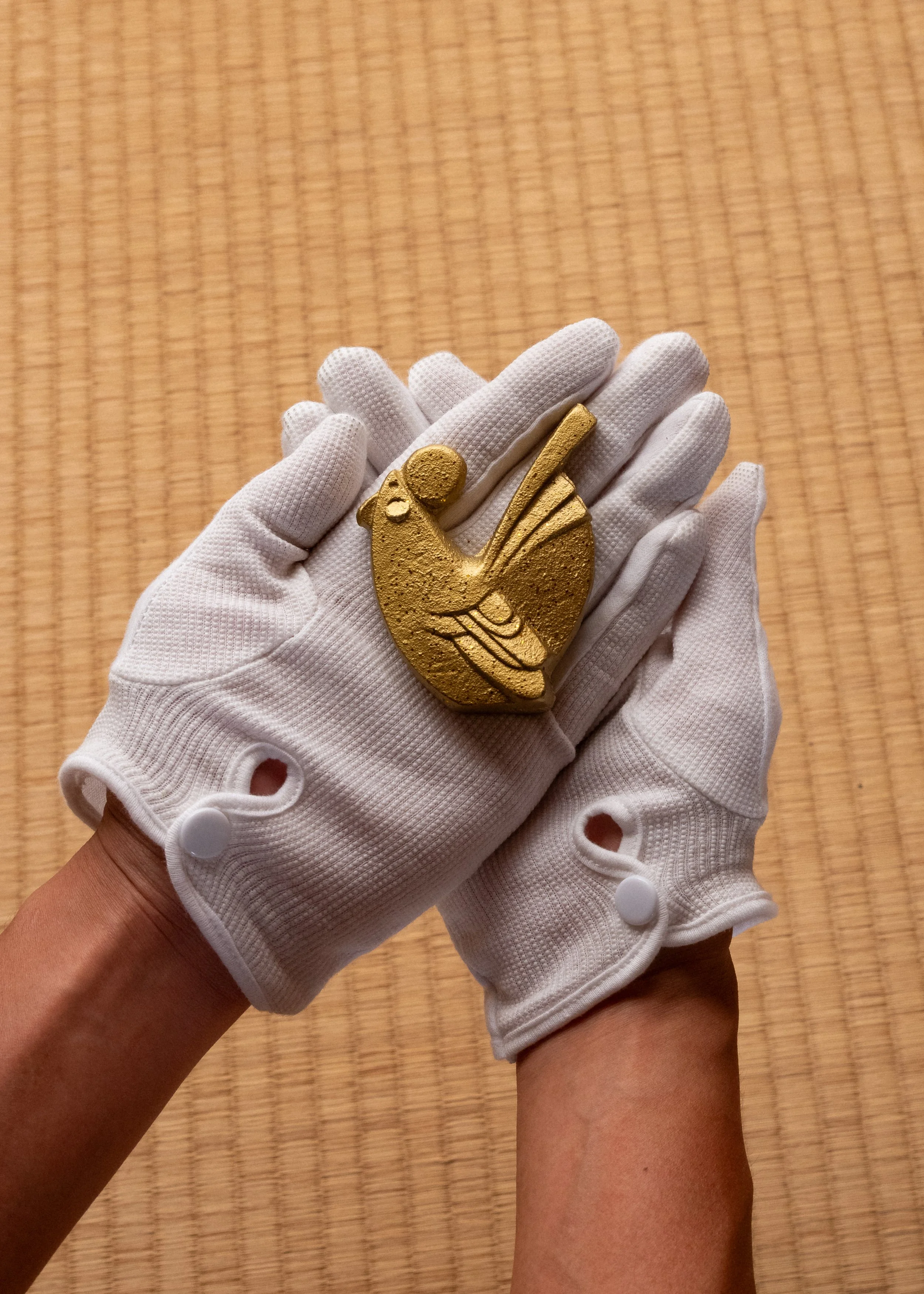 Image 8 of 8