【 The Concept 】
A single arc of darkness, holding two lives inside it. From one block of tropical hardwood so dense it sinks in water, an anonymous carver has drawn out a continuous C-shaped curve — a parent bird bending its long neck downward, and at its base, a smaller form reaching upward to meet it. They are not two objects. They are one gesture, carved from one piece of wood, inseparable by design.
Between the tip of the parent's beak and the child's upturned head, a sliver of open air remains — the only gap in an otherwise unbroken silhouette. Every feather, every biological detail has been stripped away, leaving only the pure line of the body: a teardrop form so smooth it feels inevitable, as though the wood had always wanted to become this shape. Within the near-black surface, veins of warm reddish-brown run through the grain like slow currents — not painted, not stained, but grown over centuries in volcanic soil. What remains is not a bird. It is the idea of shelter, carved from a single breath of timber.
【 The Function 】
A vertical sculpture that occupies almost no horizontal space. Its narrow, upright C-shape rises from the shelf or desktop like a parenthesis, turning a flat surface into a stage. Unlike objects that spread outward, this one draws the eye upward along the curve of the parent's neck, then back down to the child — a continuous loop of attention that never leaves the piece. Place it where the room needs a pause: beside a stack of books, at the end of a mantel, or on a windowsill where the light can trace the grain.
【 The Texture 】
Hardwood polished to a mirror finish under nothing more than wax and friction. The surface reflects surrounding light with the depth of lacquer, yet this is bare wood — no coating, no paint, no synthetic layer. The density of the grain itself, compressed over centuries of slow growth in tropical heat, produces this wet, luminous quality. Run a finger along the curve and it feels closer to stone than to timber — cool, impossibly smooth, and heavy for its size. The only interruption in the monochrome surface is a pair of small orange eyes inlaid on each bird — glass or resin, each with a black pupil at its center — pulling the gaze to the head and then down the long arc of the neck.
【 Presence 】
Most objects sit. This one stands — a single dark curve rising from whatever surface holds it, shaped like a letter the room was missing. The near-black surface absorbs ambient light rather than competing with it, making the sculpture feel less like an object placed on a shelf and more like a shadow that has taken permanent form. Its silhouette reads from across the room: one unbroken line descending and ascending, parent and child bound in a loop that has no beginning and no end. Small enough to hold in one hand. Dense enough to surprise you when you lift it. Quiet enough to let everything else in the room speak first.
Sourced from a private collection in the Kansai region, Japan.
【 The Concept 】
A single arc of darkness, holding two lives inside it. From one block of tropical hardwood so dense it sinks in water, an anonymous carver has drawn out a continuous C-shaped curve — a parent bird bending its long neck downward, and at its base, a smaller form reaching upward to meet it. They are not two objects. They are one gesture, carved from one piece of wood, inseparable by design.
Between the tip of the parent's beak and the child's upturned head, a sliver of open air remains — the only gap in an otherwise unbroken silhouette. Every feather, every biological detail has been stripped away, leaving only the pure line of the body: a teardrop form so smooth it feels inevitable, as though the wood had always wanted to become this shape. Within the near-black surface, veins of warm reddish-brown run through the grain like slow currents — not painted, not stained, but grown over centuries in volcanic soil. What remains is not a bird. It is the idea of shelter, carved from a single breath of timber.
【 The Function 】
A vertical sculpture that occupies almost no horizontal space. Its narrow, upright C-shape rises from the shelf or desktop like a parenthesis, turning a flat surface into a stage. Unlike objects that spread outward, this one draws the eye upward along the curve of the parent's neck, then back down to the child — a continuous loop of attention that never leaves the piece. Place it where the room needs a pause: beside a stack of books, at the end of a mantel, or on a windowsill where the light can trace the grain.
【 The Texture 】
Hardwood polished to a mirror finish under nothing more than wax and friction. The surface reflects surrounding light with the depth of lacquer, yet this is bare wood — no coating, no paint, no synthetic layer. The density of the grain itself, compressed over centuries of slow growth in tropical heat, produces this wet, luminous quality. Run a finger along the curve and it feels closer to stone than to timber — cool, impossibly smooth, and heavy for its size. The only interruption in the monochrome surface is a pair of small orange eyes inlaid on each bird — glass or resin, each with a black pupil at its center — pulling the gaze to the head and then down the long arc of the neck.
【 Presence 】
Most objects sit. This one stands — a single dark curve rising from whatever surface holds it, shaped like a letter the room was missing. The near-black surface absorbs ambient light rather than competing with it, making the sculpture feel less like an object placed on a shelf and more like a shadow that has taken permanent form. Its silhouette reads from across the room: one unbroken line descending and ascending, parent and child bound in a loop that has no beginning and no end. Small enough to hold in one hand. Dense enough to surprise you when you lift it. Quiet enough to let everything else in the room speak first.
Sourced from a private collection in the Kansai region, Japan.


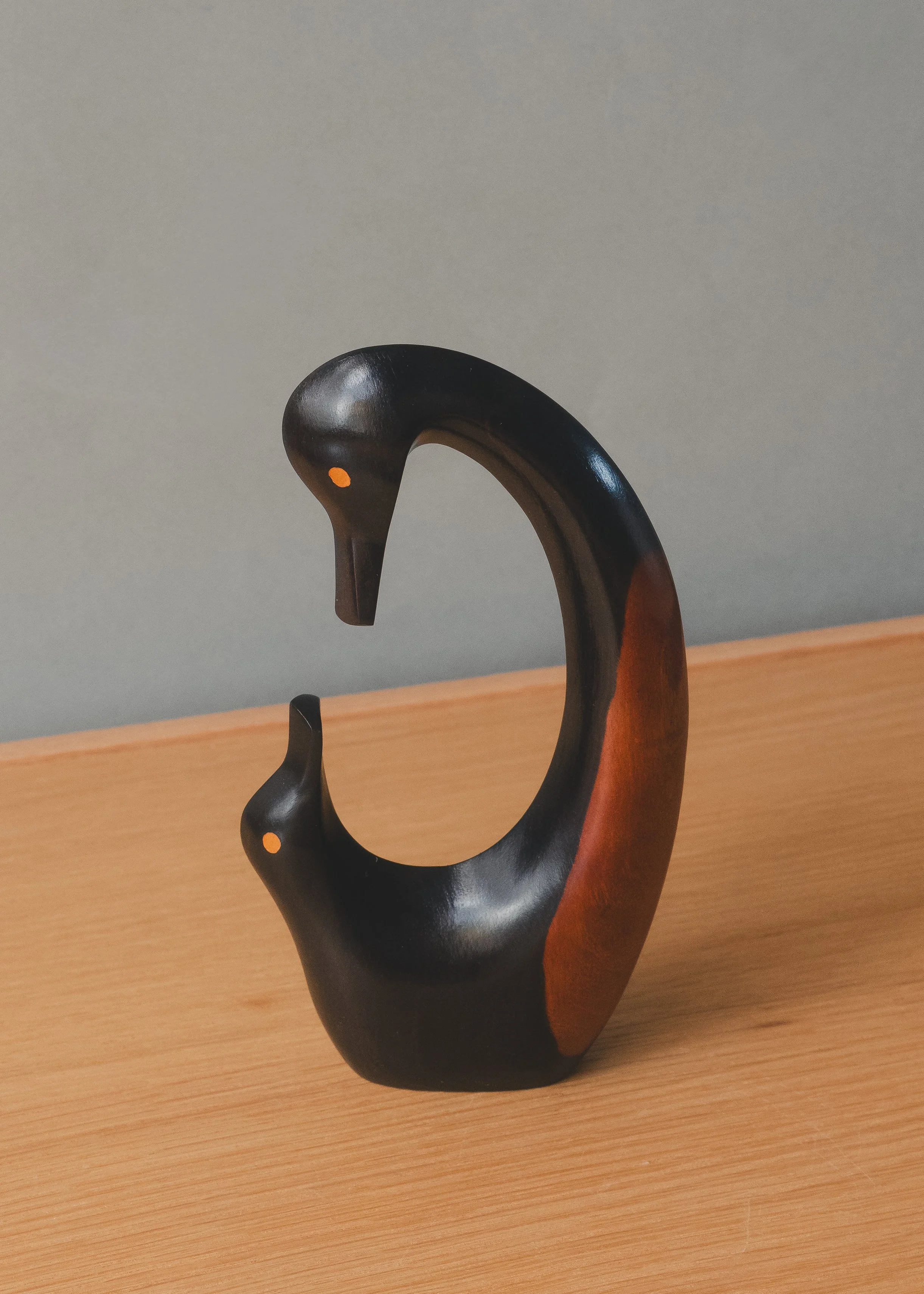 Image 1 of 10
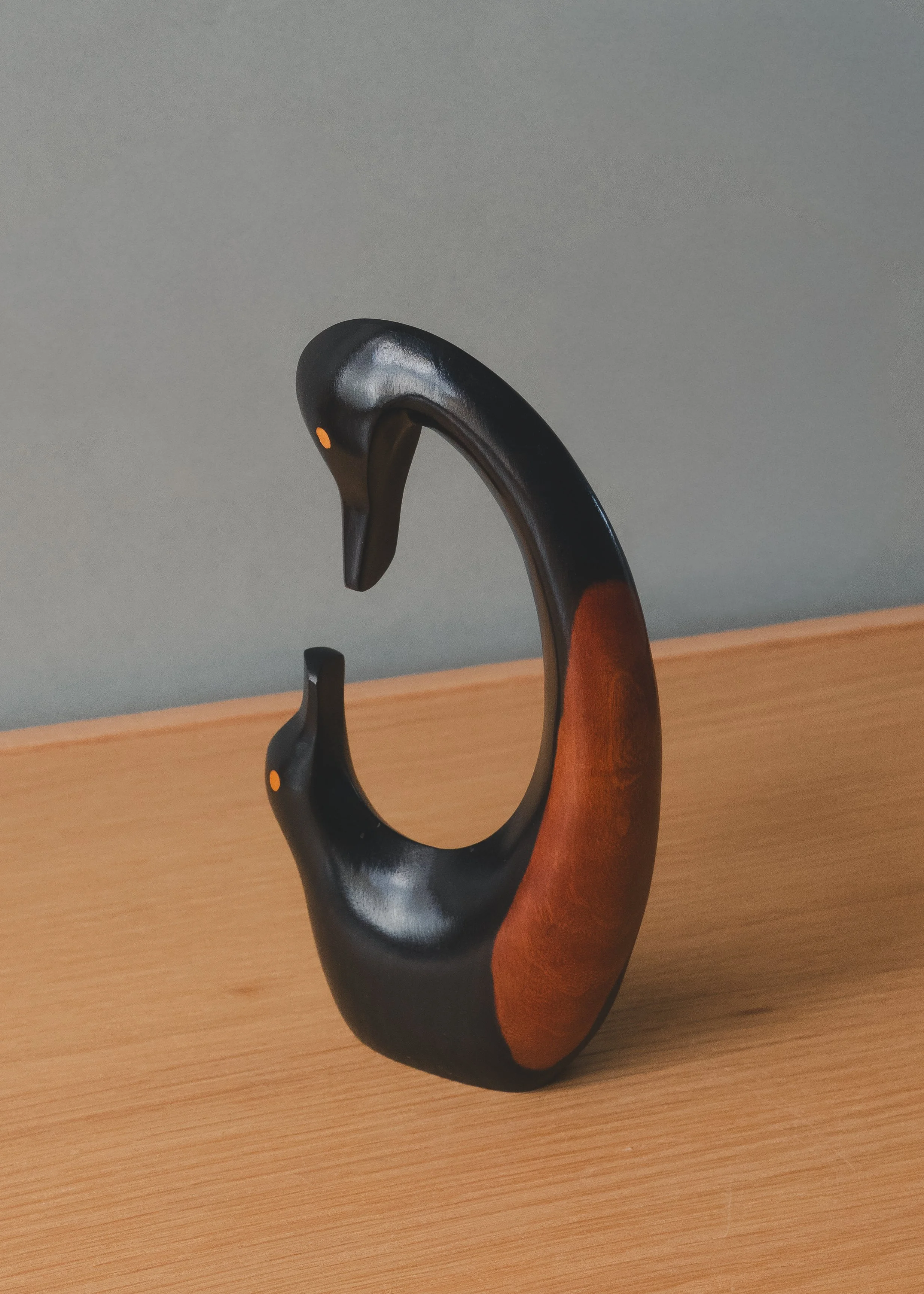 Image 2 of 10
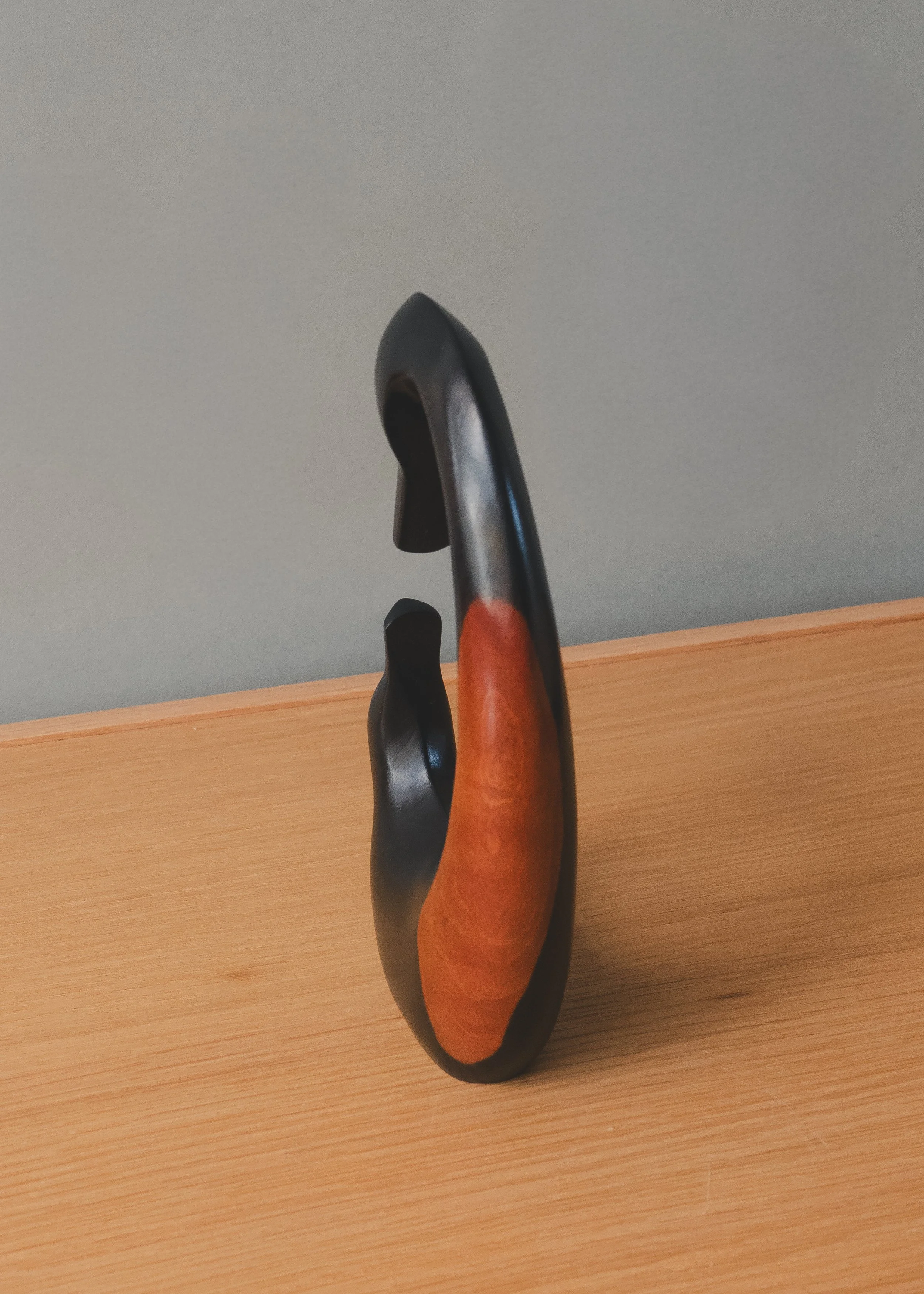 Image 3 of 10
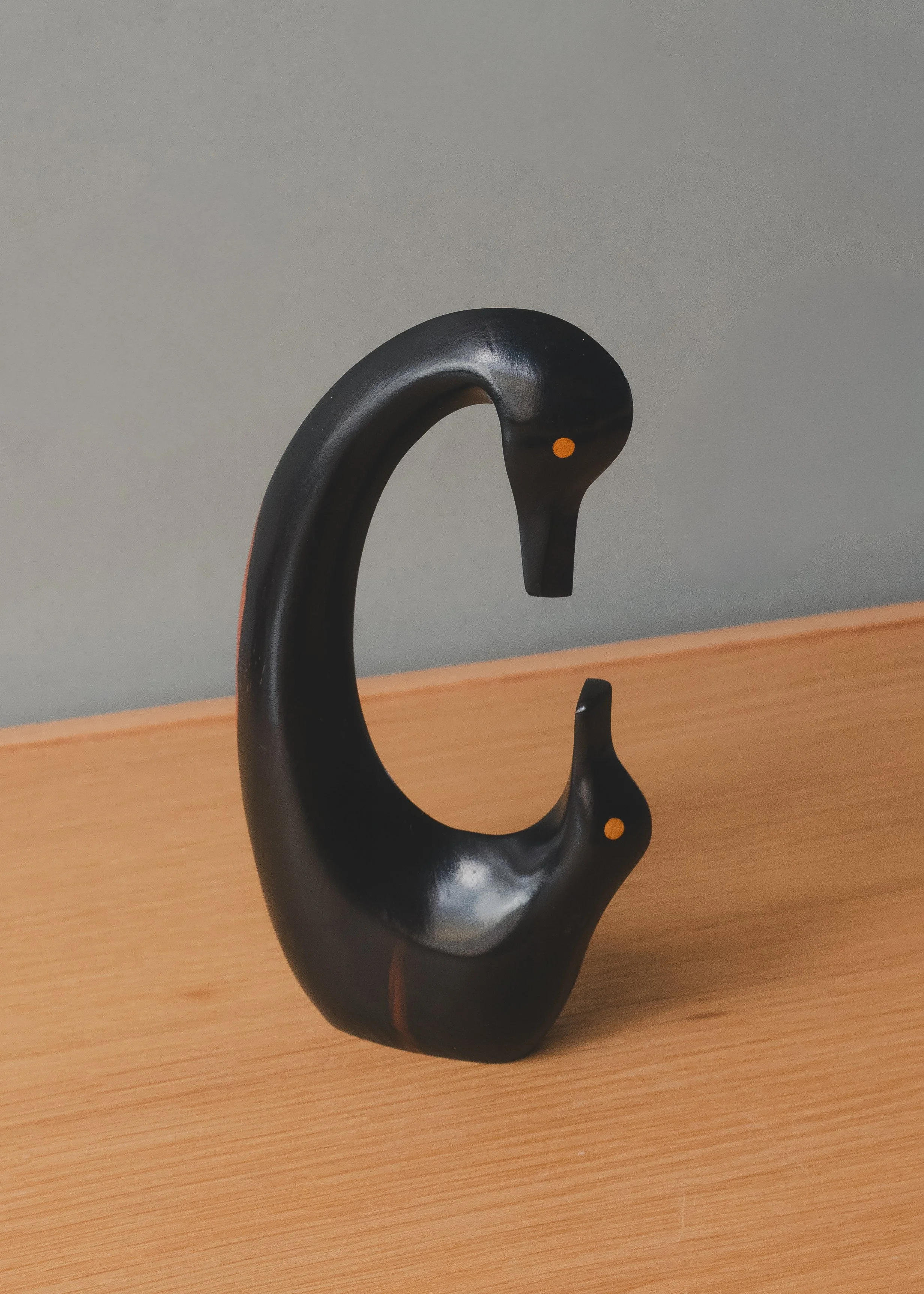 Image 4 of 10
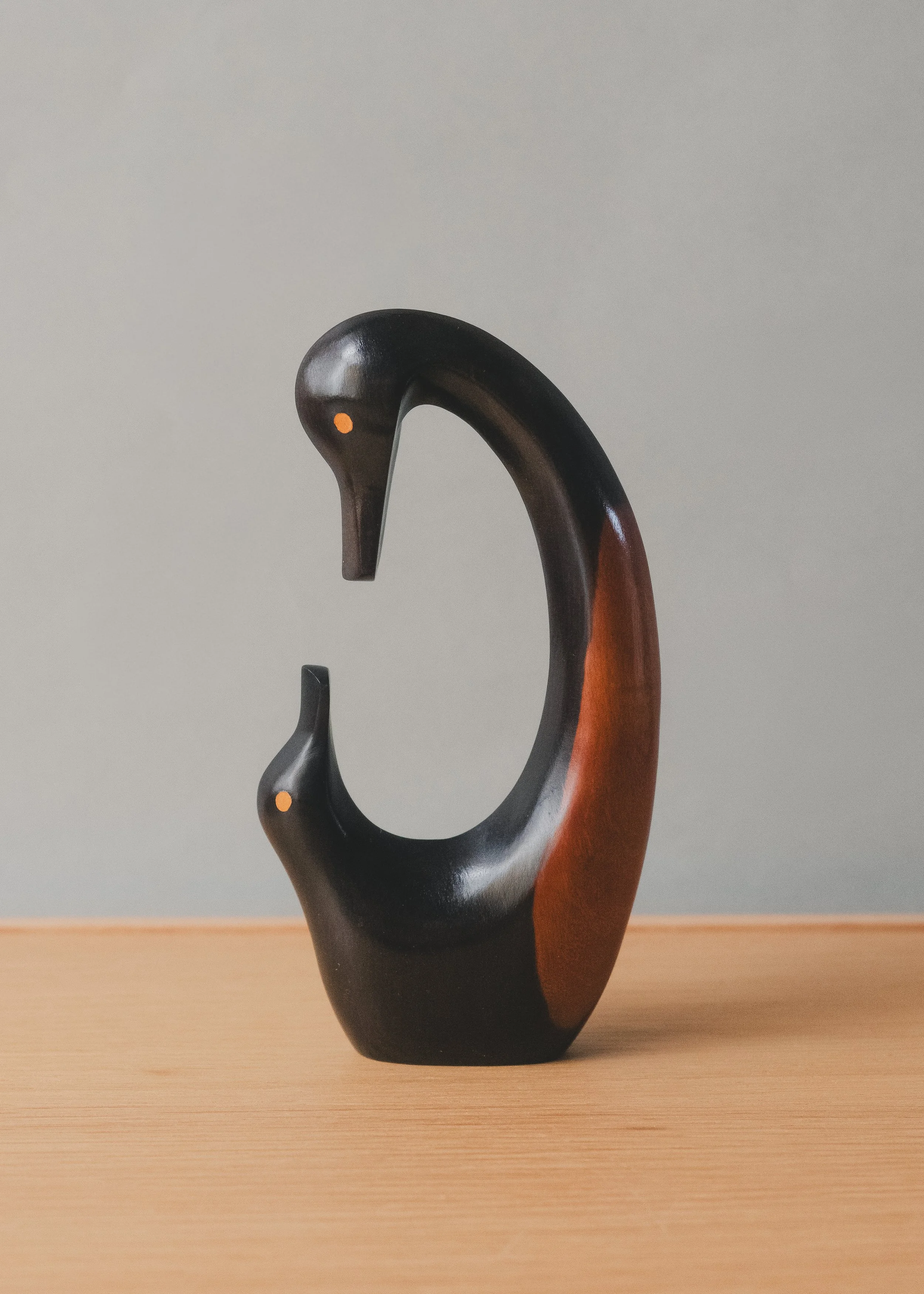 Image 5 of 10
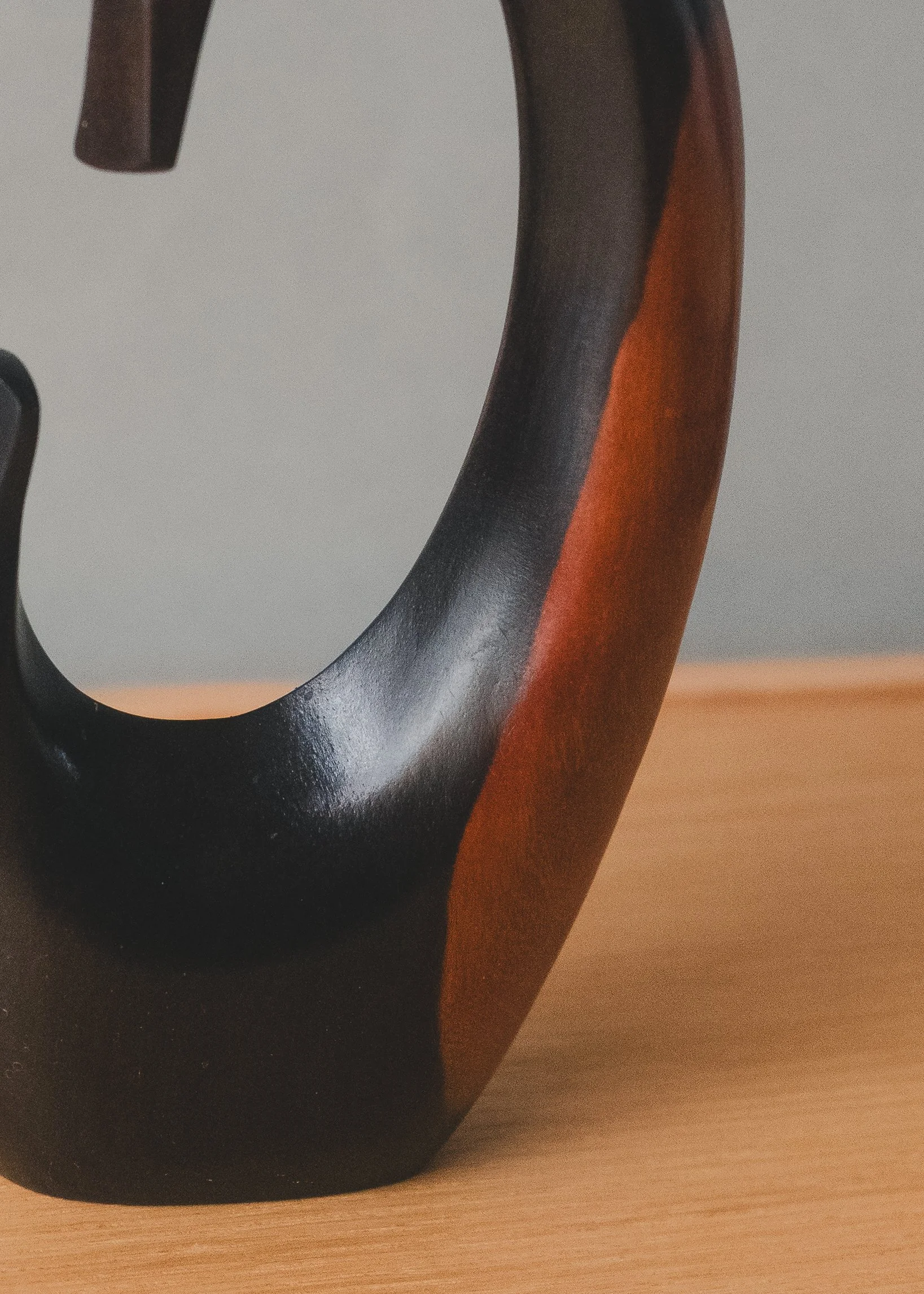 Image 6 of 10
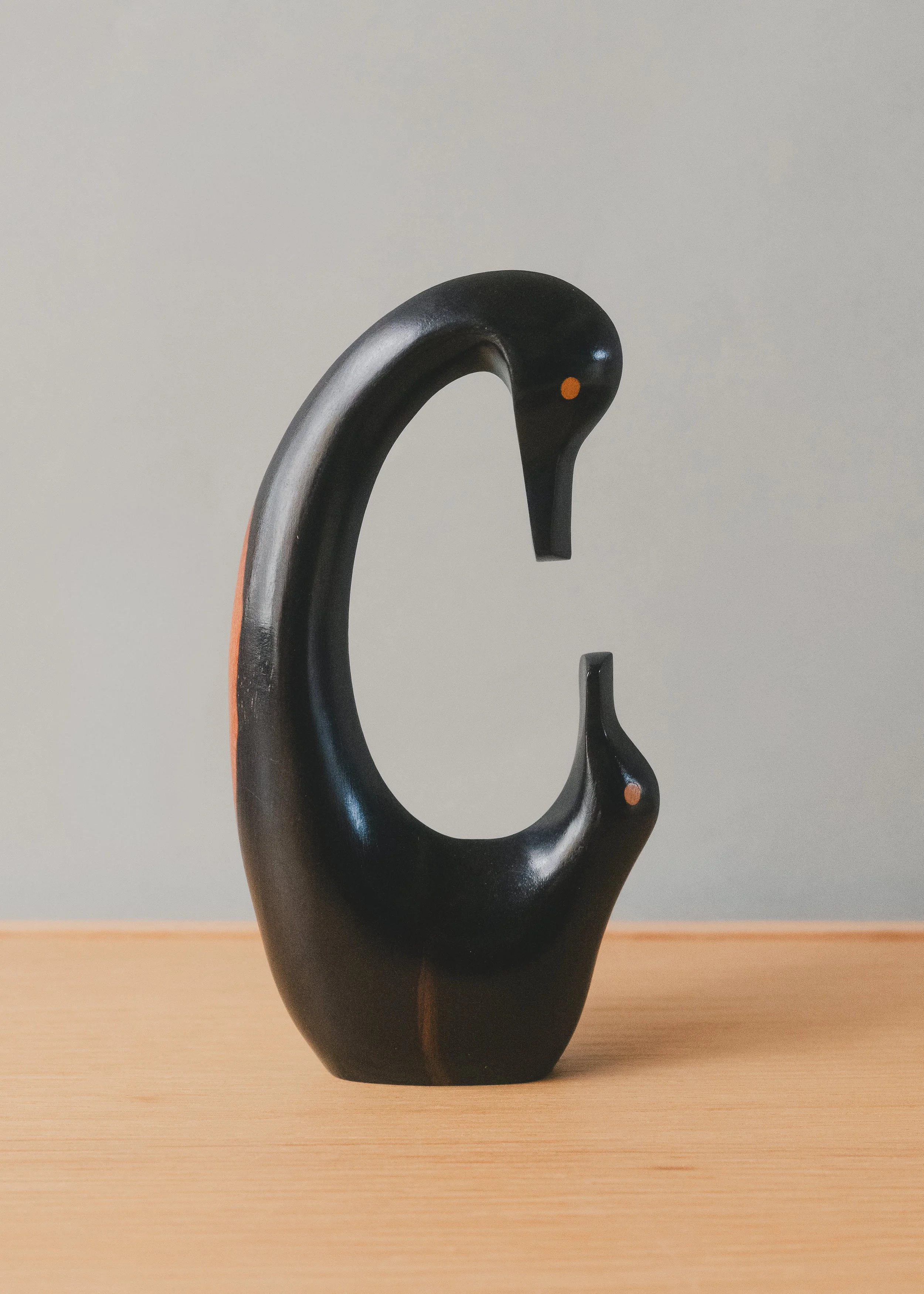 Image 7 of 10
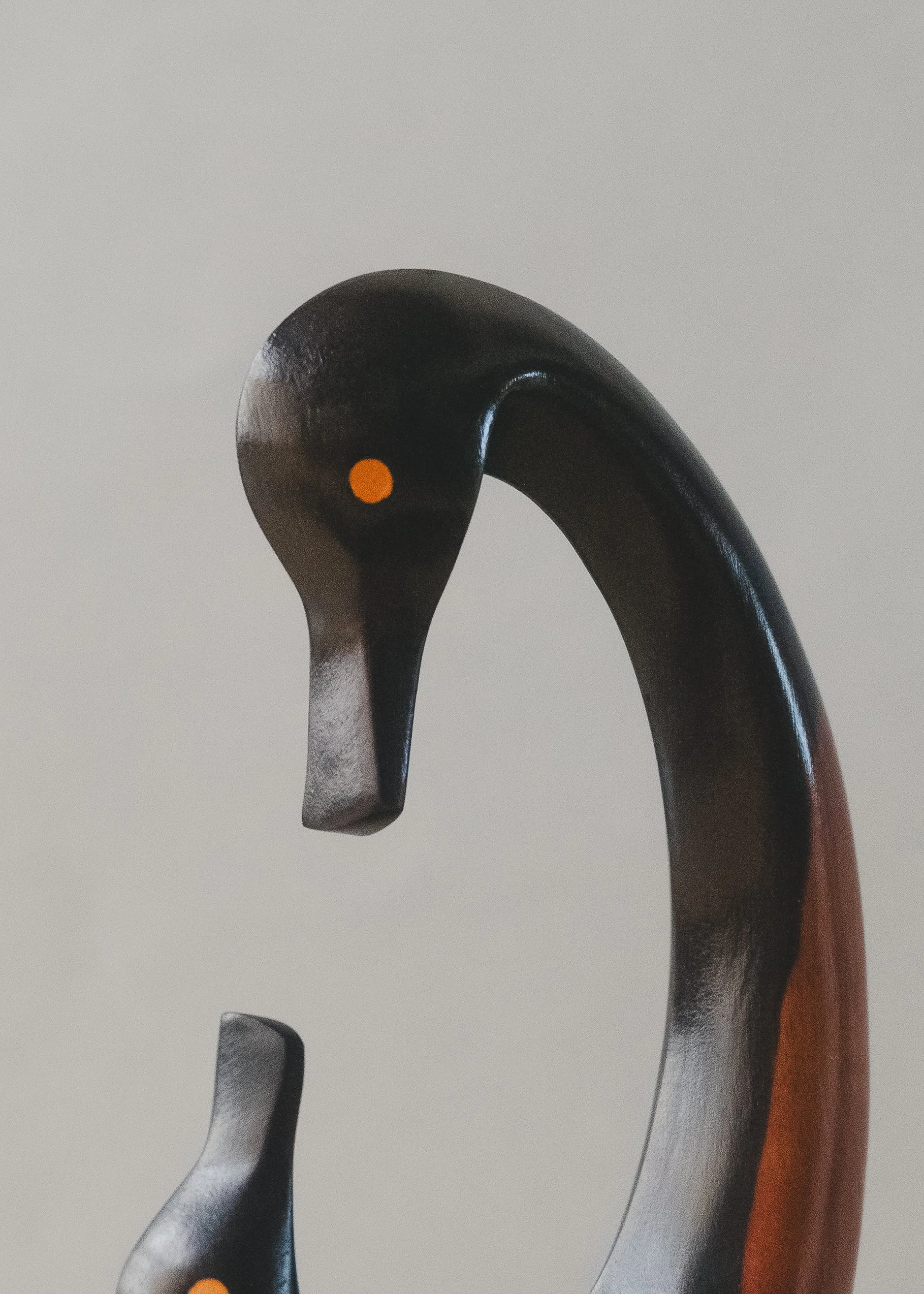 Image 8 of 10
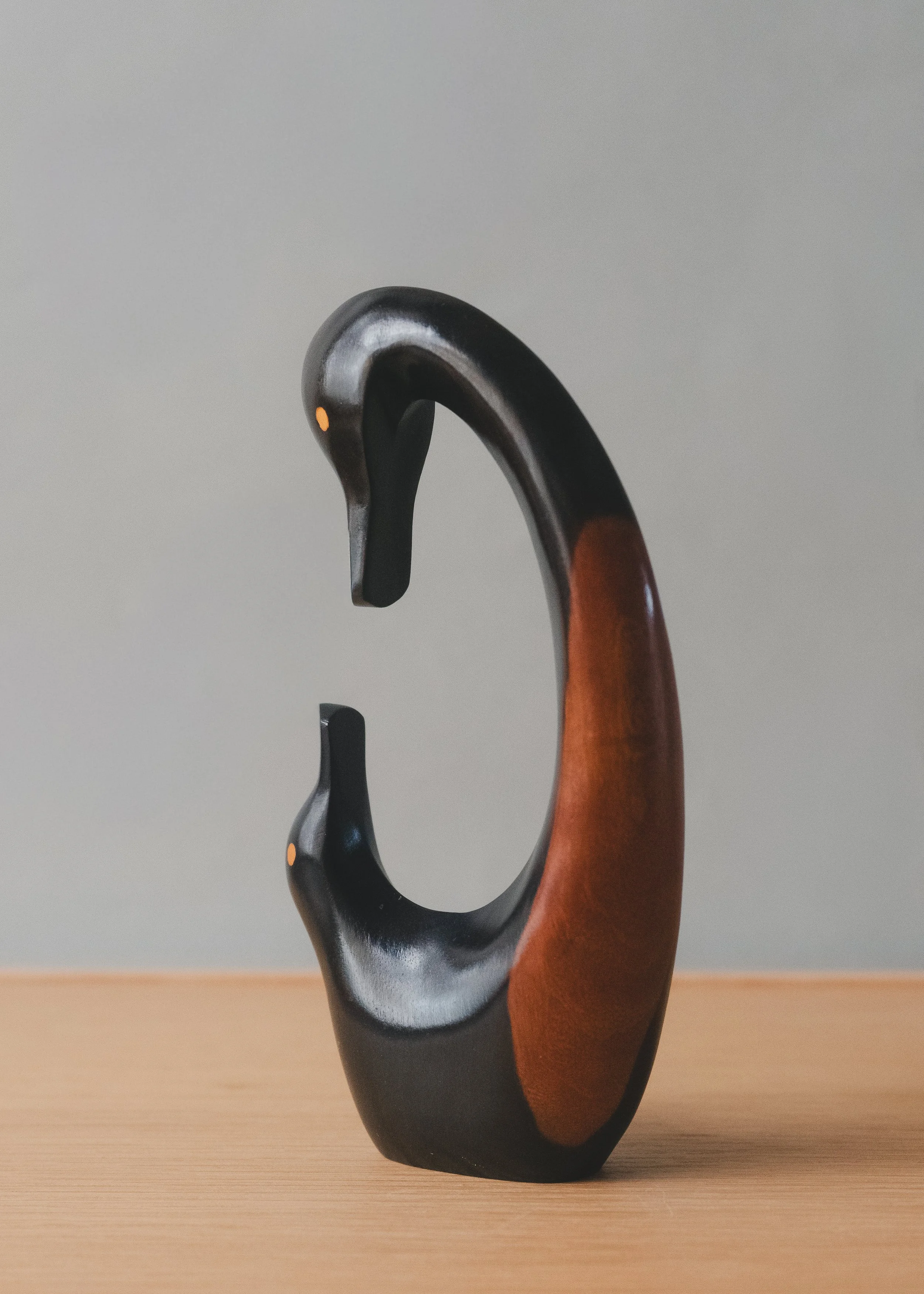 Image 9 of 10
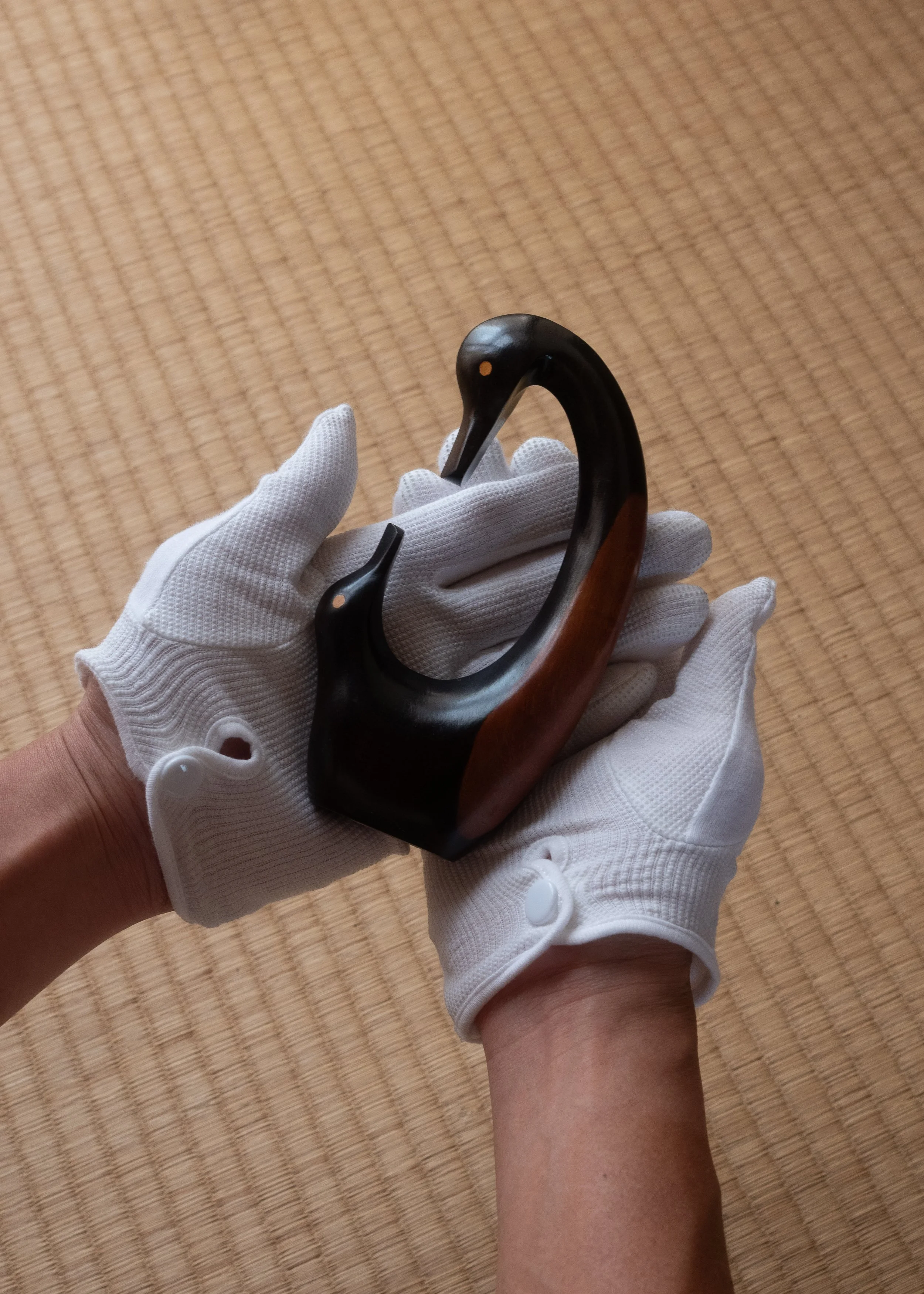 Image 10 of 10