【 The Concept 】
A young boar, built like a seed. The body is a single swollen curve from snout to tail — no neck, no waist, no joint visible beneath the glaze. Four legs so short and thick they read as stubs, barely lifting the belly off the surface it sits on. The snout tilts upward, flat and disk-shaped, aimed at something above the horizon line. The ears are pressed flat against the skull. The eyes are two black dots, small enough to miss, placed exactly where they need to be to turn a lump of fired clay into something alive.
Across the flanks, a series of parallel grooves are carved into the clay before firing. These are not decorative lines. They are the juvenile stripes of a wild boar piglet — the vertical markings that appear only in infancy and vanish as the animal grows. In the tradition this figure belongs to, the boar is the last of twelve zodiac animals, and it represents the body's refusal to fall ill. The young are chosen over the adult because their stripes mark them as new, as beginning, as not yet hardened into what they will become.
【 The Function 】
118 grams, 14 centimeters long, low enough to pass beneath the spine of a paperback. It sits on a shelf the way a stone sits in a riverbed — settled, heavy for its size, and shaped by forces that preceded it. In its original context, figures like this were placed in entryways and living rooms at the turn of a zodiac year as talismans of physical health. The boar's association with immunity and endurance made it a guardian against illness, positioned where it could intercept disease before it entered the household. In a modern context, it is the most grounded object on any surface: low, warm-toned, and too rounded to cast a sharp shadow.
【 The Texture 】
Coarse stoneware fired in a wood-burning kiln. The surface is not smooth. It is not meant to be. The clay comes from a mountain province known for producing rough, mineral-flecked stoneware whose texture is considered a virtue, not a flaw. The iron-rich glaze that covers the body has fired to a warm chestnut brown, but the color is anything but uniform. Where the flame hit the back and shoulders directly, dark speckles of char scatter across the surface like soot. Where the carved stripes run deepest, the glaze pools and darkens to a near-black teal. Between the stripes, patches of pale yellow-brown emerge where the glaze runs thin and the raw clay shows its natural color beneath. The belly and the feet are left unglazed entirely — bare stoneware, gritty to the touch, with visible grains of quartz and feldspar embedded in the body. This is not a ceramic that hides its material. It presents it.
【 Presence 】
It is the lowest object in MINGEI 1926's archive. Everything else rises: the standing figures, the vertical totems, the hanging chime, the charging bull. This one crouches. Its center of gravity is so close to the surface that it appears to have grown out of the shelf rather than been placed on it. The warm brown tones absorb into wooden surfaces and disappear into earth-toned interiors, surfacing only when the eye drops low enough to catch the glint of glaze in the carved stripes. It does not demand attention. It earns it — slowly, quietly, the way a young animal earns trust by staying exactly where it was put and not moving until it is noticed.
Sourced from a private collection in the Kansai region, Japan.
【 The Concept 】
A young boar, built like a seed. The body is a single swollen curve from snout to tail — no neck, no waist, no joint visible beneath the glaze. Four legs so short and thick they read as stubs, barely lifting the belly off the surface it sits on. The snout tilts upward, flat and disk-shaped, aimed at something above the horizon line. The ears are pressed flat against the skull. The eyes are two black dots, small enough to miss, placed exactly where they need to be to turn a lump of fired clay into something alive.
Across the flanks, a series of parallel grooves are carved into the clay before firing. These are not decorative lines. They are the juvenile stripes of a wild boar piglet — the vertical markings that appear only in infancy and vanish as the animal grows. In the tradition this figure belongs to, the boar is the last of twelve zodiac animals, and it represents the body's refusal to fall ill. The young are chosen over the adult because their stripes mark them as new, as beginning, as not yet hardened into what they will become.
【 The Function 】
118 grams, 14 centimeters long, low enough to pass beneath the spine of a paperback. It sits on a shelf the way a stone sits in a riverbed — settled, heavy for its size, and shaped by forces that preceded it. In its original context, figures like this were placed in entryways and living rooms at the turn of a zodiac year as talismans of physical health. The boar's association with immunity and endurance made it a guardian against illness, positioned where it could intercept disease before it entered the household. In a modern context, it is the most grounded object on any surface: low, warm-toned, and too rounded to cast a sharp shadow.
【 The Texture 】
Coarse stoneware fired in a wood-burning kiln. The surface is not smooth. It is not meant to be. The clay comes from a mountain province known for producing rough, mineral-flecked stoneware whose texture is considered a virtue, not a flaw. The iron-rich glaze that covers the body has fired to a warm chestnut brown, but the color is anything but uniform. Where the flame hit the back and shoulders directly, dark speckles of char scatter across the surface like soot. Where the carved stripes run deepest, the glaze pools and darkens to a near-black teal. Between the stripes, patches of pale yellow-brown emerge where the glaze runs thin and the raw clay shows its natural color beneath. The belly and the feet are left unglazed entirely — bare stoneware, gritty to the touch, with visible grains of quartz and feldspar embedded in the body. This is not a ceramic that hides its material. It presents it.
【 Presence 】
It is the lowest object in MINGEI 1926's archive. Everything else rises: the standing figures, the vertical totems, the hanging chime, the charging bull. This one crouches. Its center of gravity is so close to the surface that it appears to have grown out of the shelf rather than been placed on it. The warm brown tones absorb into wooden surfaces and disappear into earth-toned interiors, surfacing only when the eye drops low enough to catch the glint of glaze in the carved stripes. It does not demand attention. It earns it — slowly, quietly, the way a young animal earns trust by staying exactly where it was put and not moving until it is noticed.
Sourced from a private collection in the Kansai region, Japan.


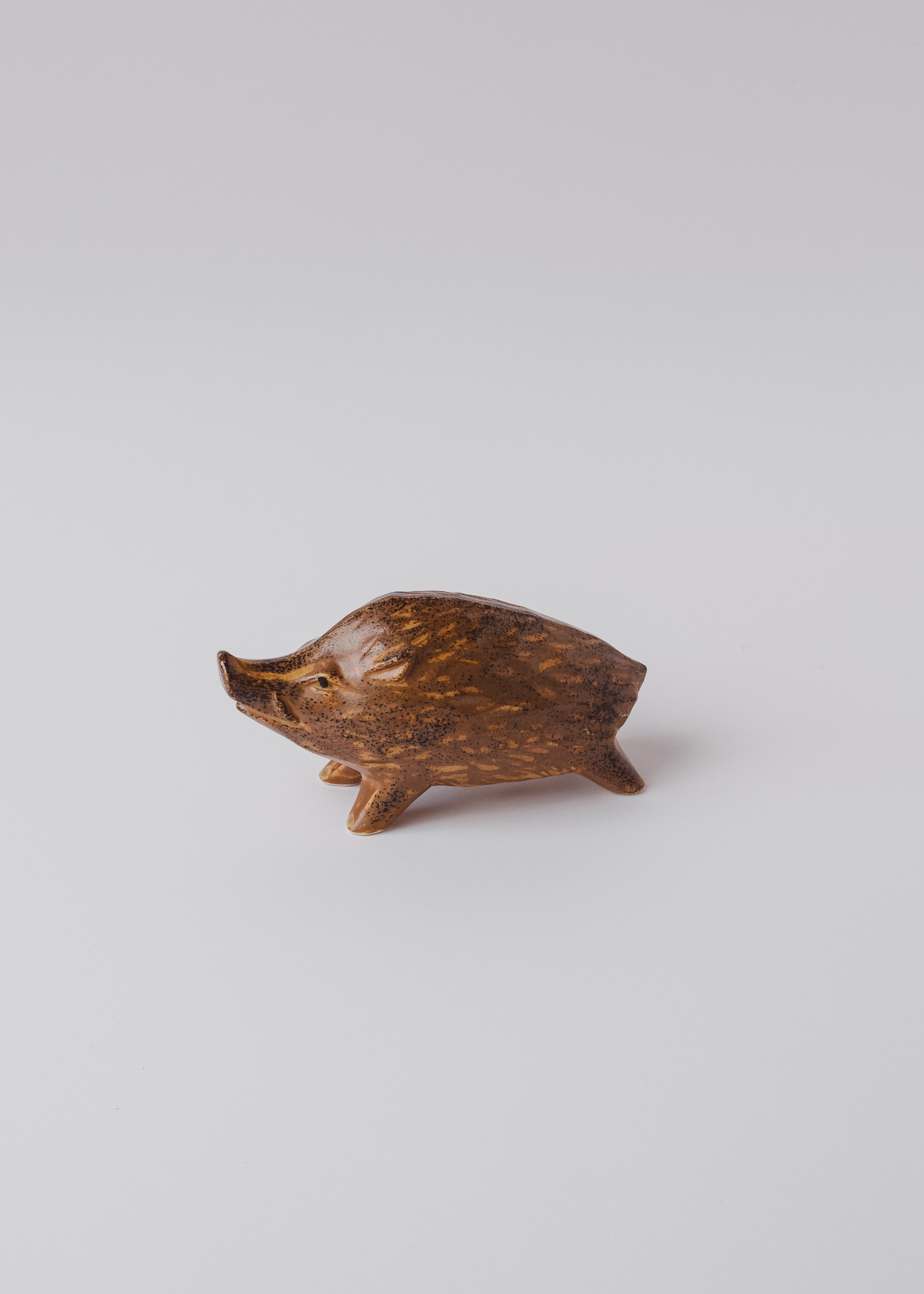 Image 1 of 9
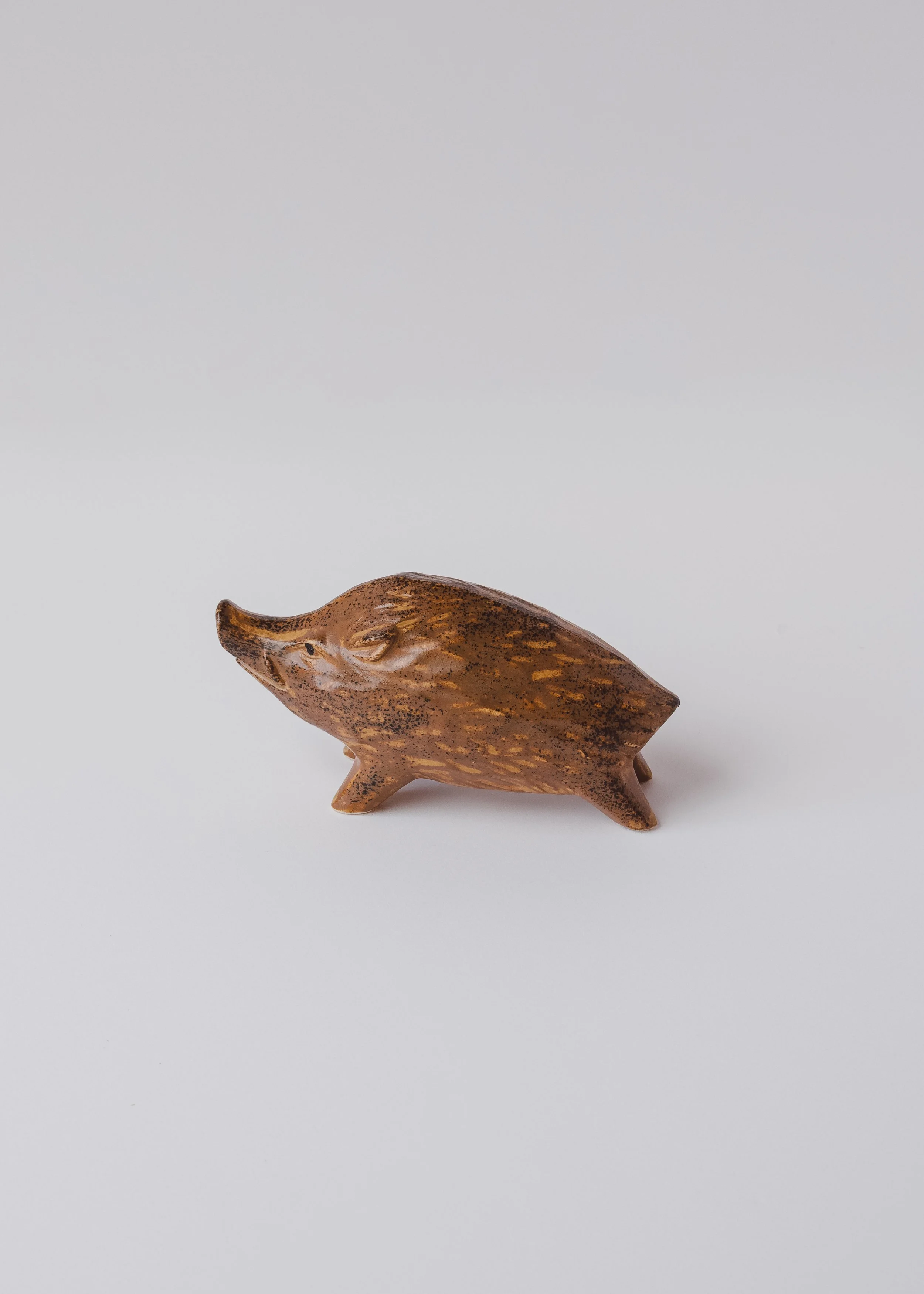 Image 2 of 9
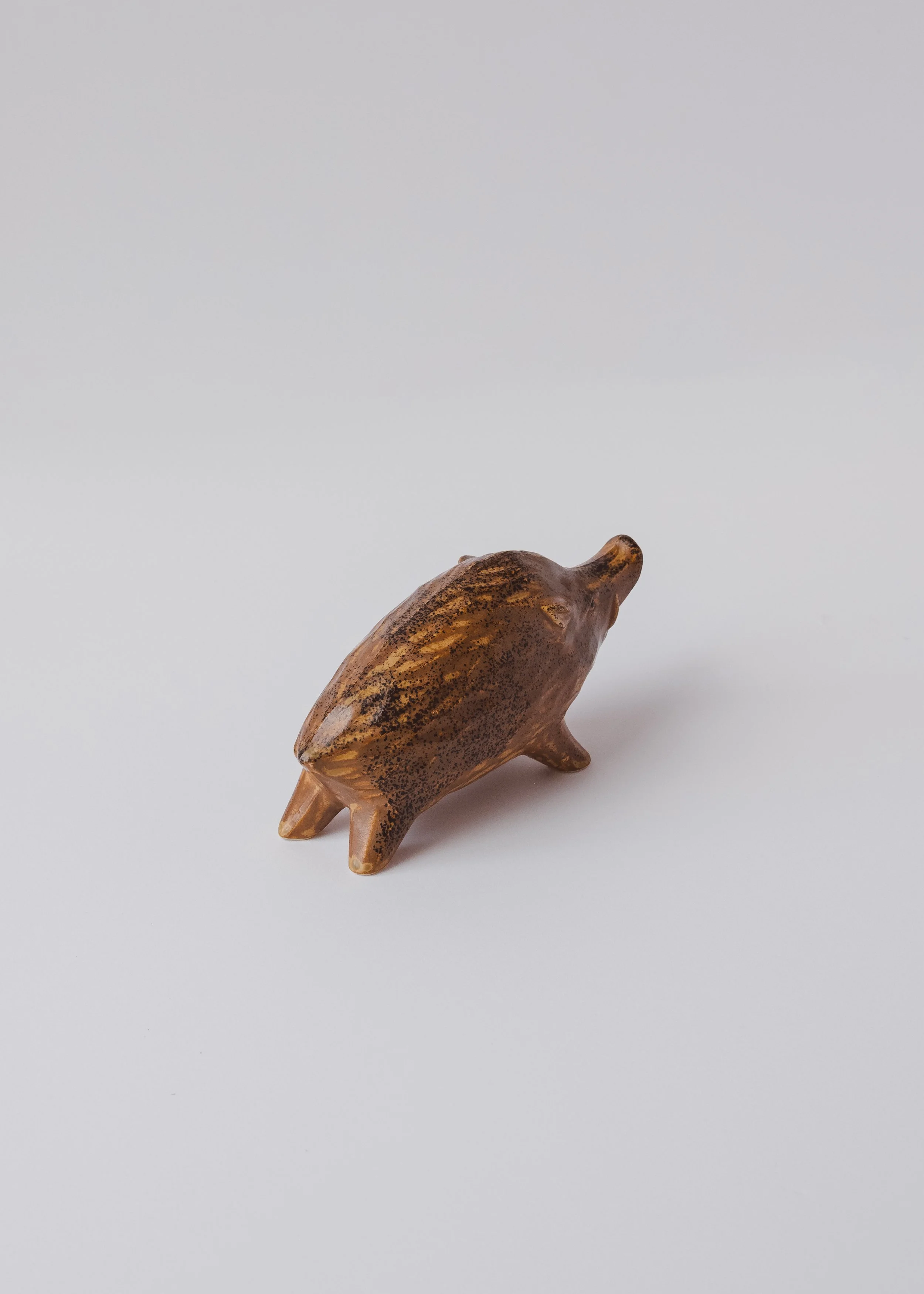 Image 3 of 9
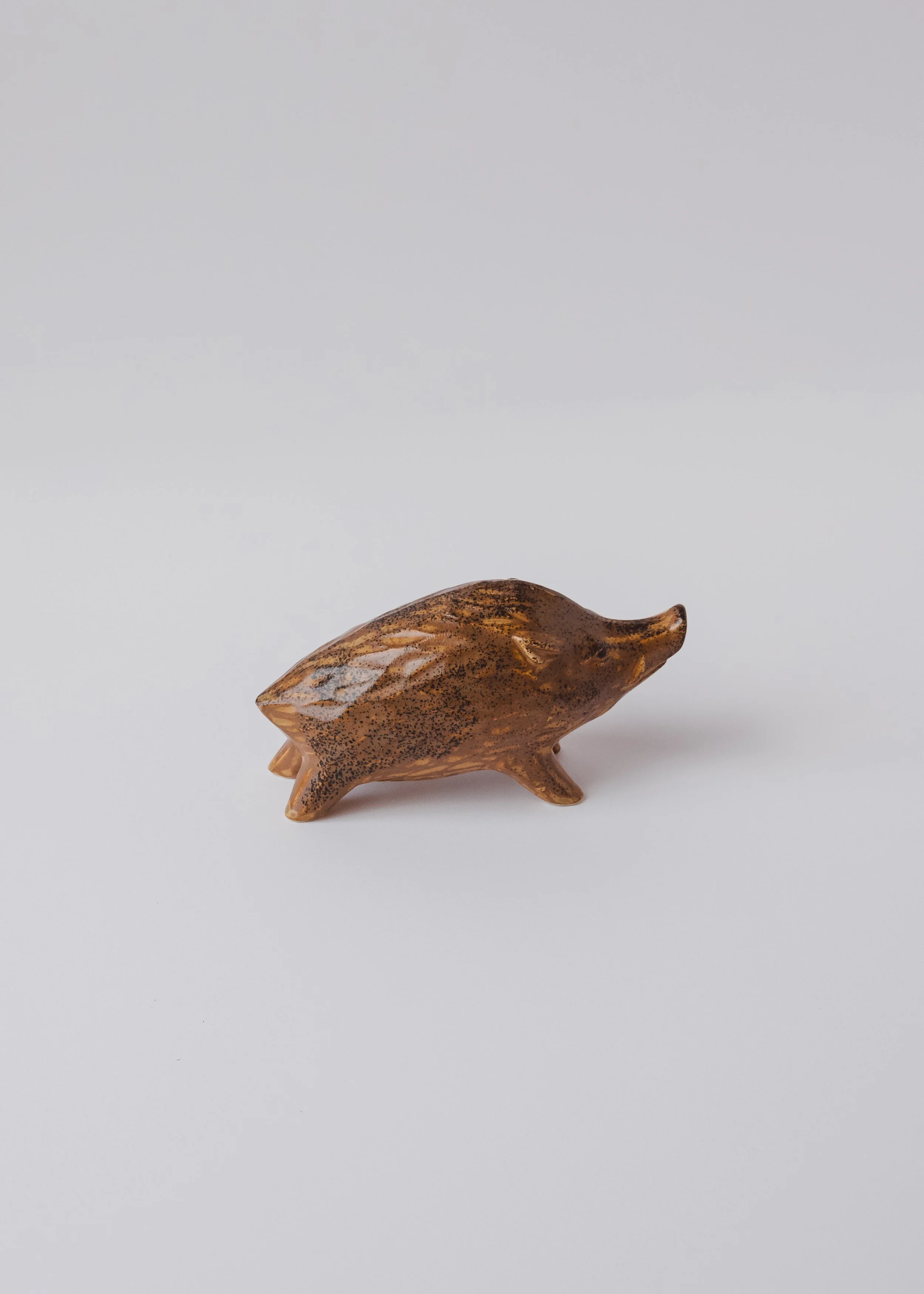 Image 4 of 9
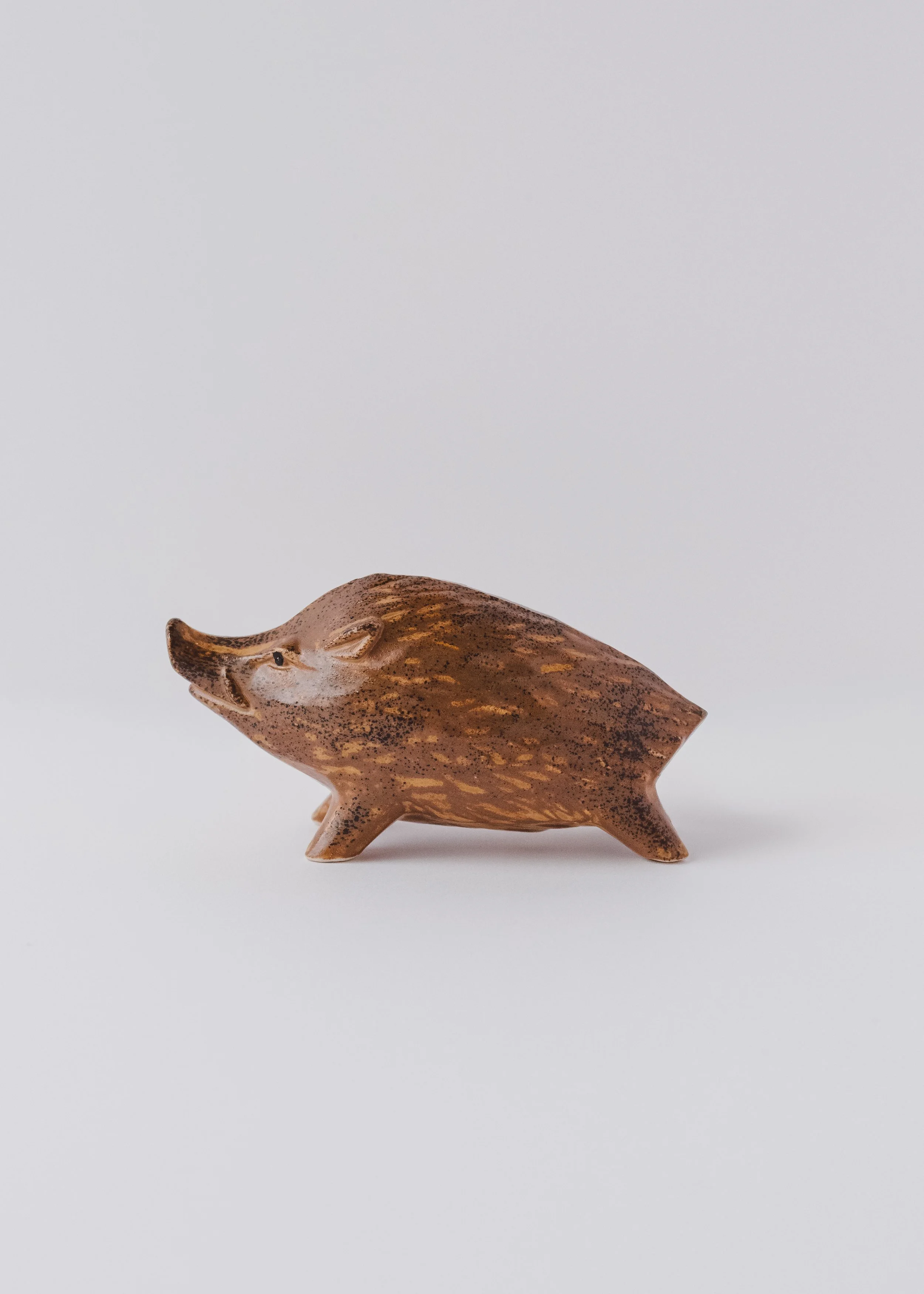 Image 5 of 9
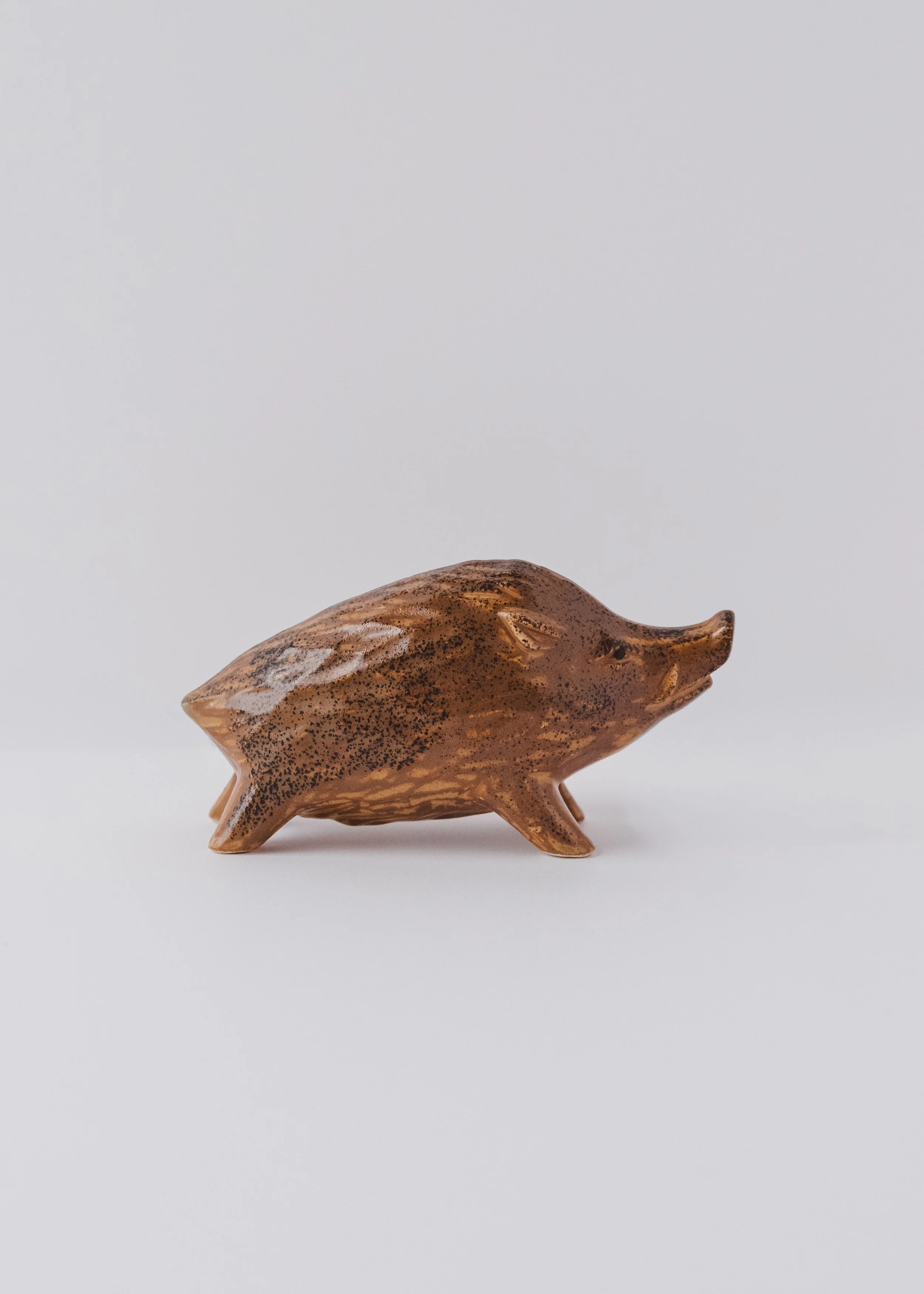 Image 6 of 9
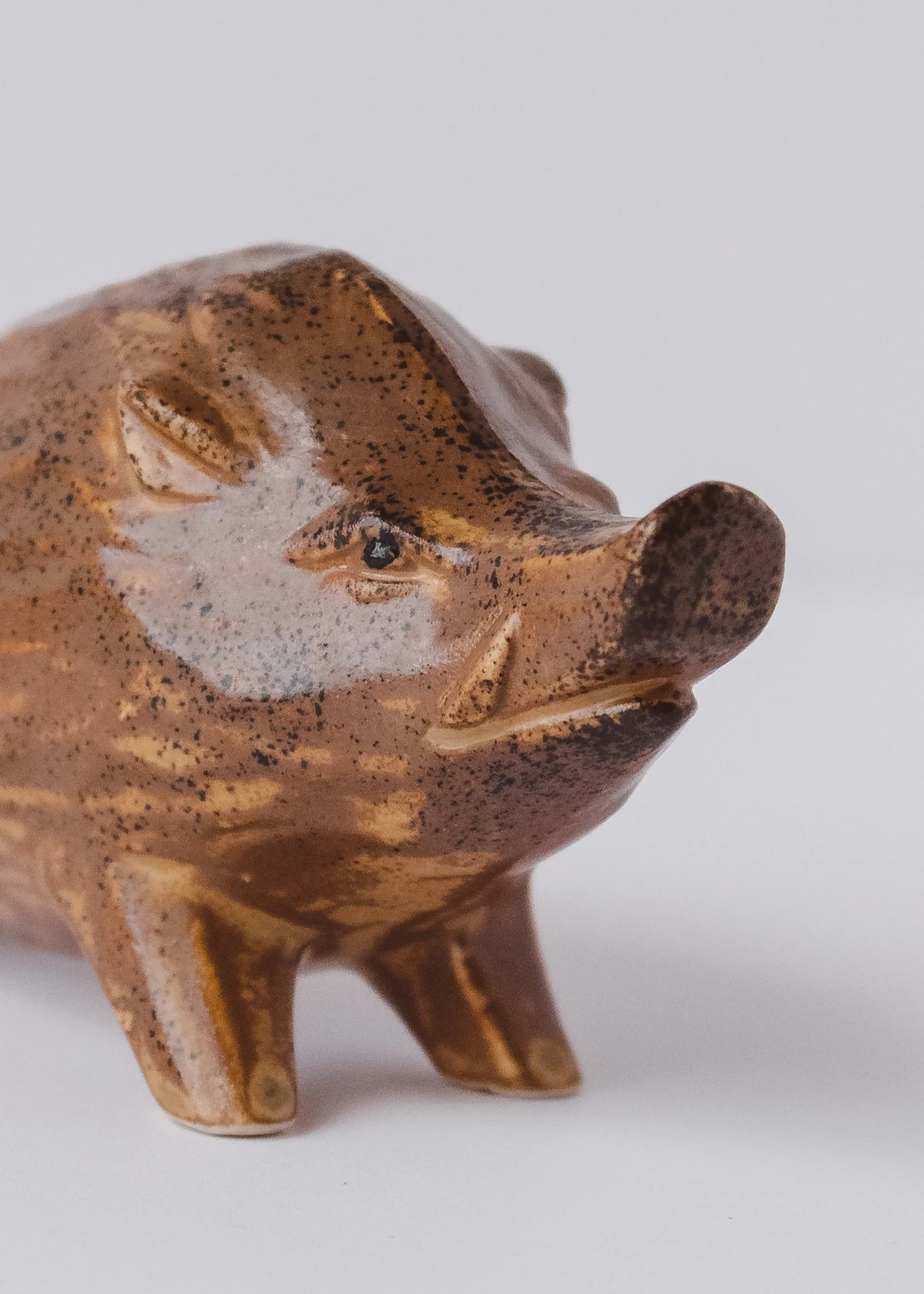 Image 7 of 9
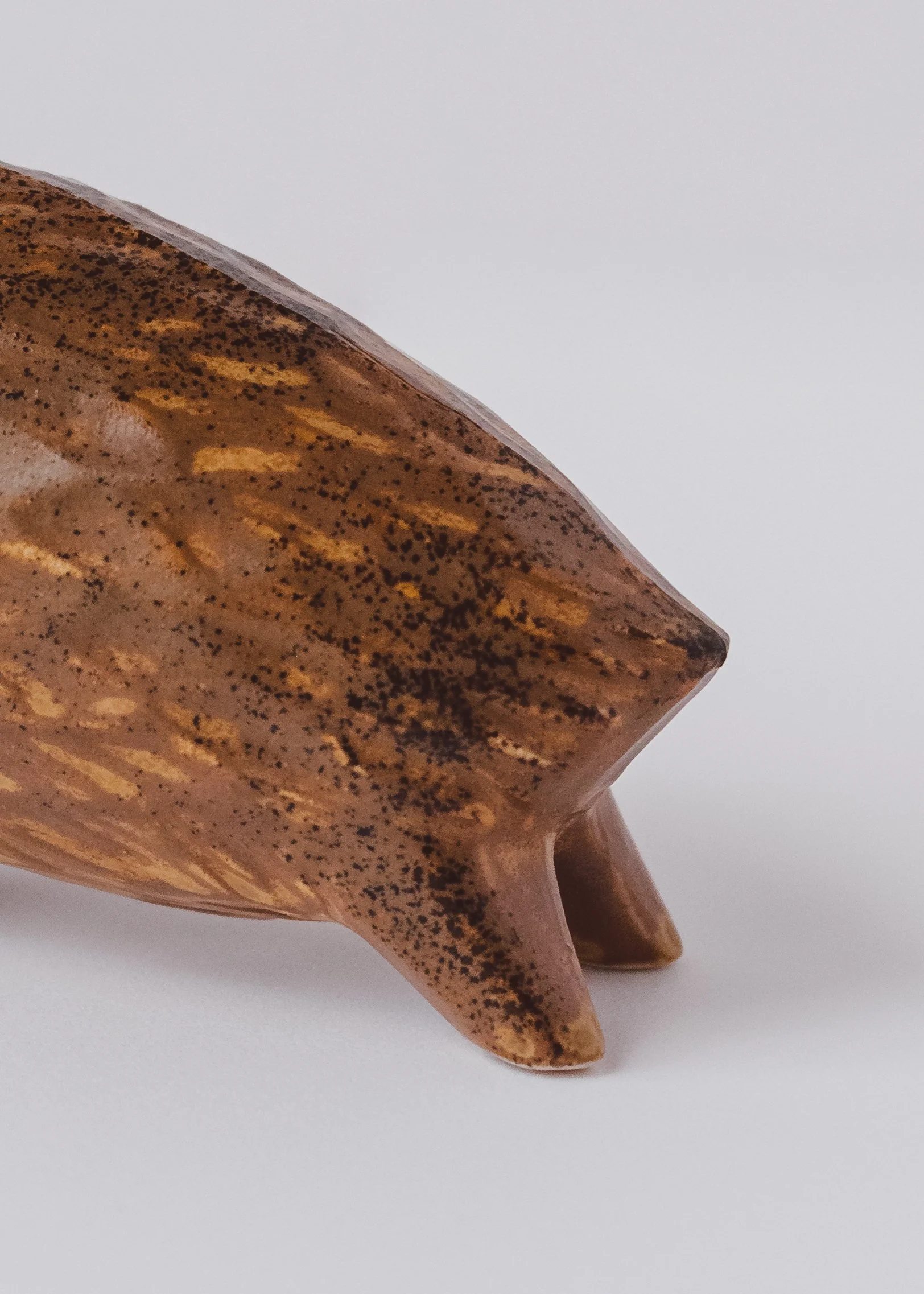 Image 8 of 9
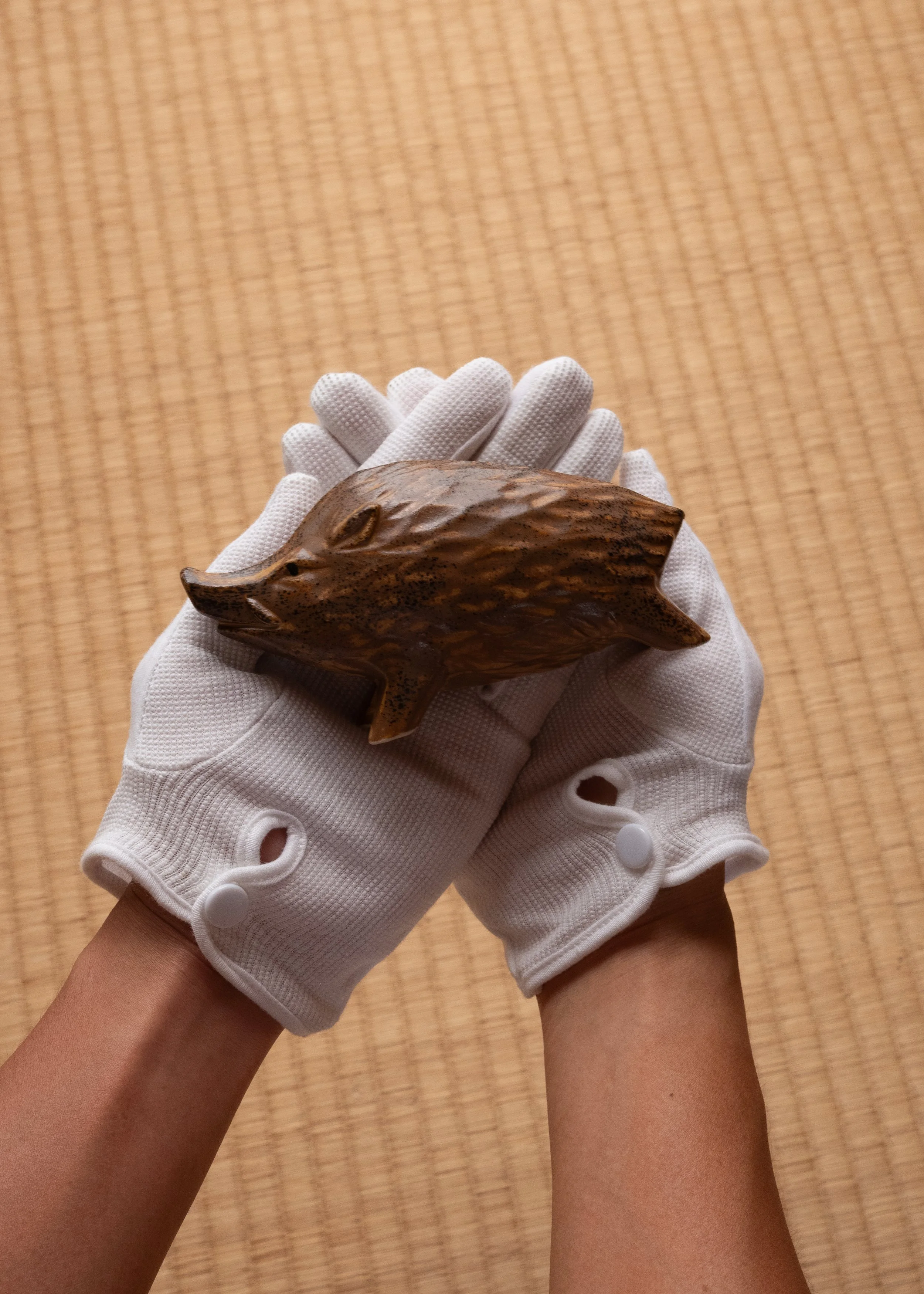 Image 9 of 9