【 The Concept 】
A dog sitting perfectly still with its head tilted to one side, listening to something that is not in the room. The posture is specific: front legs straight, back legs folded to the right, tail tucked, ears dropped forward, and the entire skull rotated approximately fifteen degrees off-axis. This is not a resting position. It is the posture of acoustic attention — the exact angle a dog assumes when it detects a familiar sound and is trying to determine whether it is real.
The figure was originally produced as a companion to a device that is no longer present. The dog was designed to sit beside a machine, listening to a voice that emerged from a brass horn. The machine is gone. The voice is gone. The horn is gone. What remains is the listener, still turned toward the place where the sound used to be, still waiting for it to resume. The collar around its neck — studded, painted in warm orange, the only color on the entire body — is proof that this dog once belonged to someone. The someone is the absence the dog is listening for.
This particular figure was found inside the estate of a long-established Japanese family whose patriarch was known for collecting Western records and oil paintings at a time when such tastes were rare in the region. The dog had been sitting on a shelf beside a row of imported vinyl for what may have been decades. It arrived at MINGEI 1926 still carrying that context — not as a mass-produced novelty, but as the last remaining witness to a room that no longer exists, in a house where foreign music once played.
【 The Function 】
135 grams of glazed ceramic, 14 centimeters tall, 14 centimeters from nose to tail. Light enough to sit on a speaker, a record sleeve, or a stack of vinyl. In its original context, figures like this were given as gifts to buyers of high-end audio equipment during the decades when home stereo systems were the centerpiece of a living room. They stood on top of televisions, beside turntables, and inside glass cabinets — silent companions to machines that made sound. In a modern context, the machine is irrelevant. The dog works alone. Place it on any surface and it immediately creates a directional tension: every viewer will look in the direction the dog is looking, searching for whatever it is hearing.
【 The Texture 】
White throughout — a clean, luminous off-white ceramic body covered in a uniform layer of transparent glaze that gives the surface a high, wet-looking sheen. The glaze catches every light source in the room and holds it as a soft highlight along the spine, the chest, and the crown of the tilted head. The only departures from white are deliberate and minimal: both ears are painted a deep brownish-black that absorbs light where the body reflects it, creating the illusion of shadow even in direct illumination. The nose is a single black dot. The eyes are two thin arched lines, drawn with a brush fine enough to convey an expression that is simultaneously intelligent and uncertain. Around the neck, a broad collar is painted in warm orange with raised circular studs spaced evenly along its length — each stud individually molded into the ceramic before glazing, each one catching a pinpoint of reflected light. The feet rest on small protective pads to prevent the unglazed base from scratching whatever surface it sits on.
【 Presence 】
It is the whitest object in MINGEI 1926's archive, and the only one that appears to be waiting for something to happen. Every other piece in the collection is complete in itself — the bull charges, the cat beckons, the iron dog watches, the boar forages. This dog listens. Its completeness depends on a sound that is not included in the purchase. The tilted head pulls every eye in the room toward the empty space beside it, and that empty space becomes the most interesting part of the arrangement. Place a book there, a plant, a photograph, and the dog appears to be listening to it. Place nothing, and the dog listens to nothing, which is somehow louder. The studded collar glows warm against the white body like a single lit match in a white room. It is the only proof that this animal was once someone's, and that the someone mattered enough to keep listening for.
Provenance Note
Sourced from the estate of a historically prominent family in the Kansai region, Japan. The former owner was known locally for an affinity for Western music and art — a collector of imported records and paintings in an era when such interests marked a household as unusually cosmopolitan.
【 The Concept 】
A dog sitting perfectly still with its head tilted to one side, listening to something that is not in the room. The posture is specific: front legs straight, back legs folded to the right, tail tucked, ears dropped forward, and the entire skull rotated approximately fifteen degrees off-axis. This is not a resting position. It is the posture of acoustic attention — the exact angle a dog assumes when it detects a familiar sound and is trying to determine whether it is real.
The figure was originally produced as a companion to a device that is no longer present. The dog was designed to sit beside a machine, listening to a voice that emerged from a brass horn. The machine is gone. The voice is gone. The horn is gone. What remains is the listener, still turned toward the place where the sound used to be, still waiting for it to resume. The collar around its neck — studded, painted in warm orange, the only color on the entire body — is proof that this dog once belonged to someone. The someone is the absence the dog is listening for.
This particular figure was found inside the estate of a long-established Japanese family whose patriarch was known for collecting Western records and oil paintings at a time when such tastes were rare in the region. The dog had been sitting on a shelf beside a row of imported vinyl for what may have been decades. It arrived at MINGEI 1926 still carrying that context — not as a mass-produced novelty, but as the last remaining witness to a room that no longer exists, in a house where foreign music once played.
【 The Function 】
135 grams of glazed ceramic, 14 centimeters tall, 14 centimeters from nose to tail. Light enough to sit on a speaker, a record sleeve, or a stack of vinyl. In its original context, figures like this were given as gifts to buyers of high-end audio equipment during the decades when home stereo systems were the centerpiece of a living room. They stood on top of televisions, beside turntables, and inside glass cabinets — silent companions to machines that made sound. In a modern context, the machine is irrelevant. The dog works alone. Place it on any surface and it immediately creates a directional tension: every viewer will look in the direction the dog is looking, searching for whatever it is hearing.
【 The Texture 】
White throughout — a clean, luminous off-white ceramic body covered in a uniform layer of transparent glaze that gives the surface a high, wet-looking sheen. The glaze catches every light source in the room and holds it as a soft highlight along the spine, the chest, and the crown of the tilted head. The only departures from white are deliberate and minimal: both ears are painted a deep brownish-black that absorbs light where the body reflects it, creating the illusion of shadow even in direct illumination. The nose is a single black dot. The eyes are two thin arched lines, drawn with a brush fine enough to convey an expression that is simultaneously intelligent and uncertain. Around the neck, a broad collar is painted in warm orange with raised circular studs spaced evenly along its length — each stud individually molded into the ceramic before glazing, each one catching a pinpoint of reflected light. The feet rest on small protective pads to prevent the unglazed base from scratching whatever surface it sits on.
【 Presence 】
It is the whitest object in MINGEI 1926's archive, and the only one that appears to be waiting for something to happen. Every other piece in the collection is complete in itself — the bull charges, the cat beckons, the iron dog watches, the boar forages. This dog listens. Its completeness depends on a sound that is not included in the purchase. The tilted head pulls every eye in the room toward the empty space beside it, and that empty space becomes the most interesting part of the arrangement. Place a book there, a plant, a photograph, and the dog appears to be listening to it. Place nothing, and the dog listens to nothing, which is somehow louder. The studded collar glows warm against the white body like a single lit match in a white room. It is the only proof that this animal was once someone's, and that the someone mattered enough to keep listening for.
Provenance Note
Sourced from the estate of a historically prominent family in the Kansai region, Japan. The former owner was known locally for an affinity for Western music and art — a collector of imported records and paintings in an era when such interests marked a household as unusually cosmopolitan.


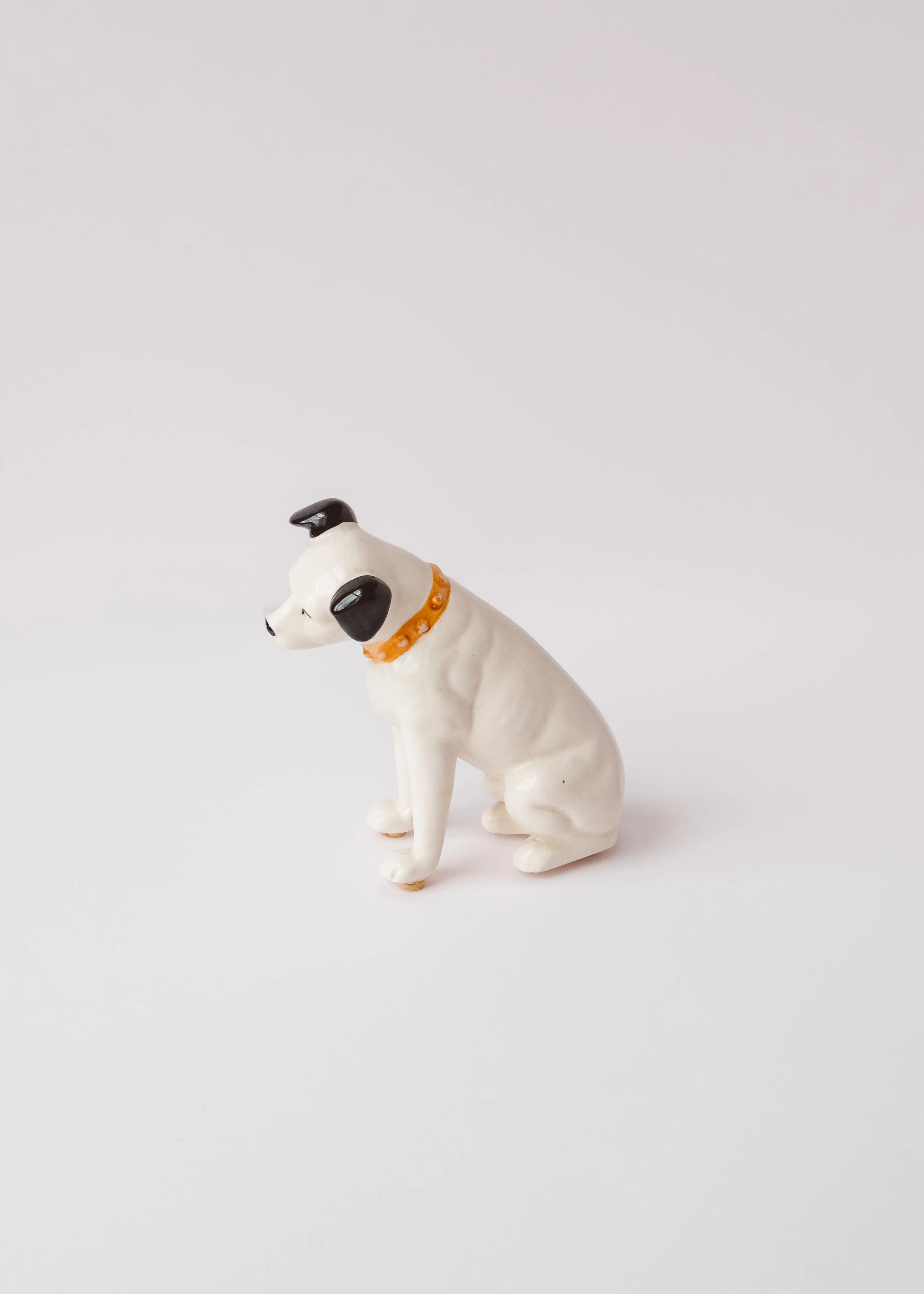 Image 1 of 11
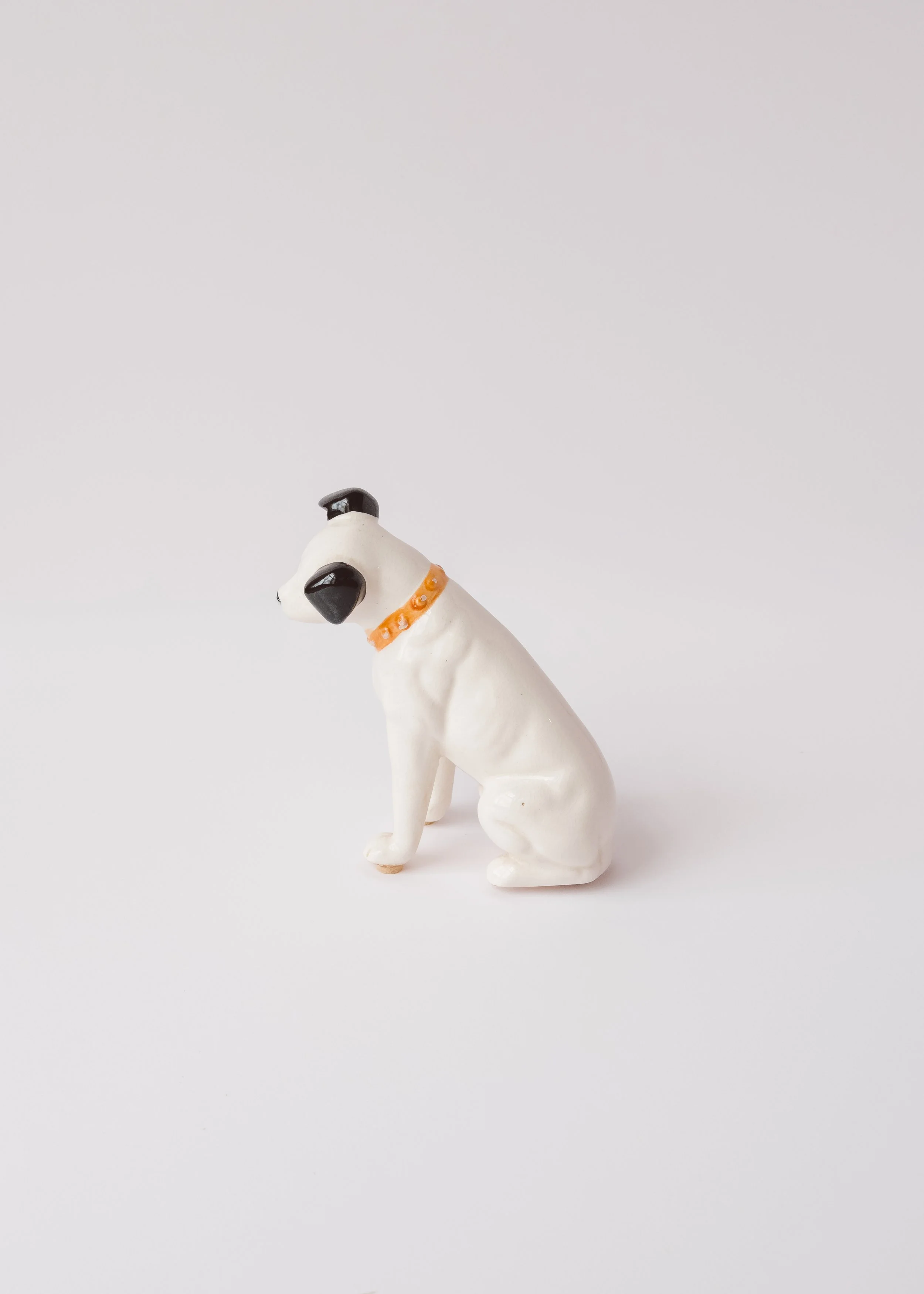 Image 2 of 11
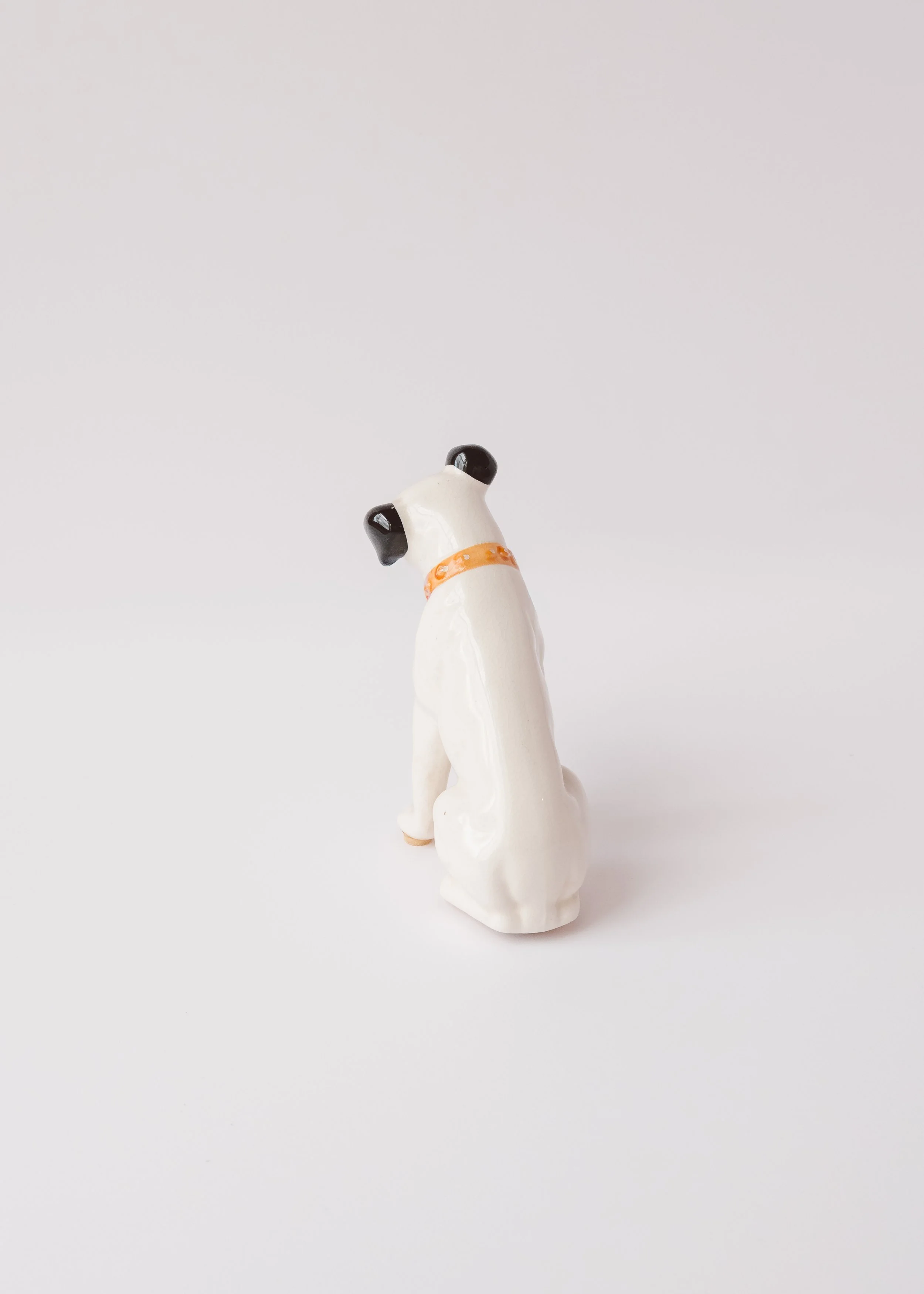 Image 3 of 11
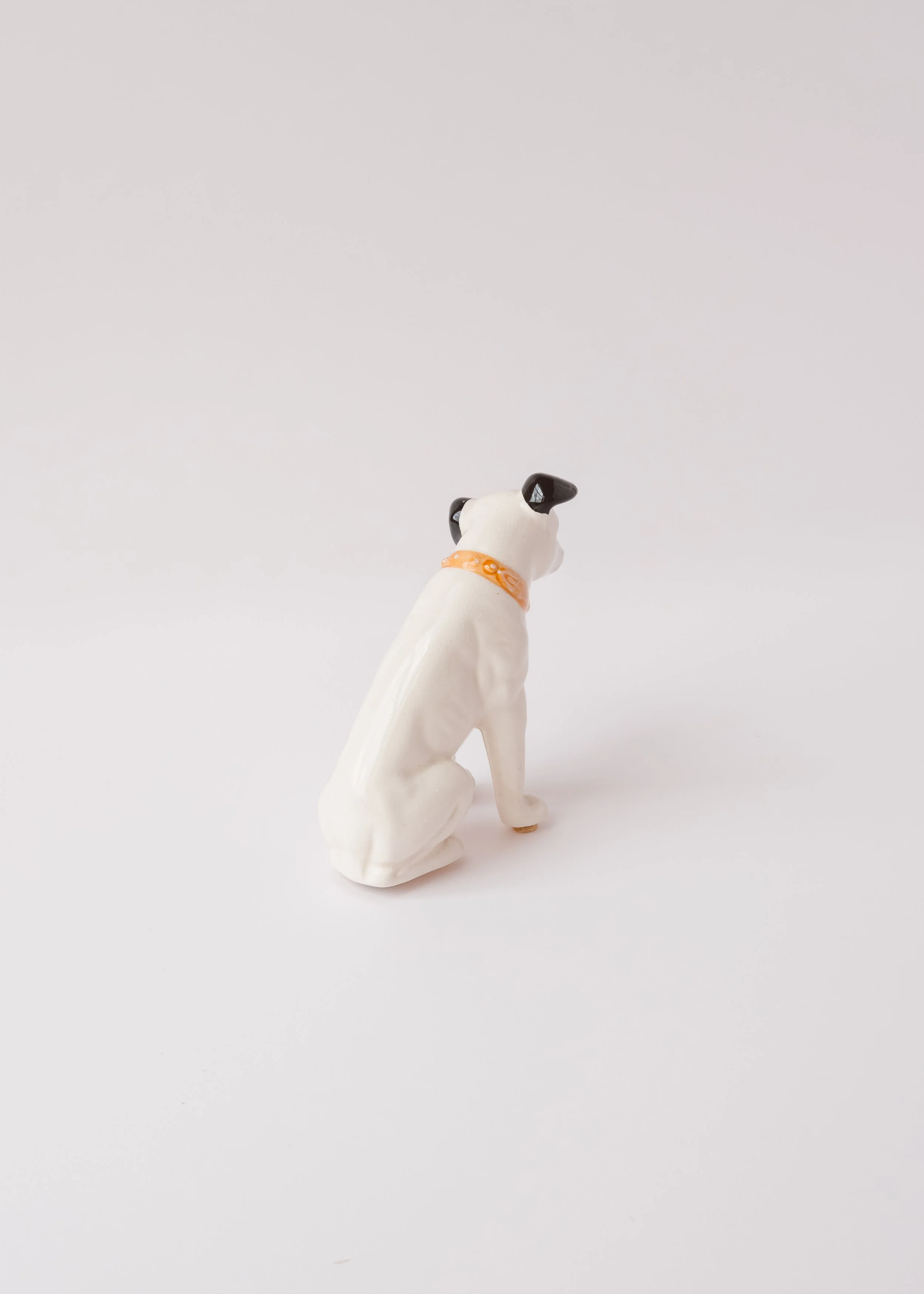 Image 4 of 11
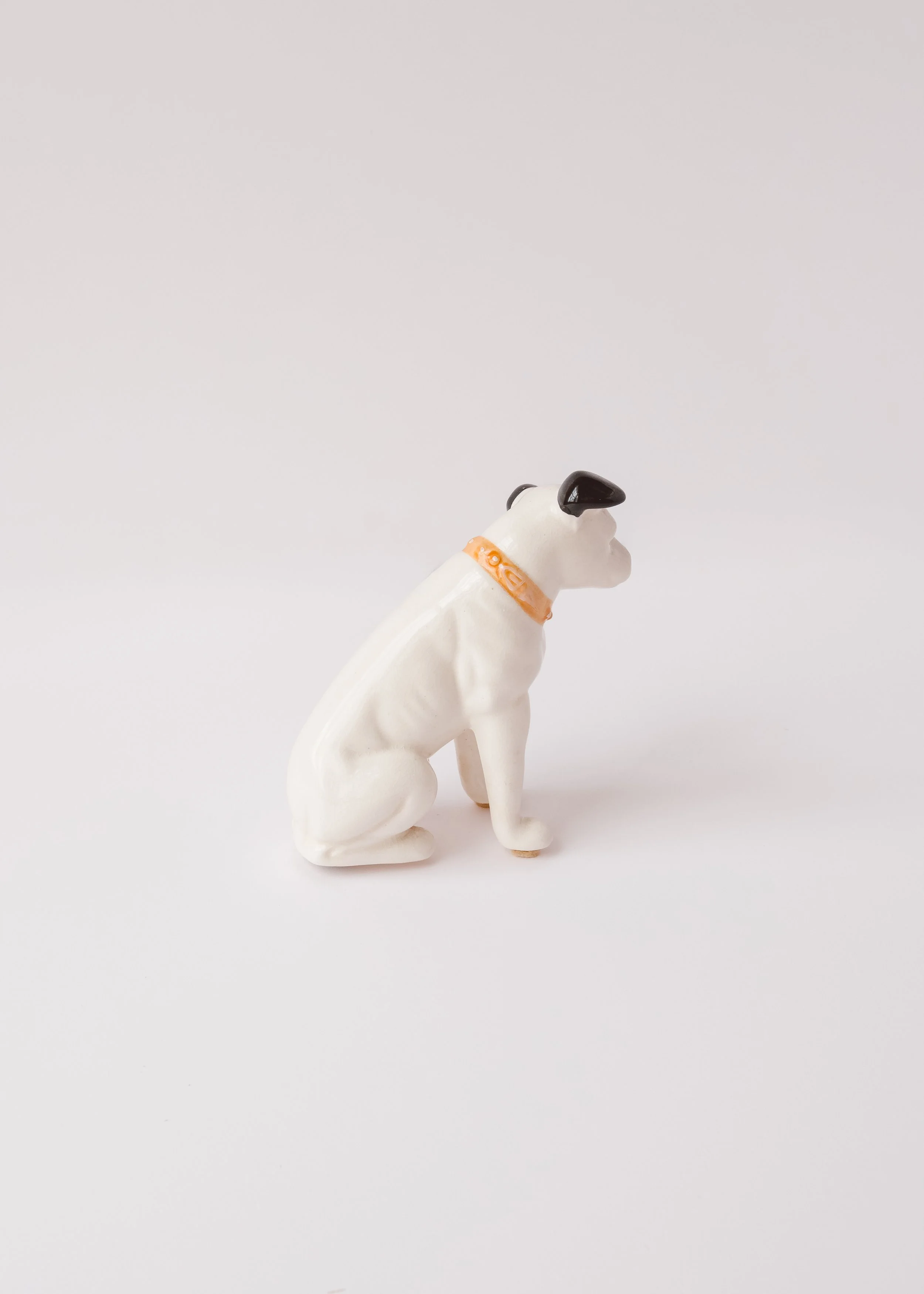 Image 5 of 11
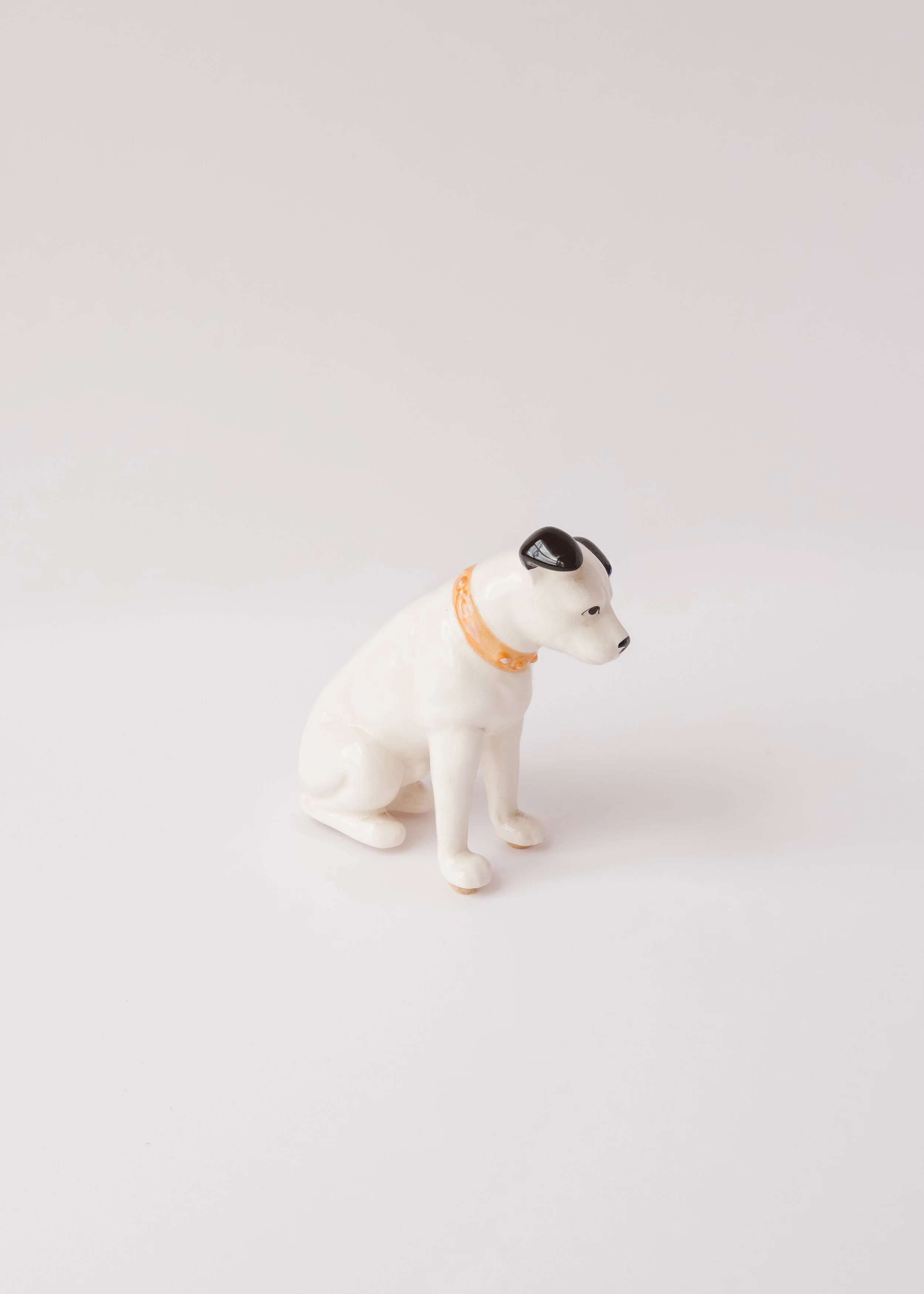 Image 6 of 11
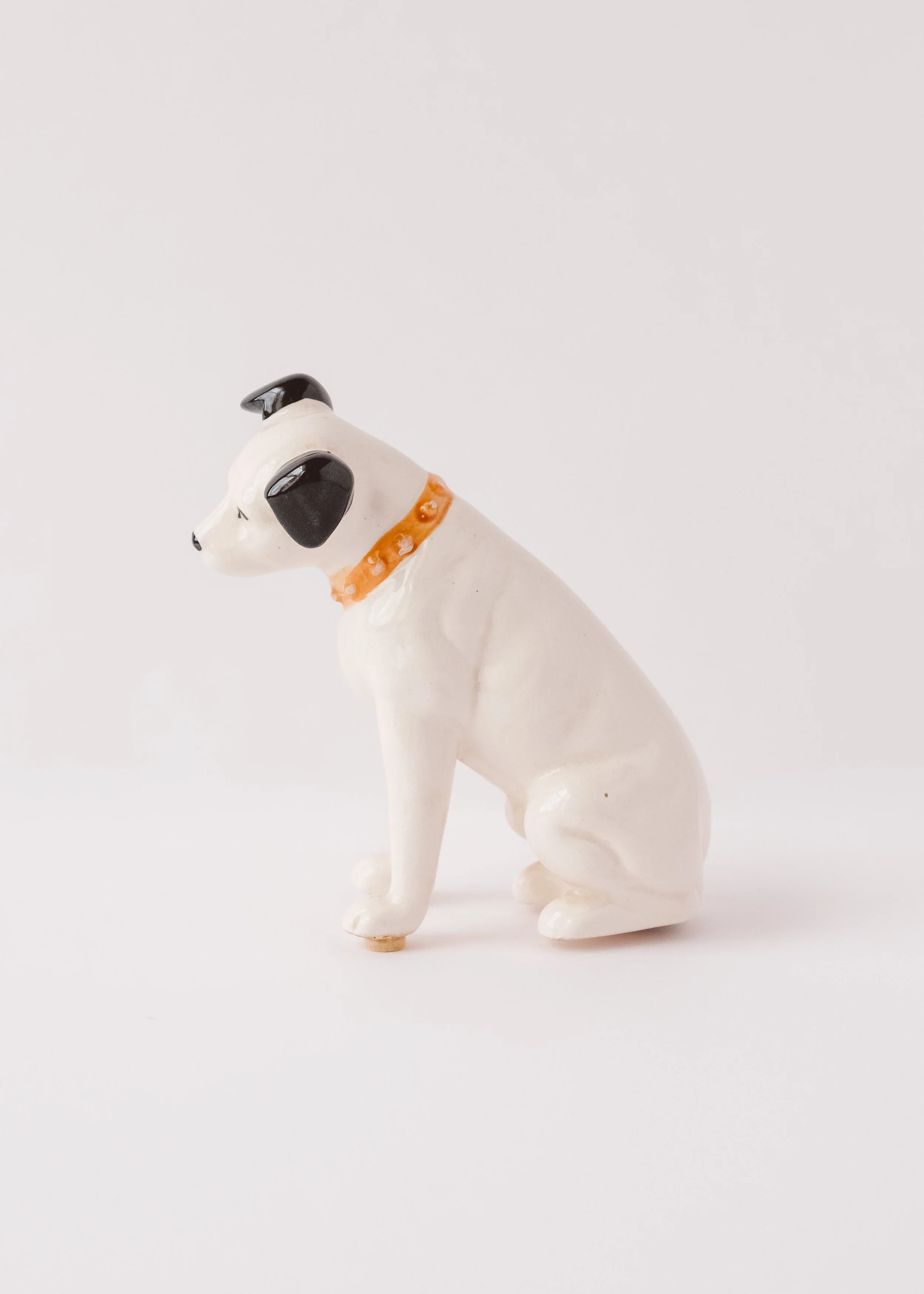 Image 7 of 11
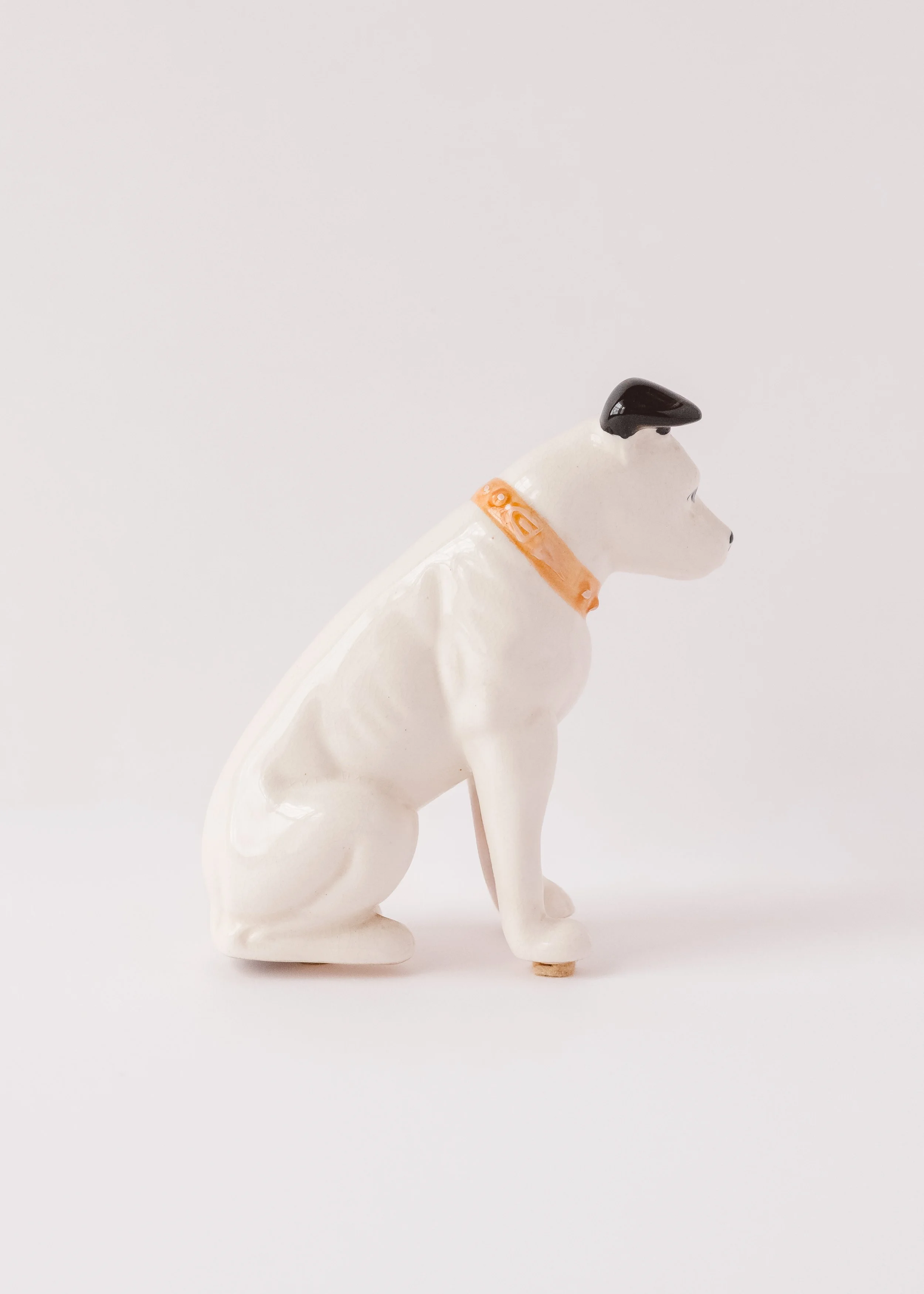 Image 8 of 11
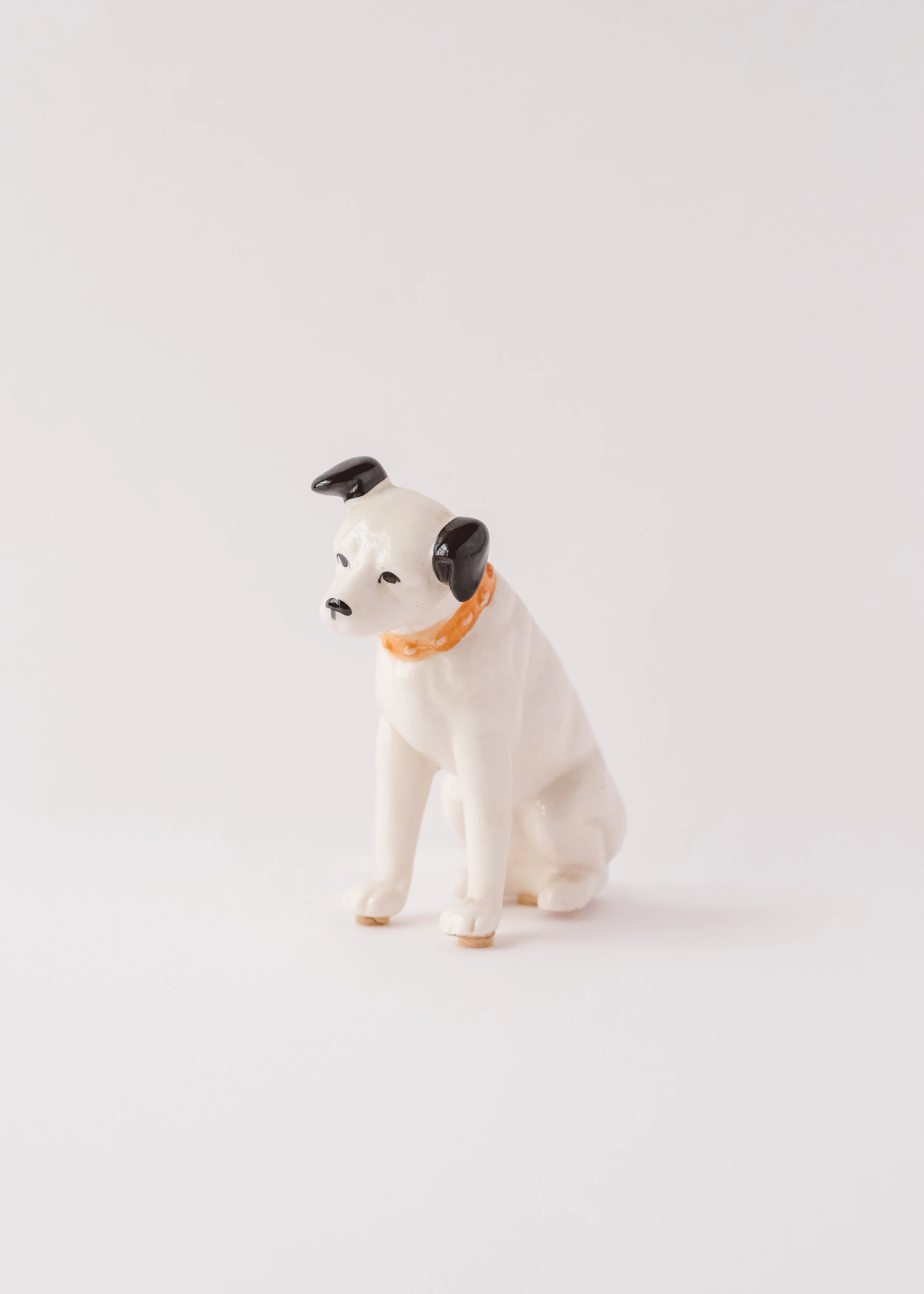 Image 9 of 11
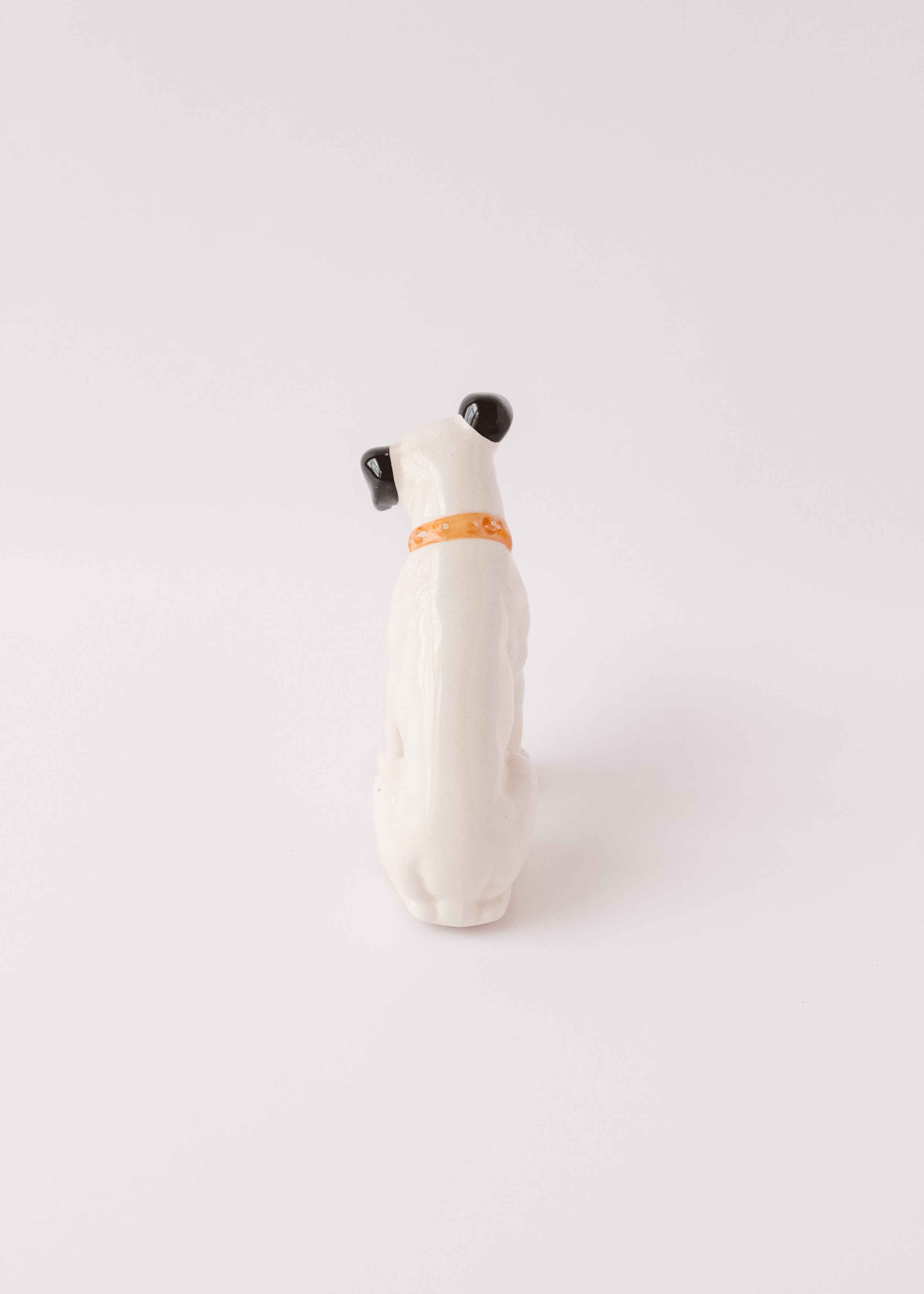 Image 10 of 11
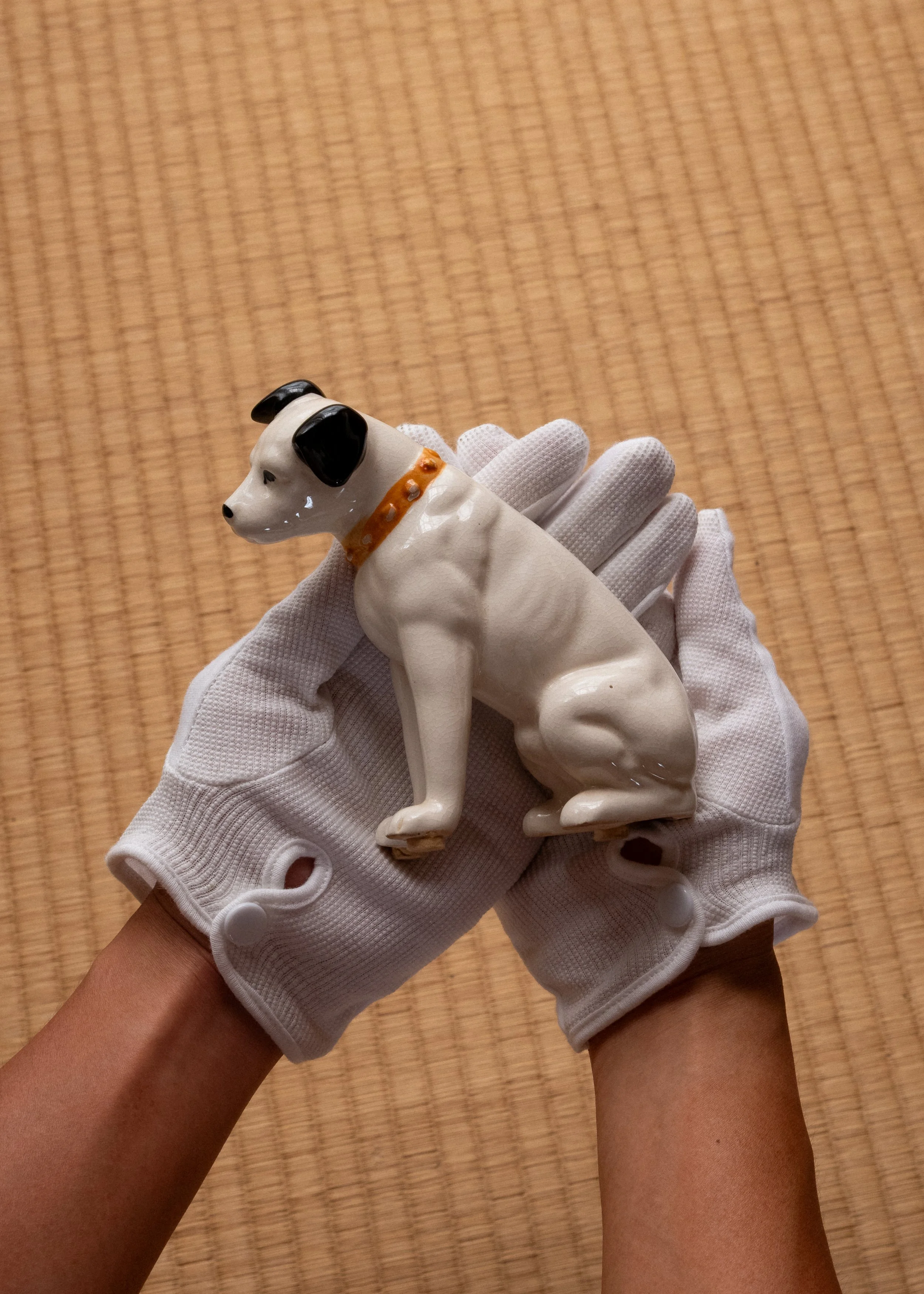 Image 11 of 11