【 The Concept 】
A creature that never existed, made in a material invented to imitate a stone that does. The celadon glaze was developed centuries ago in an attempt to reproduce jade — the green stone believed to hold immortality, virtue, and the authority of heaven — using nothing but clay, iron, and fire. The dragon is the animal that never had to exist in order to be believed in. Putting one inside the other is not decoration. It is two impossible things agreeing to occupy the same object.
The dragon does not rear. It coils. The body runs 23 centimeters horizontally and only 12 centimeters up, folding back on itself in a long S that disappears behind its own shoulder and re-emerges at the tail. The head turns outward from the coil, mouth open, fangs exposed, horns swept back, mane and whiskers streaming as though caught in a wind that stopped fifty years ago. One foreclaw is lifted clear of the body, and held in its grip is a perfect sphere — the only geometrically pure form on an object otherwise made entirely of curves, spirals, and irregularities. Every scale, every whisker, every wave of cloud exists to be organic. The sphere exists to be absolute.
Beneath the dragon, the base is not a base. It is weather. Stylized clouds roll and break in tight carved spirals, each one turning in on itself like a wave photographed at the instant before it collapses. The dragon is not standing on them. It is emerging from them — half-revealed, half-still-hidden, the coil of the body passing in and out of the cloud mass so that the eye cannot say with confidence where the animal ends and the sky begins.
The piece arrives in its original wooden box, the lid inscribed in ink with brushed characters and stamped with a red seal.
【 The Function 】
760 grams, 23 centimeters long, 12 centimeters tall, 10 centimeters wide. The weight sits low, distributed across the broad cloud base, which makes the figure exceptionally stable despite the complexity of the form above it. In its original context, dragon figures were placed at the thresholds of a home — entryway, alcove, the shelf a household passes every day — in the belief that the creature governed water, weather, and the movement of fortune, and that a household under its attention would be a household where things went well. The sphere in its claw is a wish-granting jewel: an object from Buddhist iconography understood to produce whatever is asked of it. A dragon holding one is not a dragon in flight. It is a dragon that has already found what it was looking for and is bringing it back.
【 The Texture 】
Deep jade celadon, glossy and saturated, considerably greener and more concentrated than the pale blue-green of CELADON PROWL or QUIET KIN. The glaze is thick and wet-looking, and it behaves differently across every part of the body. On the raised backs of the scales it stretches thin and pales toward white. In the carved channels between scales, in the hollows of the cloud spirals, in the crease behind each horn, it pools deep and turns almost forest-dark. The result is that the entire surface reads as shaded — the sculpture appears lit from within by the glaze itself, with no pigment, no painting, and no second color anywhere on the object.
Each scale is individually carved, and there are hundreds. The eye reads them as a single mottled texture from across a room and as a field of separate, deliberate marks from arm's length. The cloud spirals are the opposite: smooth, unbroken, continuous curves that reflect light in long clean arcs. Hard against soft. Reptile against sky. The two textures share one glaze and remain entirely distinct.
【 Presence 】
The other celadon in this archive is quiet. The tiger prowls, the horse steps, the rooster sits, the dogs watch. They are animals doing animal things. This is not an animal. It is a proposition — that the sky has a shape, that fortune has a body, that the thing which brings rain and the thing which brings luck are the same creature and it is currently on your shelf, holding a sphere, looking at something over your left shoulder.
And it is looking at something. That is the detail that keeps the object from being merely ornamental. The head is turned away from the axis of the body, mouth open, and the direction of the gaze does not resolve. It is not looking at the viewer. It is not looking at the jewel it already has. It is looking past both, at whatever is coming next, with the expression of something that has seen a great deal of weather and expects to see a great deal more.
Provenance Note
Sourced from a private collection in the Kansai region, Japan. Accompanied by its original inscribed wooden box.
【 The Concept 】
A creature that never existed, made in a material invented to imitate a stone that does. The celadon glaze was developed centuries ago in an attempt to reproduce jade — the green stone believed to hold immortality, virtue, and the authority of heaven — using nothing but clay, iron, and fire. The dragon is the animal that never had to exist in order to be believed in. Putting one inside the other is not decoration. It is two impossible things agreeing to occupy the same object.
The dragon does not rear. It coils. The body runs 23 centimeters horizontally and only 12 centimeters up, folding back on itself in a long S that disappears behind its own shoulder and re-emerges at the tail. The head turns outward from the coil, mouth open, fangs exposed, horns swept back, mane and whiskers streaming as though caught in a wind that stopped fifty years ago. One foreclaw is lifted clear of the body, and held in its grip is a perfect sphere — the only geometrically pure form on an object otherwise made entirely of curves, spirals, and irregularities. Every scale, every whisker, every wave of cloud exists to be organic. The sphere exists to be absolute.
Beneath the dragon, the base is not a base. It is weather. Stylized clouds roll and break in tight carved spirals, each one turning in on itself like a wave photographed at the instant before it collapses. The dragon is not standing on them. It is emerging from them — half-revealed, half-still-hidden, the coil of the body passing in and out of the cloud mass so that the eye cannot say with confidence where the animal ends and the sky begins.
The piece arrives in its original wooden box, the lid inscribed in ink with brushed characters and stamped with a red seal.
【 The Function 】
760 grams, 23 centimeters long, 12 centimeters tall, 10 centimeters wide. The weight sits low, distributed across the broad cloud base, which makes the figure exceptionally stable despite the complexity of the form above it. In its original context, dragon figures were placed at the thresholds of a home — entryway, alcove, the shelf a household passes every day — in the belief that the creature governed water, weather, and the movement of fortune, and that a household under its attention would be a household where things went well. The sphere in its claw is a wish-granting jewel: an object from Buddhist iconography understood to produce whatever is asked of it. A dragon holding one is not a dragon in flight. It is a dragon that has already found what it was looking for and is bringing it back.
【 The Texture 】
Deep jade celadon, glossy and saturated, considerably greener and more concentrated than the pale blue-green of CELADON PROWL or QUIET KIN. The glaze is thick and wet-looking, and it behaves differently across every part of the body. On the raised backs of the scales it stretches thin and pales toward white. In the carved channels between scales, in the hollows of the cloud spirals, in the crease behind each horn, it pools deep and turns almost forest-dark. The result is that the entire surface reads as shaded — the sculpture appears lit from within by the glaze itself, with no pigment, no painting, and no second color anywhere on the object.
Each scale is individually carved, and there are hundreds. The eye reads them as a single mottled texture from across a room and as a field of separate, deliberate marks from arm's length. The cloud spirals are the opposite: smooth, unbroken, continuous curves that reflect light in long clean arcs. Hard against soft. Reptile against sky. The two textures share one glaze and remain entirely distinct.
【 Presence 】
The other celadon in this archive is quiet. The tiger prowls, the horse steps, the rooster sits, the dogs watch. They are animals doing animal things. This is not an animal. It is a proposition — that the sky has a shape, that fortune has a body, that the thing which brings rain and the thing which brings luck are the same creature and it is currently on your shelf, holding a sphere, looking at something over your left shoulder.
And it is looking at something. That is the detail that keeps the object from being merely ornamental. The head is turned away from the axis of the body, mouth open, and the direction of the gaze does not resolve. It is not looking at the viewer. It is not looking at the jewel it already has. It is looking past both, at whatever is coming next, with the expression of something that has seen a great deal of weather and expects to see a great deal more.
Provenance Note
Sourced from a private collection in the Kansai region, Japan. Accompanied by its original inscribed wooden box.


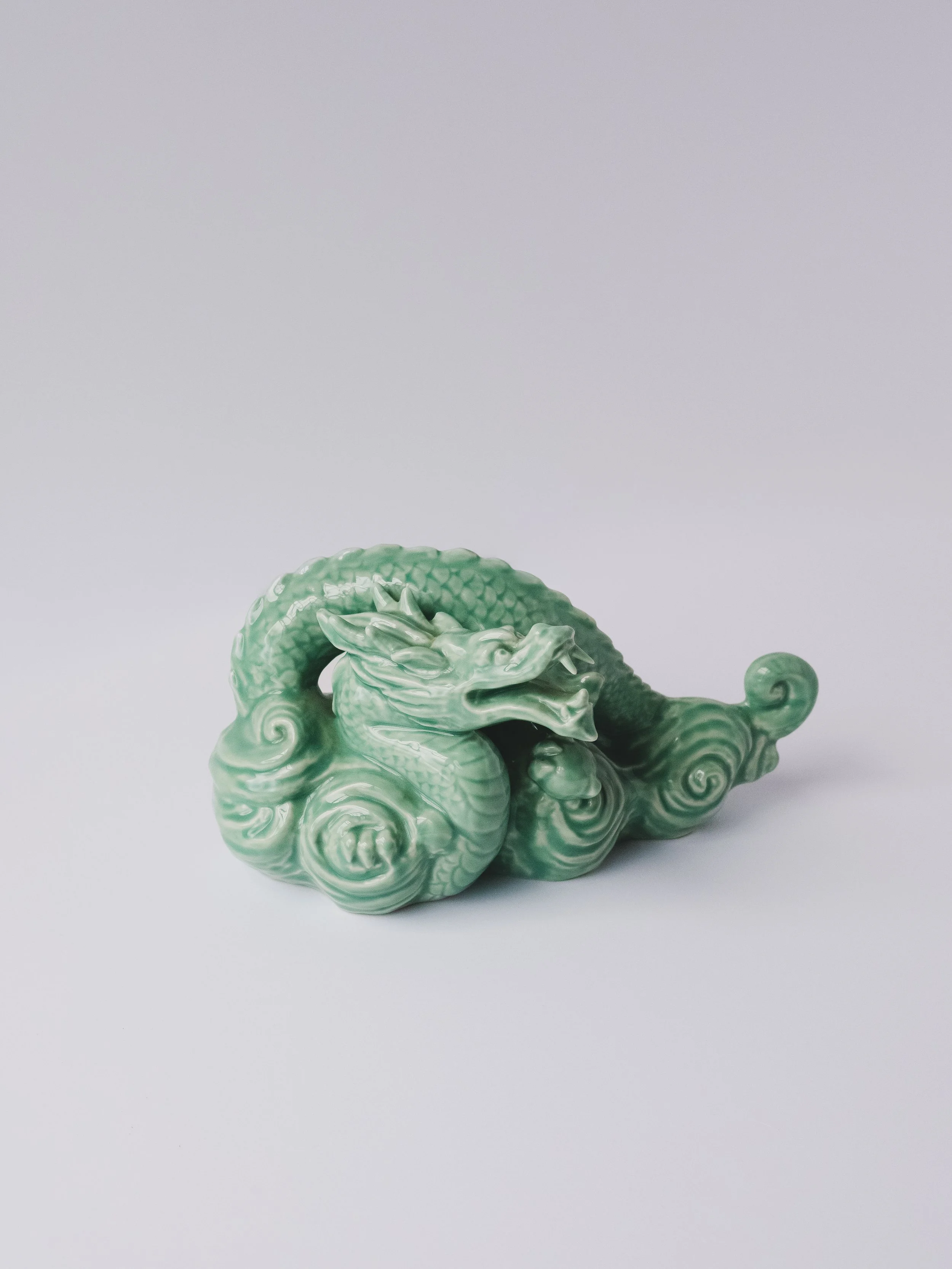 Image 1 of 10
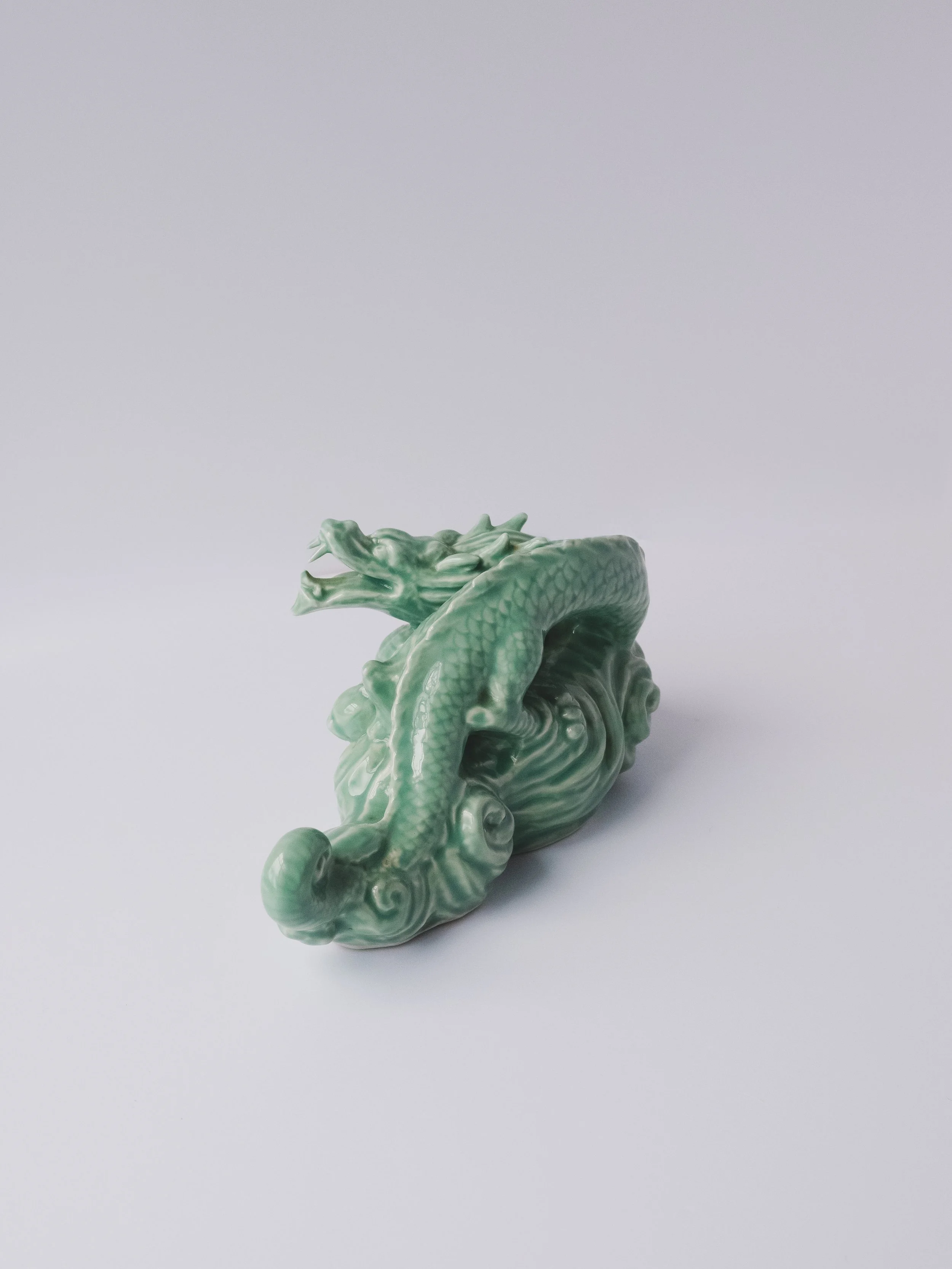 Image 2 of 10
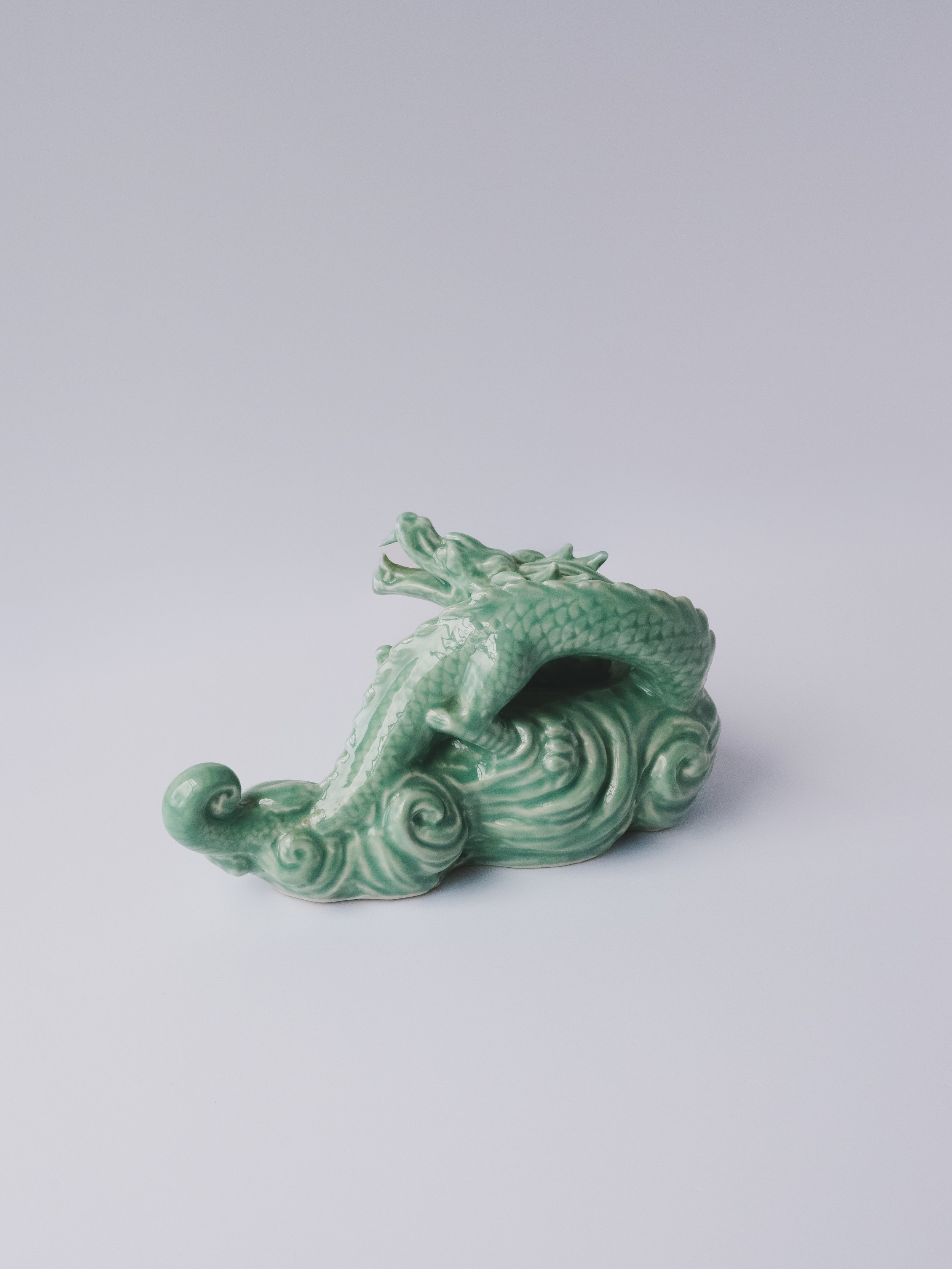 Image 3 of 10
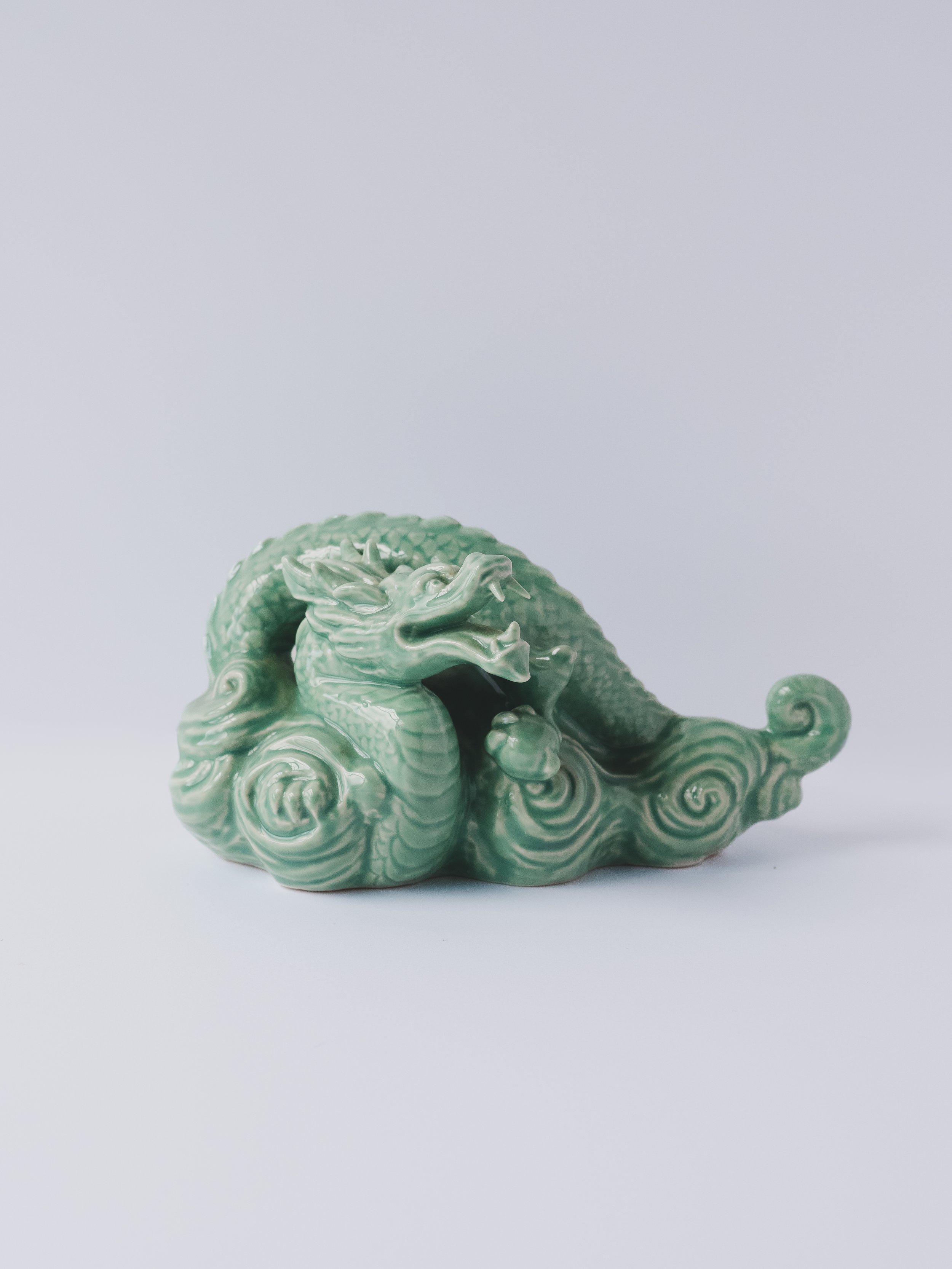 Image 4 of 10
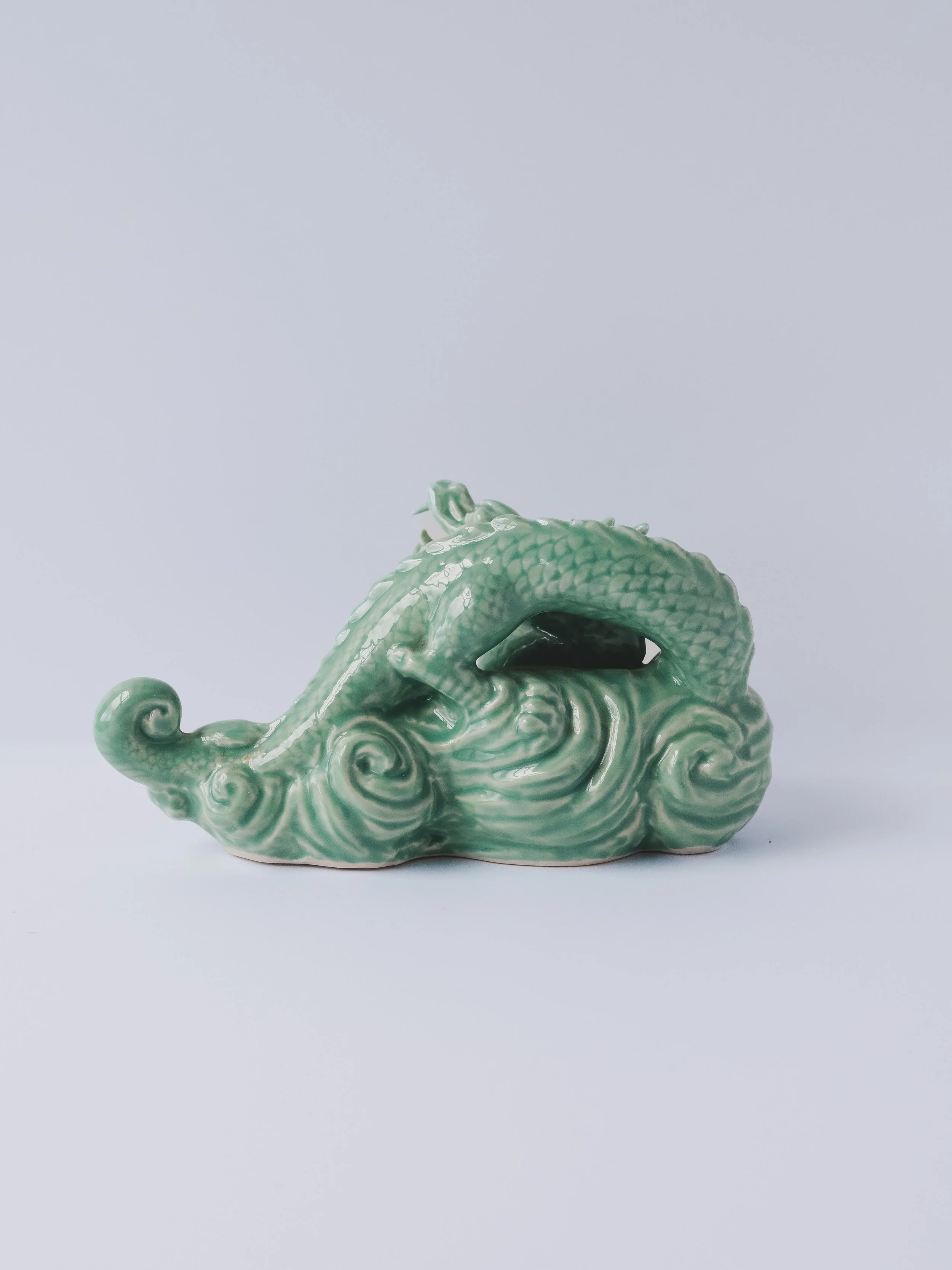 Image 5 of 10
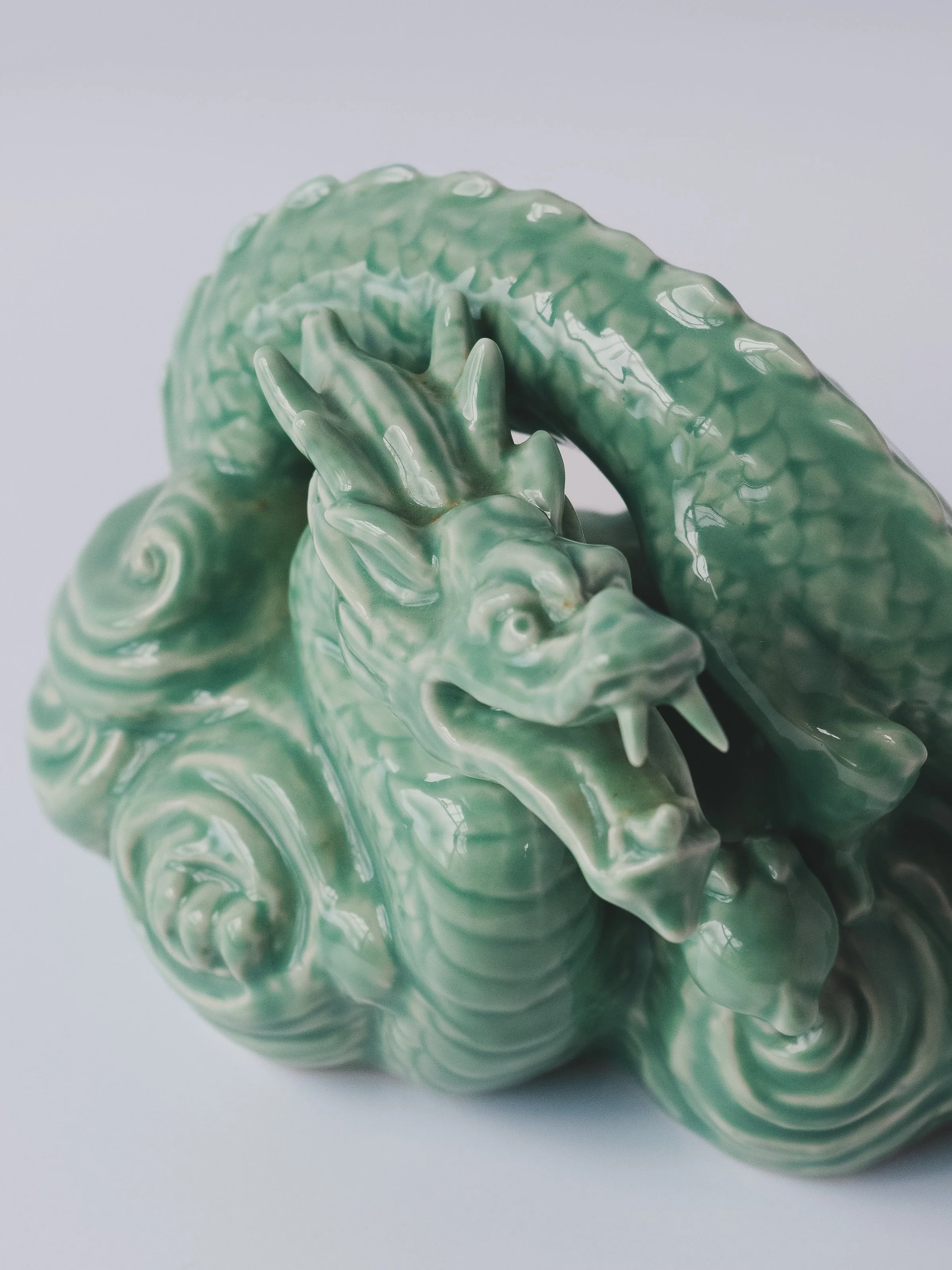 Image 6 of 10
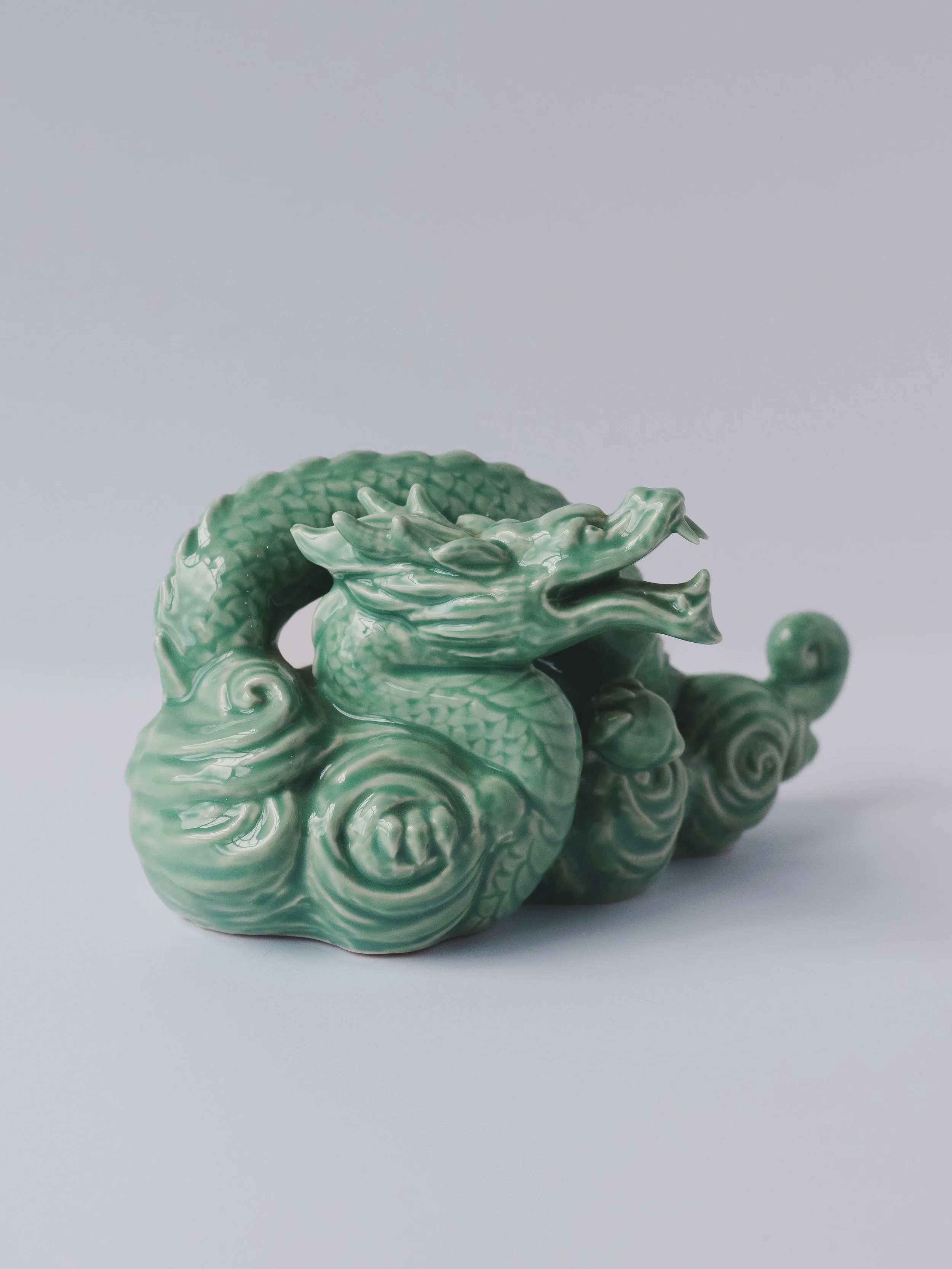 Image 7 of 10
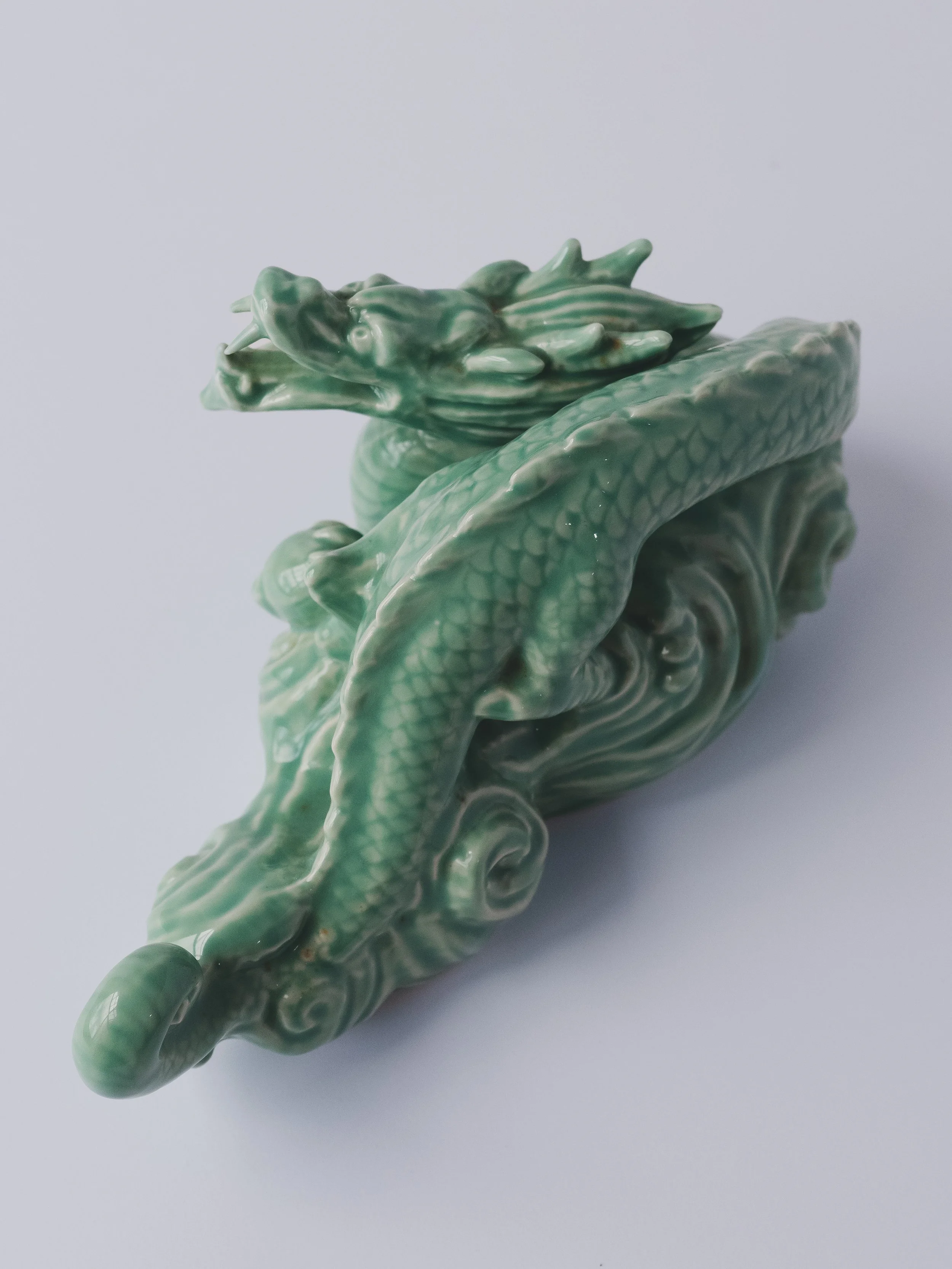 Image 8 of 10
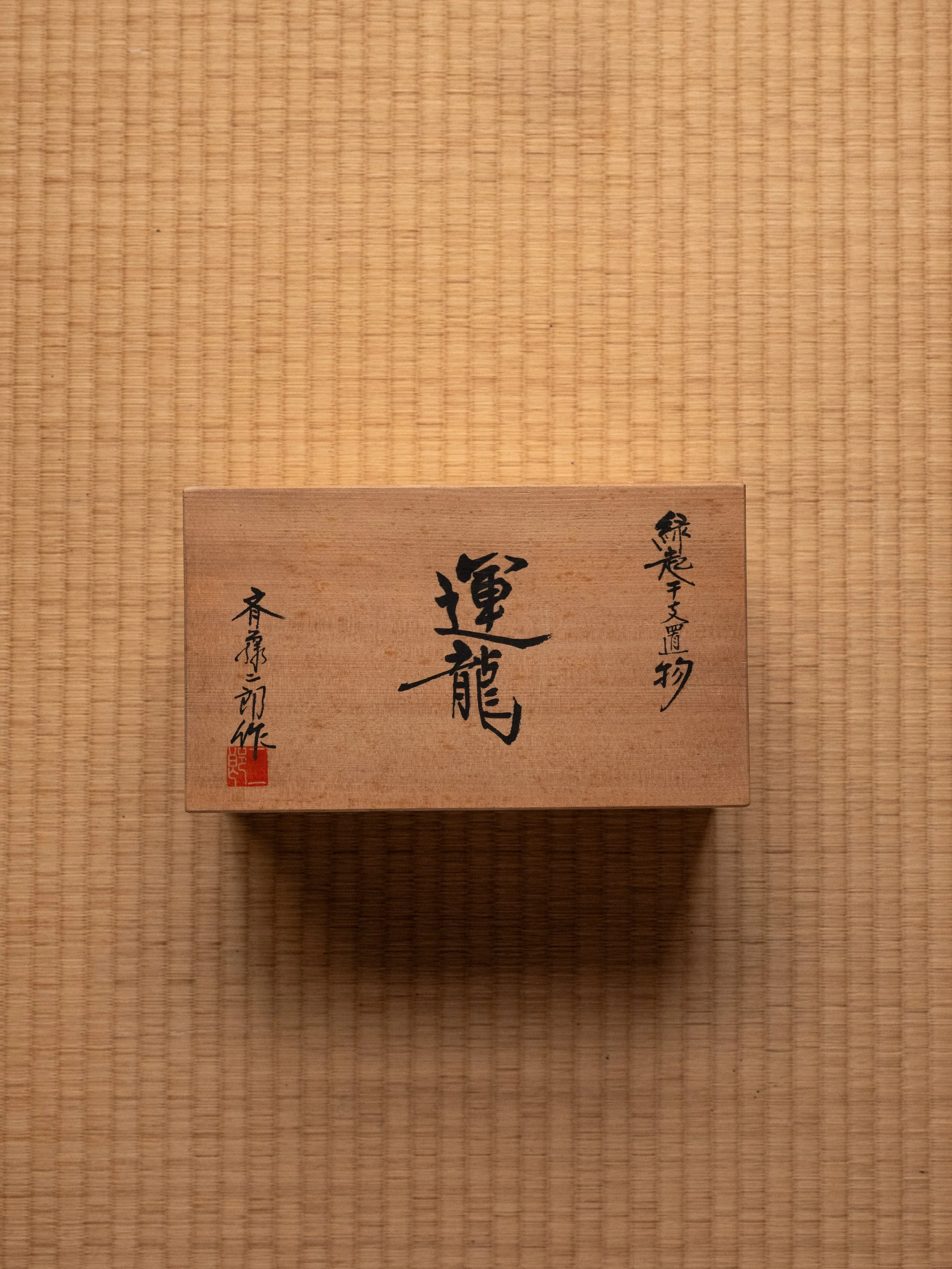 Image 9 of 10
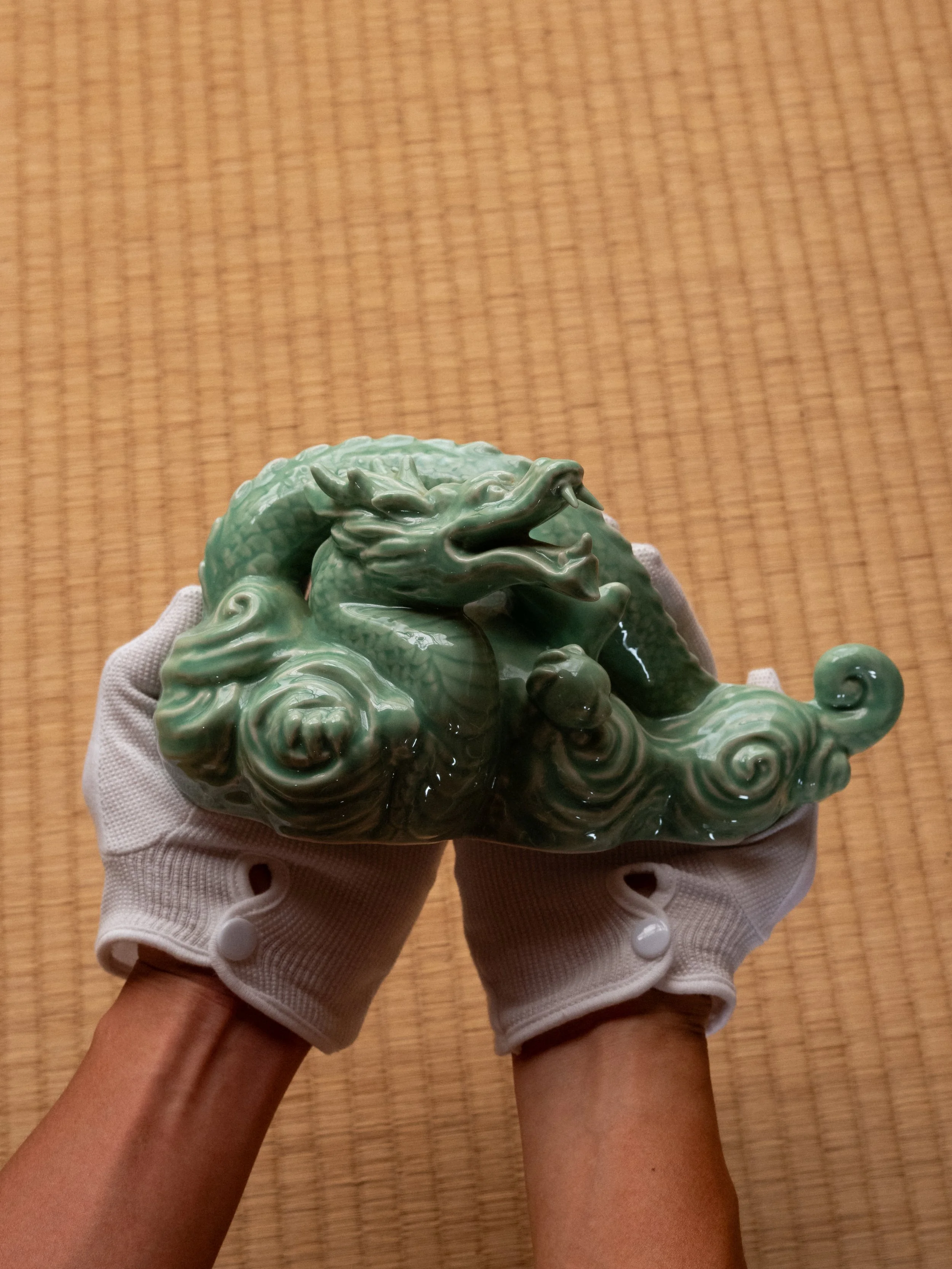 Image 10 of 10