【 The Concept 】
A rooster reduced to its two loudest gestures: the breast thrown forward, and the tail thrown up. Everything else has been taken away. There are no separated feathers on the body, no scaled legs, no drawn eye to speak of — only a single unbroken red silhouette, a bird understood as one continuous line from raised beak to the tip of a rising tail. Here the archive trades detail for silhouette.
The rooster is the tenth sign of the zodiac, tori, and in the older stories it is the bird that ends the dark. When the sun-deity withdrew into a cave and left the world in night, it was the long-crowing birds, set before the cave to call, that brought the light back. A rooster is therefore not only a barnyard animal but a herald of dawn — the voice that says the night is over. This figure keeps its beak parted, mid-call, holding that one function in a body stripped of everything else.
The archive has two roosters already, and this one answers both by subtraction. Where FLECKED HERALD renders the bird in cast iron dusted with gold, and POOLED PLUME lets celadon glaze gather in the carved feathers, CINNABAR CLARION refuses detail entirely. No fleck, no pooled glaze, no plumage — the same subject, said in one clean shape instead of a thousand small ones.
【 The Function 】
At 20 centimetres tall and 309 grams, it is an unglazed stoneware figure with no separate base and no legs to balance on: the body itself widens at the bottom into a rounded foot, so the whole piece stands as one stable mass. This is the traditional form of the New-Year zodiac figure — an object brought out to mark the incoming year and set where the household gathers, a shelf, an entry, a low table. Its symbolism is doubled by language: the word for the rooster, tori, echoes tori-komu, "to take in" — to draw fortune and custom inward — which is why the sign is kept close by shopkeepers and households alike at the turn of the year.
【 The Texture 】
The surface is shudei — unglazed iron-red stoneware, coloured not by any paint but by the iron in the clay itself, brought up to an even brick-red in the firing. There is no glaze anywhere on it, and so no shine: the finish is a dry, close matte, smoothed at the leather-hard stage until the light no longer catches a point but slides across the whole curve.
That matte skin is what makes the form legible. Because nothing glares, the eye reads only shape — the soft swell of the breast where the light gathers, the deep shadow pooled in the carved troughs of the tail. The tail is the one place the maker let detail back in: a tall smooth sickle blade sweeps up from the back, and beside it a fan of undulating grooves rises and falls like a small run of waves, each ridge holding its own thin line of shadow. The head is the opposite economy — a rounded comb, a soft wattle, a parted beak, and an eye barely more than a pressed line.
Close up, the red is not perfectly uniform; a faint speckle sits in the clay here and there, the honest grain of an unglazed body that was never meant to hide behind a coat of glass.
【 Presence 】
Much of the archive is representational — a thing made to look like the thing it is. CINNABAR CLARION leans the other way, toward sculpture: on a shelf it behaves less like an ornament than like a small modern object, a red form that happens to be a rooster, quiet enough to sit beside glass or steel and hold its corner without argument.
And then the beak, caught open, gives it away: this is not a still object but a held sound — a crow stopped a moment before it finishes, the red already gathering to call the light up.
Sourced from a private collection in the Shikoku region, Japan.
【 The Concept 】
A rooster reduced to its two loudest gestures: the breast thrown forward, and the tail thrown up. Everything else has been taken away. There are no separated feathers on the body, no scaled legs, no drawn eye to speak of — only a single unbroken red silhouette, a bird understood as one continuous line from raised beak to the tip of a rising tail. Here the archive trades detail for silhouette.
The rooster is the tenth sign of the zodiac, tori, and in the older stories it is the bird that ends the dark. When the sun-deity withdrew into a cave and left the world in night, it was the long-crowing birds, set before the cave to call, that brought the light back. A rooster is therefore not only a barnyard animal but a herald of dawn — the voice that says the night is over. This figure keeps its beak parted, mid-call, holding that one function in a body stripped of everything else.
The archive has two roosters already, and this one answers both by subtraction. Where FLECKED HERALD renders the bird in cast iron dusted with gold, and POOLED PLUME lets celadon glaze gather in the carved feathers, CINNABAR CLARION refuses detail entirely. No fleck, no pooled glaze, no plumage — the same subject, said in one clean shape instead of a thousand small ones.
【 The Function 】
At 20 centimetres tall and 309 grams, it is an unglazed stoneware figure with no separate base and no legs to balance on: the body itself widens at the bottom into a rounded foot, so the whole piece stands as one stable mass. This is the traditional form of the New-Year zodiac figure — an object brought out to mark the incoming year and set where the household gathers, a shelf, an entry, a low table. Its symbolism is doubled by language: the word for the rooster, tori, echoes tori-komu, "to take in" — to draw fortune and custom inward — which is why the sign is kept close by shopkeepers and households alike at the turn of the year.
【 The Texture 】
The surface is shudei — unglazed iron-red stoneware, coloured not by any paint but by the iron in the clay itself, brought up to an even brick-red in the firing. There is no glaze anywhere on it, and so no shine: the finish is a dry, close matte, smoothed at the leather-hard stage until the light no longer catches a point but slides across the whole curve.
That matte skin is what makes the form legible. Because nothing glares, the eye reads only shape — the soft swell of the breast where the light gathers, the deep shadow pooled in the carved troughs of the tail. The tail is the one place the maker let detail back in: a tall smooth sickle blade sweeps up from the back, and beside it a fan of undulating grooves rises and falls like a small run of waves, each ridge holding its own thin line of shadow. The head is the opposite economy — a rounded comb, a soft wattle, a parted beak, and an eye barely more than a pressed line.
Close up, the red is not perfectly uniform; a faint speckle sits in the clay here and there, the honest grain of an unglazed body that was never meant to hide behind a coat of glass.
【 Presence 】
Much of the archive is representational — a thing made to look like the thing it is. CINNABAR CLARION leans the other way, toward sculpture: on a shelf it behaves less like an ornament than like a small modern object, a red form that happens to be a rooster, quiet enough to sit beside glass or steel and hold its corner without argument.
And then the beak, caught open, gives it away: this is not a still object but a held sound — a crow stopped a moment before it finishes, the red already gathering to call the light up.
Sourced from a private collection in the Shikoku region, Japan.


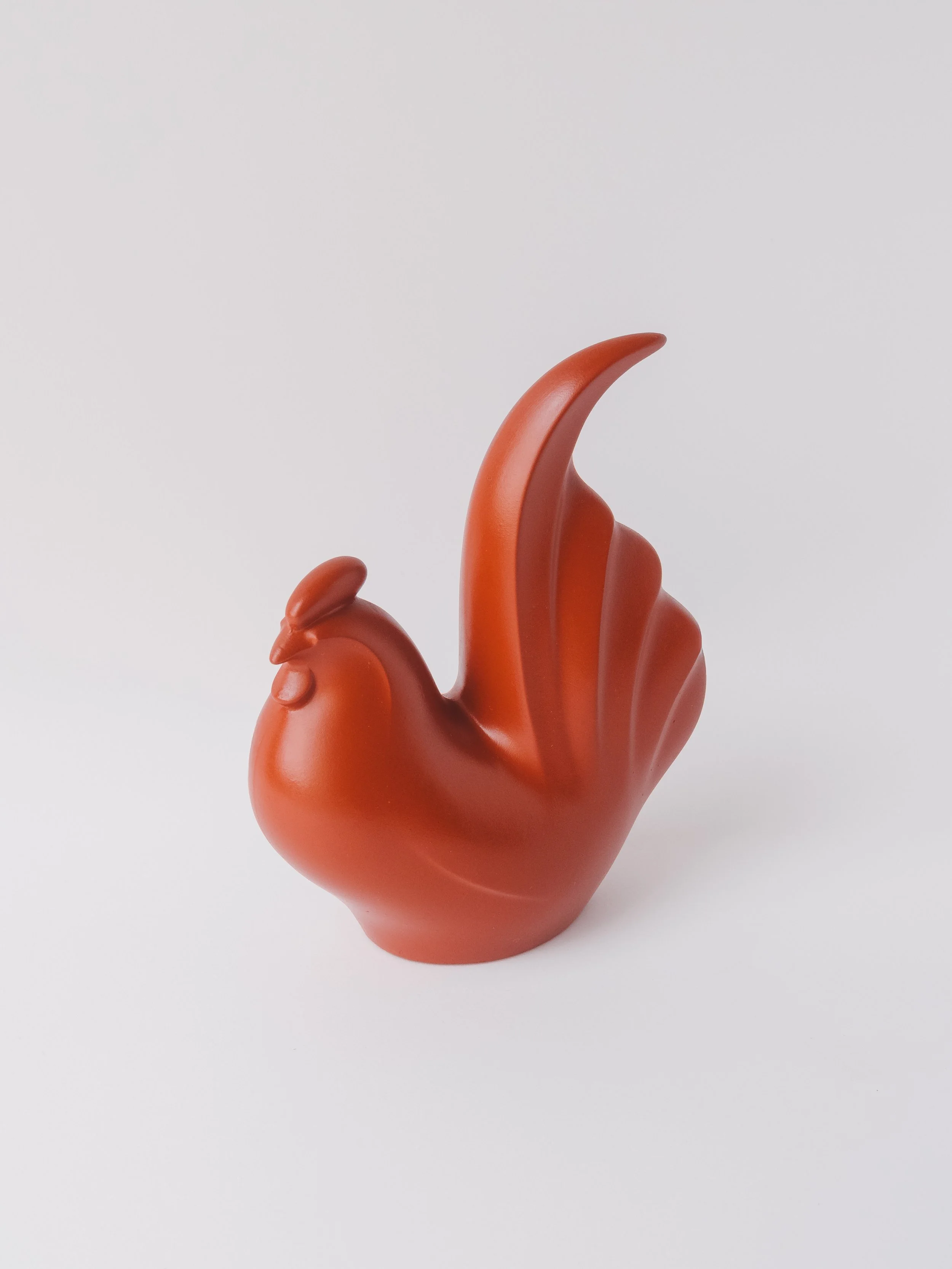 Image 1 of 14
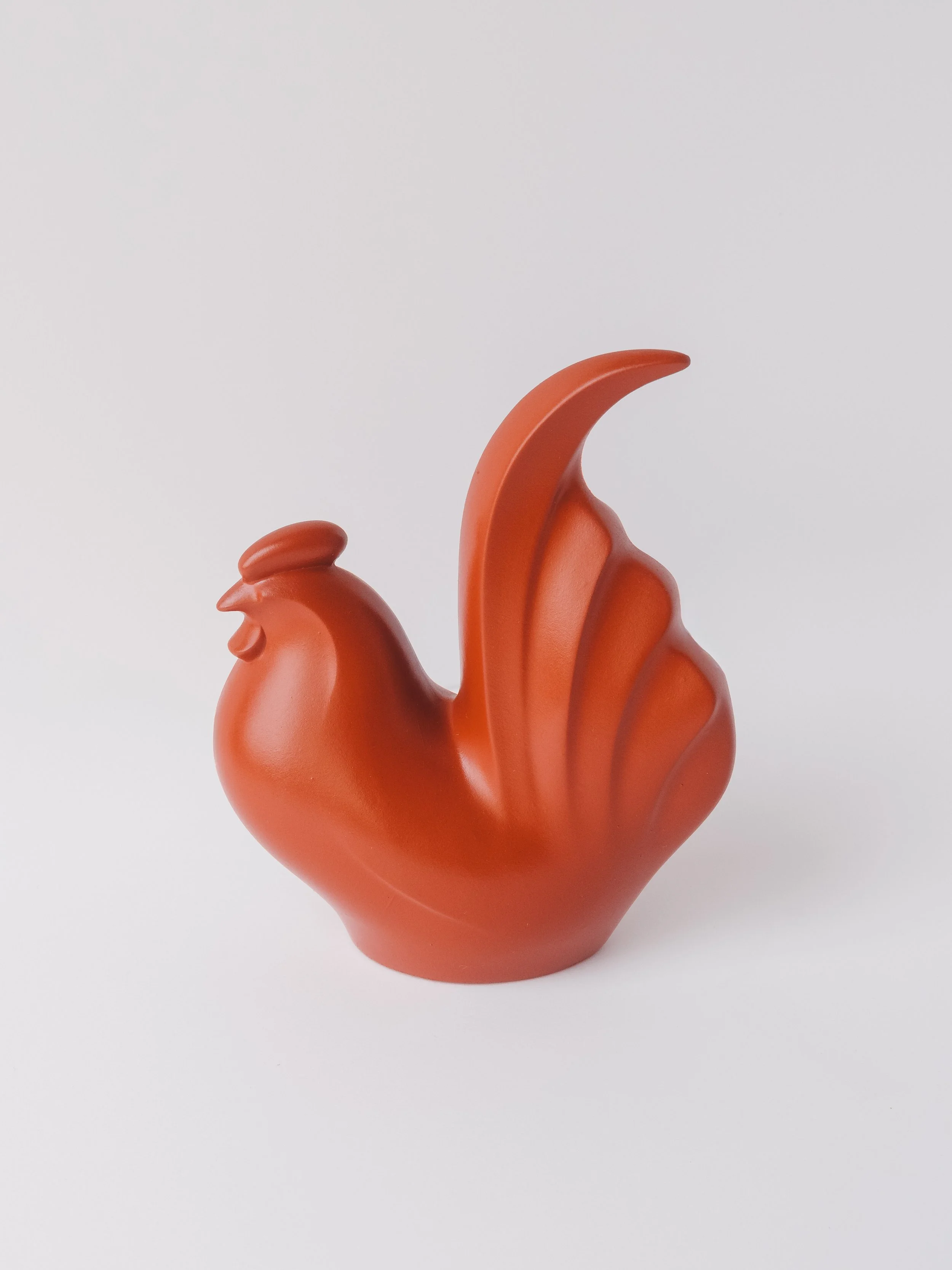 Image 2 of 14
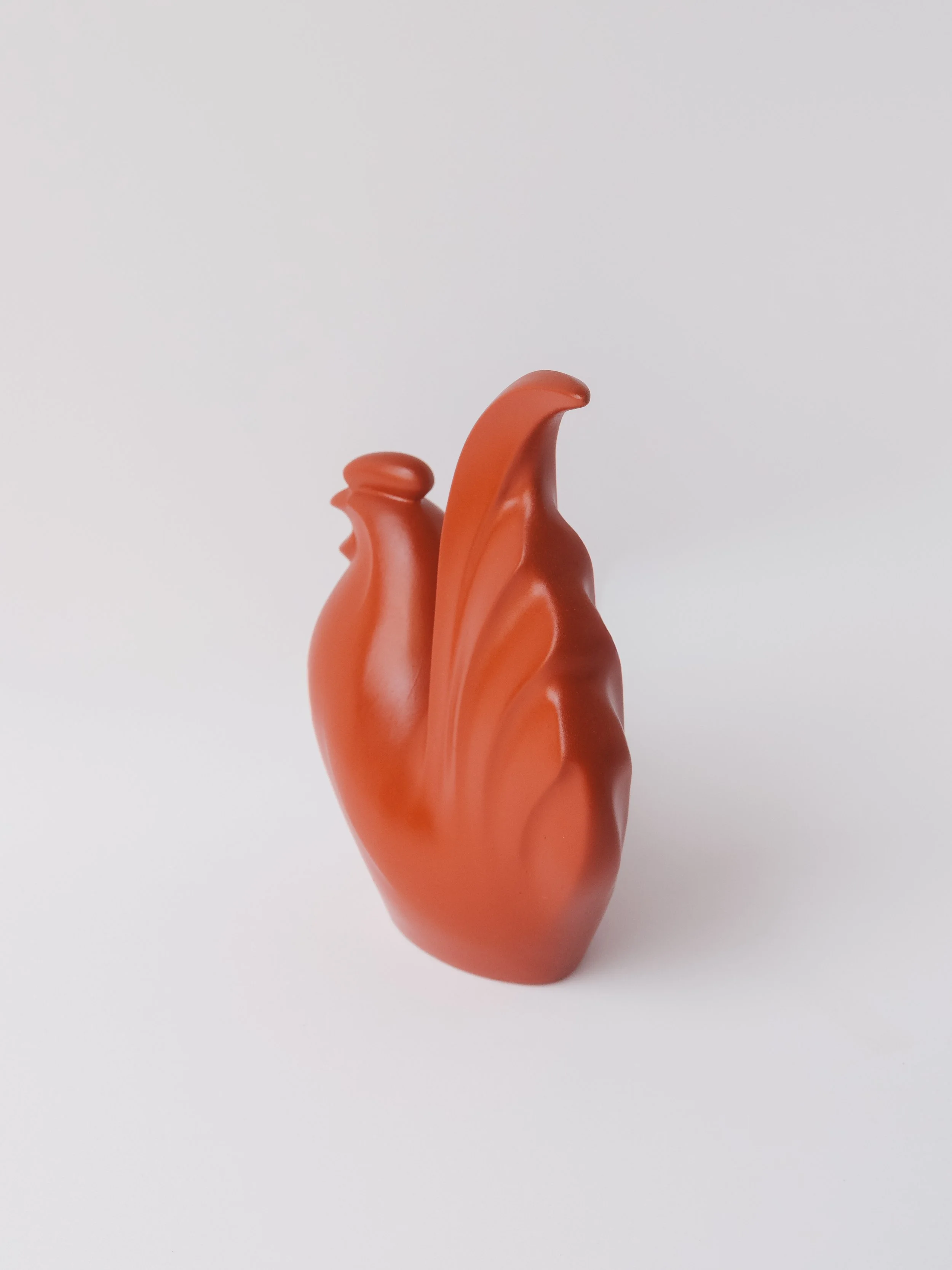 Image 3 of 14
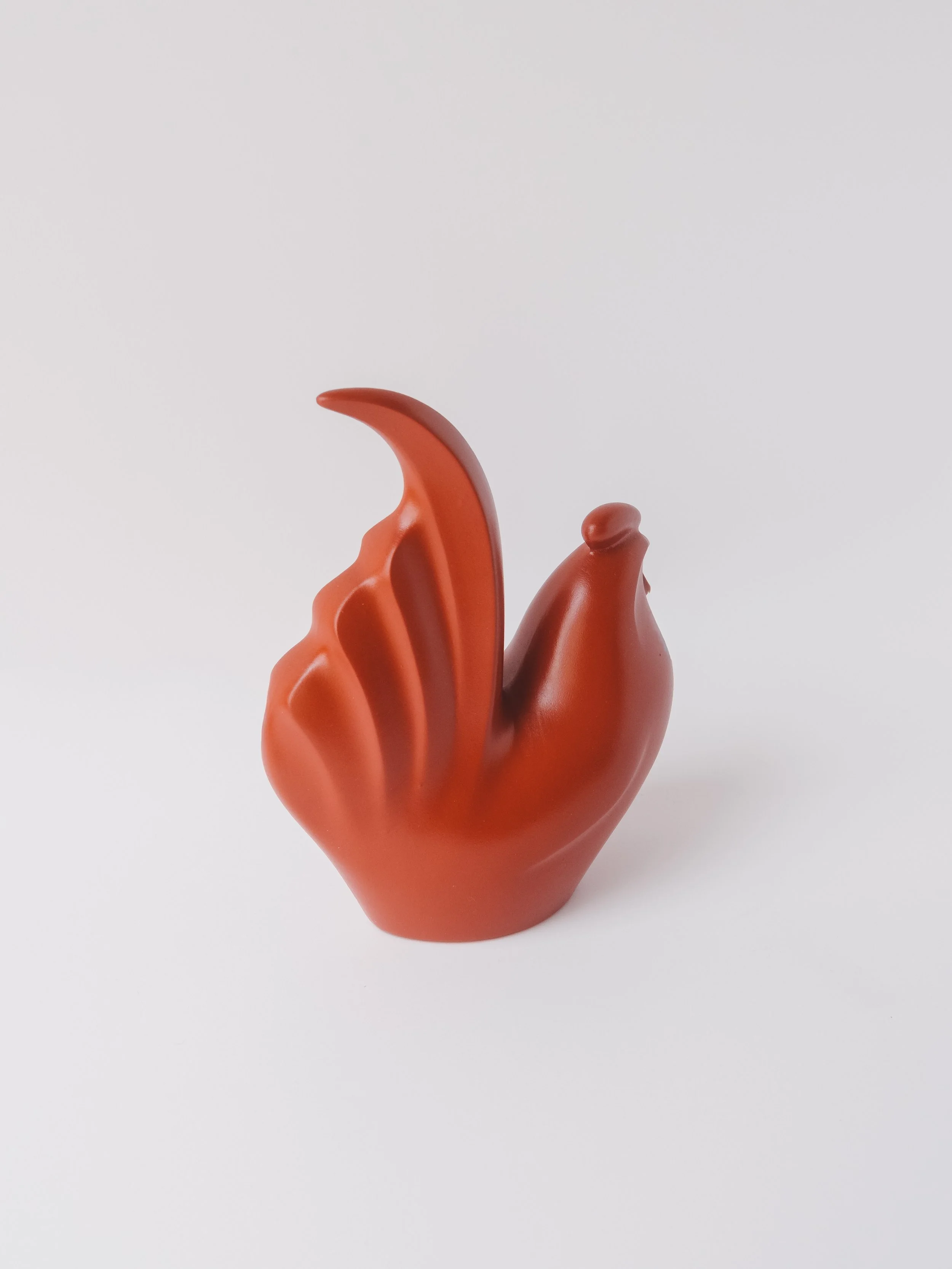 Image 4 of 14
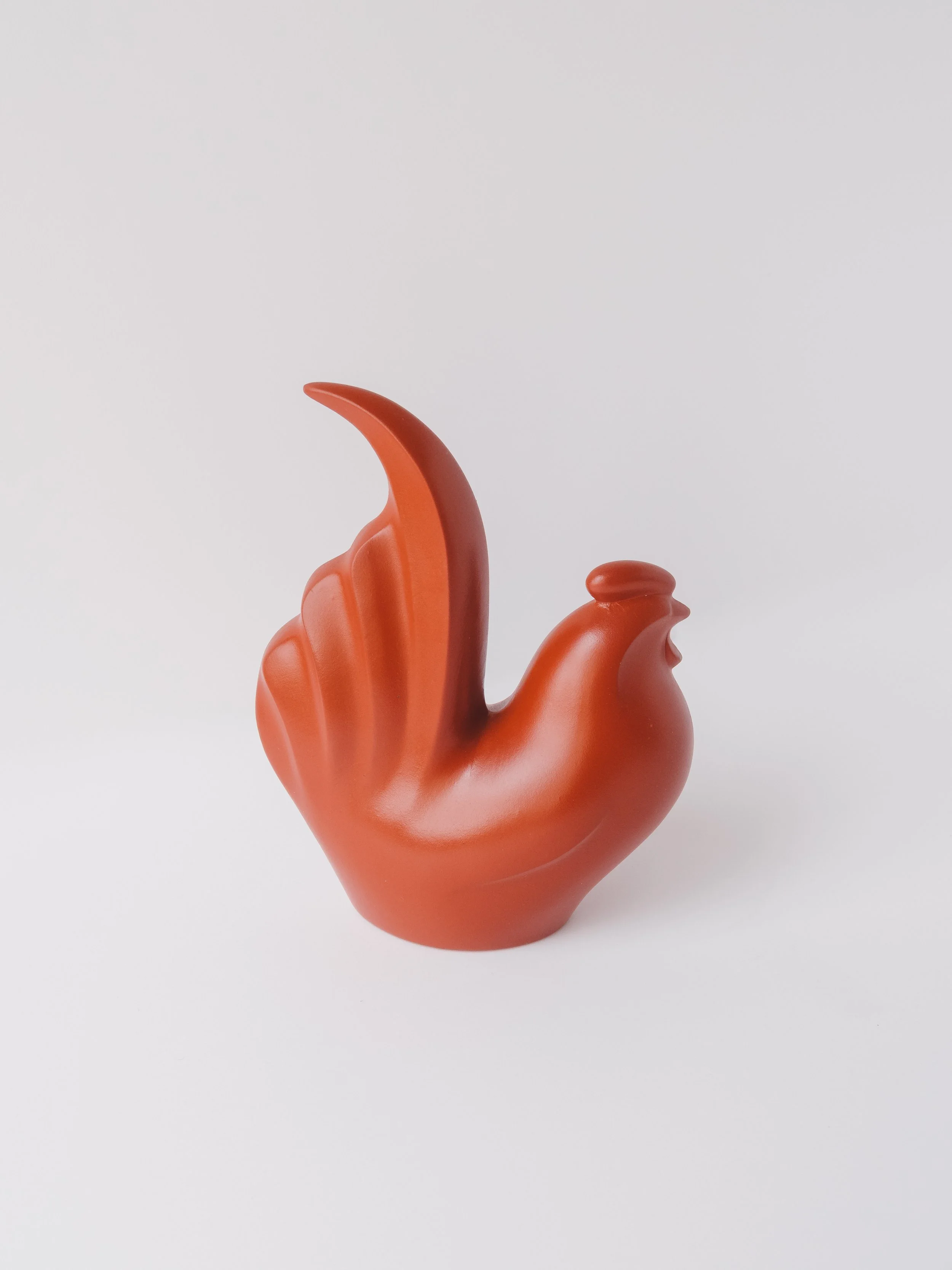 Image 5 of 14
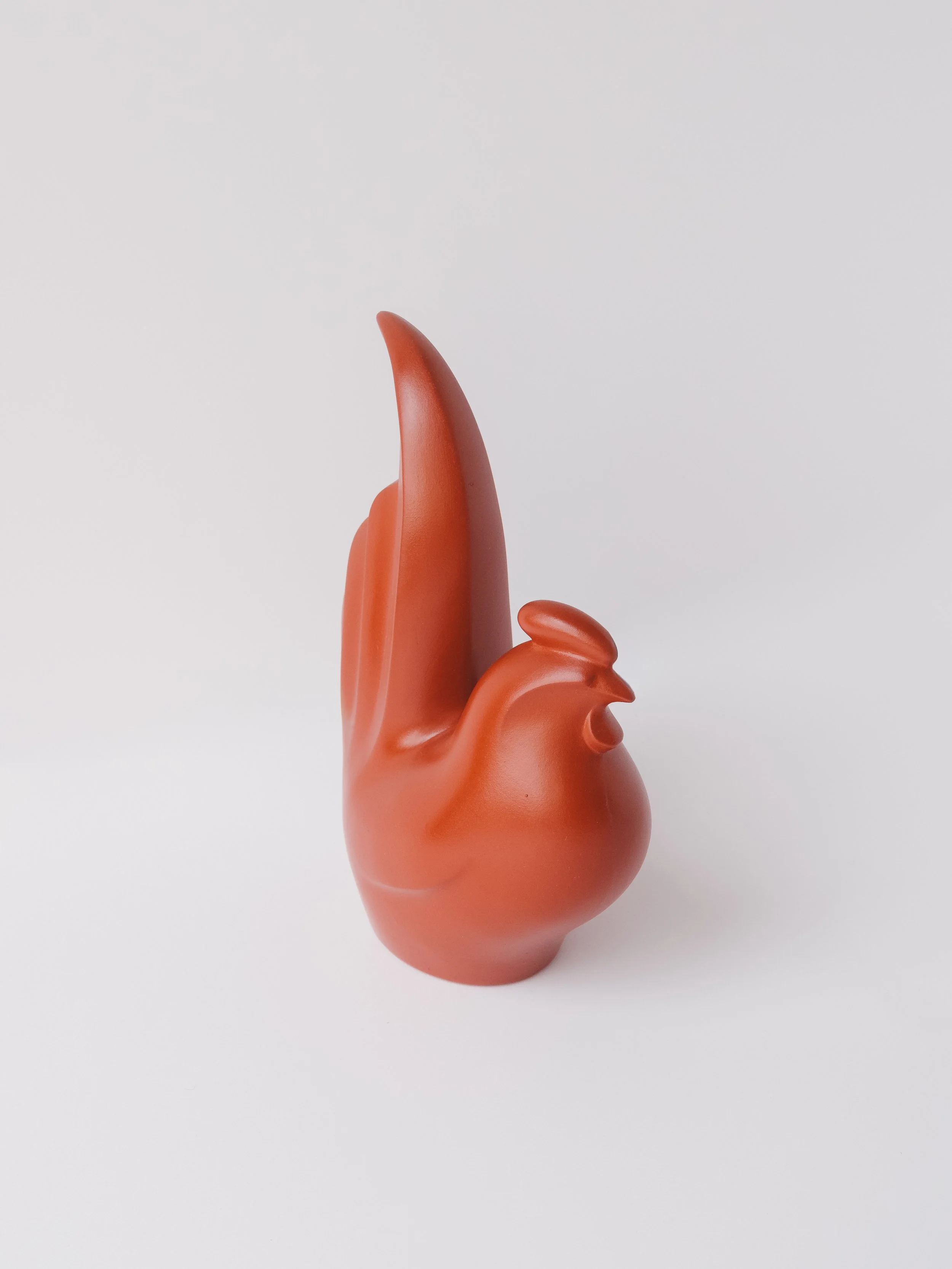 Image 6 of 14
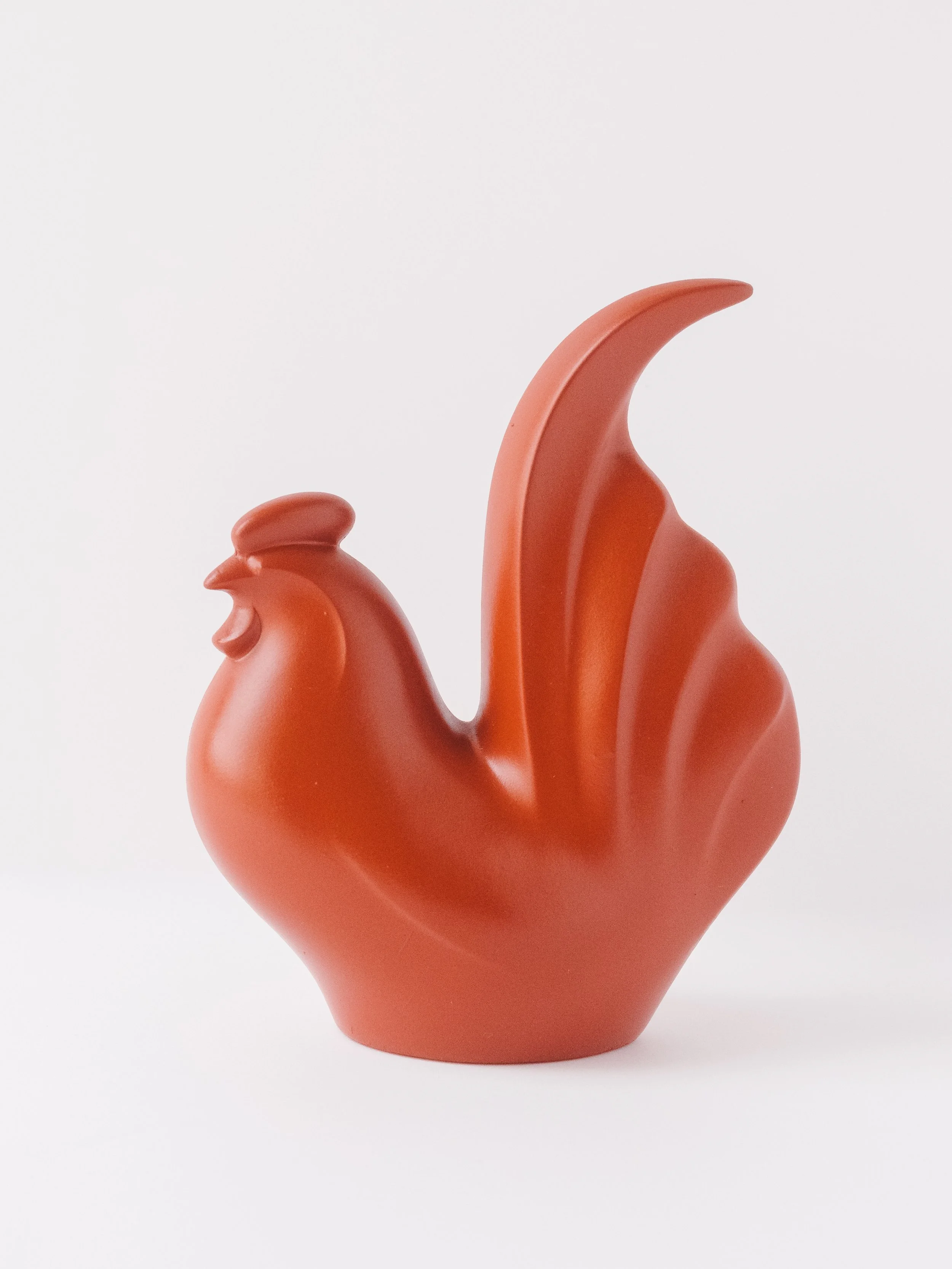 Image 7 of 14
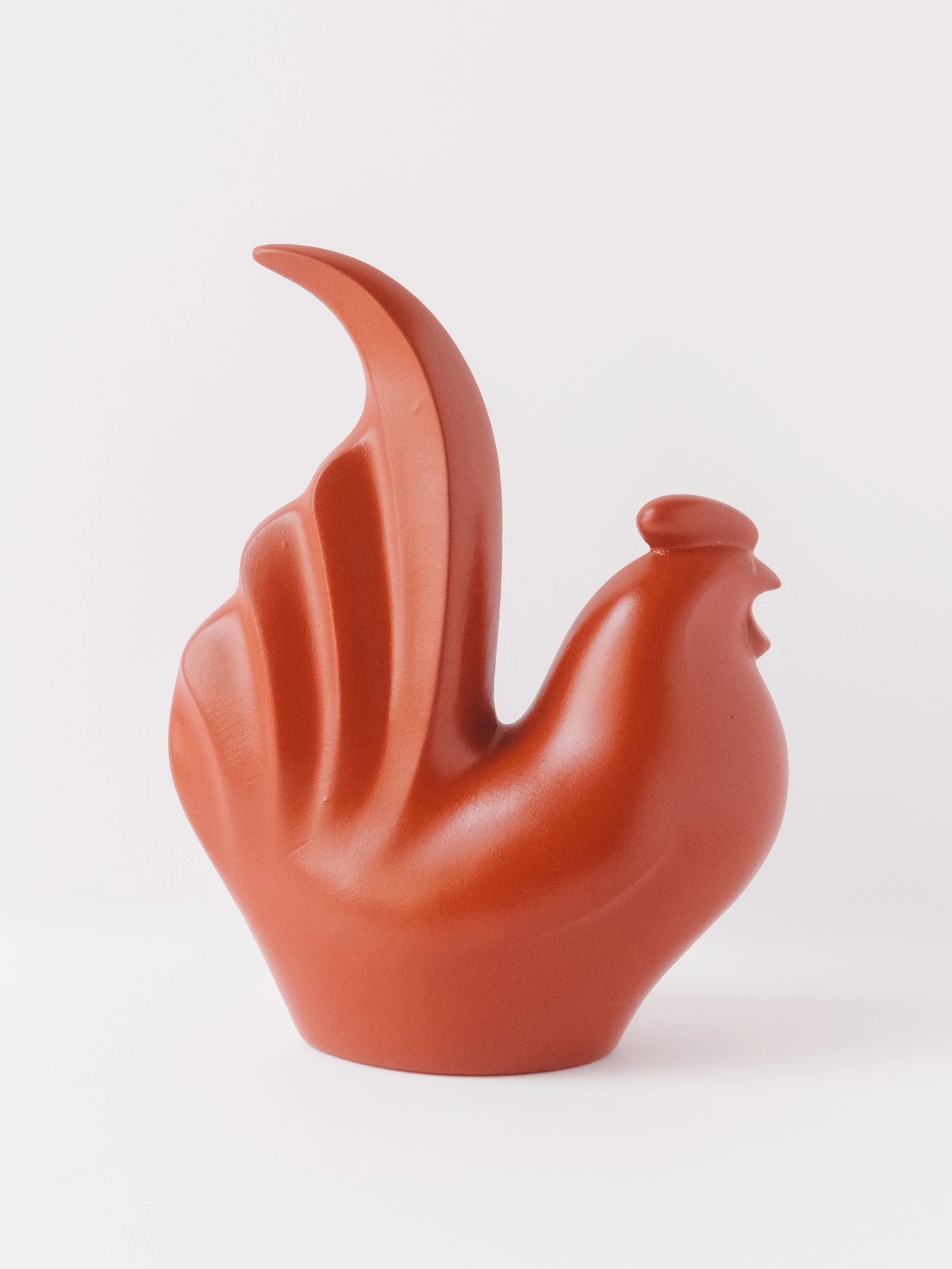 Image 8 of 14
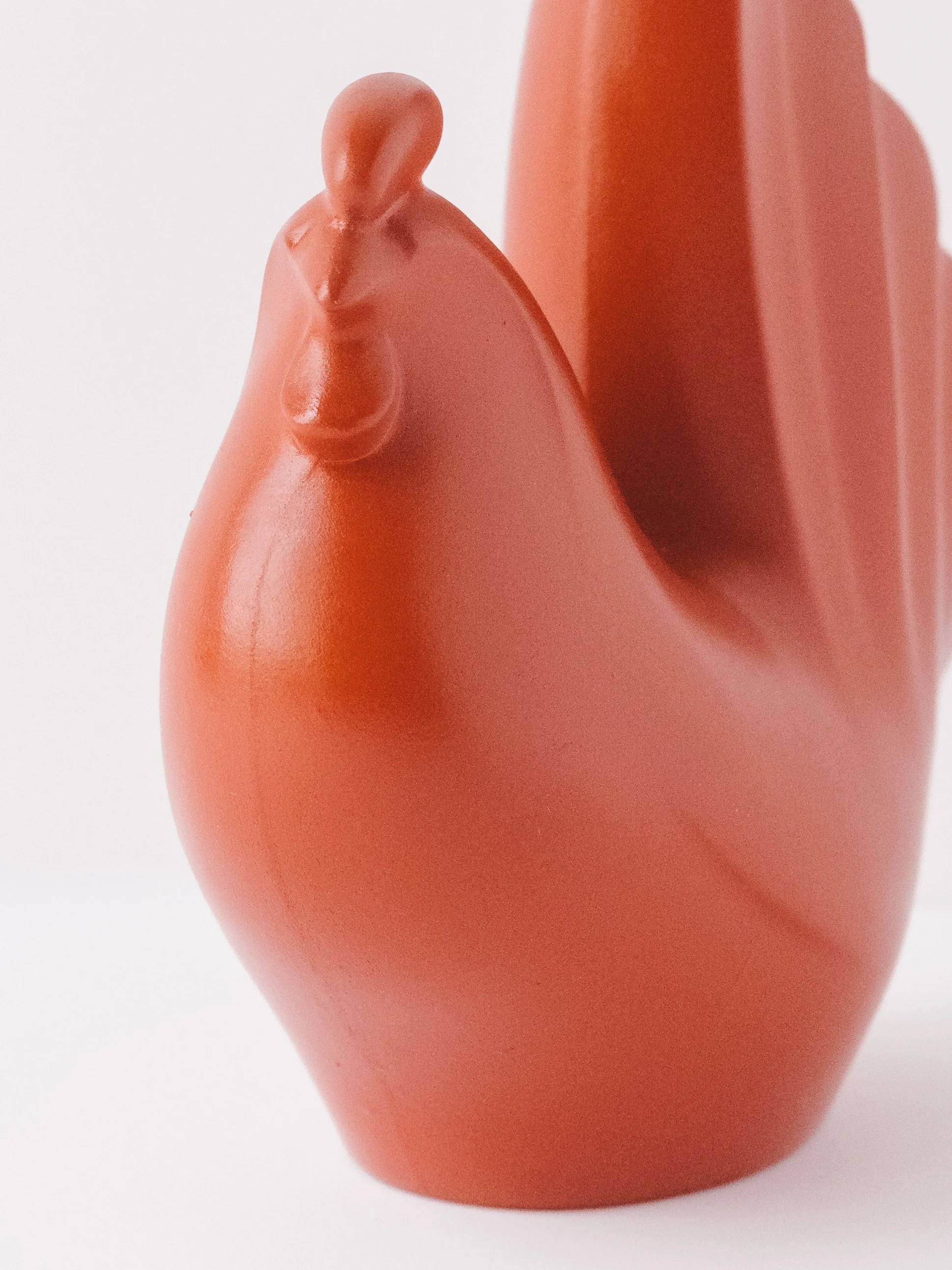 Image 9 of 14
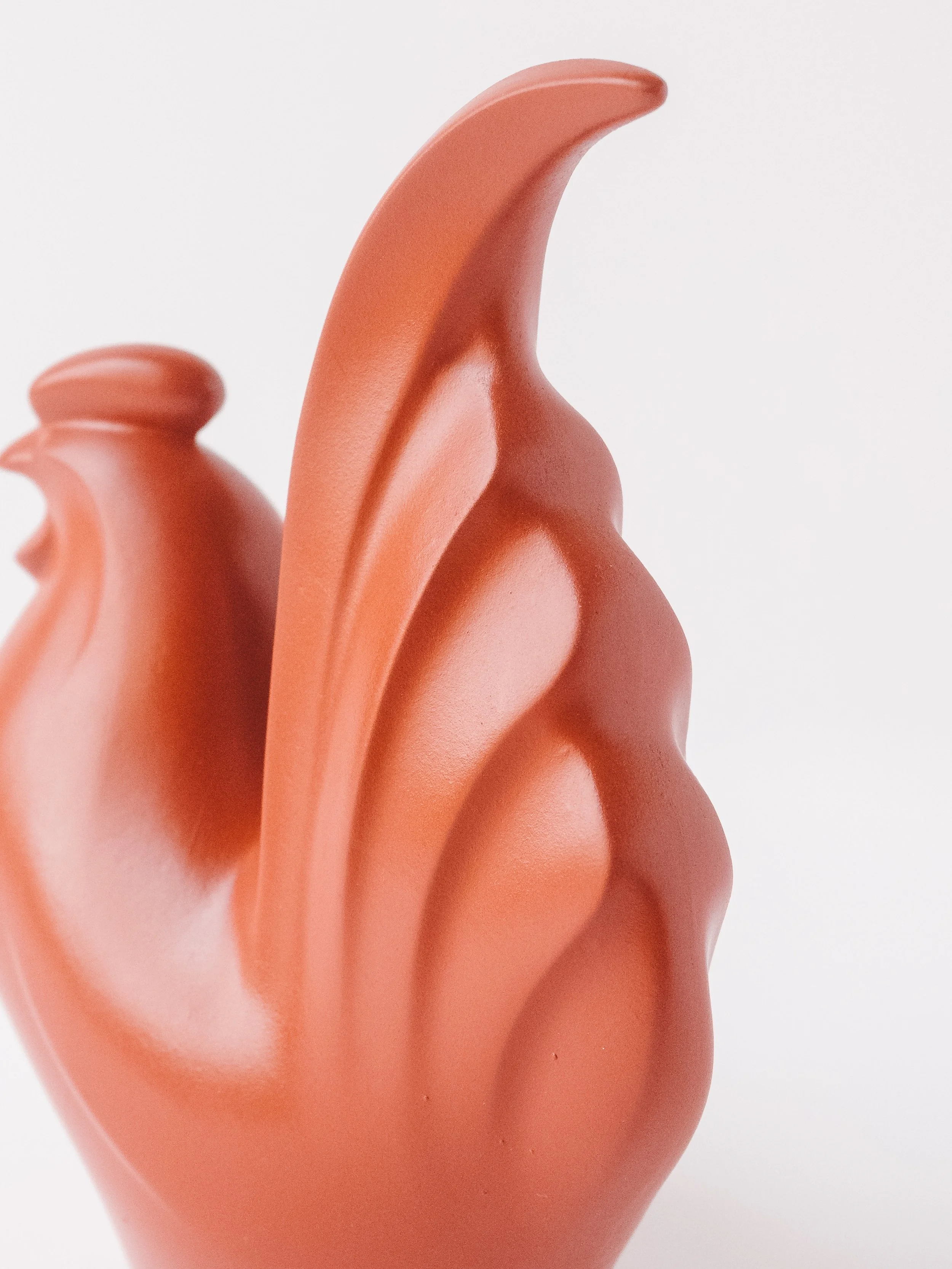 Image 10 of 14
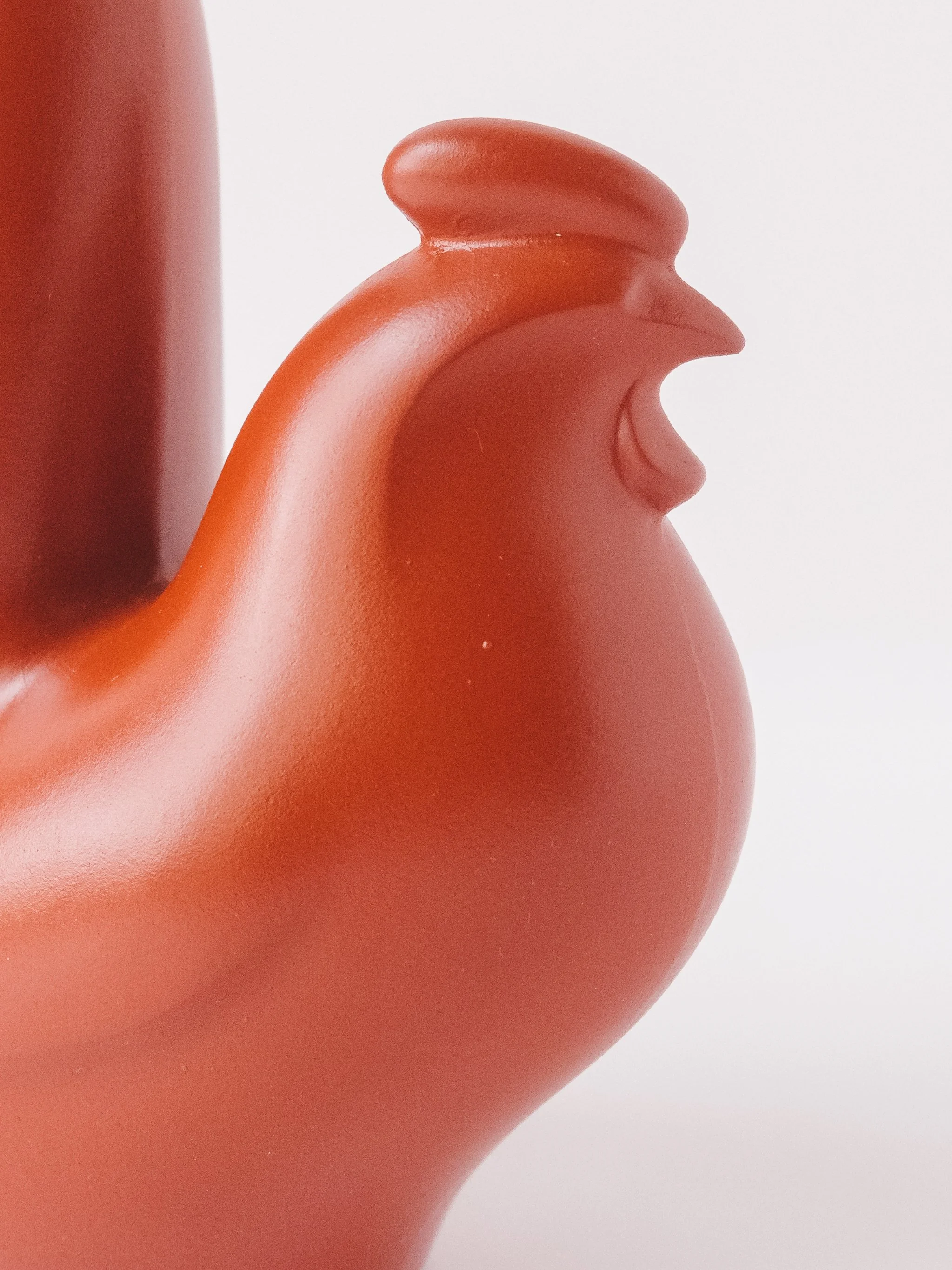 Image 11 of 14
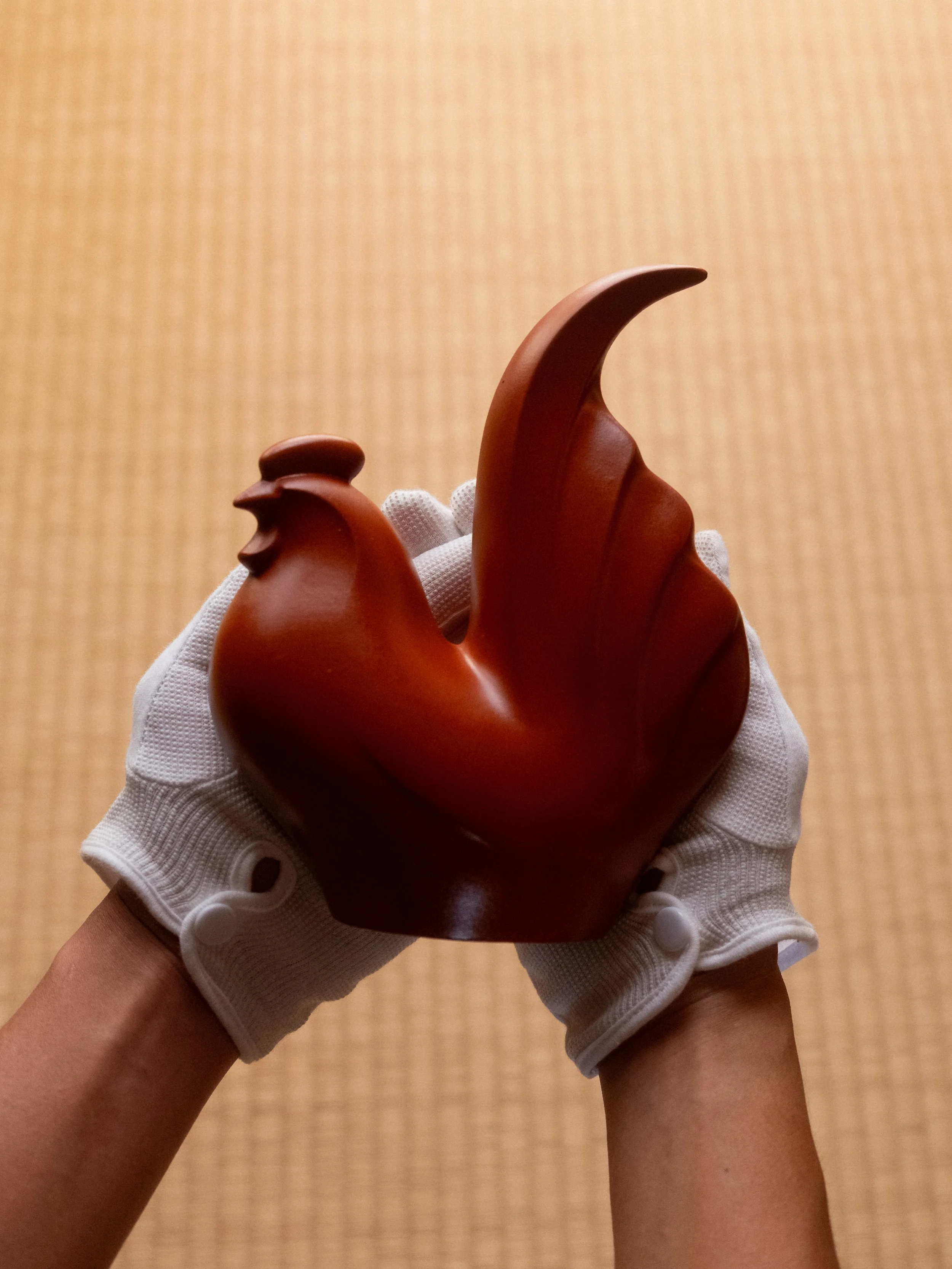 Image 12 of 14
 Image 13 of 14
 Image 14 of 14