【 The Concept 】
A tiger that has traded its color for its shape. No orange. No black. No white. The entire animal is submerged in a single layer of pale blue-green celadon glaze — the color of shallow seawater over white sand, or jade held up to a window. The stripes are still there, but they are not painted. They are carved into the clay before glazing, and when the glaze settles into these grooves during firing, it pools thicker and darker, producing a tonal shift that reads as pattern only when the light is right. From one angle, the tiger is striped. From another, it is a single unbroken surface of translucent green.
The posture is a slow walk. Not a pounce, not a crouch, not a roar. Four legs planted, head forward, tail curving along the right hip and tucking against the haunch. This is a tiger on patrol — moving through its territory at a pace that says it has no predators and no urgency. The form is rounded everywhere: ears half-circles, legs tapered cylinders, spine a continuous arc from skull to tail. Nothing protrudes. Nothing could break off. The entire body reads as a single mass of glazed ceramic, sealed and smooth, with no seam between the animal and the color that covers it.
【 The Function 】
142 grams, 14 centimeters long, 8 centimeters tall. Light for ceramic, low to the surface, and stable on four short legs. In its original context, figures like this were placed in households as zodiac guardians — each year in the twelve-year cycle has an assigned animal, and the tiger stands guard for those born under its sign. The tradition holds that the figure should face the entrance of the room, watching outward, intercepting whatever comes through the door before it reaches the interior. In a modern context, it is the calmest object on any shelf: cool to the touch, quiet in color, and too smooth to collect dust in its details.
【 The Texture 】
Celadon is not a pigment. It is a chemical event. The glaze contains iron oxide, and when fired in an oxygen-starved kiln, the iron sheds its oxygen atoms and dissolves into the molten glass layer, producing a blue-green that no surface paint can replicate. The result is a color that appears to exist inside the glaze rather than on top of it — translucent, luminous, and subtly different at every point on the body depending on thickness. Where the glaze runs thin over the ridge of the spine or the tips of the ears, it pales almost to white. Where it pools in the carved stripes and the hollows of the face, it deepens to a saturated teal. The surface is glass-smooth and carries a high wet sheen that reflects the room in soft focus. Across the entire body, a fine network of hairline cracks — called crazing — spreads like frost on a window. These are not damage. They form during cooling, when the glaze contracts faster than the clay beneath it, and they are deliberately engineered into the formula. They fracture the light passing through the glaze into thousands of tiny facets, giving the surface a depth that a perfectly smooth glaze could never achieve.
【 Presence 】
Every other animal in MINGEI 1926's archive announces itself through material contrast: dark wood against light shelf, matte iron against polished desk, gold metal against plain wall. This tiger does the opposite. It absorbs into its surroundings. The pale celadon picks up whatever color is near it — warmer under incandescent light, cooler near a window, almost grey at dusk. It does not compete with the room. It adjusts. And yet it is unmistakably present, because nothing else on the shelf is that particular shade of not-quite-blue, not-quite-green, not-quite-white. The stripes appear and disappear as you move past it, and the crazing catches the light in a way that makes the surface shimmer without ever becoming shiny. It is a guardian that patrols in silence, wearing the color of water.
Sourced from a private collection in the Kansai region, Japan.
【 The Concept 】
A tiger that has traded its color for its shape. No orange. No black. No white. The entire animal is submerged in a single layer of pale blue-green celadon glaze — the color of shallow seawater over white sand, or jade held up to a window. The stripes are still there, but they are not painted. They are carved into the clay before glazing, and when the glaze settles into these grooves during firing, it pools thicker and darker, producing a tonal shift that reads as pattern only when the light is right. From one angle, the tiger is striped. From another, it is a single unbroken surface of translucent green.
The posture is a slow walk. Not a pounce, not a crouch, not a roar. Four legs planted, head forward, tail curving along the right hip and tucking against the haunch. This is a tiger on patrol — moving through its territory at a pace that says it has no predators and no urgency. The form is rounded everywhere: ears half-circles, legs tapered cylinders, spine a continuous arc from skull to tail. Nothing protrudes. Nothing could break off. The entire body reads as a single mass of glazed ceramic, sealed and smooth, with no seam between the animal and the color that covers it.
【 The Function 】
142 grams, 14 centimeters long, 8 centimeters tall. Light for ceramic, low to the surface, and stable on four short legs. In its original context, figures like this were placed in households as zodiac guardians — each year in the twelve-year cycle has an assigned animal, and the tiger stands guard for those born under its sign. The tradition holds that the figure should face the entrance of the room, watching outward, intercepting whatever comes through the door before it reaches the interior. In a modern context, it is the calmest object on any shelf: cool to the touch, quiet in color, and too smooth to collect dust in its details.
【 The Texture 】
Celadon is not a pigment. It is a chemical event. The glaze contains iron oxide, and when fired in an oxygen-starved kiln, the iron sheds its oxygen atoms and dissolves into the molten glass layer, producing a blue-green that no surface paint can replicate. The result is a color that appears to exist inside the glaze rather than on top of it — translucent, luminous, and subtly different at every point on the body depending on thickness. Where the glaze runs thin over the ridge of the spine or the tips of the ears, it pales almost to white. Where it pools in the carved stripes and the hollows of the face, it deepens to a saturated teal. The surface is glass-smooth and carries a high wet sheen that reflects the room in soft focus. Across the entire body, a fine network of hairline cracks — called crazing — spreads like frost on a window. These are not damage. They form during cooling, when the glaze contracts faster than the clay beneath it, and they are deliberately engineered into the formula. They fracture the light passing through the glaze into thousands of tiny facets, giving the surface a depth that a perfectly smooth glaze could never achieve.
【 Presence 】
Every other animal in MINGEI 1926's archive announces itself through material contrast: dark wood against light shelf, matte iron against polished desk, gold metal against plain wall. This tiger does the opposite. It absorbs into its surroundings. The pale celadon picks up whatever color is near it — warmer under incandescent light, cooler near a window, almost grey at dusk. It does not compete with the room. It adjusts. And yet it is unmistakably present, because nothing else on the shelf is that particular shade of not-quite-blue, not-quite-green, not-quite-white. The stripes appear and disappear as you move past it, and the crazing catches the light in a way that makes the surface shimmer without ever becoming shiny. It is a guardian that patrols in silence, wearing the color of water.
Sourced from a private collection in the Kansai region, Japan.


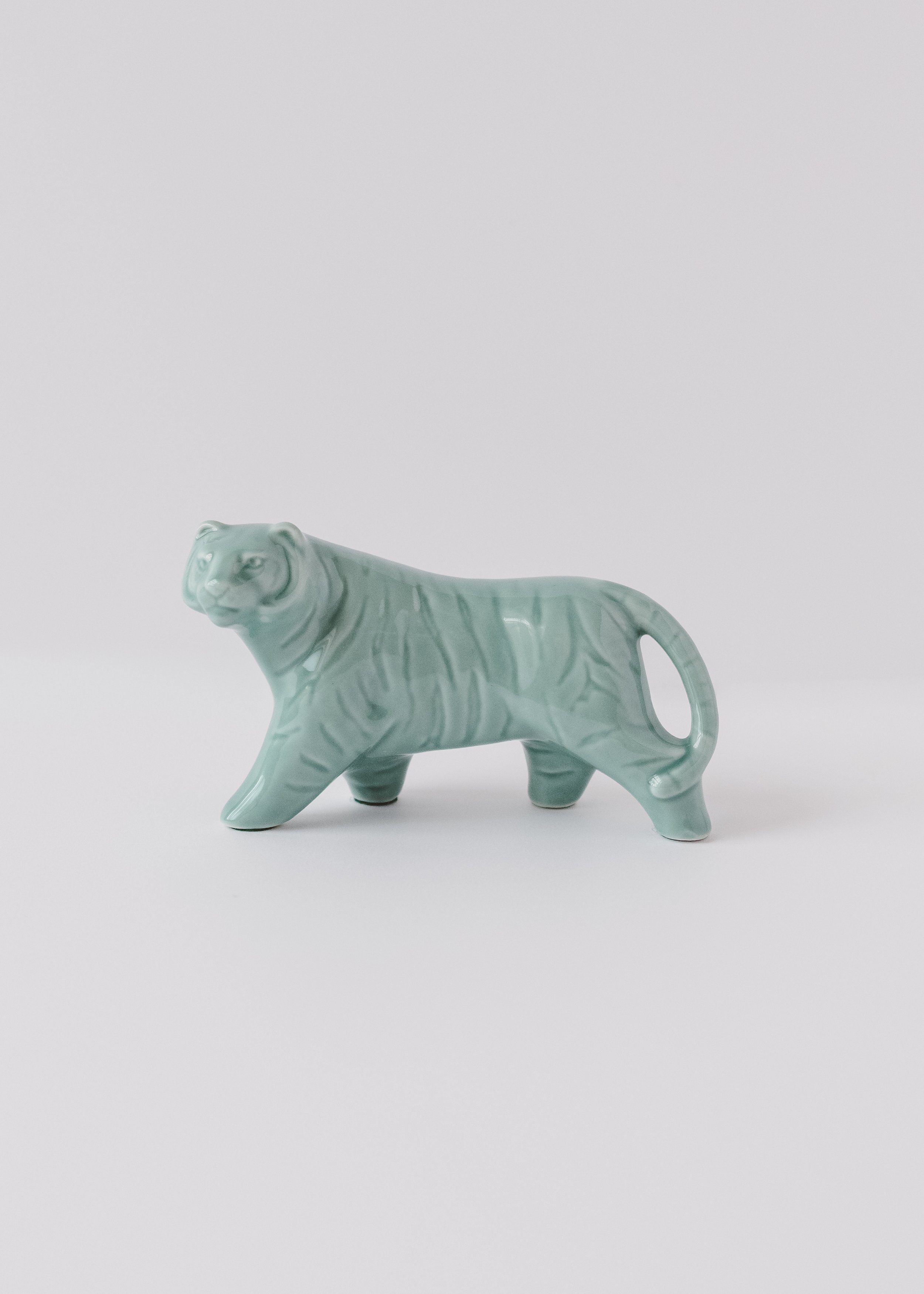 Image 1 of 8
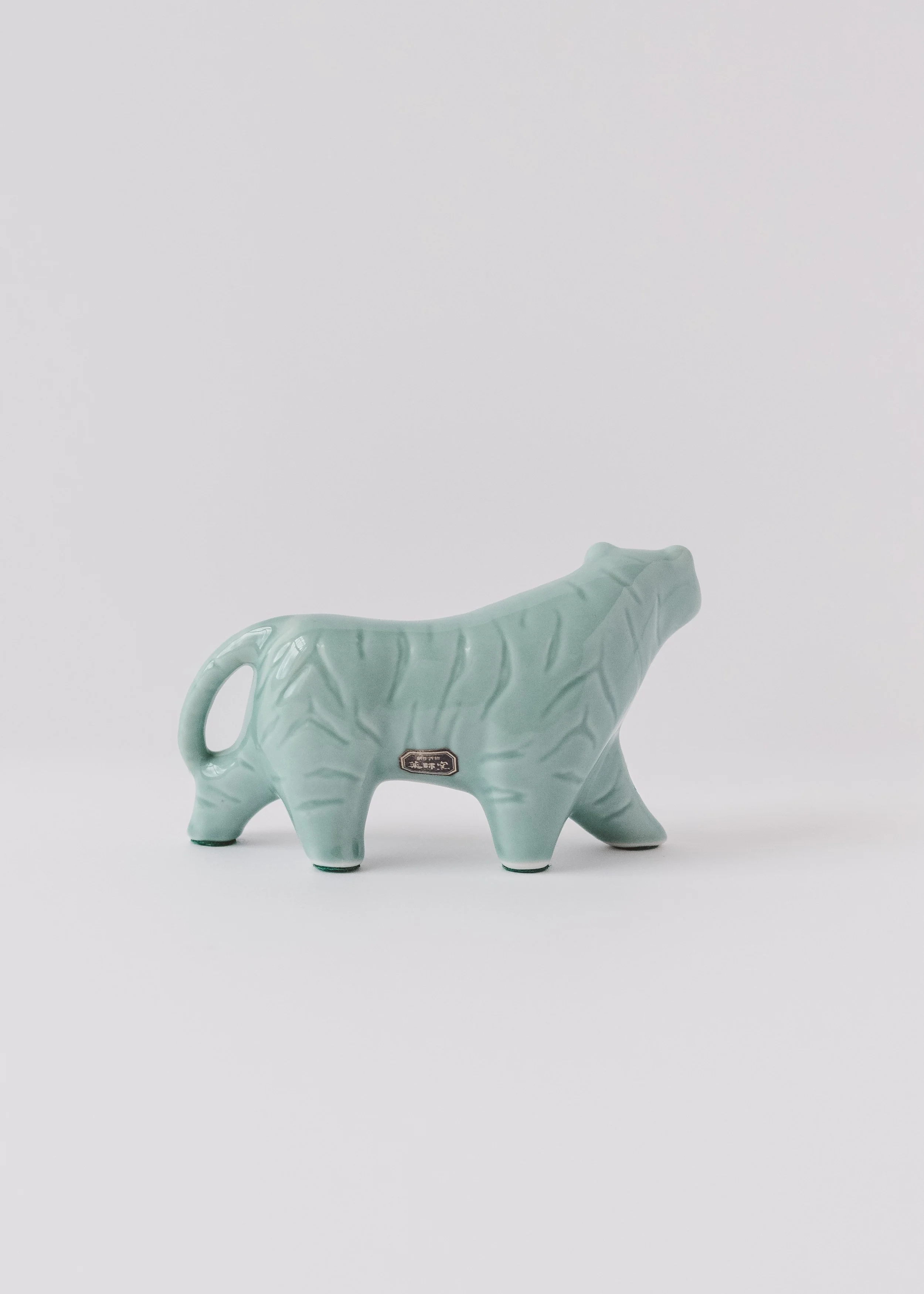 Image 2 of 8
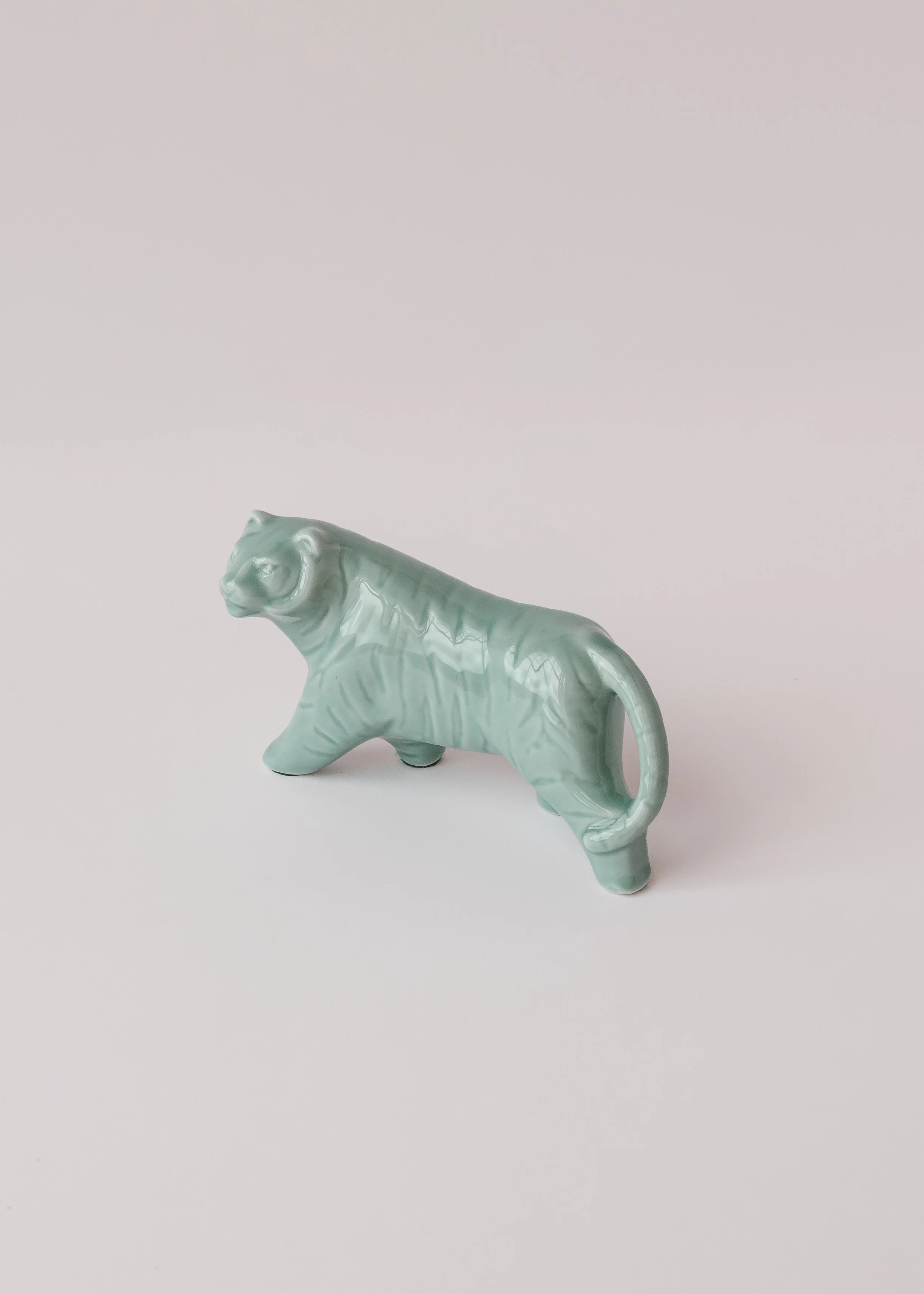 Image 3 of 8
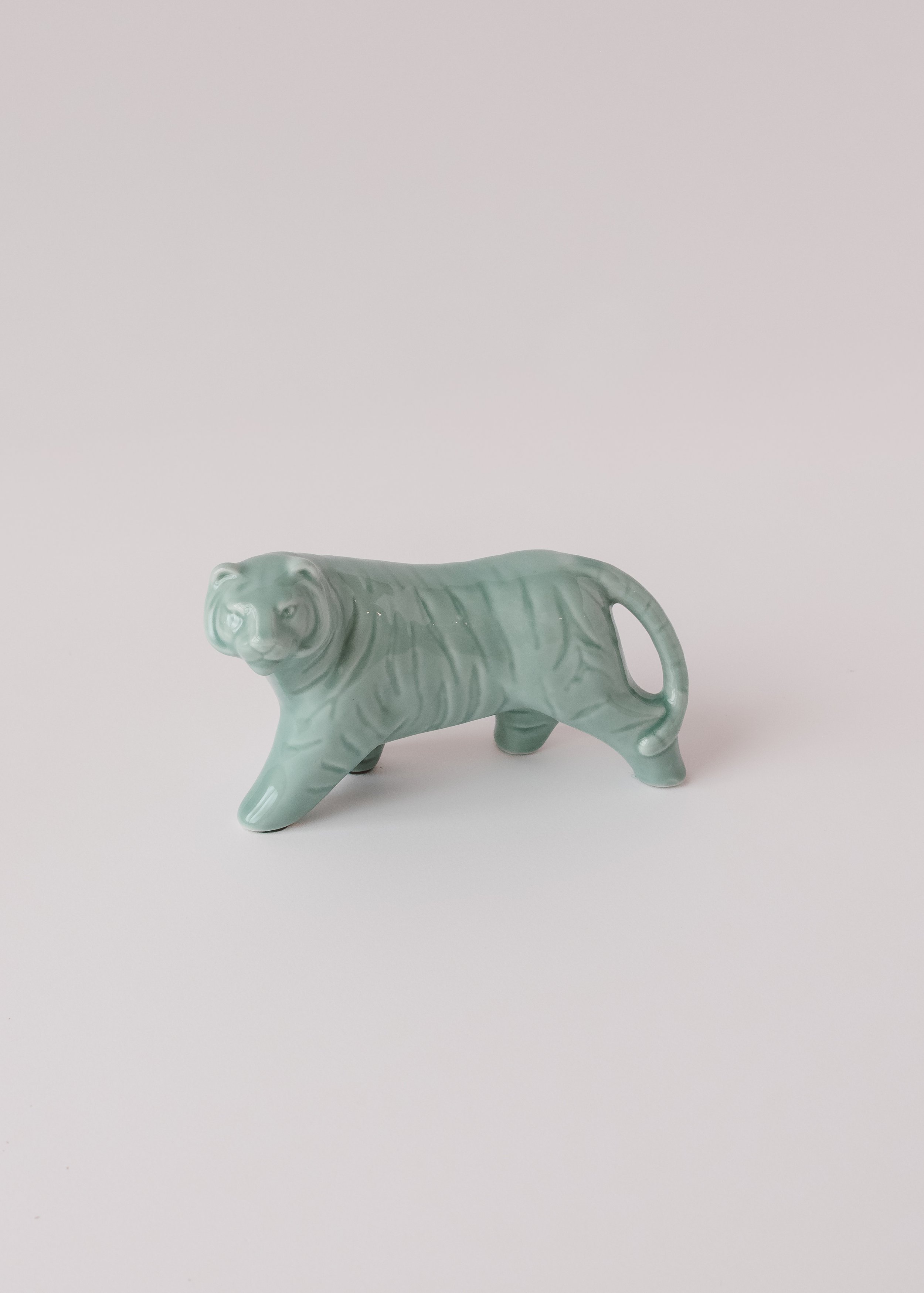 Image 4 of 8
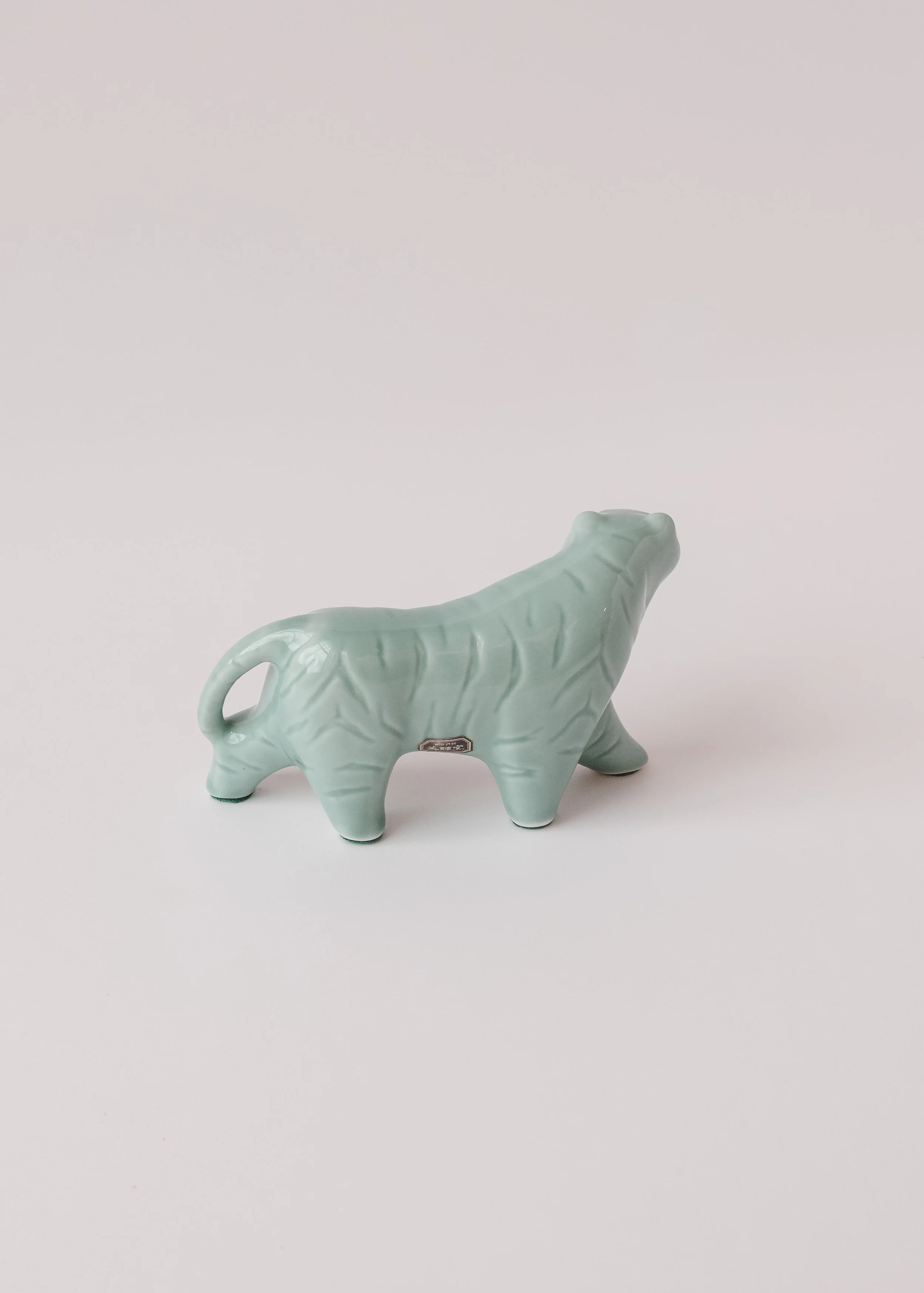 Image 5 of 8
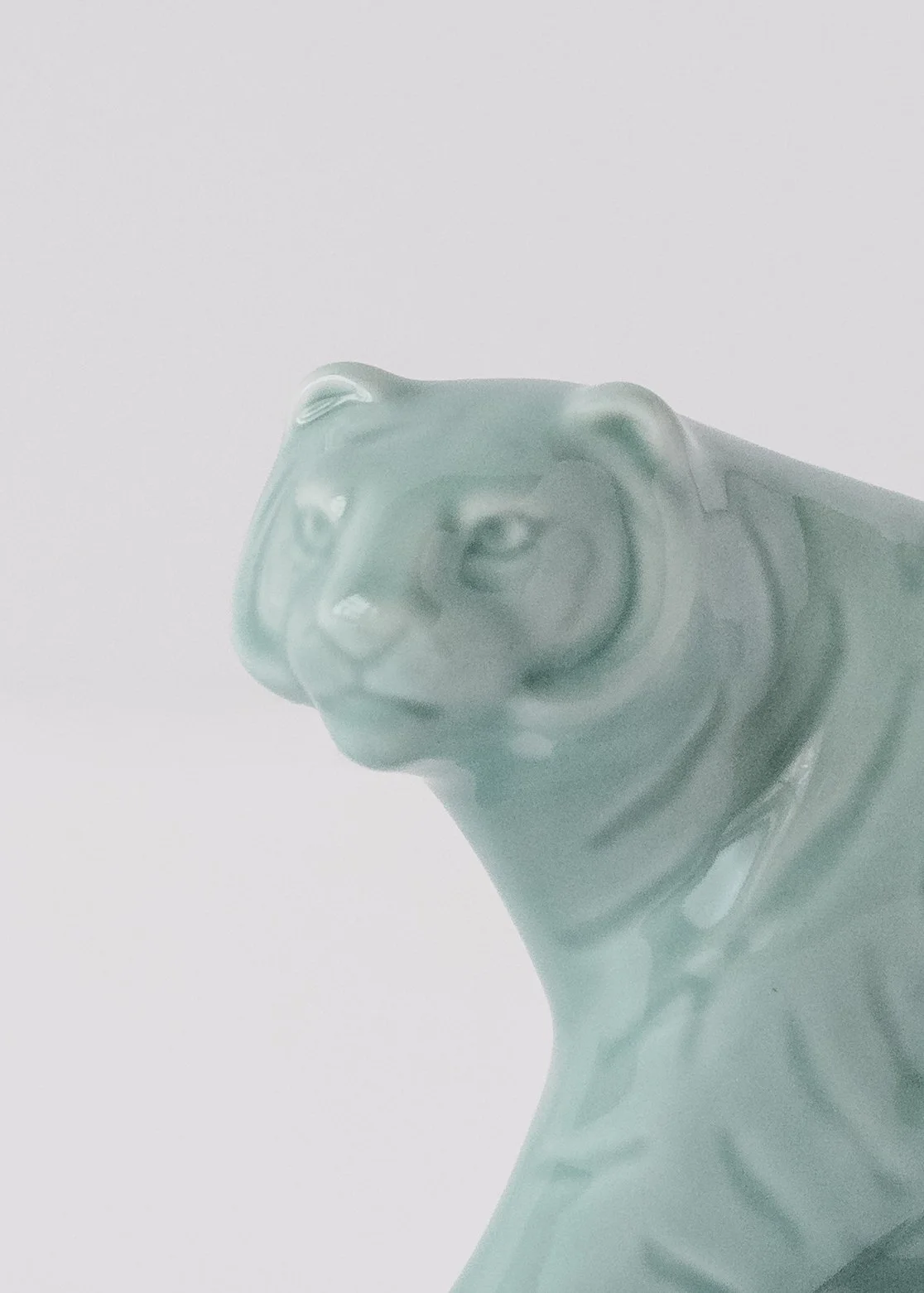 Image 6 of 8
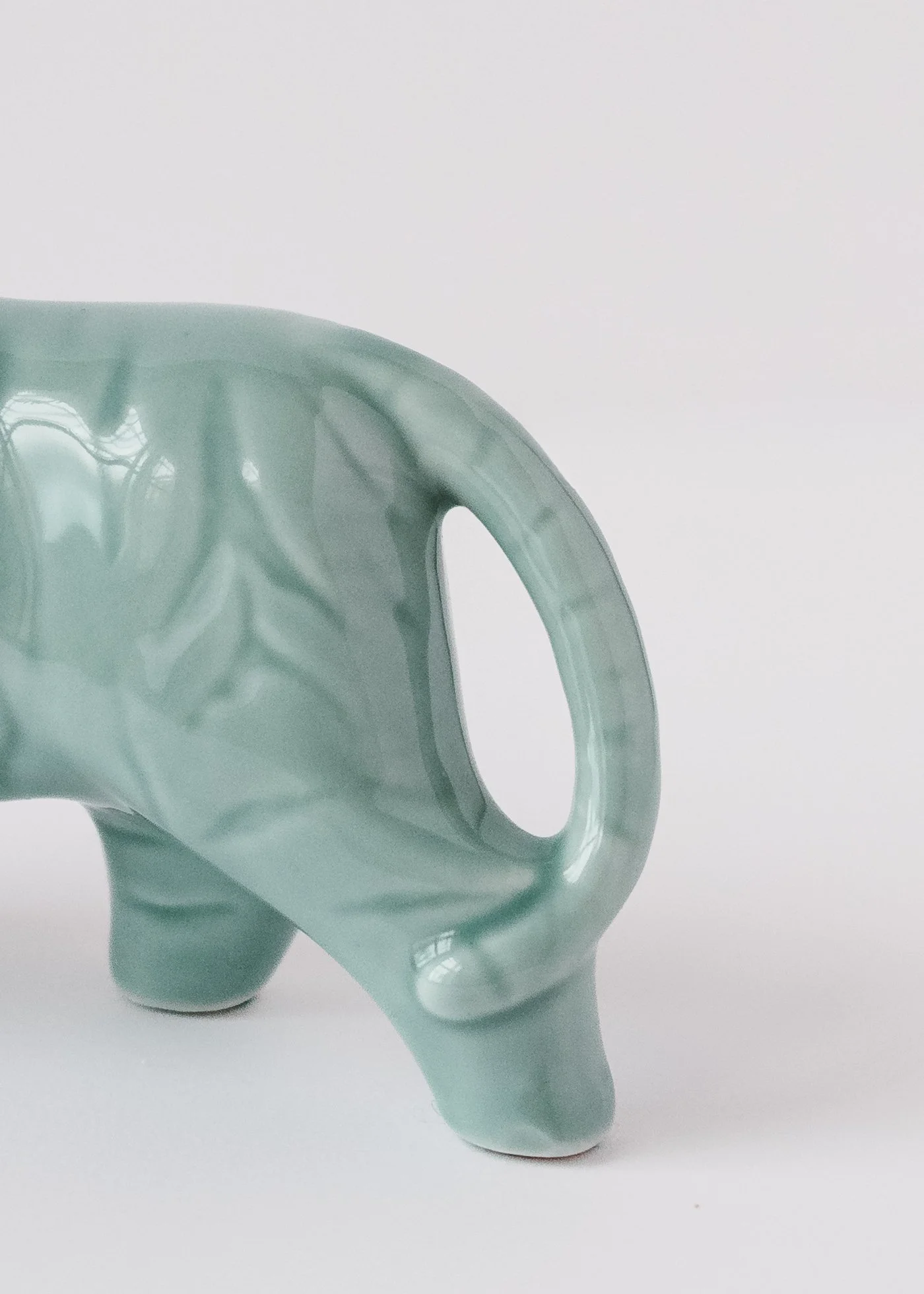 Image 7 of 8
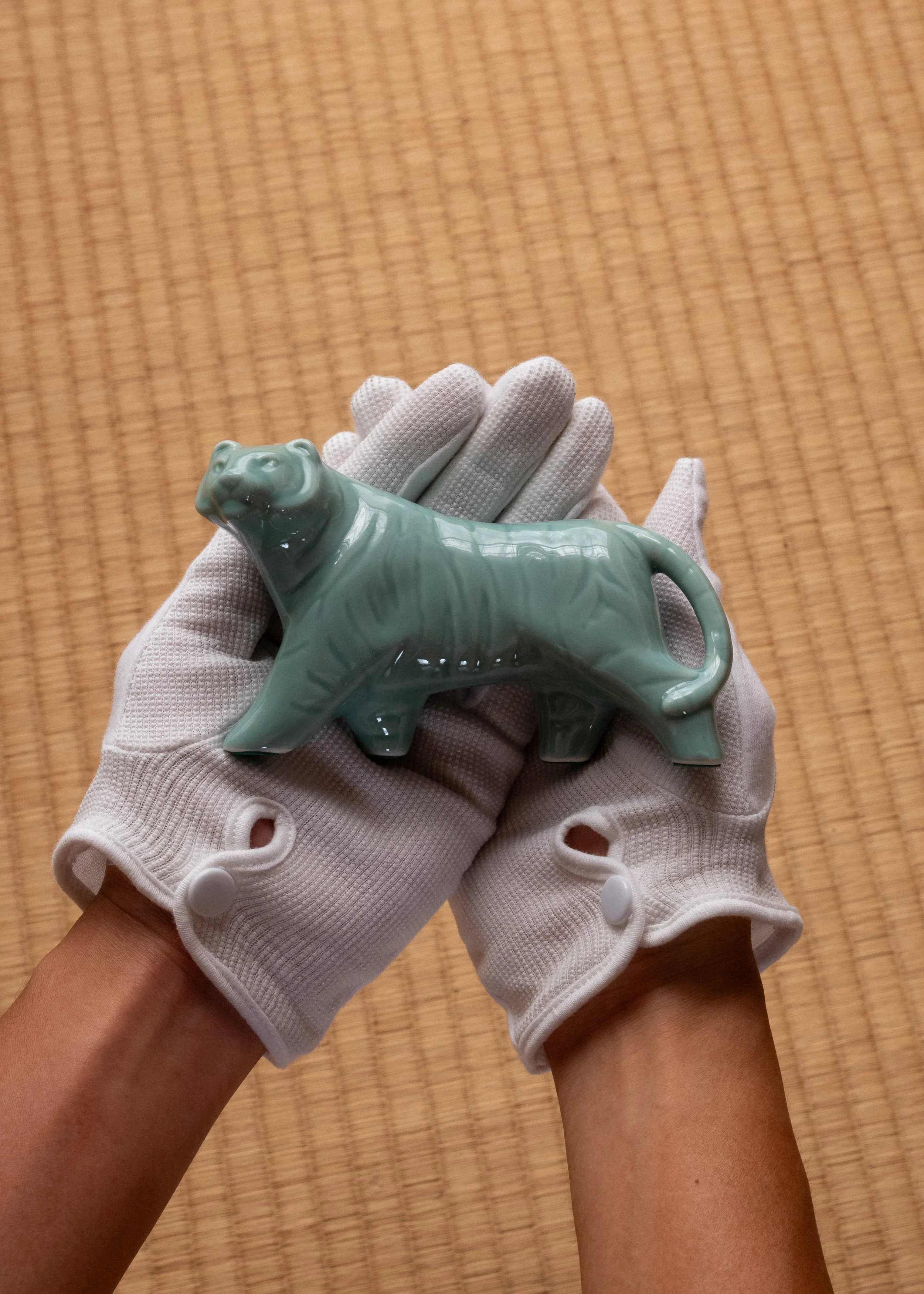 Image 8 of 8