【 The Concept 】
A bull at the last moment before contact. Head lowered to the level of its own hooves, horns thrust forward, the entire mass of the body compressed into a wedge aimed at something just beyond the edge of the base. This is not an animal at rest. It is not grazing, not standing, not posing. It is the split second before collision — frozen in hardwood and sealed under a deep amber varnish that has been darkening for decades.
The figure is carved from a single block of wood. Horns, legs, tail, and the rough terrain of the base are all continuous with the body — no joins, no inserts, no separate parts glued into place. An anonymous carver stripped the animal of every unnecessary detail: no eyes, no nostrils rendered in full, no individual hairs. What remains is mass, direction, and the enormous muscular hump that rises above the shoulders like a second skull — the hallmark of a breed built for centuries not to pull a plow, but to fight.
【 The Function 】
Over one kilogram of solid wood in a form 24 centimeters long. The weight is the first thing that registers when you pick it up — dense, unexpected, packed tight into a posture that sits barely 6.5 centimeters wide. It sits on a desk or shelf the way a paperweight sits on a stack of loose pages — with authority that comes from density, not height. The posture is entirely horizontal and forward-leaning, which means it occupies shelf space differently from anything vertical. Among books, bottles, and upright objects, it introduces a lateral force — a directional line that pulls the eye toward whatever the horns are pointing at. In financial culture, the charging bull is the universal symbol of a rising market. In any culture, it is the symbol of something that has decided to move and cannot be stopped.
【 The Texture 】
Two surfaces share the same piece of wood. The body is polished smooth — sanded, stained, and sealed under a coat of clear varnish that has aged into a deep reddish-brown with amber undertones. Where light catches the curved planes of the shoulders and haunches, the grain of the wood shows through the finish in long, flowing lines that follow the contour of the muscles as though the tree itself had been planning this shape. The forehead and the base are the opposite: rough, faceted, covered in deliberate tool marks where the chisel bit into the grain and left its signature. This contrast is not accidental. The smooth body is the animal. The rough base is the ground it is about to tear apart. The boundary between the two is where the sculpture begins.
【 Presence 】
It is the only object in MINGEI 1926's archive that is moving. Every other piece sits, stands, floats, or waits. This one charges. The wedge-shaped silhouette, the forward pitch of the weight, and the horns aimed at the viewer create a vector — not a point of stillness but a line of force that crosses the shelf and enters the room. The dark varnished wood absorbs most of the light it receives, but gives back just enough warmth along the ridgeline of the back and the curve of the horns to keep the eye from losing the shape in shadow. It does not need to be large to feel dangerous. At just over a kilogram, it is already heavier than most objects on the shelf. It needs only to be aimed.
Sourced from a private collection in the Kansai region, Japan.
【 The Concept 】
A bull at the last moment before contact. Head lowered to the level of its own hooves, horns thrust forward, the entire mass of the body compressed into a wedge aimed at something just beyond the edge of the base. This is not an animal at rest. It is not grazing, not standing, not posing. It is the split second before collision — frozen in hardwood and sealed under a deep amber varnish that has been darkening for decades.
The figure is carved from a single block of wood. Horns, legs, tail, and the rough terrain of the base are all continuous with the body — no joins, no inserts, no separate parts glued into place. An anonymous carver stripped the animal of every unnecessary detail: no eyes, no nostrils rendered in full, no individual hairs. What remains is mass, direction, and the enormous muscular hump that rises above the shoulders like a second skull — the hallmark of a breed built for centuries not to pull a plow, but to fight.
【 The Function 】
Over one kilogram of solid wood in a form 24 centimeters long. The weight is the first thing that registers when you pick it up — dense, unexpected, packed tight into a posture that sits barely 6.5 centimeters wide. It sits on a desk or shelf the way a paperweight sits on a stack of loose pages — with authority that comes from density, not height. The posture is entirely horizontal and forward-leaning, which means it occupies shelf space differently from anything vertical. Among books, bottles, and upright objects, it introduces a lateral force — a directional line that pulls the eye toward whatever the horns are pointing at. In financial culture, the charging bull is the universal symbol of a rising market. In any culture, it is the symbol of something that has decided to move and cannot be stopped.
【 The Texture 】
Two surfaces share the same piece of wood. The body is polished smooth — sanded, stained, and sealed under a coat of clear varnish that has aged into a deep reddish-brown with amber undertones. Where light catches the curved planes of the shoulders and haunches, the grain of the wood shows through the finish in long, flowing lines that follow the contour of the muscles as though the tree itself had been planning this shape. The forehead and the base are the opposite: rough, faceted, covered in deliberate tool marks where the chisel bit into the grain and left its signature. This contrast is not accidental. The smooth body is the animal. The rough base is the ground it is about to tear apart. The boundary between the two is where the sculpture begins.
【 Presence 】
It is the only object in MINGEI 1926's archive that is moving. Every other piece sits, stands, floats, or waits. This one charges. The wedge-shaped silhouette, the forward pitch of the weight, and the horns aimed at the viewer create a vector — not a point of stillness but a line of force that crosses the shelf and enters the room. The dark varnished wood absorbs most of the light it receives, but gives back just enough warmth along the ridgeline of the back and the curve of the horns to keep the eye from losing the shape in shadow. It does not need to be large to feel dangerous. At just over a kilogram, it is already heavier than most objects on the shelf. It needs only to be aimed.
Sourced from a private collection in the Kansai region, Japan.


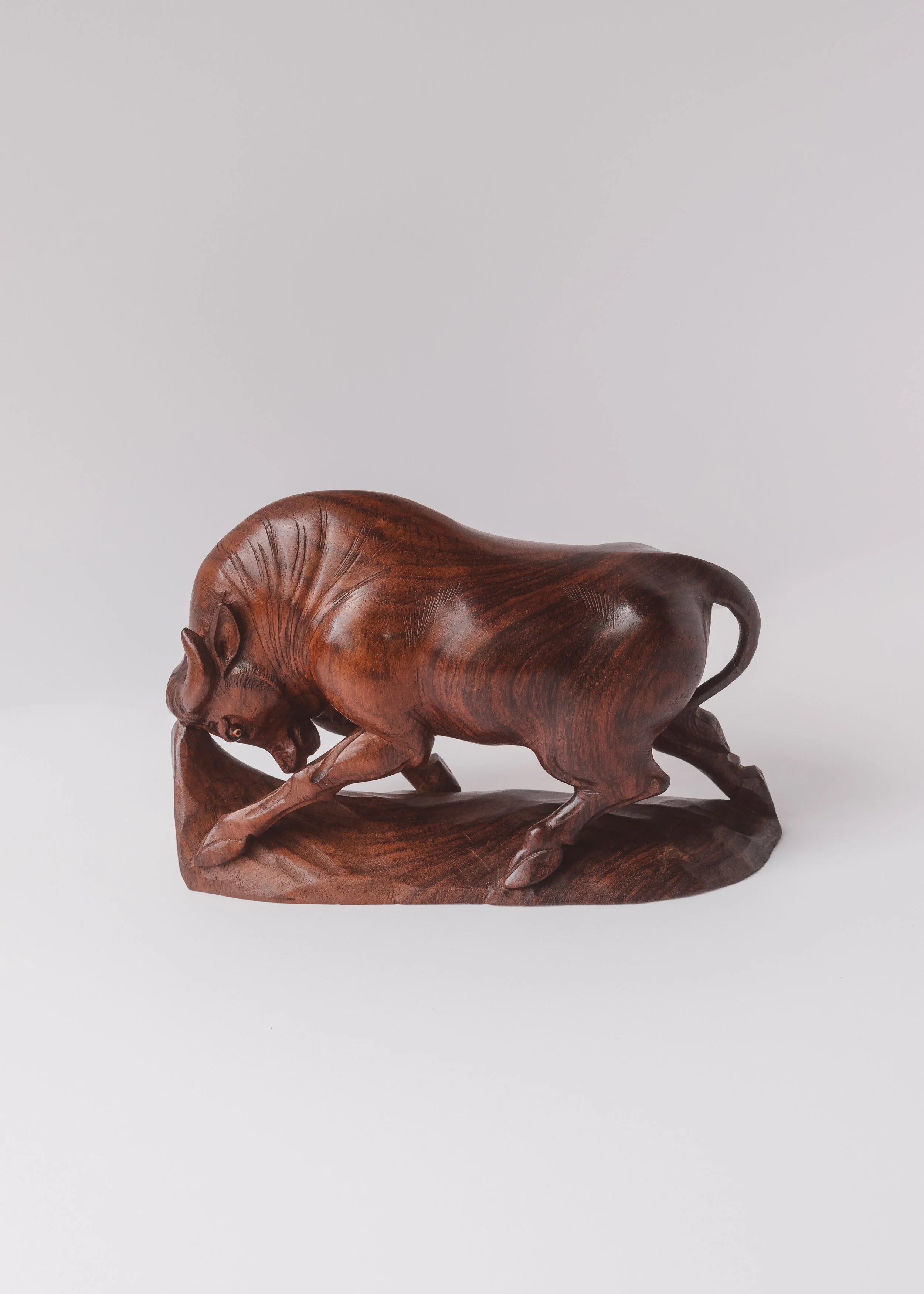 Image 1 of 9
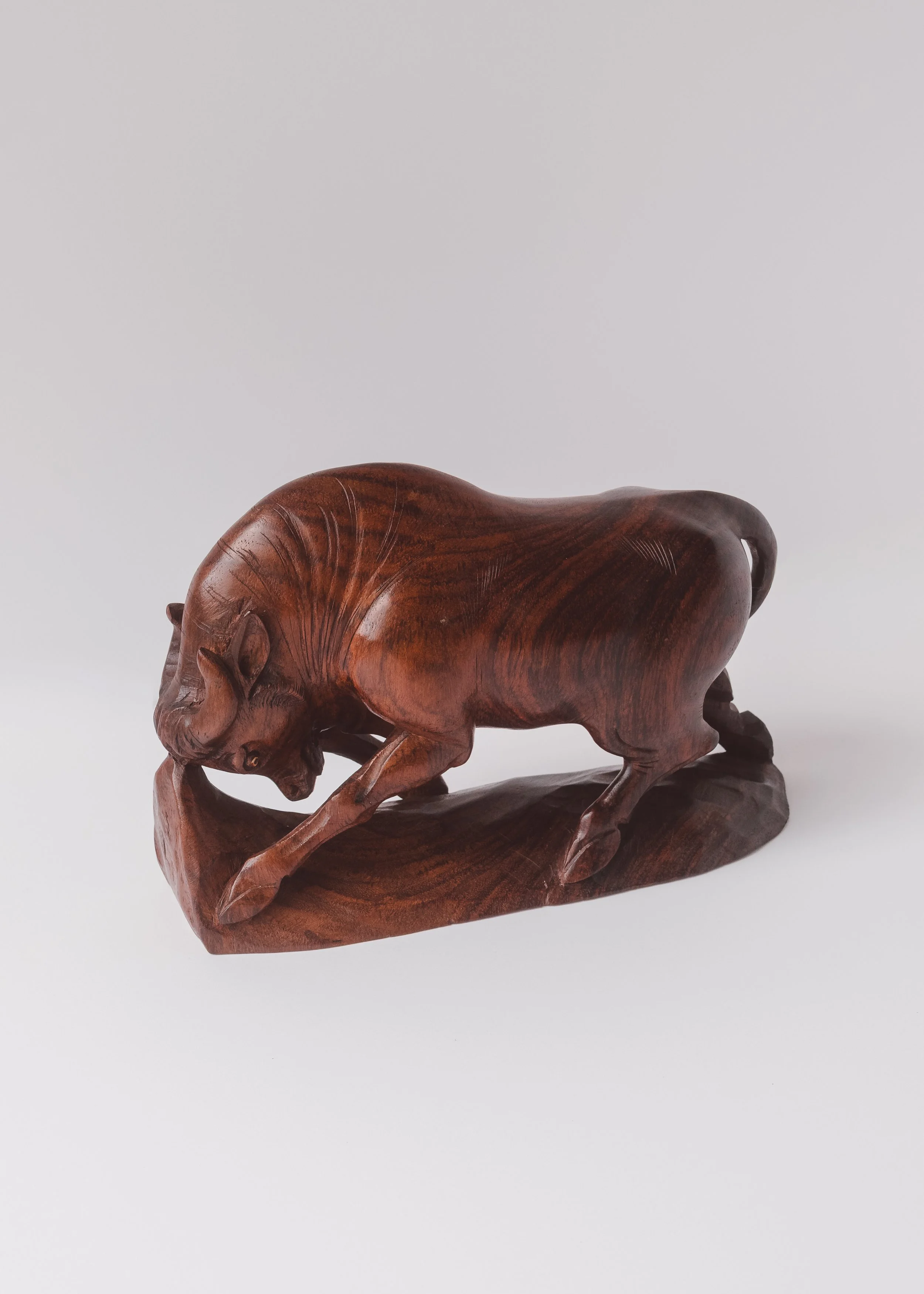 Image 2 of 9
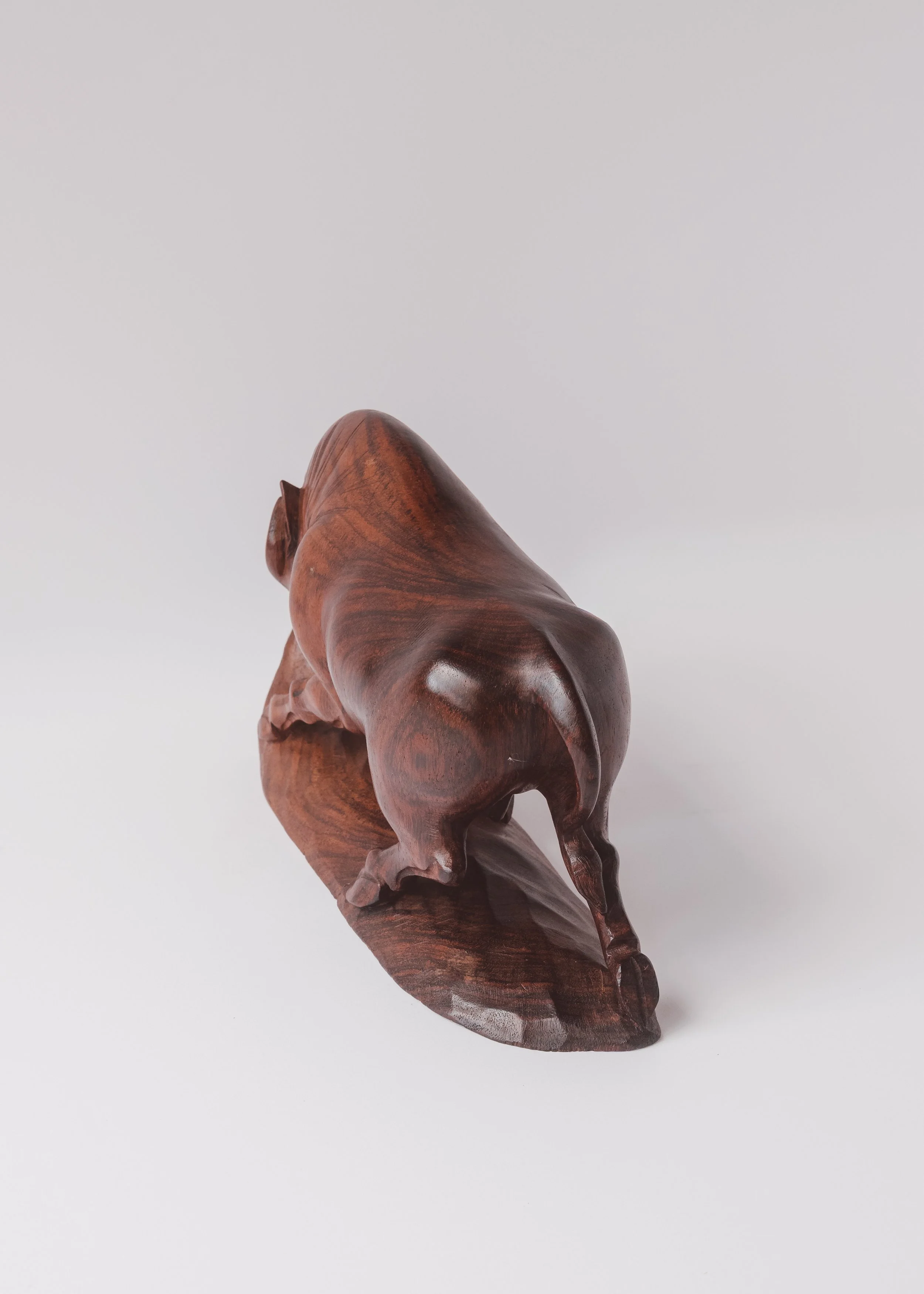 Image 3 of 9
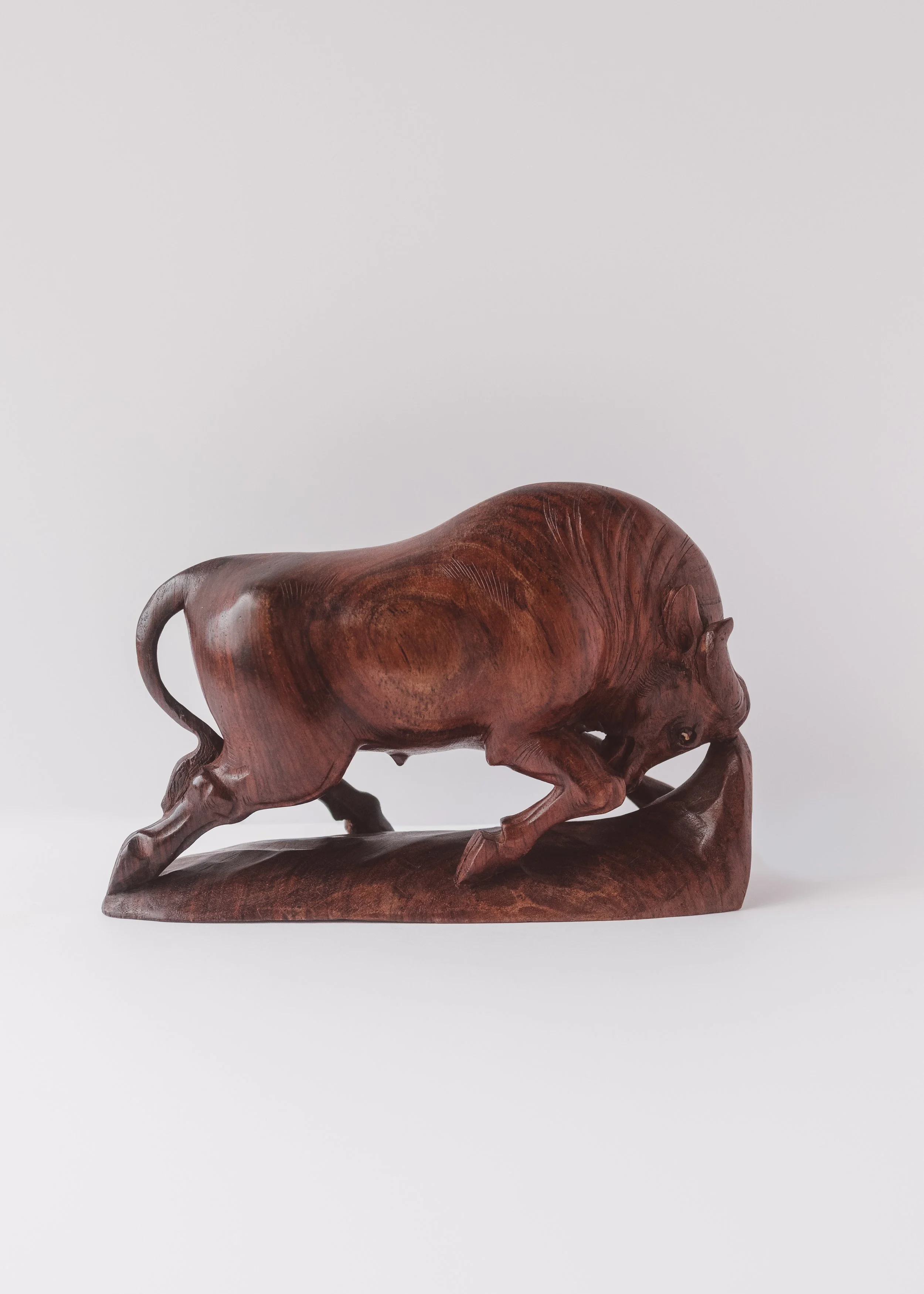 Image 4 of 9
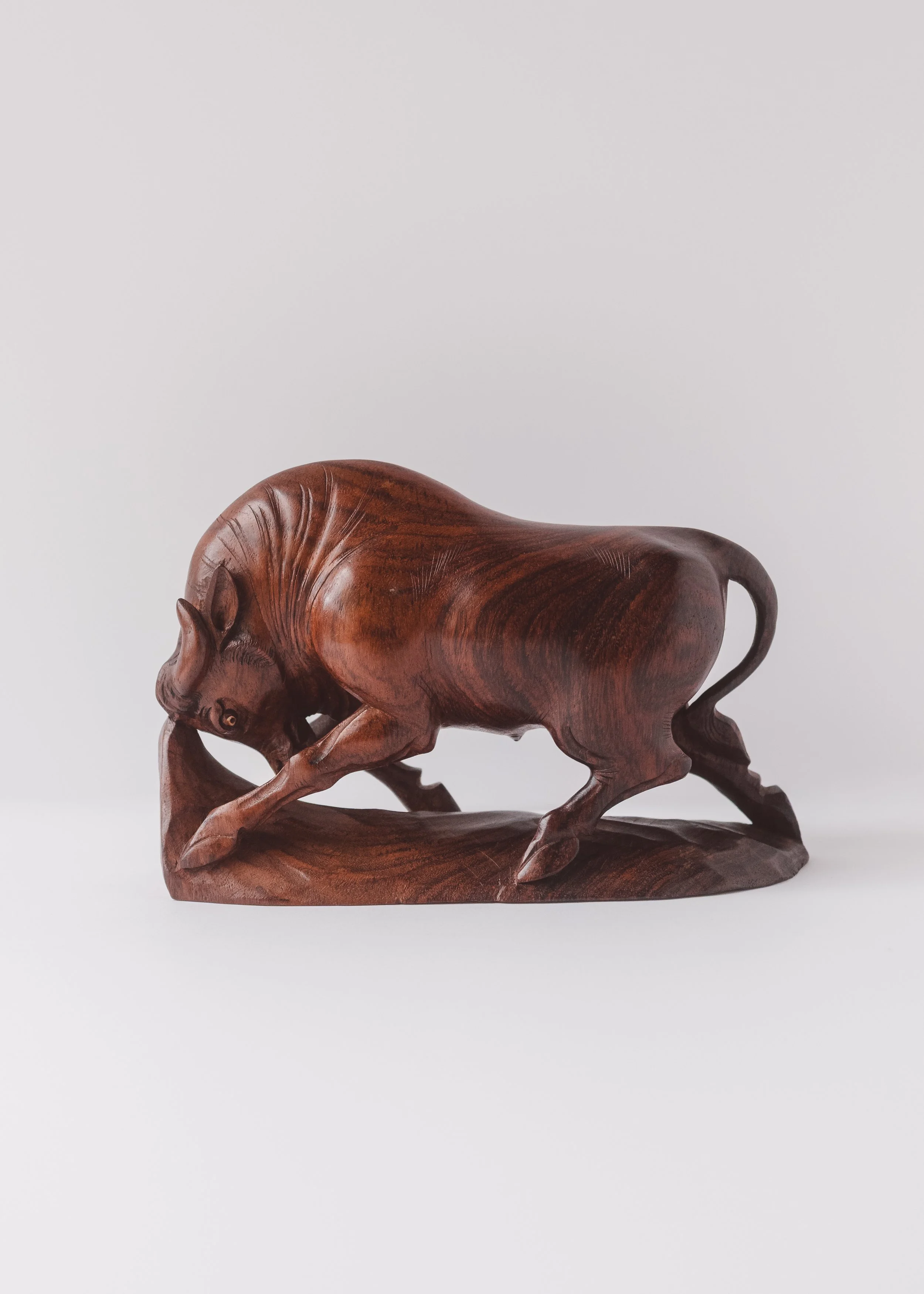 Image 5 of 9
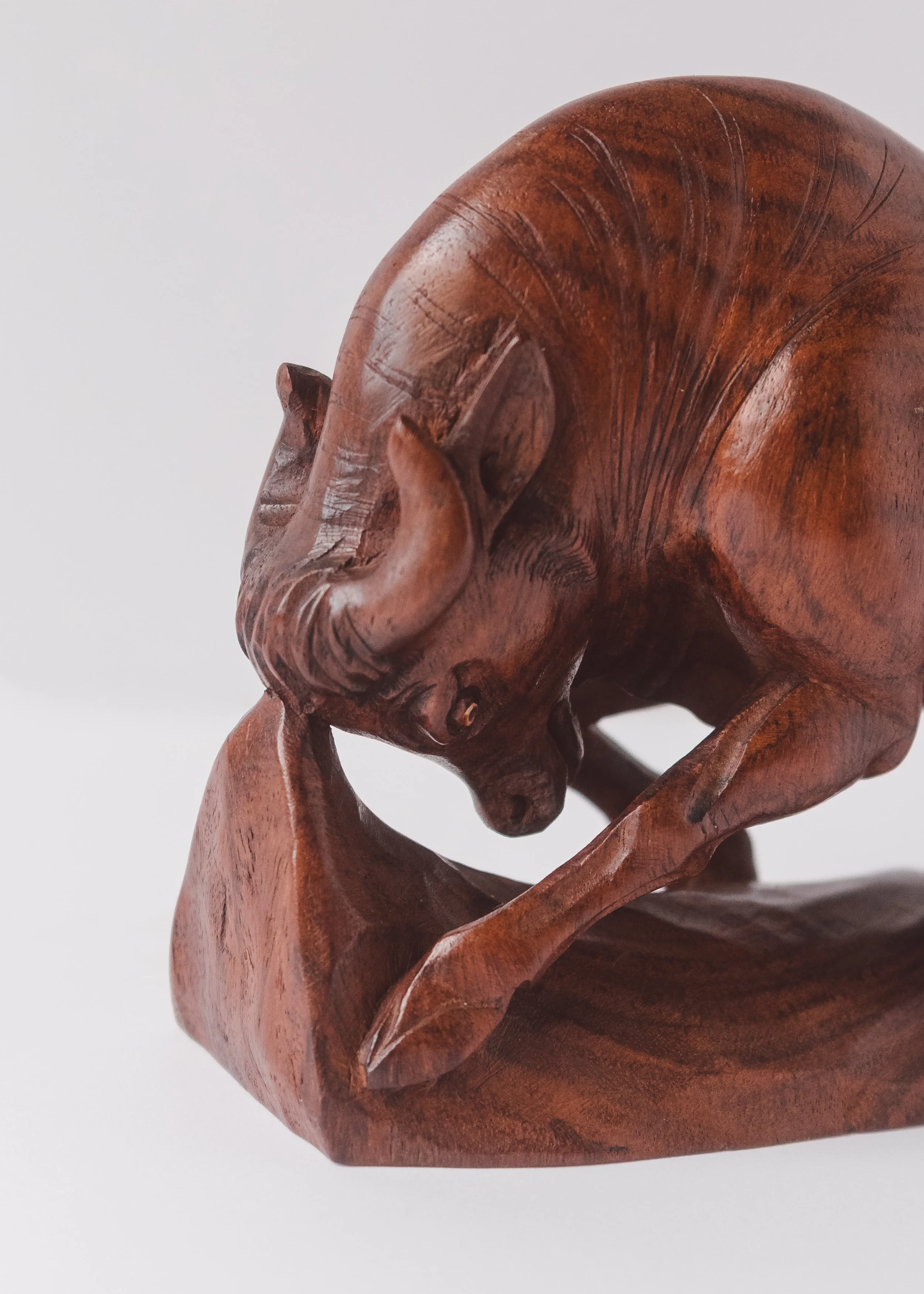 Image 6 of 9
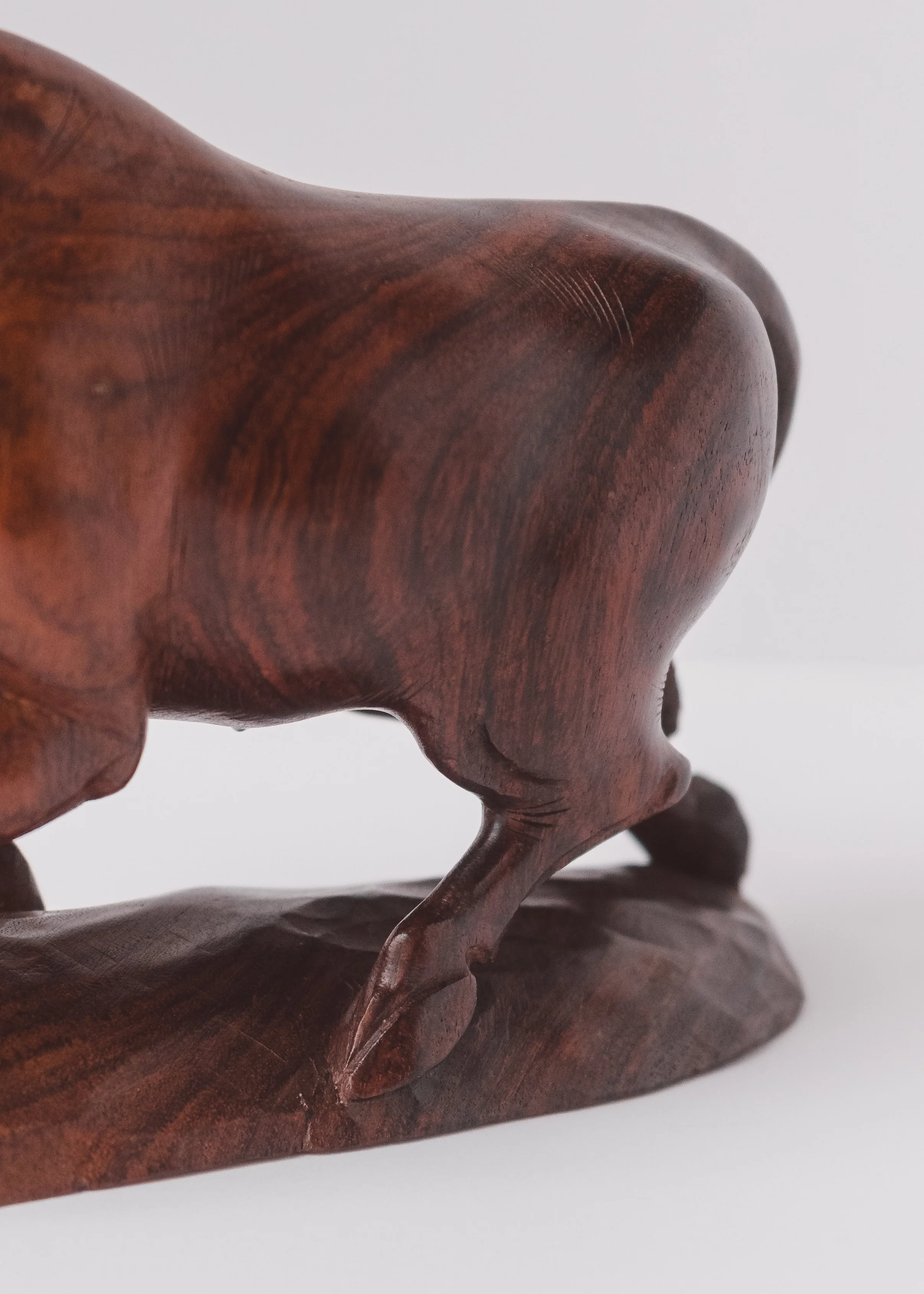 Image 7 of 9
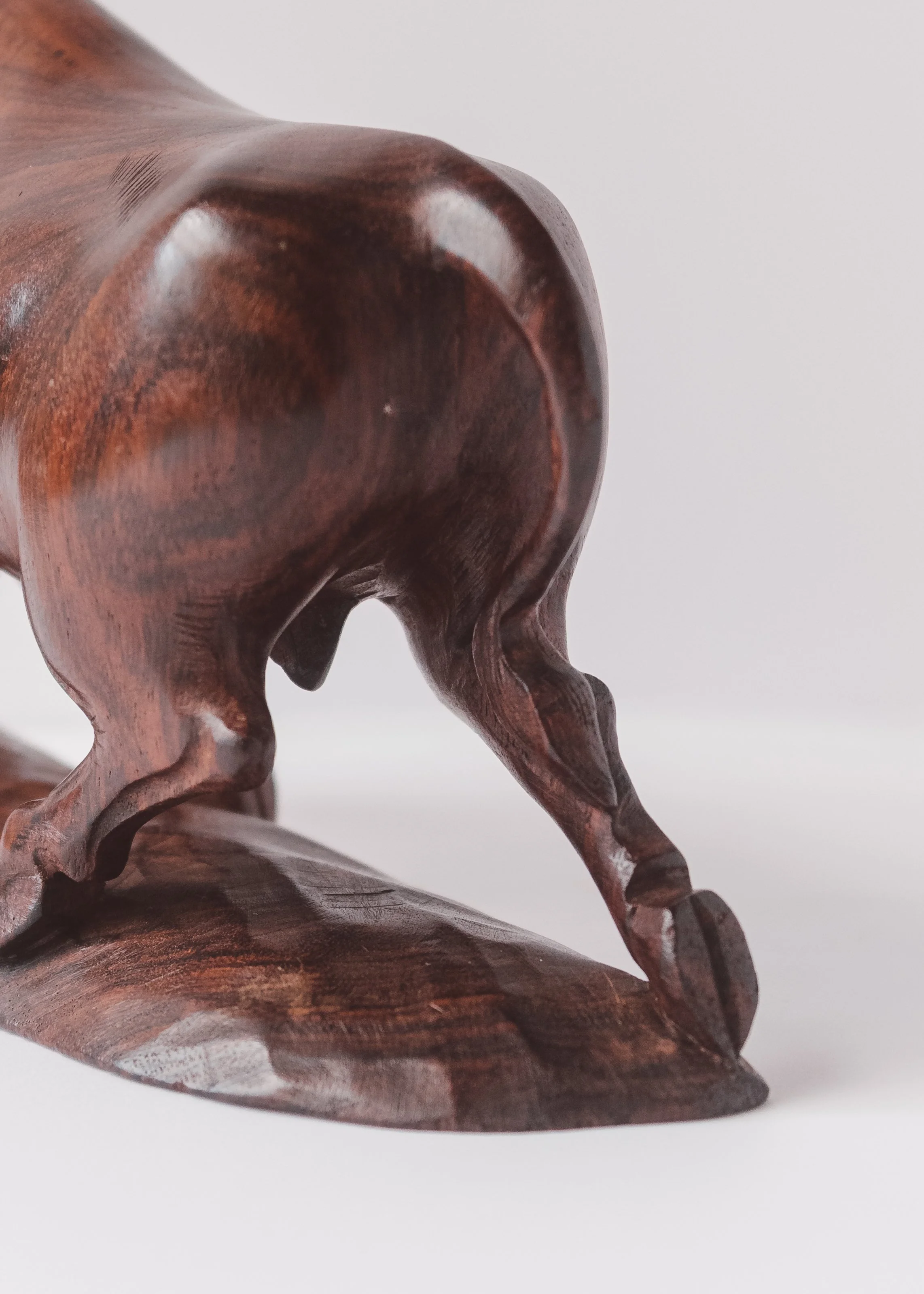 Image 8 of 9
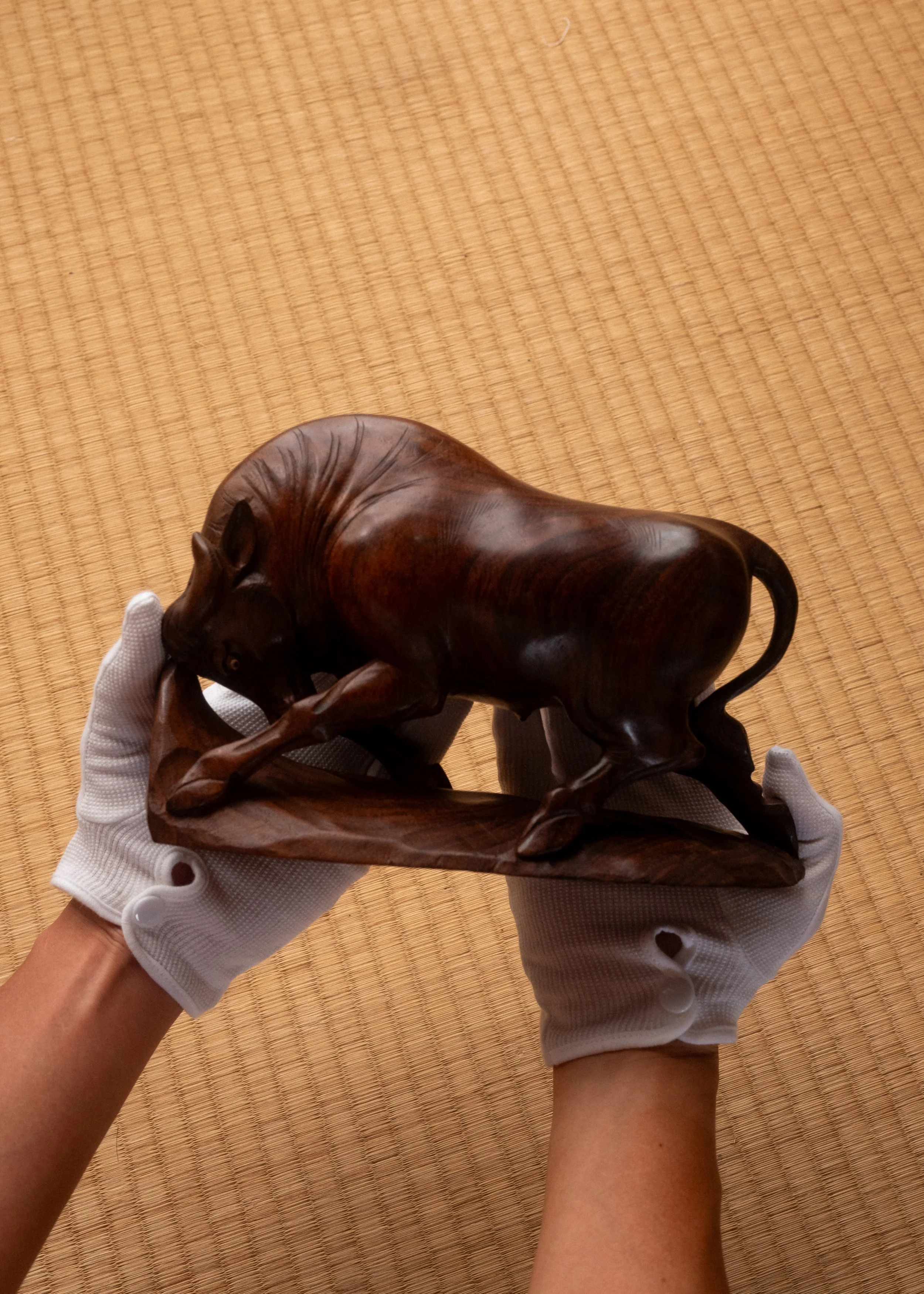 Image 9 of 9