【 The Concept 】
A standing bodhisattva holding a flower that has not yet opened. The left hand is raised to chest height, and between its fingers is a lotus — not a bloom, but a bud, the petals still closed, wrapped tight around a center that has not been seen yet. This is the entire subject of the figure. Everything else — the crown, the robes, the halo, the pedestal — is arranged around a single held stem and the closed flower at the top of it.
The bud is the point because of what it means. The lotus is the flower that grows out of mud and opens clean, and a closed lotus is that opening still to come — the potential for clarity that exists inside a person before it has happened. The bodhisattva does not hold an open flower, a finished thing. It holds a beginning. It offers, to whoever stands in front of it, the version of the lotus that is still a promise.
The figure stands 22 centimeters tall on a round lotus pedestal, gold from crown to foot. The right hand lowers along the body, fingers gently curled toward the edge of the robe. The head faces straight ahead, level and forward, eyes half-closed, the face composed into the particular stillness of something watching inward and outward at the same time. Behind the head rises a halo shaped like a pointed leaf: an inner disc carved with lotus petals, an outer border of openwork scrollwork cut clean through the metal, and a sharp apex at the top.
Where LOTUS SOVEREIGN presides — broad, heavy, two hands active, a ruler on a throne — BUDDING STEM attends. It is slimmer, quieter, and its whole meaning is concentrated in one closed flower held at the chest.
【 The Function 】
974 grams, 22 centimeters tall, 5.5 centimeters in diameter at the base. Cast alloy under gold plating, weighted low in the pedestal, stable and upright. The figure is assembled rather than cast in one piece: the halo is a separate element, joined to the back of the figure at a fixing point behind the head. This is how a form this intricate is made — the body and the openwork halo are cast individually, to the tolerances each requires, and then brought together, the join placed at the back where the figure meets the wall it stands against.
In its original context, a standing figure of this scale was the focal point of a household altar or a quiet corner set aside for it — placed at or slightly above eye level, faced when the room was entered, dusted by hand as a small daily act. In a modern context it is a vertical of warm gold, a still point, an object whose entire posture is the offering of a flower that is about to open.
【 The Texture 】
Bright gold plating over the whole figure — warmer and more reflective than the satin of LOTUS SOVEREIGN, closer to the clean shine of GILT MERCY and RADIANT EMISSARY. The plating catches light in sharp points along the raised edges: the rim of the crown, the folds of the robe, the beaded border of the halo, the closed tip of the lotus bud. In the recesses — the deep vertical folds of the drapery, the hollows of the openwork, the crease behind the pedestal petals — the gold darkens toward bronze, and the contrast between the two draws the whole form into relief.
The openwork halo is the most intricate surface. Light passes through the cut scrollwork rather than reflecting off it, so the halo reads as a screen with the wall visible behind it, and the head is separated from its background by that band of pierced light. The lotus petals on the pedestal carry the sharpest highlights on the object, a ring of bright points at the base.
One detail is worth naming plainly. Behind the head, where the halo joins the body, there is a small disc and a visible screw — the mechanism that holds the separately cast halo in place. It is the honest mark of an assembled object, the place where two finely made parts were brought together. It sits at the back, out of the sightline of anyone facing the figure, and it is the physical evidence that the halo and the body were each made properly and then joined — not stamped out in one careless piece, but built.
【 Presence 】
This is the sixth devotional figure in the archive, and it is the one holding the smallest thing. GILT MERCY offers an open hand. BRONZE DEVOTION presses its palms together. RADIANT EMISSARY carries a staff. SABLE PRAYER prays. LOTUS SOVEREIGN rules. BUDDING STEM holds a single closed flower and asks nothing else of the space around it.
The quietness is the effect. The figure is not performing a gesture at the viewer; it is holding something, carefully, and letting the viewer notice. The level, forward-facing head, the half-closed eyes, the flower kept at chest height where it can be seen — all of it points to the bud and to what the bud stands for: that whatever is going to open has not opened yet, and that this is not a lack but a promise. It is the most hopeful object in the archive, and it makes its case in the smallest possible way — one closed flower, held up, waiting.
Sourced from a private collection in the Shikoku region, Japan.
【 The Concept 】
A standing bodhisattva holding a flower that has not yet opened. The left hand is raised to chest height, and between its fingers is a lotus — not a bloom, but a bud, the petals still closed, wrapped tight around a center that has not been seen yet. This is the entire subject of the figure. Everything else — the crown, the robes, the halo, the pedestal — is arranged around a single held stem and the closed flower at the top of it.
The bud is the point because of what it means. The lotus is the flower that grows out of mud and opens clean, and a closed lotus is that opening still to come — the potential for clarity that exists inside a person before it has happened. The bodhisattva does not hold an open flower, a finished thing. It holds a beginning. It offers, to whoever stands in front of it, the version of the lotus that is still a promise.
The figure stands 22 centimeters tall on a round lotus pedestal, gold from crown to foot. The right hand lowers along the body, fingers gently curled toward the edge of the robe. The head faces straight ahead, level and forward, eyes half-closed, the face composed into the particular stillness of something watching inward and outward at the same time. Behind the head rises a halo shaped like a pointed leaf: an inner disc carved with lotus petals, an outer border of openwork scrollwork cut clean through the metal, and a sharp apex at the top.
Where LOTUS SOVEREIGN presides — broad, heavy, two hands active, a ruler on a throne — BUDDING STEM attends. It is slimmer, quieter, and its whole meaning is concentrated in one closed flower held at the chest.
【 The Function 】
974 grams, 22 centimeters tall, 5.5 centimeters in diameter at the base. Cast alloy under gold plating, weighted low in the pedestal, stable and upright. The figure is assembled rather than cast in one piece: the halo is a separate element, joined to the back of the figure at a fixing point behind the head. This is how a form this intricate is made — the body and the openwork halo are cast individually, to the tolerances each requires, and then brought together, the join placed at the back where the figure meets the wall it stands against.
In its original context, a standing figure of this scale was the focal point of a household altar or a quiet corner set aside for it — placed at or slightly above eye level, faced when the room was entered, dusted by hand as a small daily act. In a modern context it is a vertical of warm gold, a still point, an object whose entire posture is the offering of a flower that is about to open.
【 The Texture 】
Bright gold plating over the whole figure — warmer and more reflective than the satin of LOTUS SOVEREIGN, closer to the clean shine of GILT MERCY and RADIANT EMISSARY. The plating catches light in sharp points along the raised edges: the rim of the crown, the folds of the robe, the beaded border of the halo, the closed tip of the lotus bud. In the recesses — the deep vertical folds of the drapery, the hollows of the openwork, the crease behind the pedestal petals — the gold darkens toward bronze, and the contrast between the two draws the whole form into relief.
The openwork halo is the most intricate surface. Light passes through the cut scrollwork rather than reflecting off it, so the halo reads as a screen with the wall visible behind it, and the head is separated from its background by that band of pierced light. The lotus petals on the pedestal carry the sharpest highlights on the object, a ring of bright points at the base.
One detail is worth naming plainly. Behind the head, where the halo joins the body, there is a small disc and a visible screw — the mechanism that holds the separately cast halo in place. It is the honest mark of an assembled object, the place where two finely made parts were brought together. It sits at the back, out of the sightline of anyone facing the figure, and it is the physical evidence that the halo and the body were each made properly and then joined — not stamped out in one careless piece, but built.
【 Presence 】
This is the sixth devotional figure in the archive, and it is the one holding the smallest thing. GILT MERCY offers an open hand. BRONZE DEVOTION presses its palms together. RADIANT EMISSARY carries a staff. SABLE PRAYER prays. LOTUS SOVEREIGN rules. BUDDING STEM holds a single closed flower and asks nothing else of the space around it.
The quietness is the effect. The figure is not performing a gesture at the viewer; it is holding something, carefully, and letting the viewer notice. The level, forward-facing head, the half-closed eyes, the flower kept at chest height where it can be seen — all of it points to the bud and to what the bud stands for: that whatever is going to open has not opened yet, and that this is not a lack but a promise. It is the most hopeful object in the archive, and it makes its case in the smallest possible way — one closed flower, held up, waiting.
Sourced from a private collection in the Shikoku region, Japan.


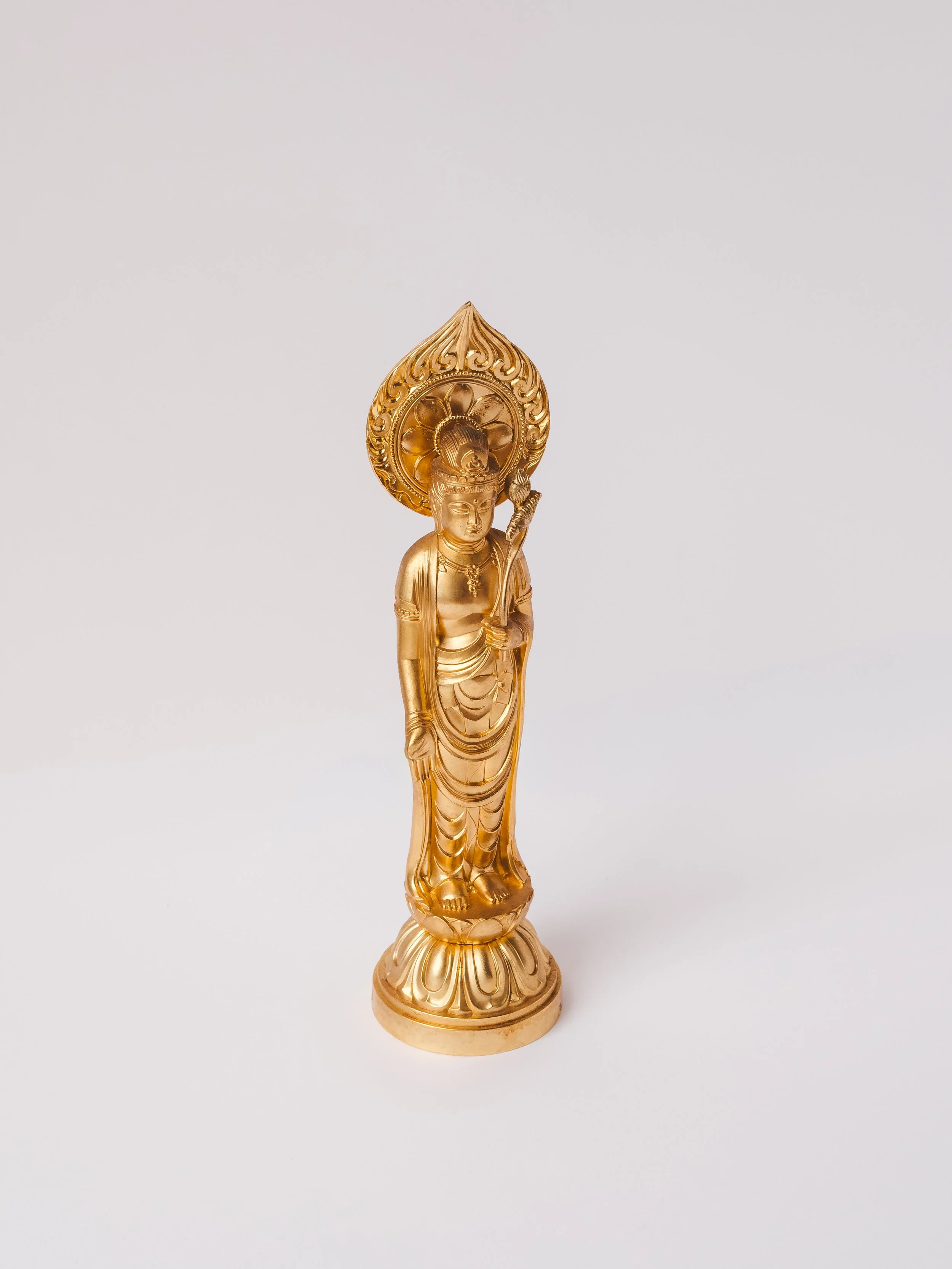 Image 1 of 10
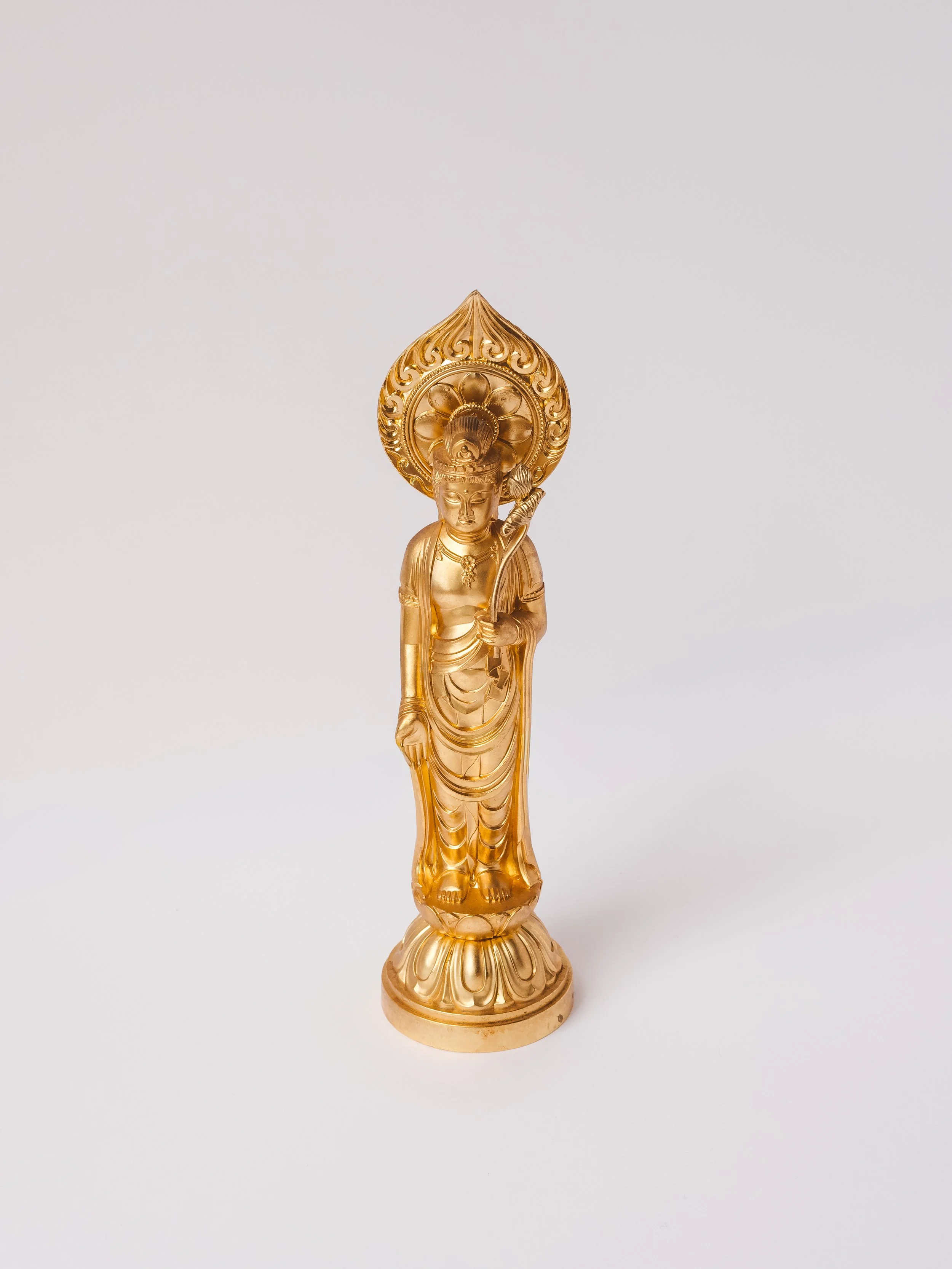 Image 2 of 10
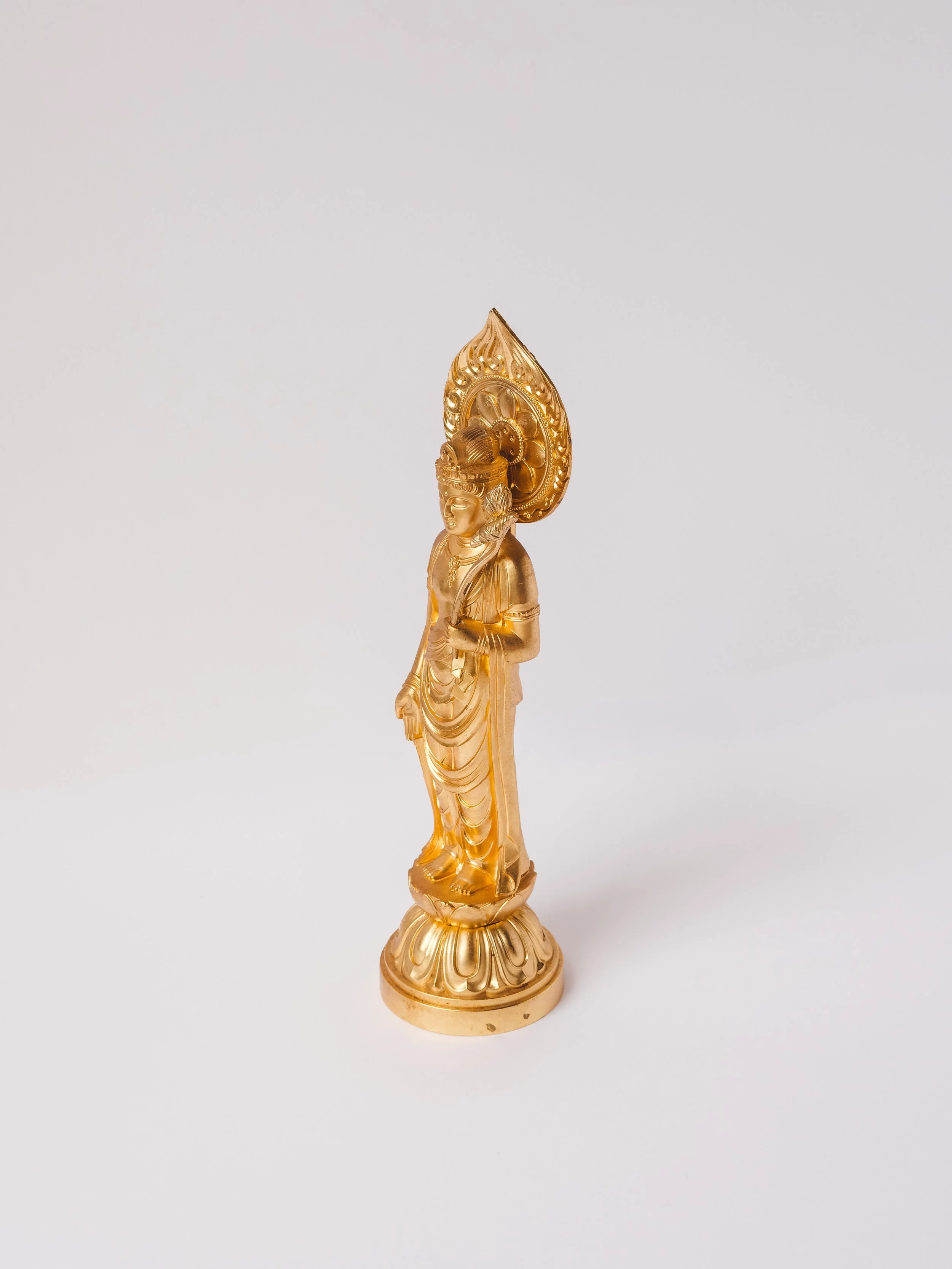 Image 3 of 10
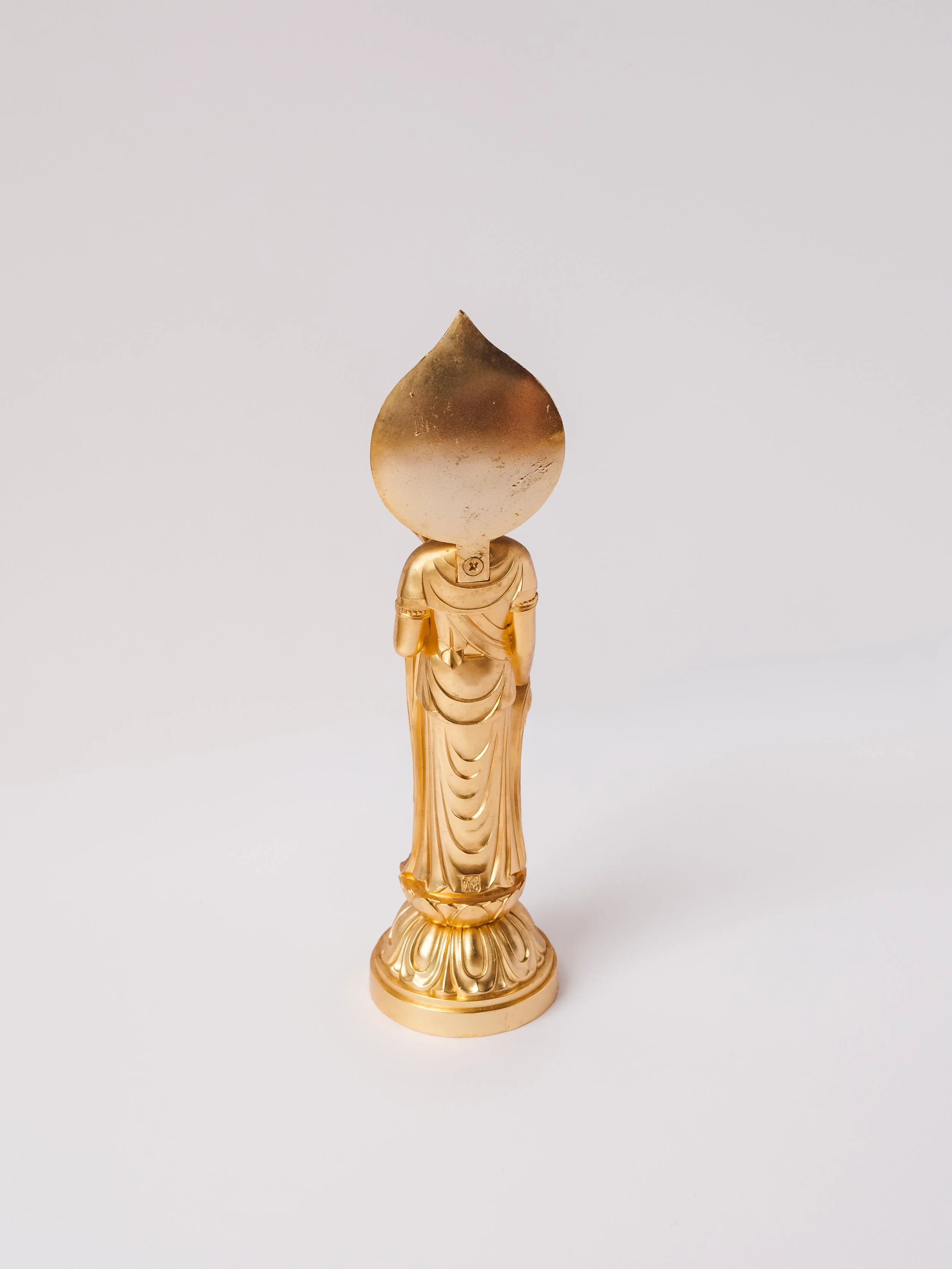 Image 4 of 10
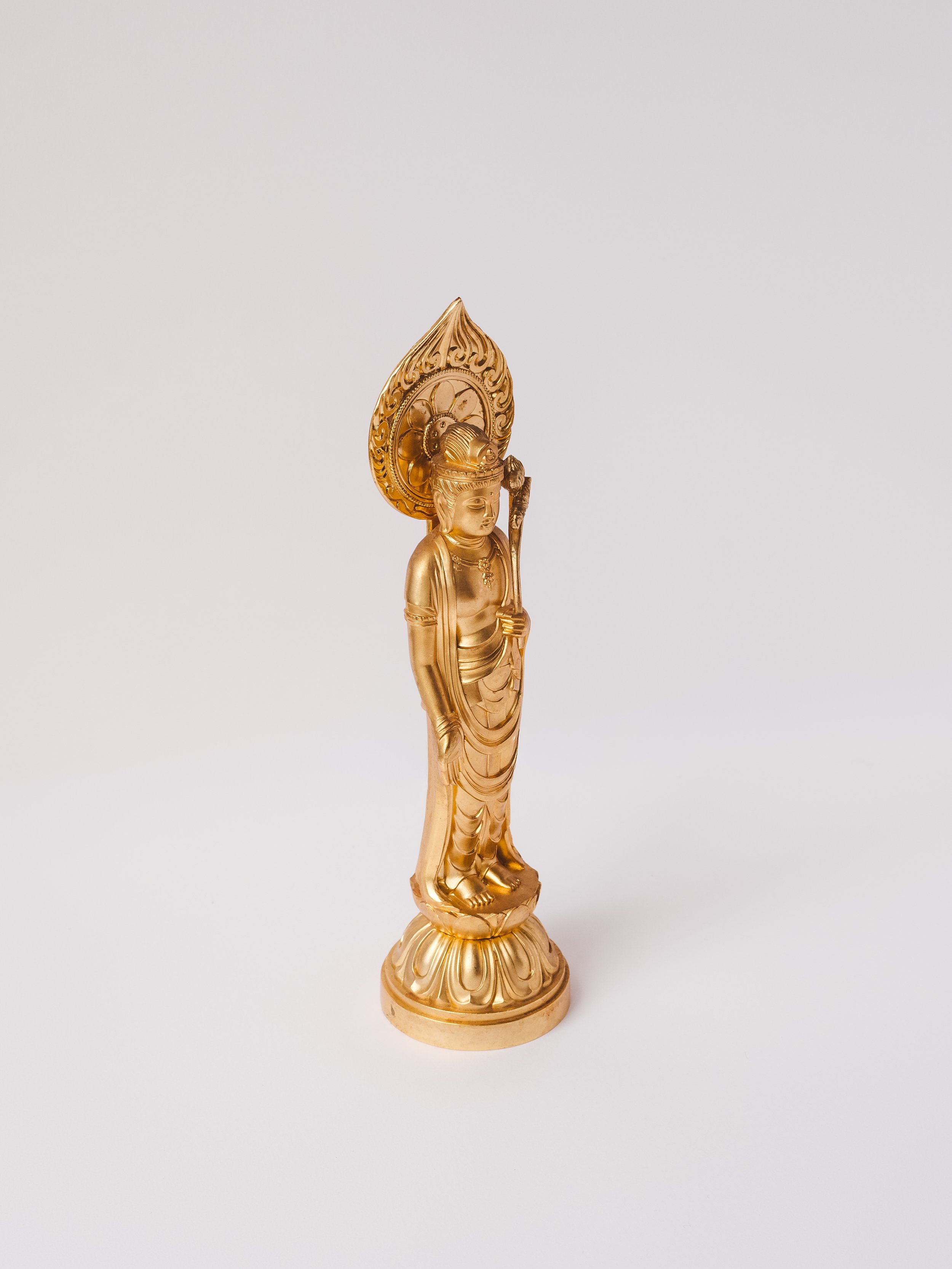 Image 5 of 10
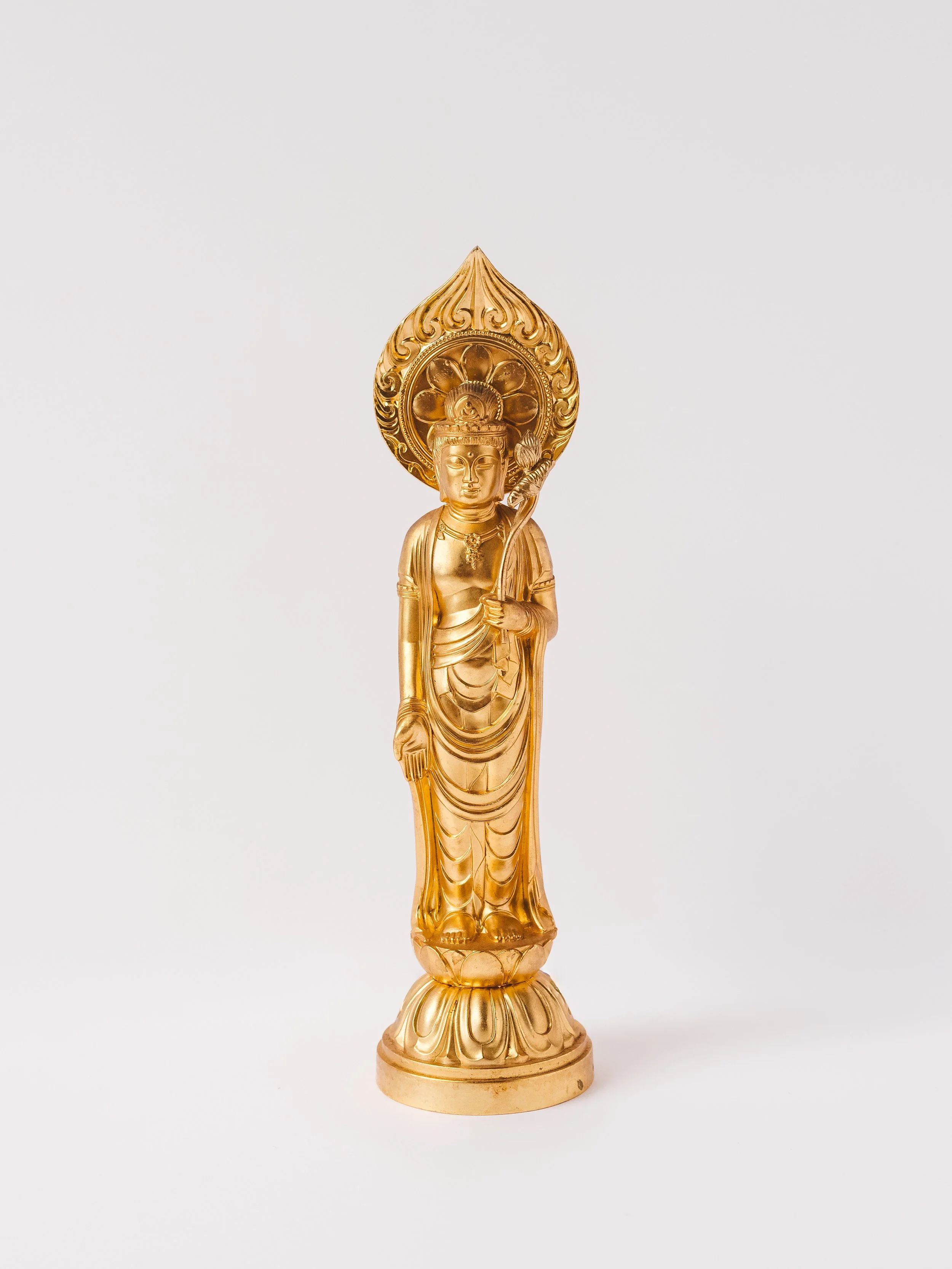 Image 6 of 10
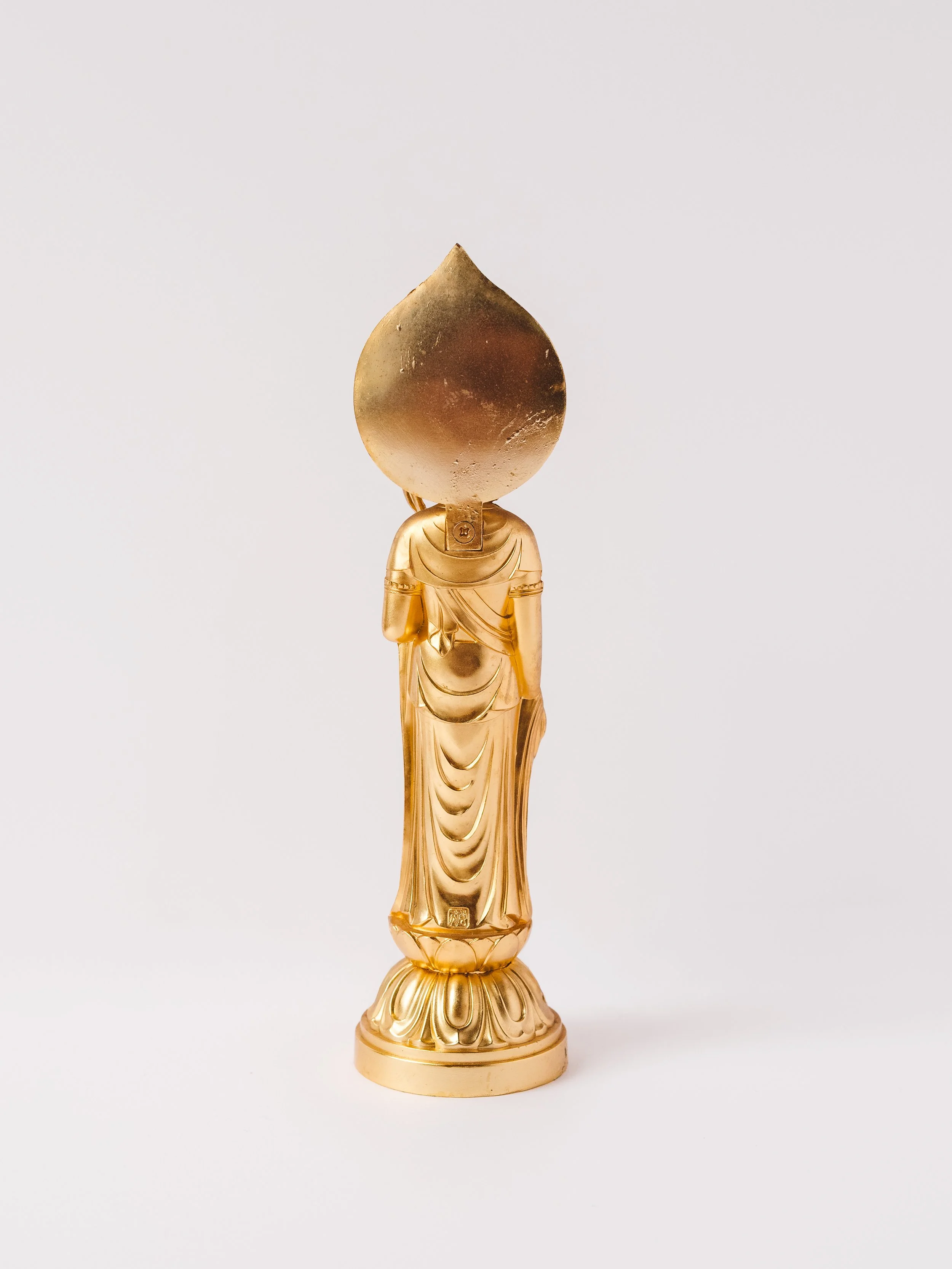 Image 7 of 10
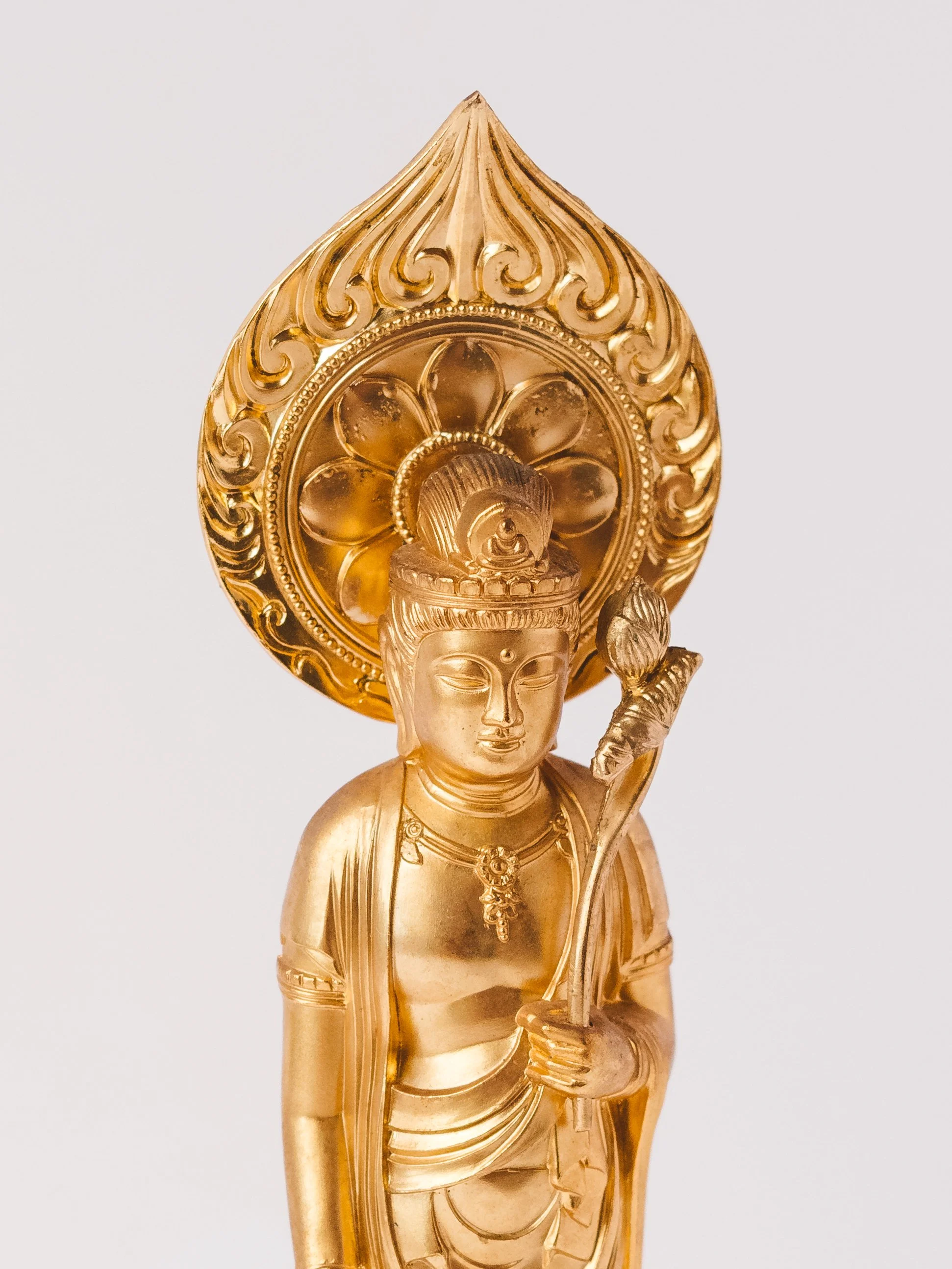 Image 8 of 10
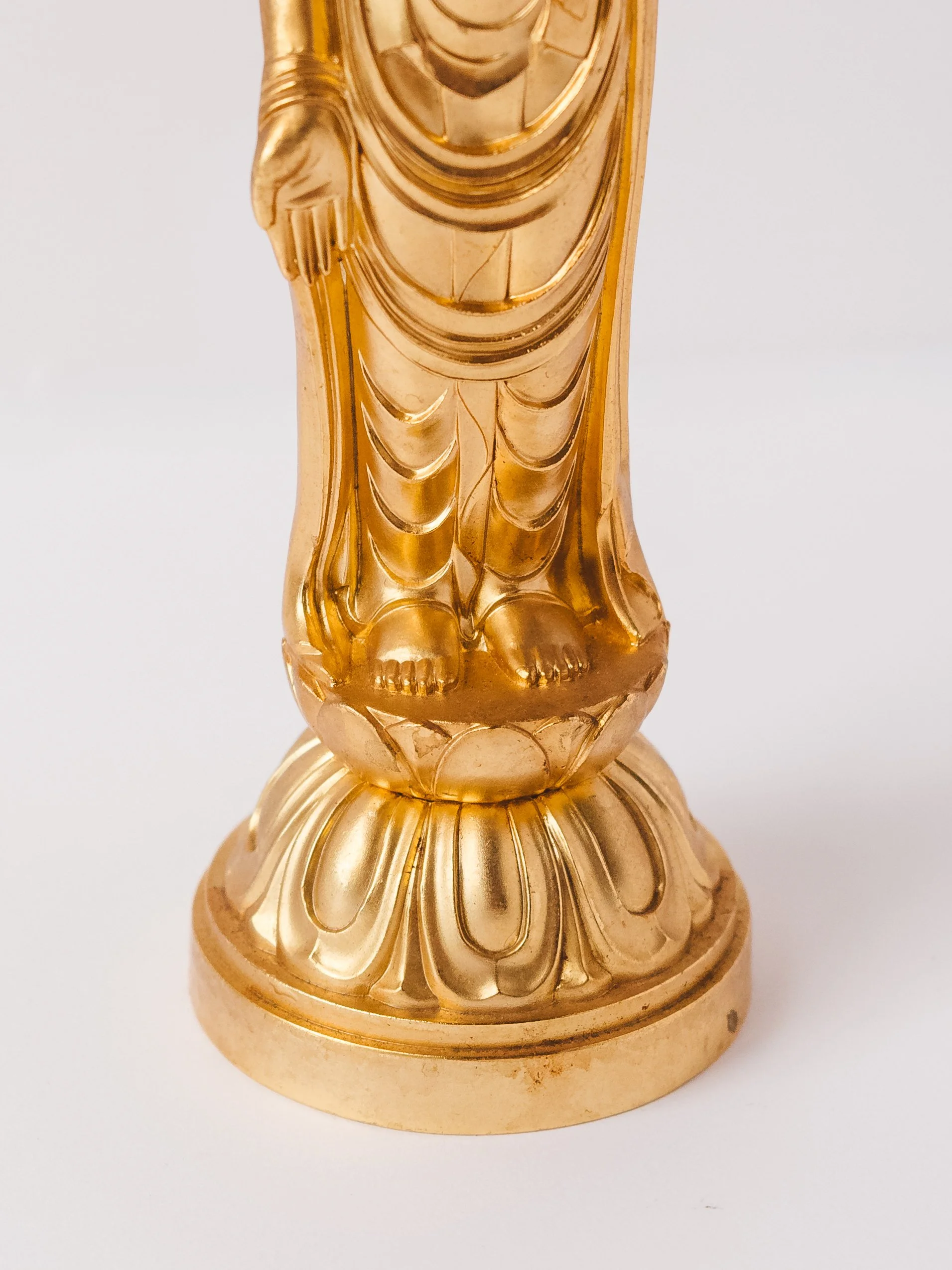 Image 9 of 10
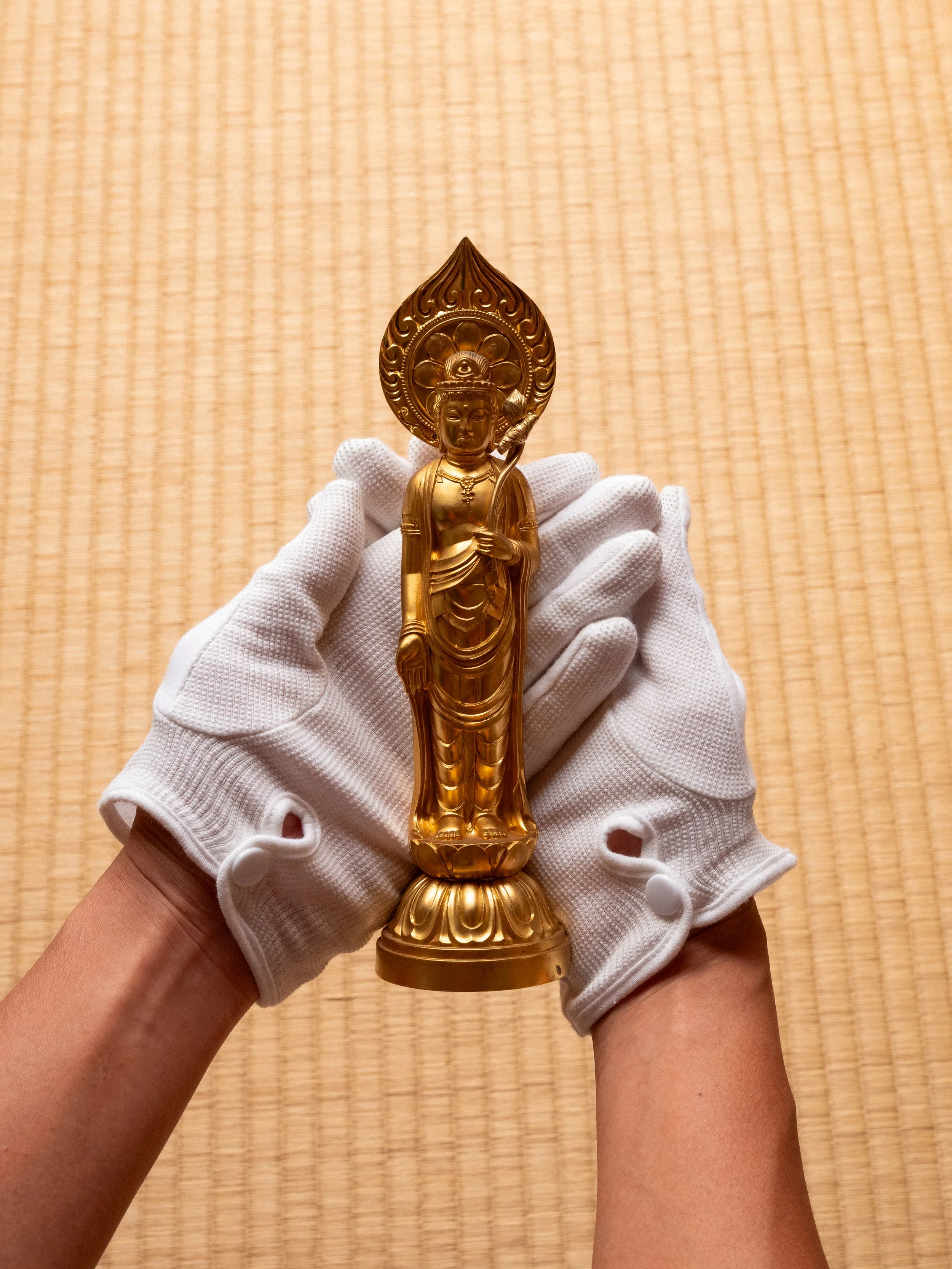 Image 10 of 10