【 The Concept 】
A standing figure, both hands pressed together at the chest in the oldest gesture of surrender. Not surrender to an enemy. Surrender to clarity. In the tradition this figure belongs to, the left hand represents the human world — confused, impure, grasping. The right hand represents the world beyond confusion. When the two are brought together and held still, the division between ignorance and understanding dissolves. That is what this figure has been doing, motionless, for decades.
The body is cast metal beneath an antique bronze finish that has settled into the warm, muted tone of something that has spent a long time in the presence of incense smoke and quiet rooms. The crown is tall and intricate, carved with openwork detail too fine to have been applied by hand after casting — it was part of the original mold, designed to be permanent. A chain of ornamental beads hangs across the chest, and layered robes fall in deep U-shaped folds from both shoulders to the feet, where they pool over a tiered lotus pedestal. The face is tilted slightly forward, eyes half-closed, looking at nothing external. The expression is not serene. It is concentrated. This is the face of something that is listening inward.
【 The Function 】
634 grams of cast metal standing 17 centimeters tall on a base barely 4.5 centimeters wide. The weight is anchored low, in the dense circular pedestal, making the figure almost impossible to tip. In its original context, figures like this were placed in household altars, bedside shelves, or office desks as personal guardians assigned by birth year — each of the twelve zodiac years in the East Asian calendar has a designated protector, and this figure served as one. In a modern context, it is a vertical anchor: narrow enough to stand between books, heavy enough to feel permanent, and still enough to slow the room around it.
【 The Texture 】
Antique bronze over cast alloy. The surface is not bright. It does not reflect. Instead, it holds a deep, warm gold-brown tone that shifts across the body — lighter where the robes catch ambient light along their raised folds, darker in the deep recesses of the draped cloth and the narrow spaces between the pressed fingers. This is not paint. It is a chemical treatment: metal reacting with acid, heat, and lacquer to produce a patina that mimics centuries of temple smoke and devotional handling. The texture is finely granular, somewhere between matte and satin, with just enough tooth to feel warm against the thumb. The crown and the beaded necklace carry the sharpest detail — each link and each leaf individually defined, cast from an original carved with the precision of a jeweler.
【 Presence 】
GILT MERCY commands a room by reflecting light. This figure does the opposite. It absorbs. The antique bronze surface pulls light inward and holds it, producing a soft glow rather than a glare. Where the gold figure announces itself, this one waits to be noticed. The proportions are extreme — 17 centimeters tall from a width of less than five — creating a vertical line so narrow it reads almost as calligraphy: a single stroke drawn upward from the pedestal through the pressed hands to the crown. Place it beside GILT MERCY and the two form a pair that was never designed as a pair but functions as one: one that gives, one that offers. One that shines, one that glows. One that faces outward, one that turns inward.
Sourced from a private collection in the Kansai region, Japan.
【 The Concept 】
A standing figure, both hands pressed together at the chest in the oldest gesture of surrender. Not surrender to an enemy. Surrender to clarity. In the tradition this figure belongs to, the left hand represents the human world — confused, impure, grasping. The right hand represents the world beyond confusion. When the two are brought together and held still, the division between ignorance and understanding dissolves. That is what this figure has been doing, motionless, for decades.
The body is cast metal beneath an antique bronze finish that has settled into the warm, muted tone of something that has spent a long time in the presence of incense smoke and quiet rooms. The crown is tall and intricate, carved with openwork detail too fine to have been applied by hand after casting — it was part of the original mold, designed to be permanent. A chain of ornamental beads hangs across the chest, and layered robes fall in deep U-shaped folds from both shoulders to the feet, where they pool over a tiered lotus pedestal. The face is tilted slightly forward, eyes half-closed, looking at nothing external. The expression is not serene. It is concentrated. This is the face of something that is listening inward.
【 The Function 】
634 grams of cast metal standing 17 centimeters tall on a base barely 4.5 centimeters wide. The weight is anchored low, in the dense circular pedestal, making the figure almost impossible to tip. In its original context, figures like this were placed in household altars, bedside shelves, or office desks as personal guardians assigned by birth year — each of the twelve zodiac years in the East Asian calendar has a designated protector, and this figure served as one. In a modern context, it is a vertical anchor: narrow enough to stand between books, heavy enough to feel permanent, and still enough to slow the room around it.
【 The Texture 】
Antique bronze over cast alloy. The surface is not bright. It does not reflect. Instead, it holds a deep, warm gold-brown tone that shifts across the body — lighter where the robes catch ambient light along their raised folds, darker in the deep recesses of the draped cloth and the narrow spaces between the pressed fingers. This is not paint. It is a chemical treatment: metal reacting with acid, heat, and lacquer to produce a patina that mimics centuries of temple smoke and devotional handling. The texture is finely granular, somewhere between matte and satin, with just enough tooth to feel warm against the thumb. The crown and the beaded necklace carry the sharpest detail — each link and each leaf individually defined, cast from an original carved with the precision of a jeweler.
【 Presence 】
GILT MERCY commands a room by reflecting light. This figure does the opposite. It absorbs. The antique bronze surface pulls light inward and holds it, producing a soft glow rather than a glare. Where the gold figure announces itself, this one waits to be noticed. The proportions are extreme — 17 centimeters tall from a width of less than five — creating a vertical line so narrow it reads almost as calligraphy: a single stroke drawn upward from the pedestal through the pressed hands to the crown. Place it beside GILT MERCY and the two form a pair that was never designed as a pair but functions as one: one that gives, one that offers. One that shines, one that glows. One that faces outward, one that turns inward.
Sourced from a private collection in the Kansai region, Japan.


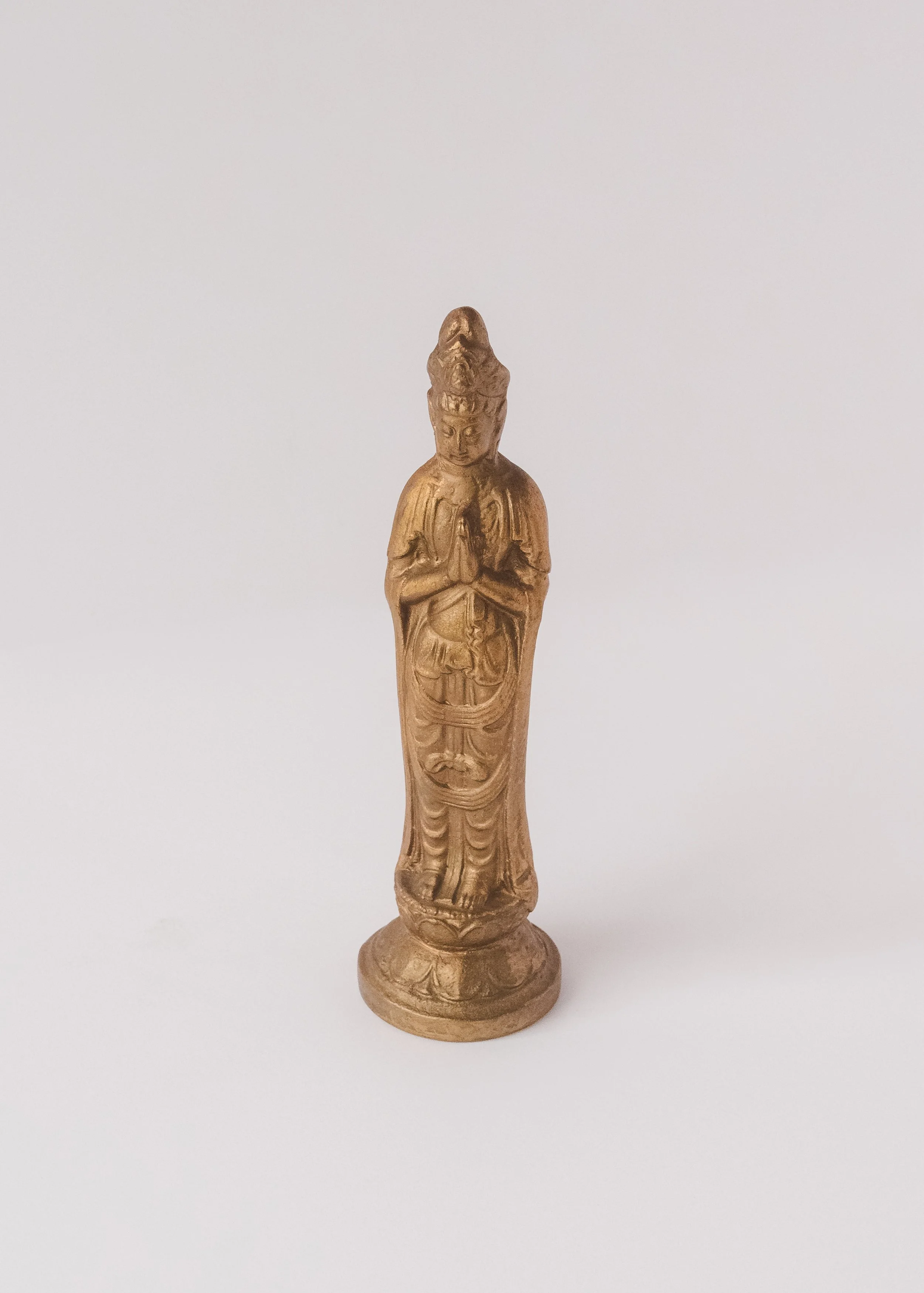 Image 1 of 11
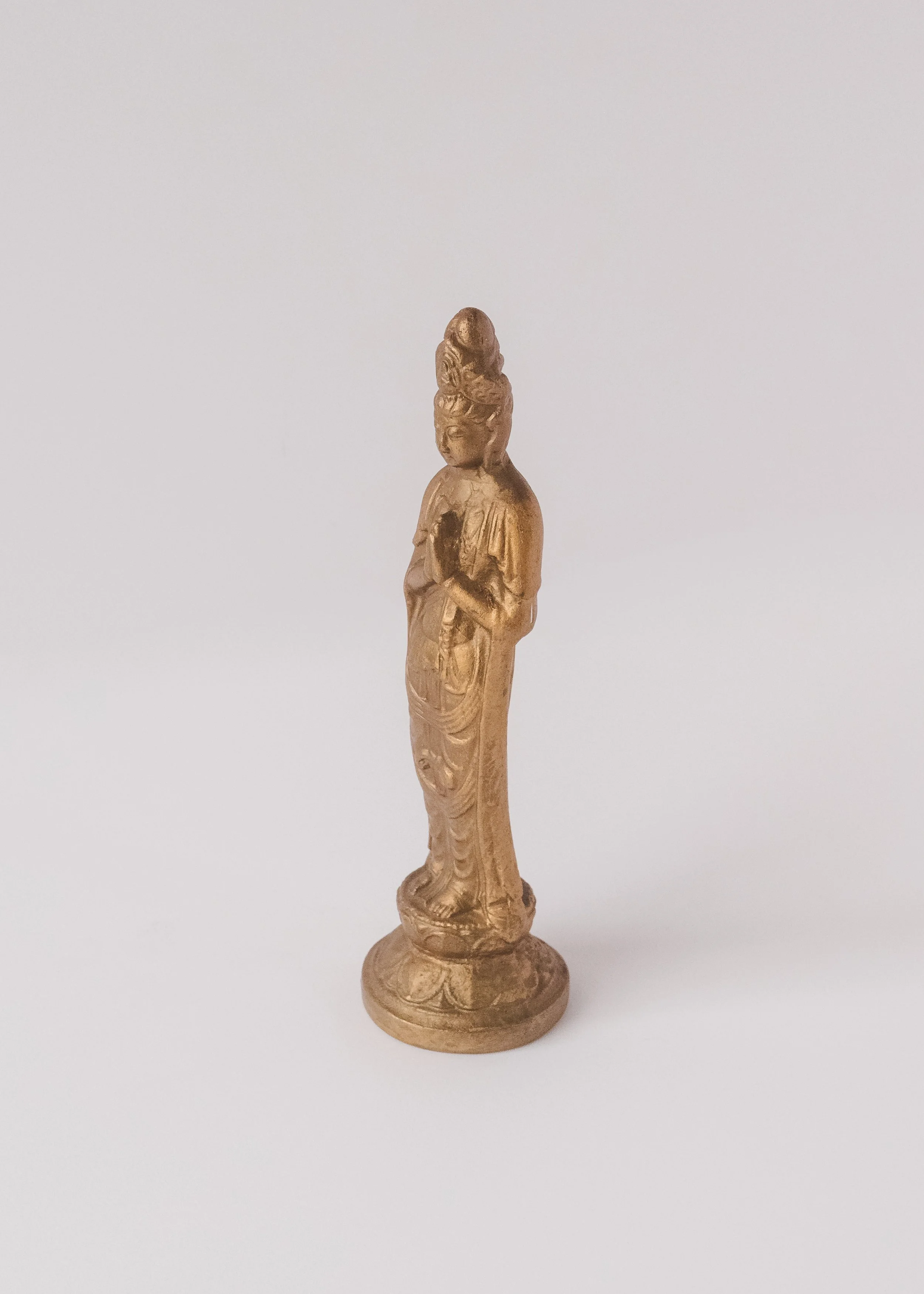 Image 2 of 11
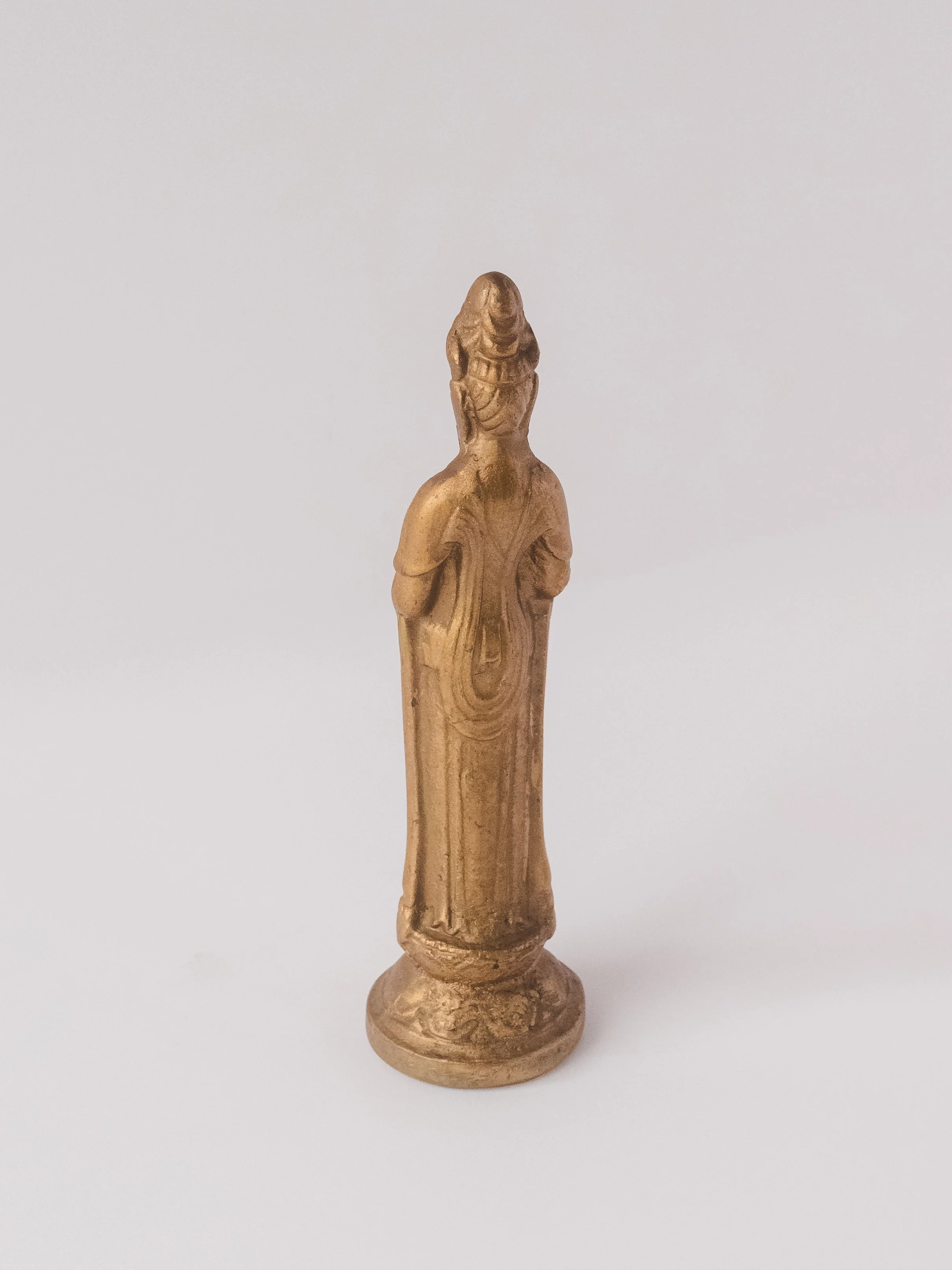 Image 3 of 11
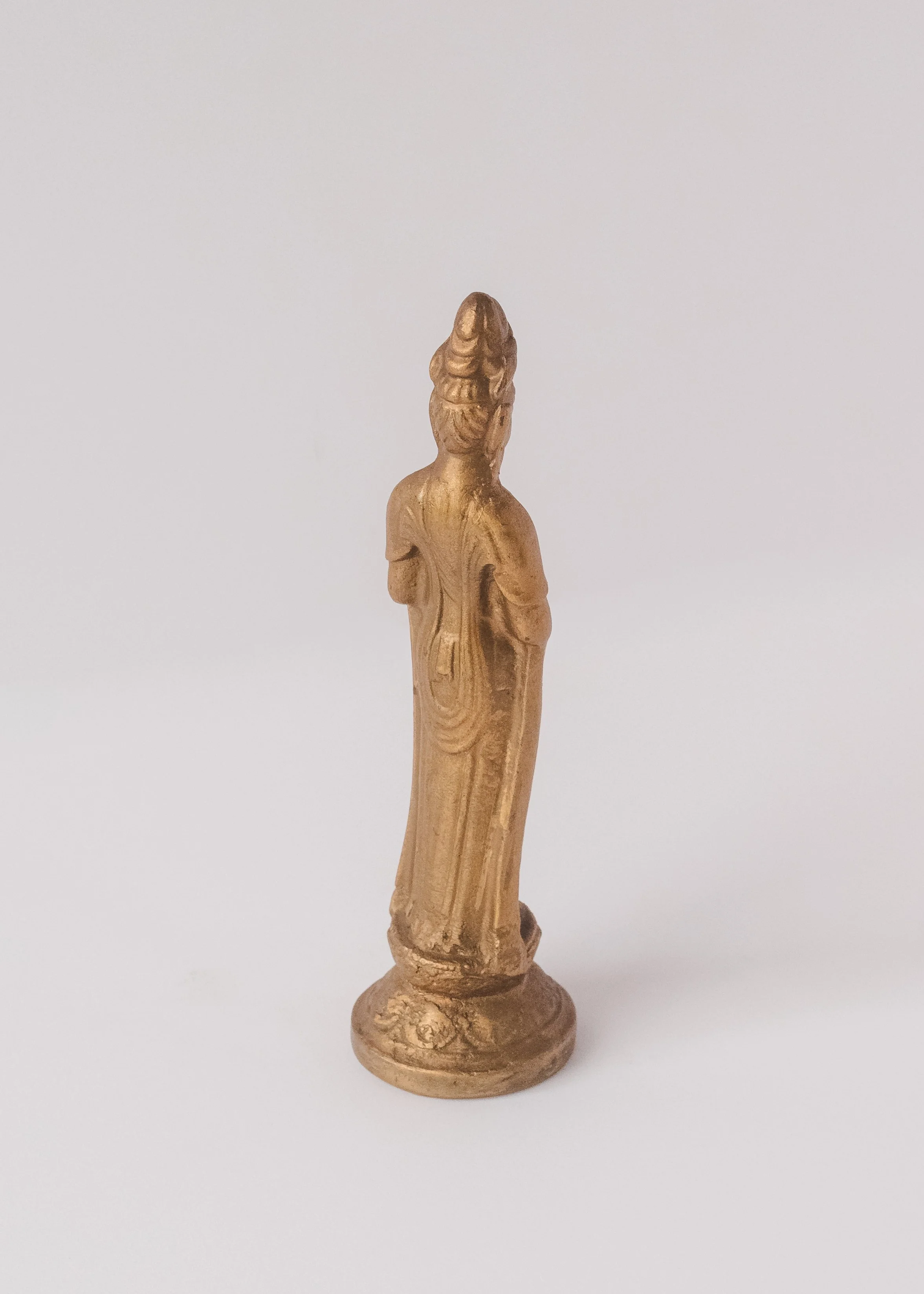 Image 4 of 11
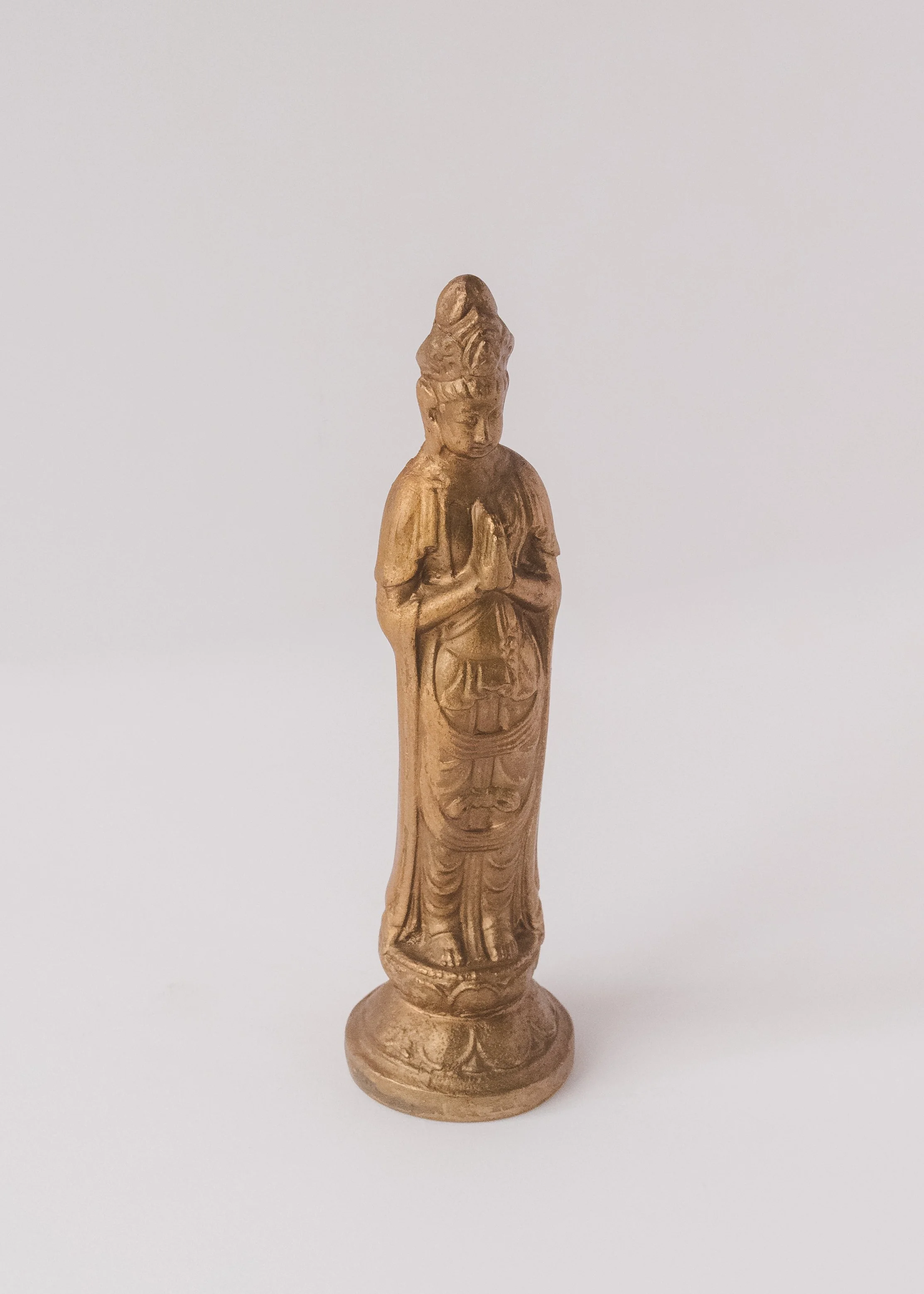 Image 5 of 11
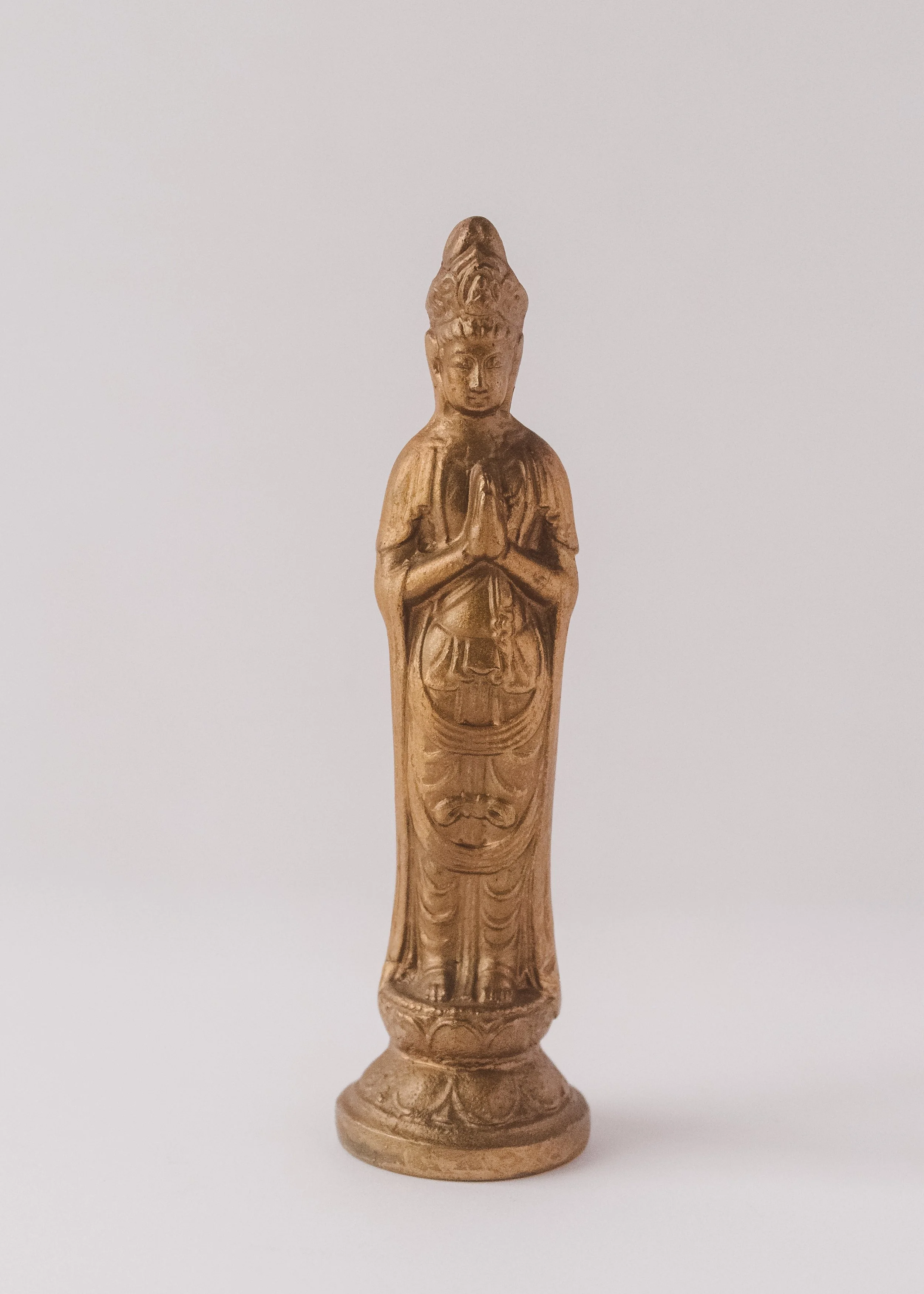 Image 6 of 11
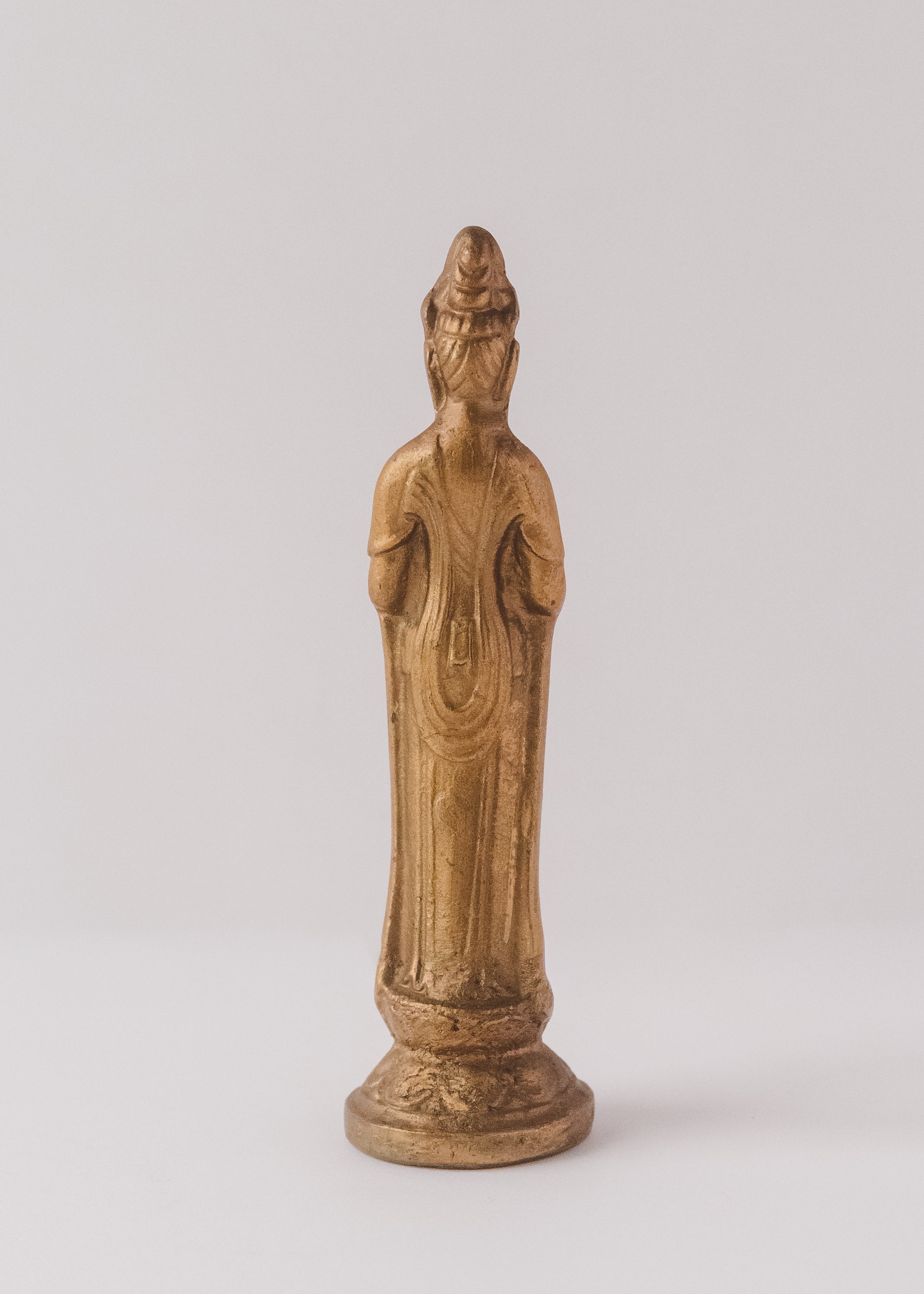 Image 7 of 11
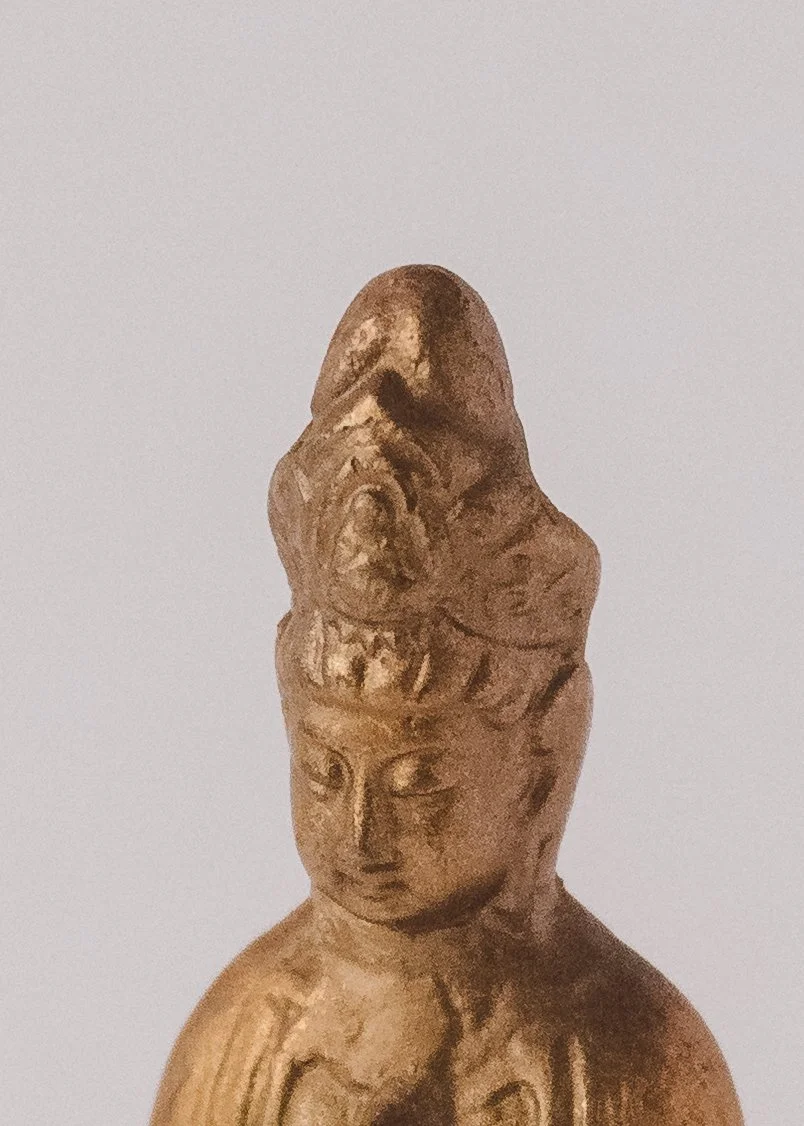 Image 8 of 11
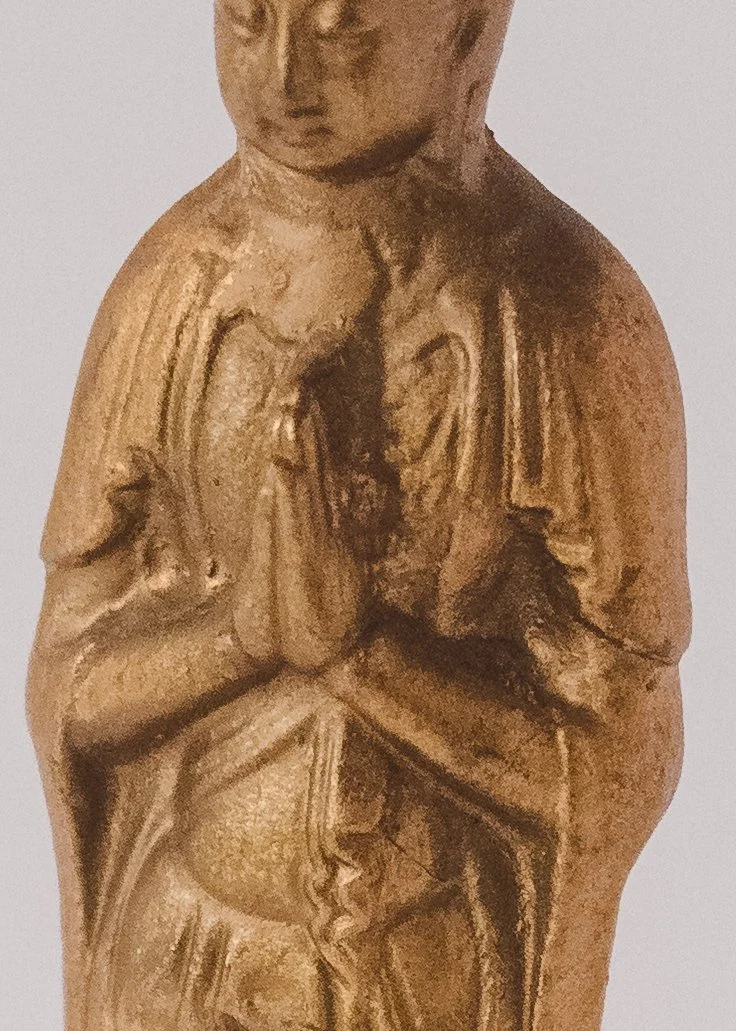 Image 9 of 11
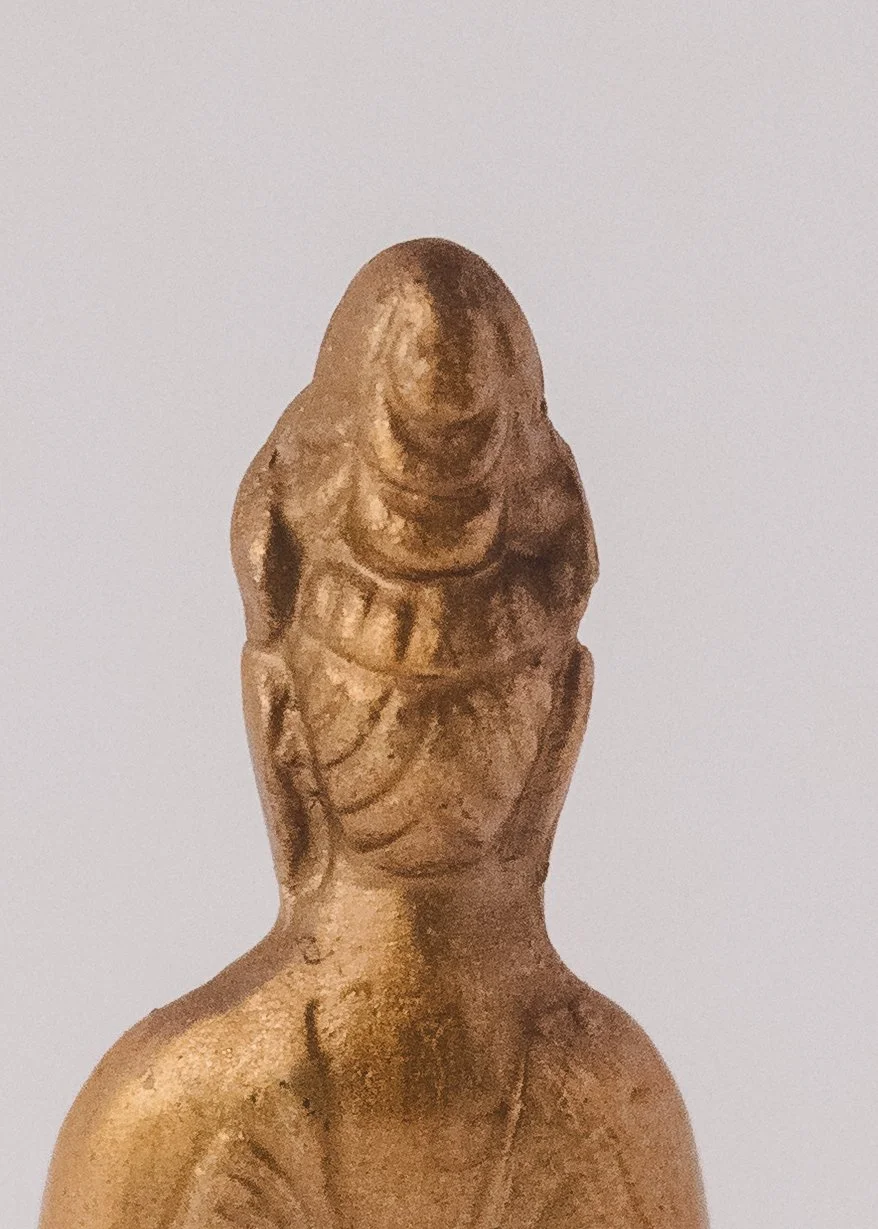 Image 10 of 11
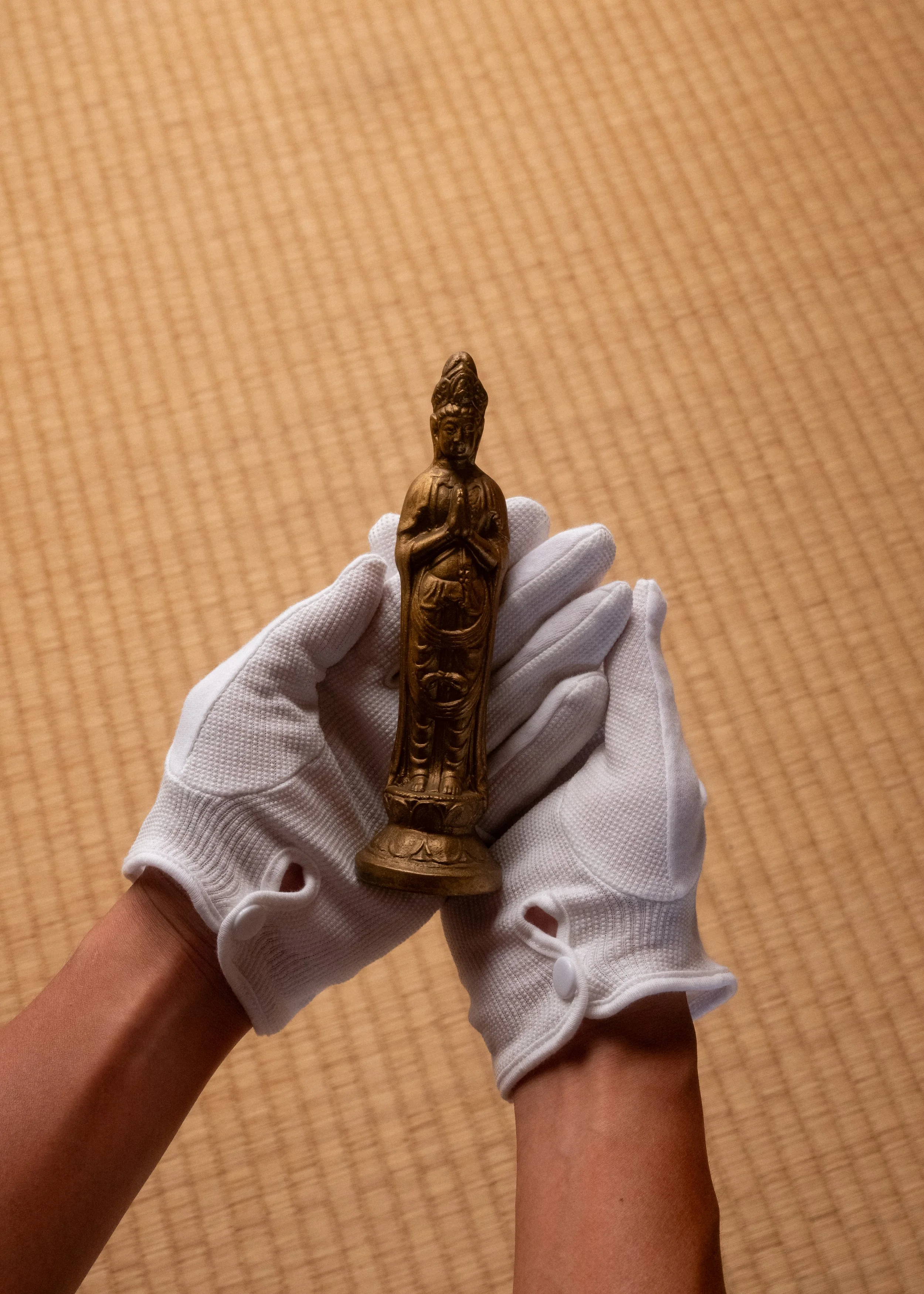 Image 11 of 11